Article

Microwave-Induced Inhibition of Germination in Portulaca oleracea L. Seeds

1
Department of Biology, University of Naples Federico II, Complesso Monte S. Angelo, 80126 Naples, Italy
2
Department of Physics “E. Pancini”, University of Naples Federico II, Complesso Monte S. Angelo, 80126 Naples, Italy
3
Department of Electrical and Information Engineering “M. Scarano”, University of Cassino and Southern Lazio, Via di Biasio n. 43, 03043 Cassino, Italy
*
Authors to whom correspondence should be addressed.
Agronomy 2025, 15(10), 2418; https://doi.org/10.3390/agronomy15102418
Submission received: 16 September 2025 / Revised: 9 October 2025 / Accepted: 15 October 2025 / Published: 18 October 2025
(This article belongs to the Special Issue Weed Management and Herbicide Efficacy Based on Future Climates)

Abstract

The aim of this study was to evaluate the effectiveness of 2.45 GHz microwave application in inhibiting the germination of Portulaca oleracea seeds. Four different soil substrate types were used to establish whether their different properties and composition might influence the microwave heating and inhibition of the seed germination process. Our results show the efficacy of the treatments and suggest the fundamental importance of defining specific microwave treatment protocols to be applied to the affected soil substrate. In this study, we report complete inhibition of germination of P. oleracea seeds in four exposed soil substrates and propose that microwave application could be integrated into an agricultural management system to control a weed such as P. oleracea, which is widespread in many areas of the world. The microwave treatment may represent an ecological and innovative solution that contributes to reducing the dependence on chemical herbicides and promotes greater agricultural sustainability.

1. Introduction

Weeds are one of the greatest challenges for global agriculture, causing significant losses in crop productivity and increasing management costs. Their ability to compete for essential resources (water, nutrients, and sunlight) reduces the efficiency of agricultural input and compromises crop quality [1]. Their high competitiveness, adaptability, aggressiveness, and exceptional reproductive capacity enable them to thrive even under adverse environmental conditions in cultivated fields [2]. If not effectively controlled, weeds can lead to an average global reduction of 34% in the yield of major crops [1].
Strategies for controlling and removing invasive plant species typically rely on a combination of approaches, including manual and mechanical interventions, chemical herbicides, and biological and physical soil-heating methods [3]. Agricultural systems in the EU have become increasingly vulnerable and less sustainable due to the excessive use of herbicides and the rapid proliferation of herbicide-resistant weeds [4]. Herbicide-resistant weeds have been documented in 101 crops across 75 countries, with 534 distinct cases of herbicide resistance (species × site of action) involving 273 species [5].
Considerable attention has turned to physical soil-heating weed management strategies such as solarization or steam treatment. Recently, beyond conventional physical methods, microwave technology has emerged as a promising tool because it leaves no chemical residues and can be integrated into existing agricultural practices [6,7]. This approach relies on the rapid heating of water molecules in the soil, generating high temperatures that inhibit seed germination without altering the chemical, physical, or biological soil properties [8]. The susceptibility of seeds to microwave treatment results from thermal effects, due to the heating of the surrounding soil and the conductive transfer of heat into the seeds [6,9]. It offers significant advantages over conventional physical soil-heating methods. These include volumetric rather than surface-limited heating, greater precision in process control, very rapid start-up and shut-down, and the use of lighter equipment compared to steam generators, thereby reducing the risk of soil compaction [10]. Among the main limitations of this method are its high energy requirement for large-scale applications, reduced effectiveness in very wet soils [3], and the potential negative impact on beneficial soil microflora if not properly calibrated [11]. Numerous studies have demonstrated the effectiveness of microwave radiation on soil to control weed seeds [6,11,12,13,14,15]. High power settings (around kW) or prolonged exposure times (several minutes) were applied using different microwave heating systems and seed germination was tested under controlled conditions [3,16].
Portulaca oleracea L. is one of the most problematic weeds and is considered the eighth most-widespread weed in the world [17]. It completes its life cycle in 2–4 months [18], and a single plant can produce up to 10,000 seeds [19]; these seeds can remain dormant in the soil for several decades [20], ensuring continuous weed pressure even after the removal of adult plants [21,22].
Although the inhibition of P. oleracea seeds through microwave exposure has been investigated very recently [23] using a simple microwave oven, to the best of our knowledge no study has considered the irradiation of soil containing the seeds with a suitable dosimetry and inline temperature control.
Therefore, the aim of the present work is to evaluate the effectiveness of microwave application in inhibiting the germination of P. oleracea seeds in soil. It is well established that soil–water content, texture, and composition affect heat diffusion and the efficiency of heat treatments [24]. However, systematic studies comparing the effectiveness of microwaves across different soil types are still lacking. In this study, we address this knowledge gap by analyzing the response of four soils with distinct physicochemical properties to microwave heating. The present study considers treatments at 2.45 GHz, one of the most used frequencies for industrial applications, and consequently, at this frequency cheaper sources are available. Our results suggest that microwave application could be integrated into an agricultural management system to control weeds such as P. oleracea, which is widespread in many areas of the world. The microwave treatment may represent an ecological and innovative solution that contributes to reducing the dependence on chemical herbicides and promotes greater agricultural sustainability.

2. Materials and Methods

2.1. Soil Substrate Sampling

Soil substrate samples were collected from three farms that work in IV range vegetable production (fresh vegetables that are cut, washed, and enclosed in protective packaging after harvesting) that experienced the development of P. oleracea during their cultivation cycles. They are located in three different regions of Italy: Lombardy (northern area, 45°21′39.2″ N, 10°07′29.9″ E), Sardinia (island area, 39°40′20.4″ N, 8°40′14.3″ E), and Campania (southern area, 40°30′25.7″ N, 14°58′40.3″ E). These three sites are characterized by different climate conditions. In addition, at the Campania site, two types of soil substrate were sampled with different properties. Each soil substrate had a diverse texture (Table S1): The two soil substrates Campania 1 and Campania 2 were classified as clay, the Sardinia soil substrate was classified as loamy sand, and the Lombardia soil substrate was classified as sandy loam, according to the USDA classification system [25]. For this reason, the sites are designated in the text and figures as CLAY 1, CLAY 2 (Campania 1 and 2), SANDY LOAM (Lombardy), and LOAMY SAND (Sardinia).
Soil substrate samples were collected in field from the top 25 cm and transported to the laboratory. Soil substrate water content (SWC) was determined by drying at 105 °C until a constant weight (wd) was achieved. The water content values were expressed as percentages of fresh weight (wf): w f w d w f   ×   100 . The soil substrates to be tested were homogenized, sieved (9.5 mm ∅), and stored at 4 °C until the start of the experiment.

2.2. Microwave Exposure Set-Up

The lethal temperature for weed seeds varies, depending on the species. Vidotto et al. [26] demonstrated that a brief heat treatment (2–5 s) at temperatures around 72 °C is sufficient to almost completely inhibit the germination of P. oleracea seeds.
We decided that reaching a surface temperature of 85 °C during microwave treatment of the samples was a sufficient target to ensure complete inhibition of weed seed germination when the seeds were opportunely located on the surface of the sample, in order to accurately investigate the germination dynamics. The exposures were carried out with an accurate control from the dosimetric point of view to reduce confounding factors and increase the repeatability of the procedure conditions. The soil substrate aliquots were placed in a cylindrical silicone container without a lid and were placed in a customized microwave applicator fed by a magnetron (Alter TMA20). The microwave exposure set-up is described in detail in [27] and is shown in Figure 1. In short, the applicator is a rectangular waveguide (WG) (WR340, 8.6 cm × 4.3 cm) connected to a below-cut-off cylindrical waveguide (diameter of 35 mm, 100 mm long) centered with respect to the larger side of the WG. In this way, surface temperature measurements were carried out through an infrared (IR) thermo-camera (Flir E60, FLIR Systems, Wilsonville, OR, USA) and acquired without perturbing the electromagnetic field distribution [28]. Incident and reflected powers were remotely controlled by a laptop. The applicator was terminated with a high-power dummy load that absorbed the power transmitted beyond the sample, ensuring the absence of further reflections.
The microwave dielectric behavior of soil–water mixtures is known to depend on water content and soil textural composition. A four-component dielectric mixing model was proposed by [29]. It treats the soil–water system as a host medium of dry soil solids containing randomly distributed and randomly oriented disk-shaped inclusions of bound water, bulk water, and air. The heating rate in sand has already been shown to be much slower than in other soils, and it represents the “worst case scenario” for the microwave treatment of soil seed banks [30]. Since the depth of microwave penetration into the soil is low in all cases, the seed depth is another parameter to be considered when trying to reach the target temperature [3,30].
Preliminary tests on the four types of soil substrates confirmed different behaviors of the samples depending on the different characteristics of soil substrate. Thus, different protocols in terms of incident power and exposure time were tested to obtain the target temperature on the surface of the samples (85 °C) in less than 2 min and with incident power easily achievable by using commercial magnetrons (less than 0.5 kW). The electric field and relative thermal distributions inside the sample were estimated by numerical simulations carried out with CST Studio Suite 2023 (Dassault Systèmes, Vélizy-Villacoublay, France). The sample was modeled as a homogeneous cylindrical medium within a waveguide terminated with a dummy load. The dielectric properties (relative permittivity and electric conductivity) of soil substrates with 10% water content at ambient temperature were measured using an open-ended coaxial probe [31].

2.3. Experimental Design for Microwave Exposure

In each experiment, 90 g soil substrate aliquots, with their original water contents at the time of sampling, were placed in cylindrical silicone containers (6.4 cm in diameter and 4.0 cm in height). In each container, 25 seeds of P. oleracea were evenly distributed on the surface without burial. This is in accordance with its characteristic of being an opportunistic species. During the experiment, six containers with seeds were singularly exposed in succession at the defined protocol (Figure 2A and Table 1). In this way, a total of 150 seeds were exposed to microwave heating and the same number of silicone containers, with a total of 150 unexposed seeds considered as controls. Three experimental replicates were performed for each soil substrate type, using a total of 450 seeds for each experimental condition.
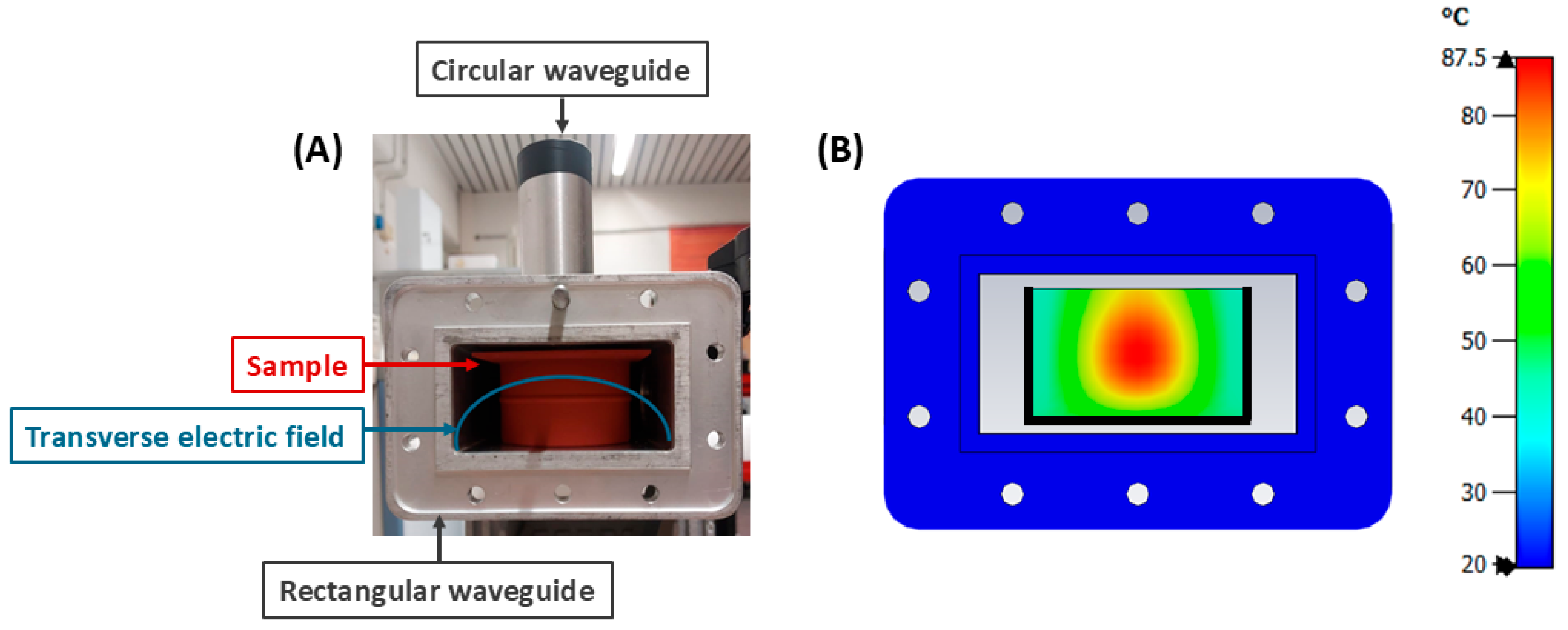
The monitoring of the surface heating showed a non-uniform temperature distribution, due to the related non-uniform distribution of the electric field of the sample being higher in the central zone (maximum 100 °C) with respect to the peripheral areas (about 70 °C). This was expected, being the transverse electric field distribution of the fundamental mode in the empty WG characterized by semi-sinusoidal behavior [32] with a maximum in the middle of the WG and a minimum at the edges, as sketched in Figure 2A.
Consequently, P. oleracea seeds located centrally were exposed differently than those near the rim, reaching higher temperatures at the set time. Numerical simulations and preliminary results, discussed below, confirmed a different seed response in the two areas due to the inhomogeneity of the thermal distribution into the soil substrate. Indeed, as can be seen from Figure 2B, simulations performed in CST Studio showed a typical temperature profile inside the sample that follows the transverse electric field distribution. Therefore, an additional experimental approach was performed. In this second protocol, the 25 seeds of P. oleracea were placed only in the central zone of the soil substrate container in order to standardize the heating during exposure and reduce any confounding effects that may have resulted from lateral temperature variations associated with the heating pattern of the applicator. Again, six samples were individually exposed under the same protocols, and the results are reported as their respective averages and standard error values compared to that of the six control samples. This allowed a more accurate assessment of germination under more uniform thermal conditions by excluding seeds from cooler peripheral areas that may have skewed germination results in the initial experiment.

2.4. Germination Tests

After exposure to microwaves, soil substrate samples were weighed and the differences between initial and post-treatment weights was considered to be due to evaporated water. To induce optimal germination, the same SWC was required for all four types of soil substrate. Therefore, the water loss was replenished in all soil substrate samples to reach a final SWC of about 15–20% before transferring soil substrate samples into a climate chamber. This SWC was tested to allow for optimal hydration during seed germination in all soil substrate types. All soil substrate samples with seeds were placed in a climate chamber under the following environmental conditions: light intensity of about 100 μmoles of photons/m2/second, light/dark photoperiod lasting 8 h/16 h, day/night temperature of 25 °C/20 °C, and relative humidity for day/night at 65%/85%. Germination was monitored daily for a total period of 7 days. The seeds were considered germinated when the emergence of the epicotyl was visible. In addition, the weight of the soil substrate samples was checked daily, and a few milliliters of water was added as needed to avoid dehydration of the seeds.

2.5. Statistics

All data of seed germination reported here have been obtained by three experimental replicates; each consisted of 6 tests for each soil substrate and for all the experimental conditions. All figures show mean values and standard errors (SEs) for each parameter calculated on 18 samples. Data were processed by analysis of variance (ANOVA) to test whether differences in seed germination between exposed and relative controls were significant. Factors tested were the number of days from sowing and different experimental conditions (exposed and not exposed) for each soil substrate. An LSD test (Least Significant Difference) was used to determine differences based on a significance level of * p < 0.05.

3. Results

3.1. Soil Substrate Heating with Microwave Radiation

The water contents measured in the laboratory after sampling in field were determined for CLAY 1 and CLAY 2, and were 15.2% and 18.0%, respectively. For SANDY LOAM and LOAMY SAND soil substrates, lower values were measured: 14.8%. and 7.2%, respectively. These water contents were saved during the laboratory experiments to reproduce the same field environmental conditions. As discussed above, the differences in water content and soil substrate texture influence the heating process; therefore, to reach a temperature of at least 85 °C on the soil substrate sample surface, different protocols were applied. The CLAY 1 and CLAY 2 soil substrates were treated at 300 W (corresponding to an average incident power density of 8 W/cm2) for 60 s, the SANDY LOAM soil substrate was treated at 400 W (average incident power density 11 W/cm2) for 60 s, and the LOAMY SAND soil substrate was treated at 400 W for 120 s. In all cases, a reflection percentage of about 20% was recorded. The ambient temperature during exposure was 21 °C.
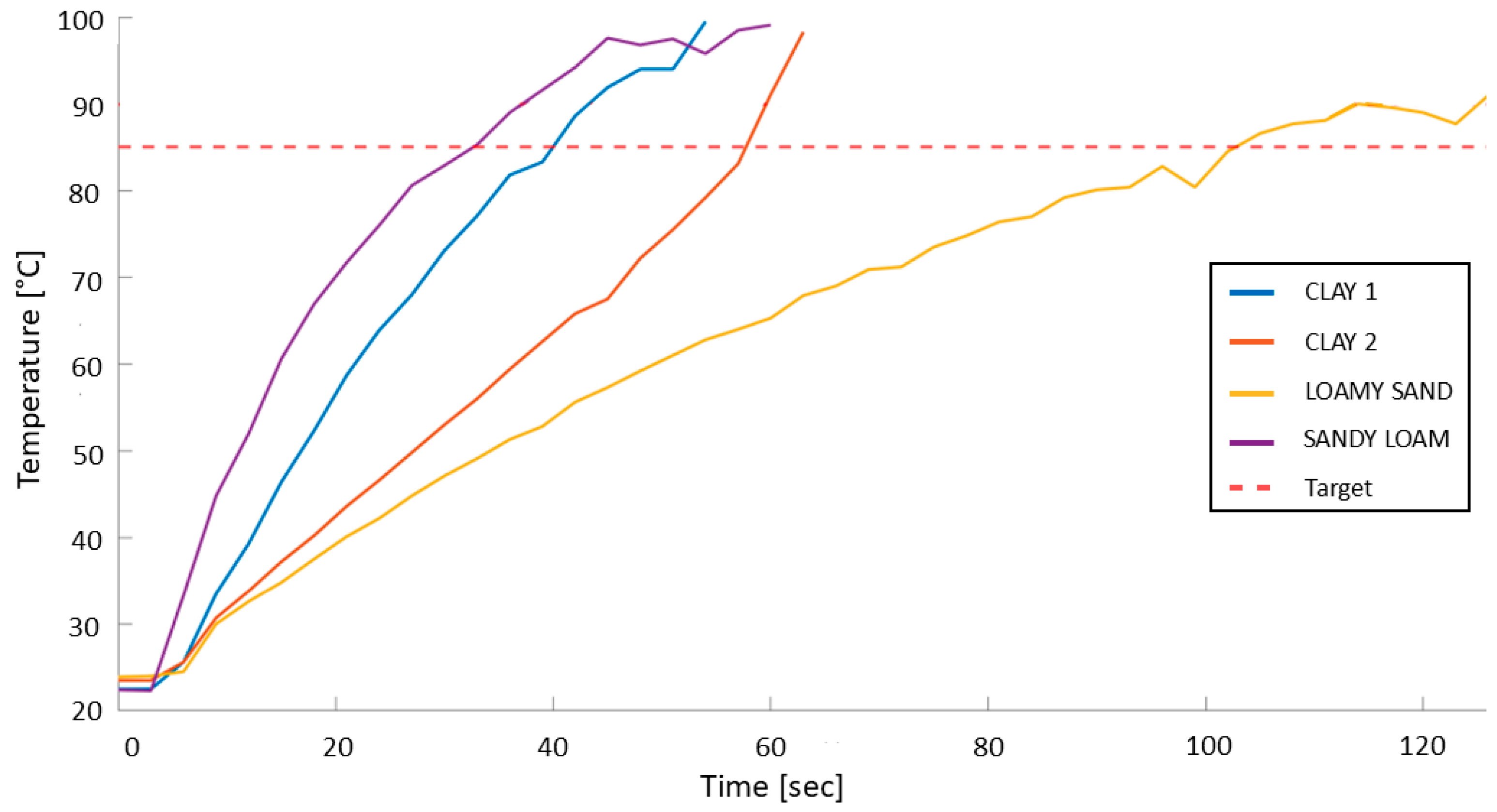
The different responses to electromagnetic excitation in terms of temperature rise on the surface are clearly shown in Figure 3, in which typical temperature rises over time are measured at the sample center, and these values are then reported for the considered four different soil substrates. More results can be examined in detail: SANDY LOAM, CLAY 1, and CLAY 2 soil substrates reached the target temperature (85 °C) faster than LOAMY SAND samples, as was expected, due to the latter having a low water content. Moreover, LOAMY SAND soil substrate samples did not reach 100 °C. It is also worth highlighting that both LOAMY SAND and SANDY LOAM soil substrates remained over the target temperature for a longer time with respect to the other soil substrates, possibly suggesting better effectiveness of the treatment. Table 1 details the main characteristics in terms of type and initial water content at the time of sampling, including delivered power and the exposure time adopted for the treatment and typical times required to reach the target temperature.

3.2. Seed Germination

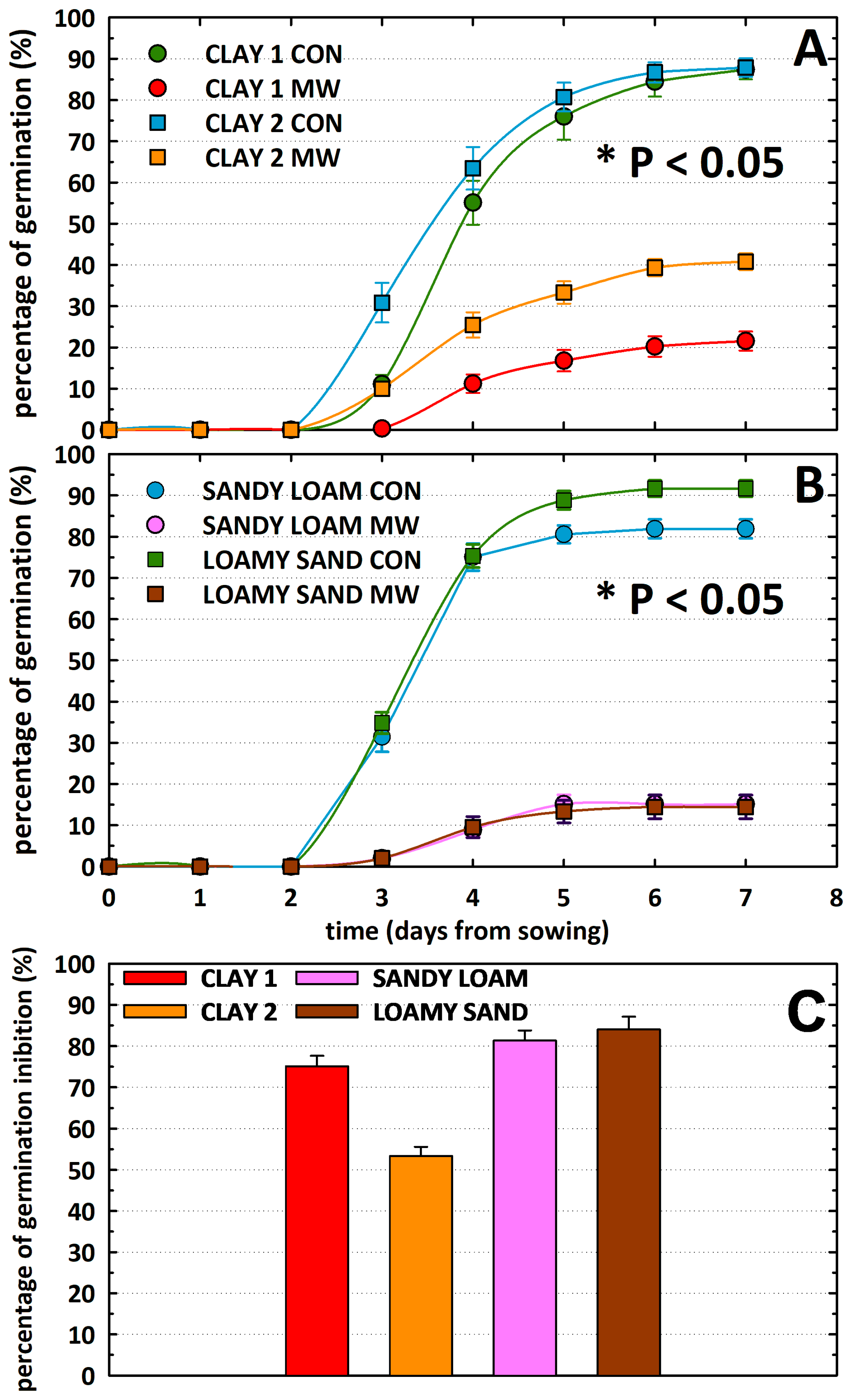
Seeds of P. oleracea placed in CLAY 1 and CLAY 2 soil substrates exposed to microwave treatment showed a significant reduction (* p < 0.05) in germination percentage on the seventh day after sowing, compared to seeds sown in respective control soil substrates (not exposed to microwave treatment) acting as seed viability checks (Figure 4A).
The percentage of germination decreased in exposed soil substrate samples by about 75.3 ± 2.3% (CLAY 1) and 53.6 ± 2.0% (CLAY 2) with respect to controls (Figure 4C). A more consistent result was obtained when the P. oleracea seeds were set to germinate in SANDY LOAM and LOAMY SAND soil substrate samples and were exposed to microwave treatments (Figure 4B). In this case, the percentage of germination decreased in exposed soil substrate samples by about 84.2 ± 2.9% (SANDY LOAM) and 81.5 ± 2.3% (LOAMY SAND) compared to control soil substrate samples (Figure 4C), confirming the influence of the duration of the treatment mentioned above. Moreover, even if the decreases in germination percentage were significant in all soil substrate samples exposed to microwave heating, the differences between the four types of soil substrates used in this study may also be attributable to the nature of the soil substrate and the consequent heating processes.
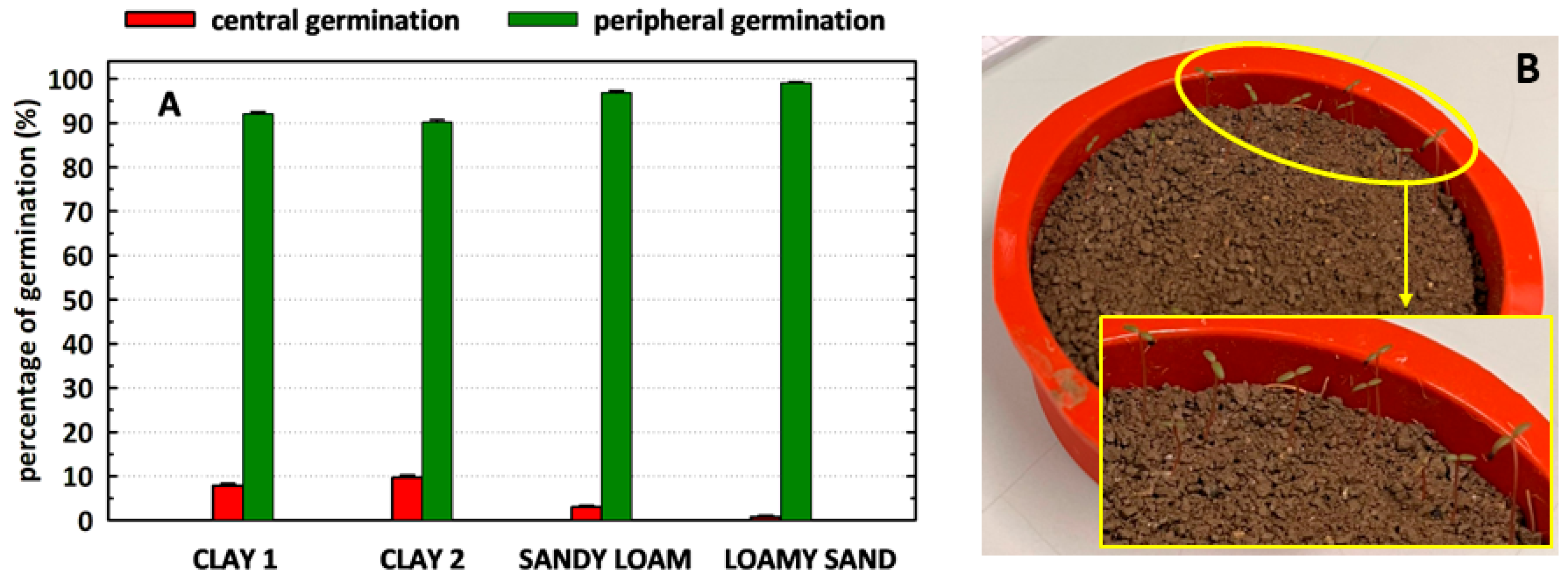
From the results obtained, it was found that when compared to the control samples, the few germinations observed in microwave-exposed soil substrate samples corresponded to the seeds of P. oleracea placed in the peripheral area of the circular silicone container (Figure 5). In all exposed soil substrates, the percentage of peripheral germination was 90% and above, and this could have been determined by non-uniform heating of the soil substrate sample.
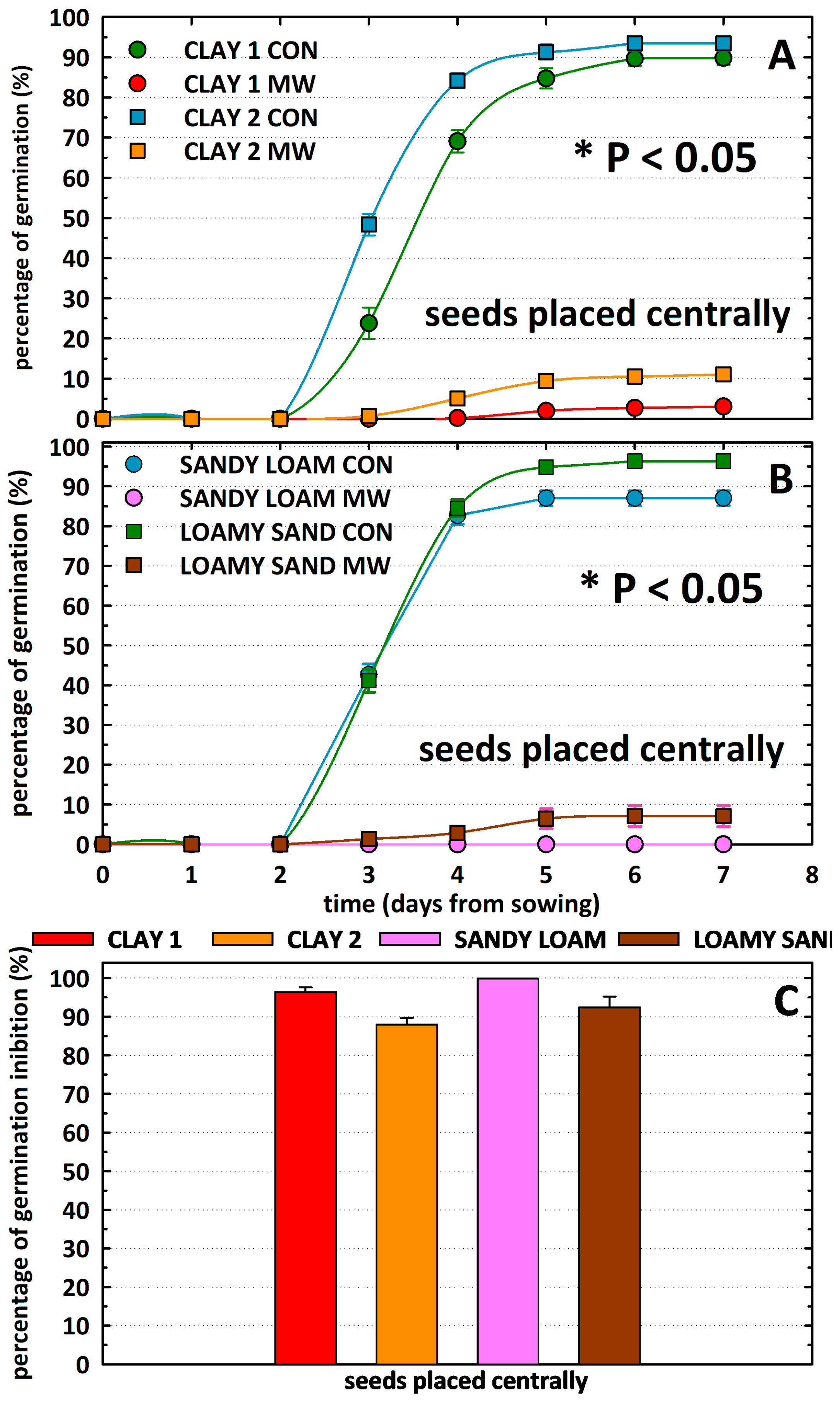
To better evaluate the effectiveness of the microwave treatment and avoid the influence of thermal inhomogeneity on the results —due to the effect of electric field inhomogeneity on the samples— the experiments were repeated with a different approach. This consisted of placing the seeds of P. oleracea only in the central part of the silicone container, completely avoiding the placement of the seeds in the peripheral area. This experimental design confirmed previous results and showed an increase in the inhibition of germination in all four types of soil substrates exposed to microwave treatment compared to that of the control samples (Figure 6A,B). The obtained results show a percentage of germination around a maximum of 10% in CLAY 2 soil substrate and even lower in the other soil substrates.
In summary, by placing the seeds only in the central area of soil substrate container, the thermal inhomogeneity was reduced and consequently the efficacy of the microwave treatment was improved, with a decrease in the percentage of germination in all microwave soil substrate samples of at least about 90% compared to the control soil substrate samples (Figure 6C). Furthermore, and not of little importance, the differences in terms of germination inhibition efficacy were smaller between studied soil substrates when seeds were in this condition, compared to a wider uniform location on the exposed surface (Figure 4 and Figure 6).

4. Discussion

The results demonstrate that soil microwave treatment is a very effective method to drastically reduce germination of P. oleracea seeds. Indeed, as can be seen in Figure 6, it was possible to reach a percentage of inhibition greater than 90% for all the considered soil substrates.
However, to ensure that microwave application achieved the best possible results in inhibiting weed seed germination, specific microwave application protocols have been defined based on both the nature of the soil substrate and the exposure conditions. In fact, the distribution and intensities of soil heating after microwave exposure depend on the electromagnetic properties of soil and are strongly influenced by the soil substrate’s texture, composition, and temperature [7,15,33]. It is also well established that soil moisture has a great effect on the soil-heating profile. This outcome is confirmed by our study, as can be seen from Figure 3 and Table 1, in which a different response to electromagnetic field exposure has been found, according to the specific characteristics of soil substrates. Moreover, since samples were exposed into a rectangular waveguide, the thermal distribution inside the soil substrate also affects weeds gemination. As shown in Figure 2, analytical and numerical studies state that the maximum temperature increase is expected in the center of the sample. This consideration allowed us to optimize the exposure protocol and progress from the not fully satisfactory results reported in Figure 4 to the optimal outcomes shown in Figure 6. Indeed, moving the seeds from the periphery of the sample to the center had a huge impact on germination, as expected from the thermal distribution. This result is well demonstrated in this study by Figure 5.
It should be noted that due to the lab set-up, small soil substrate samples could be exposed, each containing only 25 seeds. Nevertheless, repeated experiments allowed us to obtain good statistical significance with a total of 450 seeds exposed for each soil type. As a matter of fact, using a larger number of seeds per container could affect the detection of individual germinations. Moreover, all experiments have been carried out by placing the seeds only on the surface of the sample. This condition could reflect the natural scenario of P. oleracea in field, in which the seeds usually germinate at the soil surface, and where the temperature is expected to be very close to or even higher than that of the air.
Overall, our experiments confirmed that heating soil substrates above 85 °C, using microwave energy, is sufficient to inhibit the emergence of P. oleracea seedlings, according to results reported by Brodie et al. [30] and Maynaud et al. [34]. The effects depend primarily on the power density of the radiation and the electromagnetic properties of the targets. Here, we demonstrated that soil substrates with different characteristics, when subjected to specific microwave exposure protocols aimed at achieving similar heating intensity and distribution, can show comparable germination inhibition percentages.
Another important result reported in this study is the relatively short exposure times to microwaves not set at high power as shown in Table 1 (lower than 0.5 kW). Maynaud et al. [34] described a complete germination inhibition of Festuca rubra seeds applying microwave intensities correspondent to 2 and 4 kW, respectively, for 8 and 4 min, to reach a heating of 80 °C in soil with water content levels ranging from 10% to 31.4%. In our case, the relatively low reflected power by the sample ensures a high delivered power to the sample, resulting in a shorter exposure duration. As a matter of fact, the development of microwave generators makes cheap sources for field applications available, and weeds could be removed successfully from large areas of land, provided that the design of the microwave applicator ensures the release of a significant part of applied microwave energy in layers close to the applicator surface. For instance, Brodie et al. [9,35] designed applicators providing the required top layer treatment with reasonable efficiency for practical use in shallow soil treatment for weed seed and pathogen control in agricultural applications.
It is also worth mentioning that the results presented were obtained in laboratory tests carried out in controlled conditions from both biological and electromagnetic points of view. All samples were at an initial temperature of 21 °C. However, the four investigated soil substrates come from different regions of (north, south and island) Italy, where surface temperatures can be considerably different. Based on our experiences in Campania and Sardinia, greenhouses temperatures of 40 °C can be easily observed in summer. In this case, shorter treatments are expected to be successful with the same incident power densities used in our work. Another feature to highlight is that unlike chemical soil fumigants or soil steam treatments, microwave soil treatment does not sterilize the soil and does not leave any toxic residue in the soil. In some cases, higher soil fertility was observed [10].
Moreover, the results discussed here provide another important indication regarding the importance of uniform heating induced by microwave treatment. Any inadequate microwave application can generate inferior heating at the edges of the exposed soil substrate area with the result of undesirable weed seed germinations. Thus, a multidisciplinary approach is mandatory to combine biological, agronomic, and electromagnetic competences and to propose optimized protocols. Indeed, the design of MW applicators is a crucial point for the practical use of this technique in natural conditions. In this sense, the electric field distribution should be carefully evaluated for better weed seed control, especially at the peripheral sides.
Finally, our outcomes can contribute to the widespread adoption of MW treatments in agricultural system management. Indeed, this can introduce an important advancement in the agronomical field, as MW treatments seem to be a valid alternative to currently available herbicides and their limitations, which in some cases induce resistance in the weeds. Moreover, MW applications deal directly with seed banks rather than waiting for seeds to germinate, allowing for a reduced number of necessary chemical treatments.

5. Conclusions

In this study a comprehensive analysis on P. oleracea seed inhibition using microwave treatment has been presented. Four soil substrates were subjected to different chemical and electromagnetic properties. More than 1500 seeds were exposed under different exposure conditions to ensure high germination inhibition.
The results confirm that microwave heating can be considered a novel and effective method for rapidly inhibiting seed viability and germination. Indeed, we demonstrated that with suitable protocols, it is possible to reach percentages of P. oleracea inhibition greater than 90%, for all the different MW-exposed soil substrates. Moreover, our interdisciplinary approach allowed us to find a trade-off between minimum exposure times and delivered power. This is a key aspect for the integration of microwave applications in practical agricultural management systems.
The outcomes of this work represent a promising preliminary study for the future realization of MW-based prototypes to be used in agricultural applications for both open fields and greenhouses. Further investigations are needed to verify possible limitations of MW treatment in real-world applications and to define tailored exposure protocols that consider initial temperature, the dimensions of the target area, soil substrate characteristics, and the depth of MW penetration. With this in mind, we have designed a prototype for the application of MWs in a greenhouse setting, and it is currently in the testing phase under the framework of the MOPAS (Microwaves for a Sustainable Agriculture) project.

Supplementary Materials

The following supporting information can be downloaded at https://www.mdpi.com/article/10.3390/agronomy15102418/s1. Figure S1. Geographical location of the Italian regions where soil substrate samples were collected. Table S1. Measured soil substrate properties at the time of sampling.

Author Contributions

Conceptualization and methodology, N.D., R.M. and F.S.; software, F.S., F.L. and G.C.; validation and investigation, F.D.S., A.E., F.L. and G.C.; writing—original draft preparation, ALL; and funding acquisition, N.D. and R.M. All authors have read and agreed to the published version of the manuscript.

Funding

This research was funded by the Italian Ministry of Economic Development (MISE) within the project MOPAS (Microwaves for a sustainable agriculture) under the grant MISE F/170014/01-05/X42 CUP B69J22003170005.

Data Availability Statement

The original contributions presented in this study are included in the article/Supplementary Material. Further inquiries can be directed to the corresponding authors.

Acknowledgments

We acknowledge Felice Poli, President of OP Sole e Rugiada s.a.c.p.a., and Marco Facchetti, Head of Agronomic Research and Development of OP Sole e Rugiada s.a.c.p.a., for their valuable assistance in providing soil samples, and their relative features and stimulating discussions on microwave applications in fields and in greenhouses for fourth range product farms.

Conflicts of Interest

The authors declare no conflicts of interest.

Abbreviations

The following abbreviations are used in this manuscript:
WGWaveguide
IRInfrared
SWCSoil–water content
CONControl
MWMicrowave
SEStandard Error
ANOVAAnalysis Of Variance
LSDLeast Significant Difference

References

  1. Oerke, E.-C. Crop Losses to Pests. J. Agric. Sci. 2006, 144, 31–43. [Google Scholar] [CrossRef]
  2. Chandrasena, N. How will weed management change under climate change? Some perspectives. J. Crop Weed 2009, 5, 95–105. [Google Scholar]
  3. De Wilde, M.; Buisson, E.; Yavercovski, N.; Willm, L.; Bieder, L.; Mesléard, F. Using Microwave Soil Heating to Inhibit Invasive Species Seed Germination. Invasive Plant Sci. Manag. 2017, 10, 262–270. [Google Scholar] [CrossRef]
  4. Tataridas, A.; Kanatas, P.; Chatzigeorgiou, A.; Zannopoulos, S.; Travlos, I. Sustainable Crop and Weed Management in the Era of the EU Green Deal: A Survival Guide. Agronomy 2022, 12, 589. [Google Scholar] [CrossRef]
  5. Heap, I. The International Herbicide-Resistant Weed Database. WeedScience.org. Available online: https://www.weedscience.org. (accessed on 25 March 2025).
  6. Fanti, A.; Spanu, M.; Lodi, M.B.; Desogus, F.; Mazzarella, G. Nonlinear Analysis of Soil Microwave Heating: Application to Agricultural Soils Disinfection. IEEE J. Multiscale Multiphys. Comput. Tech. 2017, 2, 105–114. [Google Scholar] [CrossRef]
  7. Nelson, S.O. A Review and Assessment of Microwave Energy for Soil Treatment to Control Pests. Trans. ASAE 1996, 39, 281–289. [Google Scholar] [CrossRef]
  8. Brodie, G.; Botta, C.; Woodworth, J. Preliminary Investigation into Microwave Soil Pasteurization Using Wheat as a Test Species. Plant Prot. Q. 2007, 22, 72–75. [Google Scholar]
  9. Brodie, G.; Torgovnikov, G. Microwave Soil Heating with Evanescent Fields from Slow-Wave Comb and Ceramic Applicators. Energies 2022, 15, 1068. [Google Scholar] [CrossRef]
  10. Brodie, G.; Khan, M.J.; Gupta, D. Microwave soil treatment and plant growth. In Microwave Systems and Applications; Brodie, G., Khan, M.J., Balkrishnan, G., Eds.; IntechOpen: London, UK, 2019; pp. 161–184. [Google Scholar]
  11. Khan, M.J.; Jurburg, S.D.; He, J.; Brodie, G.; Gupta, D. Impact of Microwave Disinfestation Treatments on the Bacterial Communities of No-till Agricultural Soils. Eur. J. Soil Sci. 2020, 71, 1006–1017. [Google Scholar] [CrossRef]
  12. Moore, J.H. Controlling Gorse Seedbanks with Microwave Energy. In Proceedings of the 15th Australian Weeds Conference, Weed Management Society of South Australia, Adelaide, Australia, 24–28 September 2006; pp. 283–286. [Google Scholar]
  13. Brodie, G.; Hamilton, S.; Woodworth, J. An Assessment of Microwave Soil Pasteurization for Killing Seeds and Weeds. Plant Prot. Q. 2007, 22, 143–149. [Google Scholar]
  14. Khan, M.J.; Brodie, G.; Gupta, D. Potential of Microwave Soil Heating for Weed Management and Yield Improvement in Rice Cropping. Crop. Pasture Sci. 2019, 70, 211. [Google Scholar] [CrossRef]
  15. Khan, M.J.; Brodie, G.; Jurburg, S.D.; Chen, Q.; Hu, H.-W.; Gupta, D.; Mattner, S.W.; He, J.-Z. Assessing the Effects of Microwave Heat Disturbance on Soil Microbial Communities in Australian Agricultural Environments: A Microcosm Study. Appl. Soil Ecol. 2024, 198, 105386. [Google Scholar] [CrossRef]
  16. Bebawi, F.F.; Cooper, A.P.; Brodie, G.I.; Madigan, B.A.; Vitelli, J.S.; Worsley, K.J.; Davis, K.M. Effect of microwave radiation on seed mortality of rubber vine (Cryptostegia grandiflora R. Br.), parthenium (Parthenium hysterophorus L.) and bellyache bush (Jatropha gossypiifolia L.). Plant Prot. Q. 2007, 22, 136–142. [Google Scholar]
  17. Singh, K.P. Effect of temperature and light on seed germination of two ecotypes of portulaca oleracea L. New Phytol. 1973, 72, 289–295. [Google Scholar] [CrossRef]
  18. AnastáCio, A.; Carvalho, I.S. Accumulation of Fatty Acids in Purslane Grown in Hydroponic Salt Stress Conditions. Int. J. Food Sci. Nutr. 2013, 64, 235–242. [Google Scholar] [CrossRef]
  19. Miyanishi, K.; Cavers, P.B. The biology of Canadian weeds.: 40. Portulaca oleracea L. Can. J. Plant Sci. 1980, 60, 953–963. [Google Scholar] [CrossRef]
  20. Egley, G.H. Dormancy variations in common purslane seeds. Weed Sci. 1974, 22, 535–540. [Google Scholar] [CrossRef]
  21. Galinato, M.I.; Moody, K.; Piggin, C.M. Upland Rice Weeds of South and Southeast Asia; International Rice Research Institute: Los Baños, Philippines, 1999; p. 47. ISBN 978-971-22-0077-9. [Google Scholar]
  22. Chauhan, B.S.; Johnson, D.E. Seed germination ecology of Portulaca oleracea L.: An important weed of rice and upland crops. Ann. Appl. Biol. 2009, 155, 61–69. [Google Scholar] [CrossRef]
  23. Fornaciari, M.; Orlandi, F.; Ruga, L.; Pezzolla, D.; Cocozza, C.; Ederli, L. Impact of Varied Microwave Exposures on Weed Species. J. Biosyst. Eng. 2025. [Google Scholar] [CrossRef]
  24. Falciglia, P.P.; Roccaro, P.; Bonanno, L.; De Guidi, G.; Vagliasindi, F.G.A.; Romano, S. A Review on the Microwave Heating as a Sustainable Technique for Environmental Remediation/Detoxification Applications. Renew. Sustain. Energy Rev. 2018, 95, 147–170. [Google Scholar] [CrossRef]
  25. USDA NRCS. Chapter 3: Selected Chemical and Physical Properties. In Soil Survey Manual; U.S. Department of Agriculture, Natural Resources Conservation Service: Washington, DC, USA, 2017. Available online: https://www.nrcs.usda.gov/sites/default/files/2022-09/SSM-ch3.pdf (accessed on 27 July 2025).
  26. Vidotto, F.; De Palo, F.; Ferrero, A. Effect of Short-duration High Temperatures on Weed Seed Germination. Ann. Appl. Biol. 2013, 163, 454–465. [Google Scholar] [CrossRef]
  27. Massa, R.; Lodato, F.; Carraturo, F.; Nappo, A.; Annunziata, M.; Guida, M.; D’Ambrosio, N. Preliminary Results on Fungicidal Efficacy of Microwave Treatment on Fusarium oxysporum. In Proceedings of the 4th URSI Atlantic Radio Science Meeting (AT-RASC), Meloneras, Spain, 19–24 May 2024; pp. 1–4. [Google Scholar]
  28. Romeo, S.; D’Avino, C.; Pinchera, D.; Zeni, O.; Scarfi, M.R.; Massa, R. A Waveguide Applicator for In Vitro Exposures to Single or Multiple ICT Frequencies. IEEE Trans. Microw. Theory Tech. 2013, 61, 1994–2004. [Google Scholar] [CrossRef]
  29. Dobson, M.C.; Ulaby, F.T.; Hallikainen, M.T.; El-Rayes, M.A. Microwave dielectric behavior of wet soil, Part II: Dielectric mixing models. IEEE Trans. Geosci. Remote Sens. 1985, GRS-23, 3546. [Google Scholar] [CrossRef]
  30. Brodie, G.; Harris, G.; Pasma, L.; Travers, A.; Leyson, D.; Lancaster, C.; Woodworth, J. Microwave soil heating for controlling ryegrass seed germination. Trans. ASABE 2009, 52, 295–302. [Google Scholar] [CrossRef]
  31. Massa, R.; Migliore, M.D.; Panariello, G.; Pinchera, D.; Schettino, F.; Caprio, E.; Griffo, R. Wide Band Permittivity Measurements of Palm (Phoenix Canariensis) and Rhynchophorus Ferrugineus (Coleoptera Curculionidae) for RF Pest Control. J. Microw. Power Electromagn. Energy 2014, 48, 158–169. [Google Scholar] [CrossRef]
  32. Collin, R.E. Foundation of Microwave Engineering. McGraw-Hill Book Co.: New York, NY, USA, 1966. [Google Scholar]
  33. Metaxas, A.C.; Meredith, R. Industrial Microwave Heating; Peter Peregrinus: London, UK, 1983. [Google Scholar]
  34. Maynaud, G.; Baudoin, E.; Bourillon, J.; Duponnois, R.; Cleyet-Marel, J.-C.; Brunel, B. Short-term Effect of 915-MHz Microwave Treatments on Soil Physicochemical and Biological Properties. Eur. J. Soil Sci. 2019, 70, 443–453. [Google Scholar] [CrossRef]
  35. Brodie, G.; Pchelnikov, Y.; Torgovnikov, G. Development of Microwave Slow-Wave Comb Applicators for Soil Treatment at Frequencies 2.45 and 0.922 GHz (Theory, Design, and Experimental Study). Agriculture 2020, 10, 604. [Google Scholar] [CrossRef]
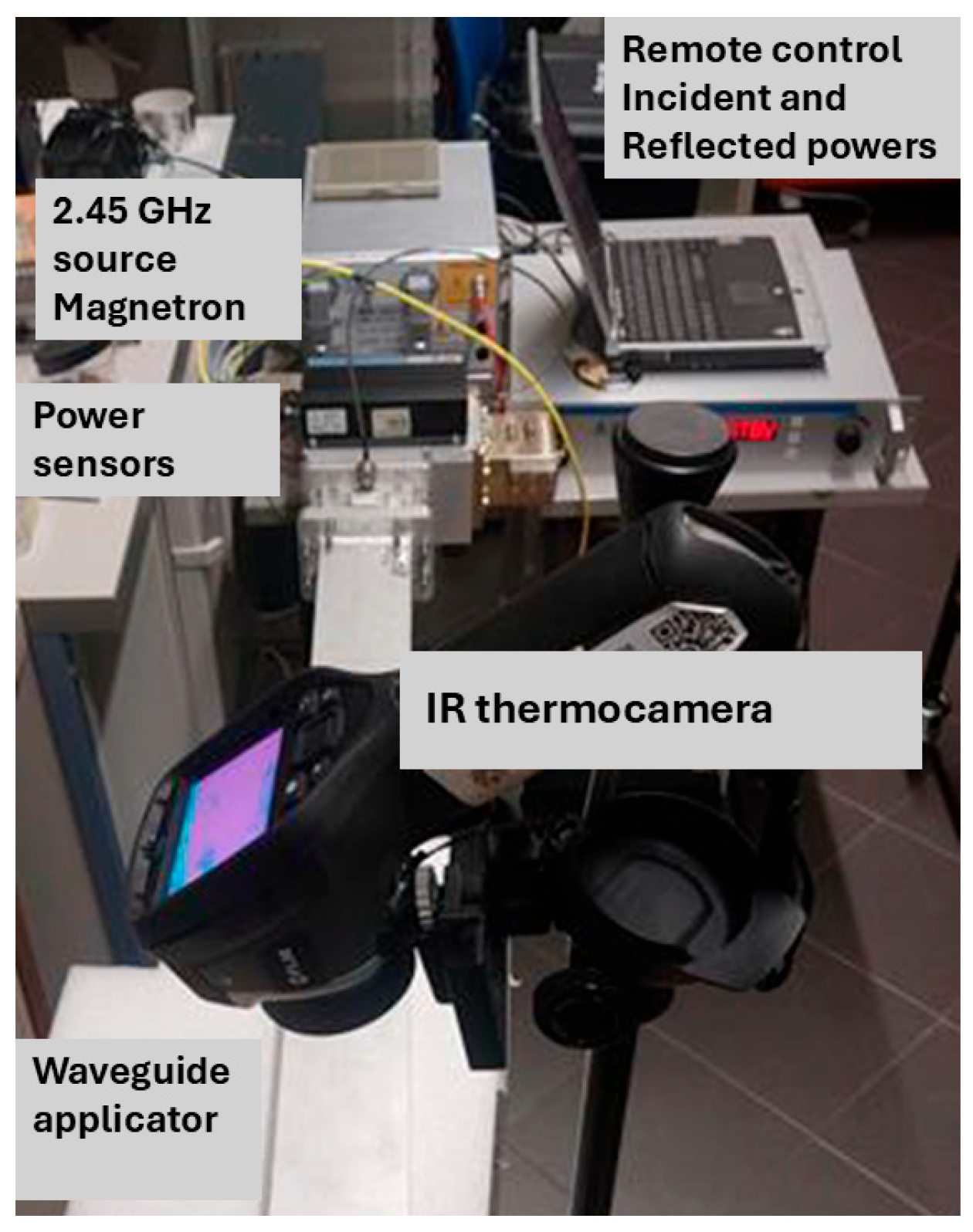
Figure 1. Exposure set-up: The waveguide applicator is fed by a magnetron with a remote control of the exposure duration and delivers power to the sample. An IR thermo-camera measures the temperature increase in the sample.
Agronomy 15 02418 g001
Figure 2. (A) Sample shown in rectangular waveguide, with the circular waveguide on the top allowing for thermal measurements. The unperturbed electric field transverse distribution inside the waveguide is sketched (blue line). (B) Corresponding typical thermal distribution in the middle of the sample, as simulated in CST Studio.
Agronomy 15 02418 g002
Figure 3. Temperature rise against time for CLAY 1 (blue), CLAY 2 (red), LOAMY SAND (yellow), and SANDY LOAM (violet) soil substrates measured in the sample center. The red dashed line represents the target temperature (85 °C).
Agronomy 15 02418 g003
Figure 4. Dynamics of germination percentage of P. oleracea seeds sowed in CLAY 1 (A), CLAY 2 (A), LOAMY SAND (B), and SANDY LOAM (B) soil substrates exposed to microwave (MW) treatment compared to control soil substrates (CONs). Differences in seed germination between MW and CONs soil substrates were statistically significant (* p < 0.05). Values of germination percentage decrease in P. oleracea seeds on the seventh day after MW exposure, compared to respective controls (C). Each reported data point represents the mean ± standard error.
Agronomy 15 02418 g004
Figure 5. Distribution of total P. oleracea seed germinations in four MW-exposed soil substrates between the central and peripheral areas of the soil substrate samples (A). In photo (B), the peripheral distribution of germinations is shown in an MW-exposed soil substrate. Each reported data point represents the mean ± standard error.
Agronomy 15 02418 g005
Figure 6. Analysis of germination percentage of P. oleracea seeds sowed only in the central area of soil substrate container in four microwave (MW) treated soil substrates CLAY 1 and CLAY 2 (A); SANDY LOAM and LOAMY SAND (B) compared to control soil substrates (CONs). Differences in seed germination between MW and CONs soil substrates were statistically significant (* p < 0.05). Values of germination percentage decrease in P. oleracea seeds, arranged in the central container area, at the seventh day after MW exposures compared to respective controls (C). Each reported data point represents the mean ± standard error.
Agronomy 15 02418 g006
Table 1. Main characteristics of the exposed soil substrates.
RegionSoil SubstrateWater
Content %
PowerExposure TimeTime to Reach 85 °C
Campania 1CLAY 115.2%300 W60 s41 s
Campania 2CLAY 218.0%300 W60 s58 s
LombardiaSANDY LOAM14.8%400 W60 s35 s
SardiniaLOAMY SAND7.2%400 W120 s113 s
Disclaimer/Publisher’s Note: The statements, opinions and data contained in all publications are solely those of the individual author(s) and contributor(s) and not of MDPI and/or the editor(s). MDPI and/or the editor(s) disclaim responsibility for any injury to people or property resulting from any ideas, methods, instructions or products referred to in the content.