Article

Evaluation of Drought Tolerance in Oat × Maize Addition Lines Through Biochemical and Yield Traits


1
Department of Plant Breeding, Physiology and Seed Science, University of Agriculture in Krakow, Łobzowska 24, 31-140 Kraków, Poland
2
Department of Biotechnology, The Franciszek Górski Institute of Plant Physiology, Polish Academy of Sciences, Niezapominajek 21, 30-239 Kraków, Poland
3
CLAAS Polska Sp. z o.o., Świerkowa 7, 64-320 Niepruszewo, Poland
4
Department of Mathematical and Statistical Methods, Poznań University of Life Sciences, Wojska Polskiego 28, 60-637 Poznań, Poland
5
Institute of Biology, Biotechnology, and Environmental Protection Sciences, University of Silesia in Katowice, Jagiellonska 28, 40-032 Katowice, Poland
*
Author to whom correspondence should be addressed.
Agronomy 2025, 15(10), 2259; https://doi.org/10.3390/agronomy15102259
Submission received: 8 September 2025 / Revised: 19 September 2025 / Accepted: 22 September 2025 / Published: 24 September 2025
(This article belongs to the Section Innovative Cropping Systems)

Abstract

Oat × maize addition lines (OMAs) are plants of oat (Avena sativa L.) obtained by wide crossing with maize (Zea mays L.) that retained one or more maize chromosomes in the oat genome, which can result in morphological and physiological changes. The aim of the study was to determine the relationship between phenolics, pigments, sugars, and yield components in 14 OMAs and oat cv. Bingo under soil drought. The plants were sown in pots in a vegetation tunnel. The pots were watered to the level of 70% field water capacity (FWC) and then drought treated to 20% FWC for 2 weeks. Analysis of variance (ANOVA) showed that genotype and treatment significantly influenced the measured parameters. Out of 14 OMAs, lines 9 and 78b showed the highest grain weight and number, with the least amount of biomass loss under drought. These OMAs were the only two to equal or surpass the oat cv. Bingo under drought and control conditions. On average, soil drought caused decrease in biomass and the number and mass of grains (30%, 44%, 46%, respectively). Soil drought increased the amount of sugars by 15% and phenolics by 9% but decreased pigment contents by 8%. According to Pearson’s correlation coefficients, fifteen pairs of traits were positively and statistically significantly correlated in control and drought conditions. Significant relationships were found between the yield components and biochemical parameters on the fourteenth day of drought. A positive correlation occurred between the number and weight of kernels and the content of soluble sugars, chlorophyll a, b, and the sum of a and b. A negative correlation was found between all analyzed yield components and the content of phenolics. The results suggest the possibility of using such biochemical parameters as a quick physiological indicator of plant tolerance to soil drought. Variation in studied OMA lines reveals substantial differences in drought response, offering promising opportunities for targeted selection and breeding strategies.

1. Introduction

Oat ranks among the key cereal crops due to its rich nutritional profile, distinctive biological traits, and increasing relevance in the cosmetics industry [1]. In 2024, global oat cultivation spanned approximately 9.8 million hectares, producing a total of 25.1 million tons, which resulted in an average yield of 25.6 decitons per hectare. The top 10 largest oat producers in the world in 2024 are Russia, Canada, Poland, Australia, Finland, USA, Germany, Sweden, Denmark and France [2].
Drought significantly impairs cereal productivity by reducing the number of fertile panicles and grains per plant, and by interfering with grain filling—ultimately lowering the thousand-grain weight [1]. Among cereals, oat is particularly sensitive to drought stress, demanding comparatively greater water availability during its vegetative growth stage [3]. Compared to winter varieties, spring-sown cereals tend to experience delayed stem elongation, which heightens their vulnerability to early-season water deficits, especially when soil moisture reserves are depleted due to insufficient rainfall [4]. Grain filling is another pivotal phase in crop development; limited water supply at this stage hampers the accumulation of biomass within grains, leading to reduced kernel weight. This phenomenon affects both winter and spring cereal species [5]. In areas prone to late-spring droughts, breeding programs have focused on developing early-maturing cultivars that reach their most water-dependent phases sooner—minimizing exposure to extended dry periods [6].
Drought stress during grain filling in winter barley has been shown to reduce yield by over 80% in both greenhouse and field settings [7]. As climate change progresses, drought is projected to affect a broader geographic range with increasingly severe consequences [8]. It is widely recognized as a major limiting factor in crop productivity, impacting key staples like wheat, rice, and maize [9]. Plant responses to drought stress vary depending on crop species, genetic traits, developmental stage, and the presence of additional stressors [10].
One crucial plant defence mechanism against drought involves soluble sugars. These carbohydrates exist as simple sugars (e.g., glucose and fructose), oligosaccharides (e.g., sucrose), or polysaccharides (e.g., starch, glycogen, and cellulose). Each class plays essential roles, such as energy storage, signalling, osmoregulation, and stomatal control [11]. Under water-deficit conditions, plant physiological processes become vulnerable. Drought-tolerant species cope better with reduced turgor, a trait linked to the concentration of solutes in the cytosol—especially soluble sugars [12]. Numerous species, including grasses and potatoes, accumulate sugar reserves as a preparatory mechanism for water stress [13,14]. While excessive carbohydrate storage may suppress photosynthesis, it enhances respiration and provides a carbon source for post-drought recovery [15]. Sugar concentration acts as a direct biochemical response to stress and can also influence indirect defences, such as gene activation and synthesis of protective compounds. Soluble sugars are equally important in resisting biotic stress, when they modulate cellular water potential and limit pathogen spread—as seen in snow mould resistance in grasses under low moisture conditions [16,17]. Exposure to stress triggers the production of diverse metabolites aimed at mitigating damage [18].
Another key group of stress-responsive molecules is phenolic compounds—secondary metabolites whose levels fluctuate throughout plant development, largely in response to environmental stimuli. These compounds are divided into simple and complex phenols and function as deterrents to herbivores and contributors to plant aroma and flavor. Root-exuded phenolics can mediate allelopathic effects; for example, scopoletin, secreted by oats, disrupts reproductive cycles of pests and pathogens, reinforcing oats’ reputation as a phytosanitary crop in cereal rotations [19]. Structural phenylpropanoids like lignin and suberin fortify cell walls, while flavonoids and tannins—complex phenolics—serve as toxins and repellents. Phenolic toxicity includes protein denaturation. Flavonoids such as anthocyanins, flavonols, and flavones also help to detoxify reactive oxygen species (ROS), a rapid cellular reaction to stress [20].
In terms of sexual hybridization, a notable example includes crosses between oat (Avena sativa L., 2n = 6x = 42) and maize (Zea mays L., 2n = 2x = 20), yielding stable hybrids. The retention of maize chromosomes in pollinated oat cells enables the development of oat × maize addition (OMA) lines [21,22]. These lines are instrumental in maize genome studies, facilitating research on gene expression, regulation, and the incorporation of novel traits such as drought and disease resistance [23,24,25,26]. As hybrids between C3 (oat) and C4 (maize) species, OMA lines provide unique insights into C4 photosynthesis—a pathway linked to superior photosynthetic efficiency and resilience to photooxidative stress [24,27,28]. Additional genetic applications include analyses of maize centromere structure, chromosomal behavior during meiosis, FISH-based mapping of single-copy sequences, and flow cytometry for chromosome separation [18,25,29,30,31].
It was proven previously that some OMA lines exhibit unique physiological and biochemical traits that enhance their tolerance to drought conditions [26,32]. OMA lines showed reduced excised leaf water loss, which is associated with higher yield, better stem biomass, and grain production under drought stress compared to conventional oat varieties [32]. Additionally, under drought, OMA lines showed increased quantities of soluble sugars and phenolic compounds, demonstrating the functions these molecules play in stress signalling, osmotic adjustment, and antioxidant defense [26].
Morphological and physiological anomalies, including thickened shoots, altered leaf architecture, and abnormal panicle development, have been observed in OMA lines and are influenced by the specific maize chromosome introduced and the oat genetic background [27,32]. The morphological and physiological diversity of OMA could also enhance drought tolerance via modulations in photosynthetic performance, which further highlights the scientific value of OMA lines [33,34,35,36,37].
The aim of the research was to determine the drought tolerance of OMAs grown in a vegetation tunnel, under conditions closer to natural ones, since most of the studies are conducted in strictly controlled vegetative chambers or greenhouses. The study was focused on assessing the tolerance of OMAs to soil drought based on the relation between phenolics, pigments, sugars, and yield components. The practical objective was to identify the lines most favorable for cultivation under drought conditions based on the outcomes of the evaluated traits, and also to propose indirect indicators (biochemical parameters mentioned above) correlated with plant tolerance to drought stress.

2. Materials and Methods

2.1. Plant Material

The plant material included the following F3 generation of oat × maize addition (OMA) lines: 1b, 9, 12, 18, 23, 26, 35, 42, 43, 55, 78b, 83, 114, 119 (see Table 1 for the origin of the OMA lines), and the oat cultivar ‘Bingo’. The OMA lines were obtained by crossing oat (A. sativa L.) with maize (Z. mays L.) cv. ‘Waza’. The identification of OMA lines in F3 generation was done by the application of PCR with specific maize retrotransposon Grande-1 (GenBank Accession No. X97604; [22]) as described by Warzecha et al. [37]. Grains were sown into pots (20 cm × 14 cm) filled with a 1:1 mixture of sand and horticultural soil, reaching a total weight of 2600 g per pot. The experiment was conducted in a vegetation tunnel protecting plants against rainfalls, and under natural light and temperature conditions. Soil moisture was adjusted to a fixed level: 20% field water capacity (FWC) for drought and 70% FWC for control. In drought-treated variants, irrigation was discontinued to reach the desired moisture level during the early stem elongation phase [37]. The soil water content was monitored using a HydroSense® Soil Water Measurement System 620 (CAMPBELL SCIENTIFIC Inc., Shepshed, Leicestershire, UK), equipped with two sensors measuring 12 cm in length. The experiment was designed in randomized block design to reduce the environmental micro gradient effects. The experiment comprised 120 pots: 15 lines × four replicates × two treatments—water regimes. The experimental design is outlined in Table 2.

2.2. Biochemical Analysis

Analysis of pigments, soluble sugars, and phenolics was done from both control and drought-treated plants on the first and fourteenth days of drought, at the BBCH 31 stage (beginning of stem elongation) and the BBCH 37 stage (flag leaf visible but not fully developed), respectively. One leaf from four plants from each line was collected. Leaves were lyophilized, then ground, and 5 µg of leaf tissue was homogenized with 2 mL of 80% ethanol. Next, samples were centrifuged at 2800 rpm for 20 min (Eppendorf Centrifuge 5702 R, Hamburg, Germany).
Total sugar content was determined using the phenol-sulphuric acid method by Dubois et al. [38]. The reaction mixture contained: 0.2 mL distilled H2O, 20 µL supernatant, 0.2 mL 5% phenol, and 1 mL concentrated H2SO4. After 10 min of mixing the components, absorbance was measured at a wavelength of 490 nm (Synergy 2 spectrophotometer, BioTek, Winooski, VT, USA). The content of soluble sugars in the samples was expressed in milligrams of glucose per gram of dry plant tissue [mg g−1 DW].
Phenolic compound content was analyzed using the Folin–Ciocalteu method by Singleton and Rossi [39]. The reaction mixture contained: 1 mL distilled water, 20 µL supernatant, 0.5 mL 25% Na2CO3, and 0.125 mL Folin–Ciocalteu reagent (diluted 1:1 with distilled water prior to use). After 30 min, absorbance was measured using a spectrophotometer (Synergy 2, BioTek, USA) at a wavelength of 760 nm. Results were expressed in milligrams of chlorogenic acid per 1 g of dry plant tissue [mg/g DW].
Pigment concentrations were determined using a modified spectrophotometric method after Lichtenthaler and Wellburn [40]. Supernatants were stored overnight at 4 °C in darkness until absorbance measurement. Absorbance was recorded at wavelengths of 470 nm, 648.6 nm, and 664.2 nm using the Synergy 2 spectrophotometer (BioTek, USA). The concentrations of chlorophyll a and b and the total carotenoids were calculated using the following formulas:
C_chl.a = (13.36 × A664.2) − (5.19 × A648.6)
C_chl.b = (27.43 × A648.6) − (8.12 × A664.2)
C_a+b = (5.24 × A664.2) + (22.24 × A648.6)
C_x+c = [(1000 × A470) − (2.13 × C_chl.a) − (97.64 × C_chl.b)]/209
where A—absorbance at the given wavelength, C_chl.a—chlorophyll a concentration, C_chl.b—chlorophyll b concentration, C_a+b—total chlorophyll concentration, C_x+c—total carotenoid concentration. Pigment concentrations were expressed in milligrams per millilitres of extract, then recalculated per gram of dry mass [mg g−1 DW].

2.3. Morphological Observation and Analysis of Selected Yield Components

After the drought period, photographic documentation and morphological observation of plants were conducted. Plants were harvested once grains in each shoot reached full maturity (BBCH 92—hard kernels). Above ground biomass was weighed, and the contribution of grain to total biomass was recorded. The mass and number of grains per shoot were documented individually, with all branching structures summed per plant. These measurements were performed for all pots under both control and drought conditions.

2.4. Statistical Analysis

The normality of distribution of the 15 traits was tested using Shapiro–Wilk’s normality W-test [41,42] to verify whether the analysis of variance (ANOVA) met the assumption that the ANOVA model residuals followed a normal distribution. Homogeneity of variances was evaluated using Bartlett’s test. Box’s M test tested multivariate normality and homogeneity of variance–covariance matrices. Two-way multivariate analysis of variance (MANOVA) was performed. Two-way analyses of variance (ANOVA) were carried out to determine the main effects of genotype and treatment and genotype × treatment interaction on the variability of the particular 15 traits. The mean values and standard deviations of traits were calculated for genotypes, treatments, and treatment × genotype interaction. Additionally, Fisher’s least significant differences (LSDs) were calculated for individual traits at the 0.05 level, and on this basis, homogeneous groups were generated. The relationships between observed traits were estimated using Pearson’s linear correlation coefficients based on the means of the genotypes, independent of control and drought stress. The relationships of the observed traits are presented in heatmaps. The results were also analyzed using multivariate methods. Canonical variance analysis (CVA) was utilized to show a multi-trait assessment of the similarity of the tested combinations of genotypes and treatments in a lower number of dimensions with the least possible loss of information. The Mahalanobis distance was suggested as a measure of “polytrait” genotype and treatment combination similarity [43], the significance of which was verified by means of critical value Dα called “the least significant distance” [44]. All these analyses were conducted using the GenStat v. 23 statistical software package [45].

3. Results

3.1. Detection of OMA Lines

OMA lines were identified by the amplification of 500 bp PCR product with primers specific to the maize retrotransposon Grande-1, which is broadly spread on each maize chromosome. Copies of the Grande-1 are shown on agarose gel as 500 bp product, confirming that the analyzed lines are OMAs (Figure 1).

3.2. Morphological Differences in Response to Drought Stress

All tested oat × maize hybrids exhibit a morphological structure resembling oat plants (Figure 2).
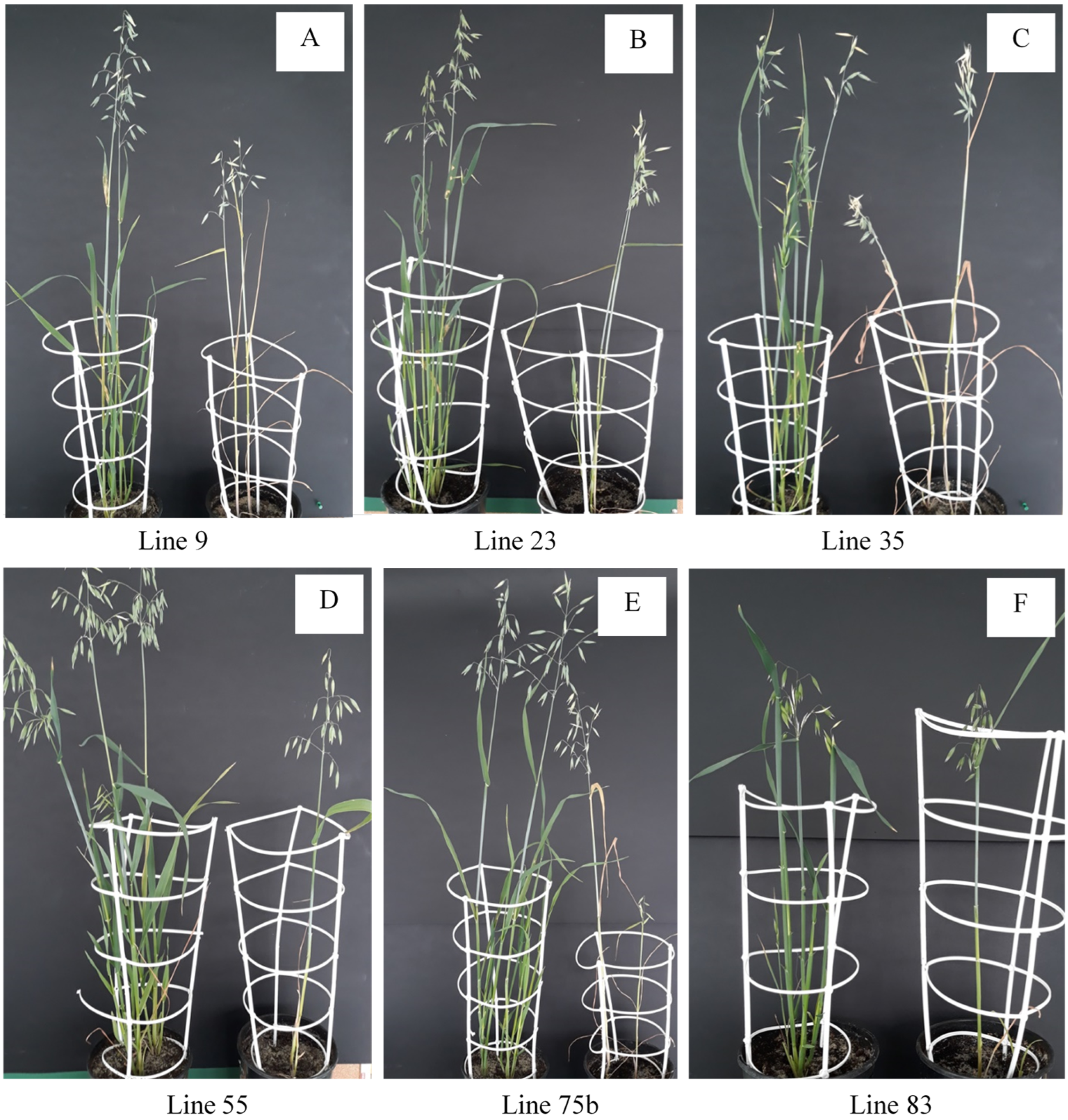
The drought-treated plants matured significantly faster and completed their vegetative cycles earlier than the controls. However, notable phenotypic differences were observed among the OMA lines, including variation in tillering, panicle formation, leaf development, plant height, and maturation rate. Only line 83 (Figure 3F) did not exhibit significantly reduced plant height and maturation time compared to the control.
The number of shoots and developed panicles is largely determined by the genotype of the respective OMA lines. In response to soil drought stress, certain genotypes displayed a greater reduction in tillering compared to others. A high number of panicles under water-deficient conditions often resulted in poorly filled grains or empty husks without grain formation. Conversely, genotypes that produced fewer panicles or only a primary shoot tended to ensure proper grain filling, despite the reduced grain count.
Phenotypic differences observed between selected OMA lines are illustrated in Figure 3.

3.3. Statistical Analysis of Biochemical and Yield-Related Traits

All the traits had a normal distribution. The results of MANOVA indicated that genotype (Wilk’s λ = 0.0004; F = 4.33), treatment (Wilk’s λ = 0.3301; F = 10.28), and genotype × treatment interaction (Wilk’s λ = 0.0209; F = 1.76) were statistically significant (p < 0.001) when examined in all 15 quantitative traits jointly. Analysis of variance revealed that the main effects of genotype were significant for all the traits studied (Table 3, Table 4 and Table 5). Statistically significant differences between control and drought were observed for all traits, except soluble sugar content on first day of drought (20% RWC) (Table 3), as well as chlorophyll b content and carotenoid content after two weeks of drought (20% RWC) (Table 4). ANOVA showed that the genotype × treatment interaction was significant for soluble sugar content on the first day of drought (Table 3), phenolic compound content and chlorophyll a content after two weeks of drought (Table 4), as well as the number of grains and the mass of grains plant−1 (Table 5).

3.4. Analysis of Biochemical Parameters Observed on the First Day of Drought (20% RWC)

On the first day of drought, a significant effect of both individual factors treatment (T) and genotype (G) on trait variability was demonstrated, with the exception of the effect of treatment (T) on soluble sugar content. However, an interaction effect between treatment and genotype (T × G) was observed for this trait, which was not found when analysing the remaining biochemical parameters. Significant differences in the average content of phenolic compounds between the control (C) and the drought-stressed plants (D) were observed as early as on the first day of drought, with an average increase of 9% in these compounds. The highest increases, amounting to 23% and 20%, were observed in lines 1b and 78b, respectively. A significant increase in phenolic compound content due to drought was also noted in line 9. Among the control plants, the highest levels of the analyzed compounds were recorded in lines 42 and 43, while the lowest were found in lines 12 and 18. In contrast, among the drought-stressed plants, the highest values were observed in lines 42 and 9, and the lowest in lines 12 and 18, as well as in the oat cv. Bingo (Table 3).
Statistically significant differences in chlorophyll a content between the control plants and those subjected to drought were observed as early as on the first day of drought. On average, chlorophyll a content under drought conditions was 10% lower. A decrease in chlorophyll a content under drought conditions was observed in ten lines, with the highest and statistically significant reduction of 31% recorded in line 12. Among the control plants, the highest chlorophyll a levels were found in lines 35 and 55, and the lowest in lines 78b and 43. In the drought-stressed plants, the highest values were recorded in lines 55 and 35, while the lowest were observed in lines 23 and 12 (Table 3). On the first day of drought, the chlorophyll b content in drought-stressed plants was significantly lower than in the control by 6%. Among the control, the highest chlorophyll b content in leaves was recorded in lines 35 and 55, while the lowest was observed in lines 78b and 43, as well as in the oat cv. Bingo. In the drought-stressed plants, the highest values were found in lines 55 and 35, and the lowest in lines 12 and 23 (Table 3). On the first day of drought, the chlorophyll a and b content in drought-stressed lines was significantly lower than in the control by 9%. On the first day of drought, the carotenoid content in drought-stressed plants (D) was significantly lower than in the control by an average of 11%. A decrease in carotenoid content due to drought was recorded in 10 genotypes. The highest reductions were observed in lines 23, 119, and 35, amounting to 42%, 36%, and 29%, respectively. Among the drought-stressed plants, the highest carotenoid levels were found in lines 55 and 42, while the lowest were observed in lines 23 and 119 (Table 3).

3.5. Analysis of Biochemical Parameters Observed on the Fourteenth Day of Drought (20% RWC)

On the fourteenth day of drought, a significant effect of the treatment and genotype factors (T and G) was observed for most of the analyzed traits. The only exceptions were the effects of treatment (T) on chlorophyll b and carotenoid content, which were not significant. The interaction effect (T × G) proved to be significant for three out of the six analyzed traits: phenolic compound content, chlorophyll a, and combined chlorophyll a and b. The F-test values from the ANOVA for biochemical compound content on the fourteenth day of drought are presented in Table 4. On the fourteenth day of drought, the content of soluble sugars increased compared to the first day of drought. In the control, this increase amounted to 6%, while in the drought-stressed plants, it reached 28%. On average, 15% more soluble sugars were observed in drought-stressed plants compared to the control ones on the fourteenth day of drought. The highest increase, amounting to 43%, was recorded in line 119. Among the control plants, the lowest soluble sugar contents were observed in lines 1b and 43, and the highest in lines 23 and 12, as well as in the cultivar Bingo. In the drought-stressed, the lowest contents were found in lines 18 and 114, and the highest in lines 23 and 12, as well as in the cultivar Bingo (Table 4). On the fourteenth day of soil drought, the content of phenolic compounds increased in both the control and the drought-stressed lines, with an average rise of 6% compared to the first day of drought (almost equally in both C and D). The highest increases under drought conditions were recorded in lines 119 and 114, amounting to 39% and 36%, respectively. A significant increase was also observed in line 78b. Among the control lines, the highest phenolic compound content was noted in lines 42 and 9, and the lowest in lines 119 and 114. In contrast, among the drought-stressed lines, the highest values were observed in lines 78b and 114, and the lowest in lines 12 and 55 (Table 4). On the fourteenth day of drought, a decrease in chlorophyll a content in the leaves of drought-stressed plants was observed compared to the first day of drought, with similar trends noted in the control ones. The reductions in both treatments amounted to 12%. Chlorophyll a content remained significantly lower in drought-stressed plants, by an average of 10%. The highest statistically significant decreases were recorded in lines 114, 119, and 55, amounting to 44%, 32%, and 27%, respectively. Among the control plants, the highest chlorophyll a levels were observed in lines 55 and 18, and the lowest in lines 43 and 35. In contrast, among the drought-stressed lines, the highest levels were found in lines 18 and 1b, and the lowest in lines 114 and 119. On the fourteenth day of the experiment, chlorophyll b content in leaves decreased by 12% in the control plants and by 11% in the drought-stressed plants compared to the first day of drought. Chlorophyll b levels remained lower in the drought-stressed plants. A reduction in chlorophyll b content under drought conditions was observed in eight genotypes. The highest and statistically significant decrease, amounting to 29%, was recorded in line 114. On the fourteenth day of drought (D), the highest chlorophyll b contents were observed in lines 18 and 35, while the lowest were found in lines 114 and 119. After fourteen days, the content of chlorophyll a and b in leaves decreased on average by 12% in the control and by 11% in the drought-stressed plants. The highest decrease, amounting to 39%, was observed in line 114. Statistically significant reductions were also recorded in lines 119 and 55, amounting to 28% and 24%, respectively. On the fourteenth day, carotenoid content in leaves decreased compared to the first day of drought by 18% in the control and by 5% in the drought-stressed plants. The average carotenoid level in drought-stressed plants did not differ significantly from that in the control ones. A decrease in carotenoid content due to drought was observed in five genotypes, with the highest and statistically significant reduction of 50% recorded in line 55. Among the control lines, the highest carotenoid content in leaves was found in lines 55 and 119, and the lowest in lines 114 and 78b. In contrast, among the drought-stressed plants, the highest values were observed in lines 18 and 23, and the lowest in lines 55 and 83 (Table 4).

3.6. Analysis of Selected Yield Components

Based on the ANOVA of selected yield components, it can be concluded that the examined traits were influenced by both treatment (T) and genotype (G). However, their interaction (T × G) had a significant effect only on the number and weight of grains (Table 5).

3.7. Shoot Biomass

Statistically significant reductions in shoot biomass due to drought were observed. On average, a decrease of 30% occurred in each of the analyzed genotypes. Statistically significant reductions in shoot biomass were recorded in lines 23, 26, 78b, and 12, amounting to 55%, 47%, 39%, and 36%, respectively. Among the drought-stressed lines (D), the highest above ground biomass was observed in lines 1b and 55, and the lowest in lines 35 and 18 (Table 5).

3.8. Number of Grains

The average number of developed grains decreased by 44% due to drought. Among the drought-stressed objects (D), the highest number of grains was recorded in lines 9 and 78b, as well as in the oat cv. Bingo, while the lowest was observed in lines 18 and 114 (Table 5).

3.9. Grain Weight

A statistically significant decrease in the weight of grains produced by a single plant due to drought averaged 46%. The highest grain weights under drought conditions were recorded in lines 9 and 78b, as well as in the oat cv. Bingo, while the lowest were observed in lines 18 and 114 (Table 5).

3.10. Correlation Analysis

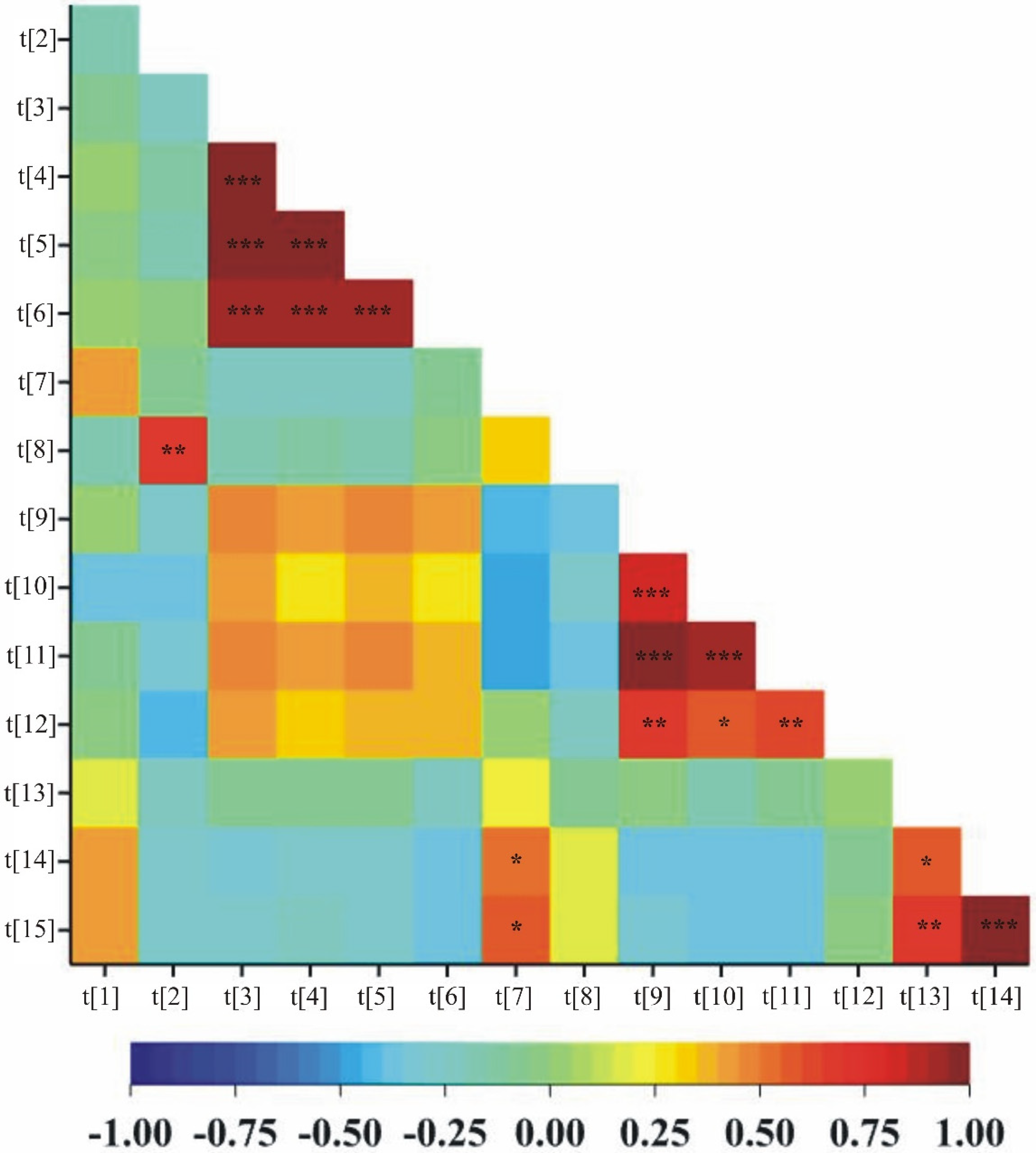
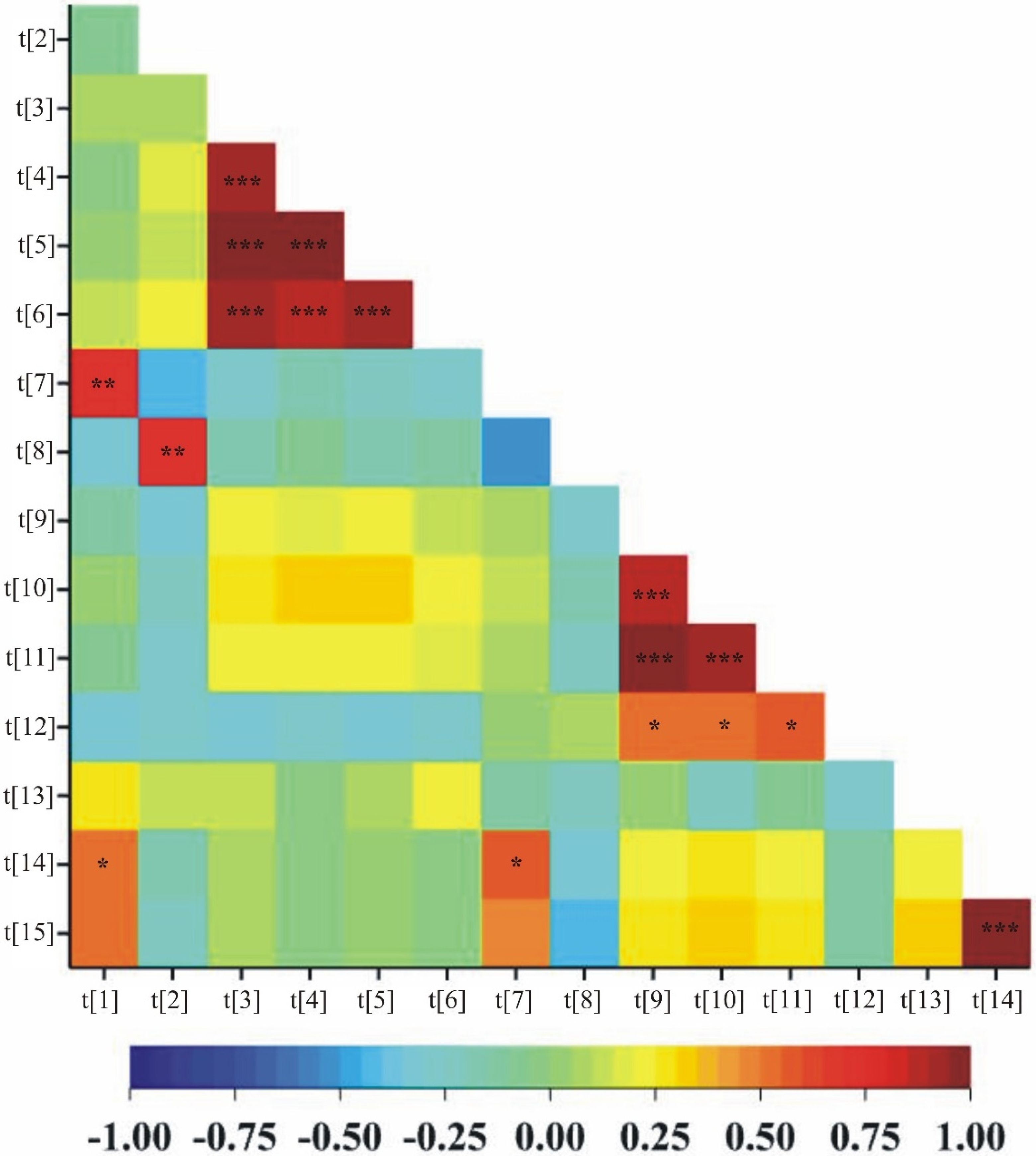
Fifteen pairs of traits were positively and statistically significantly correlated in both tested conditions: control and drought (Figure 4 and Figure 5, Table 6). Additionally, under control conditions, a positive correlation was observed between soluble sugar content after two weeks and the number of grains per plant and the mass of grains per plant (Figure 4, Table 6). However, soluble sugar content on the first day of drought (20% RWC) and soluble sugar content after two weeks of drought (20% RWC), and the number of grains per plant were significantly correlated only under drought stress conditions (Figure 5, Table 6).
Each trait has a different importance and a different contribution to the total multivariate variability of the studied genotypes. Analysis of the first two canonical variates for the studied genotypes is presented in Figure 6. In the graphs, the coordinates of the points for the studied lines and the oat cv. Bingo are the values for the first and second canonical variates. The first two canonical variates explained 47.28% of the total variance between individual genotypes (Figure 6). Based on the spatial arrangement, the dispersion of drought-treated genotypes 9, 78b, 23, 83, 42, 35, 114, and 55 (red diamonds) distributed across the upper and right parts of the plot, reflects diverse responses to drought stress. Notably, cv. Bingo shifts position between treatments, indicating phenotypic plasticity. The location of genotypes 26, 119, and 1b near the center of the plot suggests moderate responses to environmental conditions (Figure 6). The differentiation in genotype distribution across the canonical space highlights significant variation in drought response, which may be valuable for further selection and breeding efforts. The most significant positive linear relationship with the first canonical variate was found for chlorophyll a content on the first day of drought (0.5851), chlorophyll b content on the first day of drought (0.636), chlorophyll a and b content on the first day of drought (0.6095), and carotenoid content on the first day of drought (0.6673) (Table 6). However, the most significant negative linear relationship was found for soluble sugar content after two weeks of drought (−0.3643), the number of grains (−0.7358), and the mass of grains per plant (−0.7288) (Table 7). The second canonical variable was significantly positively correlated with phenolic compound content on the first day of drought (0.6147), soluble sugar content after two weeks of drought (0.563), and phenolic compound content after two weeks of drought (0.6846); and negatively with: chlorophyll a content after two weeks of drought (−0.5201), chlorophyll b content after two weeks of drought (−0.4195), chlorophyll a and b content after two weeks of drought (−0.5071), and the mass of stems per plant (−0.4786) (Table 7).
The greatest variation in terms of all 15 traits jointly measured with Mahalanobis distances was found for line 1b in the control and oat cv. Bingo in the drought stress (distance between them amounted to 9.14). The greatest similarity was found in line 43 between the control and drought-stressed plants (2.11) (Table 8).

4. Discussion

The phenomenon of introgression of genetic material from the pollen donor into the genome of the pollinated plant during wide crossing has been described in various species. The incorporated material may consist of entire chromosomes or merely chromosomal fragments. During wide crossing between oat and maize, some chromosomes of the pollen donor are not eliminated during embryogenesis. Instead, they behave similarly to oat chromosomes during mitotic divisions and become stably integrated into the genome of the newly formed hybrids. OMA lines may represent potentially useful genotypes in plant breeding and are also helpful for maize genome mapping [10].
In most cases, oat × maize hybrids exhibit oat-like morphology, yet many genes located on the added maize chromosomes are expressed, potentially influencing the phenotypic traits of the hybrids. Oat is a C3 photosynthesis plant, a type that is highly associated with photorespiration, which under current atmospheric conditions limits plant productivity by up to 40% [46]. Under stress conditions, this limitation becomes even more pronounced. In contrast, C4 plants exhibit significantly reduced photorespiration due to the concentration of carbon dioxide in bundle sheath cells. The advantage of C4 over C3 is especially evident in high-temperature environments. Additionally, thanks to CO2 concentration mechanisms, C4 plants can assimilate carbon efficiently during drought, requiring less water. Maize, a C4 plant, displays a transpiration coefficient of around 350, compared to values above 600 in oat.
It has been demonstrated that OMA lines carrying additional maize chromosomes show enzymatic activity typical of C4 photosynthesis, such as phosphoenolpyruvate carboxylase (PEPC) and pyruvate phosphate dikinase (PPDK) [24]. As postulated by Warchoł et al. [32], the incorporation of maize chromosomes into the oat genome did not lead to extensive anatomical changes typical of C4 photosynthesis. However, the OMA I line exhibited large outer bundle sheath cells measuring approximately 500 μm2, comparable in size to those found in maize [32]. These findings indicate that maize chromosomes may influence bundle sheath cell dimensions, a feature linked to C4 photosynthetic function. Nevertheless, this effect remains clearly constrained by the genetic background of oat. The described changes might contribute to enhanced biomass productivity in OMA lines.
Several series of experiments and biochemical measurements related to plant water status were carried out to identify differences between genotypes and to highlight those with the highest drought tolerance [47]. The beneficial role of soluble sugars during prolonged water deficit is primarily due to their function in regulating plant osmotic pressure, thereby preventing significant loss of turgor. In our experiments, soluble sugar content in OMA plants increased under soil drought. However, these values differed significantly between genotypes. During prolonged drought stress (comparing the first and fourteenth days), the sugar content declined but still remained higher in drought-stressed plants than in the control. Besides oat, soluble sugar accumulation under drought stress has also been observed in maize, rapeseed, and rice, with rice also studied for salinity stress response [48,49,50]. The most significant increases in leaf sugar content in maize under drought, ranging from several-fold to hundreds of times higher than control values, depending on genotype, were observed by Sinay and Karuwal [51].
Phenolic compound content was another parameter examined to identify genotypes tolerant to drought stress. Its concentration increased during the experiment in both control and drought-stressed plants, with higher values typically observed under drought. On both the first and fourteenth days of drought, the OMA genotype had a significant effect on phenolic compound levels, indicating varied responses of OMA lines to water deficiency. In another experiment involving hulled and hull-less oat cultivars exposed to abiotic (mechanical damage) and biotic stress (infection with a facultative pathogen), an increase in phenolic compounds under stress was recorded. This parameter proved beneficial in selecting genotypes with improved resistance to both biotic and abiotic stress. Similar results regarding phenolic compound levels were observed when selecting OMA lines with greater drought resistance [37,52]. In potato, increased phenolic compound levels were also recorded under drought stress, with these secondary metabolites contributing to overall plant health [53]. The positive role of phenolic compounds as antioxidants supporting plants in managing reactive oxygen species, which increase under stress, was also confirmed in rapeseed and potato [50,53]. Moreover, Warzecha et al. [37] demonstrated that elevated levels of soluble sugars on day one of drought and with increased phenolic compounds on day fourteen of drought were correlated with higher biomass production and increased grain number and mass.
Additional mechanisms contributing to drought tolerance in OMA lines were sought in the content of photosynthetic pigments vital for efficient photosynthesis. Some of the key factors capturing energy for this process are pigments, primarily chlorophyll a and b [54]. Prolonged drought leads to reduced chlorophyll content in leaves, visible as chlorosis [55]. Naturally, lower chlorophyll levels are found in older plants during late developmental stages when photosynthetic activity declines and senescence occurs. Thus, chlorophyll a and b content is an indicator of plant health during drought stress [56]. It has been shown that maize genotypes with higher overall chlorophyll content produced larger yields under drought than genotypes with naturally lower chlorophyll levels [57]. In addition to primary pigments, plants also contain accessory pigments, such as carotenoids, which facilitate safe and efficient photosynthesis. Higher carotenoid content reflects a plant’s preparedness to handle reactive oxygen species under stress. Increased carotenoid levels may, therefore, serve as one strategy by which plants improve their drought tolerance [58].
Changes in chlorophyll content, damage to the photosynthetic apparatus, and alterations in the composition of photosynthetic pigments under drought stress have been reported in numerous plant species [58,59]. For instance, a 15% decrease in chlorophyll content was recorded in wheat under drought conditions compared to optimal water supply [60]. Reductions in chlorophyll content due to drought have also been documented in species such as sugar beet, carrot, rapeseed, cucumber, watermelon, peanut, soybean, barley, wheat, sorghum, and sugarcane [61].
Our experiments demonstrated that drought and genotype significantly influenced the contents of chlorophyll a and b as well as carotenoids. Notable differences in chlorophyll content between control and drought-stressed plants were visible as early as day one of drought and became even more pronounced by day fourteen. These differences were also reflected in leaf coloration due to chlorosis, mainly caused by decreased chlorophyll levels. This criterion can be applied in selecting varieties with resistance or tolerance to drought stress. Also, the content of the carotenoids was significantly affected by both genotype and drought. However, on day fourteen of drought, no differences between drought-stressed and control plants were observed. In contrast, in a greenhouse experiment, Warzecha et al. [37] revealed significantly lower carotenoid levels on both the first and fourteenth day of drought.
Higher chlorophyll content during vegetation correlates with higher yield, as shown, for instance, in maize [57]. Using chlorophyll content as a basis for identifying biotic and abiotic stress resistance has proven effective in studies on various wheat, barley, rice, and Solanaceae cultivars [54,58,59,62].
The experiment also analyzed selected yield components and above ground biomass. A two-week drought period during the vegetative stage of oat × maize hybrids influenced total dry mass of aerial plant parts as well as the number and weight of grains. Genotype, treatment, and their interaction all had significant effects. The average reduction in above ground biomass was 30%. Similar tendencies, with even a 45% decrease in above ground mass, were observed in a greenhouse experiment by Warzecha et al. [37]. In the most susceptible genotypes, reductions reached 75%, whereas tolerant ones showed no statistically significant differences. Significant reductions in grain number and weight were also recorded. In our experiment, lines 9 and 78b achieved the highest values for yield components, particularly in grain number and weight. Although total above ground biomass decreased under drought, these lines exhibited some of the smallest percentage drops. These two lines were the only ones out of 14 OMA lines to exceed or match the control oat cv. Bingo under both control and drought tunnel conditions. Similar tendencies were observed in a greenhouse experiment involving OMA lines and oat cv. Bingo, where lines 9 and 78b matched or exceeded the performance of the control genotype [37]. None of the genotypes produced a higher grain number or mass under drought than lines 9 and 78b. Only some yield components in oat cv. Bingo approached those values.
Similarly, research on drought in barley revealed significant reductions in grain number and weight under both mild and severe drought conditions. Drought shortened the grain filling period by up to one-third under intense stress. Grain filling ended earlier, accelerating vegetative cycle completion. Interestingly, after 17 days of grain filling, the average grain weight was higher in drought-stressed plants than in controls, whose grain filling continued, eventually exceeding drought-stressed plants only after complete maturation [63]. Our study also observed faster maturation and senescence in drought-stressed plants. Research on wheat showed reduced biomass under drought compared to optimally watered controls and yield decline by 59% for fresh mass and 51% for dry mass [60].
In our experiment positive correlations were found between chlorophyll content on the fourteenth day of drought and grain number and weight. Similarly, in maize, drought tolerance associated with highest yield was found in genotypes with elevated chlorophyll levels, reaching up to 1.2 times the average chlorophyll content of all genotypes tested [57]. Positive correlations between chlorophyll content and yield have also been demonstrated in chickpea (Cicer arietinum) (correlation coefficient = 0.33), peanut (Arachis hypogaea) (0.43), lentil (Lens culinaris ssp. culinaris Medikus) (0.30), barley (Hordeum vulgare) (0.67), common wheat (Triticum aestivum) (0.84), durum wheat (T. durum) (0.39), sorghum (Sorghum bicolor) (0.64), and sugarcane (Saccharum spp.) (0.36) [61].
To sum up, our findings indicate that measured biochemical parameters could act as fast physiological markers for assessing plant tolerance to soil drought. The observed diversity among the studied OMAs highlights significant differences in drought response, presenting valuable germplasm for selection and breeding programs. Since the drought tolerance of OMA has only been tested under greenhouse or tunnel conditions, further verification of its drought response under field conditions is necessary.

5. Conclusions

Under drought stress, OMA lines show enhanced accumulation of soluble sugars and phenolic compounds, both crucial for osmotic regulation and reduction in stress effects. These traits vary significantly across OMAs, with lines 9 and 78b notably surpassing other OMAs in biomass and grain yield under drought; the above lines also pose high potential in control conditions. The content of chlorophyll and carotenoids is also a reliable indicator of drought tolerance, but the genotype plays a significant role, too.
The integration of maize chromosomes into oat enhances physiological advantages, particularly under water-deficient conditions. The findings emphasise the potential of OMAs in breeding programs aimed at improving drought tolerance and yield stability. OMAs like lines 9 and 78b appear as valuable candidates for further study with possible applications in cereal crop development due to their lowered susceptibility to drought with regard to yield components and biomass production. However, we must be aware of certain limitations when planning further research. The first aspect of research with OMAs is that we cannot predict which maize chromosome will be retained in generated OMAs. The second is their stability, which means the presence of maize chromosomes incorporated into oat genome in subsequent generations in sexually reproduced plants.

Author Contributions

Conceptualization, T.W.; methodology, T.W. and E.S.; validation, T.W.; formal analysis, T.W.; investigation, J.B., M.W., R.B., D.I.-H., T.W. and E.S.; resources, J.B., M.W., R.B., D.I.-H., T.W. and E.S.; data curation, T.W.; writing—original draft preparation, T.W.; writing—review and editing, J.B., M.W., R.B., D.I.-H., T.W., A.S. and E.S.; visualization, T.W., J.B. and R.B.; supervision, T.W. and E.S.; project administration, E.S. and T.W.; funding acquisition, E.S. All authors have read and agreed to the published version of the manuscript.

Funding

This research was funded by the Franciszek Górski Institute of Plant Physiology, Poland. E.S. acknowledges the National Centre for Research and Development, Poland, grant no. PBS3/B8/17/2015.

Data Availability Statement

The original contributions presented in this study are included in the article. Further inquiries can be directed to the corresponding author.

Acknowledgments

We are thankful to William Michael Helmcke for proofreading the final version of the manuscript. Microsoft Copilot was used to format the reference list according to the journal’s requirements.

Conflicts of Interest

Author Roman Bathelt was employed by the company CLAAS Polska Sp. z o.o. The remaining authors: Tomasz Warzecha, Marzena Warchoł, Jan Bocianowski, Dominika Idziak-Helmcke, Agnieszka Sutkowska, and Edyta Skrzypek declare that the research was conducted in the absence of any commercial or financial relationships that could be construed as a potential conflict of interest.

Correction Statement

This article has been republished with a minor correction to the Data Availability Statement. This change does not affect the scientific content of the article.

References

  1. Sadras, V.O.; Calderini, D.F. (Eds.) Crop Physiology: Case Histories for Major Crops; Academic Press (Elsevier): Amsterdam, The Netherlands, 2020. [Google Scholar]
  2. Food and Agriculture Organization of the United Nations (FAOSTAT). Available online: https://data.apps.fao.org/catalog/dataset/crop-production-yield-harvested-area-global-national-annual-faostat (accessed on 28 July 2025).
  3. Pisulewska, E.; Tobiasz-Salach, R.; Witkowicz, R.; Cieślik, E.; Bobrecka-Jamro, D. Effect of habitat conditions on content and quality of lipids in selected oat forms. Żywność. Nauka. Technol. Jakość 2011, 3, 66–77. [Google Scholar] [CrossRef]
  4. Oleksiak, T.; Spyroglou, I.; Pacoń, D.; Matysik, P.; Pernisová, M.; Rybka, K. Effect of drought on wheat production in Poland between 1961 and 2019. Crop Sci. 2022, 62, 728–743. [Google Scholar] [CrossRef]
  5. Barnabás, B.; Jäger, K.; Fehér, A. The effect of drought and heat stress on reproductive processes in cereals. Plant Cell Environ. 2008, 31, 11–38. [Google Scholar] [CrossRef]
  6. Shakhatreh, Y.; Kafawin, O.; Ceccarelli, S.; Saoub, H. Selection of barley lines for drought tolerance in low rainfall areas. J. Agron. Crop Sci. 2001, 186, 119–127. [Google Scholar] [CrossRef]
  7. Samarah, N.; Alqudah, A.; Amayreh, J.; McAndrews, G. The Effect of Late-terminal Drought Stress on Yield Components of Four Barley Cultivars. J. Agron. Crop Sci. 2009, 195, 427–441. [Google Scholar] [CrossRef]
  8. Daryanto, S.; Wang, L.; Jacinthe, P.-A. Global Synthesis of Drought Effects on Maize and Wheat Production. PLoS ONE 2016, 11, e0156362. [Google Scholar] [CrossRef]
  9. Ji, X.; Shiran, B.; Wan, J.; Lewis, D.C.; Jenkins, C.L.D.; Condon, A.G.; Richards, R.A.; Dolferus, R. Importance of pre-anthesis anther sink strength for maintenance of grain number during reproductive stage water stress in wheat. Plant Cell Environ. 2010, 33, 926–942. [Google Scholar] [CrossRef]
  10. Okagaki, R.J.; Kynast, R.G.; Livingston, S.M.; Russell, C.D.; Rines, H.W.; Phillips, R.L. Mapping maize sequences to chromosomes using oat-maize chromosome addition materials. Plant Physiol. 2001, 125, 1228–1235. [Google Scholar] [CrossRef] [PubMed]
  11. Thomas, H. Drought resistance in plants. In Mechanisms of Environmental Stress Resistance in Plants; Basra, A.S., Basra, R.K., Eds.; Harwood Academic Publishers: Amsterdam, The Netherlands, 1997; pp. 1–42. [Google Scholar]
  12. Hoekstra, F.; Buitink, J. Mechanisms of plant desiccation tolerance. Trends Plant Sci. 2001, 8, 431–438. [Google Scholar] [CrossRef]
  13. Stitt, M.; Hurry, V. A plant for all seasons: Alterations in photosynthetic carbon metabolism during cold acclimation in Arabidopsis. Curr. Opin. Plant Biol. 2002, 5, 199–206. [Google Scholar] [CrossRef]
  14. Nasir, M.W.; Toth, Z. Effect of Drought Stress on Potato Production: A Review. Agronomy 2022, 12, 635. [Google Scholar] [CrossRef]
  15. Paul, M.; Pellny, T. Carbon metabolite feedback regulation of leaf photosynthesis and development. J. Exp. Bot. 2003, 54, 539–547. [Google Scholar] [CrossRef] [PubMed]
  16. Farrar, J.F. Fluxes and turnover of sucrose and fructans in healthy and diseased plants. J. Plant Physiol. 1989, 134, 137–140. [Google Scholar] [CrossRef]
  17. Yoshida, M.; Abe, J.; Moriyama, M.; Shimokawa, S.; Nakamura, Y. Seasonal changes in the physical state of crown water associated with freezing tolerance in winter wheat. Physiol. Plant. 1997, 99, 363–370. [Google Scholar] [CrossRef]
  18. Woloshuk, C.P.; Meulenhof, J.S.; Sela-Buurlage, M.; van den Elzen, P.J.M.; Cornelissen, B.J.C. Pathogen-induced proteins with inhibitor activity toward Phytophthora infestans. Plant Cell 1991, 3, 619–628. [Google Scholar] [PubMed]
  19. Tejeda-Sartorius, O.; Soto-Hernández, R.M.; San Miguel-Chávez, R.; Trejo-Téllez, L.I.; Caamal-Velázquez, H. Endogenous hormone profile and sugars display differential distribution in leaves and pseudobulbs of Laelia anceps plants induced and non-induced to flowering by exogenous gibberellic acid. Plants 2022, 11, 845. [Google Scholar] [CrossRef]
  20. Basharat, S.; Huang, Z.; Gong, M.; Lv, X.; Ahmed, A.; Hussain, I.; Li, J.; Du, G.; Liu, L. A review on current conventional and biotechnical approaches to enhance biosynthesis of steviol glycoside in Stevia rebaudiana. Chin. J. Chem. Eng. 2021, 30, 92–104. [Google Scholar] [CrossRef]
  21. Rines, H.W.; Phillips, R.L.; Kynast, R.G.; Okagaki, R.J.; Galatowitsch, M.W.; Huettl, P.A.; Stec, A.O.; Jacobs, M.S.; Suresh, J.; Porter, H.L.; et al. Addition of individual chromosomes of maize inbreds B73 and Mo17 to oat cultivars Starter and Sun II: Maize chromosome retention, transmission, and plant phenotype. Theor. Appl. Genet. 2009, 119, 1255–1264. [Google Scholar] [CrossRef]
  22. Ananiev, E.V.; Phillips, R.L.; Rines, H.W. Chromosome-specific molecular organization of maize (Zea mays L.) centromeric regions. Proc. Natl. Acad. Sci. USA 1998, 95, 13073–13078. [Google Scholar]
  23. Muehlbauer, G.J.; Riera-Lizarazu, O.; Kynast, R.G.; Martin, D.; Phillips, R.L.; Rines, H.W. A maize chromosome 3 addition line of oat exhibits expression of the maize homeobox gene liguleless3 and alteration of cell fates. Genome 2000, 43, 1055–1064. [Google Scholar] [CrossRef]
  24. Kowles, R.V.; Walch, M.D.; Minnerath, J.M.; Bernacchi, C.J.; Stec, A.O.; Rines, H.W.; Phillips, R.L. Expression of C4 photosynthetic enzymes in oat-maize chromosome addition lines. Maydica 2008, 53, 69–78. [Google Scholar]
  25. Walch, M.D. Expression of Maize Pathogenesis-Related and Photosynthetic Genes in Oat × Maize Addition Lines. Ph.D. Thesis, University of Minnesota, Saint Paul, MN, USA, 2007. [Google Scholar]
  26. Warzecha, T.; Bathelt, R.; Skrzypek, E.; Warchoł, M.; Bocianowski, J.; Sutkowska, A. Studies of oat-maize hybrids tolerance to soil drought stress. Agriculture 2023, 13, 243. [Google Scholar] [CrossRef]
  27. Kynast, R.G.; Riera-Lizarazu, O.; Vales, M.I.; Okagaki, R.J.; Maquieira, S.B.; Chen, G.; Ananiev, E.V.; Odland, W.E.; Russell, C.D.; Stec, A.O.; et al. A complete set of maize individual chromosome additions to the oat genome. Plant Physiol. 2001, 125, 1216–1227. [Google Scholar] [CrossRef] [PubMed]
  28. Dong, Z.; Yu, J.; Li, H.; Huang, W.; Xu, L.; Zhao, Y.; Zhang, T.; Xu, W.; Jiang, J.; Su, Z.; et al. Transcriptional and epigenetic adaptation of maize chromosomes in oat–maize addition lines. Nucleic Acids Res. 2018, 46, 5012–5028. [Google Scholar] [CrossRef] [PubMed]
  29. Sosnowska, K.; Majka, M.; Majka, J.; Bocianowski, J.; Kasprowicz, M.; Książczyk, T.; Szała, L.; Cegielska-Taras, T. Chromosome instabilities in resynthesized Brassica napus revealed by FISH. J. Appl. Genet. 2020, 61, 323–335. [Google Scholar] [CrossRef]
  30. Amarillo, F.I.E.; Bass, H.W. A transgenomic cytogenetic sorghum (Sorghum propinquum) bacterial artificial chromosome fluorescence in situ hybridization map of maize (Zea mays L.) pachytene chromosome 9, evidence for regions of genome hyperexpansion. Genetics 2007, 177, 1509–2156. [Google Scholar] [CrossRef] [PubMed]
  31. Li, L.J.; Arumuganathan, K.; Rines, H.W.; Phillips, R.L.; Riera-Lizarazu, O.; Sandhu, D.; Zhou, Y.; Gill, K.S. Flow cytometric sorting of maize chromosome 9 from an oat–maize chromosome addition line. Theor. Appl. Genet. 2001, 102, 658–663. [Google Scholar] [CrossRef]
  32. Warchoł, M.; Juzoń-Sikora, K.; Rančić, D.; Pećinar, I.; Warzecha, T.; Idziak-Helmcke, D.; Laskoś, K.; Czyczyło-Mysza, I.; Dziurka, K.; Skrzypek, E. Comparative characteristics of oat doubled haploids and oat × maize addition lines: Anatomical features of the leaves, chlorophyll a fluorescence and yield parameters. PLoS ONE 2024, 19, e0298072. [Google Scholar] [CrossRef]
  33. Kynast, R.; Okagaki, R.; Rines, H.; Phillips, R. Maize individualized chromosome and derived radiation hybrid lines and their use in functional genomics. Funct. Integr. Genom. 2002, 2, 60–69. [Google Scholar] [CrossRef]
  34. Ohm, H.; Shaner, G. Breeding oat for resistance to diseases. In Oat Science and Technology; Marshall, H., Sorrells, M., Eds.; American Society of Agronomy: Madison, WI, USA, 1992. [Google Scholar]
  35. Rines, H.W.; Phillips, R.L.; Kynast, R.G.; Okagaki, R.; Odland, W.E.; Stec, A.O.; Jacobs, M.S.; Granath, S.R. Maize chromosome additions and radiation hybrids in oat and their use in dissecting the maize genome. In Proceedings of the International Congress “In the Wake of the Double Helix: From the Green Revolution to the Gene Revolution”, Bologna, Italy, 27–31 May 2003; USDA: Washington, DC, USA, 2005; pp. 427–441. [Google Scholar]
  36. Marcińska, I.; Nowakowska, A.; Skrzypek, E.; Czyczyło-Mysza, I. Production of double haploids in oat (Avena sativa L.) by pollination with maize (Zea mays L.). Cent. Eur. J. Biol. 2013, 8, 306–313. [Google Scholar] [CrossRef]
  37. Warzecha, T.; Bocianowski, J.; Warchoł, M.; Bathelt, R.; Sutkowska, A.; Skrzypek, E. Effect of Soil Drought Stress on Selected Biochemical Parameters and Yield of Oat × Maize Addition (OMA) Lines. Int. J. Mol. Sci. 2023, 24, 13905. [Google Scholar] [CrossRef]
  38. Dubois, M.; Gilles, K.A.; Hamilton, J.K.; Roberts, P.A.; Smith, F. Colorimetric method for determination of sugars and related substances. Anal. Chem. 1956, 28, 350–356. [Google Scholar] [CrossRef]
  39. Singleton, V.L.; Rossi, J.A. Colorimetry of Total Phenolics with Phosphomolybdic Phosphotungstic Acid Reagent. Am. J. Enol. Vitic. 1965, 16, 144–158. [Google Scholar] [CrossRef]
  40. Lichtenthaler, H.K.; Wellburn, A.R. Determinations of total carotenoids and chlorophylls a and b of leaf extracts in different solvents. Biochem. Soc. Trans. 1983, 11, 591–592. [Google Scholar] [CrossRef]
  41. Shapiro, S.S.; Wilk, M.B. An analysis of variance test for normality (complete samples). Biometrika 1965, 52, 591–611. [Google Scholar] [CrossRef]
  42. Kozak, M.; Bocianowski, J.; Rybiński, W. Selection of promising genotypes based on path and cluster analyses. J. Agric. Sci. 2008, 146, 85–92. [Google Scholar] [CrossRef]
  43. Bocianowski, J.; Majchrzak, L. Analysis of effects of cover crop and tillage method combinations on the phenotypic traits of spring wheat (Triticum aestivum L.) using multivariate methods. Appl. Ecol. Environ. Res. 2019, 17, 15267–15276. [Google Scholar] [CrossRef]
  44. Mahalanobis, P.C. On the generalized distance in statistics. Proc. Natl. Acad. Sci. USA 1936, 12, 49–55. [Google Scholar]
  45. VSN International. Genstat for Windows, 23rd ed.; VSN International: Hemel Hempstead, UK, 2023. [Google Scholar]
  46. Matsuoka, R.; Furbank, R.; Fukayama, H.; Miyao, M. Molecular Engineering of C4 Photosynthesis. Annu. Rev. Plant Physiol. Plant Mol. Biol. 2001, 52, 297–314. [Google Scholar] [CrossRef]
  47. Ober, E.S.; Le Bloa, M.L.; Clark, C.J.A.; Royal, A.; Jaggard, K.W.; Pidgeon, J.D. Evaluation of Physiological Traits as Indirect Selection Criteria for Drought Tolerance in Sugar Beet. Field Crops Res. 2005, 91, 231–249. [Google Scholar] [CrossRef]
  48. Mohammadkhani, N.; Heidari, R. Drought-Induced Accumulation of Soluble Sugars and Proline in Two Maize Varieties. World Appl. Sci. J. 2008, 3, 448–453. [Google Scholar]
  49. Redillas, M.; Park, S.H.; Lee, J.; Kim, Y.; Jeong, J.; Jung, H.; Bang, S.; Hahn, T.R.; Kim, J.K. Accumulation of Trehalose Increases Soluble Sugar Contents in Rice Plants Conferring Tolerance to Drought and Salt Stress. Plant Biotechnol. Rep. 2011, 6, 89–96. [Google Scholar] [CrossRef]
  50. Rezayian, M.; Niknam, V.; Ebrahimzadeh, H. Differential Responses of Phenolic Compounds of Brassica napus under Drought Stress. Iran. J. Plant Physiol. 2018, 8, 2417–2425. [Google Scholar]
  51. Sinay, H.; Karuwal, R. Proline and Total Soluble Sugar Content at the Vegetative Phase of Six Corn Cultivars from Kisar Island Maluku, Grown under Drought Stress Conditions. Int. J. Adv. Agric. Res. 2014, 2, 77–82. [Google Scholar]
  52. Warzecha, T.; Zieliński, A.; Skrzypek, E.; Wójtowicz, T.; Moś, M. Effect of Mechanical Damage on Vigor, Physiological Parameters, and Susceptibility of Oat (Avena sativa) to Fusarium culmorum Infection. Phytoparasitica 2012, 40, 29–36. [Google Scholar] [CrossRef]
  53. André, C.; Schafleitner, R.; Guignard, C.; Oufir, M.; Aliaga, C.; Nomberto, G.; Hoffmann, L.; Hausman, J.F.; Evers, D.; Larondelle, Y. Modification of the Health-Promoting Value of Potato Tubers Field Grown under Drought Stress: Emphasis on Dietary Antioxidant and Glycoalkaloid Contents in Five Native Andean Cultivars (Solanum tuberosum L.). J. Agric. Food Chem. 2009, 57, 599–609. [Google Scholar] [CrossRef]
  54. Li, R.; Guo, P.; Baum, M.; Grando, S.; Salvatore, C. Evaluation of Chlorophyll Content and Fluorescence Parameters as Indicators of Drought Tolerance in Barley. Agric. Sci. China 2006, 5, 751–757. [Google Scholar] [CrossRef]
  55. Chaves, M.M.; Flexas, J.; Pinheiro, C. Photosynthesis under Drought and Salt Stress: Regulation Mechanisms from Whole Plant to Cell. Ann. Bot. 2009, 103, 551–560. [Google Scholar] [CrossRef]
  56. Vijayalakshmi, K.; Fritz, A.K.; Paulsen, G.M.; Bai, G.; Pandravada, S.; Gill, B.S. Modeling and mapping QTL for senescence-related traits in winter wheat under high temperature. Mol. Breed. 2010, 26, 163–175. [Google Scholar] [CrossRef]
  57. Gholamin, R.; Khayatnezhad, M. Assessment of the Correlation between Chlorophyll Content and Drought Resistance in Corn Cultivars (Zea mays). Helix 2020, 10, 93–97. [Google Scholar] [CrossRef]
  58. Jaleel, C.A.; Manivannan, P.; Wahid, A.; Farooq, M.; Somasundaram, R.; Panneerselvam, R. Drought Stress in Plants: A Review on Morphological Characteristics and Pigments Composition. Int. J. Agric. Biol. 2009, 11, 100–105. [Google Scholar]
  59. Kannan, N.D.; Kulandaivelu, G. Drought-Induced Changes in Physiological, Biochemical and Phytochemical Properties of Withania somnifera Dun. J. Med. Plants Res. 2011, 5, 3929–3935. [Google Scholar]
  60. Pour-Aboughadareh, A.; Ahmadi, J.; Mehrabi, A.A.; Etminan, A.; Moghaddam, M.; Siddique, K.H.M. Physiological Responses to Drought Stress in Wild Relatives of Wheat: Implications for Wheat Improvement. Acta Physiol. Plant. 2017, 39, 106. [Google Scholar] [CrossRef]
  61. Monteoliva, M.I.; Guzzo, M.C.; Posada, G.A. Breeding for Drought Tolerance by Monitoring Chlorophyll Content. Gene Technol. 2021, 10, 165. [Google Scholar]
  62. Nikolaeva, M.K.; Maevskaya, S.N.; Shugaev, A.G.; Bukhov, N.G. Effect of Drought on Chlorophyll Content and Antioxidant Enzyme Activities in Leaves of Three Wheat Cultivars Varying in Productivity. Russ. J. Plant Physiol. 2010, 57, 87–95. [Google Scholar] [CrossRef]
  63. Samarah, N.H. Effects of Drought Stress on Growth and Yield of Barley. Agron. Sustain. Dev. 2005, 25, 145–149. [Google Scholar] [CrossRef]
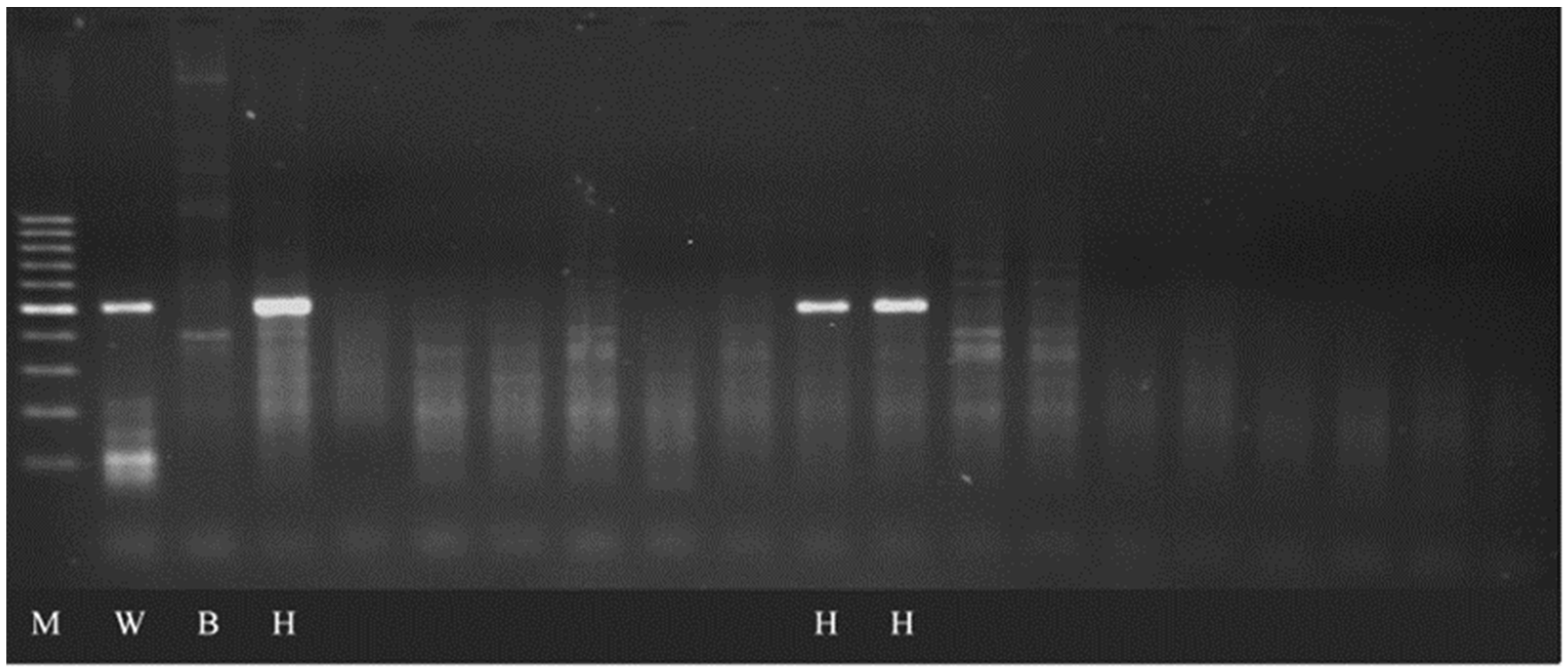
Figure 1. Identification of OMA F3 plants. PCR products of genomic DNA of maize cv. Waza, oat cv. Bingo, and a selection of chosen oat × maize plants shown after electrophoresis in 1.5% (w/v) agarose gel. Bands represent 500 bp DNA fragments that were amplified with marker Grande-1. On the gel is shown: M—marker leader, W—Maize cv. Waza, B—oat cv. Bingo, and H—oat × maize hybrids indicated in 3 of the F3 plants.
Agronomy 15 02259 g001
Figure 2. Oat × maize plants growing in a vegetation tunnel.
Agronomy 15 02259 g002
Figure 3. Oat × maize hybrids after the drought period: (A)—line 9, (B)—line 23, (C)—line 35, (D)—line 55, (E)—line 78b, (F)—line 83 (control, left side; drought, right side).
Agronomy 15 02259 g003
Figure 4. A heatmap showing correlation coefficients between all pairs of observed traits in control (70% RWC) on the first day of sampling: t [1]—soluble sugars, t [2]—phenolic compounds, t [3]—chlorophyll a, t [4]—chlorophyll b, t [5]—chlorophyll a and b, t [6]—carotenoids; and on the fourteenth day of sampling: t [7]—soluble sugars, t [8]—phenolic compounds, t [9]—chlorophyll a, t [10]—chlorophyll b, t [11]—chlorophyll a and b, t [12]—carotenoids, t [13]—the mass of stems plant−1, t [14]—the number of grains, t [15]—the mass of grains plant−1. * p < 0.05; ** p < 0.01; *** p < 0.001.
Agronomy 15 02259 g004
Figure 5. A heatmap showing correlation coefficients between all pairs of observed traits in drought stress on the first day of drought (20% RWC): t [1]—soluble sugars, t [2]—phenolic compounds, t [3]—chlorophyll a, t [4]—chlorophyll b, t [5]—chlorophyll a and b, t [6]—carotenoids; and on the fourteenth day of drought (20% RWC): t [7]—soluble sugars, t [8]—phenolic compounds, t [9]—chlorophyll a, t [10]—chlorophyll b, t [11]—chlorophyll a and b, t [12]—carotenoids, t [13]—the mass of stems plant−1, t [14]—the number of grains, t [15]—the mass of grains plant−1. * p < 0.05; ** p < 0.01; *** p < 0.001.
Agronomy 15 02259 g005
Figure 6. Distribution of the studied genotypes in the space of the first two canonical variates. Black diamond—control (C), red diamond—drought (D).
Agronomy 15 02259 g006
Table 1. Origin of the OMA lines used in the study.
OMA Line NumberOrigin
1bBingo × Contender
9D 109/10 × DC 2112/05
12STH 8-99 × DC 2112/06
18DC 06011-6 × POB 722
23STH 9511 × Bingo
26Krezus × Bingo
35(Chwat × Bingo) × STH 9110
42DC 2648/04 × Bingo
43DC 2648/04 × Bingo
55STH 8-50 × Canyon
78bBreton × Zolak 43/6
83STH 9787(b) × Bingo
114Chimene × STH 85763(b)
119Bingo × Chimene
Table 2. Experiment scheme.
TreatmentsGrowth stages of oat plants
Sowing, germination, leaf development, and tillering
BBCH 00–27
End of tillering BBCH 27Beginning of stem elongation BBCH 31End of stem elongation BBCH 37Development and maturation
BBCH 37–92
Harvest of hard grains
BBCH 92
First day of drought stressFourteenth day of drought stress
Soil droughtIrrigation up to 70% of field water capacity (FWC)Cessation of irrigation—FWC decreases from 70% to 20%Soil drought—20% FWCResumption of irrigation—up to 70% FWC
Control conditionsIrrigation up to 70% FWC during whole vegetation period
Measurements/activities performed Sampling for biochemical analysisSampling for biochemical analysisPhotographic documentation of plantsHarvest of above ground plant organs (stems and panicles)
Table 3. Mean values, standard deviations (s.d.), LSD, and F-values from two-way analysis of variance for biochemical traits measured on the first day of drought (20% RWC); C—control, D—drought.
TraitSoluble Sugars (mg g−1 DW)Phenolic Compounds (mg g−1 DW)Chlorophyll a (mg g−1 DW)Chlorophyll b (mg g−1 DW)Chlorophyll a and b (mg g−1 DW)Carotenoids (mg g−1 DW)
TreatmentGenotypeMeans.d.Means.d.Means.d.Means.d.Means.d.Means.d.
C9191.649.3264.025.790.680.050.340.021.030.070.120.01
12205.525.4550.054.630.720.120.350.031.070.140.130.03
18122.217.6450.851.350.820.080.370.031.200.110.140.01
23242.341.4055.051.760.650.060.320.020.970.070.120.01
26202.023.2056.086.690.630.020.320.030.940.050.100.01
35204.944.9459.295.600.970.070.450.021.420.090.190.01
42178.035.3583.503.910.640.150.340.040.980.190.130.03
43165.415.0365.428.160.620.140.310.030.930.170.100.02
55235.914.4357.121.220.950.080.430.031.380.110.170.04
83274.027.5252.232.930.710.050.380.031.090.080.130.02
114218.741.5461.224.410.710.060.360.031.070.090.120.01
119205.331.3352.926.800.650.170.320.040.980.210.110.02
1b162.226.5152.804.920.810.140.400.051.210.190.120.03
78b191.813.9057.421.500.610.110.300.040.910.150.090.02
Bingo222.725.1558.097.380.470.140.270.050.740.180.080.02
D9173.221.4975.456.740.590.150.310.050.900.200.100.04
12227.030.7755.080.910.500.150.270.050.770.200.090.02
18137.621.1758.183.790.680.110.350.031.030.140.120.02
23192.930.8259.6516.060.470.090.280.030.760.120.070.02
26183.243.6764.1612.580.640.070.300.040.950.090.100.02
35192.721.0864.402.010.790.060.440.041.230.100.130.01
42220.646.6478.933.060.670.140.360.041.030.180.140.03
43161.423.3860.774.310.660.030.310.050.970.070.100.04
55198.419.3762.045.020.890.100.460.031.360.120.180.05
83240.536.2560.112.300.720.080.320.091.040.170.120.05
114167.525.8270.335.990.600.060.310.040.920.100.110.03
119159.550.2159.915.520.510.070.290.020.800.090.070.02
1b197.625.9465.082.870.730.050.340.021.070.070.130.01
78b195.414.969.177.040.530.120.300.060.830.170.070.03
Bingo233.031.0354.467.420.590.170.300.030.890.200.100.01
F-ANOVA0.032 0.064 0.078 0.115 0.142 0.076
LSD0.0543.64 8.48 0.15 0.05 0.20 0.04
Table 4. Mean values, standard deviations (s.d.), LSD, and F-values from two-way analysis of variance for biochemical traits measured on the fourteenth day of drought (20% RWC); C—control, D—drought.
TraitSoluble Sugars (mg g−1 DW)Phenolic Compounds (mg g−1 DW)Chlorophyll a (mg g−1 DW)Chlorophyll b (mg g−1 DW)Chlorophyll a and b (mg g−1 DW)Carotenoids (mg g−1 DW)
TreatmentGenotypeMeans.d.Means.d.Means.d.Means.d.Means.d.Means.d.
C9216.332.5667.095.840.620.060.310.020.930.080.110.01
12267.973.8462.413.300.630.220.330.080.960.300.110.05
18177.215.9661.291.560.710.070.390.031.100.100.110.03
23285.026.8962.533.020.610.060.300.050.900.100.110.02
26256.151.3960.084.820.570.050.290.020.860.080.080.01
35266.056.4762.995.380.550.150.270.040.810.190.100.04
42214.926.7875.786.040.620.070.290.040.910.100.080.04
43160.421.4166.853.110.540.070.290.010.840.080.090.02
55177.839.158.698.410.810.180.350.091.160.250.130.07
83220.630.4363.349.250.650.110.300.060.950.140.090.04
114161.316.155.8910.200.590.050.300.010.890.060.070.02
119163.825.2848.347.440.700.190.320.061.020.260.120.04
1b148.922.2659.231.680.660.110.330.040.980.140.110.03
78b220.548.263.375.840.570.120.280.020.850.140.080.01
Bingo275.247.4263.748.720.560.120.290.030.850.150.100.03
D9225.513.7371.844.460.560.140.310.050.880.190.100.02
12296.724.5160.787.380.520.080.280.020.810.100.100.01
18170.112.2471.788.140.740.060.350.041.090.090.150.03
23329.831.1366.9420.320.650.090.320.060.970.150.130.03
26246.928.4365.016.350.570.060.260.070.830.110.100.03
35263.69.3566.880.640.580.100.330.040.910.150.110.02
42238.539.3174.703.630.520.090.280.030.810.120.090.02
43194.510.8963.513.790.580.030.280.010.860.040.100.02
55236.614.4662.645.230.580.090.290.030.880.090.070.02
83289.140.0865.665.070.530.140.310.060.840.200.090.03
114172.829.5476.016.220.330.040.220.020.550.060.100.01
119234.839.566.983.690.480.090.260.030.730.120.090.02
1b198.911.3265.560.580.670.010.330.021.000.040.120.00
78b217.922.178.016.210.560.120.280.030.840.150.100.02
Bingo361.978.5862.7811.100.570.090.300.040.870.130.120.02
F-ANOVA0.118 0.018 0.037 0.086 0.048 0.14
LSD0.0550.275 9.84 0.15 0.06 0.20 0.04
Table 5. Mean values, standard deviations (s.d.), LSD, and F-values from two-way analysis of variance for yield traits measured on the fourteenth day of drought (20% RWC); C—control, D—drought.
TraitThe Mass of Stems Plant−1 [g]The Number of GrainsThe Mass of Grains Plant−1 [g]
TreatmentGenotypeMeans.d.Means.d.Means.d.
C93.611.0961.7525.141.680.54
124.511.3457.7514.411.820.52
181.940.452.332.050.070.07
234.451.7552.7514.061.720.49
265.381.8043.0014.41.610.47
352.830.5724.256.290.730.13
423.051.159.008.040.330.27
433.110.7926.672.620.910.03
554.100.5021.7514.550.790.53
833.060.5450.759.811.540.39
1142.810.5821.0026.170.490.53
1193.160.898.506.450.260.19
1b4.820.3634.333.771.170.14
78b4.391.7961.0021.021.610.64
Bingo2.820.6337.759.641.180.54
D92.320.932.2512.690.880.35
122.891.3116.7513.890.650.56
181.910.26004.0000
232.010.9321.2515.840.690.46
262.850.6317.505.000.520.20
351.790.2519.671.890.560.06
422.831.393.751.500.110.05
432.890.4320.671.250.770.02
552.890.8826.2514.680.790.41
832.021.0129.5019.940.810.52
1142.440.290.500.580.030.03
1192.020.352.752.220.070.06
1b3.390.3722.006.480.790.19
78b2.700.6730.2514.730.870.35
Bingo2.690.4943.0016.590.990.29
F-ANOVA0.149 0.003 0.006
LSD0.051.311 17.6 0.511
Table 6. Correlation coefficients between all pairs of observed traits in control (below the diagonal) and drought stress (above the diagonal), on the first day of drought (20% RWC): t [1]—soluble sugars, t [2]—phenolic compounds, t [3]—chlorophyll a, t [4]—chlorophyll b, t [5]—chlorophyll a and b, t [6]—carotenoids; and on the fourteenth day of drought (20% RWC): t [7]—soluble sugars, t [8]—phenolic compounds, t [9]—chlorophyll a, t [10]—chlorophyll b, t [11]—chlorophyll a and b, t [12]—carotenoids, t [13]—the mass of stems plant−1, t [14]—the number of grains, t [15]—the mass of grains plant−1. * p < 0.05 (green color); ** p < 0.01 (blue color); *** p < 0.001 (red color).
Traitt [1]t [2]t [3]t [4]t [5]t [6]t [7]t [8]t [9]t [10]t [11]t [12]t [13]t [14]t [15]
t [1]1.00−0.100.05−0.010.030.110.72−0.31−0.120.03−0.08−0.310.270.540.50
t [2]−0.171.000.100.160.120.20−0.450.73−0.30−0.21−0.28−0.280.14−0.19−0.20
t [3]−0.08−0.211.000.900.990.93−0.26−0.200.220.300.25−0.310.130.080.08
t [4]0.03−0.140.971.000.950.87−0.19−0.070.190.300.22−0.28−0.04−0.01−0.02
t [5]−0.05−0.191.000.981.000.93−0.25−0.160.210.310.24−0.300.070.050.05
t [6]0.04−0.030.940.920.941.00−0.27−0.100.130.210.15−0.300.23−0.03−0.03
t [7]0.41−0.06−0.24−0.23−0.24−0.051.00−0.510.070.140.090.01−0.130.560.48
t [8]−0.170.70−0.19−0.11−0.17−0.030.321.00−0.25−0.18−0.240.09−0.20−0.35−0.42
t [9]0.03−0.280.500.440.490.42−0.44−0.371.000.890.990.550.000.230.28
t [10]−0.37−0.380.400.290.370.29−0.48−0.290.821.000.940.54−0.250.280.30
t [11]−0.10−0.320.490.410.470.40−0.47−0.360.980.911.000.56−0.070.250.29
t [12]−0.01−0.420.420.340.400.380.03−0.240.650.560.651.00−0.28−0.13−0.14
t [13]0.18−0.22−0.08−0.07−0.08−0.240.24−0.09−0.03−0.19−0.080.041.000.210.33
t [14]0.41−0.26−0.31−0.26−0.30−0.360.530.19−0.36−0.38−0.38−0.060.591.000.96
t [15]0.43−0.28−0.30−0.24−0.28−0.350.580.18−0.33−0.36−0.350.000.690.971.00
******
Table 7. Linear correlation coefficients between the original traits and the first two canonical variates.
Trait V1V2
First day of drought (20% RWC)Soluble sugar content−0.18610.2337
Phenolic compound content0.3470.6147 ***
Chlorophyll a content0.5851 ***−0.2591
Chlorophyll b content0.636 ***−0.1393
Chlorophyll a and b content0.6095 ***−0.2274
Carotenoid content0.6673 ***−0.0698
After two weeks of drought (20% RWC)Soluble sugar content−0.3643 *0.563 **
Phenolic compound content0.03330.6846 ***
Chlorophyll a content0.0666−0.5201 **
Chlorophyll b content0.059−0.4195 *
Chlorophyll a and b content0.0665−0.5071 **
Carotenoid content−0.1082−0.1136
At the stage of grains’ full maturityThe mass of stems/plant−0.3278−0.4786 **
The number of grains−0.7358 ***0.0131
The mass of grains/plant−0.7288 ***−0.0991
Percentage of explained variation26.5320.75
* p < 0.05; ** p < 0.01; *** p < 0.001.
Table 8. Mahalanobis distances between all pairs of studied genotypes calculated based on all 15 observed traits.
ControlDrought Stress
Gen.91218232635424355831141191b78bBingo91218232635424355831141191b78bBingo
Control90.00
124.570.00
187.866.450.00
234.692.337.400.00
266.703.516.373.850.00
357.867.537.316.888.260.00
427.338.277.487.637.666.560.00
434.224.805.475.124.857.776.160.00
558.126.725.776.286.215.226.576.630.00
835.193.957.433.505.626.617.985.735.800.00
1146.746.654.676.616.366.245.824.984.525.820.00
1198.337.275.277.026.187.547.695.874.646.933.960.00
1b7.045.394.696.444.388.327.944.305.696.565.245.030.00
78b3.064.377.104.925.658.717.774.078.145.886.037.396.070.00
Bingo4.263.477.262.594.697.677.424.407.354.096.446.836.754.470.00
Drought stress93.225.887.305.617.057.335.173.937.956.216.238.167.474.754.580.00
126.604.626.323.634.376.597.035.306.065.085.825.416.436.323.166.080.00
186.276.284.186.536.356.825.763.965.806.695.085.054.906.365.845.375.380.00
236.064.987.264.385.647.557.035.897.695.517.157.377.576.373.035.293.235.730.00
265.245.545.744.755.505.404.754.095.565.834.455.136.165.084.284.293.794.124.630.00
357.306.986.717.007.755.166.246.866.556.046.147.877.388.306.806.096.175.855.796.060.00
427.958.657.847.788.395.302.797.046.317.915.927.758.588.627.715.856.716.187.225.025.360.00
434.884.394.794.404.176.776.152.115.675.394.654.854.344.493.944.654.123.695.162.916.726.870.00
558.217.366.247.377.474.035.807.444.996.325.027.227.128.527.927.466.926.607.526.154.015.346.880.00
835.495.276.824.536.845.436.826.126.604.935.757.678.176.074.584.894.716.725.144.465.826.245.426.310.00
1147.138.748.188.238.897.206.495.678.388.847.277.868.067.847.585.807.275.458.165.337.545.865.988.547.740.00
1196.316.305.496.156.006.906.004.136.966.805.175.185.715.914.905.174.063.344.683.145.826.043.616.936.174.900.00
1b5.044.695.154.134.655.544.753.284.054.854.224.944.985.404.384.364.083.645.192.835.755.122.615.764.735.824.420.00
78b3.365.367.405.086.217.895.613.407.885.706.337.726.724.293.822.275.484.924.704.246.326.314.267.825.555.764.484.320.00
Bingo5.625.768.334.867.566.437.847.308.155.877.288.339.146.074.475.664.897.304.374.906.637.286.547.643.718.216.156.165.840.00
Disclaimer/Publisher’s Note: The statements, opinions and data contained in all publications are solely those of the individual author(s) and contributor(s) and not of MDPI and/or the editor(s). MDPI and/or the editor(s) disclaim responsibility for any injury to people or property resulting from any ideas, methods, instructions or products referred to in the content.