Article

Functional Analysis of the Apple SPS Gene Family in Response to Abiotic Stresses

College of Horticulture, Gansu Agricultural University, Lanzhou 730070, China
*
Authors to whom correspondence should be addressed.
Agronomy 2024, 14(6), 1237; https://doi.org/10.3390/agronomy14061237

Submission received: 25 April 2024 / Revised: 27 May 2024 / Accepted: 5 June 2024 / Published: 7 June 2024
(This article belongs to the Section Horticultural and Floricultural Crops)

Abstract

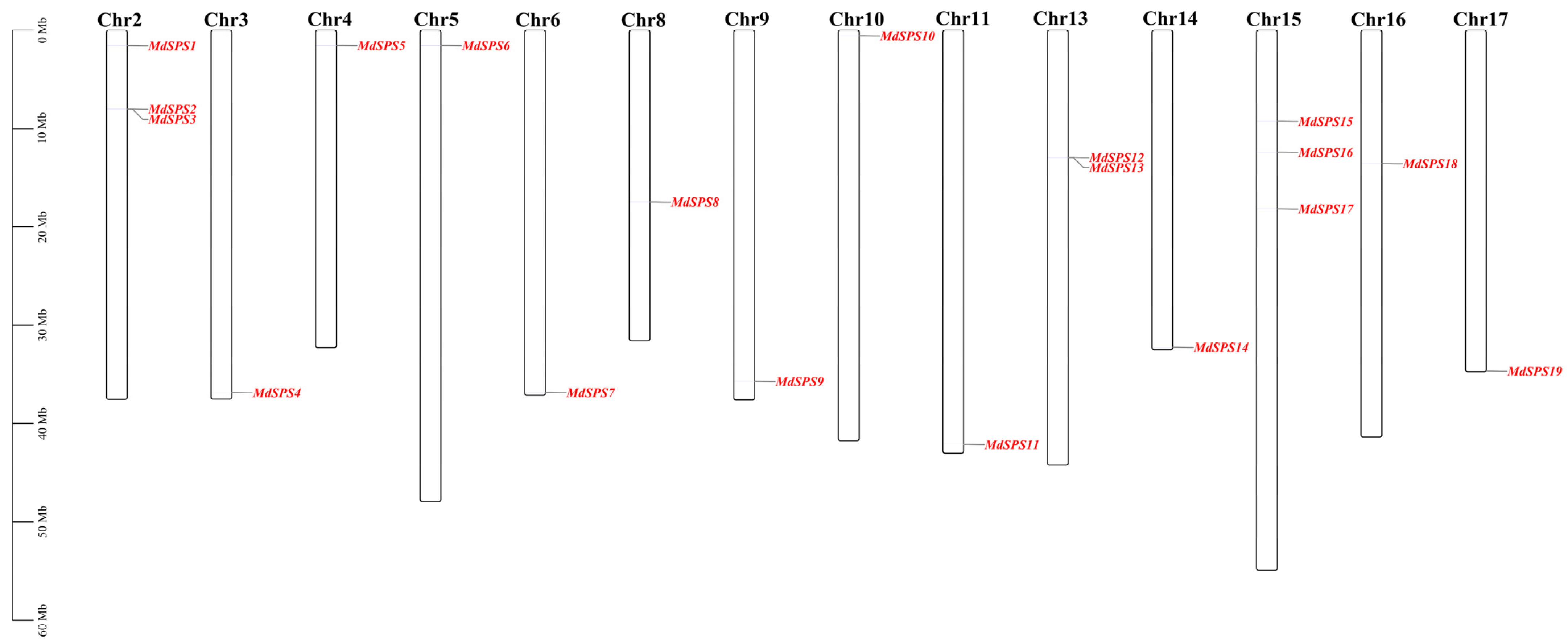
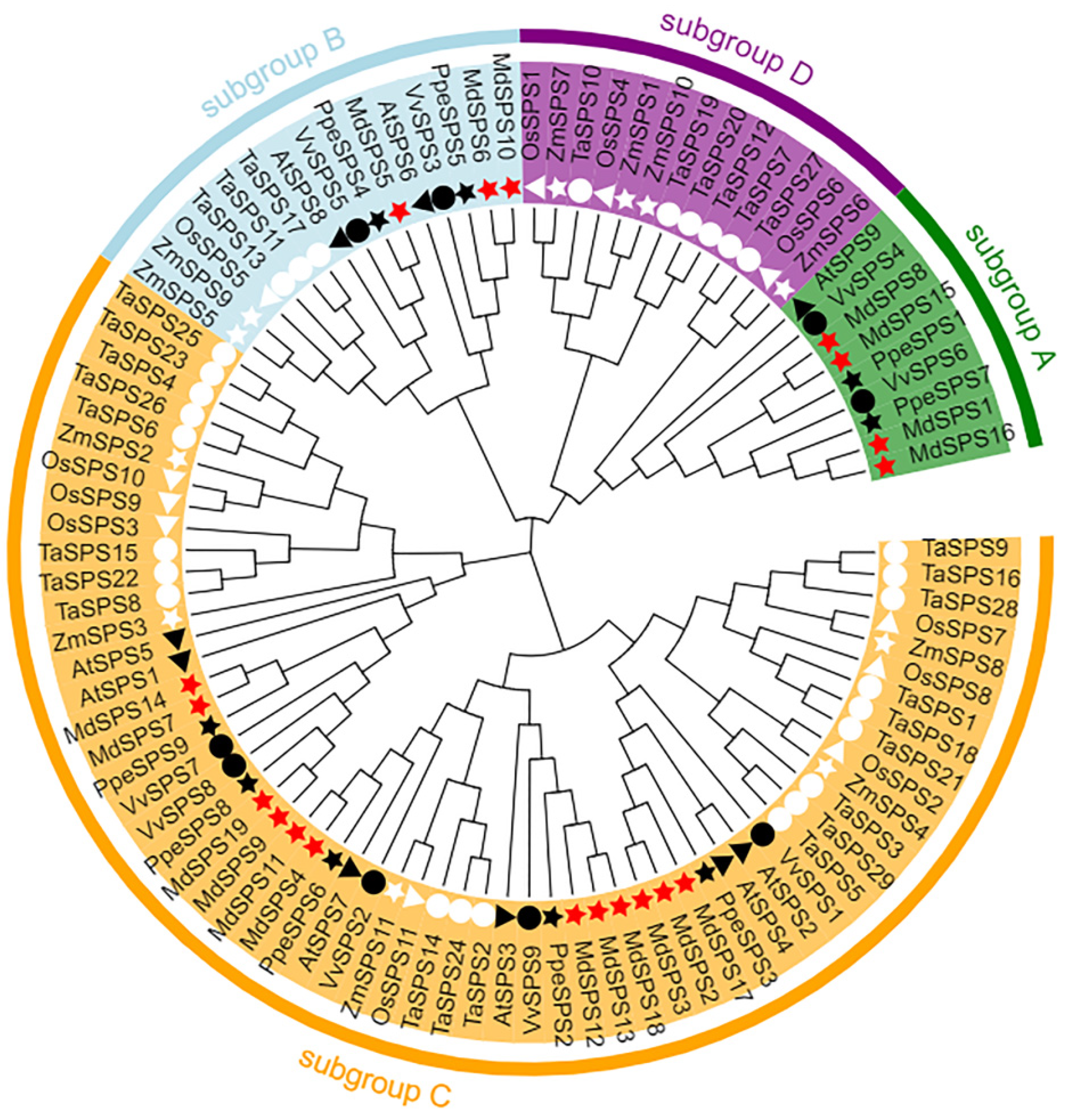
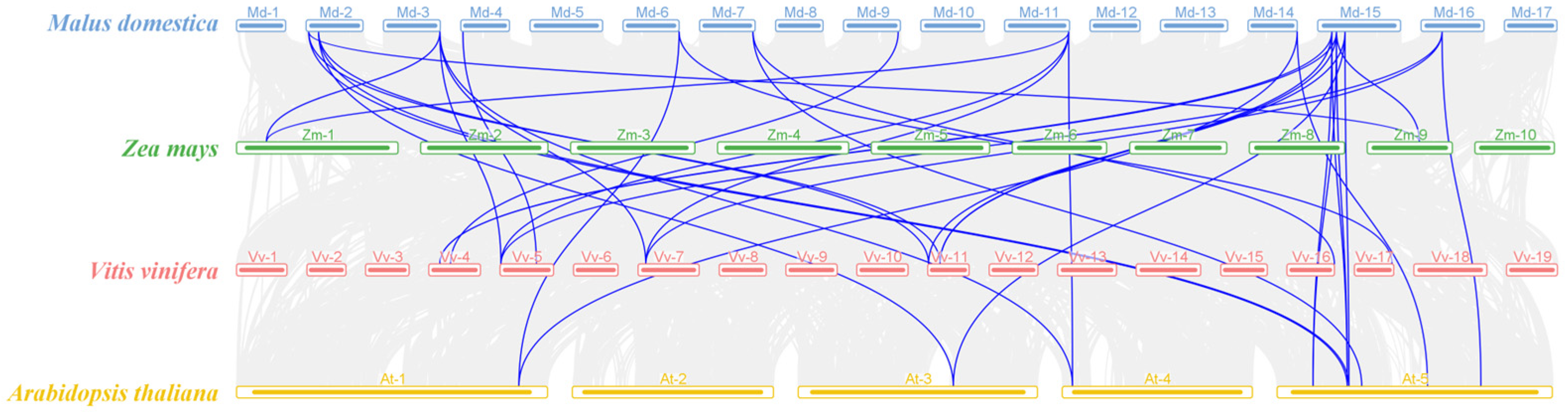
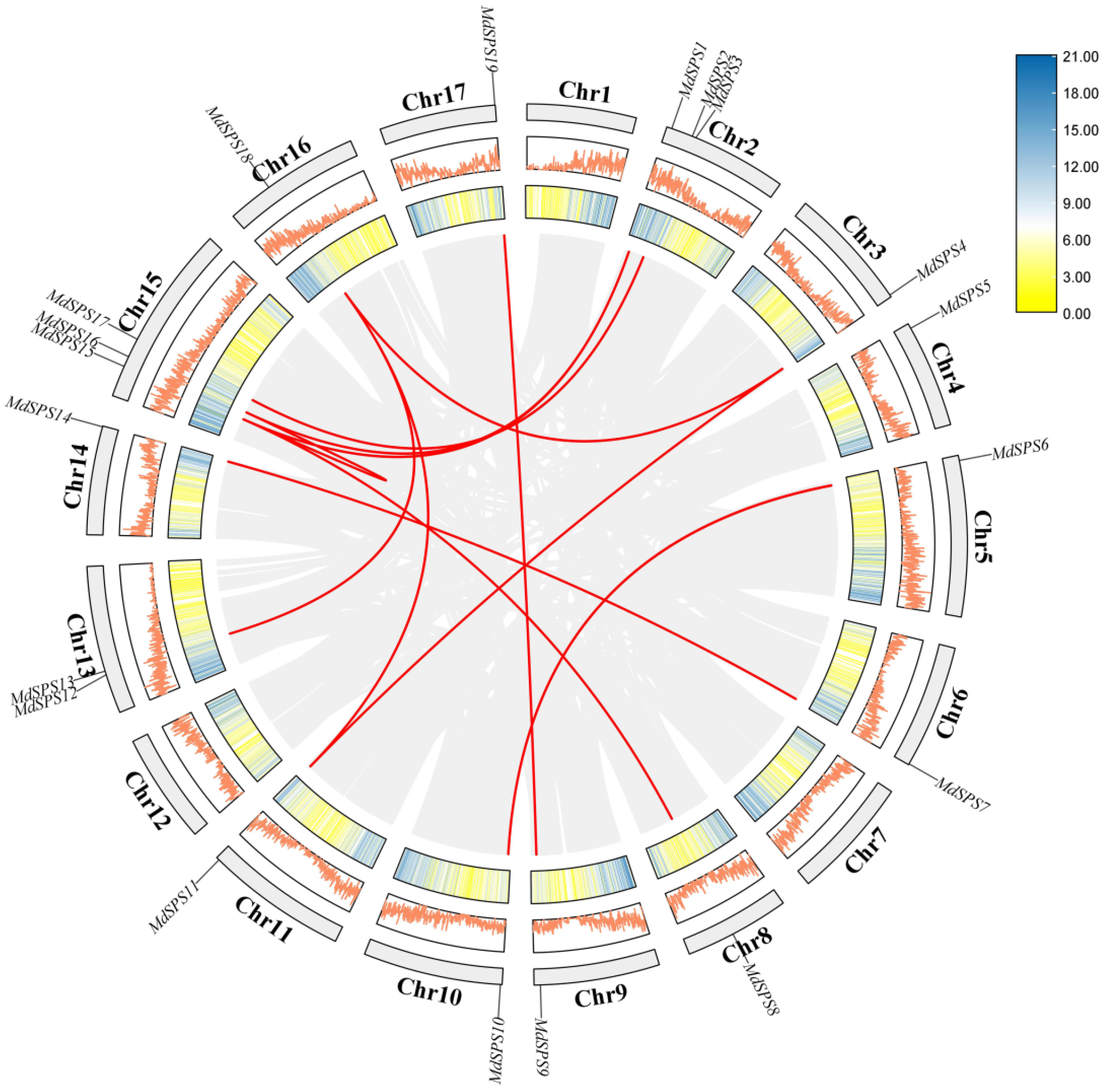
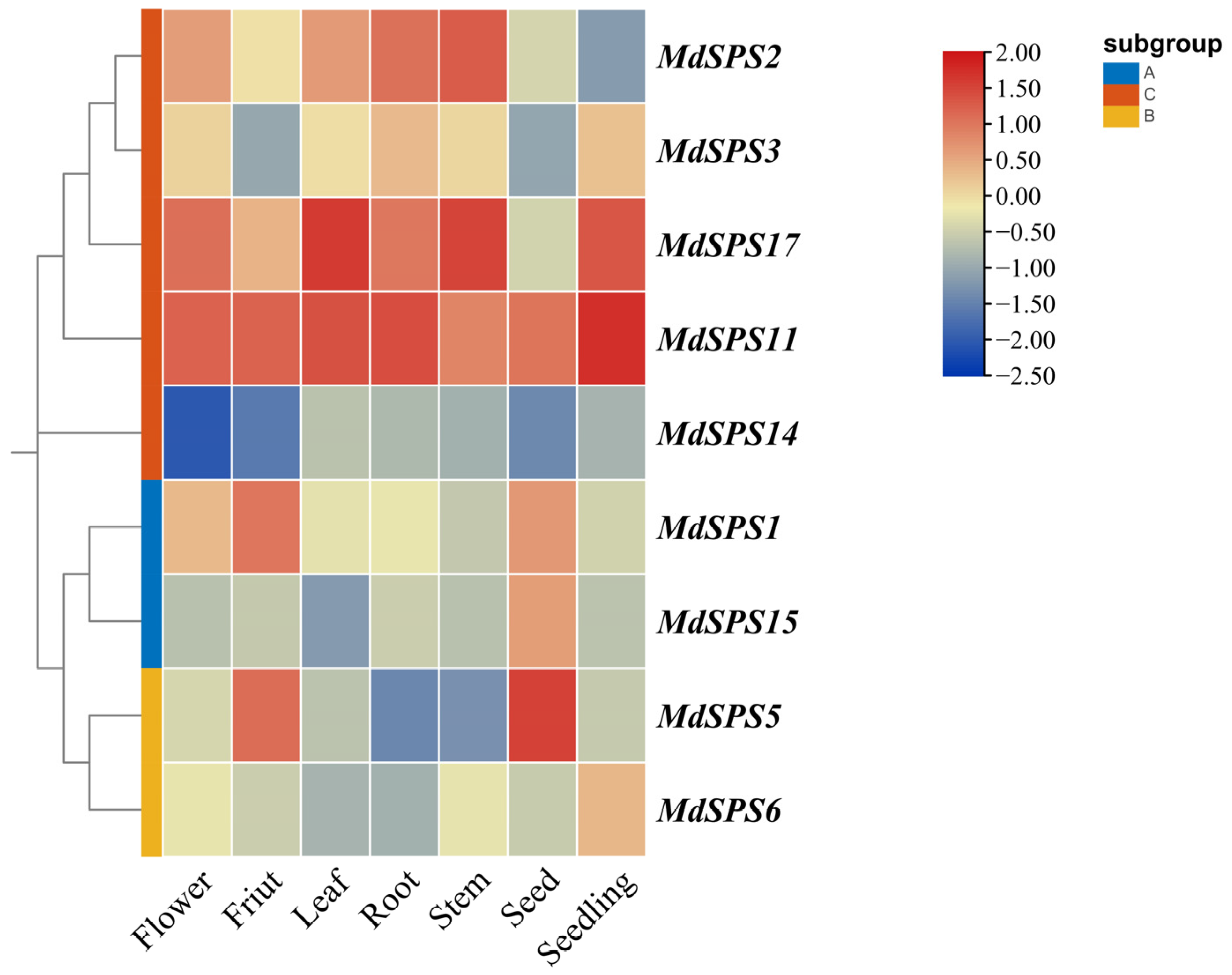
Sucrose phosphate synthase (SPS) is an important link in the process of sugar metabolism. In addition, it is also involved in abiotic stresses in plants. In order to study the SPS gene family and its role in abiotic stress, we identified the MdSPS gene family members by bioinformatics methods such as correlation analysis, the HMM method, and the Clustering method, and analyzed the transient expression of MdSPS genes by quantitative real-time fluorescence analysis (qRT-PCR). The MdSPS gene family consists of a total of 19 members divided into three subfamilies distributed on 14 chromosomes in apples. The MdSPS gene family has 12 collinearity gene pairs, indicating significant duplication. Most members of this family contain a large number of plant hormone response elements, light-inducible elements, and abiotic stress response elements 2kb upstream of the promoter. Codon bias analysis shows that there are 28 high-frequency codons and no codons with strong preference in this family. Gene chip results showed that only MdSPS2, MdSPS3, MdSPS11, and MdSPS17 were up-regulated in roots, and they were all members of subfamily C. The qRT-PCR analysis showed that all members of this family responded significantly to drought stress, salt stress, and low temperature stress. Interestingly, the relative expression of MdSPS12 was significantly down-regulated under salt stress and low temperature stress. In addition, the expression of MdSPS3, MdSPS8, MdSPS11, and MdSPS17 was more than 20 fold higher than that of the control under drought stress, salt stress, and low temperature stress. These four genes could be candidates for molecular breeding in the MdSPS family.
Keywords: Malus domestica; sucrose phosphate synthetase (SPS); abiotic stress; expression analysis Malus domestica; sucrose phosphate synthetase (SPS); abiotic stress; expression analysis