Abstract
Brevibacillus brevis is one of the most common biocontrol strains with broad applications in the prevention and control of plant diseases and insect pests. In order to deepen our understanding of B. brevis genomes, describe their characteristics comprehensively, and mine secondary metabolites, we retrieved the genomic sequences of nine B. brevis strains that had been assembled into complete genomes from the NCBI database. These genomic sequences were analyzed using phylogenetic analysis software, pan-genome analysis software, and secondary metabolite mining software. Results revealed that the genome size of B. brevis strains ranged from 6.16 to 6.73 Mb, with GC content ranging from 47.0% to 54.0%. Phylogenetic analysis classified the nine B. brevis strains into three branches. The analyses of ANI and dDDH showed that B. brevis NEB573 had the potential to become a new species of Brevibacillus and needed further research in the future. The pan-genome analysis identified 10032 gene families, including 3257 core gene families, 3112 accessory gene families, and 3663 unique gene families. In addition, 123 secondary metabolite biosynthetic gene clusters of 20 classes were identified in the genomes of nine B. brevis strains. The major types of biosynthetic gene clusters were non-ribosomal peptide synthase (NRPS) and transAT polyketide synthase (transAT-PKS). Furthermore, a large number of untapped secondary metabolites were identified in B. brevis. In summary, this study elucidated the pan-genome characteristics of the biocontrol bacterium B. brevis and identified its secondary metabolites, providing valuable insights for its further development and utilization.
1. Introduction
Brevibacillus brevis is a widely distributed Gram-positive bacterium, which is environmentally friendly and contains no endotoxin [1]. B. brevis is extensively used in the biological control of plant disease, pollutant degradation, heavy metal remediation, and other fields [2,3,4]. Particularly in the biological control of plant diseases, B. brevis has emerged as a key player due to its capacity to produce a wide range of antimicrobial active products, such as gramicidin, tyrocidine, exopolysaccharides, chitinase, and ethylparaben [5,6,7,8,9]. In 1959, Edeines, the non-ribosomal peptide antimicrobial natural products, were identified in B. brevis Vm4, exhibiting strong antibacterial activity against bacteria, mycoplasma, and fungi, as well as an inhibitory effect on tumor cells [10]. In 2002, it was found that B. brevis NO.G1 could produce chitinase with high stability, significantly inhibiting the growth of molds in vegetables [11]. In 2007, gramicidin S was identified in B. brevis Nagano, inhibiting parasites by rapidly and selectively lysing infected erythrocytes [12]. In 2010, the isomer of surfactin was identified in B. brevis HOB1, proving to be a powerful biosurfactant capable of dissolving various bacteria [13]. In 2012, tostadin, an antibacterial peptide, was identified in B. brevis XDH. This peptide exhibits high solubility in water, excellent thermal stability, and a potent inhibitory effect on Escherichia coli and Staphylococcus aureus when cultured in vitro [14]. In 2013, bacteriocins were identified in B. brevis GM100, capable of inhibiting Gram-negative bacteria, Gram-positive bacteria, Pseudomonas aeruginosa, Agrobacterium, and Candida tropicalis [15]. In 2016, a new antimicrobial peptide was identified in B. brevis MH9, showing certain antibacterial activity against Escherichia coli and Salmonella typhi [16]. In 2020, the active substance siderophore was identified from B. brevis GZDF3, demonstrating strong antibacterial activity against Candida albicans [17].
With the significant advancements in sequencing technologies, genomic data continue to grow, revealing remarkable genomic diversity in microbial genomes. Even among different strains of the same species, significant differences in DNA contents exist. These differences suggest that the entire gene pool of a single strain is much smaller than that of the given species [18]. The concept of the “pan-genome” first proposed by Tettelin in 2005, refers to all the genes present in a particular species. Pan-genome includes the core genome (genes present in all strains), accessory genome (genes present in some strains), and unique genome (genes unique to specific strains) [19]. Pan-genomic analysis is increasingly used in mining microbial functional genes [20]. Traditional methods for analyzing secondary metabolites of microorganisms may have limitations. However, by analyzing known genomic data in bacteria through pan-genomic analysis, it is possible to identify novel secondary metabolic gene clusters and potential active substances [21,22].
Although B. brevis has shown remarkable abilities in biological control of plant diseases, growth promotion, and pollutant degradation, most current studies focus on specific strains, which limits a full understanding of the genomic characteristics and secondary metabolite production potential of B. brevis. This study aims to address this gap by analyzing the pan-genome of B. brevis through a comparison of the genomes of nine B. brevis strains that have undergone whole-genome sequencing. In addition, antiSMASH was employed to identify secondary metabolic gene clusters and potential active substances in these strains. The goal of this study is to further explore the genomic features of B. brevis and to provide a foundation for a comprehensive understanding of its characteristics and potential applications in biological control.
2. Materials and Methods
2.1. Materials
A total of nine complete genomic sequences of B. brevis strains were retrieved from NCBI (https://www.ncbi.nlm.nih.gov/ (accessed on 13 November 2023)), including five strains isolated from soil, one strain from tobacco roots and one strain from cell culture. To assess the completeness and contamination of these genomes, we used the lineage-specific workflow from CheckM with default parameters [23]. A genome was included only if it had ≥90% completeness, ≤10% contamination, and an overall quality of ≥ 50% (defined as completeness—5 × contamination) [24]. After checking the quality, all nine genomes were kept for further analysis. The general features of the relevant strains are described in Table 1.
2.2. Average Nucleotide Identity (ANI) and Digital DNA–DNA Hybridization (dDDH) Analysis
ANI analysis was performed using the complete genome sequences. ANI values were estimated using the online software IPGA v1.09 (https://nmdc.cn/ipga/ (accessed on 20 November 2023)) [25]. Typically, the cut-offs for species delineation were 95% ANI [26]. In addition, the dDDH values were calculated using Genome-to-Genome Distance Calculator 3.0 provided by the Leibniz Institute DSMZ website (https://ggdc.dsmz.de/ggdc.php# (accessed on 20 November 2023)) [27]. The 70% species cut-off of dDDH is usually kept in taxonomic studies of bacteria [28].
2.3. Phylogenetic Analyses Based on Genomic Sequences
The genome phylogeny of the nine B. brevis strains was constructed using the concatenated multiple sequence alignments of 120 bacterial single-copy marker genes with GTDB-tk v1.4.0 software [29]. The results obtained were used to reconstruct the evolutionary tree using the iTOL software (https://itol.embl.de/itol.cgi (accessed on 2 April 2024)) [30].
2.4. Pan-Genome Analysis
Pan-genome analysis was conducted using the BPGA, version 1.3, (Bacterial Pan Genome Analysis) tool [31]. The genomic sequences in GenBank formats for the nine B. brevis strains were uploaded to the BPGA software, and pan-genome analysis was performed. The USEARCH software, version 11, was used to construct the core genome of B. brevis with 50% sequence homology as the truncation value. MUSCLE software was used to perform tandem alignment of core gene families. The Gnu-plot software, version 4.6, was used to draw the pan-genome and core genome point map. Functional analysis of all core gene families, accessory gene families, and unique gene families was performed using COG annotation.
2.5. Analysis of Secondary Metabolite Biosynthetic Gene Clusters
The potential secondary metabolite biosynthetic gene clusters were investigated using the online software antiSMASH7.0 (https://antismash.secondarymetabolites.org (accessed on 23 November 2023)) [32]. The default parameters were used for the antiSMASH analysis with relaxed detection strictness. AntiSMASH could accurately identify all known secondary metabolic gene clusters when it can use a specific profile hidden Markov models [33].
3. Results
3.1. General Genomic Characteristics of B. brevis
The complete genomes of nine B. brevis strains, isolated from different geographic locations and sources, were sequenced. Table 1 illustrates the basic characteristics of the nine B. brevis strains obtained from the NCBI database. Statistical analysis of the genome data revealed that the genome size of B. brevis ranged from 6.16 to 6.73 Mb, the GC content ranged from 47.0% to 54.0%, the gene number ranged from 5784 to 6592, and the number of CDS ranged from 5455 to 6425.
Table 1.
The general genome features of the nine B. brevis strains used in this study.
3.2. Genetic Diversity of the Nine B. brevis Strains Based on ANI and dDDH Analyses
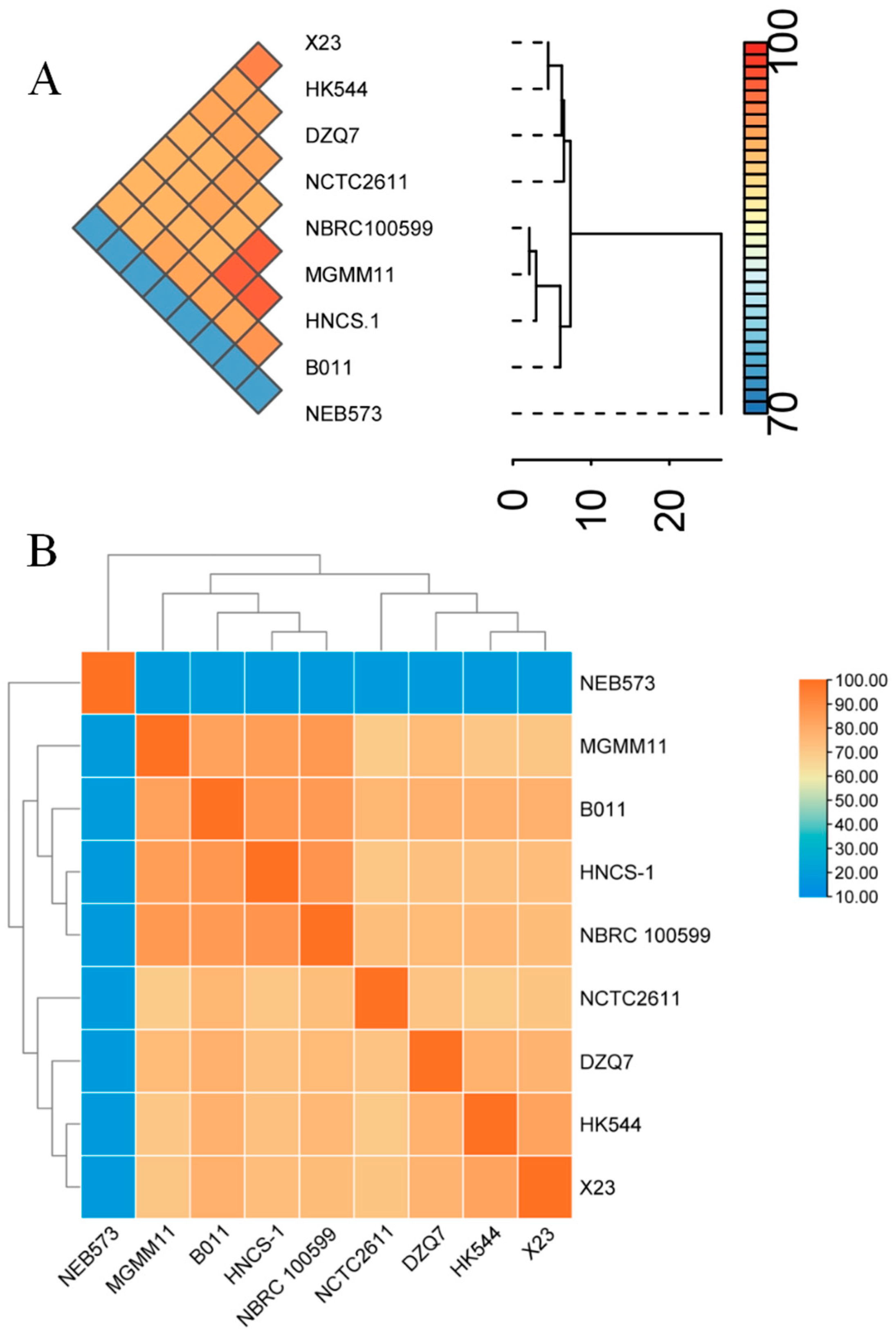
ANI and dDDH analyses are powerful tools for evaluating the genetic relationships at the genome-wide level, particularly for distinguishing closely related species. In this study, the genetic diversity of the nine B. brevis strains was evaluated using ANI and dDDH analyses of whole genome sequence. The ANI comparison matrix of the whole genome sequences revealed that, except for the NEB573 strain, the ANI values of pairwise comparisons among the other eight strains were all above 92.2% (slightly less than 95% species cut-off). The ANI values of the NEB573 strain compared to other strains ranged only between 73% and 74%, indicating a slightly more distant genetic relationship between NEB573 and the other eight strains (Figure 1A). The results of the dDDH analysis aligned with those of the ANI approaches, showing that the genomes (except NEB573) together had dDDH values above 69.5% (slightly less than 70% species cut-off), and NEB573 compared to other strains had significantly low dDDH values (Figure 1B). In summary, NEB573 had the potential to become a new species and needed further attention in the future.
Figure 1.
ANI (A) and dDDH (B) analyses of the nine B. brevis strains.
3.3. Phylogenetic Analysis of the Nine B. brevis Strains
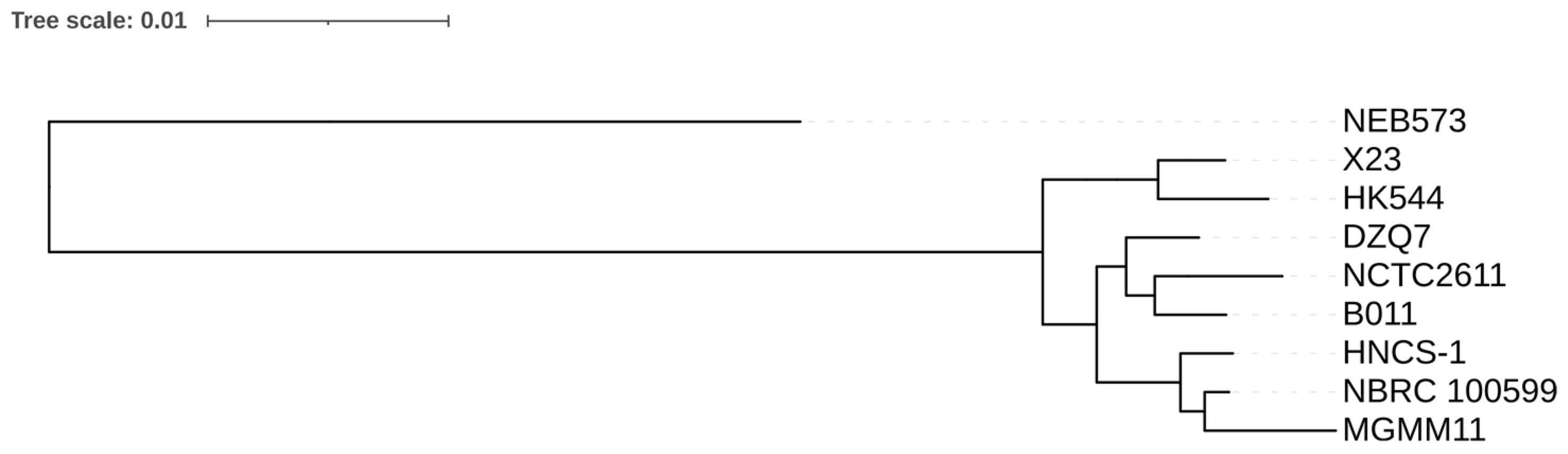
The results of the phylogenetic analysis showed that the nine B. brevis strains were classified into three branches. One branch included NEB573, and one branch included X23 and HK544, while the other strains formed a separate branch (Figure 2). Compared with the separation source data, it was found that the evolutionary relationship of B. brevis strains might have a certain correlation with the separation source. NEB573 isolated from cell culture had a distant relationship with the other eight B. brevis strains. The results of the phylogenetic analysis were consistent with those of the ANI and dDDH analyses.
Figure 2.
Phylogenetic tree of nine B. brevis strains based on 120 bacterial single-copy marker genes.
3.4. Pan-Genome Characteristics of B. brevis
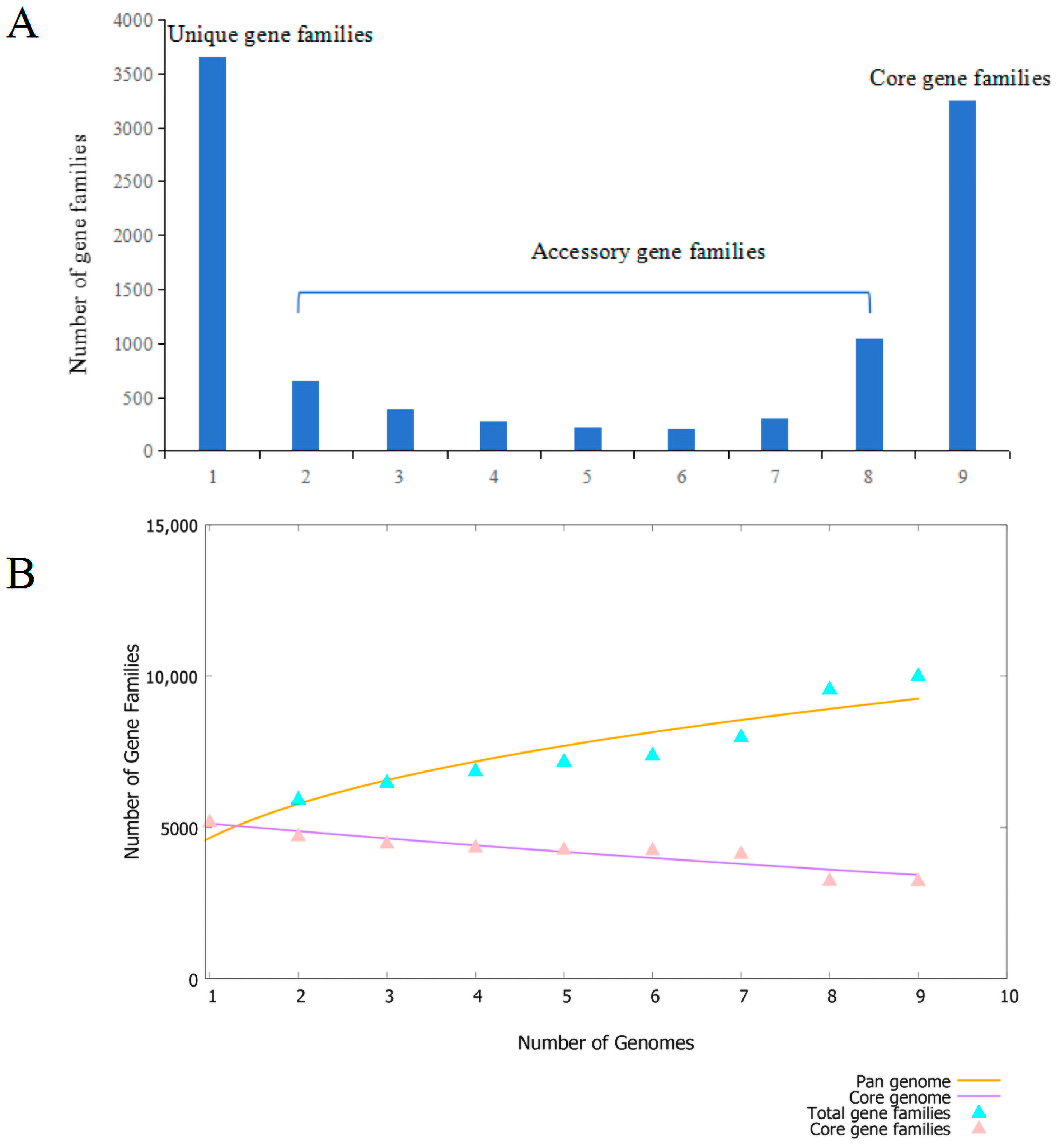
Pan-genome analysis was conducted on the nine B. brevis strains with assembled complete genomes. A total of 52,449 functional genes were used for cluster analysis, leading to the identification of 10,032 gene families (Figure 3A). Each gene family represents a hypothetical homologous gene. These gene families exist in different genomes, with the conservation of a gene family increasing with the number of genomes it covers. The genes in the core genome are responsible for determining the basic biological characteristics and main phenotypic traits [37].
Figure 3.
Pan-genome analysis of the nine B. brevis genomes. (A) Distribution of gene families. (B) Curve development of pan (blue color) and core (pink color) genomes.
The analysis revealed that there were 3257 core gene families shared by the nine B. brevis strains, accounting for 32.47% of the pan-genome of B. brevis. Additionally, there were 3112 accessory gene families, making up 31.02% of the pan-genome. Furthermore, there were 3663 unique gene families contained in one strain, accounting for 36.51% of the pan-genome. It is expected that the number of gene families in one or nine genomes is larger, while the number of gene families in 2~8 genomes is smaller. This is because the more genomes analyzed, the greater the possibility of finding new genes. However, the number of core gene families is negatively affected by the addition of new strains; that is, as new strains are added, the possibility of gene sharing between strains decreases.
The relationship between the number of genomes, core genomes, and pan-genomes of B. brevis was analyzed and calculated using BPGA software (Figure 3B). The fitting equation for the relationship between pan-genome size (f(x)) and the genome number (x) was f(x) = 5307.29x0.280145. The fitting equation for the relationship between core genome size (f1(x)) and the number of genomes (x) was f1(x) = 5125.7e−0.0581278x. According to these fitting equations, it could be observed that as the number of sequenced B. brevis genomes increased, the pan-genomes increased, while the core genomes gradually decreased. Therefore, it can be speculated that the pan-genome of B. brevis remains open.
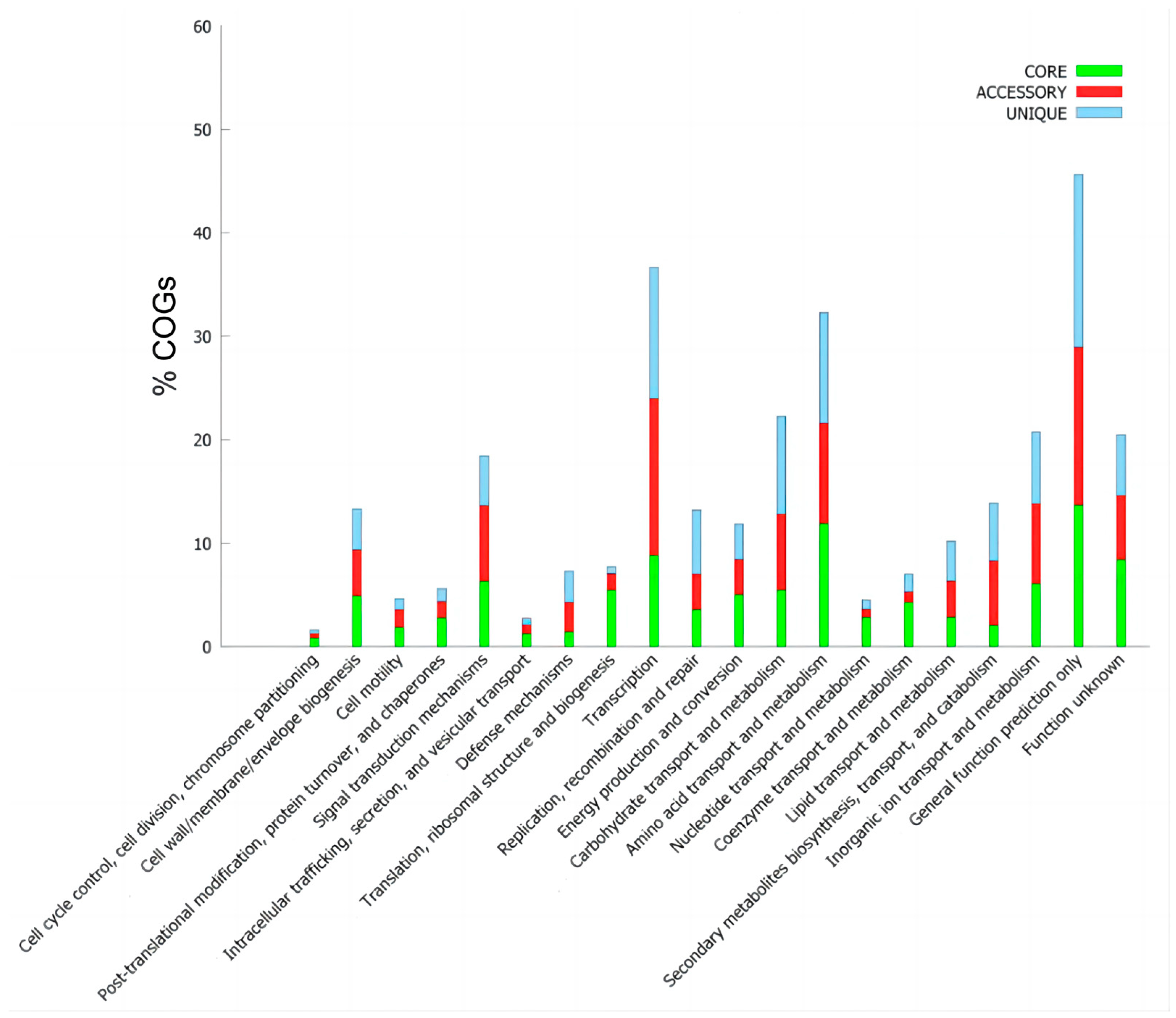
In a COG (clusters of orthologous groups of proteins) analysis of the pan-genome, the core, accessory, and unique gene families were found to be distributed across all COG categories. Figure 4 shows that genes related to amino acid transport and metabolism, carbohydrate transport and metabolism, and inorganic ion transport and metabolism were significantly enriched in the core gene families. This reflected the high ability of B. brevis to thrive in different environments, relying on various carbon sources, nitrogen sources, and inorganic salts. Essential genes for bacterial growth, such as those involved in transcription, translation, and signal transduction, were also significantly enriched in the core gene families. It was worth noting that a large number of core gene families were related to general functional prediction, indicating that the B. brevis strains might have unknown antibacterial mechanisms. In addition, the core, accessory, and unique gene families contained a large number of genes classified as “Function unknown”, possibly because they had not been studied or were partially pseudogenes.
Figure 4.
COG functional analysis of pan-genome. The graph shows the predicted function of proteins encoded by core, accessory, and unique gene families of the pan-genome.
3.5. Secondary Metabolite Biosynthetic Gene Cluster of B. brevis
AntiSMASH is a powerful and comprehensive bioinformatics tool used for identifying and annotating biosynthetic gene clusters of secondary metabolites. In this study, the antiSMASH 7.0 software was employed to predict the secondary metabolite synthesis gene clusters in the genomes of nine B. brevis strains. The results showed that B. brevis possessed a strong ability to synthesize secondary metabolites, with each strain predicted to produce an average of 14 secondary metabolites. Interestingly, there was no direct relationship between the number of secondary metabolic gene clusters and the genome size of the strains.
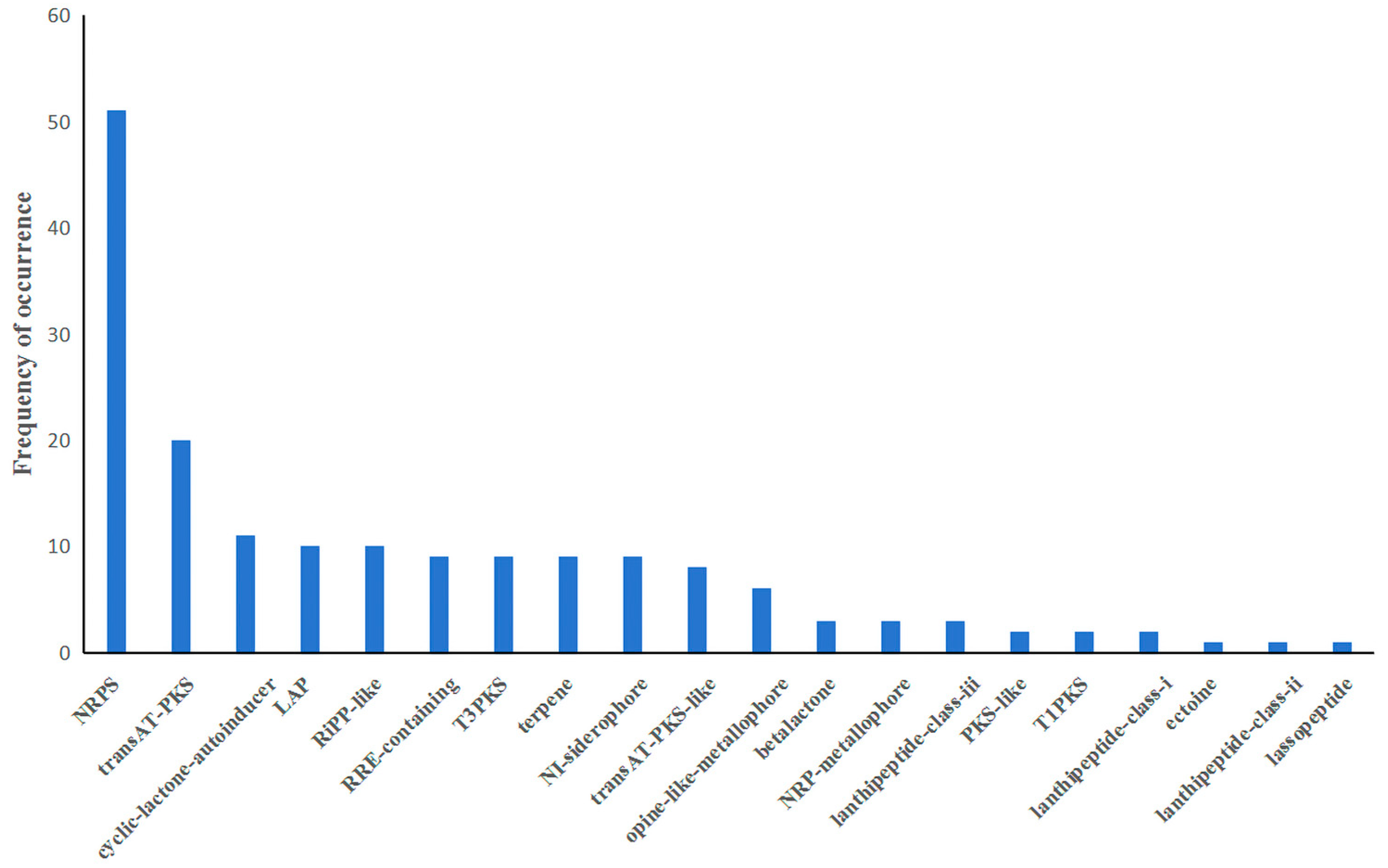
A total of 123 secondary metabolic gene clusters were predicted and classified into 20 classes across the nine B. brevis strains. The non-ribosomal polypeptide synthase (NRPS) gene cluster exhibited the highest occurrence, with a frequency of 51 times, followed by the transAT polyketones (transAT-PKS) gene cluster which occurred 20 times (Figure 5). These findings suggest that B. brevis strains primarily produce non-ribosomal peptides and transAT polyketones as their main secondary metabolites.
Figure 5.
Occurrence frequency of secondary metabolite synthesis gene clusters.
Among all the predicted gene clusters, 58 gene clusters showed certain homology with known gene clusters, and 32 of them had more than 70% homologies. The main products were petrobactin and tyrocidine, indicating that B. brevis generally has the potential ability to produce these compounds (Table 2). The presence of a large number of gene clusters with low homology also suggested the presence of numerous new secondary metabolites in B. brevis.
Table 2.
Annotated secondary metabolite gene clusters with similarity greater than 70%.
4. Discussion
B. brevis is commonly considered a biocontrol bacterium and is widespread in the soil and sediment [1]. Due to its diverse potential functions, it is widely used in agriculture and environmental remediation [38].
Whole genome sequencing helps to assemble the genome into a complete genome sequence, resulting in more accurate and in-depth genome annotation information. As an important source of biocontrol strains in nature, the abundant genomic information of B. brevisis is very important for agriculture in selecting suitable biocontrol strains. In the NCBI database, there are nine B. brevis strains with complete genomic sequences. In this study, we first analyzed the phylogenetic relationship of these nine B. brevis strains and the phylogenetic tree was constructed based on 120 bacterial single-copy marker genes in series. The phylogenetic analysis classified the nine B. brevis strains into three branches. The results showed that NEB573, which was currently classified as one strain of Brevibacillus brevis, had a very distant relationship with other Brevibacillus brevis strains. Its classification status might need to be reconsidered.
Over the past decade, whole genome sequencing has become a most common experiment as algorithms, as ANI and dDDH have arisen as reproducible, reliable, and highly informative alternatives to wet lab DDH [39]. The ANI and dDDH analyses of the nine B. brevis strains showed that the ANI values were more than 92.2% and the DDH values were more than 69.5% among the strains of B. brevis (except NEB573). It was found that NEB573 was a special heterospecies in B. brevis strains. NEB573 was the only B. brevis strain isolated from cell culture and had significantly higher GC content (54.0%). The ANI and dDHH values of the NEB573 compared to other strains were significantly lower than the species cut-off values. The significant genomic differences between NEB573 and other strains maybe because it was separated from a very special separation source. Of course, there is every indication that NEB573 had the potential to become a new species of Brevibacillus, but this would require quite a lot of future research work to support the change of its classification.
We also conducted pan-genome analysis on these B. brevis genomes. The pan-genome of B. brevis consisted of 35,258 functional genes, and a total of 10,032 gene families were identified. Among these, there were 3257 core gene families, 3112 accessory gene families, and 3663 unique gene families. The pan-genome can be classified into open or closed pan-genome according to its characteristics. An open pan-genome refers to an increase in the number of genes in the pan-genome as individual genomes are added within the species. A closed pan-genome, on the other hand, describes a pan-genome where the number of genes tends to saturate with the addition of individual genomes in the species. The opening or closing of pan-genomic features reflects the species diversity in gene composition and also indicates the difference between the species’ living environment and its ability to exchange genetic material with the external environment [40]. By calculating the relationship between the pan-genome, the core genome, and the number of genomes, we found that as the number of sequenced genomes increased, the total number of pan-genomes also increased, indicating that the pan-genome of B. brevis was open, and B. brevis exhibited relatively strong genetic elasticity and high genetic diversity. The frequent isolation of B. brevis from diverse environments and the pangenomic evidence of a bacterial species well-adapted for survival also provided a primary indication of its ecological success.
Through secondary metabolite synthesis gene cluster analysis, a total of 20 categories and 123 secondary metabolism gene clusters were found in the nine B. brevis genomes. On average, each strain of B. brevis had 14 secondary metabolism gene clusters, with the most common types being NPRS and transAT-PKS gene clusters. In addition, a total of 58 gene clusters showed certain homology with known gene clusters, with 32 gene clusters having homologies greater than 70%. These results suggest that B. brevis may have similar metabolite synthesis pathways, with non-ribosomal peptides and transAT polyketides being the most likely active substances.
When compared to other bacteria, such as 13 Planctomycetes strains (average of eight secondary metabolic gene clusters per genome) [41], 211 anaerobic bacteria (average of five secondary metabolic gene clusters per genome) [42], and 328 Bacillus bacteria (average of seven secondary metabolic gene clusters per genome) [43], B. brevis had a relatively higher number of secondary metabolic gene clusters per strain. This suggests a higher potential for the synthesis of new substances in B. brevis.
In recent years, the growing prevalence of plant diseases and drug-resistant pathogens has weakened the efficacy of existing chemical pesticides. It is increasingly important to develop new biological pesticides with novel mechanisms of significant activity. Numerous studies have demonstrated that B. brevis can produce a variety of secondary metabolites that play important roles in antagonizing pathogens, promoting plant growth, bacterial colonization, biofilm formation, and physiological metabolism [5,6,7,8,9]. In this study, a large number of gene clusters in the nine B. brevis strains showed low homology with known gene clusters, suggesting the presence of numerous new secondary metabolites in B. brevis that warrant further exploration.
5. Conclusions
As a branch of comparative genomics, pangenomics provides a new perspective for understanding the dynamic changes in gene composition, genome characteristics, and gene number of species. In this study, the genetic diversity of B. brevis was studied at the genome-wide level. We conducted pan-genome analysis on nine B. brevis strains with complete genomes, revealing that their pan-genomes contained 10032 functional genes, including 3663 unique gene families and 3257 core gene families. The results also showed that with the increase in genome number, the pan-genome set of B. brevis still showed an increasing trend, indicating that there was high genetic diversity in this species population. The comparative analysis of genomes showed that B. brevis NEB573 had the potential to become a new species of Brevibacillus. In addition, the secondary metabolic gene clusters were identified using antiSMASH7.0 software, resulting in the annotation of 20 classes and 123 secondary metabolic gene clusters. The main secondary metabolite synthesis gene clusters were NRPS gene clusters and transAT-PKS gene clusters. The presence of a large number of untapped secondary metabolites in B. brevis suggests that it has great potential for applications in plant disease resistance, plant growth promotion, and other aspects. However, due to the limited number of complete genomes of B. brevis, the research on the relationship between separation environment and evolution could be strengthened in the future.
Author Contributions
Conceptualization, J.D., Z.G. and Q.L. (Qingshu Liu); methodology, Y.W. and Q.L. (Qingshan Long); data collection, B.H., J.H. and C.Z.; data analysis, J.D.; writing—original draft preparation, J.D.; writing—review and editing, S.T., W.C. and Q.L. (Qingshu Liu). All authors have read and agreed to the published version of the manuscript.
Funding
This study was supported by the National Natural Science Foundation of China (32000047), the Hunan Provincial Natural Science Foundation of China (2023JJ30354), the Changsha Municipal Natural Science Foundation (kq2014171, kq2208130), and the Science and Technology Innovation Program of Hunan Province (2021NK1040, 2022RC3057).
Data Availability Statement
The source of all data generated or analyzed in this study is listed in this published article.
Conflicts of Interest
Author Shiyong Tan was employed by the company Hunan Tevos Ecological Technology Co., Ltd. The remaining authors declare that the research was conducted in the absence of any commercial or financial relationships that could be construed as a potential conflict of interest.
References
- Panda, A.K.; Bisht, S.S.; DeMondal, S.; Senthil Kumar, N.; Gurusubramanian, G.; Panigrahi, A.K. Brevibacillus as a biological tool: A short review. Antonie Van Leeuwenhoek 2014, 105, 623–639. [Google Scholar] [CrossRef] [PubMed]
- Che, J.; Ye, S.; Liu, B.; Deng, Y.; Chen, Q.; Ge, C.; Liu, G.; Wang, J. Effects of Brevibacillus brevis FJAT-1501-BPA on growth performance, faecal microflora, faecal enzyme activities and blood parameters of weaned piglets. Antonie Van Leeuwenhoek 2016, 109, 1545–1553. [Google Scholar] [CrossRef] [PubMed]
- Samrot, A.V.; Prasad, R.J.; Rio, A.J.; Sneha, S.J. Bioprospecting of Brevibacillus brevis isolated from soil. Recent Pat. Biotechnol. 2015, 9, 42–49. [Google Scholar] [CrossRef] [PubMed]
- Wang, L.; Tang, L.; Wang, R.; Wang, X.; Ye, J.; Long, Y. Biosorption and degradation of decabromodiphenyl ether by Brevibacillus brevis and the influence of decabromodiphenyl ether on cellular metabolic responses. Environ. Sci. Pollut. Res. Int. 2016, 23, 5166–5178. [Google Scholar] [CrossRef] [PubMed]
- Che, J.; Liu, B.; Lin, Y.; Tang, W.; Tang, J. Draft genome sequence of biocontrol bacterium Brevibacillus brevis strain FJAT-0809-GLX. Genome Announc. 2013, 1, e0016013. [Google Scholar] [CrossRef] [PubMed]
- Hou, Q.; Wang, C.; Hou, X.; Xia, Z.; Ye, J.; Liu, K.; Liu, H.; Wang, J.; Guo, H.; Yu, X.; et al. Draft genome sequence of Brevibacillus brevis DZQ7, a plant growth-promoting rhizobacterium with broad-spectrum antimicrobial activity. Genome Announc. 2015, 3, e00831-15. [Google Scholar] [CrossRef] [PubMed]
- Marche, M.G.; Mura, M.E.; Falchi, G.; Ruiu, L. Spore surface proteins of Brevibacillus laterosporus are involved in insect pathogenesis. Sci. Rep. 2017, 7, 43805. [Google Scholar] [CrossRef] [PubMed]
- Jianmei, C.; Bo, L.; Zheng, C.; Huai, S.; Guohong, L.; Cibin, G. Identification of ethylparaben as the antimicrobial substance produced by Brevibacillus brevis FJAT-0809-GLX. Microbiol. Res. 2015, 172, 48–56. [Google Scholar] [CrossRef] [PubMed]
- Johnson, E.T.; Bowman, M.J.; Dunlap, C.A. Brevibacillus fortis NRS-1210 produces edeines that inhibit the in vitro growth of conidia and chlamydospores of the onion pathogen Fusarium oxysporum f. sp. cepae. Antonie Van Leeuwenhoek 2020, 113, 973–987. [Google Scholar] [CrossRef]
- Kierońska, D.; Rózalska, B.; Zablocki, B. Immunosuppressive properties of the antibiotic edeine. Bull. Acad. Pol. Sci. Biol. 1976, 24, 705–710. [Google Scholar]
- Li, S.; Zhao, Z.; Li, M.; Gu, Z.; Bai, C.; Huang, W. Purification and characterization of a novel chitinase from Bacillus brevis. Acta Biochim. Biophys. Sin. 2002, 34, 690–696. [Google Scholar]
- Rautenbach, M.; Vlok, N.M.; Stander, M.; Hoppe, H.C. Inhibition of malaria parasite blood stages by tyrocidines, membrane-active cyclic peptide antibiotics from Bacillus brevis. Biochim. Biophys. Acta 2007, 1768, 1488–1497. [Google Scholar] [CrossRef] [PubMed]
- Wang, J.; Haddad, N.; Yang, S.; Mu, B. Structural characterization of lipopeptides from Brevibacillus brevis HOB1. Appl. Biochem. Biotechnol. 2010, 160, 812–821. [Google Scholar] [CrossRef] [PubMed]
- Song, Z.; Liu, Q.; Guo, H.; Ju, R.; Zhao, Y.; Li, J.; Liu, X. Tostadin, a novel antibacterial peptide from an antagonistic microorganism Brevibacillus brevis XDH. Bioresour. Technol. 2012, 111, 504–506. [Google Scholar] [CrossRef]
- Ghadbane, M.; Harzallah, D.; Laribi, A.I.; Jaouadi, B.; Belhadj, H. Purification and biochemical characterization of a highly thermostable bacteriocin isolated from Brevibacillus brevis strain GM100. Biosci. Biotechnol. Biochem. 2013, 77, 151–160. [Google Scholar] [CrossRef] [PubMed]
- Muhammad, S.A.; Ali, A.; Naz, A.; Hassan, A.; Riaz, N.; Saeed-ul-Hassan, S.; Andleeb, S.; Barh, D. A New Broad-Spectrum Peptide Antibiotic Produced by Bacillus brevis Strain MH9 Isolated from Margalla Hills of Islamabad, Pakistan. Int. J. Pept. Res. Ther. 2016, 22, 271–279. [Google Scholar] [CrossRef]
- Sheng, M.; Jia, H.; Zhang, G.; Zeng, L.; Zhang, T.; Long, Y.; Lan, J.; Hu, Z.; Zeng, Z.; Wang, B. Siderophore production by rhizosphere biological control bacteria Brevibacillus brevis GZDF3 of Pinellia ternata and its antifungal effects on Candida albicans. J. Microbiol. Biotechnol. 2020, 30, 689. [Google Scholar] [CrossRef]
- Binnewies, T.T.; Motro, Y.; Hallin, P.F.; Lund, O.; Dunn, D.; La, T.; Hampson, D.J.; Bellgard, M.; Wassenaar, T.M.; Ussery, D.W. Ten years of bacterial genome sequencing: Comparative-genomics-based discoveries. Funct. Integr. Genom. 2006, 6, 165–185. [Google Scholar] [CrossRef]
- Vernikos, G.; Medini, D.; Riley, D.R.; Tettelin, H. Ten years of pan-genome analyses. Curr. Opin. Microbiol. 2015, 23, 148–154. [Google Scholar] [CrossRef]
- Kim, Y.; Koh, I.; Young Lim, M.; Chung, W.-H.; Rho, M. Pan-genome analysis of Bacillus for microbiome profiling. Sci. Rep. 2017, 7, 10984. [Google Scholar] [CrossRef]
- Xing, J.; Li, X.; Sun, Y.; Zhao, J.; Miao, S.; Xiong, Q.; Zhang, Y.; Zhang, G. Comparative genomic and functional analysis of Akkermansia muciniphila and closely related species. Genes Genom. 2019, 41, 1253–1264. [Google Scholar] [CrossRef] [PubMed]
- Belbahri, L.; Chenari Bouket, A.; Rekik, I.; Alenezi, F.N.; Vallat, A.; Luptakova, L.; Petrovova, E.; Oszako, T.; Cherrad, S.; Vacher, S. Comparative genomics of Bacillus amyloliquefaciens strains reveals a core genome with traits for habitat adaptation and a secondary metabolites rich accessory genome. Front. Microbiol. 2017, 8, 1438. [Google Scholar] [CrossRef] [PubMed]
- Parks, D.H.; Imelfort, M.; Skennerton, C.T.; Hugenholtz, P.; Tyson, G. CheckM: Assessing the quality of microbial genomes recovered from isolates, single cells, and metagenomes. Genome Res. 2015, 25, 1043–1055. [Google Scholar] [CrossRef] [PubMed]
- Parks, D.H.; Chuvochina, M.; Waite, D.W.; Rinke, C.; Skarshewski, A.; Chaumeil, P.-A.; Hugenholtz, P. A standardized bacterial taxonomy based on genome phylogeny substantially revises the tree of life. Nat. Biotechnol. 2018, 36, 996–1004. [Google Scholar] [CrossRef] [PubMed]
- Liu, D.; Zhang, Y.; Fan, G.; Sun, D.; Zhang, X.; Yu, Z.; Wang, J.; Wu, L.; Shi, W.; Ma, J. IPGA: A handy integrated prokaryotes genome and pan-genome analysis web service. iMeta 2022, 1, e55. [Google Scholar] [CrossRef]
- Goris, J.; Konstantinidis, K.T.; Klappenbach, J.A.; Coenye, T.; Vandamme, P.; Tiedje, J.M. DNA–DNA hybridization values and their relationship to whole-genome sequence similarities. Int. J. Syst. Evol. Microbiol. 2007, 57, 81–91. [Google Scholar] [CrossRef] [PubMed]
- Al-Saari, N.; Gao, F.; AKM Rohul, A.; Sato, K.; Sato, K.; Mino, S.; Suda, W.; Oshima, K.; Hattori, M.; Ohkuma, M. Advanced microbial taxonomy combined with genome-based-approaches reveals that Vibrio astriarenae sp. nov., an agarolytic marine bacterium, forms a new clade in Vibrionaceae. PLoS ONE 2015, 10, e0136279. [Google Scholar] [CrossRef] [PubMed]
- Konstantinidis, K.T.; Tiedje, J.M. Prokaryotic taxonomy and phylogeny in the genomic era: Advancements and challenges ahead. Curr. Opin. Microbiol. 2007, 10, 504–509. [Google Scholar] [CrossRef] [PubMed]
- Chaumeil, P.-A.; Mussig, A.J.; Hugenholtz, P.; Parks, D.H. GTDB-Tk: A toolkit to classify genomes with the genome taxonomy database. Bioinformatics 2020, 36, 1925–1927. [Google Scholar] [CrossRef]
- Letunic, I.; Bork, P. Interactive Tree Of Life (iTOL) v4: Recent updates and new developments. Nucleic Acids Res. 2019, 47, W256–W259. [Google Scholar] [CrossRef]
- Chaudhari, N.M.; Gupta, V.K.; Dutta, C. BPGA-an ultra-fast pan-genome analysis pipeline. Sci Rep. 2016, 6, 24373. [Google Scholar] [CrossRef] [PubMed]
- Blin, K.; Shaw, S.; Augustijn, H.E.; Reitz, Z.L.; Biermann, F.; Alanjary, M.; Fetter, A.; Terlouw, B.R.; Metcalf, W.W.; Helfrich, E.J. antiSMASH 7.0: New and improved predictions for detection, regulation, chemical structures and visualisation. Nucleic Acids Res. 2023, 1, W46–W50. [Google Scholar] [CrossRef] [PubMed]
- Blin, K.; Medema, M.H.; Kottmann, R.; Lee, S.Y.; Weber, T. The antiSMASH database, a comprehensive database of microbial secondary metabolite biosynthetic gene clusters. Nucleic Acids Res. 2017, 45, D555–D559. [Google Scholar] [CrossRef] [PubMed]
- Kim, B.; Kim, Y.S.; Han, J.W.; Choi, G.J.; Kim, H. Genome Sequence of Brevibacillus brevis HK544, an Antimicrobial Bacterium Isolated from Soil in Daejeon, South Korea. Microbiol. Resour. Announc. 2021, 10, e0041721. [Google Scholar] [CrossRef]
- Chen, W.; Wang, Y.; Li, D.; Li, L.; Xiao, Q.; Zhou, Q. Draft genome sequence of Brevibacillus brevis strain X23, a biocontrol agent against bacterial wilt. J. Bacteriol. 2012, 194, 6634–6635. [Google Scholar] [CrossRef]
- Yang, W.; Yang, H.; Hussain, M.; Qin, X. Brevibacillus brevis HNCS-1: A biocontrol bacterium against tea plant diseases. Front. Microbiol. 2023, 14, 1198747. [Google Scholar] [CrossRef]
- Yang, X.; Li, Y.; Zang, J.; Li, Y.; Bie, P.; Lu, Y.; Wu, Q. Analysis of pan-genome to identify the core genes and essential genes of Brucella spp. Mol. Genet. Genom. 2016, 291, 905–912. [Google Scholar] [CrossRef]
- Nehra, V.; Saharan, B.S.; Choudhary, M. Evaluation of Brevibacillus brevis as a potential plant growth promoting rhizobacteria for cotton (Gossypium hirsutum) crop. Springerplus 2016, 5, 948. [Google Scholar] [CrossRef]
- Richter, M.; Rosselló-Móra, R. Shifting the genomic gold standard for the prokaryotic species definition. Proc. Natl. Acad. Sci. USA 2009, 106, 19126–19131. [Google Scholar] [CrossRef]
- Fu, J.; Qin, Q. Pan-genomics analysis of 30 Escherichia coli genomes. Yi Chuan 2012, 34, 765–772. [Google Scholar] [CrossRef]
- Jeske, O.; Jogler, M.; Petersen, J.; Sikorski, J.; Jogler, C. From genome mining to phenotypic microarrays: Planctomycetes as source for novel bioactive molecules. Antonie Van Leeuwenhoek 2013, 104, 551–567. [Google Scholar] [CrossRef] [PubMed]
- Letzel, A.-C.; Pidot, S.J.; Hertweck, C. Genome mining for ribosomally synthesized and post-translationally modified peptides (RiPPs) in anaerobic bacteria. BMC Genom. 2014, 15, 983. [Google Scholar] [CrossRef] [PubMed]
- Zhao, X.; Kuipers, O.P. Identification and classification of known and putative antimicrobial compounds produced by a wide variety of Bacillales species. BMC Genom. 2016, 17, 119. [Google Scholar] [CrossRef] [PubMed]
Disclaimer/Publisher’s Note: The statements, opinions and data contained in all publications are solely those of the individual author(s) and contributor(s) and not of MDPI and/or the editor(s). MDPI and/or the editor(s) disclaim responsibility for any injury to people or property resulting from any ideas, methods, instructions or products referred to in the content. |
© 2024 by the authors. Licensee MDPI, Basel, Switzerland. This article is an open access article distributed under the terms and conditions of the Creative Commons Attribution (CC BY) license (https://creativecommons.org/licenses/by/4.0/).