Article

Impact of Rice–Wheat Straw Incorporation and Varying Nitrogen Fertilizer Rates on Soil Physicochemical Properties and Wheat Grain Yield

by
Gabriel Hopla Akwakwa
1,2 and
Wang Xiaoyan
1,*
1
Department of Crop Science, College of Agriculture, Yangtze University, Jingzhou 434025, China
2
Engineering Research Center of Ecology and Agricultural Use of Wetland, Ministry of Education, Jingzhou 434025, China
*
Author to whom correspondence should be addressed.
Agronomy 2023, 13(9), 2363; https://doi.org/10.3390/agronomy13092363

Submission received: 28 July 2023 / Revised: 30 August 2023 / Accepted: 4 September 2023 / Published: 12 September 2023

Abstract

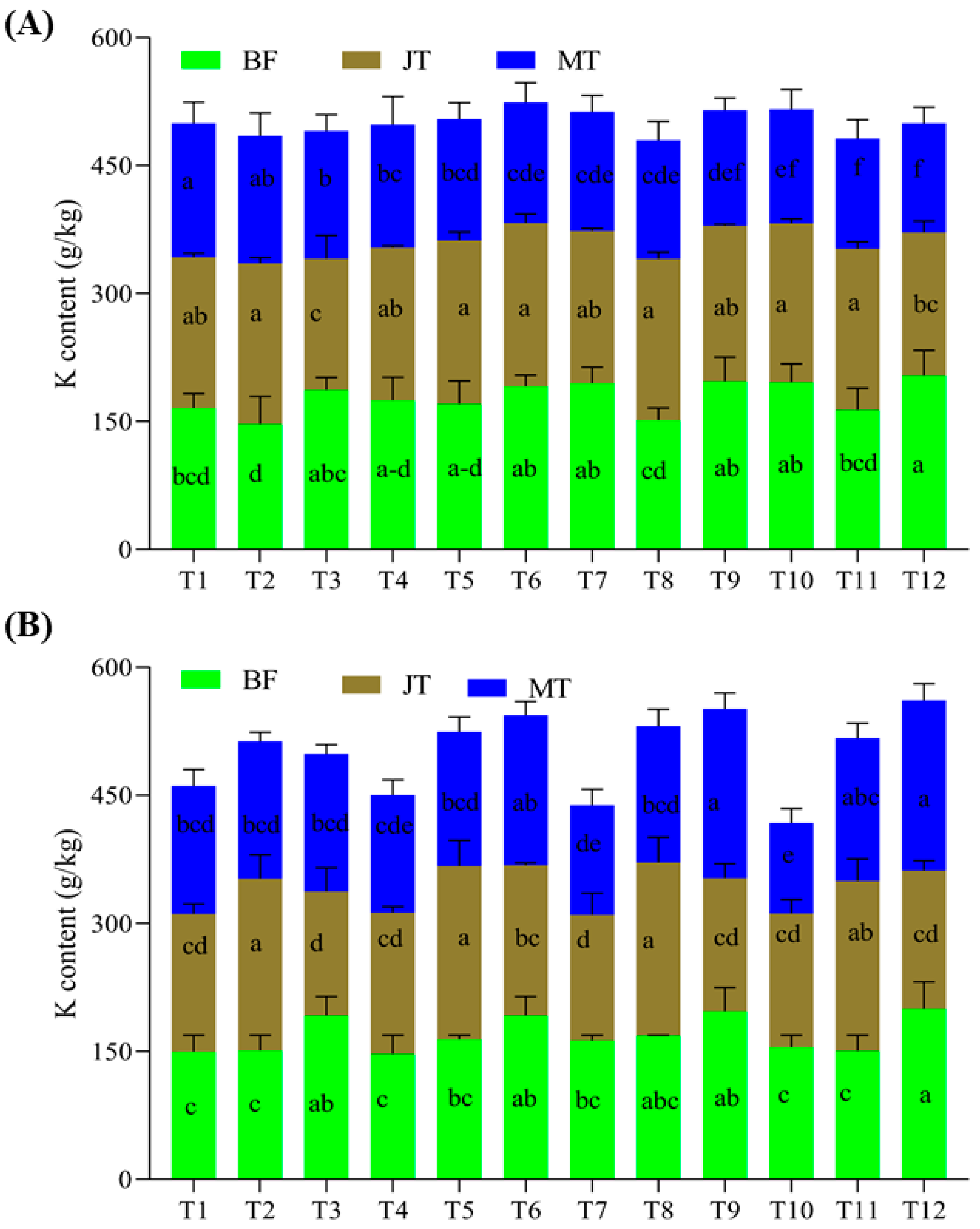
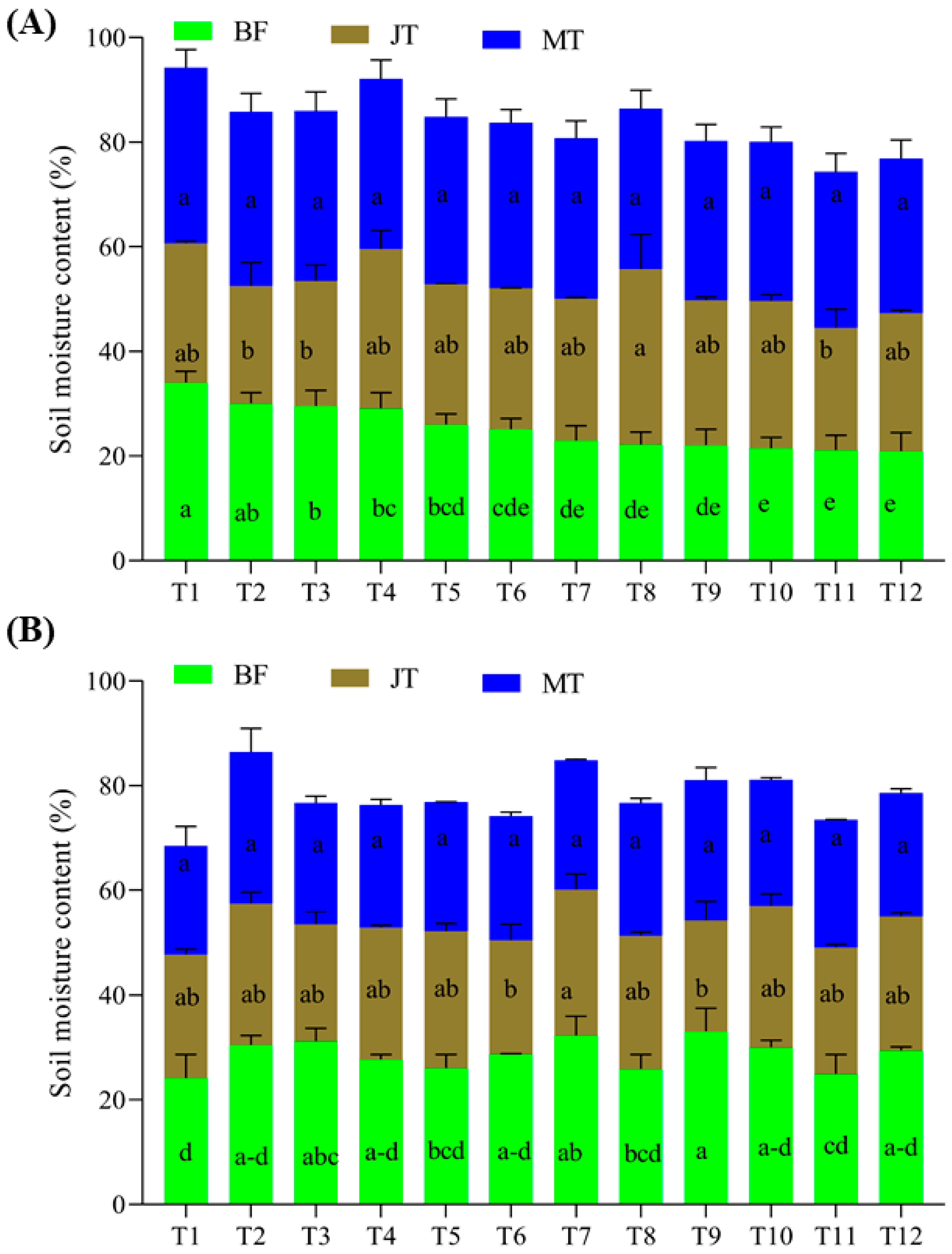
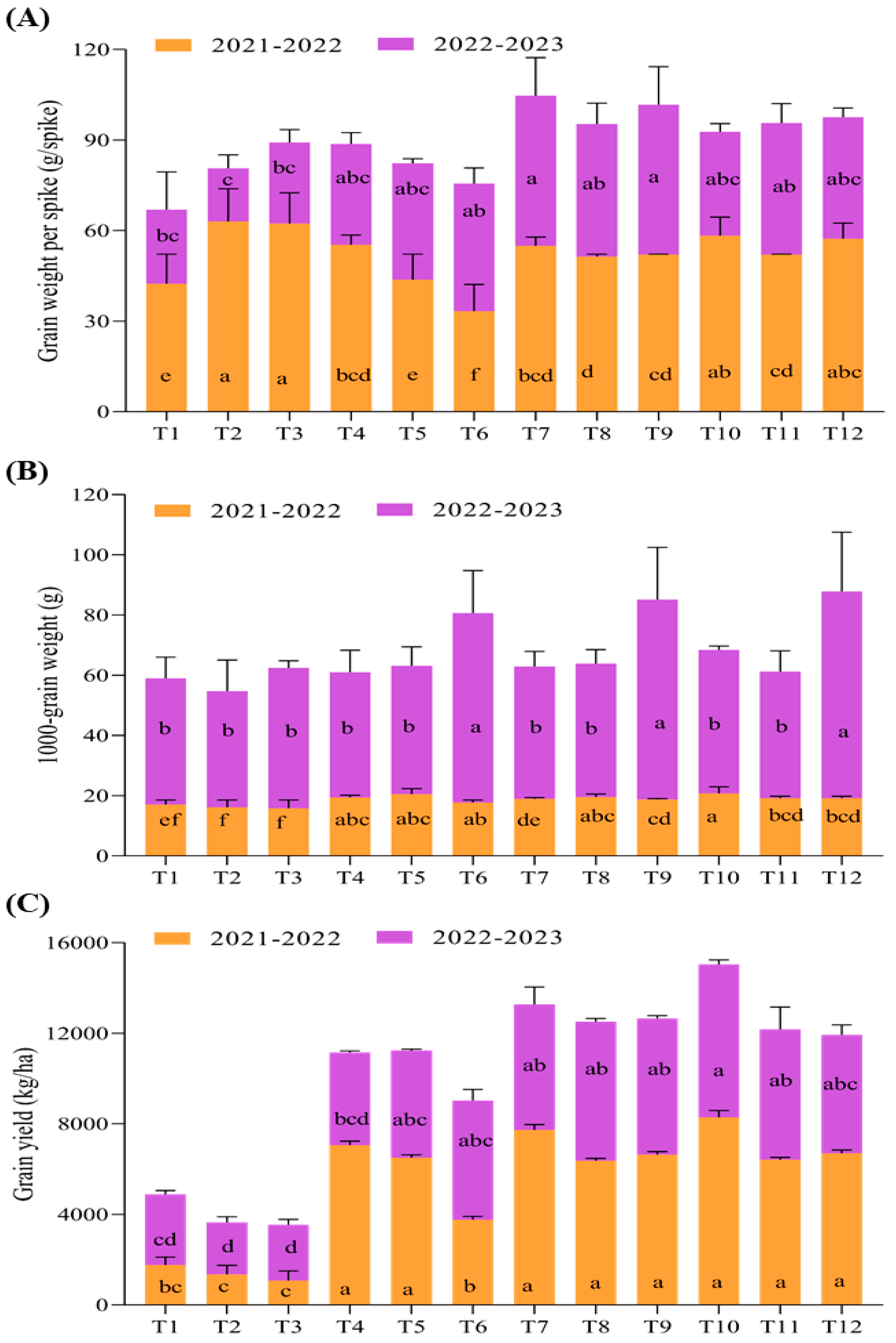
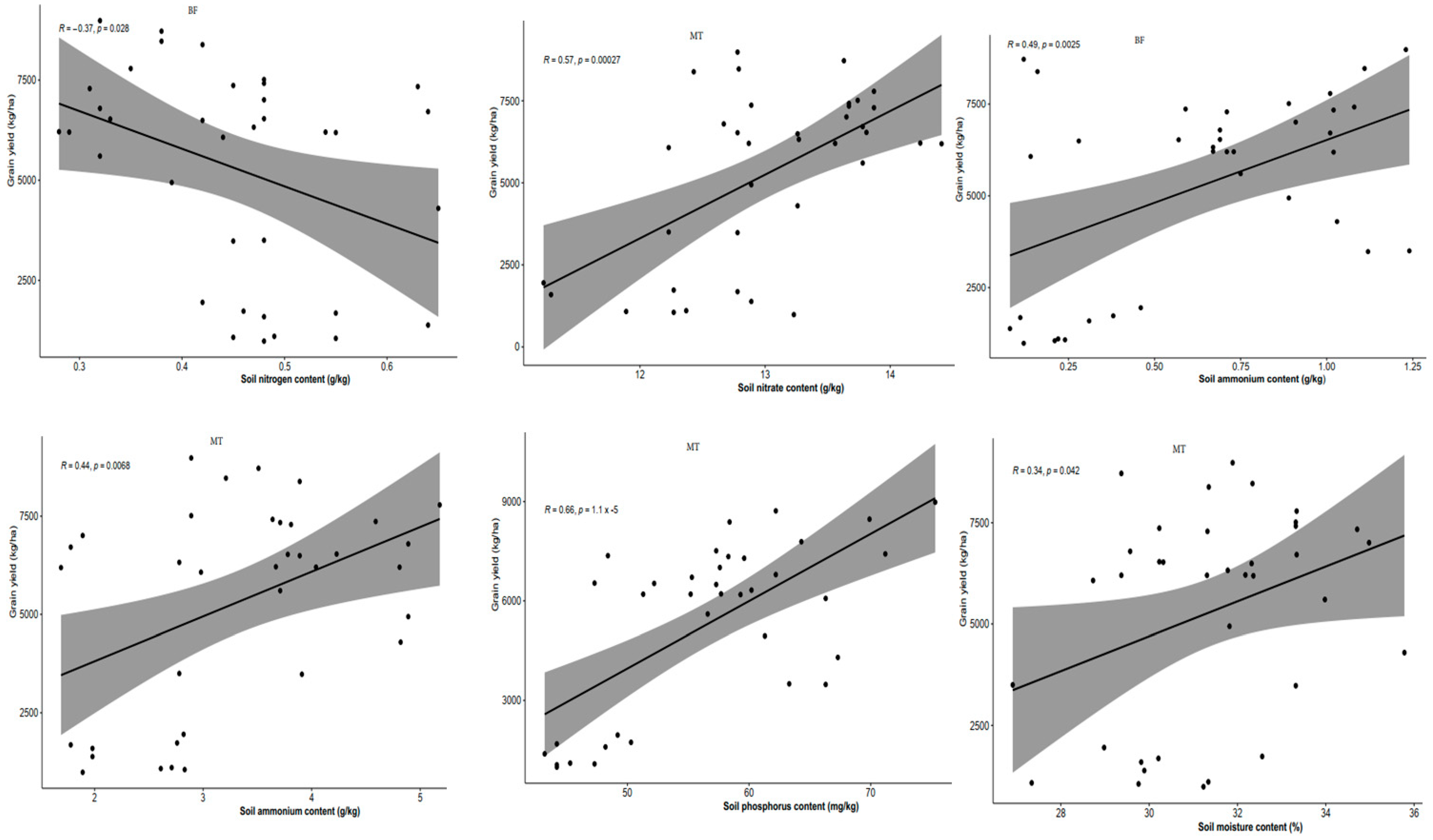
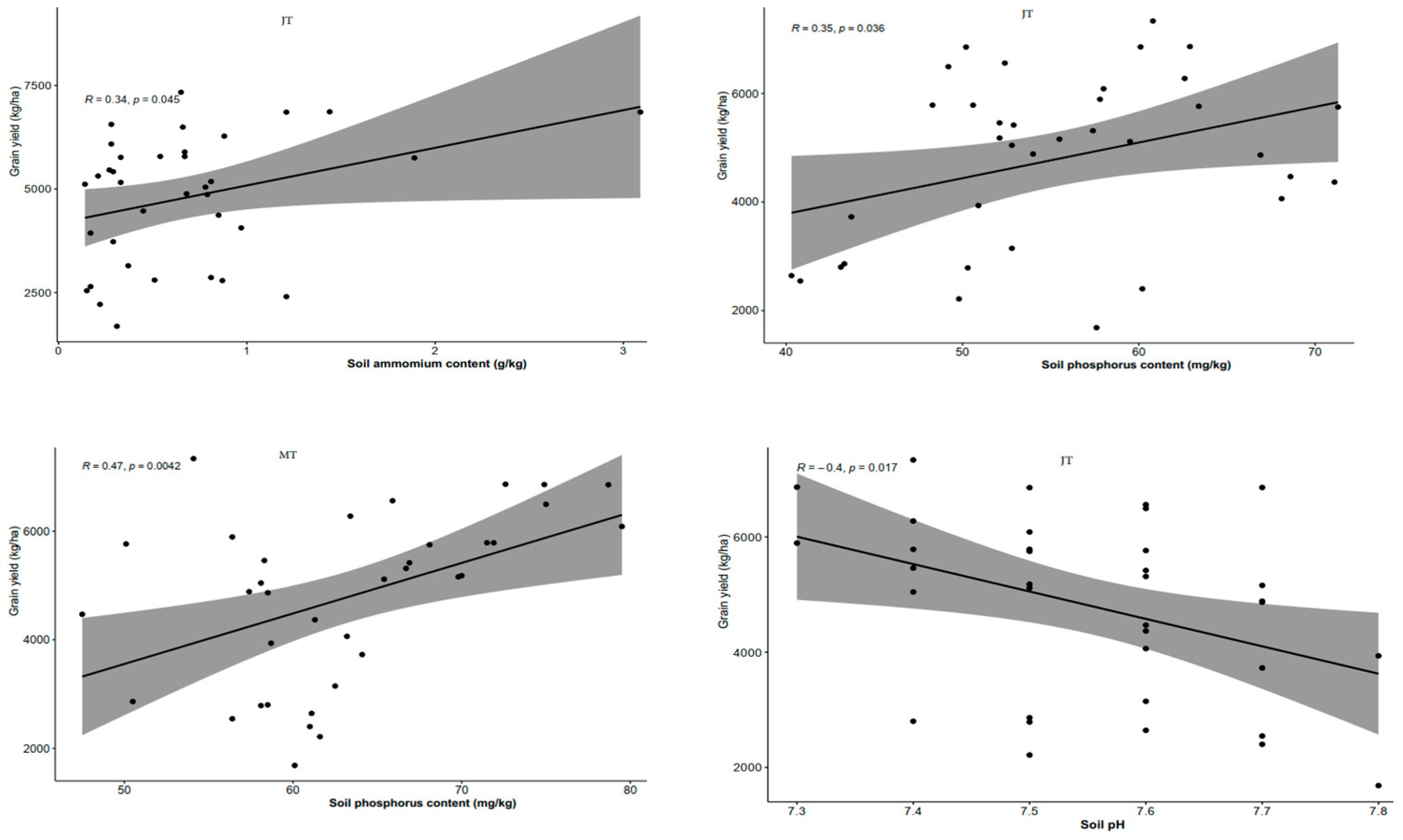
Straw return (SR) is crucial for the comprehensive and efficient utilization of resources within agroecosystems; however, its impact on soils and wheat grain yield in the Jianghan Plain of the Yangtze River Basin, Hubei Province of China, is not fully known. Therefore, the present study was undertaken to assess the impact of returning rice–wheat straw, along with different nitrogen (N) fertilizer applications, on soil physicochemical properties and wheat grain yield. The Yangmai 23 wheat variety was cultivated in the Experimental Farms of Yangtze University in the Yangtze River Basin, with three rates of rice SR (0, 50 and 100%) and four N fertilizer rates (0, 33.3, 70 and 100%) with 180 kg/ha urea. The integrated use of SR- and N-fertilizer rates significantly altered soil nitrogen, nitrate, ammonium, phosphorus, potassium, pH and moisture within the 20 cm depth before the seeding, jointing and maturation stages of the wheat. The grain yields of 6408 ± 110 − 8290.00 ± 298 and 4726 ± 62 − 6758.00 ± 196 kg/ha were obtained in the 2021–2022 and 2022–2023 seasons, respectively. The studied soil physicochemical properties either before seeding, or at the jointing and maturation stages had a significant effect on final grain yield. These results underscore the combined effect of SR- and N-fertilizer application to improve wheat productivity in the Yangtze River Basin. However, further studies are ongoing to assess the impact of these treatments on the soil microbial community, as well as on wheat grain quality.
Keywords: inorganic fertilizers; soil fertility management; soil conservation; straw management; sustainable wheat production inorganic fertilizers; soil fertility management; soil conservation; straw management; sustainable wheat production