Article

Grain Dehydration Characteristics of Old and Modern Maize Hybrids and Their Response to Different Planting Densities

1
College of Agronomy, Inner Mongolia Agricultural University, Hohhot 010019, China
2
Vocational and Technical College, Inner Mongolia Agricultural University, Salaqi 014109, China
3
College of Horticulture and Plant Protection, Inner Mongolia Agricultural University, Hohhot 010019, China
*
Authors to whom correspondence should be addressed.
Agronomy 2022, 12(7), 1640; https://doi.org/10.3390/agronomy12071640

Submission received: 15 June 2022 / Revised: 3 July 2022 / Accepted: 5 July 2022 / Published: 8 July 2022
(This article belongs to the Topic Crop Ecophysiology: From Lab to Field)

Abstract

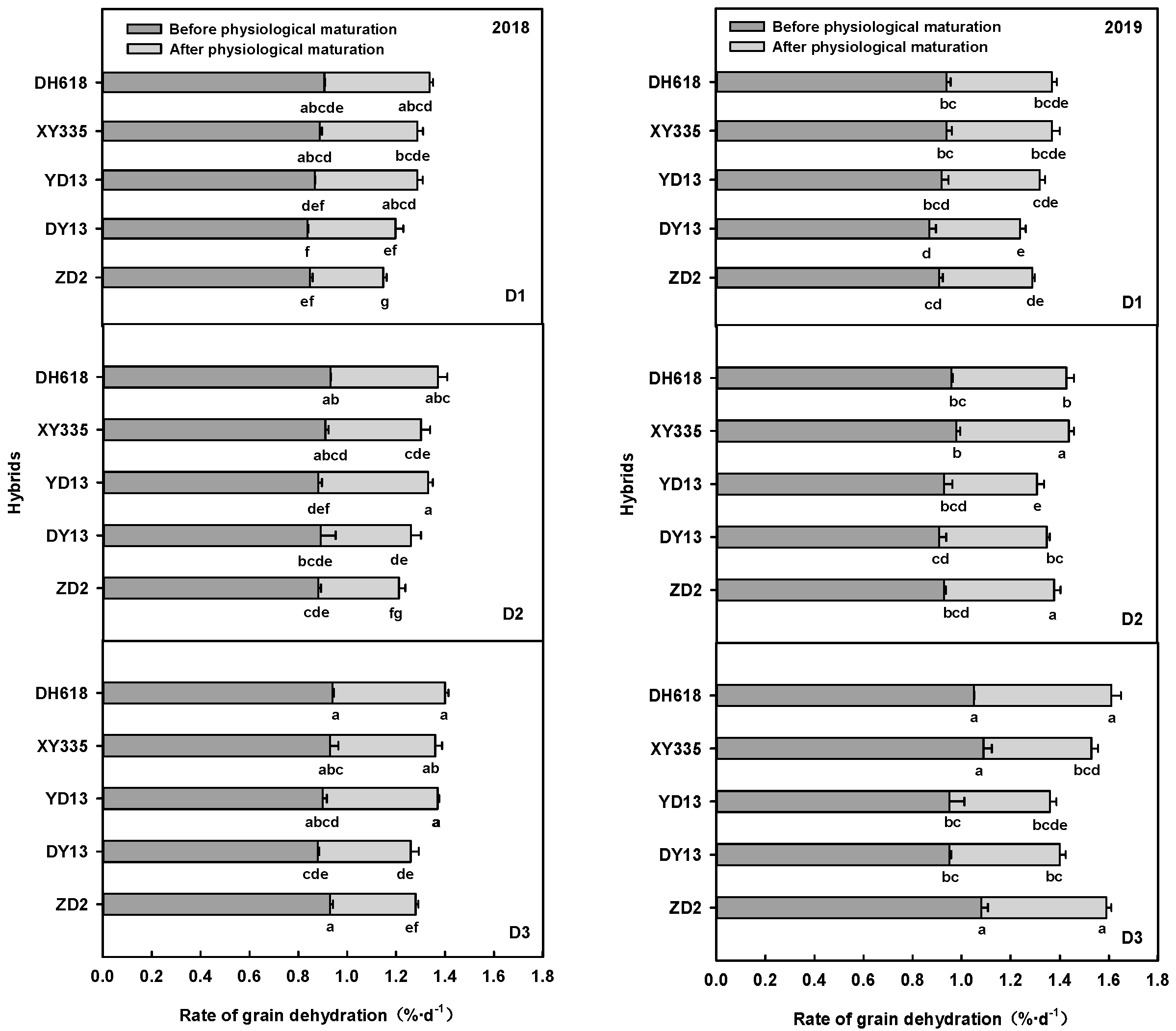
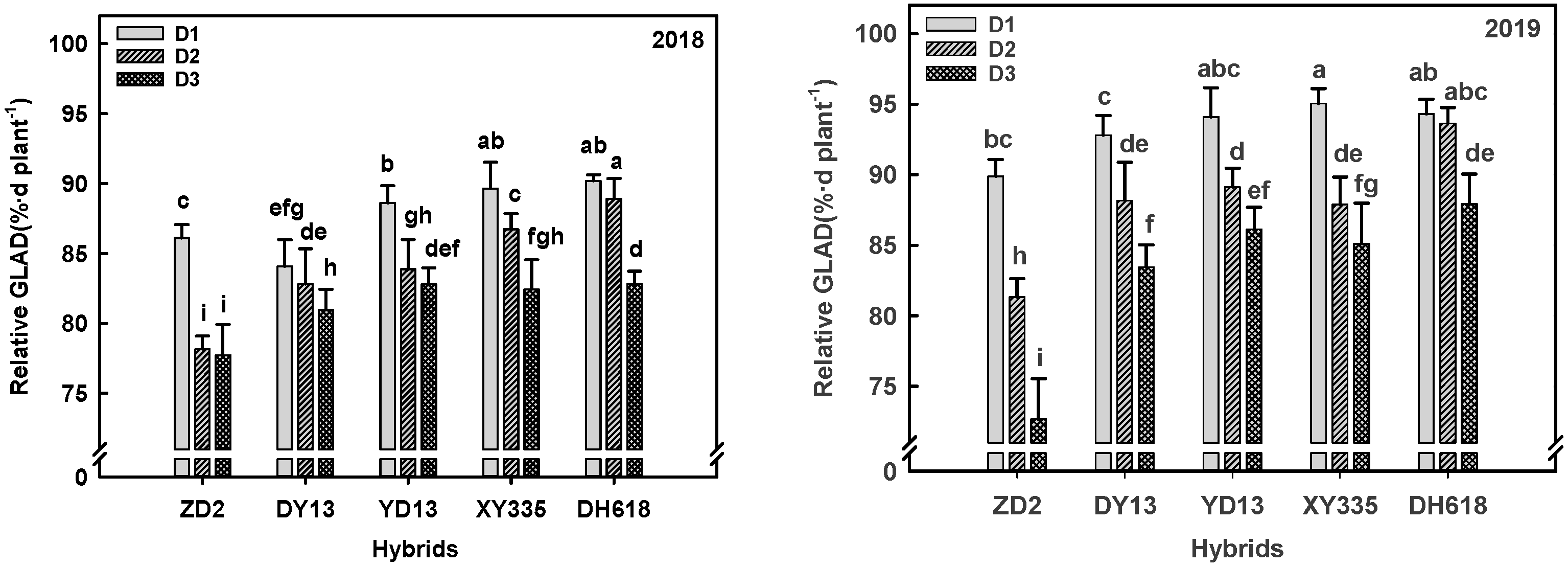
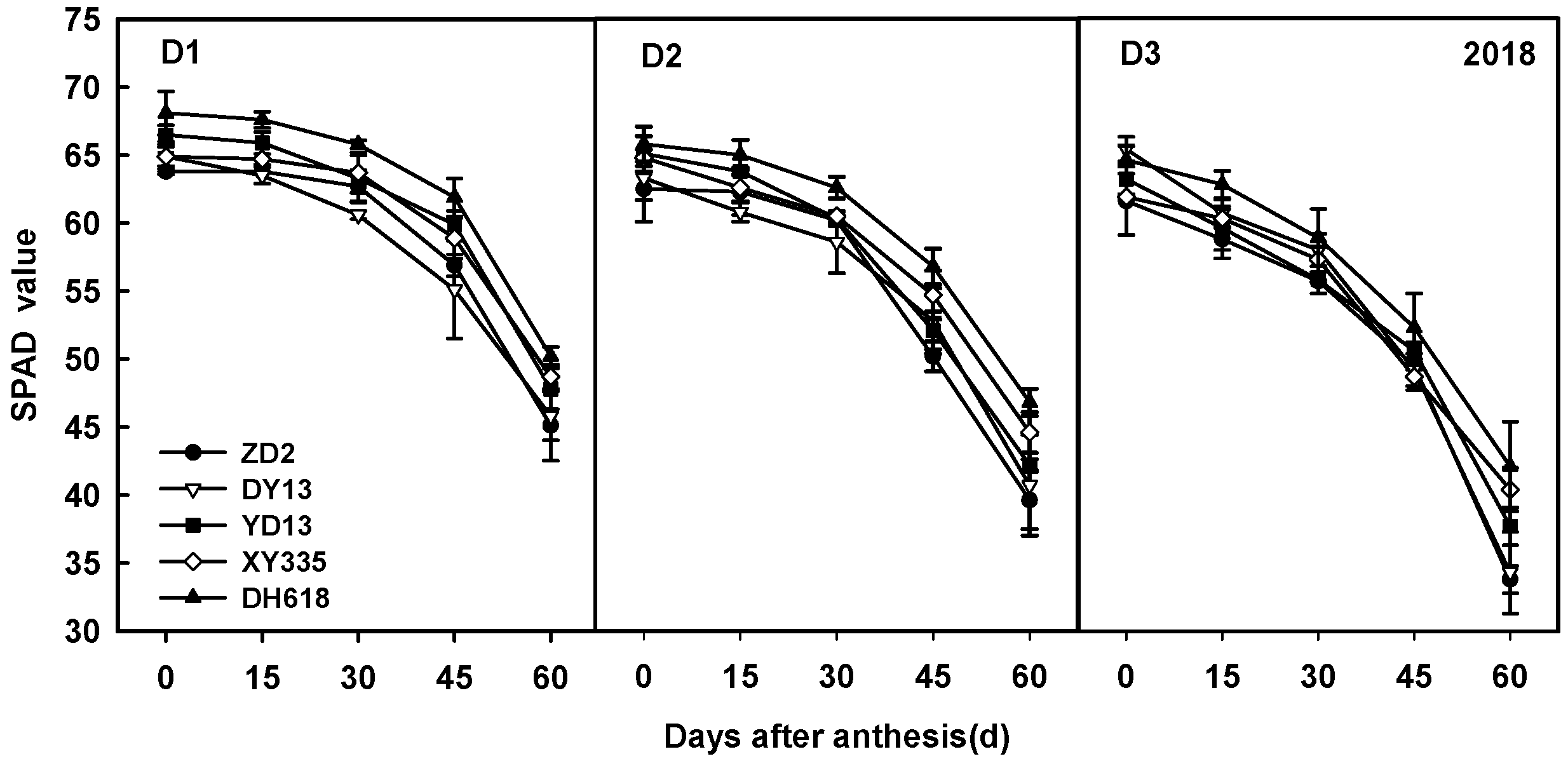
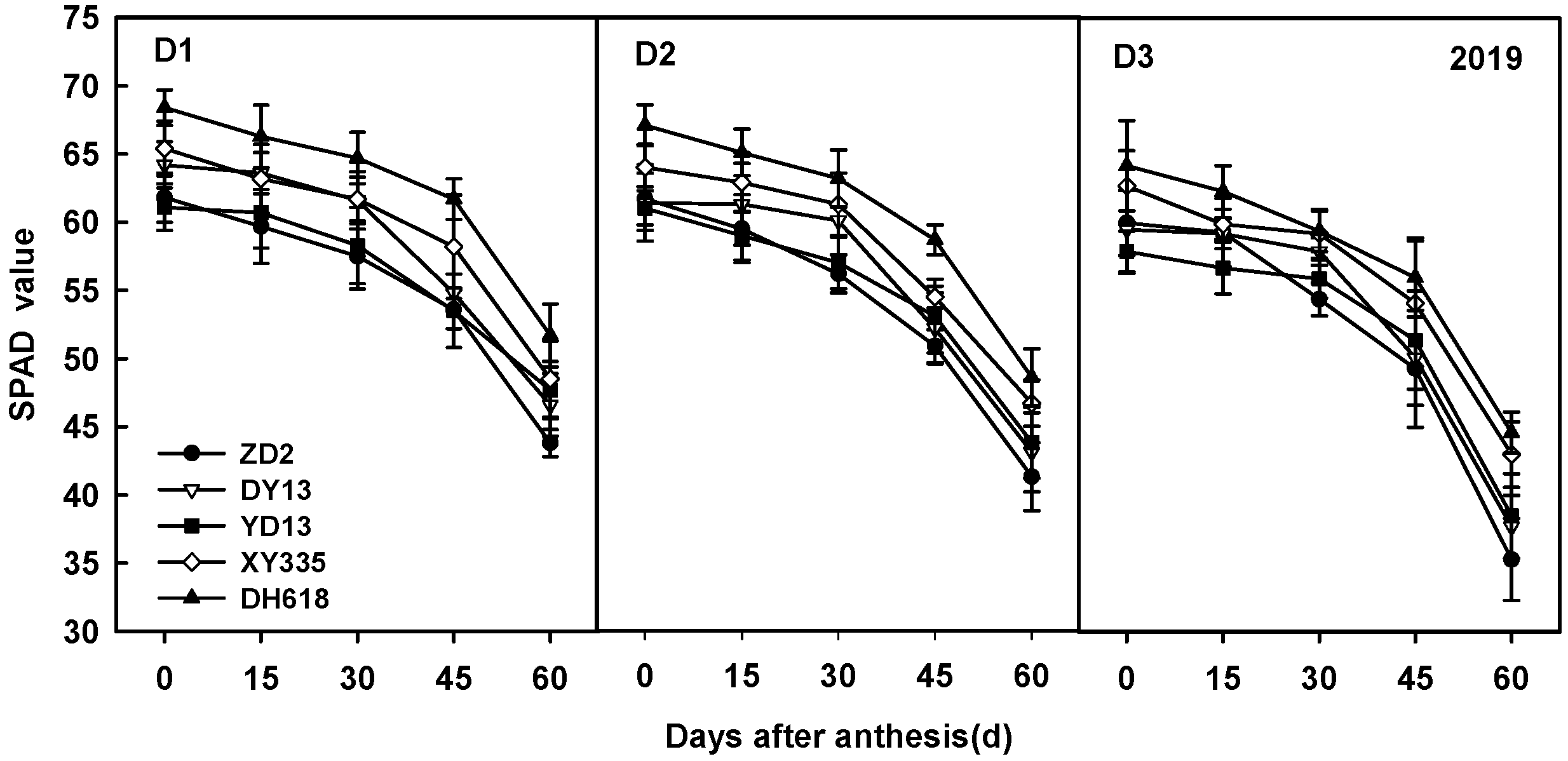
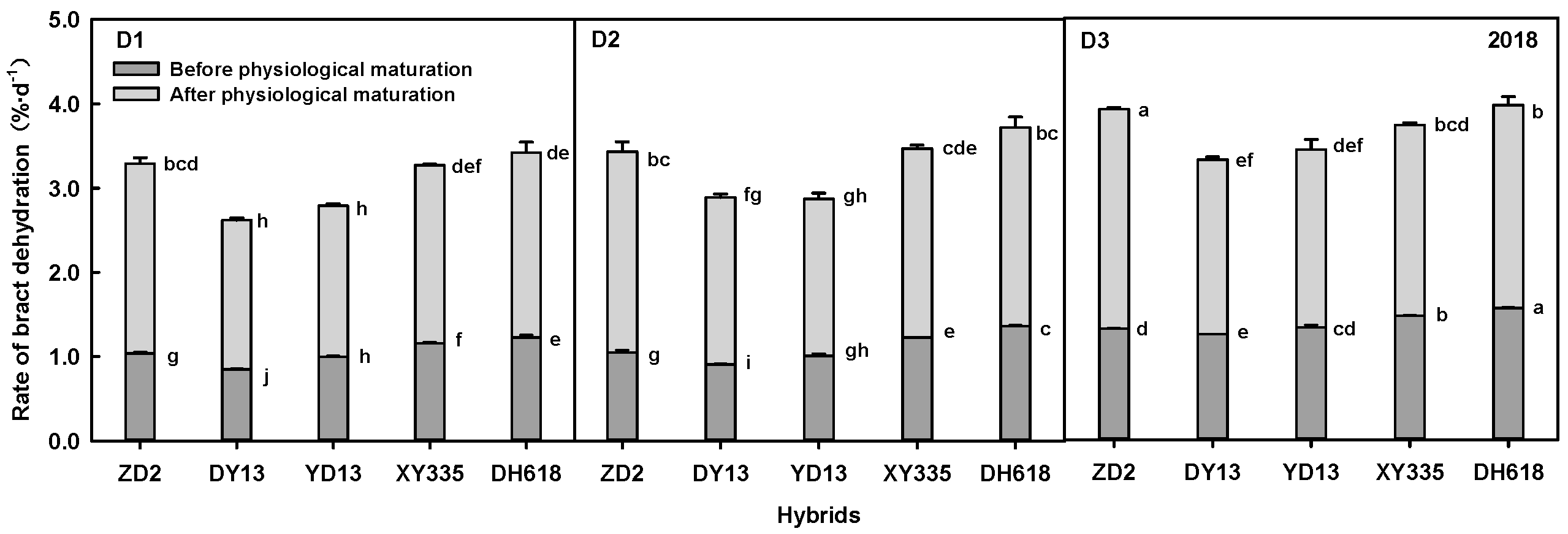
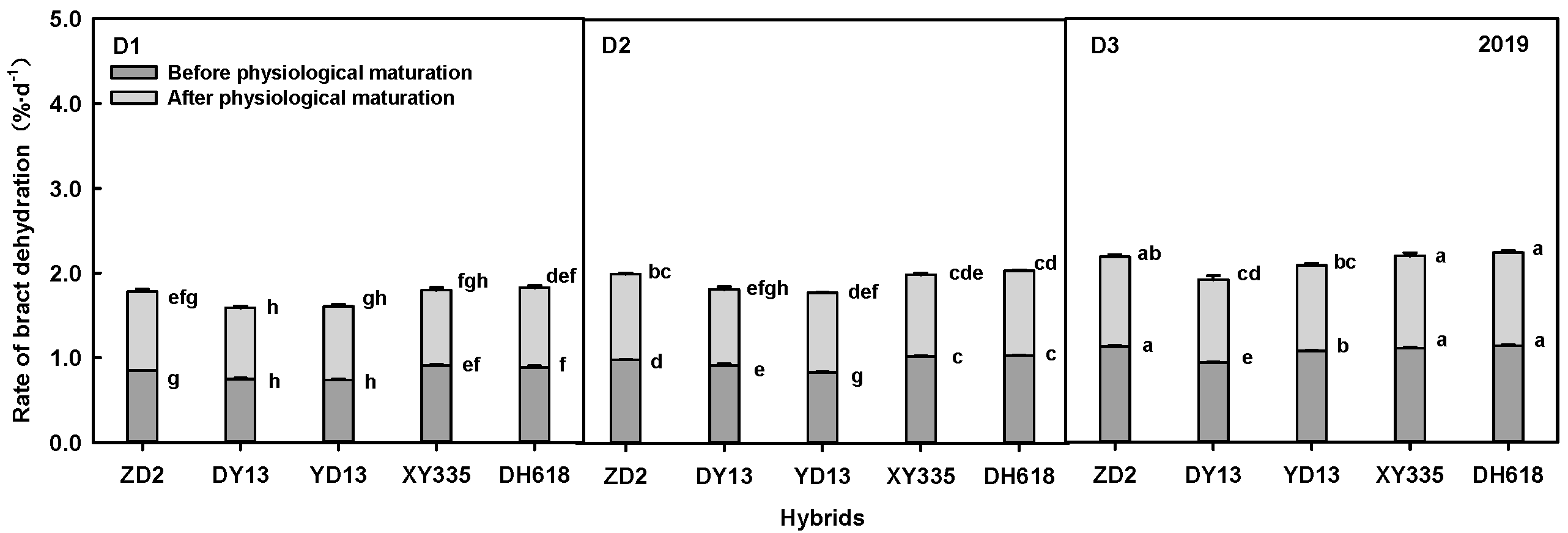
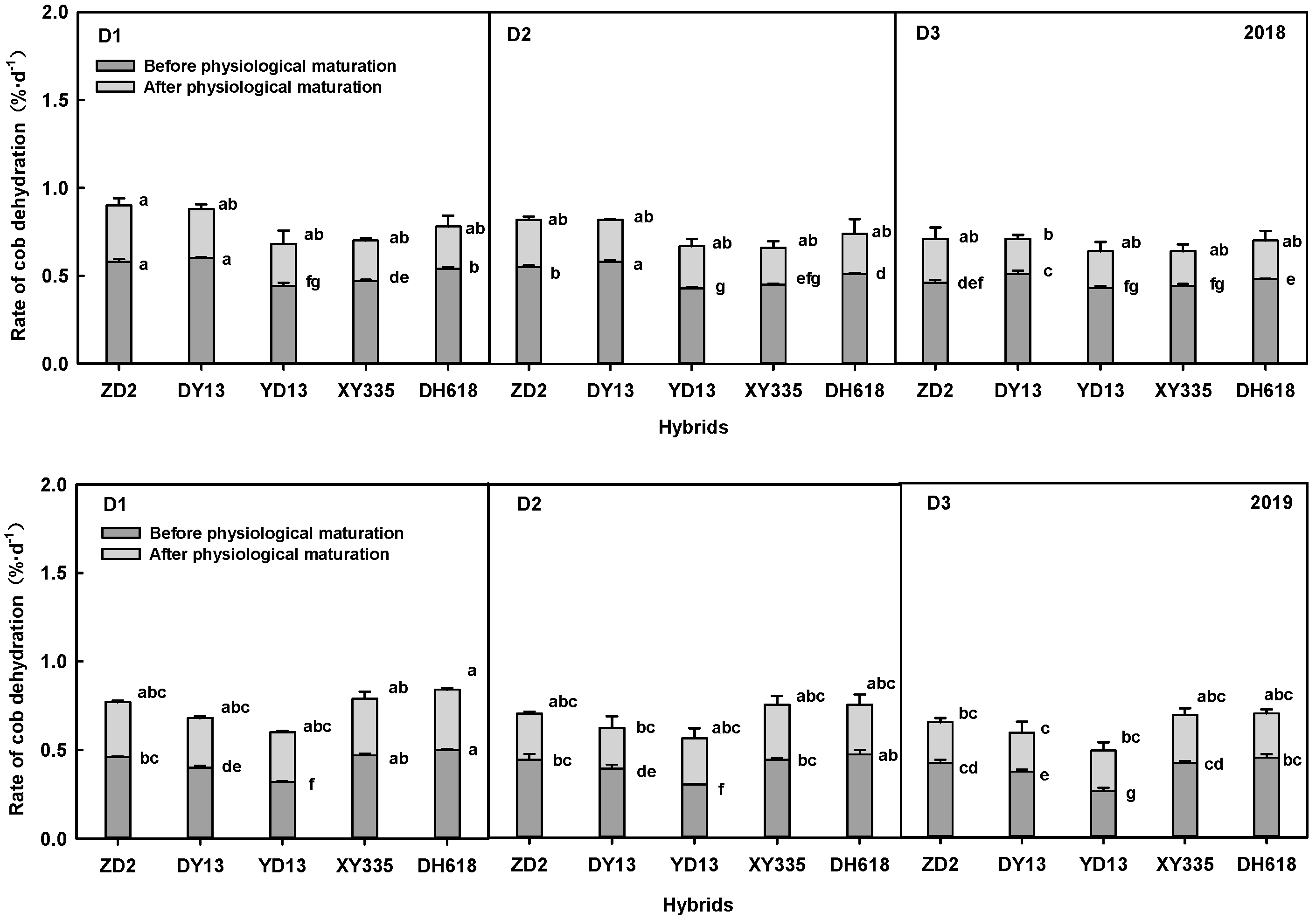
High grain water content at harvest stage is the main limiting factor for realizing mechanized maize grain harvest in China. Under the background of yield gain by density increase, it is necessary to clarify the effect of planting density increase on maize grain dehydration characteristics, which would provide theoretical support for realizing mechanized grain harvest under high planting density conditions. Therefore, this study selects five main hybrids, ZD2, DY13, YD13, XY335, and DH618, released in different eras that were widely promoted in Inner Mongolia from the 1970s to 2010s. The experiment was conducted in the Chilechuan Modern Agriculture Expo Park, Tumed Right Banner, Baotou city, Inner Mongolia, in 2018 and 2019. Under the three densities of 45,000 plants ha−1 (low density), 75,000 plants ha−1 (medium density) and 105,000 plants ha−1 (high density), the indexes of grain dehydration, leaf stay-green, bract and cob dehydration of the different maize hybrids were measured and analyzed. The results show that MCpm (moisture content at physiological maturity) of hybrids in the 1970s and 1990s was significantly reduced by 1.57 and 1.14 percentage points, respectively, and MCh (moisture content at harvest time) in the harvest period of hybrids in the 1970s was significantly reduced by 0.99 percentage points, from a low to medium density. The GDRbm (rate of grain dehydration before maturation) and the GDRam (rate of grain dehydration after maturation) showed an increasing trend from a low to medium density. From a medium to high density, the MCpm from the 1980s to 2000s could be significantly reduced by 1.78, 1.53 and 1.88 percentage points; the MCh from the 1980s could be significantly reduced by 1.77 percentage points; and the GDRbm from the 1970s was significantly increased by 0.101%/d, but the improvement of GDRam was not significant. With the planting density increase, the decreased ratios of relative GLAD (green leaf area duration) and leaf SPAD (soil and plant analyzer development) per plant of old maize hybrids were more than that of modern maize hybrids, which promoted the decrease in grain water content and the rate increase in grain dehydration for old maize hybrids. There was a direct positive correlation between the bract and grain dehydration rates, but the cob dehydration rate had no significant effect on the grain dehydration rate. With the increase in planting density, the relative GLAD and leaf SPAD values of plants decreased, and the stay-green of plants worsened, and a significant increase in the dehydration rate of bracts in old and modern eras was an important reason for the decrease in grain moisture content and increase in dehydration rate.
Keywords: maize; different eras; planting density; dehydration characteristics maize; different eras; planting density; dehydration characteristics