Article

Efficient Irrigation Methods and Optimal Nitrogen Dose to Enhance Wheat Yield, Inputs Efficiency and Economic Benefits in the North China Plain

1
National Demonstration Center for Environmental and Planning, College of Geography and Environmental Science, Henan University, Kaifeng 475004, China
2
School of Environmental Engineering, Nanjing Institute of Technology, Nanjing 211167, China
3
Department of Agronomy, Food, Natural Resources, Animals and Environment–DAFNAE, University of Padua, Agripolis Campus, Viale dell’Università 16, 35020 Legnaro, Italy
4
International Joint Research Laboratory for Global Change Ecology, School of Life Sciences, Henan University, Kaifeng 475004, China
*
Author to whom correspondence should be addressed.
Agronomy 2022, 12(2), 273; https://doi.org/10.3390/agronomy12020273

Submission received: 15 December 2021 / Revised: 11 January 2022 / Accepted: 18 January 2022 / Published: 21 January 2022

Abstract

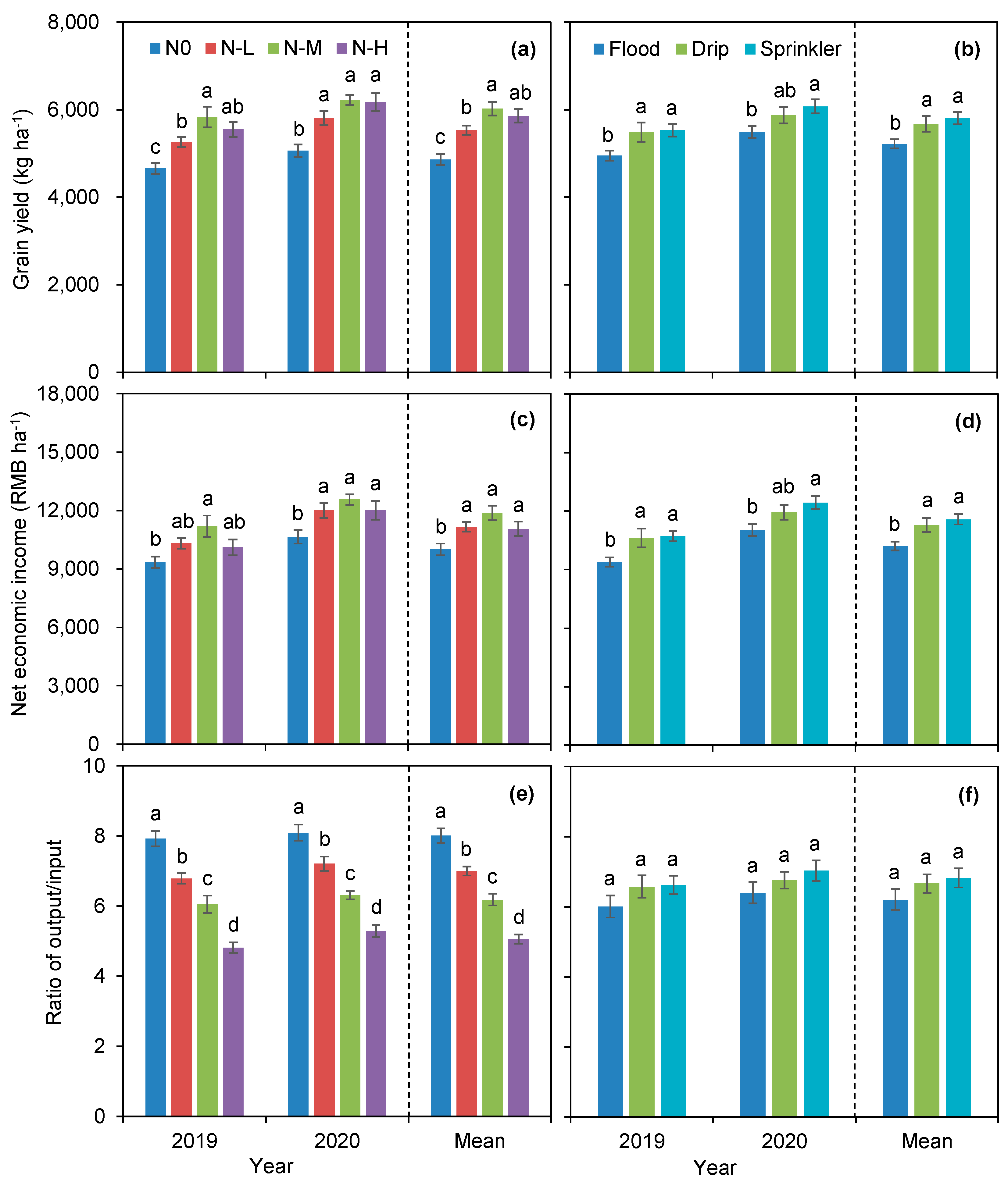
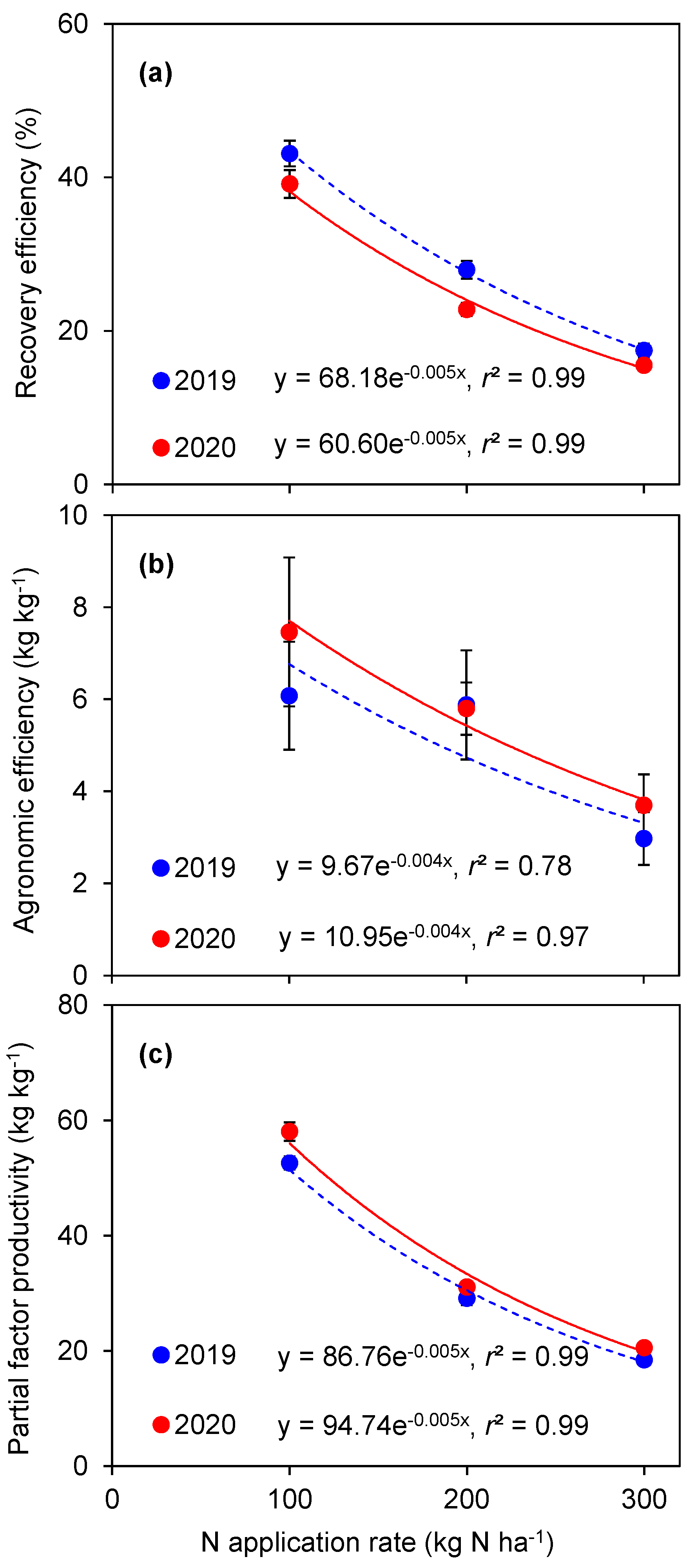
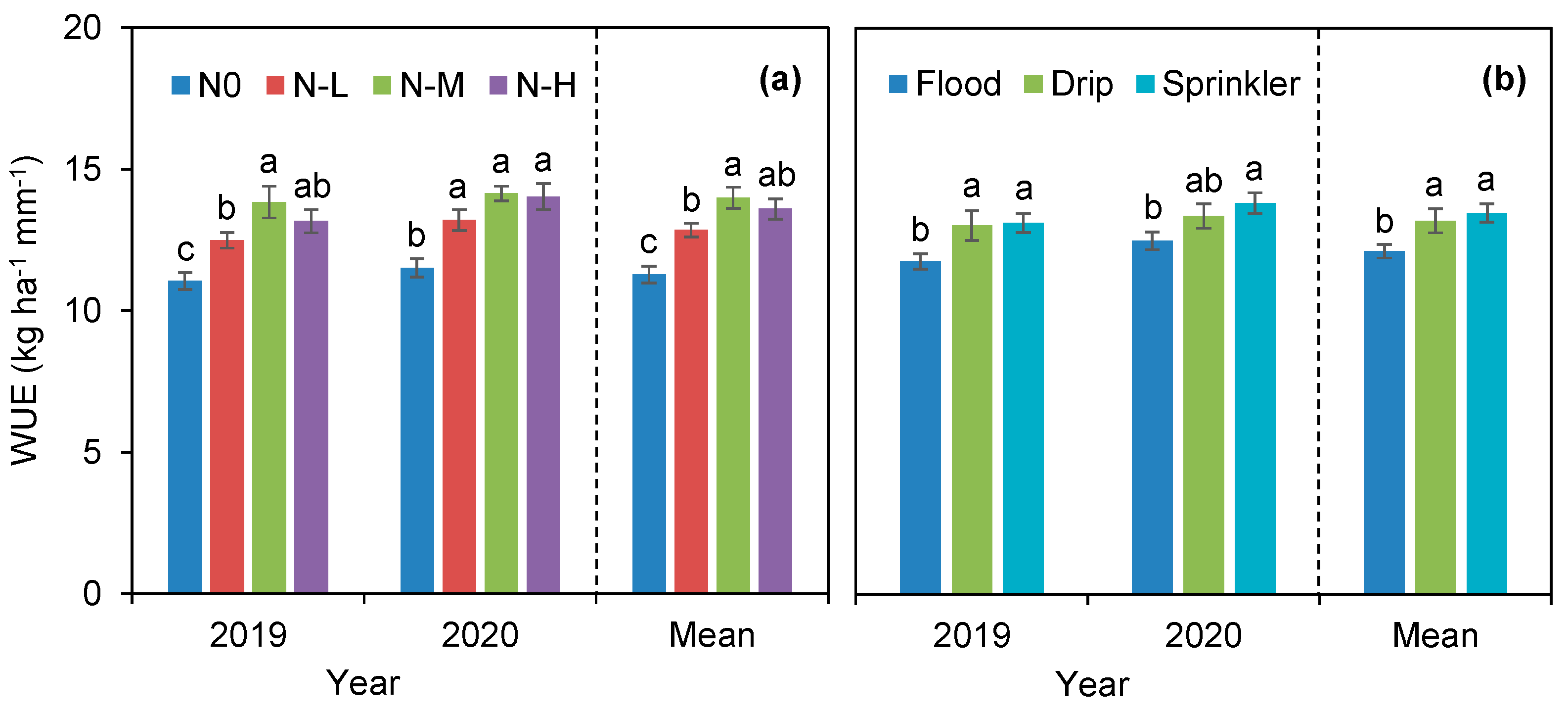
Nitrogen (N) and water irrigation are two vital factors influencing the agriculture sustainability in various regions across the world, such as the North China Plain (NCP). Exploring optimal N application and water-efficient irrigation methods are needed for achieving greater crop productivity benefits and increasing the efficiency of inputs (N and water) in winter wheat (Triticum aestivum L.) production in the NCP. For this reason, we conducted a two-year field experiment with four N application rates interacting with three irrigation methods to examine the effects of N fertilization and water-efficient irrigation on grain yield, biomass production, economic benefits, and N- and water-use efficiencies of winter wheat in the NCP. The optimal N fertilization rate was ≈200 kg N ha−1, achieving a high grain yield of winter wheat (≈6000 kg ha−1). At this N dose, the highest net economic benefit was also achieved by the local farmer due to the increased grain yield, which was accompanied by more water-efficient irrigation. N recovery efficiency, agronomy efficiency, and the partial factor productivity of wheat decreased sharply with the N application rate. Water-use efficiency was significantly increased through drip irrigation and sprinkler irrigation. Considering the wheat productivity, input (N and water) efficiencies, and economic performance, water-efficient irrigation accompanied with an N application rate of 200 kg N ha−1 is optimal for achieving high economic returns for local farmers in the NCP.
Keywords: grain yield; NUE; WUE; economic benefits; North China Plain grain yield; NUE; WUE; economic benefits; North China Plain