Article

Temporal and Spatial Dynamics of Dark Septate Endophytes in the Roots of Lycium ruthenicum in the Desert Region of Northwest China
1
School of Life Sciences, Hebei University, Baoding 071002, China
2
Institute of Life Sciences and Green Development, Hebei University, Baoding 071002, China
3
College of Pharmaceutical Sciences, Hebei University, Baoding 071002, China
4
Institute of Medicinal Plant Development, Chinese Academy of Medical Sciences & Peking Union Medical College, Beijing 100005, China
*
Author to whom correspondence should be addressed.
Li Han and Jingxin Shi are co-first authors and contribute equally to the article.
Agronomy 2021, 11(4), 648; https://doi.org/10.3390/agronomy11040648

Submission received: 15 February 2021 / Revised: 25 March 2021 / Accepted: 26 March 2021 / Published: 28 March 2021
(This article belongs to the Section Soil and Plant Nutrition)

Abstract

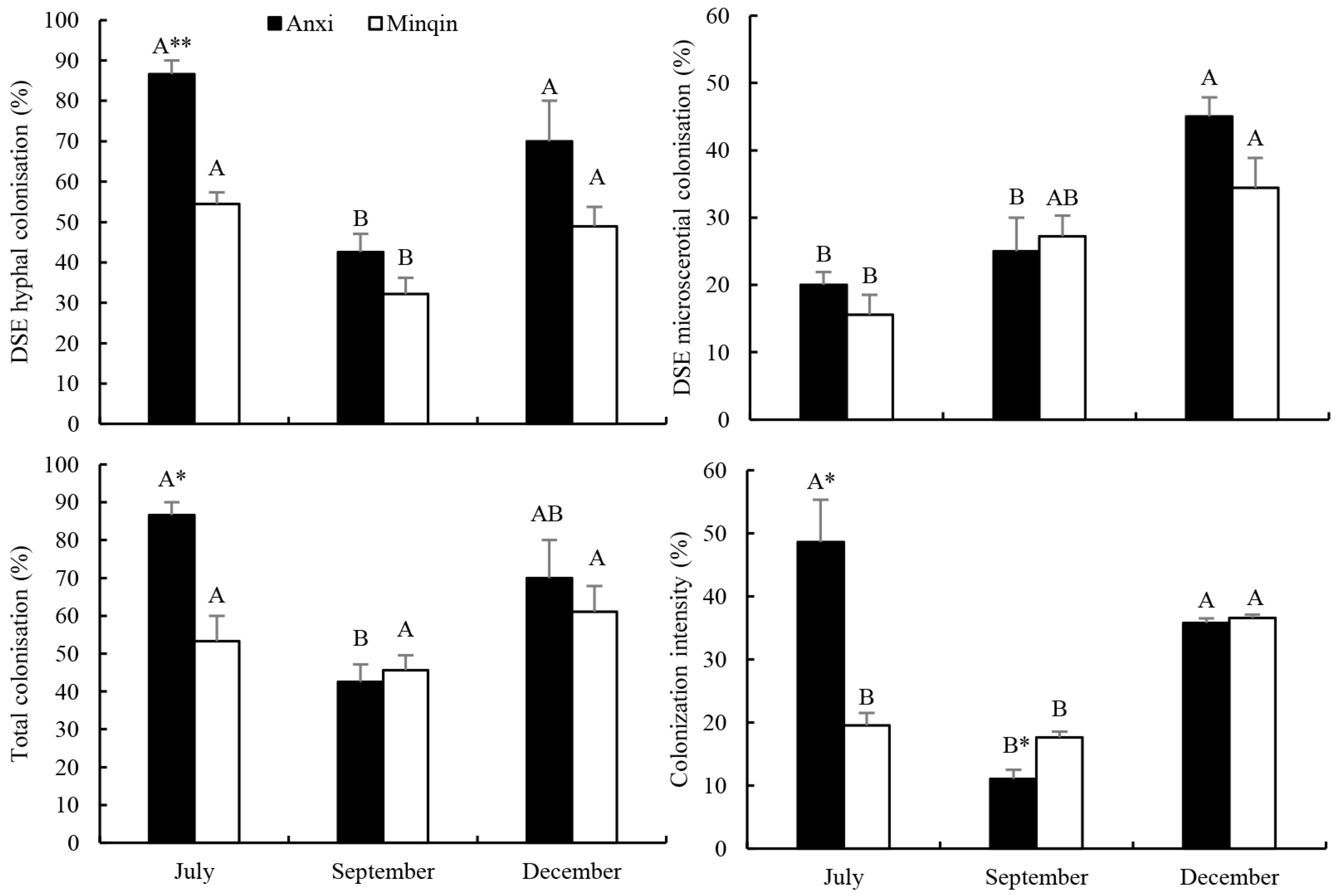
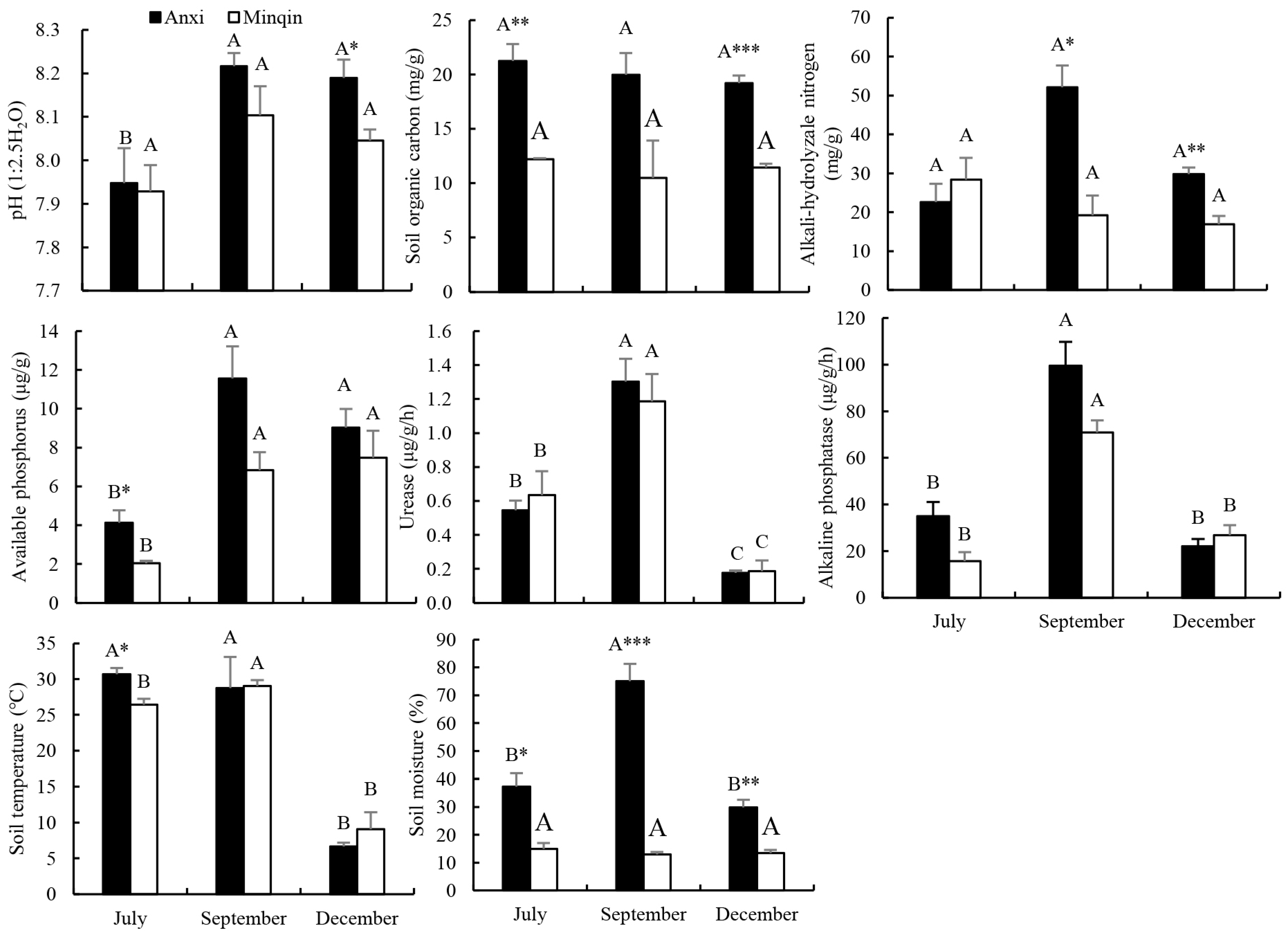
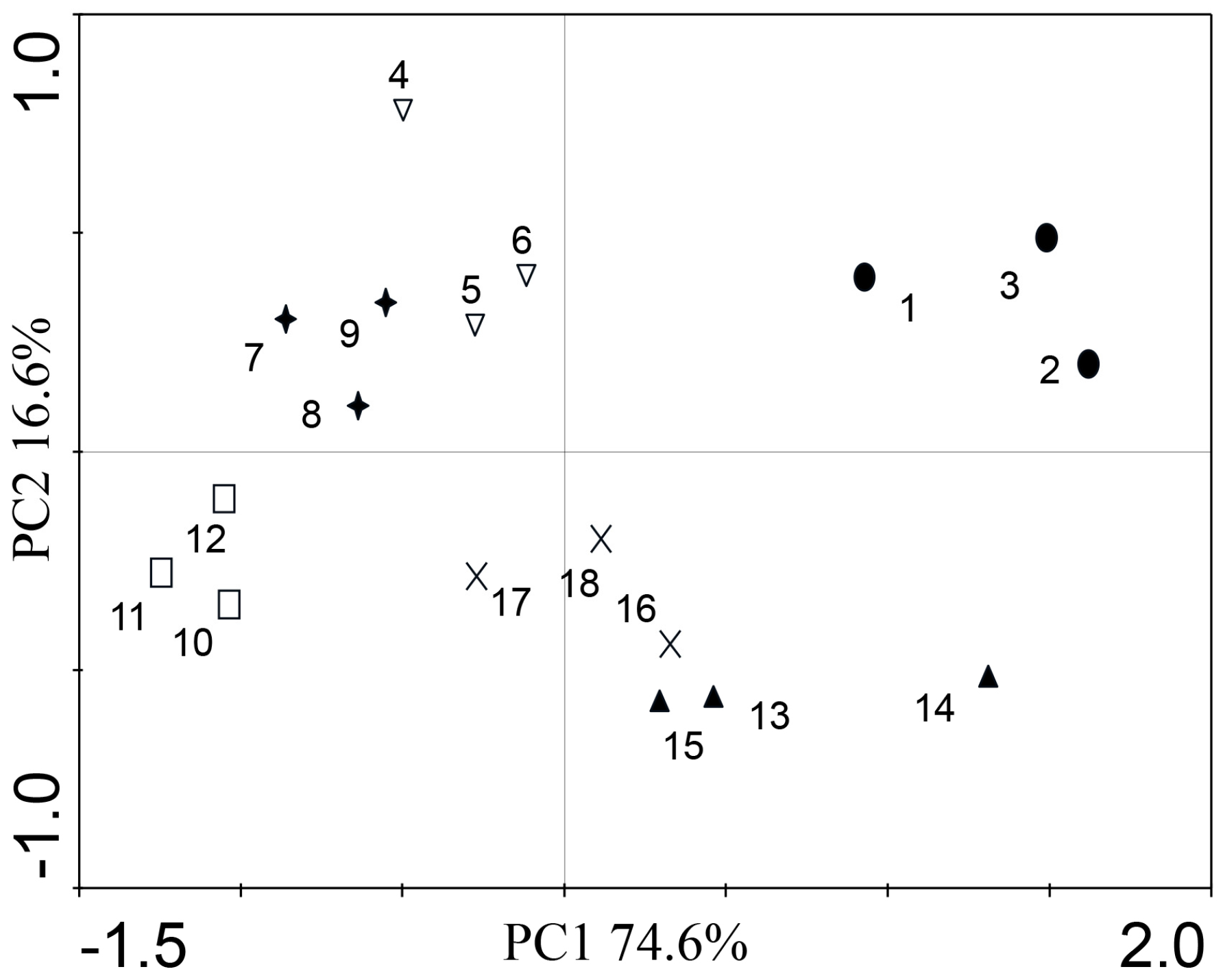
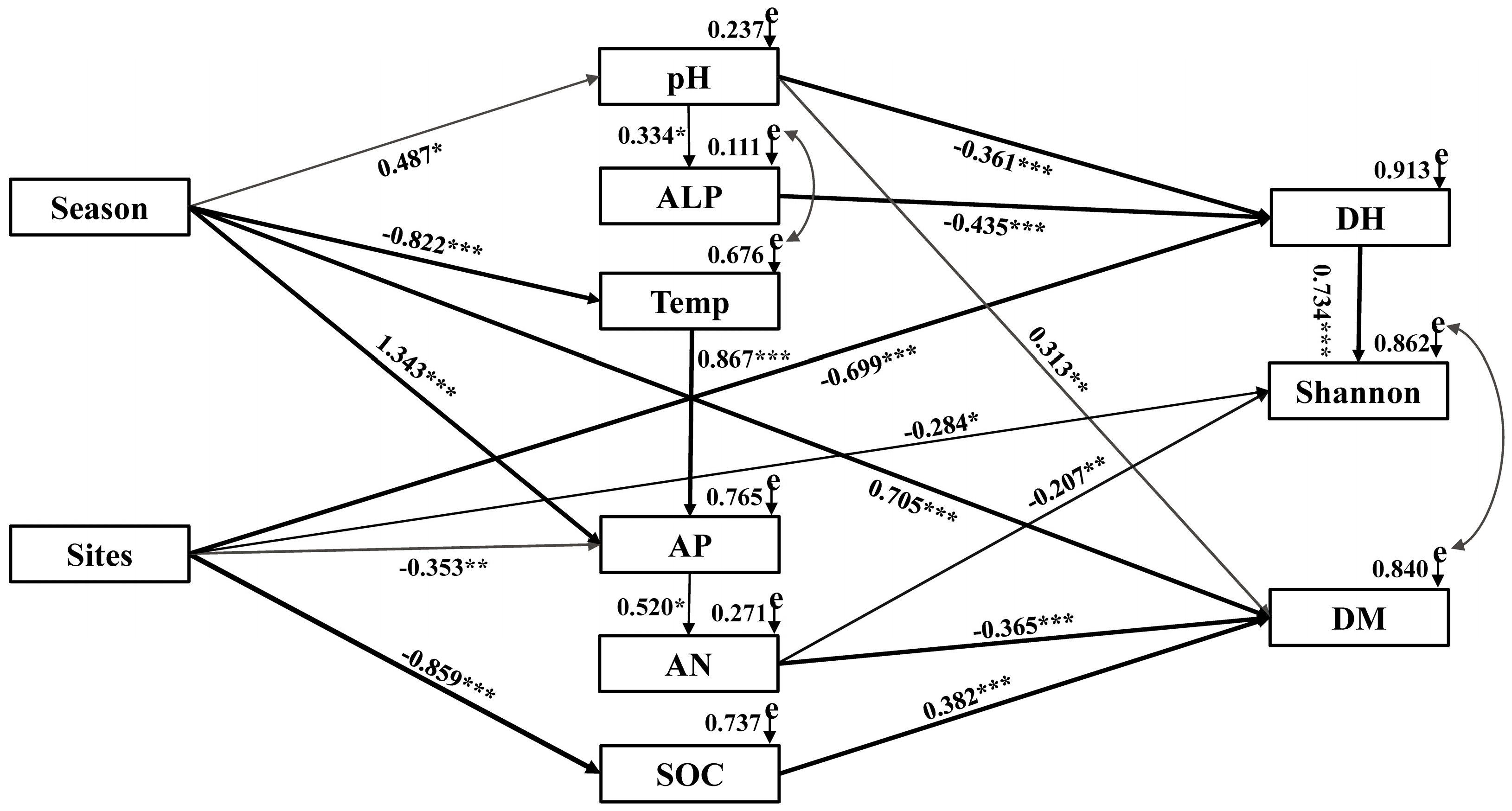
With the intensification of desertification in northwest China, drought has become a serious environmental problem restricting plant growth and ecological restoration. Recently, dark septate endophytes (DSEs) have attracted more attention because of their ability to improve plants’ resistance to drought. Here, we investigated DSE colonization and species diversity in roots of Lycium ruthenicum collected from Anxi and Minqin, in northwest China, during July, September, and December 2019. This study aimed to evaluate the influence of seasonality and sampling sites on DSEs. In different seasons, DSE colonization varied with the phenology of L. ruthenicum. At different sites, DSE colonization significantly differed. Four isolates were reported in desert ecosystems for the first time. The results showed microsclerotial colonization was directly affected by changing seasons, while hyphal colonization and species diversity were directly affected by sampling sites. The soil organic carbon, pH, alkaline phosphatase, and alkali-hydrolyzable nitrogen were the main predictors of DSE colonization and species diversity. We conclude that DSE colonization and diversity showed significant spatial–temporal heterogeneity and were closely related to soil factors. This research provides a basis for the further understanding of the ecological functions of DSEs and their application potential for vegetative restoration and agricultural cultivation in drylands.
Keywords: root endophyte; seasonal variation; spatial distribution; arid environment; desert plant root endophyte; seasonal variation; spatial distribution; arid environment; desert plant