Article

Understanding the Responses of Soil Bacterial Communities to Long-Term Fertilization Regimes Using DNA and RNA Sequencing

Key Laboratory of Plant Nutrition and Fertilizer, Ministry of Agriculture and Rural Affairs/Institute of Agricultural Resources and Regional Planning, Chinese Academy of Agricultural Sciences, Beijing 100081, China
*
Author to whom correspondence should be addressed.
Juan Li and Yanchen Wen contributed equally to this work.
Agronomy 2021, 11(12), 2425; https://doi.org/10.3390/agronomy11122425

Submission received: 23 October 2021 / Revised: 19 November 2021 / Accepted: 25 November 2021 / Published: 28 November 2021
(This article belongs to the Special Issue Soil Microbiome and Agriculture Management)

Abstract

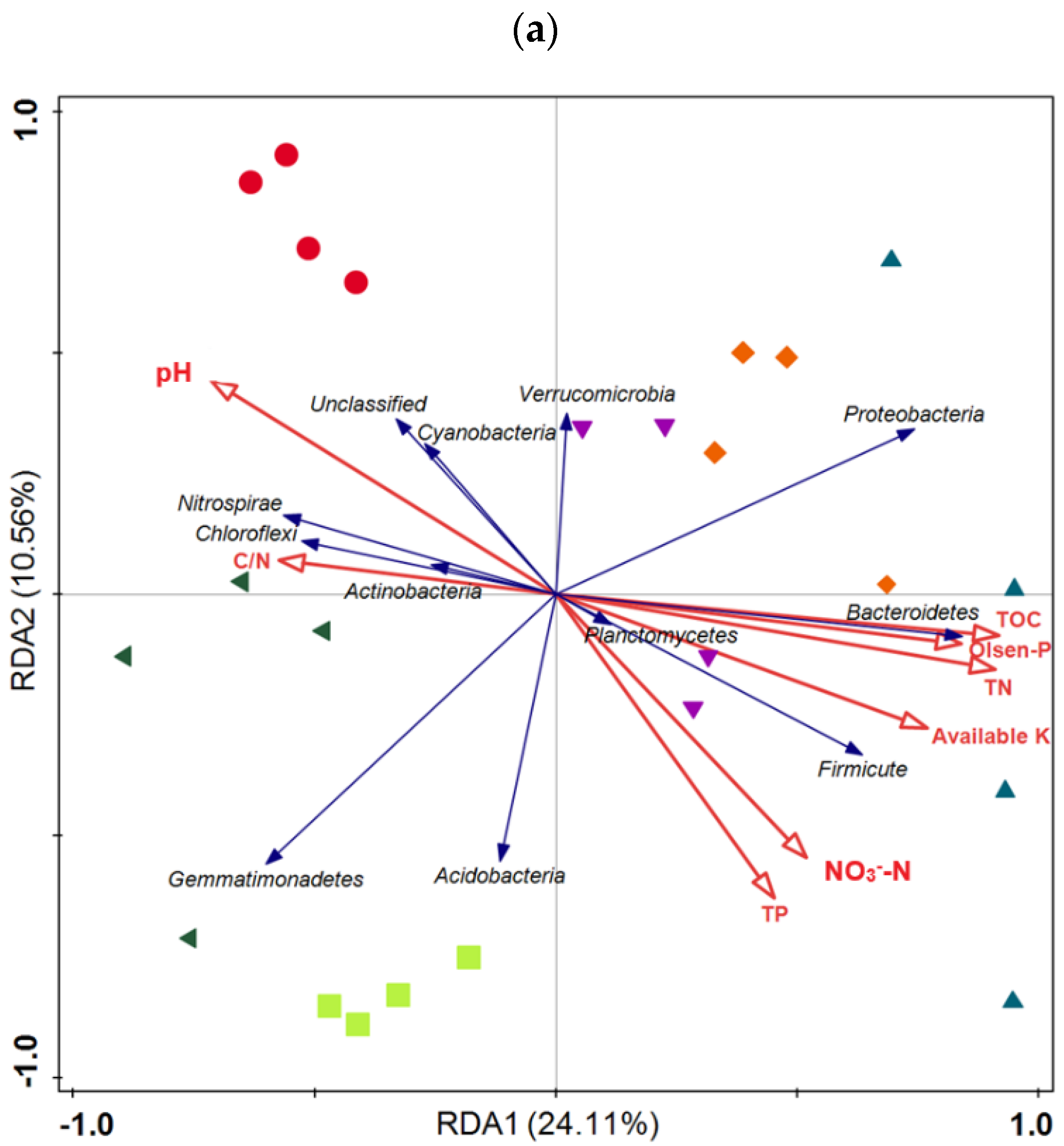
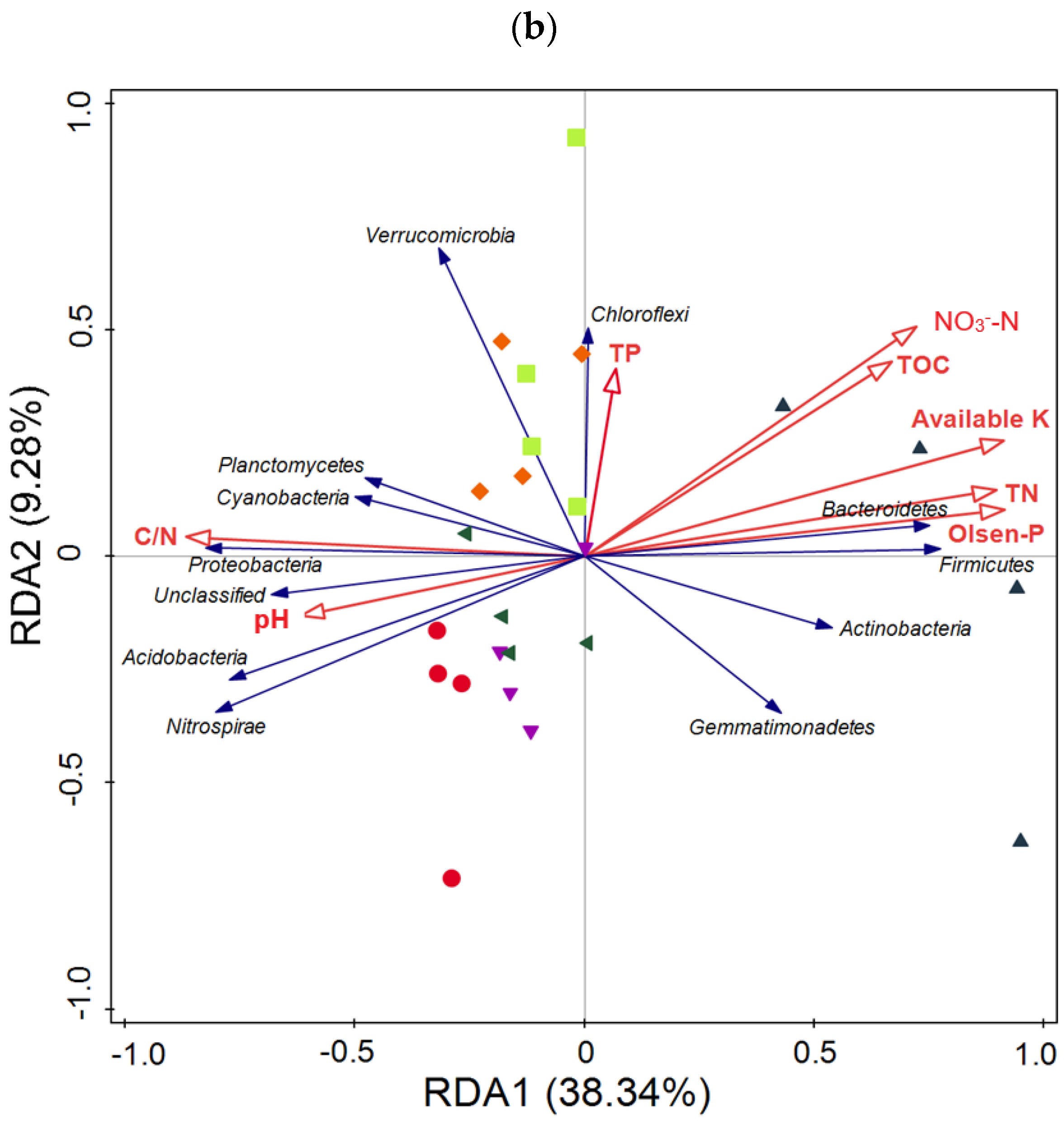
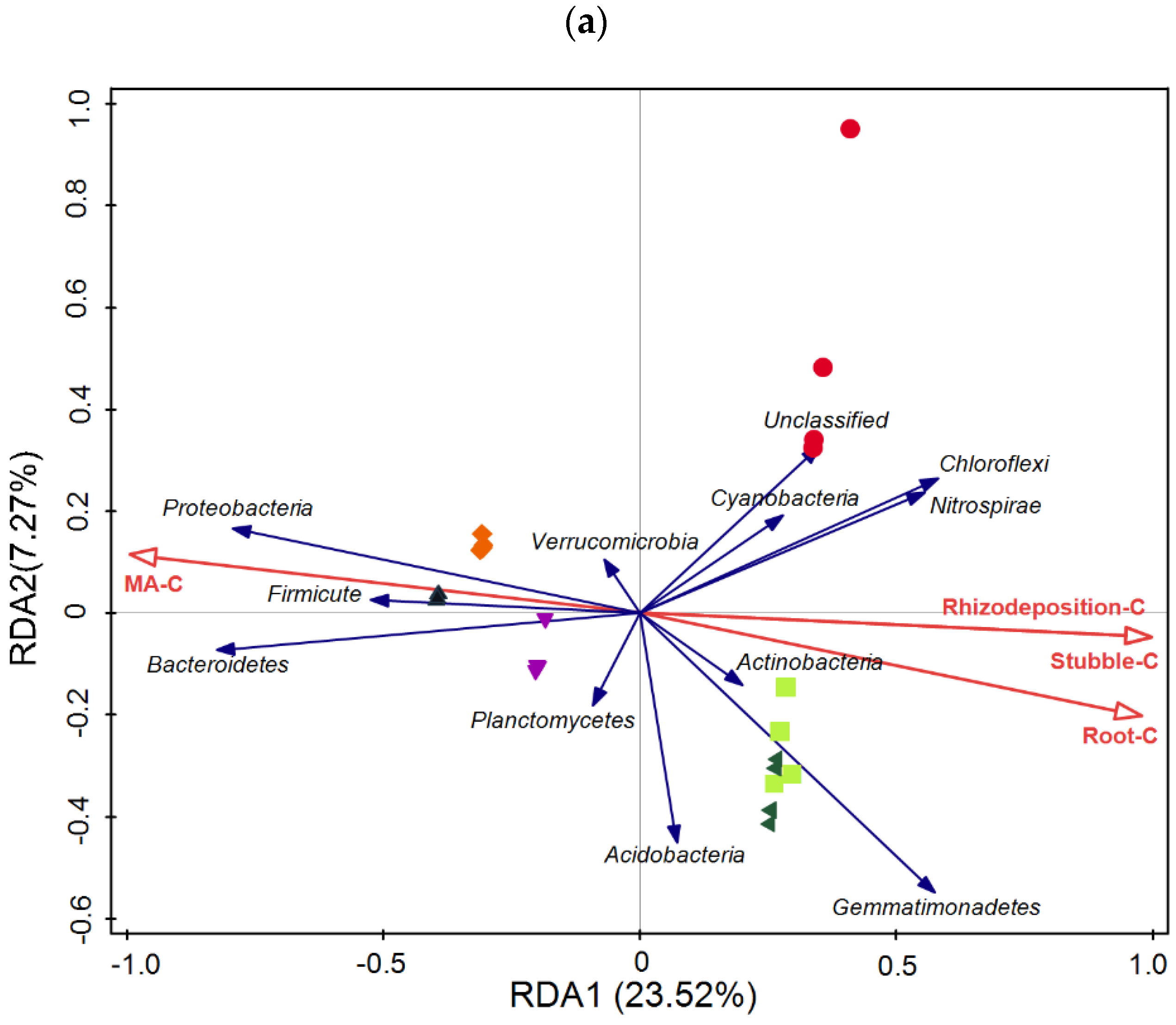
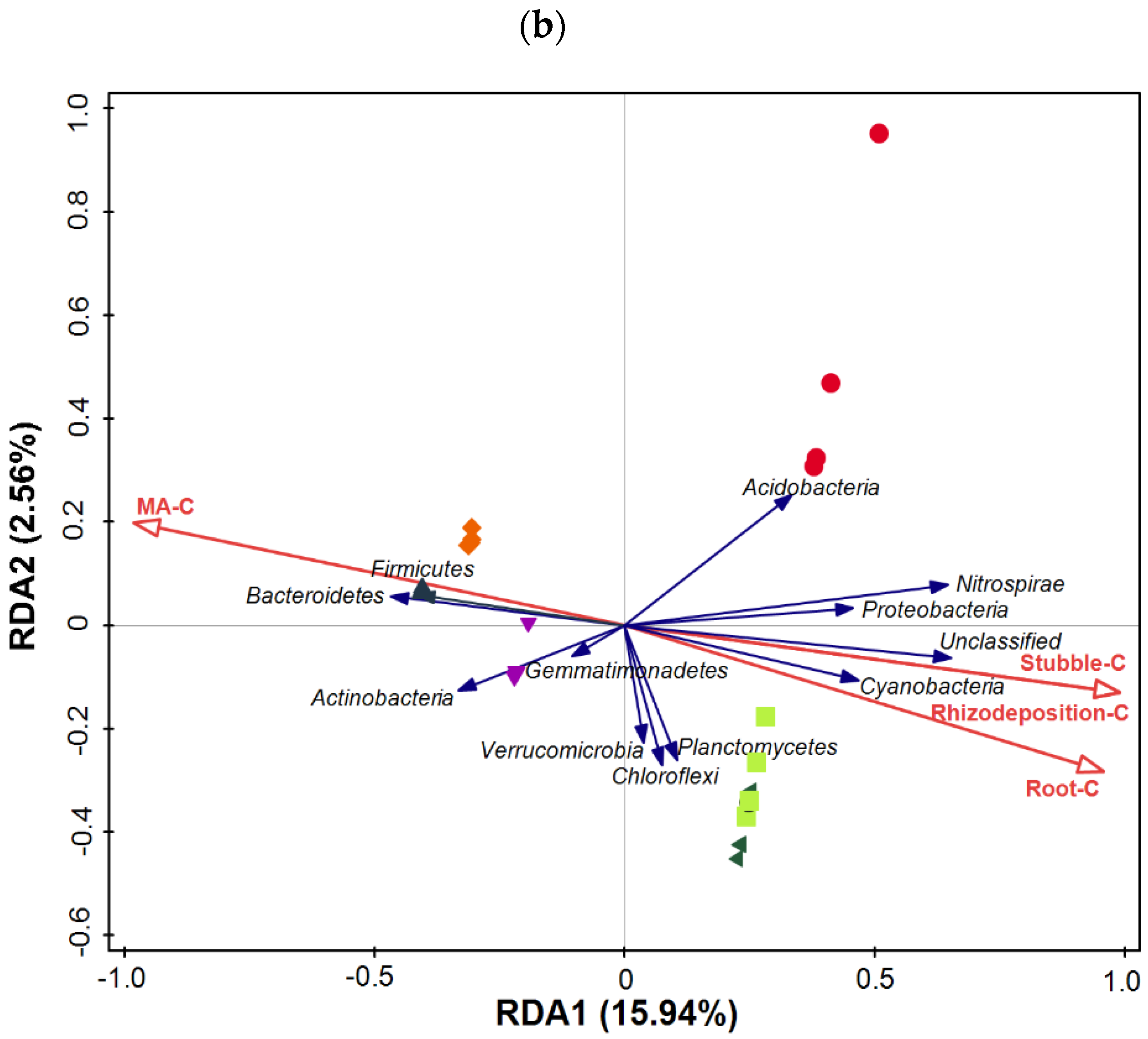
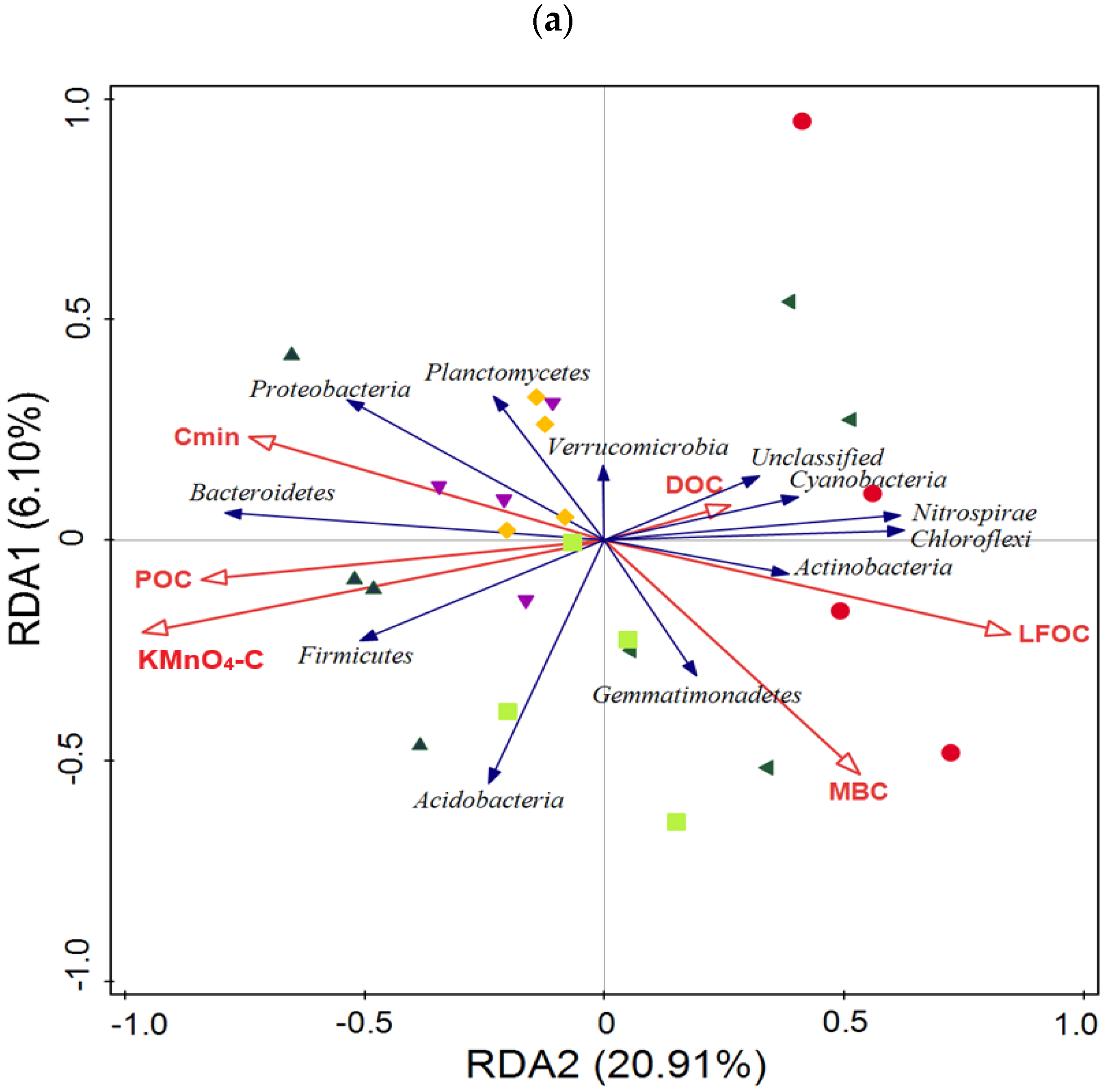
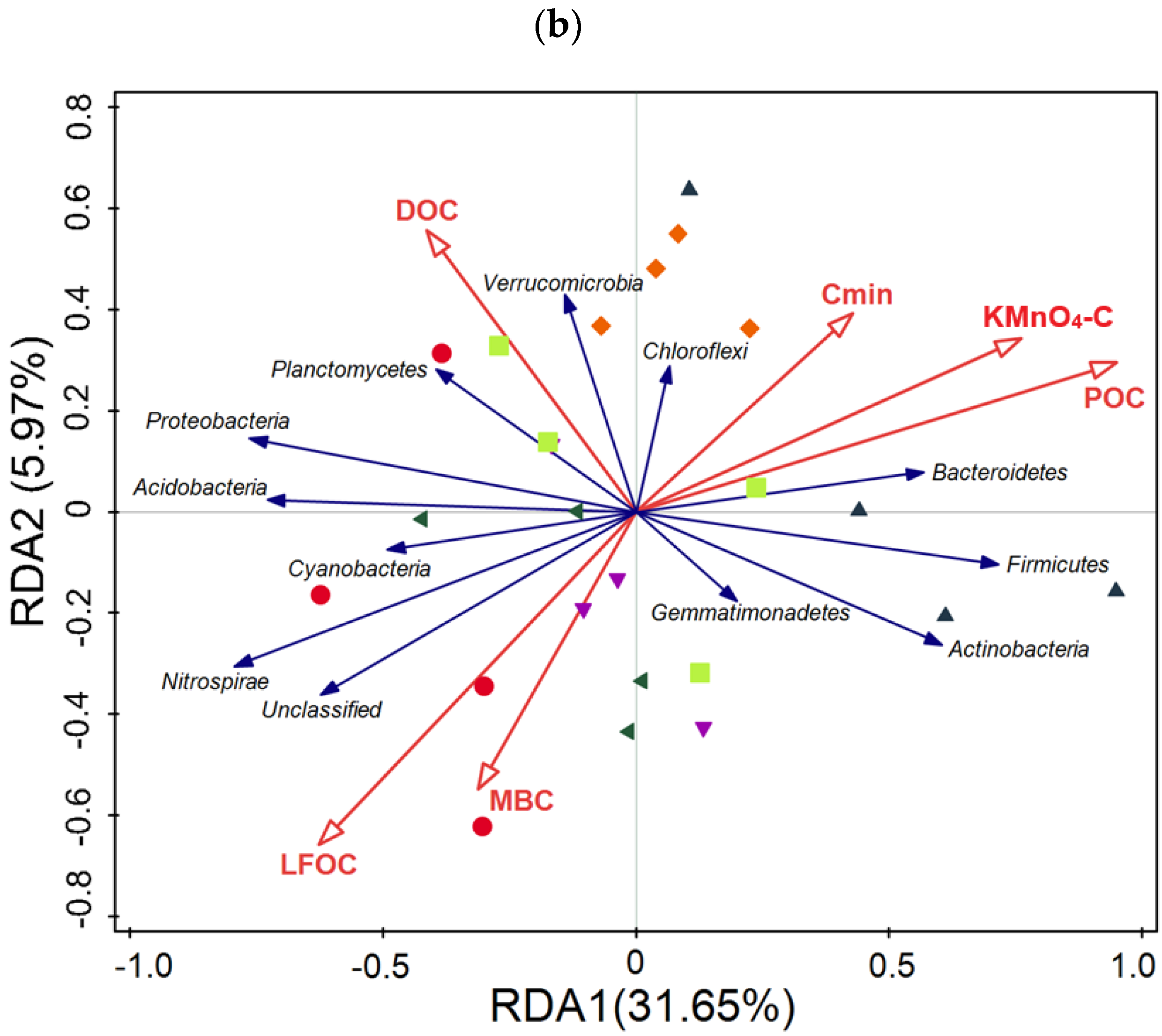
Studies of soil DNA-based and RNA-based bacterial communities under contrasting long-term fertilization regimes can provide valuable insights into how agricultural management affects soil microbial structure and functional diversity. In this study, soil bacterial communities subjected to six fertility treatments in an alkaline soil over 27 years were investigated by 454 pyrosequencing based on 16S rDNA and 16S rRNA. Long-term fertilization showed significant influences on the diversity of the soil DNA-based bacteria, as well as on their RNA-based members. The top five phyla (Proteobacteria, Acidobacteria, Chloroflexi, Actinobacteria, and Planctomycetes) were found in both the DNA- and RNA-based samples. However, the relative abundances of these phyla at both DNA and RNA levels were showed significantly different. Analysis results showed that the diversity of the 16S rRNA samples was consistently lower than that of the rDNA samples, however, 16S rRNA samples had higher relative abundance. PICRUSt analysis indicated that glycan biosynthesis and metabolism were detected mainly in the DNA samples, while metabolism and degradation of xenobiotics and the metabolism of amino acids, terpenoids and polyketides were relatively higher in the RNA samples. Bacilli were significantly more abundant in all the OM-fertilized soils. Redundancy analysis indicated that the relative abundances of both DNA- and RNA-based bacterial groups were correlated with soil total organic carbon content, nitrogen content, Olsen-P, and soil pH. Moreover, the RNA-based Bacilli were positively correlated with available phosphorus (Olsen-P).
Keywords: bacterial community; diversity; 16S rDNA and 16S rRNA sequencing; long-term fertilization regime; labile organic carbon fractions bacterial community; diversity; 16S rDNA and 16S rRNA sequencing; long-term fertilization regime; labile organic carbon fractions