3.1. Characteristics of PVP-PEG and PVP-PEG Solutions with Embedded AgNPs
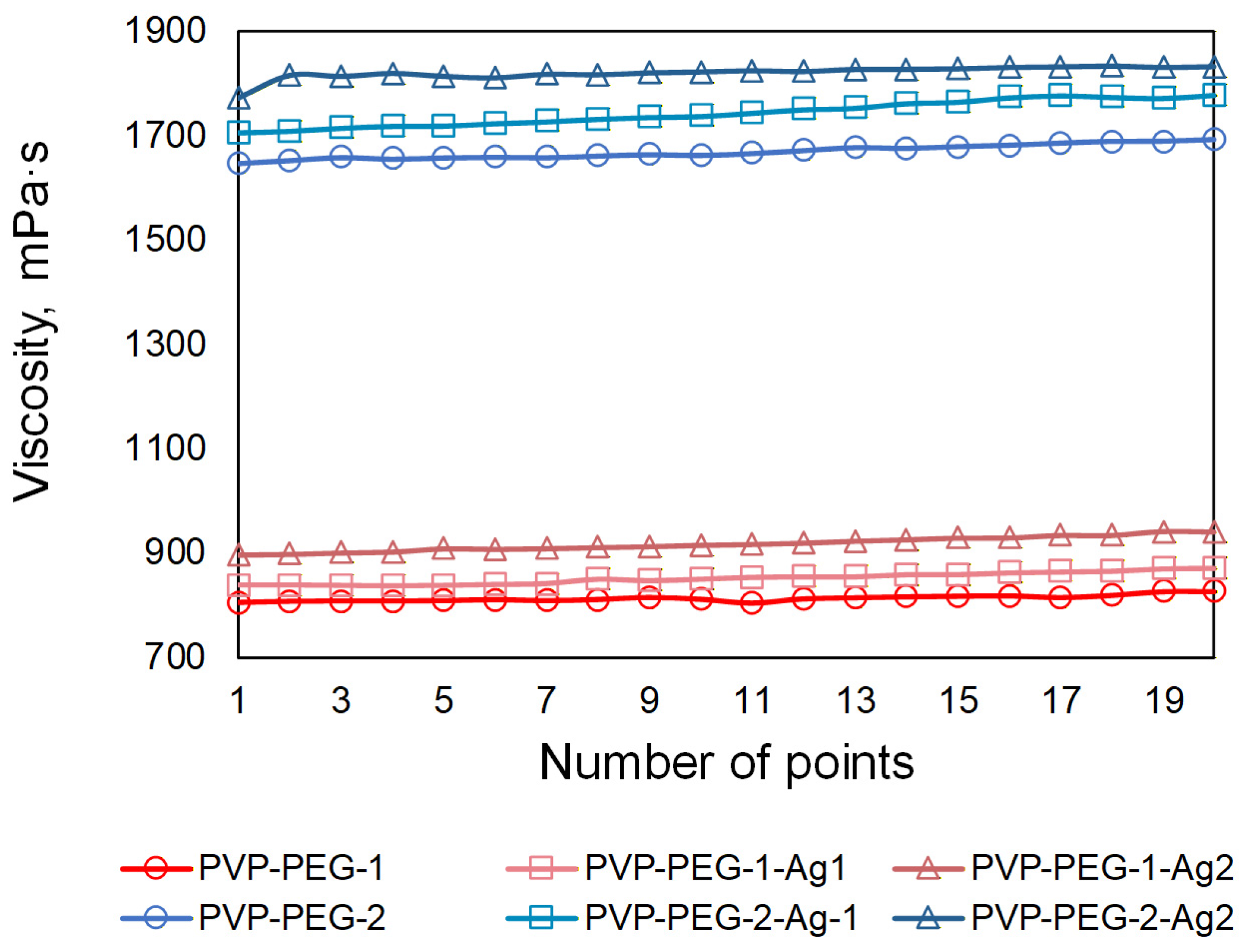
Figure 4 shows the results of the viscosity measurements for the PVP-PEG and PVP-PEG compositions with embedded AgNPs.
An analysis of the results revealed that increasing the PEG content from 3.5 wt.% to 7.5 wt.%, while maintaining the same PVP concentration in the studied solutions significantly increased the viscosity of the formulations, from 812.65 mPa·s to 1669.72 mPa·s for the PVP-PEG-1 and PVP-PEG-2 samples, respectively. This phenomenon is due to the increasing prevalence of intermolecular interaction forces. At a certain concentration, the regions of the polymer molecules begin to overlap, leading to entanglement of the polymer chains, which impedes flow and increases viscosity.
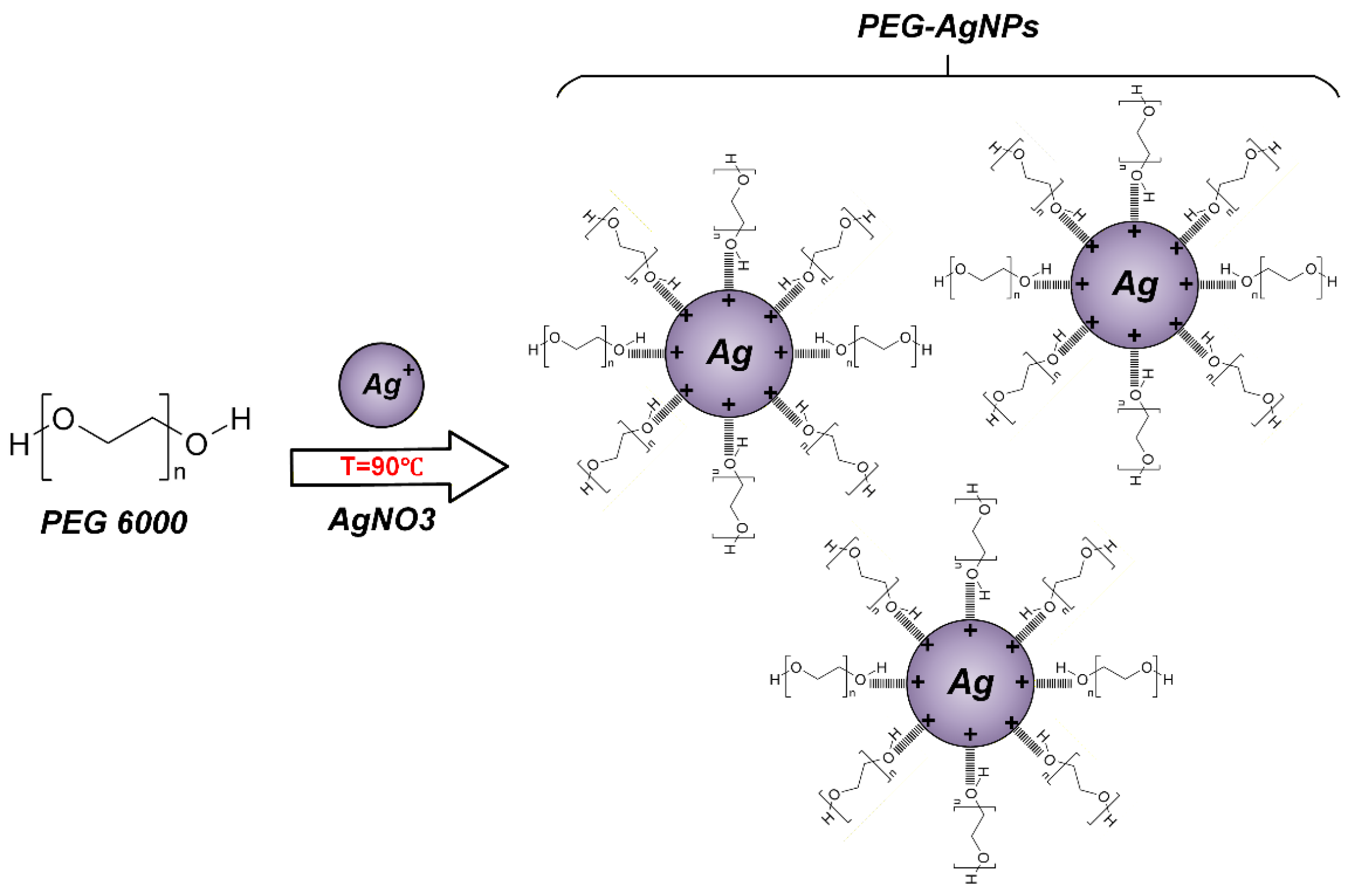
Increasing the molar concentration of AgNO3 from 0.002 M to 0.004 M in the PVP-PEG formulations promoted an increase in the concentration of AgNPs formed due to the reduction in AgNO3. An increase in the concentration of AgNPs also led to an increase in the viscosity of all the studied formulations. For the PVP-PEG-1-Ag1 and PVP-PEG-1-Ag2 solutions with a PEG content of 3.5 wt.%, the viscosity values were 851.52 and 917.68 mPa·s, respectively. For PVP-PEG-2-Ag1 and PVP-PEG-2-Ag2 solutions with a PEG content of 7.5 wt.%, the viscosity values also increased and were 1744.62 and 1820.77 mPa·s, respectively.
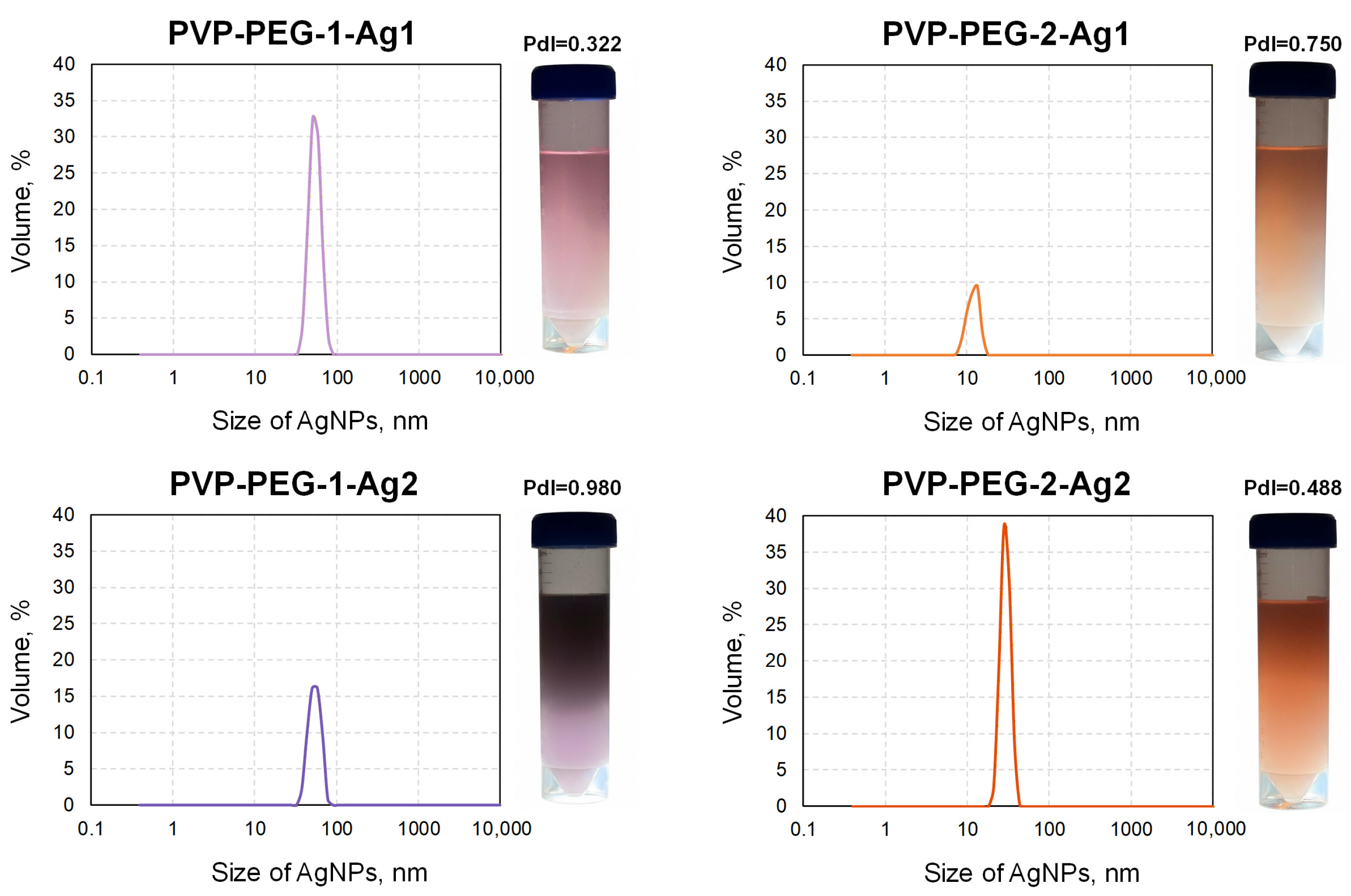
The diameters of the synthesized AgNPs were determined for PVP-PEG-1-Ag1, PVP-PEG-2-Ag1, PVP-PEG-1-Ag2 and PVP-PEG-2-Ag2 solutions. The results are shown in
Figure 5.
All the studied solutions of PVP-PEG-1-Ag1, PVP-PEG-2-Ag1, PVP-PEG-1-Ag2 and PVP-PEG-2-Ag2 have a monomodal size distribution of AgNPs. For the PVP-PEG-1-Ag1 and PVP-PEG-1-Ag2 samples, the peaks indicate the presence of AgNPs with characteristic sizes ranging from 37.84 to 78.82 nm. The color of the PVP-PEG-1-Ag1 and PVP-PEG-1-Ag2 solutions changes with increasing molar concentration of AgNO
3 from light pink to dark purple. With an increase in the concentration of PEG, which acts as a reducing agent for AgNO
3, the solutions of PVP-PEG-2-Ag1 and PVP-PEG-2-Ag2 had a dark orange color. The color of the solutions may depend on both the size and shape of the nanoparticles and their concentration [
36]. The PVP-PEG-2-Ag1 sample has a peak in the range from 7.53 to 18.17 nm, while the PVP-PEG-2-Ag2 sample has a peak in the range from 21.04 to 43.82 nm. A higher PEG concentration (7.5 wt.%) led to a decrease in AgNPs size. Compared to the PVP-PEG-1-Ag1 and PVP-PEG-1-Ag2 samples with 3.5 wt.% PEG, the average AgNPs size for the PVP-PEG-2-Ag1 and PVP-PEG-2-Ag2 samples (7.5 wt.% PEG) decreased by 45.48 nm and 25.9 nm, respectively. A higher concentration of reducing agent (PEG) usually leads to an increase in nucleation sites and the formation of smaller AgNPs [
37]. At the same time, the size of AgNPs is smaller for the PVP-PEG-2-Ag1 composition than for PVP-PEG-2-Ag2, which may be related to the higher molar concentration of AgNO
3 in PVP-PEG-2-Ag2. At higher AgNO
3 concentrations, more metal ions are available per reduction event, which promotes the growth of existing particles instead of the formation of new ones, resulting in an increase in the average size of the nanoparticles.
The polydispersity indices (Pdl) were 0.322, 0.750, 0.980 and 0.488 for the PVP-PEG-1-Ag1, PVP-PEG-2-Ag1, PVP-PEG-1-Ag2 and PVP-PEG-2-Ag2 solutions, respectively, indicating the heterogeneous composition of the nanoparticles in the studied formulations.
Table 3 shows the values of the ζ-potential determined for PVP-PEG solutions with embedded AgNPs.
One study [
38] indicated that AgNPs with a ζ-potential in the range of −10 to +10 mV are considered neutral. However, nanoparticles with ζ-potential values greater than +10 mV or less than −10 mV are considered stable. The highest ζ-potential value (−15.5 mV) was observed for the PVP-PEG-2-Ag2 sample; therefore, this sample is the most stable of all those studied. However, precipitation was not observed for any of the studied samples during the observed month.
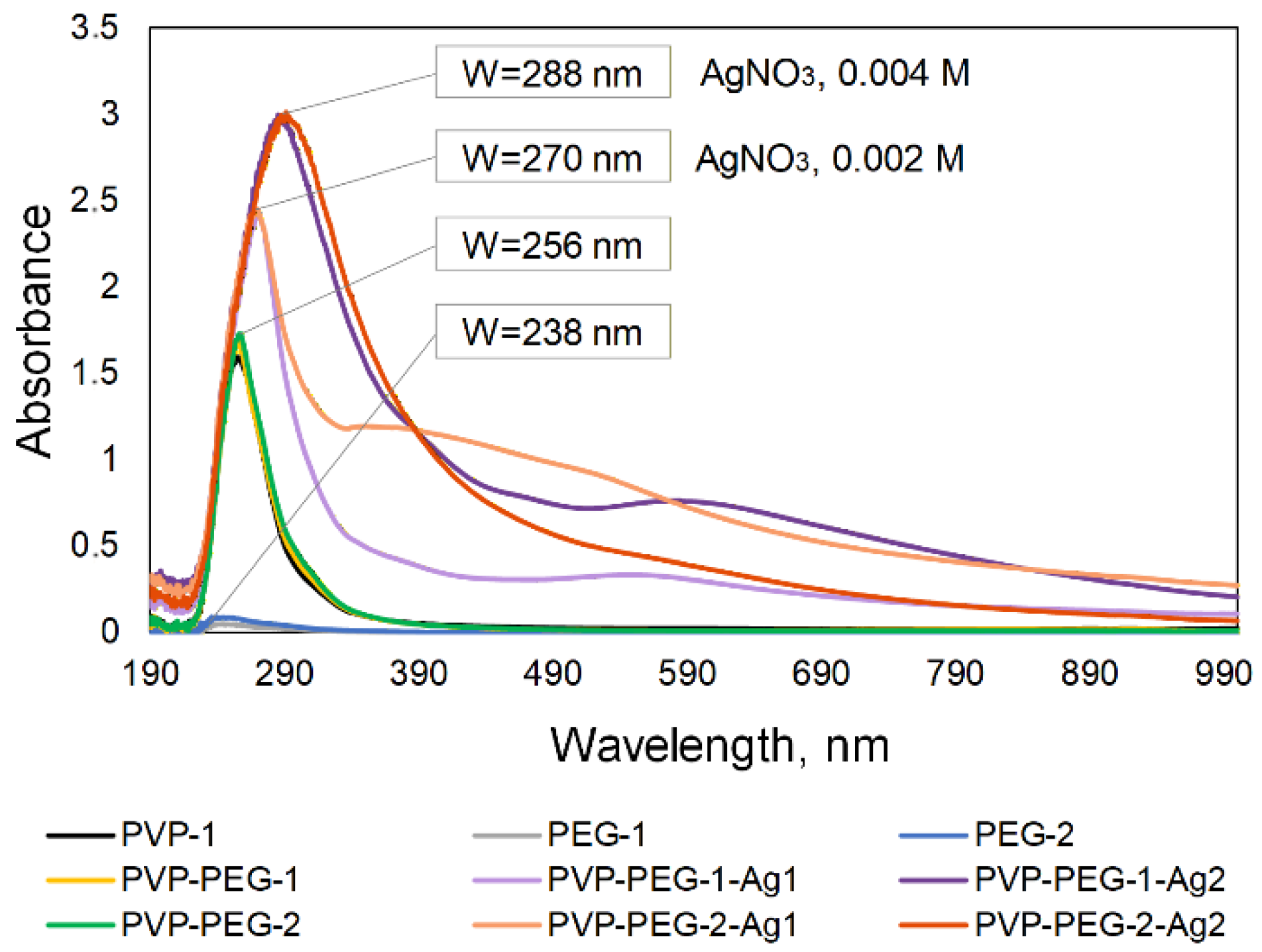
The UV spectroscopy results revealed that the plasmon resonance peak in the 400–430 nm region, which is characteristic of AgNPs, is blurred (
Figure 6).
With increasing particle size (>80 nm), scattering processes, rather than absorption, begin to dominate the spectrum. The plasmon resonance peak broadens significantly and shifts toward longer wavelengths. Instead of a sharp peak, a rise in the baseline is observed throughout the visible range. This result was confirmed by a study [
39], which revealed that increasing the AgNPs size (~100 nm) led to the formation of a broader absorption peak without a clearly defined maximum in the UV spectra.
The presence of AgNPs in the PVP-PEG-1-Ag1, PVP-PEG-2-Ag1, PVP-PEG-1-Ag2 and PVP-PEG-2-Ag2 solutions was confirmed visually by color. Pink, dark purple, and orange are typical colors for silver sols of different sizes [
40]. The presence of color indicates absorption in the visible region (400–700 nm), but it is represented not by a narrow peak, but by a broad band, which is observed as an increase in the curve in the spectrum (from 350 nm).
Peaks in the 238–256 nm region (PEG-1, PEG-2, PVP-1, PVP-PEG-1 and PVP-PEG-2 solutions) are associated with intramolecular electron transitions in polymers [
41]. Upon the addition of AgNO
3, the peaks shift to the 270–288 nm region (PVP-PEG-1-Ag1, PVP-PEG-2-Ag1, PVP-PEG-1-Ag2 and PVP-PEG-2-Ag2 solutions), with a significant increase in peak intensity, which is characteristic of the formation of Ag
+ complexes with the PVP carbonyl group and PEG donor centers [
42]. The highest peak intensity was achieved at an AgNO
3 molar concentration of 0.004 M.
The results of measuring the electrical conductivity values of the solutions are presented in
Table 4.
The electrical conductivity of solutions increases with increasing PEG concentration and increases significantly with increasing molar concentration of AgNO3.
3.2. Design and Assembly of a Portable Electrospinning Device
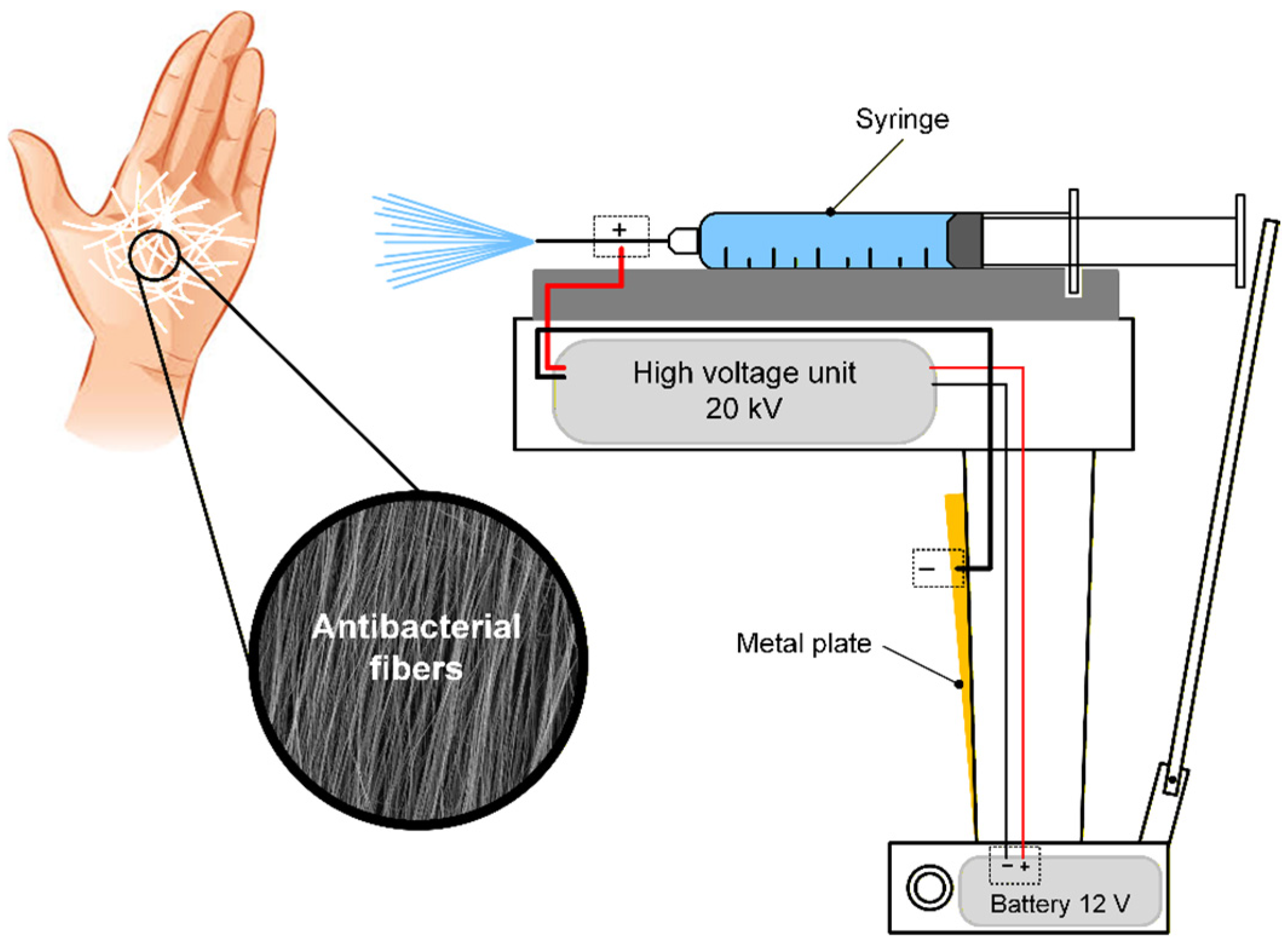
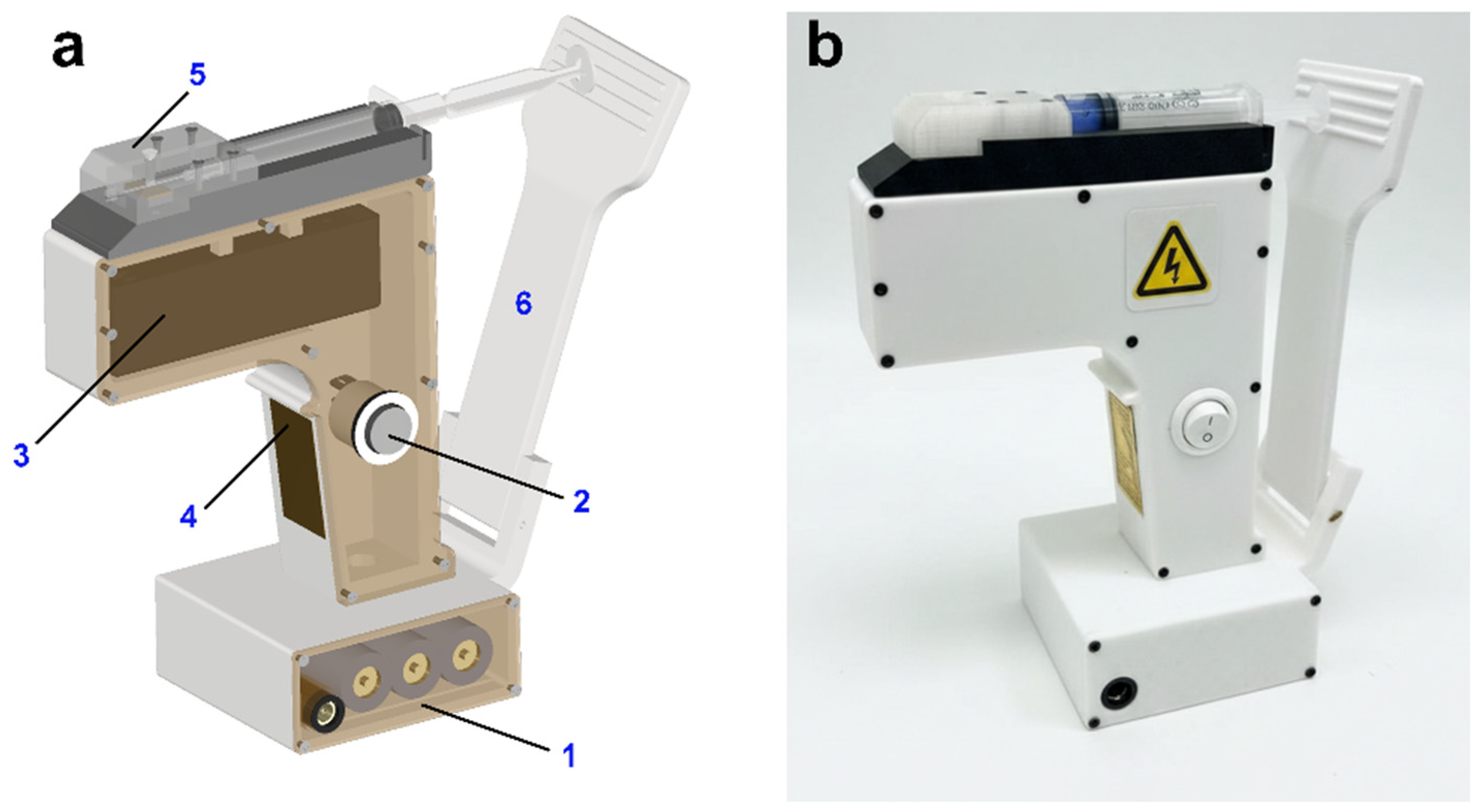
Figure 7 shows a computer-aided design (CAD) model of the developed design of a portable electrospinning device with the designation of the main working elements and the appearance of the assembled device.
The developed portable electrospinning device measures 18.7 × 13.3 × 3.5 cm and is equipped with a 12 V, 3500 m·Ah battery, providing over 2 h of continuous operation. The device’s characteristics allow it to be effectively used for prompt treatment of wounds with antibacterial compounds in the form of fiber polymer coatings.
Stable fiber formation is observed at a distance of 10–20 cm from the nozzle tip to the deposition surface, as confirmed by video recording of the electrospinning process (
Video S1). Reducing the distance between electrodes (<10 cm) leads to solution dripping and the formation of defects on the already formed fiber layer.
To prevent short-circuiting of the electrical circuit, the portable electrospinning device is designed such that the needle tip (positive electrode) is recessed 0.5 cm deep inside the removable module (5).
When operating a portable electrospinning device, it is not recommended to reduce the distance between the two electrodes to less than 2 cm to avoid the formation of an ionized arc.
The advantages of the developed portable electrospinning device include: compact dimensions; ergonomic housing; the ability to charge the battery (the design features a dedicated connector for recharging); the high-voltage unit allows adjustment of the output voltage from 15 to 20 kV; the device housing is disassemblable, facilitating user replacement of individual components when needed; the syringe module (5) is removable and can be replaced with a dual-syringe module if required, enabling increased device productivity and application of fibers of various compositions to wounds.
The most significant drawback of the device is the manual extrusion of the polymer solution using the extrusion regulator (6). However, this drawback can be eliminated by adding a special carriage and a speed control circuit for its movement, which will automate the syringe piston displacement and, accordingly, the flow rate.
3.3. Structure of the Fiber Coatings
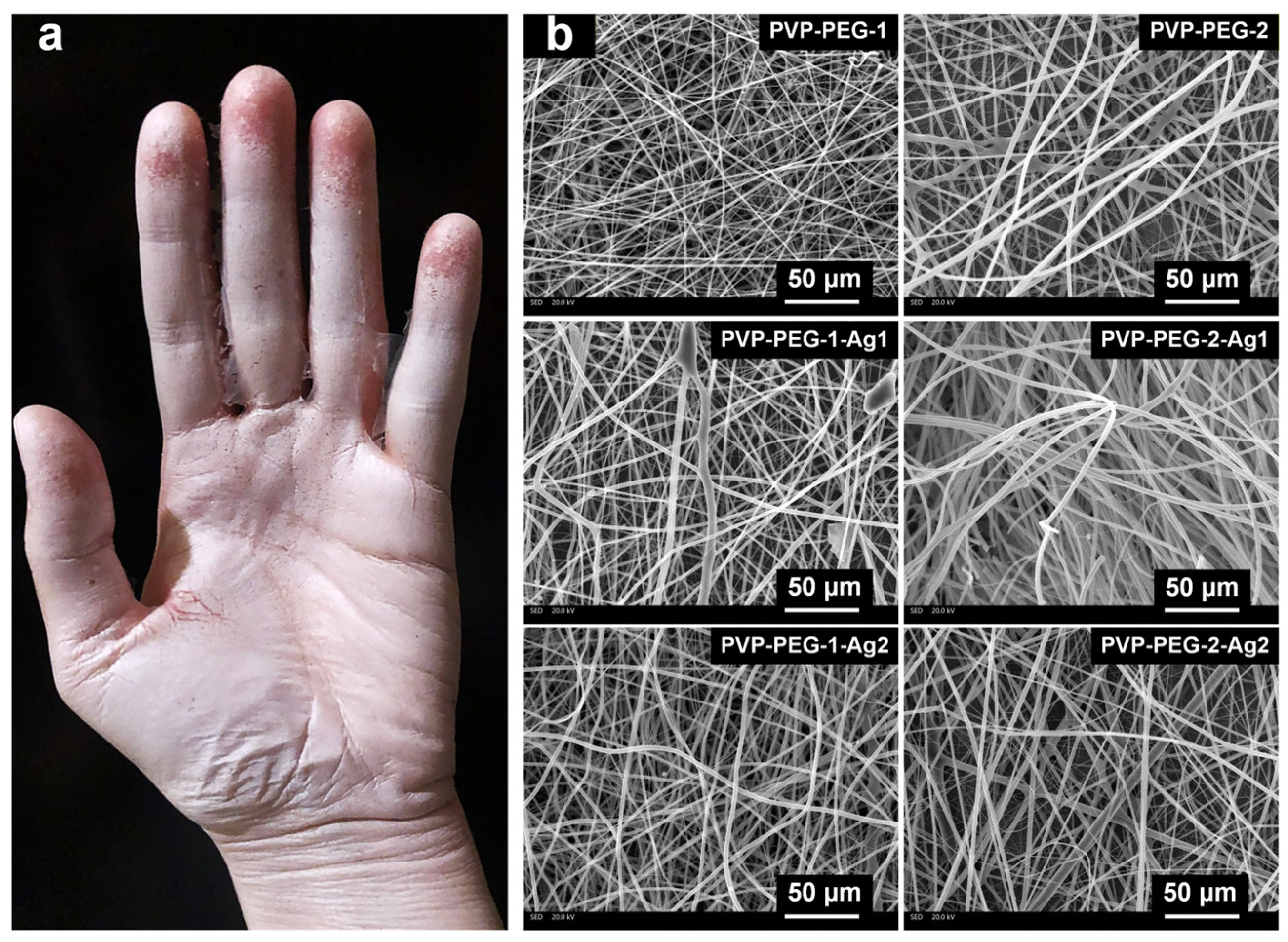
Using the developed portable electrospinning device, PVP-PEG and PVP-PEG with AgNPs-based formulations were coated onto the skin to confirm the performance of the device and demonstrate the coating method (
Figure 8a). To study the structure, the fibers were applied to the foil, after which scanning electron microscopy (SEM) images were obtained to analyze the morphology of the samples (
Figure 8b).
All SEM images were processed in ImageJ, which was used to measure the diameters of the obtained fibers. For the measured data (
Figure 8b), the compliance of the samples with a normal distribution was checked via the Shapiro–Wilk test [
43]. Each sample included 30 measured objects to ensure data comparability:
where
W is the Shapiro–Wilk criterion;
s2 is the sample variance, μm
2;
xi is the sample element, μm;
is the arithmetic mean, μm;
are the coefficients determined from [
43].
Null hypothesis
H0: the random variable is normally distributed. Alternative hypothesis
H1: the random variable is not normally distributed. The criterion for rejecting the null hypothesis is
W <
W(
p). The critical value of the statistic for
p = 0.05 is taken from [
43].
For all the studied samples, the average diameter of the fibers was calculated via the following equation:
where
is the average diameter, μm;
ni is the number of fibers in the
i-th fraction;
di is the diameter of fibers in the
i-th fraction, μm;
is the total number of measured fibers;
is the numerical proportion of fibers in the
i-th fraction.
The results of the test of sample compliance with the normal distribution are summarized in
Table 5.
The results show that the average diameter of the fibers increased linearly in the PVP-PEG-1, PVP-PEG-1-Ag1, PVP-PEG-1-Ag2 samples, as well as in the PVP-PEG-2, PVP-PEG-2-Ag1, and PVP-PEG-2-Ag2 samples, which is associated with the presence of AgNPs in the compositions, which linearly increased the viscosity of the initial solutions. Moreover, in the second group of samples, the average number diameter was greater than that in the first group, since the highest viscosity values were obtained for a PEG concentration of 7.5 wt.% (1669.72 mPa·s) rather than for a PEG concentration of 3.5 wt.% (812.65 mPa·s).
On the basis of the calculated Shapiro–Wilk criterion (
Table 5), the following fiber samples were identified as having a normal distribution: PVP-PEG-2, PVP-PEG-1-Ag2, PVP-PEG-2-Ag1, and PVP-PEG-2-Ag2. The following viscosity values correspond to these samples: 1669.72, 917.67, 1744.62 and 1820.78 mPa·s. The viscosity values of samples PVP-PEG-1 and PVP-PEG-1-Ag1, which are 812.65 and 851.52 mPa·s, respectively, are outside the normal distribution. The viscosity of solutions greatly affects the fiber structure; insufficient flow properties can lead to unstable jet formation during electrospinning and, as a consequence, to an abnormal distribution of diameters by size. Moreover, samples with AgNPs were better suited for electrospinning, which is associated with the increased electrical conductivity of the compositions (
Table 4).
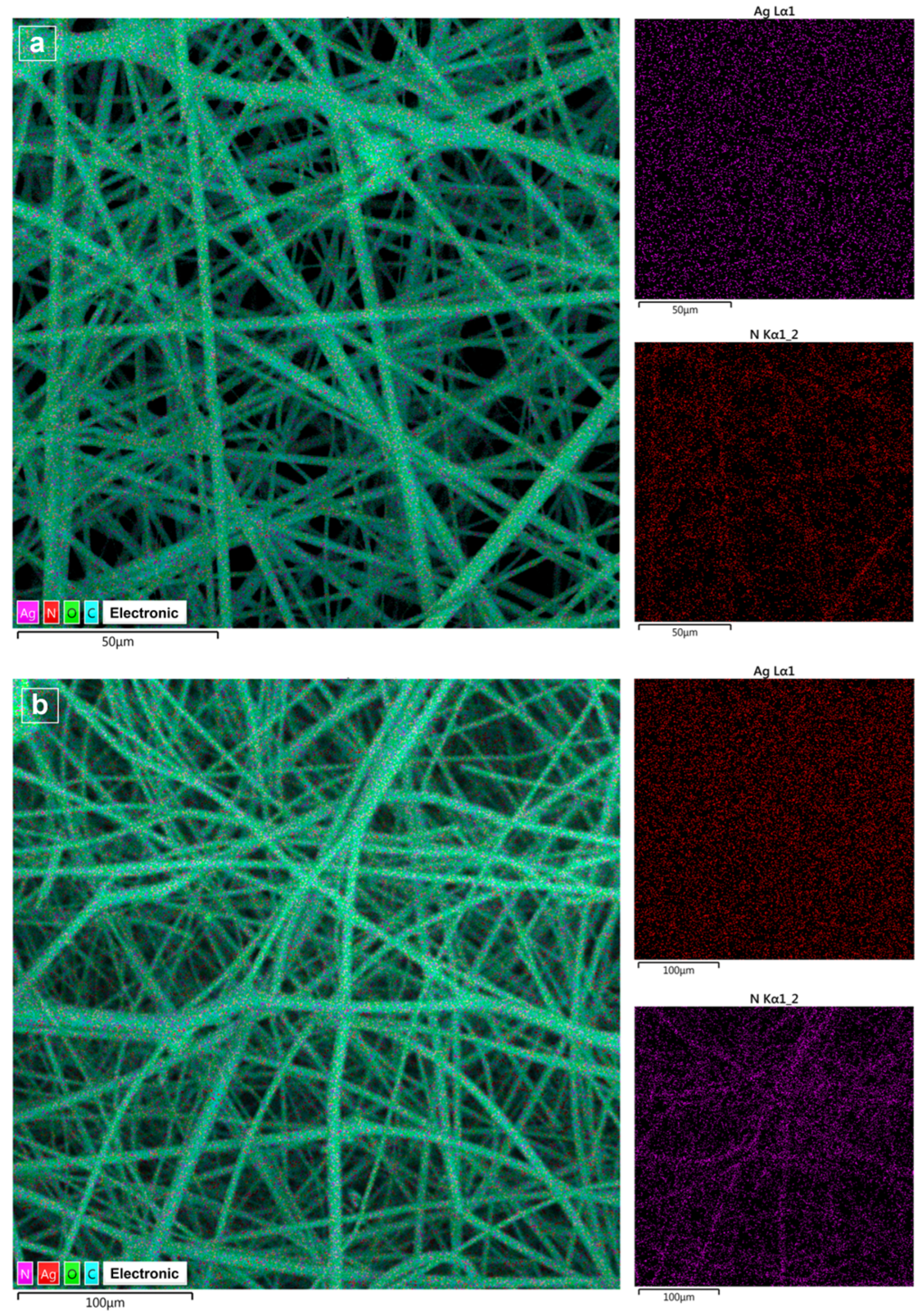
EDS analysis was performed to confirm the presence of silver in the fibers. As an example,
Figure 9 shows the surface mapping of the PVP-PEG-2-Ag1 and PVP-PEG-2-Ag2 samples, reflecting the silver content. Surface mapping results for the original PVP-PEG-1, PVP-PEG-2 samples and the PVP-PEG-1-Ag1, PVP-PEG-1-Ag2 samples are presented in
Supplementary Materials—Figure S1 and Figure S2, respectively.
EDS analysis data for PVP-PEG-1-Ag1 and PVP-PEG-1-Ag2 (
Figure S2), PVP-PEG-2-Ag1 and PVP-PEG-2-Ag2 (
Figure 9) samples showed that the silver integrated into the fibers was uniformly distributed.
The developed fiber polymer coatings could potentially protect the wound area from infection due to their antibacterial properties, high gas permeability due to their mesh structure, conformability to skin contours, and ease of removal or absorption of the compositions over time.
3.4. Antibacterial Activity of the Developed Compositions
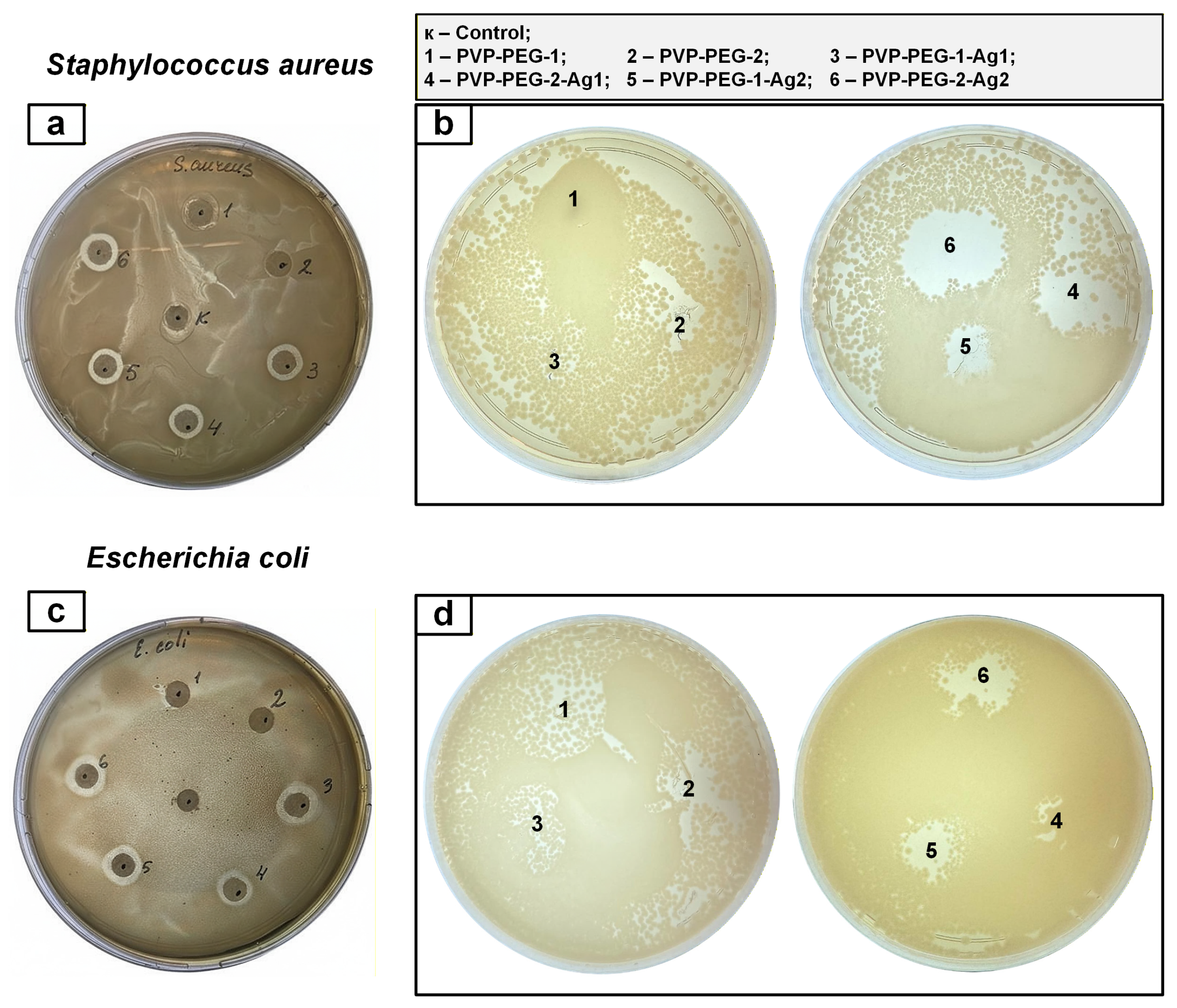
Analysis of the results of the microbiological study revealed that samples modified with AgNPs exhibited antimicrobial activity against the studied pathogenic bacteria:
Escherichia coli and
Staphylococcus aureus (
Figure 10).
The average inhibition zone thickness was calculated from three replicates for each pathogenic culture, with diameter measurements taken three times for each sample (
Figure 10a,c). The inhibition zone calculation results and standard deviations (SD) are presented in
Table 6.
The highest inhibition zone values were observed for samples against Gram-negative
Escherichia coli bacteria, while Gram-positive
Staphylococcus aureus bacteria were less sensitive to silver-containing samples (
Figure 10a,c). This may be due to the different surface areas of the bacteria. Gram-negative bacteria have thinner cell membranes (8–12 nm) than Gram-positive bacteria (20–80 nm) [
44]. The presence of a negatively charged lipopolysaccharide layer in Gram-negative bacteria promotes nanoparticle adhesion. These results are confirmed by a study [
45], which also demonstrated a more effective antimicrobial effect of AgNPs-containing formulations against
Escherichia coli.
All samples containing AgNPs exhibited resistance to pathogenic bacteria such as
Staphylococcus aureus and
Escherichia coli, which can cause purulent-inflammatory complications in wounds. Fiber samples (
Figure 10b,d) also demonstrated inhibitory activity against
Staphylococcus aureus and
Escherichia coli; however, inhibition zone diameters were determined only using diffusion disks impregnated with the original compounds.
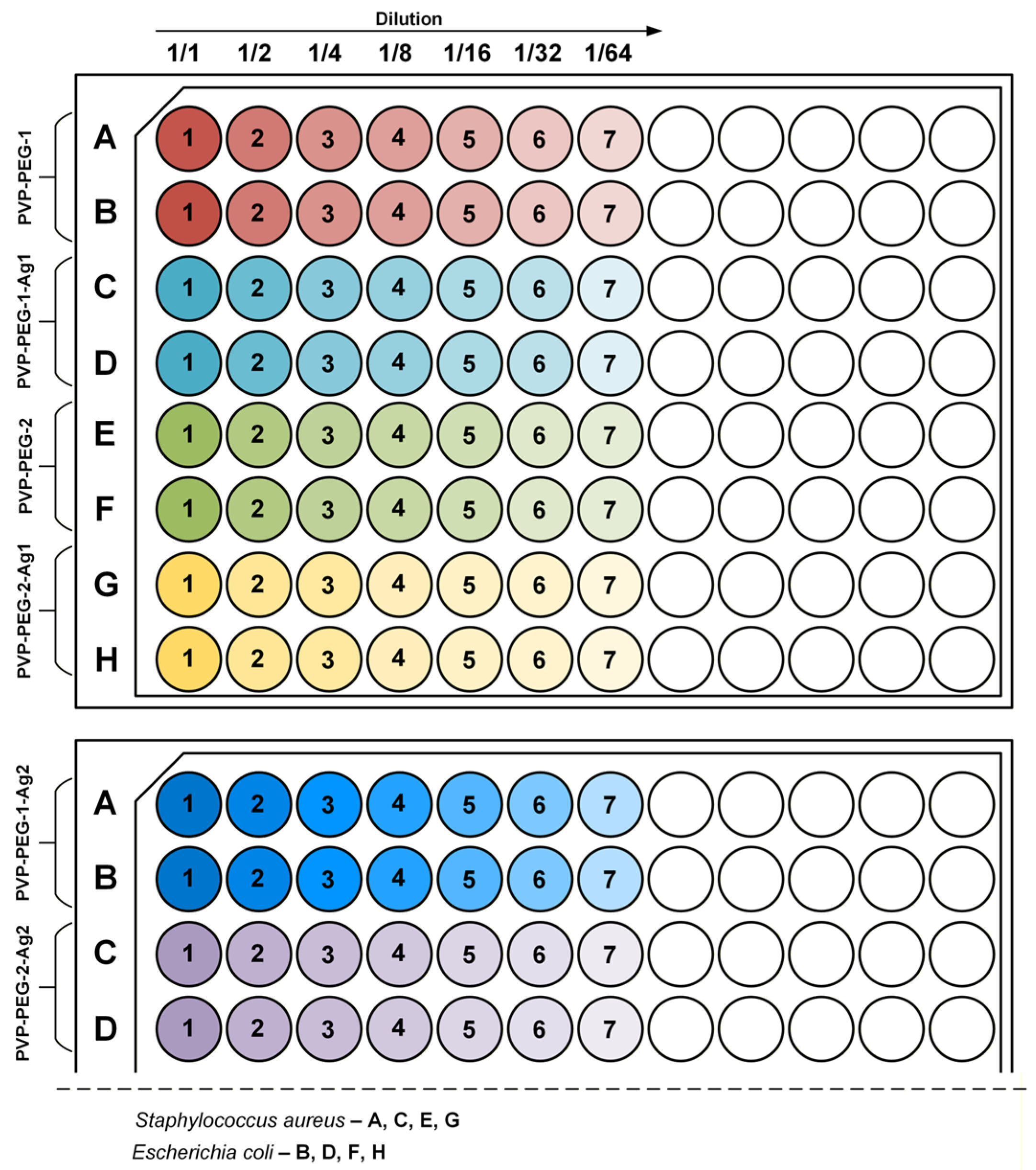
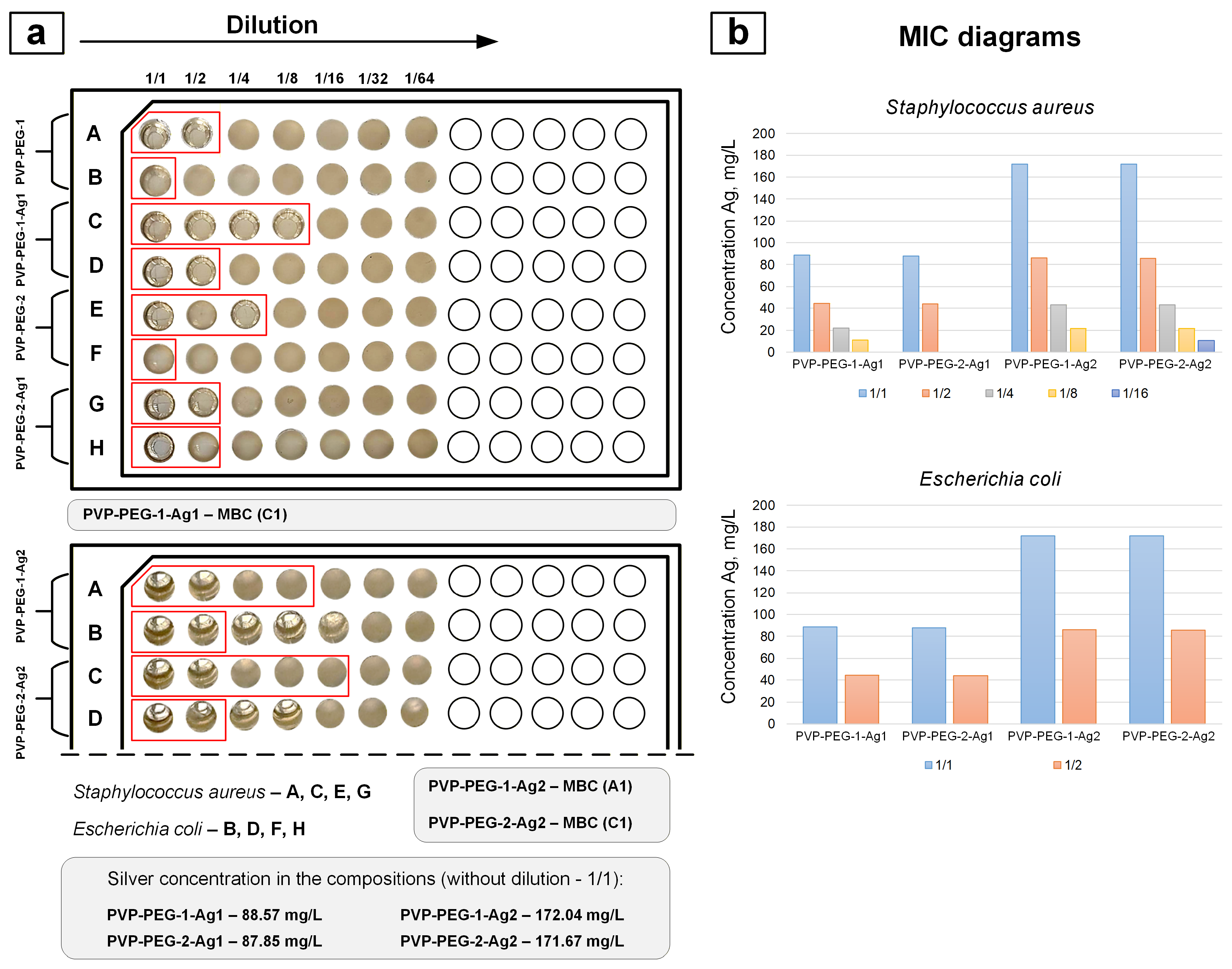
Figure 11 shows the results of determining the MIC and MBC for the studied compounds.
The ICP-OES method was used to determine the silver concentrations in the initial formulations PVP-PEG-1-Ag1 (88.57 mg/L), PVP-PEG-2-Ag1 (87.85 mg/L), PVP-PEG-1-Ag2 (172.04 mg/L) and PVP-PEG-2-Ag2 (171.67 mg/L). Serial dilution of the formulations allowed us to determine the MIC in relation to
Staphylococcus aureus: for the PVP-PEG-1-Ag1 sample, the MIC appears at dilution to 1/8 (11.07 mg/L); for the PVP-PEG-2-Ag1 sample, the MIC appears at dilution to 1/2 (43.92 mg/L); for the PVP-PEG-1-Ag2 sample, the MIC appears at dilution to 1/8 (21.51 mg/L); for the PVP-PEG-2-Ag2 sample, the MIC appears at dilution to 1/16 (10.73 mg/L). MICs against
Escherichia coli were determined similarly. For all formulations, MICs were observed at dilutions up to 1/2: PVP-PEG-1-Ag1 (44.29 mg/L), PVP-PEG-2-Ag1 (43.93 mg/L), PVP-PEG-1-Ag2 (86.02 mg/L) and PVP-PEG-2-Ag2 (85.84 mg/L). The obtained MIC values against
Staphylococcus aureus and
Escherichia coli are consistent with literature data. In article [
44], the MIC value was 13.5 mg/L AgNPs. In the same study, it was noted that subsequent development of resistance in
Staphylococcus aureus increased the MIC to 54 mg/L. Such a silver concentration poses a toxic threat to mammalian cells. In work [
46], a table is presented reflecting the toxicity threshold of AgNPs of different sizes with respect to various cell lines. It is indicated that for AgNPs obtained by chemical reduction method, with a size of 30–50 nm, the toxicity threshold occurs at a concentration of >50 μg/mL (50 mg/L) for A431 and A549 cells. For HT-1080 cells, the toxicity threshold occurs at a concentration of 6.25 μg/mL (6.25 mg/L) AgNPs with a size of 7–20 nm. In article [
47], the MIC value against
Escherichia coli was 85 μg/mL (85 mg/L).
It should be noted that MIC was also observed for silver-free formulations. This is due to the presence of PEG in the formulations, as it can exhibit antibacterial activity on its own.
The MBC values for the PVP-PEG-1-Ag1, PVP-PEG-1-Ag2, and PVP-PEG-2-Ag2 samples were 88.57 mg/L, 172.04 mg/L, and 171.67 mg/L, respectively. This means that the MBC was observed only for the original formulations without dilution. The MBC was not achieved for the PVP-PEG-2-Ag1 sample. It should be noted that the PVP-PEG-2-Ag1 sample had the lowest silver concentration in the studied series—87.85 mg/L. Therefore, it can be concluded that to achieve the MBC, the silver concentration in these formulations must be higher than this value.
The resulting compositions in the form of PVP-PEG fibers containing AgNPs exhibit antibacterial properties and can potentially be used as antibacterial wound dressings, providing complete adhesion to the skin and protection from bacteria.




 ,
,