


Use of Microwave Technology for Agro-Based Polymers: A Selective Review





Abstract
1. Introduction and Overview
2. Microwave-Assisted Modification of Polysaccharides
3. Triglycerides and Related Materials
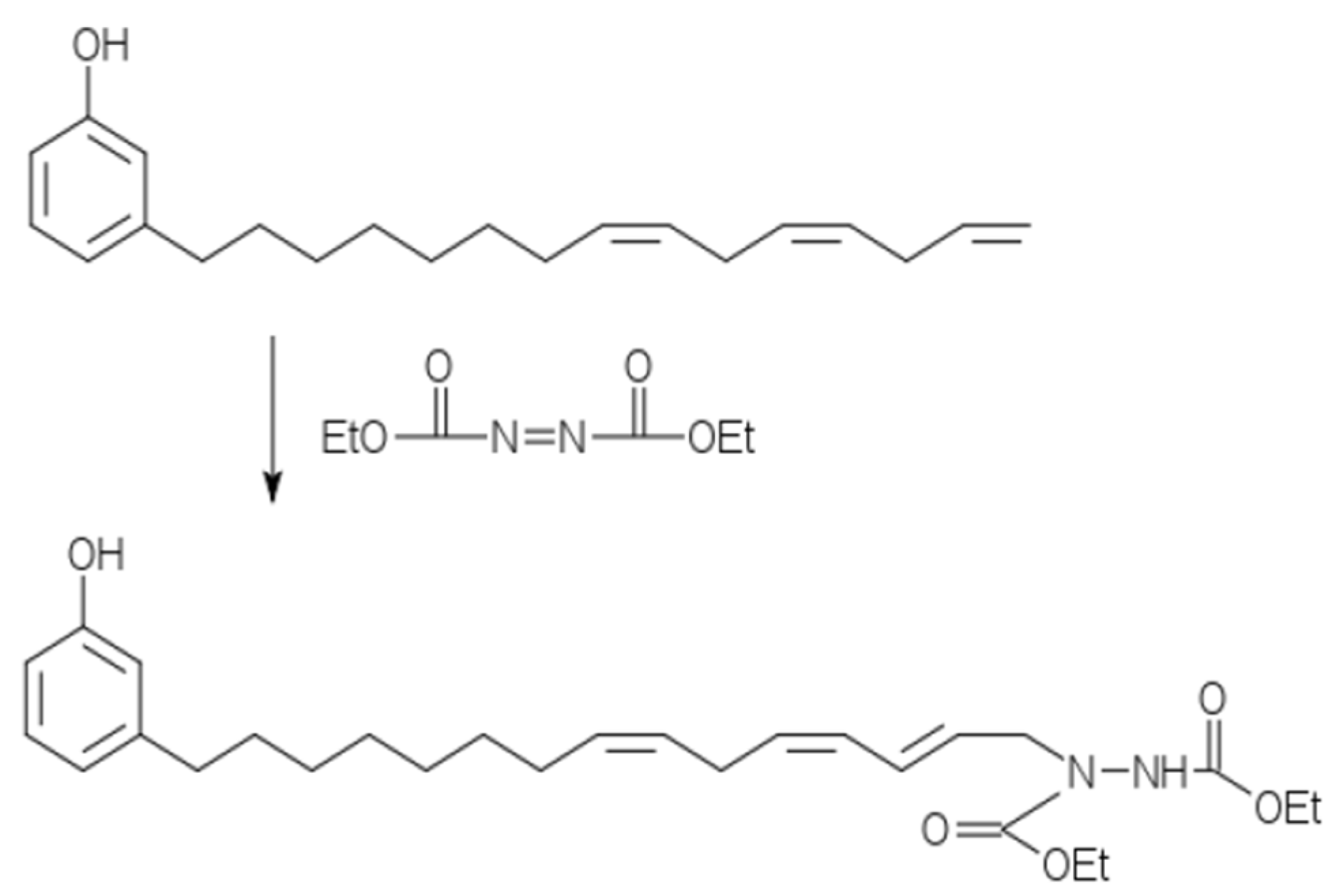
3.1. Ene Reaction Products from Cardanol
3.2. Ene Reaction Products from Triglycerides
4. Proteins
5. Polymerization
6. Microwave-Assisted Extraction of Specific Natural Components
7. Comments
8. Conclusions
Author Contributions
Funding
Institutional Review Board Statement
Data Availability Statement
Acknowledgments
Conflicts of Interest
References
- Kabir, E. Application of microwave heating in polymer synthesis: A review. Results Chem. 2023, 6, 101178. [Google Scholar] [CrossRef]
- Belkhir, K.; Riquet, G.; Becquart, F. Polymer Processing under Microwaves. Adv. Polym. Technol. 2022, 2022, 3961233. [Google Scholar] [CrossRef]
- Koopmans, C.; Iannelli, M.; Kerep, P.; Klink, M.; Schmitz, S.; Sinnwell, S.; Ritter, H. Microwave-assisted polymer chemistry: Heck-reaction, transesterification, Baeyer–Villiger oxidation, oxazoline polymerization, acrylamides, and porous materials. Tetrahedron 2006, 62, 4709–4714. [Google Scholar] [CrossRef]
- Wiesbrock, F.; Hoogenboom, R.; Schubert, U.S. Microwave-Assisted Polymer Synthesis: State-of-the-Art and Future Perspectives. Macromol. Chem. Rapid Comm. 2004, 25, 1739–1764. [Google Scholar] [CrossRef]
- Mingos, D.M.P.; Baghurst, D.R. Applications of Microwave Dielectric Heating Effects to Synthetic Problems in Chemistry. Chem. Soc. Rev. 1991, 20, 1–47. [Google Scholar] [CrossRef]
- Gabriel, C.; Gabriel, S.; Grant, E.H.; Halstead, B.S.J.; Mingos, D.M.P. Dielectric parameters relevant to microwave dielectric heating. Chem. Soc. Rev. 1998, 27, 213–224. [Google Scholar] [CrossRef]
- Thostenson, E.T.; Chou, T.-W. Microwave processing: Fundamentals and applications. Compos. A Appl. Sci. Manuf. 1999, 30, 1055–1071. [Google Scholar] [CrossRef]
- Chandrasekaran, S.; Ramanathan, S.; Basak, T. Microwave material processing—A review. AIChE J. 2012, 58, 330–363. [Google Scholar] [CrossRef]
- Sun, J.; Wang, W.; Yue, Q. Review on Microwave-Matter Interaction Fundamentals and Efficient Microwave-Associated Heating Strategies. Materials 2016, 9, 231. [Google Scholar] [CrossRef]
- Larhed, M.; Moberg, C.; Hallberg, A. Microwave-Accelerated Homogeneous Catalysis in Organic Chemistry. Acc. Chem. Res. 2002, 35, 717–727. [Google Scholar] [CrossRef]
- Wang, W.; Zhao, C.; Sun, J.; Wang, X.; Zhao, X.; Mao, Y.; Li, X.; Song, Z. Quantitative measurement of energy utilization efficiency and study of influence factors in typical microwave heating process. Energy 2015, 87, 678–685. [Google Scholar] [CrossRef]
- Gawande, M.B.; Shelke, S.N.; Zboril, R.; Varma, R.S. Microwave-assisted chemistry: Synthetic applications for rapid assembly of nanomaterials and organics. Acc. Chem. Res. 2014, 47, 1338. [Google Scholar] [CrossRef] [PubMed]
- Ritter, S.K. Microwave Chemistry Remains Hot, Fast, And A Tad Mystical Differing takes on exactly how this popular heating method enhances reactions is keeping chemists intrigued. Chem. Eng. News 2014, 92, 26. [Google Scholar]
- Wang, N.; Zou, W.; Li, X.; Liang, Y.; Wang, P. Study and application status of the nonthermal effects of microwaves in chemistry and materials science—A brief review. RSC Adv. 2022, 12, 17158–17181. [Google Scholar] [CrossRef]
- Dudley, G.B.; Richert, R.; Stiegman, A.E. On the existence of and mechanism for microwave specific reaction rate enhancement. Chem. Sci. 2015, 6, 2144. [Google Scholar] [CrossRef] [PubMed]
- Bogdal, D.; Prociak, A. Microwave-Enhanced Polymer Chemistry and Technology; John Wiley & Sons: Ames, IA, USA, 2008. [Google Scholar]
- CEM. Theory of Microwave Heating for Organic Synthesis. Available online: https://cem.com/de/microwave-chemistry/theory#:~ (accessed on 16 April 2026).
- Leonelli, C.; Colombini, E.; Mortalò, C. Contribution of Microwave Irradiation in the Synthesis of Inorganic Compounds: An Italian Approach. Inorganics 2025, 13, 410. [Google Scholar] [CrossRef]
- Gharge, D.; Salve, P.; Raut, C.; Pawar, K.; Dhabale, P. Microwave Chemistry: A Review. Asian J. Res. Chem. 2010, 3, 9–16. [Google Scholar]
- Priecel, P.; Lopez-Sanchez, J.A. Advantages and Limitations of Microwave Reactors: From Chemical Synthesis to the Catalytic Valorization of Biobased Chemicals. ACS Sustain. Chem. Eng. 2019, 7, 3–21. [Google Scholar] [CrossRef]
- Henary, M.; Kananda, C.; Rotolo, L.; Savino, B.; Owens, E.A.; Cravotto, G. Benefits and applications of microwave-assisted synthesis of nitrogen containing heterocycles in medicinal chemistry. RSC Adv. 2020, 10, 14170–14197. [Google Scholar] [CrossRef]
- Richard, H.; Wilms, T.F.A.; Erdmenger, T.; Schubert, U.S. Microwave-Assisted Chemistry: A Closer Look at Heating Efficiency. Austr. J. Chem. 2009, 62, 236–243. [Google Scholar]
- Starvaggi, J.; Ettari, R. Microwave-Assisted Organic Synthesis: An Eco-Friendly Method of Green Chemistry. Pharmaceuticals 2025, 18, 1692. [Google Scholar] [CrossRef] [PubMed]
- Cheng, H.N.; Gross, R.A. (Eds.) Sustainable Green Chemistry in Polymer Research, Vol. 1. Biocatalysis and Biobased Materials; ACS Symposium Series, Number 1450; American Chemical Society: Washington, DC, USA, 2023. [Google Scholar]
- Cheng, H.N.; Gross, R.A. (Eds.) Sustainable Green Chemistry in Polymer Research, Vol. 2. Sustainable Polymers and Applications; ACS Symposium Series, Number 1451; American Chemical Society: Washington, DC, USA, 2023. [Google Scholar]
- Cheng, H.N.; Gross, R.A. (Eds.) Sustainability and Green Polymer Chemistry, Vol. 1. Green Products and Processes; ACS Symposium Series, Number 1372; American Chemical Society: Washington, DC, USA, 2020. [Google Scholar]
- Kaur, R.; Pathak, L.; Vyas, P. Biobased polymers of plant and microbial origin and their applications—A review. Biotechnol. Sustain. Mater. 2024, 1, 13. [Google Scholar] [CrossRef]
- Garrison, T.F.; Murawski, A.; Quirino, R.L. Bio-Based Polymers with Potential for Biodegradability. Polymers 2016, 8, 262. [Google Scholar] [CrossRef] [PubMed]
- Cywar, R.M.; Rorrer, N.A.; Hoyt, C.B.; Beckham, G.T.; Chen, E.Y. Bio-Based Polymers With Performance-Advantaged Properties. Nat. Rev. Mater. 2022, 7, 83–103. [Google Scholar] [CrossRef]
- Farmer, T.J.; Comerford, J.W.; Pellis, A.; Robert, T. Post-polymerization modification of bio-based polymers: Maximizing the high functionality of polymers derived from biomass. Polym. Int. 2018, 67, 775–789. [Google Scholar] [CrossRef]
- Cheng, H.N.; Biswas, A. Preparation of Agro-based Polymers. In Encyclopedia of Green Chemistry; Torok, B., Ed.; Elsevier: Amsterdam, The Netherlands, 2025; Volume 3, pp. 192–199. [Google Scholar] [CrossRef]
- Xie, Y.; Gao, S.; Zhang, D.; Wang, C.; Chu, F. Bio-based polymeric materials synthesized from renewable resources: A mini-review. Resour. Chem. Mater. 2023, 2, 223–230. [Google Scholar] [CrossRef]
- Mohanty, A.K.; Wu, F.; Mincheva, R.; Hakkarainen, M.; Raquez, J.-M.; Mielewski, D.F.; Narayan, R.; Netravali, A.N.; Misra, M. Sustainable polymers. Nat. Rev. Methods Primers 2022, 2, 46. [Google Scholar] [CrossRef]
- Papageorgiou, G.Z. Thinking Green: Sustainable Polymers from Renewable Resources. Polymers 2018, 10, 952. [Google Scholar] [CrossRef]
- Singh, V.; Kumar, P.; Sanghi, R. Use of microwave irradiation in the grafting modification of the polysaccharides—A review. Prog. Polym. Sci. 2012, 37, 340–364. [Google Scholar] [CrossRef]
- Kumar, D.; Pandey, J.; Raj, V.; Kumar, P. A Review on the Modification of Polysaccharide Through Graft Copolymerization for Various Potential Applications. Open Med. Chem. J. 2017, 26, 109–126. [Google Scholar] [CrossRef]
- Desbrières, J.; Petit, C.; Reynaud, S. Microwave-assisted modifications of polysaccharides. Pure Appl. Chem. 2014, 86, 1695–1706. [Google Scholar] [CrossRef]
- Rajpoot, N.; Puri, D. Microwave Assisted Grafting Technique for Modification of Polysaccharides. Curr. Org. Chem. 2024, 28, 844–856. [Google Scholar] [CrossRef]
- Kustov, L.M.; Kustov, A.L.; Salmi, T. Microwave-Assisted Conversion of Carbohydrates. Molecules 2022, 27, 1472. [Google Scholar] [CrossRef]
- Oyeyinka, S.A.; Akintayo, O.A.; Adebo, O.A.; Kayitesi, E.; Njobeh, P.B. A review on the physicochemical properties of starches modified by microwave alone and in combination with other methods. Int. J. Biol. Macromol. 2021, 176, 87–95. [Google Scholar] [CrossRef]
- Yi, M.; Tang, X.; Liang, S.; He, R.; Huang, T.; Lin, Q.; Zhang, R. Effect of microwave alone and microwave-assisted modification on the physicochemical properties of starch and its application in food. Food Chem. 2024, 446, 138841. [Google Scholar] [CrossRef]
- Cai, M.; Zhang, Y.; Cao, H.; Li, S.; Zhang, Y.; Huang, K.; Song, H.; Guan, X. Exploring the remarkable effects of microwave treatment on starch modification: From structural evolution to changed physicochemical and digestive properties. Carbohydr. Polym. 2024, 343, 122412. [Google Scholar] [CrossRef] [PubMed]
- Zailani, M.A.; Kamilah, H.; Husaini, A.; Seruji, A.Z.R.A.; Sarbini, S.R. Functional and digestibility properties of sago (Metroxylon sagu) starch modified by microwave heat treatment. Food Hydrocoll. 2022, 122, 107042. [Google Scholar] [CrossRef]
- Zhao, Y.; Tu, D.; Wang, D.; Xu, J.; Zhuang, W.; Wu, F.; Tian, Y. Structural and property changes of starch derivatives under microwave field: A review. Int. J. Biol. Macromol. 2024, 256, 128465. [Google Scholar] [CrossRef]
- Lewicka, K.; Siemion, P.; Kurcok, P. Chemical Modifications of Starch: Microwave Effect. Int. J. Polym. Sci. 2015, 2015, 867697. [Google Scholar] [CrossRef]
- González-Mendoza, M.E.; Martínez-Bustos, F.; Castaño-Tostado, E.; Amaya-Llano, S.L. Effect of Microwave Irradiation on Acid Hydrolysis of Faba Bean Starch: Physicochemical Changes of the Starch Granules. Molecules 2022, 27, 3528. [Google Scholar] [CrossRef] [PubMed]
- Zhang, H.; Wang, R.; Wang, J.; Dong, Y. Microwave-assisted synthesis and characterization of acetylated corn starch. Starch 2014, 66, 515–523. [Google Scholar] [CrossRef]
- Lin, D.; Zhou, W.; Zhao, J.; Lan, W.; Chen, R.; Li, Y.; Xing, B.; Li, Z.; Xiao, M.; Wu, Z.; et al. Study on the synthesis and physicochemical properties of starch acetate with low substitution under microwave assistance. Int. J. Biol. Macromol. 2017, 103, 316–326. [Google Scholar] [CrossRef]
- Lu, K.; Zhu, J.; Bao, X.; Liu, H.; Yu, L.; Chen, L. Effect of starch microstructure on microwave-assisted esterification. Int. J. Biol. Macromol. 2020, 164, 2550–2557. [Google Scholar] [CrossRef]
- Zhao, K.; Li, B.; Xu, M.; Jing, L.; Gou, M.; Yu, Z.; Zheng, J.; Li, W. Microwave pretreated esterification improved the substitution degree, structural and physicochemical properties of potato starch esters. LWT 2018, 90, 116–123. [Google Scholar] [CrossRef]
- Zhao, K.; Saleh, A.S.M.; Li, B.; Wu, H.; Liu, Y.; Zhang, G.; Li, W. Effects of conventional and microwave pretreatment acetylation on structural and physicochemical properties of wheat starch. Int. J. Food Sci. Technol. 2018, 53, 2515–2524. [Google Scholar] [CrossRef]
- Wang, W.; Hu, A.; Liu, S.; He, J.; Zheng, J. Effects of microwave radiation on the physicochemical properties, structure, and digestibility of the synthesized different crystal forms of malic acid starch ester. Int. J. Biol. Macromol. 2024, 263, 130236. [Google Scholar] [CrossRef] [PubMed]
- Staroszczyk, H.; Fiedorowicz, M.; Opalińska-Piskorz, J.; Tylingo, R. Rheology of potato starch chemically modified with microwave-assisted reactions. LWT-Food Sci. Technol. 2013, 53, 249–254. [Google Scholar] [CrossRef]
- Lewandowicz, G.; Fornal, J.; Walkowski, A.; Mączyński, M.; Urbaniak, G.; Szymańska, G. Starch esters obtained by microwave radiation—Structure and functionality. Ind. Crops Prod. 2000, 11, 249–257. [Google Scholar] [CrossRef]
- Hu, A.; Chen, X.; Wang, J.; Wang, X.; Zheng, J.; Wang, L. Effects on the structure and properties of native corn starch modified by enzymatic debranching (ED), microwave assisted esterification with citric acid (MCAE) and by the dual ED/MCAE treatment. Int. J. Biol. Macromol. 2021, 171, 123–129. [Google Scholar] [CrossRef]
- Lukasiewicz, M.; Bednarz, S.; Ptaszek, A. Environmental friendly polysaccharide modification—Microwave-assisted oxidation of starch. Starch 2011, 63, 268–273. [Google Scholar] [CrossRef]
- Aaliya, B.; Sunooj, K.V.; John, N.E.; Navaf, M.; Akhila, P.P.; Sudheesh, C.; Sabu, S.; Sasidharan, A.; Mir, S.A.; George, J. Impact of microwave irradiation on chemically modified talipot starches: A characterization study on heterogeneous dual modifications. Int. J. Biol. Macromol. 2022, 209, 1943–1955. [Google Scholar] [CrossRef]
- Lin, D.; Zhou, W.; He, Q.; Xing, B.; Wu, Z.; Chen, H.; Wu, D.; Zhang, Q.; Qin, W. Study on preparation and physicochemical properties of hydroxypropylated starch with different degree of substitution under microwave assistance. Int. J. Biol. Macromol. 2019, 125, 290–299. [Google Scholar] [CrossRef]
- Liu, J.; Ming, J.; Li, W.; Zhao, G. Synthesis, characterisation and in vitro digestibility of carboxymethyl potato starch rapidly prepared with microwave-assistance. Food Chem. 2012, 133, 1196–1205. [Google Scholar] [CrossRef]
- Vasconcelos, L.M.; Vasconcelos, N.F.; Lomonaco, D.; Rosa, M.F.; Rodriguez-Castellon, E.; Andrade, F.K.; Vieira, R.S. Microwave-assisted periodate oxidation as a rapid and efficient alternative to oxidize bacterial cellulose wet membrane. Polym. Bull. 2023, 80, 11861–11881. [Google Scholar] [CrossRef]
- Lin, F.; You, Y.; Yang, X.; Jiang, X.; Lu, Q.; Wang, T.; Huang, B.; Lu, B. Microwave-assisted facile synthesis of TEMPO-oxidized cellulose beads with high adsorption capacity for organic dyes. Cellulose 2017, 24, 5025–5040. [Google Scholar] [CrossRef]
- Jabareen, L.; Maruthapandi, M.; Saravanan, A.; Gedanken, A. Effective degradation of cellulose by microwave irradiation in alkaline solution. Cellulose 2021, 28, 11275–11285. [Google Scholar] [CrossRef]
- Li, J.; Zhang, L.P.; Peng, F.; Bian, J.; Yuan, T.-Q.; Xu, F.; Sun, R.-C. Microwave-Assisted Solvent-Free Acetylation of Cellulose with Acetic Anhydride in the Presence of Iodine as a Catalyst. Molecules 2009, 14, 3551–3566. [Google Scholar] [CrossRef] [PubMed]
- Ratanakamnuan, U.; Atong, D.; Aht-Ong, D. Cellulose esters from waste cotton fabric via conventional and microwave heating. Carbohydr. Polym. 2012, 87, 84–94. [Google Scholar] [CrossRef]
- Szefer, E.; Leszczyńska, A.; Pielichowski, K. Modification of microcrystalline cellulose filler with succinic anhydride—Effect of microwave and conventional heating. Compos. Theor. Pract. 2018, 18, 25–31. [Google Scholar]
- Baraka, F.; Robles, E.; Labidi, J. Microwave-assisted esterification of bleached and unbleached cellulose nanofibers. Ind. Crops Prod. 2023, 191, 115970. [Google Scholar] [CrossRef]
- Mortada, W.I.; Kenawy, I.M.M.; El-Reash, Y.G.A.; Mousa, A.A. Microwave assisted modification of cellulose by gallic acid and its application for removal of aluminium from real samples. Int. J. Biol. Macromol. 2017, 101, 490–501. [Google Scholar] [CrossRef]
- Guo, Y.; Zhou, J.; Wang, Y.; Zhang, L.; Lin, X. An efficient transformation of cellulose into cellulose carbamates assisted by microwave irradiation. Cellulose 2010, 17, 1115–1125. [Google Scholar] [CrossRef]
- Hussain, Z.; Khalid, R.; Mujahid, A.; Bock, U.; Din, M.I. Microwave modified sugar cane bagasse cellulose as an eco-friendly biosorbent for eliminating As(V) from aqueous medium. Int. J. Biol. Macromol. 2025, 311, 144028. [Google Scholar] [CrossRef]
- Biswas, A.; Kim, S.; Selling, G.W.; Cheng, H.N. Microwave-Assisted Synthesis of Alkyl Cellulose in Aqueous Medium. Carbohydr. Polym. 2013, 94, 120–123. [Google Scholar] [CrossRef]
- Zhang, G.L.; Zhang, L.; Deng, H.; Sun, P. Preparation and characterization of sodium carboxymethyl cellulose from cotton stalk using microwave heating. J. Chem. Technol. Biotech. 2011, 86, 584–589. [Google Scholar] [CrossRef]
- Biswas, A.; Kim, S.; Selling, G.W.; Cheng, H.N. Conversion of Agricultural Residues to Carboxymethylcellulose and Carboxymethylcellulose Acetate. Ind. Crops Prod. 2014, 60, 259–265. [Google Scholar] [CrossRef]
- Santos, D.M.; Bukzem, A.L.; Ascheri, D.P.R.; Signini, R.; Aquino, G.L.B. Microwave-assisted carboxymethylation of cellulose extracted from brewer’s spent grain. Carbohydr. Polym. 2015, 131, 125–133. [Google Scholar] [CrossRef] [PubMed]
- Deng, S.; Zhang, G.; Chen, S.; Xue, Y.; Du, Z.; Wang, P. Rapid and effective preparation of a HPEI modified biosorbent based on cellulose fiber with a microwave irradiation method for enhanced arsenic removal in water. J. Mater. Chem. A 2016, 4, 15851–15860. [Google Scholar] [CrossRef]
- Pattarith, K.; Nugroho, D.; Nanan, S.; Benchawattananon, R. Cellulose Modified with Polyethylenimine (PEI) Using Microwave Methodology for Adsorption of Chromium from Aqueous Solutions. Molecules 2023, 28, 4514. [Google Scholar] [CrossRef]
- Zhang, C.; Su, J.; Zhu, H.; Xiong, J.; Liu, X.; Li, D.; Chen, Y.; Li, Y. The removal of heavy metal ions from aqueous solutions by amine functionalized cellulose pretreated with microwave-H2O2. RSC Adv. 2017, 7, 34182–34191. [Google Scholar] [CrossRef]
- Chang, G.; Wei, X.Y.; Li, J.H.; Zhang, C.H.; Chen, J.C. Homogeneous Modification of Sugarcane Bagasse Cellulose with 2-(Dimethylamino)ethylmethacrylate in Ionic Liquid under Microwave Irradiation. Adv. Mater. Res. 2012, 550–553, 1419–1423. [Google Scholar] [CrossRef]
- Yu, X.; Huang, X.; Bai, C.; Xiong, X. Modification of microcrystalline cellulose with acrylamide under microwave irradiation and its application as flocculant. Environ. Sci. Pollut. Res. 2019, 26, 32859–32865. [Google Scholar] [CrossRef] [PubMed]
- Mishra, S.; Rani, G.U.; Sen, G. Microwave initiated synthesis and application of polyacrylic acid grafted carboxymethyl cellulose. Carbohydr. Polym. 2012, 87, 2255–2262. [Google Scholar] [CrossRef]
- Qu, J.; Meng, Q.; Lin, X.; Han, W.; Jiang, Q.; Wang, L.; Hu, Q.; Zhang, L.; Zhang, Y. Microwave-assisted synthesis of β-cyclodextrin functionalized celluloses for enhanced removal of Pb(II) from water: Adsorptive performance and mechanism exploration. Sci. Total Environ. 2021, 752, 141854. [Google Scholar] [CrossRef]
- Zhang, J.; Hu, Y.; Zhang, F.; Lu, J.; Huang, J.; Liu, C.; Jia, P.; Hu, L.; An, R.; Zhou, Y. Recent Progress in Microwave-assisted Modification of Vegetable Oils or Their Derivatives. Curr. Org. Chem. 2020, 24, 870–884. [Google Scholar] [CrossRef]
- Nayak, S.N.; Bhasin, C.K.; Nayak, M.G. A review on microwave-assisted transesterification processes using various catalytic and non-catalytic systems. Renew. Energy 2019, 143, 1366–1387. [Google Scholar] [CrossRef]
- Endrawati, B.F.; Julianti, N.K.; Nafisah, A.R.; Rahendaputri, C.S.; Mutiara, E. Microwave assisted transesterification of biodiesel from waste cooking oil using CaO extracted from green mussel shell waste and limestone as catalyst. AIP Conf. Proc. 2021, 2349, 020023. [Google Scholar] [CrossRef]
- Nomanbhay, S.; Ong, M.Y. A Review of Microwave-Assisted Reactions for Biodiesel Production. Bioengineering 2017, 4, 57. [Google Scholar] [CrossRef]
- Azcan, N.; Yilmaz, O. Microwave assisted transesterification of waste frying oil and concentrate methyl ester content of biodiesel by molecular distillation. Fuel 2013, 104, 614–619. [Google Scholar] [CrossRef]
- Mhanna, A.; Chupin, L.; Brachais, C.H.; Chaumont, D.; Boni, G.; Brachais, L.; Couvercelle, J.-P.; Lecamp, L.; Plasseraud, L. Efficient microwave-assisted synthesis of glycerol monodecanoate. Eur. J. Lipid Sci. Technol. 2018, 120, 1700133. [Google Scholar] [CrossRef]
- Mohod, A.V.; Gogate, P.R. Intensified synthesis of medium chain triglycerides using novel approaches based on ultrasonic and microwave irradiations. Chem. Eng. J. 2017, 317, 687–698. [Google Scholar] [CrossRef]
- Aguilera, A.F.; Tolvanen, P.; Heredia, S.; Muñoz, M.G.; Samson, T.; Oger, A.; Verove, A.; Eränen, K.; Leveneur, S.; Mikkola, J.-P.; et al. Epoxidation of Fatty Acids and Vegetable Oils Assisted by Microwaves Catalyzed by a Cation Exchange Resin. Ind. Eng. Chem. Res. 2018, 57, 3876–3886. [Google Scholar] [CrossRef]
- Nwosu-Obieogu, K.; Agu, C.M.; Dzarma, G.W.; Awele, A.M.; Nkemakolam, A. Microwave-assisted carbon-based sulphonated melon seed peel catalyst development for the optimization of neem seed oil epoxidation using response surface methodology. Clean. Mater. 2022, 4, 100069. [Google Scholar] [CrossRef]
- Favero, D.; Marcon, V.R.R.; Barcellos, T.; Gómez, C.M.; Sanchis, M.J.; Carsí, M.; Figueroa, C.A.; Bianchi, O. Renewable polyol obtained by microwave-assisted alcoholysis of epoxidized soybean oil: Preparation, thermal properties and relaxation process. J. Mol. Liquids 2019, 285, 136–145. [Google Scholar] [CrossRef]
- Biswas, A.; Sharma, B.K.; Willett, J.L.; Vermillion, K.; Erhan, S.Z.; Cheng, H.N. Novel Modified Soybean Oil Containing Hydrazino-ester: Synthesis and Characterization. Green Chem. 2007, 9, 85–89. [Google Scholar] [CrossRef]
- Biswas, A.; Sharma, B.K.; Willett, J.L.; Erhan, S.Z.; Cheng, H.N. Room-Temperature Self-Curing Ene Reactions Involving Soybean Oil. Green Chem. 2008, 10, 290–295. [Google Scholar] [CrossRef]
- Biswas, A.; Cheng, H.N.; Kim, S.; Liu, Z. Modified Triglyceride Oil through Reactions with Phenyltriazolinedione. J. Amer. Oil Chem. Soc. 2014, 91, 125–131. [Google Scholar] [CrossRef]
- Alarcon, R.T.; Gaglieri, C.; Souza, O.A.; Rinaldo, D.; Bannach, G. Microwave-Assisted Syntheses of Vegetable Oil-Based Monomer: A Cleaner, Faster, and More Energy Efficient Route. J. Polym. Environ. 2020, 28, 1265–1278. [Google Scholar] [CrossRef]
- Geuens, J.; Sergeyev, S.; Maes, B.U.W.; Tavernier, S.M.F. Catalyst-free microwave-assisted conversion of free fatty acids in triglyceride feedstocks with high acid content. Renew. Energy 2014, 68, 524–528. [Google Scholar] [CrossRef]
- Voirin, C.; Caillol, S.; Sadavarte, N.V.; Tawade, B.V.; Boutevin, B.; Wadgaonkar, P.P. Functionalization of cardanol: Towards biobased polymers and additives. Polym. Chem. 2014, 5, 3142–3162. [Google Scholar] [CrossRef]
- Cheng, H.N.; Furtado, R.F.; Biswas, A.; Alves, C.; Prieto, C.; Lagaron, J.M. Chemical Modifications and Applications of Cashew Byproducts—A Selective Review. ACS Food Sci. Technol. 2023, 3, 546–552. [Google Scholar] [CrossRef]
- Biswas, A.; Alves, C.R.; Trevisan, M.T.S.; Berfield, J.; Furtado, R.F.; Liu, Z.; Cheng, H.N. Derivatives of cardanol through ene reaction with diethyl azodicarboxylate. J. Braz. Chem. Soc. 2016, 27, 1078–1082. [Google Scholar]
- Liu, C.; Ma, X. Study on the mechanism of microwave modified wheat protein fiber to improve its mechanical properties. J. Cereal Sci. 2016, 70, 99–107. [Google Scholar] [CrossRef]
- Cao, H.; Huang, Q.; Shi, J.; Guan, X.; Song, H.; Zhang, Y.; Xie, J.; Fang, Y. Effect of conventional and microwave heating treatment on antioxidant activity of quinoa protein after simulated gastrointestinal digestion. Food Chem. 2023, 415, 135763. [Google Scholar] [CrossRef]
- Zhang, J.; Zou, Y.; Yan, B.; Zhang, N.; Zhao, J.; Zhang, H.; Chen, W.; Fan, D. Microwave treatment on structure and digestibility characteristics of Spirulina platensis protein. Curr. Res. Food Sci. 2023, 7, 100581. [Google Scholar] [CrossRef] [PubMed]
- Sun, X.; Ohanenye, I.C.; Ahmed, T.; Udenigwe, C.C. Microwave treatment increased protein digestibility of pigeon pea (Cajanus cajan) flour: Elucidation of underlying mechanisms. Food Chem. 2020, 329, 127196. [Google Scholar] [CrossRef] [PubMed]
- Akharume, F.U.; Aluko, R.E.; Adedeji, A.A. Modification of plant proteins for improved functionality: A review. Compreh. Rev. Food Sci. Food Safety 2021, 20, 198–224. [Google Scholar] [CrossRef] [PubMed]
- Pandey, N.; Kumar, N.; Upadhyay, A. Soy protein modification strategies, functional interplay and industrial relevance: A review. J. Food Measure. Charac. 2025, 19, 785–805. [Google Scholar] [CrossRef]
- Jiao, X.; Chen, W.; Fan, D. Behind the veil: A multidisciplinary discussion on protein–microwave interactions. Curr. Opin. Food Sci. 2022, 48, 100936. [Google Scholar] [CrossRef]
- Chen, Y.; Wu, D.; Chen, X.; Zhang, P.; Zhang, G.; Hu, X. Improved solubility and emulsifying properties of pea protein by microwave-Maillard reaction. J. Food Eng. 2026, 404, 112765. [Google Scholar] [CrossRef]
- Cheng, Y.-H.; Mu, D.-C.; Jiao, Y.; Xu, Z.; Chen, M.-L. Microwave-assisted Maillard reaction between rice protein and dextran induces structural changes and functional improvements. J. Cereal Sci. 2021, 97, 103134. [Google Scholar] [CrossRef]
- Nasrollahzadeh, F.; Varidi, M.; Koocheki, A.; Hadizadeh, F. Effect of microwave and conventional heating on structural, functional and antioxidant properties of bovine serum albumin-maltodextrin conjugates through Maillard reaction. Food Res. Int. 2017, 100, 289–297. [Google Scholar] [CrossRef]
- Guan, J.-J.; Zhang, T.-B.; Hui, M.; Yin, H.-C.; Qiu, A.-Y.; Liu, X.-Y. Mechanism of microwave-accelerated soy protein isolate–saccharide graft reactions. Food Res. Int. 2011, 44, 2647–2654. [Google Scholar] [CrossRef]
- Cheng, X.; Wang, H.; Wang, Z.; Zhao, Q.; Lou, M.; Meng, F.; Jin, H.; Xu, J.; Jiang, L. Development and characteristics of emulsion gels with microwave-assisted ferulic acid covalently modified soy protein: Structure, function and digestive properties. Food Hydrocoll. 2024, 146, 109230. [Google Scholar] [CrossRef]
- Hadidi, M.; Jafarzadeh, S.; Ibarz, A. Modified mung bean protein: Optimization of microwave-assisted phosphorylation and its functional and structural characterizations. LWT 2021, 151, 112119. [Google Scholar] [CrossRef]
- Fernandes, A.; Cruz-Lopes, L.; Esteves, B.; Evtuguin, D.V. Microwaves and Ultrasound as Emerging Techniques for Lignocellulosic Materials. Materials 2023, 16, 7351. [Google Scholar] [CrossRef]
- Pérez, A.S.L.; Castro, J.J.L.; Fajardo, C.A.G. Application of Microwave Energy to Biomass: A Comprehensive Review of Microwave-Assisted Technologies, Optimization Parameters, and the Strengths and Weaknesses. J. Manuf. Mater. Process. 2024, 8, 121. [Google Scholar] [CrossRef]
- Yu, I.K.M.; Chen, H.; Abeln, F.; Auta, H.; Fan, J.; Budarin, V.L.; Clark, J.H.; Parson, S.; Chuck, C.J.; Zhang, S.; et al. Chemicals from lignocellulosic biomass: A critical comparison between biochemical, microwave and thermochemical conversion methods. Crit. Rev. Environ. Sci. Technol. 2021, 51, 1479–1532. [Google Scholar] [CrossRef]
- Gaudino, E.C.; Cravotto, G.; Manzoli, M.; Tabasso, S. From waste biomass to chemicals and energy via microwave-assisted processes. Green Chem. 2019, 21, 1202–1235. [Google Scholar] [CrossRef]
- Al-Qahtani, A.M. A Comprehensive Review in Microwave Pyrolysis of Biomass, Syngas Production and Utilisation. Energies 2023, 16, 6876. [Google Scholar] [CrossRef]
- Gao, Y.; Remón, J.; Matharu, A.S. Microwave-assisted hydrothermal treatments for biomass valorisation: A critical review. Green Chem. 2021, 23, 3502–3525. [Google Scholar] [CrossRef]
- Vadivambal, R.; Jayas, D.S. Changes in quality of microwave-treated agricultural products—A review. Biosyst. Eng. 2007, 98, 1–16. [Google Scholar] [CrossRef]
- Huang, Y.-F.; Chiueh, P.-T.; Lo, S.-L. A review on microwave pyrolysis of lignocellulosic biomass. Sustain. Environ. Res. 2016, 26, 103–109. [Google Scholar] [CrossRef]
- Romero-Zúñiga, G.Y.; González-Morones, P.; Sánchez-Valdés, S.; Yáñez-Macías, R.; Sifuentes-Nieves, I.; García-Hernández, Z.; Hernández-Hernández, E. Microwave Radiation as Alternative to Modify Natural Fibers: Recent Trends and Opportunities—A Review. J. Nat. Fibers 2022, 19, 7594–7610. [Google Scholar] [CrossRef]
- Du, Z.; Zheng, T.; Wang, P.; Hao, L.; Wang, Y. Fast microwave-assisted preparation of a low-cost and recyclable carboxyl modified lignocellulose-biomass jute fiber for enhanced heavy metal removal from water. Bioresour. Technol. 2016, 201, 41–49. [Google Scholar] [CrossRef]
- Ge, C.; Cheng, H.N.; Miri, M.J.; Hailstone, R.K.; Francis, J.B.; Demyttenaere, S.M.; Alharbi, N.A. Preparation and Evaluation of Composites comprising Polypropylene and Cotton Gin Trash. J. Appl. Polym. Sci. 2020, 137, e49151. [Google Scholar] [CrossRef]
- Biswas, A.; Appell, M.; Liu, Z.; Cheng, H.N. Microwave-Assisted Synthesis of Cyclodextrin Polyurethanes. Carbohydr. Polym. 2015, 133, 74–79. [Google Scholar] [CrossRef]
- Biswas, A.; Kim, S.; He, Z.; Cheng, H.N. Microwave-assisted synthesis and characterization of polyurethanes from TDI and starch. Int. J. Polym. Anal. Charac. 2015, 20, 1–9. [Google Scholar] [CrossRef]
- Cheng, H.N.; Furtado, R.F.; Alves, C.R.; Bastos, M.S.R.; Kim, S.; Biswas, A. Novel Polyurethanes from Xylan and TDI: Preparation and Characterization. Int. J. Polym. Anal. Charac. 2017, 22, 35–42. [Google Scholar] [CrossRef]
- Biswas, A.; Kim, S.; Gómez, A.; Buttrum, M.; Boddu, V.; Cheng, H.N. Microwave-Assisted Synthesis of Sucrose Polyurethanes and their Semi-Interpenetrating Polymer Networks with Polycaprolactone and Soybean Oil. Ind. Eng. Chem. Res. 2018, 57, 3227−3234. [Google Scholar] [CrossRef]
- Cheng, H.N.; Biswas, A.; Kim, S.; Appell, M.; Furtado, R.F.; Alves, C.R.; Bastos, M.S.R. Synthesis and Analysis of Lactose Polyurethanes and their Semi-Interpenetrating Polymer Networks. Int. J. Polym. Anal. Charac. 2022, 27, 266–276. [Google Scholar] [CrossRef]
- Biswas, A.; Cheng, H.N.; Appell, M.; Chisolm, B.; Furtado, R.F.; Bastos, M.S.R.; Alves, C.R. Synthesis of Polyurethanes and Semi-interpenetrating Polymer Networks from Oligosaccharides. J. Polym. Sci. 2025, 63, 3930–3943. [Google Scholar] [CrossRef]
- Chemat, F.; Cravotto, G. (Eds.) Microwave-Assisted Extraction for Bioactive Compounds: Theory and Practice; Springer: New York, NY, USA, 2013. [Google Scholar]
- López-Salazar, H.; Camacho-Díaz, B.H.; Ocampo, M.L.A.; Jiménez-Aparicio, A.R. Microwave-assisted Extraction of Functional Compounds from Plants: A Review. BioResources 2023, 18, 6614–6638. [Google Scholar] [CrossRef]
- Ferrara, D.; Beccaria, M.; Cordero, C.E.; Purcaro, G. Microwave-assisted extraction in closed vessel in food analysis. J. Sep. Sci. 2023, 46, 2300390. [Google Scholar] [CrossRef] [PubMed]
- Bagade, S.B.; Patil, M. Recent Advances in Microwave Assisted Extraction of Bioactive Compounds from Complex Herbal Samples: A Review. Crit. Rev. Anal. Chem. 2021, 51, 138–149. [Google Scholar] [CrossRef]
- Lu, Y.; He, Q.; Fan, G.; Cheng, Q.; Song, G. Extraction and modification of hemicellulose from lignocellulosic biomass: A review. Green Process Synth. 2021, 10, 779–804. [Google Scholar] [CrossRef]
- Sutivisedsak, N.; Cheng, H.N.; Willett, J.L.; Lesch, W.C.; Biswas, A. Microwave-Assisted Extraction of Phenolics from Beans (Phaseolus vulgaris L.). Food Res. Int. 2010, 43, 516–519. [Google Scholar] [CrossRef]
- Biswas, A.; Sutivisedsak, N.; Cheng, H.N.; Willett, J.L.; Lesch, W.C.; Tangsrud, R.R. Extraction and Analysis of Antioxidant Capacity in Eight Edible Beans. J. Food Agric. Environ. 2012, 10, 89–96. [Google Scholar]
- Gomez, A.V.; Tadini, C.C.; Biswas, A.; Buttrum, M.; Kim, S.; Boddu, V.; Cheng, H.N. Microwave-assisted extraction of soluble sugars from banana puree with natural deep eutectic solvents (NADES). LWT-Food Sci. Technol. 2019, 107, 79–88. [Google Scholar] [CrossRef]
- Gomez, A.V.; Biswas, A.; Tadini, C.C.; Vermillion, K.; Buttrum, M.; Cheng, H.N. Effects of microwave and water incorporation on natural deep eutectic solvents (NADES) and their extraction properties. Adv. Food Sci. Eng. 2018, 2, 125–135. [Google Scholar] [CrossRef]
- Oppolzer, W.; Snieckus, V. Intramolecular Ene Reactions in Organic Synthesis. Angew. Chem. Int. Ed. 1978, 17, 476–486. [Google Scholar] [CrossRef]
- Bhadange, Y.A.; Carpenter, J.; Saharan, V.K. A Comprehensive Review on Advanced Extraction Techniques for Retrieving Bioactive Components from Natural Sources. ACS Omega 2024, 9, 31274–31297. [Google Scholar] [CrossRef]
- Zhang, M.; Zhao, J.; Dai, X.; Li, X. Extraction and Analysis of Chemical Compositions of Natural Products and Plants. Separations 2023, 10, 598. [Google Scholar] [CrossRef]
- Zhang, Q.-W.; Lin, L.-G.; Ye, W.-C. Techniques for extraction and isolation of natural products: A comprehensive review. Chin. Med. 2018, 13, 20. [Google Scholar] [CrossRef]
- Ponphaiboon, J.; Krongrawa, W.; Aung, W.W.; Chinatangkul, N.; Limmatvapirat, S.; Limmatvapirat, C. Advances in Natural Product Extraction Techniques, Electrospun Fiber Fabrication, and the Integration of Experimental Design: A Comprehensive Review. Molecules 2023, 28, 5163. [Google Scholar] [CrossRef] [PubMed]
- Azmir, J.; Zaidul, I.S.M.; Rahman, M.M.; Sharif, K.M.; Mohamed, A.; Sahena, F.; Jahurul, M.H.A.; Ghafoor, K.; Norulaini, N.A.N.; Omar, A.K.M. Techniques for extraction of bioactive compounds from plant materials: A review. J. Food Eng. 2013, 117, 426–436. [Google Scholar] [CrossRef]
- Xu, B.J.; Yuan, S.H.; Chang, S.K.C. Comparative Analyses of Phenolic Composition, Antioxidant Capacity, and Color of Cool Season Legumes and Other Selected Food Legumes. J. Food Sci. 2007, 72, 167–177. [Google Scholar] [CrossRef]
- Hassimoto, N.M.A.; Genovese, M.I.; Lajolo, F.M. Antioxidant Activity of Dietary Fruits, Vegetables, and Commercial Frozen Fruit Pulps. J. Agric. Food Chem. 2005, 53, 2928–2935. [Google Scholar] [CrossRef]
- Ando, T. Effect of Reaction Temperature on Polyurethane Formation in Bulk. Polym. J. 1993, 25, 1207–1209. [Google Scholar] [CrossRef][Green Version]
- Aranguren, M.J.; Williams, R.J.J. Kinetic and statistical aspects of the formation of polyurethanes from toluene diisocyanate. Polymer 1986, 27, 425–430. [Google Scholar] [CrossRef]
- Heintz, A.M.; Duffy, D.J.; Hsu, S.L.; Suen, W.; Chu, W.; Paul, C.W. Effects of Reaction Temperature on the Formation of Polyurethane Prepolymer Structures. Macromolecules 2003, 36, 2695–2704. [Google Scholar] [CrossRef]
- Intel Market Research. Microwave Chemical Reactor Market Growth Analysis, Market Dynamics, Key Players and Innovations, Outlook and Forecast 2025–2032. Available online: https://www.intelmarketresearch.com/microwave-chemical-reactor-market-3507#:~: (accessed on 16 April 2026).
- Data Intelo. Microwave-Assisted Reactors Market. Available online: https://dataintelo.com/report/global-microwave-assisted-reactors-market (accessed on 16 April 2026).
- Ogawa, R. Scale-Up of Microwave Reactors. Available online: https://www.mitsui.com/mgssi/en/report/detail/__icsFiles/afieldfile/2024/03/18/2401report_1_ogawa_e.pdf (accessed on 16 April 2026).
- Muir, J.E. Microwave Reactors at Production Scale, February 11, 2010. Available online: https://www.manufacturingchemist.com/news/article_page/Microwave_reactors_at_production_scale/43817 (accessed on 16 April 2026).
- IMS. The Global Leader in High-Power Industrial Microwave Systems. Available online: https://industrialmicrowave.com/#: (accessed on 16 April 2026).
- Microwave Chemical Co., Ltd. Available online: http://mwcc.jp/en/company/ (accessed on 16 April 2026).
- Thermex-Thermatron. Industrial Microwave Systems. Available online: https://thermex-thermatron.com/products/industrial-microwave-systems (accessed on 16 April 2026).
- Milestone SpA. Available online: https://www.milestonesrl.com/products/microwave-assisted-synthesis/synthwave (accessed on 16 April 2026).
- Ferrite Microwave Technologies. Industrial Microwave Systems. Available online: https://ferriteinc.com/industrial-microwave-systems/ (accessed on 16 April 2026).
- Moseley, J.D.; Lenden, P.; Lockwood, M.; Ruda, K.; Sherlock, J.-P.; Thomson, A.D.; Gilday, J.P. A Comparison of Commercial Microwave Reactors for Scale-Up within Process Chemistry. Org. Process Res. Dev. 2008, 12, 30–40. [Google Scholar] [CrossRef]



| Polymer Types | Starting Materials | Modified Polymers | Refs. |
|---|---|---|---|
| Polysaccharides | Polysaccharides, general | Review of polysaccharide derivatives | [35,36,37,38,39] |
| Starch | Starch, general | Review—Microwave only, no chemical reactants | [40,41,42,43] |
| Starch, general | Review—chemical derivatives | [44,45] | |
| Faba bean starch | Acid hydrolysate | [46] | |
| Corn Starch | Starch acetate | [47,48] | |
| Corn Starch | Starch acetate and maleate | [49] | |
| Potato starch | Starch acetate | [50] | |
| Wheat starch | Starch acetate | [51] | |
| Potato, sweet potato, pea starches | Starch malate | [52] | |
| Potato starch | Starch sulfate, borate, silicate, selenate, zincate | [53] | |
| Potato starch | Inorganic esters | [54] | |
| Corn starch | Branching, esterification | [55] | |
| Starch | Oxidation | [56] | |
| Talipot starch | Oxidation, esterification, crosslinking | [57] | |
| Corn starch | Hydroxypropyl ether | [58] | |
| Potato starch | Carboxymethyl ether | [59] | |
| Cellulose | Bacterial cellulose | Periodate oxidation | [60] |
| Cellulose hydrogel beads | TEMPO oxidation | [61] | |
| Microcrystalline cellulose | Oxidative degradation | [62] | |
| Cellulose from Caragana korshinskii | Cellulose acetate | [63] | |
| Waste cotton fabric | Cellulose esters | [64] | |
| Microcrystalline cellulose | Cellulose succinate | [65] | |
| Cellulose nanofiber | Cellulose para-aminobenzoate | [66] | |
| Cellulose amino derivative | Cellulose gallate | [67] | |
| Cotton linter, reed, bagasse, wood pulp | Cellulose carbamate | [68] | |
| Sugar cane bagasse | Urea derivative | [69] | |
| Microcrystalline cellulose | Methyl cellulose, ethyl cellulose | [70] | |
| Cotton stalk | CMC | [71] | |
| Agric residues | CMC, CMC acetate | [72] | |
| Cellulose from brewer’s spent grain | CMC | [73] | |
| Cellulose fiber | Poly(ethylenimine) modification | [74] | |
| Cellulose from ag waste | Poly(ethylenimine) modification | [75] | |
| Microcrystalline cellulose | Modified with succinate and poly(ethylenimine) | [76] | |
| Cellulose from sugarcane bagasse | 2-(Dimethylamino)ethyl-methacrylate graft | [77] | |
| Microcrystalline cellulose | Acrylamide graft | [78] | |
| Carboxymethyl cellulose | Poly(acrylic acid) graft | [79] | |
| Rice husk cellulose | Cyclodextrin graft | [80] | |
| Oils and Fats | Vegetable oils, general | Review—Modifications | [81] |
| Triglycerides, general | Review—Triglyceride trans-esters | [82] | |
| Biodiesel | Biodiesel trans-esters | [83] | |
| Biodiesel | Biodiesel trans-esters | [84] | |
| Biodiesel and waste frying oil | Trans-esters | [85] | |
| Decanoic acid | Glycerol monoester | [86] | |
| Lauric acid | Medium-chain triglycerides | [87] | |
| Oils and fatty acids | Epoxides | [88,89] | |
| Epoxidized soybean oil | Soybean oil polyol | [90] | |
| Soybean oil | Soybean oil-DEAD derivative | [91,92] | |
| Soybean oil | Soybean oil PTAD derivative | [93] | |
| Soybean oil | Soybean oil maleic anhydride adduct | [94] | |
| Triglycerides | Free fatty acids | [95] | |
| Cashew | Cardanol | Review of derivatives | [96,97] |
| Cardanol | Cardanol-DEAD derivative | [98] | |
| Proteins | Wheat protein | Microwave only, no chemical reactants | [99] |
| Quinoa protein | Microwave only, no chemical reactants | [100] | |
| Spirulina platensis protein | Microwave only, no chemical reactants | [101] | |
| Pigeon pea flour | Microwave only, no chemical reactants | [102] | |
| Protein, general | Review, protein modifications | [103,104,105] | |
| Pea protein | Maillard products | [106] | |
| Rice protein | Maillard products | [107] | |
| Bovine serum albumin | Maillard products | [108] | |
| Soy protein | Protein-saccharide graft | [109] | |
| Soy protein | Protein-ferulic acid adduct | [110] | |
| Mung bean protein | Phosphorylation products | [111] | |
| Biomass, Lignocellulose | Lignocellulose, general | Reviews—microwave treatments of biomass, lignocellulose | [112,113,114,115,116,117,118] |
| lignocellulose | Pyrolysis products | [116,119] | |
| Natural fibers | Review—fiber modifications | [120] | |
| Jute fiber | Reaction with 1,2,4,5-benzene-tetracarboxylic anhydride (PMDA) | [121] | |
| Cotton gin trash | Reaction with maleic anhydride | [122] | |
| Agro byproducts | Various reactions | [70,72] | |
| Carbohydrate polyurethanes | Cyclodextrin | Cyclodextrin-polyurethanes | [123] |
| Starch | Starch-polyurethanes | [124] | |
| Xylan | Xylan-polyurethanes | [125] | |
| Sucrose | Sucrose-polyurethanes | [126] | |
| Lactose | Lactose-polyurethanes | [127] | |
| Oligosaccharides | Oligosaccharide-polyurethanes | [128] |
| Sample | Start Material | T(°C) | Time | Energy | DS |
|---|---|---|---|---|---|
| CX-3 | m-cellulose | 45 | 3 h | Conventional heat | 0.8 |
| CX-4 | f-cellulose | 45 | 3 h | Conventional heat | 0.9 |
| C-8 | wheat straw | 45 | 3 h | Conventional heat | 1 |
| C-9 | barley straw | 45 | 3 h | Conventional heat | 0.8 |
| C-10 | rice hull | 45 | 3 h | Conventional heat | 0.7 |
| CX-1 | m-cellulose | 45 | 30 min | microwave | 0.7 |
| CX-2 | f-cellulose | 45 | 30 min | microwave | 0.8 |
| CX-1a | m-cellulose | 85 | 3 min | microwave | 0.7 |
| CX-2a | f-cellulose | 85 | 3 min | microwave | 1.1 |
| Sample | Wt. Ratio: DEAD/Cardanol | Reaction Mode | Reaction Time |
|---|---|---|---|
| C-0 | 0 | none | 0 |
| C-1 | 0.349 | conventional heat | 6 h |
| C-2 | 0.692 | conventional heat | 6 h |
| M-1 | 0.357 | microwave | 5 min |
| M-2 | 0.595 | microwave | 5 min |
| Sample | Weight Ratio TDI:Lactose | Heating Method | React Time | Product Yield % | Product Form in DMF |
|---|---|---|---|---|---|
| A | 0.2 | conventional | 20 min | 14 | liquid |
| B | 0.4 | conventional | 20 min | 52 | liquid |
| C | 0.6 | conventional | 20 min | 71 | liquid |
| D | 0.8 | conventional | 20 min | 74 | visc liquid |
| E | 1 | conventional | 20 min | 90 | gel |
| F | 1.2 | conventional | 20 min | 96 | hard gel |
| D′ | 0.8 | microwave | 3 min | 76 | visc liquid |
| E′ | 1 | microwave | 3 min | 95 | gel |
| F′ | 1.2 | microwave | 3 min | 98 | hard gel |
| Bean Type | Microwave Heat | Conventional Heat | ||
|---|---|---|---|---|
| Cotyledon | Hull | Cotyledon | Hull | |
| Navy | 5.48 | 3.45 | 1.71 | 1.76 |
| Pinto | 5.42 | 29.17 | 1.53 | 15.41 |
| Small Red | 5.77 | 39.98 | 1.74 | 20.35 |
| Black | 4.69 | 29.37 | 1.86 | 14.69 |
| Great Northern | 3.77 | 3.5 | 1.55 | 1.61 |
| Pink | 5.94 | 31.54 | 2.02 | 18.04 |
| Light Red Kidney | 5.44 | 24.54 | 2 | 12.48 |
| Dark Red Kidney | 4.66 | 25.62 | 2.03 | 12.41 |
| Average | 5.15 | 23.40 | 1.81 | 12.09 |
Disclaimer/Publisher’s Note: The statements, opinions and data contained in all publications are solely those of the individual author(s) and contributor(s) and not of MDPI and/or the editor(s). MDPI and/or the editor(s) disclaim responsibility for any injury to people or property resulting from any ideas, methods, instructions or products referred to in the content. |
© 2026 by the authors. Licensee MDPI, Basel, Switzerland. This article is an open access article distributed under the terms and conditions of the Creative Commons Attribution (CC BY) license.
Share and Cite
Cheng, H.N.; Biswas, A.; Appell, M.; Cao, H.; He, Z. Use of Microwave Technology for Agro-Based Polymers: A Selective Review. Polymers 2026, 18, 1103. https://doi.org/10.3390/polym18091103
Cheng HN, Biswas A, Appell M, Cao H, He Z. Use of Microwave Technology for Agro-Based Polymers: A Selective Review. Polymers. 2026; 18(9):1103. https://doi.org/10.3390/polym18091103
Chicago/Turabian StyleCheng, Huai N., Atanu Biswas, Michael Appell, Heping Cao, and Zhongqi He. 2026. "Use of Microwave Technology for Agro-Based Polymers: A Selective Review" Polymers 18, no. 9: 1103. https://doi.org/10.3390/polym18091103
APA StyleCheng, H. N., Biswas, A., Appell, M., Cao, H., & He, Z. (2026). Use of Microwave Technology for Agro-Based Polymers: A Selective Review. Polymers, 18(9), 1103. https://doi.org/10.3390/polym18091103

