Multi-Response Optimization and Predictive Modeling of Drilling Performance in PEEK-CF30 Composites Considering Drill Coating and Cutting Parameters




Abstract
1. Introduction
2. Equipment and Methodology
2.1. Materials and Apparatus
2.2. Experimental Design
2.3. Multi-Objective Optimization
3. Findings and Discussion
3.1. Analysis of Responses
3.1.1. Thrust Force
3.1.2. Surface Roughness
3.1.3. Drilling Torque
3.1.4. Energy Consumption
3.2. Optimization by TGRA Method
3.3. Modeling by RSM
4. Conclusions and Suggestions
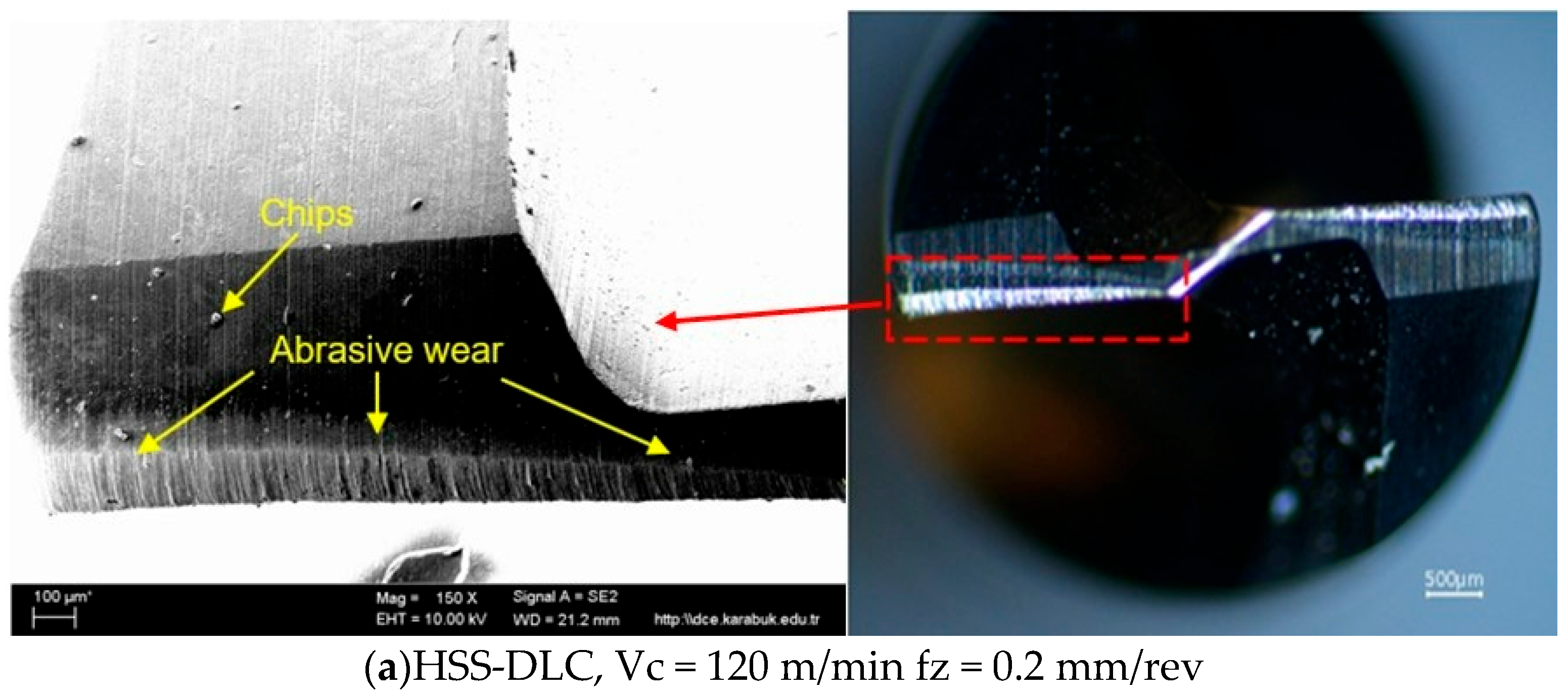
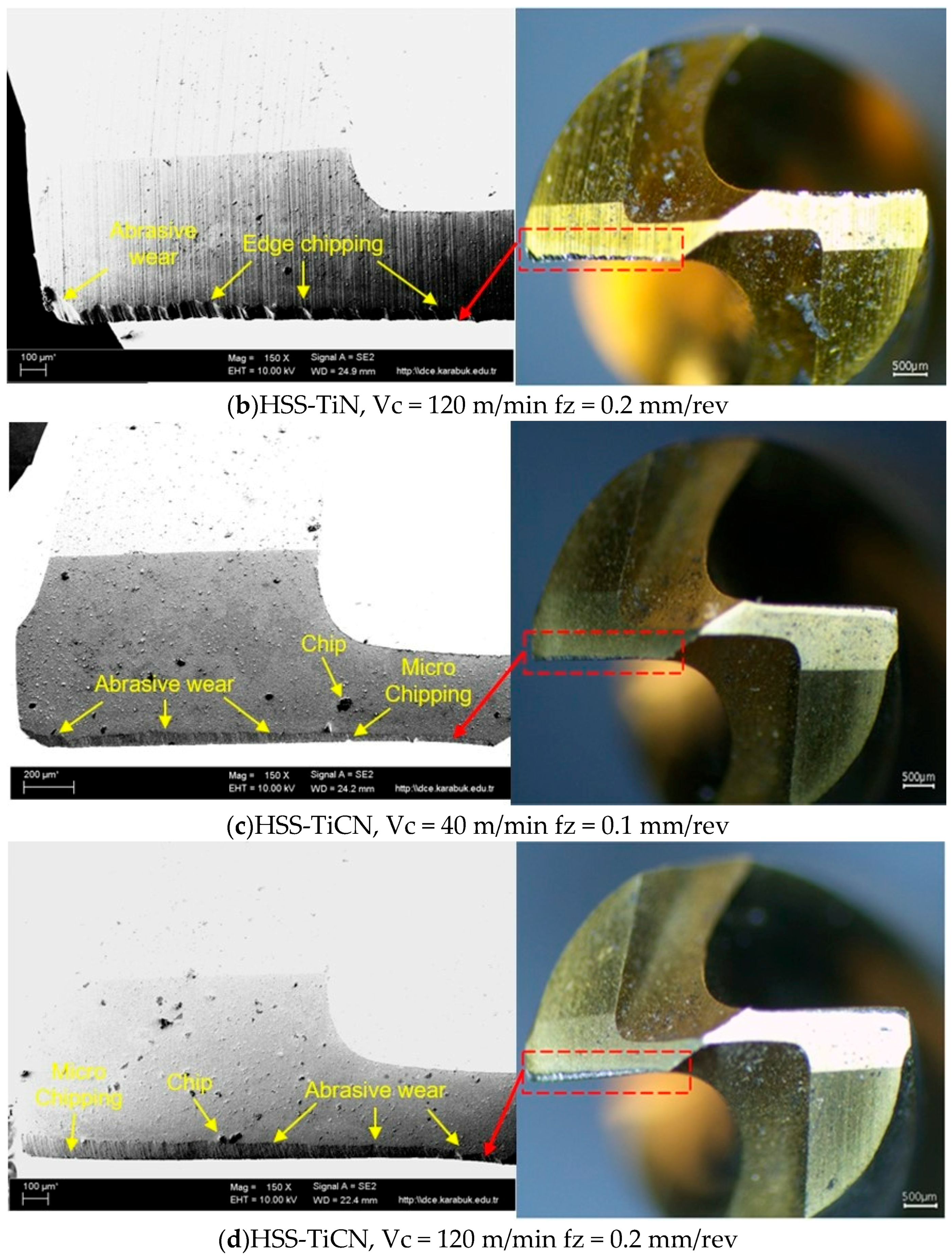
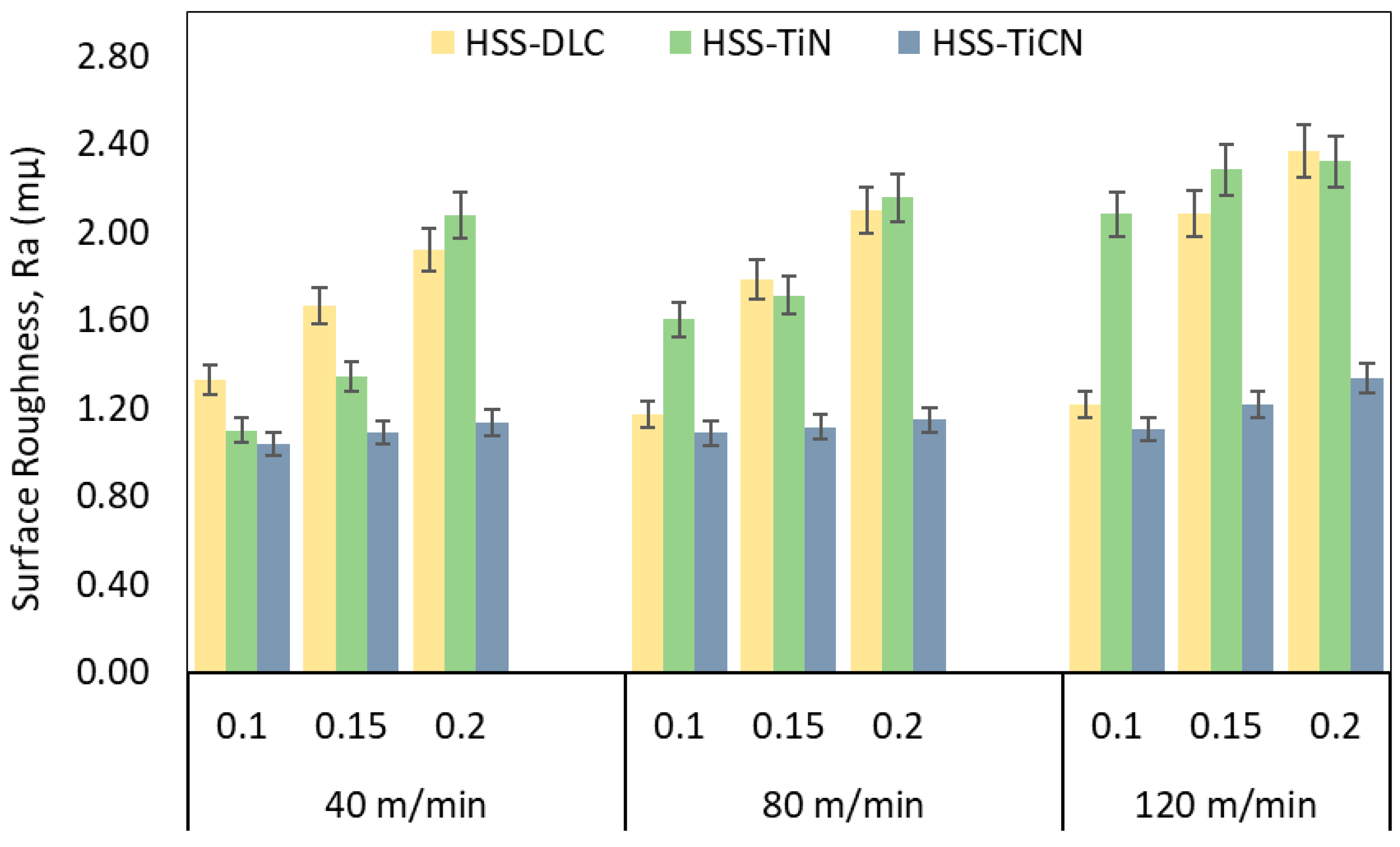
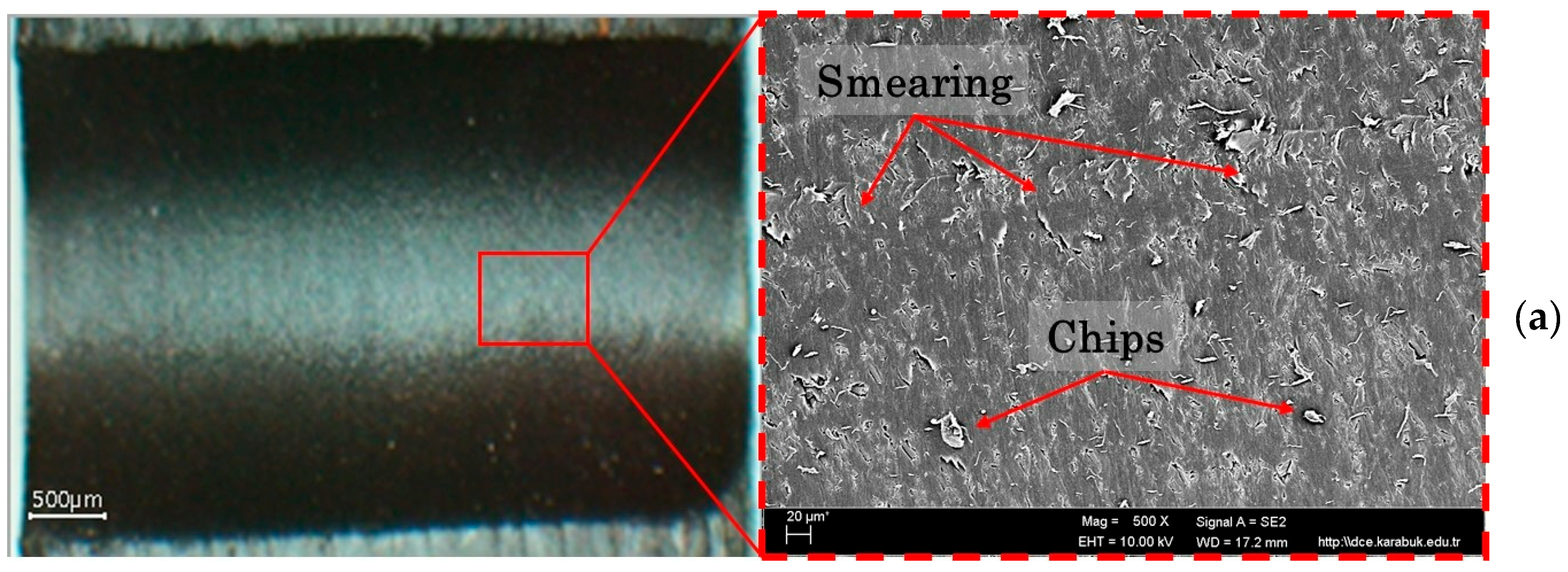
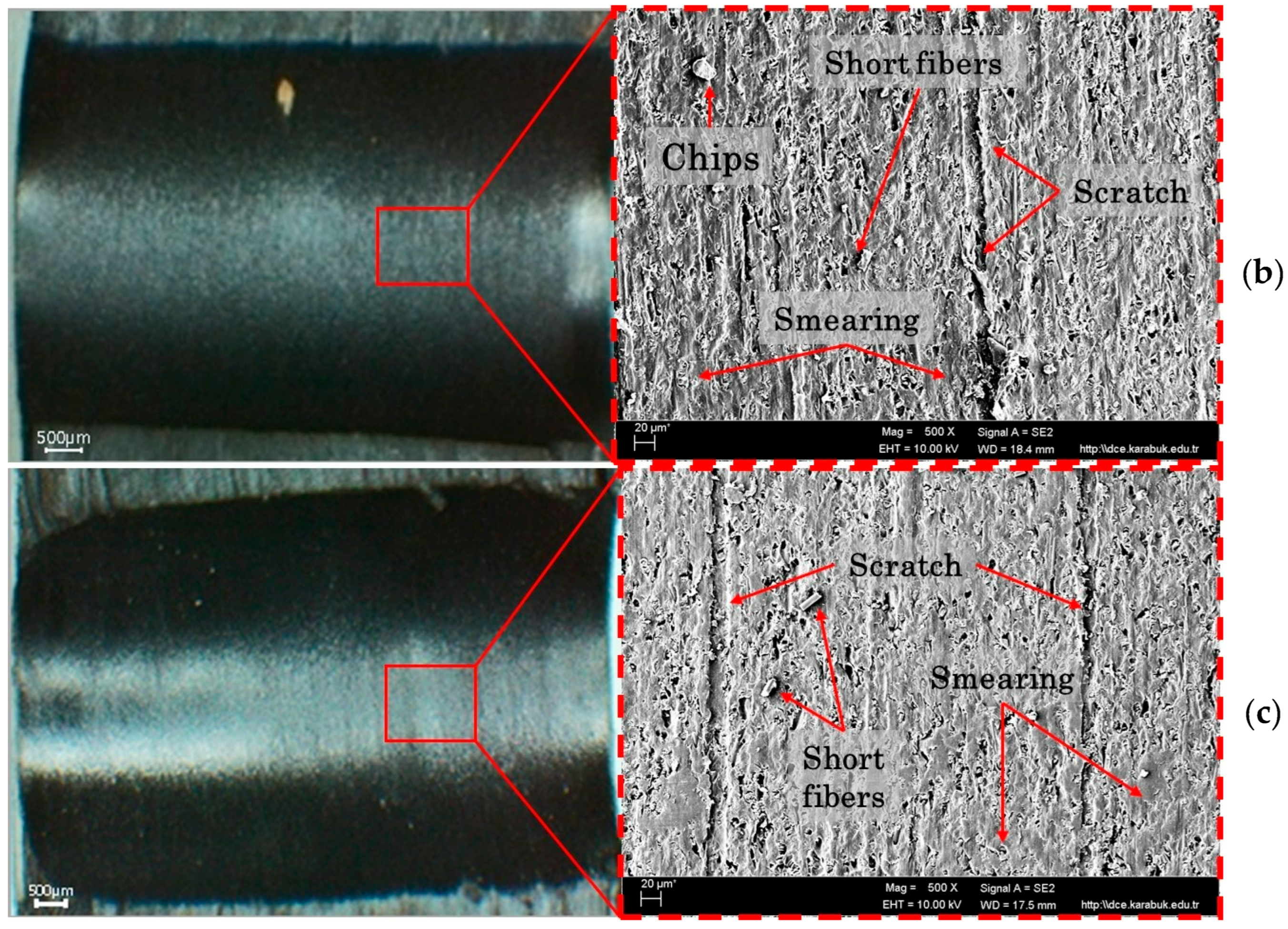
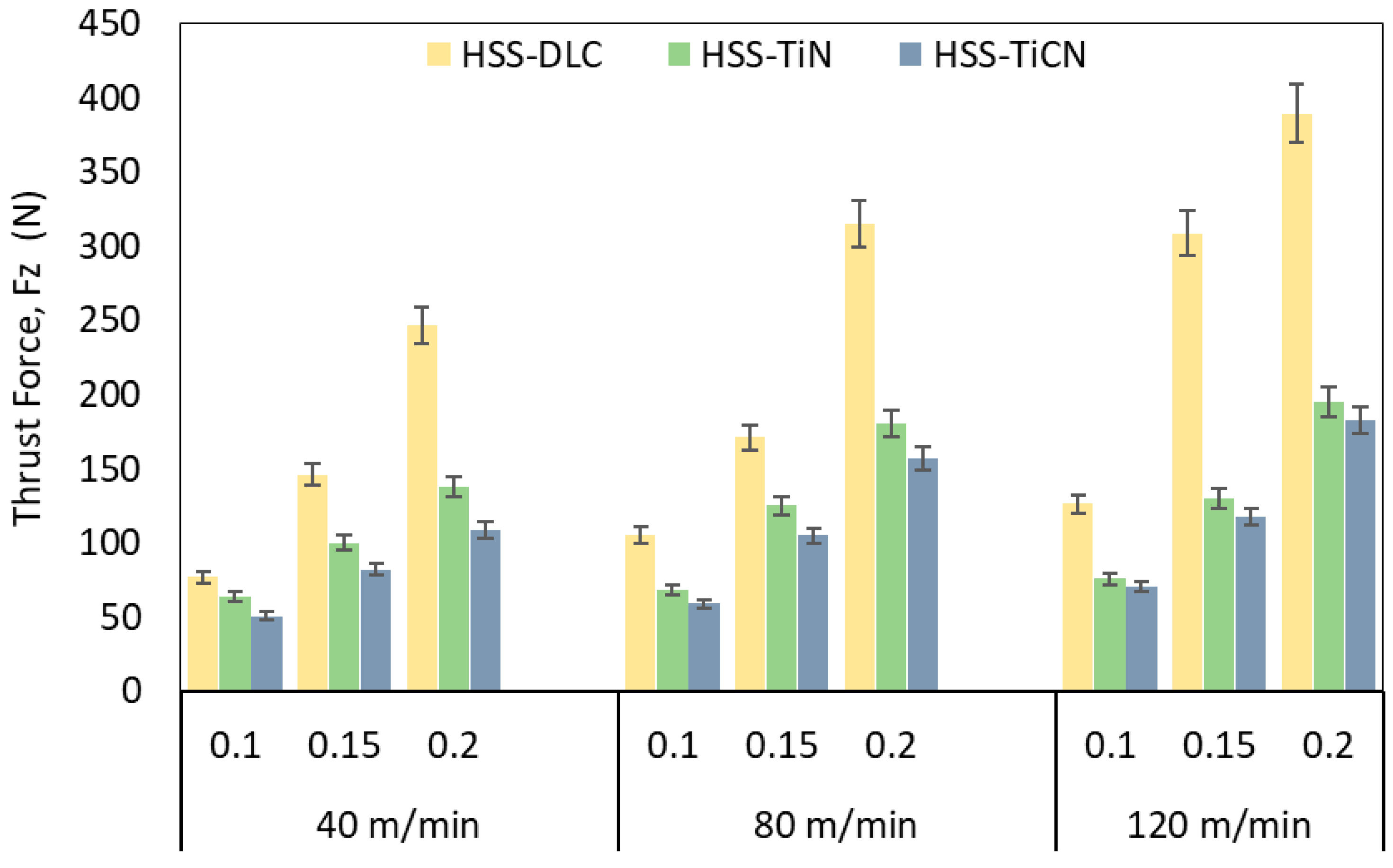
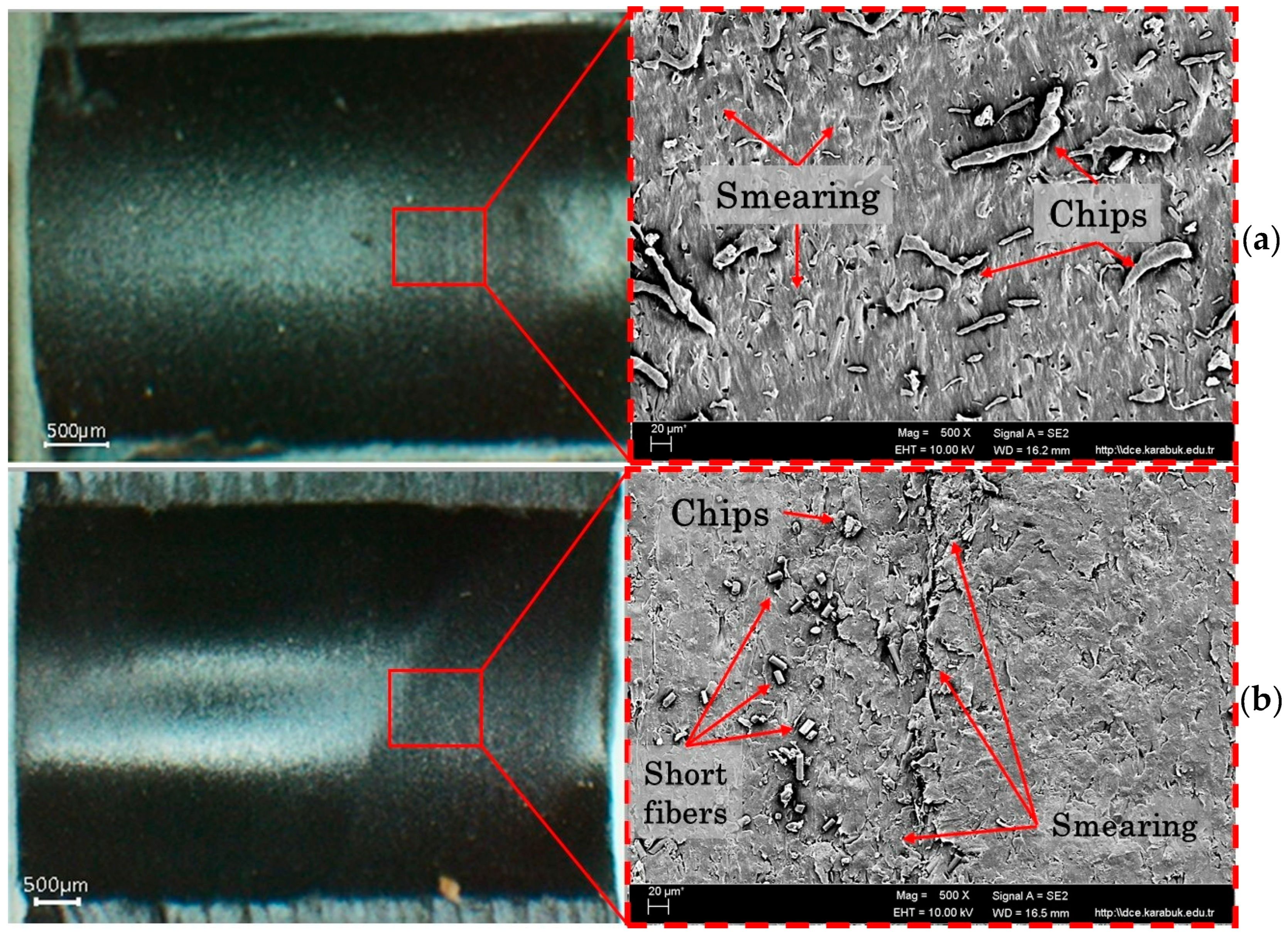
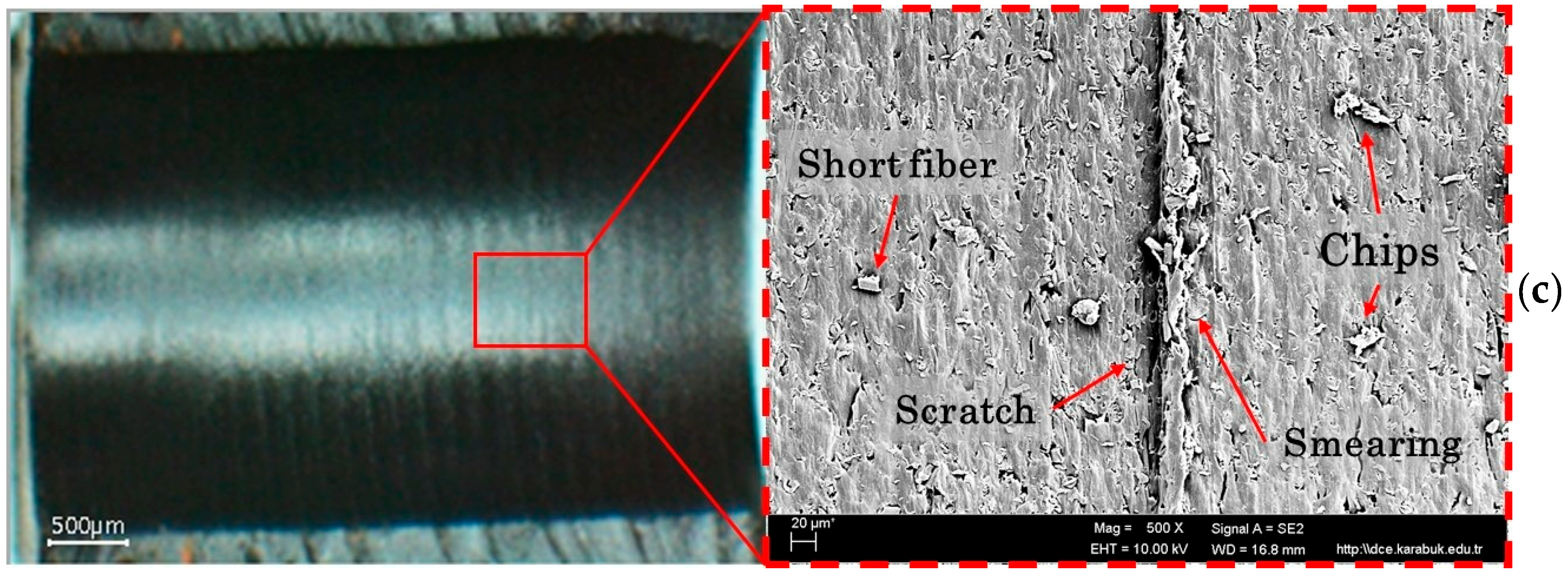
- In all coated drills, higher thrust force was measured with corresponding increases in cutting speed and feed rate. The maximum Fz was obtained using a DLC-coated drill at a Vc of 120 m/min and a fz of 0.2 mm/rev. This result was attributed to increased chip load at high feed rates and abrasive wear caused by short carbon fibers during tool–workpiece interaction at high cutting speeds. Surface quality was degraded as a result of smearing and adhesion of chips or short fibers to the surface during drilling due to tool wear. TiCN-coated drills provided lower roughness values compared to DLC- and TiN-coated tools within the tested parameter range. The lowest Ra was measured as 1038 µm with this drill at a Vc of 40 m/min and a fz of 0.1 mm/rev.
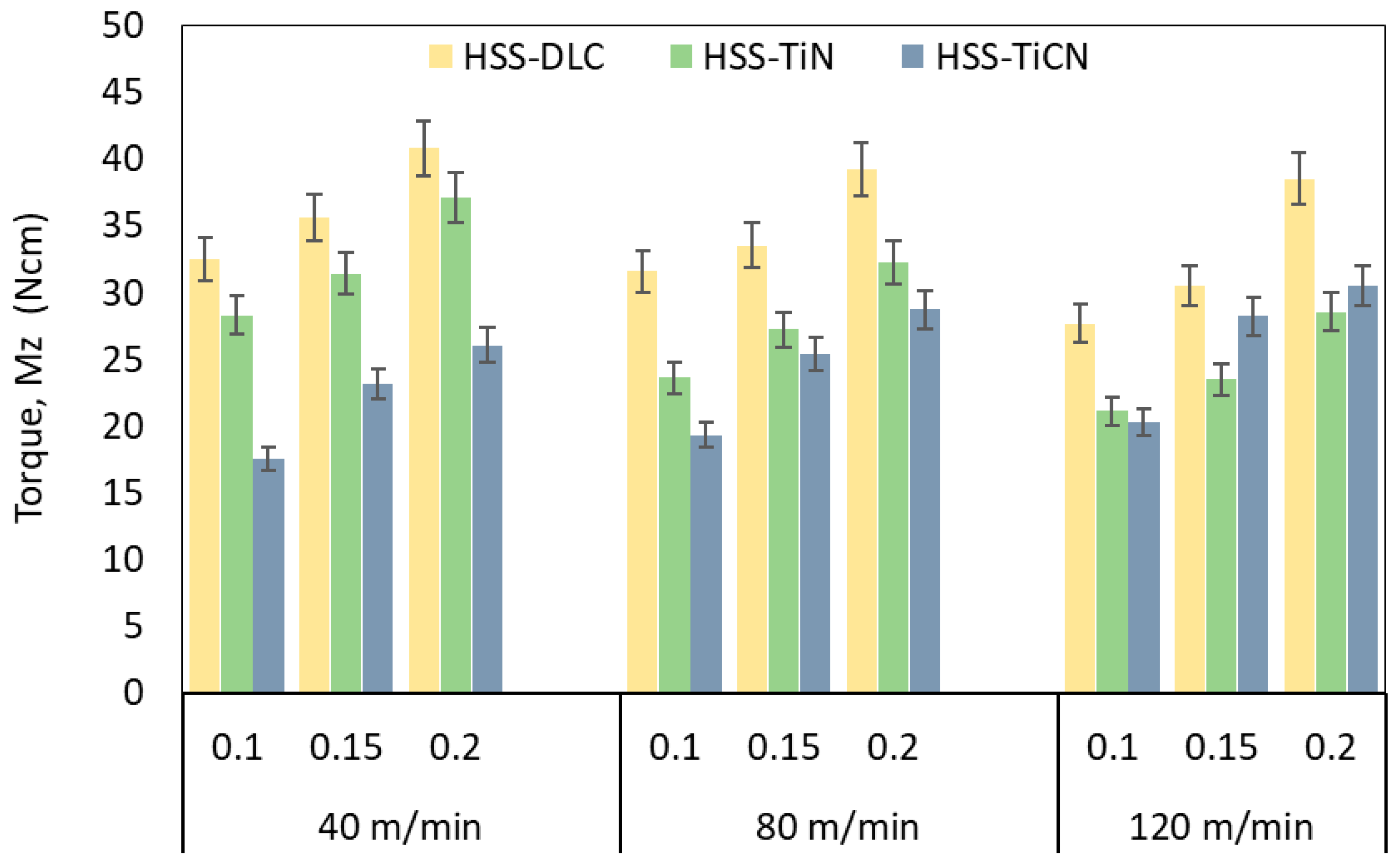
- Drilling torque decreased with increasing cutting speed, while it increased with increasing feed rate in all drills. At high parameter levels, wear in the drills altered the tool geometry, disrupting plastic deformation stability and resulting in higher torque values. The lowest Mz was measured with the TiCN-coated drill at a Vc of 40 m/min and a fz of 0.1 mm/rev.
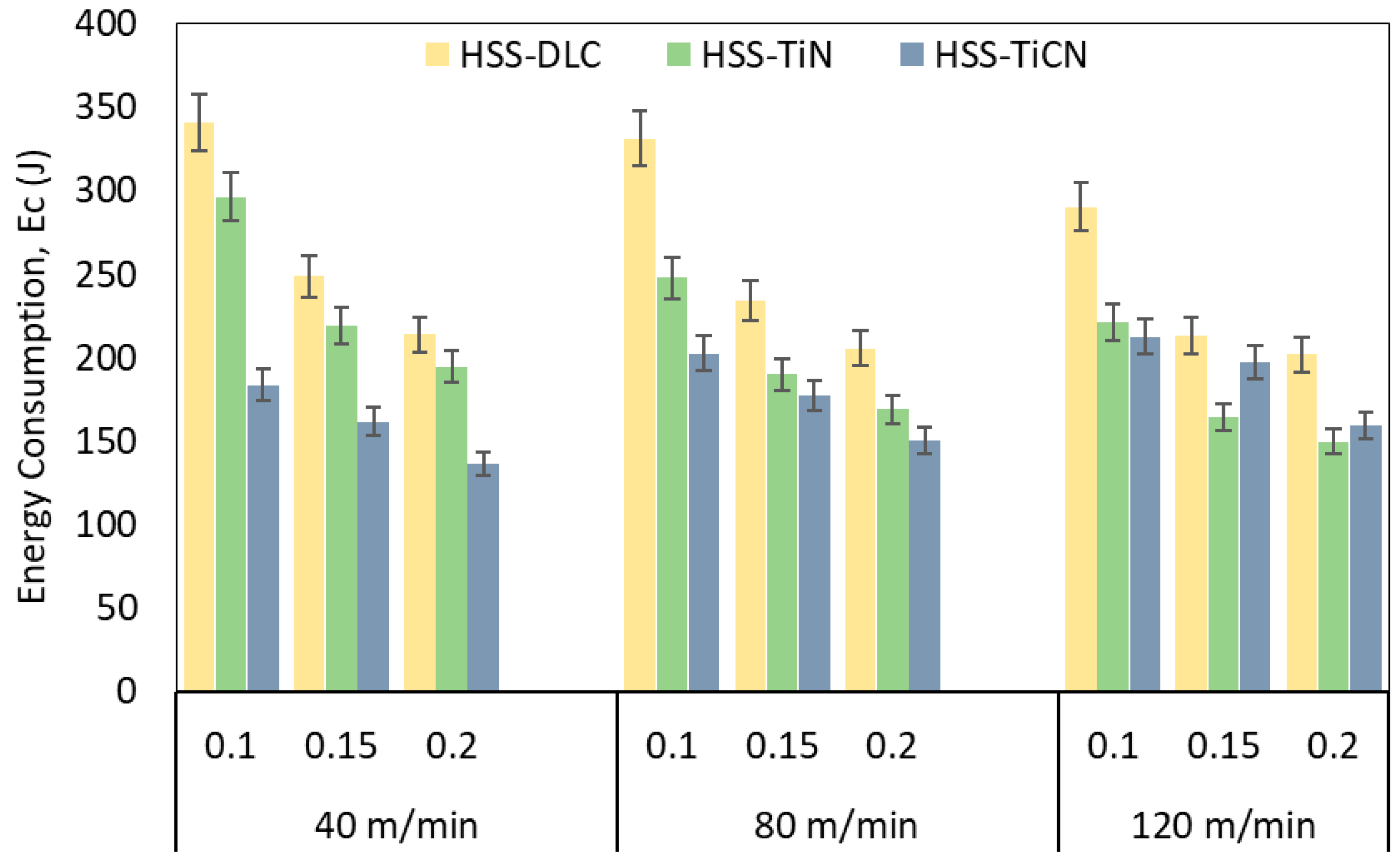
- Energy consumption decreased due to the reduced machining time with increasing feed rate and the lower cutting force demand for plastic deformation resulting from matrix softening provided by increasing cutting speed across all drill qualities. The lowest energy requirement was observed with TiCN-coated drills, while the highest energy requirement was observed with DLC-coated drills.
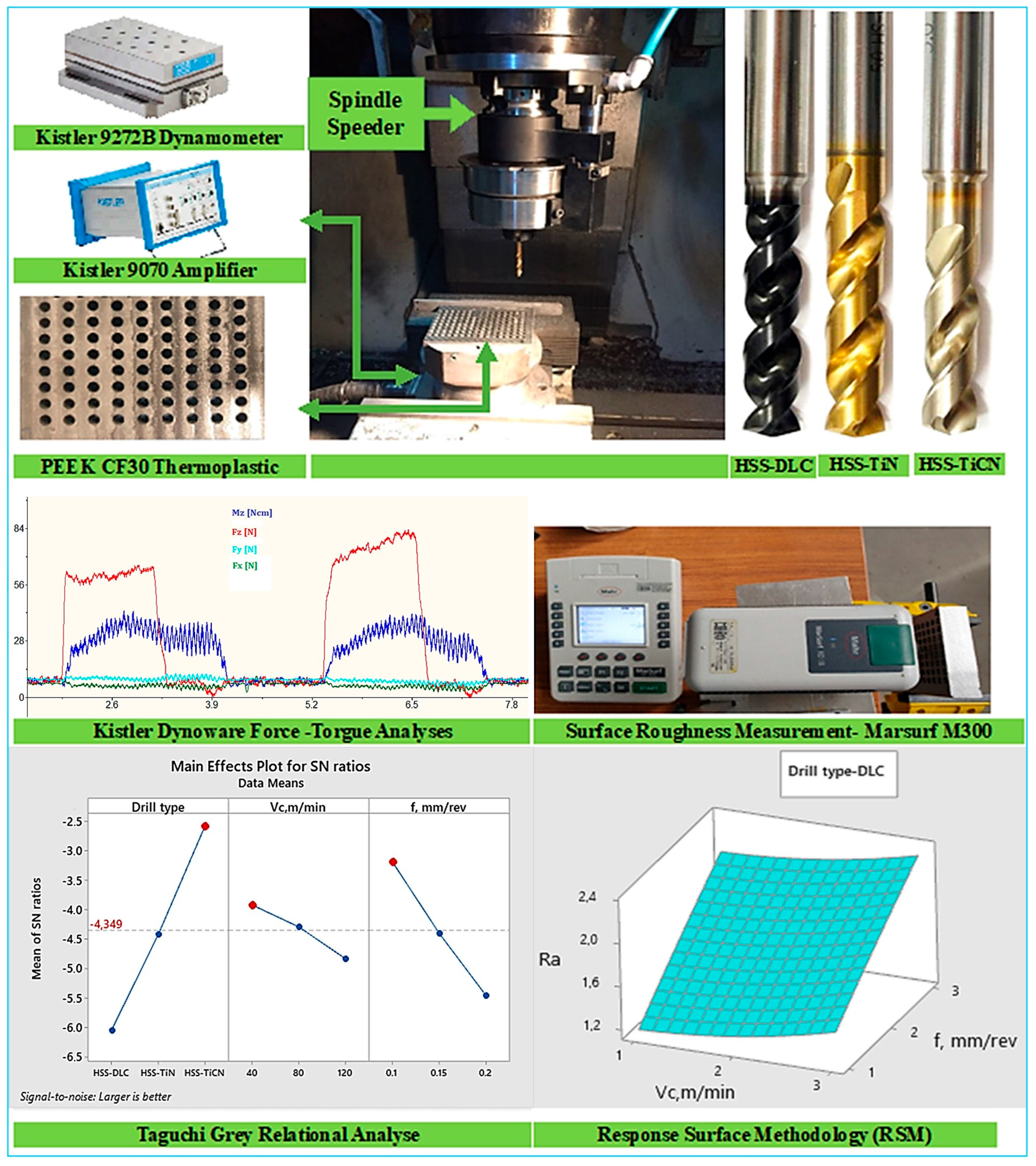
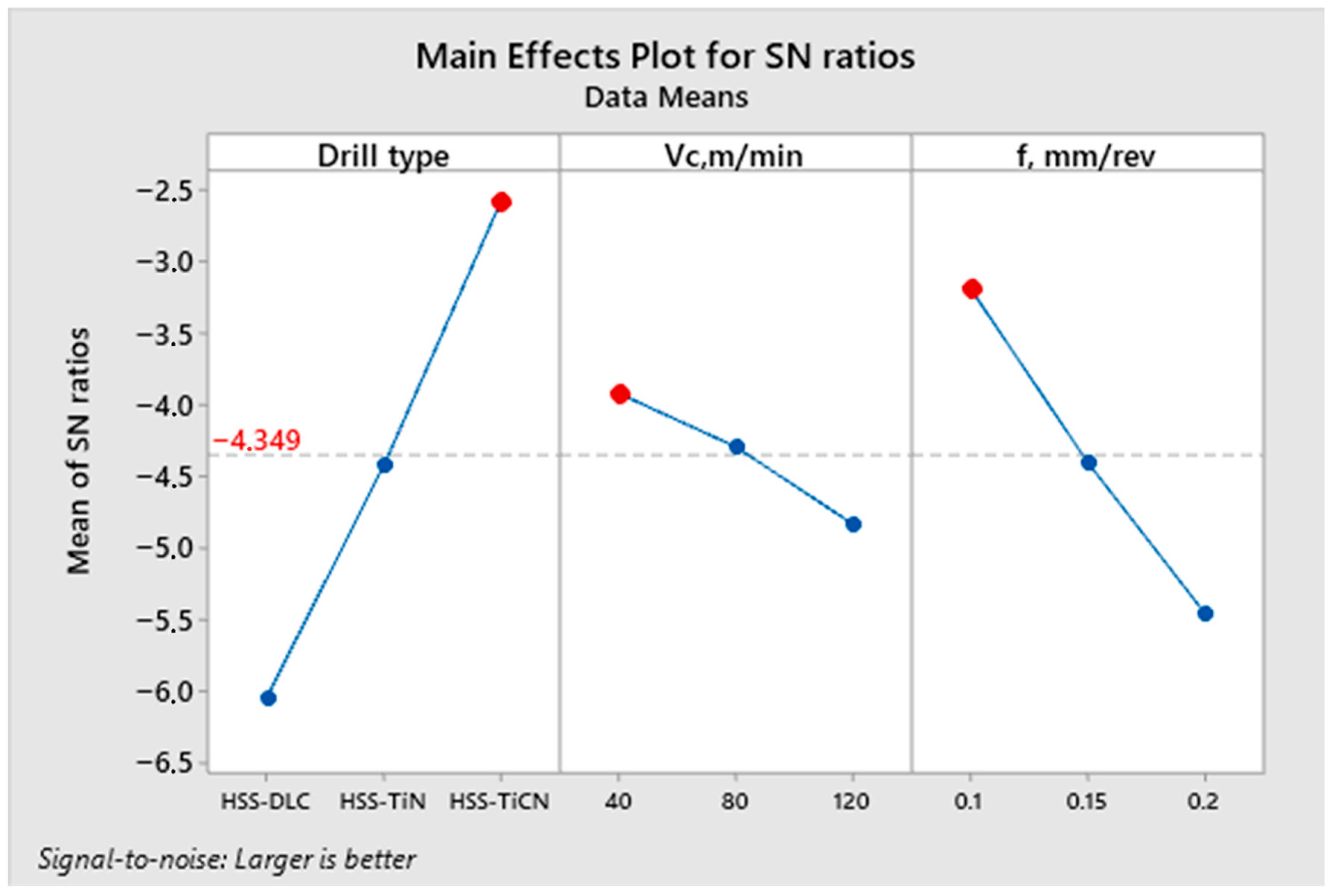
- Taguchi GRA optimization results showed that the ideal drilling combination is a TiCN-coated HSS drill with a cutting speed of 40 m/min and a feed rate of 0.1 mm/rev. Furthermore, ANOVA results indicated that the drill coating type was the most important parameter, followed by feed rate and cutting speed.
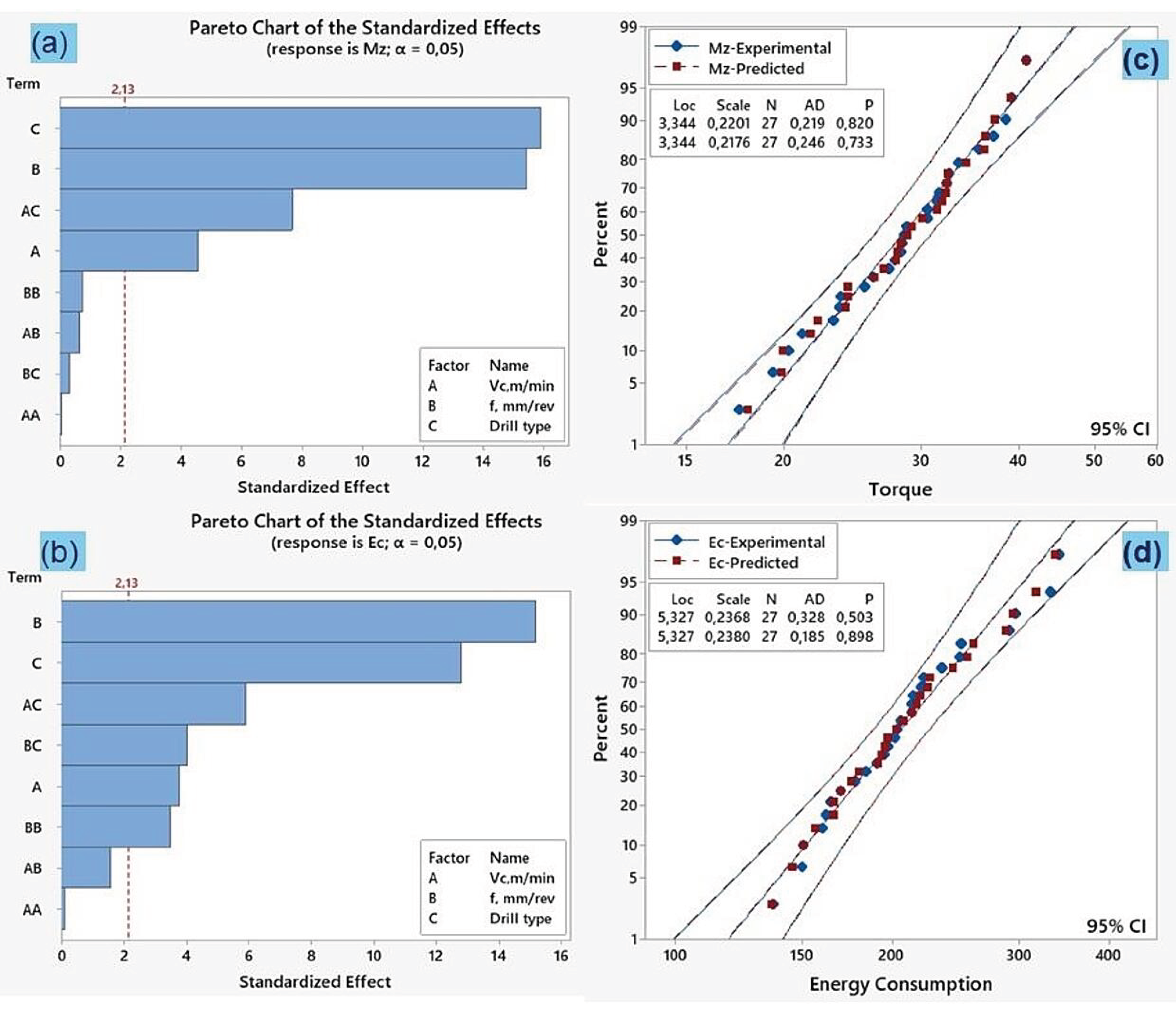
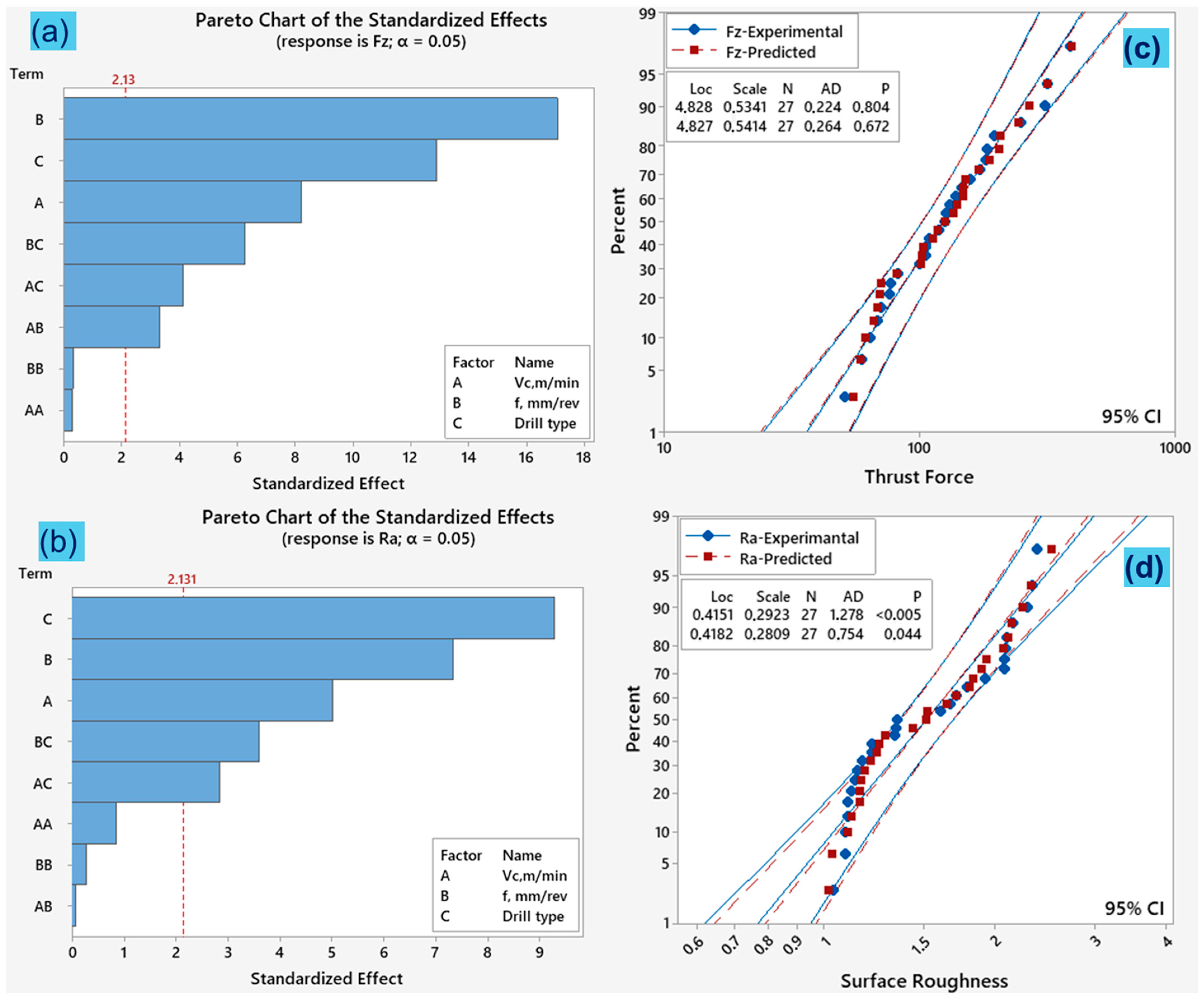
- The R2 values of 97.75% for thrust force, 93.59% for surface roughness, 97.75% for torque, and 97.25% for energy consumption obtained from the prediction models developed using RSM indicate that the equations can be used to predict the drilling performance of PEEK-CF30 material. According to the Pareto analysis, feed rate was the main determinant of thrust force and energy consumption, while drill type had the greatest effect on torque and surface roughness.
- Overall, results indicate that drill coating is an effective factor in terms of sustainability when drilling polymer-based composites. Future studies could focus on the effects of different cutting environments on the machining outputs examined in the presented study, as well as on parameter optimization and the development of prediction models for drill life and hole dimensional accuracy.
Author Contributions
Funding
Data Availability Statement
Conflicts of Interest
References
- Alshammari, B.A.; Alsuhybani, M.S.; Almushaikeh, A.M.; Alotaibi, B.M.; Alenad, A.M.; Alqahtani, N.B.; Alharbi, A.G. Comprehensive Review of the Properties and Modifications of Carbon Fiber-Reinforced Thermoplastic Composites. Polymers 2021, 13, 2474. [Google Scholar] [CrossRef]
- Dang, J.; Sun, J.; Liu, Z. Interfacial strengthening and processing of carbon fibers reinforced poly(ether-ether-ketone) composites: A mini-review. Polym. Compos. 2024, 45, 6788–6803. [Google Scholar] [CrossRef]
- Pegoretti, A. Towards sustainable structural composites: A review on the recycling of continuous-fiber-reinforced thermoplastics. Adv. Ind. Eng. Polym. Res. 2021, 4, 105–115. [Google Scholar] [CrossRef]
- Wang, Y.; Yang, Y.; Zhang, H.; Ding, S.; Yang, T.; Pang, J.; Zhang, H.; Zhang, J.; Zhang, Y.; Jiang, Z. Study on the Preparation and Process Parameter-Mechanical Property Relationships of Carbon Fiber Fabric Reinforced Poly(Ether Ether Ketone) Thermoplastic Composites. Polymers 2024, 16, 897. [Google Scholar] [CrossRef]
- Geier, N.; Xu, J.; Pereszlai, C.; Poór, D.I.; Davim, J.P. Drilling of carbon fibre reinforced polymer (CFRP) composites: Difficulties, challenges and expectations. Procedia Manuf. 2021, 54, 284–289. [Google Scholar] [CrossRef]
- Molina-Moya, M.Á.; García-Martínez, E.; Miguel, V.; Coello, J.; Martínez-Martínez, A. Experimental Analysis and Application of a Multivariable Regression Technique to Define the Optimal Drilling Conditions for Carbon Fiber Reinforced Polymer (CFRP) Composites. Polymers 2023, 15, 3710. [Google Scholar] [CrossRef] [PubMed]
- Jagadeesh, P.; Rangappa, S.M.; Suyambulingam, I.; Siengchin, S.; Puttegowda, M.; Binoj, J.S.; Gorbatyuk, S.; Khan, A.; Doddamani, M.; Fiore, V.; et al. Drilling characteristics and properties analysis of fiber reinforced polymer composites: A comprehensive review. Heliyon 2023, 9, e14428. [Google Scholar] [CrossRef] [PubMed]
- Ge, J.; Catalanotti, G.; Falzon, B.G.; McClelland, J.; Higgins, C.; Jin, Y.; Sun, D. Towards understanding the hole making performance and chip formation mechanism of thermoplastic carbon fibre/polyetherketoneketone composite. Compos. Part B Eng. 2022, 234, 109752. [Google Scholar] [CrossRef]
- Ge, J.; Zhang, W.; Luo, M.; Catalanotti, G.; Falzon, B.G.; Higgins, C.; Zhang, D.; Jin, Y.; Sun, D. Multi-objective optimization of thermoplastic CF/PEKK drilling through a hybrid method: An approach towards sustainable manufacturing. Compos. Part A Appl. Sci. Manuf. 2023, 167, 107418. [Google Scholar] [CrossRef]
- Ze, G.K.; Pramanik, A.; Basak, A.; Prakash, C.; Shankar, S.; Radhika, N. Challenges associated with drilling of carbon fiber reinforced polymer (CFRP) composites—A review. Compos. Part C Open Access 2023, 11, 100356. [Google Scholar] [CrossRef]
- Lih, T.C.; Azmi, A.I. Thrust Force Analyses in Drilling FRP Composites. In Machining and Machinability of Fiber Reinforced Polymer Composites; Springer: Berlin/Heidelberg, Germany, 2021; pp. 27–62. [Google Scholar]
- Ficici, F. Investigation of thrust force in drilling polyphthalamide (PPA) composites. Measurement 2021, 182, 109505. [Google Scholar] [CrossRef]
- Bolat, Ç.; Karakılınç, U.; Yalçın, B.; Öz, Y.; Yavaş, Ç.; Ergene, B.; Ercetin, A.; Akkoyun, F. Effect of Drilling Parameters and Tool Geometry on the Thrust Force and Surface Roughness of Aerospace Grade Laminate Composites. Micromachines 2023, 14, 1427. [Google Scholar] [CrossRef] [PubMed]
- Manzoor, S.; Din, I.U.; Giasin, K.; Köklü, U.; Khan, K.A.; Panier, S. Three-Dimensional Finite Element Modeling of Drilling-Induced Damage in S2/FM94 Glass-Fiber-Reinforced Polymers (GFRPs). Materials 2022, 15, 7052. [Google Scholar] [CrossRef] [PubMed]
- Chen, J.; An, Q.; Ming, W.; Chen, M. Hole exit quality and machined surface integrity of 2D Cf/SiC composites drilled by PCD tools. J. Eur. Ceram. Soc. 2019, 39, 4000–4010. [Google Scholar] [CrossRef]
- Zhang, X.; Li, M.; Huang, D. Surface quality and burr characterization during drilling CFRP/Al stacks with acoustic emission monitoring. J. Manuf. Process. 2023, 98, 138–148. [Google Scholar] [CrossRef]
- Thakur, A.; Pal Singh, A.; Sharma, M. Mechanics of delamination-free drilling in polymer matrix composite laminates: A review. Proc. Inst. Mech. Eng. Part C J. Mech. Eng. Sci. 2021, 235, 136–160. [Google Scholar] [CrossRef]
- Gutiérrez, S.C.; Meseguer, M.D.; Muñoz-Sánchez, A.; Feito, N. Study of the Influence of Tool Wear of Two Drill Bits Manufactured with Different Coating Processes in Drilling Carbon/Glass Fiber Hybrid Composite Bounded with Epoxy Polymer. Coatings 2023, 13, 1440. [Google Scholar] [CrossRef]
- D’oRazio, A.; El Mehtedi, M.; Forcellese, A.; Nardinocchi, A.; Simoncini, M. Tool wear and hole quality in drilling of CFRP/AA7075 stacks with DLC and nanocomposite TiAlN coated tools. J. Manuf. Process. 2017, 30, 582–592. [Google Scholar] [CrossRef]
- Jatti, V.S.; Sefene, E.M.; Jatti, A.V.; Mishra, A.; Dhabale, R.D. Synthesis and characterization of diamond-like carbon coatings for drill bits using plasma-enhanced chemical vapor deposition. Int. J. Adv. Manuf. Technol. 2023, 127, 4081–4096. [Google Scholar] [CrossRef]
- Staszuk, M.; Pakuła, D.; Olszowska, M.; Kloc-Ptaszna, A.; Szindler, M.; Wieczorek, A.N.; Honysz, R.; Jonda, E.; Basiaga, M. Structure and Tribological Properties of TiN/DLC, CrN/DLC, TiAlCN/DLC, AlTiCN/DLC and AlCrTiN/DLC Hybrid Coatings on Tool Steel. Materials 2025, 18, 4188. [Google Scholar] [CrossRef]
- Özbek, N.A.; Özbek, O.; Kara, F. Statistical Analysis of the Effect of the Cutting Tool Coating Type on Sustainable Machining Parameters. J. Mater. Eng. Perform. 2021, 30, 7783–7795. [Google Scholar] [CrossRef]
- Zou, F.; Dang, J.; Cai, X.; An, Q.; Ming, W.; Chen, M. Hole quality and tool wear when dry drilling of a new developed metal/composite co-cured material. Proc. Inst. Mech. Eng. Part B J. Eng. Manuf. 2020, 234, 980–992. [Google Scholar] [CrossRef]
- Merino-Pérez, J.L.; Royer, R.; Merson, E.; Lockwood, A.; Ayvar-Soberanis, S.; Marshall, M.B. Influence of workpiece constituents and cutting speed on the cutting forces developed in the conventional drilling of CFRP composites. Compos. Struct. 2016, 140, 621–629. [Google Scholar] [CrossRef]
- Ismail, S.O.; Dhakal, H.N.; Popov, I.; Beaugrand, J. Comprehensive study on machinability of sustainable and conventional fibre reinforced polymer composites. Eng. Sci. Technol. Int. J. 2016, 19, 2043–2052. [Google Scholar] [CrossRef]
- Parasuraman, S.; Elamvazuthi, I.; Kanagaraj, G.; Natarajan, E.; Pugazhenthi, A. Assessments of Process Parameters on Cutting Force and Surface Roughness during Drilling of AA7075/TiB2 In Situ Composite. Materials 2021, 14, 1726. [Google Scholar] [CrossRef]
- Ge, J.; Catalanotti, G.; Falzon, B.G.; Higgins, C.; McClory, C.; Thiebot, J.-A.; Zhang, L.; He, M.; Jin, Y.; Sun, D. Process characteristics, damage mechanisms and challenges in machining of fibre reinforced thermoplastic polymer (FRTP) composites: A review. Compos. Part B Eng. 2024, 273, 111247. [Google Scholar] [CrossRef]
- Geng, D.; Liu, Y.; Shao, Z.; Lu, Z.; Cai, J.; Li, X.; Jiang, X.; Zhang, D. Delamination formation, evaluation and suppression during drilling of composite laminates: A review. Compos. Struct. 2019, 216, 168–186. [Google Scholar] [CrossRef]
- Boy, M. Effects of Drilling Parameters on Drilling of PEEK-CF30 Thermoplastic Material: Thrust Force, Surface Roughness and Delamination. Yuz. Yil Univ. J. Inst. Nat. Appl. Sci. 2022, 27, 570–580. [Google Scholar] [CrossRef]
- Yakut, N.; Çakır, O. Investigation of drilling CF/PEEK thermoplastic composites with varying helix angle drills and optimization of cutting parameters. J. Thermoplast. Compos. Mater. 2026, 39, 1583–1616. [Google Scholar] [CrossRef]
- Ge, J.; Luo, M.; Zhang, D.; Catalanotti, G.; Falzon, B.G.; McClelland, J.; Higgins, C.; Jin, Y.; Sun, D. Temperature field evolution and thermal-mechanical interaction induced damage in drilling of thermoplastic CF/PEKK—A comparative study with thermoset CF/epoxy. J. Manuf. Process. 2023, 88, 167–183. [Google Scholar] [CrossRef]
- Liu, Y.; Huang, J.; Wang, T.; Sun, P.; Zhou, H. Thermo-mechanical coupled three-dimensional finite element simulation analysis of drilling thermoplastic braided carbon fiber composite and optimization of process parameters. Thin-Walled Struct. 2024, 204, 112263. [Google Scholar] [CrossRef]
- Domingo, R.; de Agustina, B.; Marín, M.M. Study of Drilling Process by Cooling Compressed Air in Reinforced Polyether-Ether-Ketone. Materials 2020, 13, 1965. [Google Scholar] [CrossRef] [PubMed]
- Kim, J.; Kim, D.-G.; Ryu, K.H. Enhancing Response Surface Methodology through Coefficient Clipping Based on Prior Knowledge. Processes 2023, 11, 3392. [Google Scholar] [CrossRef]
- Achuthamenon Sylajakumari, P.; Ramakrishnasamy, R.; Palaniappan, G. Taguchi Grey Relational Analysis for Multi-Response Optimization of Wear in Co-Continuous Composite. Materials 2018, 11, 1743. [Google Scholar] [CrossRef]
- Zhujani, F.; Abdullahu, F.; Todorov, G.; Kamberov, K. Optimization of Multiple Performance Characteristics for CNC Turning of Inconel 718 Using Taguchi–Grey Relational Approach and Analysis of Variance. Metals 2024, 14, 186. [Google Scholar] [CrossRef]
- Perec, A.; Radomska-Zalas, A.; Fajdek-Bieda, A.; Pude, F. Process Optimization by Applying the Response Surface Methodology (RSM) to the Abrasive Suspension Water Jet Cutting of Phenolic Composites. Facta Univ. Ser. Mech. Eng. 2023, 21, 575. [Google Scholar] [CrossRef]
- Ramanathan, T.; Sithan, K.; Ramanathan, S.; Ramasamy, P. Parametric Optimization in Drilling Process Parameters for Machining of Glass Fibre Reinforced Composites Using Grey Relational Grade Analysis. Chiang Mai J. Sci. 2022, 49, 1428–1443. [Google Scholar] [CrossRef]
- Altaş, E. Multi-Objective Optimization of Dry Sliding Wear in Cryogenically Treated High-Performance AISI 9310 Steel: An Integrated Approach Using Grey Relational Analysis and Taguchi Method. Manuf. Technol. Appl. 2024, 5, 172–192. [Google Scholar] [CrossRef]
- Günay, M. Modeling and multiple optimization in face milling of hardfacing welding applied steel: Force, roughness, power. Proc. Inst. Mech. Eng. Part C J. Mech. Eng. Sci. 2022, 236, 6652–6664. [Google Scholar] [CrossRef]
- Günay, M.; Meral, T. Modelling and multiresponse optimization for minimizing burr height, thrust force and surface roughness in drilling of ferritic stainless steel. Sādhanā 2020, 45, 273. [Google Scholar] [CrossRef]
- Gökçe, H.; Çiftçi, İ. Mathematical Modelling and Multiresponse Optimization to Minimize Surface Roughness in Drilling Custom 450 Stainless Steel. İmalat Teknol ve Uygulamaları 2023, 4, 11–24. [Google Scholar] [CrossRef]
- Velayudham, A.; Krishnamurthy, R. Effect of point geometry and their influence on thrust and delamination in drilling of polymeric composites. J. Mater. Process. Technol. 2007, 185, 204–209. [Google Scholar] [CrossRef]
- Du, Y.; Li, P.; Liu, S. Comparative study of tool wear and machining quality in drilling of thermoplastic CF/PEEK and thermoset CF/epoxy composites. J. Thermoplast. Compos. Mater. 2025. [Google Scholar] [CrossRef]
- Demirsöz, R.; Yaşar, N.; Korkmaz, M.E.; Günay, M.; Giasin, K.; Pimenov, D.Y.; Aamir, M.; Unal, H. Evaluation of the Mechanical Properties and Drilling of Glass Bead/Fiber-Reinforced Polyamide 66 (PA66)-Based Hybrid Polymer Composites. Materials 2022, 15, 2765. [Google Scholar] [CrossRef] [PubMed]
- Zhang, X.; Chen, J.; Wang, H.; Ma, T.; Lin, L.; Yang, L.; Wang, T.; Ming, W.; An, Q.; Chen, M. Mechanisms of defect formation and evolution in drilling thermoplastic CF/PEEK composite using twist and step drills. Compos. Struct. 2025, 355, 118833. [Google Scholar] [CrossRef]
- Xu, J.; Huang, X.; Chen, M.; Paulo Davim, J. Drilling characteristics of carbon/epoxy and carbon/polyimide composites. Mater. Manuf. Process. 2020, 35, 1732–1740. [Google Scholar] [CrossRef]
- Yaşar, N.; Günay, M.; Kılık, E.; Ünal, H. Multiresponse optimization of drillability factors and mechanical properties of chitosan-reinforced polypropylene composite. J. Thermoplast. Compos. Mater. 2022, 35, 1660–1682. [Google Scholar] [CrossRef]
- Geier, N.; Davim, J.P.; Szalay, T. Advanced cutting tools and technologies for drilling carbon fibre reinforced polymer (CFRP) composites: A review. Compos. Part A Appl. Sci. Manuf. 2019, 125, 105552. [Google Scholar] [CrossRef]
- Geier, N.; Poór, D.I.; Pereszlai, C.; Tamás-Bényei, P.; Xu, J. A drilling case study in polymer composites reinforced by virgin and recycled carbon fibres (CFRP and rCFRP) to analyse thrust force and torque. Int. J. Adv. Manuf. Technol. 2022, 120, 2603–2615. [Google Scholar] [CrossRef]
- Mudhukrishnan, M.; Hariharan, P.; Palanikumar, K.; Latha, B. Optimization and sensitivity analysis of drilling parameters for sustainable machining of carbon fiber–reinforced polypropylene composites. J. Thermoplast. Compos. Mater. 2019, 32, 1485–1508. [Google Scholar] [CrossRef]
- Hamed, M.; Zhang, C.; Khan, A.M.; Saleem, M.; Musanur, M.D. Holistic review of drilling on CFRP composites: Techniques, FEM, sustainability, challenges, and advances. Int. J. Adv. Manuf. Technol. 2024, 135, 2661–2696. [Google Scholar] [CrossRef]
- Yurtkuran, H.; Günay, M. Analyzing the Effects of Cutting Parameters on Machinability Criteria in Milling of 17-4PH Stainless Steel under Dry Environment. Manuf. Technol. Appl. 2022, 3, 8–19. [Google Scholar] [CrossRef]
- Çakıroğlu, R.; Günay, M. Analysis of surface roughness and energy consumption in turning of C17500 copper alloy under different machining environments and modellings with response surface method. Proc. Inst. Mech. Eng. Part E J. Process. Mech. Eng. 2023, 237, 207–219. [Google Scholar] [CrossRef]
- Zhang, X.; Chen, J.; Li, H.; Zhu, L.; Zhou, Y.; Yan, R.; Tao, R.; Lin, L.; An, Q.; Ming, W.; et al. Research on the thermal-mechanical interaction of the defect evolution and surface generation during the drilling of thermoplastic composites. J. Mater. Res. Technol. 2025, 37, 2834–2849. [Google Scholar] [CrossRef]
- de Oliveira, N.B.; Peruchi, R.S.; Rotella Junior, P.; de Brito, T.G. Modeling and optimization of steel end milling process: A review on empirical studies. J. Braz. Soc. Mech. Sci. Eng. 2023, 45, 593. [Google Scholar] [CrossRef]
- Yurtkuran, H.; Günay, M. Predictive modelling and optimization for machinability indicators in cleaner milling of PH13-8Mo using sustainable cutting environments. J. Braz. Soc. Mech. Sci. Eng. 2024, 46, 319. [Google Scholar] [CrossRef]
- Aruchamy, K.; Palaniappan, S.K.; Lakshminarasimhan, R.; Mylsamy, B.; Dharmalingam, S.K.; Ross, N.S.; Subramani, S.P. An Experimental Study on Drilling Behavior of Silane-Treated Cotton/Bamboo Woven Hybrid Fiber Reinforced Epoxy Polymer Composites. Polymers 2023, 15, 3075. [Google Scholar] [CrossRef]
- Domingo, R.; de Agustina, B.; Ayllón, J. Study of Drilled Holes after a Cryogenic Machining in Glass Fiber-Reinforced Composites. Appl. Sci. 2022, 12, 10275. [Google Scholar] [CrossRef]
- Razavi, S.M.; Sadollah, A.; Al-Shamiri, A.K. Prediction and optimization of electrical conductivity for polymer-based composites using design of experiment and artificial neural networks. Neural Comput. Appl. 2022, 34, 7653–7671. [Google Scholar] [CrossRef]






| Parameter | Dc | Vc (m/min) | fz (mm/rev) |
|---|---|---|---|
| Level 1 | HSS-DLC | 40 | 0.1 |
| Level 2 | HSS-TiN | 80 | 0.15 |
| Level 3 | HSS-TiCN | 120 | 0.2 |
| Exp. No | Exp. Results | Normalization | GRC | GRG | Order | |||||||||
|---|---|---|---|---|---|---|---|---|---|---|---|---|---|---|
| Fz | Ra | Mz | Ec | Fz | Ra | Mz | Ec | Fz | Ra | Mz | Ec | |||
| 1. | 76.70 | 1.332 | 32.51 | 340.59 | 0.924 | 0.779 | 0.357 | 0.000 | 0.8675 | 0.6936 | 0.4374 | 0.3333 | 0.5830 | 17 |
| 2. | 146.05 | 1.667 | 35.62 | 248.78 | 0.719 | 0.527 | 0.223 | 0.450 | 0.6400 | 0.5141 | 0.3917 | 0.4761 | 0.5055 | 21 |
| 3. | 246.9 | 1.921 | 40.82 | 213.82 | 0.421 | 0.337 | 0.000 | 0.621 | 0.4634 | 0.4298 | 0.3333 | 0.5688 | 0.4488 | 25 |
| 4. | 105.45 | 1.171 | 31.60 | 331.05 | 0.839 | 0.900 | 0.396 | 0.047 | 0.7561 | 0.8334 | 0.4529 | 0.3441 | 0.5966 | 16 |
| 5. | 171.25 | 1.788 | 33.52 | 234.11 | 0.644 | 0.437 | 0.314 | 0.522 | 0.5844 | 0.4702 | 0.4214 | 0.5110 | 0.4967 | 22 |
| 6. | 315.3 | 2.101 | 39.23 | 205.49 | 0.219 | 0.201 | 0.068 | 0.662 | 0.3903 | 0.3850 | 0.3492 | 0.5965 | 0.4303 | 26 |
| 7. | 126.35 | 1.218 | 27.70 | 290.19 | 0.777 | 0.865 | 0.564 | 0.247 | 0.6916 | 0.7871 | 0.5339 | 0.3990 | 0.6029 | 14 |
| 8. | 308.65 | 2.087 | 30.51 | 213.08 | 0.239 | 0.212 | 0.443 | 0.625 | 0.3964 | 0.3882 | 0.4730 | 0.5712 | 0.4572 | 24 |
| 9. | 389.4 | 2.369 | 38.52 | 201.77 | 0.000 | 0.000 | 0.099 | 0.680 | 0.3333 | 0.3333 | 0.3568 | 0.6098 | 0.4083 | 27 |
| 10. | 63.85 | 1.101 | 28.30 | 296.48 | 0.962 | 0.953 | 0.538 | 0.216 | 0.9287 | 0.9135 | 0.5196 | 0.3894 | 0.6878 | 8 |
| 11. | 99.8 | 1.348 | 31.41 | 219.37 | 0.855 | 0.767 | 0.404 | 0.594 | 0.7757 | 0.6822 | 0.4563 | 0.5518 | 0.6165 | 13 |
| 12. | 138.05 | 2.080 | 37.15 | 194.59 | 0.742 | 0.217 | 0.158 | 0.715 | 0.6600 | 0.3898 | 0.3725 | 0.6371 | 0.5148 | 20 |
| 13. | 68.1 | 1.604 | 23.66 | 247.86 | 0.949 | 0.575 | 0.737 | 0.454 | 0.9075 | 0.5404 | 0.6554 | 0.4781 | 0.6454 | 10 |
| 14. | 125.1 | 1.713 | 27.22 | 190.11 | 0.781 | 0.493 | 0.584 | 0.737 | 0.6951 | 0.4965 | 0.5460 | 0.6554 | 0.5982 | 15 |
| 15. | 180.8 | 2.157 | 32.30 | 169.19 | 0.616 | 0.159 | 0.366 | 0.840 | 0.5657 | 0.3729 | 0.4409 | 0.7571 | 0.5342 | 19 |
| 16. | 75.6 | 2.082 | 21.13 | 221.36 | 0.927 | 0.216 | 0.846 | 0.584 | 0.8724 | 0.3893 | 0.7643 | 0.5459 | 0.6430 | 11 |
| 17. | 130.2 | 2.285 | 23.51 | 164.19 | 0.766 | 0.063 | 0.744 | 0.864 | 0.6808 | 0.3480 | 0.6610 | 0.7863 | 0.6190 | 12 |
| 18. | 194.95 | 2.323 | 28.56 | 149.60 | 0.574 | 0.035 | 0.527 | 0.936 | 0.5402 | 0.3412 | 0.5137 | 0.8859 | 0.5702 | 18 |
| 19. | 50.85 | 1.038 | 17.54 | 183.76 | 1.000 | 1.000 | 1.000 | 0.768 | 1.0000 | 1.0000 | 1.0000 | 0.6833 | 0.9208 | 1 |
| 20. | 82.05 | 1.089 | 23.17 | 161.82 | 0.908 | 0.961 | 0.758 | 0.876 | 0.8444 | 0.9283 | 0.6740 | 0.8009 | 0.8119 | 3 |
| 21. | 108.4 | 1.135 | 26.05 | 136.45 | 0.830 | 0.927 | 0.634 | 1.000 | 0.7463 | 0.8728 | 0.5777 | 1.0000 | 0.7992 | 4 |
| 22. | 58.9 | 1.089 | 19.35 | 202.71 | 0.976 | 0.962 | 0.922 | 0.675 | 0.9546 | 0.9288 | 0.8654 | 0.6064 | 0.8388 | 2 |
| 23. | 104.95 | 1.116 | 25.41 | 177.46 | 0.840 | 0.941 | 0.662 | 0.799 | 0.7578 | 0.8951 | 0.5966 | 0.7134 | 0.7407 | 6 |
| 24. | 156.45 | 1.148 | 28.72 | 150.44 | 0.688 | 0.917 | 0.520 | 0.931 | 0.6158 | 0.8582 | 0.5101 | 0.8795 | 0.7159 | 7 |
| 25. | 70.4 | 1.105 | 20.28 | 212.45 | 0.942 | 0.950 | 0.882 | 0.628 | 0.8965 | 0.9085 | 0.8095 | 0.5732 | 0.7969 | 5 |
| 26. | 117.85 | 1.217 | 28.24 | 197.23 | 0.802 | 0.866 | 0.540 | 0.702 | 0.7164 | 0.7880 | 0.5210 | 0.6268 | 0.6631 | 9 |
| 27. | 182.5 | 1.339 | 30.51 | 159.81 | 159.81 | 0.774 | 0.443 | 0.886 | 0.0031 | 0.6886 | 0.4730 | 0.8138 | 0.4946 | 23 |
| Parameter | 1 | 2 | 3 | Delta | Rank |
|---|---|---|---|---|---|
| Dc | −6.048 | −4.424 | −2.574 | 3.474 | 1 |
| Vc | −3.918 | −4.293 | −4.834 | 0.916 | 3 |
| fz | −3.186 | −4.402 | −5.458 | 2.272 | 2 |
| Mean of GRG = −4.349 | |||||
| Response | Predicted | Experiment | Error (%) |
|---|---|---|---|
| Fz | 51.75 | 50.45 | 2.51 |
| Ra | 1.056 | 1.032 | 2.27 |
| Mz | 17.85 | 17.26 | 3.31 |
| Ec | 185.8 | 182.56 | 1.74 |
| Responses | Predictive Models |
|---|---|
| Thrust force R2 = 97.75% | |
| Surface roughness R2 = 93.59% | |
| Torque R2 = 97.75% | |
| Energy consumption R2 = 97.25% |
Disclaimer/Publisher’s Note: The statements, opinions and data contained in all publications are solely those of the individual author(s) and contributor(s) and not of MDPI and/or the editor(s). MDPI and/or the editor(s) disclaim responsibility for any injury to people or property resulting from any ideas, methods, instructions or products referred to in the content. |
© 2026 by the authors. Licensee MDPI, Basel, Switzerland. This article is an open access article distributed under the terms and conditions of the Creative Commons Attribution (CC BY) license.
Share and Cite
Günay, M.; Boy, M.; Korkmaz, M.E. Multi-Response Optimization and Predictive Modeling of Drilling Performance in PEEK-CF30 Composites Considering Drill Coating and Cutting Parameters. Polymers 2026, 18, 1064. https://doi.org/10.3390/polym18091064
Günay M, Boy M, Korkmaz ME. Multi-Response Optimization and Predictive Modeling of Drilling Performance in PEEK-CF30 Composites Considering Drill Coating and Cutting Parameters. Polymers. 2026; 18(9):1064. https://doi.org/10.3390/polym18091064
Chicago/Turabian StyleGünay, Mustafa, Mehmet Boy, and Mehmet Erdi Korkmaz. 2026. "Multi-Response Optimization and Predictive Modeling of Drilling Performance in PEEK-CF30 Composites Considering Drill Coating and Cutting Parameters" Polymers 18, no. 9: 1064. https://doi.org/10.3390/polym18091064
APA StyleGünay, M., Boy, M., & Korkmaz, M. E. (2026). Multi-Response Optimization and Predictive Modeling of Drilling Performance in PEEK-CF30 Composites Considering Drill Coating and Cutting Parameters. Polymers, 18(9), 1064. https://doi.org/10.3390/polym18091064