Article

Discrimination of Cellulose I, II, IIII and IIIII Polymorphs in Cellulosic Fibers by NIR Hyperspectral Imaging Supported by XRD and XPS


by
Isidora Reyes-González
1,2,
Isabel Carrillo-Varela
3,
Natacha Rosales Charlín
1,
Pablo Reyes-Contreras
2,
Lucas Romero-Albornoz
2,
Rosario del P. Castillo
2,4,
Alistair W. T. King
5,
Fabiola Valdebenito
6 and
Regis Teixeira Mendonҫa
1,2,*
1
Facultad de Ciencias Forestales, Universidad de Concepción, Concepción 4070386, Chile
2
Centro de Biotecnología, Universidad de Concepción, Concepción 4070386, Chile
3
Bioforest SpA, Camino a Coronel Km 15, Coronel 4190000, Chile
4
Facultad de Farmacia, Universidad de Concepción, Concepción 4070386, Chile
5
VTT Technical Research Centre of Finland Ltd., Tietorie 4e, 02150 Espoo, Finland
6
Centro de Energía, Universidad Católica de la Santísima Concepción, Concepción 4090541, Chile
*
Author to whom correspondence should be addressed.
Polymers 2026, 18(9), 1047; https://doi.org/10.3390/polym18091047
Submission received: 26 March 2026 / Revised: 22 April 2026 / Accepted: 22 April 2026 / Published: 25 April 2026
(This article belongs to the Special Issue Advances in Cellulose and Wood-Based Composites)

Abstract

Native cellulose I can be converted into crystalline polymorphs II and IIII, while cellulose II can be further converted into IIIII through chemical treatments that induce significant structural, physical, and chemical changes. Accurate identification and differentiation of these polymorphs is essential for predicting fiber reactivity and processing behavior, but current methods are time-consuming. This study demonstrates the potential of near-infrared hyperspectral imaging (HSI-NIR) combined with linear discriminant analysis as a rapid, non-destructive tool for polymorph discrimination. Cellulose I, II, IIII, and IIIII were produced from bleached kraft pulps of eucalyptus and pine and from cotton linters using NaOH (20% w/v) and ethylenediamine treatments. HSI-NIR successfully differentiated polymorphs based on spectral signatures in the 1480–1600 nm range, regardless of botanical source. Complementary characterization by XRD confirmed polymorph conversions, showing crystallinity reductions of 10–15% for cellulose I→II and I→IIII conversions, with crystallite size decreasing from 7.2 nm (cotton CI) to 3.2–3.4 nm in all CIIIII samples. XPS analysis revealed increased C-O surface accessibility in cellulose II and III, with complete disappearance of COOH groups in cellulose III samples. These results establish HSI as a promising screening tool for cellulose polymorph identification (>95% classification accuracy) and provide comprehensive baseline data on structural and chemical transformations that govern fiber reactivity in chemical and enzymatic processes.

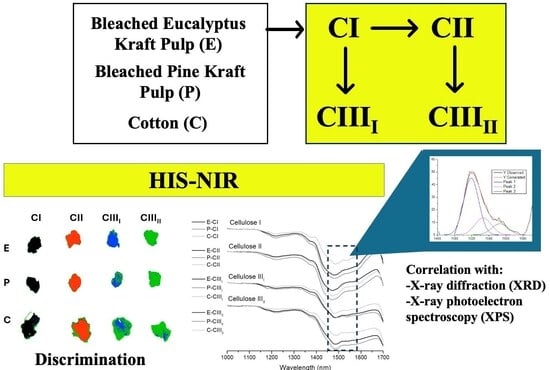
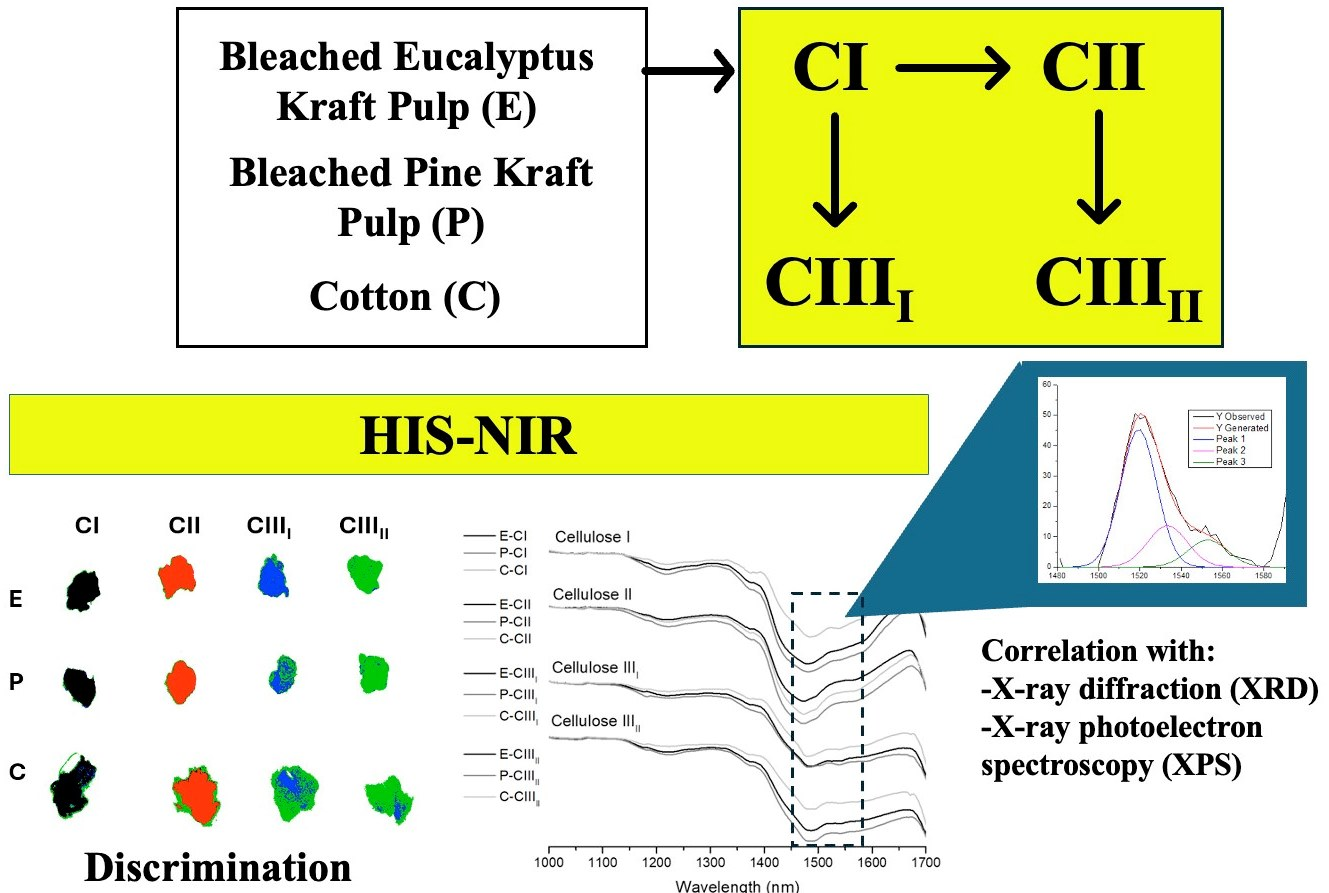
Graphical Abstract

1. Introduction

Cellulose is a homopolysaccharide abundant in the cell walls of plants. It is found in a relatively pure native state in cotton fibers. The polymeric structure of cellulose is based on linear chains of β-1,4-linked glucose residues, with a typical degree of polymerization ranging from 50 to 15,000 units, depending on the origin and treatments the cellulose has undergone [1,2]. At the supramolecular level, the structure of cellulose has crystalline and ‘amorphous’ regions. The crystalline regions are characterized by the formation of a repeating network of inter- and intramolecular hydrogen bonds, while the extended sheets formed through an expansion of these hydrogen-bonding contacts are further stabilized by van der Waals interactions, often referred to as ‘hydrophobic’ stacking planes. On the other hand, amorphous regions are poorly ordered regions with less regular interaction between the polymeric chains [3,4,5]. The reported percentages of crystalline versus amorphous material, as well as the size of the crystallites, are directly related to the cellulose source and physicochemical post-treatments. It has been reported that bleached kraft pulp samples from eucalyptus, which have smaller crystallites (4.5 nm), have reported lower crystallinity (60%) compared to those from pine, which have 5.0 nm crystallites and reported 65% crystallinity [6].
The crystalline structure of cellulose determines its accessibility to chemicals and enzymes and can be modified through changes in the rotational conformation of the -OH group on C6, resulting in a rearrangement of the molecular orientation and the network of intralaminar hydrogen bonds, which lead to the formation of different polymorphs, called cellulose I, II, III, and IV [3,7,8]. Cellulose I is the native polymorph in plants, characterized by parallel-packed chains [9]. This polymorph can be converted to cellulose II using a process called mercerization, with NaOH concentrations of between 8 and 12% (w/w) [10]. Most significantly, this induces a change in adjacent chain orientations, from parallel to antiparallel. This transformation is practically irreversible under typical processing conditions and induces changes in the intermolecular hydrogen bonding and increased space between chains [3,11,12]. These structural changes make the cellulose II-containing samples less crystalline, more accessible, and more reactive to subsequent treatments than the starting cellulose I-containing sample [13]. However, as the fibers dry, the interfibrillar spaces and other pores collapse, and the reactivity of cellulose II decreases [14].
Both polymorphs, cellulose I and II, can be converted to cellulose IIII and IIIII, respectively, by amine-based treatments such as liquid ammonia or ethylenediamine [15]. Ammonia and primary amines can incorporate themselves into the crystallite, mainly through hydrogen bonding, leaving the cellulose in an activated state and eventually inducing reorganization [16,17,18]. Conversion from cellulose I to cellulose II and III has been used as a strategy to activate cellulose fibers for chemical and enzymatic treatments [17,19,20].
Hyperspectral imaging (HSI) has recently emerged as a powerful extension of near-infrared (NIR) spectroscopy for the analysis of complex solid materials, providing both spectral and spatially resolved information in a single measurement. In contrast to conventional NIR spectroscopy, which yields only bulk-averaged spectra, HSI acquires a full spectrum at each pixel, enabling chemical imaging of heterogeneous samples and direct visualization of spatial gradients in composition and structure. This capability is particularly attractive for lignocellulosic materials, where the composition and structure of cellulose strongly influence reactivity, mechanical performance, and processability [21,22]. HSI presents a potential advantage for cellulose polymorph discrimination compared with other techniques, as it is non-destructive, fast, requires minimal sample preparation, offers the potential for spatial mapping of heterogeneity, and is suitable for industrial process control. By contrast, techniques such as XRD are non-destructive but require specific sample preparation, are time-consuming, and require expert analysis [23]. These methods complement each other: HSI serves as an initial screening tool, while XRD provides confirmation and precise quantification.
Therefore, we propose hyperspectral imaging based on NIR spectra as a rapid technique for the discrimination of cellulose I, II, IIII, and IIIII polymorphs, using three plant species commonly used for cellulose production: bleached kraft pulp of eucalyptus and pine and cotton linter fibers. Complementary techniques, namely X-ray diffraction (XRD) and X-ray photoelectron spectroscopy (XPS), were then applied to confirm the polymorph conversions and explain the structural and chemical changes observed by HSI-NIR.

2. Experimental

2.1. Material

Three types of raw materials were used; two were donated by a local pulp and paper company (Celulosa Arauco y Constitución S.A., Santiago, Chile): 1. Bleached eucalyptus kraft pulp (E), consisting of 80% Eucalyptus nitens and 20% E. globulus; 2. Bleached pine kraft pulp (P), consisting of Pinus radiata. The third sample is commercial zig-zag absorbent cotton (C) fibers purchased from a local supermarket (Hipermercado Tottus S.A., Concepción, Chile). The physicochemical properties (intrinsic viscosity and hemicellulose content) of the cellulose samples used in this work are presented in the Supplementary Information (Table S1).
The chemicals used in this work were sodium hydroxide pellets (≥99%), ethylendiamine for synthesis (≥99%), sulfuric acid solution (95–97%), potassium dichromate (≥99.9%), ammonium iron (II) sulfate hexahydrate (≤100%), and cupriethylendiamine (CED) solution (1 mol/L), all purchased from Sigma-Aldrich, St. Louis, MO, USA. Nanopure water (NPW) was used for treatment and solutions preparation, obtained by a Barnstead D4741 nanopure deionization system (Barnstead/Thermolyne Corp., Dubuque, IA, USA).

2.2. Preparation of Cellulose Polymorphs

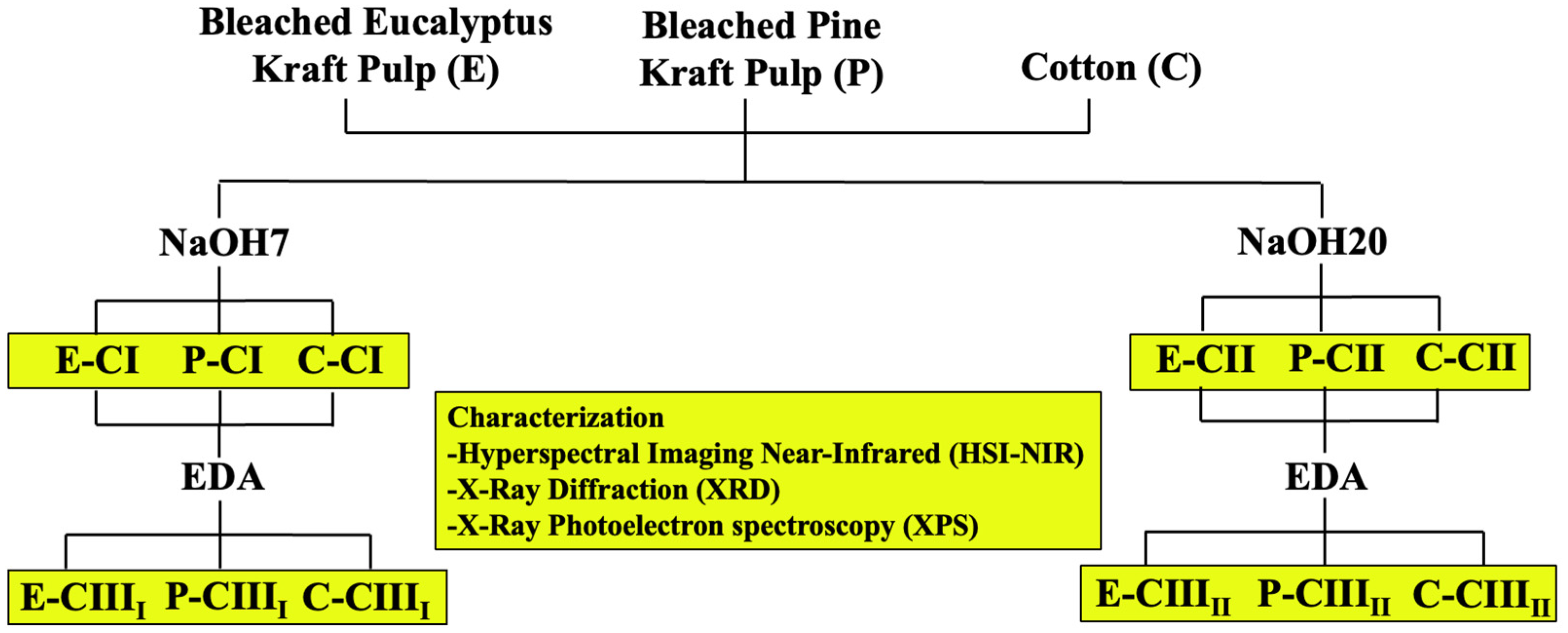
The alkali treatment with NaOH at 7% w/v was used to remove residual hemicellulose from the feedstock, coded as NaOH7. In addition, NaOH at 20% w/v (NaOH20) was used to convert cellulose I to II. The NaOH treatment experimental procedure was followed based on those used in previous works of the research group [6,24].
NaOH solutions of 7% and 20% (w/v) were prepared to treat pulp at 10% (w/v) consistency. The treatment was carried out in polyethylene bags immersed in a water bath at 30 °C for 1 h. At the end of the treatment, the pulp was filtered and washed with plenty of water until a pH of 6 was reached, then the excess water was wrung out until the consistency was close to 30% (w/v).
Cellulose I was converted to cellulose IIII and cellulose II to IIIII as follows. The fibers obtained from NaOH7 and NaOH20 were immersed in an ethylenediamine solution (≥99%) reaching a 10% (w/v) consistency and then allowed to stand for 24 h at room temperature. The obtained slurry was filtered and washed with anhydrous methanol until the pulp was free of the ammonia-like odor [25].
All cellulose polymorphs obtained from the different species are coded as shown in Table 1.

2.3. Hyperspectral Imaging

The hyperspectral camera Pika IR+ (Resonon Inc., Bozeman, MT, USA), operable in the range from 900 to 1700 nm, with 336 spectral channels, spectral resolution of 5.6 nm, and reflectance mode, was used to obtain an image of each sample in the form of a 0.01 g pellet (1 cm in diameter approximately) shaped in a hydraulic press to obtain spectral information as data cubes (three-dimensional spectral data cubes with two spatial and one spectral dimension) using contrast (class Stretch) as a filter tool and RGB (class TriBand) as a rendering tool. The analysis was performed using the software Spectronon Pro version 3.5.8 (Resonon Inc., Bozeman, MT, USA), where the hyperspectral cubes were obtained by selecting the entire surface of each sample. Spectra were subjected to discriminant analysis, with models trained on selected pixels from each cellulose polymorph. PeakFit software version 4.12 (Systat Software Inc., San Jose, CA, USA) was used for curve fitting to identify individual Gaussian peaks. Spectral normalization, differential analysis, and principal component analysis were performed using OriginLab software version 9.0.0 (Origin Lab Corporation, Northampton, MA, USA).

2.4. X-Ray Diffraction and X-Ray Photoelectron Spectroscopy

The effect of treatments on the crystalline cellulose was studied using XRD. Samples were prepared by pressing 50 mg of freeze-dried samples in a hydraulic press to form pellets. The pellets were placed in a sample holder, and X-ray diffractograms were recorded after mounting the sample holder on a D4 Endeavor X-ray diffractometer (Bruker AXS GmbH, Karlsruhe, Germany) using monochromatic Cu Kα radiation (λ = 0.154 nm) at 40 kV and 20 mA. Intensities were measured in the range 5° < 2θ < 45° with scan steps of 0.02°. Curve fitting was performed using PeakFit software version 4.12 (Systat Software Inc., San Jose, CA, USA) to identify individual peaks. In all cases, the F-number was >45,000 (r2 > 0.99). The crystallinity index (CrI) of the samples was calculated through peak-fitting, according to Equation (1) [23,26]:
C r I   ( % ) = A c r y s t A T o t a l × 100
where Acryst is the sum of crystalline band areas, and ATotal is the total area under the diffractogram.
From the sum of peak area of the same crystal system (ΣACI for cellulose I, ΣACII for cellulose II, ΣACIIII and ΣACIIIII), cellulose I, II, IIII and IIIII percentages were calculated using Equations (2), (3), (4), and (5), respectively [26]
C e l l u l o s e   I   ( % ) = A C I   A A C I + A C I I × C r I
C e l l u l o s e   I I   ( % ) = A C I I   A A C I + A C I I × C r I
C e l l u l o s e   I I I I   ( % ) = A C I I I I   A A C I + A C I I I I × C r I
C e l l u l o s e   I I I I I   ( % ) = A C I I I I I   A A C I I + A C I I I I I × C r I
The lateral crystallite size (L) was calculated from the Scherrer Equation (6) [27]
L = k   ×   λ   β × cos θ
where L is the size of the crystallite (nm), k is the Scherrer constant (0.96), λ is the X-ray wavelength, β is the full-width half-maximum (FWHM) of the (200) in cellulose I, (020) in cellulose II, (100/012/1–10) in cellulose IIII and cellulose IIIII (100/1–10) reflection in radians, and θ is the Bragg angle of the respective characteristic reflection.
XPS analysis was performed on a FlexPS surface chemical analysis spectrometer equipped with an XR 50 (Al/Ag) dual-anode X-ray source, a FOCUS 500 monochromator, and a Phoibos 150 hemispherical analyzer (SPECS, Berlin, Germany). The samples were analyzed using an aluminum anode with Kα radiation at 1486.71 eV. The deconvolution of the 1s carbon peak into Gaussian components was performed in the PeakFit software version 4.12 (Systat Software Inc., San Jose, CA, USA). Figure 1 shows a schematic overview of the methodological workflow for cellulose polymorph preparation and characterization.

3. Results and Discussion

3.1. NIR Hyperspectral Imaging

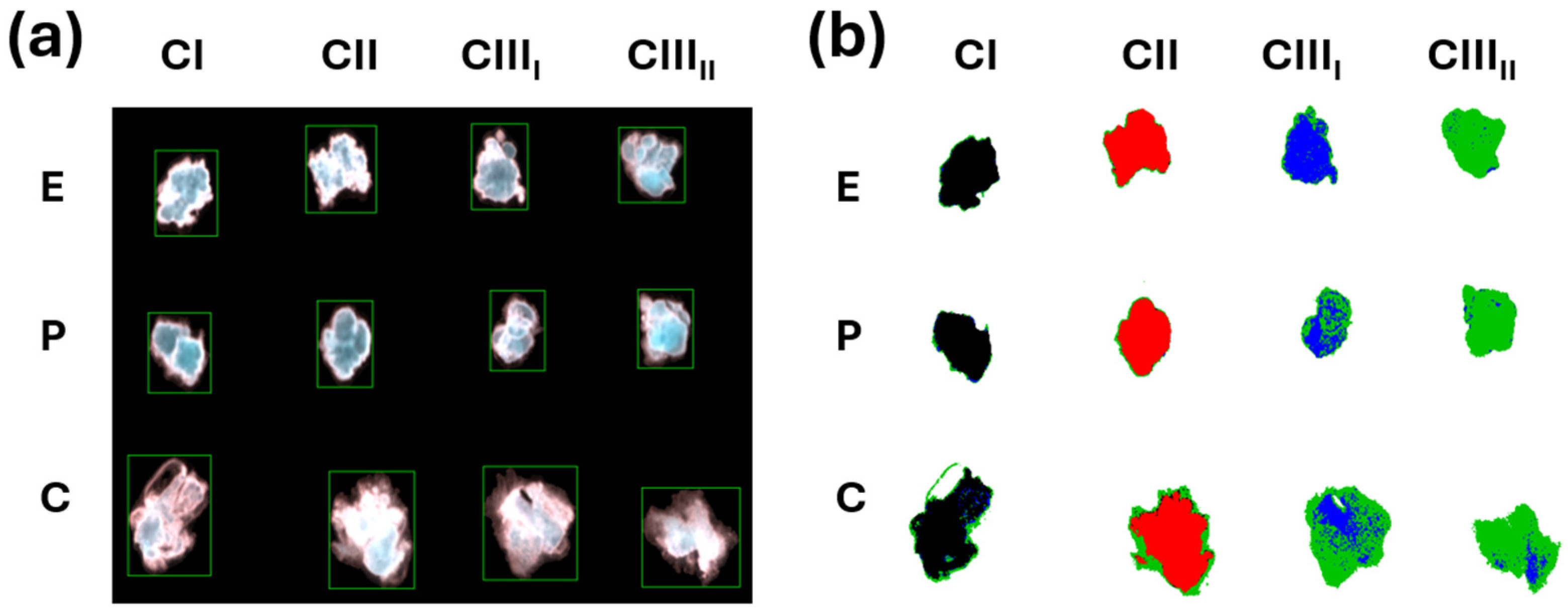
To determine whether NIR hyperspectral imaging could discriminate between polymorphs, pellets made from cellulose I, II, IIII, and IIIII of eucalyptus, pine, and cotton fibers were placed in the NIR hyperspectral camera to generate RGB images shown in Figure 2. The background was first removed to avoid interfering with the analysis (Figure 2a). Then, the eucalyptus polymorph samples were stored as cubes and used to create predictive models to identify the pine and cotton polymorphs through linear discriminant analysis. The proof-of-concept of the classification of the polymorph using three botanical species, based on NIR images, resulted in colormap classes shown in Figure 2b. The colormap demonstrates successful identification of polymorphs by showing cellulose I in black, cellulose II in red, and cellulose III in a mixture of blue and green, regardless of the species used.
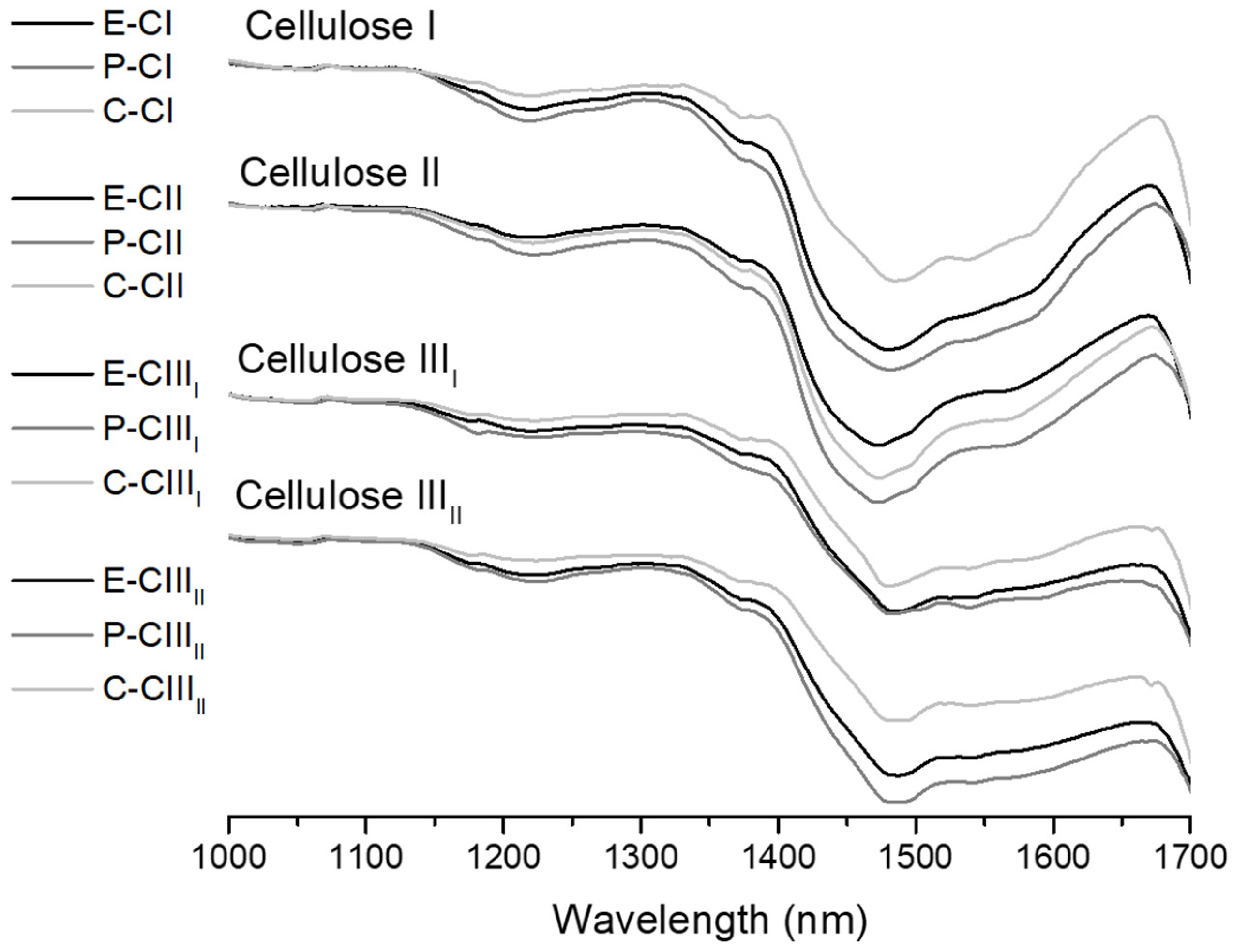
The spectral reflectance obtained from the RGB images of the cellulose I, II, IIII, and IIIII samples, from eucalyptus, pine, and cotton, is shown in Figure 3. As in the linear discriminant classification colormap, the samples present different structures between the polymorphs observed from 1460 nm to 1700 nm.
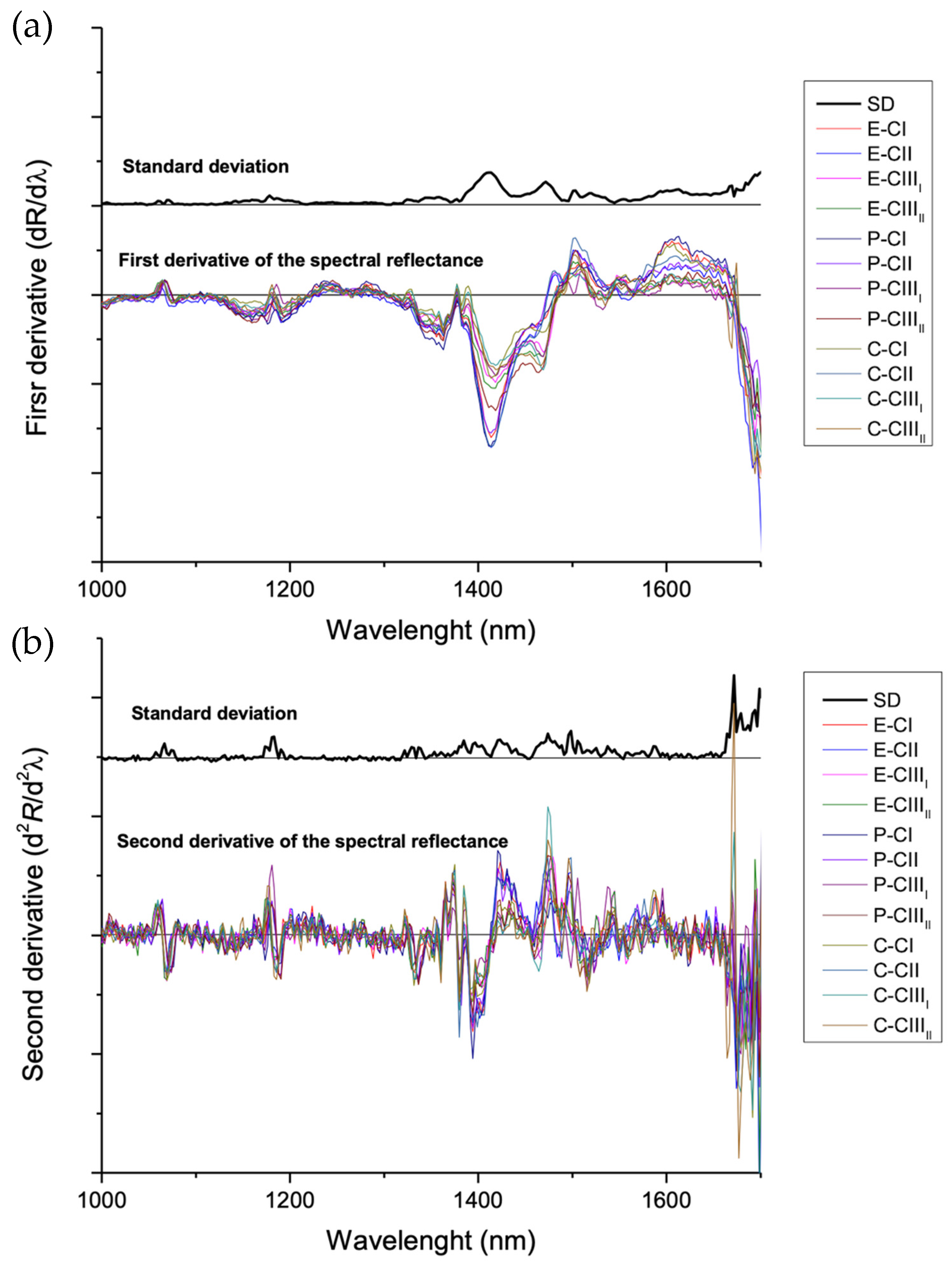
Initially, to identify the most important regions to analyze for distinguishing the cellulose polymorphs and separating them from the noise regions, differential analysis of the first (Figure 4a) and second derivatives (Figure 4b) of the NIR spectra was generated. The significant differences between the polymorph samples are expressed as peaks with higher or lower intensity in the 1375–1600 nm region. Specifically, the 1375–1480 nm region is mainly associated with the first overtones and combination vibrations of C–H stretching in cellulose and O-H stretching due to water adsorption [28]. The wavelength interval from 1480 to 1600 nm likely reflects shifts in the local hydrogen-bonding network, indicating differences in the supramolecular arrangement of the polymorphic forms of cellulose [29]. These last-mentioned regions were selected for principal component analysis (PCA) to emphasize the chemically relevant information while minimizing the influence of spectrally less informative or noisier regions.
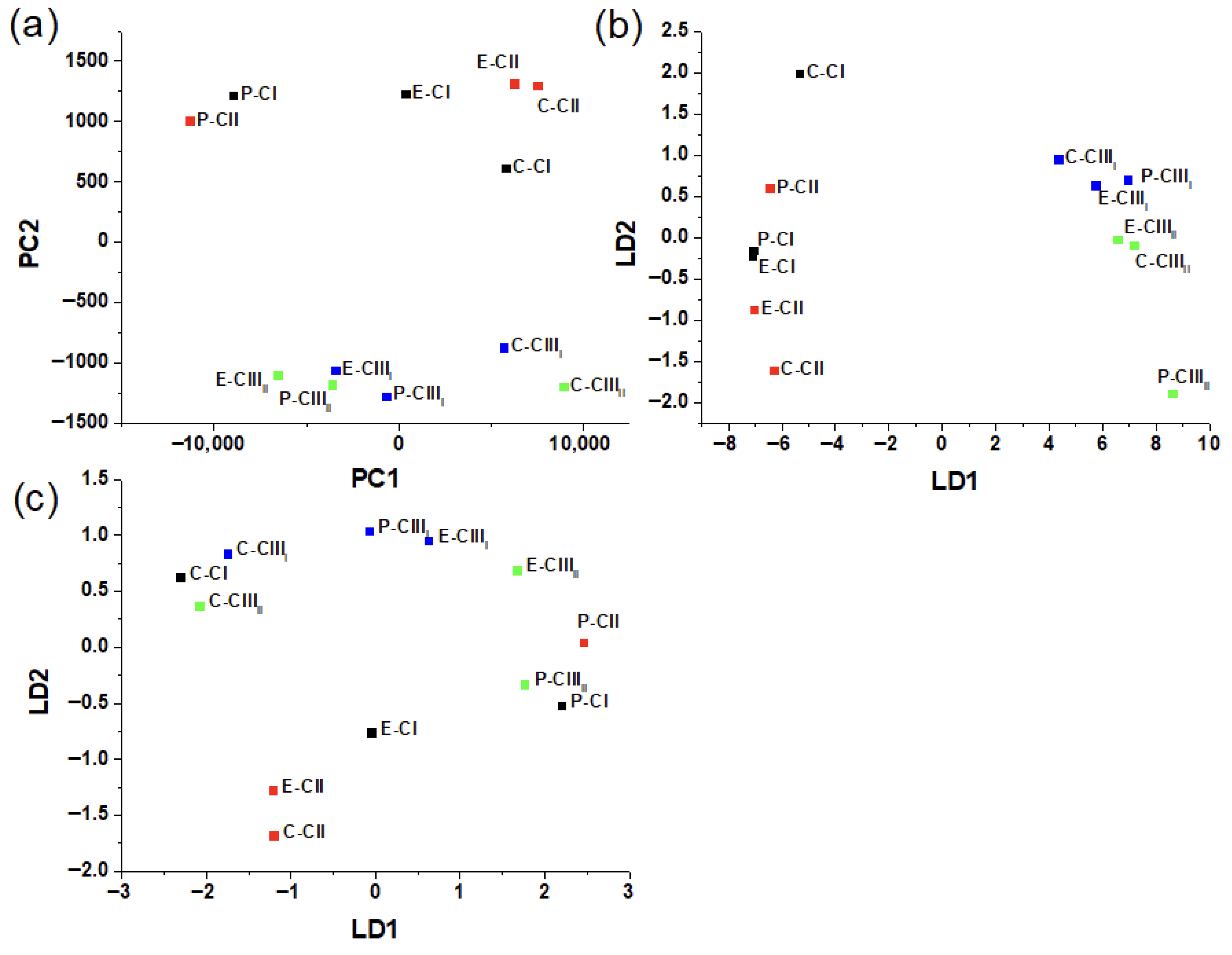
The PCA performed on the 1480–1600 nm spectral interval is shown in Figure 5a. The cellulose samples form well-defined clusters that are clearly separated along PC1 and PC2, indicating that this wavelength range captures systematic spectral variance related to differences in hydrogen-bonding networks and crystalline packing, confirming that the structural changes between polymorphs are most prominently expressed in this region. The graph revealed two principal groups, one where cellulose I and II are relatively close to each other, and the other group where cellulose IIII and IIIII are together. This behavior can be explained as cellulose I and II, despite their different chain packing, sharing similar types of intra- and inter-chain O–H hydrogen bonds. In contrast, cellulose III, produced by ammonia/amine treatment, presents a distinct unit cell and a substantially rearranged hydrogen-bonding network. When PCA is followed by discriminant analysis (PCA-DA) using the polymorph label (Figure 5b), the phenomenon of aggregation persists, but the spectral differences become clearer as cellulose IIII and IIIII get more separated. Conversely, PCA-DA built with the botanical species (Figure 5c) as the class variable shows a more limited separation, indicating that in this spectral region, the variance associated with cellulose polymorphism is stronger and more structured than the differences linked to species.
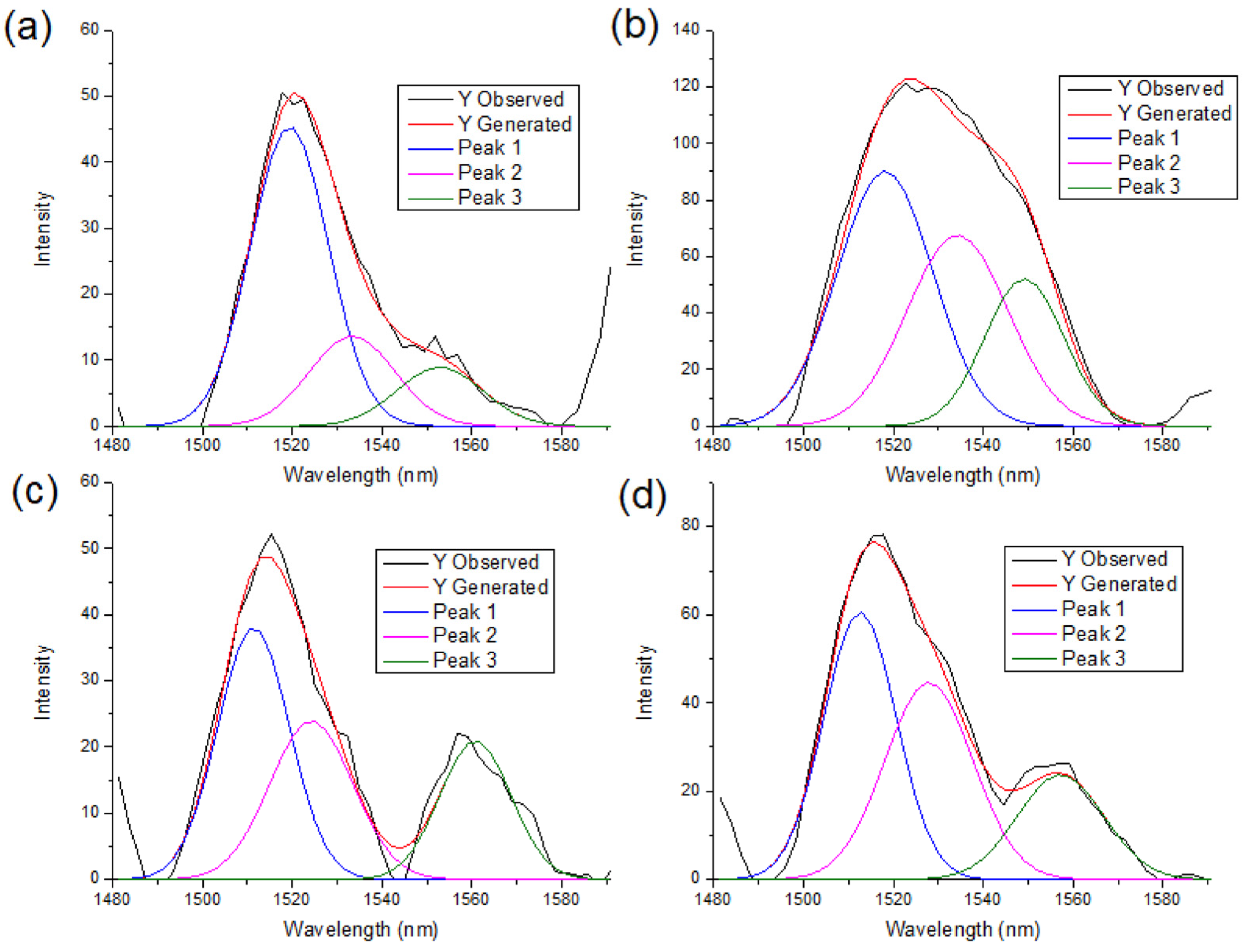
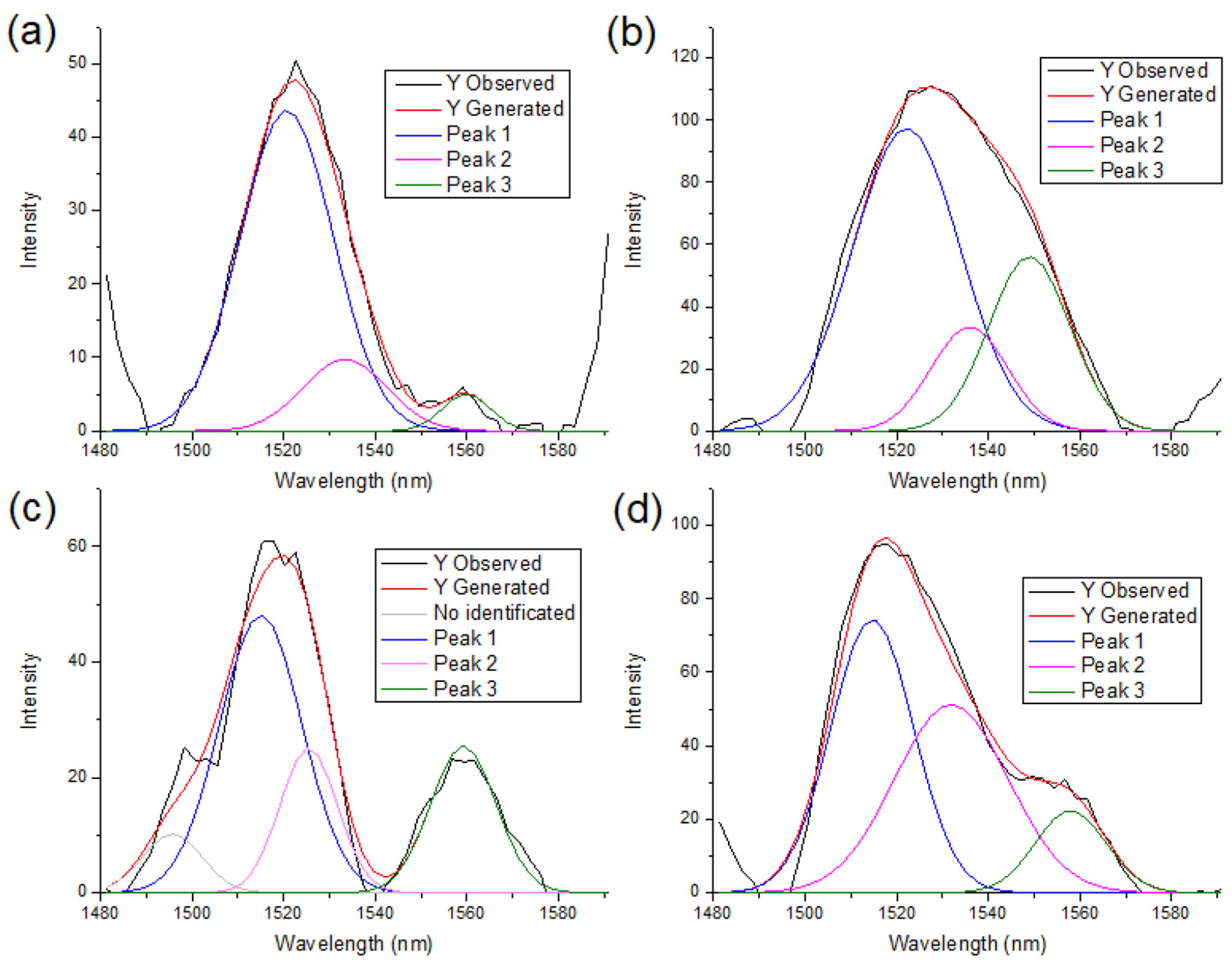
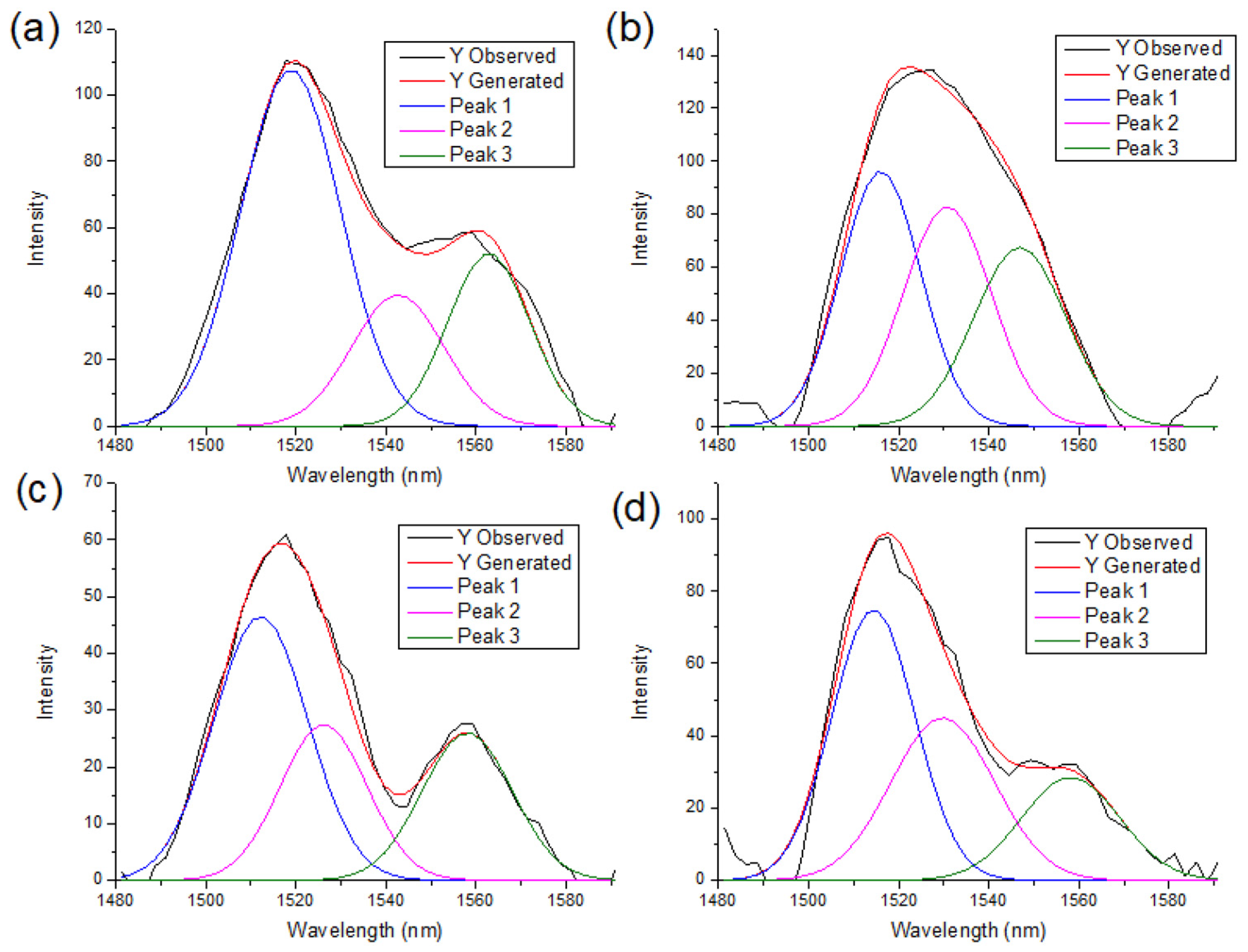
A deconvolution of the NIR spectra between the 1480–1600 nm region is presented in Figure 6, Figure 7 and Figure 8. For all polymorph samples, three principal peaks are identified, showing a consistent pattern across the three species, with the P-CIIII (Figure 7c) sample being the only exception, presenting a peak at 1495 nm that does not fit in the polymorph structure.
The peak area percentage in Table 2 proves the dominance of Cellulose I by Peak 1, whereas conversion to cellulose II and III progressively decreases the relative intensity of Peak 1 and increases the contributions of Peaks 2 and 3, indicating a redistribution of hydroxyl environments associated with polymorphic transformation.

3.2. X-Ray Diffraction

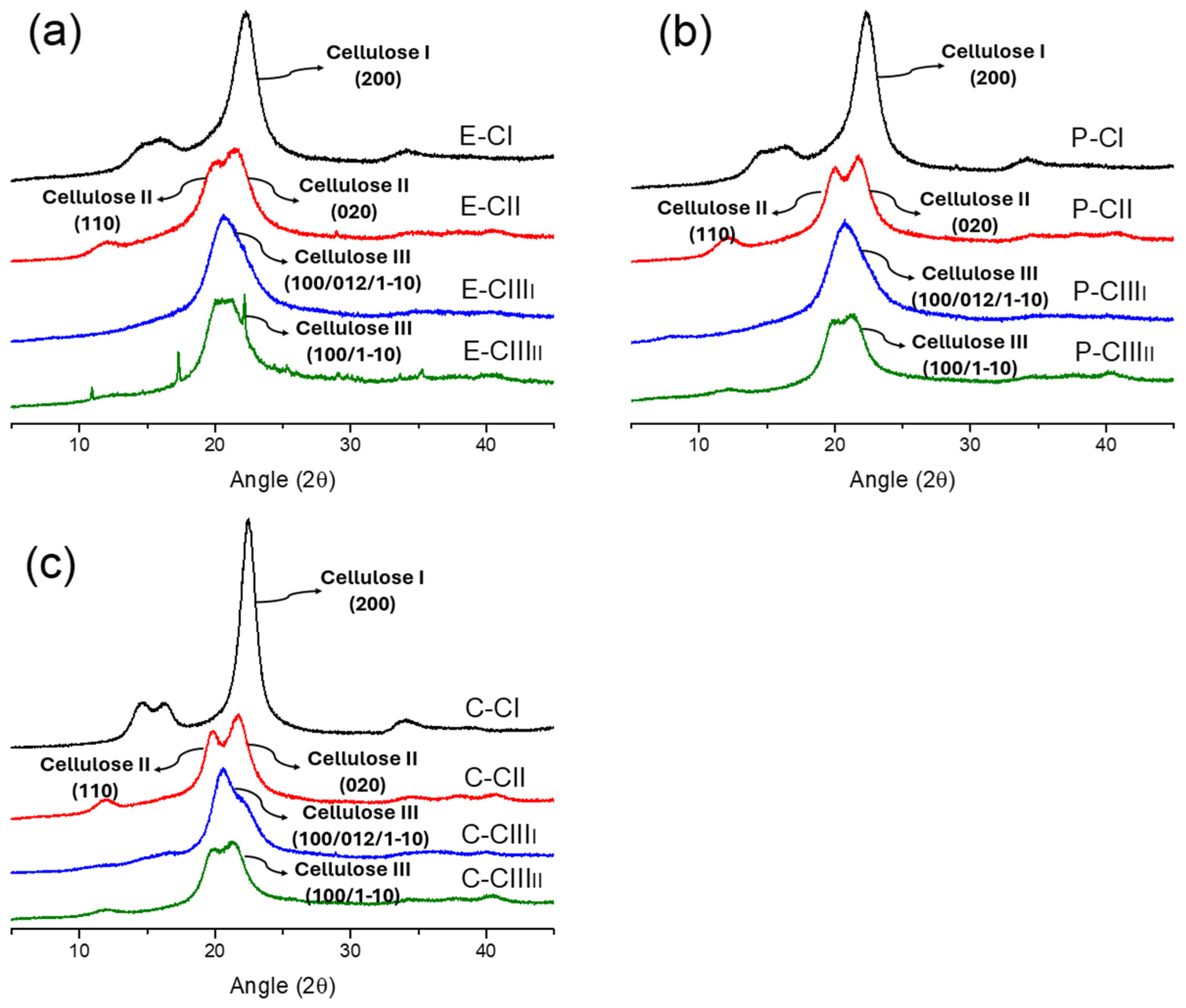
XRD is a traditional technique to confirm the presence of cellulose polymorphs. In this case, the samples from each polymorph used in the hyperspectral imaging analysis were used to confirm the XRD patterns of cellulose I, II, IIII, and IIIII (Figure 9). Cellulose I was found at 14.8°, 16.5°, and 22.3° 2θ reflections assigned to the Miller indices (1–10), (110), and (200), respectively. The 18.5° 2θ reflection is assigned to the amorphous phase, and the 34.5° 2θ reflection is assigned to the (004) plane [26,30]. The NaOH treatment was successful in producing the cellulose II arrangement in all cases, displaying at 12.2°, 20°, and 22° the Miller indices (1–10), (110), and (020) of the reflecting planes [6,30]. The EDA treatment caused the conversion of cellulose I to IIII and cellulose II to IIIII. In the EDA-treated samples, the main visible peak is at 20.8°, corresponding to the (100/012/1–10) Miller index cluster in cellulose IIII and (100/1–10) Miller index in cellulose IIIII [30,31]. The cotton sample also contained a residual peak contribution attributed to cellulose I (200) Miller index, indicating incomplete conversion from cellulose I. The incomplete conversion is also reflected in the RGB images subjected to linear discriminant analysis, showing a mixture of colors, especially in the samples of cotton cellulose III appearing more diffuse (Figure 2b).
Qin et al. [32] also showed a lack of complete conversion of cellulose I to IIII in corn stover samples soaked in 0.2–1 mL of EDA in a dry oven at 40–180 °C for a total of 40 min. The authors found that the treatment temperature and EDA loading influenced cellulose conversion. Higher loading decreased cellulose I content, while higher temperature from 20 °C to 100 °C decreased cellulose I content and resulted in higher cellulose IIII contents, i.e., less amorphous content. Increasing the temperature above 100 °C may lead to reorganization of the cellulose lattice, causing a reconversion to cellulose I. Taking this into account, the cotton pulp fiber morphology and higher molecular weight may make it less accessible to treatment with EDA. Therefore, to achieve a complete conversion of the cotton samples, it would be advisable to use EDA treatment at a higher temperature, without exceeding 100 °C. However, the potential effect on molecular weight reduction should also be considered.
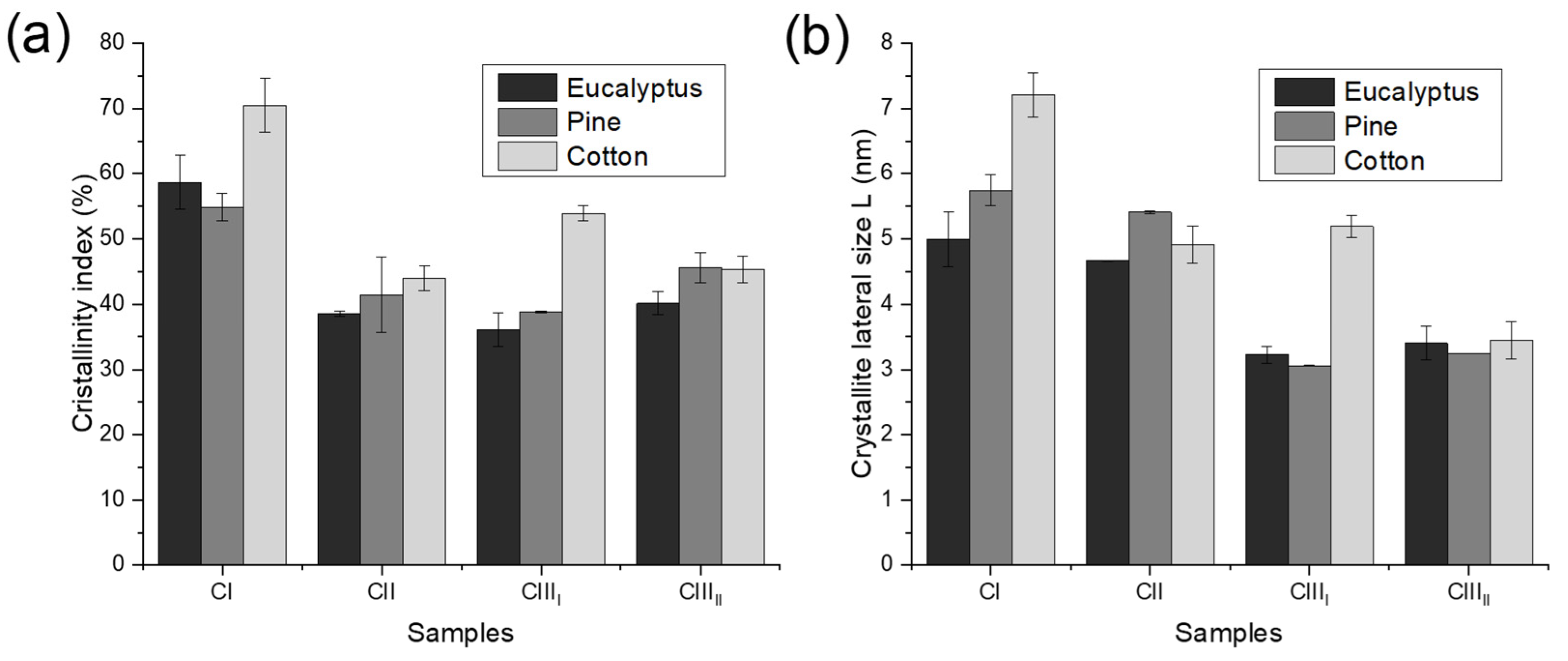
The crystallinity index (CrI) values after treatment (Figure 10a) clearly show similar behavior regardless of species. The conversion of cellulose I, to either cellulose II or IIII, resulted in a similar decrease in crystallinity between species. However, when cellulose II was converted to cellulose IIIII, the crystallinity remained unchanged, suggesting that prior strong alkaline treatment renders the crystalline regions more resistant to further reduction.
Figure 10b shows the change in lateral crystallite size (L) depending on the cellulose polymorph. All samples demonstrate decreases in L upon treatment. Undoubtedly, the most interesting change was seen in the cotton sample, which has the largest native C-CI L size (7.2 nm). This markedly decreased upon conversion to C-CII (4.9 nm), reaching the same size as those of the eucalyptus and pine samples, which had lower native L values. This may be related to the high purity of the cotton. The absence of hemicellulose may allow the sodium hydroxide to disrupt and break the cellulose chains more effectively, making them more amorphous. In the C-CI to C-CIIII conversion, the cotton sample could not repeat the same phenomenon, which, although it resulted in a decrease, was not enough to reach the L of the other samples. In the case of the C-CIIIII samples, although the conversion from cellulose II to cellulose IIIII does not decrease its crystallinity, it does reduce their crystallite lateral size, apparently by decomposition processes. All the species achieved a similar L, ranging from 3.246 to 3.4 nm.

3.3. X-Ray Photoelectron Spectroscopy

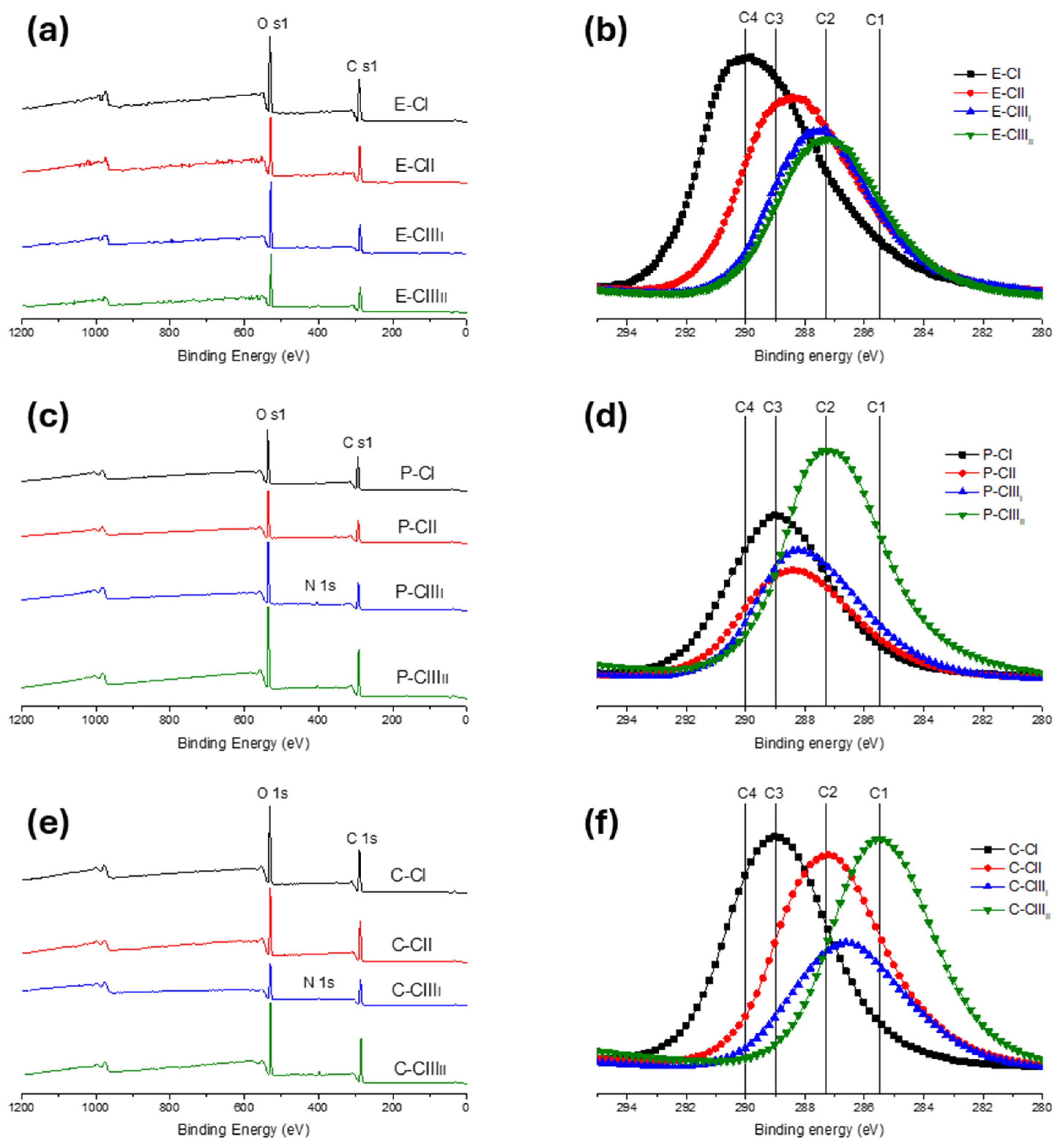
The differences in the concentration of elements present on the surface of the pulps were investigated using XPS. Figure 11 presents the XPS spectra of eucalyptus (Figure 11a), pine (Figure 11c), and cotton (Figure 11e) polymorph, showing the O 1s and C 1s peak characteristic of pure cellulose. In ethylenediamine-treated pine and cotton samples, a new peak appears at 400 eV, corresponding to nitrogen (N 1s) attributed to residual EDA [33]. The deconvoluted C1s XPS signals of each sample are shown in Figure 11b,d,f. The spectra were fitted in 285.5 eV, 287.3 eV, 289 eV, and 290 eV attributed to C1 (C-C), C2 (C-O), C3 (C=O), and C4 (COOH) [34].
The surface composition resulting from the deconvolution of C 1s is shown in Table 3. The C1 peak, corresponding to C-H/C-C, was observed to increase for all conversions: CI to CII conversion showed an increase of 11% in eucalyptus, 4.5% in pine, and 15% in cotton; CI to CIIII conversion showed an increase of 19.7%, 9.2%, and 22.5% in eucalyptus, pine, and cotton; and the CII to CIIIII conversion showed an increase of 11.1%, 8.2%, and 68.5% for eucalyptus, pine and cotton. The same increasing trend was observed for C2 (C-O) in eucalypts, pine, and cotton samples in the conversion from CI to CII, changing from 14.6% to 30% in eucalypt samples, 21.3% to 31.1% in pine, and, in a higher way, cotton samples changed from 20% to 80.2%. The CI to CIIII and CII to CIIIII of eucalyptus increased by 37.2% and 23.6%, and in pine by 17.6% and 51%. While cotton samples presented a different behavior in CIII, in CI to CIIII increased by 60.2%, but in CII to CIIIII conversion, the content decreased from 72% to 11.7%.
C3 content (C=O; carbonyl) increased slightly by 4.7% in pine and eucalyptus during the conversion of CI to CII but decreased or became undetectable in the conversion to CIII, consistent with structural reorganization of cellulose. This result clarifies the differences in the exposure of the elements in the surfaces of the polymorph fibers, considering that the absence of C3 means that the element is not exposed.
As noted earlier, cellulose III presented an absence of C4 corresponding to COOH, while cellulose I showed the highest content, with pine and cotton showing 27.7% and eucalyptus pulp showing 44.3%. The COOH content in cellulose I is mainly explained by the different chemical processes, such as pulping and bleaching, which can lead to the oxidation of cellulose hydroxyl groups to carbonyls and then to carboxyl groups, especially in alkaline conditions [35,36,37]. Eucalyptus showed a higher COOH content due to residual xylan after NaOH7, confirmed by S18 (Table S1). When the alkali concentration was increased to 20% (NaOH20), the C4 decreased by 31.3%, due to xylan extraction, as their carboxyl groups make the molecule more soluble in sodium hydroxide solutions [38,39]. On the other hand, since cotton linters should be naturally free of COOH groups, the presented content would only be explained by the oxidation of the cellulose by the NaOH7 treatment; this effect was not observed with a higher NaOH20. In cellulose III, the increase in C1 and C2 content and the decrease in C4 are explained by the induction of EDA groups, which replace the COOH present in the cellulose and introduce more C-C bonds [40,41].
The HSI-NIR, XRD, and XPS results were compiled and analyzed using Pearson correlation analysis (Table 4). Peak 1 showed a moderate positive correlation with CrI and L, while being negatively correlated with the HSI-NIR deconvoluted Peak 3, indicating that a higher contribution of Peak 1 is associated with more ordered cellulose structures. In contrast, Peak 2 is positively correlated with the XPS C2% and strongly negatively correlated with the C3% component, which are assigned to carbon atoms bound to oxygen, suggesting that these NIR bands are sensitive to changes in surface hydroxyl and ether/acetals groups rather than to crystallinity. Overall, these results demonstrate that Peak 1 tracks crystallinity as determined by XRD, whereas Peaks 2–3 are more closely linked to the surface chemical state revealed by XPS. In summary, HSI-NIR provides a significantly faster alternative for accurate cellulose polymorph identification, requiring only 5–10 min per sample for spectral acquisition and discriminant analysis, in contrast to the hours needed for combined XRD (1–2 h) and XPS (30–60 min), not counting sample preparation and peak analysis time. While HSI-NIR is effective across polymorphs regardless of botanical origin, its sensitivity to detect subtle differences between cellulose types from different sources remains lower than that of XRD or XPS.

4. Conclusions

In this work, we demonstrated that near-infrared hyperspectral imaging, combined with chemometric analysis, enables rapid and non-destructive discrimination of cellulose I, II, IIII, and IIIII polymorphs in fibers derived from eucalyptus and pine kraft pulps and cotton linters. The 1480–1600 nm region of the NIR-HSI spectra provided a spectral fingerprint capable of separating polymorphs independently of botanical origin, consistent with the hydrogen-bonding rearrangements confirmed by XRD and XPS. Specifically, XRD was used as a traditional technique to confirm the expected polymorphic conversions, as well as to identify changes in crystallinity index and crystallite size upon transformation from cellulose I to II and III, while XPS indicated increased surface C-O functionality and loss of carboxyl groups in cellulose III, evidencing enhanced hydroxyl accessibility. Together, these results establish NIR-HSI as a powerful screening tool that can complement conventional diffraction and surface analysis techniques, offering a practical route to monitor cellulose polymorphism and associated changes in structure and reactivity in future cellulose-based material applications.

Supplementary Materials

The following supporting information can be downloaded at: https://www.mdpi.com/article/10.3390/polym18091047/s1.

Author Contributions

I.R.-G., I.C.-V., and R.T.M. performed the work proposal and experimental design. I.R.-G., N.R.C., and L.R.-A. performed experimental work. I.R.-G., I.C.-V., P.R.-C., R.d.P.C., A.W.T.K., F.V., and R.T.M. performed data analysis and data discussion. I.R.-G., I.C.-V., A.W.T.K., and R.T.M. wrote the main manuscript. All authors have read and agreed to the published version of the manuscript.

Funding

This study was funded by FONDECYT-ANID Chile, grants No. 1231086 (R.T. Mendonça), No. 11230037 (I. Carrillo-Varela), No. 11251136 (F. Valdebenito) and No. 995576/Folio 21241995 (I. Reyes-González).

Institutional Review Board Statement

The article does not include human participants and/or animal research.

Data Availability Statement

The original contributions presented in this study are included in the article. Further inquiries can be directed to the corresponding author.

Acknowledgments

The authors thank the use of the hyperspectral camera Pika IR acquired by the project FONDEQUIP 230094. The authors also thank GEA-UdeC for the provision of facilities and technical support for XRD analysis, and to Centro UC for the analysis by XPS which equipment was acquired by the FONDEQUIP EQM 170087 project.

Conflicts of Interest

Author Isabel Carrillo-Varela was employed by the company Bioforest SpA. Author Alistair W. T. King was employed by the company VTT Technical Research Centre of Finland Ltd. The remaining authors declare that the research was conducted in the absence of any commercial or financial relationships that could be construed as a potential conflict of interest.

References

  1. Hallac, B.B.; Ragauskas, A.J. Analyzing cellulose degree of polymerization and its relevancy to cellulosic ethanol. Biofuels Bioprod. Biorefin. 2011, 5, 215–225. [Google Scholar] [CrossRef]
  2. French, A.D. Glucose, not cellobiose, is the repeating unit of cellulose and why that is important. Cellulose 2017, 24, 4605–4609. [Google Scholar] [CrossRef]
  3. Gautam, S.P.; Bundela, P.S.; Pandey, A.K.; Jamaluddin, J.; Awasthi, M.K.; Sarsaiya, S.J. A review on systematic study of cellulose. J. Appl. Nat. Sci. 2010, 2, 330–343. [Google Scholar] [CrossRef]
  4. Wohlert, M.; Benselfelt, T.; Wågberg, L.; Furó, I.; Berglund, L.A.; Wohlert, J. Cellulose and the role of hydrogen bonds: Not in charge of everything. Cellulose 2022, 29, 1–23. [Google Scholar] [CrossRef]
  5. Etale, A.; Onyianta, A.J.; Turner, S.R.; Eichhorn, S.J. Cellulose: A review of water interactions, applications in composites, and water treatment. Chem. Rev. 2023, 123, 2016–2048. [Google Scholar] [CrossRef] [PubMed]
  6. Carrillo-Varela, I.; Vidal, C.; Vidaurre, S.; Parra, C.; Machuca, Á.; Briones, R.; Teixeira, R.M. Alkalization of kraft pulps from pine and eucalyptus and its effect on enzymatic saccharification and viscosity control of cellulose. Polymers 2022, 14, 3127. [Google Scholar] [CrossRef]
  7. Isogai, A.; Usuda, M.; Kato, T.; Uryu, T.; Atalla, R.H. Solid-state CP/MAS carbon-13 NMR study of cellulose polymorphs. Macromolecules 1989, 22, 3168–3172. [Google Scholar] [CrossRef]
  8. Kim, S.H.; Lee, C.M.; Kafle, K. Characterization of crystalline cellulose in biomass: Basic principles, applications, and limitations of XRD, NMR, IR, Raman, and SFG. Korean J. Chem. Eng. 2013, 30, 2127–2141. [Google Scholar] [CrossRef]
  9. Nishiyama, Y.; Langan, P.; Chanzy, H. Crystal structure and hydrogen-bonding system in cellulose Iβ from synchrotron X-ray and neutron fiber diffraction. J. Am. Chem. Soc. 2002, 124, 9074–9082. [Google Scholar] [CrossRef]
  10. Ling, Z.; Chen, S.; Zhang, X.; Xu, F. Exploring crystalline-structural variations of cellulose during alkaline pretreatment for enhanced enzymatic hydrolysis. Bioresour. Technol. 2017, 224, 611–617. [Google Scholar] [CrossRef]
  11. Pérez, S.; Mazeau, K. Conformations, structures, and morphologies of celluloses. In Polysaccharides: Structural Diversity and Functional Versatility; Marcel Dekker: New York, NY, USA, 2005; pp. 41–68. [Google Scholar]
  12. Banvillet, G.; Depres, G.; Belgacem, N.; Bras, J. Alkaline treatment combined with enzymatic hydrolysis for efficient cellulose nanofibrils production. Carbohydr. Polym. 2021, 255, 117383. [Google Scholar] [CrossRef]
  13. Gehmayr, V.; Sixta, H. Pulp properties and their influence on enzymatic degradability. Biomacromolecules 2012, 13, 645–651. [Google Scholar] [CrossRef] [PubMed]
  14. Mo, W.; Chen, K.; Yang, X.; Kong, F.; Liu, J.; Li, B. Elucidating the hornification mechanism of cellulosic fibers during the process of thermal drying. Carbohydr. Polym. 2022, 289, 119434. [Google Scholar] [CrossRef] [PubMed]
  15. Ling, Z.; Tang, W.; Su, Y.; Huang, C.; Lai, C.; Kirui, A.; Wang, T.; French, A.D.; Yang, Q. Stepwise polymorphic transformations by alkaline and ethylenediamine treatments on bamboo crystalline cellulose for enhanced enzymatic digestibility. Ind. Crop Prod. 2022, 177, 114450. [Google Scholar] [CrossRef]
  16. da Silva Perez, D.; Montanari, S.; Vignon, M.R. TEMPO-mediated oxidation of cellulose III. Biomacromolecules 2003, 4, 1417–1425. [Google Scholar] [CrossRef]
  17. Mittal, A.; Katahira, R.; Himmel, M.E.; Johnson, D.K. Effects of alkaline or liquid-ammonia treatment on crystalline cellulose: Changes in crystalline structure and effects on enzymatic digestibility. Biotechnol. Biofuels 2011, 4, 41. [Google Scholar] [CrossRef]
  18. Ioelovich, M. Preparation, characterization and application of amorphized cellulose—A review. Polymers 2021, 13, 4313. [Google Scholar] [CrossRef]
  19. Igarashi, K.; Wada, M.; Samejima, M. Activation of crystalline cellulose to cellulose IIII results in efficient hydrolysis by cellobiohydrolase. FEBS J. 2007, 274, 1785–1792. [Google Scholar] [CrossRef]
  20. Sousa, L.D.C.; Humpula, J.; Balan, V.; Dale, B.D.; Chundawat, S.P.S. Impact of ammonia pretreatment conditions on the cellulose III polymorph ultrastructure and its enzymatic digestibility. ACS Sustain. Chem. Eng. 2019, 7, 14411–14424. [Google Scholar] [CrossRef]
  21. Feng, X.; Yu, C.; Liu, X.; Chen, Y.; Zhen, H.; Sheng, K.; He, Y. Nondestructive and rapid determination of lignocellulose components of biofuel pellet using online hyperspectral imaging system. Biotechnol. Biofuels 2018, 88, 2–11. [Google Scholar] [CrossRef]
  22. Mäkelä, M.; Altgen, M.; Belt, T.; Rautkari, L. Hyperspectral imaging and chemometrics reveal wood acetylation on different spatial scales. J. Mater. Sci. 2021, 56, 5053–5066. [Google Scholar] [CrossRef]
  23. Park, S.; Baker, J.O.; Himmel, M.E.; Parilla, P.A.; Jonhson, D.K. Cellulose crystallinity index: Measurement techniques and their impact on interpreting cellulase performance. Biotechnol. Biofuels 2010, 3, 10. [Google Scholar] [CrossRef]
  24. Reyes-González, I.; Carrillo-Varela, I.; Mazega, A.; Tarrés, Q.; Delgado-Aguilar, M.; Teixeira, R.M. Chemo-enzymatic pre-treatment of eucalyptus kraft pulp for phosphorylated nanocellulose production. Cellulose 2024, 31, 10931–10949. [Google Scholar] [CrossRef]
  25. Ciolacu, D.; Pitol-Filho, L.; Ciolacu, F. Studies concerning the accessibility of different polymorphic forms of cellulose. Cellulose 2012, 19, 55–68. [Google Scholar] [CrossRef]
  26. Carrillo-Varela, I.; Retamal, R.; Pereira, M.; Teixeira, R.M. Structure and reactivity of cellulose from bleached kraft pulps of different Eucalyptus species upgraded to dissolving pulp. Cellulose 2019, 26, 5731–5744. [Google Scholar] [CrossRef]
  27. Scherrer, P. Bestimmung der Grösse und der inneren Struktur von Kolloidteilchen mittels Röntgenstrahlen. Göttinger Nachrichten Gesell 1918, 2, 98–100. [Google Scholar]
  28. Schwanninger, M.; Rodrigues, J.C.; Fackler, K. A review of band assignments in near infrared spectra of wood and wood components. J. Near Infrared Spectrosc. 2011, 19, 287–308. [Google Scholar] [CrossRef]
  29. Guo, F.; Altaner, C.M. Molecular deformation of wood and cellulose studied by near infrared spectroscopy. Carbohydr. Polym. 2018, 197, 1–8. [Google Scholar] [CrossRef] [PubMed]
  30. French, A.D. Idealized powder diffraction patterns for cellulose polymorphs. Cellulose 2014, 21, 885–896. [Google Scholar] [CrossRef]
  31. Manian, A.P.; Braun, D.E.; Široká, B.; Bechtold, T. Distinguishing liquid ammonia from sodium hydroxide mercerization in cotton textiles. Cellulose 2022, 29, 4183–4202. [Google Scholar] [CrossRef]
  32. Qin, L.; Li, W.C.; Zhu, J.Q.; Liang, J.N.; Li, B.Z. Ethylenediamine pretreatment changes cellulose polymorph and lignin structure of lignocellulose at ambient pressure. Biotechnol. Biofuels 2015, 8, 174. [Google Scholar] [CrossRef]
  33. Yang, Z.; Xu, M.; Liu, Y.; He, F.; Gao, F.; Su, Y.; Wei, H.; Zhang, Y. Nitrogen-doped, carbon-rich, highly photoluminescent carbon dots from ammonium citrate. Nanoscale 2014, 6, 1890–1895. [Google Scholar] [CrossRef] [PubMed]
  34. Cichosz, S.; Dems-Rudnicka, K.; Łapiński, M.; Jastrzębska, A.; Masek, A. Statistical evaluation of the changes in cellulose properties caused by the stepwise solvent exchange and esterification. Ind. Crops Prod. 2023, 203, 117118. [Google Scholar] [CrossRef]
  35. Röhrling, J.; Potthast, A.; Rosenau, T.; Lange, T.; Ebner, G.; Sixta, H.; Kosma, P. A novel method for the determination of carbonyl groups in cellulosics by fluorescence labeling. 1. Method Development. Biomacromolecules 2002, 3, 959–968. [Google Scholar] [CrossRef] [PubMed]
  36. Barbosa, L.C.; Maltha, C.R.; Demuner, A.J.; Cazal, C.M.; Reis, E.L.; Colodette, J.L. A rapid method for quantification of carboxyl groups in cellulose pulp. BioResources 2013, 8, 1043–1054. [Google Scholar] [CrossRef]
  37. Zaccaron, S.; Henniges, U.; Potthast, A.; Rosenau, T. How alkaline solvents in viscosity measurements affect data for oxidatively damaged celluloses. Cuoxam and Cadoxen. Carbohydr. Polym. 2020, 240, 116251. [Google Scholar] [CrossRef]
  38. Schild, G.; Sixta, H. Sulfur-free dissolving pulps and their application for viscose and lyocell. Cellulose 2011, 18, 1113–1128. [Google Scholar] [CrossRef]
  39. Quintana, E.; Valls, C.; Roncero, M.B. Dissolving-grade pulp: A sustainable source for fiber production. Wood Sci. Technol. 2024, 58, 23–85. [Google Scholar] [CrossRef]
  40. Bezerra, R.D.S.; Leal, R.C.; da Silva, M.S.; Morais, A.I.S.; Marques, T.H.C.; Osajima, J.A.; Meneguin, A.B.; Barud, H.D.S.; da Silva Filho, E.C. Direct modification of microcrystalline cellulose with ethylenediamine for use as adsorbent for removal amitriptyline drug from environment. Molecules 2017, 22, 2039. [Google Scholar] [CrossRef]
  41. Sheng, Z.; Qiuxiao, Z.; Tingting, W.; Xuchong, W.; Xiaoping, S.; Yuhe, W.; Lianxin, L. Contact electrification property controlled by amino modification of cellulose fibers. Cellulose 2022, 29, 3195–3208. [Google Scholar] [CrossRef]
Figure 1. Schematic overview of the methodological workflow for cellulose polymorph preparation and characterization.
Polymers 18 01047 g001
Figure 2. RGB images (a) without background and (b) subjected to linear discriminant classification, colormap.
Polymers 18 01047 g002
Figure 3. Spectral reflectance of cellulose I, II, IIII, and IIIII samples from eucalyptus, pine, and cotton.
Polymers 18 01047 g003
Figure 4. Differential analysis of (a) the first and (b) the second derivatives of the NIR spectra of cellulose I, II, IIII and IIIII polymorphs from eucalyptus, pine, and cotton.
Polymers 18 01047 g004
Figure 5. (a) PCA, (b) PCA-DA polymorphs, and (c) PCA-DA species.
Polymers 18 01047 g005
Figure 6. Deconvolution of peaks of eucalyptus samples in the 1480 to 1600 nm region. (a) E-CI; (b) E-CII; (c) E-CIIII; (d) E-CIIIII.
Polymers 18 01047 g006
Figure 7. Deconvolution of peaks of pine samples in the 1480 to 1600 nm region. (a) P-CI; (b) P-CII; (c) P-CIIII; (d) P-CIIIII.
Polymers 18 01047 g007
Figure 8. Deconvolution of peaks of cotton samples in the 1480 to 1600 nm region. (a) C-CI; (b) C-CII; (c) C-CIIII; (d) C-CIIIII.
Polymers 18 01047 g008
Figure 9. XRD diffractograms of cellulose I, II, IIII, and IIIII polymorphs from (a) eucalyptus, (b) pine, and (c) cotton.
Polymers 18 01047 g009
Figure 10. (a) CrI and (b) L of cellulose I (CI), cellulose II (CII), cellulose IIII (CIIII) and cellulose IIIII (CIIIII) from eucalyptus, pine, and cotton pulp.
Polymers 18 01047 g010
Figure 11. XPS spectra and C 1s identification peaks of cellulose I, II, IIII, and IIIII from (a,b) eucalyptus, (c,d) pine, and (e,f) cotton.
Polymers 18 01047 g011
Table 1. Treatment and labeling of cellulose I, II, IIII, and IIIII from fiber of eucalyptus, pine, and cotton.
.Treatments Sample Label
Eucalyptus Cellulose INaOH7E-CI
Eucalyptus Cellulose IINaOH20E-CII
Eucalyptus Cellulose IIIINaOH7 followed by EDAE-CIIII
Eucalyptus Cellulose IIIIINaOH20 followed by EDAE-CIIIII
Pine Cellulose INaOH7P-CI
Pine Cellulose IINaOH20P-CII
Pine Cellulose IIIINaOH7 followed by EDAP-CIIII
Pine Cellulose IIIIINaOH20 followed by EDAP-CIIIII
Cotton Cellulose INaOH7C-CI
Cotton Cellulose IINaOH20C-CII
Cotton Cellulose IIIINaOH7 followed by EDAC-CIIII
Cotton Cellulose IIIIINaOH20 followed by EDAC-CIIIII
Table 2. Peaks area percentage (%) from deconvolution of 1480 to 1600 nm region.
Sample LabelPeak 1 (%)Peak 2 (%)Peak 3 (%)
E-CI64.7421.3313.93
E-CII44.0734.8921.04
E-CIIII44.0731.9723.96
E-CIIIII42.4237.8319.75
P-CI79.415.924.68
P-CII59.5814.625.82
P-CIIII56.2320.3423.43
P-CIIIII45.4342.9111.66
C-CI57.5719.5622.87
C-CII36.2434.4329.33
C-CIIII48.1826.1125.71
C-CIIIII45.6733.9420.39
Table 3. XPS analysis of cellulose I, II, IIII, and IIIII from eucalyptus.
Sample LabelC1 (C-H/C-C) (%)
285 eV
C2 (C-O) (%)
287 eV
C3 (C=O) (%)
289 eV
C4 (COOH) (%)
290 eV
E-CI6.414.634.744.3
E-CII17.43039.613
E-CIIII26.151.822.1-
E-CIIIII28.553.518-
P-CI5.221.345.827.7
P-CII9.731.150.58.7
P-CIIII14.438.946.7-
P-CIIIII17.982.1--
C-CI4.82047.527.7
C-CII19.880.2--
C-CIIII27.372.7--
C-CIIIII88.311.7--
Table 4. Pearson correlations between HSI-NIR, XRD, and XPS results.
HSI-NIRXRDXPS
Peak 1 Peak 2 Peak 3 CrILC1%C2%C3%C4%
Peak 1 Pearson C.1−0.81603−0.628390.502780.48006−0.444−0.602330.609750.471
Sig.-0.001210.028640.095710.114210.148190.038210.108490.42328
Peak 2 Pearson C.−0.8160310.06314−0.44257−0.609310.446650.56051−0.82117−0.15943
Sig.0.00121-0.845430.149650.035450.145490.058010.012450.79787
Peak 3Pearson C.−0.628390.063141−0.27248−0.008860.16550.28565−0.04255−0.5577
Sig.0.028640.84543-0.391540.978190.607230.368110.920320.32867
CrIPearson C.0.50278−0.44257−0.2724810.78089−0.27729−0.316590.376760.70946
Sig.0.095710.149650.39154-0.002720.382910.316060.357580.17957
LPearson C.0.48006−0.60931−0.008860.780891−0.47316−0.315050.606930.13246
Sig.0.114210.035450.978190.00272-0.120270.318540.110590.83184
C1%Pearson C.−0.4440.446650.1655−0.27729−0.473161−0.0978−0.82504−0.62776
Sig.0.148190.145490.607230.382910.12027-0.762360.011690.25686
C2%Pearson C.−0.602330.560510.28565−0.31659−0.31505−0.09781−0.67753−0.98633
Sig.0.038210.058010.368110.316060.318540.76236-0.064870.00191
C3%Pearson C.0.60975−0.82117−0.042550.376760.60693−0.82504−0.677531−0.61087
Sig.0.108490.012450.920320.357580.110590.011690.06487-0.27374
C4%Pearson C.0.471−0.15943−0.55770.709460.13246−0.62776−0.98633−0.610871
Sig.0.423280.797870.328670.179570.831840.256860.001910.27374-
Disclaimer/Publisher’s Note: The statements, opinions and data contained in all publications are solely those of the individual author(s) and contributor(s) and not of MDPI and/or the editor(s). MDPI and/or the editor(s) disclaim responsibility for any injury to people or property resulting from any ideas, methods, instructions or products referred to in the content.