Article

Development of Remineralizing and Antibacterial Resin Coating for Provisional Crowns with Improved Bond Strength and Wear Resistance


1
Dental Biomedical Sciences PhD Program, Graduate School, University of Maryland, Baltimore, MD 21201, USA
2
Department of Biomaterials and Regenerative Dental Medicine, University of Maryland School of Dentistry, Baltimore, MD 21201, USA
3
Department of Restorative Dental Sciences, College of Dentistry, Imam Abdulrahman Bin Faisal University, Dammam 31441, Saudi Arabia
4
Department of Restorative Dental Science, College of Dentistry, King Saud University, Riyadh 11545, Saudi Arabia
5
Department of Conservative Dental Sciences, College of Dentistry, Prince Sattam bin Abdulaziz University, Alkharj 16245, Saudi Arabia
6
Department of Restorative Dental Sciences, College of Dentistry, University of Hail, Hail 55475, Saudi Arabia
7
Department of Pediatric Dentistry and Orthodontics Sciences, College of Dentistry, King Khalid University, Abha 61421, Saudi Arabia
8
Department of Advanced Oral Sciences and Therapeutics, University of Maryland School of Dentistry, Baltimore, MD 21201, USA
9
The ADA Forsyth Institute, Cambridge, MA 02142, USA
10
Center for Stem Cell Biology & Regenerative Medicine, University of Maryland School of Medicine, Baltimore, MD 21201, USA
11
Marlene and Stewart Greenebaum Cancer Center, University of Maryland School of Medicine, Baltimore, MD 21201, USA
*
Authors to whom correspondence should be addressed.
Polymers 2026, 18(8), 945; https://doi.org/10.3390/polym18080945
Submission received: 6 March 2026 / Revised: 8 April 2026 / Accepted: 10 April 2026 / Published: 12 April 2026

Abstract

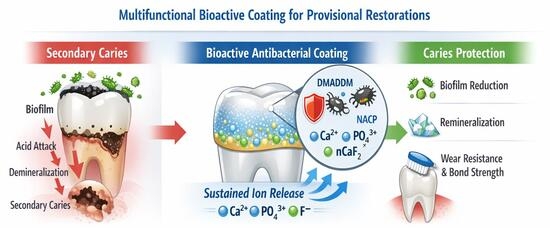
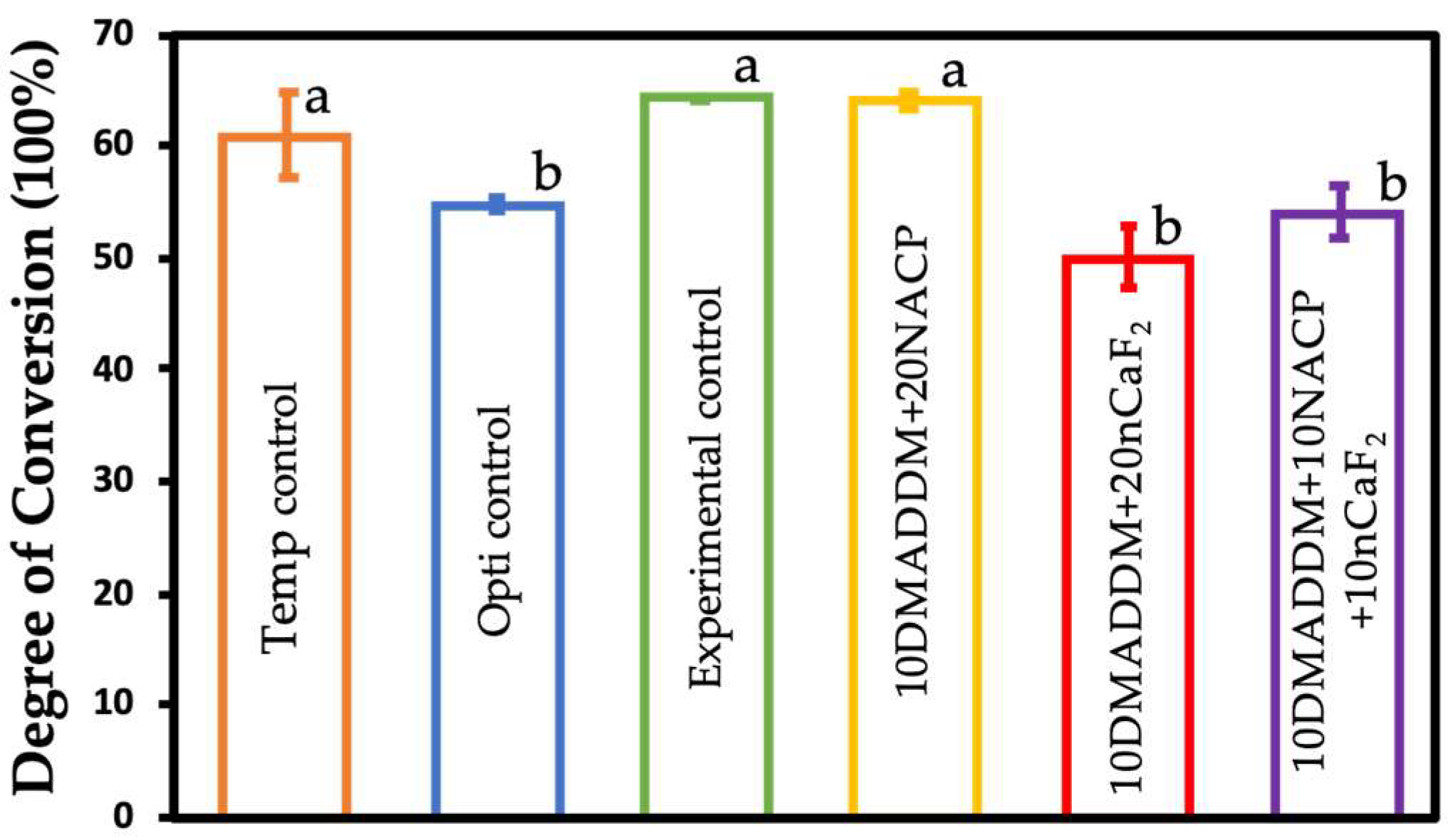
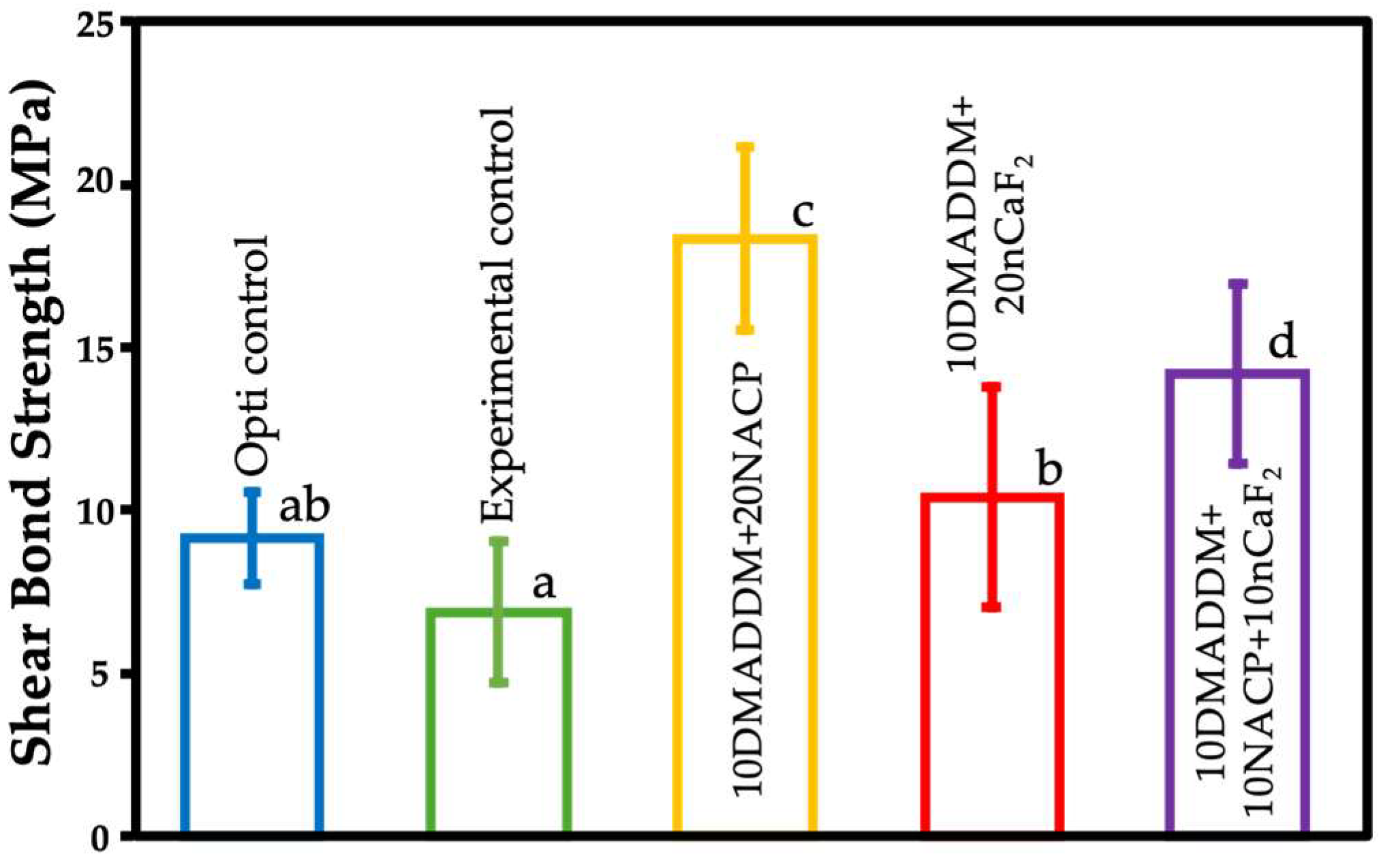
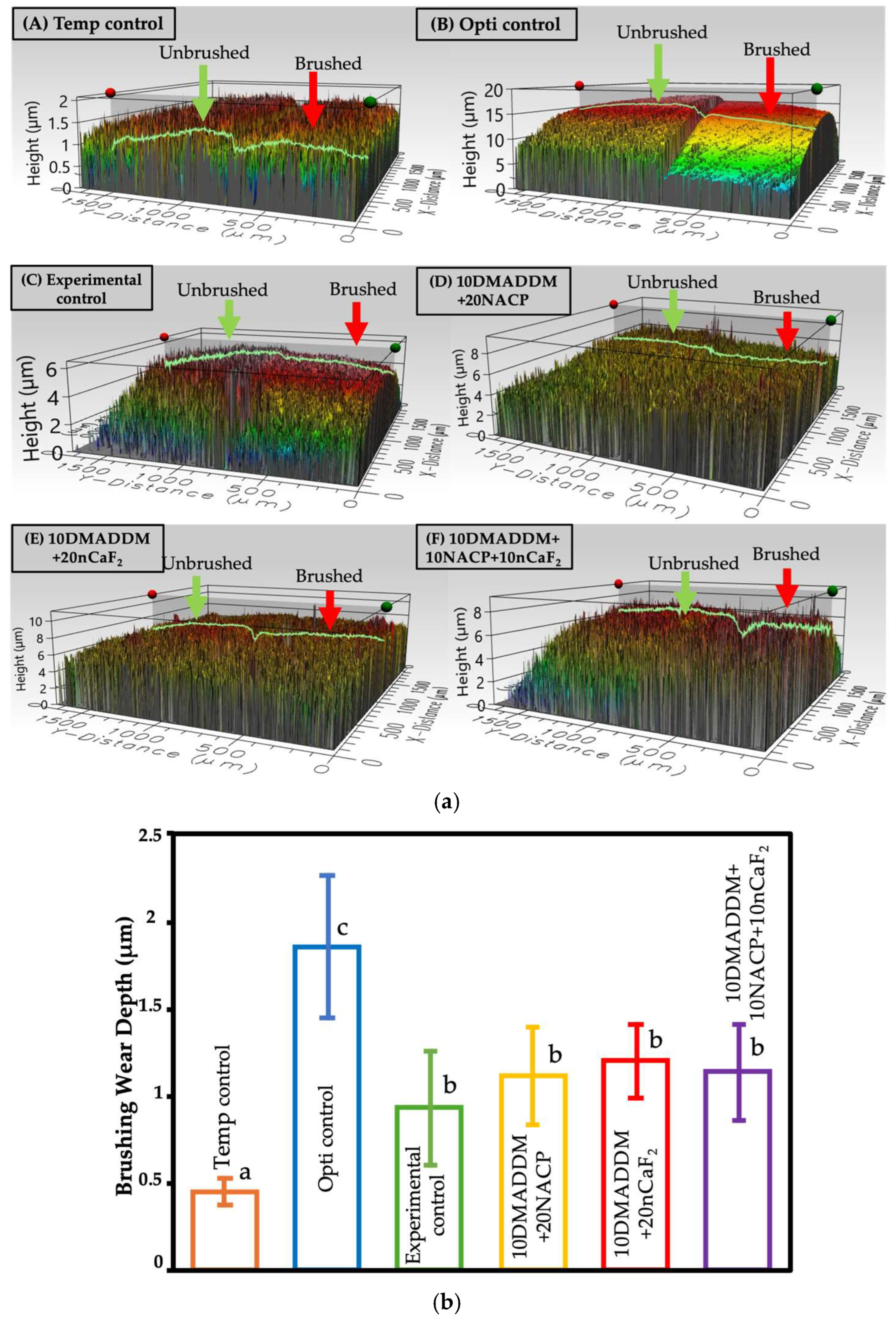
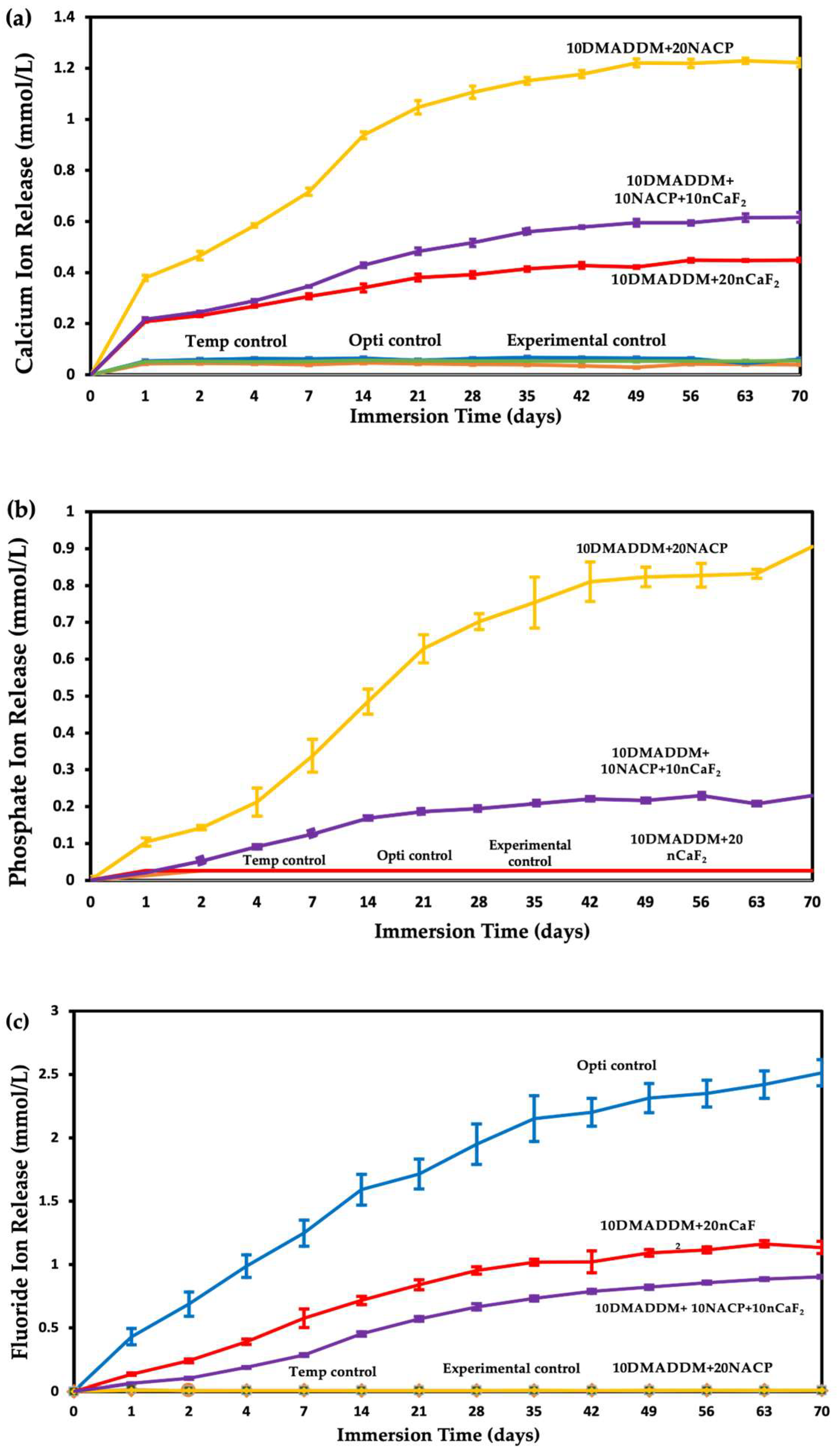
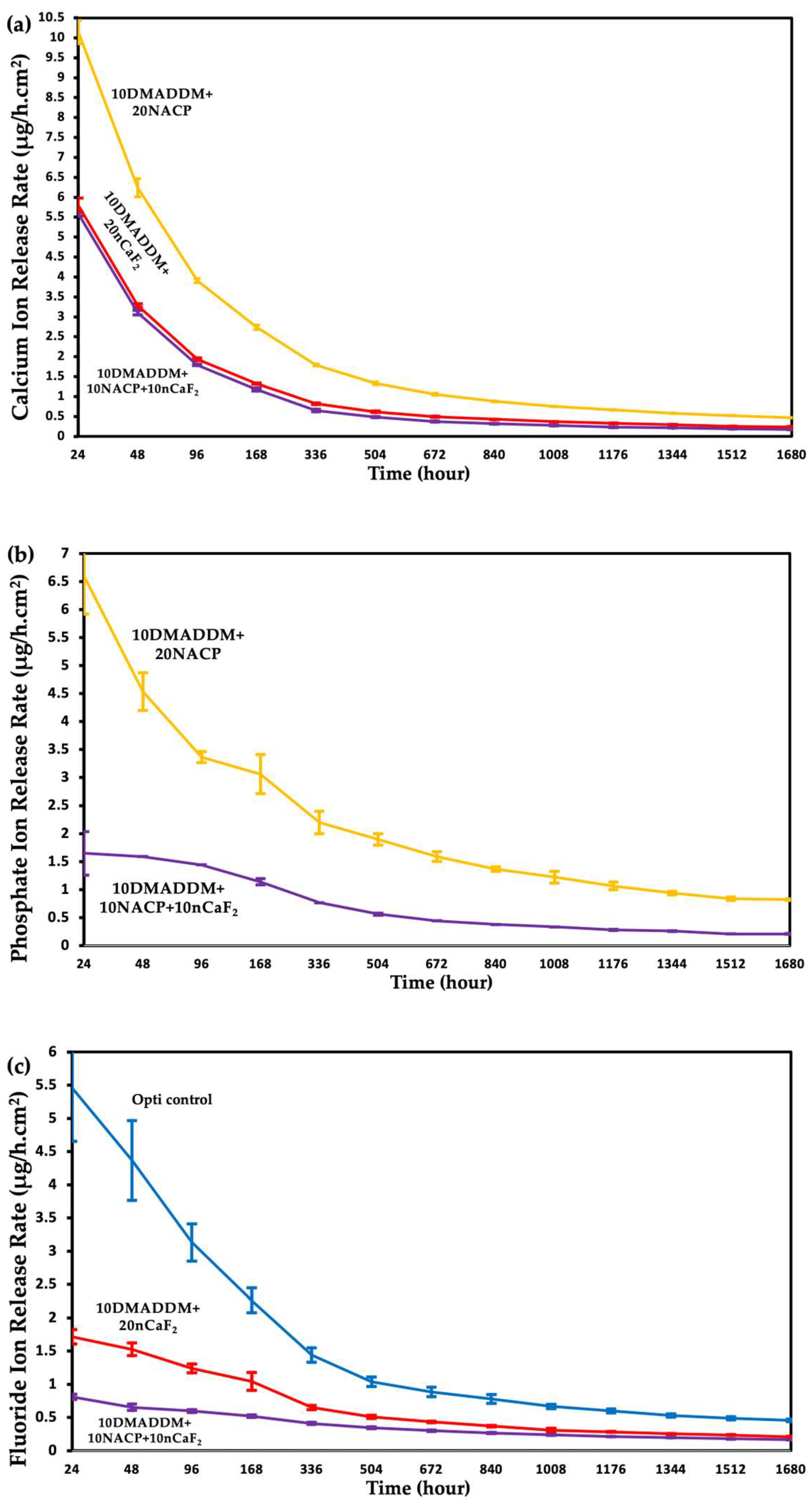
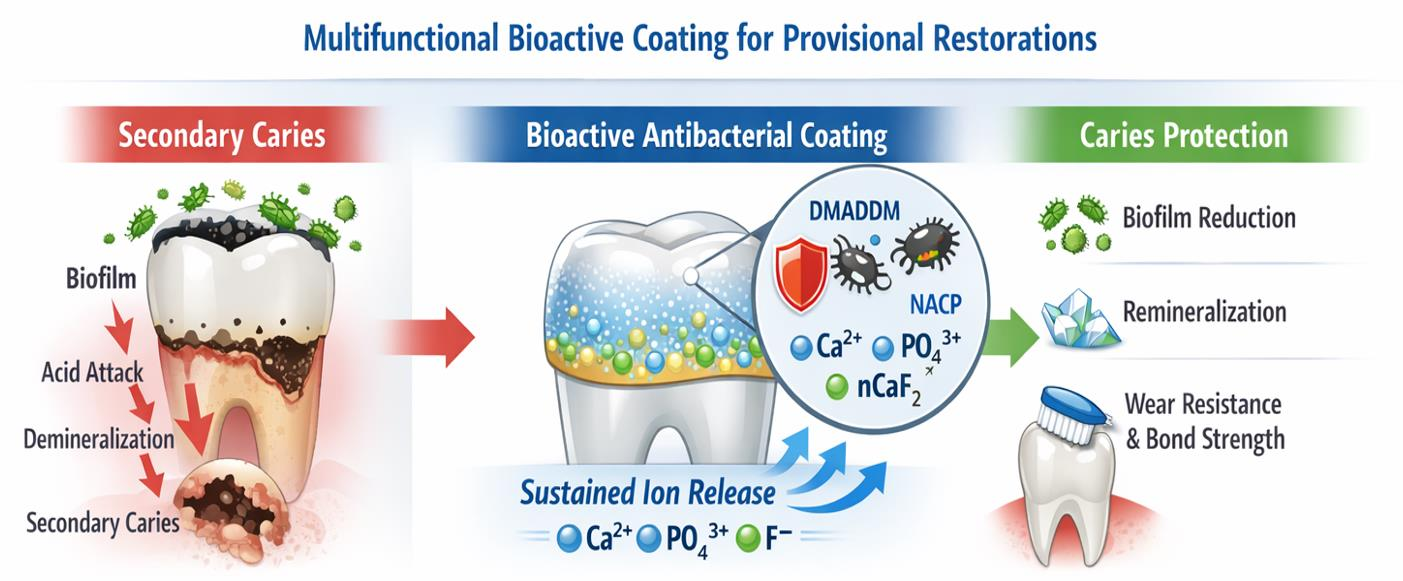
Secondary caries and biofilm accumulation remain major causes of failure in provisional crowns and restorations, highlighting the need for multifunctional resin coatings with antibacterial and remineralizing capabilities. This study aimed to develop a novel bioactive and antibacterial resin-based surface coating incorporating 10% dimethylaminododecyl methacrylate (DMADDM), 20% nanoparticles of amorphous calcium phosphate (NACP), and/or 20% calcium fluoride nanoparticles (nCaF2) within a urethane dimethacrylate/triethylene glycol divinylbenzyl ether (UDMA/TEG-DVBE) matrix. Coatings were evaluated for degree of conversion (DC), flow, shear bond strength, brushing wear resistance (10,000 cycles), and calcium (Ca), phosphate (PO4), and fluoride (F) ion release up to 70 days. All groups achieved clinically acceptable polymerization, with the lowest DC at 50%. NACP-containing coatings significantly increased shear bond strength to 18.3 ± 2.8 MPa, representing a ~170% increase compared with the experimental control (6.8 ± 2.1 MPa) and exceeding the ISO 10477 minimum threshold of 5 MPa. After brushing simulation, experimental coatings demonstrated low wear depth (0.93–1.19 µm), which was ~40% lower than the commercial control (1.85 ± 0.40 µm). Sustained ion release was achieved for 70 days, with 20% NACP-formula releasing 1.22 mmol/L Ca and 0.90 mmol/L PO4, while the dual NACP–nCaF2 formulation provided simultaneous Ca (0.62 mmol/L) and F (0.33 mmol/L) release. The developed coatings demonstrated promising physicochemical properties, bonding performance, wear resistance, and sustained remineralizing ion release, supporting their potential application as therapeutic surface coatings for provisional restorations.
Keywords: bioactive dental materials; antibacterial resin; provisional crowns; antibacterial coating; amorphous calcium phosphate nanoparticles; calcium fluoride nanoparticles; remineralization; ion release bioactive dental materials; antibacterial resin; provisional crowns; antibacterial coating; amorphous calcium phosphate nanoparticles; calcium fluoride nanoparticles; remineralization; ion release
Graphical Abstract