1. Introduction
Life safety plays a crucial role in human development, as human bodies are constantly exposed to various forms of impact damage in extreme circumstances, such as car crashes, explosions and high-speed shrapnel [
1]. The combination of fibre and resin has been recognized as an effective technique to address this issue [
2,
3,
4,
5,
6]. Numerous studies have explored the advantages of utilizing protective composites made from the combination of fibre and resin, including the ability to withstand heavier impacts while being lighter in weight, having superior capacities to absorb energy [
7,
8,
9,
10]. Compared to metal armour, fibre-reinforced polymer composites (FRPCs) are more efficient at dissipating impact energy and protecting soldiers. Therefore, FRPCs are the preferred material for designing and manufacturing impact-resistant protection equipment [
11].
FRPCs are typically composed of fibre reinforcement and resin matrix. Fibres always serve as the primary load-bearing components under applied stress, while resin matrix not only influences the distribution and stress state of the fibres during loading, but also facilitates the rapid transfer of localized stress, thereby effectively dissipating impact energy. UHMWPE fibre, characterized by its high specific strength, high specific modulus, low density and hydrophobicity, has been widely used in FRPCs for ballistic protection [
10,
12]. WPU is known for its highly flexible elastic nature, characterized by a phase-separated structure and dynamic covalent bonds. Its excellent bending resistance and high peel strength confer exceptional impact and damage resistance to composites [
13,
14,
15]. However, with the advancement and evolution of military weaponry, current protective materials are increasingly unable to meet the operational protection requirements for soldiers on the battlefield, and the next-generation alternative has not yet been established. Consequently, a more comprehensive investigation into existing materials is urgently warranted.
In practical applications, the impact resistance of FRPCs is influenced by multiple factors, many of which interact with each other. Han et al. [
16] undertook a study on aramid-reinforced composites with diverse polycarbonate contents to explore the influence of resin contents on ballistic performance. The results demonstrated that the V50 value rose as the matrix content declined. Specifically, when the matrix content was reduced to 10%, the target plate presented the maximum V50 value of 550 m/s, along with a specific energy absorption (SEA) of 28.56 J∙m
2/kg. Zhang et al. [
17] fabricated UHMWPE laminates with diverse preformed hole structures and explored the influence of the number and spacing of these holes on the elastic properties of FRPCs. The results manifested that a specific quantity of preformed holes could effectively redistribute tensile stress at the edges of holes, thereby enhancing elastic resistance. Firouzi et al. [
18] prepared UHMWPE targets by adjusting the laminating force. The results revealed that low layer pressures would reduce the ballistic penetration performance of the lamination. UHMWPE targets fabricated with resin under moulding pressure of 4 MPa exhibited the optimal penetration resistance, whereas further increase in moulding pressure did not lead to more significant improvement in the penetration-resistant performance. The individual contributions of coupled material parameters to the energy absorption of FRPCs under ballistic impact have yet to be clearly quantified. While substantial body of research had focused on varying single parameters—such as structures of preformed hole, content of resin, or moulding pressure—to assess their effects on ballistic performance, most studies did not account for the fact that modifying one parameter inevitably alters others. As a result, the synergistic interactions among these parameters and their combined influence on energy absorption remained poorly understood. This research addressed that gap by systematically exploring the coupled effects of three key material properties—tensile elastic modulus, tear strength and bonding strength—on the ballistic behaviour of composites. By quantifying how these interacting parameters collectively govern energy dissipation and damage mechanisms, this study offered new insights into the design of advanced composite systems for enhanced ballistic protection.
In this study, FRPCs were fabricated with resin of different modulus denoted as PE/WPU X, where X represented resin number (the tensile modulus of elasticity was classified from A to E in increasing order). To investigate the contribution ratios of modulus of resin, tear strength of resin, and interfacial bonding strength to the energy absorption capacity of FRPCs, as well as the influence of matrix properties on the energy absorption of FRPCs under varying external loading conditions, quasi-static tests, low-speed load environment assessments, high-speed load environment evaluations and numerical simulation experiments were conducted. The energy absorption values of the samples under varying external loads were systematically calculated and recorded. Relative weight method was employed to analyze the proportional influence of changes in resin modulus, resin tear strength, and interfacial strength on the energy absorption performance. The results of the relative weight analysis indicated that, across all tested external loading conditions, the tensile elastic modulus of the resin exerted the greatest influence on the energy absorption capacity of FRPCs, with its contribution becoming higher under high-speed impact conditions. Through the integration of testing and simulation, it was found that augmenting the interlayer binding force of the composites within a specific range could influence the ballistic performance of FRPCs greatly, leading to a result where the ballistic performance first increased and then decreased. Higher interlayer bonding force and matrix with higher modulus may lead to stress concentration and incomplete delamination of the composite material. Lower interlayer bonding force and more malleable matrix could exhibit a superior capacity to transfer stress and relatively clear stratification pattern, leading to increased secondary deformation, drawing, and breakage of the yarn, thereby enhancing the ballistics performance of the material. This study provided a theoretical basis for the structural design of composite materials used in body armour by revealing how the coupling effects of tensile strength, shear strength, and bonding strength influence ballistic performance. The findings enabled the synergistic optimization of these material parameters, offering the potential to reduce equipment weight while enhancing protective efficiency.
2. Materials and Methods
In this study, UHMWPE plain-woven fabric supplied by Zhongtai special equipment Inc., Changde, China, was used as reinforcement. The fabric had an areal density of 130 g/m
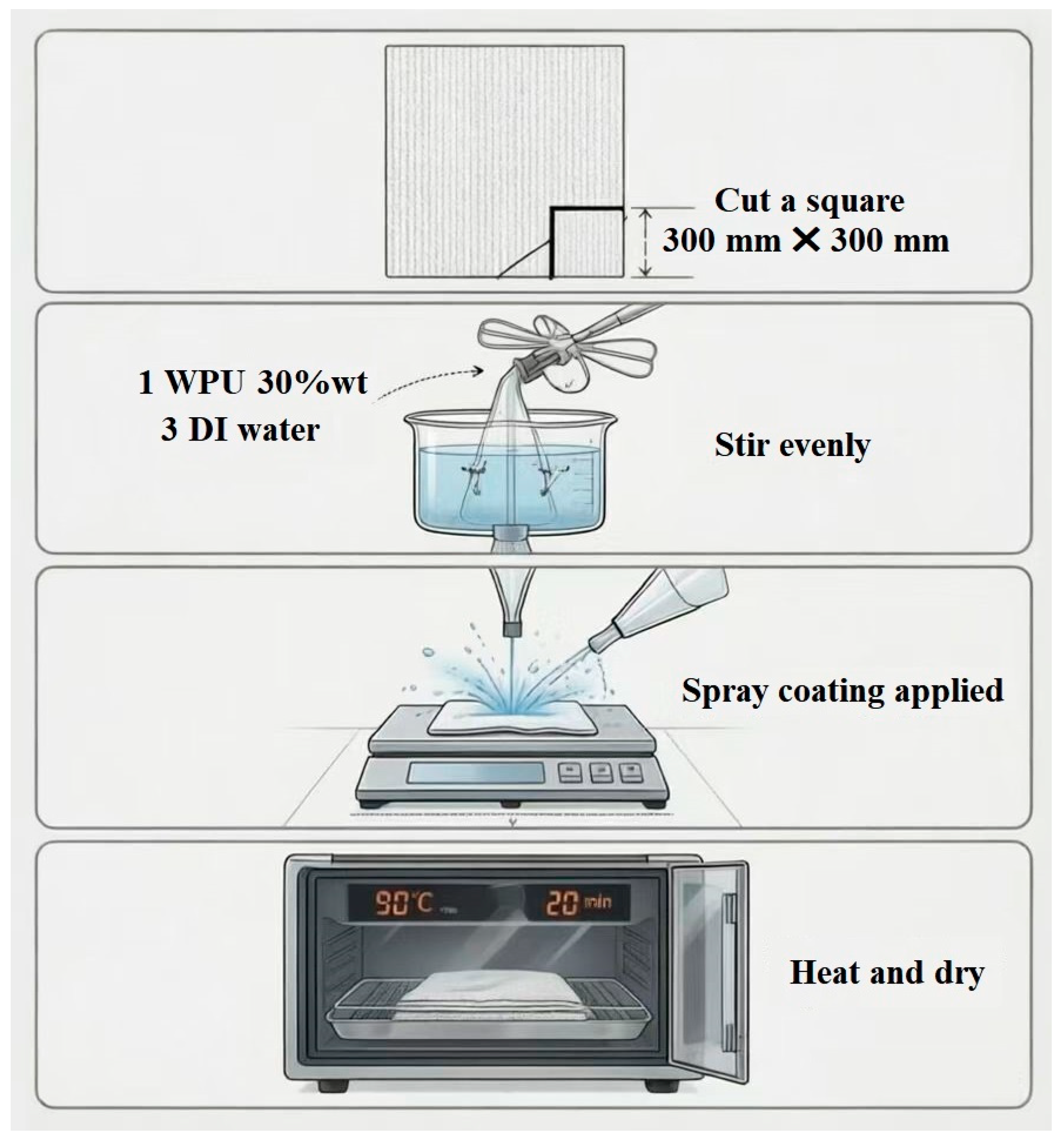
2, denier of 800 and thread-count of 40 × 30 yarns per inch. Ultimate tensile strength of individual fibre was 3.4 GPa. WPU was supplied by Feidun New Materials Technology Co., Shanghai, China. Additionally, 300 mm × 300 mm UHMWPE plain-woven fabric sheets were prepared. The prepared resin was mixed with deionized water at a ratio of 1:3, and the diluted mixture was evenly applied onto the fabric pieces. During impregnation, the resin content was controlled within 20 ± 3%. The impregnated materials were then placed in an oven and heated at 90 °C for 20 min. The preparation process is shown in
Figure 1.
Subsequently, the PE/WPU X laminates were fabricated in a hot-pressing machine, incorporating layers of UHMWPE composites. The UHMWPE layers were meticulously stacked on the hot-press machine, with a layer of tetrafluoroethylene film placed on both the upper and lower surfaces to prevent bonding. The metal mould was then heated from room temperature to 90 °C at a heating rate of 5 °C/min and kept at a pressure of 4 MPa for 2 min. The moulding pressure was regulated at 0–5 MPa three times within the first 5 min to evacuate any bubbles inside the laminates. Finally, the machine was turned off while maintaining pressure to prevent deformation, allowing the PE/WPU X laminates to cool naturally to room temperature.
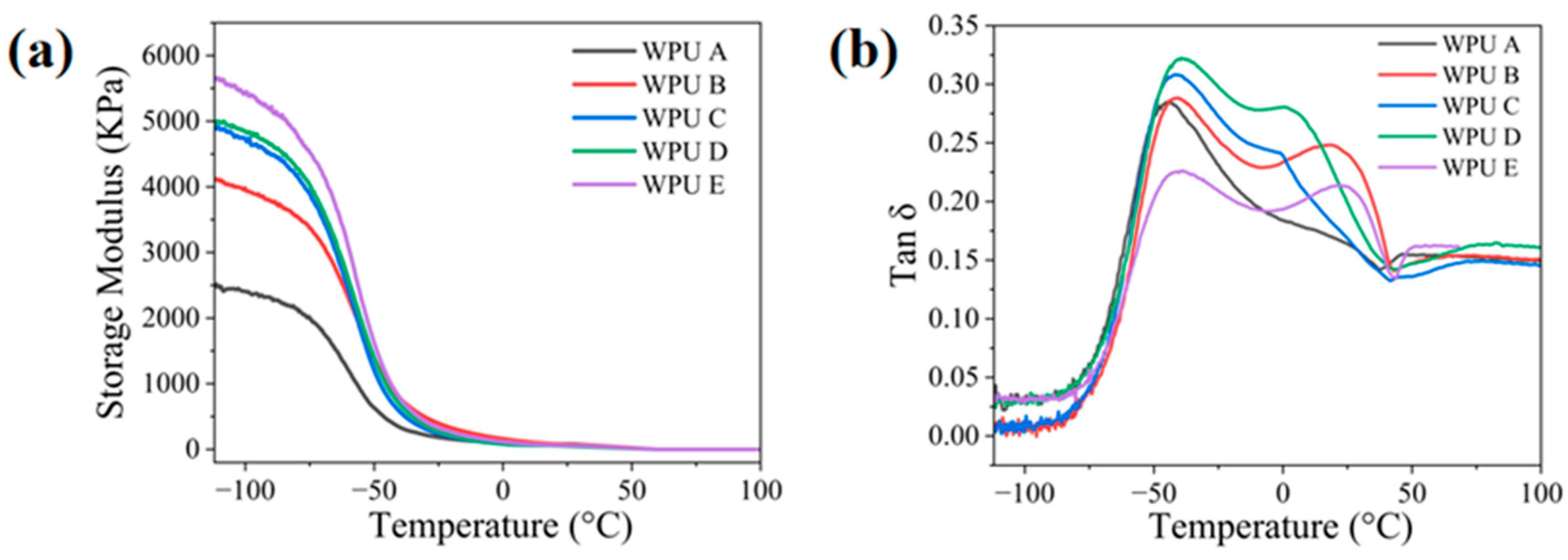
Dynamic mechanical analysis of the resins was operated by TA Q800 instrument (TA Instruments, New Castle, DE, USA). The resins were fixed on a film tension clamp and scanned from −120 °C to 150 °C at a heating rate of 3 °C/min and a frequency of 10 Hz. According to ASTM D638-02a [
19], the tensile properties of the WPU X were tested using Instron 5566 electronic universal machine with a stretching rate of 10 mm/min. The quasi-static mechanical properties of PE/WPU laminates were assessed by cutting 300 mm × 300 mm samples from the laminates, with 5 specimens selected for each test. Tensile properties of these PE/WPU X laminates were measured using a universal testing machine (Instron 5982, Instron corporation, Norwood, MA, USA) in accordance with ASTM D3039 [
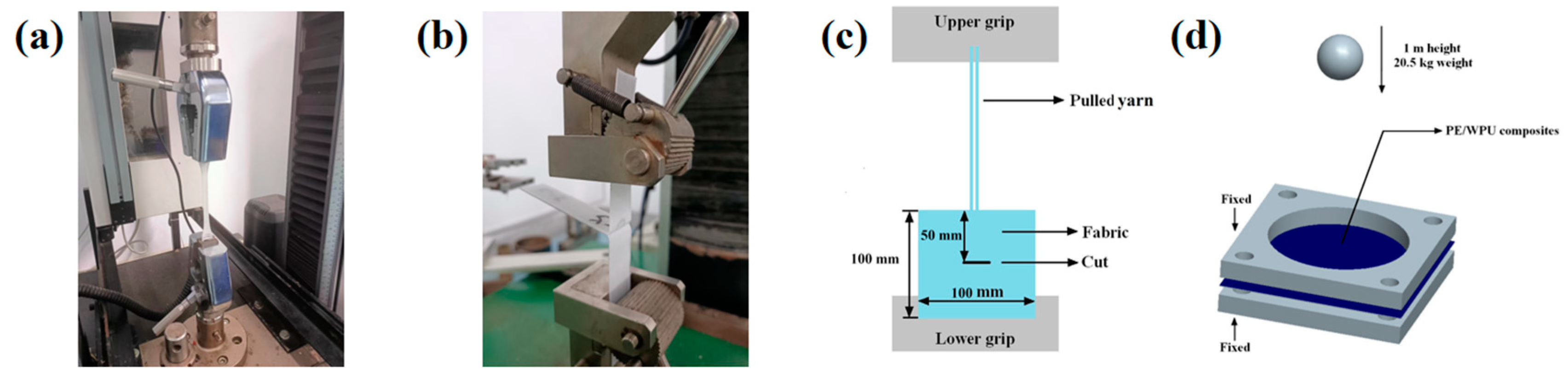
20] as shown in
Figure 2a. T-peel tests were conducted using the Instron 5982, with the strength measured at a loading rate of 100 mm/min in accordance with ASTM D1876-08 [
21]. The dimensions of the specimens were 130 mm × 20 mm × 2 mm, and a 65 mm × 20 mm polyimide film was inserted into each specimen to serve as an initial crack. Shape and gripper of the fixture were shown in
Figure 2b.
FRPCs with same resin ratio were prepared using UHMWPE plain-woven fabric of the same surface density (130 g/m
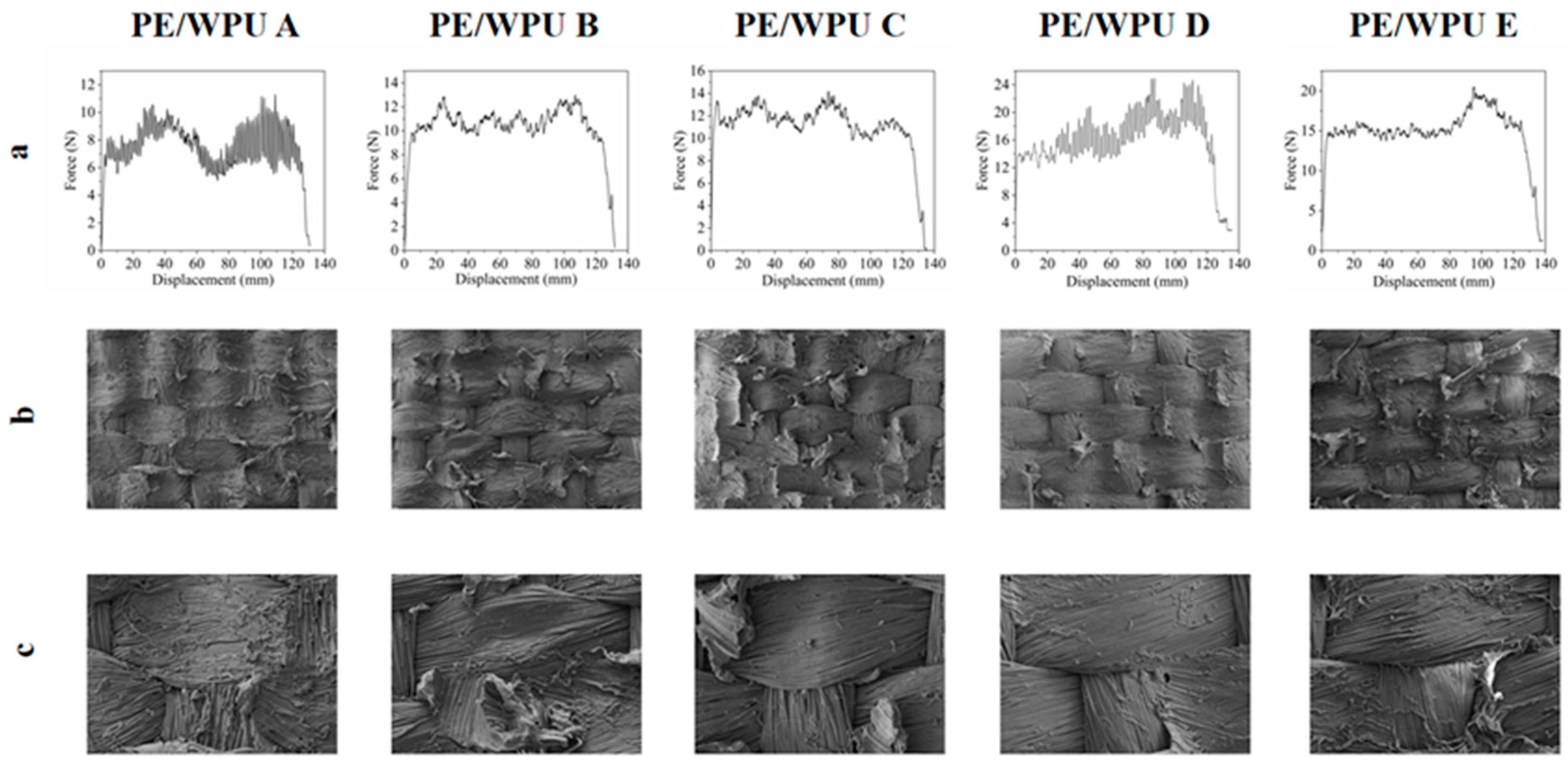
2). The tests aimed to study the pull-out behaviour of UHMWPE fibres from the matrix, considering the modulus of each resin, which ranged from 6.4 MPa to 18.2 MPa. The experiments were conducted on a universal tensile testing machine (Instron 5982). Four yarns of each sample were fixed to the upper grip of tensile testing machine, while parts below the incision were secured to the lower grip as shown in
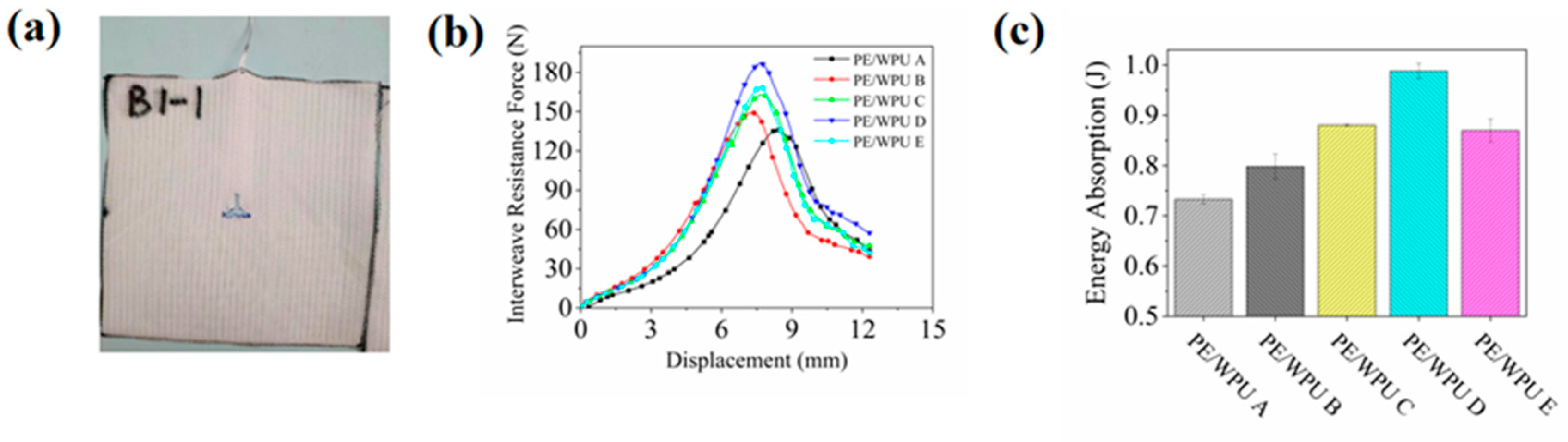
Figure 2c. The upper jaw ascended at a velocity of 50 mm/min, during which the force required to extract yarn from the fabric was measured. Low-velocity impact test was carried out by a falling dart type impact resistance tester (Instron CEAST 9350, Instron corporation, Norwood, MA, USA) according to ASTM D3763 [
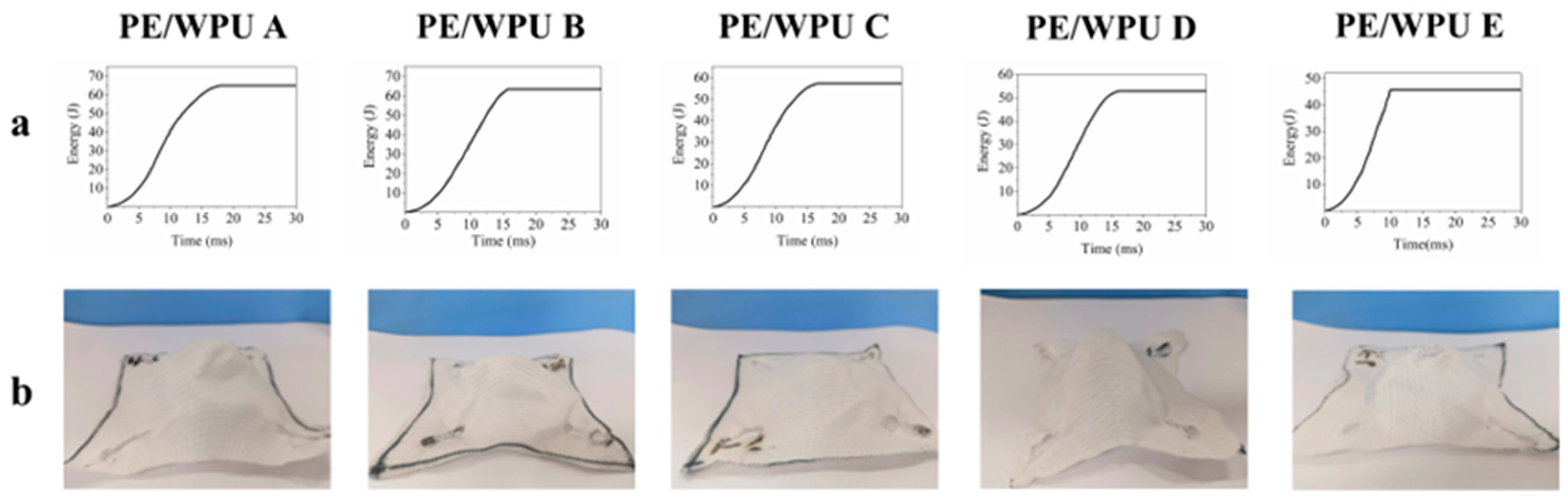
22]. After the fabric had been impregnated with resin and fully dried, it was cut into a size of 100 mm × 100 mm and fixed on the pneumatic clamping fixture. The total mass of the impactor and its accessories remained consistently at 20.5 kg, and the diameter was 20 mm. During the testing process, the impactor struck the fabric from a height of 1 m at an impact speed of 4.4 m/s, and the total impact energy was calculated to be 201.04 J. Energy absorption data were collected and documented using a pulse data acquisition system.
Figure 2d presents a schematic illustration of the low-velocity test, where the four corners of the samples were secured to a fixture, leaving the central circular region uncovered beneath the drop hammer to absorb the impact. Four tests were carried out on each material to ensure the reliability of the results.
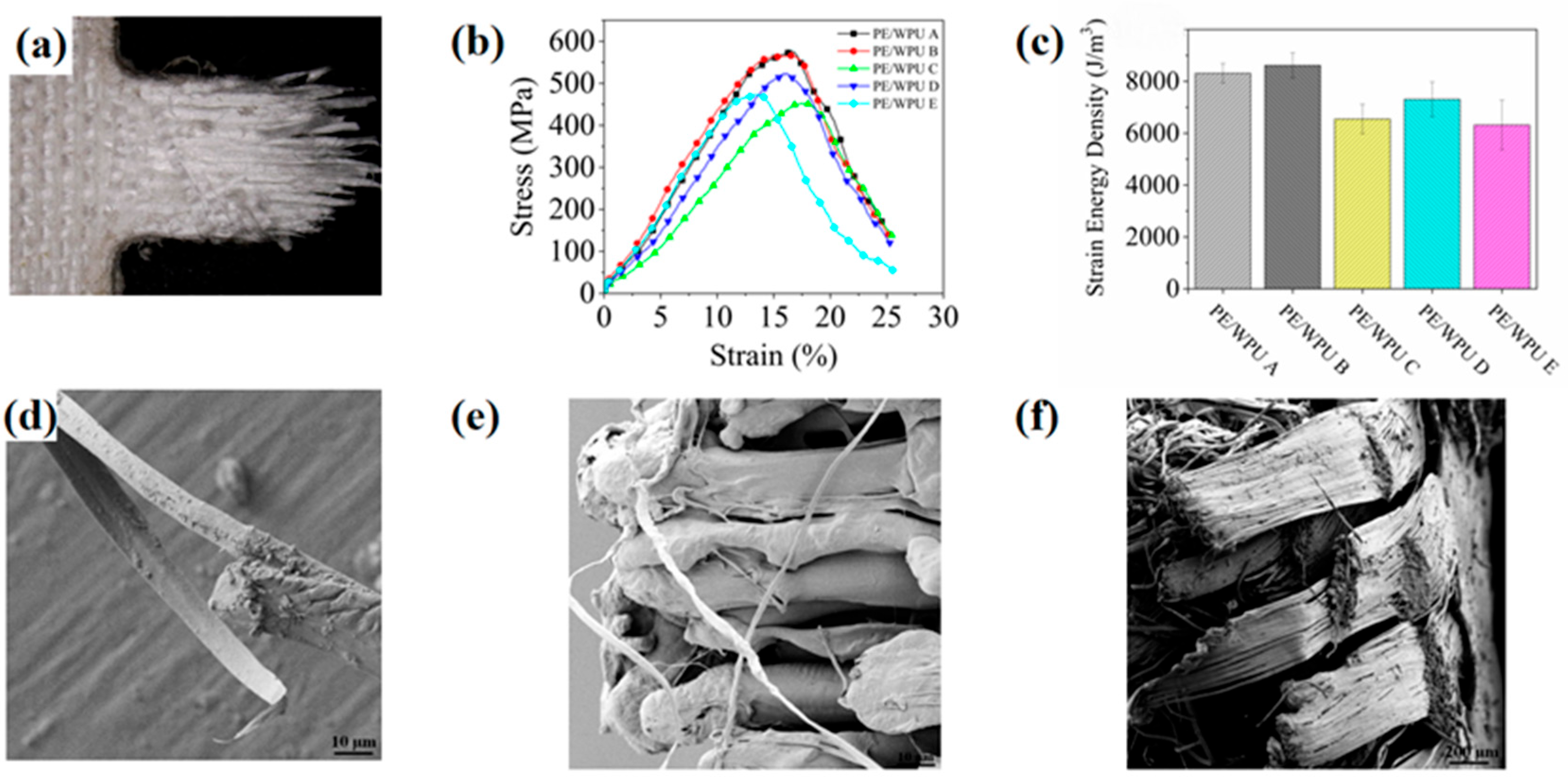
The HSR tensile test was conducted using PE/WPU X laminates, with the area density of each sample precisely controlled at 2.5 ± 0.1 kg/m
2, and the samples were cut into the shape as depicted in
Figure 3e.
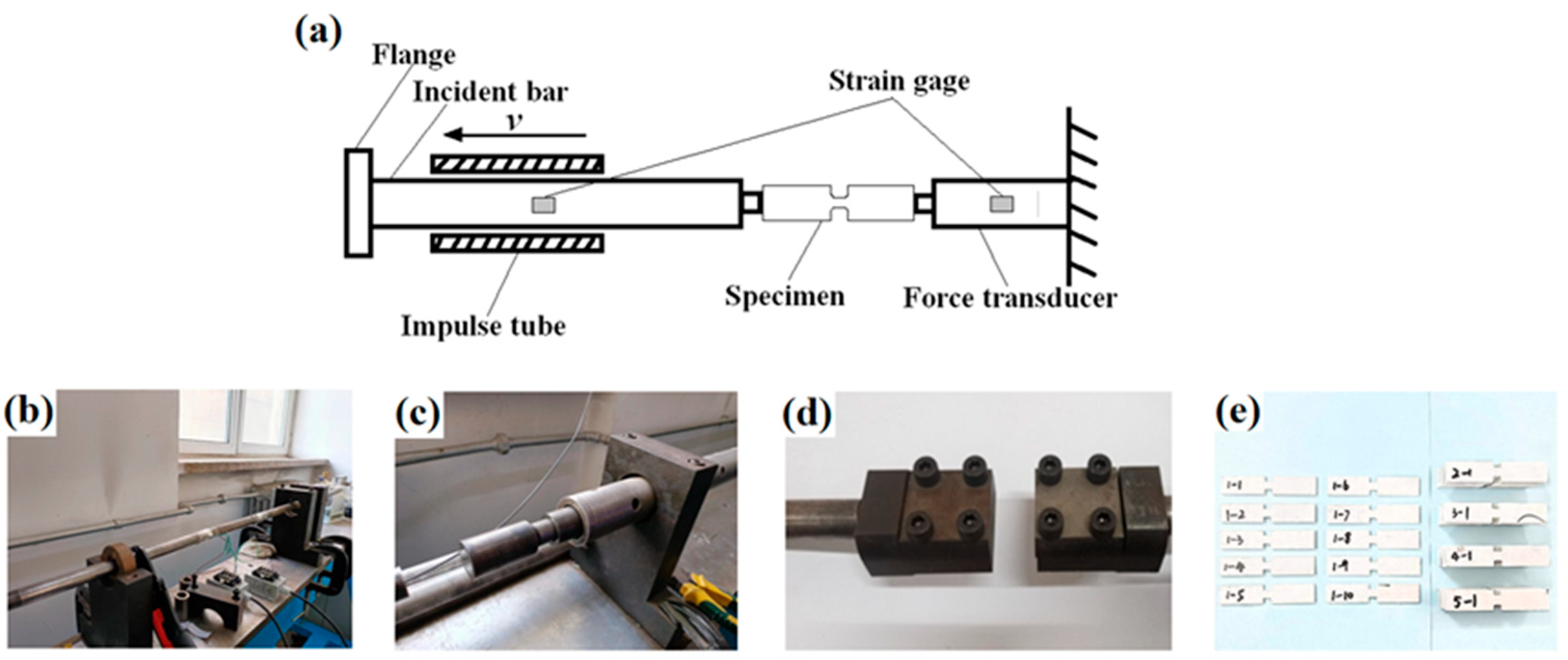
Figure 3a presents a schematic diagram of the HSR experiment, while
Figure 3b provides an overview of the experimental setup. The incident rod and flange at the left end were designed to provide HSR kinetic energy (
Figure 3c), and
Figure 3d illustrates the configuration of the HSR tension fixture.
A concentric impact rod was wrapped outside the left rod and was subjected to a rated pressure by the hydraulic device to impact flange at the left end, while the right rod did not apply additional force. Strain gauges were installed on both sides of the rods to measure stress–strain curve of the experimental samples. Purpose of the experiment was to study the tensile properties of PE/WPU X under HSR conditions, thereby evaluating their ballistic performance for applications in soft bulletproof layers. It was assumed that the fibre specimen was in dynamic force equilibrium. According to one-dimensional wave propagation theory, one-dimensional strain and particle displacement in the incident rod could be given by the following formulas:
where
u was the axial displacement of the fibre,
f(
x −
cbt) and
g(
x −
cbt) were the waveform functions of incident and reflected waves, respectively.
cb was a constant representing the wave speed in the rod, determined by the material of rod.
and
respectively denoted the incident strains and reflected strains. ls represented the sample length. Finally, the equation of strain with respect to t could be obtained as follows:
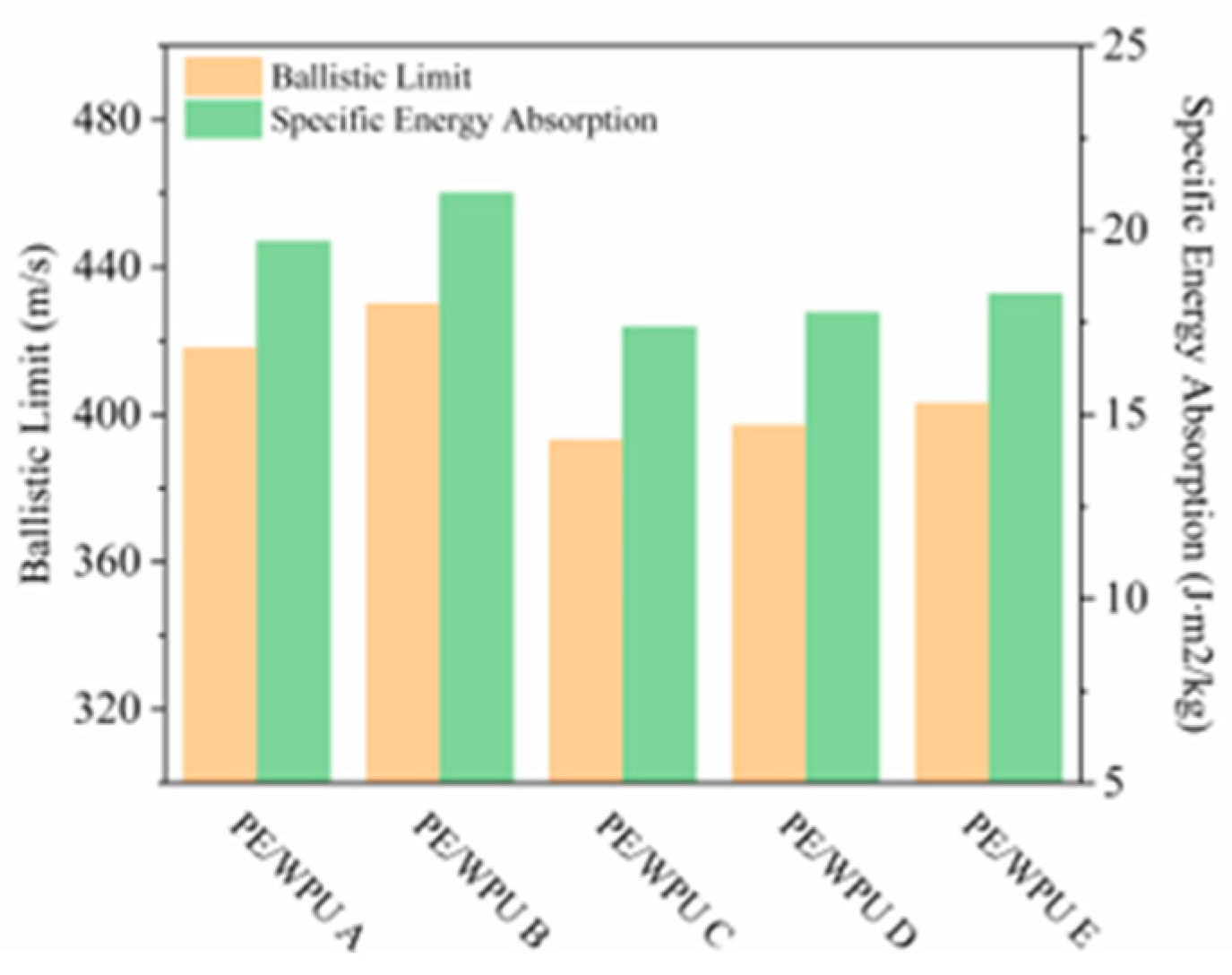
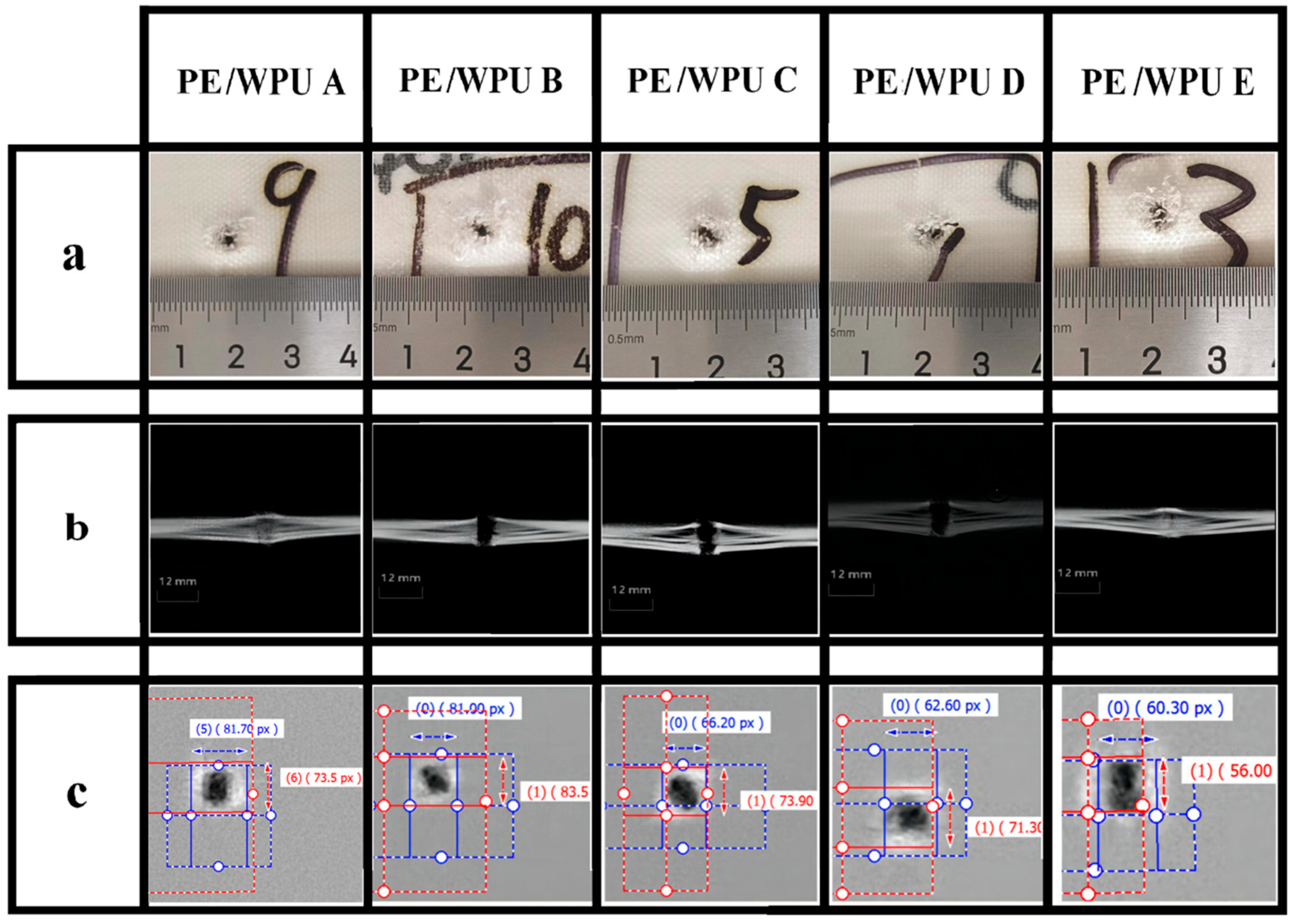
The PE/WPU ballistic limit velocity (V50) test was conducted in accordance with NATO STANAG 2920 [
23]. The V50 ballistic test device comprised a 7.62 mm fragment simulation projectile launcher and a fragment simulation projectile (FSP) weighting 1.1 g and measuring 5.5 mm in diameter. During the ballistic test experiment, the distance between test frame and launcher was set at 5 m, with an incidence angle of 0° ± 5°. V50 was a critical indicator of ballistic performance, representing a target speed with a 50% probability of penetration. It was widely utilized for evaluating the ballistic performances of different materials. In this experiment, a 6-shot V50 method was employed, involving three shots resulting in full penetration while the other shots causing partial penetration within a scattering range of 38 m/s. The V50 value for each experimental target plate was determined by averaging its speed obtained from these tests. The results were analyzed using a non-destructive testing technique of X-Ray Computed Tomography (CT) scans to characterize delamination failure and study the failure mechanisms under ballistic impact. The CT scans were conducted on a CT ALPHA 600 operating at 450 kVp and 3300 μA X-ray. The X-AID Reconstruction system 2020 software was used to acquire 2320 × 2320 pixel projections (0.14 mm × 0.14 mm pixels) over 3040 projection angles. The projection images were reconstructed using a Feldkamp cone beam reconstruction algorithm into 0.152 mm voxels. The visualization and measurement processing were performed using Amire 2020 software. Scanning electron microscope (SEM) scanning was conducted on the fracture surface of the samples following both static tensile tests and HSR tensile tests. The GeminiSEM 300 instrument, Carl Zeiss AG, Baden-Württemberg, Germany, was utilized, operating at a scanning voltage of 5 kV and maintaining a distance of approximately 13 mm from the imaging surface of the sample to the objective lens.
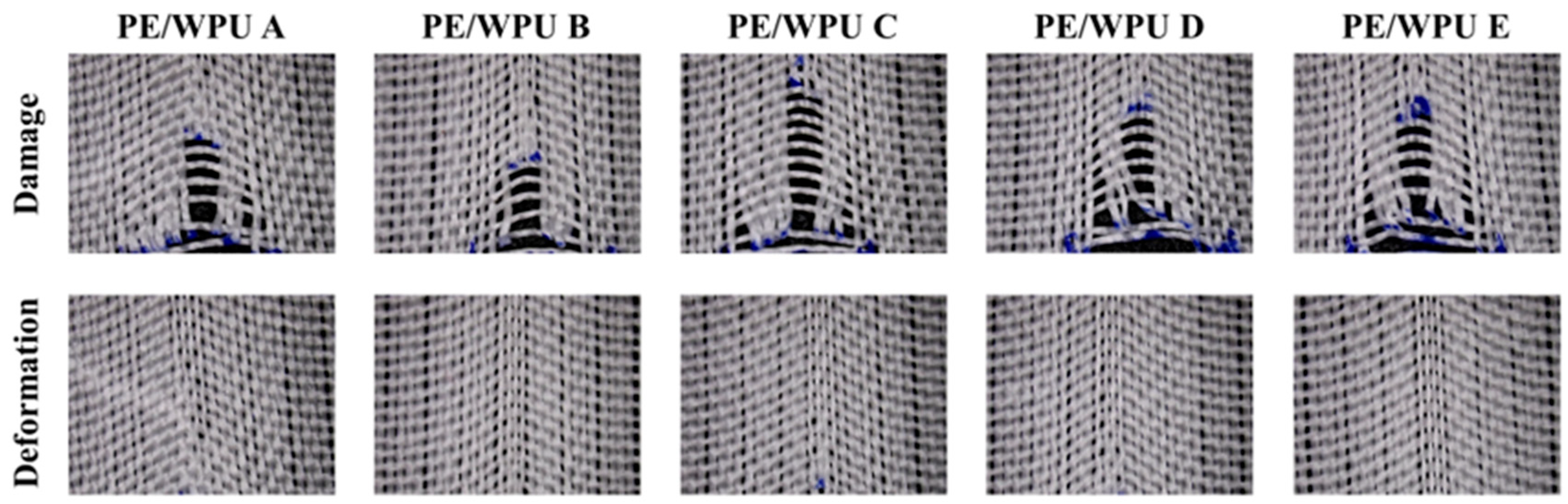
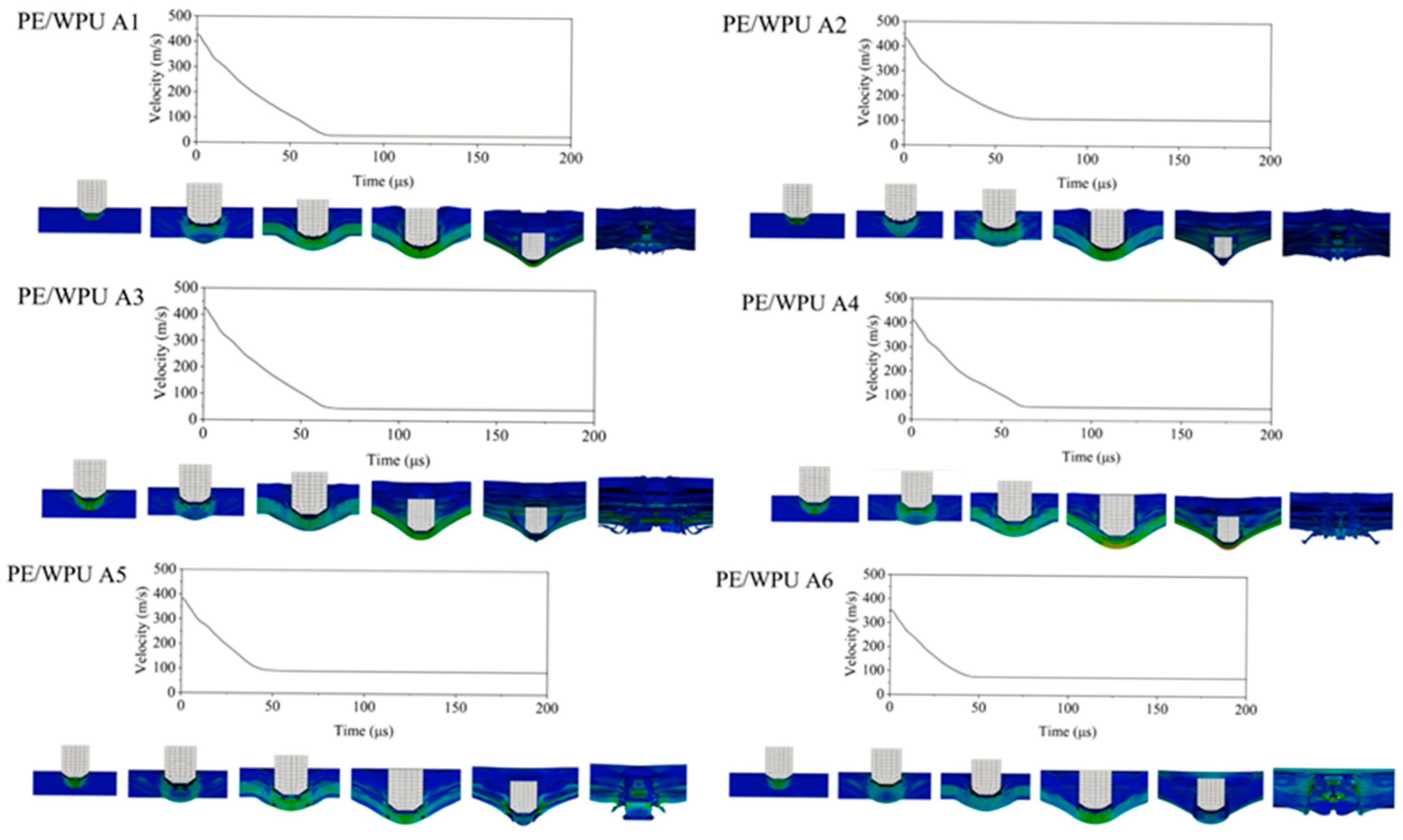
In order to research the ballistic response of PE/WPU laminates with varying interlayer bonding strength, finite element models were established using ABAQUS/Explicit 2019 software. The numerical simulation employed the Lagrange method within ABAQUS/Explicit, facilitating an efficient reproduction of the dynamic loading process. The PE/WPU laminates were discretized using three-dimensional solid elements. A structured hexahedral mesh was employed, with eight-node linear brick elements (C3D8R) featuring reduced integration and hourglass control. Mesh refinement was applied locally in the vicinity of the projectile impact zone to enhance solution accuracy. The FSP was meshed with C3D8R elements, and rigid body constraints were introduced to the FSP, as no plastic deformation occurred during perforation. The FE models were developed as ¼-symmetry models to expedite calculation due to the structural symmetry of the FSP and laminates. The clay bottom
Table 1, as well as the edges of the laminates and clay, were subjected to fixed boundary conditions. General contact with a friction coefficient of 0.23 was applied to the interface between the laminates. The material properties of the layers and interlaminar matrix were presented in
Table 2 and
Table 3. It is essential to validate whether perforation or non-perforation occurred in each impact test. For the same material, the velocity difference between the perforation and non-perforation cases should be maintained within 10 m/s, and the average of the two values was taken as the V50 ballistic penetration velocity of the material. The 3D Hasin failure criteria were employed to assess the initiation damage in the materials, defined as follows:
Fibre tension failure (
σ11 > 0):
Fibre compression failure (
σ11 < 0):
Matrix tension cracking (
σ22 ≥ 0):
Matrix compression cracking (
σ22 < 0):
In the equations above, dft, dfc, dmt, and dmc represented the damage variates associated with each specific mode of damage. σ11, σ22, and σ33 denoted the stresses along the longitudinal, transverse, and vertical directions of the composites, respectively. Meanwhile, σ12, σ13, and σ23 represented the shear stresses. XT, XC and YT, YC signified the tensile strengths (T) and compressive strengths (C) in the warp (X) and weft (Y) directions of the composites. Additionally, S12, S13, and S23 indicated the longitudinal shear strength as well as two transverse shear strengths.
In this work, the cohesive elements utilized to characterize interlaminar matrix failure (i.e., delamination damage) were established based on a quadratic traction–separation law:
where
ti (i = 1, 2, 3) was the interface stresses in the normal and shear directions, respectively.
t10 was the normal threshold stresses for PE/WPU composites and
t20,
t30 were the tangential threshold stresses for PE/WPU composites [
24].
To predict the delamination extension under mixed-mode loading conditions, a second-order power law was utilized to characterize the interactions among the energies that contribute to failure in both normal and shear directions, including first and second shear:
where
Gi (i = 1, 2, 3) and
Gi0 (i = 1, 2, 3) represented the strain energy release rates and the critical fracture energy in three distinct directions, respectively [
25,
26].
During the fabrication of the FRPCs, changes in the resin modulus simultaneously led to variations in the resin tear strength and interfacial bonding strength. To investigate the relative influence of resin modulus, resin tear strength and interfacial bonding strength on the energy absorption of the FRPCs under different external loading conditions, the relative weight analysis model was applied based on the provided composite material data. The relative influence percentages of the following three attributes were calculated—a (modulus), b (tear strength) and c (interfacial bonding strength)—on the energy absorption under the following four external loading conditions, namely E1 (0.008 m/s), E2 (4.4 m/s), E3 (strain rate 1700 s−1, velocity at loading point 149.6 m/s) and E4 (approximately 400 m/s). The computational procedure included data standardization, correlation matrix calculation, eigenvalue and eigenvector analysis, orthogonal score computation, regression analysis, relative weight calculation and percentage determination, with all results retained to 4 significant figures.
To assess the influence of three correlated input variables (tensile modulus, tear strength and interlayer strength) on four distinct outcomes, this study employed a relative weight analysis based on principal component analysis. This approach addresses multicollinearity by transforming the original variables into orthogonal components, allowing the total explained variance in each outcome to be partitioned into non-overlapping contributions. The relative importance of each input variable can then be determined. Given the considerable differences in scale among the three inputs, the data were first standardized to ensure comparability. Sample means
and standard deviations ss were calculated using Equations (12) and (13), and the raw data were transformed into standardized variables
via Equation (14), resulting in variables with a mean of zero and a standard deviation of one.
In the calculation of the correlation coefficients, since the data had been standardized with a mean of approximately 0 and a sample standard deviation of approximately 1, the expression for the correlation coefficient could be simplified from Equation (16) to Equation (17).
After computing the relevant parameters, the correlation matrix
R, eigenvector matrix
Q and orthogonal fractional matrix
V were obtained, which could capture the linear relationships among the three inputs.
The standardized values of energy absorption were regressed on the orthogonal scores
through the following regression model, and the proportion of each influencing factor
under different external loads could be finally calculated. For each of the four standardized outcomes, a multiple linear regression model was fitted using the orthogonal scores from
as predictors. The regression results provide the variance explained by each principal component. Because the components are independent and each is a linear combination of the original variables, the explanatory power of each component can be traced back to the original inputs. This step yields the relative contribution of each input variable to the outcome, reflecting its unique influence after accounting for correlations among the inputs.