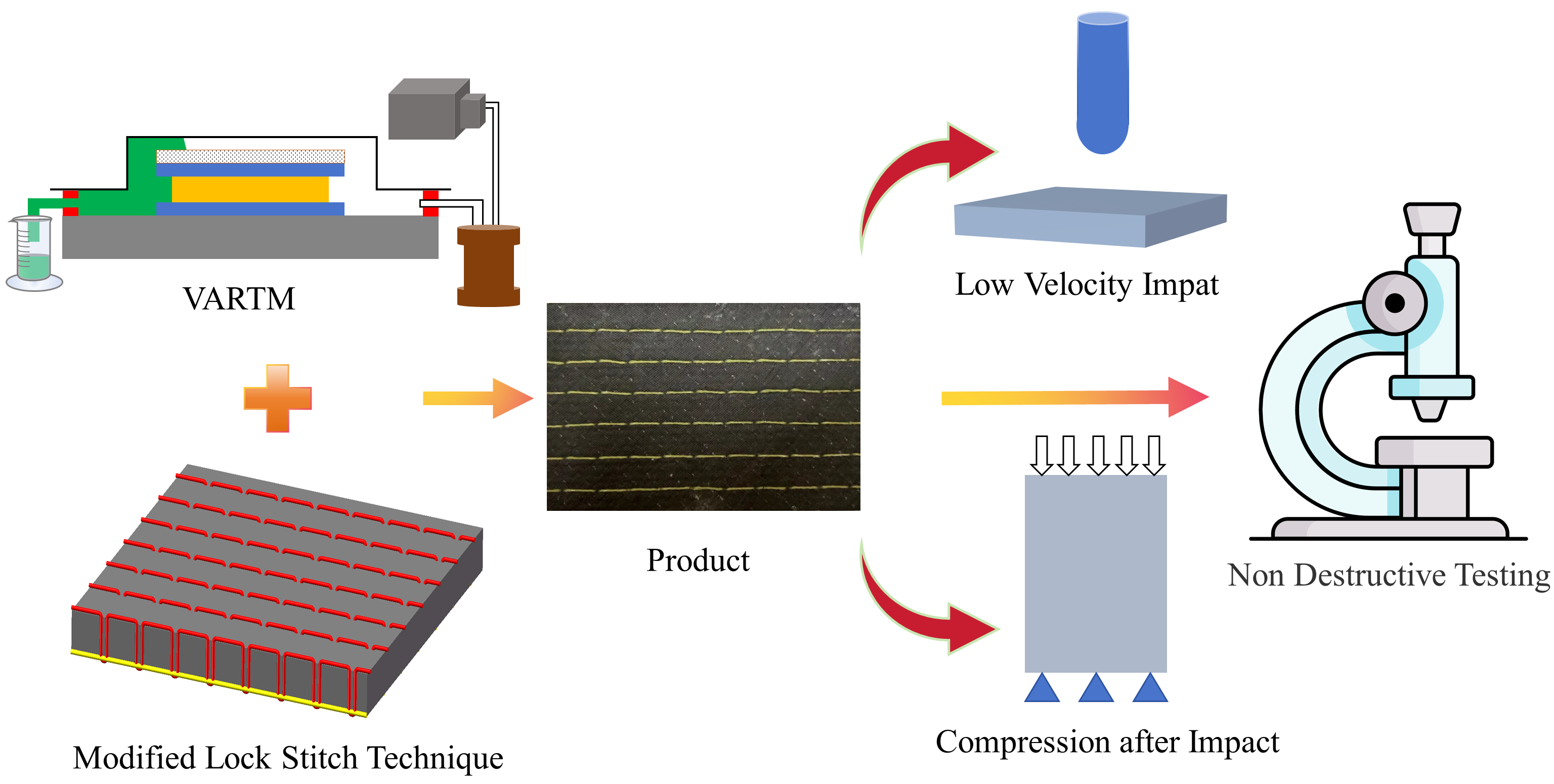
Effect of Thickness and Stitch Density on Low-Velocity Impact and Compression After Impact Properties of Stitched Composite Laminates

 ,
, 
Abstract
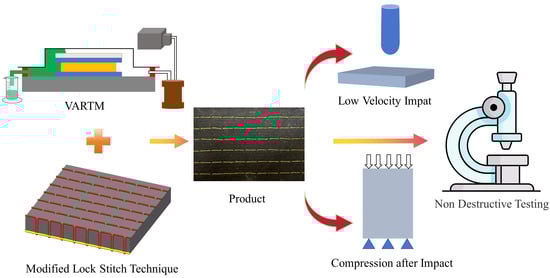
1. Introduction
2. Materials and Methods
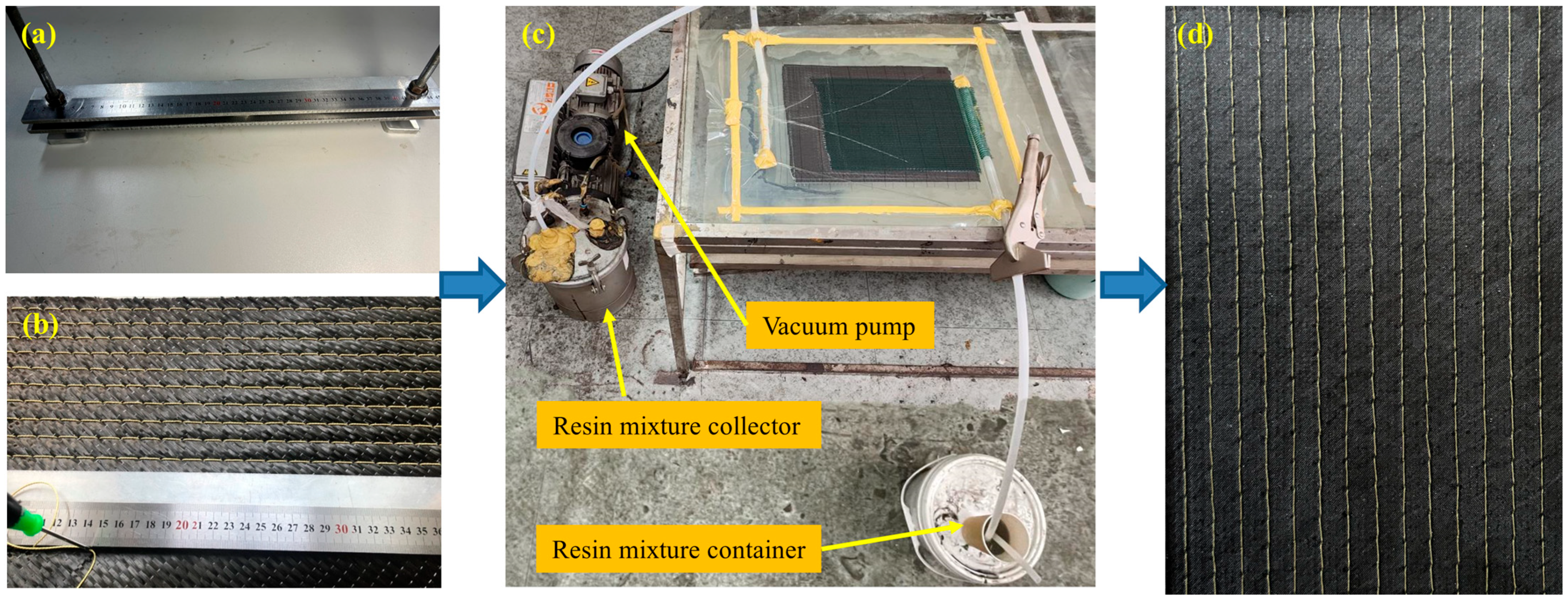
2.1. Material Preparation
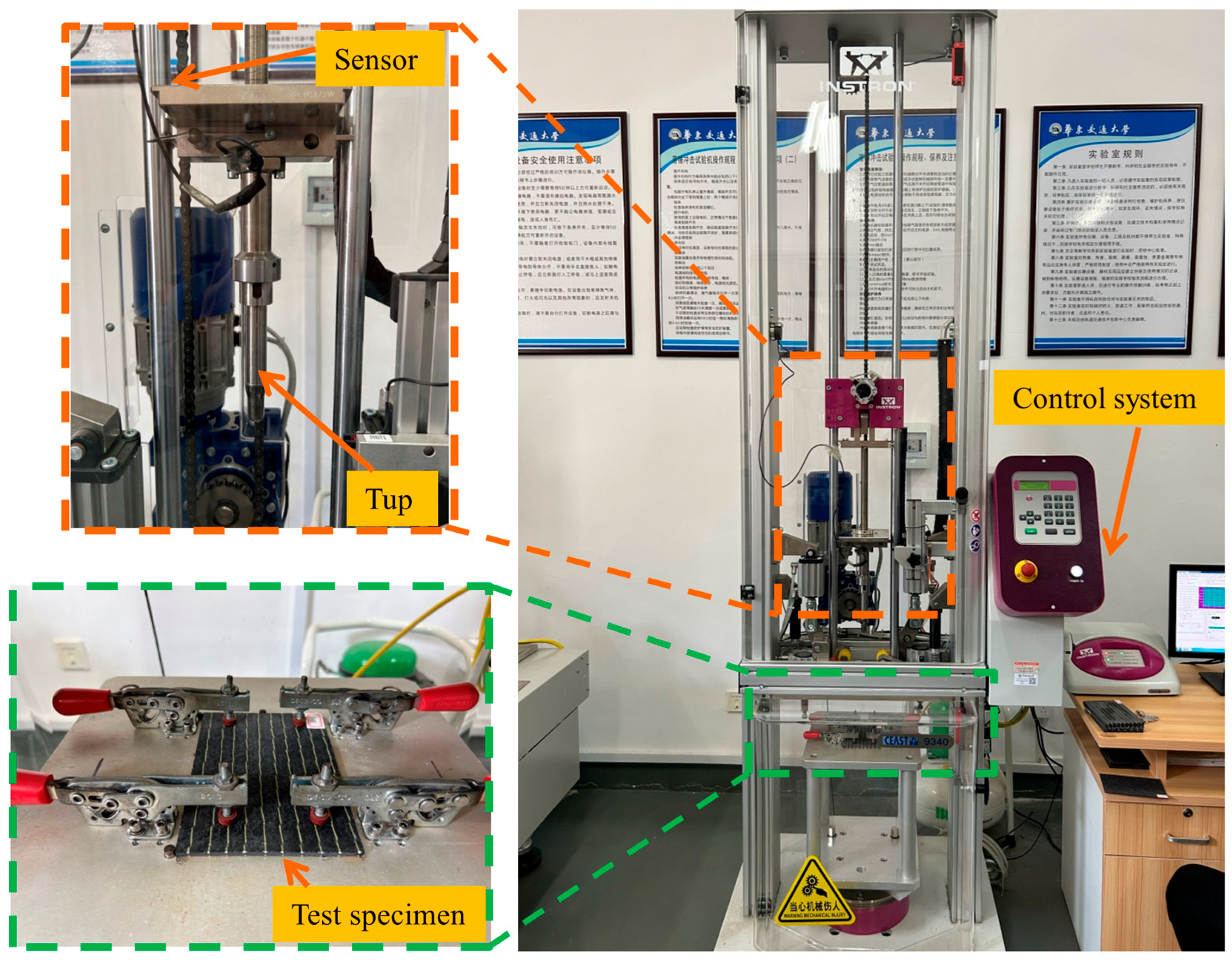
2.2. LVI Test
2.3. CAI Test
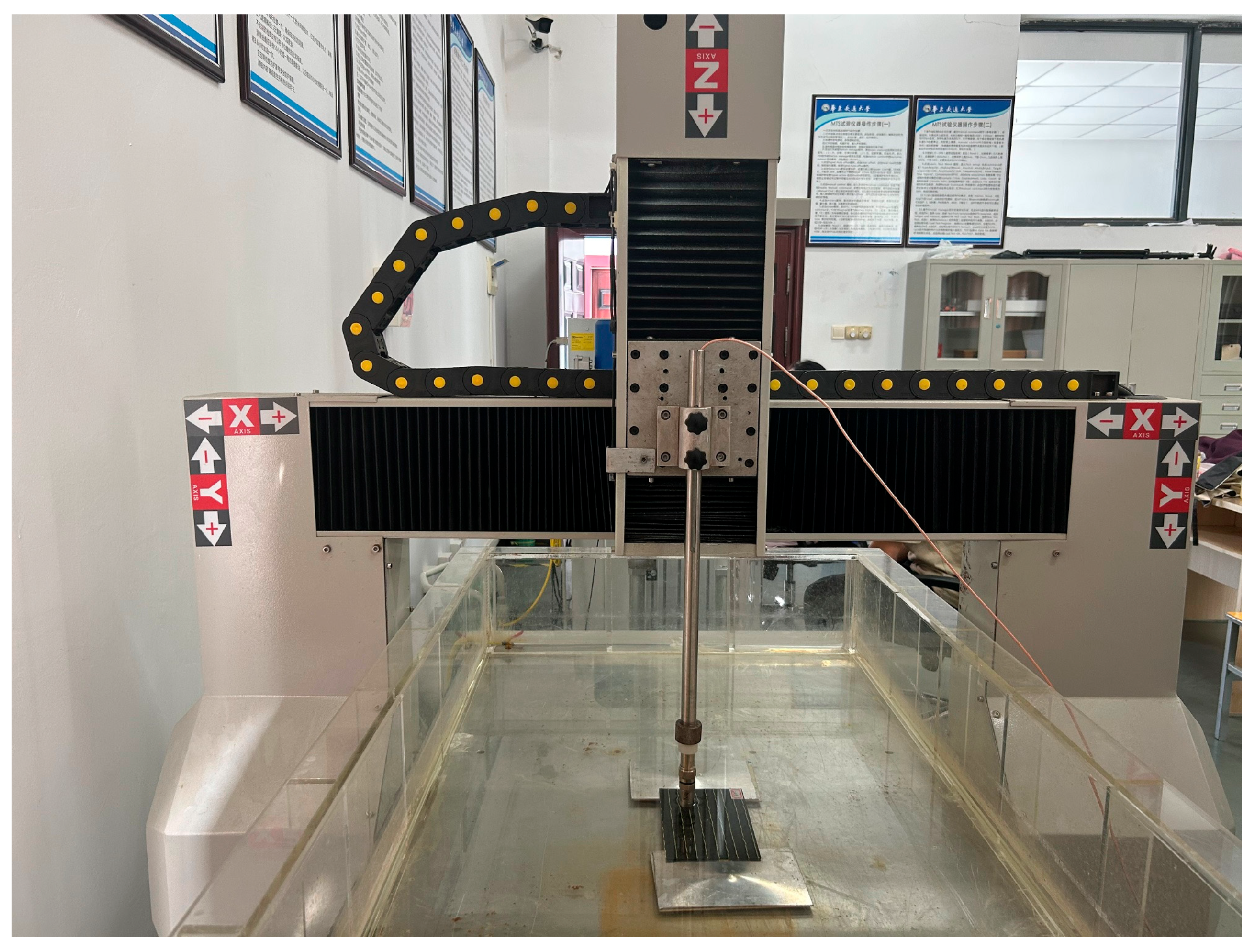
2.4. Detection Equipment
3. LVI Results and Discussion
3.1. Impact Responses of Unstitched and Stitched Laminates
3.2. Effect of Stitch Density on Impact Results
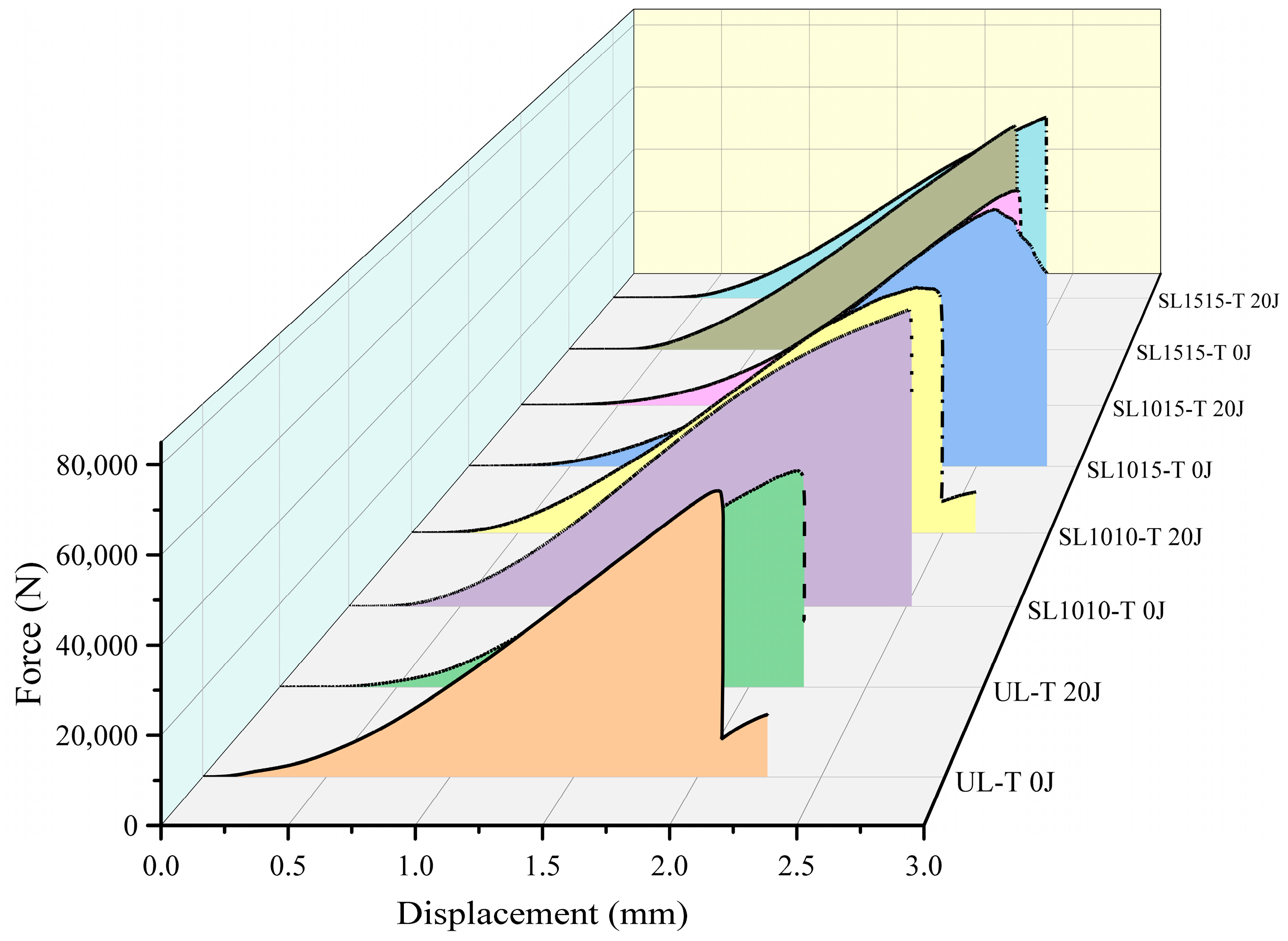
3.3. Effect of Plate Thickness on Impact Results
4. CAI Results and Discussion
4.1. CAI Strength
4.2. Failure Mode
5. Conclusions
- (1)
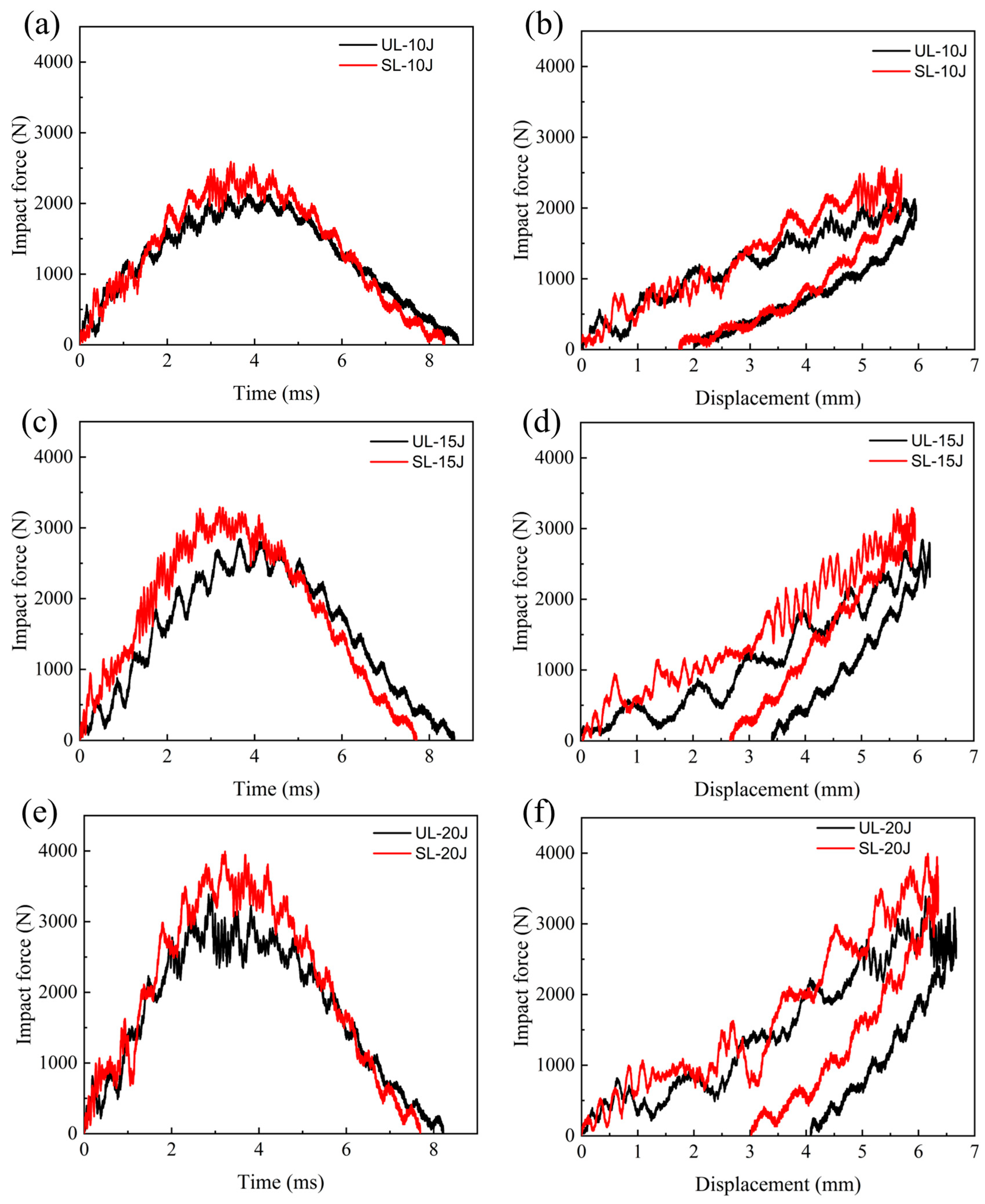
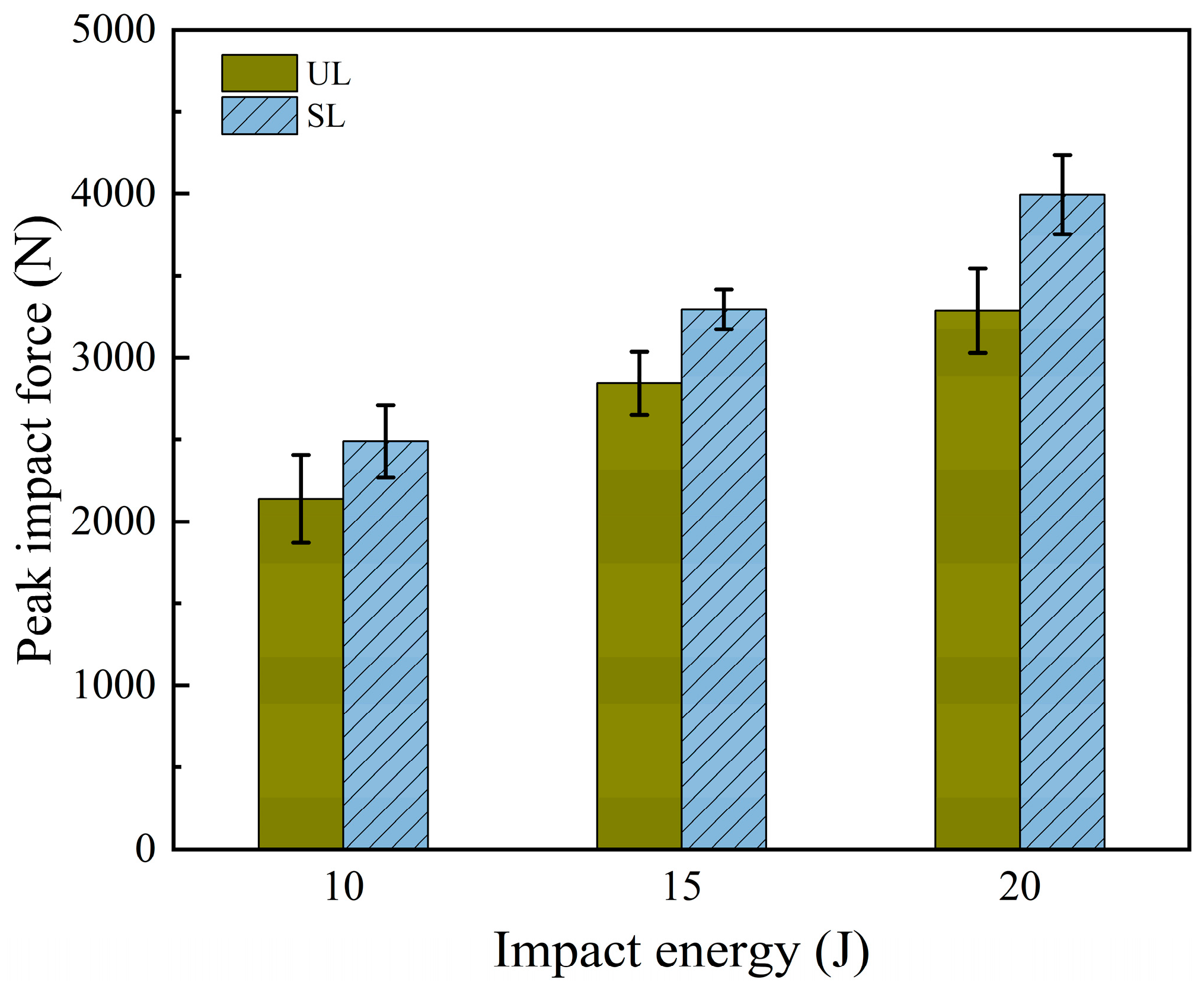
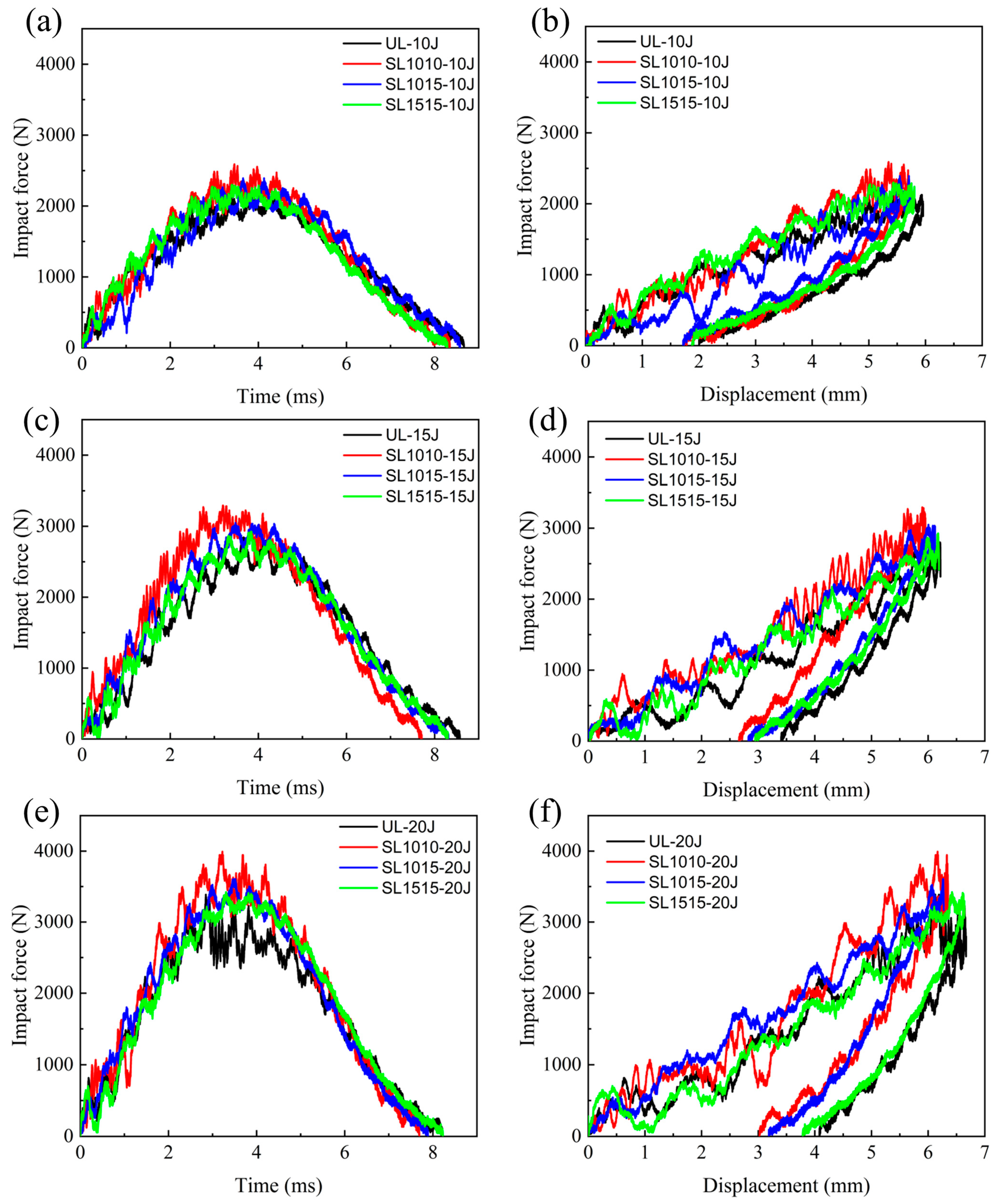
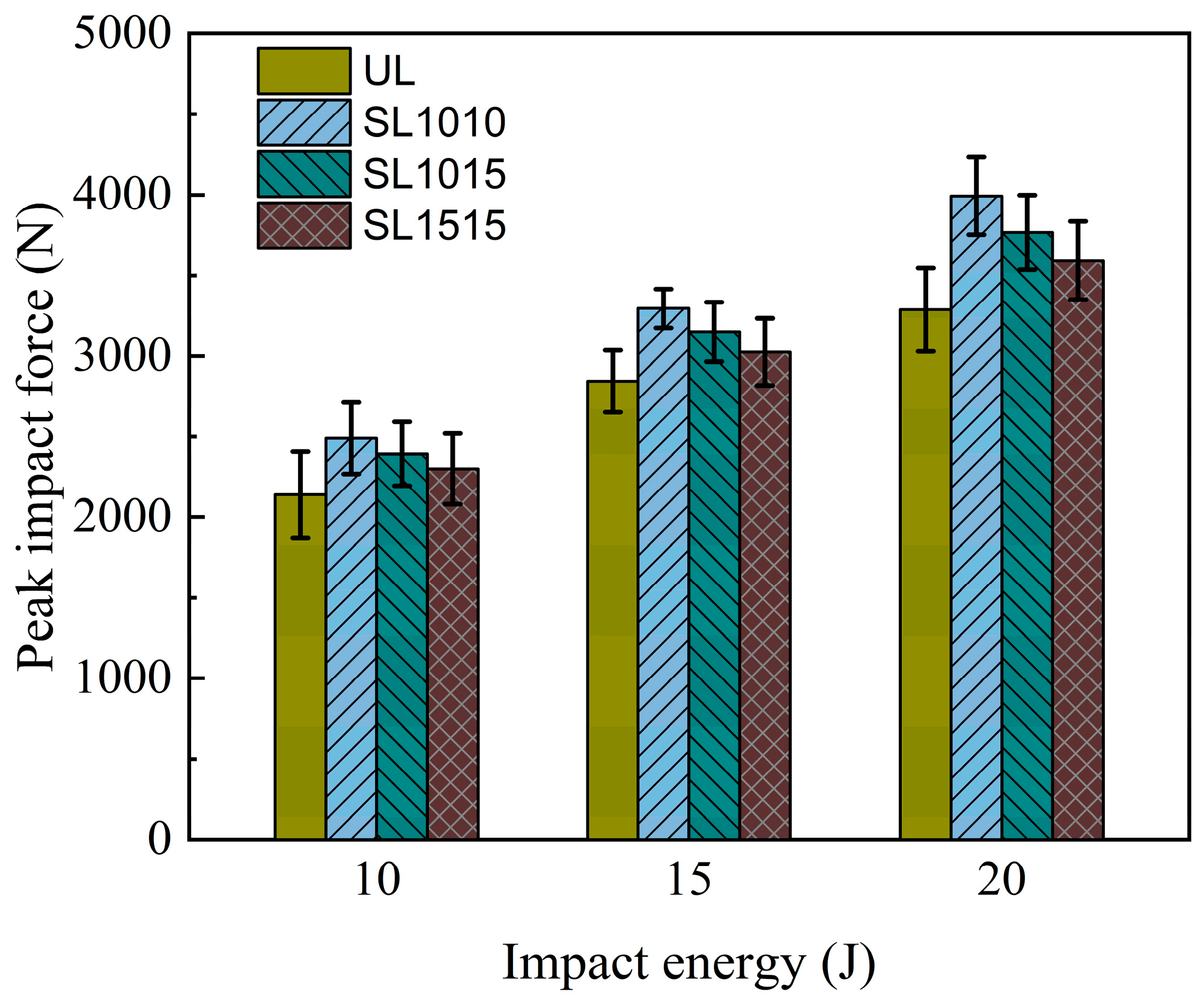
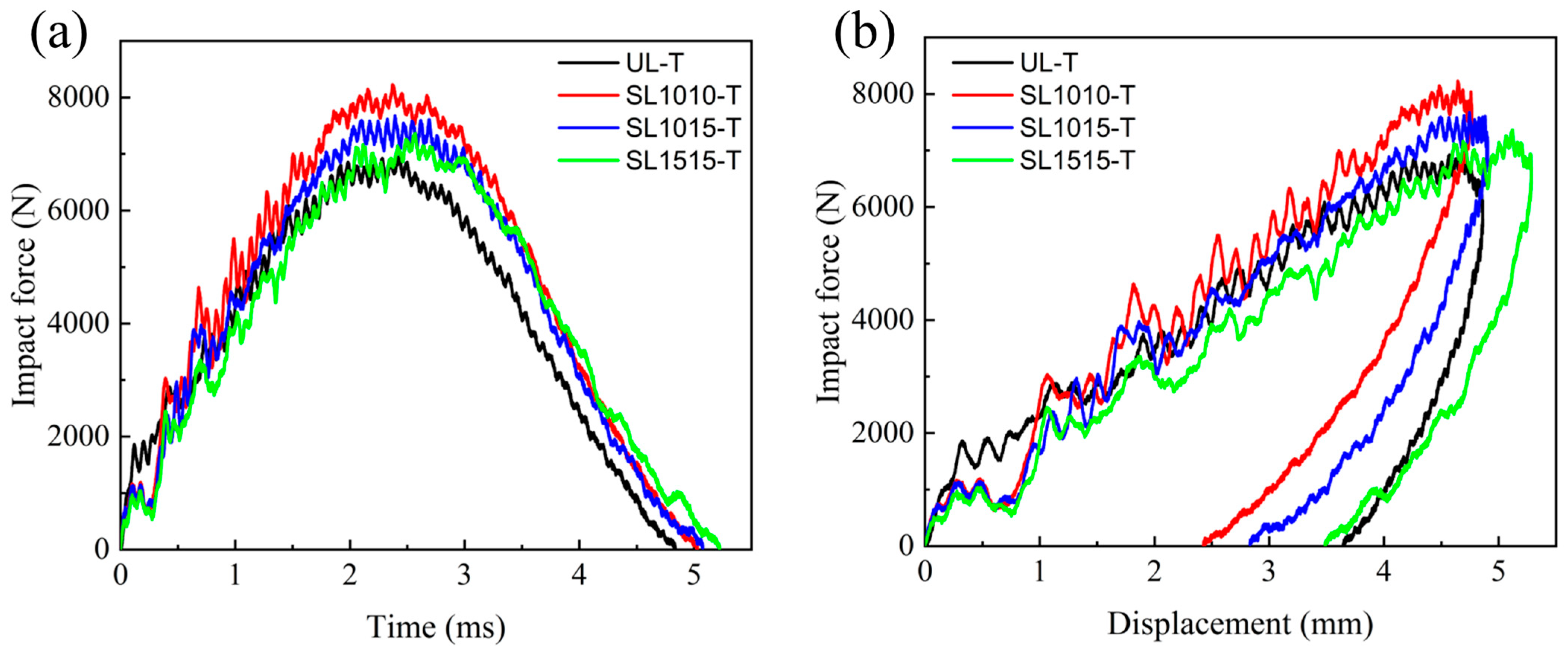
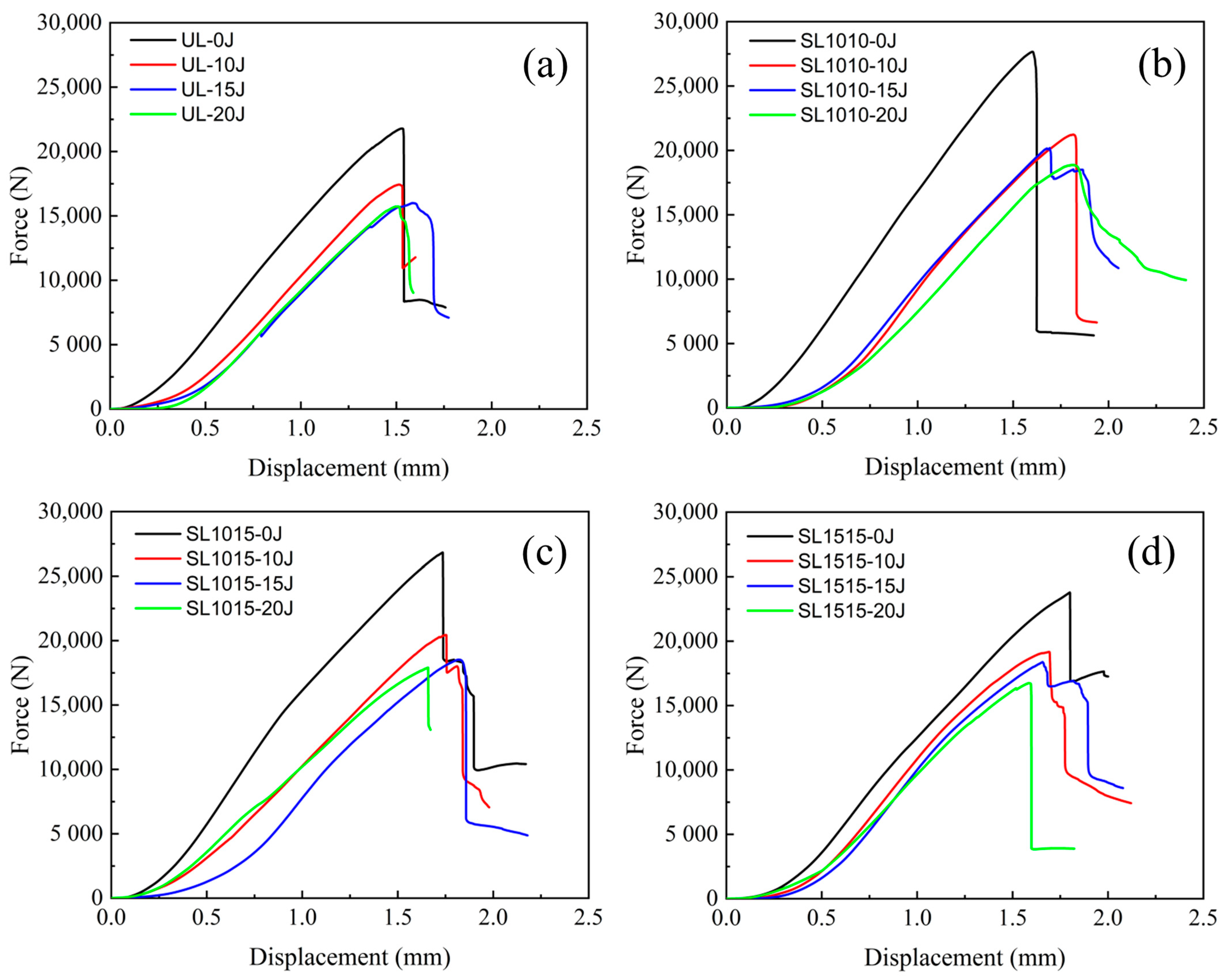
- The through-thickness reinforcement provided by the stitched resin columns enhances the structural impact resistance, resulting in higher peak contact forces for stitched specimens. This improvement becomes more pronounced with increased stitch density. At 20 J, the average maximum impact force of specimens with a stitch density of 15 × 15 mm increased by 9.24% compared to unstitched specimens. When the stitch density was changed to 10 × 10 mm, the improvement rose to 21.48%. Furthermore, both the maximum and residual displacements of stitched specimens are lower than those of unstitched ones, with displacement being inversely proportional to stitch density. At an impact energy of 10 J, the displacement difference between specimens is minimal. As the energy increases to 20 J, this difference grows significantly, measuring 1.1 mm. This is because, although stitching can enhance the bending stiffness of laminated panels, when impact energy is low, the inherent bending of the laminated plate itself is sufficient to resist the impact energy, and the improvement from stitching is not significant at low energy levels.
- (2)
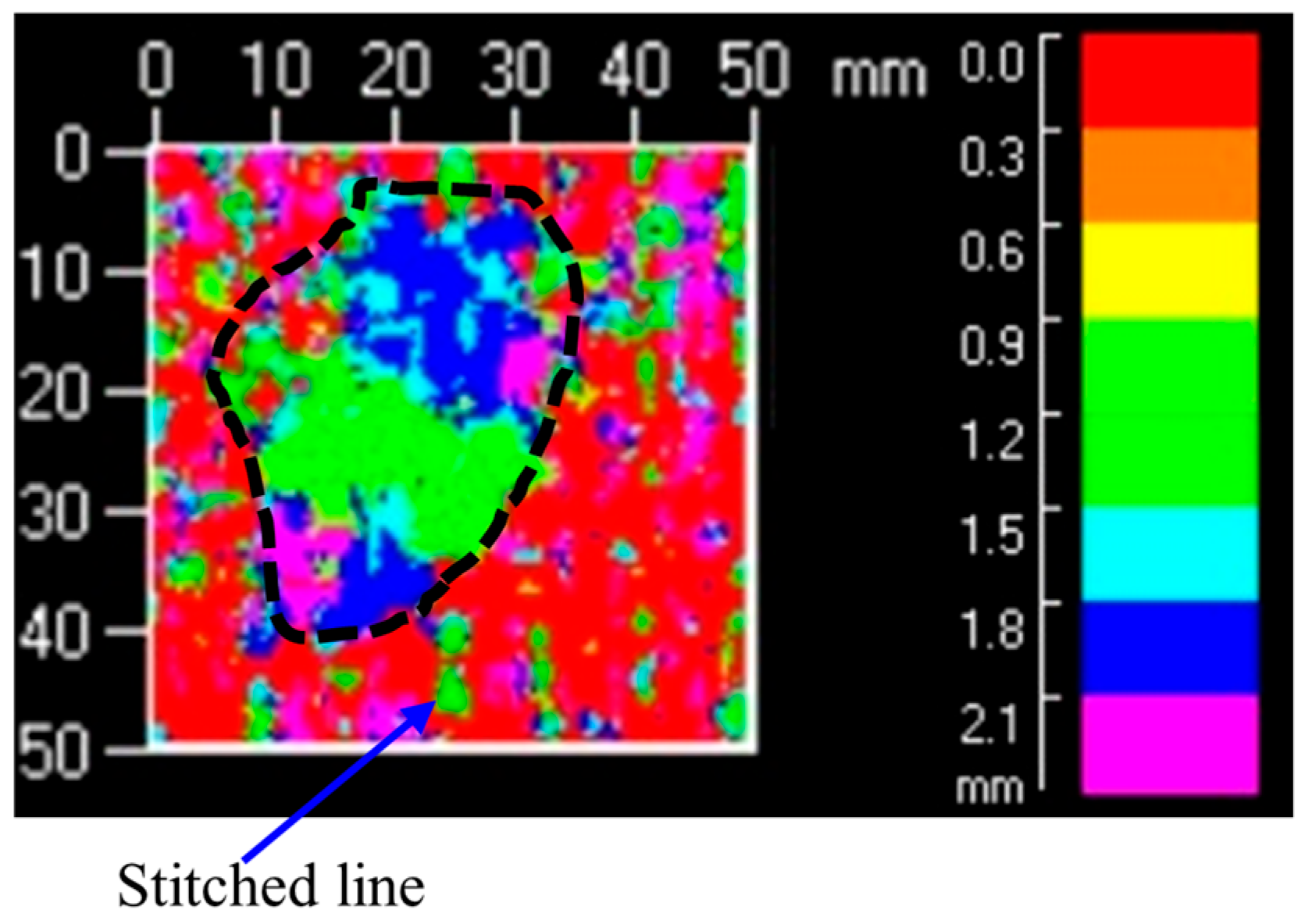
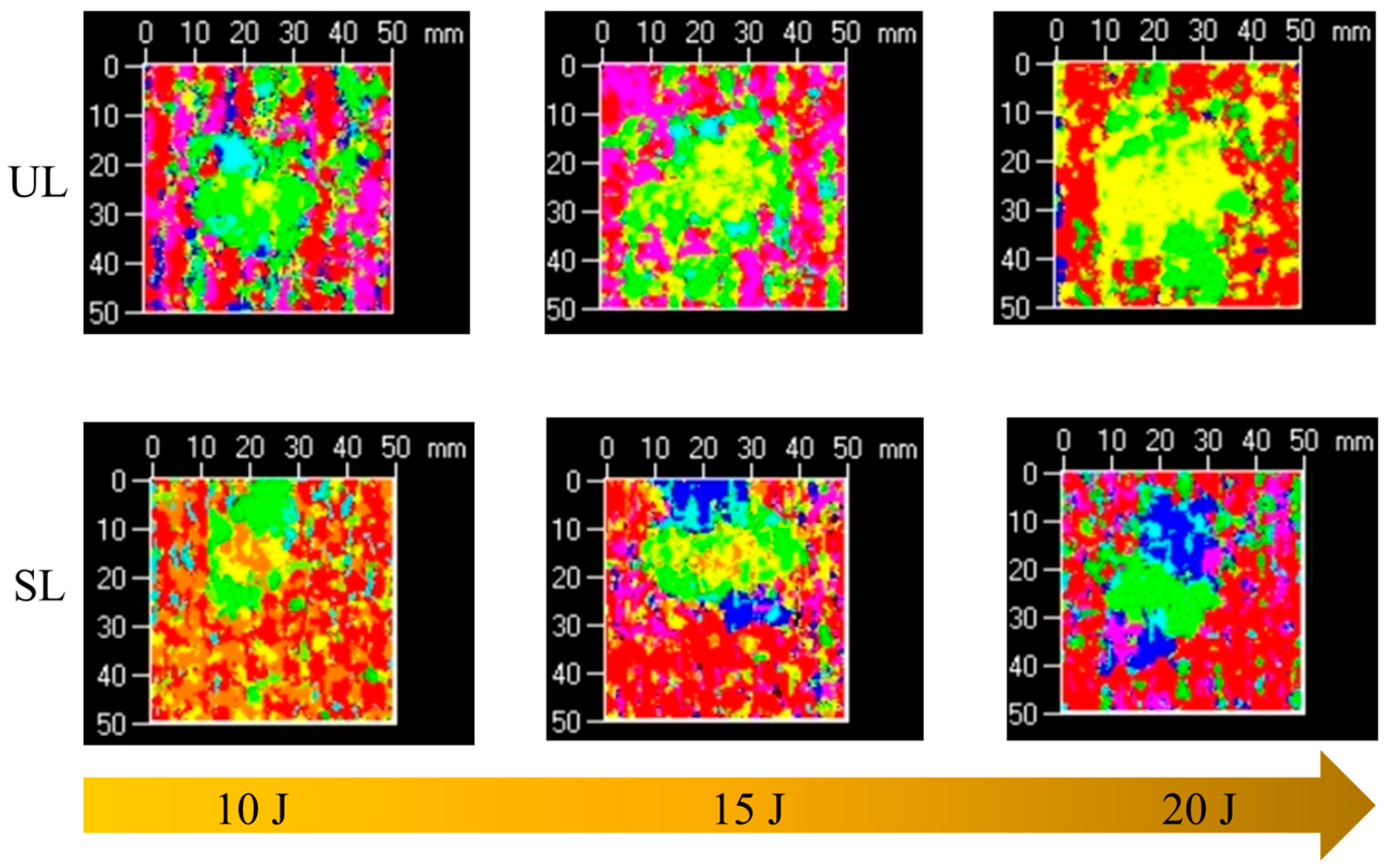
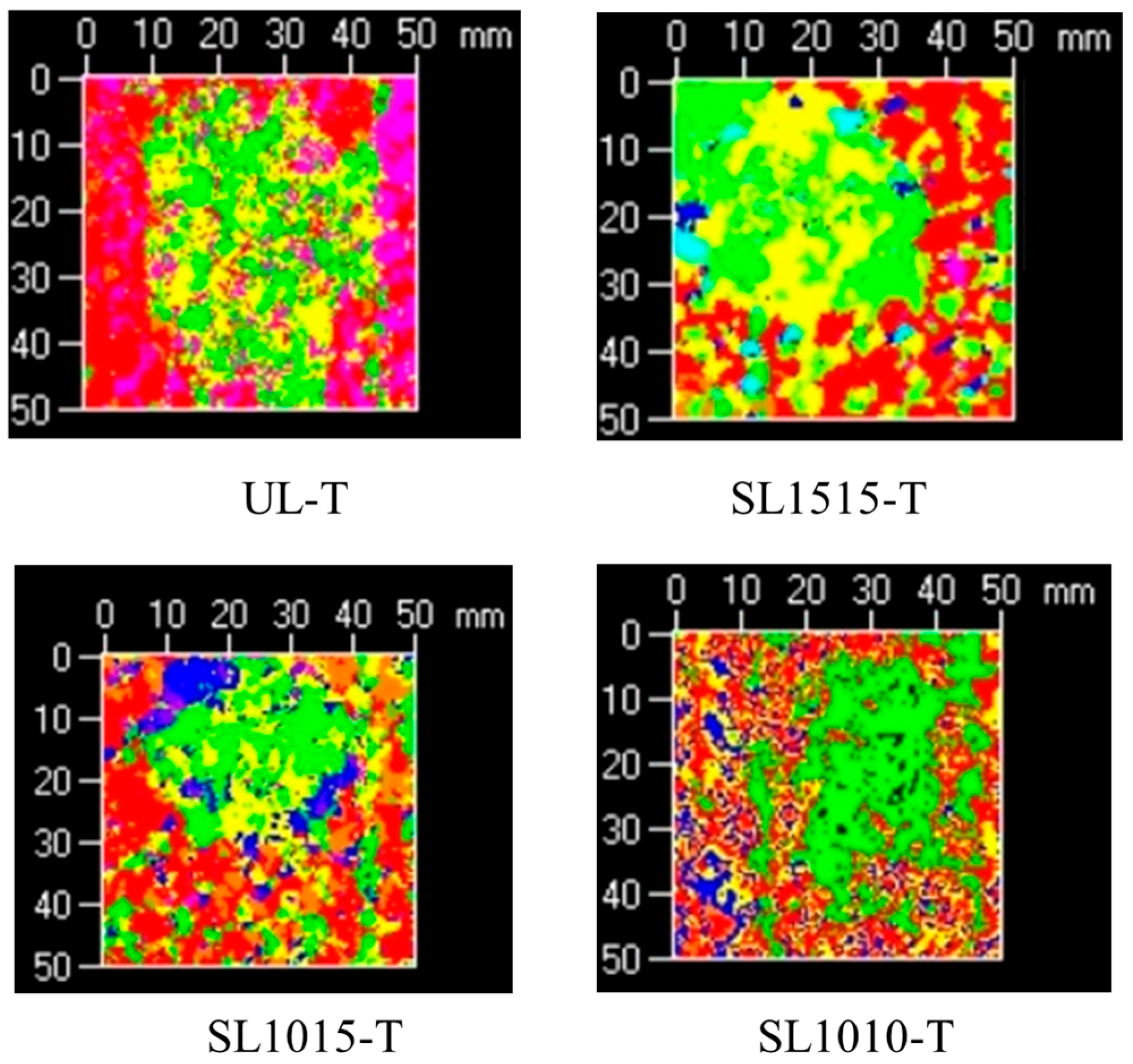
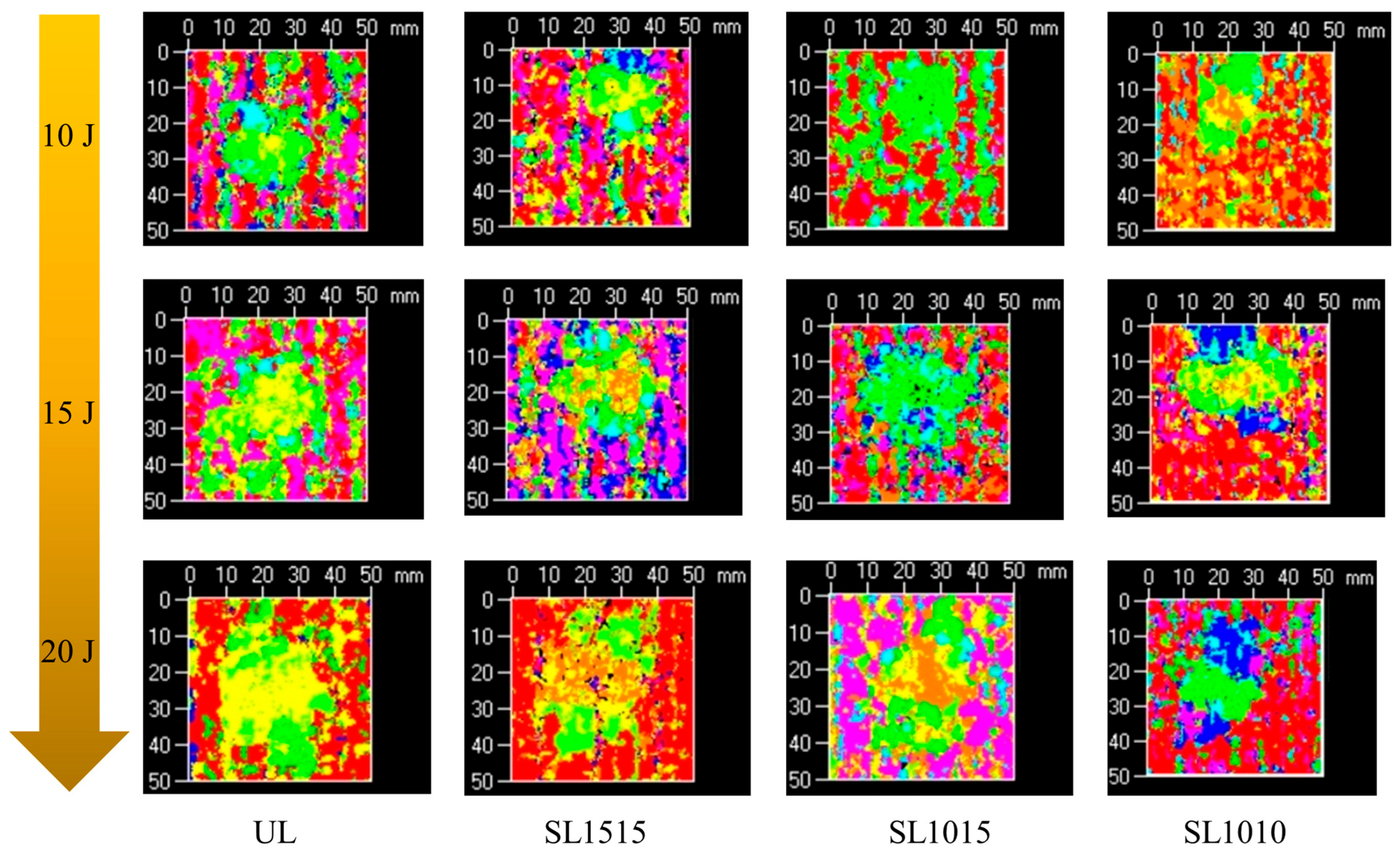
- Damage to specimens after impact primarily consists of matrix damage and delamination damage. At different impact energies, delamination damage in stitched specimens is less than in unstitched specimens. Stitching cannot prevent delamination from occurring, but it can suppress its propagation, with stitch density inversely proportional to the delamination area. Furthermore, at the same impact energy, stitching improves delamination in thin plates more effectively than in thick plates.
- (3)
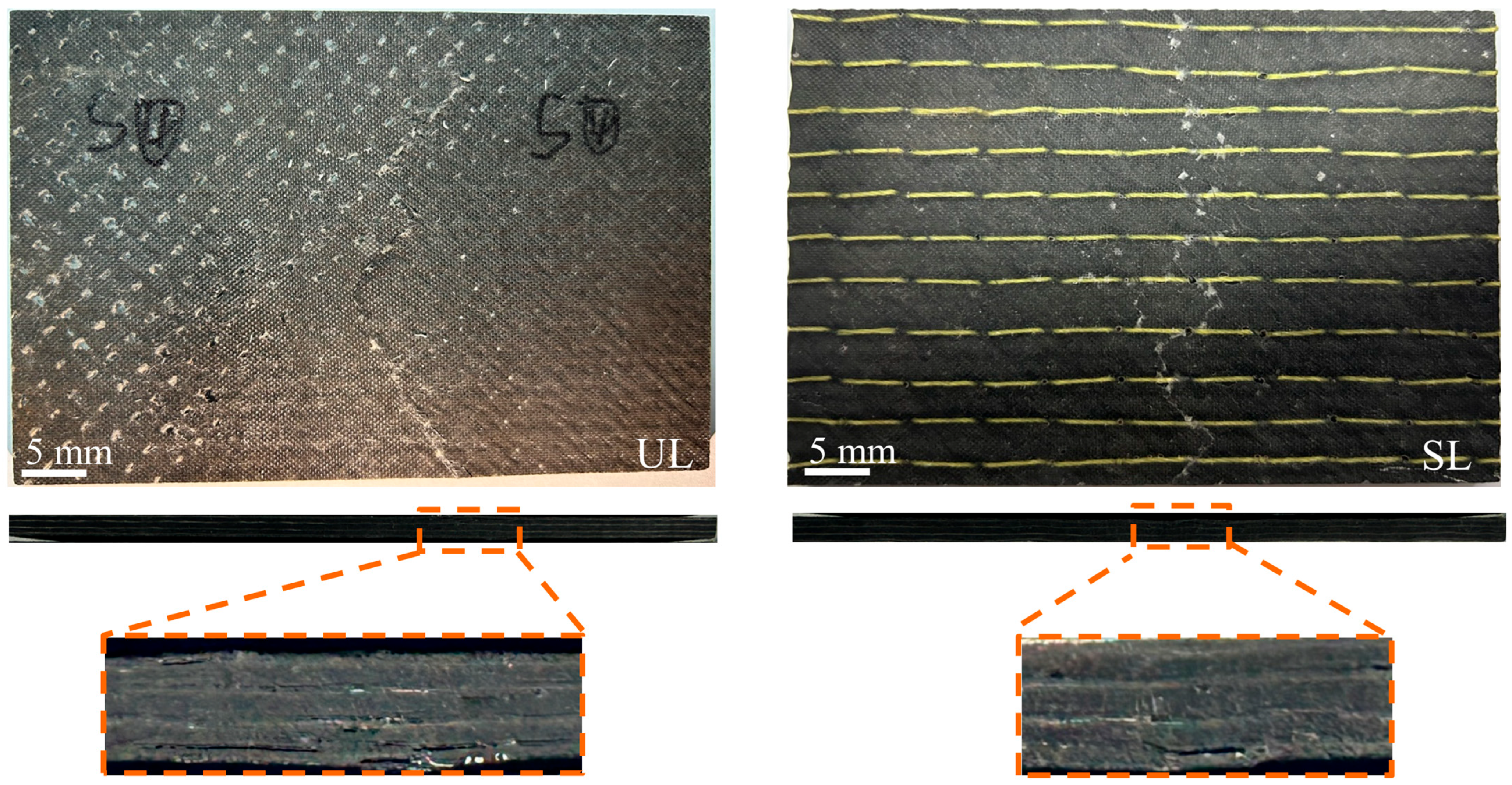
- The dominant failure mode for unstitched specimens under CAI is delamination-dominated failure, with cracks propagating along the width direction. In stitched specimens, stress concentrations induced by axial compression are relieved along the stitch rows, generating small cracks aligned with the fiber direction at the stitch locations. Consequently, the primary CAI failure mode for stitched specimens is fracture-strength failure.
- (4)
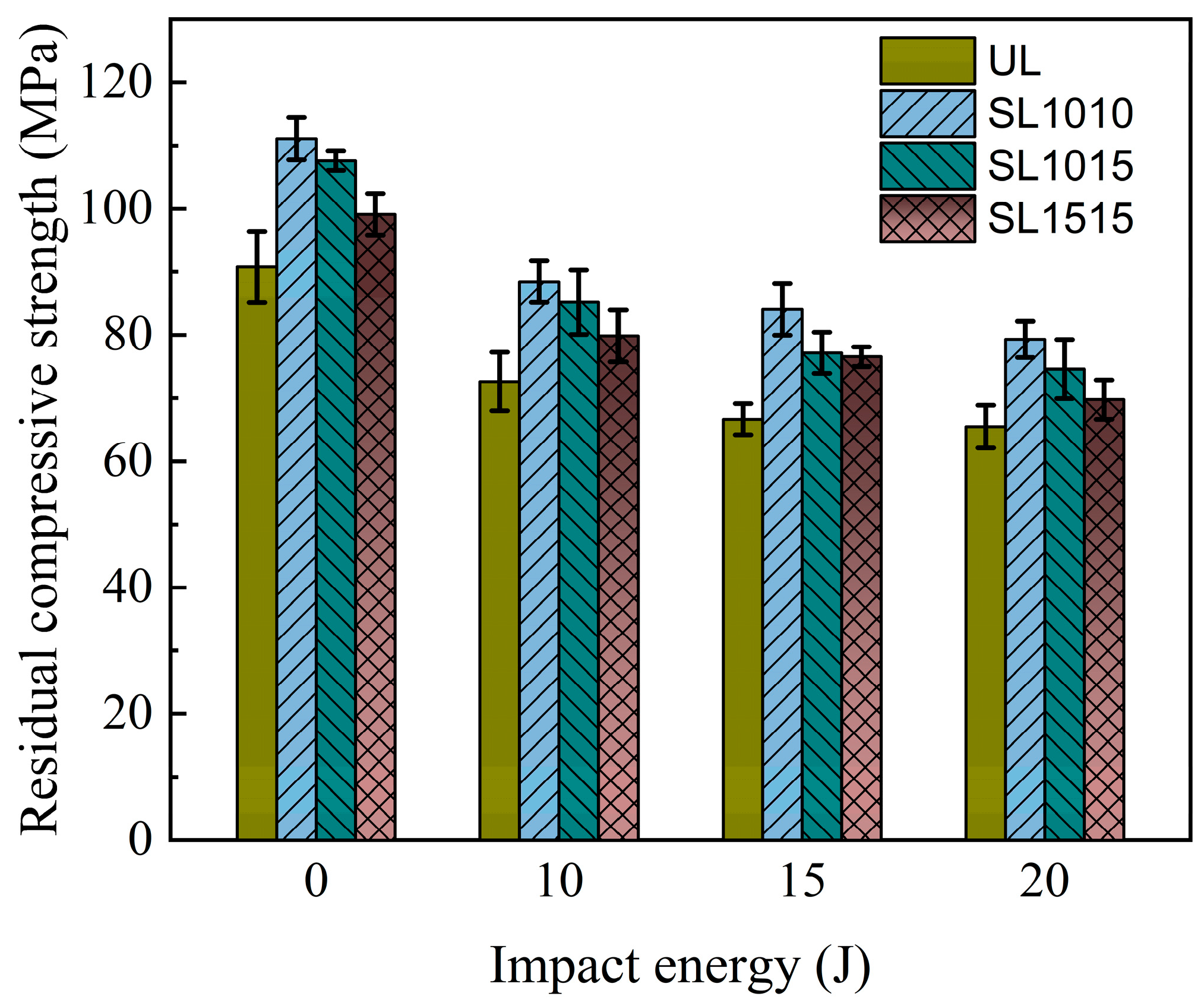
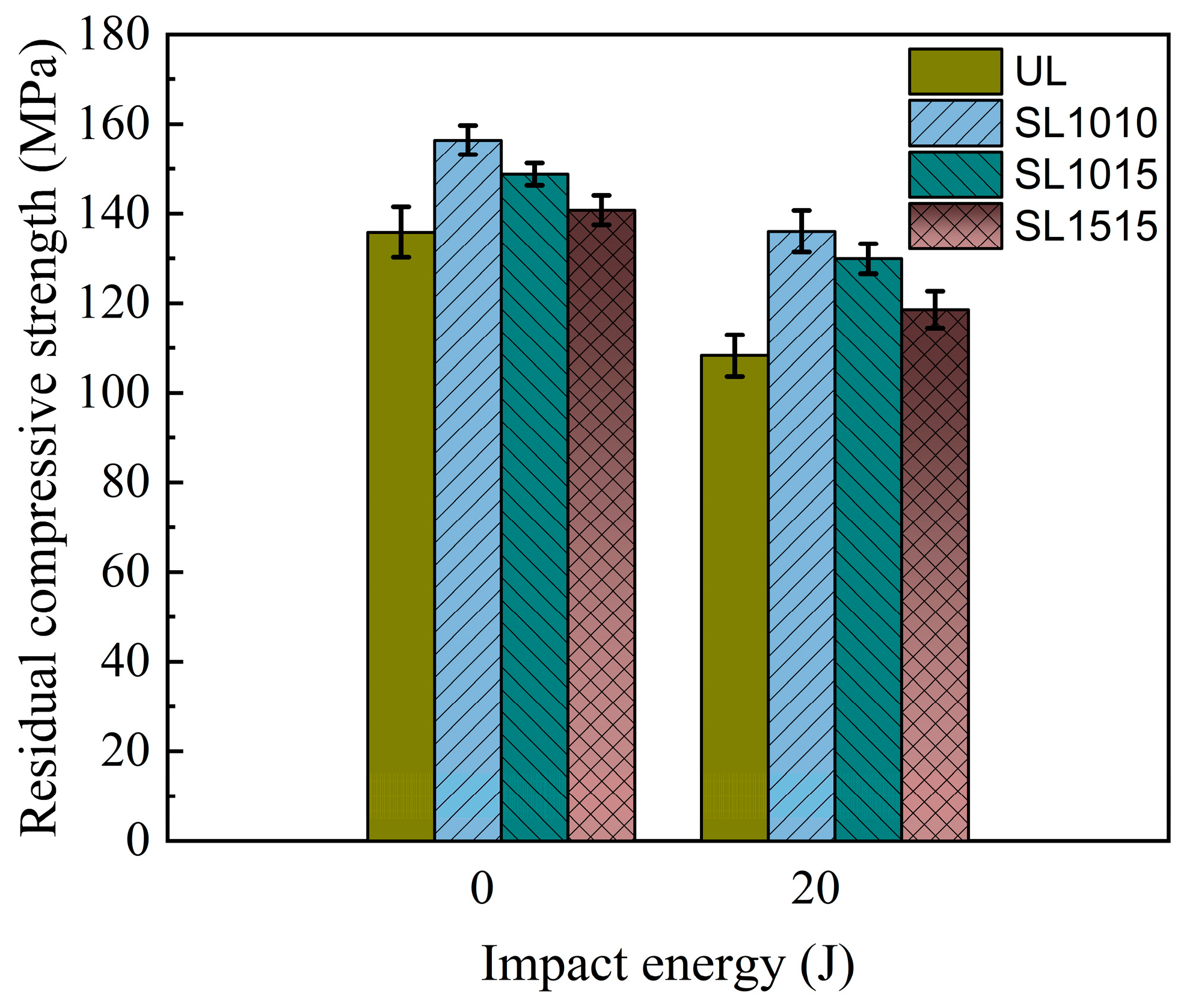
- Unimpacted specimens exhibit higher compressive strength than damaged ones, primarily because impact damage induces crack initiation and propagation, leading to interlaminar debonding. The larger the damaged area, the lower the residual strength. Therefore, the stitching process helps reduce the delamination area, enhancing the residual compressive strength of the laminate. Higher stitching density correlates with greater residual compressive strength. At 20 J, the strength of specimens with three different stitch densities increased by 6.52%, 17.71%, and 27.48%, respectively.
Author Contributions
Funding
Institutional Review Board Statement
Data Availability Statement
Acknowledgments
Conflicts of Interest
References
- Zhang, Z.; Liu, Y.; Tie, Y.; Hou, Y.; Li, C. Self-healing effect on the impact-resistance of hybrid stitch toughening CFRP composites: Experimental and numerical study. Thin-Walled Struct. 2025, 206, 112635. [Google Scholar] [CrossRef]
- Shah, S.Z.H.; Karuppanan, S.; Megat-Yusoff, P.S.M.; Sajid, Z. Impact resistance and damage tolerance of fiber reinforced composites: A review. Comp. Struct. 2019, 217, 100–121. [Google Scholar] [CrossRef]
- Shah, A.; Lovejoy, A.E.; Sullivan, R.W.; Drake, D.A. Pull-off behavior of stitched composite T-Joints. Comp. Part B Eng. 2025, 288, 111911. [Google Scholar] [CrossRef]
- Ren, M.; Wang, Y.; Cheng, D.; Li, Y.; Ding, J. Numerical analysis for damage characteristics in composite laminates under multiple hail particles impacts. Int. J. Solids Struct. 2025, 323, 113489. [Google Scholar] [CrossRef]
- Shabani, P.; Li, L.; Laliberte, J. Effects of impactor geometry and multiple impacts on low-velocity impact response and residual compressive strength of fiber-reinforced composite laminates. Comp. Part B Eng. 2025, 303, 112575. [Google Scholar] [CrossRef]
- Neesu, V.M.K.; Singh, H. Characterization of multi-site low-velocity impact damage of a composite laminate: An analytical approach. Int. J. Impact Eng. 2025, 206, 105462. [Google Scholar] [CrossRef]
- Tan, C.; Shan, Z.; Huang, H.; Sun, Z.; Guo, Z.; Guo, K. Effect of layup layers and stitch row spacing on drop-weight temperature impact and compression after impact behavior of stitched composites. Mater. Des. 2025, 254, 114104. [Google Scholar] [CrossRef]
- Mousavi, M.V.; Khoramishad, H. Investigation of energy absorption in hybridized fiber-reinforced polymer composites under high-velocity impact loading. Int. J. Impact Eng. 2020, 146, 103692. [Google Scholar] [CrossRef]
- Zhang, N.; Zhou, G.; Guo, X.; Xuan, S.; Wei, D.; Wang, X.; Cai, D. High-velocity impact damage and compression after impact behavior of carbon fiber composite laminates: Experimental study. Int. J. Impact Eng. 2023, 181, 104749. [Google Scholar] [CrossRef]
- Pan, X.; Liu, T.; Chen, L.; Yun, Z.; Nie, S.; Deng, J.; Fan, H.; Zhu, S.; Chen, Y. Mechanical response and damage accumulation of thermoplastic composite laminates under repeated low-velocity impacts. Thin-Walled Struct. 2025, 216, 113682. [Google Scholar] [CrossRef]
- Landowski, M.; Strugała, G.; Budzik, M.; Imielińska, K. Impact damage in SiO2 nanoparticle enhanced epoxy—Carbon fibre composites. Comp. Part B Eng. 2017, 113, 91–99. [Google Scholar] [CrossRef]
- Alshehri, A.H.; Alamry, A.; Koloor, S.S.R.; Alzahrani, B.; Arockiarajan, A. Investigating low velocity impact and compression after impact behaviors of carbon fiber/epoxy composites reinforced with helical multiwalled carbon nanotubes. J. Eng. Res. 2025, 13, 1972–1986. [Google Scholar] [CrossRef]
- Ren, D.; Li, K.; Chen, L.; Chen, S.; Han, M.; Xu, M.; Liu, X. Modification on glass fiber surface and their improved properties of fiber-reinforced composites via enhanced interfacial properties. Comp. Part B Eng. 2019, 177, 107419. [Google Scholar] [CrossRef]
- Yuan, J.-M.; Fan, Z.-F.; Yang, Q.-C.; Li, W.; Wu, Z.-J. Surface modification of carbon fibers by microwave etching for epoxy resin composite. Comp. Sci. Technol. 2018, 164, 222–228. [Google Scholar] [CrossRef]
- Mamolo, S.U.; Sodano, H.A. Interfacial reinforcement of carbon fiber composites through a chlorinated aramid nanofiber interphase. Comp. Sci. Technol. 2024, 245, 110351. [Google Scholar] [CrossRef]
- Ren, D.; Chen, L.; Yuan, Y.; Li, K.; Xu, M.; Liu, X. Designing and Preparation of Fiber-Reinforced Composites with Enhanced Interface Adhesion. Polymers 2018, 10, 1128. [Google Scholar] [CrossRef]
- Rong, Y.; Zhao, P.; Shen, T.; Gao, J.; Zhou, S.; Huang, J.; Zhao, G.; Liu, Y. Mechanical and tribological properties of basalt fiber fabric reinforced polyamide 6 composite laminates with interfacial enhancement by electrostatic self-assembly of graphene oxide. J. Mater. Res. Technol. 2023, 27, 7795–7806. [Google Scholar] [CrossRef]
- Wang, J.; Qiao, T.; Wang, A.; Li, X.; Wang, T. Mechanism of Interlaminar Strengthening and Toughening of Al/CFRP/Al Composite Laminates. Materials 2023, 16, 560. [Google Scholar] [CrossRef]
- Wang, Y. Auxetic Composite Laminates with Through-Thickness Negative Poisson’s Ratio for Mitigating Low Velocity Impact Damage: A Numerical Study. Materials 2022, 15, 6963. [Google Scholar] [CrossRef] [PubMed]
- Wang, Y.; Mu, Z.; Zhang, Z.; Song, W.; Zhang, S.; Hu, H.; Ma, Z.; Huang, L.; Zhang, D.; Wang, Z.; et al. Interfacial reinforced carbon fiber composites inspired by biological interlocking structure. iScience 2022, 25, 104066. [Google Scholar] [CrossRef] [PubMed]
- Huang, S.; Jia, X.; He, J.; Yang, J.; Kitipornchai, S. Study on Multidirectional Hybrid Effect and Failure Mechanisms of Carbon/Basalt Fiber Bionic Double-Helicoidal Composite Laminates. Polym. Compos. 2025, 1–20. [Google Scholar] [CrossRef]
- Zhang, M.; Zhang, J.; Yang, D.; Li, Y.; Cui, X.; Fu, K. Improved interlayer performance of short carbon fiber reinforced composites with bio-inspired structured interfaces. Addit. Manuf. 2024, 79, 103936. [Google Scholar] [CrossRef]
- Zhang, X.; Zhao, G.; Yu, T.X.; Zhang, X. A study of the penetration behavior of bio-inspired CFRP composite laminates with intralaminar and interlaminar hard-and-soft structures. Compos. Commun. 2025, 56, 102405. [Google Scholar] [CrossRef]
- Olhan, S.; Behera, B.K. Mechanical, thermogravimetric, and dynamic mechanical behavior of high-performance textile structural composite panels for automotive applications. J. Manuf. Process. 2023, 102, 608–621. [Google Scholar] [CrossRef]
- Olhan, S.; Antil, B.; Behera, B.K. Low-velocity impact and quasi-static post-impact compression analysis of woven structural composites for automotive: Influence of fibre types and architectural structures. Comp. Struct. 2025, 352, 118676. [Google Scholar] [CrossRef]
- Arshad, Z.; Ali, M. 3D woven auxetic composites using onloom shaped reinforcement. Polym. Bull. 2024, 81, 13137–13154. [Google Scholar] [CrossRef]
- Zhang, H.; Ding, H.; Yang, D.; Xu, Q.; Ma, Y.; Bi, Y. Experimental investigation of Z-pin insertion angles on the mechanical behavior and failure mechanism of compression after impact for CFRP laminates. Comp. Struct. 2023, 304, 116476. [Google Scholar] [CrossRef]
- Azimpour-Shishevan, F.; Mohtadi-Bonab, M.A.; Akbulut, H.; Rahmatinejad, B. Low velocity impact behavior of twill basalt/epoxy composites modified by graphene nanoparticles. J. Comp. Mater. 2023, 57, 1379–1394. [Google Scholar] [CrossRef]
- Tan, K.T.; Watanabe, N.; Iwahori, Y. Experimental investigation of bridging law for single stitch fibre using Interlaminar tension test. Comp. Struct. 2010, 92, 1399–1409. [Google Scholar] [CrossRef]
- Tan, K.T.; Watanabe, N.; Iwahori, Y.; Ishikawa, T. Effect of stitch density and stitch thread thickness on compression after impact strength and response of stitched composites. Comp. Sci. Technol. 2012, 72, 587–598. [Google Scholar] [CrossRef]
- Lai, J.; Peng, Z.; Huang, Z.; Li, M.; Mo, M.; Liu, B. Effect of Stitching, Stitch Density, Stacking Sequences on Low-Velocity Edge Impact and Compression after Edge Impact (CAEI) Behavior of Stitched CFRP Laminates. Materials 2022, 15, 8822. [Google Scholar] [CrossRef]
- Aymerich, F.; Onnis, R.; Priolo, P. Analysis of the fracture behaviour of a stitched single-lap joint. Comp. Part A Appl. Sci. Manuf. 2005, 36, 603–614. [Google Scholar] [CrossRef]
- Aymerich, F.; Pani, C.; Priolo, P. Effect of stitching on the low-velocity impact response of [03/903]s graphite/epoxy laminates. Comp. Part A Appl. Sci. Manuf. 2007, 38, 1174–1182. [Google Scholar] [CrossRef]
- Aymerich, F.; Dore, F.; Priolo, P. Prediction of impact-induced delamination in cross-ply composite laminates using cohesive interface elements. Comp. Sci. Technol. 2008, 68, 2383–2390. [Google Scholar] [CrossRef]
- Byun, J.-H.; Song, S.-W.; Lee, C.-H.; Um, M.-K.; Hwang, B.-S. Impact properties of laminated composites with stitching fibers. Comp. Struct. 2006, 76, 21–27. [Google Scholar] [CrossRef]
- Francesconi, L.; Aymerich, F. Numerical simulation of the effect of stitching on the delamination resistance of laminated composites subjected to low-velocity impact. Comp. Struct. 2017, 159, 110–120. [Google Scholar] [CrossRef]
- Francesconi, L.; Aymerich, F. Effect of stitching on the flexure after impact behavior of thin laminated composites. Proc. Inst. Mech. Eng. Part C-J. Mech. Eng. Sci. 2018, 232, 1374–1388. [Google Scholar] [CrossRef]
- Francesconi, L.; Loi, G.; Aymerich, F. Impact and Compression-After-Impact Performance of a Thin Z-Pinned Composite Laminate. J. Mater. Eng. Perform. 2023, 32, 3923–3937. [Google Scholar] [CrossRef]
- Lopresto, V.; Melito, V.; Leone, C.; Caprino, G. Effect of stitches on the impact behaviour of graphite/epoxy composites. Comp. Sci. Technol. 2006, 66, 206–214. [Google Scholar] [CrossRef]
- Kim, C.H.; Jo, D.H.; Choi, J.H. Failure strength of composite T-joints prepared using a new 1-thread stitching process. Comp. Struct. 2017, 178, 225–231. [Google Scholar] [CrossRef]
- Kim, C.-H.; Sim, H.-W.; An, W.-J.; Kweon, J.-H.; Choi, J.-H. Impact characteristics of composite panel stitched by I-fiber process. Comp. Part A Appl. Sci. Manuf. 2019, 127, 105644. [Google Scholar] [CrossRef]
- Yoshimura, A.; Nakao, T.; Yashiro, S.; Takeda, N. Improvement on out-of-plane impact resistance of CFRP laminates due to through-the-thickness stitching. Comp. Part A Appl. Sci. Manuf. 2008, 39, 1370–1379. [Google Scholar] [CrossRef]
- Tan, K.T.; Yoshimura, A.; Watanabe, N.; Iwahori, Y.; Ishikawa, T. Effect of stitch density and stitch thread thickness on damage progression and failure characteristics of stitched composites under out-of-plane loading. Comp. Sci. Technol. 2013, 74, 194–204. [Google Scholar] [CrossRef]
- Liu, B.; Lai, J.; Liu, H.; Huang, Z.; Liu, B.; Peng, Z.; Zhang, W. Experimental and numerical analysis of stitched composite laminates subjected to low-velocity edge-on impact and compression after edge-on impact. Polymers 2023, 15, 2484. [Google Scholar] [CrossRef]
- He, Y.; Mei, M.; Yu, S.; Wei, K. Drop-weight impact behaviour of stitched composites: Influence of stitching pattern and stitching space. Comp. Part A Appl. Sci. Manuf. 2023, 172, 107612. [Google Scholar] [CrossRef]
- Bilisik, K.; Yolacan, G. Off-Axis Tensile Properties of Multistitched Plain Woven E-glass/polyester Composites. Fib. Polym. 2014, 15, 589–598. [Google Scholar] [CrossRef]
- Bilisik, K. Characterization of multi-stitched woven nano composites under compression after low velocity impact (CALVI) load. Polym. Comp. 2018, 39, 3750–3764. [Google Scholar] [CrossRef]
- Xiang, Y.; Zhang, Z.; Yang, X.; Lin, Y.; Zhang, G.; Song, C.; Xiong, Z. Effect of stitch density on the damage inhibition and compression strength after highvelocity impact of UHMWPE fiber composites. Comp. Struct. 2024, 328, 117728. [Google Scholar] [CrossRef]
- Mei, M.; Zeng, T.; Wang, W.; He, Y.; Jiang, S.; Wen, L.; Huang, J.; Li, X. Tensile failure strain mechanism of stitched composites with z-stitch method: Influence of stitch pattern and density. Polym. Comp. 2025, 46, 7362–7376. [Google Scholar] [CrossRef]
- Reis, L.M.M.; Ribeiro, M.L.; Madureira, F.; Morelli, A.C.; Monteiro, S.N.; Arantes, V.L. An experimental investigation of the mechanical properties and failure mode of 3D stitched composites. J. Mater. Res. Technol. 2024, 29, 90–100. [Google Scholar] [CrossRef]
- ASTM D7136/D7136M; Standard Test Method for Measuring the Damage Resistance of a Fiber-Reinforced Polymer Matrix Composite to a Drop-Weight Impact Event. ASTM Committee, ASTM International Standards Organization: West Conshohocken, PA, USA, 2020. Available online: https://www.astm.org/d7136_d7136m-20.html (accessed on 2 November 2020).
- ASTM D7137/D7137M; Standard Test Method for Compressive Residual Strength Properties of Damaged Polymer Matrix Composite Plates. ASTM Committee, ASTM International Standards Organization: West Conshohocken, PA, USA, 2017. Available online: https://www.astm.org/d7137_d7137m-17.html (accessed on 25 October 2017).
- Zhou, J.; Wen, P.; Wang, S. Numerical investigation on the repeated low-velocity impact behavior of composite laminates. Comp. Part B Eng. 2020, 185, 107771. [Google Scholar] [CrossRef]
- Zhou, J.; Liu, B.; Wang, S. Finite element analysis on impact response and damage mechanism of composite laminates under single and repeated low-velocity impact. Aerosp. Sci. Technol. 2022, 129, 107810. [Google Scholar] [CrossRef]

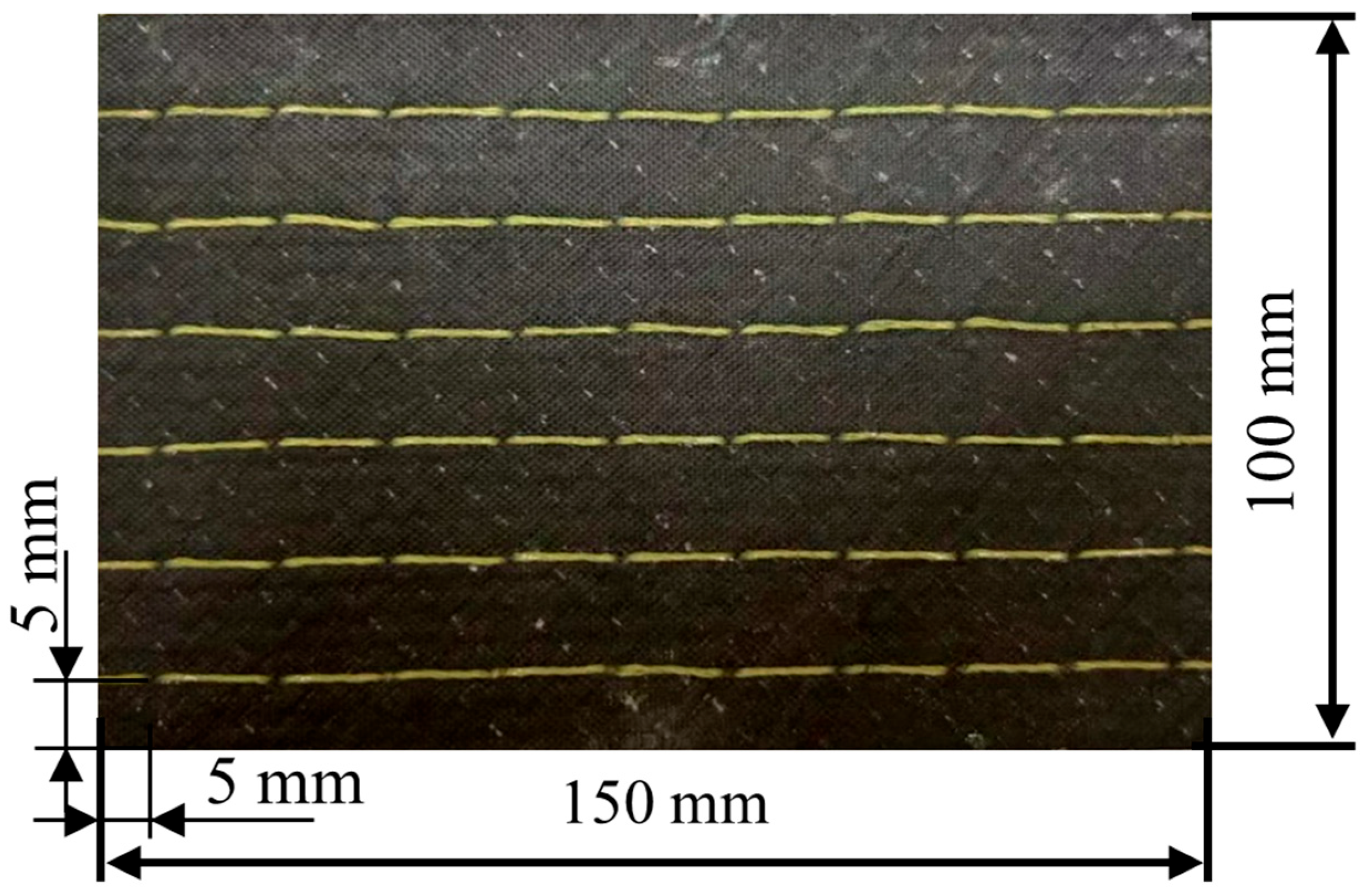

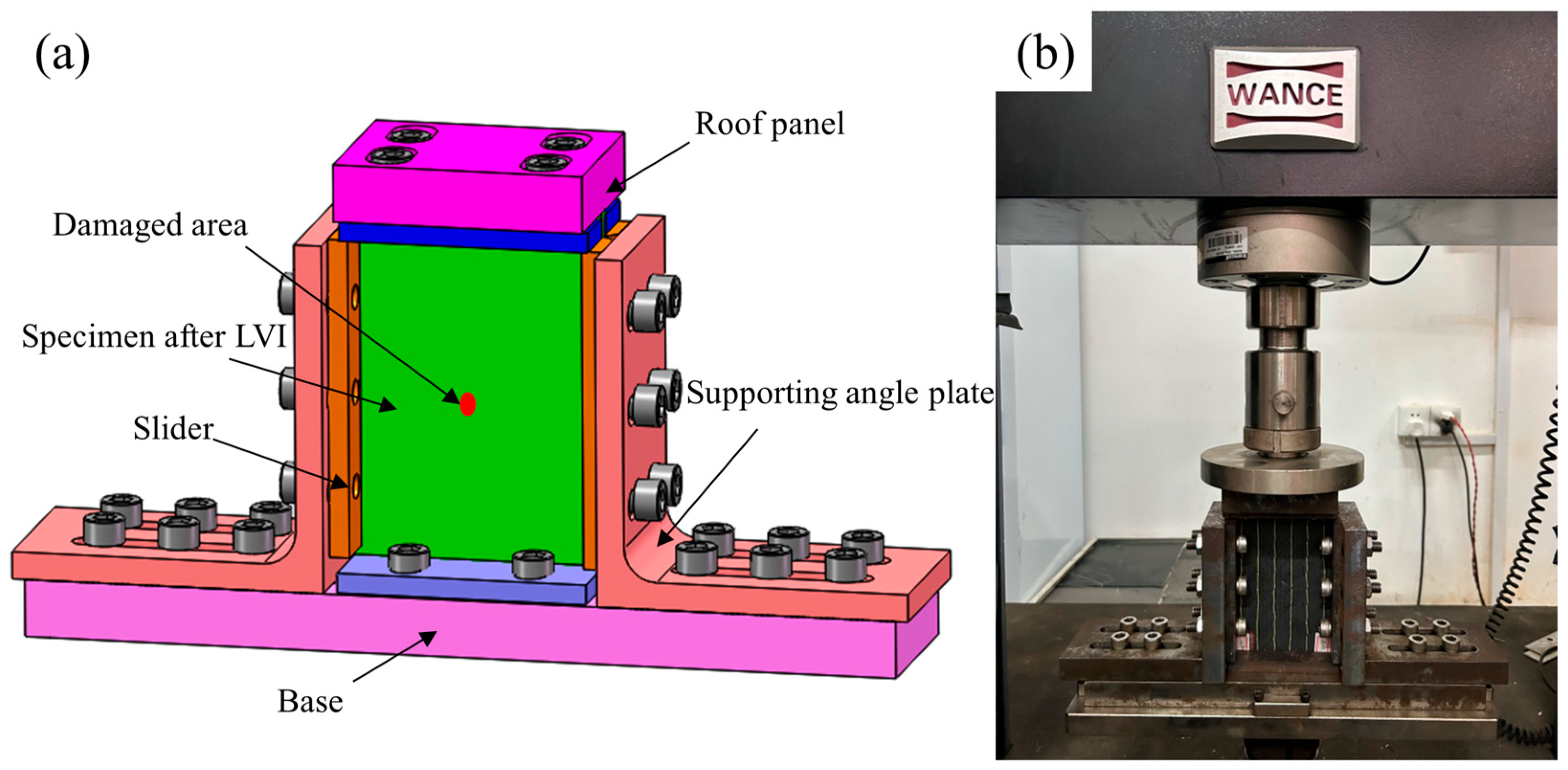







| Brand Type | R668 |
|---|---|
| Appearance | Colorless transparent liquid |
| Viscosity (mPass@25 °C) | 1100–1200 |
| Density (g/cm3) | 1.1–1.2 |
| Flash Point (°C) | 185 |
| Storage temperature (°C) | 2–40 |
| Specimen Number | Specimen Type | Stitch Density (mm × mm) | Specimen Thickness (mm) | Impact Energy (J) |
|---|---|---|---|---|
| UL | Unstitched | / | 2.4 | 0/10/15/20 |
| SL1010 | Stitched | 10 × 10 | 2.4 | |
| SL1015 | Stitched | 10 × 15 | 2.4 | |
| SL1515 | Stitched | 15 × 15 | 2.4 | |
| UL-T | Unstitched | / | 4.8 | |
| SL1010-T | Stitched | 10 × 10 | 4.8 | |
| SL1015-T | Stitched | 10 × 15 | 4.8 | |
| SL1515-T | Stitched | 15 × 15 | 4.8 |
Disclaimer/Publisher’s Note: The statements, opinions and data contained in all publications are solely those of the individual author(s) and contributor(s) and not of MDPI and/or the editor(s). MDPI and/or the editor(s) disclaim responsibility for any injury to people or property resulting from any ideas, methods, instructions or products referred to in the content. |
© 2026 by the authors. Licensee MDPI, Basel, Switzerland. This article is an open access article distributed under the terms and conditions of the Creative Commons Attribution (CC BY) license.
Share and Cite
Liu, B.; Wang, F.; Zheng, Y.; Huang, J.; Jiang, S.; Zhang, W. Effect of Thickness and Stitch Density on Low-Velocity Impact and Compression After Impact Properties of Stitched Composite Laminates. Polymers 2026, 18, 791. https://doi.org/10.3390/polym18070791
Liu B, Wang F, Zheng Y, Huang J, Jiang S, Zhang W. Effect of Thickness and Stitch Density on Low-Velocity Impact and Compression After Impact Properties of Stitched Composite Laminates. Polymers. 2026; 18(7):791. https://doi.org/10.3390/polym18070791
Chicago/Turabian StyleLiu, Bangxiong, Faliang Wang, Yina Zheng, Jiawen Huang, Shiyu Jiang, and Wei Zhang. 2026. "Effect of Thickness and Stitch Density on Low-Velocity Impact and Compression After Impact Properties of Stitched Composite Laminates" Polymers 18, no. 7: 791. https://doi.org/10.3390/polym18070791
APA StyleLiu, B., Wang, F., Zheng, Y., Huang, J., Jiang, S., & Zhang, W. (2026). Effect of Thickness and Stitch Density on Low-Velocity Impact and Compression After Impact Properties of Stitched Composite Laminates. Polymers, 18(7), 791. https://doi.org/10.3390/polym18070791