In Situ Growth of MIL-100(Fe) on Coconut Shell Activated Carbon for High-Efficiently Removal of Microplastics from Water


Abstract
1. Introduction
2. Experimental Section/Methods
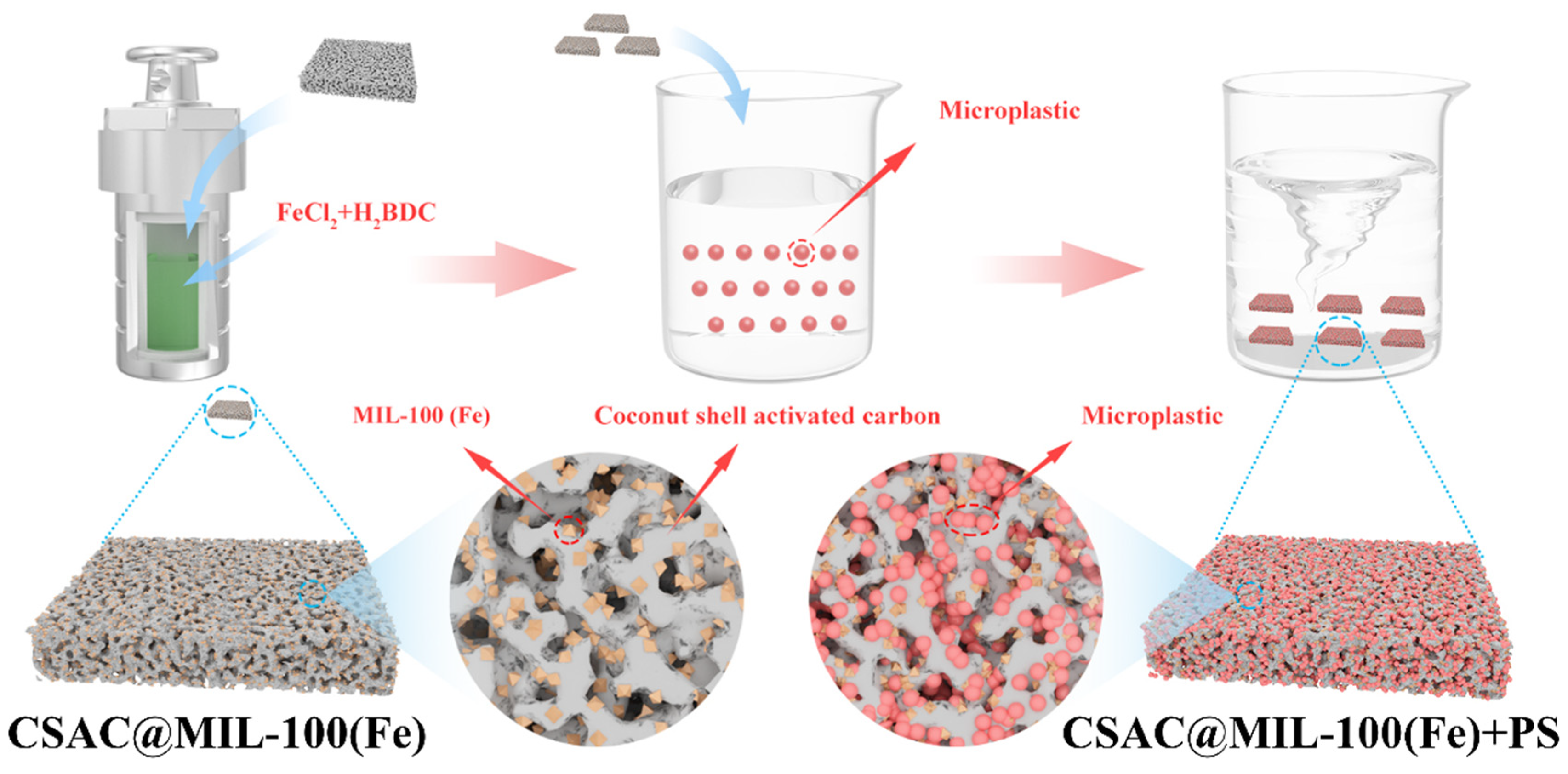
2.1. Synthesis Procedure
2.1.1. Materials
2.1.2. Characterization Techniques
2.2. Adsorption Experiments
2.2.1. Effect of Adsorbent Dosage on Adsorption Performance
2.2.2. Effect of MIL-100(Fe) Loading on Adsorption Performance
2.2.3. Effect of Solution pH on Adsorption Performance
2.2.4. Effect of Temperature on Adsorption Performance
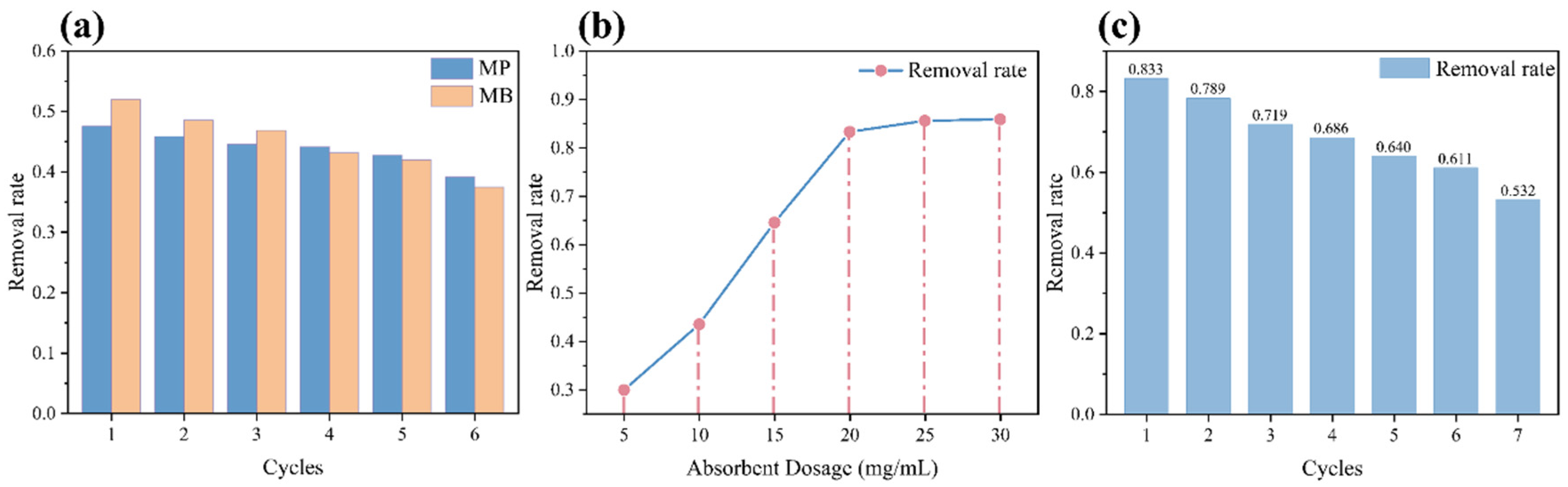
2.2.5. Reusability Evaluation
2.2.6. Competitive Adsorption Cycling Experiment
2.2.7. Effect of Adsorbent Dosage on Adsorption Performance in Seawater (Synthetic Seawater)
2.2.8. Cyclic Performance in Seawater (Synthetic Seawater)
2.3. Recyclability and Stability of Adsorbent
2.3.1. Verification of Linear Relationship Between UV Absorbance and Solution Concentration
2.3.2. Adsorption Mechanism Investigation Experiments
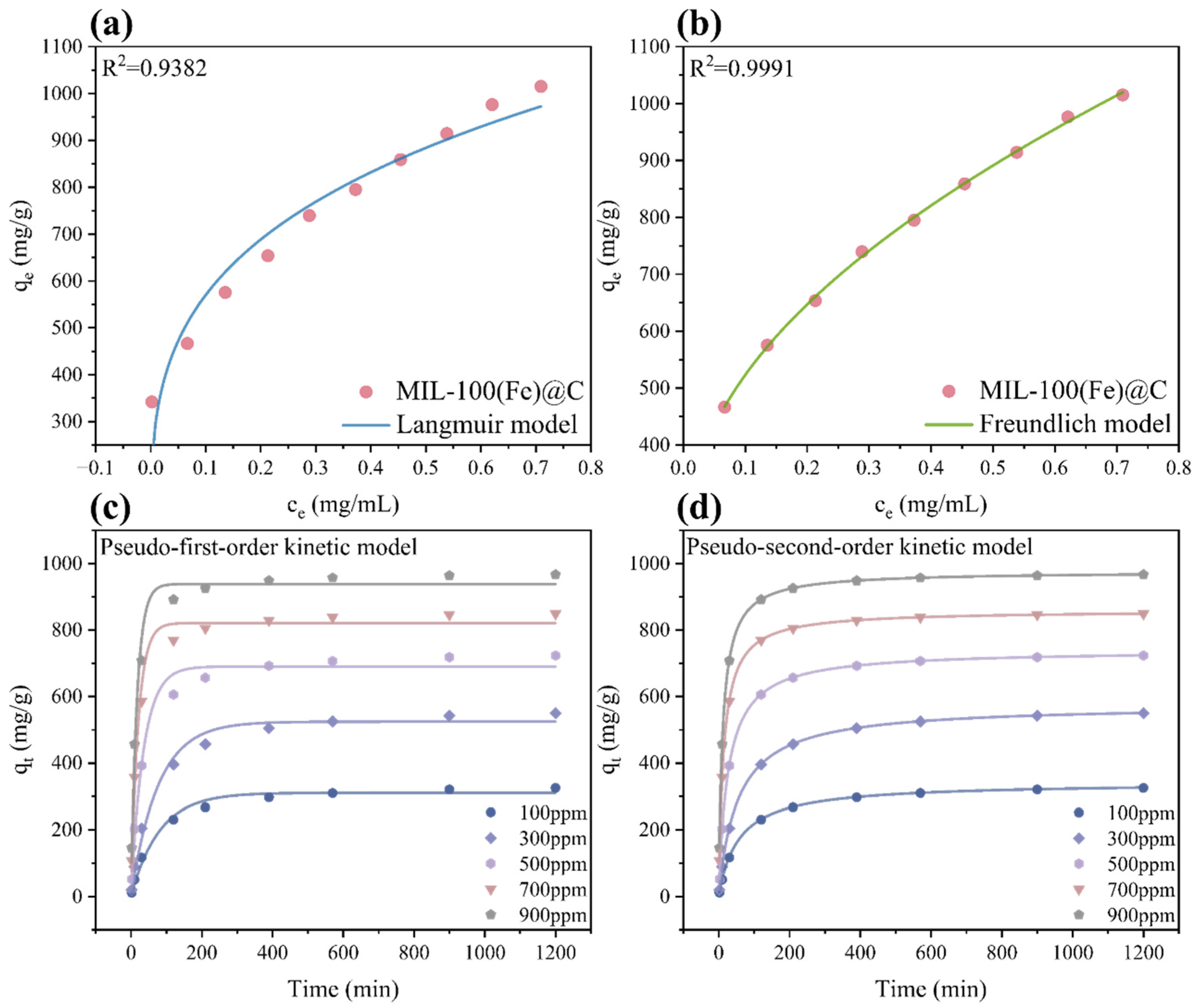
- Adsorption kinetics: Kinetic experiments were conducted to evaluate the time-dependent adsorption behavior of CSAC@MIL-100(Fe)0.6. PS suspensions (70 mL) with initial concentrations of 0.1, 0.3, 0.5, 0.7, and 0.9 mg/mL were prepared, and 20 mg of adsorbent was added to each system. The mixtures were agitated at 400 rpm, and sampling was performed at predetermined intervals (2, 10, 30, 120, 210, 390, 570, 900, and 1200 min). At each time point, aliquots of the supernatant were withdrawn, and residual PS concentrations were determined.
- Adsorption isotherms: Equilibrium adsorption behavior was investigated using PS suspensions (70 mL) with initial concentrations of 0.1, 0.2, 0.3, 0.4, 0.5, 0.6, 0.7, 0.8, 0.9, and 1 mg/mL. For each concentration, 20 mg of CSAC@MIL-100(Fe)0.6 was introduced and stirred at 400 rpm for 1200 min. After solid–liquid separation, the equilibrium concentration of PS in the supernatant was measured.
3. Results and Discussion
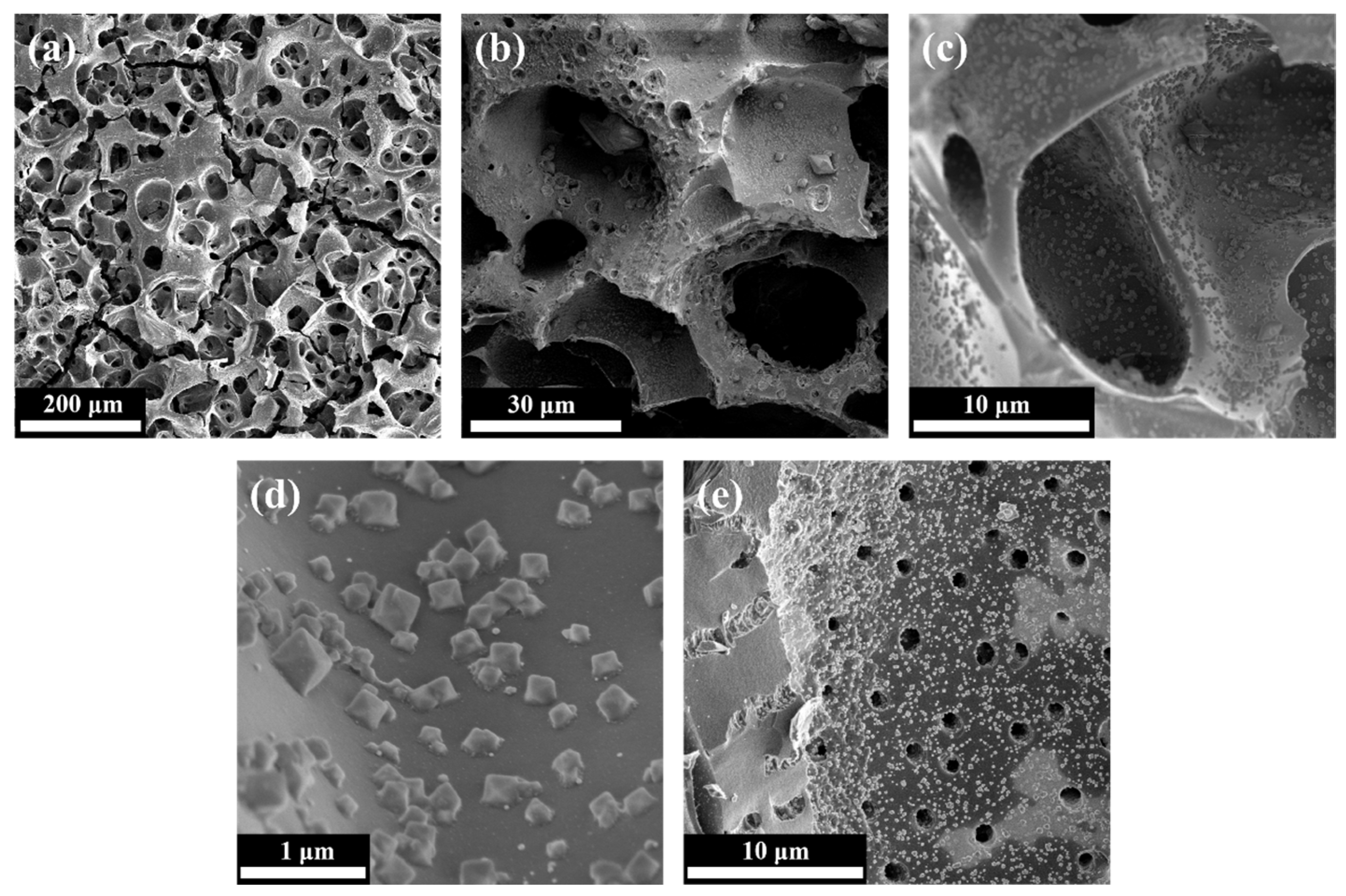
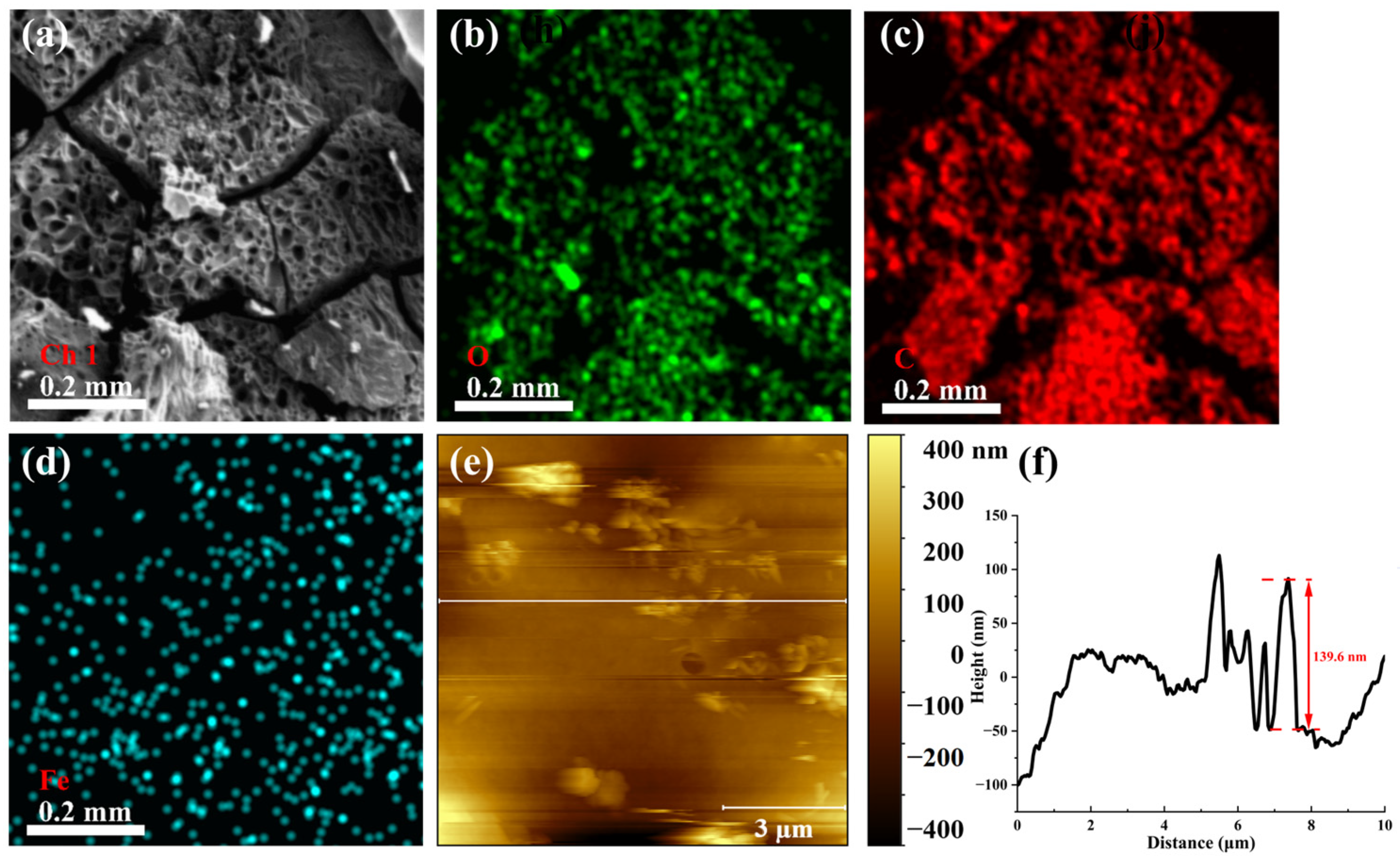
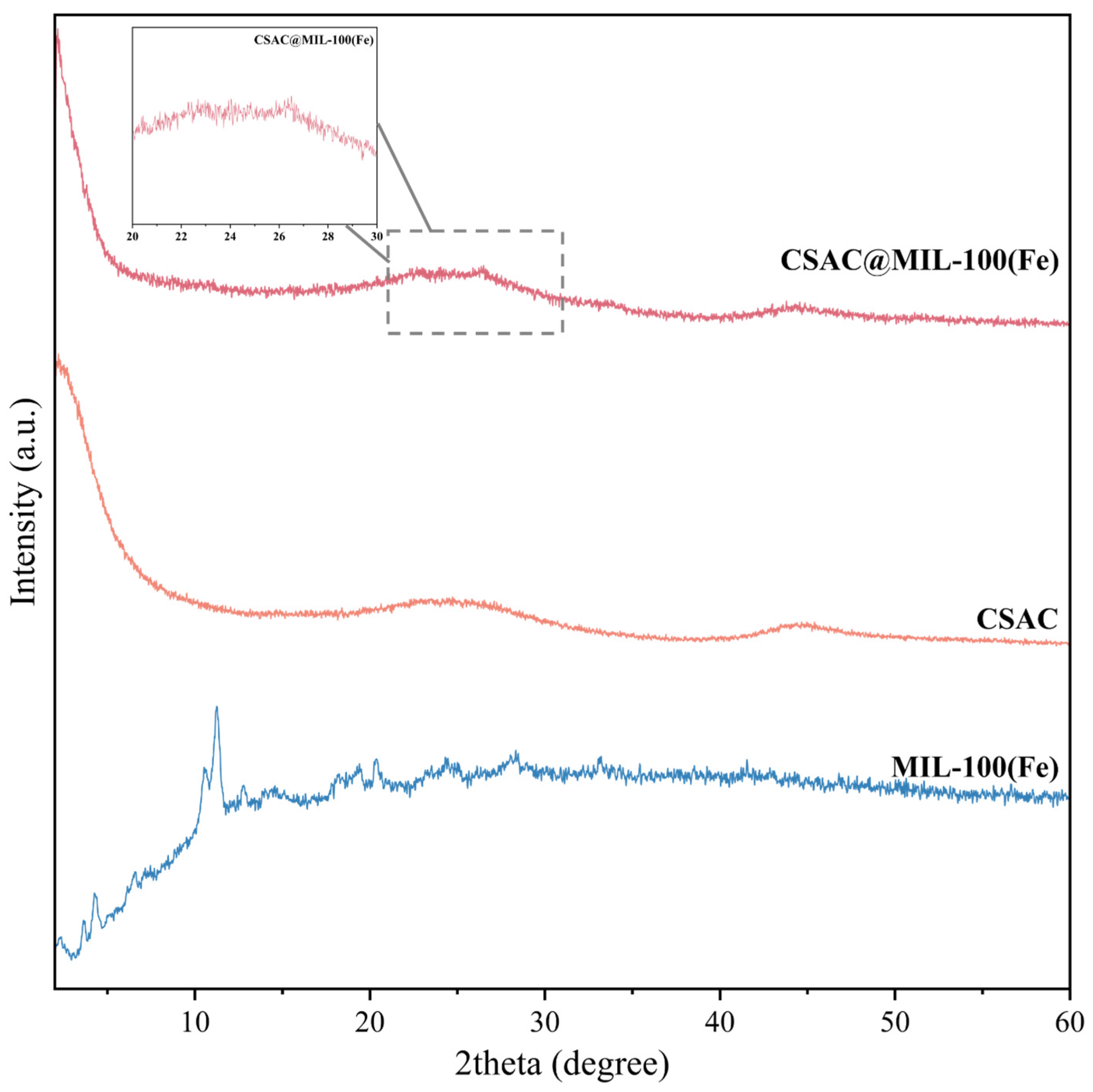
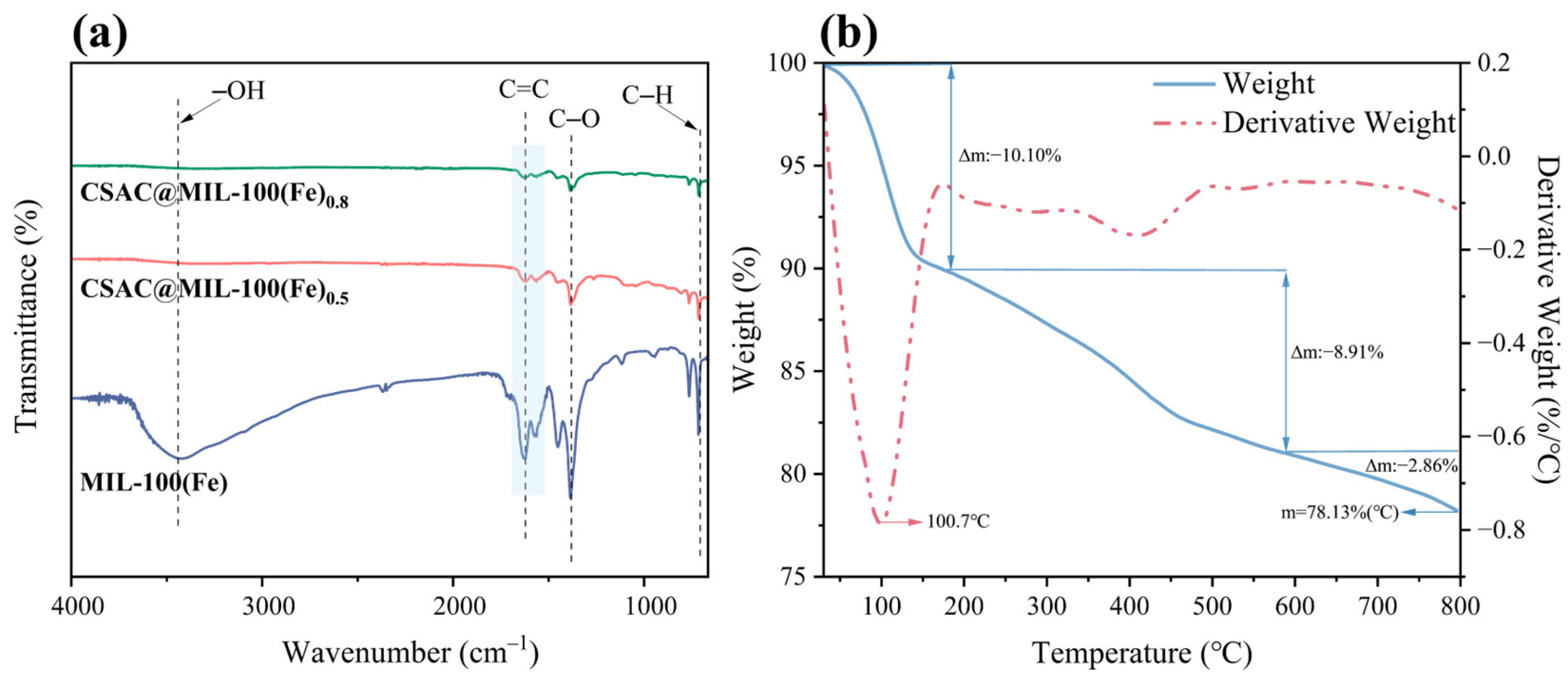
3.1. Material Structure Analysis
3.2. MP Adsorption Experiment
3.2.1. Effect of Adsorbent Dosage
3.2.2. Effect of MIL-100(Fe) Loading
3.2.3. Effect of pH on the Adsorption Properties of CSAC@MIL-100(Fe)
3.2.4. Effect of Temperature
3.2.5. Recyclability
3.2.6. Effect of Competitive Adsorption
3.2.7. Effect of Adsorbent Dosage in Seawater (Synthetic Seawater)
3.2.8. Effect of Seawater (Synthetic Seawater) on Cycling Performance
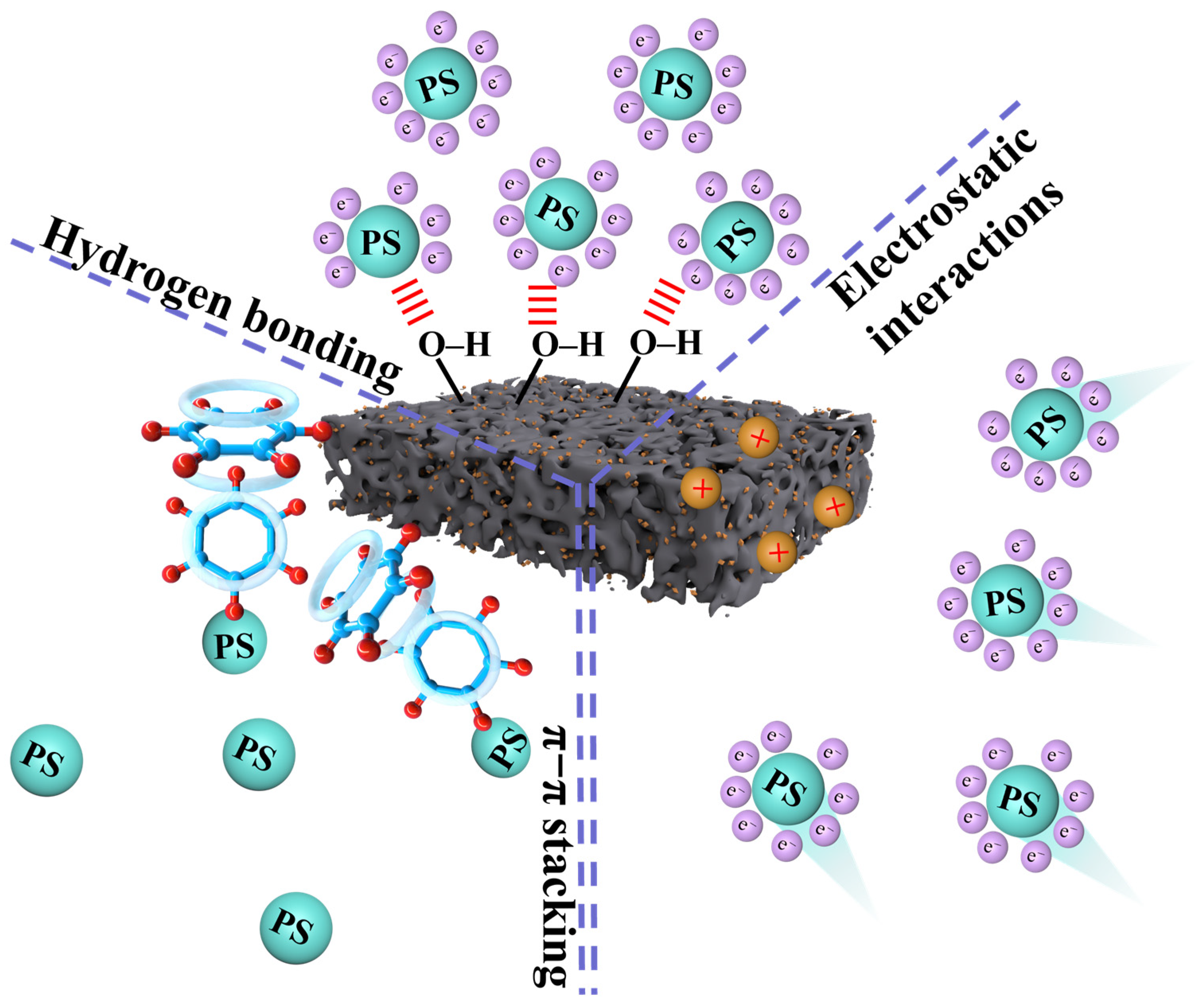
3.3. Adsorption Mechanism Analysis
3.3.1. Adsorption Isotherms
3.3.2. Adsorption Kinetics
3.4. Comparison of Performance with Other Materials
4. Conclusions
Supplementary Materials
Author Contributions
Funding
Institutional Review Board Statement
Data Availability Statement
Conflicts of Interest
References
- Chamas, A.; Moon, H.; Zheng, J.; Qiu, Y.; Tabassum, T.; Jang, J.H.; Abu-Omar, M.; Scott, S.L.; Suh, S. Degradation rates of plastics in the environment. ACS Sustain. Chem. Eng. 2020, 8, 3494–3511. [Google Scholar] [CrossRef]
- Fu, J.; Liu, N.; Peng, Y.; Wang, G.; Wang, X.; Wang, Q.; Lv, M.; Chen, L. An ultra-light sustainable sponge for elimination of microplastics and nanoplastics. J. Hazard. Mater. 2023, 456, 131685. [Google Scholar] [CrossRef]
- Houssini, K.; Li, J.; Tan, Q. Complexities of the global plastics supply chain revealed in a trade-linked material flow analysis. Commun. Earth Environ. 2025, 6, 257. [Google Scholar] [CrossRef]
- Haris, M.; Khan, M.W.; Zavabeti, A.; Mahmood, N.; Eshtiaghi, N. Self-assembly of C@FeO nanopillars on 2D-MOF for simultaneous removal of microplastic and dissolved contaminants from water. Chem. Eng. J. 2023, 455, 140390. [Google Scholar] [CrossRef]
- Bi, S.; Liu, S.; Liu, E.; Xiong, J.; Xu, Y.; Wu, R.; Liu, X.; Xu, J. Adsorption behavior and mechanism of heavy metals onto microplastics: A meta-analysis assisted by machine learning. Environ. Pollut. 2024, 360, 124634. [Google Scholar] [CrossRef] [PubMed]
- Jamieson, A.J.; Brooks, L.S.; Reid, W.D.; Piertney, S.B.; Narayanaswamy, B.E.; Linley, T.D. Microplastics and synthetic particles ingested by deep-sea amphipods in six of the deepest marine ecosystems on Earth. R. Soc. Open Sci. 2019, 6, 180667. [Google Scholar] [CrossRef]
- Marmara, D.; Katsanevakis, S.; Brundo, M.-V.; Tiralongo, F.; Ignoto, S.; Krasakopoulou, E. Microplastics ingestion by marine fauna with a particular focus on commercial species: A systematic review. Front. Mar. Sci. 2023, 10, 1240969. [Google Scholar] [CrossRef]
- Zhou, G.; Huang, X.; Xu, H.; Wang, Q.; Wang, M.; Wang, Y.; Li, Q.; Zhang, Y.; Ye, Q.; Zhang, J. Removal of polystyrene nanoplastics from water by CuNi carbon material: The role of adsorption. Sci. Total Environ. 2022, 820, 153190. [Google Scholar] [CrossRef]
- Sahith, V.N.; Kumar, A.; Sruthi, V.S.; Sathish, S.; Venkatesan, D.; Prabu, D.; Samrot, A. Microbial and enzymatic biodegradation of microplastics and nanoplastics: Advances, challenges, and sustainable solutions for environmental remediation. Desalin. Water Treat. 2025, 324, 101450. [Google Scholar] [CrossRef]
- Yeszhan, Y.; Bexeitova, K.; Yermekbayev, S.; Toktarbay, Z.; Lee, J.; Berndtsson, R.; Azat, S. Photocatalytic degradation of microplastics in aquatic environments: Materials, mechanisms, practical challenges, and future perspectives. Water 2025, 17, 2139. [Google Scholar] [CrossRef]
- Amparán, M.A.A.; Palacios, A.; Flores, G.M.; Olivera, P.M.C. Review and future outlook for the removal of microplastics by physical, biological and chemical methods in water bodies and wastewaters. Environ. Monit. Assess. 2025, 197, 429. [Google Scholar] [CrossRef]
- Bodzek, M.; Bodzek, P. Remediation of micro- and nanoplastics by membrane technologies. Membranes 2025, 15, 82. [Google Scholar] [CrossRef]
- Habib, S.; Iruthayam, A.; Abd Shukor, M.Y.; Alias, S.A.; Smykla, J.; Yasid, N.A. Biodeterioration of untreated polypropylene microplastic particles by Antarctic bacteria. Polymers 2020, 12, 2616. [Google Scholar] [CrossRef]
- He, Y.; Rehman, A.U.; Xu, M.; Not, C.A.; Ng, A.M.; Djurišić, A.B. Photocatalytic degradation of different types of microplastics by TiOx/ZnO tetrapod photocatalysts. Heliyon 2023, 9, e20658. [Google Scholar] [CrossRef] [PubMed]
- Sun, A.; Lu, J.; Liu, T.; Feng, C.; Liu, Y.; Pang, J.; Chen, L.; Wu, Z.; Han, S.; Li, Z. Characterization and mechanism of action of bimetallic-modified MIL-101(Fe) magnetic composites for enhanced removal of polystyrene from water. Sep. Purif. Technol. 2025, 372, 133397. [Google Scholar] [CrossRef]
- Yadav, K.K.; Singh, H.; Rana, S.; Sammi, H.; Nishanthi, S.; Wadhwa, R.; Khan, N.; Jha, M. Utilization of waste coir fibre architecture to synthesize porous graphene oxide and their derivatives: An efficient energy storage material. J. Clean. Prod. 2020, 276, 124240. [Google Scholar] [CrossRef]
- Prieto, M.; Yue, H.; Brun, N.; Ellis, G.J.; Naffakh, M.; Shuttleworth, P.S. Hydrothermal carbonization of biomass for electrochemical energy storage: Parameters, mechanisms, electrochemical performance, and the incorporation of transition metal dichalcogenide nanoparticles. Polymers 2024, 16, 2633. [Google Scholar] [CrossRef]
- Channab, B.-E.; El Ouardi, M.; Ait Layachi, O.; Marrane, S.E.; El Idrissi, A.; BaQais, A.; Ait Ahsaine, H. Recent trends on MIL-Fe metal–organic frameworks: Synthesis approaches, structural insights, and applications in organic pollutant adsorption and photocatalytic degradation. Environ. Sci. Nano 2023, 10, 2957–2988. [Google Scholar] [CrossRef]
- Nivetha, R.; Gothandapani, K.; Raghavan, V.; Jacob, G.; Sellappan, R.; Bhardwaj, P.; Pitchaimuthu, S.; Kannan, A.N.M.; Jeong, S.K.; Grace, A.N. Highly porous MIL-100(Fe) for the hydrogen evolution reaction (HER) in acidic and basic media. ACS Omega 2020, 5, 18941–18949. [Google Scholar] [CrossRef] [PubMed]
- Wang, R.; Xu, H.; Liu, X.; Fang, D.; Wei, S.; Yu, A.-N. In-situ growth of iron oxides with MIL-100(Fe) enhances its adsorption for selenite. Surf. Interfaces 2022, 34, 102326. [Google Scholar] [CrossRef]
- Mobarak, M.B.; Pinky, N.S.; Mustafi, S.; Chowdhury, F.; Nahar, A.; Akhtar, U.S.; Quddus, M.S.; Yasmin, S.; Alam, M.A. Unveiling the reactor effect: A comprehensive characterization of biochar derived from rubber seed shell via pyrolysis and in-house reactor. RSC Adv. 2024, 14, 29848–29859. [Google Scholar] [CrossRef] [PubMed]
- Crespí Sánchez, N.; Turnes Palomino, G.; Palomino Cabello, C. Sulfonic-functionalized MIL-100-Fe MOF for the removal of diclofenac from water. Microporous Mesoporous Mater. 2023, 348, 112366. [Google Scholar] [CrossRef]
- Zhu, P.; Geng, M.; Qin, S.; Cao, H.; He, Z.; Gao, X.; Wang, C. Boosting photothermal CO2 hydrogenation with H2O by MIL-100(Fe) derived Fe@C confined Ni2P. Surf. Interfaces 2024, 46, 104068. [Google Scholar] [CrossRef]
- Sáenz-García, D.; Figuerola, A.; Turnes Palomino, G.; Leal, L.O.; Palomino Cabello, C. Thiol-functionalized MIL-100(Fe)/device for the removal of heavy metals in water. Ind. Eng. Chem. Res. 2023, 62, 19404–19411. [Google Scholar] [CrossRef]
- Chatterjee, R.; Sajjadi, B.; Chen, W.-Y.; Mattern, D.L.; Hammer, N.; Raman, V.; Dorris, A. Effect of pyrolysis temperature on physicochemical properties and acoustic-based amination of biochar for efficient CO2 adsorption. Front. Energy Res. 2020, 8, 85. [Google Scholar] [CrossRef]
- Gonzalez-Aguilar, A.M.; Cabrera-Madera, V.P.; Vera-Rozo, J.R.; Riesco-Ávila, J.M. Effects of heating rate and temperature on the thermal pyrolysis of expanded polystyrene post-industrial waste. Polymers 2022, 14, 4957. [Google Scholar] [CrossRef]
- Tran, H.D.; Nguyen, M.T.; Truong, H.B.; Pham, T.M.; Kim, J.J. Facile synthesis of Fe-based metal–organic frameworks from Fe2O3 nanoparticles and their application for CO2/N2 separation. Beilstein J. Nanotechnol. 2024, 15, 897–908. [Google Scholar]
- Ibitoye, S.E.; Loha, C.; Mahamood, R.M.; Jen, T.-C.; Alam, M.; Sarkar, I.; Das, P.; Akinlabi, E.T. An overview of biochar production techniques and application in iron and steel industries. Biomass Convers. Biorefin. 2024, 14, 65–82. [Google Scholar] [CrossRef]
- Zhang, F.; Xue, X.; Huang, X.; Yang, H. Adsorption and heterogeneous Fenton catalytic performance for magnetic Fe3O4/reduced graphene oxide aerogel. J. Mater. Sci. 2020, 55, 15695–15708. [Google Scholar] [CrossRef]
- Yang, N.; Pu, H.; Sun, D.W. Developing a magnetic SERS nanosensor utilizing aminated Fe-Based MOF for ultrasensitive trace detection of organophosphorus pesticides in apple juice. Food Chem. 2024, 446, 138846. [Google Scholar] [CrossRef]
- Zhang, X.; Lin, L.; Gao, W.; Zhou, Y.; Lin, Q. A novel Fe-containing carbon foam with hierarchical porous structure for efficient removal of organic dyes. Diamond Relat. Mater. 2023, 140, 110436. [Google Scholar] [CrossRef]
- Jerez, S.; Pedersen, A.; Ventura, M.; Mazzoli, L.; Pariente, M.I.; Titirici, M.; Melero, J.A.; Barrio, J. Fe N-doped carbon materials from oily sludge as electrocatalysts for alkaline oxygen reduction reaction. Electrochim. Acta 2024, 483, 144038. [Google Scholar] [CrossRef]
- Schlumberger, C.; Thommes, M. Characterization of hierarchically ordered porous materials by physisorption and mercury porosimetry—A tutorial review. Adv. Mater. Interfaces 2021, 8, 2002181. [Google Scholar] [CrossRef]
- Yuan, Y.; Wu, G.; Li, W.; Wang, Y.; Zhang, T.C.; He, G.; Yuan, S. In situ growth of MIL-100(Fe) onto the rice straw-derived biochar for efficient adsorption of gaseous ammonia. Sep. Purif. Technol. 2024, 342, 127034. [Google Scholar] [CrossRef]
- Polyakov, V.; Bauer, T.; Kirichkov, M.; Butova, V.; Gritsai, M.; Minkina, T.; Soldatov, A.; Kravchenko, E. MOF-biochar nanocomposite for sustainable remediation of contaminated soil. Environ. Sci. Pollut. Res. 2025, 32, 5533–5550. [Google Scholar] [CrossRef]
- Michałek, T.; Wojtaszek, K.; Youssif, M.M.; Żabiński, P.; Kołczyk-Siedlecka, K.; Kowalik, R.; Socha, R.P.; Hessel, V.; Wojnicki, M. Adsorption of Au(III), Pt(IV), Pd(II), and Rh(III) ions on activated carbon in a batch reactor supported by microwave radiation. Sci. Rep. 2025, 15, 5852. [Google Scholar] [CrossRef] [PubMed]
- Ebelegi, A.N.; Ayawei, N.; Wankasi, D. Interpretation of adsorption thermodynamics and kinetics. Open J. Phys. Chem. 2020, 10, 166–182. [Google Scholar] [CrossRef]
- Zhang, W.; Zhang, Y.-Z.; Yang, J.-M. MIL-100(Fe)@GO composites with superior adsorptive removal of cationic and anionic dyes from aqueous solutions. J. Mol. Struct. 2022, 1265, 133365. [Google Scholar] [CrossRef]
- Narayanaswamy, V.; Alaabed, S.; Obaidat, I.M. Molecular simulation of adsorption of methylene blue and rhodamine B on graphene and graphene oxide for water purification. Mol. Simul. 2020, 46, 1078–1083. [Google Scholar] [CrossRef]
- Shafti, D.M.; Dahlan, I.; Din, A.T.M. A review of the effectiveness of metal–organic frameworks in removing dye effluents. Water Pract. Technol. 2024, 19, 4699–4733. [Google Scholar] [CrossRef]
- Shahrokhi-Shahraki, R.; Benally, C.; El-Din, M.G.; Park, J. High efficiency removal of heavy metals using tire-derived activated carbon vs. commercial activated carbon: Insights into the adsorption mechanisms. Chemosphere 2021, 264, 128455. [Google Scholar] [CrossRef] [PubMed]
- Huang, Q.; Mu, J.; Zhan, Z.; Wang, F.; Jin, S.; Tan, B.; Wu, C. A steric hindrance alleviation strategy to enhance the photo-switching efficiency of azobenzene functionalized metal–organic frameworks toward tailorable carbon dioxide capture. J. Mater. Chem. A 2022, 10, 8303–8308. [Google Scholar] [CrossRef]
- Singh, S.; Sivaram, N.; Nath, B.; Khan, N.A.; Singh, J.; Ramamurthy, P.C. Metal organic frameworks for wastewater treatment, renewable energy and circular economy contributions. npj Clean Water 2024, 7, 124. [Google Scholar] [CrossRef]
- Guo, Z.; Xiao, Y.; Wu, W.; Zhe, M.; Yu, P.; Shakya, S.; Li, Z.; Xing, F. Metal–organic framework-based smart stimuli-responsive drug delivery systems for cancer therapy: Advances, challenges, and future perspectives. J. Nanobiotechnol. 2025, 23, 157. [Google Scholar] [CrossRef]
- Duan, X.; Sha, Q.; Li, P.; Li, T.; Yang, G.; Liu, W.; Yu, E.; Zhou, D.; Fang, J.; Chen, W. Dynamic chloride ion adsorption on single iridium atom boosts seawater oxidation catalysis. Nat. Commun. 2024, 15, 1973. [Google Scholar] [CrossRef] [PubMed]
- Zhang, H.; Elskens, M.; Chen, G.; Snoeck, C.; Chou, L. Influence of seawater ions on phosphate adsorption at the surface of hydrous ferric oxide (HFO). Sci. Total Environ. 2020, 721, 137826. [Google Scholar] [CrossRef]
- Zhao, H.; Huang, X.; Wang, L.; Zhao, X.; Yan, F.; Yang, Y.; Li, G.; Gao, P.; Ji, P. Removal of polystyrene nanoplastics from aqueous solutions using a novel magnetic material: Adsorbability, mechanism, and reusability. Chem. Eng. J. 2022, 430, 133122. [Google Scholar] [CrossRef]
- Tiwari, E.; Singh, N.; Khandelwal, N.; Monikh, F.A.; Darbha, G.K. Application of Zn/Al layered double hydroxides for the removal of nano-scale plastic debris from aqueous systems. J. Hazard. Mater. 2020, 397, 122769. [Google Scholar] [CrossRef]
- Peng, G.; Xiang, M.; Wang, W.; Su, Z.; Liu, H.; Mao, Y.; Chen, Y.; Zhang, P. Engineering 3D graphene-like carbon-assembled layered double oxide for efficient microplastic removal in a wide pH range. J. Hazard. Mater. 2022, 433, 128672. [Google Scholar] [CrossRef]
- Wang, J.; Sun, C.; Huang, Q.-X.; Chi, Y.; Yan, J.-H. Adsorption and thermal degradation of microplastics from aqueous solutions by Mg/Zn modified magnetic biochars. J. Hazard. Mater. 2021, 419, 126486. [Google Scholar] [CrossRef]
- Dutta, S.; Misra, A.; Bose, S. Polyoxometalate nanocluster-infused triple IPN hydrogels for excellent microplastic removal from contaminated water: Detection, photodegradation, and upcycling. Nanoscale 2024, 16, 5188–5205. [Google Scholar] [CrossRef]
- Liu, M.; Pu, H.; Sun, D.-W. Eco-friendly lily bulb-derived polysaccharide aerogel for efficient microplastics and nanoplastics removal. Carbohydr. Polym. 2025, 357, 123410. [Google Scholar] [CrossRef] [PubMed]
- Li, X.; Xia, Q.; Leng, Y.; Cai, X.; Nie, D. Lignin/Poly(vinyl alcohol) hydrogel for detecting and effectively removing microplastics. Langmuir 2025, 41, 16506–16518. [Google Scholar] [CrossRef] [PubMed]
- Feng, J.; Dong, Y.; Li, H.; Tu, J.; Chen, Y. Engineered magnetic metal-organic frameworks for efficient and broad-spectrum adsorption of micro/nanoplastics in beverages. J. Hazard. Mater. 2025, 495, 139040. [Google Scholar] [CrossRef] [PubMed]
- Zheng, B.; Li, B.; Wan, H.; Lin, X.; Cai, Y. Coral-inspired environmental durability aerogels for micron-size plastic particles removal in the aquatic environment. J. Hazard. Mater. 2022, 431, 128611. [Google Scholar] [CrossRef]
- Feng, X.; Gu, X.; Xuan, G.; Wu, H.; Li, S. Efficient microplastic removal in aquatic environments using iron–nitrogen co-doped layered biocarbon materials. Chem. Eng. J. 2025, 506, 160095. [Google Scholar] [CrossRef]
- Yang, C.; Xiong, R.; Zeng, B.; Wang, T.; Zhang, P.; Zhang, W.; You, L.; Zeng, B.; Song, Z. Three-dimensional superparamagnetic layered double metal oxides for efficient adsorption of polystyrene microplastics. Sep. Purif. Technol. 2025, 371, 133357. [Google Scholar] [CrossRef]


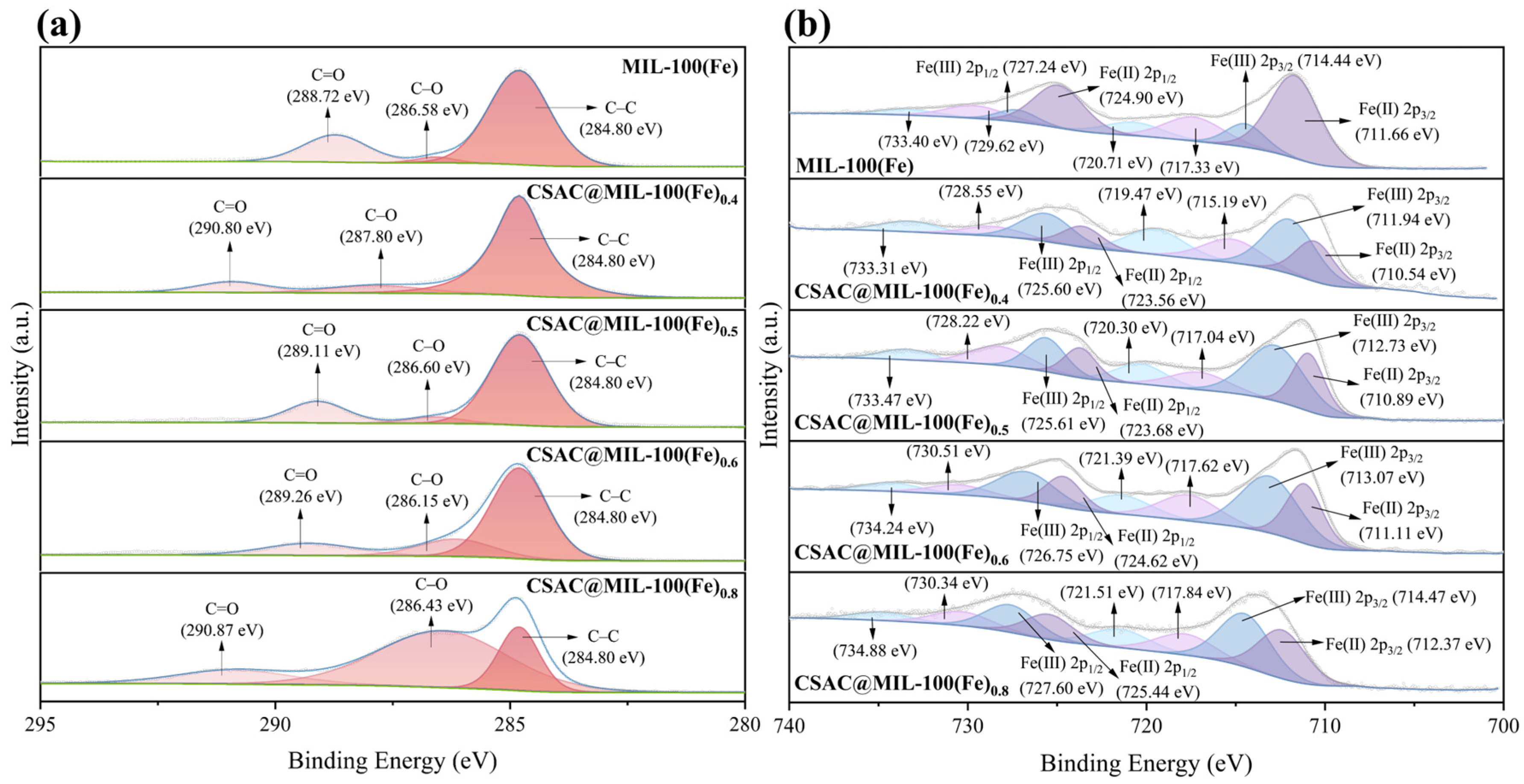
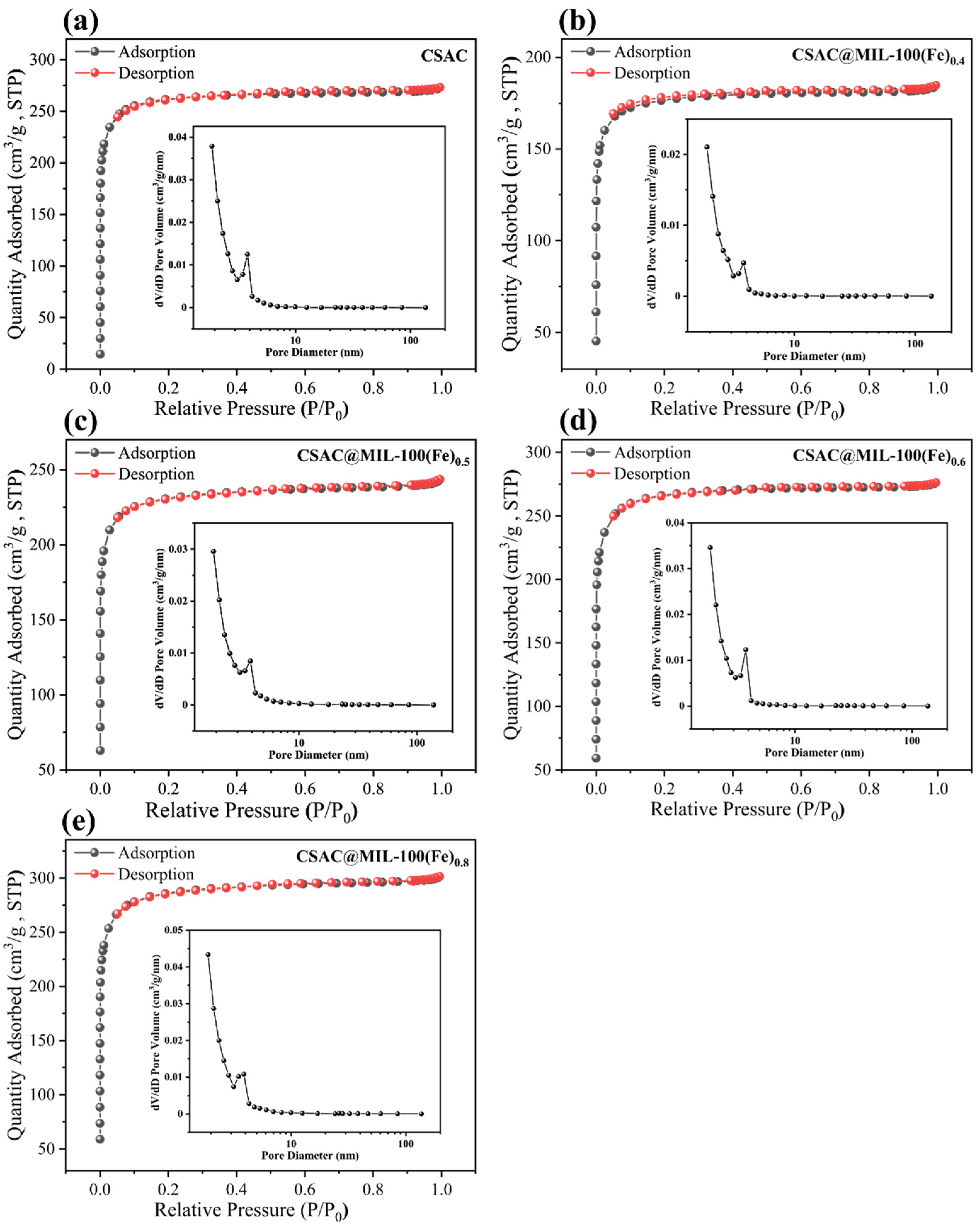
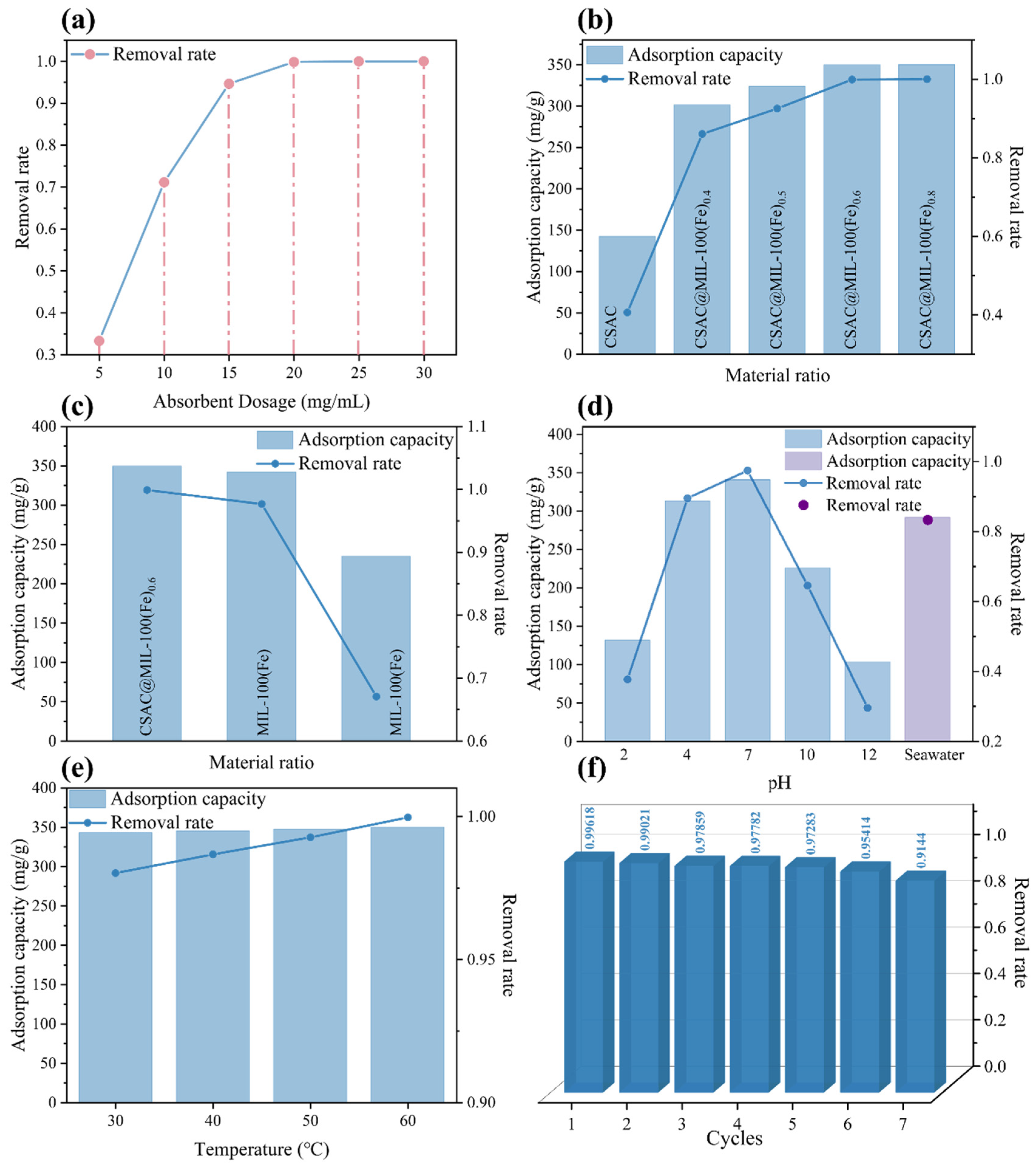

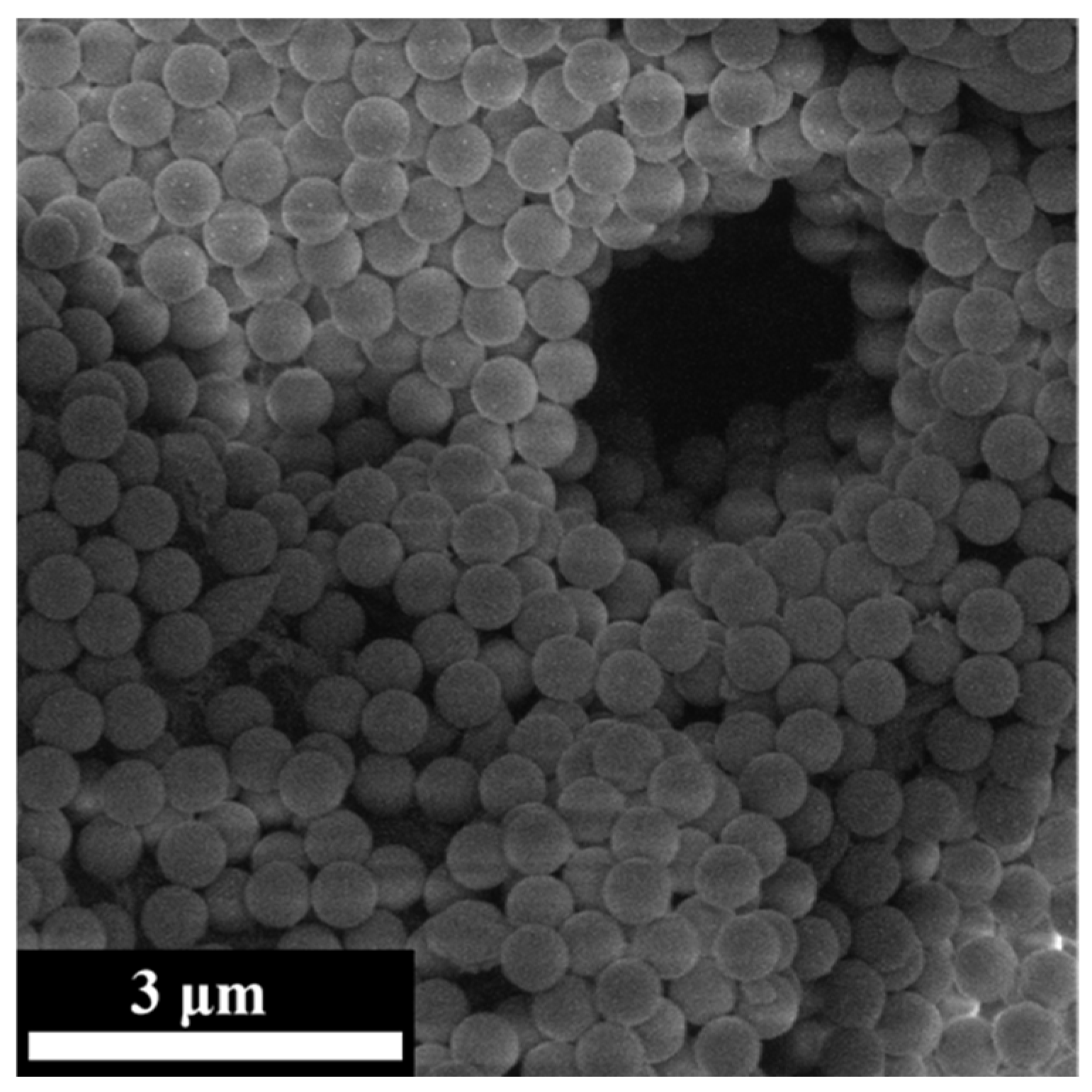



| Samples | SBET (m2/g) | Pore Volume (cm3/g) | Average Pore Size (nm) | Type |
|---|---|---|---|---|
| CSAC | 1034.22 | 0.4224 | 1.62 | I |
| CSAC@MIL-100(Fe)0.4 | 699.86 | 0.2858 | 1.62 | I |
| CSAC@MIL-100(Fe)0.5 | 912.40 | 0.3766 | 1.63 | I |
| CSAC@MIL-100(Fe)0.6 | 1050.44 | 0.4272 | 1.61 | I |
| CSAC@MIL-100(Fe)0.8 | 1127.68 | 0.4662 | 1.64 | I |
| Sample | Langmuir Model | Freundlich Model | ||||
|---|---|---|---|---|---|---|
| CSAC@MIL-100(Fe) | (L/mg) | (mg/g) | R2 | (mg1−1/nL1/n)/g | R2 | |
| 0.320 | 746.27 | 0.938 | 246.34 | 5.04 | 0.999 | |
| Sample | PFO Model | PSO Model | |||||
|---|---|---|---|---|---|---|---|
| CSAC@MIL-100(Fe) | C0 (mg/mL) | (mg/g) | R2 | (mg/g) | R2 | ||
| 0.1 | 309.87 | 0.012 | 0.987 | 340.95 | 0.000051 | 0.998 | |
| 0.3 | 523.49 | 0.013 | 0.986 | 574.76 | 0.000032 | 0.996 | |
| 0.5 | 689.51 | 0.028 | 0.984 | 739.14 | 0.000051 | 0.995 | |
| 0.7 | 820.60 | 0.048 | 0.984 | 858.63 | 0.000083 | 0.994 | |
| 0.9 | 938.04 | 0.057 | 0.982 | 976.09 | 0.000090 | 0.992 | |
| Sample | MPs | (mg/g) | Removal Rate (%) | References |
|---|---|---|---|---|
| CSAC@MIL-100(Fe)0.6 | PS | 340.95 | 97.4 | This study |
| Zn-Al LDH | NPDs | 164.49 | 100 | [48] |
| G@LDO | PS | 209.39 | 80 | [49] |
| MBC | PS | 100.60 | 94.81 | [50] |
| pGel@IPN | PVC | 321.81 | 95 | [51] |
| LPA | PS | 368.066 | 93.68 | [52] |
| LG-GH-PVA@2 | PS | 288.6 | 92.7 | [53] |
| Fe3O4@CMC-MIL-101-NH2 | PS | 245.1 | 98.0 | [54] |
| PDA-MCS | PE | 125 | 92.3 | [55] |
| MSNC-Fe3 | PS | 148.39 | 96.5 | [56] |
| M-MgAl-LDO | PS | 203.12 | 97 | [57] |
Disclaimer/Publisher’s Note: The statements, opinions and data contained in all publications are solely those of the individual author(s) and contributor(s) and not of MDPI and/or the editor(s). MDPI and/or the editor(s) disclaim responsibility for any injury to people or property resulting from any ideas, methods, instructions or products referred to in the content. |
© 2026 by the authors. Licensee MDPI, Basel, Switzerland. This article is an open access article distributed under the terms and conditions of the Creative Commons Attribution (CC BY) license.
Share and Cite
Wang, Q.; Wang, G.; Ma, S.; Wang, Z.; Luo, L.; Chen, Y. In Situ Growth of MIL-100(Fe) on Coconut Shell Activated Carbon for High-Efficiently Removal of Microplastics from Water. Polymers 2026, 18, 772. https://doi.org/10.3390/polym18060772
Wang Q, Wang G, Ma S, Wang Z, Luo L, Chen Y. In Situ Growth of MIL-100(Fe) on Coconut Shell Activated Carbon for High-Efficiently Removal of Microplastics from Water. Polymers. 2026; 18(6):772. https://doi.org/10.3390/polym18060772
Chicago/Turabian StyleWang, Qianyi, Guohan Wang, Sasa Ma, Zichen Wang, Lijie Luo, and Yongjun Chen. 2026. "In Situ Growth of MIL-100(Fe) on Coconut Shell Activated Carbon for High-Efficiently Removal of Microplastics from Water" Polymers 18, no. 6: 772. https://doi.org/10.3390/polym18060772
APA StyleWang, Q., Wang, G., Ma, S., Wang, Z., Luo, L., & Chen, Y. (2026). In Situ Growth of MIL-100(Fe) on Coconut Shell Activated Carbon for High-Efficiently Removal of Microplastics from Water. Polymers, 18(6), 772. https://doi.org/10.3390/polym18060772