Enhancing the Comprehensive Performance and Interfacial Adhesion of Emulsified Asphalt Using an Epoxy-Functionalized Waterborne Polyurethane

 ,
,
Abstract
1. Introduction
2. Materials and Methods
2.1. Raw Materials
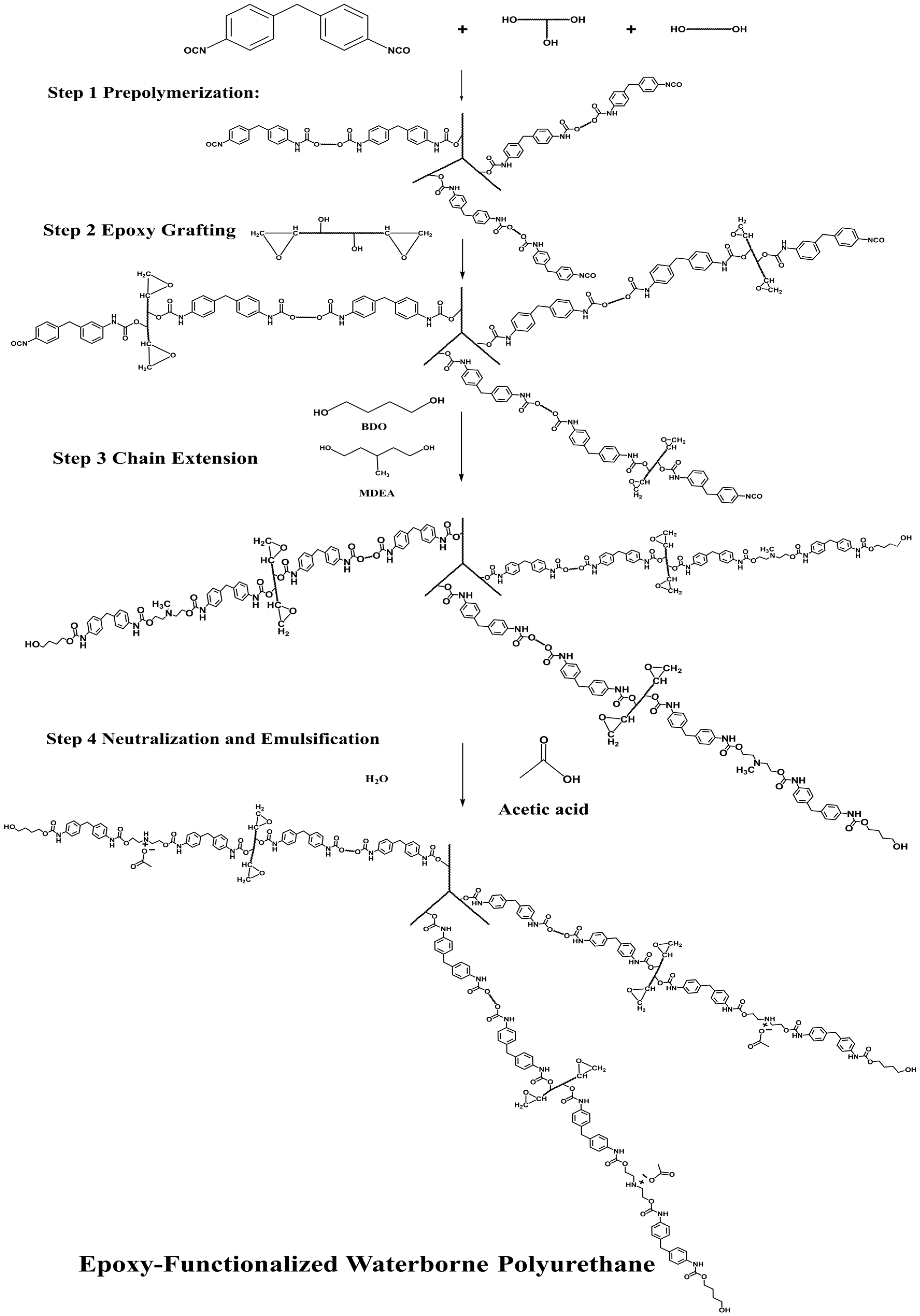
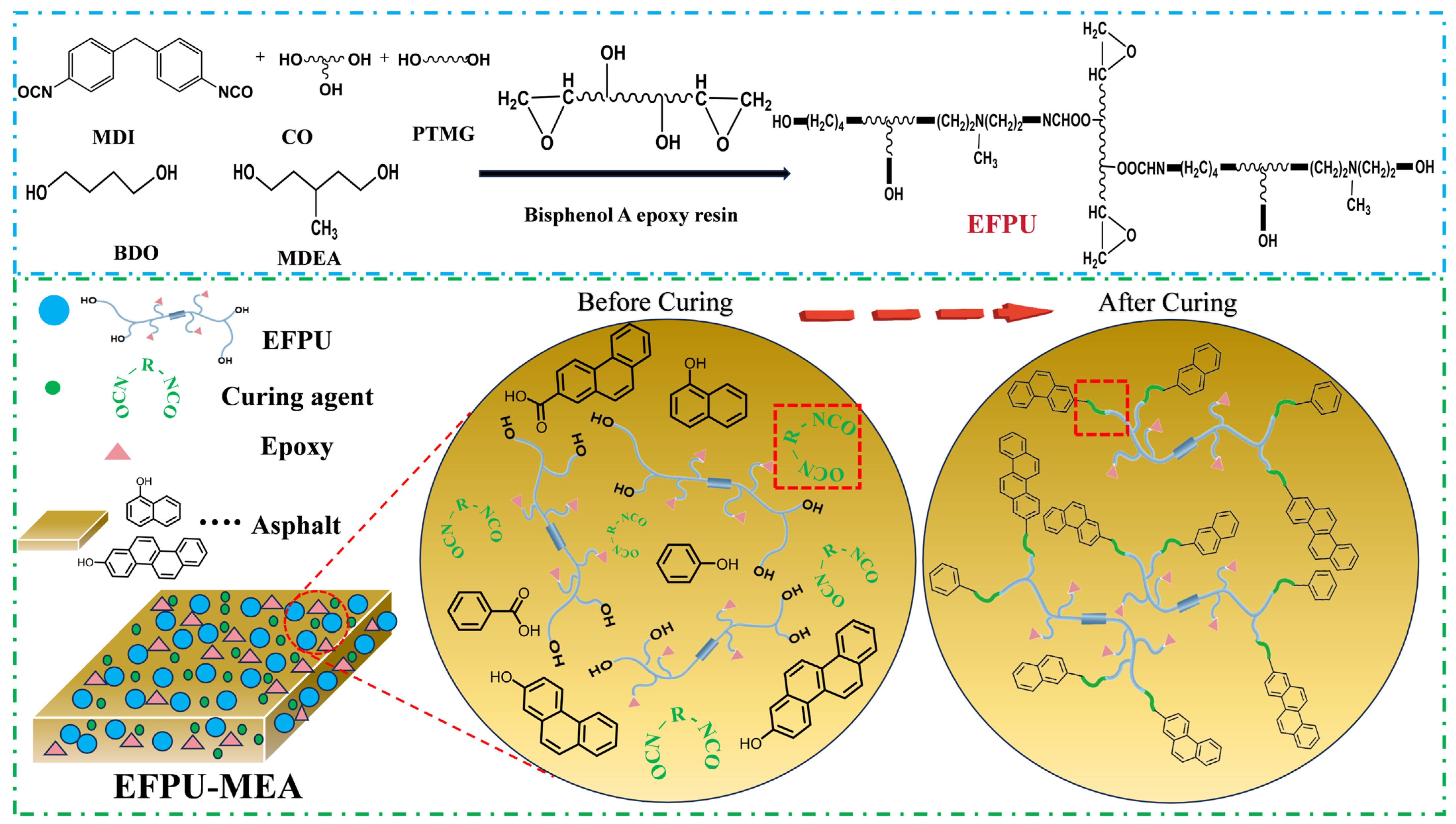
2.2. Synthesis of Hydroxyl-Terminated EFPU Emulsion
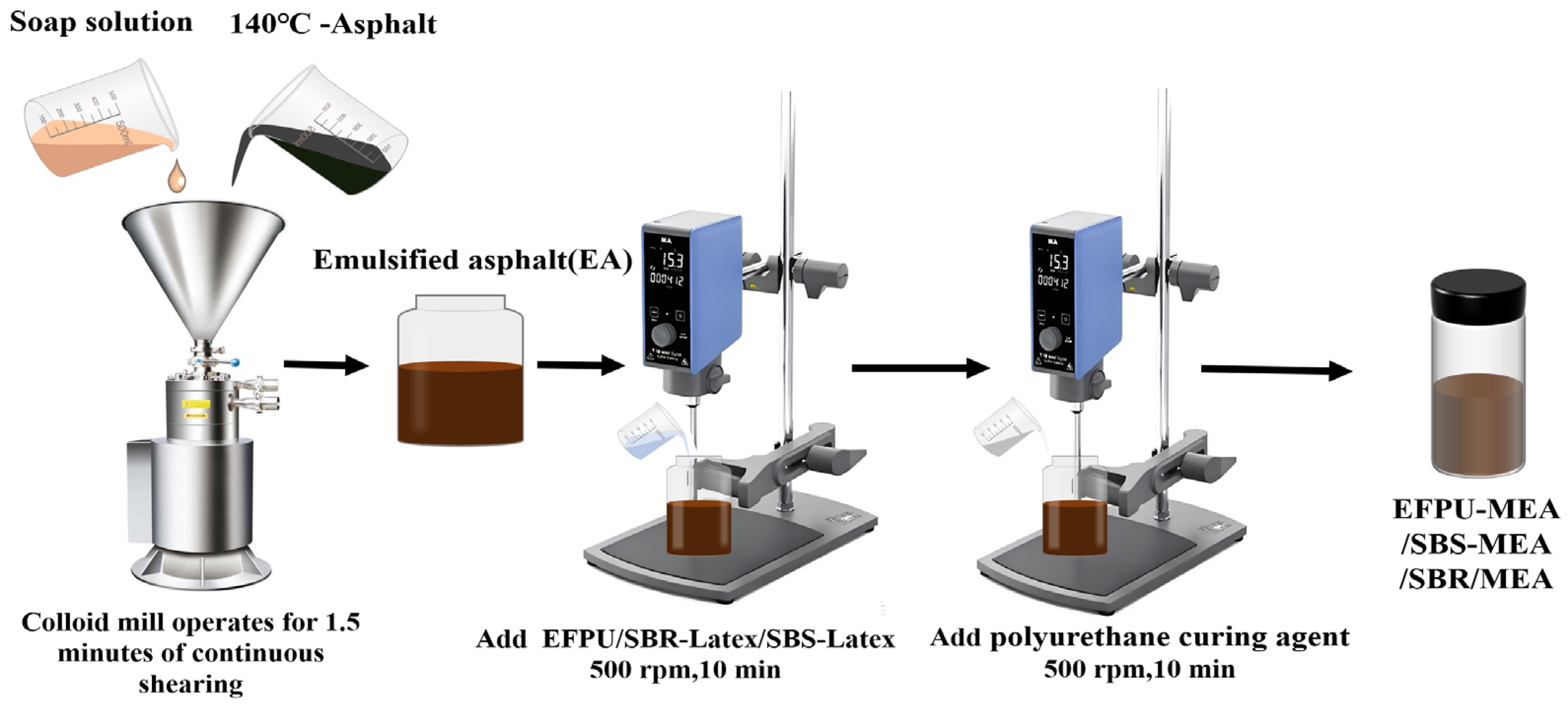
2.3. Preparation of Modified Emulsified Asphalt (MEA) Samples
2.4. Methods
2.4.1. Basic Performance
- (1)
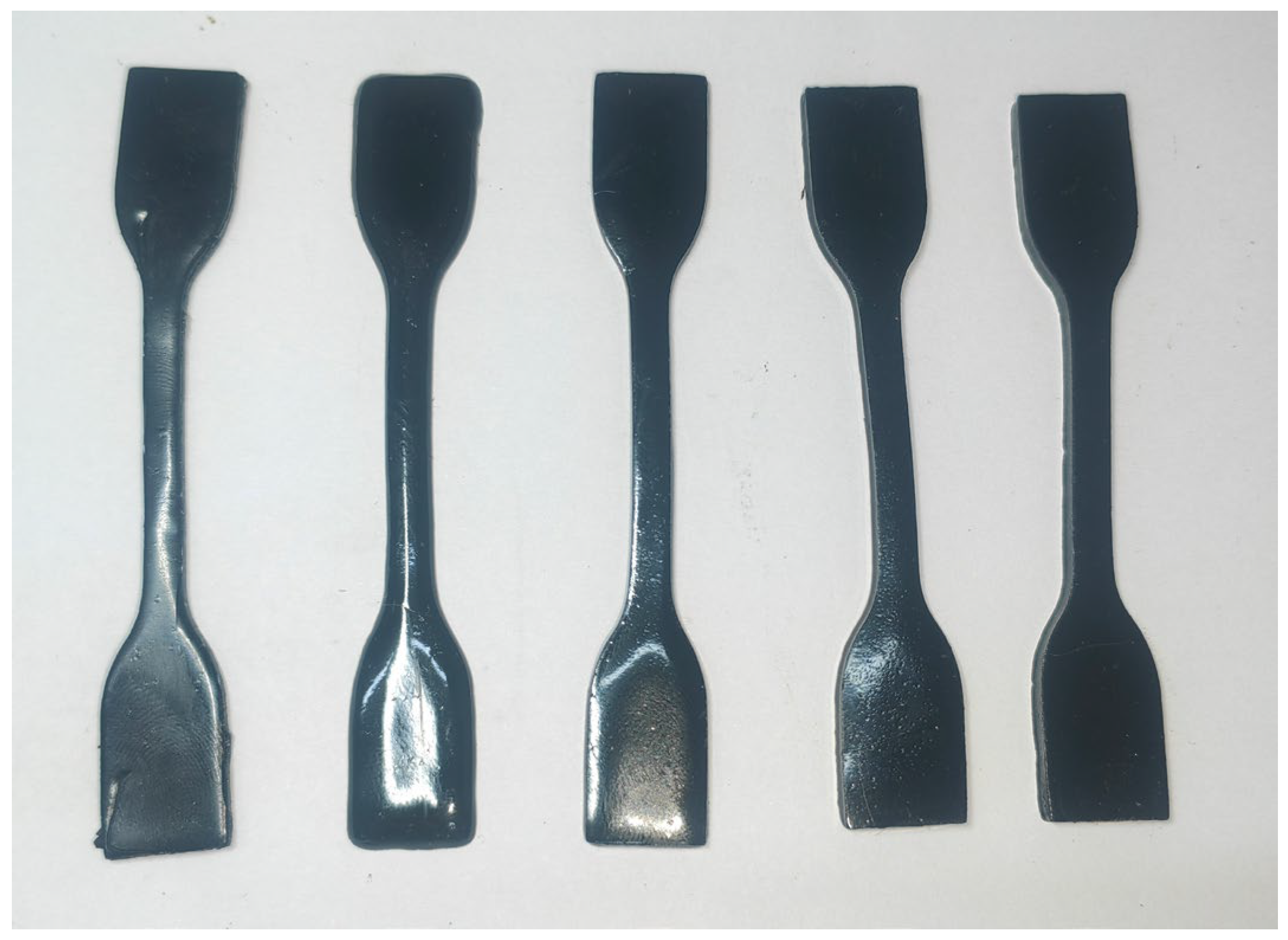
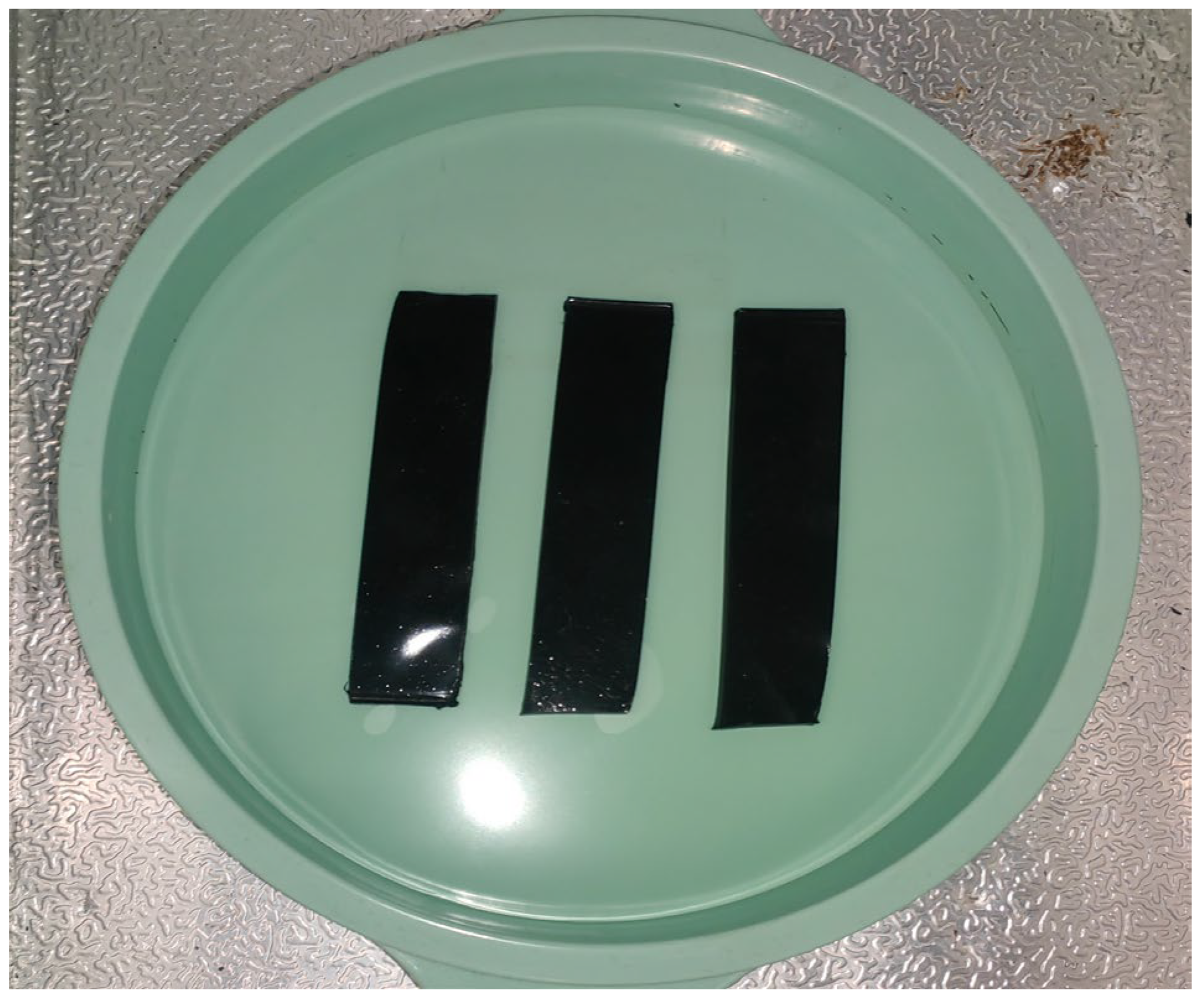
- Mechanical Properties of EFPU-MEA
- (2)
- Heat Resistance of EFPU-MEA
- (3)
- Low-Temperature Flexibility of EFPU-MEA
- (4)
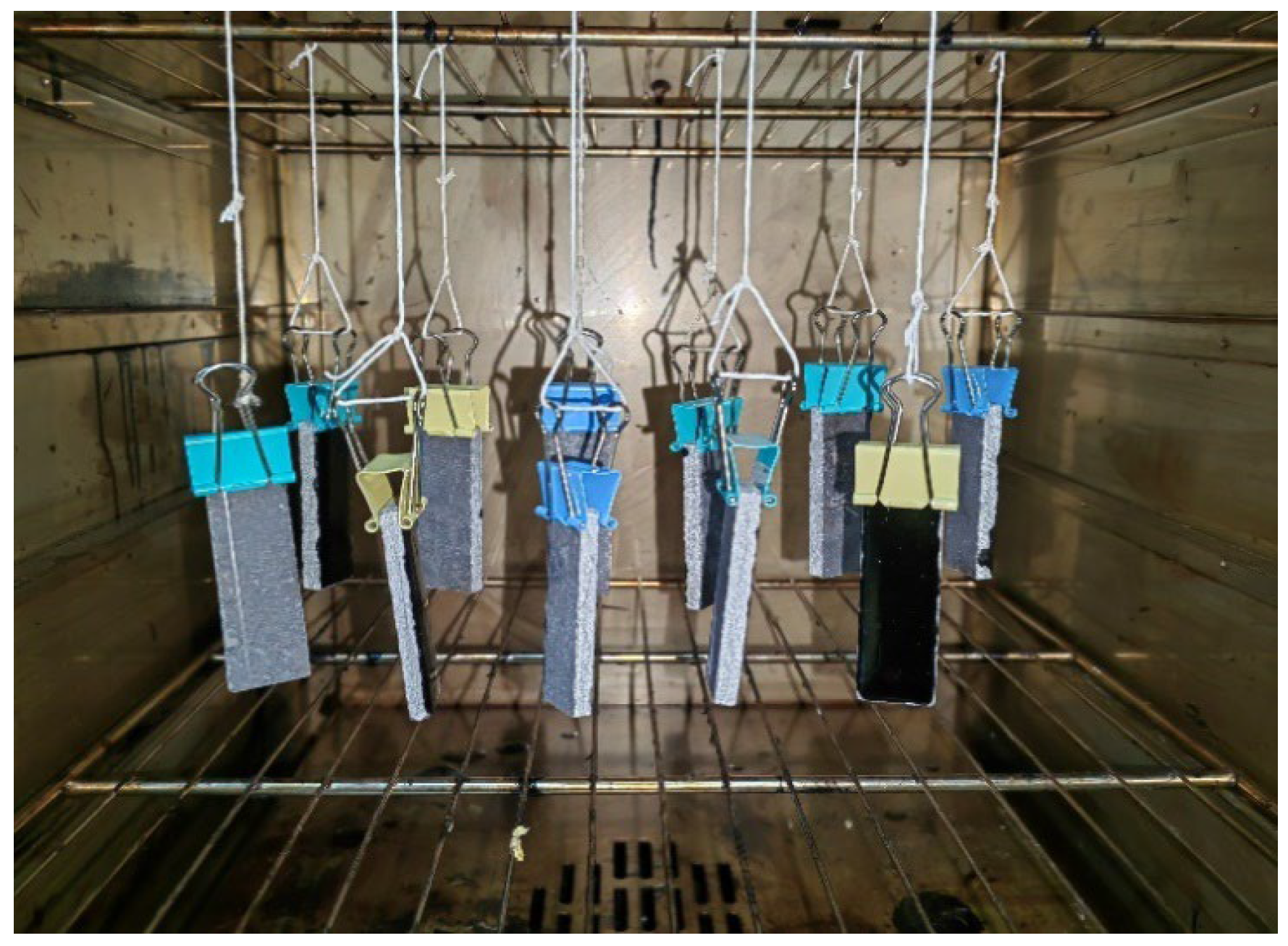
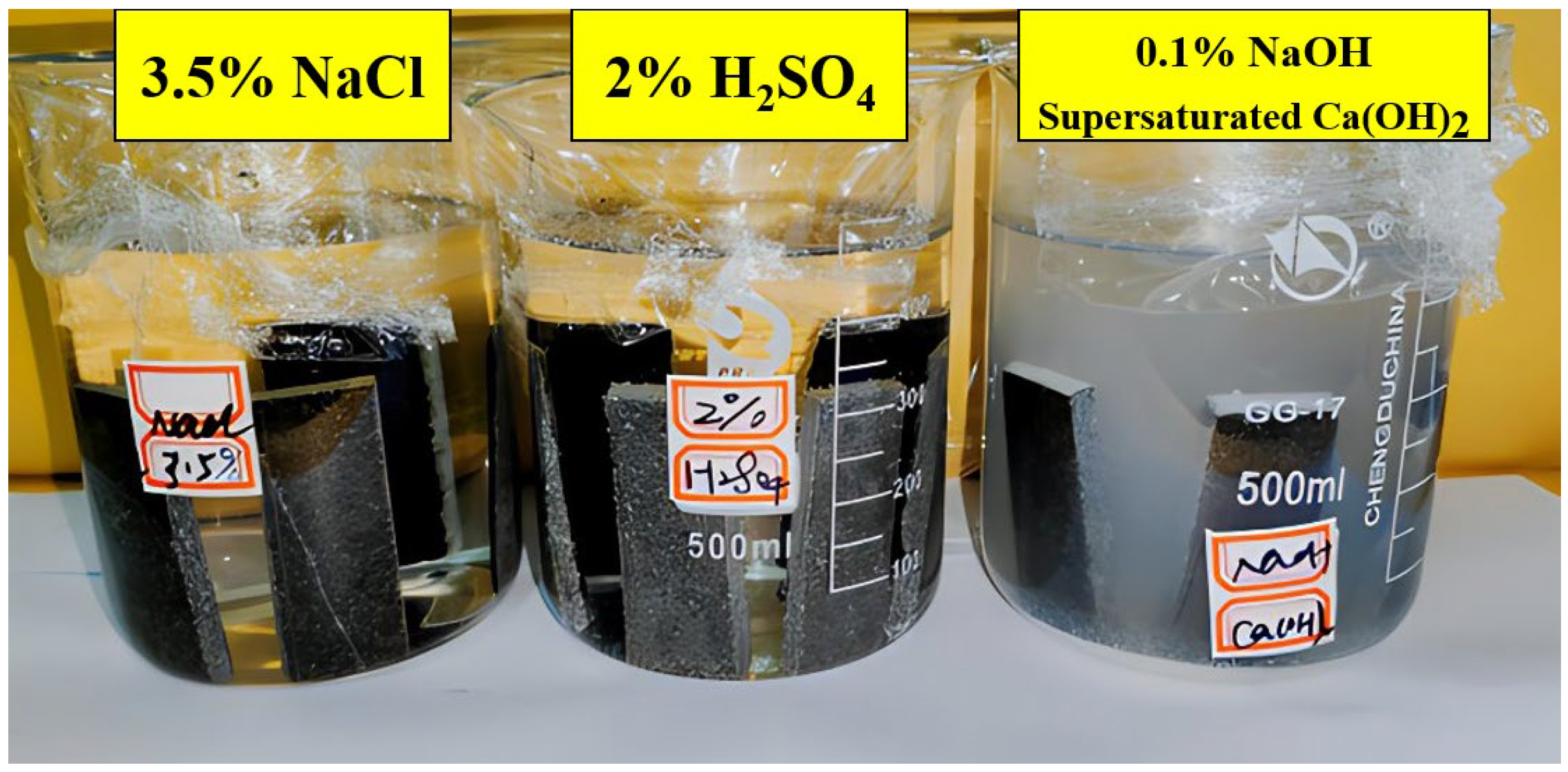
- Chemical Media Corrosion Resistance of EFPU-MEA
- (5)
- Conventional Adhesion Performance of EFPU-MEA
2.4.2. Pull-Out and Shear Performance Tests
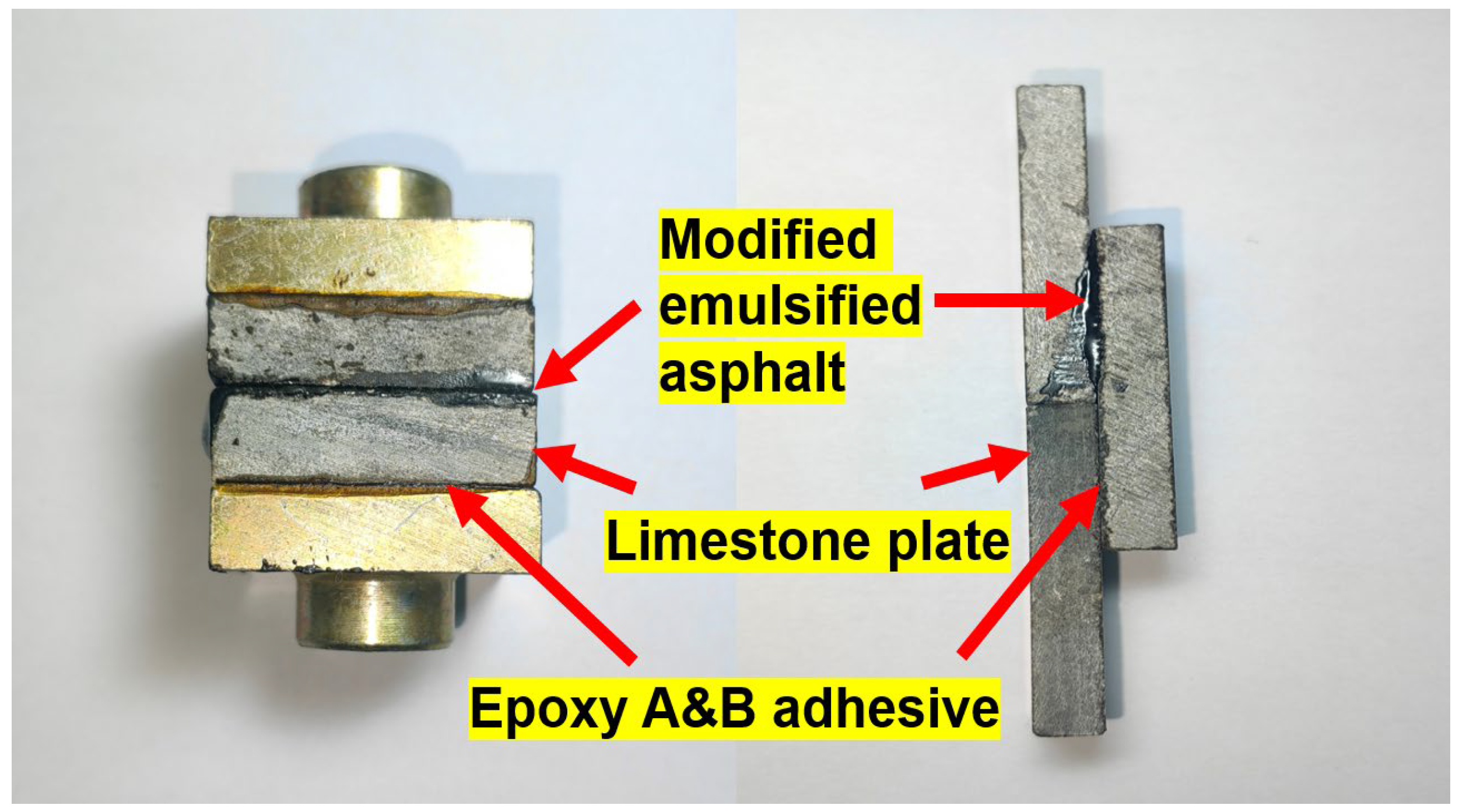
- (1)
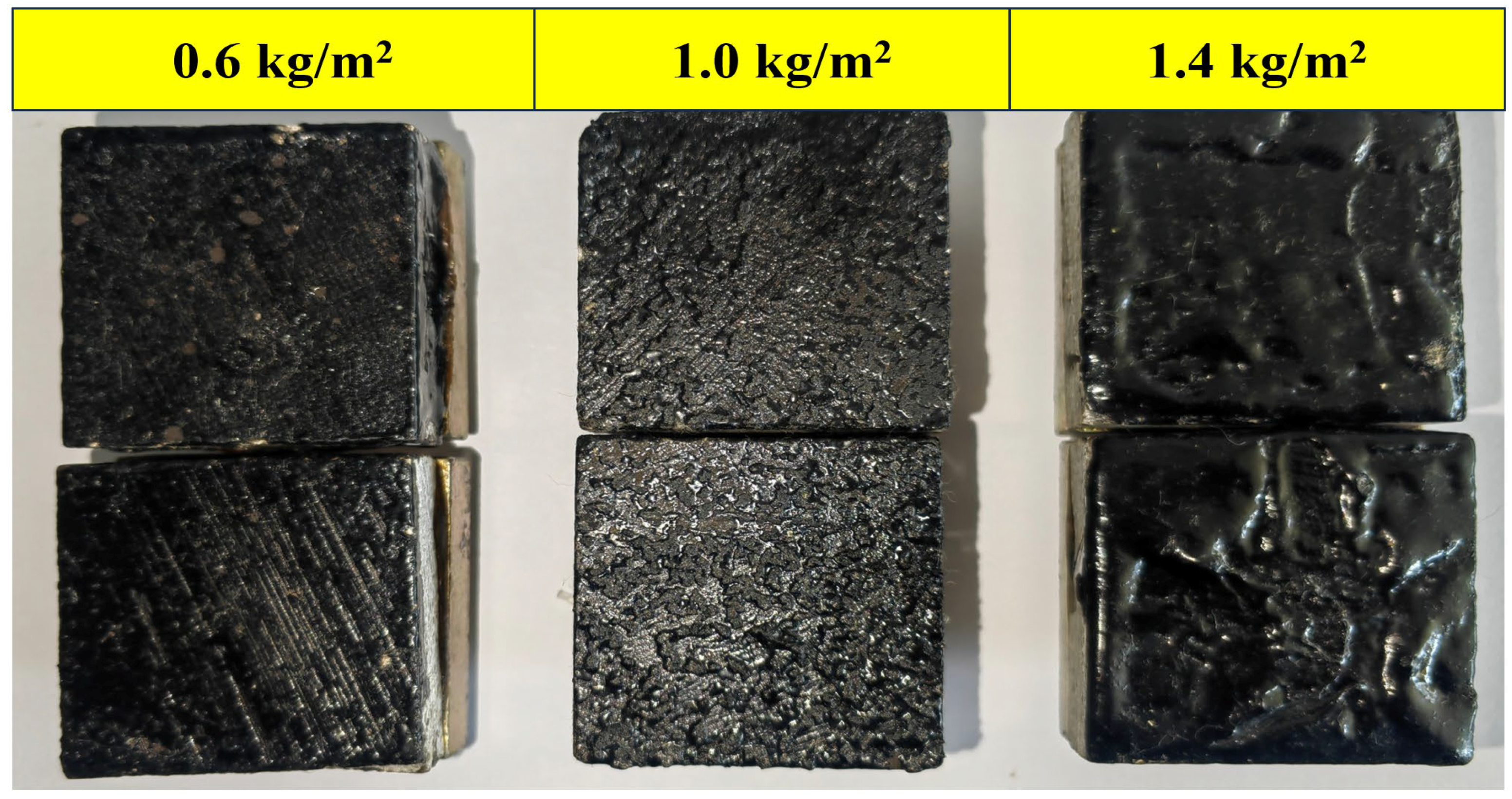
- Determination of the optimal spraying quantity
- (2)
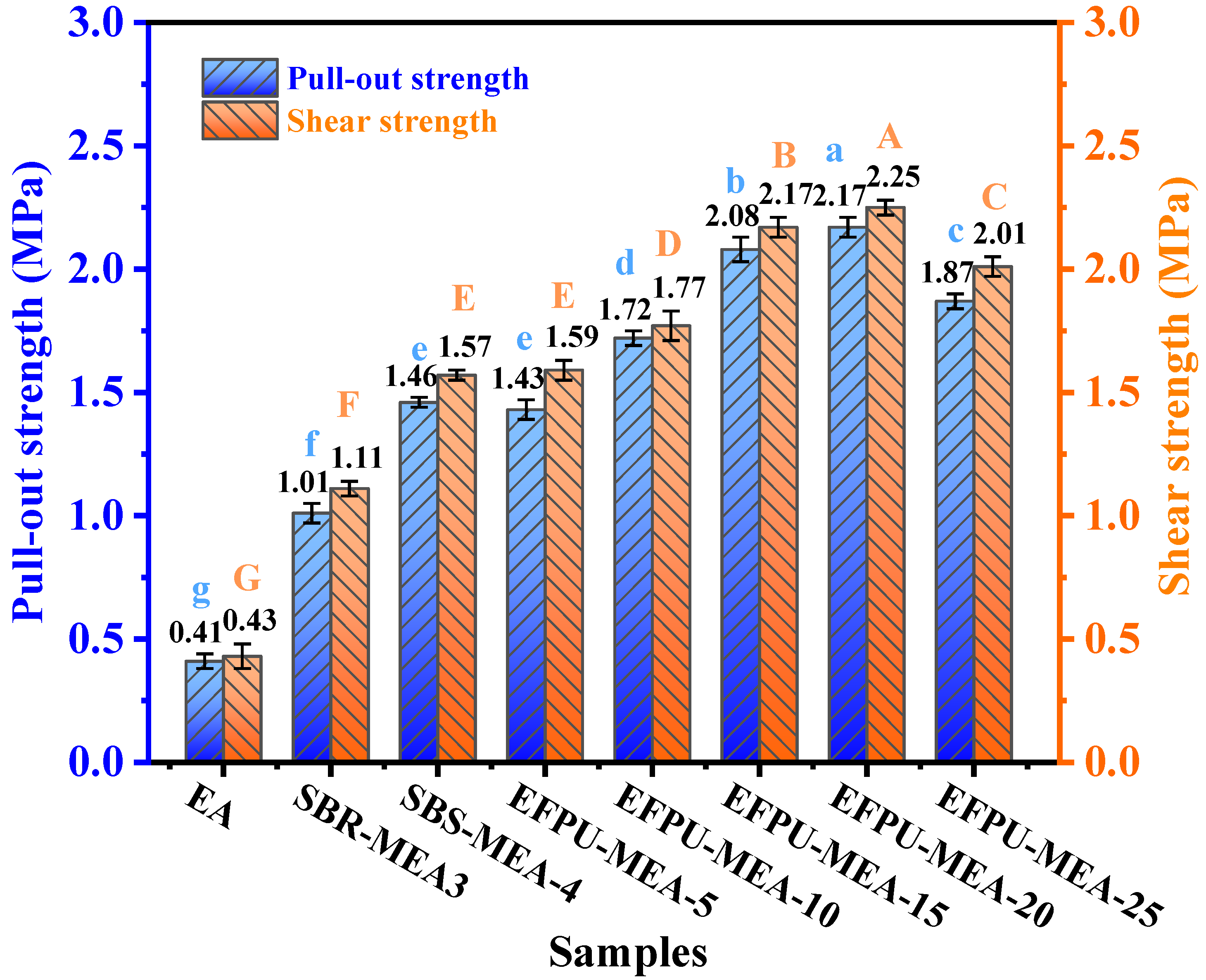
- Effect of EFPU content
- (3)
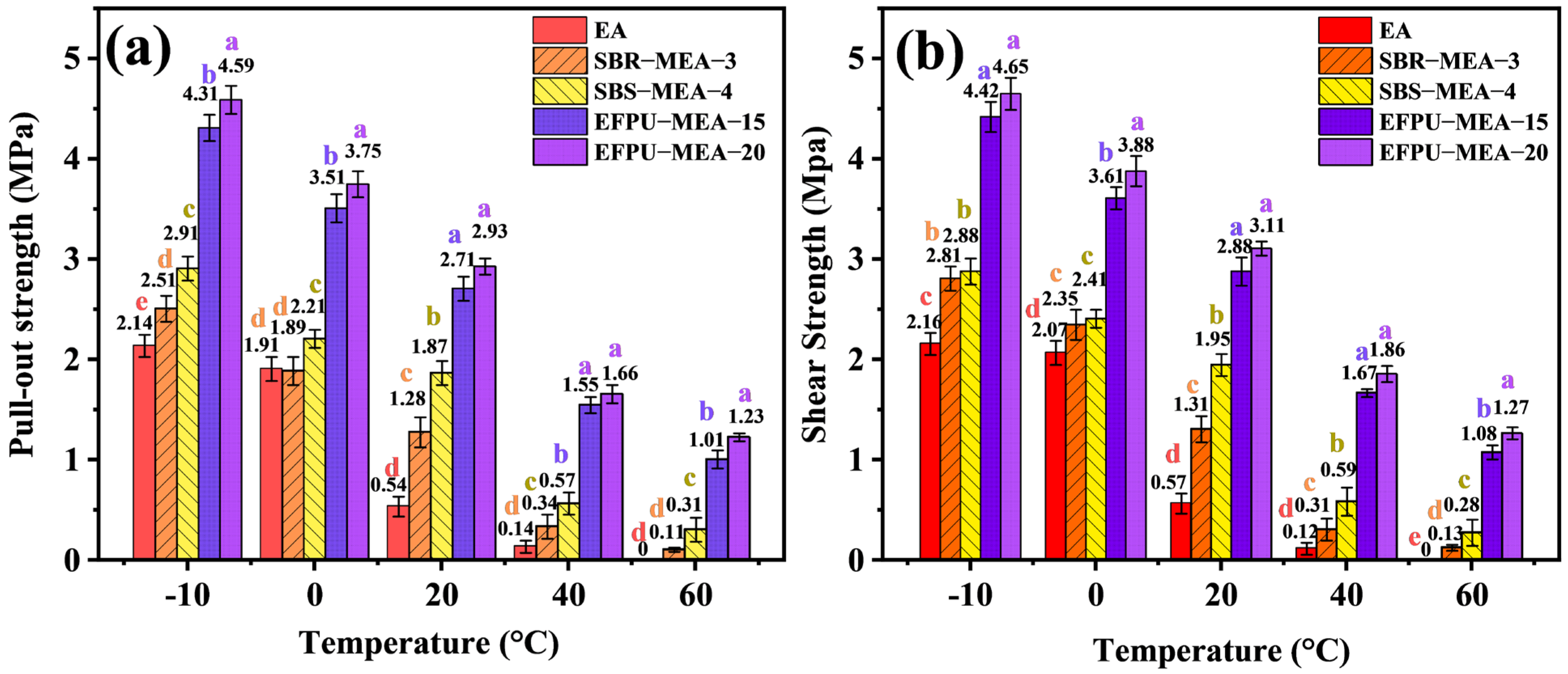
- Effect of ambient temperature
- (4)
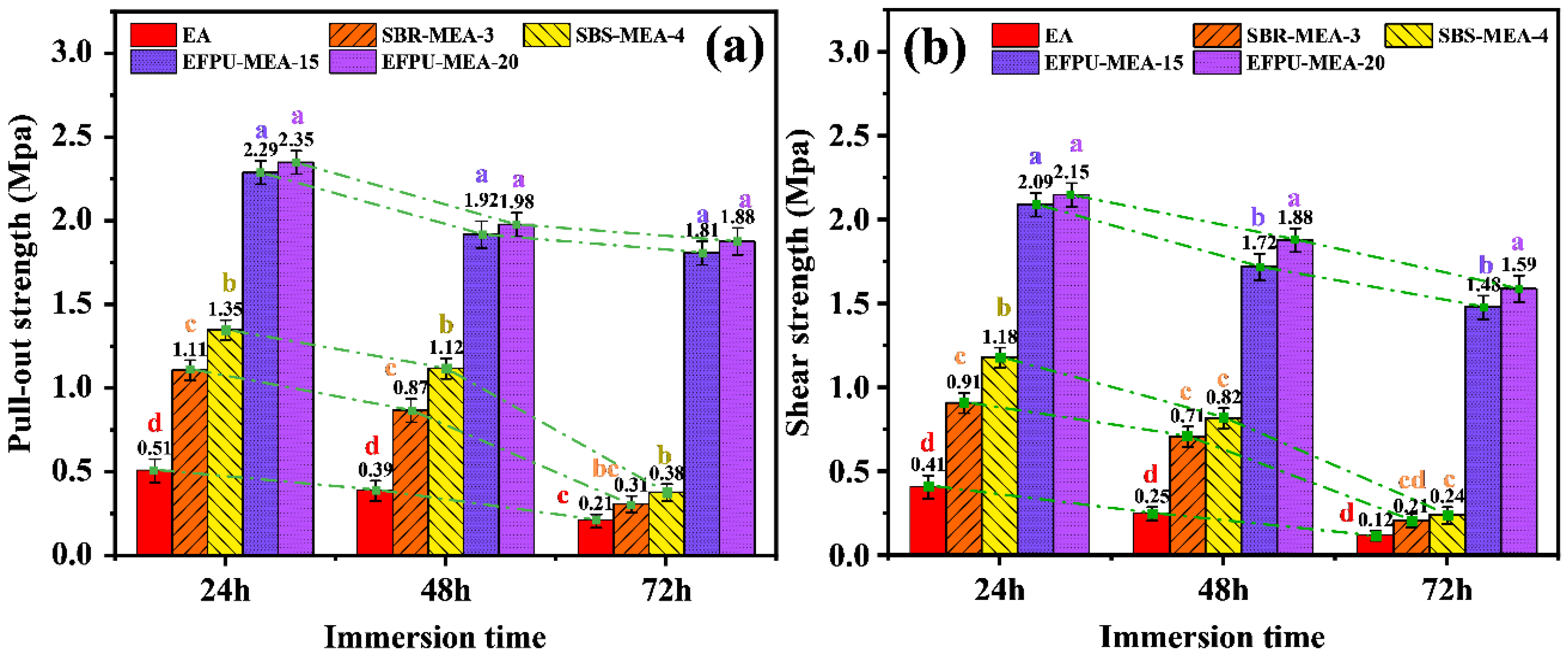
- Effect of water immersion environment
- (5)
- Effect of freeze–thaw cycles
2.4.3. Fourier Transform Infrared (FTIR) Spectrum
2.4.4. Fluorescent Microscope (FM) Observation
2.4.5. Contact Angle Test
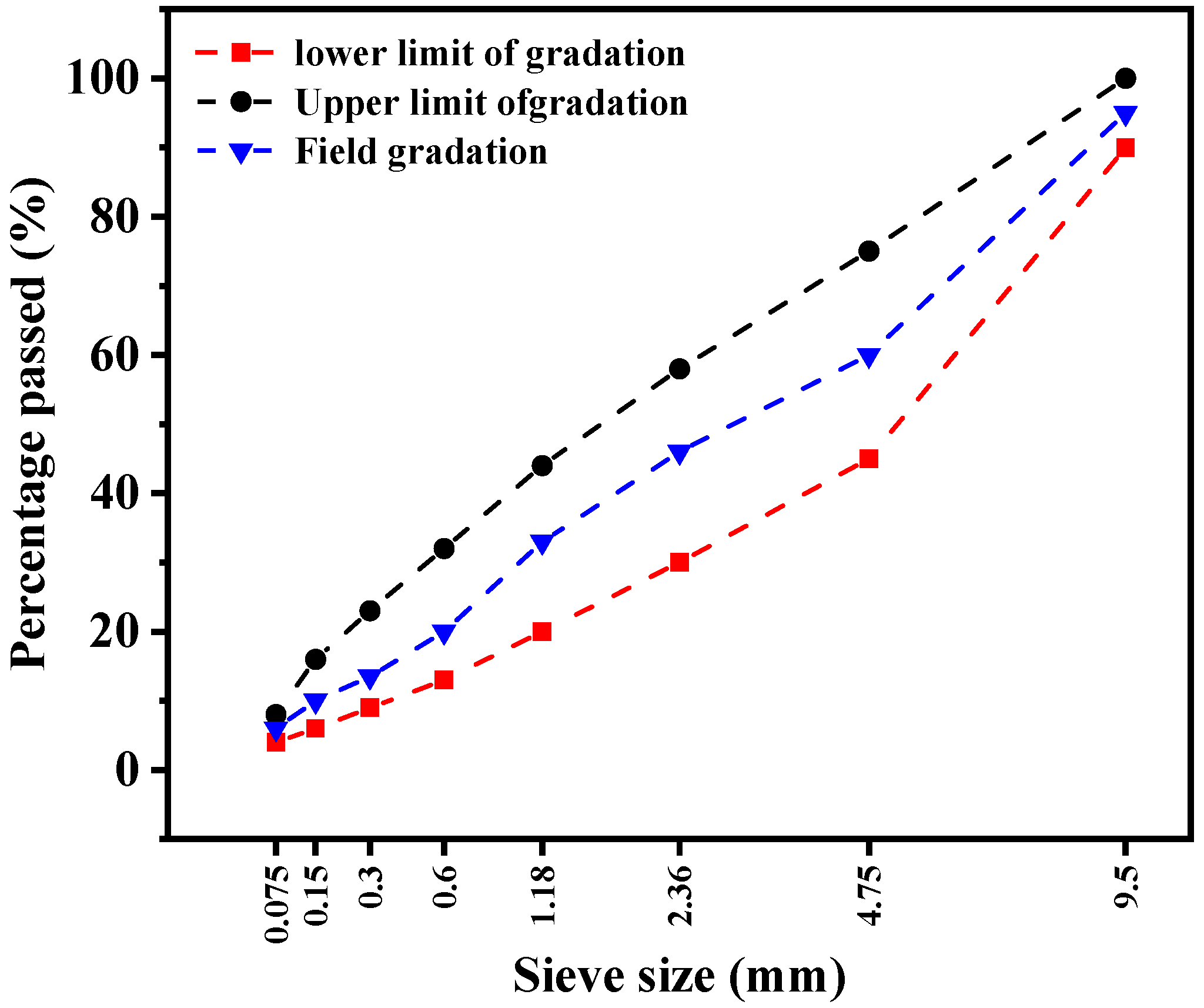
2.4.6. Marshall Stability Test
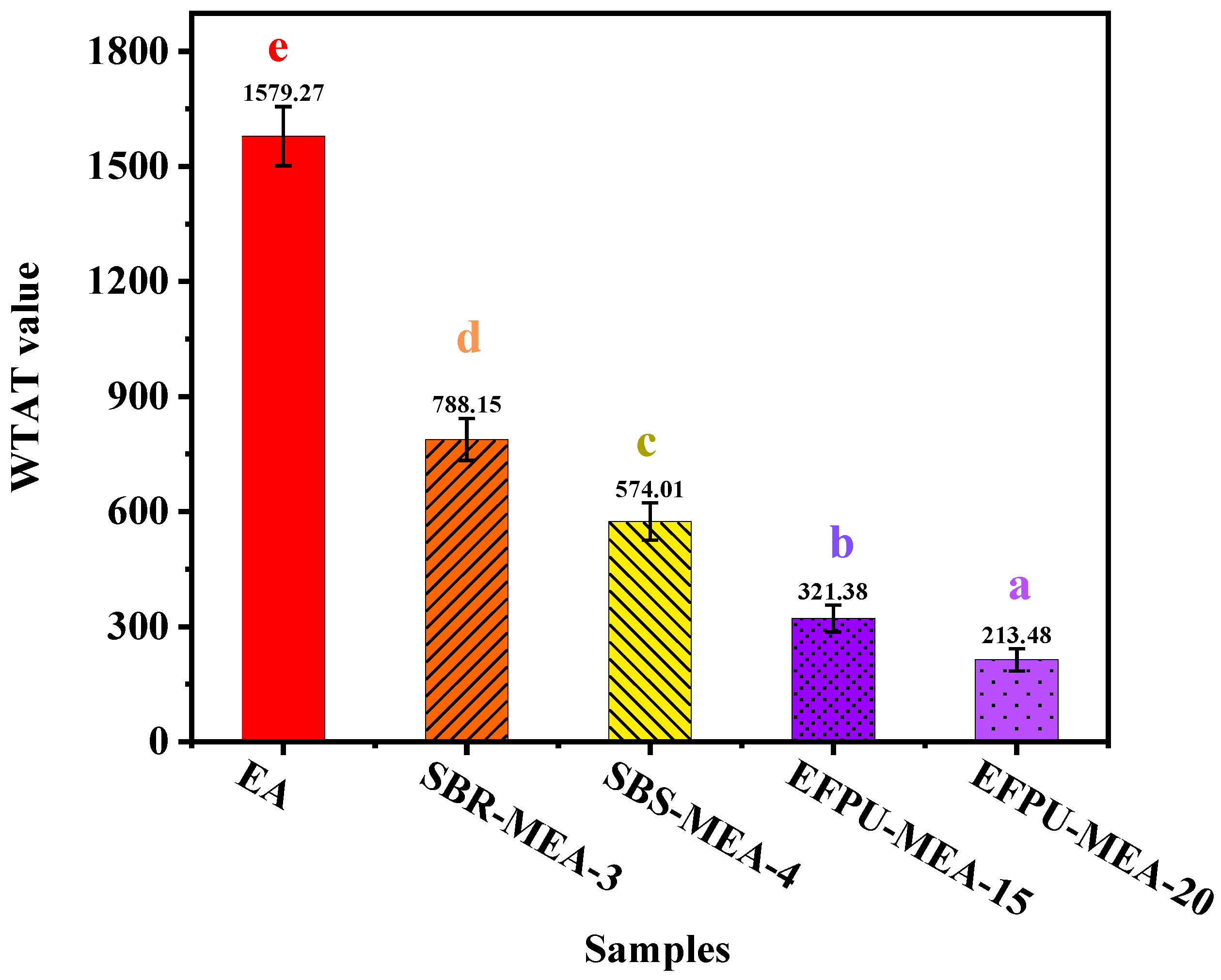
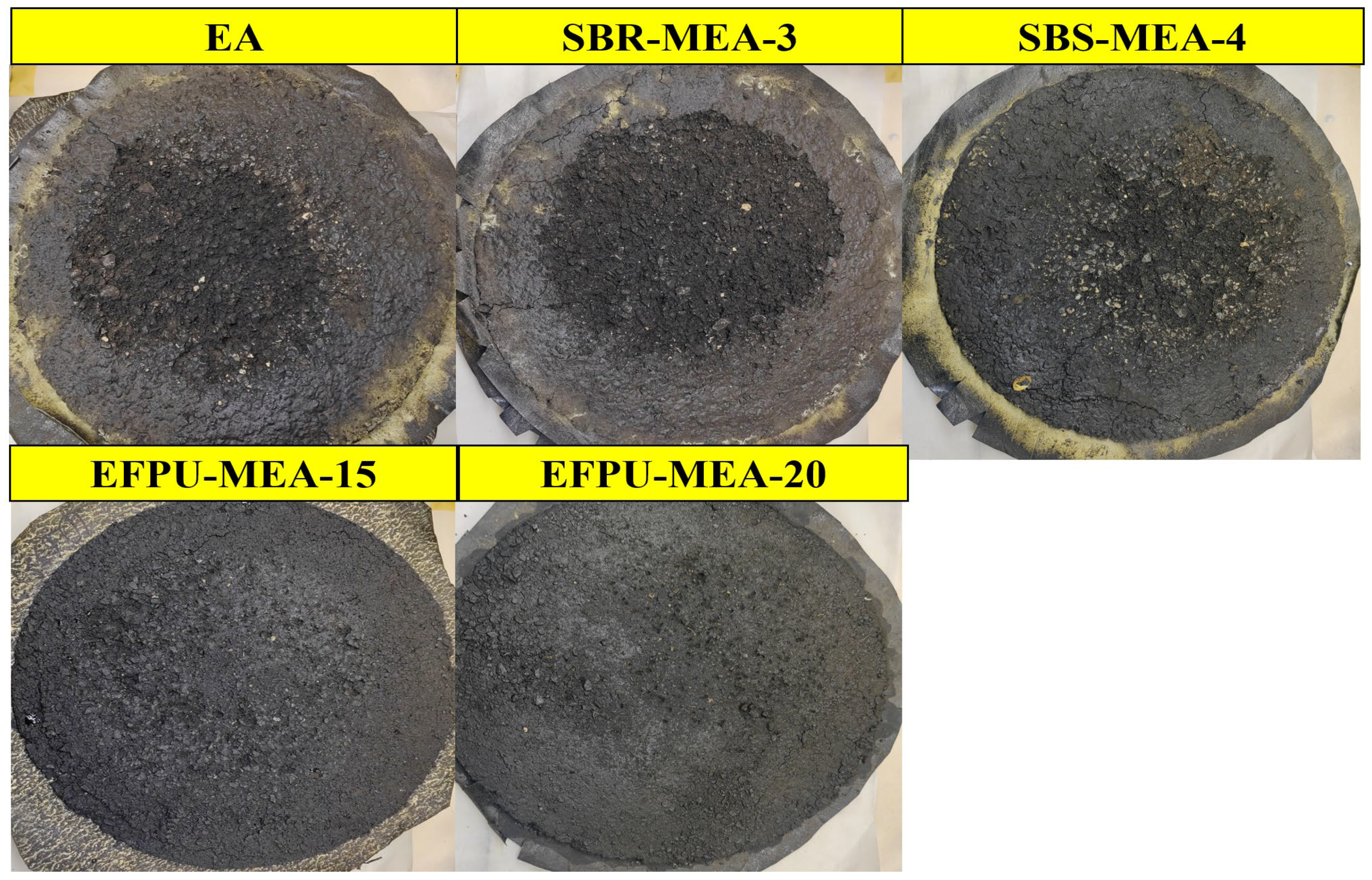
2.4.7. Wet Track Abrasion Test (WTAT)
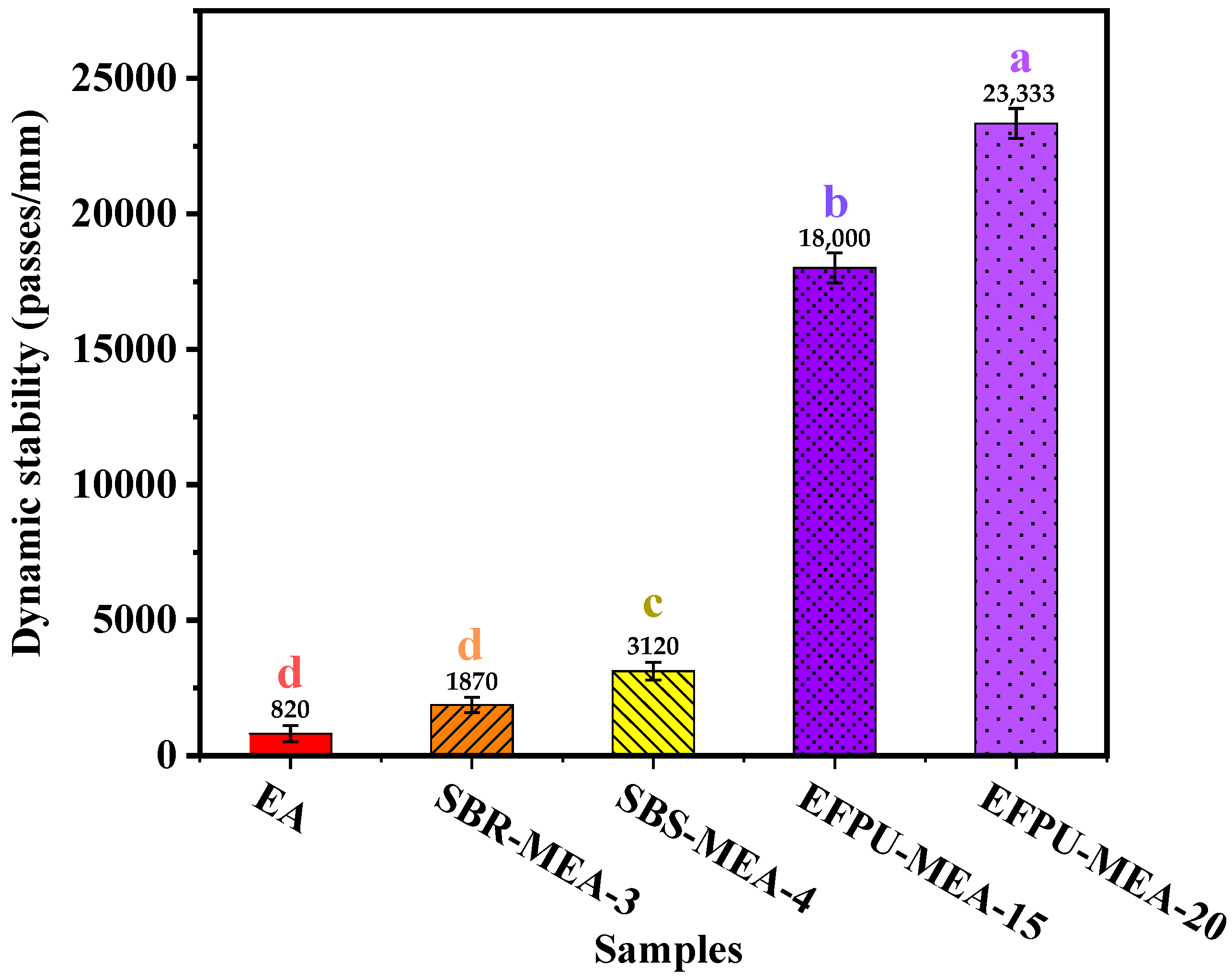
2.4.8. Anti-Rutting Performance
2.4.9. Statistical Analysis
3. Results and Discussions
3.1. Basic Performance of EFPU-MEA
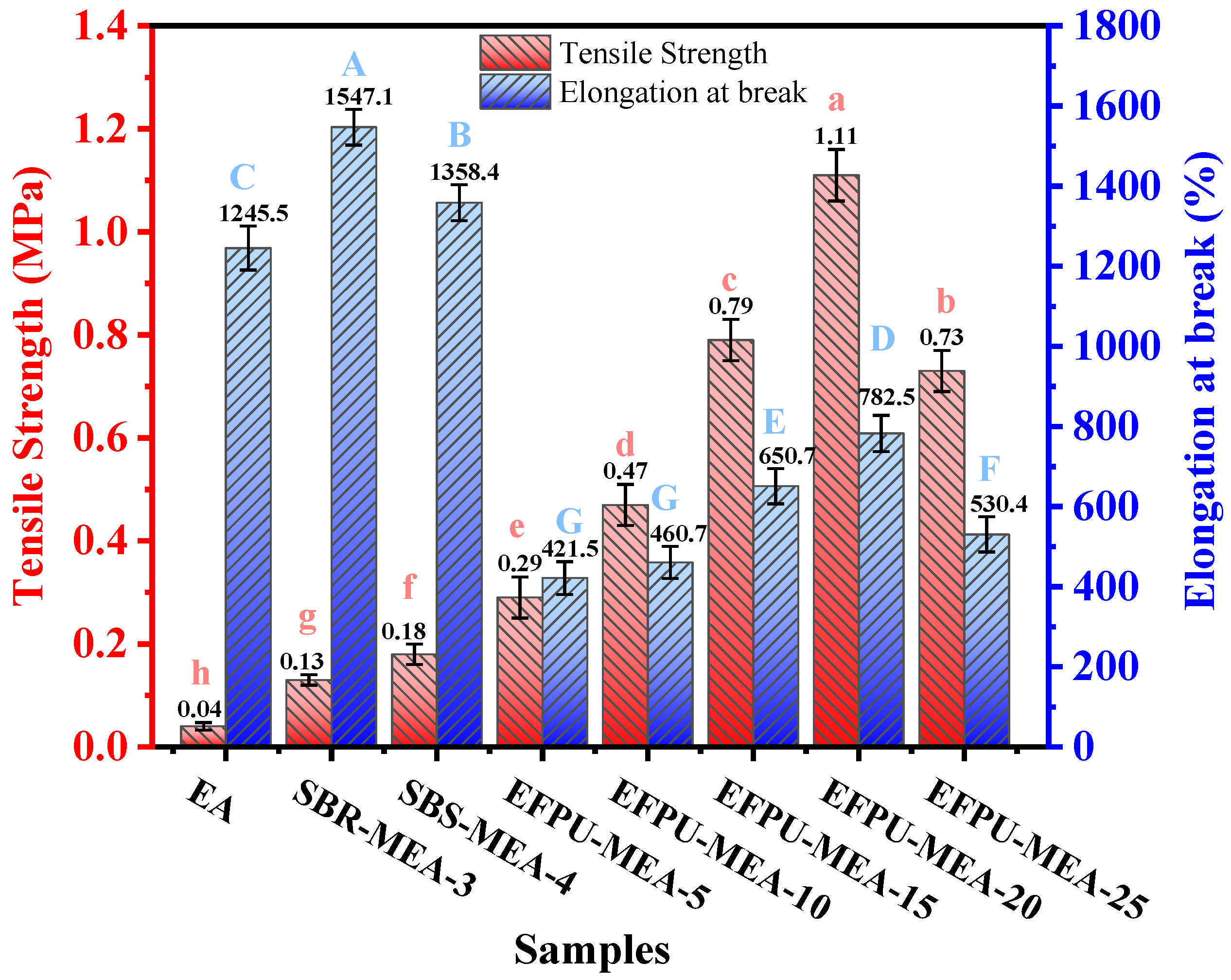
3.1.1. Mechanical Properties
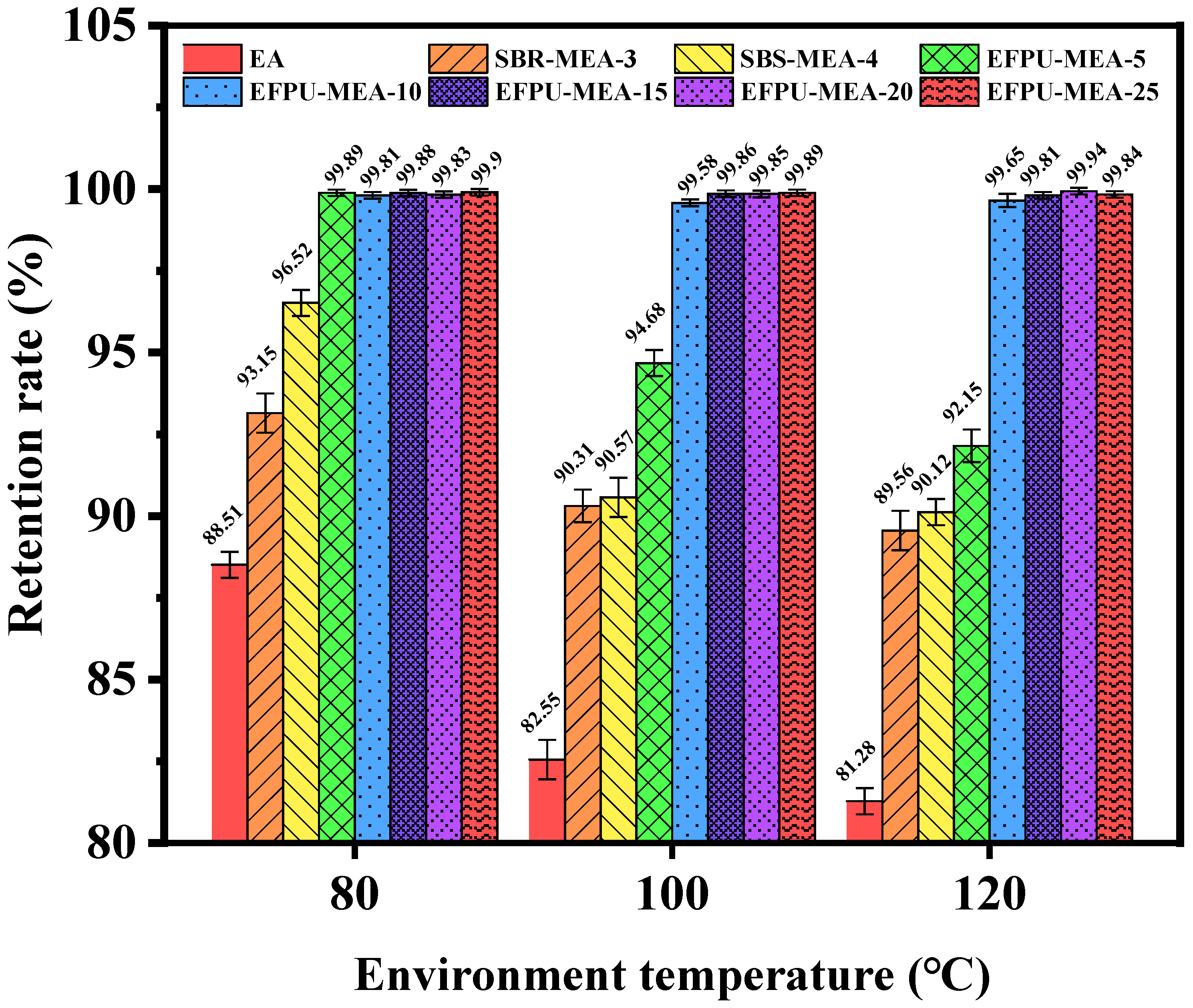
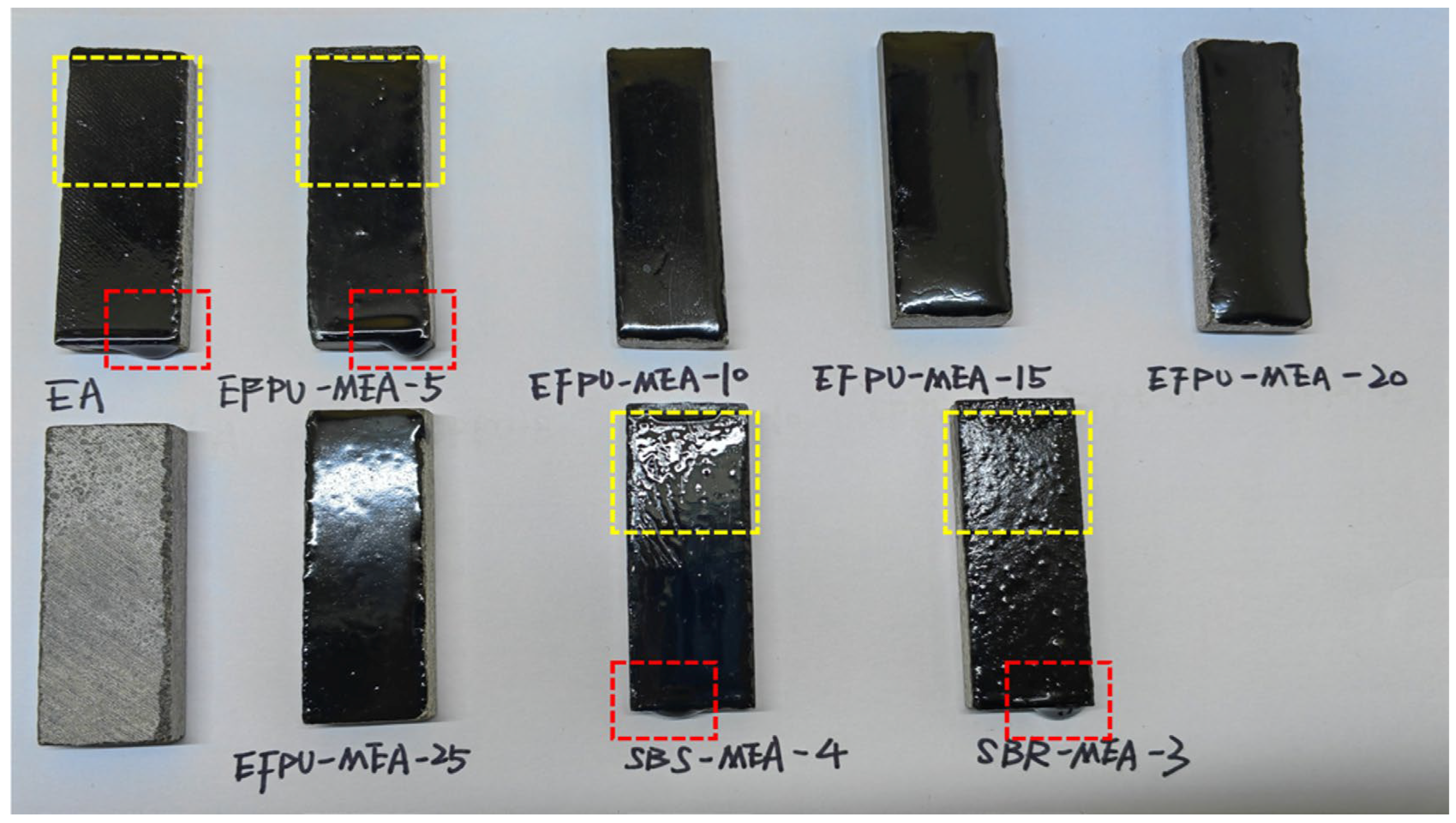
3.1.2. Heat Resistance
3.1.3. Low-Temperature Flexibility
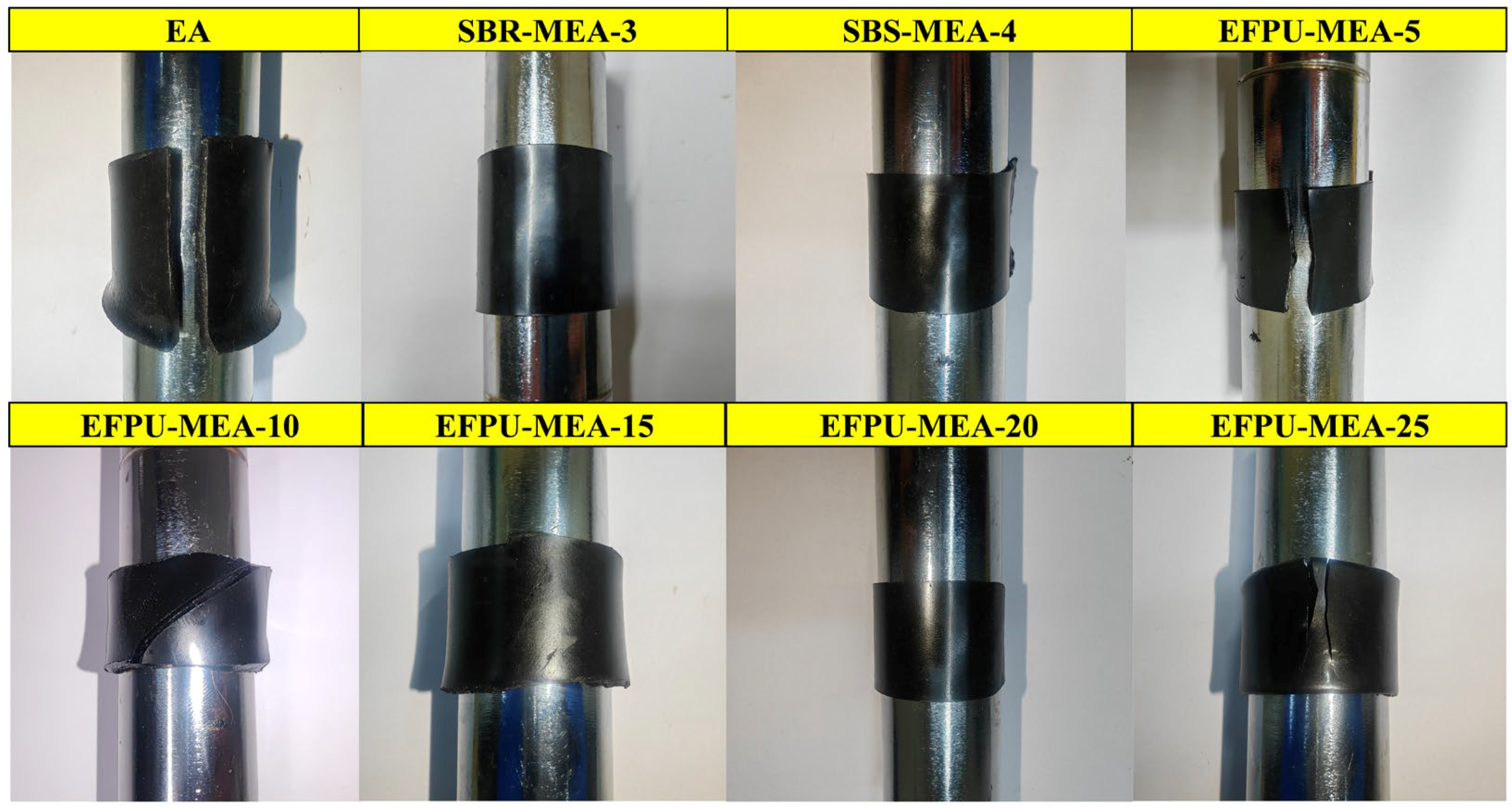
3.1.4. Corrosion Resistance
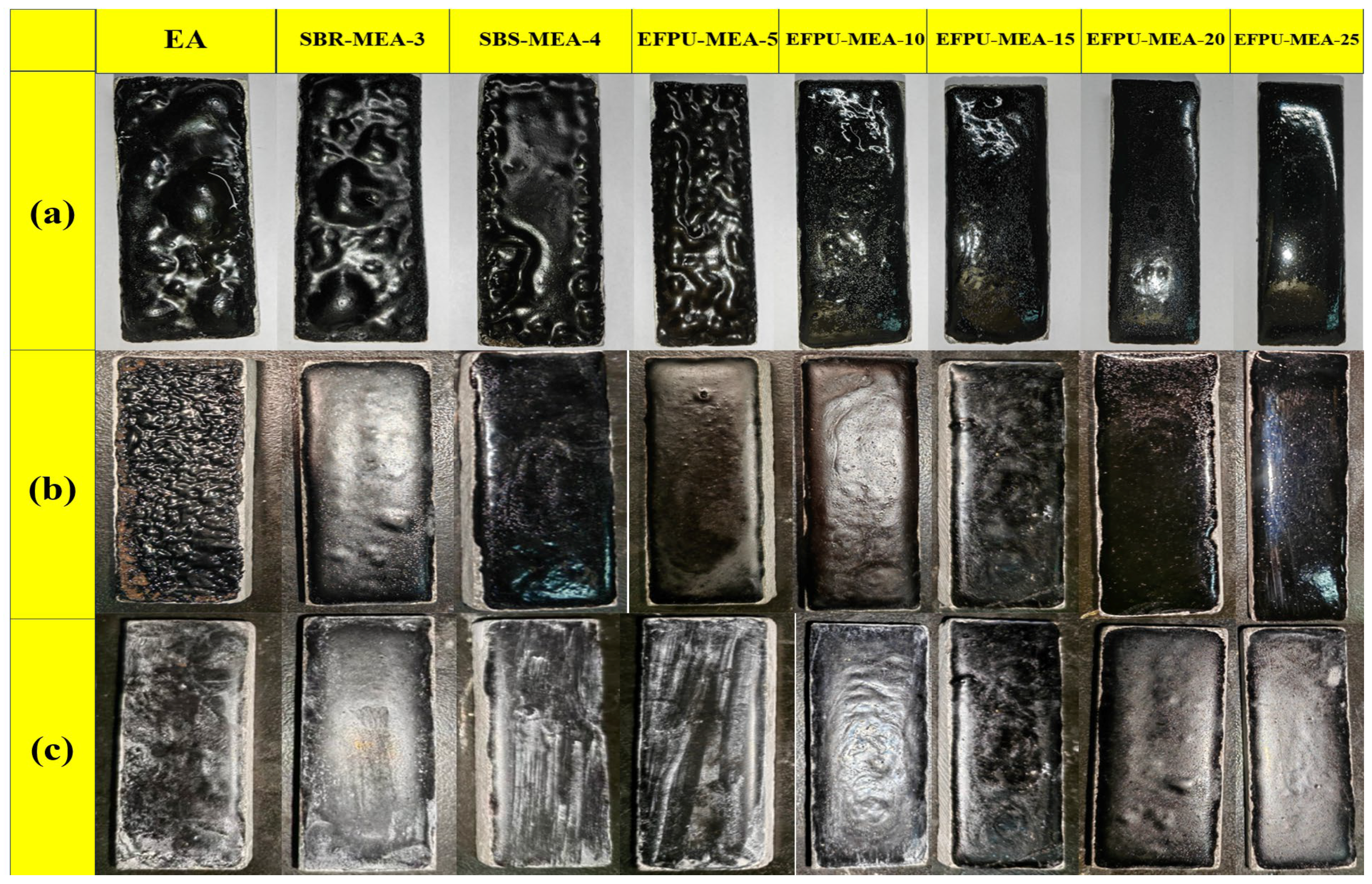
3.1.5. Traditional Adhesive Performance—Boiling Water Method


3.2. Interfacial Bond Performance of the “Sandwich” Structure
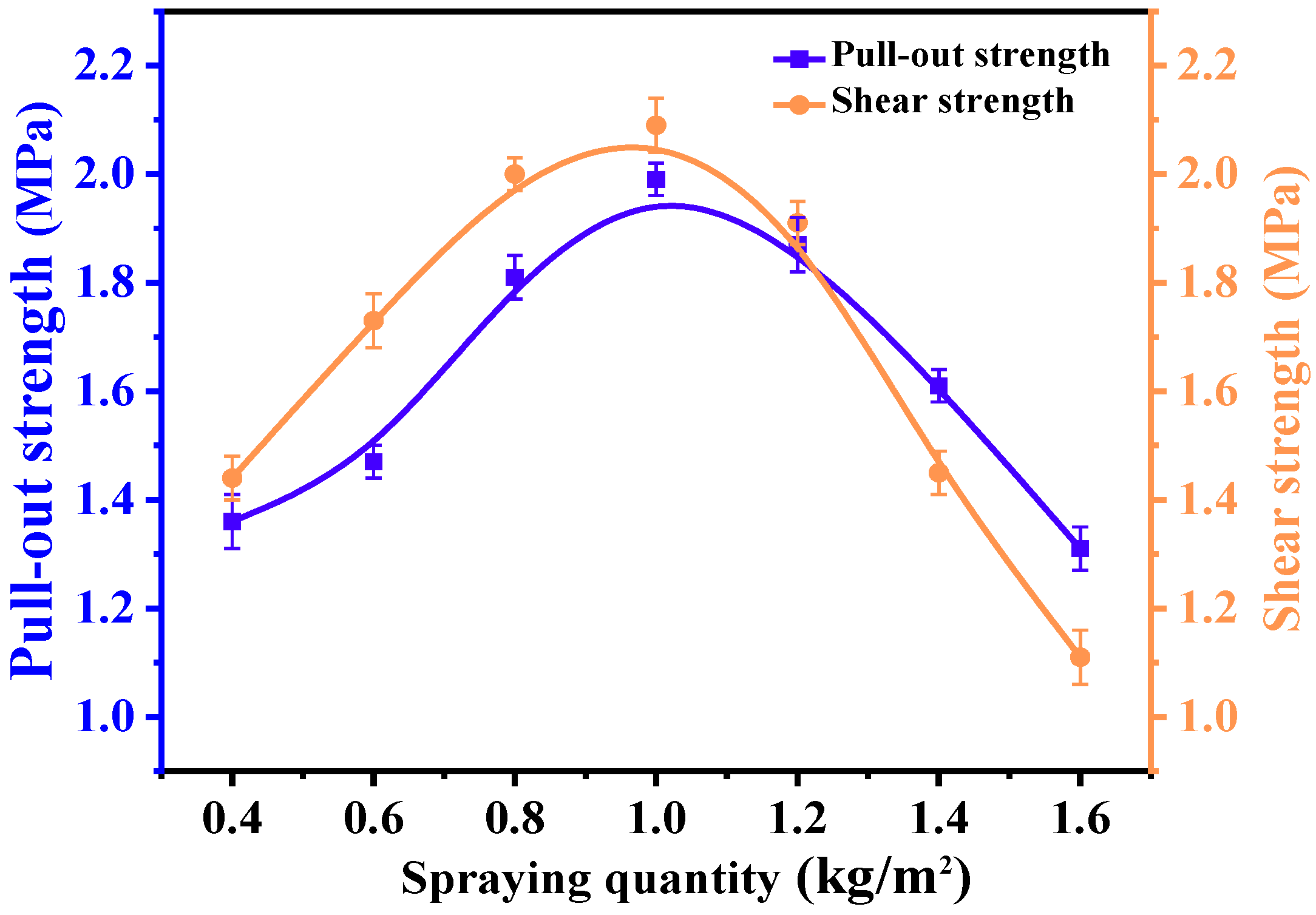
3.2.1. Effect of Spraying Quantity
3.2.2. Effect of EFPU Content
3.2.3. Effect of Temperature
3.2.4. Effect of Water Immersion
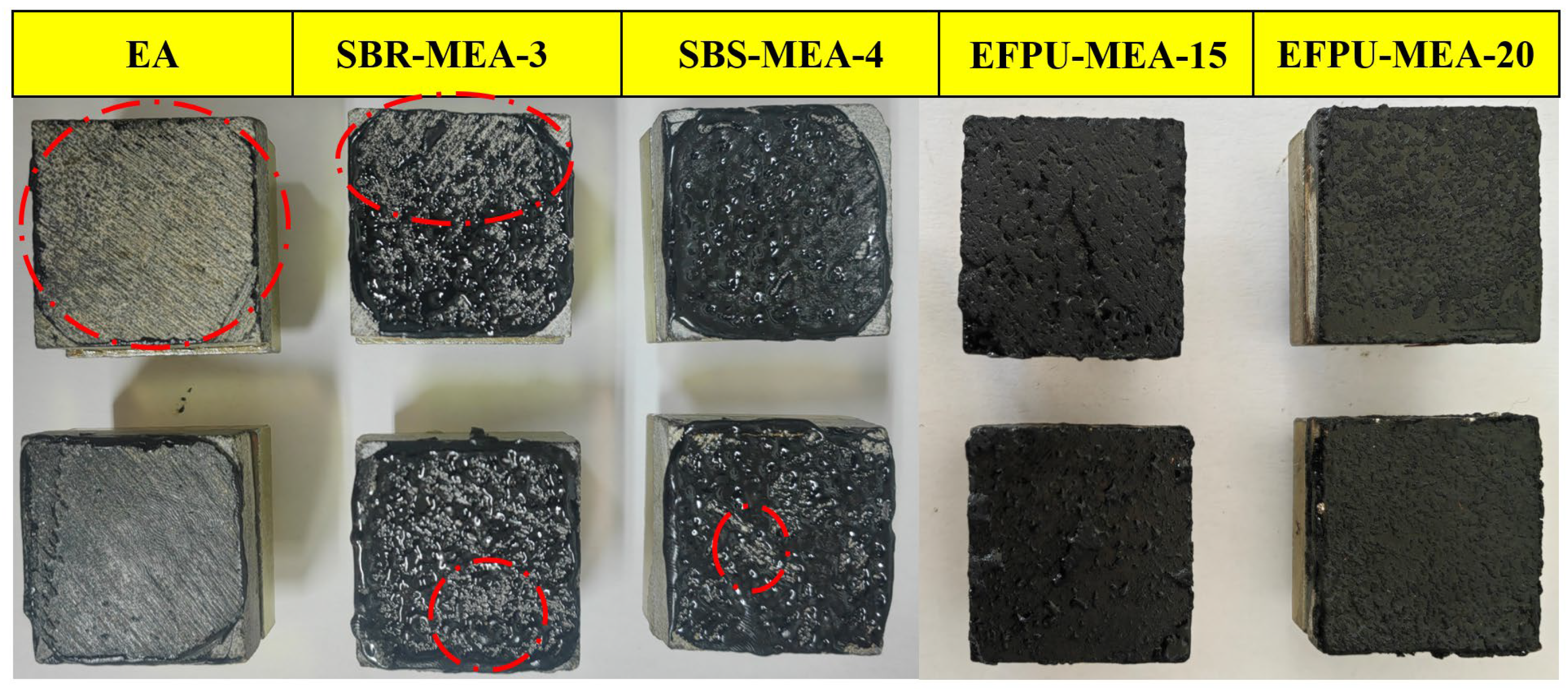
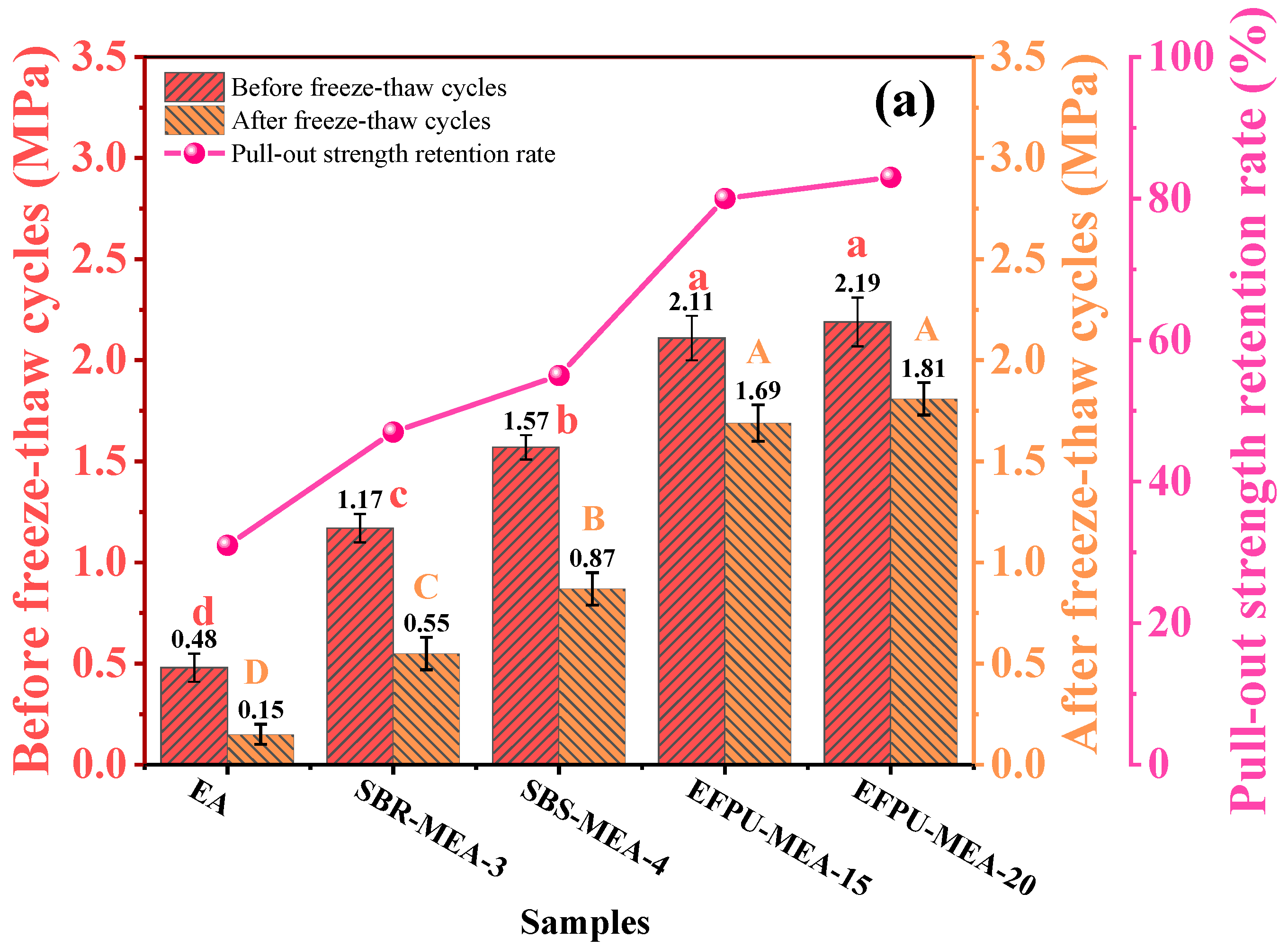
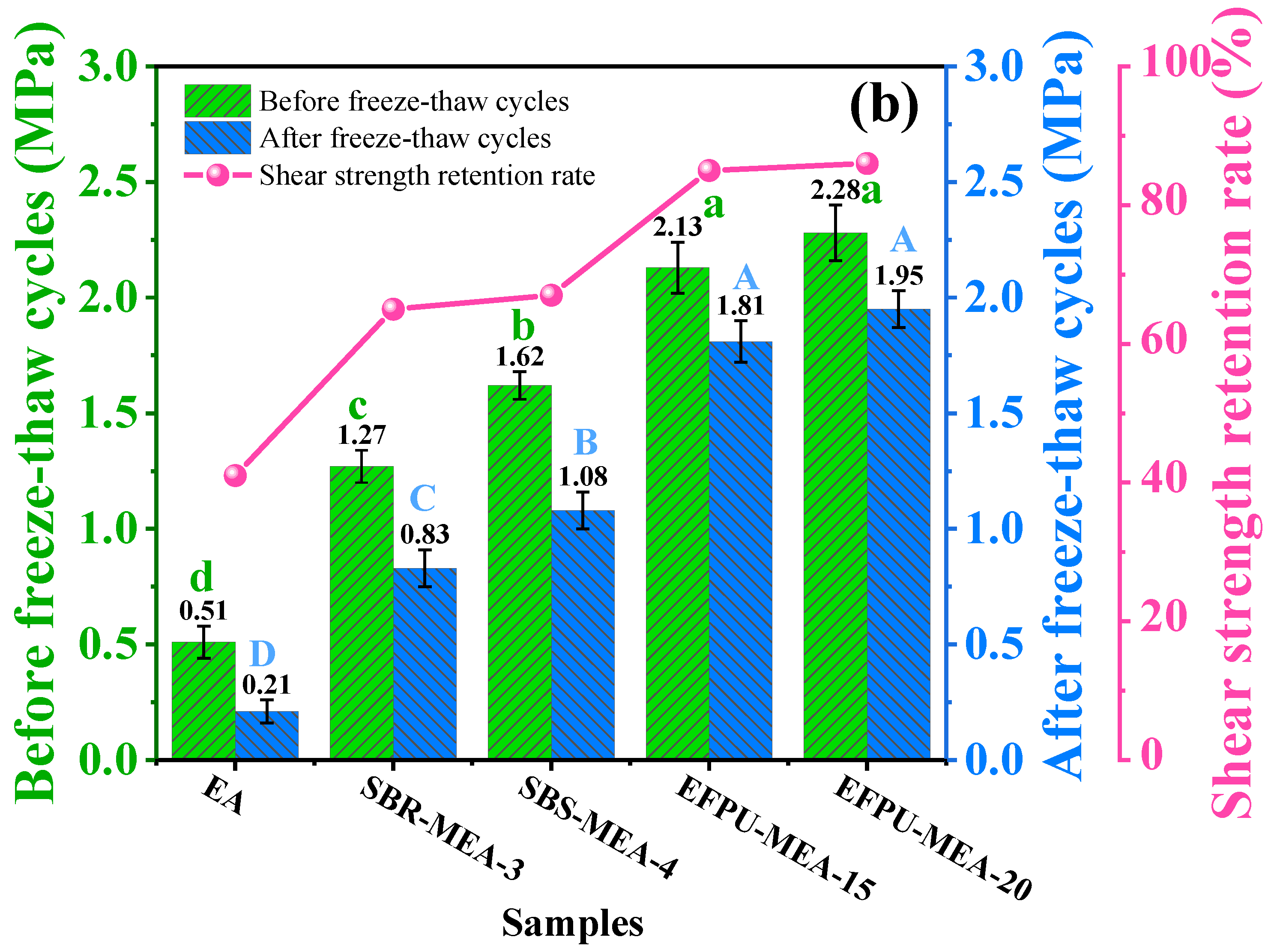
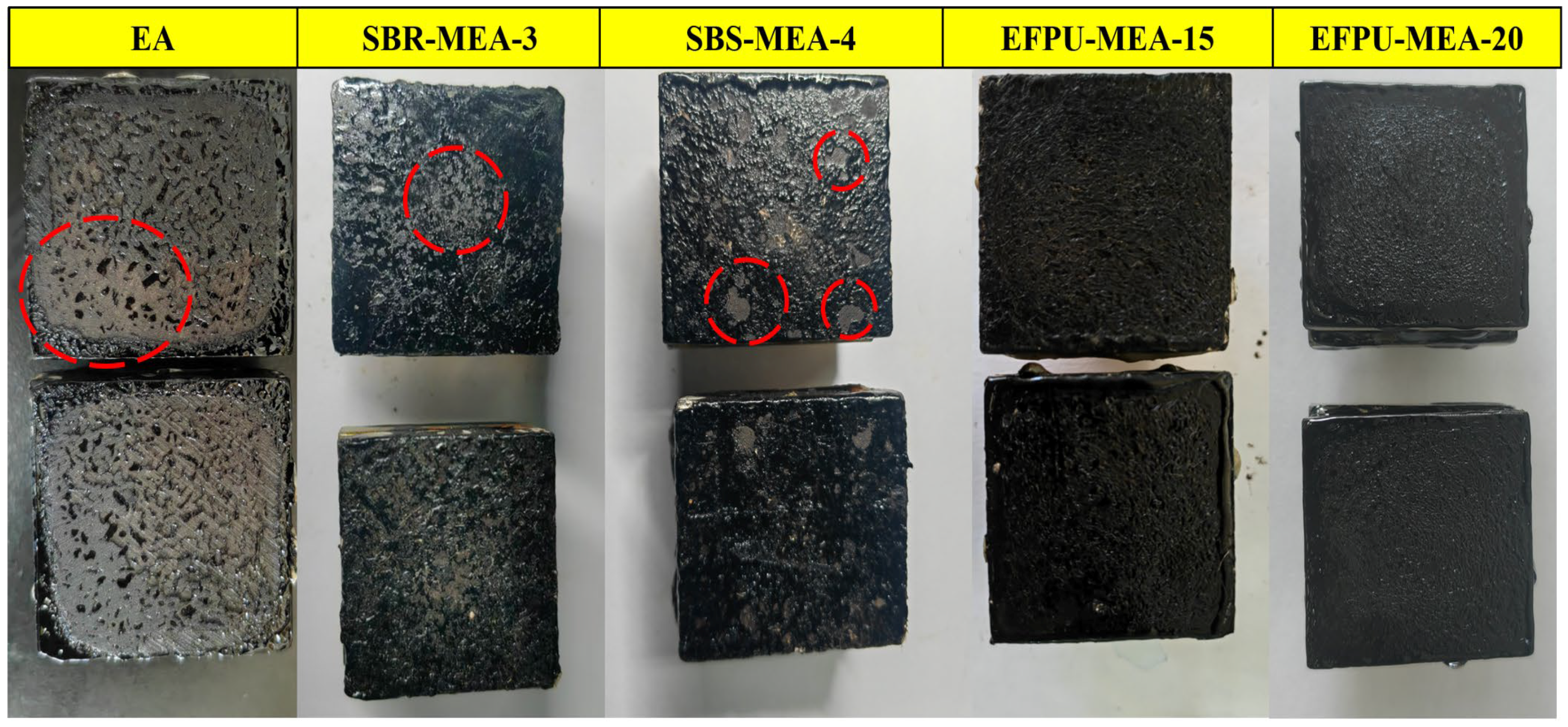
3.2.5. Effect of Freeze–Thaw Cycle
3.3. Modification Mechanisms of EFPU-MEA
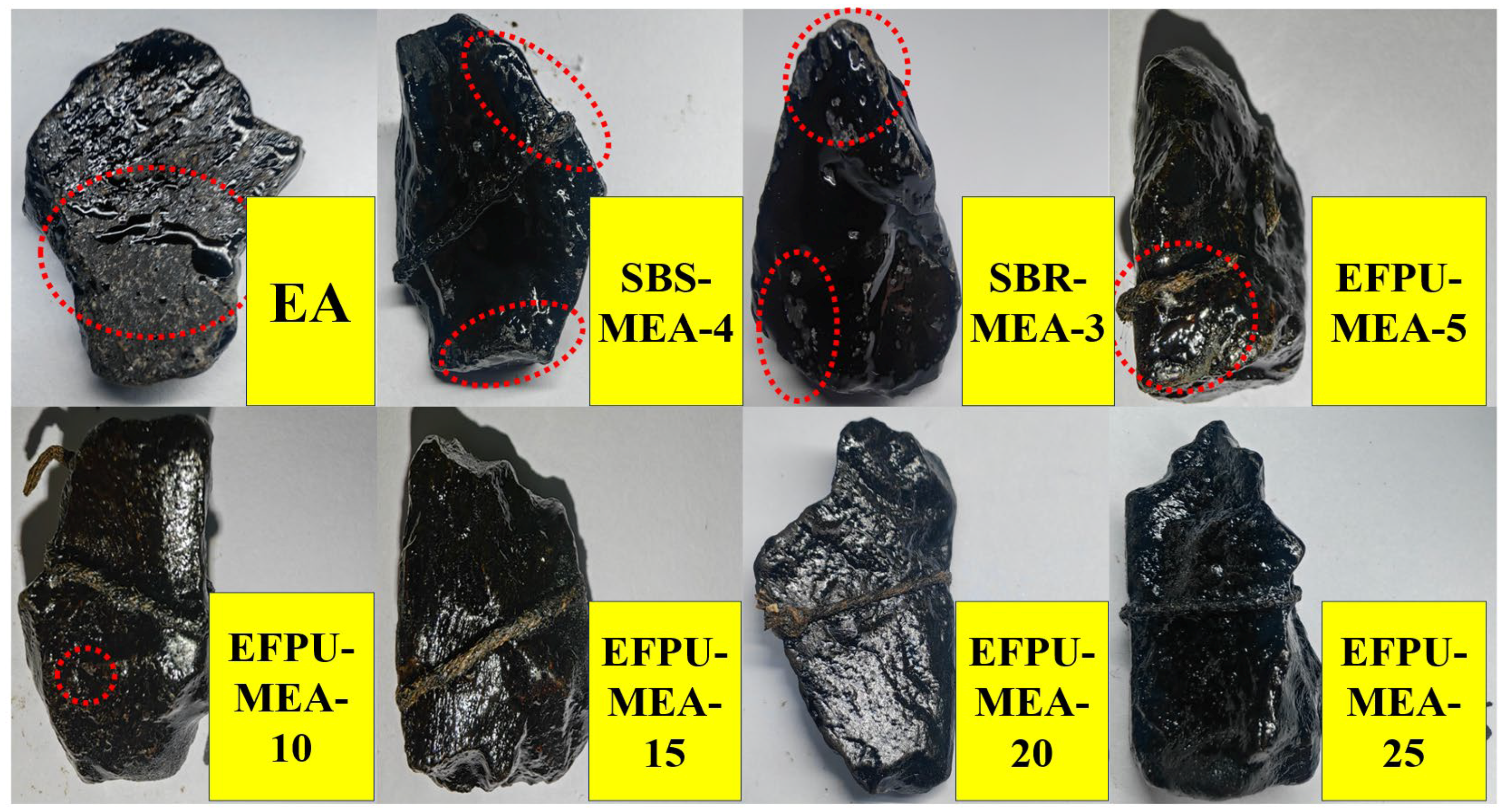
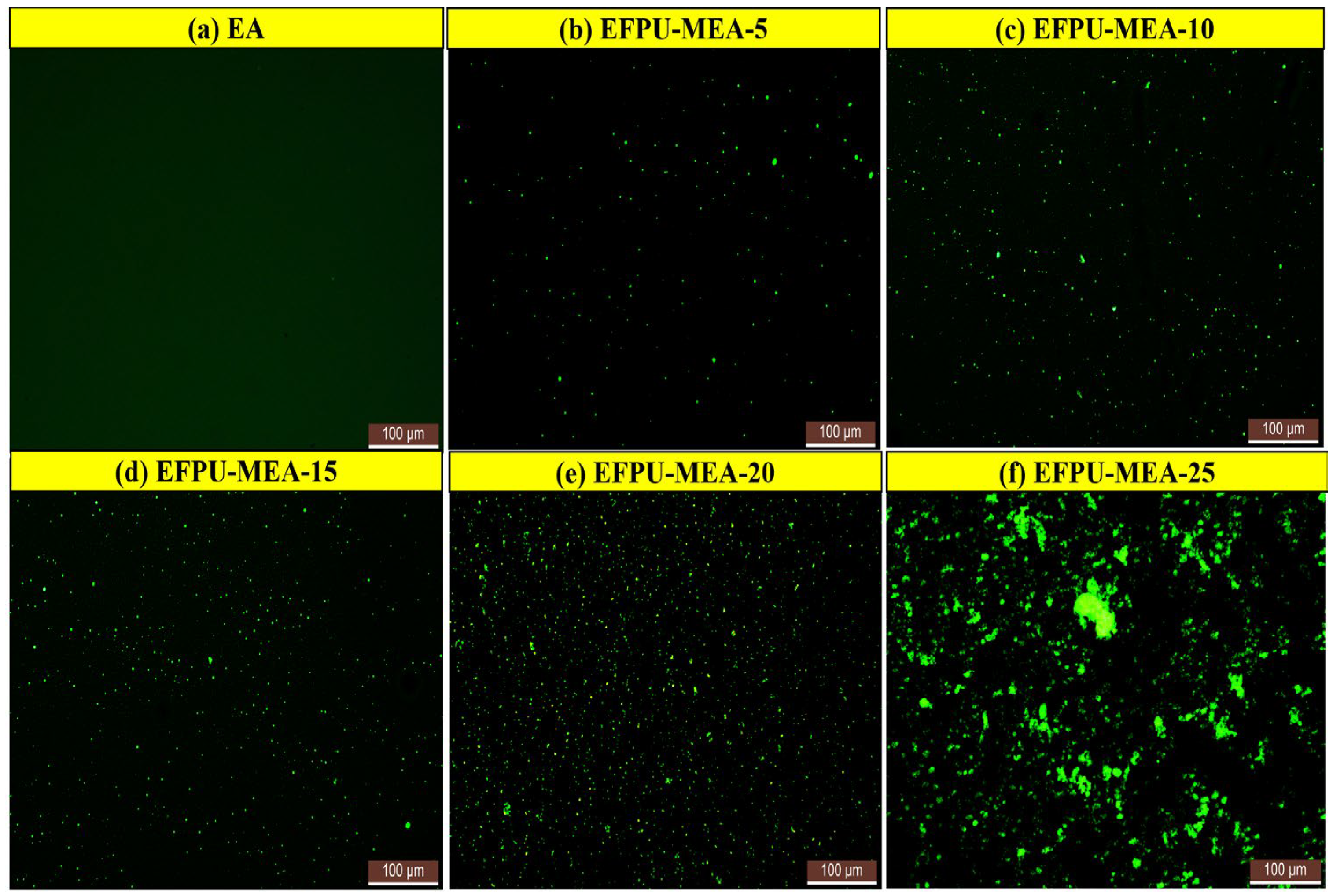
3.3.1. Morphological Analysis via Fluorescent Microscope (FM)


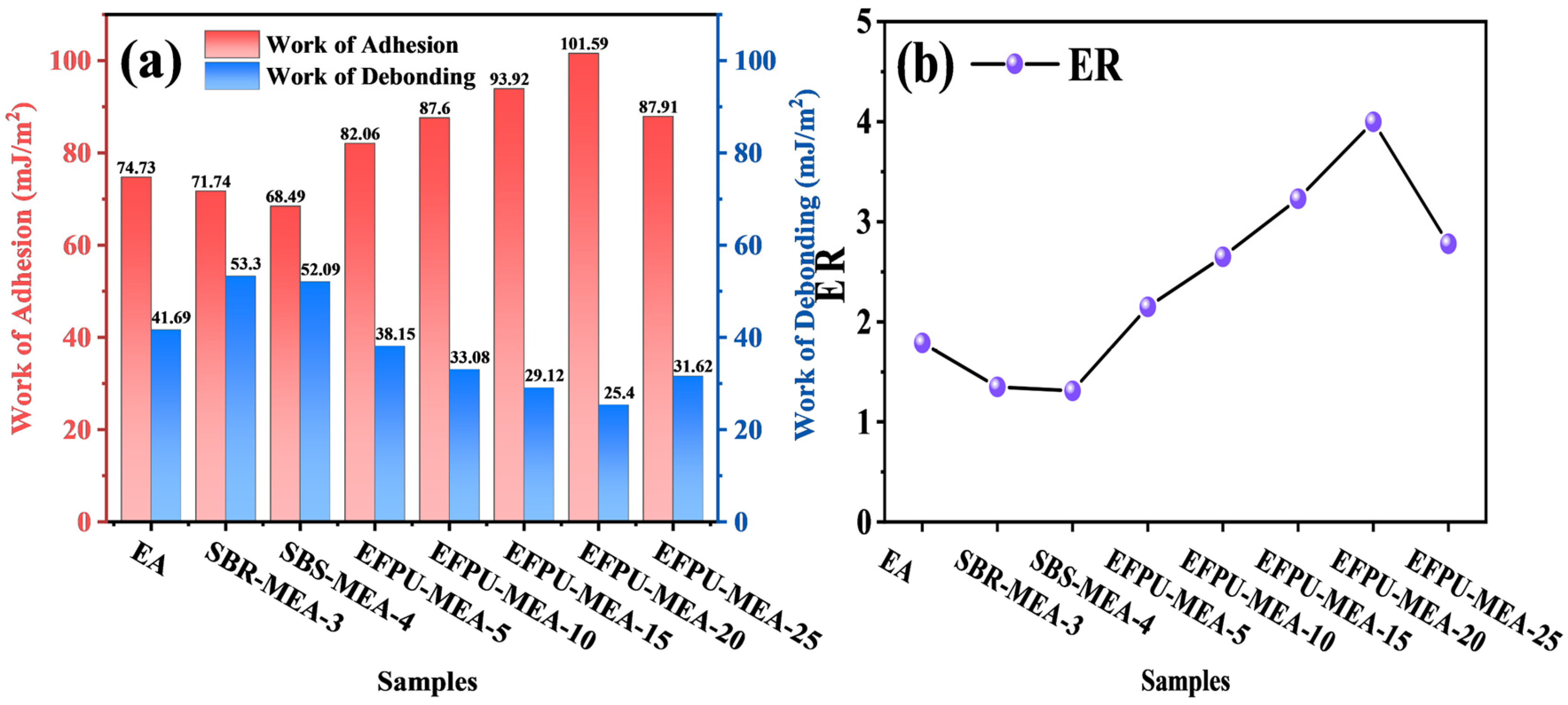
3.3.2. Surface Energy Analysis
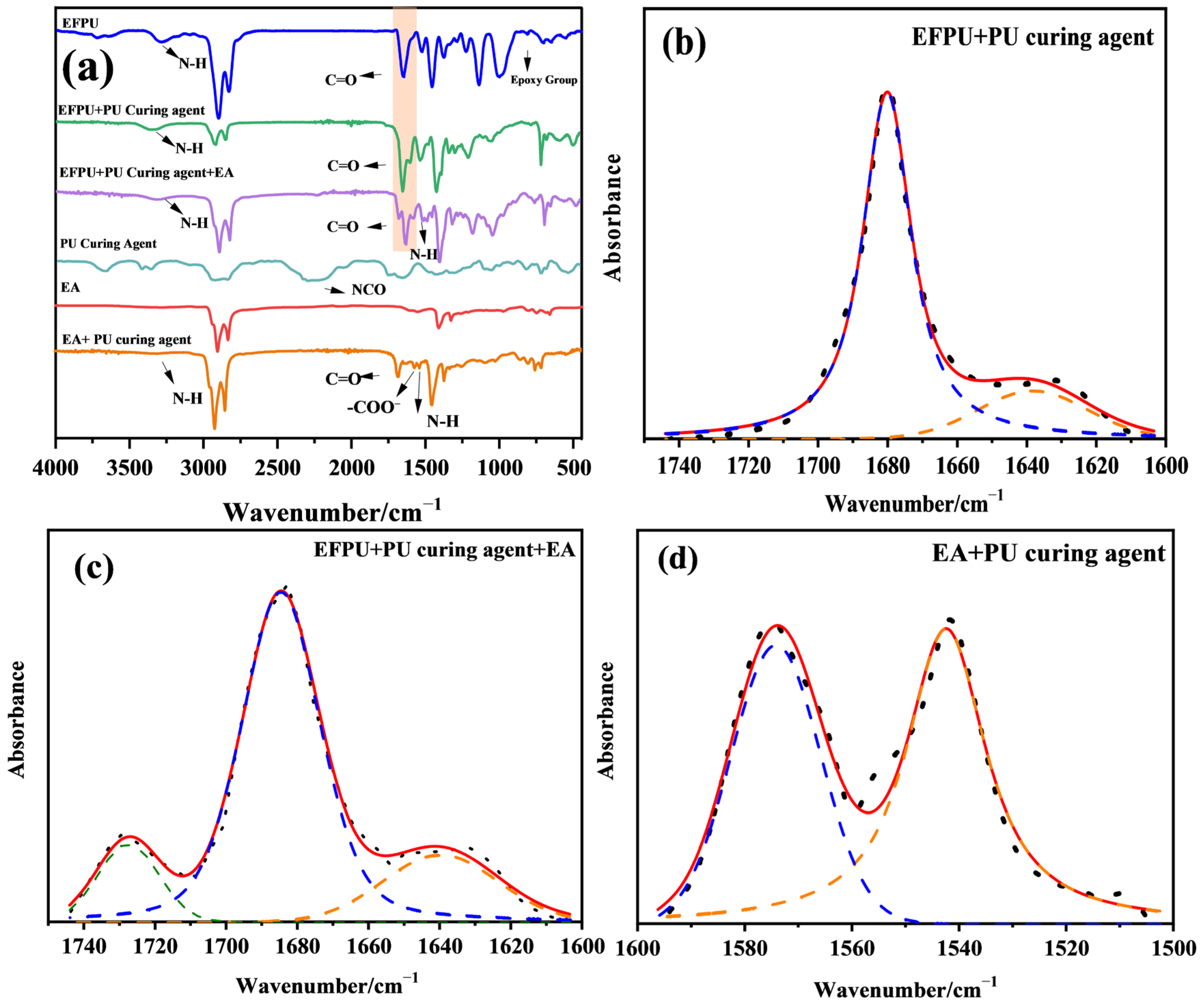
3.3.3. Fourier Transform Infrared (FTIR) Spectrum Analysis
3.4. Performance Tests for Asphalt Mixture
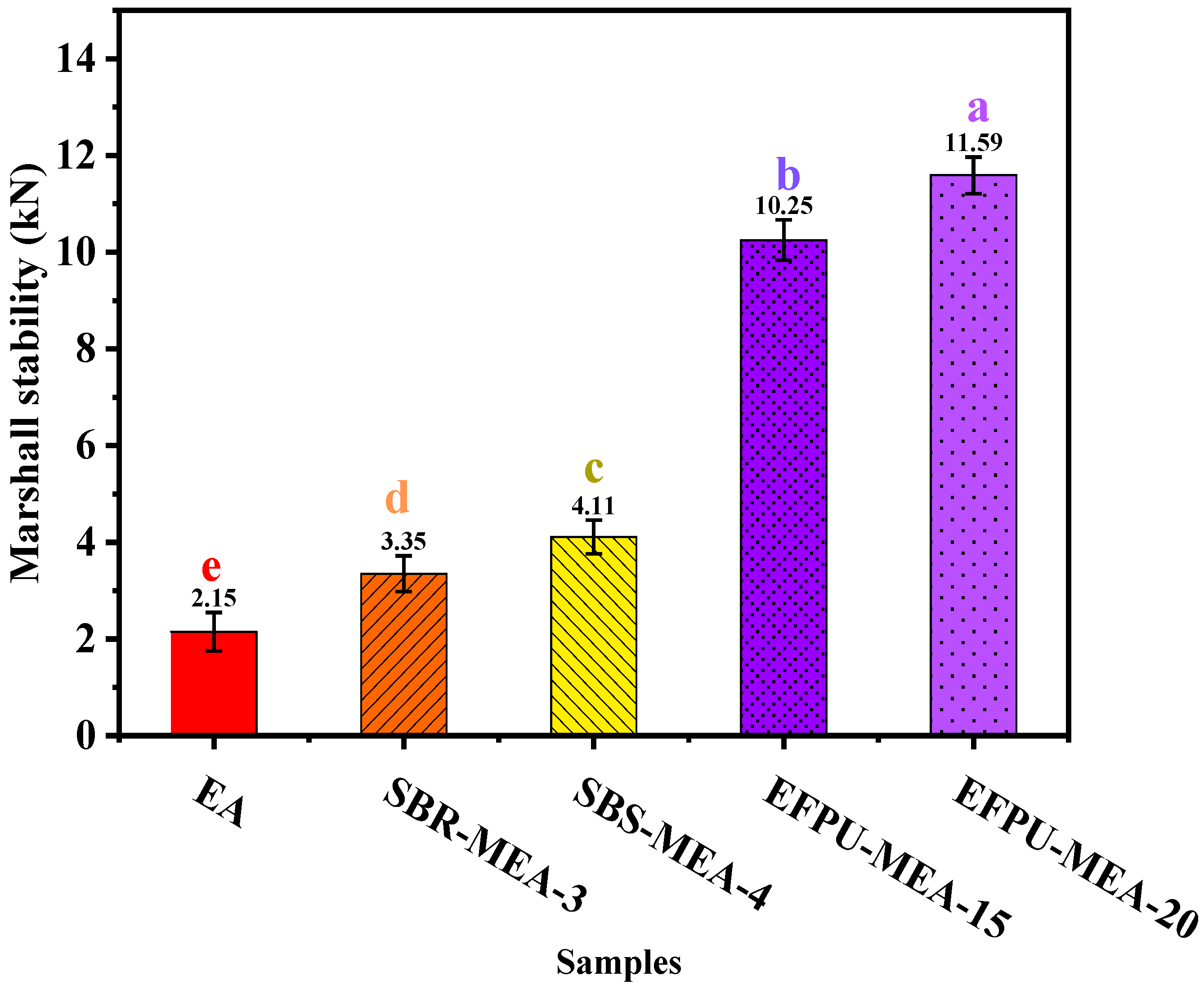
3.4.1. Marshall Stability Test
3.4.2. Wet Track Abrasion Test
3.4.3. Analysis of Anti-Rutting Performance


4. Conclusions and Perspectives
- (1)
- The incorporation of EFPU significantly enhanced the basic performance of the emulsified asphalt. At the optimal dosage, EFPU-MEA achieved a tensile strength of 1.11 ± 0.05 MPa and an elongation at break of 782.5 ± 45%. Furthermore, it exhibited superior heat resistance, low-temperature flexibility, chemical corrosion resistance, and conventional boiling water adhesion compared to the unmodified and traditional polymer-modified binders. However, these improvements were evaluated using a specific base asphalt under standard, unaged conditions. The long-term aging effects and performance across a wider temperature spectrum warrant further systematic investigation.
- (2)
- A limestone “sandwich” structure was utilized to quantitatively evaluate the interlayer pull-out and shear performance. Based on the test results, the optimal spraying quantity and modifier content were determined to be 1.0 kg/m2 and 15–20%, respectively. Under these parameters, the asphalt–aggregate interface maintained exceptional bond strength across a wide temperature range (−10 °C to 60 °C) and following severe water immersion and freeze–thaw cycles.
- (3)
- The performance improvements are attributed to a “chemical–physical” synergistic mechanism. Fluorescence microscopy (FM) indicated that EFPU (at a 15–20% dosage) is uniformly dispersed within the asphalt matrix. Concurrently, FTIR confirmed the formation of a chemically crosslinked network rich in urethane and urea linkages. This internal crosslinking fundamentally alters the surface thermodynamics, leading to a notable increase in the polar component of the surface free energy. Consequently, the work of adhesion is increased, while the work of debonding is reduced, explaining the enhanced interfacial anchoring.
- (4)
- Macroscopic mixture tests, including Marshall stability, wet track abrasion, and rutting resistance evaluations, verified the engineering durability of EFPU-MEA. The results demonstrate its practical application potential in preventive maintenance treatments for high-grade highways, such as micro-surfacing and slurry seals.
Supplementary Materials
Author Contributions
Funding
Institutional Review Board Statement
Data Availability Statement
Acknowledgments
Conflicts of Interest
References
- Hao, S.; Xu, G.; Du, M.; Jin, J. Molecular insights into adhesion mechanism of the emulsified asphalt-aggregate interface: A multi-dimensional simulation study. Constr. Build. Mater. 2025, 487, 142153. [Google Scholar] [CrossRef]
- Zhu, S.; Kong, L.; Fu, Y.; Peng, Y.; Chen, Y.; Wang, H.; Jian, O.; Zhao, P.; Zhang, W. Effect of hydrophilic group substituent position on adhesion at the emulsified asphalt/aggregate interface. Constr. Build. Mater. 2024, 444, 137783. [Google Scholar] [CrossRef]
- Xu, W.; Yuan, J.; Qiu, X.; Zheng, K.; Xiao, S.; Ye, Y.; Yang, Q. Exploring the bonding and debonding behaviors of emulsified asphalt-aggregate interface using molecular dynamic simulation and binder bonding strength test. Appl. Surf. Sci. 2025, 700, 163236. [Google Scholar] [CrossRef]
- Lei, X.; Li, T.; Chen, H. Mechanical analysis and experimental study on the shear performance of waterproof adhesive layer toward concrete bridge deck pavement. Case Stud. Constr. Mater. 2025, 22, e04250. [Google Scholar] [CrossRef]
- He, G.; Lin, C.; Fang, G.; Lu, T.; Pan, Z.; Meng, Y. Study on the basic technical indicators and high-temperature rheological properties of SBR/WER modified emulsified asphalt waterproofing binder. Constr. Build. Mater. 2025, 492, 142932. [Google Scholar] [CrossRef]
- Yang, F.; Yang, L.; Gong, H.; Zhou, Q.; He, L.; Chen, Q.; Cen, C.; Zhou, M. Investigating on the composite modification process and pavement performance of emulsified asphalt by styrene-butadiene latex/waterborne epoxy resin. Constr. Build. Mater. 2025, 487, 142134. [Google Scholar] [CrossRef]
- Li, H.; Meng, X.; Yang, X.; Li, Y. A Study on the Bonding Properties of SBR/WER Composite-Modified Emulsified Asphalt Waterproof Bonding Layer for Bridge Floors. Adv. Mater. Sci. Eng. 2025, 2025, 1136796. [Google Scholar] [CrossRef]
- Wang, K.; Liu, Y.; Cao, Z.; Zhang, Y.; Wang, J.; Li, X. Preparation of Graft-Functionalized SBS/SBS Composite Latex Modifier and Its Effect on Emulsified Asphalt Properties. Processes 2025, 13, 2125. [Google Scholar] [CrossRef]
- Fu, H.; Wang, C. Performance Evaluation of Waterborne Epoxy Resin-Reinforced SBS, Waterborne Acrylate or SBR Emulsion for Road. Coatings 2025, 15, 787. [Google Scholar] [CrossRef]
- Zhou, Q.; Shi, Z.; Zhang, D.; Zhao, M.; Yuan, M.; Zheng, S.; Liu, B.; Song, X.; Jiang, X.; Zhao, S.; et al. Research on the Performance and Mechanism of SBS Latex–Modified Emulsified Asphalt. J. Mater. Civ. Eng. 2025, 37, 04025035. [Google Scholar] [CrossRef]
- Yu, H.; Ge, J.; Qian, G.; Shi, C.; Zhang, C.; Dai, W.; Xie, T.; Nian, T. Evaluation of the interface adhesion mechanism between SBS asphalt and aggregates under UV aging through molecular dynamics. Constr. Build. Mater. 2023, 409, 133995. [Google Scholar] [CrossRef]
- Wu, S.; Ma, S.; Zhang, Q.; Yang, C. A comprehensive review of polyurethane: Properties, applications and future perspectives. Polymer 2025, 327, 128361. [Google Scholar] [CrossRef]
- Wang, Z.; Liu, J.; He, P.; Han, J.; Zhang, S.; Zhang, D.; Wang, C. Preparation and performance of waterborne resin-based modified emulsified asphalt for micro-surfacing. Int. J. Pavement Eng. 2025, 26, 2531190. [Google Scholar] [CrossRef]
- Zhou, X.; Xu, X.; Wang, Z.; Guo, H.; Zhao, S.; Liu, H.; Liu, X. Adhesion enhancement of epoxy emulsified asphalt-aggregate interface by waterborne polyurethanes: Multi-scale experimental characterization and molecular dynamics insights. Constr. Build. Mater. 2025, 487, 142107. [Google Scholar] [CrossRef]
- Fan, Z.; Wang, C.; Wang, Z.; Li, Y.; Feng, L.; Tan, S. Fog seal with polymer composite modified emulsified asphalt: Road performance and environmental adaptability. Wear 2025, 562, 205672. [Google Scholar] [CrossRef]
- Huang, H.-Y.; Han, X.; Han, S.; Ma, X.; Guo, J.; Huang, Y. Research Progress on Adhesion Mechanism and Testing Methods of Emulsified Asphalt–Aggregate Interface. Buildings 2025, 15, 2611. [Google Scholar] [CrossRef]
- Meng, Y.; Lu, T.; Fang, G.; Li, W.; He, G.; Pan, Z. Study on modification mechanism and properties of SBR/WER composite modified emulsified asphalt waterproof binder. Constr. Build. Mater. 2025, 465, 140246. [Google Scholar] [CrossRef]
- Li, R.; Chen, Y.Y.; Leng, Z.; Zhu, H.; Chen, Z. Application of Waterborne Epoxy Resin Modified Bitumen Emulsion as a Tack Coat Material. J. Mater. Civ. Eng. 2024, 36, 04024163. [Google Scholar] [CrossRef]
- Song, W.; Chen, D.; Wu, H.; Wu, Z.; Wada, S.A.; Yuan, H. Preparation and performance characterization of waterborne epoxy resin modified asphalt emulsion for tack coat. J. Clean. Prod. 2024, 475, 143715. [Google Scholar] [CrossRef]
- Shi, S.; Zang, D.; Chen, X.; Ma, T.; Gu, L.; Xu, D.; Liu, J. Preparation and properties of a novel waterborne epoxy resin modified emulsified asphalt. Constr. Build. Mater. 2023, 371, 130767. [Google Scholar] [CrossRef]
- Liu, X.; Sun, F.; Liu, Y.; Yao, B.; Liang, H.; Mu, M.; Liu, X.; Bi, H.; Wang, Z.; Qian, C.; et al. Synthesis and properties of castor oil–based cationic waterborne polyurethane modified by epoxy resin. Colloid Polym. Sci. 2024, 302, 13–22. [Google Scholar] [CrossRef]
- Huang, G.; Yang, T.; He, Z.; Yu, L.; Xiao, H. Polyurethane as a modifier for road asphalt: A literature review. Constr. Build. Mater. 2022, 356, 129058. [Google Scholar] [CrossRef]
- Allen Cox, J. Significance of pH variance in predicting chemical reaction in hot mix asphalt. J. Mater. Civ. Eng. 2016, 28, 04015140. [Google Scholar] [CrossRef]
- Wang, Y.; Pei, Z.; Wang, G.; Zou, Y.; Yi, J.; Feng, D. Study on the influence factors on the design and road performance of high-performance waterproof adhesive material for concrete bridge decks. Constr. Build. Mater. 2024, 413, 134838. [Google Scholar] [CrossRef]
- JTG-E20-2011; Test Methods for Asphalt and Asphalt Mixtures for Highway Engineering. Ministry of Transport: Beijing, China, 2011.
- Lu, J.; Xu, S.; Li, C.; Fu, C.; Gao, M.; Wang, Z.; Yang, F.; Zhou, G.; Li, R.; Ling, T. The latest research progress of polyurethane modified asphalt binder: Synthesis, characterization, and applications. Int. J. Adhes. Adhes. 2025, 140, 104035. [Google Scholar] [CrossRef]
- Sun, F.; Mu, M.; Liu, X.; Bi, H.; Wang, Z.; Qian, C.; Liu, X.; Liang, H.; Liu, Y.; Li, C.; et al. Preparation of non-ionic SBS latex and its application in modified emulsified asphalt. Mater. Struct. 2024, 57, 95. [Google Scholar] [CrossRef]
- GB/T 528-2009; Vulcanized Rubber or Thermoplastic Rubber—Determination of Tensile Stress-Strain Properties. General Administration of Quality Supervision, Inspection and Quarantine of the People’s Republic of China: Beijing, China, 2009.
- JC/T 975-2005; Waterproof Coating for Roads and Bridges. China Building Materials Industry Association, China: Beijing, China, 2005.
- GB/T 16777-2008; Test Methods for Building Waterproofing Coatings. General Administration of Quality Supervision, Inspection and Quarantine of the People’s Republic of China: Beijing, China, 2008.
- ASTM D7497-21; Standard Practice for Recovering Residue from Emulsified Asphalt Using Low-Temperature Evaporative Technique. ASTM International: West Conshohocken, PA, USA, 2021.
- Yadykova, A.Y.; Ilyin, S.O. Rheological and adhesive properties of nanocomposite bitumen binders based on hydrophilic or hydrophobic silica and modified with bio-oil. Constr. Build. Mater. 2022, 342, 127946. [Google Scholar] [CrossRef]
- Wei, J.; Zhang, Y. Application of sessile drop method to determine surface free energy of asphalt and aggregate. J. Test. Eval. 2012, 40, 807–813. [Google Scholar] [CrossRef]
- Xiang, H.; Wang, Z.; Deng, M.; Tan, S.; Liang, H. Adhesion Characteristics of an Asphalt Binder–Aggregate Interface Based on Molecular Dynamics. Materials 2025, 18, 981. [Google Scholar] [CrossRef]
- Yu, J.; Zou, Y.; Zhang, Y.; Yu, H.; Zou, G. Adhesion characteristics of graphene-modified asphalt using surface-free energy method. J. Mater. Civ. Eng. 2023, 35, 04023182. [Google Scholar] [CrossRef]
- DB11/T 2257-2024; Technical Specification for Cold Mix Cold Paving Emulsified Asphalt Mixture. Beijing Municipal Commission of Transport: Beijing, China, 2024.
- Zhang, K.; Li, W.; Han, F. Performance deterioration mechanism and improvement techniques of asphalt mixture in salty and humid environment. Constr. Build. Mater. 2019, 208, 749–757. [Google Scholar] [CrossRef]
- Sun, B. Study on the Influence of Asphalt Film Thickness on the Mechanical Properties of Asphalt-Aggregate Interface Under Freeze-Thaw Cycles. Master’s Thesis, Hefei University of Technology, Hefei, China, 2023. (In Chinese) [Google Scholar] [CrossRef]
- Dong, M.; Sun, W.; Li, L.; Gao, Y. Effect of asphalt film thickness on shear mechanical properties of asphalt-aggregate interface. Constr. Build. Mater. 2020, 263, 120208. [Google Scholar] [CrossRef]



| Properties Physical Properties | Unit | Value | Test Method (JTG E20-2011) |
|---|---|---|---|
| Penetration (25 °C) | 0.1 mm | 68 | T 0604 |
| Softening Point | °C | 49 | T 0606 |
| Ductility (10 °C) | cm | 39 | T 0605 |
| Saturates | % | 7.2 | T 0618 |
| Aromatics | % | 52.4 | T 0618 |
| Resins | % | 20.6 | T 0618 |
| Asphaltenes | % | 19.8 | T 0618 |
| Acid Value | mg KOH/g | 0.764 | T 0629 |
| Emulsified Asphalt Evaporation Residue | Unit | Test Results | Standard Requirement | Method (JTG E20-2011) |
|---|---|---|---|---|
| Solid content | % | 58.5 | >50 | T 0651 |
| Penetration (25, 100 g, 5 s) | 0.1 mm | 63 | 20–200 | T 0606 |
| Ductility (15 °C, 5 cm⋅min−1) | cm | 71.1 | ≥40 | T 0605 |
| Storage stability | % | 0.5 | ≤1 (1 day) | T 0655 |
| 3.4 | ≤5 (5 days) | T 0655 |
| Technical Indicators | SBR Latex | SBS Latex | EFPU |
|---|---|---|---|
| Appearance | White | White | Transparent with a bluish tinge |
| Solid content (%) | 40 ± 1 | 30 ± 2 | 35 ± 2 |
| pH | 3.7 | 3.5 | 4.4 |
| Ionic type | Cationic | Cationic | Cationic |
| Viscosity (Pa·s) | 31.1 | 320.5 | 22.5 |
| Technical Indicators | Results |
|---|---|
| NCO (%) | 21% |
| Appearance | Colorless transparent liquid |
| Solid content (%) | 100 |
| Viscosity (Brookfield, mPa·s) | ≤3000 |
| Raw Materials | Description | Mass (g) | Moles (mol) | Function |
|---|---|---|---|---|
| MDI-50 | Liquefied MDI | 31.7 | 0.1268 | Hard segment |
| PTMG | Mn = 1000 | 23.95 | 0.024 | Soft segment |
| Castor Oil | USP Grade | 5.56 | 0.006 | Crosslinker |
| MDEA | - | 11.12 | 0.0935 | Cationic center |
| BDO | - | 0.71 | 0.0079 | Chain extender |
| E-20 | Bisphenol-A Epoxy | 6.12 | - | Modifier |
| Acetic Acid | 6.41 | 0.1122 | Neutralizer | |
| Overall R value | NCO/OH | 0.95 | - | Stoichiometric ratio |
| Epoxy Dosage | m(Epoxy)/m(PU) | 7.00% | - | Modification degree |
| Samples | Contact Angle (Water) | Contact Angle (Formamide) | Contact Angle (Glycerol) | γad (mJ/m2) | γap (mJ/m2) | γa (mJ/m2) |
|---|---|---|---|---|---|---|
| EA | 83.3° | 61.2° | 69.5° | 28.65 | 4.82 | 33.47 |
| SBR-MEA-3 | 94.8 | 67.6° | 78.0° | 33.5 | 0.82 | 34.3 |
| SBS-MEA-4 | 96.4° | 71.3° | 80.8° | 37.94 | 0.91 | 30.9 |
| EFPU-MEA-5 | 77.7° | 53.8° | 63.2° | 32.61 | 7.41 | 40.02 |
| EFPU-MEA-10 | 68.3° | 43.2° | 52.7° | 34.13 | 11.42 | 45.55 |
| EFPU-MEA-15 | 60.4° | 34.2° | 43.6° | 37.18 | 15.46 | 52.64 |
| EFPU-MEA-20 | 52.1° | 24.4° | 32.2° | 41.87 | 20.12 | 61.99 |
| EFPU-MEA-25 | 67.0° | 42.1° | 51.4° | 33.42 | 12.55 | 45.97 |
| Peak Position | FWHM | Relative Area | R2 | |
|---|---|---|---|---|
| EFPU + PU curing agent | 1638.25 1679.21 | 37.09 15.24 | 18.50 81.49 | 0.9897 |
| EFPU + PU curing agent + EA | 1639.77 1684.60 1727.45 | 37.60 25.51 20.01 | 18.59 69.89 11.50 | 0.9921 |
| EA + PU curing agent | 1542.42 1574.17 | 16.37 19.03 | 55.09 44.90 | 0.9639 |
Disclaimer/Publisher’s Note: The statements, opinions and data contained in all publications are solely those of the individual author(s) and contributor(s) and not of MDPI and/or the editor(s). MDPI and/or the editor(s) disclaim responsibility for any injury to people or property resulting from any ideas, methods, instructions or products referred to in the content. |
© 2026 by the authors. Licensee MDPI, Basel, Switzerland. This article is an open access article distributed under the terms and conditions of the Creative Commons Attribution (CC BY) license.
Share and Cite
Liu, Y.; Cao, Z.; Mu, M.; Wang, Z.; Wang, J.; Zhang, Y.; Wang, K.; Liu, Y.; Li, X. Enhancing the Comprehensive Performance and Interfacial Adhesion of Emulsified Asphalt Using an Epoxy-Functionalized Waterborne Polyurethane. Polymers 2026, 18, 719. https://doi.org/10.3390/polym18060719
Liu Y, Cao Z, Mu M, Wang Z, Wang J, Zhang Y, Wang K, Liu Y, Li X. Enhancing the Comprehensive Performance and Interfacial Adhesion of Emulsified Asphalt Using an Epoxy-Functionalized Waterborne Polyurethane. Polymers. 2026; 18(6):719. https://doi.org/10.3390/polym18060719
Chicago/Turabian StyleLiu, Yifan, Zhenhao Cao, Minghao Mu, Zheng Wang, Jia Wang, Yanyan Zhang, Kunyu Wang, Yang Liu, and Xue Li. 2026. "Enhancing the Comprehensive Performance and Interfacial Adhesion of Emulsified Asphalt Using an Epoxy-Functionalized Waterborne Polyurethane" Polymers 18, no. 6: 719. https://doi.org/10.3390/polym18060719
APA StyleLiu, Y., Cao, Z., Mu, M., Wang, Z., Wang, J., Zhang, Y., Wang, K., Liu, Y., & Li, X. (2026). Enhancing the Comprehensive Performance and Interfacial Adhesion of Emulsified Asphalt Using an Epoxy-Functionalized Waterborne Polyurethane. Polymers, 18(6), 719. https://doi.org/10.3390/polym18060719