Machine Learning-Enabled Optimization and Prediction of Mechanical Properties of 3D-Printed PLA Composites Filled with Rice Husk Biochar
 , ,
, ,  ,
,  ,
,  ,
,
Abstract
1. Introduction
2. Materials and Methods
2.1. Materials
2.2. Statistical Analysis
2.2.1. Experimental Design
2.2.2. Analysis of Variance (ANOVA)
2.3. Sample Preparation
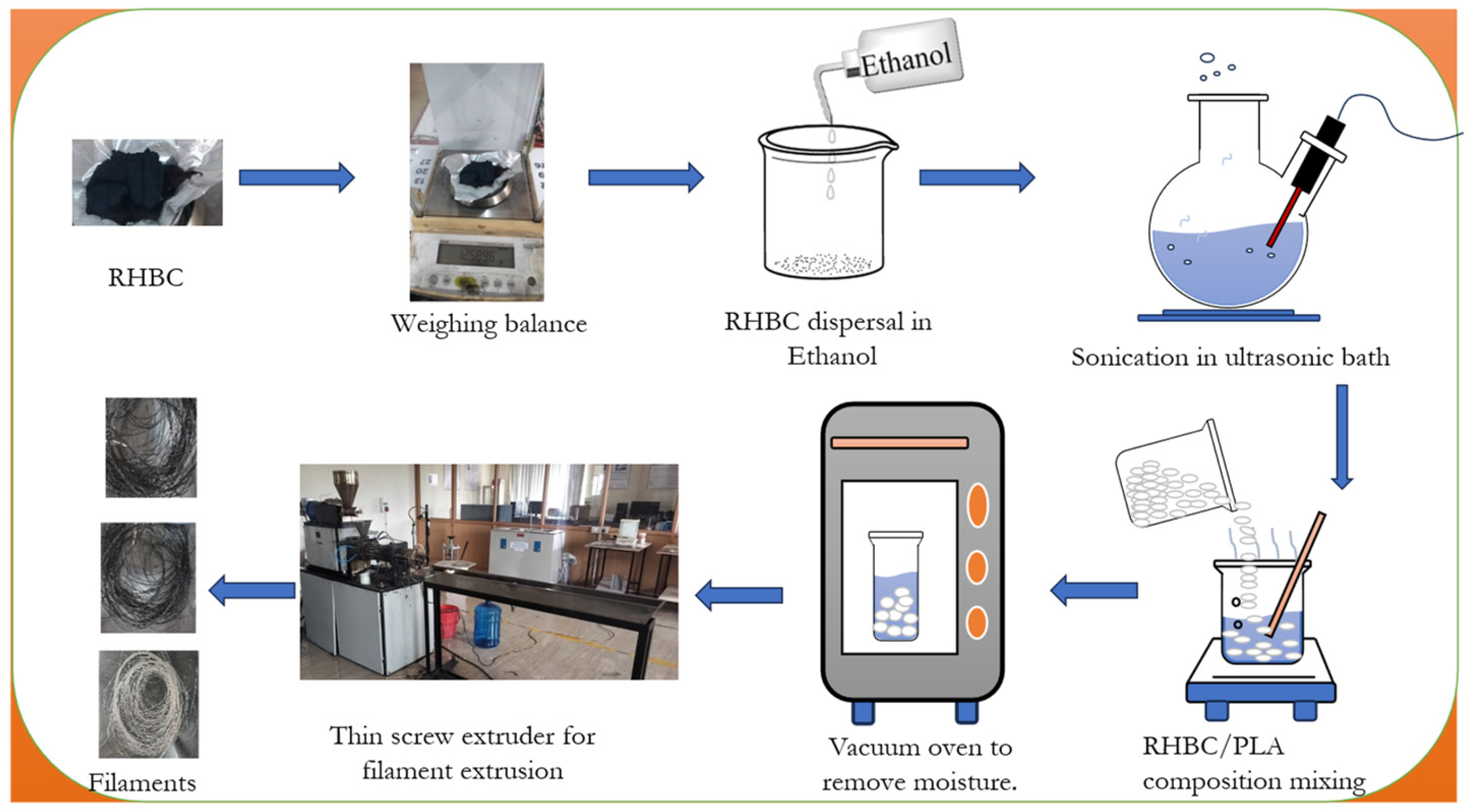
2.3.1. Composite Preparation and Filament Extrusion
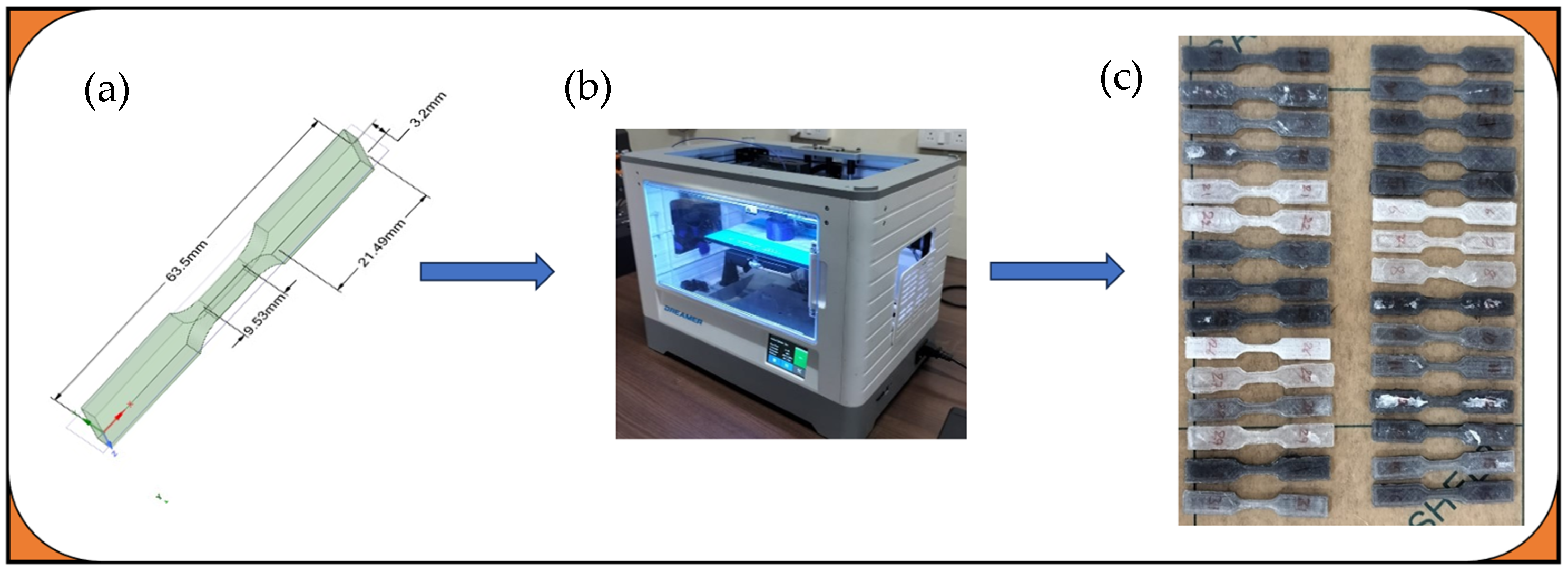
2.3.2. Sample Printing
2.4. Experimental Analysis
2.4.1. Tensile Testing
2.4.2. Hardness Testing
2.5. Machine Learning (ML)
2.5.1. Multiple Linear Regression (MLR)
2.5.2. K-Nearest Neighbors (KNN) Regression
2.5.3. Gradient Boosting Regression (GBR)
2.5.4. Support Vector Machine (SVM)
3. Results and Discussion
3.1. Experimental Analysis
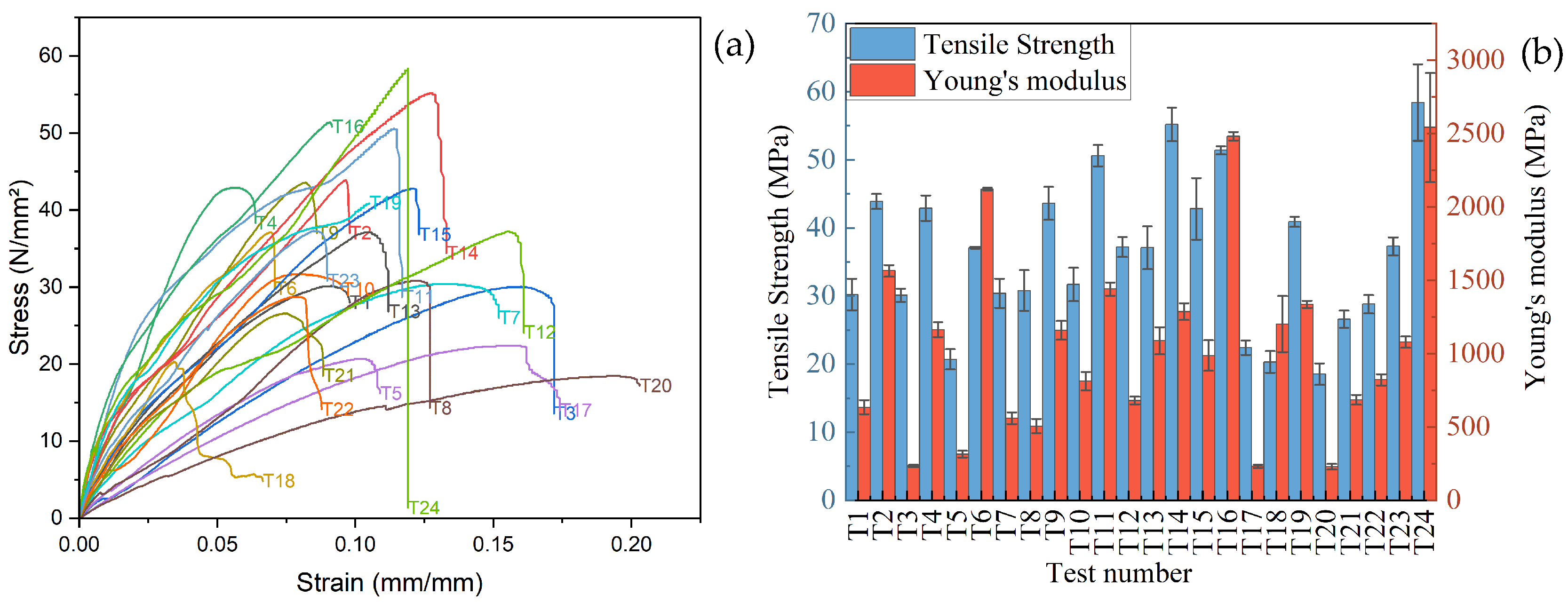
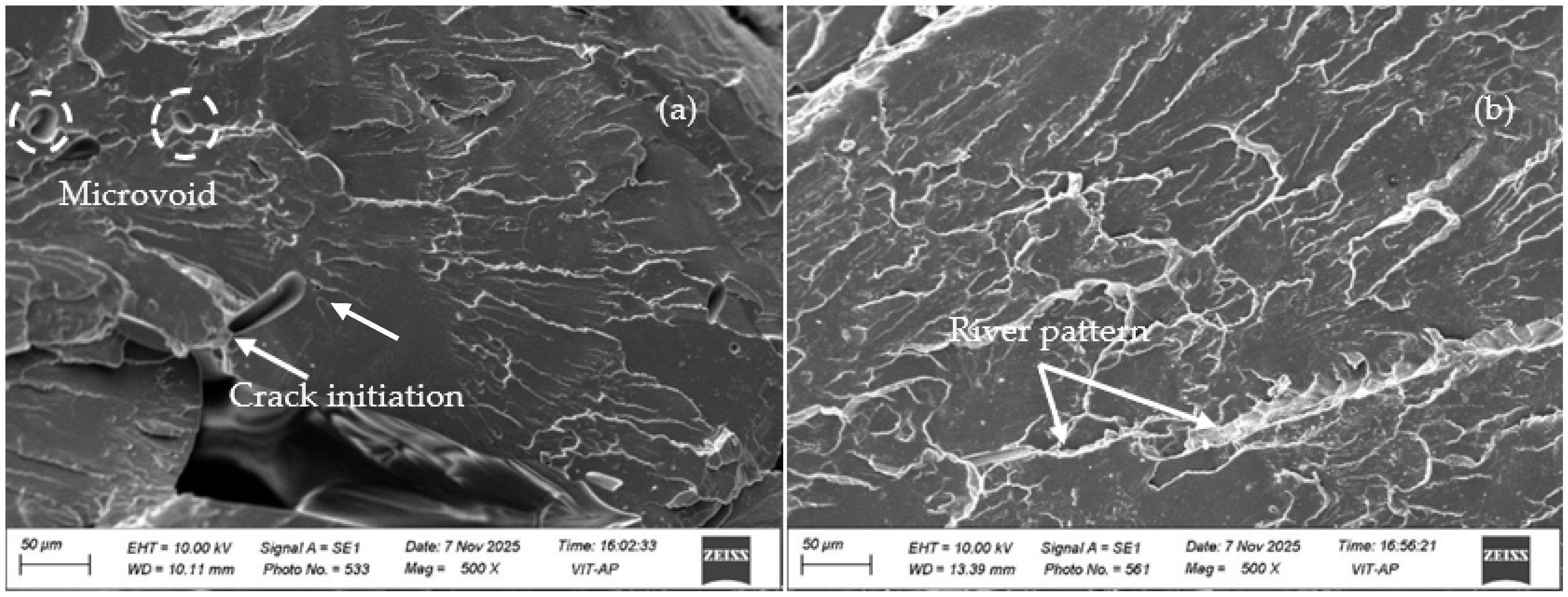
3.1.1. Tensile Test
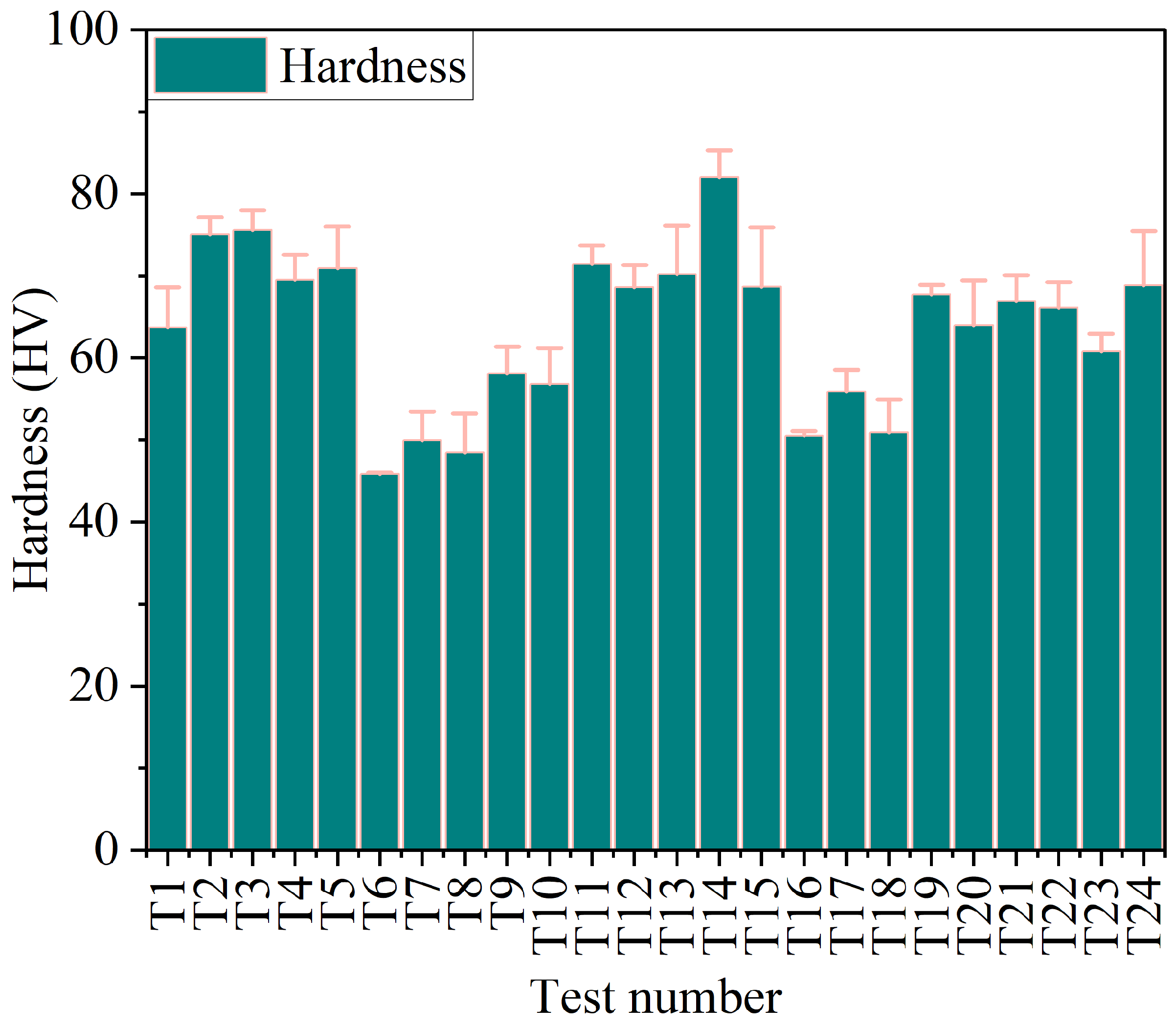
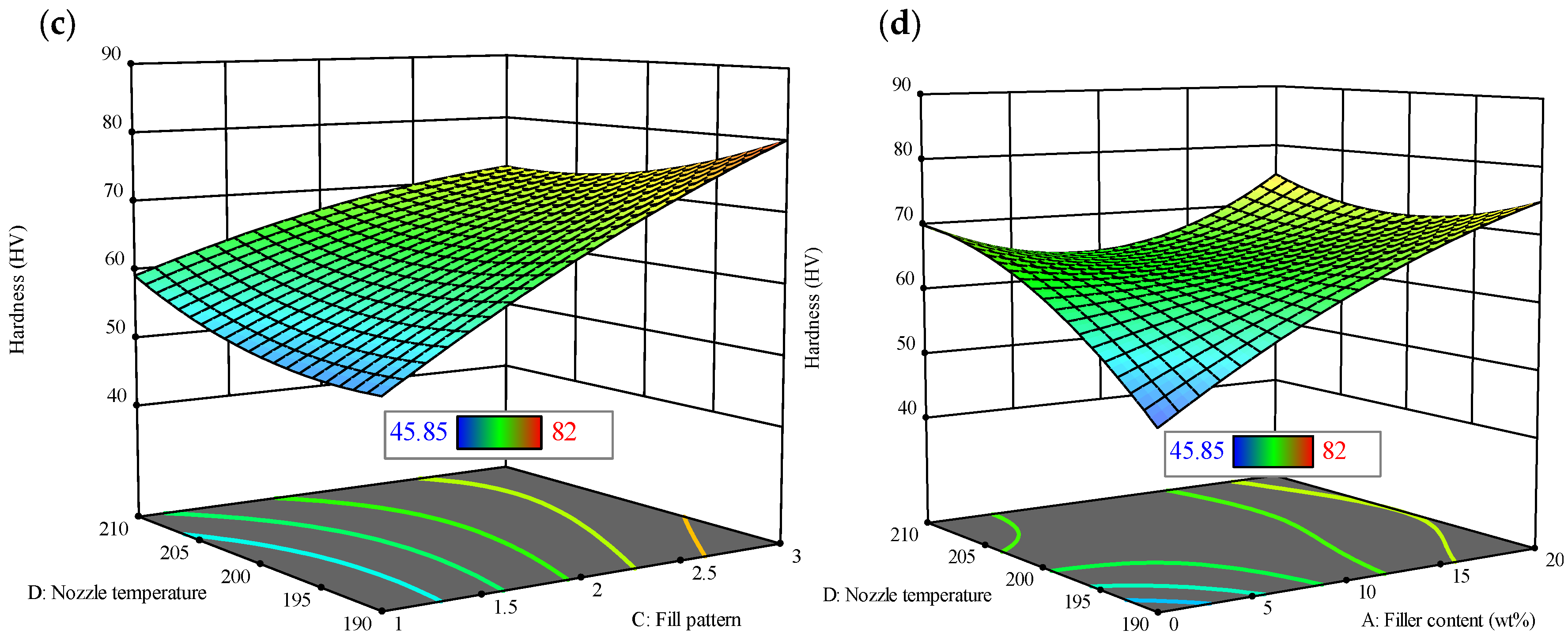
3.1.2. Hardness
3.2. Analysis of Variance (ANOVA)
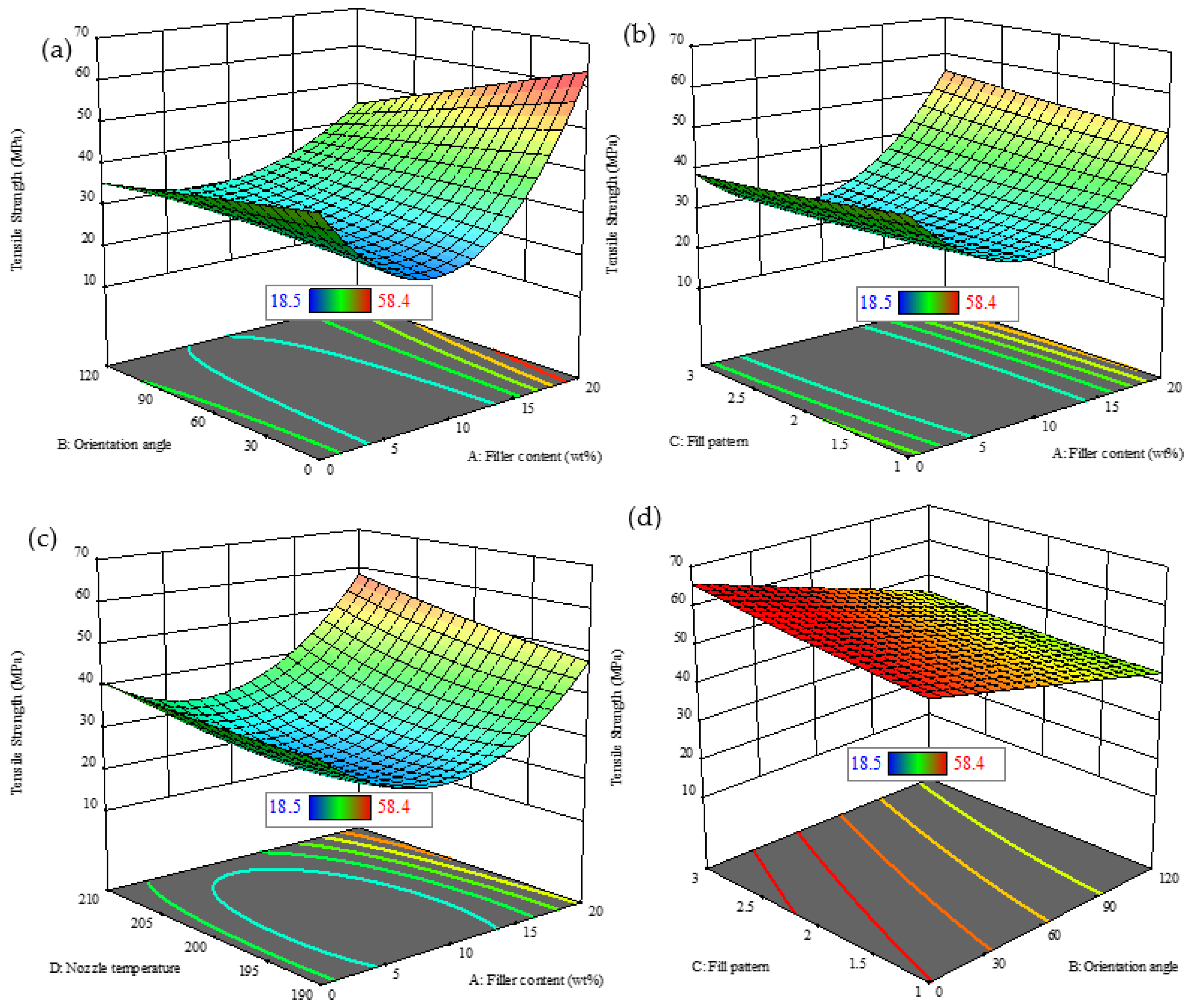
3.2.1. Tensile Strength
|
Tensile strength = 10.719 − 17.181(A) − 0.017500(B) − 17.95841(C) − 0.288715(D) + 0.028083(AB) + 0.252500(AC) + 0.060136(AD) − 0.019167(BC) + 0.475563(A2) 0.001629(A2B) + 0.000268(CD2) − 5.07948E−06(A2D2) + 0.000045(C2D2) | (15) |
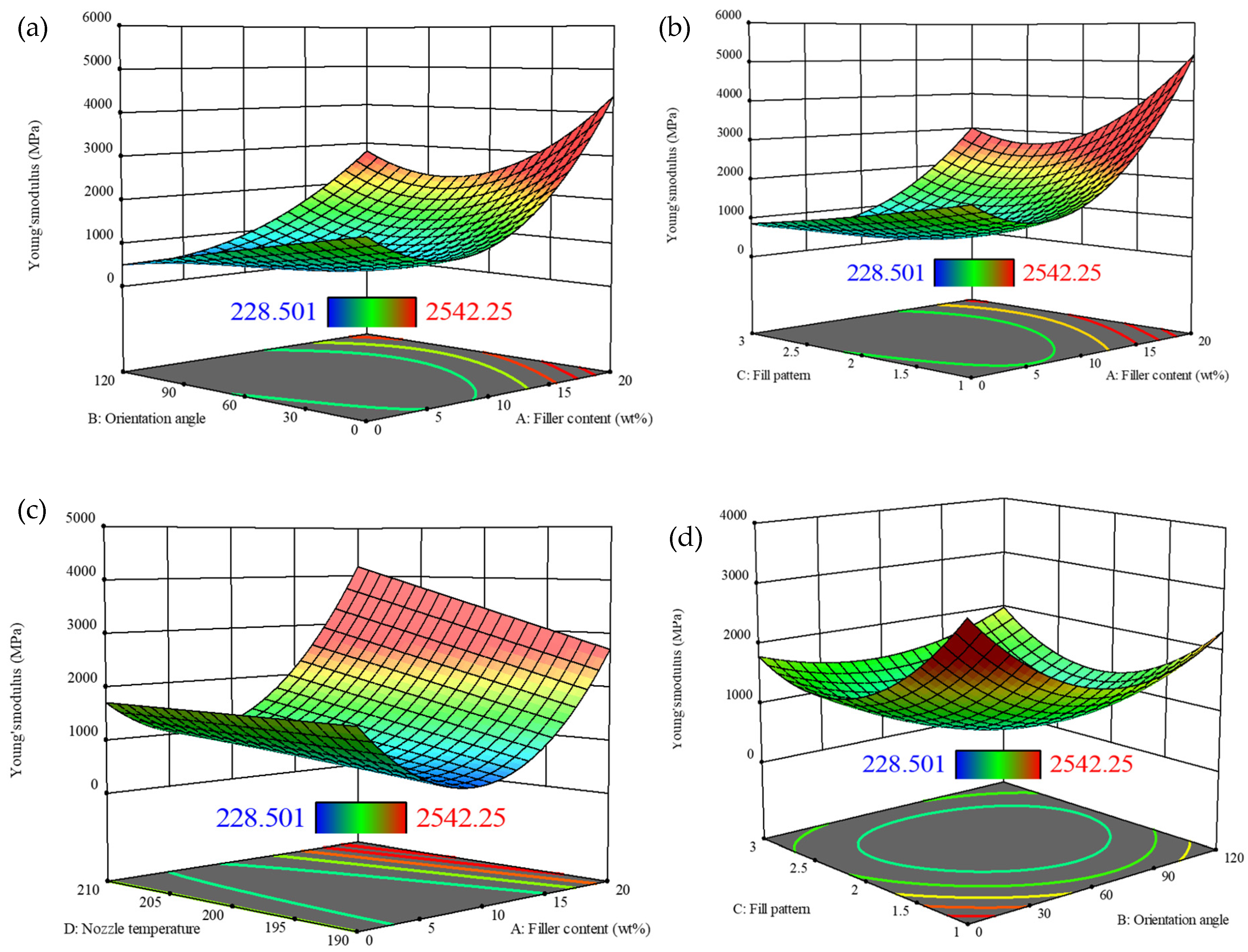
3.2.2. Young’s Modulus
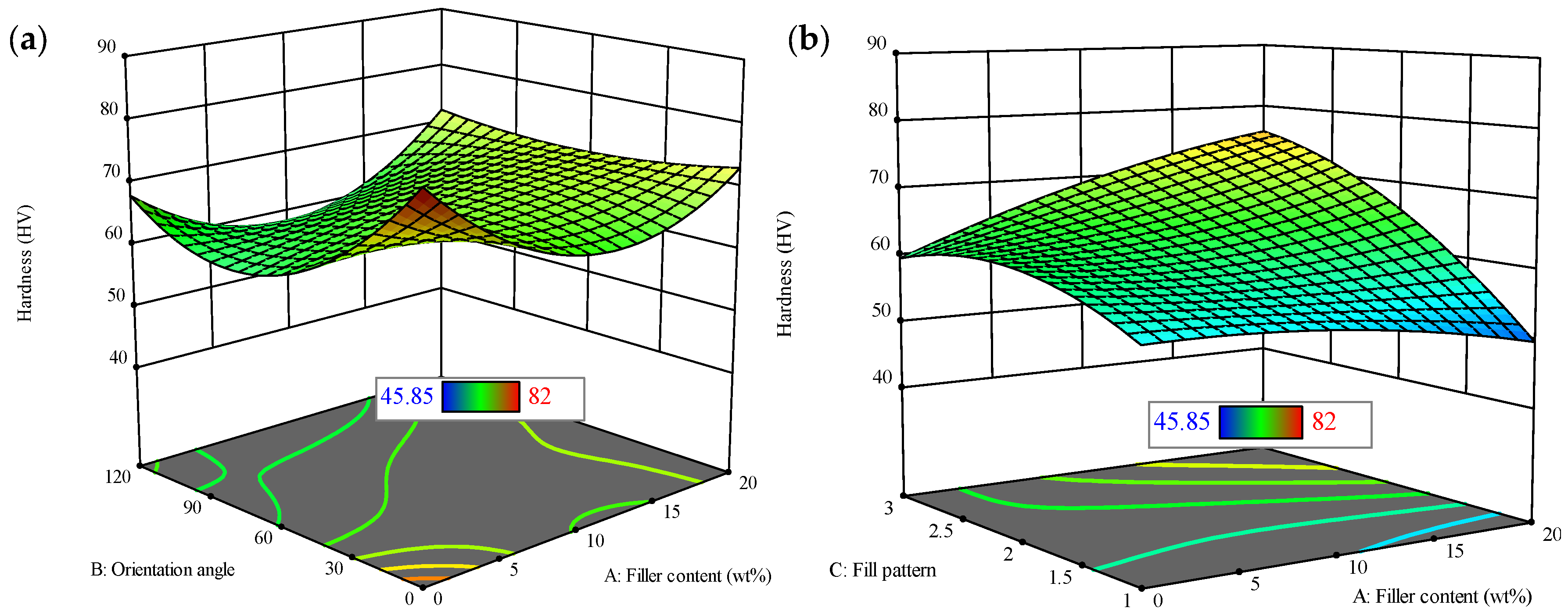
3.2.3. Hardness
3.3. Machine Learning
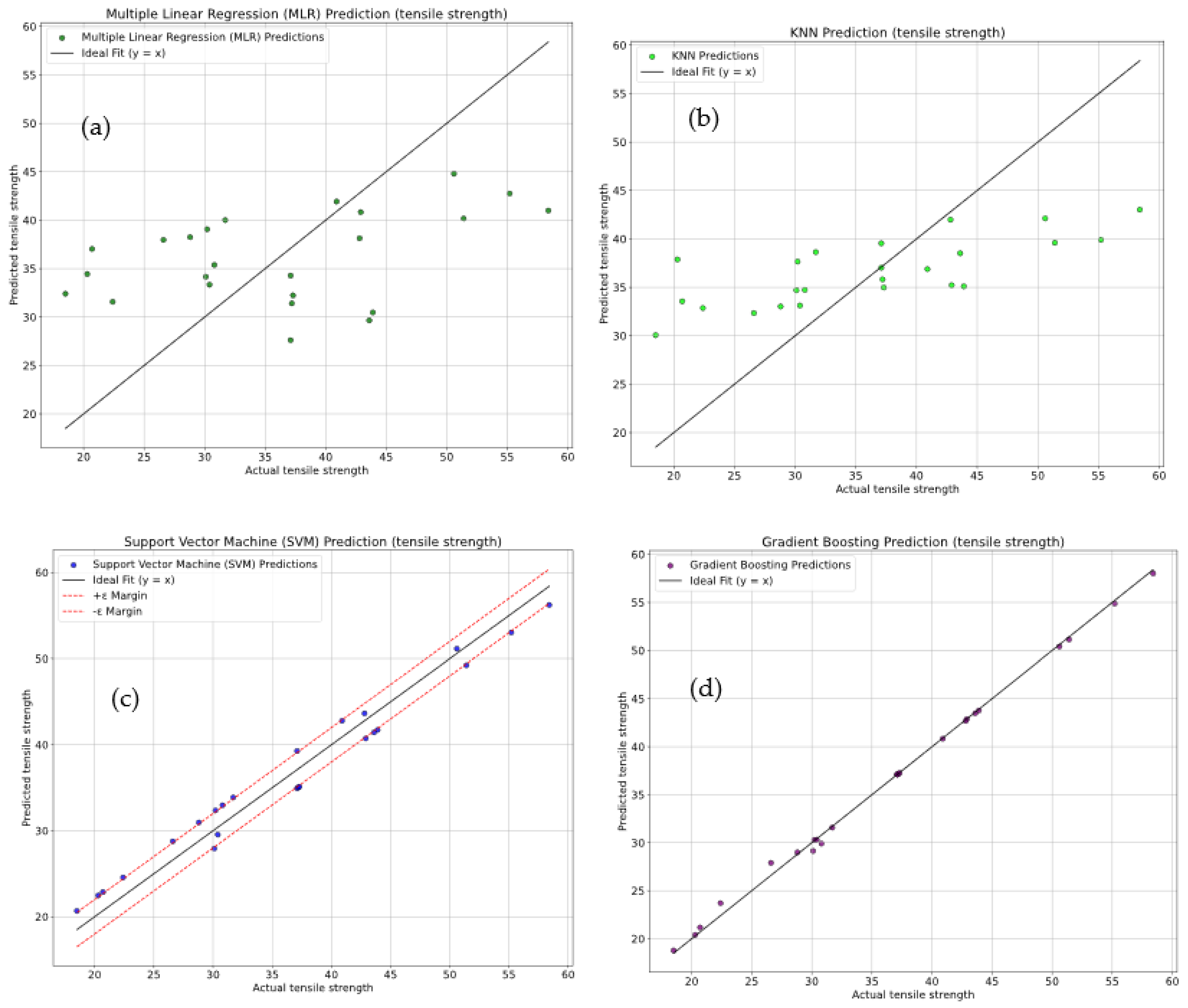
Tensile Strength
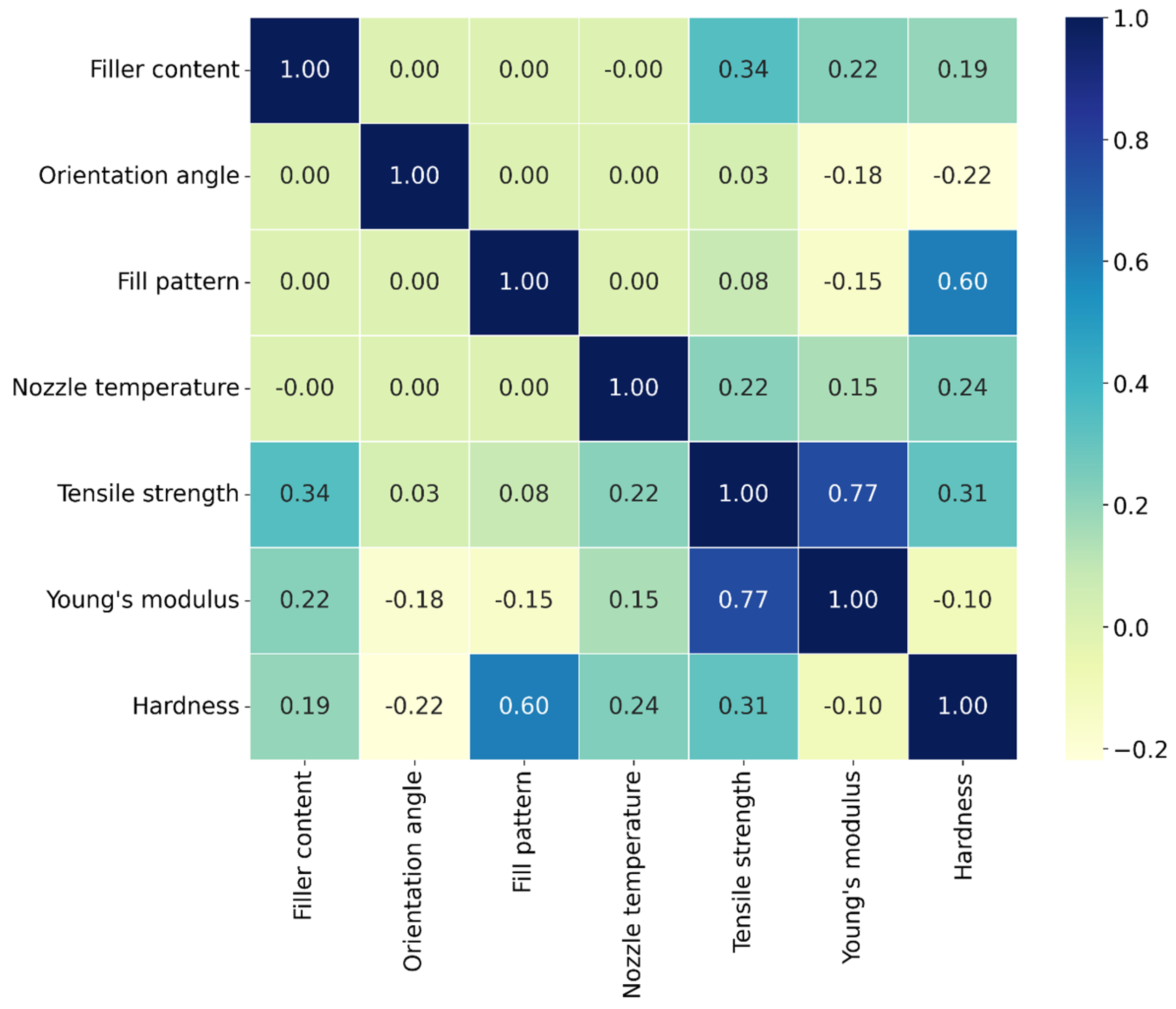
3.4. Correlation Heatmap
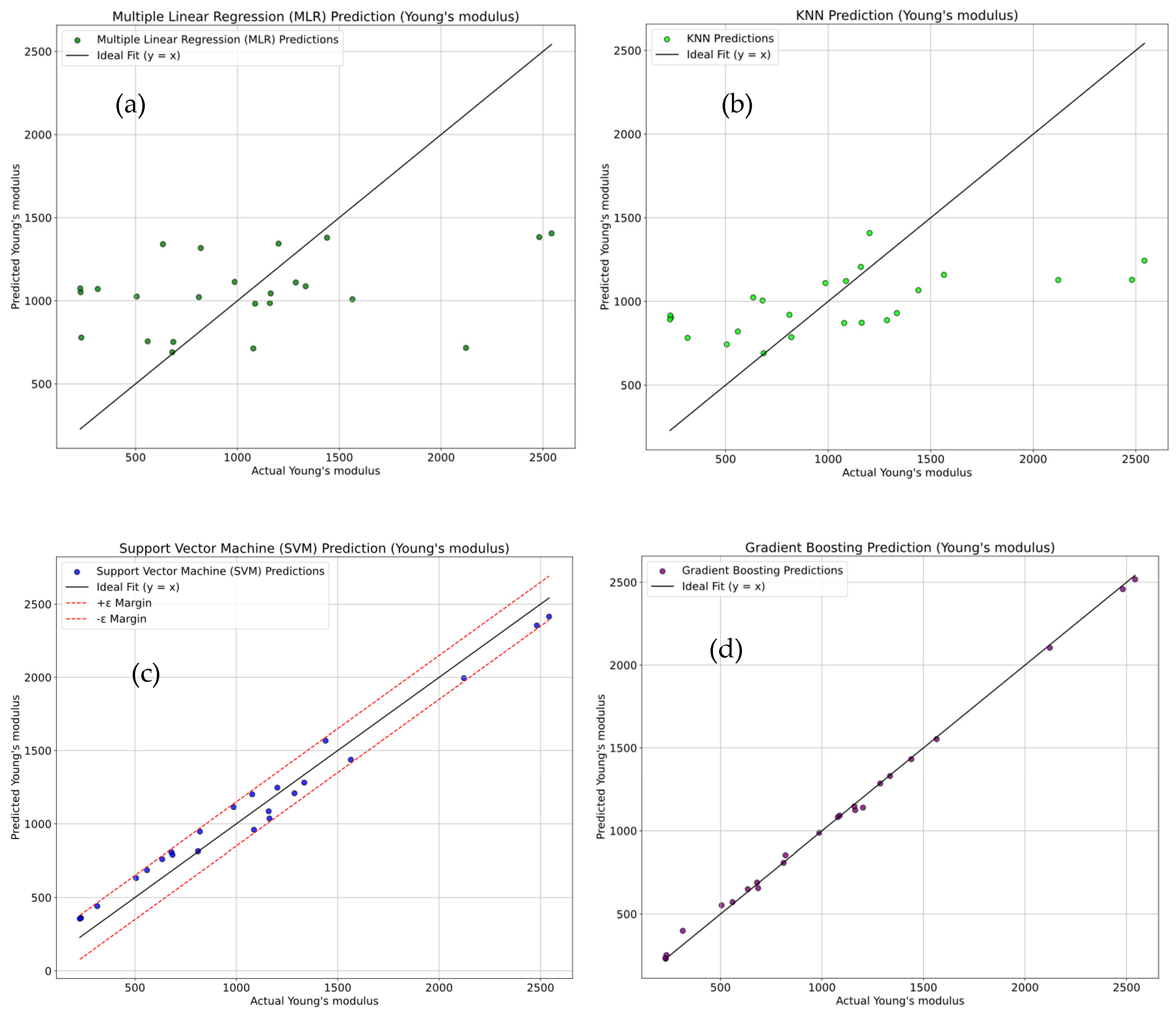
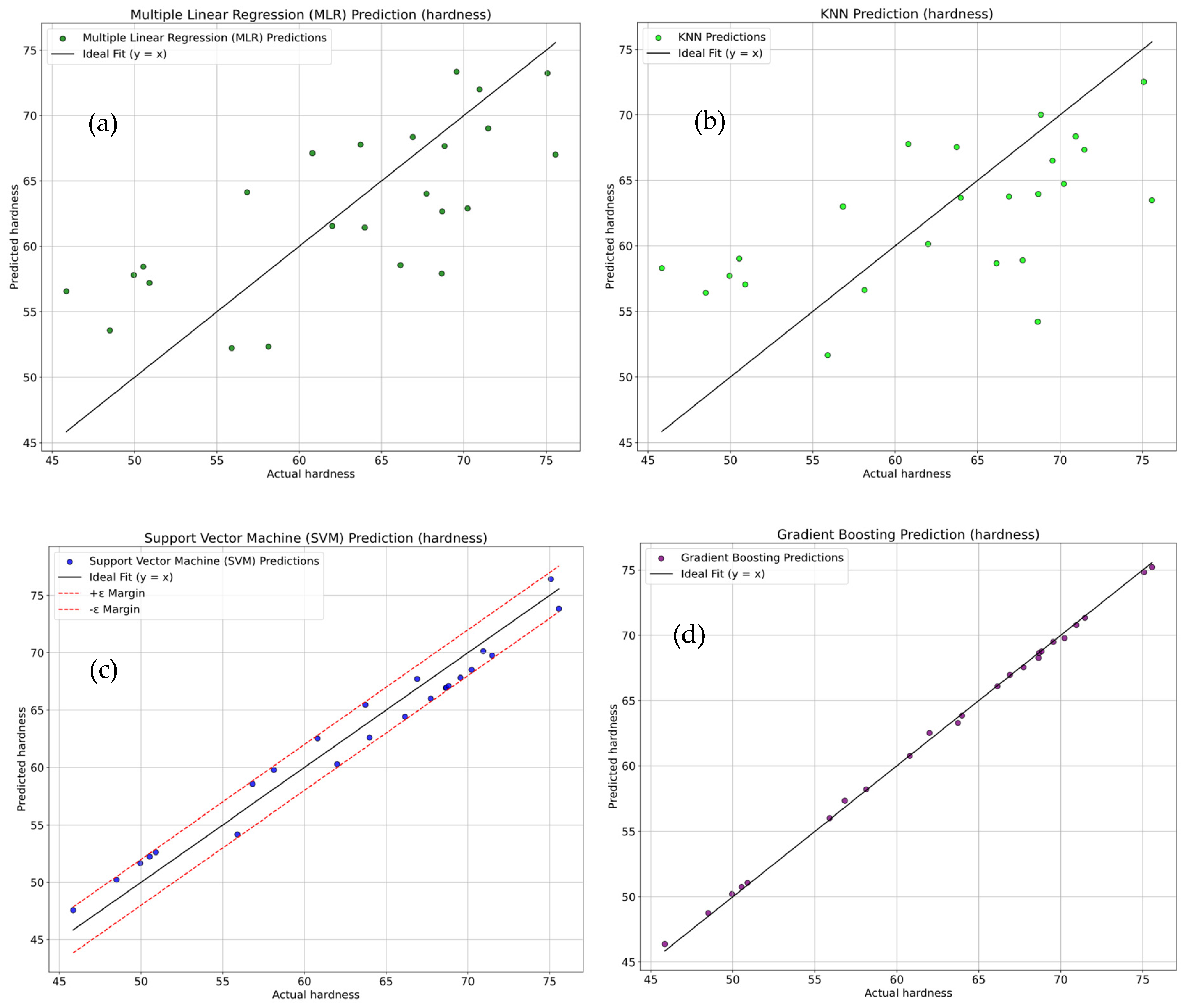
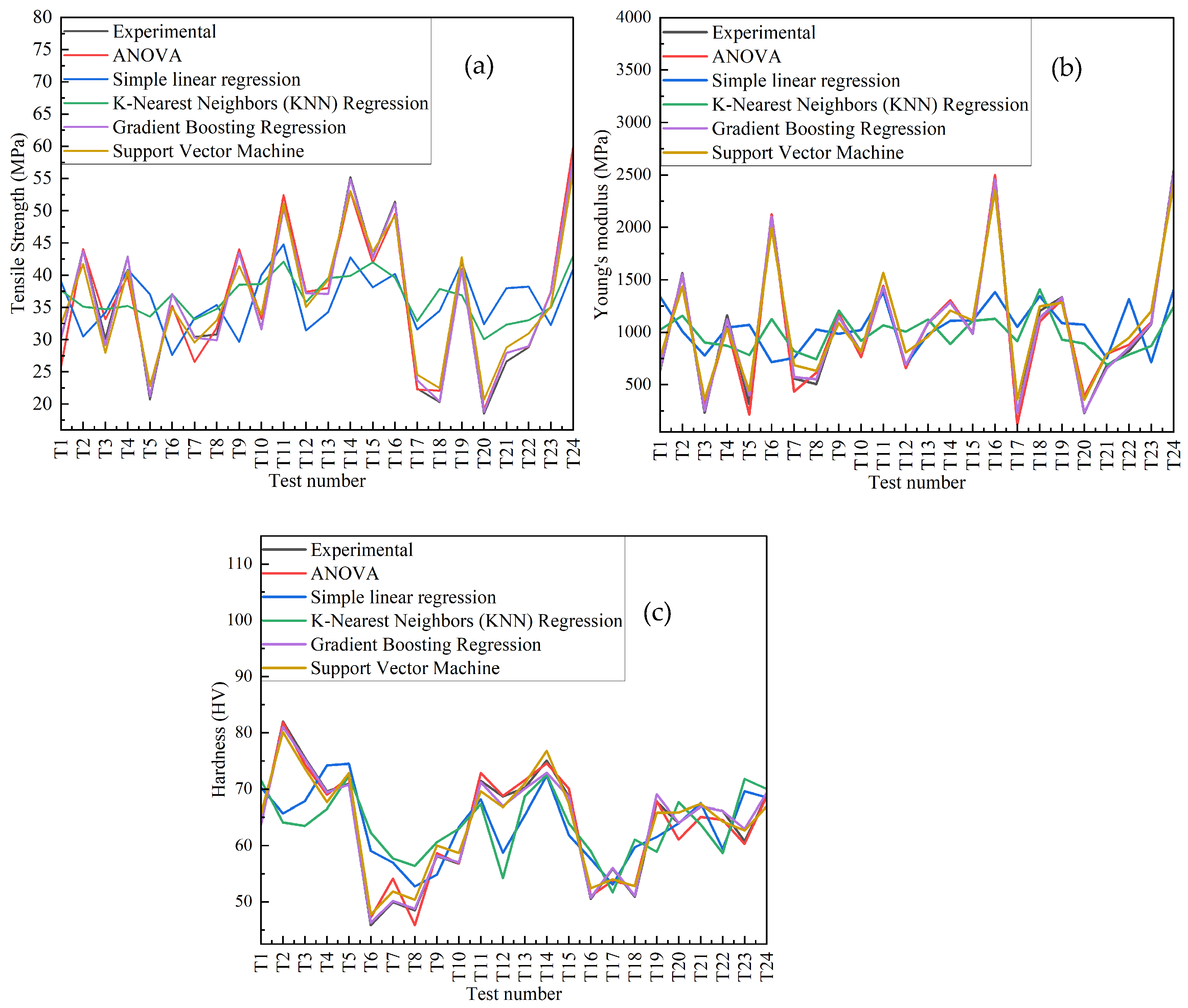
3.5. Model Prediction Comparison
4. Conclusions
- Tensile strength, Young’s modulus, and hardness showed considerable variation with variation in filler content and other printing parameters.
- ANOVA identified filler content as the most significant parameter influencing tensile strength, Young’s modulus, orientation angle, and fill pattern for hardness.
- Among machine learning models, Gradient Boosting provided the best predictive accuracy with R2 values of 97.79% for tensile strength, 98.79% for Young’s modulus, and 96.8% for hardness.
- SHAP and feature importance analysis confirmed that filler content, nozzle temperature, and orientation angle were the key factors influencing the material’s mechanical properties.
Supplementary Materials
Author Contributions
Funding
Institutional Review Board Statement
Data Availability Statement
Conflicts of Interest
References
- Islam, S.; Karim, F.E.; Islam, M.R.; Saeed, M.A.; Alam, K.A.; Khatun, M.M. Thermoset and thermoplastic polymer composite with date palm fiber and its behavior: A review. SPE Polym. 2025, 6, e10157. [Google Scholar] [CrossRef]
- Melchor-Martínez, E.M.; Carrera-Cañigares, C.; Bhadra Das, D.; Enriquez-Ochoa, D.; Ramirez-Mendoza, R.A.; Parra-Saldívar, R.; Iqbal, H.M.N. Towards a circular economy of plastics: An evaluation of the systematic transition to a new generation of bioplastics. Polymers 2022, 14, 1203. [Google Scholar] [CrossRef] [PubMed]
- Albuquerque, Q.; Stephan, F.; Pongratz, A.; Brütting, C.; Krause, K.; Ruckdäschel, H. Recycling of Thermoplastics with Machine Learning: A Review. Adv. Funct. Mater. 2026, 36, e09447. [Google Scholar] [CrossRef]
- Beena Unni, A.; Muringayil Joseph, T. Enhancing polymer sustainability: Eco-conscious strategies. Polymers 2024, 16, 1769. [Google Scholar] [CrossRef]
- Paul, A.; Sreedevi, K.; Sharma, S.S.; Anjana, V.N. Polylactic acid (PLA). In Handbook of Biopolymers; Thomas, S., AR, A., Jose Chirayil, C., Thomas, B., Eds.; Springer: Singapore, 2023; pp. 1091–1114. [Google Scholar]
- Infurna, G.; Caruso, G.; Dintcheva, N.T. Sustainable materials containing biochar particles: A review. Polymers 2023, 15, 343. [Google Scholar] [CrossRef]
- Sahu, S.K.; Sreekanth, P.S.R.; Kumar, A.P. Effect of pyrolysis-derived coconut shell biochar on the mechanical, thermal, rheological, and water absorption properties of PLA composites. Int. J. Thermophys. 2025, 46, 164. [Google Scholar] [CrossRef]
- Gkiliopoulos, D.; Pemas, S.; Torofias, S.; Triantafyllidis, K.; Bikiaris, D.N.; Terzopoulou, Z.; Pechlivani, E.M. Valorization of tomato stem waste: Biochar as a filler in three-dimensional printed PLA composites. Polymers 2025, 17, 2565. [Google Scholar] [CrossRef]
- Hernandez-Charpak, Y.D.; Trabold, T.A.; Lewis, C.L. Biochar-filled plastics: Effect of feedstock on thermal and mechanical properties. Biomass Conv. Bioref. 2022, 12, 4349–4360. [Google Scholar] [CrossRef]
- Anerao, P.; Kulkarni, A.; Munde, Y.; Shinde, A.; Das, O. Biochar-reinforced PLA composite for fused deposition modelling (FDM): A parametric study on mechanical performance. Compos. Part C Open Access 2023, 12, 100406. [Google Scholar] [CrossRef]
- Aup-Ngoen, K.; Noipitak, M. Effect of carbon-rich biochar on mechanical properties of PLA-biochar composites. Sustain. Chem. Pharm. 2020, 15, 100204. [Google Scholar] [CrossRef]
- Zouari, M.; Devallance, D.B.; Marrot, L. Effect of biochar addition on mechanical properties, thermal stability, and water resistance of hemp-polylactic acid (PLA) composites. Materials 2022, 15, 2271. [Google Scholar] [CrossRef]
- Wei, M.; Li, Q.; Chen, F.; Zhang, Y. Improving mechanical properties of PLA with Pinus sylvestris char: Exploring thermal stability, interfacial strengthening mechanisms, and applications in 3D printing. Sustain. Chem. Pharm. 2024, 42, 101759. [Google Scholar] [CrossRef]
- Arora, N.; Dua, S.; Choudhary, V.; Singh, S.K.; Senthilkumar, T. Mechanical properties of novel PLA composite infused with betel nut waste biocarbon for sustainable 3D printing. Compos. Commun. 2025, 53, 102188. [Google Scholar] [CrossRef]
- Andrzejewski, J.; Markowski, M.; Barczewski, M. The use of nanoscale montmorillonite (MMT) as reinforcement for polylactide acid (PLA) prepared by fused deposition modeling (FDM)—Comparative study with biocarbon and talc fillers. Materials 2022, 15, 5205. [Google Scholar] [CrossRef]
- Nizamuddin, S.; Hossain, N.; Qureshi, S.S.; Al-Mohaimeed, A.M.; Tanjung, F.A.; Elshikh, M.S.; Siddiqui, M.T.H.; Baloch, H.A.; Mubarak, N.M.; Griffin, G.; et al. Experimental investigation of physicochemical, thermal, mechanical, and rheological properties of polylactide/rice straw hydrochar composite. J. Environ. Chem. Eng. 2021, 9, 106011. [Google Scholar] [CrossRef]
- Mandala, R.; Prasad, B.A.; Akella, S. Development and characterization of groundnut shell-derived biocarbon-reinforced polylactic acid composite filaments for FDM. J. Appl. Polym. Sci. 2024, 141, e55689. [Google Scholar] [CrossRef]
- Ho, M.; Lau, K.; Wang, H.; Hui, D. Improvement on the properties of polylactic acid (PLA) using bamboo charcoal particles. Compos. Part B Eng. 2015, 81, 14–25. [Google Scholar] [CrossRef]
- Botta, C.; Grottola, C.M.; Amato, D.; Acocella, M.R. Biochar as sustainable filler of recycled polylactic acid (PLA): A new generation of processable biocomposites. Polymers 2024, 16, 3347. [Google Scholar] [CrossRef]
- Huang, C.C.; Chang, C.W.; Jahan, K.; Wu, T.M.; Shih, Y.F. Effects of the grapevine biochar on the properties of PLA composites. Materials 2023, 16, 816. [Google Scholar] [CrossRef]
- Radhika, M.; Prasad, B.A.; Akella, S. Comparison of the performance of groundnut shell-based carbon-reinforced PLA composites, fabricated using injection molding and pellet 3D printing. Arch. Metall. Mater. 2025, 70, 127–134. [Google Scholar] [CrossRef]
- Sundarasetty, H.; Louhichi, B.; Alrasheedi, N.H.; Sahu, S.K.; Lee, I.E.; Wali, Q. Machine learning guided process optimization and sustainable valorization of coconut biochar filled PLA biocomposites. Sci. Rep. 2025, 15, 34647. [Google Scholar] [CrossRef] [PubMed]
- Pashaei, H.; Ghaemi, A.; Nasiri, M.; Karami, B. Experimental modelling and optimisation of CO2 absorption into piperazine solutions using RSM-CCD methodology. ACS Omega 2020, 5, 8432–8448. [Google Scholar] [CrossRef] [PubMed]
- Sahu, N.; Mahanty, B.; Haldar, D. Response surface methodology and artificial neural network based media optimization for pullulan production in Aureobasidium pullulans. Int. J. Biol. Macromol. 2025, 284, 138045. [Google Scholar] [CrossRef] [PubMed]
- Hemmat Esfe, M.; Naser Hosseini Tamrabad, S.; Toghraie, D.; Hatami, H. Presenting the best correlation relationship for predicting the dynamic viscosity of CuO nanoparticles in ethylene glycol-water-based fluid using response surface methodology. Arab. J. Chem. 2024, 17, 105467. [Google Scholar] [CrossRef]
- Bakari, R.; Kivevele, T.; Huang, X.; Jande, Y.A.C. Simulation and optimisation of the pyrolysis of rice husk: Preliminary assessment for gasification applications. J. Anal. Appl. Pyrolysis 2020, 150, 104891. [Google Scholar] [CrossRef]
- Yiga, V.A.; Lubwama, M.; Olupot, P.W. Thermal stability of NaOH modified rice husk fiber-reinforced polylactic acid composites: Effect of rice husks and clay loading. Results Mater. 2023, 18, 100398. [Google Scholar] [CrossRef]
- Dembri, I.; Belaadi, A.; Lekrine, A.; Jawaid, M.; Ismail, A.S.; Ghernaout, D. Effect of alkaline treatment on the thermo-physicochemical and mechanical properties of biochar powder/Washingtonia robusta fibers/PLA hybrid biocomposites. J. Mater. Res. Technol. 2024, 33, 9735–9751. [Google Scholar] [CrossRef]
- Harishbabu, S.; Alrasheedi, N.H.; Louhichi, B.; Sreekanth, P.S.R.; Sahu, S.K. Machine learning-assisted synergistic optimization of 3D printing parameters for enhanced mechanical properties of PLA/boron nitride nanocomposites. Machines 2025, 13, 949. [Google Scholar] [CrossRef]
- Uddin, M.S.; Sidek, M.F.R.; Faizal, M.A.; Ghomashchi, R.; Pramanik, A. Evaluating mechanical properties and failure mechanisms of fused deposition modeling acrylonitrile butadiene styrene parts. J. Manuf. Sci. Eng. 2017, 139, 081018. [Google Scholar] [CrossRef]
- Liao, Y.; Liu, C.; Coppola, B.; Barra, G.; Di Maio, L.; Incarnato, L.; Lafdi, K. Effect of Porosity and Crystallinity on 3D Printed PLA Properties. Polymers 2019, 11, 1487. [Google Scholar] [CrossRef]
- Sapre, M.; Jatti, A.V.; Khedkar, N.K.; Jatti, V.S. Mechanical properties of 3D-printed components using fused deposition modeling: Optimization using the desirability approach and machine learning regressor. Appl. Syst. Innov. 2022, 5, 112. [Google Scholar] [CrossRef]
- Pernica, J.; Vodák, M.; Šarocký, R.; Šustr, M.; Dostál, P.; Černý, M.; Dobrocký, D. Mechanical properties of recycled polymer materials in additive manufacturing. Manuf. Technol. 2022, 22, 200–203. [Google Scholar] [CrossRef]
- Sahu, S.K.; Sreekanth, P.S.R. Artificial neural network for prediction of mechanical properties of HDPE based nanodiamond nanocomposite. Polymer 2022, 46, 614–620. [Google Scholar]
- Ghorbal, G.B.; Tricoteaux, A.; Thuault, A.; Louis, G.; Chicot, D. Comparison of conventional Knoop and Vickers hardness of ceramic materials. J. Eur. Ceram. Soc. 2017, 37, 2531–2535. [Google Scholar] [CrossRef]
- Sabbagh, F.; Zakrzewska, A.; Rybak, D.; Król, J.; Abdi, A.; Nakielski, P.; Pierini, F. Transdermal Drug Delivery Systems Powered by Artificial Intelligence. Adv. Healthc. Mater. 2025, 14, e03030. [Google Scholar] [CrossRef]
- Yang, L.; Shen, D. Algebraic and statistical properties of the partially regularized ordinary least squares interpolator. arXiv 2024, arXiv:2411.06593. [Google Scholar] [CrossRef]
- Chakraborty, A.; Goswami, D. Prediction of slope stability using multiple linear regression (MLR) and artificial neural network (ANN). Arab. J. Geosci. 2017, 10, 385. [Google Scholar] [CrossRef]
- Kramer, O. K-nearest neighbors. In Dimensionality Reduction with Unsupervised Nearest Neighbors; Springer: Berlin/Heidelberg, Germany, 2013; pp. 13–23. [Google Scholar]
- Harishbabu, S.; Alrasheedi, N.H.; Louhichi, B.; Sahu, S.K.; Ma, Q. Optimization and prediction of mechanical properties of additively manufactured PLA/GNP composites via response surface methodology and machine learning models. Polymers 2025, 17, 2894. [Google Scholar] [CrossRef]
- Suthaharan, S. Support vector machine. In Machine Learning Models and Algorithms for Big Data Classification; Springer: Boston, MA, USA, 2016. [Google Scholar]
- Chieng, B.W.; Ibrahim, N.A.; Yunus, W.M.Z.W.; Hussein, M.Z.; Then, Y.Y.; Loo, Y.Y. Effects of graphene nanoplatelets and reduced graphene oxide on poly(lactic acid) and plasticized poly(lactic acid): A comparative study. Polymers 2014, 6, 2232–2246. [Google Scholar] [CrossRef]
- Zhang, X.; Chen, L.; Mulholland, T.; Osswald, T.A. Characterization of mechanical properties and fracture mode of PLA and copper/PLA composite part manufactured by fused deposition modeling. SN Appl. Sci. 2019, 1, 616. [Google Scholar] [CrossRef]
- Sundarasetty, H.; Sahu, S.K. Experimental and computational study on the tensile and flexural properties of polylactic acid filled with boron nitride nanoplatelets. Fract. Struct. Integr. 2025, 19, 211–224. [Google Scholar]






| S. No | Factors | Lower | Middle | Higher |
|---|---|---|---|---|
| 1 | Filler content (wt.%) | 0 (pure PLA) | 10 | 20 |
| 2 | Sample orientation angle (o) | 0 (linear direction) | 60 | 120 |
| 3 | Pattern of filling | −1 (hexagon) | 0 (triangle) | +1 (3D infill) |
| 4 | Nozzle temperature (°C) | 190 | 200 | 210 |
| Test Number | A: Filler Content (wt. %) | B: Orientation Angle | C: Fill Pattern | D: Nozzle Temperature |
|---|---|---|---|---|
| T1 | 10 | 0 | Triangle | 210 |
| T2 | 0 | 0 | Triangle | 200 |
| T3 | 10 | 60 | 3D infill | 190 |
| T4 | 10 | 60 | 3D infill | 210 |
| T5 | 10 | 0 | 3D infill | 200 |
| T6 | 0 | 60 | Triangle | 190 |
| T7 | 10 | 120 | Triangle | 190 |
| T8 | 10 | 120 | Hexagon | 200 |
| T9 | 0 | 60 | Hexagon | 200 |
| T10 | 10 | 120 | Triangle | 210 |
| T11 | 20 | 60 | Triangle | 210 |
| T12 | 0 | 120 | Triangle | 200 |
| T13 | 0 | 60 | Triangle | 210 |
| T14 | 20 | 60 | 3D infill | 200 |
| T15 | 20 | 60 | Triangle | 190 |
| T16 | 20 | 60 | Hexagon | 200 |
| T17 | 10 | 60 | Hexagon | 190 |
| T18 | 10 | 0 | Hexagon | 200 |
| T19 | 20 | 120 | Triangle | 200 |
| T20 | 10 | 0 | Triangle | 190 |
| T21 | 10 | 120 | 3D infill | 200 |
| T22 | 10 | 60 | Hexagon | 210 |
| T23 | 0 | 60 | 3D infill | 200 |
| T24 | 20 | 0 | Triangle | 200 |
| Test Number | Tensile Strength | Young’s Modulus | Hardness |
|---|---|---|---|
| T1 | 30.2 | 634.4535 | 63.725 |
| T2 | 43.9 | 1564.719 | 75.075 |
| T3 | 30.1 | 233.737 | 75.5667 |
| T4 | 42.9 | 1163.413 | 69.55 |
| T5 | 20.7 | 314.344 | 70.95 |
| T6 | 37.1 | 2122.087 | 45.85 |
| T7 | 30.4 | 559.5106 | 49.95 |
| T8 | 30.8 | 505.5404 | 48.5 |
| T9 | 43.6 | 1159.541 | 58.125 |
| T10 | 31.7 | 810.9274 | 56.825 |
| T11 | 50.6 | 1440.029 | 71.475 |
| T12 | 37.2 | 680.1563 | 68.65 |
| T13 | 37.1 | 1086.955 | 70.225 |
| T14 | 55.2 | 1286.746 | 82 |
| T15 | 42.8 | 986.8847 | 68.675 |
| T16 | 51.4 | 2481.906 | 50.525 |
| T17 | 22.4 | 230.4954 | 55.9 |
| T18 | 20.3 | 1202.114 | 50.9 |
| T19 | 40.9 | 1335.049 | 67.725 |
| T20 | 18.5 | 228.5005 | 63.975 |
| T21 | 26.6 | 685.3069 | 66.9 |
| T22 | 28.8 | 820.3884 | 66.15 |
| T23 | 37.3 | 1078.132 | 60.8 |
| T24 | 58.4 | 2542.252 | 68.825 |
| Source | Sum of Squares | df | Mean Square | F-Value | p-Value |
|---|---|---|---|---|---|
| Model | 2731.91 | 13 | 210.15 | 23.69 | <0.0001 |
| A—Filler content (wt.%) | 331.80 | 1 | 331.80 | 37.40 | 0.0001 |
| B—Orientation angle (°) | 111.01 | 1 | 111.01 | 12.51 | 0.0054 |
| C—Fill pattern | 4.96 | 1 | 4.96 | 0.5592 | 0.4718 |
| D—Nozzle temperature (°C) | 133.33 | 1 | 133.33 | 15.03 | 0.0031 |
| AB | 29.16 | 1 | 29.16 | 3.29 | 0.0999 |
| AC | 25.50 | 1 | 25.50 | 2.87 | 0.1208 |
| AD | 15.21 | 1 | 15.21 | 1.71 | 0.2197 |
| BC | 5.29 | 1 | 5.29 | 0.5963 | 0.4579 |
| A2 | 1574.11 | 1 | 1574.11 | 177.43 | <0.0001 |
| A2B | 254.80 | 1 | 254.80 | 28.72 | 0.0003 |
| CD2 | 103.75 | 1 | 103.75 | 11.69 | 0.0066 |
| A2D2 | 44.55 | 1 | 44.55 | 5.02 | 0.0489 |
| C2D2 | 64.03 | 1 | 64.03 | 7.22 | 0.0228 |
| Residual | 88.72 | 10 | 8.87 | ||
| Cor Total | 2820.63 | 23 | |||
| R2 = 0.9685, Adjacent R2 = 0.9277 | |||||
| Source | Sum of Squares | df | Mean Square | F-Value | p-Value |
|---|---|---|---|---|---|
| Model | 9.549 × 10⁶ | 18 | 5.305 × 10⁵ | 20.61 | 0.0017 |
| A—Filler Content | 1.529 × 10⁵ | 1 | 1.529 × 10⁵ | 5.94 | 0.0589 |
| B—Orientation angle | 4134.73 | 1 | 4134.73 | 0.1606 | 0.7052 |
| C—Fill pattern | 29,975.13 | 1 | 29,975.13 | 1.16 | 0.3299 |
| D—Nozzle temperature | 84,677.31 | 1 | 84,677.31 | 3.29 | 0.1295 |
| AB | 26,024.10 | 1 | 26,024.10 | 1.01 | 0.3609 |
| AC | 3.101 × 10⁵ | 1 | 3.101 × 10⁵ | 12.04 | 0.0178 |
| AD | 5.537 × 10⁵ | 1 | 5.537 × 10⁵ | 21.51 | 0.0056 |
| BC | 2.849 × 10⁵ | 1 | 2.849 × 10⁵ | 11.07 | 0.0209 |
| A2 | 3.466 × 10⁶ | 1 | 3.466 × 10⁶ | 134.63 | <0.0001 |
| B2 | 34,734.94 | 1 | 34,734.94 | 1.35 | 0.2979 |
| C2 | 44,550.89 | 1 | 44,550.89 | 1.73 | 0.2455 |
| A2B | 7.940 × 10⁵ | 1 | 7.940 × 10⁵ | 30.84 | 0.0026 |
| A2C | 3.292 × 10⁵ | 1 | 3.292 × 10⁵ | 12.79 | 0.0159 |
| AB2 | 7.288 × 10⁵ | 1 | 7.288 × 10⁵ | 28.30 | 0.0031 |
| AC2 | 6.688 × 10⁵ | 1 | 6.688 × 10⁵ | 25.98 | 0.0038 |
| B2C | 1.389 × 10⁵ | 1 | 1.389 × 10⁵ | 5.40 | 0.0678 |
| B2D | 1.920 × 10⁵ | 1 | 1.920 × 10⁵ | 7.46 | 0.0412 |
| C2D | 5.521 × 10⁵ | 1 | 5.521 × 10⁵ | 21.44 | 0.0057 |
| Residual | 1.287 × 10⁵ | 5 | 25,746.65 | ||
| Cor Total | 9.678 × 10⁶ | 23 | |||
| R2 = 0.9867, Adjacent R2 = 0.9388 | |||||
| Source | Sum of Squares | df | Mean Square | F-Value | p-Value |
|---|---|---|---|---|---|
| Model | 2048.64 | 15 | 136.58 | 14.03 | 0.0004 |
| A—Filler Content | 46.24 | 1 | 46.24 | 4.75 | 0.0609 |
| B—Orientation angle | 101.50 | 1 | 101.50 | 10.43 | 0.0121 |
| C—Fill pattern | 409.22 | 1 | 409.22 | 42.03 | 0.0002 |
| D—Nozzle temperature | 14.74 | 1 | 14.74 | 1.51 | 0.2535 |
| AB | 7.09 | 1 | 7.09 | 0.7281 | 0.4183 |
| AC | 207.36 | 1 | 207.36 | 21.30 | 0.0017 |
| AD | 116.37 | 1 | 116.37 | 11.95 | 0.0086 |
| CD | 66.15 | 1 | 66.15 | 6.79 | 0.0313 |
| B2 | 166.84 | 1 | 166.84 | 17.14 | 0.0033 |
| A2D | 78.81 | 1 | 78.81 | 8.09 | 0.0216 |
| AB2 | 53.95 | 1 | 53.95 | 5.54 | 0.0464 |
| AD2 | 13.72 | 1 | 13.72 | 1.41 | 0.2693 |
| B2C | 16.14 | 1 | 16.14 | 1.66 | 0.2339 |
| A2B2 | 328.75 | 1 | 328.75 | 33.77 | 0.0004 |
| A2C2 | 17.50 | 1 | 17.50 | 1.80 | 0.2169 |
| Residual | 77.89 | 8 | 9.74 | ||
| Cor Total | 2126.53 | 23 | |||
| R2 = 0.9634, Adjacent R2 = 0.8947 | |||||
| Target Property | Significant Terms (ANOVA/RSM) | Adjusted R2 (ANOVA/RSM) | Best ML Model | RMSE | R2 |
|---|---|---|---|---|---|
| Tensile strength | Filler content, orientation angle, fill pattern, nozzle temperature | 0.9685 | Gradient Boosting | 0.4959 MPa | 0.9779 |
| Young’s modulus | Filler content, orientation angle, nozzle temperature | 0.9867 | Gradient Boosting | 28.59MPa | 0.9879 |
| Hardness | Fill pattern, filler content, nozzle temperature | 0.9634 | Gradient Boosting | 0.278 MPa | 0.968 |
Disclaimer/Publisher’s Note: The statements, opinions and data contained in all publications are solely those of the individual author(s) and contributor(s) and not of MDPI and/or the editor(s). MDPI and/or the editor(s) disclaim responsibility for any injury to people or property resulting from any ideas, methods, instructions or products referred to in the content. |
© 2026 by the authors. Licensee MDPI, Basel, Switzerland. This article is an open access article distributed under the terms and conditions of the Creative Commons Attribution (CC BY) license.
Share and Cite
Louhichi, B.; Djuansjah, J.; Sreekanth, P.S.R.; Harishbabu, S.; Subhanjaneyulu, P.V.; Sahu, S.K.; Lee, I.E.; Chung, G.C. Machine Learning-Enabled Optimization and Prediction of Mechanical Properties of 3D-Printed PLA Composites Filled with Rice Husk Biochar. Polymers 2026, 18, 527. https://doi.org/10.3390/polym18040527
Louhichi B, Djuansjah J, Sreekanth PSR, Harishbabu S, Subhanjaneyulu PV, Sahu SK, Lee IE, Chung GC. Machine Learning-Enabled Optimization and Prediction of Mechanical Properties of 3D-Printed PLA Composites Filled with Rice Husk Biochar. Polymers. 2026; 18(4):527. https://doi.org/10.3390/polym18040527
Chicago/Turabian StyleLouhichi, Borhen, Joy Djuansjah, P. S. Rama Sreekanth, Sundarasetty Harishbabu, P. V. Subhanjaneyulu, Santosh Kumar Sahu, It Ee Lee, and Gwo Chin Chung. 2026. "Machine Learning-Enabled Optimization and Prediction of Mechanical Properties of 3D-Printed PLA Composites Filled with Rice Husk Biochar" Polymers 18, no. 4: 527. https://doi.org/10.3390/polym18040527
APA StyleLouhichi, B., Djuansjah, J., Sreekanth, P. S. R., Harishbabu, S., Subhanjaneyulu, P. V., Sahu, S. K., Lee, I. E., & Chung, G. C. (2026). Machine Learning-Enabled Optimization and Prediction of Mechanical Properties of 3D-Printed PLA Composites Filled with Rice Husk Biochar. Polymers, 18(4), 527. https://doi.org/10.3390/polym18040527