Oxidation Strength of PLA Filled with Algal Biomass and Rosemary Extract Powders for Food-Safe Handling

 ,
,  , ,
, ,
Abstract
1. Introduction
2. Materials and Methods
2.1. Materials
2.2. Sample Preparation
2.3. Thermal Ageing
2.4. Chemiluminescence
2.5. Fourier Transform Infrared Spectroscopy
2.6. Differential Scanning Calorimetry (DSC)
3. Results
3.1. Isothermal CL Measurements
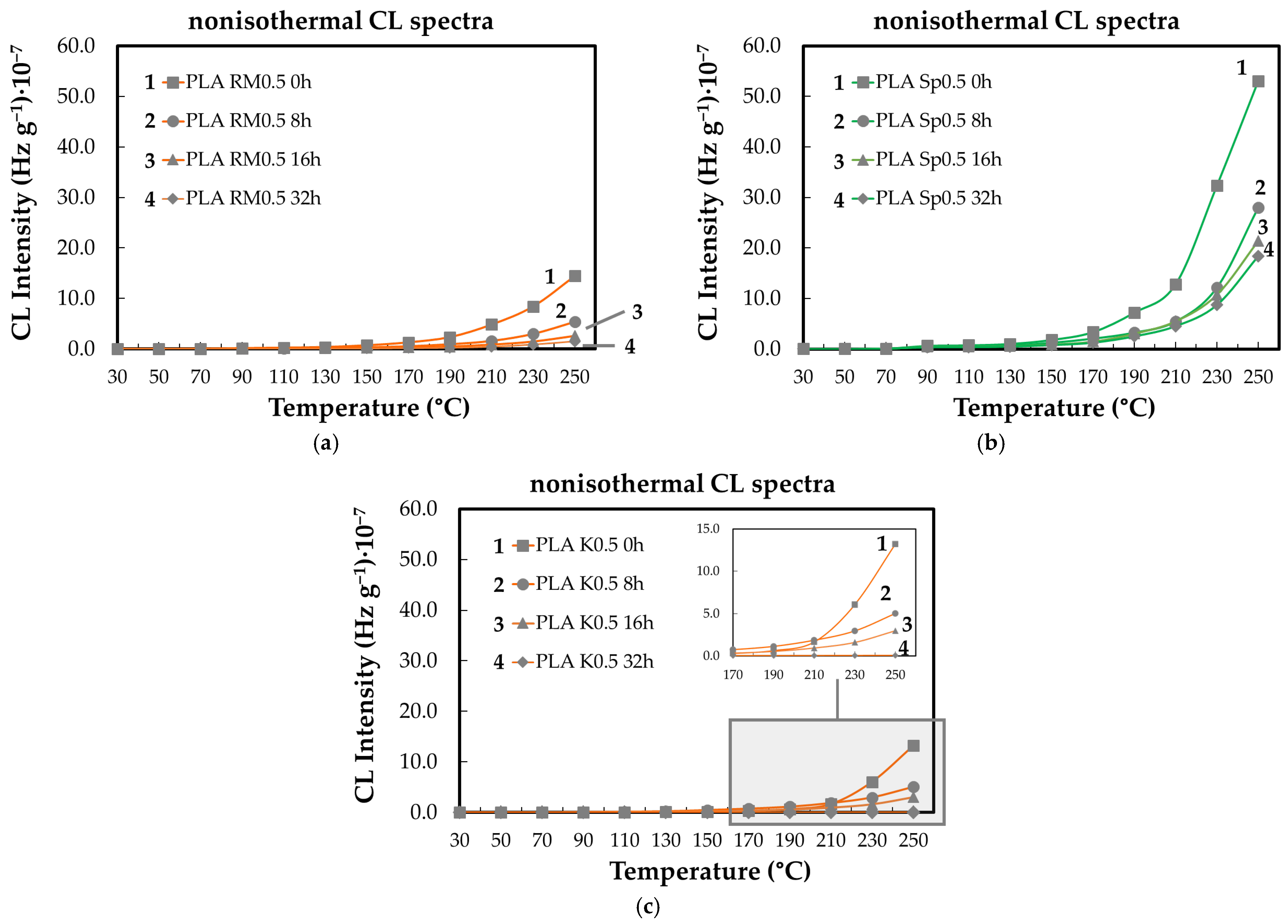
3.2. Nonisothermal CL Measurements
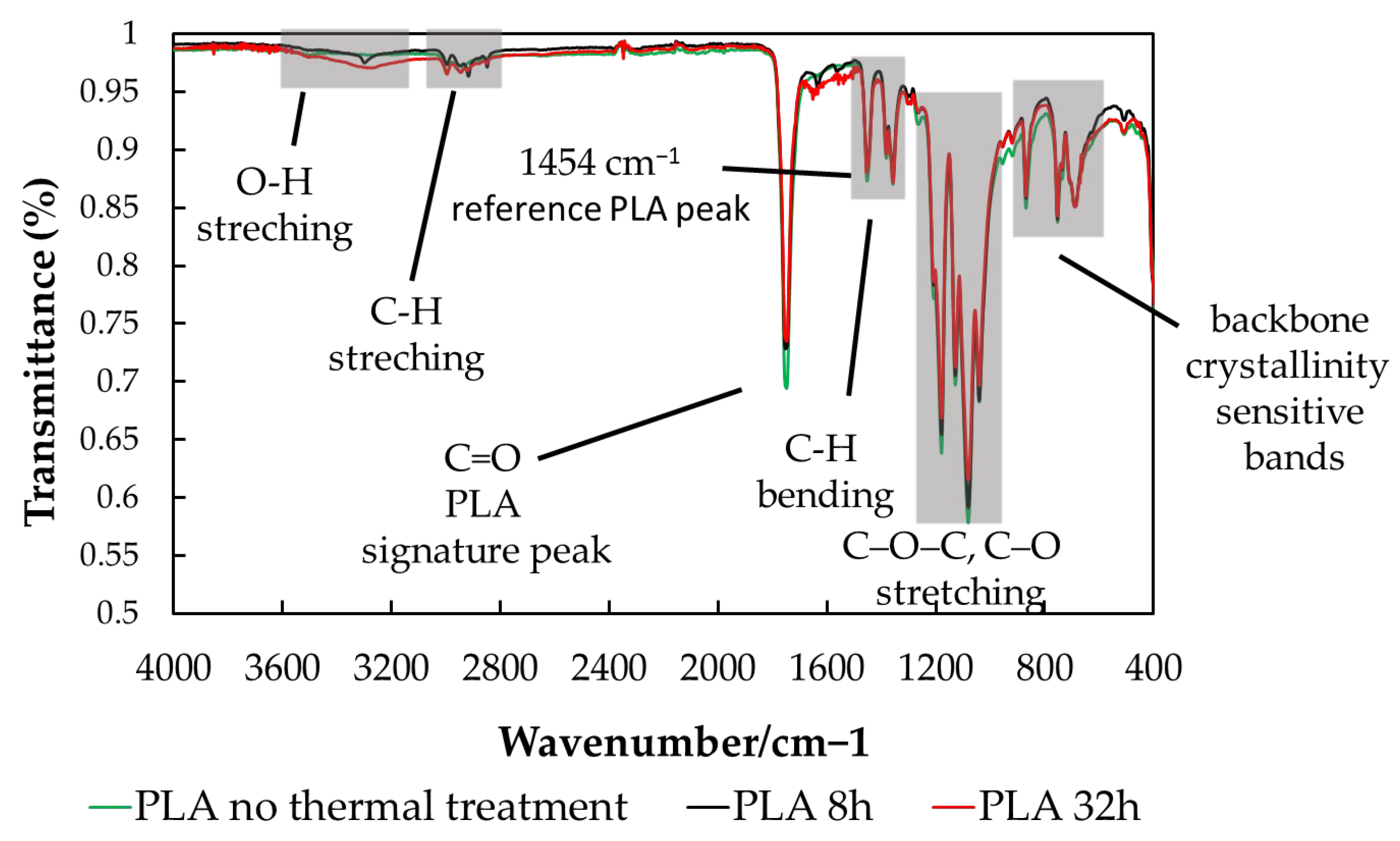
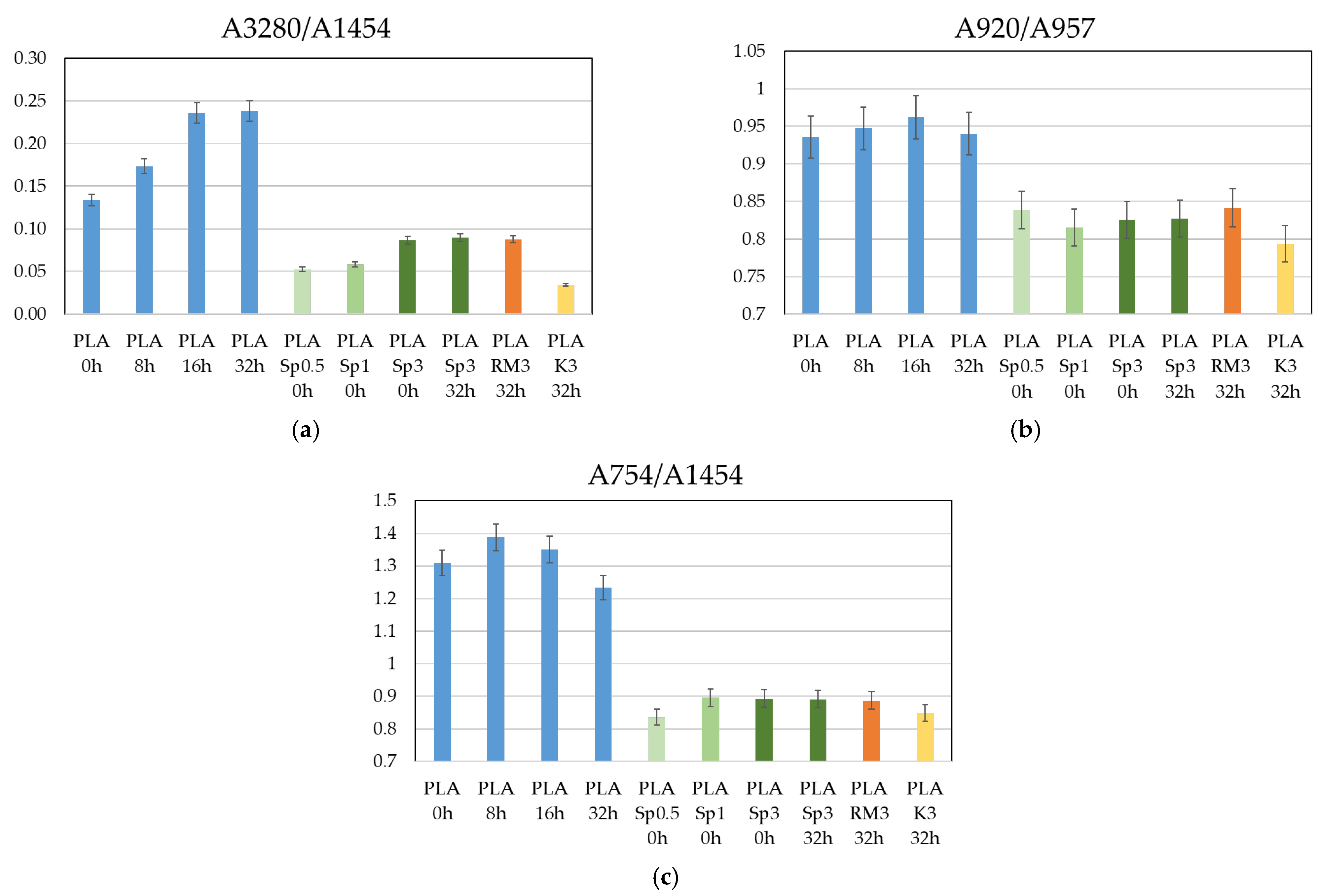
3.3. FTIR Analysis
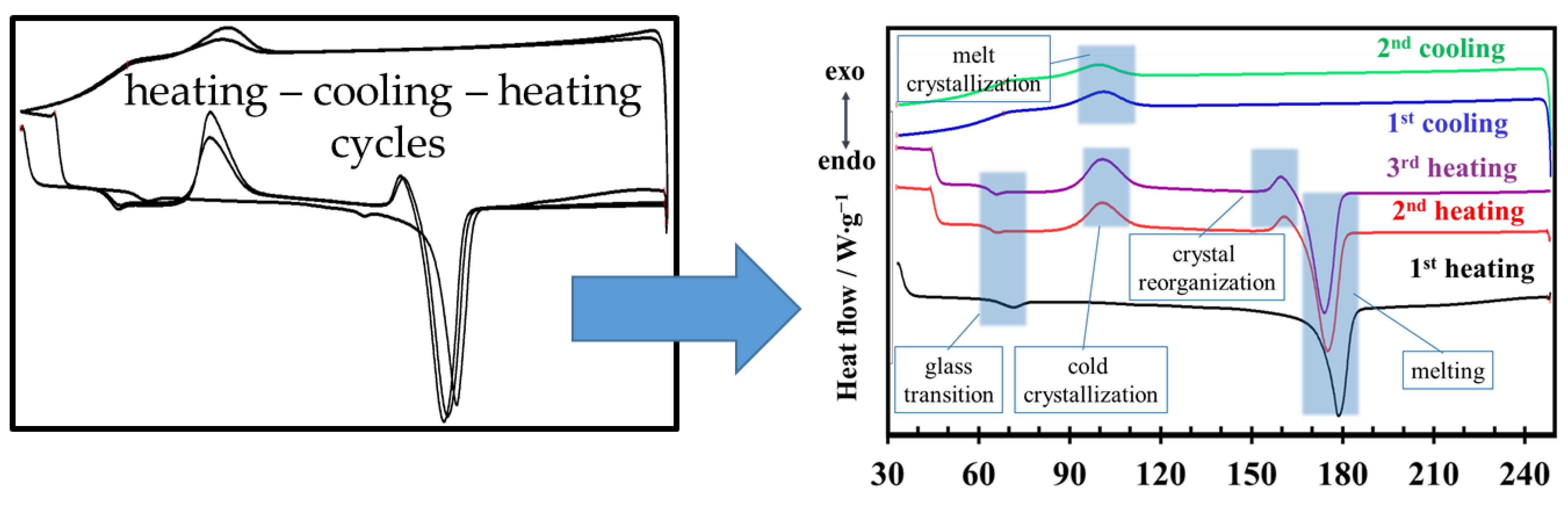
3.4. DSC Analysis
3.4.1. Glass Transition
3.4.2. Cold Crystallization
3.4.3. Melting
3.4.4. Melt Crystallization
4. Discussion
- Chemiluminescence (CL) analysis provides direct insight into thermo-oxidative degradation by monitoring photon emission during thermal exposure.
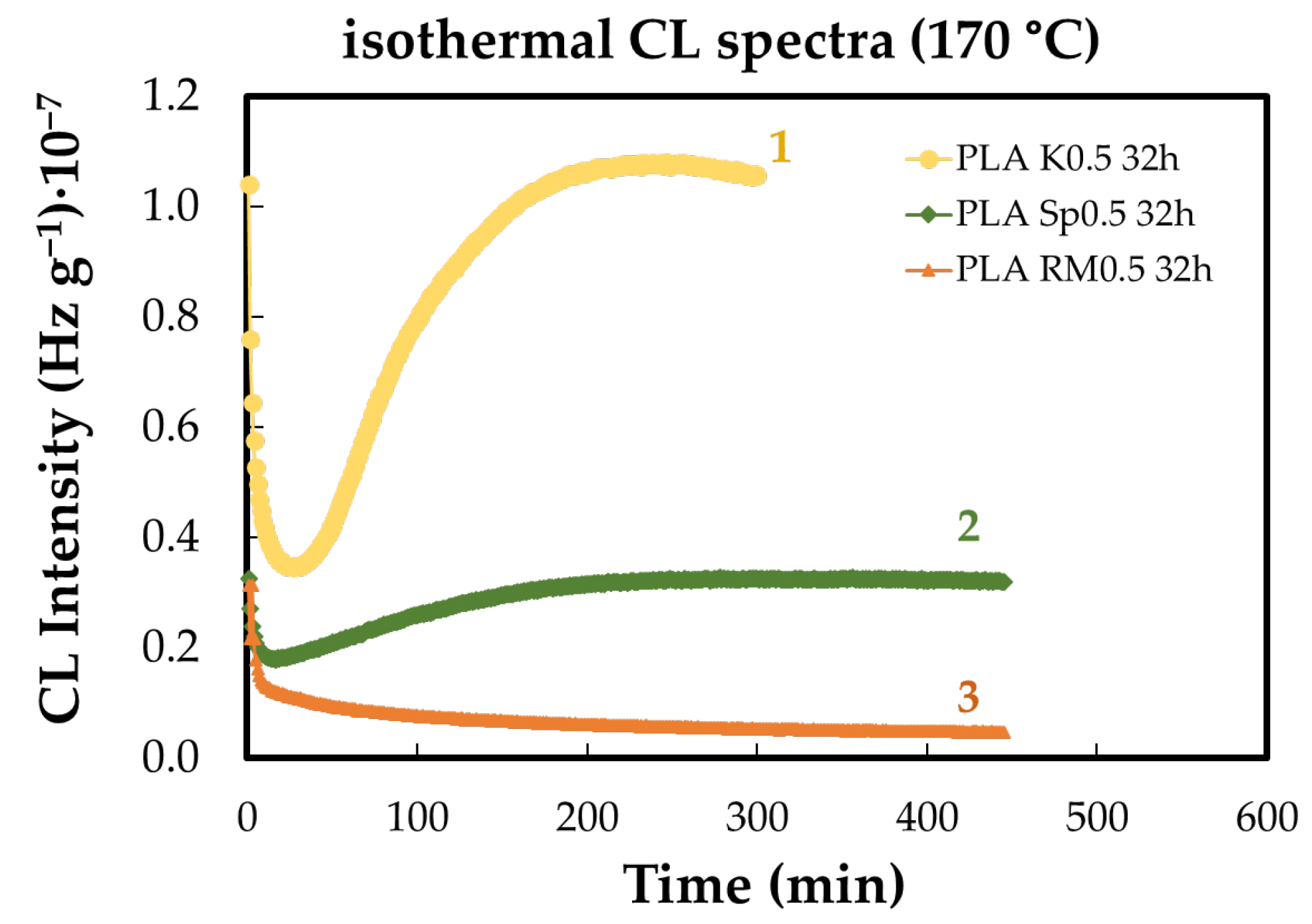
- CL-derived oxidation induction times (OITs) reveal distinct stabilization efficiencies among the additives, with rosemary extract providing the longest OITs and kelp-based fillers the shortest, reflecting different abilities to delay oxidation onset.
- These trends are consistent with DSC and FTIR results: rosemary extract increases Tg and limits hydroxyl-group formation, while biomass fillers mainly influence crystallization behavior and chain constraints through heterogeneous interfacial regions.
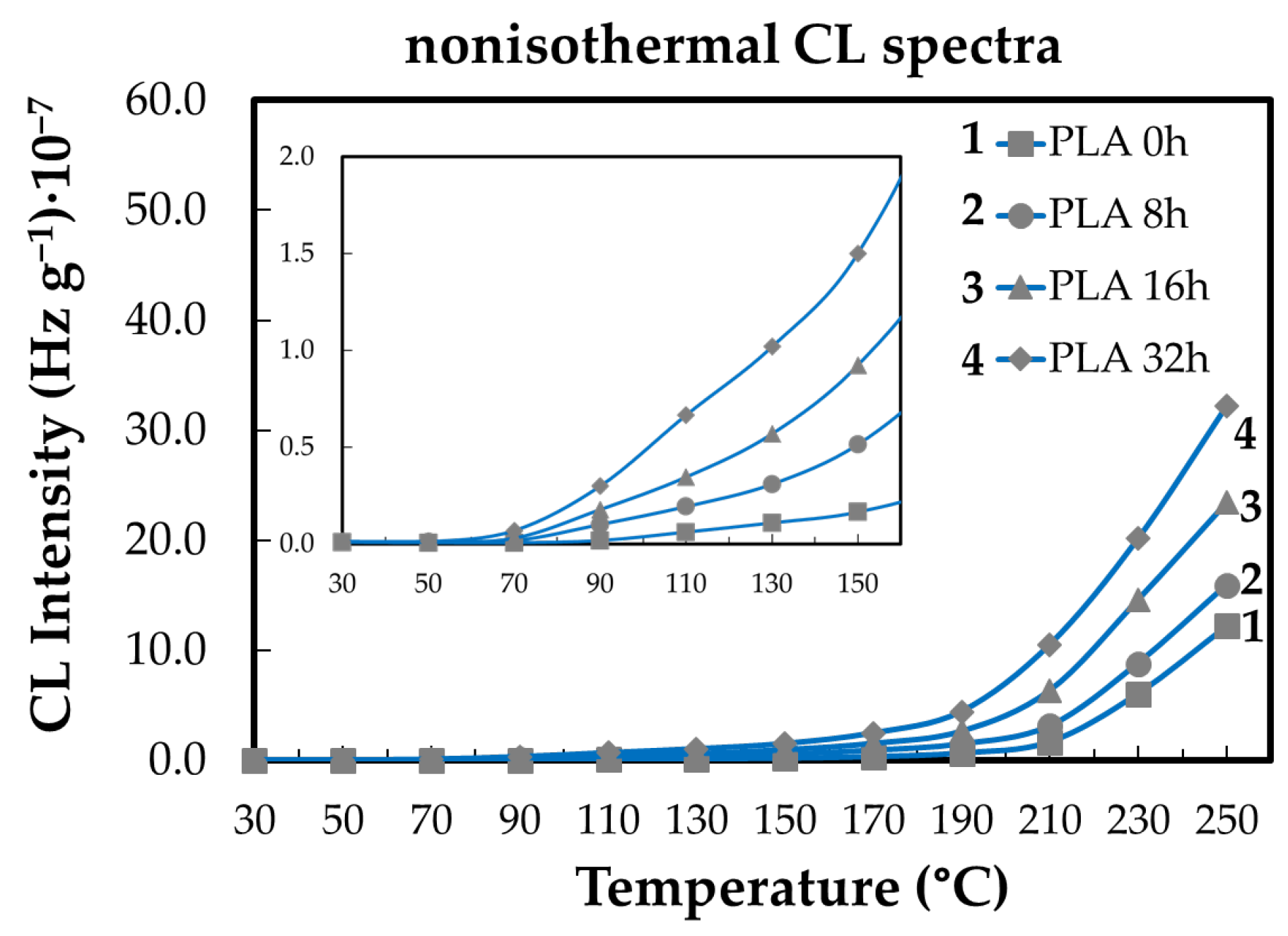
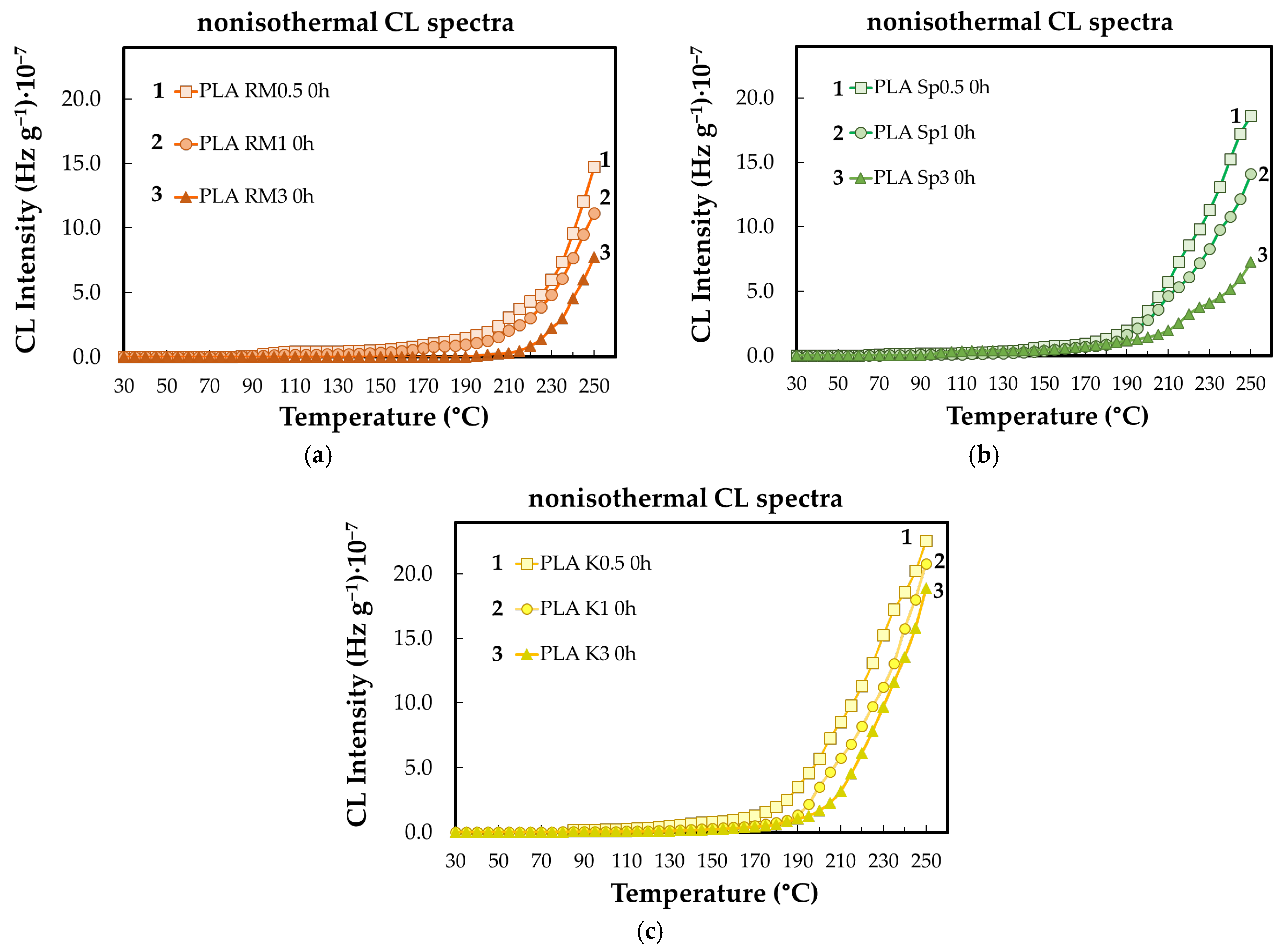
- Increasing the additive content up to 3 wt% enhances stability (Figure 11), confirming the effectiveness of these mechanisms within the investigated concentration range.
- Overall, the combined CL, DSC, and FTIR analyses indicate that the natural additives improve PLA thermal stability primarily by slowing oxidation kinetics and modifying amorphous-phase mobility, rather than by completely suppressing depolymerization.
5. Conclusions
Supplementary Materials
Author Contributions
Funding
Institutional Review Board Statement
Data Availability Statement
Conflicts of Interest
Abbreviations
| AO | antioxidant |
| CL | chemiluminescence |
| Cp | heat capacity |
| DSC | Differential scanning calorimetry |
| FTIR | Fourier Transform Infrared Spectroscopy |
| Hc | cold crystallization enthalpy |
| Hm | melting enthalpy |
| Hmc | melt crystallization enthalpy |
| K | kelp (Ascophyllum nodosum) |
| OIT | oxidation induction time |
| OOT | onset oxidation temperature |
| PLA | poly(lactic) acid |
| RM | rosemary (Rosmarinus officinalis) |
| SIS | styrene–isoprene–styrene |
| SP | spirulina (Arthrosipra platensis) |
| Tg | glass transition temperature |
| Tc | crystallization temperature |
| vox | oxidation rate |
References
- Marano, S.; Laudadio, E.; Minnelli, C.; Stipa, P. Tailoring the barrier properties of PLA: A state-of-the-art review for food packaging applications. Polymers 2022, 14, 1626. [Google Scholar] [CrossRef] [PubMed]
- Bikiaris, N.D.; Koumentakou, I.; Samiotaki, C.; Meimaroglou, D.; Varytimidou, D.; Karatza, A.; Papageorgiou, G.Z. Recent advances in the investigation of poly(lactic acid) (PLA) nanocomposites: Incorporation of various nanofillers and their properties and applications. Polymers 2023, 15, 1196. [Google Scholar] [CrossRef] [PubMed]
- Selvam, T.; Rahman, N.M.M.A.; Olivito, F.; Ilham, Z.; Ahmad, R.; Wan-Mohtar, W.A.A.Q.I. Agricultural waste-derived biopolymers for sustainable food packaging: Challenges and future prospects. Polymers 2025, 17, 1897. [Google Scholar] [CrossRef]
- Nicolescu, C.M.; Bumbac, M.; Buruleanu, C.L.; Popescu, E.C.; Stanescu, S.G.; Georgescu, A.A.; Toma, S.M. Biopolymers produced by lactic acid bacteria: Characterization and food application. Polymers 2023, 15, 1539. [Google Scholar] [CrossRef] [PubMed]
- Zaharescu, T.; Bumbac, M.; Nicolescu, C.M.; Blanco, I. The contribution of silica nanoparticles to the stability of styrene–isoprene–styrene triblock copolymer (SIS). II. Energetic peculiarities. Radiat. Phys. Chem. 2024, 215, 111318. [Google Scholar] [CrossRef]
- Râpă, M.; Stefan, L.M.; Zaharescu, T.; Seciu, A.M.; Țurcanu, A.A.; Matei, E.; Predescu, C. Development of bionanocomposites based on PLA, collagen and AgNPs and characterization of their stability and in vitro biocompatibility. Appl. Sci. 2020, 10, 2265. [Google Scholar] [CrossRef]
- Christopoulou, S.D.; Androutsopoulou, C.; Hahalis, P.; Kotsalou, C.; Vantarakis, A.; Lamari, F.N. Rosemary extract and essential oil as drink ingredients: Chemical composition, genotoxicity, antimicrobial, antiviral, and antioxidant properties. Foods 2021, 10, 3143. [Google Scholar] [CrossRef]
- Metekia, W.A.; Ulusoy, B.H.; Habte-Tsion, H.M. Spirulina phenolic compounds: Natural food additives with antimicrobial properties. Int. Food Res. J. 2021, 28, 6. [Google Scholar] [CrossRef]
- Nakamoto, M.M.; Assis, M.; de Oliveira Filho, J.G.; Braga, A.R.C. Spirulina application in food packaging: Gaps of knowledge and future trends. Trends Food Sci. Technol. 2023, 133, 138–147. [Google Scholar] [CrossRef]
- Blanco-Pascual, N.; Montero, M.P.; Gómez-Guillén, M.C. Antioxidant film development from unrefined extracts of brown seaweeds Laminaria digitata and Ascophyllum nodosum. Food Hydrocoll. 2014, 37, 100–110. [Google Scholar] [CrossRef]
- Shi, X.; Cui, L.; Xu, C.; Wu, S. Next-generation bioplastics for food packaging: Sustainable materials and applications. Materials 2025, 18, 2919. [Google Scholar] [CrossRef]
- Raadt, P.D.; Wirtz, S.; Vos, E.; Verhagen, H. Short review of extracts of rosemary as a food additive. Eur. J. Nutr. Food Saf. 2015, 5, 126–137. [Google Scholar] [CrossRef]
- Darie-Niţă, R.N.; Vasile, C.; Stoleru, E.; Pamfil, D.; Zaharescu, T.; Tarţău, L.; Leluk, K. Evaluation of the rosemary extract effect on the properties of polylactic acid-based materials. Materials 2018, 11, 1825. [Google Scholar] [CrossRef] [PubMed]
- Zeid, A.; Karabagias, I.K.; Nassif, M.; Kontominas, M.G. Preparation and evaluation of antioxidant packaging films made of polylactic acid containing thyme, rosemary, and oregano essential oils. J. Food Process. Preserv. 2019, 43, e14102. [Google Scholar] [CrossRef]
- Andrade, M.A.; Barbosa, C.H.; Cerqueira, M.A.; Azevedo, A.G.; Barros, C.; Machado, A.V.; Ramos, F. PLA films loaded with green tea and rosemary polyphenolic extracts as an active packaging for almond and beef. Food Packag. Shelf Life 2023, 36, 101041. [Google Scholar] [CrossRef]
- Stoleru, E.; Vasile, C.; Oprică, L.; Yilmaz, O. Influence of the chitosan and rosemary extract on fungal biodegradation of some plasticized PLA-based materials. Polymers 2020, 12, 469. [Google Scholar] [CrossRef]
- Zaharescu, T.; Mateescu, C. Investigation on some algal extracts as appropriate stabilizers for radiation-processed polymers. Polymers 2022, 14, 4971. [Google Scholar] [CrossRef]
- Bumbac, M.; Nicolescu, C.M.; Olteanu, R.L.; Gherghinoiu, S.C.; Bumbac, C.; Tiron, O.; Buiu, O. Preparation and characterization of microalgae styrene–butadiene composites using Chlorella vulgaris and Arthrospira platensis biomass. Polymers 2023, 15, 1357. [Google Scholar] [CrossRef]
- Fredricks, J.L.; Iyer, H.; McDonald, R.; Hsu, J.; Jimenez, A.M.; Roumeli, E. Spirulina-based composites for 3D printing. J. Polym. Sci. 2021, 59, 2878–2894. [Google Scholar] [CrossRef]
- Bumbac, M.; Nicolescu, C.M.; Zaharescu, T.; Gurgu, I.V.; Bumbac, C.; Manea, E.E.; Dumitrescu, C. Biodegradation study of styrene–butadiene composites with incorporated Arthrospira platensis biomass. Polymers 2024, 16, 1218. [Google Scholar] [CrossRef]
- Sogani, M.; Gupta, D.; Syed, Z.; Rajvanshi, J.; Maheshwari, K.; Gupta, N.S.; Sen, H. Microalgae-based bioplastics: A sustainable alternative toward circular economy. In Algae-Derived Biochemicals of Industrial Importance; Springer Nature: Cham, Switzerland, 2025; pp. 51–62. [Google Scholar]
- Patarra, R.F.; Paiva, L.; Neto, A.I.; Lima, E.; Baptista, J. Nutritional value of selected macroalgae. J. Appl. Phycol. 2011, 23, 205–208. [Google Scholar] [CrossRef]
- Biris-Dorhoi, E.S.; Michiu, D.; Pop, C.R.; Rotar, A.M.; Tofana, M.; Pop, O.L.; Farcas, A.C. Macroalgae—A sustainable source of chemical compounds with biological activities. Nutrients 2020, 12, 3085. [Google Scholar] [CrossRef] [PubMed]
- Bulota, M.; Budtova, T. PLA/algae composites: Morphology and mechanical properties. Compos. Part A Appl. Sci. Manuf. 2015, 73, 109–115. [Google Scholar] [CrossRef]
- Yang, H.; Qi, C.; Zhang, R.; Li, Y.; Tian, G.; Gao, L.; Bian, B. Upcycling algal biomass into biodegradable materials: Enhancing structural properties and performance through hydrophobic modifications. Algal Res. 2025, 90, 104175. [Google Scholar] [CrossRef]
- Bowman, S.; Qiu, Y.; Qiu, L. Flexural properties and thermal characterization of cyanobacteria biomass/PLA composites using powder compression moulding. J. Reinf. Plast. Compos. 2025, 07316844251344009. [Google Scholar] [CrossRef]
- Matisová-Rychlá, L.; Rychlý, J.; Slovák, K. Effect of the polymer type and experimental parameters on chemiluminescence curves of selected materials. Polym. Degrad. Stab. 2003, 82, 173–180. [Google Scholar] [CrossRef]
- Zaharescu, T.; Râpă, M.; Marinescu, V. Chemiluminescence kinetic analysis on the oxidative degradation of poly(lactic acid). J. Therm. Anal. Calorim. 2017, 128, 185–191. [Google Scholar] [CrossRef]
- Ji, R.; Mo, F.; Liang, L.; Chen, T.; Dong, S.; Deng, C.; Wu, H.; Zhou, L.; Zhao, X. Biodegradable polylactic acid (PLA) copolymer materials: Structural design, synthesis strategy, structure–performance relationship, and industrial application. Chem. Eng. J. 2025, 524, 169602. [Google Scholar] [CrossRef]
- Islam, M.S.; Elahee, G.M.F.; Fang, Y.; Yu, X.B.; Advincula, R.C.; Cao, C.C. Polylactic acid (PLA)-based multifunctional and biodegradable nanocomposites and their applications. Compos. Part B Eng. 2025, 306, 112842. [Google Scholar] [CrossRef]
- Cuadri, A.A.; Martín-Alfonso, J.E. Thermal, thermo-oxidative and thermomechanical degradation of PLA: A comparative study based on rheological, chemical and thermal properties. Polym. Degrad. Stab. 2018, 150, 37–45. [Google Scholar] [CrossRef]
- Kopinke, F.-D.; Remmler, M.; Mackenzie, K.; Möder, M.; Wachsen, O. Thermal decomposition of biodegradable polyesters—II. Poly(lactic acid). Polym. Degrad. Stab. 1996, 53, 329–342. [Google Scholar] [CrossRef]
- Lim, L.-T.; Auras, R.; Rubino, M. Processing technologies for poly(lactic acid). Prog. Polym. Sci. 2008, 33, 820–852. [Google Scholar] [CrossRef]
- Rasal, R.M.; Janorkar, A.V.; Hirt, D.E. Poly(lactic acid) modifications. Prog. Polym. Sci. 2010, 35, 338–356. [Google Scholar] [CrossRef]
- Hallstein, J.; Metzsch-Zilligen, E.; Pfaendner, R. Long-term thermal stabilization of poly(lactic acid). Materials 2024, 17, 2761. [Google Scholar] [CrossRef]
- Li, Y.C.; Wang, S.; Qian, S.; Liu, Z.; Weng, Y.; Zhang, Y. Depolymerization and re/upcycling of biodegradable PLA plastics. ACS Omega 2024, 9, 13506–13521. [Google Scholar] [CrossRef]
- Payne, K.; McKeown, P.; Jones, M.D. A circular economy approach to plastic waste. Polym. Degrad. Stab. 2019, 165, 170–181. [Google Scholar] [CrossRef]
- Zhao, W.; He, J.; Yu, P.; Jiang, X.; Zhang, L. Recent progress in rubber antioxidants: A review. Polym. Degrad. Stab. 2023, 207, 110223. [Google Scholar] [CrossRef]
- Kister, G.; Cassanas, G.; Vert, M. Effects of morphology, conformation and configuration on the IR and Raman spectra of various poly(lactic acid)s. Polymer 1998, 39, 267–273. [Google Scholar] [CrossRef]
- Aou, K. Effect of Molecular Structure on the Thermal Stability of Amorphous and Semicrystalline Poly(lactic Acid). Ph.D. Thesis, University of Massachusetts Amherst, Amherst, MA, USA, 2007. [Google Scholar]
- Meaurio, E.; Zuza, E.; López-Rodríguez, N.; Sarasua, J.R. Conformational behavior of poly(L-lactide) studied by infrared spectroscopy. J. Phys. Chem. B 2006, 110, 5790–5800. [Google Scholar] [CrossRef]
- Singla, P.; Mehta, R.; Berek, D.; Upadhyay, S.N. Microwave-assisted synthesis of poly(lactic acid) and its characterization using size exclusion chromatography. J. Macromol. Sci. A 2012, 49, 963–970. [Google Scholar] [CrossRef]
- Chamas, A.; Moon, H.; Zheng, J.; Qiu, Y.; Tabassum, T.; Jang, J.H.; Abu-Omar, M.; Scott, S.L.; Suh, S. Degradation rates of plastics in the environment. ACS Sustain. Chem. Eng. 2020, 8, 3494–3511. [Google Scholar] [CrossRef]
- Perez-Nakai, A.; Lerma-Canto, A.; Dominguez-Candela, I.; Ferri, J.M.; Fombuena, V. Novel epoxidized brazil nut oil as a promising plasticizing agent for PLA. Polymers 2023, 15, 1997. [Google Scholar] [CrossRef]
- Perez-Nakai, A.; Lerma-Canto, A.; Domingez-Candela, I.; Garcia-Garcia, D.; Ferri, J.M.; Fombuena, V. Comparative study of the properties of plasticized polylactic acid with maleinized hemp seed oil and a novel maleinized brazil nut seed oil. Polymers 2021, 13, 2376. [Google Scholar] [CrossRef] [PubMed]
- Ferri, J.M.; Borràs, V.F.; Carrasco, M.F.A. (Eds.) Advances in Biocompatible and Biodegradable Polymers II; MDPI: Basel, Switzerland, 2023; p. 394. [Google Scholar]
- Mallegni, N.; Cicogna, F.; Passaglia, E.; Gigante, V.; Coltelli, M.B.; Coiai, S. Natural antioxidants: Advancing stability and performance in sustainable biobased and biodegradable plastics. Compounds 2025, 5, 4. [Google Scholar] [CrossRef]
- Valero, L.; Gainche, M.; Esparcieux, C.; Delor-Jestin, F.; Askanian, H. Vegetal polyphenol extracts as antioxidants for the stabilization of PLA: Toward fully biobased polymer formulation. ACS Omega 2024, 9, 7725–7736. [Google Scholar] [CrossRef]
- Stoyanova, N.; Spasova, M.; Manolova, N.; Rashkov, I.; Kamenova-Nacheva, M.; Staleva, P.; Tavlinova-Kirilova, M. Electrospun PLA-based biomaterials loaded with Melissa officinalis extract with strong antioxidant activity. Polymers 2023, 15, 1070. [Google Scholar] [CrossRef]
- Gulcin, I. Antioxidants: A comprehensive review. Arch. Toxicol. 2025, 99, 1893–1997. [Google Scholar] [CrossRef]
- Kost, B.; Basko, M.; Bednarek, M.; Socka, M.; Kopka, B.; Łapienis, G.; Biela, T.; Kubisa, P.; Brzeziński, M. Influence of functional end groups on the properties of polylactide-based materials. Prog. Polym. Sci. 2022, 130, 101561. [Google Scholar] [CrossRef]
- Castro-Aguirre, E.; Iñiguez-Franco, F.; Samsudin, H.; Fang, X.; Auras, R. Poly(lactic acid): Mass production, processing, industrial applications, and end of life. Adv. Drug Deliv. Rev. 2016, 107, 333–366. [Google Scholar] [CrossRef]
- Pospíšil, J.; Nešpůrek, S. Chain-breaking stabilizers in polymers: The current status. Polym. Degrad. Stab. 1996, 19, 99–110. [Google Scholar] [CrossRef]
- Alfaro, M.E.C.; Stares, S.L.; Barra, G.M.O.; Hotza, D. Effects of accelerated weathering on properties of 3D-printed PLA scaffolds. Mater. Today Commun. 2022, 33, 104821. [Google Scholar] [CrossRef]
- Zou, H.; Yi, C.; Wang, L.; Liu, H.; Xu, W. Thermal degradation of poly(lactic acid) measured by thermogravimetry coupled with Fourier transform infrared spectroscopy. J. Therm. Anal. Calorim. 2009, 97, 929–935. [Google Scholar] [CrossRef]
- Oliveira, M.; Santos, E.; Araújo, A.; Fechine, G.J.M.; Machado, A.V.; Botelho, G. The role of shear and stabilizer on PLA degradation. Polym. Test. 2016, 51, 109–116. [Google Scholar] [CrossRef]




| Wavenumber (cm−1) | Assignment |
|---|---|
| 3500–3200 | weak/broad O–H stretching—terminal –OH, moisture), possible oxidation intermediates |
| 2995–2945 | –CH3 asymmetric stretching |
| 2945–2880 | –CH3 symmetric stretching |
| 1749 | very strong C=O stretching of ester group (signature peak of PLA) |
| 1454 | CH3 asymmetric bending—reference peak |
| 1385–1360 | CH3 symmetric bending |
| 1265 | C–O–C stretching (ester) |
| 1210, 1180 | C–O stretching |
| 1130, 1080 | C–O–C asymmetric stretching |
| 1042 | C–O stretching of the backbone |
| 957 | C–O–C stretching and skeletal vibrations of the polymer backbone associated with the amorphous phase of PLA |
| 920 | C–COO stretching vibrations associated with the crystalline phase of PLA |
| 870 | C–COO stretching/CH3 rocking |
| 754 | PLA skeletal vibrations |
Disclaimer/Publisher’s Note: The statements, opinions and data contained in all publications are solely those of the individual author(s) and contributor(s) and not of MDPI and/or the editor(s). MDPI and/or the editor(s) disclaim responsibility for any injury to people or property resulting from any ideas, methods, instructions or products referred to in the content. |
© 2026 by the authors. Licensee MDPI, Basel, Switzerland. This article is an open access article distributed under the terms and conditions of the Creative Commons Attribution (CC BY) license.
Share and Cite
Zaharescu, T.; Bumbac, M.; Nicolescu, C.M.; Craciun, A.; Mirea, R. Oxidation Strength of PLA Filled with Algal Biomass and Rosemary Extract Powders for Food-Safe Handling. Polymers 2026, 18, 504. https://doi.org/10.3390/polym18040504
Zaharescu T, Bumbac M, Nicolescu CM, Craciun A, Mirea R. Oxidation Strength of PLA Filled with Algal Biomass and Rosemary Extract Powders for Food-Safe Handling. Polymers. 2026; 18(4):504. https://doi.org/10.3390/polym18040504
Chicago/Turabian StyleZaharescu, Traian, Marius Bumbac, Cristina Mihaela Nicolescu, Aurora Craciun, and Radu Mirea. 2026. "Oxidation Strength of PLA Filled with Algal Biomass and Rosemary Extract Powders for Food-Safe Handling" Polymers 18, no. 4: 504. https://doi.org/10.3390/polym18040504
APA StyleZaharescu, T., Bumbac, M., Nicolescu, C. M., Craciun, A., & Mirea, R. (2026). Oxidation Strength of PLA Filled with Algal Biomass and Rosemary Extract Powders for Food-Safe Handling. Polymers, 18(4), 504. https://doi.org/10.3390/polym18040504