Smart Antibiofilm Platforms Based on Synthetic Antimicrobial Peptides-Engineered Hydrogels


Abstract
1. Introduction
2. Methods for Biofilm Evaluation
2.1. In Vitro Biofilm Assays
2.2. Ex Vivo Models for Biofilm Assays
3. Peptide Engineering Strategies

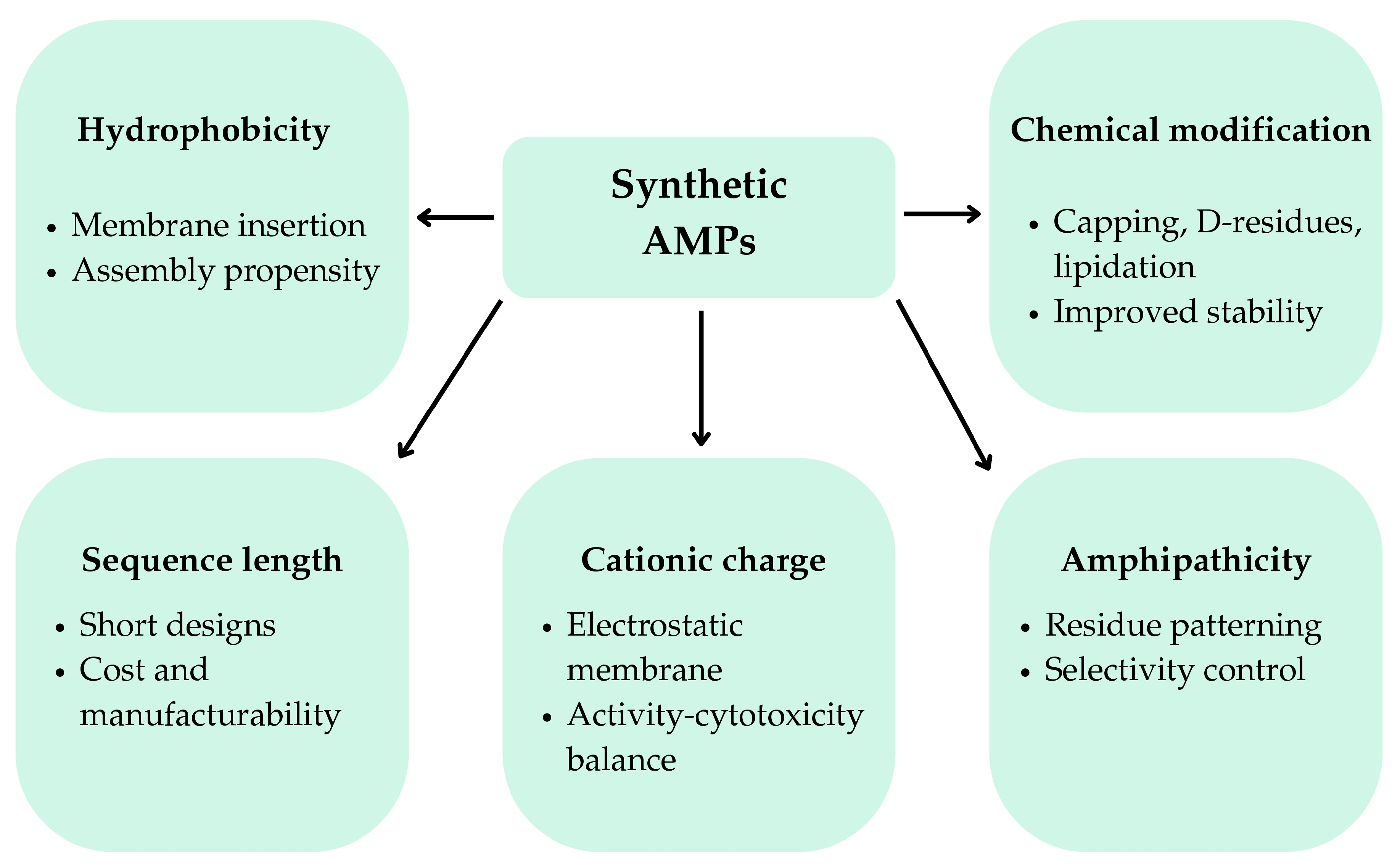
| Engineering Strategy | Design Purpose | Effect on Biofilm | Effect on Stability or Cytotoxicity | Reference |
|---|---|---|---|---|
| Net cationic charge | Promote electrostatic attraction to anionic bacterial membranes and extracellular polymeric substance (EPS) | Increased bacterial binding and membrane disruption | Excessive charge may increase hemolysis | [42,45] |
| Amphipathicity and residue patterning | Enable membrane insertion while preserving selectivity | Enhanced killing of planktonic and biofilm-embedded bacteria | Poor patterning can reduce selectivity | [43] |
| Sequence shortening | Reduce synthesis cost and manufacturing burden | Activity preserved if key residues retained | May reduce stability unless compensated | [43,44] |
| D-amino acid substitution | Prevent protease recognition | Maintained antibiofilm activity in protease-rich environments | Strongly improves stability; minimal toxicity change | [42] |
| Non-natural residues/peptidomimetics | Expand chemical space and backbone diversity | Preserved membrane activity with enhanced durability | Improves half-life; may complicate synthesis | [45] |
| Terminal capping | Protect against exopeptidases and stabilize helices | Often increases potency | Improves stability; modest toxicity risk | [51] |
| Lipidation | Increase membrane affinity and local concentration | Enhanced antibiofilm potency | can increase cytotoxicity if over-hydrophobic | [45] |
| Self-assembly | Increase local peptide density; multivalency | Strong antibiofilm effects via micellization | Improves stability; activity context-dependent | [43,52] |
| Iterative multi-parameter optimization | Simultaneously balance activity, selectivity, and stability | Improved efficacy across planktonic and biofilm states | Reduces toxicity by avoiding over-optimization of single parameters | [46] |
| Polymer-aware peptide design | Enable efficient integration into hydrogels and polymer matrices | Sustained local activity via improved retention and release control | Improves functional persistence; minimizes systemic exposure | [18] |
| Peptide/Strategy | Engineering Approach | Key Antibiofilm Outcome | Notable Limitation | Reference |
|---|---|---|---|---|
| WLBU2 | Charge optimization; synthetic sequence | Reduced P. aeruginosa catheter biofilms in vivo; QS inhibition | Requires formulation for local delivery | [49] |
| K6 | Ultrashort, Trp-rich, self-assembling | Micelle-mediated biofilm clearance in mixed infections | Activity depends on assembly state | [43] |
| GL13K | Self-assembly on surfaces | Reduced Staphylococcus aureus viability on titanium | Modest effect magnitude | [52] |
| Stapled AMPS | Helix stabilization | Increased protease resistance | Increased hemolysis risk | [51] |
| Lipidated AMPS | Fatty-acid conjugation | Enhanced membrane activity | Cytotoxicity risk | [45] |
| Polymer–Peptide Hybrid AMPs | Chemical conjugation or covalent incorporation into polymer matrices | Sustained antibiofilm activity with improved material compatibility | Design complexity; requires co-optimization of peptide and polymer | [18] |
4. Antibiofilm Activity of AMPs
Mechanism of Action
5. Hydrogel Integration and Triggered Release
6. Multifunctional Systems with Antibiofilm Properties
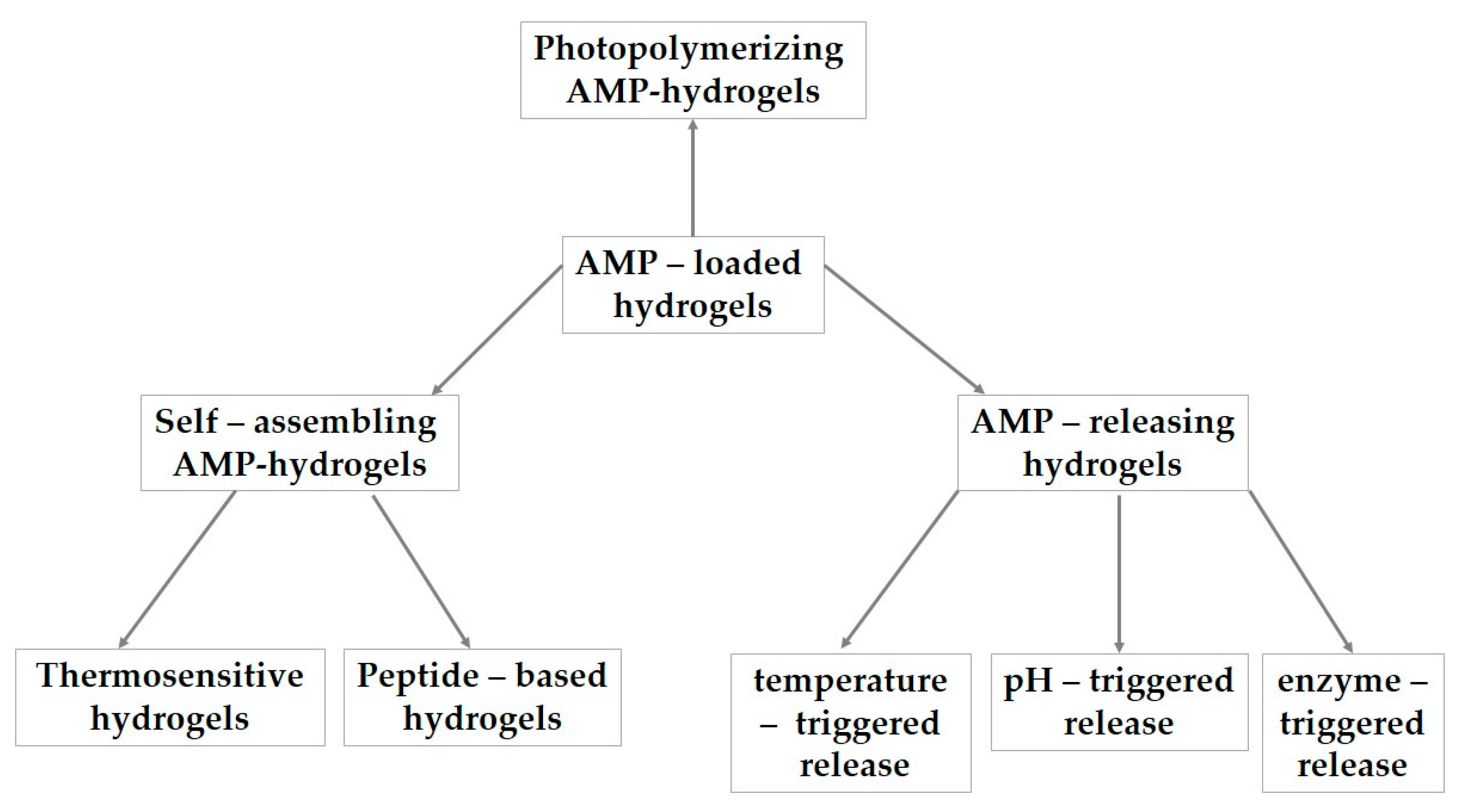
6.1. Photoplymerizing AMP–Hydrogels
6.2. Self-Assembling AMP–Hydrogels
6.3. AMP-Releasing Hydrogels
7. Conclusions and Perspectives
Author Contributions
Funding
Data Availability Statement
Conflicts of Interest
Abbreviations
| ADP | Adenosine diphosphate |
| AFPs | Antifungal peptides |
| AMPs | Antimicrobial peptides |
| AuNRs | Gold nanorods |
| BaAMPs | Biofilm-active antimicrobial peptides database |
| BR | Berberine |
| CeONs | Cerium oxide nanoparticles |
| CFU | Colony-forming units |
| CLSM | Confocal laser scanning microscopy |
| CV | Crystal violet |
| DNA | Deoxyribonucleic acid |
| EGF | Epidermal growth factor |
| EPS | Extracellular polymeric substances |
| GelMA | Gelatin methacrylate |
| GFP | Green fluorescent protein |
| HA | Hyaluronic acid |
| MBEC | Minimum biofilm eradication concentration |
| MBIC | Minimum biofilm inhibitory concentration |
| MIC | Minimum inhibitory concentration |
| MMP | Matrix metalloproteinase |
| MMPs | Matrix metalloproteinases |
| MPDA | Mesoporous polydopamine nanoparticles |
| MRSA | Methicillin-resistant Staphylococcus aureus |
| NPs | Nanoparticles |
| OD | Optical density |
| ODEX | Oxidized dextran |
| PBS | Phosphate-buffered saline |
| PDGF | Platelet-derived growth factor |
| PEG | Polyethylene glycol |
| PEGylation | Poly(ethylene glycol) conjugation |
| PNIPAM | Poly(N-isopropyl acrylamide) |
| PolyP | Polyphosphate |
| ppGpp | Guanosine tetraphosphate |
| pppGpp | Guanosine pentaphosphate |
| PRP | Platelet-rich plasma |
| RNA | Ribonucleic acid |
| ROS | Reactive oxygen species |
| TA | Tannic acid |
| TCTS | Thermo-responsive chitosan |
| TGF-β | Transforming growth factor beta |
| TNF-α | Tumor necrosis factor alpha |
| UV | Ultraviolet |
References
- Houghton, J.S.M.; Saratzis, A.N.; Sayers, R.D.; Haunton, V.J. New Horizons in Peripheral Artery Disease. Age Ageing 2024, 53, afae114. [Google Scholar] [CrossRef] [PubMed]
- Dowling, C.; Chu, L.; Etkin, Y.; Oropallo, A. Assessment and Management of Chronic Venous, Arterial, And Diabetic Wounds in Older Adults. Semin. Vasc. Surg. 2025, 38, 281–290. [Google Scholar] [CrossRef] [PubMed]
- Yang, G.; Kang, H.; Zhu, Y.; Wu, H.; Zhang, M.; Zeng, X.; Peng, Y.; Wan, W.; Yi, Y. Bacteria Microenvironment-Responsive Missile Microneedles Modulate Immunity and Penetrate Biofilm for Diabetic Wound Therapy. Bioact. Mater. 2026, 55, 426–445. [Google Scholar] [CrossRef]
- Razdan, K.; Garcia-Lara, J.; Sinha, V.R.; Singh, K.K. Pharmaceutical strategies for the treatment of bacterial biofilms in chronic wounds. Drug Discov. Today 2022, 27, 2137–2150. [Google Scholar] [CrossRef]
- Zmejkoski, D.Z.; Zdravkovic, N.M.; Trisic, D.D.; Budimir, M.D.; Markovic, Z.M.; Kozyrovska, N.O.; Todorovic Markovi, B.M. Chronic Wound Dressings—Pathogenic Bacteria Anti-Biofilm Treatment with Bacterial Cellulose-Chitosan Polymer or Bacterial Cellulose-Chitosan Dots Composite Hydrogels. Int. J. Biol. Macromol. 2021, 191, 315–323. [Google Scholar] [CrossRef]
- Pendor, O.; Ukey, S.; Trivedi, R.; Umekar, M. Transcriptomic insights into biofilm dynamics and therapeutic targets in chronic wound infections (MIMET 107281). J. Microbiol. Methods 2025, 238, 107281. [Google Scholar] [CrossRef]
- Brackman, G.; De Meyer, L.; Nelis, H.J.; Coenye, T. Biofilm Inhibitory and Eradicating Activity of Wound Care Products Against Staphylococcus aureus and Staphylococcus epidermidis Biofilms in an In Vitro Chronic Wound Model. J. Appl. Microbiol. 2013, 114, 1833–1842. [Google Scholar] [CrossRef]
- Sendi, P.; Trebse, R.; Zimmerli, W. Debridement, Antibiotics and Implant Retention: Are All Approaches to Periprosthetic Joint Infection Equal? Same Procedures, Different Outcomes. Clin. Microbiol. Infect. 2025, 31, 1445–1450. [Google Scholar] [CrossRef]
- Tarusha, L.; Paoletti, S.; Travan, A.; Marsich, E. Alginate Membranes Loaded with Hyaluronic Acid and Silver Nanoparticles to Foster Tissue Healing and to Control Bacterial Contamination of Non-Healing Wounds. J. Mater. Sci. Mater. Med. 2018, 29, 22. [Google Scholar] [CrossRef]
- Naseri, E.; Ahmadi, A. A Review on Wound Dressings: Antimicrobial Agents, Biomaterials, Fabrication Techniques, And Stimuli-Responsive Drug Release. Eur. Polym. J. 2022, 173, 111293. [Google Scholar] [CrossRef]
- Böhner, D.A.; Mörl, K.; Beck-Sickinger, A.G. Bio-Inspired Biomaterial Coating for Enzyme Responsive Release of Antimicrobial Peptides. Mater. Today Bio 2025, 33, 101958. [Google Scholar] [CrossRef] [PubMed]
- Kabiraz, M.P.; Azam, M.A.; Pletzer, D. Advanced Antimicrobial Peptide-Based Biomaterials for Food Safety Applications. LWT 2026, 239, 118884. [Google Scholar] [CrossRef]
- Liu, H.; Yang, Y.; Deng, L.; Shen, Z.; Huang, Q.; Shah, N.G.; Chen, W.; Zhang, Y.; Wang, X.; Yu, L.; et al. Antibacterial and Antioxidative Hydrogel Dressings Based on Tannic Acid-Gelatin/Oxidized Sodium Alginate Loaded with Zinc Oxide Nanoparticles for Promoting Wound Healing. Int. J. Biol. Macromol. 2024, 279, 135177. [Google Scholar] [CrossRef] [PubMed]
- Carnero Canales, C.S.; Marquez Cazorla, J.I.; Marquez Cazorla, R.M.; Sábio, R.M.; Santos, H.A.; Pavan, F.R. Combating Gram-Negative Infections: The Role of Antimicrobial Peptides and Nanotechnology in Overcoming Antibiotic Resistance. Mater. Today Bio 2025, 35, 102381. [Google Scholar] [CrossRef]
- Chen, Z.; Zhao, G.; Qu, Y.; Tang, Q.; Yang, S.; Zhou, C.; Li, M.; Kang, Y.; Tan, P.; Ma, X. Structure- or Size-Transformable Peptide-Based Antibacterial Biomaterials: Design Strategies, Functions, and Applications. Acta Biomater. 2025, 208, 119–145. [Google Scholar] [CrossRef]
- Li, W.; Yang, Y.; Qi, Q.; Chen, X.; Huang, Y.; Chen, H.; Huang, J.; Chen, P. Improving the Functional Performance of Anthocyanin Indicator Films Through Antimicrobial Peptides Incorporation: Enhanced Stability, Swelling Control, and Antibacterial Efficacy. Food Chem. X 2025, 32, 103259. [Google Scholar] [CrossRef]
- Gaur, M.; Maurya, S.; Tripathi, R.; Pasupuleti, M.; Akhtar, M.S.; Swaroop, S.; Yadav, A.B. Lung SPLUNC1-Derived Anti-Biofilm Peptide in Polymeric Nanoparticles: A Novel Strategy Against, S. aureus Biofilms and Antimicrobial Resistance. Int. J. Biol. Macromol. 2025, 339, 149552. [Google Scholar] [CrossRef]
- Ma, H.; Wang, T.; Li, G.; Liang, J.; Zhang, J.; Liu, Y.; Zhong, W.; Li, P. A Photo-Modulated Nitric Oxide Delivering Hydrogel for the Accelerated Healing of Biofilm Infected Chronic Wounds. Acta Biomater. 2024, 188, 169–183. [Google Scholar] [CrossRef]
- Wang, W.; Han, R.; Tang, K.; Zhao, S.; Ding, C.; Luo, X. Biocompatible Peptide Hydrogels with Excellent Antibacterial and Catalytic Properties for Electrochemical Sensing Application. Anal. Chim. Acta 2021, 1154, 338295. [Google Scholar] [CrossRef]
- Fetse, J.; Kandel, S.; Mamani, U.F.; Cheng, K. Recent Advances in the Development of Therapeutic Peptides. Trends Pharmacol. Sci. 2023, 44, 425–441. [Google Scholar] [CrossRef]
- Dong, S.; Han, Y.; Wang, Y.; Ding, Q.; Ding, C.; Chen, S.; Song, Y.; Zhao, T. Multifunctional Hydrogel Scaffolds Loaded with Peptides in Promoting Wound Healing: A Review. Int. J. Biol. Macromol. 2025, 330, 148128. [Google Scholar] [CrossRef] [PubMed]
- Lamb, M.A.; Wiedbrauk, S.; Fairfull-Smith, K.E. Approaches to Enhance the Antimicrobial Activity of Carbapenems Within Bacterial Biofilms. RSC Pharm. 2024, 1, 622–644. [Google Scholar] [CrossRef]
- Zhang, W.; McLamore, E.S.; Garland, N.T.; Leon, J.C.; Banks, M.K. A Simple Method for Quantifying Biomass Cell and Polymer Distribution in Biofilms. J. Microbiol. Methods. 2013, 94, 367–374. [Google Scholar] [CrossRef] [PubMed]
- Müller, S.; Nebe-von-Caron, G. Functional Single-Cell Analyses: Flow Cytometry and Cell Sorting of Microbial Populations and Communities. FEMS Microbiol. Rev. 2010, 34, 554–587. [Google Scholar] [CrossRef] [PubMed]
- Treuer, R.; Haydel, S.E. Acid-Fast Staining and Petroff-Hausser Chamber Counting of Mycobacterial Cells in Liquid Suspension: Actinobacteria (High G+ C Gram Positive). Curr. Protoc. Microbiol. 2011, 20, 10A-6. [Google Scholar] [CrossRef]
- Nwaneshiudu, A.; Kuschal, C.; Sakamoto, F.H.; Anderson, R.R.; Schwarzenberger, K.; Young, R.C. Introduction to confocal microscopy. J. Investig. Dermatol. 2012, 132, e3. [Google Scholar] [CrossRef]
- Jakobs, S.; Subramaniam, V.; Schönle, A.; Jovin, T.M.; Hell, S.W. EGFP and DsRed Expressing Cultures of Escherichia Coli Imaged by Confocal, Two-Photon and Fluorescence Lifetime Microscopy. FEBS Lett. 2000, 479, 131–135. [Google Scholar] [CrossRef]
- O’Toole, G.A. Classic Spotlight: How the Gram Stain Works. J. Bacteriol. 2016, 198, 3128. [Google Scholar] [CrossRef]
- Perfetto, S.P.; Chattopadhyay, P.K.; Lamoreaux, L.; Nguyen, R.; Ambrozak, D.; Koup, R.A.; Roederer, M. Amine-Reactive Dyes for Dead Cell Discrimination in Fixed Samples. Curr. Protoc. Cytom. 2010, 53, 9–34. [Google Scholar] [CrossRef]
- Haney, E.F.; Trimble, M.J.; Cheng, J.T.; Vallé, Q.; Hancock, R.E. Critical Assessment of Methods to Quantify Biofilm Growth and Evaluate Antibiofilm Activity of Host Defence Peptides. Biomolecules 2018, 8, 29. [Google Scholar] [CrossRef]
- Latka, A.; Drulis-Kawa, Z. Advantages and Limitations of Microtiter Biofilm Assays in the Model of Antibiofilm Activity of Klebsiella Phage KP34 and Its Depolymerase. Sci. Rep. 2020, 10, 20338. [Google Scholar] [CrossRef] [PubMed]
- Berridge, M.V.; Herst, P.M.; Tan, A.S. Tetrazolium Dyes as Tools in Cell Biology: New Insights into Their Cellular Reduction. Biotechnol. Annu. Rev. 2005, 11, 127–152. [Google Scholar] [CrossRef] [PubMed]
- Rampersad, S.N. Multiple Applications of Alamar Blue as an Indicator of Metabolic Function and Cellular Health in Cell Viability Bioassays. Sensors 2012, 12, 12347–12360. [Google Scholar] [CrossRef] [PubMed]
- Dall, G.F.; Tsang, S.J.; Gwynne, P.J.; MacKenzie, S.P.; Simpson, A.H.R.W.; Breusch, S.J.; Gallagher, M.P. Unexpected Synergistic and Antagonistic Antibiotic Activity Against Staphylococcus biofilms. J. Antimicrob. Chemother. 2018, 73, 1830–1840. [Google Scholar] [CrossRef]
- Sen, C.K.; Gordillo, G.M.; Roy, S.; Kirsner, R.; Lambert, L.; Hunt, T.K.; Gottrup, F.; Gurtner, G.C.; Longaker, M.T. Human Skin Wounds: A Major and Snowballing Threat to Public Health and the Economy. Wound Repair Regen. 2009, 17, 763–771. [Google Scholar] [CrossRef]
- Khatoon, Z.; McTiernan, C.D.; Suuronen, E.J.; Mah, T.F.; Alarcon, E.I. Bacterial biofilm formation on implantable devices and approaches to its treatment and prevention. Heliyon 2018, 4, e01067. [Google Scholar] [CrossRef]
- Hancock, R.E.; Alford, M.A.; Haney, E.F. Antibiofilm Activity of Host Defence Peptides: Complexity Provides Opportunities. Nat. Rev. Microbiol. 2021, 19, 786–797. [Google Scholar] [CrossRef]
- Gurjala, A.N.; Geringer, M.R.; Seth, A.K.; Hong, S.J.; Smeltzer, M.S.; Galiano, R.D.; Leung, K.P.; Mustoe, T.A. Development of A Novel, Highly Quantitative In Vivo Model for the Study of Biofilm-Impaired Cutaneous Wound Healing. Wound Repair Regen. 2011, 19, 400–410. [Google Scholar] [CrossRef]
- Ren, D.; Bedzyk, L.A.; Thomas, S.M.; Ye, R.W.; Wood, T.K. Gene Expression in Escherichia coli Biofilms. Appl. Microbiol. Biotechnol. 2004, 64, 515–524. [Google Scholar] [CrossRef]
- Cho, K.H.; Caparon, M.G. Patterns of Virulence Gene Expression Differ Between Biofilm and Tissue Communities of Streptococcus pyogenes. Mol. Microbiol. 2005, 57, 1545–1556. [Google Scholar] [CrossRef]
- Coenye, T.; Nelis, H.J. In Vitro and In Vivo Model Systems to Study Microbial Biofilm Formation. J. Microbiol. Methods 2010, 83, 89–105. [Google Scholar] [CrossRef] [PubMed]
- Jariyarattanarach, P.; Klubthawee, N.; Wongchai, M.; Roytrakul, S.; Aunpad, R. Novel D-form of Hybrid Peptide (D-AP19) Rapidly Kills Acinetobacter baumannii While Tolerating Proteolytic Enzymes. Sci. Rep. 2022, 12, 15852. [Google Scholar] [CrossRef] [PubMed]
- Chou, S.; Guo, H.; Zingl, F.G.; Zhang, S.; Toska, J.; Xu, B.; Chen, Y.; Chen, P.; Waldor, M.K.; Zhao, W.; et al. Synthetic Peptides That Form Nanostructured Micelles Have Potent Antibiotic and Antibiofilm Activity Against Polymicrobial Infections. Proc. Natl. Acad. Sci. USA 2023, 120, e2219679120. [Google Scholar] [CrossRef] [PubMed]
- Xiang, W.; Clemenza, P.; Klousnitzer, J.; Chen, J.; Qin, W.; Tristram-Nagle, S.; Doi, Y.; Di, Y.P.; Deslouches, B. Rational Framework for the Design of Trp- and Arg-Rich Peptide Antibiotics Against Multidrug-Resistant Bacteria. Front. Microbiol. 2022, 13, 889791. [Google Scholar] [CrossRef]
- Mwangi, J.; Kamau, P.M.; Thuku, R.C.; Lai, R. Design Methods for Antimicrobial Peptides with Improved Performance. Zool. Res. 2023, 44, 1095–1114. [Google Scholar] [CrossRef]
- Lombardi, L.; Falanga, A.; Del Genio, V.; Galdiero, S. A New Hope: Self-Assembling Peptides with Antimicrobial Activity. Pharmaceutics 2019, 11, 166. [Google Scholar] [CrossRef]
- Su, M.; Su, Y. Recent Advances in Amphipathic Peptidomimetics as Antimicrobial Agents to Combat Drug Resistance. Molecules 2024, 29, 2492. [Google Scholar] [CrossRef]
- Chen, Y.; Wang, X.; Tao, S.; Wang, Q.; Ma, P.Q.; Li, Z.B.; Wu, Y.L.; Li, D.W. Research Advances in Smart Responsive-Hydrogel Dressings with Potential Clinical Diabetic Wound Healing Properties. Mil. Med. Res. 2023, 10, 37. [Google Scholar] [CrossRef]
- Masihzadeh, S.; Amin, M.; Farshadzadeh, Z. In Vitro and In Vivo Antibiofilm Activity of the Synthetic Antimicrobial Peptide WLBU2 Against Multiple Drug-Resistant Pseudomonas aeruginosa Strains. BMC Microbiol. 2023, 23, 131. [Google Scholar] [CrossRef]
- Lourenço, A.L.P.; Rios, T.B.; da Silva, Á.P.; Franco, O.L.; Ramada, M.H.S. Peptide Stapling Applied to Antimicrobial Peptides. Antibiotics 2023, 12, 1400. [Google Scholar] [CrossRef]
- Brango-Vanegas, J.; Leite, M.L.; Macedo, M.L.R.; Cardoso, M.H.; Franco, O.L. Capping Motifs in Antimicrobial Peptides and Their Relevance for Improved Biological Activities. Front. Chem. 2024, 12, 1382954. [Google Scholar] [CrossRef] [PubMed]
- Zhu, X.; Tang, W.; Cheng, X.; Wang, H.; Sang, T.; Ye, Z. Roles of Self-Assembly and Secondary Structures in Antimicrobial Peptide Coatings. Coatings 2022, 12, 1456. [Google Scholar] [CrossRef]
- Roque-Borda, C.A.; Primo, L.M.D.G.; Medina-Alarcón, K.P.; Campos, I.C.; Nascimento, C.F.; Saraiva, M.M.S.; Berchieri Junior, A.; Fusco-Almeida, A.M.; Mendes-Giannini, M.J.S.; Perdigão, J.; et al. Antimicrobial Peptides: A Promising Alternative to Conventional Antimicrobials for Combating Polymicrobial Biofilms. Adv. Sci. 2025, 12, e2410893. [Google Scholar] [CrossRef] [PubMed]
- Flemming, H.C.; Wingender, J. The biofilm matrix. Nat. Rev. Microbiol. 2010, 8, 623–633. [Google Scholar] [CrossRef]
- Pandit, A.; Adholeya, A.; Cahill, D.; Brau, L.; Kochar, M. Microbial Biofilms in Nature: Unlocking Their Potential for Agricultural Applications. J. Appl. Microbiol. 2020, 129, 199–211. [Google Scholar] [CrossRef]
- Syed, Z.; Sogani, M.; Rajvanshi, J.; Sonu, K. Microbial biofilms for Environmental Bioremediation of Heavy Metals: A Review. Appl. Biochem. Biotechnol. 2023, 195, 5693–5711. [Google Scholar] [CrossRef]
- Vuotto, C.; Donelli, G. Novel Treatment Strategies for Biofilm-Based Infections. Drugs 2019, 79, 1635–1655. [Google Scholar] [CrossRef]
- Donlan, R.M.; Costerton, J.W. Biofilms: Survival Mechanisms of Clinically Relevant Microorganisms. Clin. Microbiol. Rev. 2002, 15, 167–193. [Google Scholar] [CrossRef]
- Olsen, I. Biofilm-Specific Antibiotic Tolerance and Resistance. Eur. J. Clin. Microbiol. Infect. Dis. 2015, 34, 877–886. [Google Scholar] [CrossRef]
- Hall, C.W.; Mah, T.F. Molecular Mechanisms of Biofilm-Based Antibiotic Resistance and Tolerance in Pathogenic Bacteria. FEMS Microbiol. Rev. 2017, 41, 276–301. [Google Scholar] [CrossRef]
- Caldara, M.; Belgiovine, C.; Secchi, E.; Rusconi, R. Environmental, Microbiological, and Immunological Features of Bacterial Biofilms Associated with Implanted Medical Devices. Clin. Microbiol. Rev. 2022, 35, e00221-20. [Google Scholar] [CrossRef] [PubMed]
- Weber, D.J.; Rutala, W.A.; Anderson, D.J.; Sickbert-Bennett, E.E. Biofilms on Medical Instruments and Surfaces: Do They Interfere with Instrument Reprocessing and Surface Disinfection. Am. J. Infect. Control 2023, 51, A114–A119. [Google Scholar] [CrossRef] [PubMed]
- Wolcott, R.D. Biofilms Cause Chronic Infections. J. Wound Care 2017, 26, 423–425. [Google Scholar] [CrossRef] [PubMed]
- Mendhe, S.; Badge, A.; Ugemuge, S.; Chandi, D. Impact of Biofilms on Chronic Infections and Medical Challenges. Cureus 2023, 15, e48204. [Google Scholar] [CrossRef]
- Pasupuleti, M.; Schmidtchen, A.; Malmsten, M. Antimicrobial Peptides: Key Components of the Innate Immune System. Crit. Rev. Biotechnol. 2012, 32, 143–171. [Google Scholar] [CrossRef]
- Batoni, G.; Maisetta, G.; Lisa Brancatisano, F.; Esin, S.; Campa, M. Use of Antimicrobial Peptides Against Microbial Biofilms: Advantages and Limits. Curr. Med. Chem. 2011, 18, 256–279. [Google Scholar] [CrossRef]
- Jorge, P.; Lourenco, A.; Pereira, M.O. New Trends in Peptide-Based Anti-Biofilm Strategies: A Review of Recent Achievements and Bioinformatic Approaches. Biofouling 2012, 28, 1033–1061. [Google Scholar] [CrossRef]
- Brancatisano, F.L.; Maisetta, G.; Di Luca, M.; Esin, S.; Bottai, D.; Bizzarri, R.; Campa, M.; Batoni, G. Inhibitory Effect of the Human Liver-Derived Antimicrobial Peptide Hepcidin 20 on Biofilms of Polysaccharide Intercellular Adhesin (PIA)-Positive And PIA-Negative Strains of Staphylococcus epidermidis. Biofouling 2014, 30, 435–446. [Google Scholar] [CrossRef]
- Di Luca, M.; Maccari, G.; Nifosì, R. Treatment of Microbial Biofilms in the Post-Antibiotic Era: Prophylactic and Therapeutic Use of Antimicrobial Peptides and Their Design by Bioinformatics Tools. Pathog. Dis. 2014, 70, 257–270. [Google Scholar] [CrossRef]
- Piotto, S.P.; Sessa, L.; Concilio, S.; Iannelli, P. YADAMP: Yet Another Database of Antimicrobial Peptides. Int. J. Antimicrob. Agents 2012, 39, 346–351. [Google Scholar] [CrossRef]
- Seshadri Sundararajan, V.; Gabere, M.N.; Pretorius, A.; Adam, S.; Christoffels, A.; Lehväslaiho, M.; Archer, J.A.C.; Bajic, V.B. DAMPD: A Manually Curated Antimicrobial Peptide Database. Nucleic Acids Res. 2012, 40, D1108–D1112. [Google Scholar] [CrossRef] [PubMed]
- Zhao, X.; Wu, H.; Lu, H.; Li, G.; Huang, Q. LAMP: A Database Linking Antimicrobial Peptides. PLoS ONE 2013, 8, e66557. [Google Scholar] [CrossRef] [PubMed]
- Waghu, F.H.; Gopi, L.; Barai, R.S.; Ramteke, P.; Nizami, B.; Idicula-Thomas, S. CAMP: Collection of Sequences and Structures of Antimicrobial Peptides. Nucleic Acids Res. 2014, 42, D1154–D1158. [Google Scholar] [CrossRef] [PubMed]
- Di Luca, M.; Maccari, G.; Maisetta, G.; Batoni, G. BaAMPs: The Database of Biofilm-Active Antimicrobial Peptides. Biofouling 2015, 31, 193–199. [Google Scholar] [CrossRef]
- Huan, Y.; Kong, Q.; Mou, H.; Yi, H. Antimicrobial Peptides: Classification, Design, Application and Research Progress in Multiple Fields. Front. Microbiol. 2020, 11, 582779. [Google Scholar] [CrossRef]
- Lachowicz, J.I.; Szczepski, K.; Scano, A.; Casu, C.; Fais, S.; Orrù, G.; Pisano, B.; Piras, M.; Jaremko, M. The Best Peptidomimetic Strategies to Undercover Antibacterial Peptides. Int. J. Mol. Sci. 2020, 21, 7349. [Google Scholar] [CrossRef]
- Kapil, S.; Sharma, V. d-Amino acids in antimicrobial peptides: A Potential Approach to Treat and Combat Antimicrobial Resistance. Can. J. Microbiol. 2021, 67, 119–137. [Google Scholar] [CrossRef]
- Moretta, A.; Scieuzo, C.; Petrone, A.M.; Salvia, R.; Manniello, M.D.; Franco, A.; Lucchetti, D.; Vassallo, A.; Vogel, H.; Sgambato, A.; et al. Antimicrobial Peptides: A New Hope in Biomedical and Pharmaceutical Fields. Front. Cell. Infect. Microbiol. 2021, 11, 668632. [Google Scholar] [CrossRef]
- Luo, Y.; Song, Y. Mechanism of Antimicrobial Peptides: Antimicrobial, Anti-Inflammatory and Antibiofilm Activities. Int. J. Mol. Sci. 2021, 22, 11401. [Google Scholar] [CrossRef]
- Haney, E.F.; Mansour, S.C.; Hancock, R.E.W. Antimicrobial Peptides: An Introduction. Methods Mol. Biol. 2017, 1548, 3–22. [Google Scholar] [CrossRef]
- Neundorf, I. Antimicrobial and Cell-Penetrating Peptides: How to Understand Two Distinct Functions Despite Similar Physicochemical Properties. Adv. Exp. Med. Biol. 2019, 1117, 93–109. [Google Scholar] [CrossRef] [PubMed]
- Ko, S.J.; Kang, N.H.; Kim, M.K.; Park, J.; Park, E.; Park, G.H.; Kang, T.W.; Na, D.E.; Park, J.B.; Yi, Y.E.; et al. Antibacterial and Anti-Biofilm Activity, And Mechanism of Action of Pleurocidin Against Drug Resistant Staphylococcus aureus. Microb. Pathog. 2019, 127, 70–78. [Google Scholar] [CrossRef] [PubMed]
- Di Somma, A.; Moretta, A.; Canè, C.; Cirillo, A.; Duilio, A. Antimicrobial and Antibiofilm Peptides. Biomolecules 2020, 10, 652. [Google Scholar] [CrossRef] [PubMed]
- Lei, J.; Sun, L.C.; Huang, S.; Zhu, C.; Li, P.; He, J.; Mackey, V.; Coy, D.H.; He, Q.Y. The Antimicrobial Peptides and Their Potential Clinical Applications. Am. J. Transl. Res. 2019, 11, 3919–3931. [Google Scholar] [PubMed]
- Rima, M.; Rima, M.; Fajloun, Z.; Sabatier, J.M.; Bechinger, B.; Naas, T. Antimicrobial Peptides: A Potent Alternative to Antibiotics. Antibiotics 2021, 10, 1095. [Google Scholar] [CrossRef]
- Mahlapuu, M.; Håkansson, J.; Ringstad, L.; Björn, C. Antimicrobial Peptides: An Emerging Category of Therapeutic Agents. Front. Cell. Infect. Microbiol. 2016, 6, 194. [Google Scholar] [CrossRef]
- Klubthawee, N.; Adisakwattana, P.; Hanpithakpong, W.; Somsri, S.; Aunpad, R. A Novel, Rationally Designed, Hybrid Antimicrobial Peptide, Inspired by Cathelicidin and Aurein, Exhibits Membrane-Active Mechanisms Against Pseudomonas aeruginosa. Sci. Rep. 2020, 10, 9117. [Google Scholar] [CrossRef]
- Le, C.F.; Fang, C.M.; Sekaran, S.D. Intracellular Targeting Mechanisms by Antimicrobial Peptides. Antimicrob. Agents Chemother. 2017, 61, e02340-16. [Google Scholar] [CrossRef]
- Zhang, Q.Y.; Yan, Z.B.; Meng, Y.M.; Hong, X.Y.; Shao, G.; Ma, J.J.; Cheng, X.R.; Liu, J.; Kang, J.; Fu, C.Y. Antimicrobial Peptides: Mechanism of Action, Activity and Clinical Potential. Mil. Med. Res. 2021, 8, 48. [Google Scholar] [CrossRef]
- Hollmann, A.; Martinez, M.; Maturana, P.; Semorile, L.C.; Maffia, P.C. Antimicrobial Peptides: Interaction with Model and Biological Membranes and Synergism with Chemical Antibiotics. Front. Chem. 2018, 6, 204. [Google Scholar] [CrossRef]
- Juhász, T.; Quemé-Peña, M.; Kővágó, B.; Mihály, J.; Ricci, M.; Horváti, K.; Bősze, S.; Zsila, F.; Beke-Somfai, T. Interplay Between Membrane Active Host Defense Peptides and Heme Modulates Their Assemblies and In Vitro Activity. Sci. Rep. 2021, 11, 18328. [Google Scholar] [CrossRef] [PubMed]
- Talapko, J.; Meštrović, T.; Juzbašić, M.; Tomas, M.; Erić, S.; Horvat Aleksijević, L.; Bekić, S.; Schwarz, D.; Matić, S.; Neuberg, M.; et al. Antimicrobial Peptides—Mechanisms of Action, Antimicrobial Effects and Clinical Applications. Antibiotics 2022, 11, 1417. [Google Scholar] [CrossRef] [PubMed]
- Mink, C.; Strandberg, E.; Wadhwani, P.; Melo, M.N.; Reichert, J.; Wacker, I.; Castanho, M.A.R.B.; Ulrich, A.S. Overlapping Properties of the Short Membrane-Active Peptide BP100 with (i) Polycationic TAT and (ii) α-helical Magainin Family Peptides. Front. Cell. Infect. Microbiol. 2021, 11, 609542. [Google Scholar] [CrossRef] [PubMed]
- Oshiro, K.G.N.; Rodrigues, G.; Monges, B.E.D.; Cardoso, M.H.; Franco, O.L. Bioactive Peptides Against Fungal Biofilms. Front. Microbiol. 2019, 10, 2169. [Google Scholar] [CrossRef]
- Rautenbach, M.; Troskie, A.M.; Vosloo, J.A. Antifungal peptides: To Be or Not to Be Membrane Active. Biochimie 2016, 130, 132–145. [Google Scholar] [CrossRef]
- Fernández de Ullivarri, M.; Arbulu, S.; Garcia-Gutierrez, E.; Cotter, P.D. Antifungal Peptides as Therapeutic Agents. Front. Cell. Infect. Microbiol. 2020, 10, 105. [Google Scholar] [CrossRef]
- Li, T.; Li, L.; Du, F.; Sun, L.; Shi, J.; Long, M.; Chen, Z. Activity and Mechanism of Action of Antifungal Peptides from Microorganisms: A Review. Molecules 2021, 26, 3438. [Google Scholar] [CrossRef]
- Fan, F.; Saha, S.; Hanjaya-Putra, D. Biomimetic Hydrogels to Promote Wound Healing. Front. Bioeng. Biotechnol. 2021, 9, 718377. [Google Scholar] [CrossRef]
- Zhu, A.; Chen, B.; Ma, J.; Wang, J.; Tang, R.; Liu, L.; Sun, W.; Zheng, X.; Pan, G. Application of Antimicrobial Peptides in Wound Dressings. Drug Des. Dev. Ther. 2025, 19, 8523–8539. [Google Scholar] [CrossRef]
- Copling, A.; Akantibila, M.; Kumaresan, R.; Fleischer, G.; Cortes, D.; Tripathi, R.S.; Carabetta, V.J.; Vega, S.L. Recent Advances in Antimicrobial Peptide Hydrogels. Int. J. Mol. Sci. 2023, 24, 7563. [Google Scholar] [CrossRef]
- de Oliveira, K.B.S.; Leite, M.L.; Melo, N.T.M.; Lima, L.F.; Barbosa, T.C.Q.; Carmo, N.L.; Melo, D.A.B.; Paes, H.C.; Franco, O.L. Antimicrobial Peptide Delivery Systems as Promising Tools Against Resistant Bacterial Infections. Antibiotics 2024, 13, 1042. [Google Scholar] [CrossRef] [PubMed]
- MubarakAli, D.; Saravanakumar, K.; Ganeshalingam, A.; Santosh, S.S.; De Silva, S.; Park, J.U.; Lee, C.-M.; Cho, S.-H.; Kim, S.-R.; Cho, N.; et al. Recent Progress in Multifunctional Stimuli-Responsive Combinational Drug Delivery Systems for the Treatment of Biofilm-Forming Bacterial Infections. Pharmaceutics 2024, 16, 976. [Google Scholar] [CrossRef] [PubMed]
- Skerlavaj, B.; Boix-Lemonche, G. The Potential of Surface-Immobilized Antimicrobial Peptides for the Enhancement of Orthopaedic Medical Devices: A Review. Antibiotics 2023, 12, 211. [Google Scholar] [CrossRef] [PubMed]
- Atif, M.; Ahmad, A.; Raza, A.; Khan, M.S. Antimicrobial Peptide SAAP-148-Functionalized Hydrogels from Photocrosslinkable Polymers with Broad Antibacterial Activity. Macromol. Rapid Commun. 2024, 45, e2400785. [Google Scholar] [CrossRef]
- Gao, K.; Xu, K. Advancements and Prospects of pH-Responsive Hydrogels in Biomedicine. Gels 2025, 11, 293. [Google Scholar] [CrossRef]
- Cherri, M.; Stergiou, P.S.; Ahmadian, Z.; Povolotsky, T.L.; Thongrom, B.; Fan, X.; Mohamadifar, E.; Haag, R. Redox-Responsive Hydrogels Loaded with an Antibacterial Peptide as Controlled Drug Delivery for Healing Infectious Wounds. Adv. Health. Mater. 2024, 13, e2401289. [Google Scholar] [CrossRef]
- Wang, J.; Lin, Y.; Fan, H.; Cui, J.; Wang, Y.; Wang, Z. ROS/pH Dual-Responsive Hydrogel Dressings Loaded with Amphiphilic Structured Nano Micelles for the Repair of Infected Wounds. Int. J. Nanomed. 2025, 20, 8119–8142. [Google Scholar] [CrossRef]
- Noddeland, H.K.; Lind, M.; Jensen, L.B.; Petersson, K.; Skak-Nielsen, T.; Larsen, F.H.; Malmsten, M.; Heinz, A. Design and characterization of matrix metalloproteinase-responsive hydrogels for the treatment of inflammatory skin diseases. Acta Biomater. 2023, 157, 149–161. [Google Scholar] [CrossRef]
- Zheng, Y.; Cheng, Y.; Chen, J.; Ding, J.; Li, M.; Li, C.; Wang, J.-C.; Chen, X. Injectable hydrogel–Microsphere Construct with Sequential Degradation for Locally Synergistic Chemotherapy. ACS Appl. Mater. Interfaces 2017, 9, 3487–3496. [Google Scholar] [CrossRef]
- Liu, L.; Feng, X.; Pei, Y.; Wang, J.; Ding, J.; Chen, L. α-Cyclodextrin Concentration-Controlled Thermo-Sensitive Supramolecular Hydrogels. Mater. Sci. Eng. C 2018, 82, 25–28. [Google Scholar] [CrossRef]
- Li, S.; Dong, S.; Xu, W.; Tu, S.; Yan, L.; Zhao, C.; Ding, J.; Chen, X. Antibacterial Hydrogels. Adv. Sci. 2018, 5, 1700527. [Google Scholar] [CrossRef] [PubMed]
- Carpa, R.; Remizovschi, A.; Culda, C.A.; Butiuc-Keul, A.L. Inherent and Composite Hydrogels as Promising Materials to Limit Antimicrobial Resistance. Gels 2022, 8, 70. [Google Scholar] [CrossRef] [PubMed]
- Gramlich, W.M.; Kim, I.L.; Burdick, J.A. Synthesis and Orthogonal Photopatterning of Hyaluronic Acid Hydrogels with Thiol-Norbornene Chemistry. Biomaterials 2013, 34, 9803–9811. [Google Scholar] [CrossRef] [PubMed]
- Barbosa, M.; Costa, F.; Monteiro, C.; Duarte, F.; Martins, M.C.L.; Gomes, P. Antimicrobial coatings prepared from Dhvar-5-click-grafted chitosan powders. Acta Biomater. 2019, 84, 242–256. [Google Scholar] [CrossRef]
- Alves, P.M.; Pereira, R.F.; Costa, B.; Tassi, N.; Teixeira, C.; Leiro, V.; Monteiro, C.; Gomes, P.; Costa, F.; Martins, M.C.L. Thiol–Norbornene Photoclick Chemistry for Grafting Antimicrobial Peptides onto Chitosan to Create Antibacterial Biomaterials. ACS Appl. Polym. Mater. 2022, 4, 5012–5026. [Google Scholar] [CrossRef]
- De Zoysa, G.H.; Wang, K.; Lu, J.; Hemar, Y.; Sarojini, V. Covalently Immobilized Battacin Lipopeptide Gels with Activity Against Bacterial Biofilms. Molecules 2020, 25, 5945. [Google Scholar] [CrossRef]
- Cheng, H.; Shi, Z.; Yue, K.; Huang, X.; Xu, Y.; Gao, C.; Yao, Z.; Zhang, Y.S.; Wang, J. Sprayable Hydrogel Dressing Accelerates Wound Healing with Combined Reactive Oxygen Species-Scavenging and Antibacterial Abilities. Acta Biomater. 2021, 124, 219–232. [Google Scholar] [CrossRef]
- Cheng, H.; Yue, K.; Kazemzadeh-Narbat, M.; Liu, Y.; Khalilpour, A.; Li, B.; Zhang, Y.S.; Annabi, N.; Khademhosseini, A. Mussel-Inspired Multifunctional Hydrogel Coating for Prevention Of Infections and Enhanced Osteogenesis. ACS Appl. Mater. Interfaces 2017, 9, 11428–11439. [Google Scholar] [CrossRef]
- Wang, C.; Wang, M.; Xu, T.; Zhang, X.; Lin, C.; Gao, W.; Xu, H.; Lei, B.; Mao, C. Engineering Bioactive Self-Healing Antibacterial Exosomes Hydrogel for Promoting Chronic Diabetic Wound Healing and Complete Skin Regeneration. Theranostics 2019, 9, 65–76, Erratum in Theranostics 2021, 11, 10174–10175. https://doi.org/10.7150/thno.68432. [Google Scholar] [CrossRef]
- Zhao, L.; Li, X.; Zhao, J.; Ma, S.; Ma, X.; Fan, D.; Zhu, C.; Liu, Y. A Novel Smart Injectable Hydrogel Prepared by Microbial Transglutaminase and Human-Like Collagen: Its Characterization and Biocompatibility. Mater. Sci. Eng. C 2016, 68, 317–326. [Google Scholar] [CrossRef]
- Sierra, D.H.; Eberhardt, A.W.; Lemons, J.E. Failure characteristics of Multiple-Component Fibrin-Based Adhesives. J. Biomed. Mater. Res. 2002, 59, 1–11. [Google Scholar] [CrossRef] [PubMed]
- Annabi, N.; Rana, D.; Sani, E.S.; Portillo-Lara, R.; Gifford, J.L.; Fares, M.M.; Mithieux, S.M.; Weiss, A.S. Engineering a Sprayable and Elastic Hydrogel Adhesive with Antimicrobial Properties for Wound Healing. Biomaterials 2017, 139, 229–243, Corrigendum in Biomaterials 2025, 316, 122996. https://doi.org/10.1016/j.biomaterials.2024.122996. [Google Scholar] [CrossRef] [PubMed]
- Zhao, G.; Zhong, H.; Zhang, M.; Hong, Y. Effects of Antimicrobial Peptides on Staphylococcus aureus Growth and Biofilm Formation In Vitro Following Isolation from Implant-Associated Infections. Int. J. Clin. Exp. Med. 2015, 8, 1546–1551. [Google Scholar] [PubMed]
- Liu, K.; Zhang, F.; Wei, Y.; Hu, Q.; Luo, Q.; Chen, C.; Wang, J.; Yang, L.; Luo, R.; Wang, Y. Dressing Blood-Contacting Materials by a Stable Hydrogel Coating with Embedded Antimicrobial Peptides for Robust Antibacterial and Antithrombus Properties. ACS Appl. Mater. Interfaces 2021, 13, 38947–38958. [Google Scholar] [CrossRef]
- Côté-Cyr, M.; Bourgault, S. Design and Applications of Self-Assembled Polypeptide Matrices in Wound Healing. Front. Bioeng. Biotechnol. 2025, 13, 1646622. [Google Scholar] [CrossRef]
- Yang, J.A.; Yeom, J.; Hwang, B.W.; Hoffman, A.S.; Hahn, S.K. In Situ-Forming Injectable Hydrogels for Regenerative Medicine. Prog. Polym. Sci. 2014, 39, 1973–1986. [Google Scholar] [CrossRef]
- Feng, T.; Wu, H.; Ma, W.; Wang, Z.; Wang, C.; Wang, Y.; Wang, S.; Zhang, M.; Hao, L. An Injectable Thermosensitive Hydrogel with a Self-Assembled Peptide Coupled with an Antimicrobial Peptide for Enhanced Wound Healing. J. Mater. Chem. B 2022, 10, 6143–6157. [Google Scholar] [CrossRef]
- Qi, G.B.; Gao, Y.J.; Wang, L.; Wang, H. Self-Assembled Peptide-Based Nanomaterials for Biomedical Imaging and Therapy. Adv. Mater. 2018, 30, 1703444. [Google Scholar] [CrossRef]
- Azoulay, Z.; Aibinder, P.; Gancz, A.; Moran-Gilad, J.; Navon-Venezia, S.; Rapaport, H. Assembly of Cationic and Amphiphilic β-sheet FKF Tripeptide Confers Antibacterial Activity. Acta Biomater. 2021, 125, 231–241. [Google Scholar] [CrossRef]
- Guo, Z.; Wang, Y.; Tan, T.; Ji, Y.; Hu, J.; Zhang, Y. Antimicrobial D-Peptide Hydrogels. ACS Biomater. Sci. Eng. 2021, 7, 1703–1712. [Google Scholar] [CrossRef]
- Cao, F.; Mei, L.; Zhu, G.; Song, M.; Zhang, X. An Injectable Molecular Hydrogel Assembled by Antimicrobial Peptide PAF26 for Antimicrobial Application. RSC Adv. 2019, 9, 30803–30808. [Google Scholar] [CrossRef] [PubMed]
- Adak, A.; Ghosh, S.; Gupta, V.; Ghosh, S. Biocompatible Lipopeptide-Based Antibacterial Hydrogel. Biomacromolecules 2019, 20, 1889–1898. [Google Scholar] [CrossRef] [PubMed]
- Suo, H.; Hussain, M.; Wang, H.; Zhou, N.; Tao, J.; Jiang, H.; Zhu, J. Injectable and pH-sensitive Hyaluronic Acid-Based Hydrogels with On-Demand Release of Antimicrobial Peptides for Infected Wound Healing. Biomacromolecules 2021, 22, 3049–3059, Corrigendum in Biomacromolecules 2021, 22, 5400. https://doi.org/10.1021/acs.biomac.1c01487. [Google Scholar] [CrossRef] [PubMed]
- Yang, G.; Huang, T.; Wang, Y.; Wang, H.; Li, Y.; Yu, K.; Dong, L. Sustained Release of Antimicrobial Peptide from Self-Assembling Hydrogel Enhanced Osteogenesis. J. Biomater. Sci. Polym. Ed. 2018, 29, 1812–1824. [Google Scholar] [CrossRef]
- Yu, J.; Wang, K.; Fan, C.; Zhao, X.; Gao, J.; Jing, W.; Zhang, X.; Li, J.; Li, Y.; Yang, J.; et al. An Ultrasoft Self-Fused Supramolecular Polymer Hydrogel for Completely Preventing Postoperative Tissue Adhesion. Adv. Mater. 2021, 33, 2008395. [Google Scholar] [CrossRef]
- Zhou, J.; Zhang, H.; Fareed, M.S.; He, Y.; Lu, Y.; Yang, C.; Wang, Z.; Su, J.; Wang, P.; Yan, W.; et al. An Injectable Peptide Hydrogel Constructed of Natural Antimicrobial Peptide J-1 and ADP Shows Anti-Infection, Hemostasis, and Antiadhesion Efficacy. Acs Nano 2022, 16, 7636–7650. [Google Scholar] [CrossRef]
- Shahrour, H.; Ferreira, D.A.; Sheridan, L.; Fitzgerald-Hughes, D.; O’Gara, J.P.; Devocelle, M.; Kelly, H.; O’Neill, E. Potent Antimicrobial Activity of Hydrogel Loaded with the Antimicrobial Peptide, D-Bac8c2, 5 Leu, Against Monospecies and Polymicrobial Biofilms of Staphylococcus aureus and Pseudomonas aeruginosa. Front. Microbiol. 2025, 16, 1571649. [Google Scholar] [CrossRef]
- Wang, C.; Hong, T.; Cui, P.; Wang, J.; Xia, J. Antimicrobial Peptides Towards Clinical Application: Delivery and Formulation. Adv. Drug Deliv. Rev. 2021, 175, 113818. [Google Scholar] [CrossRef]
- Dang, Q.; Liu, K.; Zhang, Z.; Liu, C.; Liu, X.; Xin, Y.; Cheng, X.; Xu, T.; Cha, D.; Fan, B. Fabrication and Evaluation of Thermosensitive Chitosan/Collagen/A, Β-Glycerophosphate Hydrogels for Tissue Regeneration. Carbohydr. Polym. 2017, 167, 145–157. [Google Scholar] [CrossRef]
- Rezaei, N.; Hamidabadi, H.G.; Khosravimelal, S.; Zahiri, M.; Ahovan, Z.A.; Bojnordi, M.N.; Eftekhari, B.S.; Hashemi, A.; Ganji, F.; Darabi, S.; et al. Antimicrobial Peptides-Loaded Smart Chitosan Hydrogel: Release Behavior and Antibacterial Potential Against Antibiotic Resistant Clinical Isolates. Int. J. Biol. Macromol. 2020, 164, 855–862, Corrigendum in Int. J. Biol. Macromol. 2021, 170, 766–767. https://doi.org/10.1016/j.ijbiomac.2024.137354. [Google Scholar] [CrossRef]
- Jiang, Z.; Vasil, A.I.; Vasil, M.L.; Hodges, R.S. “Specificity Determinants” Improve Therapeutic Indices of Two Antimicrobial Peptides Piscidin 1 And Dermaseptin S4 Against the Gram-Negative Pathogens Acinetobacter baumannii and Pseudomonas aeruginosa. Pharmaceuticals 2014, 7, 366–391. [Google Scholar] [CrossRef] [PubMed]
- Jansen, L.E.; Negrón-Piñeiro, L.J.; Galarza, S.; Peyton, S.R. Control of Thiol-Maleimide Reaction Kinetics in PEG Hydrogel Networks. Acta Biomater. 2018, 70, 120–128. [Google Scholar] [CrossRef] [PubMed]
- Moorcroft, S.C.; Roach, L.; Jayne, D.G.; Ong, Z.Y.; Evans, S.D. Nanoparticle-Loaded Hydrogel for the Light-Activated Release and Photothermal Enhancement of Antimicrobial Peptides. ACS Appl. Mater. Interfaces 2020, 12, 24544–24554. [Google Scholar] [CrossRef] [PubMed]
- Xiao, Z.; Cao, J.; Zhao, C.; Song, Z.; Liu, J.; Tong, T.; Du, T.; Du, X. Thermoresponsive Biodegradable Hydrogel Combined with Photothermal and Chemodynamic Therapies to Eliminate Biofilms and Accelerate Infected Wound Healing. ACS Appl. Mater. Interfaces 2025, 17, 40052–40070. [Google Scholar] [CrossRef]
- Wu, X.; Li, Z.; Li, X.; Tian, Y.; Fan, Y.; Yu, C.; Zhou, B.; Liu, Y.; Xiang, R.; Yang, L. Synergistic Effects of Antimicrobial Peptide DP7 Combined with Antibiotics Against Multidrug-Resistant Bacteria. Drug Des. Dev. Ther. 2017, 11, 939–946. [Google Scholar] [CrossRef]
- Wu, S.; Yang, Y.; Wang, S.; Dong, C.; Zhang, X.; Zhang, R.; Yang, L. Dextran and Peptide-Based Ph-Sensitive Hydrogel Boosts Healing Process in Multidrug-Resistant Bacteria-Infected Wounds. Carbohydr. Polym. 2022, 278, 118994. [Google Scholar] [CrossRef]
- Spohn, R.; Daruka, L.; Lázár, V.; Martins, A.; Vidovics, F.; Grézal, G.; Méhi, O.; Kintses, B.; Számel, M.; Jangir, P.K.; et al. Integrated Evolutionary Analysis Reveals Antimicrobial Peptides with Limited Resistance. Nat. Commun. 2019, 10, 4538. [Google Scholar] [CrossRef]
- Yang, Y.; Wu, D.; Wang, C.; Shan, A.; Bi, C.; Li, Y.; Gan, W. Hybridization with Insect Cecropin A (1–8) Improve the Stability and Selectivity of Naturally Occurring Peptides. Int. J. Mol. Sci. 2020, 21, 1470. [Google Scholar] [CrossRef]
- Wei, S.; Xu, P.; Yao, Z.; Cui, X.; Lei, X.; Li, L.; Dong, Y.; Zhu, W.; Guo, R.; Cheng, B. A Composite Hydrogel with Co-Delivery of Antimicrobial Peptides and Platelet-Rich Plasma to Enhance Healing of Infected Wounds in Diabetes. Acta Biomater. 2021, 124, 205–218, Corrigendum in Acta Biomater. 2025, 193, 632–636. https://doi.org/10.1016/j.actbio.2024.11.030. [Google Scholar] [CrossRef]
- Obuobi, S.; Tay, H.K.-L.; Tram, N.D.T.; Selvarajan, V.; Khara, J.S.; Wang, Y.; Ee, P.L.R. Facile and Efficient Encapsulation of Antimicrobial Peptides via Crosslinked DNA Nanostructures and Their Application in Wound Therapy. J. Control. Release 2019, 313, 120–130. [Google Scholar] [CrossRef]
- Khara, J.S.; Obuobi, S.; Wang, Y.; Hamilton, M.S.; Robertson, B.D.; Newton, S.M.; Newton, S.M.; Yang, Y.Y.; Langford, P.R.; Ee, P.L.R. Disruption of Drug-Resistant Biofilms Using De Novo Designed Short A-Helical Antimicrobial Peptides with Idealized Facial Amphiphilicity. Acta Biomater. 2017, 57, 103–114. [Google Scholar] [CrossRef]
- Kamysz, E.; Sikorska, E.; Jaśkiewicz, M.; Bauer, M.; Neubauer, D.; Bartoszewska, S.; Barańska-Rybak, W.; Kamysz, W. Lipidated Analogs of the LL-37-Derived Peptide Fragment KR12—Structural Analysis, Surface-Active Properties and Antimicrobial Activity. Int. J. Mol. Sci. 2020, 21, 887. [Google Scholar] [CrossRef]
- Jeong, S.H.; Cheong, S.; Kim, T.Y.; Choi, H.; Hahn, S.K. Supramolecular Hydrogels for Precisely Controlled Antimicrobial Peptide Delivery for Diabetic Wound Healing. ACS Appl. Mater. Interfaces 2023, 15, 16471–16481. [Google Scholar] [CrossRef]


| Integration Strategy | Mode of AMP Presentation | Antibacterial Mechanism | Stability and Durability Outcomes | Key Advantages | Main Limitations and Design Risks | References |
|---|---|---|---|---|---|---|
| Physical entrapment | AMPs freely embedded within hydrogel mesh and released by diffusion and/or matrix degradation | Diffusion-driven killing of planktonic bacteria and early-stage biofilms | Antibacterial activity decreases over time due to peptide leaching and proteolytic degradation in wound fluid | Simple fabrication. Compatible with many natural and synthetic hydrogels. Enables sustained local exposure | Burst release during early swelling. Susceptibility of free peptides to host- and bacteria-derived proteases. Limited durability against mature biofilms. | [99,100,101] |
| Hybrid tethered + releasable systems | Combination of immobilized AMPs at the hydrogel surface and diffusible AMPs within the network | Immediate contact-killing at material interface plus sustained diffusion-mediated antibiofilm activity | Short-term surface protection combined with longer-term suppression of residual and planktonic bacteria | Broad-spectrum antibiofilm coverage; prevention of initial colonization and long-term biofilm maturation. | Increased formulation complexity. The need to balance loading density, release kinetics, and host compatibility. | [99,100,102] |
| Covalent tethering (contact-active hydrogels) | AMPs covalently immobilized on hydrogel backbone or surface via stable chemical linkages | Contact-mediated membrane disruption upon bacterial attachment (“contact-killing”) | Prolonged antibacterial activity due to prevention of peptide leaching; immobilized AMPs remain active under prolonged aqueous and plasma exposure | Strong localization of activity. Reduced systemic exposure. Improved peptide stability. Reduced cytotoxicity compared to soluble peptides. | Antibacterial efficacy depends on peptide orientation, density, and spacer length. Limited penetration into deep biofilm layers without releasable fraction. | [103,104] |
| Stimuli-responsive (infection-triggered) release | AMPs entrapped or linked via cleavable bonds responsive to pathological cues (ROS, MMPs, pH) | Triggered release aligned with infection severity, enhancing killing under pathological conditions | Stable under physiological conditions; accelerated degradation and AMP release in infected or inflamed microenvironments | On-demand peptide availability. Improved efficacy with minimized off-target exposure. Better synchronization with disease state. | Variability in trigger intensity between patients and wound types. Complexity of validating clinically relevant stimulus thresholds. | [105,106,107] |
| Design constraints across strategies | AMP behavior governed by hydrogel chemistry, crosslink density, mesh size, charge, and peptide orientation | Modulation of diffusion, accessibility to bacterial membranes, and resistance to biofilm EPS barriers | Performance depends on matching hydrogel degradation and peptide stability to biofilm microenvironment | Enables rational optimization for specific clinical contexts (wounds vs. implants). | Trade-offs between mechanical properties. Diffusion limits. Peptide stability, and manufacturability. | [98,101,103] |
Disclaimer/Publisher’s Note: The statements, opinions and data contained in all publications are solely those of the individual author(s) and contributor(s) and not of MDPI and/or the editor(s). MDPI and/or the editor(s) disclaim responsibility for any injury to people or property resulting from any ideas, methods, instructions or products referred to in the content. |
© 2026 by the authors. Licensee MDPI, Basel, Switzerland. This article is an open access article distributed under the terms and conditions of the Creative Commons Attribution (CC BY) license.
Share and Cite
Rahela, C.; Agota-Katalin, B.; Anca, B.-K. Smart Antibiofilm Platforms Based on Synthetic Antimicrobial Peptides-Engineered Hydrogels. Polymers 2026, 18, 471. https://doi.org/10.3390/polym18040471
Rahela C, Agota-Katalin B, Anca B-K. Smart Antibiofilm Platforms Based on Synthetic Antimicrobial Peptides-Engineered Hydrogels. Polymers. 2026; 18(4):471. https://doi.org/10.3390/polym18040471
Chicago/Turabian StyleRahela, Carpa, Bogyor Agota-Katalin, and Butiuc-Keul Anca. 2026. "Smart Antibiofilm Platforms Based on Synthetic Antimicrobial Peptides-Engineered Hydrogels" Polymers 18, no. 4: 471. https://doi.org/10.3390/polym18040471
APA StyleRahela, C., Agota-Katalin, B., & Anca, B.-K. (2026). Smart Antibiofilm Platforms Based on Synthetic Antimicrobial Peptides-Engineered Hydrogels. Polymers, 18(4), 471. https://doi.org/10.3390/polym18040471