Hyperbranched Polymer Dendrimers Embedded in Electrospun Nanofibers for Safe and Sustainable Antibacterial Filtration Materials

 ,
,  , , ,
, , ,  ,
,  ,
,  ,
,  , ,
, ,
Abstract
1. Introduction
2. Materials and Methods
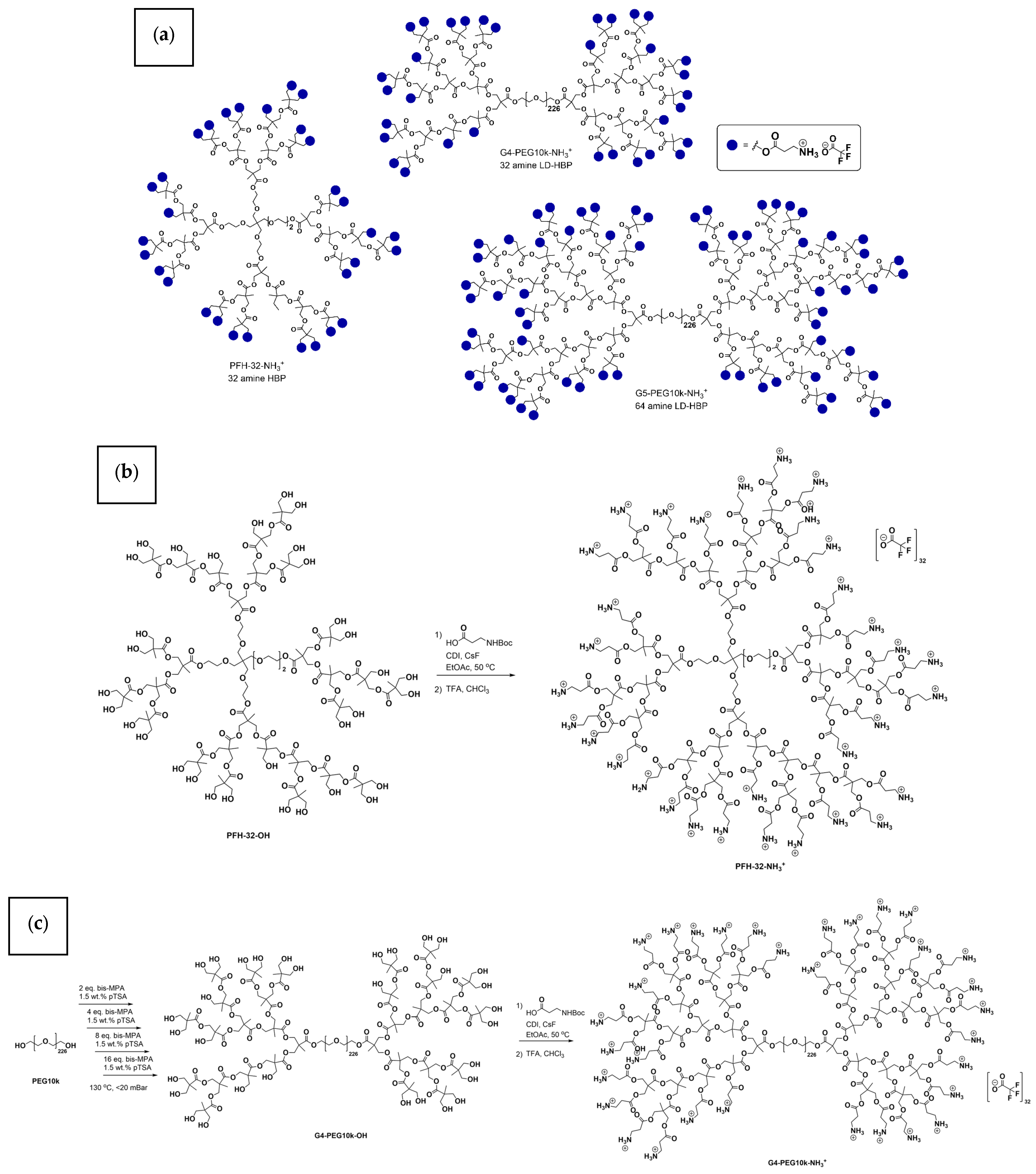
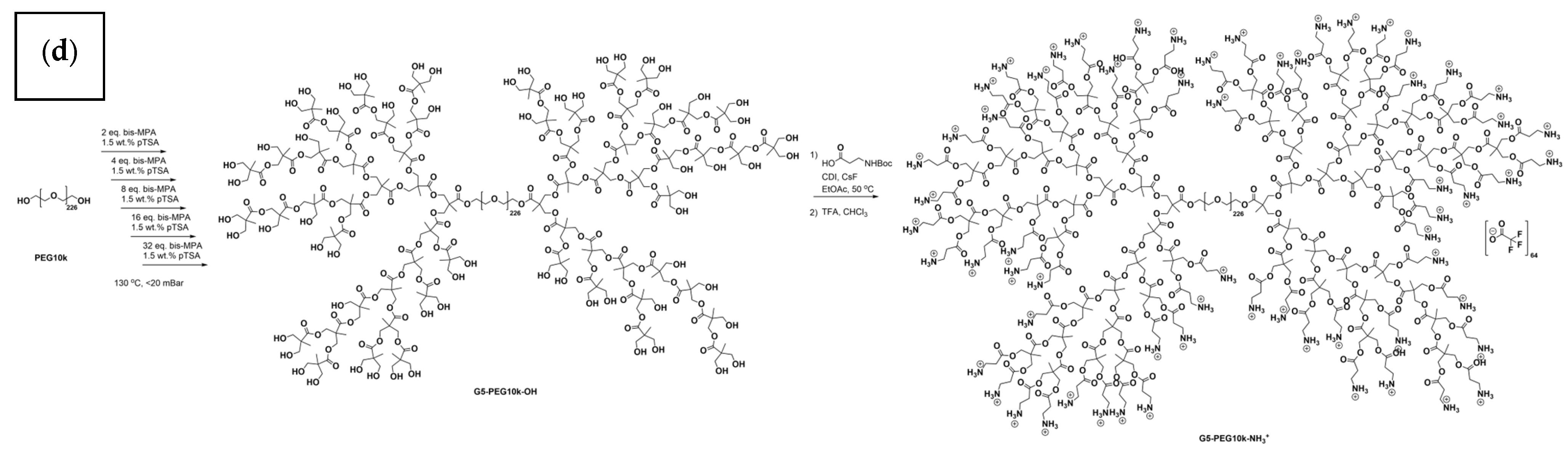
2.1. Synthesis of Hyperbranched Dendritic Polymers
2.2. Solution Preparation for Electrospinning of HBPs
2.3. Electrospinning of Pristine PA6 and Hybrid PA6/HBP Nanofibers
2.4. Characterisation of Nanofibers
2.5. Microbiological Testing
2.5.1. Microbial Testing in Co-Incubation Experiment
2.5.2. Determination of Minimum Inhibitory Concentration (MIC) and Minimum Bactericidal Concentration (MBC)
2.5.3. Antibacterial Activity Evaluation by Adaptation of ISO20645:2005 Textile Fabrics
2.6. Biocompatibility and Cytotoxicity Evaluation
2.6.1. Cell Seeding
2.6.2. Metabolic Activity
2.6.3. Live/Dead (L/D) Assay
2.6.4. Oxidative Stress Measurement
2.6.5. Micronucleus Assay
2.6.6. Comet Assay with BEAS-2B Cell
2.7. Biocompatibility—Human 3D Tissue Models
2.7.1. Evaluation of Reconstructed Human Upper Airway Model (MucilAir™)
2.7.2. Evaluation on Reconstructed Human Skin Model (EpiDerm FT™)
2.7.3. Transepithelial Electrical Resistance (TEER)
2.7.4. Lactate Dehydrogenase (LDH)
2.7.5. Comet Assay with MucilAir™
2.7.6. Gene Expression Analysis (RT-qPCR)
2.8. Filtration Testing According to EN 149:2001
2.9. Statistics
3. Results
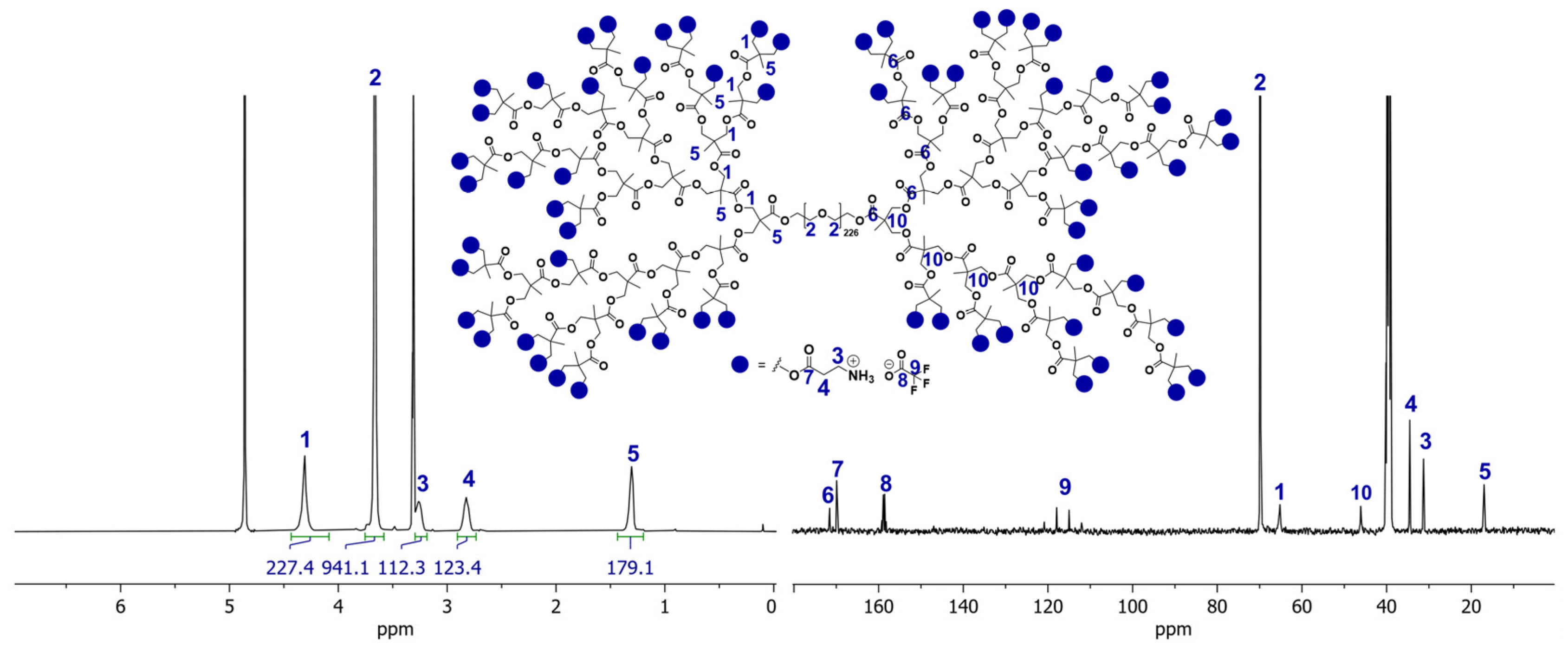
3.1. Characterisation of HBPs
3.2. Antimicrobial Properties of HBP
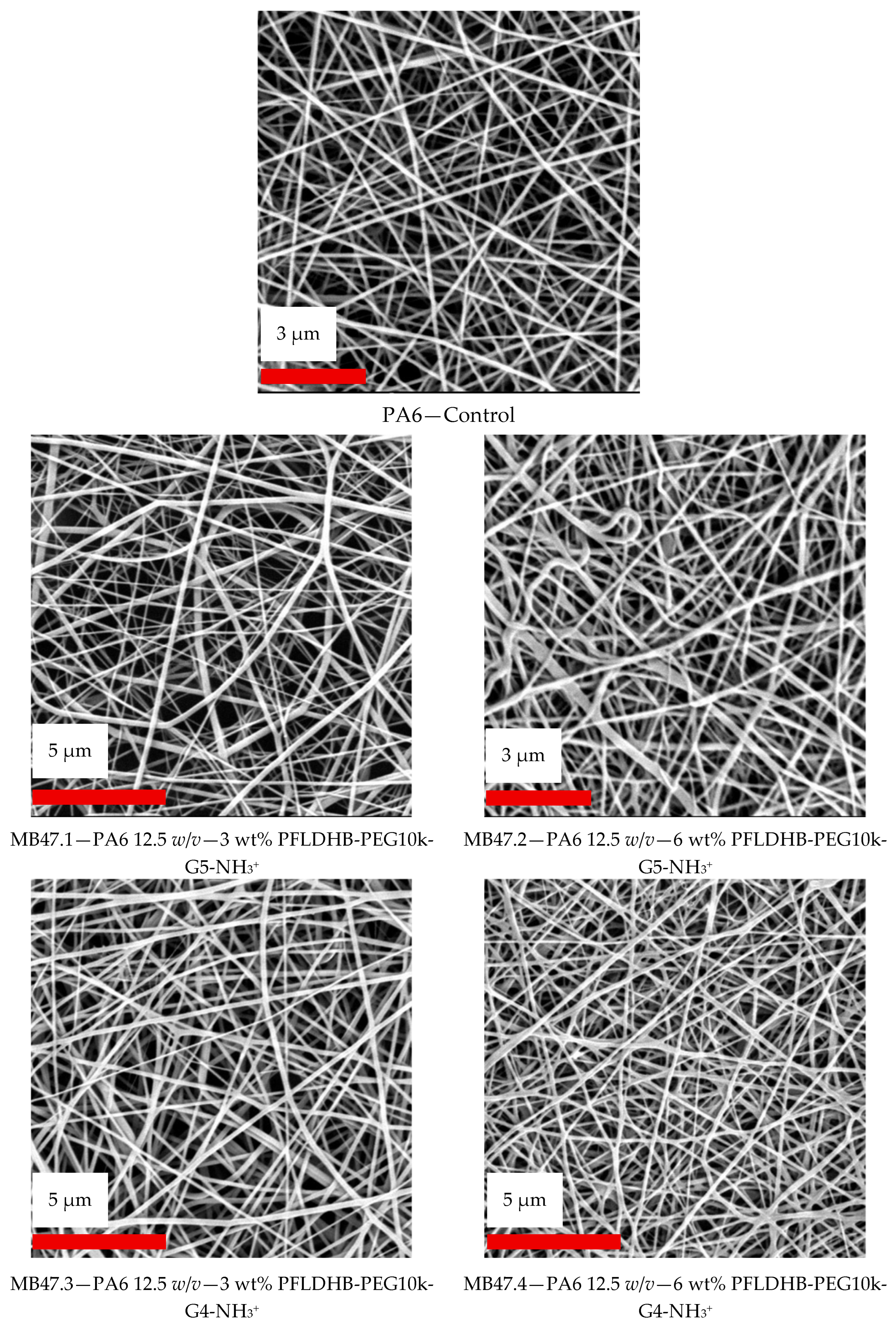
3.3. Electrospinning of Nanofibers with HBPs
3.4. Antimicrobiological Characterisation of HBP Samples
3.5. Evaluation of Biocompatibility and Cellular Toxicity on In Vitro Cell Cultures
3.6. Evaluation of Biocompatibility Using Reconstructed Human Skin and Upper Airway Models
3.7. Evaluation of Filtration Efficacy
4. Discussion
4.1. Public Health Motivation: Pandemics and Air-Pollution Mitigation
4.2. Sustainability Challenge: Disposable PPE Waste and the Need for Reusable/Self-Disinfecting Filters
4.3. Key Innovation: Recycled-PA6, Green Solvent Electrospinning, and FFP3-Grade Performance at Low Pressure Drop
4.4. Structure–Property Rationale: PA6–HBP Compatibility and Amine-Density Driven Bioactivity
4.5. Antibacterial Mechanism: Contact-Active, Non-Diffusion-Mediated Killing
4.6. Positioning Versus Literature and Commercial Media: Polymer-Only Antimicrobial Filters
4.7. Safety-by-Design and Biocompatibility: Minimal Leaching, Low Cytotoxicity, and Advanced Tissue Models
4.8. Translation and Scalability: Industrial Needleless Electrospinning and Techno-Economic Considerations
5. Conclusions
Supplementary Materials
Author Contributions
Funding
Institutional Review Board Statement
Data Availability Statement
Conflicts of Interest
References
- Murray, C.J.; Ikuta, K.S.; Sharara, F.; Swetschinski, L.; Aguilar, G.R.; Gray, A.; Han, C.; Bisignano, C.; Rao, P.; Wool, E.; et al. Global Burden of Bacterial Antimicrobial Resistance in 2019: A Systematic Analysis. Lancet 2022, 399, 629–655. [Google Scholar] [CrossRef] [PubMed]
- O’Neill, J. Tackling Drug-Resistant Infections Globally: Final Report and Recommendations. 2016. Available online: https://amr-review.org/sites/default/files/160525_Final%20paper_with%20cover.pdf (accessed on 12 January 2026).
- Butler, M.S.; Henderson, I.R.; Capon, R.J.; Blaskovich, M.A. Antibiotics in the Clinical Pipeline as of December 2022. J. Antibiot. 2023, 76, 431–473. [Google Scholar] [CrossRef] [PubMed]
- Ho, C.S.; Wong, C.T.; Aung, T.T.; Lakshminarayanan, R.; Mehta, J.S.; Rauz, S.; McNally, A.; Kintses, B.; Peacock, S.J.; de la Fuente-Nunez, C.; et al. Antimicrobial Resistance: A Concise Update. Lancet Microbe 2025, 6, 100947. [Google Scholar] [CrossRef] [PubMed]
- Lemire, J.A.; Harrison, J.J.; Turner, R.J. Antimicrobial Activity of Metals: Mechanisms, Molecular Targets and Applications. Nat. Rev. Microbiol. 2013, 11, 371–384. [Google Scholar] [CrossRef]
- Rai, M.; Yadav, A.; Gade, A. Silver Nanoparticles as a New Generation of Antimicrobials. Biotechnol. Adv. 2009, 27, 76–83. [Google Scholar] [CrossRef]
- Xiao, N.; Li, Y.; Sun, P.; Zhu, P.; Wang, H.; Wu, Y.; Bai, M.; Li, A.; Ming, W. A Comparative Review: Biological Safety and Sustainability of Metal Nanomaterials without and with Machine Learning Assistance. Micromachines 2024, 16, 15. [Google Scholar] [CrossRef]
- Marambio-Jones, C.; Hoek, E.M. A Review of the Antibacterial Effects of Silver Nanomaterials and Potential Implications for Human Health and the Environment. J. Nanoparticle Res. 2010, 12, 1531–1551. [Google Scholar] [CrossRef]
- Valko, M.; Morris, H.; Cronin, M.T.D. Metals, Toxicity and Oxidative Stress. Curr. Med. Chem. 2005, 12, 1161–1208. [Google Scholar] [CrossRef]
- Gottschalk, F.; Sonderer, T.; Scholz, R.W.; Nowack, B. Modeled Environmental Concentrations of Engineered Nanomaterials (TiO2, ZnO, Ag, CNT, Fullerenes) for Different Regions. Environ. Sci. Technol. 2009, 43, 9216–9222. [Google Scholar] [CrossRef]
- Fabrega, J.; Luoma, S.N.; Tyler, C.R.; Galloway, T.S.; Lead, J.R. Silver Nanoparticles: Behaviour and Effects in the Aquatic Environment. Environ. Int. 2011, 37, 517–531. [Google Scholar] [CrossRef]
- Tończyk, A.; Niedziałkowska, K.; Lisowska, K. Ecotoxic Effect of Mycogenic Silver Nanoparticles in Water and Soil Environment. Sci. Rep. 2025, 15, 10815. [Google Scholar] [CrossRef] [PubMed]
- Griffitt, R.J.; Luo, J.; Gao, J.; Bonzongo, J.-C.; Barber, D.S. Effects of Particle Composition and Species on Toxicity of Metallic Nanomaterials in Aquatic Organisms. Environ. Toxicol. Chem. 2008, 27, 1972–1978. [Google Scholar] [CrossRef] [PubMed]
- Rizzello, L.; Pompa, P.P. Nanosilver-Based Antibacterial Drugs and Devices: Mechanisms, Methodological Drawbacks, and Guidelines. Chem. Soc. Rev. 2014, 43, 1501–1518. [Google Scholar] [CrossRef]
- Turner, R.J. The Good, the Bad, and the Ugly of Metals as Antimicrobials. Biometals 2024, 37, 545–559. [Google Scholar] [CrossRef]
- Caldeira, C.; Farcal, R.; Garmendia, A.I.; Mancini, L.; Tosches, D.; Amelio, A.; Rasmussen, K.; Rauscher, H.; Riego, S.J.; Sala, S. Safe and Sustainable by Design Chemicals and Materials-Framework for the Definition of Criteria and Evaluation Procedure for Chemicals and Materials. 2022. Available online: https://publications.jrc.ec.europa.eu/repository/handle/JRC128591 (accessed on 13 January 2026).
- Mech, A.; Gottardo, S.; Amenta, V.; Amodio, A.; Belz, S.; Bøwadt, S.; Drbohlavová, J.; Farcal, L.; Jantunen, P.; Małyska, A. Safe-and Sustainable-by-Design: The Case of Smart Nanomaterials. A Perspective Based on a European Workshop. Regul. Toxicol. Pharmacol. 2022, 128, 105093. [Google Scholar] [CrossRef]
- Mintzer, M.A.; Grinstaff, M.W. Biomedical Applications of Dendrimers: A Tutorial. Chem. Soc. Rev. 2011, 40, 173–190. [Google Scholar] [CrossRef]
- Kostapanou, A.; Chatzipanagiotou, K.-R.; Damilos, S.; Petrakli, F.; Koumoulos, E.P. Safe-and-Sustainable-by-Design Framework:(Re-) Designing the Advanced Materials Lifecycle. Sustainability 2024, 16, 10439. [Google Scholar] [CrossRef]
- Caminade, A.-M.; Yan, D.; Smith, D.K. Dendrimers and Hyperbranched Polymers. Chem. Soc. Rev. 2015, 44, 3870–3873. [Google Scholar] [CrossRef]
- Nederberg, F.; Zhang, Y.; Tan, J.P.; Xu, K.; Wang, H.; Yang, C.; Gao, S.; Guo, X.D.; Fukushima, K.; Li, L.; et al. Biodegradable Nanostructures with Selective Lysis of Microbial Membranes. Nat. Chem. 2011, 3, 409–414. [Google Scholar] [CrossRef]
- Kanai, T.; Thirumoolan, D.; Mohanram, R.; Vetrivel, K.; Basha, K.A. Antimicrobial Activity of Hyperbranched Polymers: Synthesis, Characterization, and Activity Assay Study. J. Bioact. Compat. Polym. 2015, 30, 145–156. [Google Scholar] [CrossRef]
- Fan, Y.; Mohanty, S.; Zhang, Y.; Luchow, M.; Qin, L.; Fortuin, L.; Brauner, A.; Malkoch, M. Dendritic Hydrogels Induce Immune Modulation in Human Keratinocytes and Effectively Eradicate Bacterial Pathogens. J. Am. Chem. Soc. 2021, 143, 17180–17190. [Google Scholar] [CrossRef]
- Kuroda, K.; Caputo, G.A. Antimicrobial Polymers as Synthetic Mimics of Host-defense Peptides. Wiley Interdiscip. Rev. Nanomed. Nanobiotechnol. 2013, 5, 49–66. [Google Scholar] [CrossRef] [PubMed]
- Timofeeva, L.; Kleshcheva, N. Antimicrobial Polymers: Mechanism of Action, Factors of Activity, and Applications. Appl. Microbiol. Biotechnol. 2011, 89, 475–492. [Google Scholar] [CrossRef] [PubMed]
- Svenson, S.; Tomalia, D.A. Dendrimers in Biomedical Applications—Reflections on the Field. Adv. Drug Deliv. Rev. 2012, 64, 102–115. [Google Scholar] [CrossRef]
- Biscari, G.; Fan, Y.; Namata, F.; Fiorica, C.; Malkoch, M.; Palumbo, F.S.; Pitarresi, G. Antibacterial Broad-Spectrum Dendritic/Gellan Gum Hybrid Hydrogels with Rapid Shape-Forming and Self-Healing for Wound Healing Application. Macromol. Biosci. 2023, 23, 2300224. [Google Scholar] [CrossRef]
- Yalcinkaya, F. Preparation of Various Nanofiber Layers Using Wire Electrospinning System. Arab. J. Chem. 2019, 12, 5162–5172. [Google Scholar] [CrossRef]
- Yalcinkaya, F.; Gunduz, A.; Boyraz, E.; Bryjak, M. Chapter 15—Nanofibers for Oil-Water Separation and Coalescing Filtration. In Electrospun and Nanofibrous Membranes; Kargari, A., Matsuura, T., Shirazi, M.M.A., Eds.; Elsevier: Amsterdam, The Netherlands, 2023; pp. 409–432. [Google Scholar]
- Le, B.; Omran, N.; Elnabawy, E.; Hassanin, A.H.; Mahmoud, K.; Shehata, N.; Shyha, I. Exploring Advances in Nanofiber-Based Face Masks: A Comprehensive Review of Mechanical, Electrostatic, and Antimicrobial Functionality Filtration for the Removal of Airborne Particulate Matter and Pathogens. Emergent Mater. 2024, 7, 765–800. [Google Scholar] [CrossRef]
- Podgórski, A.; Bałazy, A.; Gradoń, L. Application of Nanofibers to Improve the Filtration Efficiency of the Most Penetrating Aerosol Particles in Fibrous Filters. Chem. Eng. Sci. 2006, 61, 6804–6815. [Google Scholar] [CrossRef]
- Leung, N.H.; Chu, D.K.; Shiu, E.Y.; Chan, K.-H.; McDevitt, J.J.; Hau, B.J.; Yen, H.-L.; Li, Y.; Ip, D.K.; Peiris, J.M.; et al. Respiratory Virus Shedding in Exhaled Breath and Efficacy of Face Masks. Nat. Med. 2020, 26, 676–680. [Google Scholar] [CrossRef]
- Zhang, S.; Liu, H.; Yin, X.; Yu, J.; Ding, B. Anti-Deformed Polyacrylonitrile/Polysulfone Composite Membrane with Binary Structures for Effective Air Filtration. ACS Appl. Mater. Interfaces 2016, 8, 8086–8095. [Google Scholar] [CrossRef]
- Zhu, M.; Han, J.; Wang, F.; Shao, W.; Xiong, R.; Zhang, Q.; Pan, H.; Yang, Y.; Samal, S.K.; Zhang, F.; et al. Electrospun Nanofibers Membranes for Effective Air Filtration. Macromol. Mater. Eng. 2017, 302, 1600353. [Google Scholar] [CrossRef]
- Ullah, S.; Ullah, A.; Lee, J.; Jeong, Y.; Hashmi, M.; Zhu, C.; Joo, K.I.; Cha, H.J.; Kim, I.S. Reusability Comparison of Melt-Blown vs Nanofiber Face Mask Filters for Use in the Coronavirus Pandemic. ACS Appl. Nano Mater. 2020, 3, 7231–7241. [Google Scholar] [CrossRef] [PubMed]
- Li, D.; Xia, Y. Electrospinning of Nanofibers: Reinventing the Wheel? Adv. Mater. 2004, 16, 1151–1170. [Google Scholar] [CrossRef]
- Deitzel, J.M.; Kleinmeyer, J.; Harris, D.E.A.; Tan, N.B. The Effect of Processing Variables on the Morphology of Electrospun Nanofibers and Textiles. Polymer 2001, 42, 261–272. [Google Scholar] [CrossRef]
- Yalcinkaya, B.; Buzgo, M. A Guide for Industrial Needleless Electrospinning of Synthetic and Hybrid Nanofibers. Polymers 2025, 17, 3019. [Google Scholar] [CrossRef]
- Yalcinkaya, F.; Yalcinkaya, B.; Jirsak, O. Dependent and Independent Parameters of Needleless Electrospinning. Electrospinning–Mater. Tech. Biomed. Appl. 2016, 67–93. [Google Scholar] [CrossRef]
- Jirsak, O.; Petrik, S. Recent Advances in Nanofibre Technology: Needleless Electrospinning. Int. J. Nanotechnol. 2012, 9, 836–845. [Google Scholar] [CrossRef]
- Keirouz, A.; Wang, Z.; Reddy, V.S.; Nagy, Z.K.; Vass, P.; Buzgo, M.; Ramakrishna, S.; Radacsi, N. The History of Electrospinning: Past, Present, and Future Developments. Adv. Mater. Technol. 2023, 8, 2201723. [Google Scholar] [CrossRef]
- Li, K.; Feng, G.; Chen, T.; Zhao, H. Research of Electret Air Filter: A Review. Polym. Adv. Technol. 2024, 35, e6454. [Google Scholar] [CrossRef]
- Naragund, V.S.; Panda, P. Electrospun Nanofiber-Based Respiratory Face Masks—A Review. Emergent Mater. 2022, 5, 261–278. [Google Scholar] [CrossRef]
- Ahmed, F.E.; Lalia, B.S.; Hashaikeh, R. A Review on Electrospinning for Membrane Fabrication: Challenges and Applications. Desalination 2015, 356, 15–30. [Google Scholar] [CrossRef]
- M07|Methods for Dilution Antimicrobial Susceptibility Tests for Bacteria That Grow Aerobically. Available online: https://clsi.org/shop/standards/m07/ (accessed on 16 January 2026).
- ISO 20645:2017; Textile Fabrics—Determination of Antibacterial Activity—Agar Diffusion Plate Test. International Organization for Standardization (ISO): Geneva, Switzerland, 2017.
- Vojtisek-Lom, M.; Pechout, M.; Macoun, D.; Rameswaran, R.; Praharaj, K.K.; Cervena, T.; Topinka, J.; Rossner, P. Assessing Exhaust Toxicity with Biological Detector: Configuration of Portable Air-Liquid Interface Human Lung Cell Model Exposure System, Sampling Train and Test Conditions. SAE Int. J. Adv. Curr. Pract. Mobil. 2019, 2, 520–534. [Google Scholar] [CrossRef]
- Vojtisek-Lom, M.; Dittrich, L.; Pechout, M.; Cervena, T.; Vimrova, A.; Sikorova, J.; Zavodna, T.; Ondracek, J.; Aakko-Saksa, P.; Topinka, J.; et al. Portable Emissions Toxicity System: Evaluating the Toxicity of Emissions or Polluted Air by Exposure of Cell Cultures at Air-Liquid Interface in a Compact Field-Deployable Setup. Sci. Total Environ. 2025, 959, 178010. [Google Scholar] [CrossRef] [PubMed]
- EN 149:2001+A1:2009; Respiratory Protective Devices—Filtering Half Masks to Protect Against Particles—Requirements, Testing, Marking. European Committee for Standardization: Brussels, Belgium, 2009.
- Malkoch, M.; Malmström, E.; Hult, A. Rapid and Efficient Synthesis of Aliphatic Ester Dendrons and Dendrimers. Macromolecules 2002, 35, 8307–8314. [Google Scholar] [CrossRef]
- Tew, G.N.; Scott, R.W.; Klein, M.L.; DeGrado, W.F. De Novo Design of Antimicrobial Polymers, Foldamers, and Small Molecules: From Discovery to Practical Applications. Acc. Chem. Res. 2010, 43, 30–39. [Google Scholar] [CrossRef] [PubMed]
- Zhu, J.; Guo, Y.; Yao, L.; Pan, G.; Zhang, D.; Yang, J. Preparation and Property Analysis of Antibacterial Fiber Membranes Based on Hyperbranched Polymer Quaternary Ammonium Salts. Materials 2024, 17, 3761. [Google Scholar] [CrossRef]
- Fauzi, A.; Hapidin, D.A.; Munir, M.M.; Iskandar, F.; Khairurrijal, K. A Superhydrophilic Bilayer Structure of a Nylon 6 Nanofiber/Cellulose Membrane and Its Characterization as Potential Water Filtration Media. RSC Adv. 2020, 10, 17205–17216. [Google Scholar] [CrossRef]
- Madrid, A.; Pérez, E.; Vicente, M.Á.; Rives, V.; Trujillano, R. Fast and Clean Synthesis of Nylon-6/Synthetic Saponite Nanocomposites. Materials 2021, 15, 163. [Google Scholar] [CrossRef]
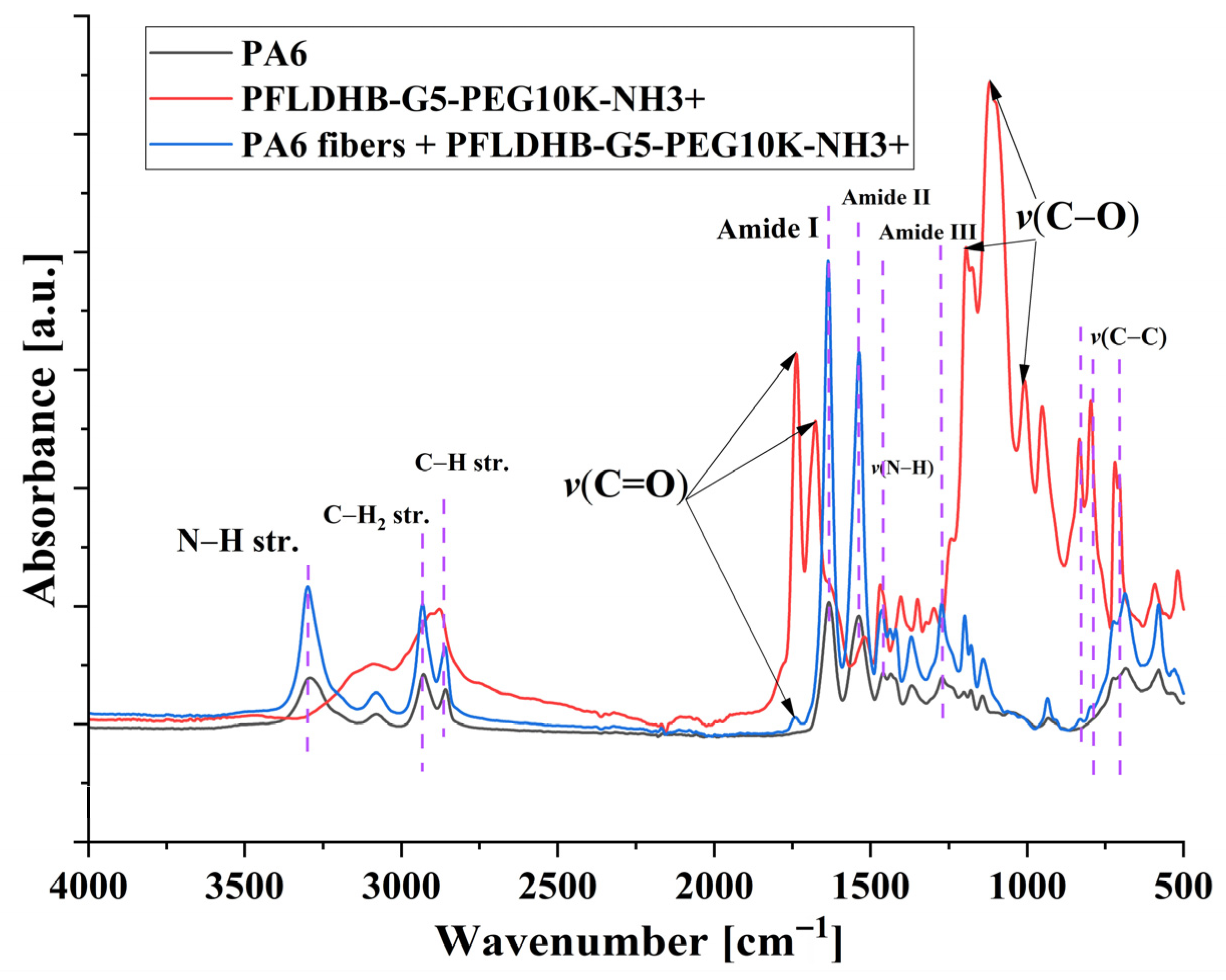
- Žagar, E.; Grdadolnik, J. An Infrared Spectroscopic Study of H-Bond Network in Hyperbranched Polyester Polyol. J. Mol. Struct. 2003, 658, 143–152. [Google Scholar] [CrossRef]
- IR: Amines. Available online: https://www.orgchemboulder.com/Spectroscopy/irtutor/aminesir.shtml?utm_source=chatgpt.com (accessed on 16 January 2026).
- Winnicka, K.; Wroblewska, M.; Wieczorek, P.; Sacha, P.T.; Tryniszewska, E.A. The Effect of PAMAM Dendrimers on the Antibacterial Activity of Antibiotics with Different Water Solubility. Molecules 2013, 18, 8607–8617. [Google Scholar] [CrossRef]
- van de Lagemaat, M.; Grotenhuis, A.; van de Belt-Gritter, B.; Roest, S.; Loontjens, T.J.; Busscher, H.J.; van der Mei, H.C.; Ren, Y. Comparison of Methods to Evaluate Bacterial Contact-Killing Materials. Acta Biomater. 2017, 59, 139–147. [Google Scholar] [CrossRef] [PubMed]
- Mitwalli, H.; Alsahafi, R.; Balhaddad, A.A.; Weir, M.D.; Xu, H.H.; Melo, M.A.S. Emerging Contact-Killing Antibacterial Strategies for Developing Anti-Biofilm Dental Polymeric Restorative Materials. Bioengineering 2020, 7, 83. [Google Scholar] [CrossRef] [PubMed]
- ISO 10993-5:2009; Biological Evaluation of Medical Devices—Part 5: Tests for In Vitro Cytotoxicity. International Organization for Standardization (ISO): Geneva, Switzerland, 2009.
- Persoon, I.F.; Stankiewicz, N.; Smith, A.; de Soet, J.; Volgenant, C. A Review of Respiratory Protection Measures Recommended in Europe for Dental Procedures during the COVID-19 Pandemic. J. Hosp. Infect. 2020, 106, 330–331. [Google Scholar] [CrossRef] [PubMed]
- Saint-Pierre Contreras, G.; Conei Valencia, D.; Lizama, L.; Vargas Zuñiga, D.; Avendaño Carvajal, L.F.; Ampuero Llanos, S. An Old Acquaintance: Could Adenoviruses Be Our next Pandemic Threat? Viruses 2023, 15, 330. [Google Scholar] [CrossRef]
- Manno, M.; Pavia, G.; Gigliotti, S.; Pantanella, M.; Barreca, G.S.; Peronace, C.; Gallo, L.; Trimboli, F.; Colosimo, E.; Lamberti, A.G.; et al. Respiratory Virus Prevalence Across Pre-, During-, and Post-SARS-CoV-2 Pandemic Periods. Viruses 2025, 17, 1040. [Google Scholar] [CrossRef]
- Phuong, P.T.; Wijayaratne, G.; Bodinayake, C.K.; Oguzie, J.U.; Nguyen-Tien, T.; Marushchak, L.V.; Rodriguez, J.; Trujillo-Vargas, C.M.; Shittu, I.; Nga, P.T. Diverse Respiratory Viruses Detected among Hospitalized Patients with Pneumonia in Sri Lanka and Vietnam. IJID Reg. 2025, 17, 100757. [Google Scholar] [CrossRef]
- Yu, W.; Xu, R.; Ye, T.; Abramson, M.J.; Morawska, L.; Jalaludin, B.; Johnston, F.H.; Henderson, S.B.; Knibbs, L.D.; Morgan, G.G.; et al. Estimates of Global Mortality Burden Associated with Short-Term Exposure to Fine Particulate Matter (PM2.5). Lancet Planet. Health 2024, 8, e146–e155. [Google Scholar] [CrossRef]
- Mao, Q.; Zhu, X.; Zhang, X.; Kong, Y. Effect of Air Pollution on the Global Burden of Cardiovascular Diseases and Forecasting Future Trends of the Related Metrics: A Systematic Analysis from the Global Burden of Disease Study 2021. Front. Med. 2024, 11, 1472996. [Google Scholar] [CrossRef]
- Jat, R.; Ghude, S.D.; Govardhan, G.; Kumar, R.; Yadav, P.P.; Sharma, P.; Kalita, G.; Debnath, S.; Kulkarni, S.H.; Chate, D.M.; et al. Effectiveness of Respiratory Face Masks in Reducing Acute PM2.5 Pollution Exposure during Peak Pollution Period in Delhi. Sci. Total Environ. 2024, 943, 173787. [Google Scholar] [CrossRef]
- Watson, R.; Oldfield, M.; Bryant, J.A.; Riordan, L.; Hill, H.J.; Watts, J.A.; Alexander, M.R.; Cox, M.J.; Stamataki, Z.; Scurr, D.J.; et al. Efficacy of Antimicrobial and Anti-Viral Coated Air Filters to Prevent the Spread of Airborne Pathogens. Sci. Rep. 2022, 12, 2803. [Google Scholar] [CrossRef]
- Lyu, L.; Bagchi, M.; Markoglou, N.; An, C.; Peng, H.; Bi, H.; Yang, X.; Sun, H. Towards Environmentally Sustainable Management: A Review on the Generation, Degradation, and Recycling of Polypropylene Face Mask Waste. J. Hazard. Mater. 2024, 461, 132566. [Google Scholar] [CrossRef] [PubMed]
- Adepu, S.; Siju, C.; Kaki, S.; Bagannagari, S.; Khandelwal, M.; Bharti, V.K. Review on Need for Designing Sustainable and Biodegradable Face Masks: Opportunities for Nanofibrous Cellulosic Filters. Int. J. Biol. Macromol. 2024, 283, 137627. [Google Scholar] [CrossRef] [PubMed]
- Sun, Z.; Kong, Y.; Lan, L.; Meng, Y.; You, T.; Pauer, R.; Wang, H.; Zhang, Y.; Tang, M.; Demello, A.; et al. A High Efficiency, Low Resistance Antibacterial Filter Formed by Dopamine-Mediated In Situ Deposition of Silver onto Glass Fibers. Small 2024, 20, 2301074. [Google Scholar] [CrossRef] [PubMed]
- Li, H.; Cai, Q.; Ming, X.; Yan, G.; Chen, J.; Li, Z.; Wang, L.; Wu, Y.; Wang, X. Self-Feeding Needleless Electrospinning of Cross-Linked Nanofibrous Materials for High-Performance Air Filtration. Small 2025, 21, 2505585. [Google Scholar] [CrossRef]
- Jiang, H.; Li, K.; Graham, D.E.; Hollander, A.; Paranthaman, M.P.; Muneeshwaran, M.; Liu, X.; Theodore, M.; Aytug, T.; An, K.; et al. Quaternary Ammonium Salt Coated Air Filter for Bioaerosol Removal from Building Indoor Air. Build. Environ. 2024, 250, 111158. [Google Scholar] [CrossRef]
- Kim, S.; Chung, J.; Lee, S.H.; Yoon, J.H.; Kweon, D.-H.; Chung, W.-J. Tannic Acid-Functionalized HEPA Filter Materials for Influenza Virus Capture. Sci. Rep. 2021, 11, 979. [Google Scholar] [CrossRef]
- Zhou, Y.; Jiang, Y.; Zhang, Y.; Tan, L. Improvement of Antibacterial and Antifouling Properties of a Cellulose Acetate Membrane by Surface Grafting Quaternary Ammonium Salt. ACS Appl. Mater. Interfaces 2022, 14, 38358–38369. [Google Scholar] [CrossRef]
- Demir, B.; Cerkez, I.; Worley, S.; Broughton, R.; Huang, T.-S. N-Halamine-Modified Antimicrobial Polypropylene Nonwoven Fabrics for Use against Airborne Bacteria. ACS Appl. Mater. Interfaces 2015, 7, 1752–1757. [Google Scholar] [CrossRef]
- Zhang, H.; Liu, N.; Zeng, Q.; Liu, J.; Zhang, X.; Ge, M.; Zhang, W.; Li, S.; Fu, Y.; Zhang, Y. Design of Polypropylene Electret Melt Blown Nonwovens with Superior Filtration Efficiency Stability through Thermally Stimulated Charging. Polymers 2020, 12, 2341. [Google Scholar] [CrossRef]
- Fadare, O.O.; Okoffo, E.D. COVID-19 Face Masks: A Potential Source of Microplastic Fibers in the Environment. Sci. Total Environ. 2020, 737, 140279. [Google Scholar] [CrossRef]
- Ou, Q.; Pei, C.; Kim, S.C.; Abell, E.; Pui, D.Y. Evaluation of Decontamination Methods for Commercial and Alternative Respirator and Mask Materials–View from Filtration Aspect. J. Aerosol Sci. 2020, 150, 105609. [Google Scholar] [CrossRef] [PubMed]
- Holder, H.; Aningalan, A.M.; Walker, S.; Cato, K.; Gannon, B.R. Feasibility of Nasal Bridge Pressure Injury Prevention Using a Protective Dressing and the Halyard Fluidshield® N95 Mask in a COVID-positive Environment. Int. Wound J. 2023, 20, 278–284. [Google Scholar] [CrossRef] [PubMed]
- Grinshpun, S.A.; Koehler, R.H.; Niu, X.; Yermakov, M. Assessing the Fit of N95 Filtering Facepiece Respirators Fitted with an Ear Loop Strap System: A Pilot Study. Ann. Work. Expo. Health 2023, 67, 50–58. [Google Scholar]
- Garcia-Haro, M.; Valdés, C.B.; Vicente-Guijarro, J.d.; Pérez, C.D.-A.; Fabregate-Fuente, M.; Moreno-Nunez, P.; Aranaz-Andrés, J.M. Decontamination of Filtering Facepiece Respirators Using a Low-Temperature-Steam–2%-Formaldehyde Sterilization Process during a Pandemic: A Safe Alternative for Re-Use. J. Hosp. Infect. 2021, 108, 113–119. [Google Scholar] [CrossRef]
- Schrimpf, E.; Eaton, C.; Nam, C.L. Ergonomic Design and Development of a Reusable Facemask: ASTM Level 3. In Proceedings of the International Textile and Apparel Association Annual Conference Proceedings; Iowa State University Digital Press: Ames, IA, USA, 2020; Volume 77. [Google Scholar]
- Stagi, L.; De Forni, D.; Malfatti, L.; Caboi, F.; Salis, A.; Poddesu, B.; Cugia, G.; Lori, F.; Galleri, G.; Innocenzi, P. Effective SARS-CoV-2 Antiviral Activity of Hyperbranched Polylysine Nanopolymers. Nanoscale 2021, 13, 16465–16476. [Google Scholar] [CrossRef]
- Safe and Sustainable by Design Antimicrobial Nanocoatings. Available online: https://link.springer.com/collections/bcbdjjgecc (accessed on 27 November 2025).
- Granskog, V.; Andrén, O.C.; Cai, Y.; González-Granillo, M.; Felländer-Tsai, L.; von Holst, H.; Haldosen, L.; Malkoch, M. Linear Dendritic Block Copolymers as Promising Biomaterials for the Manufacturing of Soft Tissue Adhesive Patches Using Visible Light Initiated Thiol–Ene Coupling Chemistry. Adv. Funct. Mater. 2015, 25, 6596–6605. [Google Scholar] [CrossRef]
- Nel, A. Air Pollution-Related Illness: Effects of Particles. Science 2005, 308, 804–806. [Google Scholar] [CrossRef]
- Pisoschi, A.M.; Pop, A. The Role of Antioxidants in the Chemistry of Oxidative Stress: A Review. Eur. J. Med. Chem. 2015, 97, 55–74. [Google Scholar] [CrossRef]
- Arias-Pérez, R.D.; Taborda, N.A.; Gómez, D.M.; Narvaez, J.F.; Porras, J.; Hernandez, J.C. Inflammatory Effects of Particulate Matter Air Pollution. Environ. Sci. Pollut. Res. 2020, 27, 42390–42404. [Google Scholar] [CrossRef]





| Inhibition (mm) | Growth | Description | Evaluation |
|---|---|---|---|
| >1 | No | Inhibition zone above 1 mm, no growth | Satisfactory effect |
| 1–0 | No | Inhibition zone up to 1 mm, no growth | |
| 0 | No | No inhibition zone, no growth | |
| 0 | Light | No inhibition zone, limited growth (few colonies) | Significant effect |
| 0 | Moderate | No inhibition zone, reduced growth | No significant effect |
| 0 | High | No difference, with the control |
| Sample ID | Polymeric Architecture | Pseudo-Generation | End Groups | No. of End Groups (Theo.) | No. of End Groups (NMR) | Mntheo [g mol−1] | MnNMR [g mol−1] |
|---|---|---|---|---|---|---|---|
| PFH-32-NH3+ | HBP | 3 | Amine | 32 | 31.4 | 9540 | 9460 |
| PFLDHB-G4-PEG10k-NH3+ | LD-HBP | 4 | Amine | 32 | 28.5 | 19,400 | 18,600 |
| PFLDHB-G5-PEG10k-NH3+ | LD-HBP | 5 | Amine | 64 | 61.7 | 29,100 | 28,100 |
| PFLDHB-G5-PEG10k-OH | LD-HBP | 5 | Hydroxyl | 64 | 61.5 | 17,200 | 16,900 |
| Concentration (%) | ||||
|---|---|---|---|---|
| S. aureus | E. coli | |||
| Sample ID | MIC | MBC | MIC | MBC |
| PFH-32-NH3+ | >0.8 | 0.8 | 0.08 | 0.008 |
| PFLDHB-G4-PEG10k-NH3+ | >0.8 | 0.8 | 0.4 | 0.08 |
| PFLDHB-G5-PEG10k-NH3+ | 0.8 | 0.4 | 0.8 | 0.4 |
| PFLDHB-G5-PEG10k-OH | >0.8 | >0.8 | >0.8 | >0.8 |
| Sample Code | PA6 Concentration | Type of HBP and Concentration | Winding Speed |
|---|---|---|---|
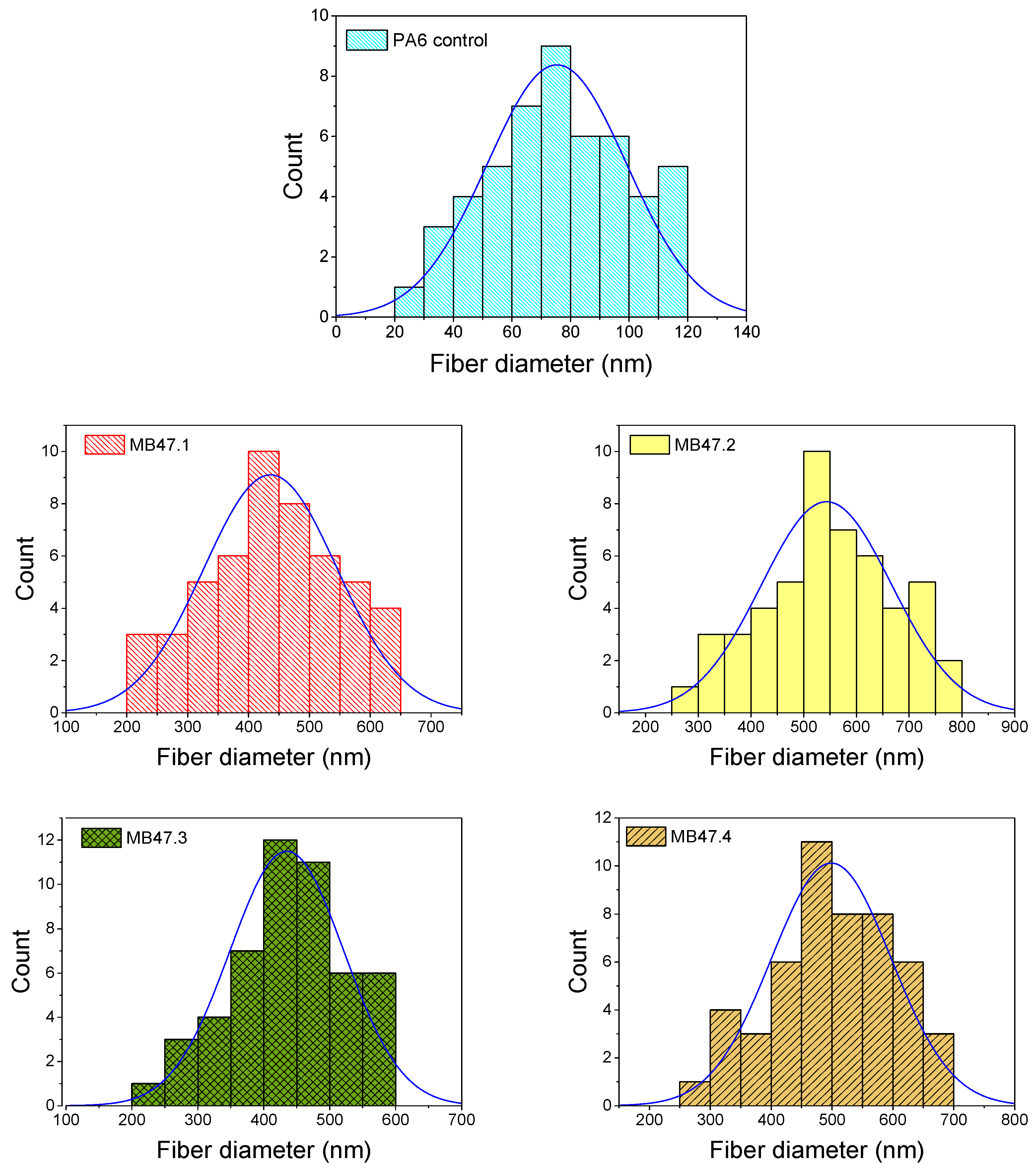
| PA6-Control | 12.5 w/v | - | 1 mm/s |
| MB47.1 | 12.5 w/v | 3 wt.% PFLDHB-G5-PEG10k-NH3+ | 1 mm/s |
| MB47.2 | 12.5 w/v | 6 wt.% PFLDHB-G5-PEG10k-NH3+ | 1 mm/s |
| MB47.3 | 12.5 w/v | 3 wt.% PFLDHB-G4-PEG10k-NH3+ | 1 mm/s |
| MB47.4 | 12.5 w/v | 6 wt.% PFLDHB-G4-PEG10k-NH3+ | 1 mm/s |
| Sample ID | Nanofiber Composition | Initial Bacterial Concentration (CFU/mL) | Final Bacterial Concentration (CFU/mL) | Exposure Time (h) | Reduction (%) |
|---|---|---|---|---|---|
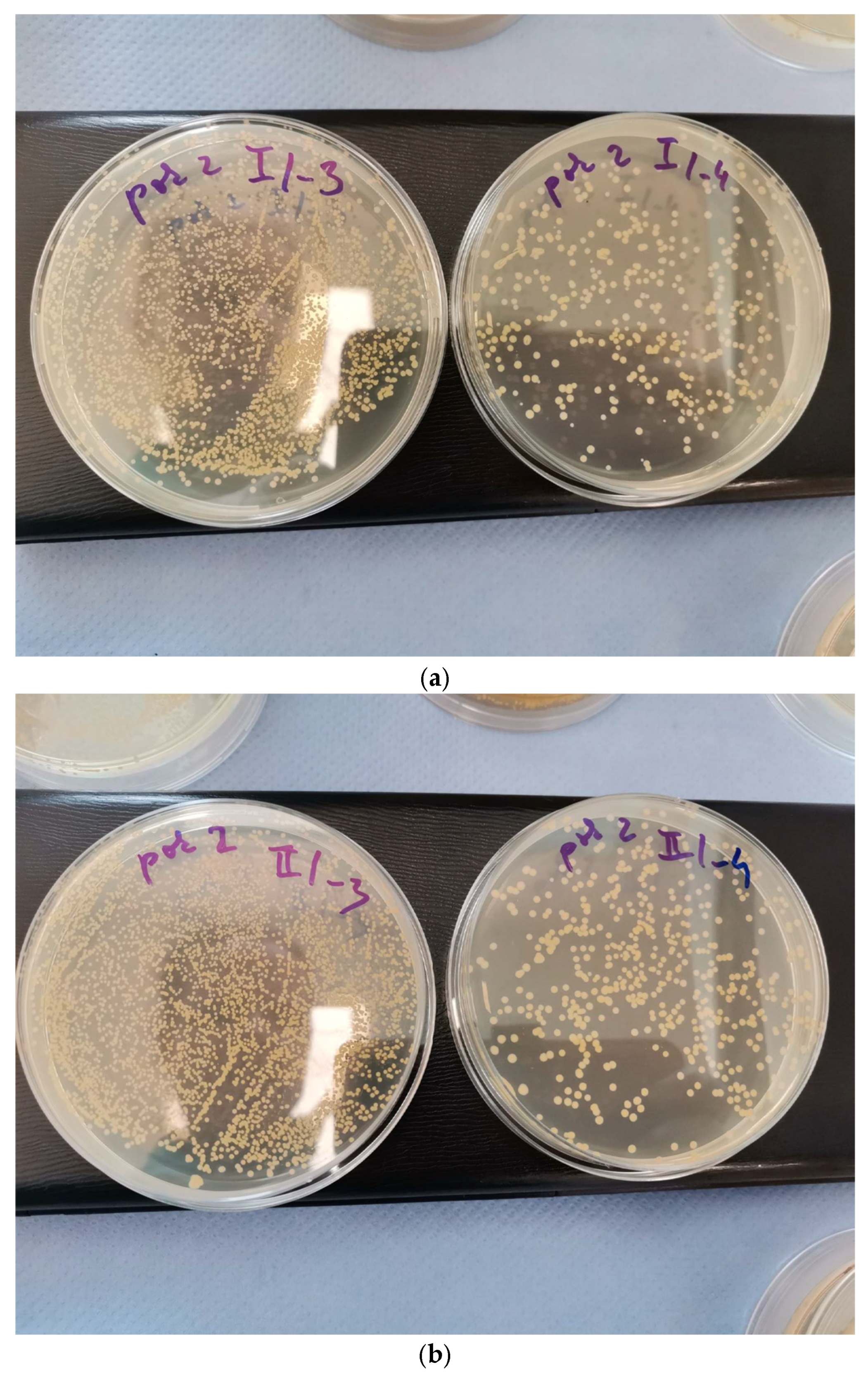
| MB47.2 | PA6 + 6 wt.% PFLDHB-G5-PEG10k-NH3+ | 1.16 × 10⁸ | 3.0 × 10⁷ | 2 | 74.1% |
| MB47.4 | PA6 + 6 wt.% PFLDHB-G4-PEG10k-NH3+ | 1.16 × 10⁸ | 5.08 × 10⁷ | 2 | 56.2% |
| EpiDerm FT™ | MucilAir™ | ||||||||
|---|---|---|---|---|---|---|---|---|---|
| MB47.2 | MB47.4 | MB47.2 | MB47.4 | ||||||
| FC | p-Value | FC | p-Value | FC | p-Value | FC | p-Value | ||
| IL-6 | 24 h | 0.644 | 0.085 | 0.884 | 0.201 | 0.539 | 0.022 | 0.699 | 0.021 |
| 48 h | 1.266 | 0.275 | 1.339 | 0.206 | |||||
| TNFalfa | 24 h | 0.874 | 0.271 | 1.141 | 0.647 | 0.632 | 0.053 | 1.047 | 0.630 |
| 48 h | 0.992 | 0.707 | 0.865 | 0.172 | |||||
| PTGS2 | 24 h | 0.951 | 0.205 | 1.100 | 0.290 | 0.670 | 0.007 | 1.165 | 0.136 |
| 48 h | 1.342 | 0.157 | 1.541 | 0.054 | |||||
| SOD1 | 24 h | 0.851 | 0.289 | 0.964 | 0.545 | 1.355 | 0.001 | 1.119 | 0.177 |
| 48 h | 1.145 | 0.619 | 0.990 | 0.694 | |||||
| CAT | 24 h | 1.089 | 0.283 | 1.218 | 0.112 | 1.198 | 0.026 | 1.022 | 0.881 |
| 48 h | 1.238 | 0.077 | 1.196 | 0.137 | |||||
| OGG1 | 24 h | 0.754 | 0.041 | 0.772 | 0.042 | 1.206 | 0.004 | 1.050 | 0.517 |
| 48 h | 0.996 | 0.759 | 1.040 | 0.862 | |||||
| BCL2 | 24 h | 0.558 | 0.052 | 0.792 | 0.148 | 1.120 | 0.400 | 0.837 | 0.175 |
| 48 h | 1.284 | 0.250 | 0.995 | 0.724 | |||||
| BAX | 24 h | 0.637 | 0.005 | 0.768 | 0.028 | 1.068 | 0.378 | 1.203 | 0.101 |
| 48 h | 1.011 | 0.975 | 1.003 | 0.903 | |||||
| tp53 | 24 h | 0.951 | 0.683 | 1.010 | 0.964 | 0.941 | 0.500 | 1.030 | 0.983 |
| 48 h | 1.295 | 0.129 | 1.085 | 0.786 | |||||
| Sample Code | Composition | Measurement 1 | Measurement 2 | Measurement 3 | |||
|---|---|---|---|---|---|---|---|
| Pressure Drop (mmH2O) | Filtration Efficiency (&) | Pressure Drop (mmH2O) | Filtration Efficiency (&) | Pressure Drop (mmH2O) | Filtration Efficiency (&) | ||
| Control | PA6 | 37.69 | 99.98 | 34.40 | 99.95 | 36.42 | 99.97 |
| MB47.1 | PA6 + 3 wt.% PFLDHB PEG10k-G5-NH3 | 52.71 | 99.995 | 56.71 | 99.998 | 51.22 | 99.998 |
| MB47.2 | PA6 + 6 wt.% PFLDHB PEG10k-G5-NH3 | 36.32 | 99.89 | 49.53 | 99.98 | 47.97 | 99.95 |
| MB47.3 | PA6 + 3 wt.% PFLDHB PEG10k-G4-NH3 | 37.65 | 99.79 | 41.26 | 99.90 | 38.64 | 99.81 |
| MB47.4 | PA6 + 6 wt.% PFLDHB PEG10k-G4-NH3 | 48.58 | 99.92 | 48.08 | 99.91 | 37.65 | 99.89 |
| Product/Media | Manufacturer | Filtration Efficiency | Pressure Drop | Antibacterial/Antiviral |
|---|---|---|---|---|
| 1820S Splash-Resistant Surgical Mask [79] | 3M | 99.64 @ 0.3 µm | 23.92 Pa/cm2 | No intrinsic antibacterial agent |
| FLUIDSHIELD Level 3 [80] | HALYARD | BFE 99.8%; PFE 98.9% @ 0.1 µm | 29.42 Pa/cm2 | No antibacterial claim |
| DC365 Surgical N95 Respirator [81] | Honeywell | 95% @ 0.3 µm | Inhalation < 343 Pa Exhalation < 245 Pa | No antibacterial property |
| X-plore 1720 (FFP2) family [82] | Dräger | NaCl: 94%; Paraffin oil: 94% | Inhalation: @ 30 L/min 70 Pa; @ 95 L/min 240 Pa. Exhalation: @ 160 L/min 300 Pa | No antibacterial property |
| ASTM Level 3 procedure mask [83] | Medline | BFE ≥ 99%; PFE > 99% | 58.84 Pa/cm2 | No antibacterial property |
Disclaimer/Publisher’s Note: The statements, opinions and data contained in all publications are solely those of the individual author(s) and contributor(s) and not of MDPI and/or the editor(s). MDPI and/or the editor(s) disclaim responsibility for any injury to people or property resulting from any ideas, methods, instructions or products referred to in the content. |
© 2026 by the authors. Licensee MDPI, Basel, Switzerland. This article is an open access article distributed under the terms and conditions of the Creative Commons Attribution (CC BY) license.
Share and Cite
Buzgo, M.; Yalcinkaya, B.; Doupník, M.; Žižková, R.; Rockova, V.; Vrbova, K.; Sobotkova, M.; Milcova, A.; Vimrova, A.; Šíma, M.; et al. Hyperbranched Polymer Dendrimers Embedded in Electrospun Nanofibers for Safe and Sustainable Antibacterial Filtration Materials. Polymers 2026, 18, 374. https://doi.org/10.3390/polym18030374
Buzgo M, Yalcinkaya B, Doupník M, Žižková R, Rockova V, Vrbova K, Sobotkova M, Milcova A, Vimrova A, Šíma M, et al. Hyperbranched Polymer Dendrimers Embedded in Electrospun Nanofibers for Safe and Sustainable Antibacterial Filtration Materials. Polymers. 2026; 18(3):374. https://doi.org/10.3390/polym18030374
Chicago/Turabian StyleBuzgo, Matej, Baturalp Yalcinkaya, Miroslav Doupník, Radmila Žižková, Viktorie Rockova, Kristyna Vrbova, Michaela Sobotkova, Alena Milcova, Anezka Vimrova, Michal Šíma, and et al. 2026. "Hyperbranched Polymer Dendrimers Embedded in Electrospun Nanofibers for Safe and Sustainable Antibacterial Filtration Materials" Polymers 18, no. 3: 374. https://doi.org/10.3390/polym18030374
APA StyleBuzgo, M., Yalcinkaya, B., Doupník, M., Žižková, R., Rockova, V., Vrbova, K., Sobotkova, M., Milcova, A., Vimrova, A., Šíma, M., Rossner, P., Godfrey, J., Costa, P. F., Fahmi, A., Nirwan, V. P., Martinez, T., & Filová, E. (2026). Hyperbranched Polymer Dendrimers Embedded in Electrospun Nanofibers for Safe and Sustainable Antibacterial Filtration Materials. Polymers, 18(3), 374. https://doi.org/10.3390/polym18030374