Effect of Different Luting Protocols on the Bond Strength of Fiber-Reinforced CAD/CAM Blocks

 ,
,  , and
, and 
Abstract
1. Introduction
2. Materials and Methods
2.1. Specimen Preparation
2.2. Bonding Protocols
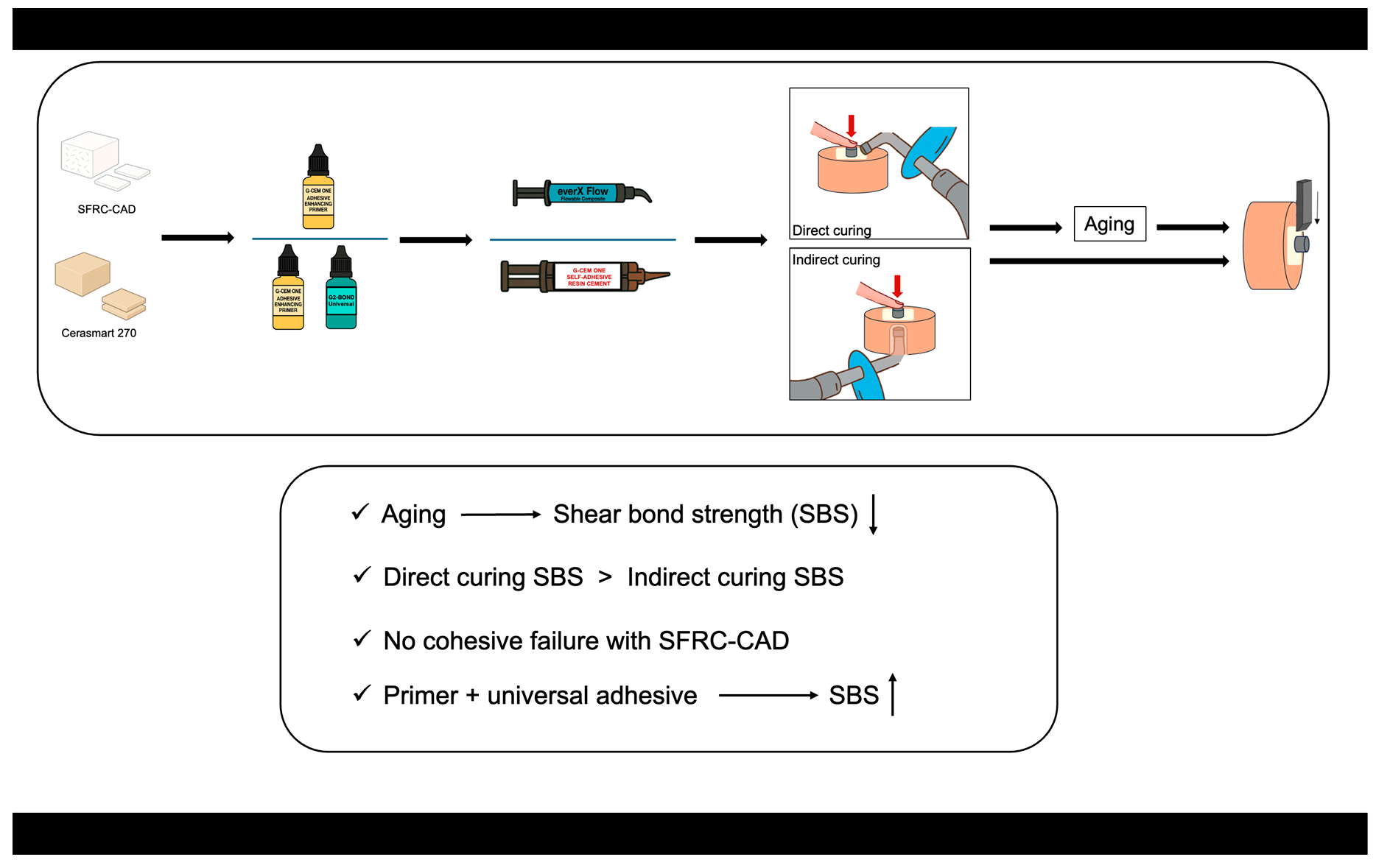
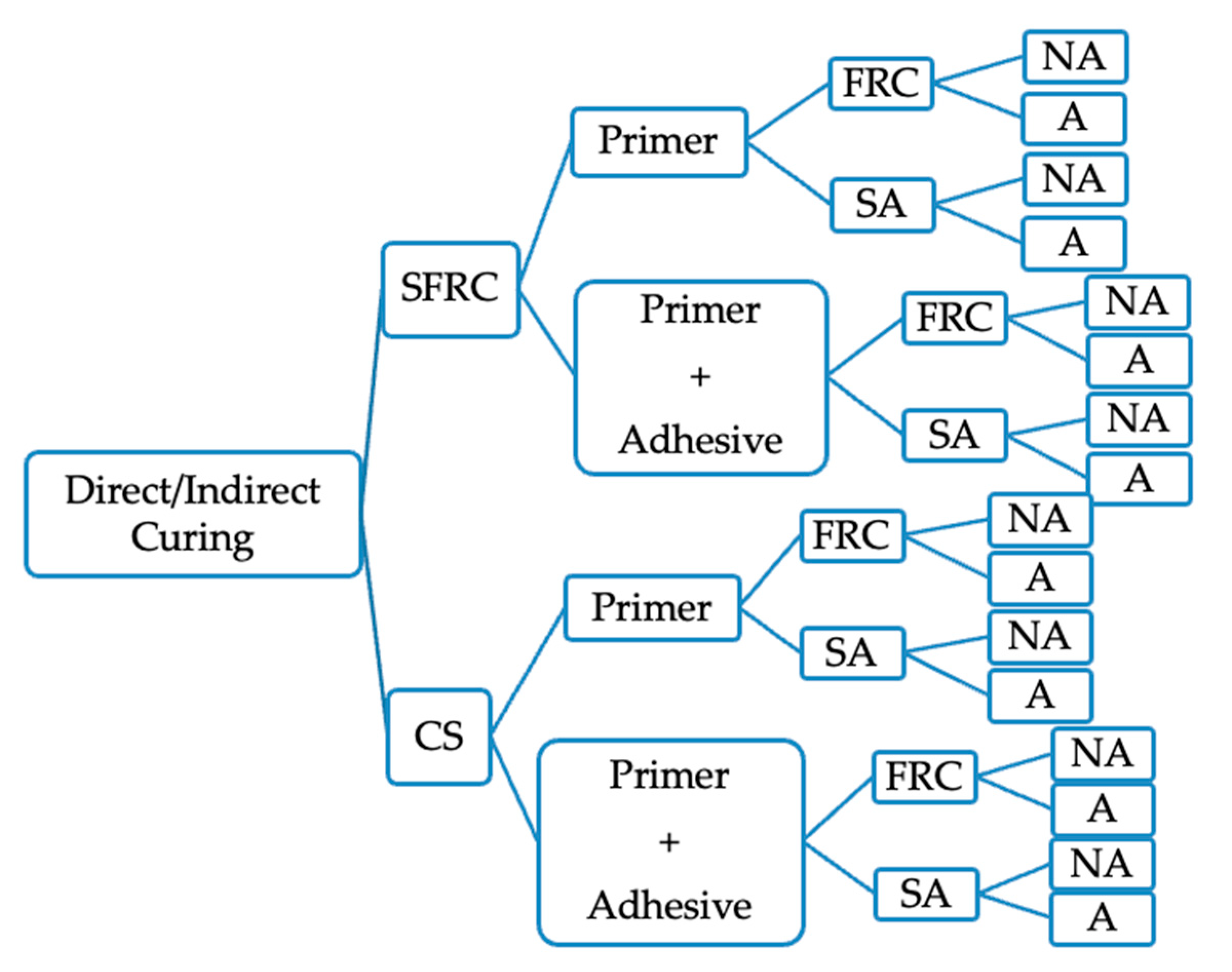
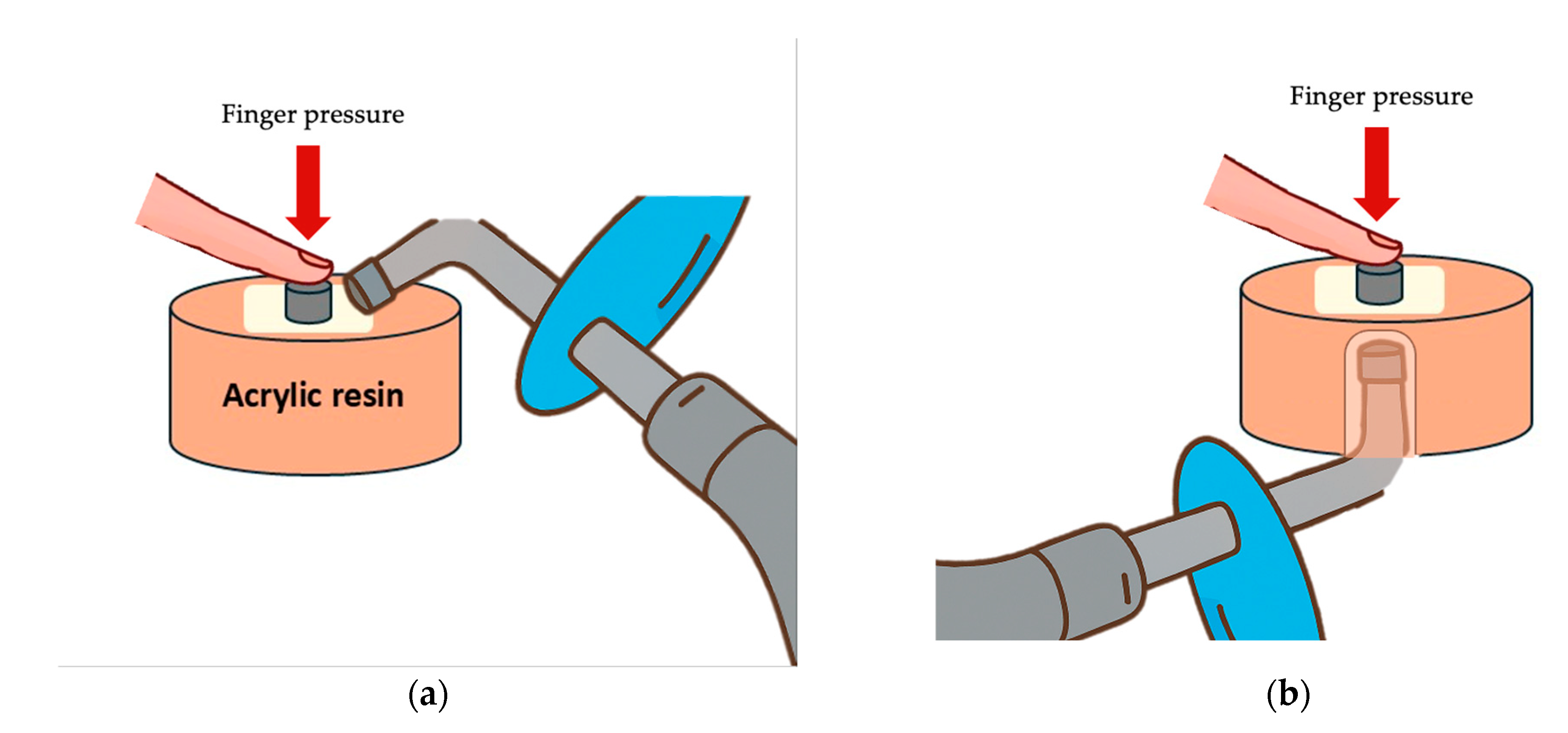
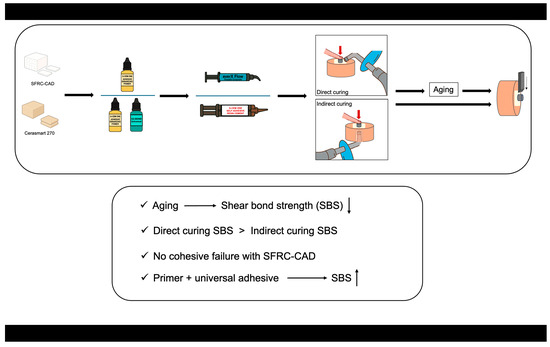
- Primer Only Protocol: G-CEM ONE Adhesive Enhancing Primer was applied to the bonding surfaces using a microbrush for 5 s, followed by gentle air-drying for 10 s. According to their group, either everX Flow (GC) or the G-CEM ONE (GC) was applied to the metal cylinder surface which was then placed onto the CAD/CAM specimen while applying finger pressure;
- Primer + Adhesive Protocol: After primer application and air-drying, G2-BOND Universal (adhesive bottle) was applied for 10 s and air-thinned for 10 s. The adhesive was light-cured for 20 s before the luting materials were applied, and the metal cylinders were positioned as described before.
2.3. Light Irradiance Measurements
2.4. Aging Protocols
2.5. Shear Bond Strength Testing
3. Results
4. Discussion
- This was an in vitro investigation, and laboratory conditions cannot fully replicate the complex oral environment, including temperature fluctuations, masticatory forces, moisture contamination, and oral biofilm activity.
- Only one surface-conditioning method and a single primer/adhesive system were evaluated; different conditioning protocols or adhesive formulations may yield different outcomes.
- The aging protocol consisted of short-term hydrothermal aging, which may not fully reflect the long-term degradation mechanisms such as thermocycling, water sorption, or enzymatic degradation.
- The SBS test provides reliable results but does not replicate the complex multi-directional stresses present during clinical function, and other tests—such as tensile bond strength, three-point bending or fatigue testing—may provide additional insight.
- Failure mode analysis was limited to visual inspection, and no detailed fractographic evaluation using microscopic or scanning electron microscopy was performed.
5. Conclusions
- Indirect curing resulted in lower SBS values than direct curing, likely due to light attenuation through the restorative material.
- Applying primer followed by universal adhesive generally increased SBS compared with primer alone.
- Higher SBS values were observed in groups incorporating adhesive application and direct curing protocols.
- The use of metal cylinders under finger pressure ensured a more reliable in vitro simulation by more closely approximating clinical film thickness and bonding conditions.
Supplementary Materials
Author Contributions
Funding
Institutional Review Board Statement
Data Availability Statement
Conflicts of Interest
References
- Blatz, M.B.; Conejo, J. The Current State of Chairside Digital Dentistry and Materials. Dent. Clin. N. Am. 2019, 63, 175–197. [Google Scholar] [CrossRef]
- Gracis, S.; Thompson, V.; Ferencz, J.; Silva, N.; Bonfante, E. A New Classification System for All-Ceramic and Ceramic-like Restorative Materials. Int. J. Prosthodont. 2016, 28, 227–235. [Google Scholar] [CrossRef]
- Falacho, R.I.; Marques, J.A.; Palma, P.J.; Roseiro, L.; Caramelo, F.; Ramos, J.C.; Guerra, F.; Blatz, M.B. Luting Indirect Restorations with Resin Cements Versus Composite Resins: Effects of Preheating and Ultrasound Energy on Film Thickness. J. Esthet. Restor. Dent. 2022, 34, 641–649. [Google Scholar] [CrossRef] [PubMed]
- Hassanien, E.E.Y.; Tolba, Z.O. Flowable Composite as an Alternative to Adhesive Resin Cement in Bonding Hybrid CAD/CAM Materials: In-Vitro Study of Micro-Shear Bond Strength. BDJ Open 2024, 10, 66. [Google Scholar] [CrossRef]
- Singer, L.; Fouda, A.; Bourauel, C. Biomimetic Approaches and Materials in Restorative and Regenerative Dentistry: Review Article. BMC Oral Health 2023, 23, 105. [Google Scholar] [CrossRef]
- Fráter, M.; Forster, A.; Keresztúri, M.; Braunitzer, G.; Nagy, K. In Vitro Fracture Resistance of Molar Teeth Restored with a Short Fibre-Reinforced Composite Material. J. Dent. 2014, 42, 1143–1150. [Google Scholar] [CrossRef] [PubMed]
- Magne, P.; Milani, T. Short-Fiber Reinforced MOD Restorations of Molars with Severely Undermined Cusps. J. Adhes. Dent. 2023, 25, 99–106. [Google Scholar] [CrossRef]
- Karevan, Y.; Eldafrawy, M.; Herman, R.; Sanchez, C.; Sadoun, M.; Mainjot, A. Fatigue Behavior of CAD-CAM Composites Versus Lithium Disilicate Glass-Ceramic. Dent. Mater. 2025, 41, 1222–1230. [Google Scholar] [CrossRef]
- Ling, L.; Ma, Y.; Malyala, R. A novel CAD/CAM resin composite block with high mechanical properties. Dent. Mater. 2021, 37, 1150–1155. [Google Scholar] [CrossRef] [PubMed]
- Zhang, Y.; Kelly, J.R. Dental Ceramics for Restoration and Metal Veneering. Dent. Clin. N. Am. 2017, 61, 797–819. [Google Scholar] [CrossRef]
- Yadav, R.; Sonwal, S.; Sharma, Y.K.; Huh, Y.S.; Brambilla, E.; Khan, R.; Ionescu, A.C. A Mini Review on Physical, Mechanical, Tribology Analysis of Micro-Nano Fibers and Ceramics Reinforced Polymer Composites for Advanced Manufacturing Processes. Polym. Adv. Technol. 2025, 36, e70205. [Google Scholar] [CrossRef]
- Garoushi, S.; Barlas, D.; Vallittu, P.K.; Uctasli, M.B.; Lassila, L. Fracture Behavior of Short Fiber-Reinforced CAD/CAM Inlay Restorations After Cyclic Fatigue Aging. Odontology 2024, 112, 138–147. [Google Scholar] [CrossRef]
- Jakab, A.; Palkovics, D.; Szabó, V.T.; Szabó, B.; Vincze-Bandi, E.; Braunitzer, G.; Lassila, L.; Vallittu, P.; Garoushi, S.; Fráter, M. Mechanical Performance of Extensive Restorations Made with Short Fiber-Reinforced Composites Without Coverage: A Systematic Review of In Vitro Studies. Polymers 2024, 16, 590. [Google Scholar] [CrossRef]
- Mangoush, E.; Garoushi, S.; Vallittu, P.; Lassila, L. Load-Bearing Capacity and Wear Characteristics of Short Fiber-Reinforced Composite and Glass Ceramic Fixed Partial Dentures. Eur. J. Oral Sci. 2023, 131, e12951. [Google Scholar] [CrossRef] [PubMed]
- Lassila, L.; Novotny, R.; Säilynoja, E.; Vallittu, P.K.; Garoushi, S. Wear Behavior at Margins of Direct Composite with CAD/CAM Composite and Enamel. Clin. Oral Investig. 2023, 27, 2419–2426. [Google Scholar] [CrossRef]
- Awad, M.M.; Alqahtani, H.; Al-Mudahi, A.; Murayshed, M.S.; Alrahlah, A.; Bhandi, S.H. Adhesive Bonding to Computer-Aided Design/Computer-Aided Manufacturing Esthetic Dental Materials: An Overview. J. Contemp. Dent. Pract. 2017, 18, 622–626. [Google Scholar] [CrossRef] [PubMed]
- Takano, S.; Takahashi, R.; Tabata, T.; Zeng, C.; Ikeda, M.; Shimada, Y. Bonding Performance of Universal Adhesive Systems with Dual-Polymerising Resin Cements to Various Dental Substrates: In Vitro Study. BMC Oral Health 2025, 25, 101. [Google Scholar] [CrossRef]
- do Nascimento Poubel, D.L.; Ghanem Zanon, A.E.; Franco Almeida, J.C.; de Lucas Rezende, L.V.M.; Pi-mentel Garcia, F.C. Composite Resin Preheating Techniques for Cementation of Indirect Restorations. Int. J. Biomater. 2022, 2022, 5935668. [Google Scholar] [CrossRef]
- Makishi, P.; André, C.B.; Silva, J.P.L.E.; Bacelar-Sá, R.; Correr-Sobrinho, L.; Giannini, M. Effect of Storage Time on Bond Strength Performance of Multimode Adhesives to Indirect Resin Composite and Lithium Disilicate Glass Ceramic. Oper. Dent. 2016, 41, 541–551. [Google Scholar] [CrossRef]
- Maravić, T.; Mazzitelli, C.; Mancuso, E.; Del Bianco, F.; Josić, U.; Cadenaro, M.; Breschi, L.; Mazzoni, A. Resin Composite Cements: Current Status and a Novel Classification Proposal. J. Esthet. Restor. Dent. 2023, 35, 1085–1097. [Google Scholar] [CrossRef] [PubMed]
- Komagata, Y.; Nagamatsu, Y.; Ikeda, H. Comparative Bonding Analysis of Computer-Aided Design/Computer-Aided Manufacturing Dental Resin Composites with Various Resin Cements. J. Compos. Sci. 2023, 7, 418. [Google Scholar] [CrossRef]
- Mazaheri Tehrani, A.; Nami, M.; Zarbakhsh, A.; Moscowchi, A.; Jalalian, E. Impact of Surface Pre-Treatment on Bond Strength Between Cement and Zirconia: A Systematic Review and Network Meta-Analysis. J. Prosthet. Dent. 2025, 134, 2133–2145. [Google Scholar] [CrossRef]
- Simasetha, S.; Klaisiri, A.; Sriamporn, T.; Sappayatosok, K.; Thamrongananskul, N. Surface Treatment Effect on Shear Bond Strength between Lithium Disilicate Glass-Ceramic and Resin Cement. Eur. J. Dent. 2022, 16, 373–380. [Google Scholar] [CrossRef]
- Daugherty, M.M.; Lien, W.; Mansell, M.R.; Risk, D.L.; Savett, D.A.; Vandewalle, K.S. Effect of High-Intensity Curing Lights on the Polymerization of Bulk-Fill Composites. Dent. Mater. 2018, 34, 1531–1541. [Google Scholar] [CrossRef]
- de Castro, E.F.; Fronza, B.M.; Soto-Montero, J.; Giannini, M.; dos-Santos-Dias, C.T.; Price, R.B. Effect of Thickness of CAD/CAM Materials on Light Transmission and Resin Cement Polymerization Using a Blue Light-Emitting Diode Light-Curing Unit. J. Esthet. Restor. Dent. 2023, 35, 368–380. [Google Scholar] [CrossRef] [PubMed]
- Rocha, M.G.; Roulet, J.F.; Sinhoreti, M.A.C.; Correr, A.B.; Oliveira, D. Light Transmittance and Depth of Cure of a Bulk Fill Composite Based on the Exposure Reciprocity Law. Braz. Dent. J. 2021, 32, 78–84. [Google Scholar] [CrossRef] [PubMed]
- Marovic, D.; Par, M.; Crnadak, A.; Sekelja, A.; Negovetic Mandic, V.; Gamulin, O.; Rakić, M.; Tarle, Z. Rapid 3 s Curing: What Happens in Deep Layers of New Bulk-Fill Composites? Materials 2021, 14, 515. [Google Scholar] [CrossRef] [PubMed]
- Alayad, A.S.; Alqhatani, A.; Alkatheeri, M.S.; Alshehri, M.; AlQahtani, M.A.; Osseil, A.E.B.; Almusallam, R.A. Effects of CAD/CAM ceramics and thicknesses on translucency and color masking of substrates. Saudi Dent. J. 2021, 33, 761–768. [Google Scholar] [CrossRef]
- Di Francescantonio, M.; Aguiar, T.R.; Arrais, C.A.G.; Cavalcanti, A.N.; Davanzo, C.U.; Giannini, M. Influence of Viscosity and Curing Mode on Degree of Conversion of Dual-Cured Resin Cements. Eur. J. Dent. 2013, 7, 81–85. [Google Scholar]
- Oja, J.; Lassila, L.; Vallittu, P.K.; Garoushi, S. Effect of Accelerated Aging on Some Mechanical Properties and Wear of Different Commercial Dental Resin Composites. Materials 2021, 14, 2769. [Google Scholar] [CrossRef]
- Salonen, R.; Garoushi, S.; Vallittu, P.K.; Lassila, L. Characterization of Temporary and Permanent 3D-Printed Crown and Bridge Resins. Biomater. Investig. Dent. 2025, 12, 68–79. [Google Scholar] [CrossRef] [PubMed]
- Kallio, T.T.; Lastuma, T.M.; Ki, È.; Vallittu, P.K. Effect of Resin Application Time on Bond Strength of Polymer Substrate Repaired with Particulate Filler Composite. J. Mater. Sci. Mater. Med. 2003, 14, 999–1004. [Google Scholar] [CrossRef]
- Lastumaki, T.; Kallio, T.; Vallittu, P.K. The Bond Strength of Light-Curing Composite Resin to Finally Polymerized and Aged Glass Fiber-Reinforced Composite Substrate. Biomaterials 2002, 23, 4533–4539. [Google Scholar] [CrossRef]
- Vallittu, P.K. Interpenetrating polymer networks (IPNs) in dental polymers and composites. J. Adhes. Sci. Technol. 2009, 23, 961–972. [Google Scholar] [CrossRef]
- Hatta, M.; Shinya, A.; Gomi, H.; Vallittu, P.K.; Säilynoja, E.; Lassila, L.V.J. Effect of Interpenetrating Polymer Network (IPN) Thermoplastic Resin on Flexural Strength of Fibre-Reinforced Composite and the Penetration of Bonding Resin into Semi-IPN FRC Post. Polymers 2021, 13, 3200. [Google Scholar] [CrossRef]
- Khan, A.A.; Al-Kheraif, A.A.; Al-Shehri, A.M.; Säilynoja, E.; Vallittu, P.K. Polymer Matrix of Fiber-Reinforced Composites: Changes in the Semi-Interpenetrating Polymer Network During the Shelf Life. J. Mech. Behav. Biomed. Mater. 2018, 78, 414–419. [Google Scholar] [CrossRef]
- Escobar, L.B.; da Silva, L.P.; Manarte-Monteiro, P. Fracture Resistance of Fiber-Reinforced Composite Restorations: A Systematic Review and Meta-Analysis. Polymers 2023, 15, 3802. [Google Scholar] [CrossRef]
- Mangoush, E.; Garoushi, S.; Vallittu, P.K.; Lassila, L. Influence of Short Fiber-Reinforced Composites on Fracture Resistance of Single-Structure Restorations. Eur. J. Prosthodont. Restor. Dent. 2020, 28, 189–198. [Google Scholar] [CrossRef]
- Mangoush, E.; Lassila, L.; Vallittu, P.K.; Garoushi, S. Shear-Bond Strength and Optical Properties of Short Fiber-Reinforced CAD/CAM Composite Blocks. Eur. J. Oral Sci. 2021, 129, e12815. [Google Scholar] [CrossRef]
- Jardim Barbon, F.; Moraes, R.R.; Pereira Isolan, C.; Spazzin, A.O.; Boscato, N. Influence of Inorganic Filler Content of Resin Luting Agents and Use of Adhesive on The Performance of Bonded Ceramic. J. Prosthet. Dent. 2019, 122, 566.e1–566.e11. [Google Scholar] [CrossRef] [PubMed]
- Josic, U.; D’Alessandro, C.; Miletic, V.; Maravic, T.; Mazzitelli, C.; Jacimovic, J.; Sorrentino, R.; Zarone, F.; Mancuso, E.; Delgado, A.H.; et al. Clinical longevity of direct and indirect posterior resin composite restorations: An updated systematic review and meta-analysis. Dent. Mater. 2023, 39, 1085–1094. [Google Scholar] [CrossRef]
- Varadan, P.; Balaji, L.; Manaswini, D.Y.; Rajan, R.M. Reinforced Immediate Dentin Sealing vs Conventional Immediate Dentin Sealing on Adhesive Behavior of Indirect Restorations: A Systematic Review. J. Contemp. Dent. Pract. 2022, 23, 1066–1075. [Google Scholar] [CrossRef]
- Dapieve, K.S.; Velho, H.C.; da Rosa, L.S.; Pivetta, J.P.; Maidana, F.C.; Venturini, A.B.; Kleverlaan, C.J.; Pereira, G.K.R.; Valandro, L.F. Ceramic Surface Conditioning, Resin Cement Viscosity, and Aging Relationships Affect the Load-Bearing Capacity Under Fatigue of Bonded Glass-Ceramics. J. Mech. Behav. Biomed. Mater. 2023, 139, 105667. [Google Scholar] [CrossRef]
- Porto, T.S.; da Silva, I.G.M.; de Freitas Vallerini, B.; de Goes, M.F. Different Surface Treatment Strategies on Etchable CAD-CAM Materials: Part 1—Effect on the Surface Morphology. J. Prosthet. Dent. 2023, 130, 761–769. [Google Scholar] [CrossRef] [PubMed]
- Samimi, P.; Iranmanesh, P.; Khorooshi, M.; Kafi, M.H.; Jafari, N. Bond Strength Evaluation of Ceramic Restorations with Immediate Dentin Sealing: A Systematic Review and Meta-Analysis. J. Dent. Shiraz Univ. Med. Sci. 2024, 25, 192–202. [Google Scholar] [CrossRef]
- Bouillaguet, S.; Schütt, A.; Alander, P.; Schwaller, P.; Buerki, G.; Michler, J.; Cattani-Lorente, M.; Vallittu, P.K.; Krejci, I. Hydrothermal and Mechanical Stresses Degrade Fiber-Matrix Interfacial Bond Strength in Dental Fiber-Reinforced Composites. J. Biomed. Mater. Res. B Appl. Biomater. 2006, 76, 98–105. [Google Scholar] [CrossRef]
- Dugar, M.; Ikhar, A.; Nikhade, P.; Chandak, M.; Motwani, N. Comparative Evaluation of Shear Bond Strength of Nanohybrid Composite Restoration After the Placement of Flowable Compomer and Composite Using the Snowplow Technique. Cureus 2022, 14, e28663. [Google Scholar] [CrossRef] [PubMed]
- Sokolowski, G.; Szczesio-Wlodarczyk, A.; Szynkowska-Jóźwik, M.I.; Stopa, W.; Sokolowski, J.; Kopacz, K.; Bociong, K. The Shear Bond Strength of Resin-Based Luting Cement to Zirconia Ceramics After Different Surface Treatments. Materials 2023, 16, 5433. [Google Scholar] [CrossRef] [PubMed]
- Marović, D.; Daničić, P.; Bojo, G.; Par, M.; Tarle, Z. Monowave vs. Polywave Light—Curing Units: Effect on Light Transmission of Composite Without Alternative Photoinitiators. Acta Stomatol. Croat. 2024, 58, 30–38. [Google Scholar] [CrossRef]
- Tomaselli, L.d.O.; de Oliveira, D.C.R.S.; Favarão, J.; da Silva, A.F.; de Carvalho Panzeri Pires-de-Souza, F.; Geraldeli, S.; Sinhoreti, M.A.C. Influence of Pre-Heating Regular Resin Composites and Flowable Composites on Luting Ceramic Veneers with Different Thicknesses. Braz. Dent. J. 2019, 30, 459–466. [Google Scholar] [CrossRef]
- Kilinc, E.; Antonson, S.A.; Hardigan, P.C.; Kesercioglu, A. The Effect of Ceramic Restoration Shade and Thickness on the Polymerization of Light- and Dual-Cure Resin Cements. Oper. Dent. 2011, 36, 661–669. [Google Scholar] [CrossRef]
- Mazão, J.D.; Braga, S.; Brangança, G.; Zancopé, K.; Price, R.B.; Soares, C.J. Effect of Ceramic Thickness on Light Attenuation, Degree of Conversion, Knoop Hardness, and Elastic Modulus of Four Luting Resins. Oper. Dent. 2023, 48, 226–235. [Google Scholar] [CrossRef]
- Yang, J.; Silikas, N.; Watts, D.C. Polymerization and Shrinkage Kinetics and Fracture Toughness of Bulk-Fill Resin-Composites. Dent. Mater. 2022, 38, 1934–1941. [Google Scholar] [CrossRef]
- David-Pérez, M.; Ramírez-Suárez, J.P.; Latorre-Correa, F.; Agudelo-Suárez, A.A. Degree of Conversion of Resin-Cements (Light-Cured/Dual-Cured) Under Different Thicknesses of Vitreous Ceramics: Systematic Review. J. Prosthodont. Res. 2022, 66, 385–394. [Google Scholar] [CrossRef] [PubMed]
- Eichler, E.; Vach, K.; Schlueter, N.; Jacker-Guhr, S.; Luehrs, A.K. Dentin Adhesion of Bulk-Fill Composites and Universal Adhesives in Class I-Cavities with High C-Factor. J. Dent. 2024, 142, 104852. [Google Scholar] [CrossRef]
- Burke, F.J.T.; Mackenzie, L. Bonding to Dentine: An Update on Universal Adhesives. Restor. Dent. 2021, 48, 620–631. [Google Scholar] [CrossRef]
- Carrilho, E.; Cardoso, M.; Ferreira, M.M.; Marto, C.M.; Paula, A.; Coelho, A.S. 10-MDP Based Dental Adhesives: Adhesive Interface Characterization and Adhesive Stability—A Systematic Review. Materials 2019, 12, 790. [Google Scholar] [CrossRef] [PubMed]
- Martos, R.; Szalóki, M.; Gáll, J.; Csík, A.; Hegedűs, C. Comparative Analysis of Bond Strength Durability of 10-Methacryloyloxydecyl Dihydrogen Phosphate-Containing Adhesives on a Low-Viscosity Bulk-Fill Composite Surface. J. Adhes. Dent. 2022, 24, 427–434. [Google Scholar] [CrossRef]
- Burke, F.J.T.; Lawson, A.; Green, D.J.B.; Mackenzie, L. What’s New in Dentine Bonding?: Universal Adhesives. Dent. Update 2017, 44, 328–340. [Google Scholar] [CrossRef]
- Gale, M.S.; Darvell, B.W. Thermal Cycling Procedures for Laboratory Testing of Dental Restorations. J. Dent. 1999, 27, 89–99. [Google Scholar] [CrossRef]



| Materials | Manufacturer | Composition | LOT Number |
|---|---|---|---|
| CAD/CAM Short Fiber-Reinforced Composite Block | Experimental | UDMA, TEGDMA, short glass fiber (200–300 μm & Ø7 μm), barium glass (77 wt%) | - |
| Cerasmart 270 (A2 HT) | GC Corporation, Tokyo, Japan | Bis-MEPP, UDMA, DMA, Silica (20 nm), barium glass (300 nm) (71 wt%) | 2303156 |
| G-CEM ONE Adhesive Enhancing Primer | GC Corporation, Tokyo, Japan | Ethanol, trimellitic acid, water, 4-methacryloxyethyl phosphate, ester monomer, thiophosphate ester monomer, polymerization initiator | 2306061 |
| G2-BOND Universal | GC Corporation, Tokyo, Japan | Primer: 4-MET, 10-MDP, 10-MDTP, dimethacrylate monomer, acetone, water, initiator, filler Adhesive: dimethacrylate monomer, Bis-GMA, filler, photo-activator | 2210131 |
| G-CEM ONE Universal self-adhesive resin cement | GC Corporation, Tokyo, Japan | A: Fluoroaluminosilicate glass, methacrylic acid ester, polymerization initiator B: Silica filler, methacrylic acid ester, phosphate ester monomer, polymerization initiator | 2210131 |
| everX Flow (Bulk shade) | GC Corporation, Tokyo, Japan | Bis-EMA, TEGDMA, UDMA, short glass fiber (200–300 μm and Ø7 μm), barium-glass (70 wt%) | 2302171 |
| Groups | Direct Curing | SBS | Groups | Indirect Curing | SBS | |
|---|---|---|---|---|---|---|
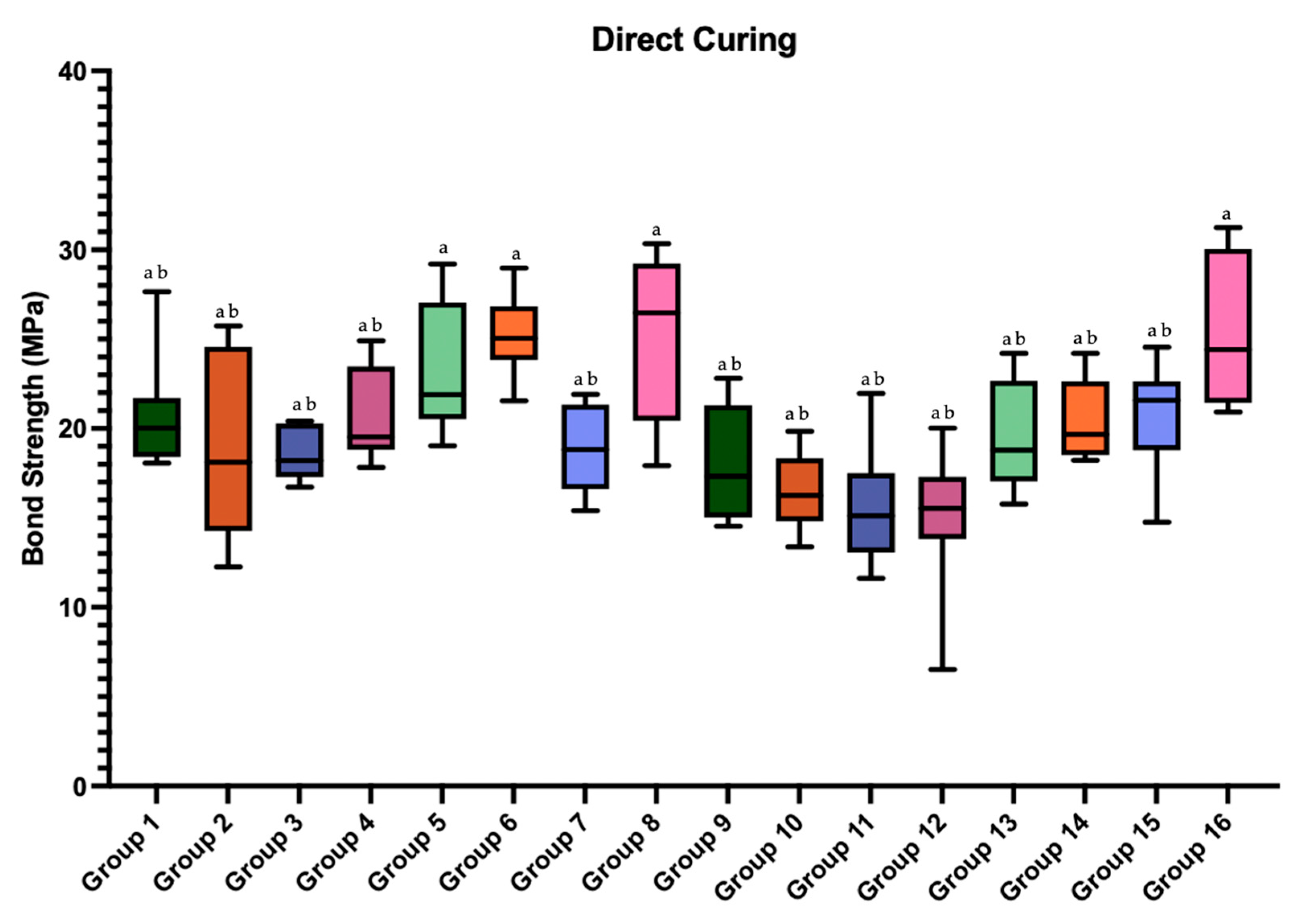
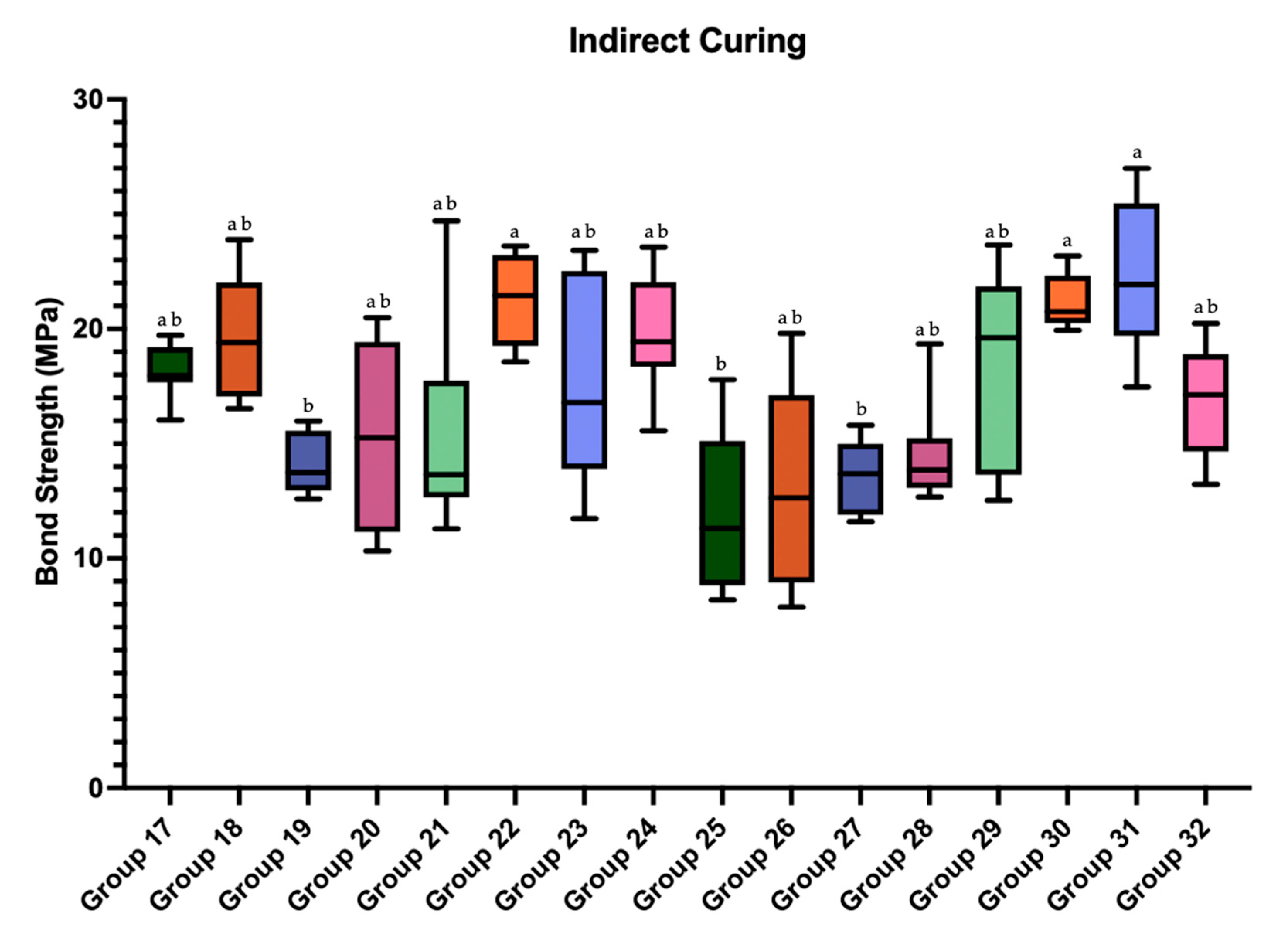
| Non-aged | 1 | SFRC + primer + FRC | 20.74 ± 3.16 a,b | 17 | SFRC + primer + FRC | 18.17 ± 1.15 a,b |
| 2 | SFRC + primer + SA | 19.12 ± 5.25 a,b | 18 | SFRC + primer + SA | 19.70 ± 2.65 a,b | |
| 3 | CS + primer + FRC | 18.57 ± 1.52 a,b | 19 | CS + primer + FRC | 14.17 ± 1.31 b | |
| 4 | CS + primer + SA | 20.79 ± 2.64 a,b | 20 | CS + primer + SA | 15.19 ± 4.16 a,b | |
| 5 | SFRC + primer + bond + FRC | 23.23 ± 3.67 a | 21 | SFRC + primer + bond + FRC | 15.48 ± 4.38 a,b | |
| 6 | SFRC + primer + bond + SA | 25.23 ± 2.27 a | 22 | SFRC + primer + bond + SA | 21.21 ± 1.97 a | |
| 7 | CS + primer + bond + FRC | 18.91 ± 2.46 a,b | 23 | CS + primer + bond + FRC | 17.63 ± 4.46 a,b | |
| 8 | CS + primer + bond + SA | 25.23 ± 4.61 a | 24 | CS + primer + bond + SA | 19.74 ± 2.51 a,b | |
| Aged | 9 | SFRC + primer + FRC | 18.08 ± 3.20 a,b | 25 | SFRC + primer + FRC | 12.09 ± 3.43 b |
| 10 | SFRC + primer + SA | 16.40 ± 2.13 a,b | 26 | SFRC + primer + SA | 13.07 ± 4.37 a,b | |
| 11 | CS + primer + FRC | 15.54 ± 3.30 a,b | 27 | CS + primer + FRC | 13.55 ± 1.56 b | |
| 12 | CS + primer + SA | 15.03 ± 3.96 a,b | 28 | CS + primer + SA | 14.56 ± 2.16 a,b | |
| 13 | SFRC + primer + bond + FRC | 19.51 ± 3.05 a,b | 29 | SFRC + primer + bond + FRC | 18.35 ± 4.31 a,b | |
| 14 | SFRC + primer + bond + SA | 20.38 ± 2.23 a,b | 30 | SFRC + primer + bond + SA | 21.14 ± 1.19 a | |
| 15 | CS + primer + bond + FRC | 20.74 ± 3.08 a,b | 31 | CS + primer + bond + FRC | 22.24 ± 3.32 a | |
| 16 | CS + primer + bond + SA | 25.28 ± 4.1 a | 32 | CS + primer + bond + SA | 16.85 ± 2.39 a,b |
Disclaimer/Publisher’s Note: The statements, opinions and data contained in all publications are solely those of the individual author(s) and contributor(s) and not of MDPI and/or the editor(s). MDPI and/or the editor(s) disclaim responsibility for any injury to people or property resulting from any ideas, methods, instructions or products referred to in the content. |
© 2026 by the authors. Licensee MDPI, Basel, Switzerland. This article is an open access article distributed under the terms and conditions of the Creative Commons Attribution (CC BY) license.
Share and Cite
Buyukates, I.; Garoushi, S.; Vallittu, P.K.; Uctasli, S.; Lassila, L. Effect of Different Luting Protocols on the Bond Strength of Fiber-Reinforced CAD/CAM Blocks. Polymers 2026, 18, 160. https://doi.org/10.3390/polym18020160
Buyukates I, Garoushi S, Vallittu PK, Uctasli S, Lassila L. Effect of Different Luting Protocols on the Bond Strength of Fiber-Reinforced CAD/CAM Blocks. Polymers. 2026; 18(2):160. https://doi.org/10.3390/polym18020160
Chicago/Turabian StyleBuyukates, Irem, Sufyan Garoushi, Pekka K. Vallittu, Sadullah Uctasli, and Lippo Lassila. 2026. "Effect of Different Luting Protocols on the Bond Strength of Fiber-Reinforced CAD/CAM Blocks" Polymers 18, no. 2: 160. https://doi.org/10.3390/polym18020160
APA StyleBuyukates, I., Garoushi, S., Vallittu, P. K., Uctasli, S., & Lassila, L. (2026). Effect of Different Luting Protocols on the Bond Strength of Fiber-Reinforced CAD/CAM Blocks. Polymers, 18(2), 160. https://doi.org/10.3390/polym18020160