Mycelium-Based Biocomposites as Sustainable Polymer Alternatives: Engineering Strategies, Structure–Property Relationships and Circular Packaging Applications

Abstract
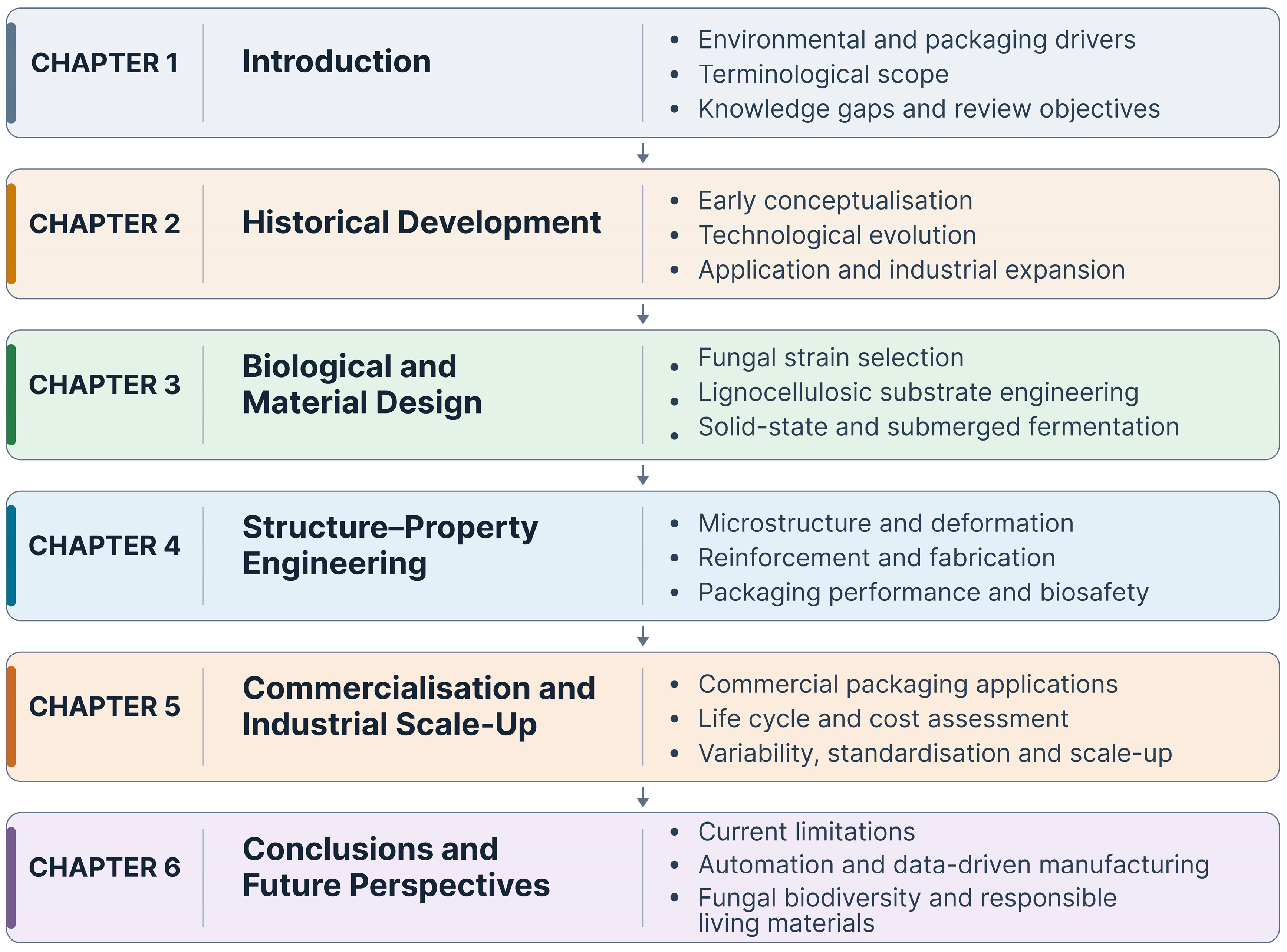
1. Introduction
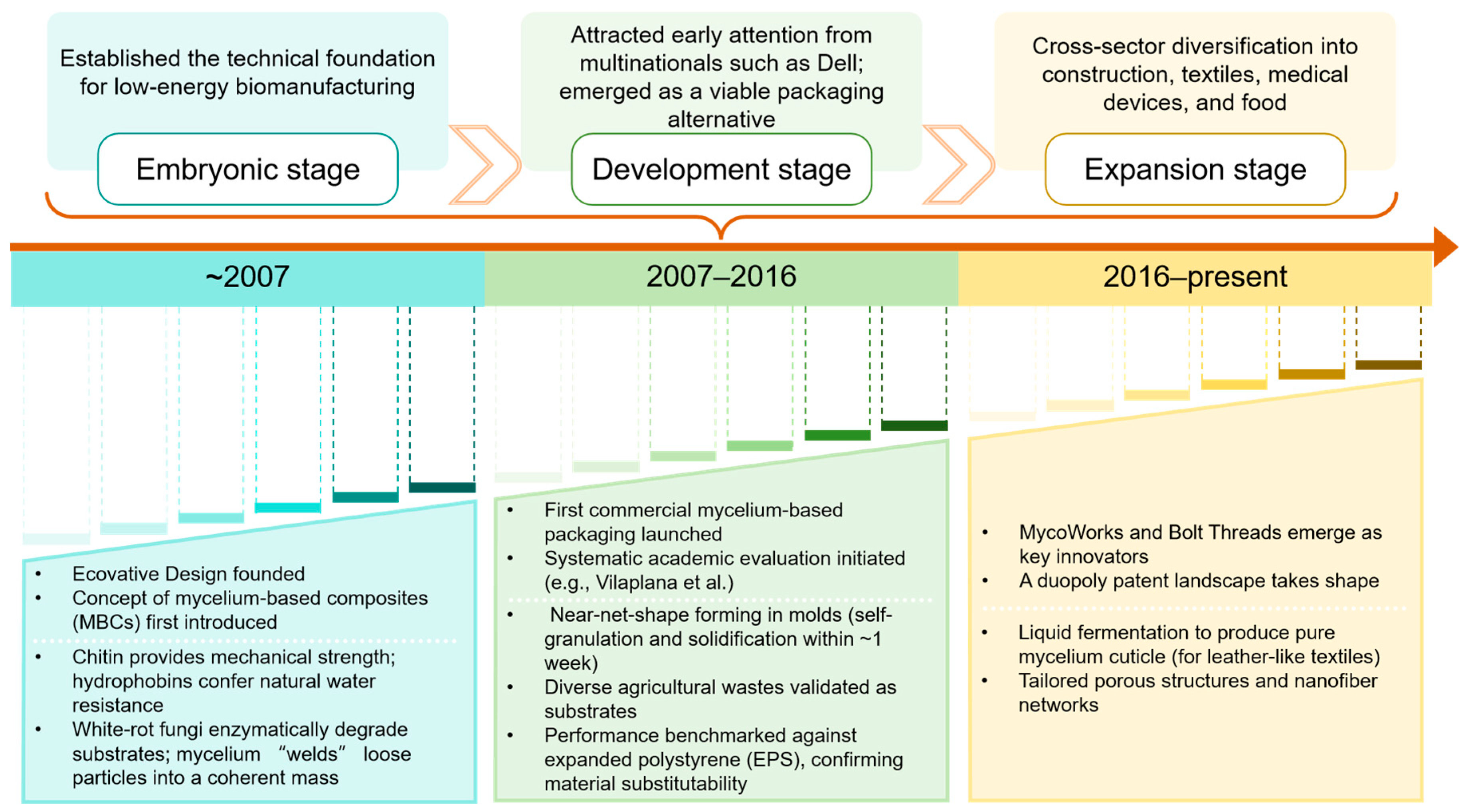
2. Historical Development of Mycelium-Based Materials
2.1. Early Conceptualisation and Exploratory Research
2.2. Technological Development and Expansion of Academic Research
2.3. Diversification of Applications and Industrial Expansion
3. Biological and Material Design of Mycelium-Based Materials
3.1. Fungal Strain Selection and Regulation of Material Properties
3.1.1. Dominant Fungal Species Used in MBCs
3.1.2. Mechanisms Governing Strain-Dependent Material Performance
3.1.3. Emerging Fungal Species and Specialised Cultivation Systems
3.2. Selection and Engineering of Lignocellulosic Substrates
3.2.1. Agricultural Residues as Primary Substrate Sources
3.2.2. Influence of Substrate Structure on Composite Performance
3.3. Solid-State and Submerged Fermentation Systems
4. Structure–Property Engineering and Packaging Performance
4.1. Structural Characteristics of Mycelium-Based Composites
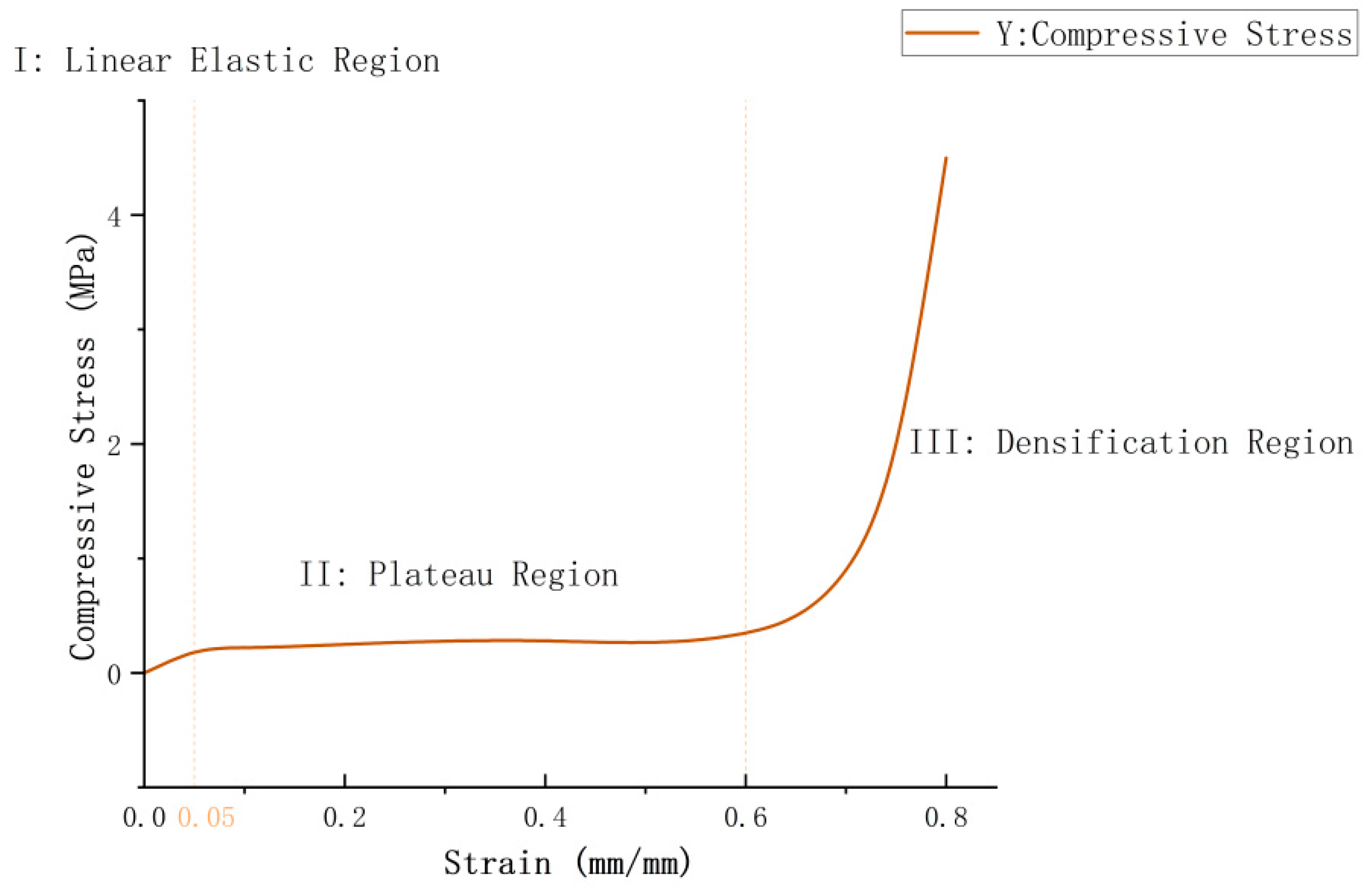
4.2. Mechanical Behaviour, Deformation Mechanisms and Property Variability
4.3. Reinforcement Strategies and Comparative Trade-Offs
4.4. Fabrication Processes, Surface Treatments and Durability
4.5. Packaging Performance and Biosafety Requirements
5. Commercialisation, Sustainability and Industrial Scale-Up
5.1. Industrial Development and Life Cycle Assessment
5.2. Commercial Packaging Applications
5.3. Commercial, Regulatory and Sustainability Drivers
5.4. Cost, Batch Variability, Standardisation and Scale-Up Barriers
6. Conclusions, Current Limitations and Future Perspectives
6.1. Conclusions
6.2. Current Limitations and Outstanding Challenges
6.3. Future Research and Industrialisation Priorities
Author Contributions
Funding
Data Availability Statement
Acknowledgments
Conflicts of Interest
References
- Islam, M.R.; Tudryn, G.; Bucinell, R.; Schadler, L.; Picu, R.C. Morphology and mechanics of fungal mycelium. Sci. Rep. 2017, 7, 13070, Correction in Sci. Rep. 2018, 8, 4206. https://doi.org/10.1038/s41598-018-20637-1. [Google Scholar] [CrossRef] [PubMed]
- Cerimi, K.; Akkaya, K.C.; Pohl, C.; Schmidt, B.; Neubauer, P. Fungi as source for new bio-based materials: A patent review. Fungal Biol. Biotechnol. 2019, 6, 17. [Google Scholar] [CrossRef] [PubMed]
- Ghoshal, T.; Parmar, P.R.; Bhuyan, T.; Bandyopadhyay, D. Polystyrene foams: Materials, technology, and applications. In Polymeric Foams: Fundamentals and Types of Foams; American Chemical Society: Washington, DC, USA, 2023; Volume 1, pp. 121–141. [Google Scholar] [CrossRef]
- Prasittisopin, L.; Termkhajornkit, P.; Kim, Y.H. Review of concrete with expanded polystyrene (EPS): Performance and environmental aspects. J. Clean. Prod. 2022, 366, 132919. [Google Scholar] [CrossRef]
- Ugwu, S.C.; Obele, C.M. A mini-review on expanded polystyrene waste recycling and its applications. World J. Adv. Eng. Technol. Sci. 2023, 8, 315–329. [Google Scholar] [CrossRef]
- PlasticsEurope. Plastics—The Facts 2019: An Analysis of European Plastics Production, Demand and Waste Data; PlasticsEurope: Brussels, Belgium, 2019; Available online: https://plasticseurope.org/wp-content/uploads/2021/10/2019-Plastics-the-facts.pdf (accessed on 1 August 2026).
- Achilias, D.S.; Giannoulis, A.; Papageorgiou, G.Z. Recycling of polymers from plastic packaging materials using the dissolution–reprecipitation technique. Polym. Bull. 2009, 63, 449–465. [Google Scholar] [CrossRef]
- Khan, R. Mycelium-based bioproducts: A novel material for a sustainable economy—A comprehensive review. Microbe 2025, 8, 100439. [Google Scholar] [CrossRef]
- Le Ferrand, H. Critical review of mycelium-bound product development to identify barriers to entry and paths to overcome them. J. Clean. Prod. 2024, 450, 141859. [Google Scholar] [CrossRef]
- Thapliyal, D.; Karale, M.; Diwan, V.; Kumra, S.; Arya, R.K.; Verros, G.D. Current status of sustainable food packaging regulations: Global perspective. Sustainability 2024, 16, 5554. [Google Scholar] [CrossRef]
- Jones, M.; Gandia, A.; John, S.; Bismarck, A. Leather-like material biofabrication using fungi. Nat. Sustain. 2021, 4, 9–16. [Google Scholar] [CrossRef]
- Zoungrana, A.; Hausner, G.; Yuan, Q. Sustainability assessment of mycelium bio-foam packaging compared to expanded polystyrene through environmental impact assessment. Discov. Sustain. 2025, 6, 1119. [Google Scholar] [CrossRef]
- Enarevba, D.R.; Haapala, K.R. A comparative life cycle assessment of expanded polystyrene and mycelium packaging box inserts. Procedia CIRP 2023, 116, 654–659. [Google Scholar] [CrossRef]
- Shin, H.-J.; Ro, H.-S.; Kawauchi, M.; Honda, Y. Review on mushroom mycelium-based products and their production process: From upstream to downstream. Bioresour. Bioprocess. 2025, 12, 3. [Google Scholar] [CrossRef] [PubMed]
- Wang, Y.; Hausner, G.; Rout, P.R.; Yuan, Q. Investigation of fungal mycelium-bound bio-foams from agricultural wastes as sustainable and eco-conscious packaging innovations. J. Clean. Prod. 2025, 501, 145206. [Google Scholar] [CrossRef]
- Camilleri, E.; Narayan, S.; Lingam, D.; Blundell, R. Mycelium based composites: An updated comprehensive overview. Biotechnol. Adv. 2025, 79, 108517. [Google Scholar] [CrossRef] [PubMed]
- Voutetaki, M.E.; Mpalaskas, A.C. Natural fiber-reinforced mycelium composite for innovative and sustainable construction materials. Fibers 2024, 12, 57. [Google Scholar] [CrossRef]
- Wang, H.; Wang, W.; Tao, J.; Liu, S.; Hou, X.; He, C. Anchoring mycelium on CNTs to make strong and smart self-regenerative composite materials. Compos. Part B Eng. 2024, 287, 111861. [Google Scholar] [CrossRef]
- Xu, W.; Cheng, Q.; Alam, W.; Tian, Y.; Deng, P.; Niu, Z.; Warsinger, D.; Li, T. Robust bio-textiles via mycelium-cellulose interface engineering. Adv. Funct. Mater. 2026, 36, e17897. [Google Scholar] [CrossRef]
- Hýsek, Š.; Jozífek, M.; Petržela, B.; Němec, M. Artificial neural network prediction of mechanical properties in mycelium-based biocomposites. Polymers 2025, 17, 2506. [Google Scholar] [CrossRef] [PubMed]
- Aiduang, W.; Jinanukul, P.; Thamjaree, W.; Kiatsiriroat, T.; Waroonkun, T.; Lumyong, S. A comprehensive review on studying and developing guidelines to standardize the inspection of properties and production methods for mycelium-bound composites in bio-based building material applications. Biomimetics 2024, 9, 549. [Google Scholar] [CrossRef] [PubMed]
- Jiang, L.; Walczyk, D.; Mooney, L.; Putney, S. Manufacturing of mycelium-based biocomposites. In Proceedings of the International SAMPE Technical Conference, Covina, CA, USA, 6–9 May 2013; Beckwith, S.W., Ed.; Society for the Advancement of Material and Process Engineering: Long Beach, CA, USA, 2013; pp. 1944–1955. [Google Scholar]
- Gow, N.A.R.; Latgé, J.-P.; Munro, C.A. The fungal cell wall: Structure, biosynthesis, and function. Microbiol. Spectr. 2017, 5, FUNK-0035-2016. [Google Scholar] [CrossRef] [PubMed]
- Wösten, H.A.B. Hydrophobins: Multipurpose proteins. Annu. Rev. Microbiol. 2001, 55, 625–646. [Google Scholar] [CrossRef] [PubMed]
- Haneef, M.; Ceseracciu, L.; Canale, C.; Bayer, I.S.; Heredia-Guerrero, J.A.; Athanassiou, A. Advanced materials from fungal mycelium: Fabrication and tuning of physical properties. Sci. Rep. 2017, 7, 41292. [Google Scholar] [CrossRef] [PubMed]
- Sánchez, C. Lignocellulosic residues: Biodegradation and bioconversion by fungi. Biotechnol. Adv. 2009, 27, 185–194. [Google Scholar] [CrossRef] [PubMed]
- Jones, M.; Mautner, A.; Luenco, S.; Bismarck, A.; John, S. Engineered mycelium composite construction materials from fungal biorefineries: A critical review. Mater. Des. 2020, 187, 108397. [Google Scholar] [CrossRef]
- Holt, G.A.; McIntyre, G.; Flagg, D.; Bayer, E.; Wanjura, J.D.; Pelletier, M.G. Fungal mycelium and cotton plant materials in the manufacture of biodegradable molded packaging material: Evaluation study of select blends of cotton byproducts. J. Biobased Mater. Bioenergy 2012, 6, 431–439. [Google Scholar] [CrossRef]
- Vilaplana, F.; Strömberg, E.; Karlsson, S. Environmental and resource aspects of sustainable biocomposites. Polym. Degrad. Stab. 2010, 95, 2147–2161. [Google Scholar] [CrossRef]
- Tudryn, G.J.; Smith, L.C.; Freitag, J.; Bucinell, R.; Schadler, L.S. Processing and morphology impacts on mechanical properties of fungal based biopolymer composites. J. Polym. Environ. 2018, 26, 1473–1483. [Google Scholar] [CrossRef]
- Arifin, Y.H.; Yusuf, Y. Mycelium fibers as new resource for environmental sustainability. Procedia Eng. 2013, 53, 504–508. [Google Scholar] [CrossRef]
- Jiang, L.; Walczyk, D.; McIntyre, G.; Bucinell, R. A new approach to manufacturing biocomposite sandwich structures: Mycelium-based cores. In Proceedings of the ASME 2016 International Manufacturing Science and Engineering Conference, Blacksburg, VA, USA, 27 June–1 July 2016; p. V001T02A025. [Google Scholar] [CrossRef]
- Jiang, L.; Walczyk, D.; McIntyre, G.; Chan, W.K. Cost modeling and optimization of a manufacturing system for mycelium-based biocomposite parts. J. Manuf. Syst. 2016, 41, 8–20. [Google Scholar] [CrossRef]
- López-Forniés, I.; Aurensanz Mallada, R.; Ejarque-Ortiz, A.; Madre Sediles, M.A. Experimentation and characterization of mycelium-based biocomposites for ephemeral product applications. In Advances on Mechanics, Design Engineering and Manufacturing IV; Springer: Cham, Switzerland, 2023; pp. 15–27. [Google Scholar] [CrossRef]
- Islam, M.R.; Tudryn, G.; Bucinell, R.; Schadler, L.; Picu, R.C. Mechanical behavior of mycelium-based particulate composites. J. Mater. Sci. 2018, 53, 16371–16382. [Google Scholar] [CrossRef]
- Farrahnoor, A.; Ahmad Sazali, N.A.; Yusoff, H.; Zhou, B.T. Effect of beeswax and coconut oil as natural coating agents on morphological, degradation behaviour, and water barrier properties of mycelium-based composite in modified controlled environment. Prog. Org. Coat. 2024, 196, 108763. [Google Scholar] [CrossRef]
- Daâssi, D.; Alhumairi, A.M.; Mellah, B.; Fdhil, N.; Baccar, N.; Chamkha, M. Physico-mechanical, thermal, and biodegradation performance of mycelium biocomposites derived from residual agrowastes. Polym. Bull. 2025, 82, 11295–11321. [Google Scholar] [CrossRef]
- Saini, M.; Kamboj, M.; Bhari, R.; Singh, D. Preparation of fungal biocomposite for environment friendly packaging of plant saplings. World J. Microbiol. Biotechnol. 2025, 41, 490. [Google Scholar] [CrossRef] [PubMed]
- Gan, J.K.; Soh, E.; Saeidi, N.; Javadian, A.; Hebel, D.E.; Le Ferrand, H. Temporal characterization of biocycles of mycelium-bound composites made from bamboo and Pleurotus ostreatus for indoor usage. Sci. Rep. 2022, 12, 19362. [Google Scholar] [CrossRef] [PubMed]
- Appels, F.V.W.; Camere, S.; Montalti, M.; Karana, E.; Jansen, K.M.B.; Dijksterhuis, J.; Krijgsheld, P.; Wösten, H.A.B. Fabrication factors influencing mechanical, moisture- and water-related properties of mycelium-based composites. Mater. Des. 2019, 161, 64–71. [Google Scholar] [CrossRef]
- Pileckienė, J.; Grubliauskas, R.; Tretjakovas, J. Review of mycelium composites and the influence of their microtexture on mechanical properties. Int. Conf. Environ. Eng. 2026, 13, 1–7. [Google Scholar] [CrossRef]
- Chen, H.; Klemm, S.; Dönitz, A.G.; Ou, Y.; Schmidt, B.; Fleck, C.; Simon, U.; Völlmecke, C. Tailoring the mechanical properties of fungal mycelium mats with material extrusion additive manufacturing of PHBH and PLA biopolymers. ACS Omega 2024, 9, 49609–49617. [Google Scholar] [CrossRef] [PubMed]
- Conti, F.; Benetti, B. Liquid-state surface fermentation of mycelium mats to produce sustainable leather-like materials. In Proceedings of the 18th International Scientific Conference of Environmental and Climate Technologies (CONECT 2025), Riga, Latvia, 14–16 May 2025; pp. 78–79. [Google Scholar] [CrossRef]
- Meyer, V.; Mengel, S. Patent landscape analysis for materials based on fungal mycelium: A guidance report on how to interpret the current patent situation. Fungal Biol. Biotechnol. 2024, 11, 11. [Google Scholar] [CrossRef] [PubMed]
- Saini, R.; Wurm, J. Mycelium meets waste: A review of paper-based mycelium composites and digital fabrication for circular biobased building materials. Camb. Open Engag. 2025. preprint. [Google Scholar] [CrossRef]
- Biby, S.R.; Surendran, V.; Kundanati, L. Mycelium biocomposites from agricultural and paper waste: Sustainable alternative to plastic foam based secondary packaging. Bioresour. Technol. Rep. 2025, 31, 102177. [Google Scholar] [CrossRef]
- Shankar, M.P.; Hamza, A.; Khalad, A.; Shanthi, G.; Kuppireddy, S.; Kumar, D.S. Engineering mushroom mycelium for a greener built environment: Advancements in mycelium-based biocomposites and bioleather. Food Biosci. 2024, 62, 105577. [Google Scholar] [CrossRef]
- Alaneme, K.K.; Anaele, J.U.; Oke, T.M.; Kareem, S.A.; Adediran, M.; Ajibuwa, O.A.; Anabaranze, Y.O. Mycelium based composites: A review of their bio-fabrication procedures, material properties and potential for green building and construction applications. Alex. Eng. J. 2023, 83, 234–250. [Google Scholar] [CrossRef]
- Umrao, D.; Yerraboina, P.; Singh, M.; Choudhury, R.A. Agricultural waste and mycelium derived biocomposite materials: A review. AIP Conf. Proc. 2024, 2986, 030043. [Google Scholar] [CrossRef]
- Lewandowska, A.; Sydor, M.; Bonenberg, A. A review of mycelium-based composites in architectural and design applications. Sustainability 2025, 17, 11350. [Google Scholar] [CrossRef]
- Chen, H.; Klemm, S.; Scoppola, E.; Schmidt, B.; Wu, Y.; Fleck, C.; Gurlo, A.; Meyer, V.; Freidank-Pohl, C.; Simon, U. Structural, mechanical, and genetic insights into heat-pressed Fomes fomentarius mycelium from solid-state and liquid cultivations. Adv. Sustain. Syst. 2025, 9, e00484. [Google Scholar] [CrossRef]
- Lelivelt, R.J.J. The Mechanical Possibilities of Mycelium Materials. Master’s Thesis, Eindhoven University of Technology, Eindhoven, The Netherlands, 2015. Available online: https://research.tue.nl/en/studentTheses/the-mechanical-possibilities-of-mycelium-materials/ (accessed on 1 August 2026).
- Baldrian, P. Fungal laccases—Occurrence and properties. FEMS Microbiol. Rev. 2006, 30, 215–242. [Google Scholar] [CrossRef] [PubMed]
- Hao, Y.; Wang, H.; Tian, D.; Zhang, W.; Shi, B. Scalable production of robust, moisture-wicking, and breathable superfine mycelium fiber/waterborne polyurethane leather-like textile via direct casting and oven-drying. Ind. Crops Prod. 2025, 226, 120632. [Google Scholar] [CrossRef]
- Elsacker, E.; Vandelook, S.; Van Wylick, A.; Ruytinx, J.; De Laet, L.; Peeters, E. A comprehensive framework for the production of mycelium-based lignocellulosic composites. Sci. Total Environ. 2020, 725, 138431. [Google Scholar] [CrossRef] [PubMed]
- Elsacker, E.; Vandelook, S.; Brancart, J.; Peeters, E.; De Laet, L. Mechanical, physical and chemical characterisation of mycelium-based composites with different types of lignocellulosic substrates. PLoS ONE 2019, 14, e0213954. [Google Scholar] [CrossRef] [PubMed]
- Aiduang, W.; Chanthaluck, A.; Kumla, J.; Jatuwong, K.; Srinuanpan, S.; Waroonkun, T.; Oranratmanee, R.; Lumyong, S.; Suwannarach, N. Amazing fungi for eco-friendly composite materials: A comprehensive review. J. Fungi 2022, 8, 842. [Google Scholar] [CrossRef] [PubMed]
- Aiduang, W.; Kumla, J.; Srinuanpan, S.; Thamjaree, W.; Lumyong, S.; Suwannarach, N. Mechanical, physical, and chemical properties of mycelium-based composites produced from various lignocellulosic residues and fungal species. J. Fungi 2022, 8, 1125. [Google Scholar] [CrossRef] [PubMed]
- Aiduang, W.; Suwannarach, N.; Kumla, J.; Thamjaree, W.; Lumyong, S. Valorization of agricultural waste to produce myco-composite materials from mushroom mycelia and their physical properties. Agric. Nat. Resour. 2022, 56, 1083–1090. [Google Scholar] [CrossRef]
- Rigobello, A.; Ayres, P. Compressive behaviour of anisotropic mycelium-based composites. Sci. Rep. 2022, 12, 6846. [Google Scholar] [CrossRef] [PubMed]
- Zhang, H.; Huang, C.; Peng, Y.; Zhou, Y.; Gong, W.; Xie, C. Effects of preparation process on the compressive property of mycelium composite materials. Trans. Chin. Soc. Agric. Eng. 2025, 41, 301–308. [Google Scholar] [CrossRef]
- Chen, C.; Peng, L.; Ding, R.; Huang, Z.; Yi, J.; Yang, F.; Xie, J. Effects of preparation process parameters on the properties of mycelium biomass materials. Trans. Chin. Soc. Agric. Eng. 2022, 38, 183–189. [Google Scholar] [CrossRef]
- Ghazvinian, A.; Gürsoy, B. Mycelium-based composite graded materials: Assessing the effects of time and substrate mixture on mechanical properties. Biomimetics 2022, 7, 48. [Google Scholar] [CrossRef] [PubMed]
- Nashiruddin, N.I.; Chua, K.S.; Mansor, A.F.; Rahman, R.A.; Lai, J.C.; Wan Azelee, N.I.; El Enshasy, H. Effect of growth factors on the production of mycelium-based biofoam. Clean Technol. Environ. Policy 2022, 24, 351–361. [Google Scholar] [CrossRef]
- Cerrone, F.; O’Connor, K.E. Cultivation of filamentous fungi in airlift bioreactors: Advantages and disadvantages. Appl. Microbiol. Biotechnol. 2025, 109, 41. [Google Scholar] [CrossRef] [PubMed]
- Soh, E.; Teoh, J.H.; Leong, B.; Xing, T.; Le Ferrand, H. 3D printing of mycelium engineered living materials using a waste-based ink and non-sterile conditions. Mater. Des. 2023, 236, 112481. [Google Scholar] [CrossRef]
- Sun, W.; Hunt, C.G.; Tajvidi, M. Progress in using fungal mycelia as adhesive in composites. In Progress in Adhesion and Adhesives; Mittal, K.L., Ed.; Scrivener Publishing: Hoboken, NJ, USA, 2025; Volume 9, pp. 469–492. [Google Scholar] [CrossRef]
- Wattanavichean, N.; Phanthuwongpakdee, J.; Koedrith, P.; Laoratanakul, P.; Thaithatgoon, B.; Somrithipol, S.; Kwantong, P.; Nuankaew, S.; Pinruan, U.; Chuaseeharonnachai, C.; et al. Mycelium-based breakthroughs: Exploring commercialization, research, and next-gen possibilities. Circ. Econ. Sustain. 2025, 5, 3211–3253. [Google Scholar] [CrossRef]
- Angelova, G.V.; Brazkova, M.S.; Krastanov, A.I. Renewable mycelium based composite—Sustainable approach for lignocellulose waste recovery and alternative to synthetic materials—A review. Z. Naturforsch. C 2021, 76, 431–442. [Google Scholar] [CrossRef] [PubMed]
- Saez, D.; Grizmann, D.; Trautz, M.; Werner, A. Exploring the binding capacity of mycelium and wood-based composites for use in construction. Biomimetics 2022, 7, 78. [Google Scholar] [CrossRef] [PubMed]
- Gaff, M.; Hosseini, S.B.; Paulasova, D.; Kamboj, G.; Rezaei, F.; Paul, D. Functionality of production processes in mycelium-based composites. Compos. Struct. 2024, 344, 118309. [Google Scholar] [CrossRef]
- Zhang, M.; Xue, J.; Zhang, R.; Zhang, W.; Peng, Y.; Wang, M.; Cao, J. Mycelium composite with hierarchical porous structure for thermal management. Small 2023, 19, 2302827. [Google Scholar] [CrossRef] [PubMed]
- Gomez, T.; Rychtarikova, M.; Armstrong, R.; Piana, E.; Glorieux, C. Acoustic applications of bio-mycelium composites, current trends and opportunities: A systematic literature review. In Proceedings of the 29th International Congress on Sound and Vibration, Prague, Czech Republic, 9–13 July 2023; pp. 1112–1119. [Google Scholar]
- Peng, L.; Yi, J.; Yang, X.; Xie, J.; Chen, C. Development and characterization of mycelium bio-composites by utilization of different agricultural residual byproducts. J. Bioresour. Bioprod. 2023, 8, 78–89. [Google Scholar] [CrossRef]
- Sun, W.; Hafez, I.; Cole, B.J.W.; Tajvidi, M. A closer examination of white-rot fungal mycelia assisted wood bonding. RSC Appl. Interfaces 2024, 1, 1036–1044. [Google Scholar] [CrossRef]
- Liadi, M.A.; Ayodele, T.O.; Abodunrin, T.; Bello, I.A.; Sarker, N.C.; Igathinathane, C.; Ademola, H.M. From biomass to biofabrication: Advances in substrate treatment technologies for fungal mycelium composites. Clean. Technol. 2026, 8, 30. [Google Scholar] [CrossRef]
- Sivaprasad, S.; Byju, S.K.; Prajith, C.; Shaju, J.; Rejeesh, C.R. Development of a novel mycelium bio-composite material to substitute for polystyrene in packaging applications. Mater. Today Proc. 2021, 47, 5038–5044. [Google Scholar] [CrossRef]
- Maideen, N.C.; Hyie, K.M.; Yussof, H.; Jamaluddin, J.; Abdullah, J.; Abdul Wahab, N.; Buys, Y.F. Exploring the impact of pressing techniques on mycelium-based biocomposites. Mater. Sci. Forum 2026, 1177, 75–84. [Google Scholar] [CrossRef]
- Nussbaumer, M.; Benz, J.P. Green waste and wheat straw in mycelium-bound composites: A multi-parameter study on dimensional stability, strength, humidity response, and thermal insulation properties. Compos. Part A Appl. Sci. Manuf. 2026, 206, 109739. [Google Scholar] [CrossRef]
- Ruiz, A.; Cogdell, C.; Mak, J.; Rowe, A.; Wan, S.; La Saponara, V. Valorization and biorefinery of local agricultural and textile wastes through mycelium composites for structural applications. Res. Dir. Biotechnol. Des. 2024, 2, e10. [Google Scholar] [CrossRef]
- Jiang, L.; Walczyk, D.; McIntyre, G.; Bucinell, R.; Tudryn, G. Manufacturing of biocomposite sandwich structures using mycelium-bound cores and preforms. J. Manuf. Process. 2017, 28, 50–59. [Google Scholar] [CrossRef]
- Oliveira, A.S.T.; Ramos, M.A.; Castro, P.M.L. Mycelia inactivation processes—Maintaining the flexibility and strength of mycelium-based biocomposites. In Proceedings of the Congress of Microbiology and Biotechnology 2023 (MICROBIOTEC’23), University of Beira Interior, Covilhã, Portugal, 7–9 December 2023; Available online: https://ciencia.ucp.pt/en/publications/mycelia-inactivation-processes-maintaining-the-flexibility-and-st/ (accessed on 1 August 2026).
- Chan, X.Y.; Saeidi, N.; Javadian, A.; Hebel, D.E.; Gupta, M. Mechanical properties of dense mycelium-bound composites under accelerated tropical weathering conditions. Sci. Rep. 2021, 11, 22112. [Google Scholar] [CrossRef] [PubMed]
- van den Brandhof, J.G.; Wösten, H.A.B. Risk assessment of fungal materials. Fungal Biol. Biotechnol. 2022, 9, 3. [Google Scholar] [CrossRef] [PubMed]
- Abhijith, R.; Ashok, A.; Rejeesh, C.R. Sustainable packaging applications from mycelium to substitute polystyrene: A review. Mater. Today Proc. 2018, 5, 2139–2145. [Google Scholar] [CrossRef]
- Ergün, M.E.; Ergun, H. Investigating the feasibility of guar gum-based foams for insulation applications using regression analysis. DYNA 2023, 98, 566–571. [Google Scholar] [CrossRef] [PubMed]
- Castro Armendáriz, G.A.; Meza-de Luna, A. Towards sustainable roofing in Mexico: Potential of mycelium-based composites to replace EPS as prefabricated lightweight vaults. Can. J. Civ. Eng. 2026, 53, 1–18. [Google Scholar] [CrossRef]
- Sydor, M.; Cofta, G.; Doczekalska, B.; Bonenberg, A. Fungi in mycelium-based composites: Usage and recommendations. Materials 2022, 15, 6283. [Google Scholar] [CrossRef] [PubMed]
- Fan, J.; Wei, P.-L.; Li, Y.; Zhang, S.; Ren, Z.; Li, W.; Yin, W.-B. Developing filamentous fungal chassis for natural product production. Bioresour. Technol. 2025, 415, 131703. [Google Scholar] [CrossRef] [PubMed]
- Volk, R.; Schröter, M.; Saeidi, N.; Steffl, S.; Javadian, A.; Hebel, D.E.; Schultmann, F. Life cycle assessment of mycelium-based composite materials. Resour. Conserv. Recycl. 2024, 205, 107579. [Google Scholar] [CrossRef]
- Pohan, J.N.; Kusumawati, Y.A.; Radhitanti, A. Mushroom mycelium-based biodegradable packaging material: A promising sustainable solution for food industry. E3S Web Conf. 2023, 426, 02128. [Google Scholar] [CrossRef]
- Girometta, C.; Picco, A.M.; Baiguera, R.M.; Dondi, D.; Babbini, S.; Cartabia, M.; Pellegrini, M.; Savino, E. Physico-mechanical and thermodynamic properties of mycelium-based biocomposites: A review. Sustainability 2019, 11, 281. [Google Scholar] [CrossRef]
- Gulacsi, E.; Sabou, M.; Olsen, T. Simulated galactic cosmic rays effects on fungal materials: Towards biotechnological radiation protection for space habitats. Int. J. Radiat. Biol. 2025, 101, 1158–1167. [Google Scholar] [CrossRef] [PubMed]
- Parhizi, Z.; Dearnaley, J.; Kauter, K.; Mikkelsen, D.; Pal, P.; Shelley, T.; Burey, P. The fungus among us: Innovations and applications of mycelium-based composites. J. Fungi 2025, 11, 549. [Google Scholar] [CrossRef] [PubMed]
- Dong, Z.; Li, D.; Li, Y.; Xiao, S.; Han, X. The influences of different mixing methods for fungi and substrates on the mechanical and physicochemical properties of mycelium composites. Biology 2025, 14, 322. [Google Scholar] [CrossRef] [PubMed]
- Rodrigues, N.A.; Katayama, E.T.; Casciatori, F.P. Alternative strategies to perform solid-state cultivation in a multilayer packed-bed bioreactor: Continuous and cyclic operations. Chem. Eng. J. 2022, 448, 137726. [Google Scholar] [CrossRef]
- ASTM D1621-16; Standard Test Method for Compressive Properties of Rigid Cellular Plastics. ASTM International: West Conshohocken, PA, USA, 2023. [CrossRef]
- ASTM D1622-20; Standard Test Method for Apparent Density of Rigid Cellular Plastics. ASTM International: West Conshohocken, PA, USA, 2020. [CrossRef]
- ASTM D4169-23e1; Standard Practice for Performance Testing of Shipping Containers and Systems. ASTM International: West Conshohocken, PA, USA, 2023. [CrossRef]
- ISO 14855-1:2012; Determination of the Ultimate Aerobic Biodegradability of Plastic Materials under Controlled Composting Conditions—Method by Analysis of Evolved Carbon Dioxide—Part 1: General Method. ISO: Geneva, Switzerland, 2012.
- ISO 17088:2021; Plastics—Organic Recycling—Specifications for Compostable Plastics. ISO: Geneva, Switzerland, 2021.
- Raman, J.; Kim, D.-S.; Kim, H.-S.; Oh, D.-S.; Shin, H.-J. Mycofabrication of mycelium-based leather from brown-rot fungi. J. Fungi 2022, 8, 317. [Google Scholar] [CrossRef] [PubMed]
- Aquino, M.; Rugolo, M.; Robledo, G.; Kuhar, F. Evaluation of mycelium composite materials produced by five Patagonian fungal species. Maderas Cienc. Tecnol. 2022, 24, 1–14. [Google Scholar] [CrossRef]
- Gostinčar, C.; Gunde-Cimerman, N.; Turk, M. Genetic resources of extremotolerant fungi: A method for identification of genes conferring stress tolerance. Bioresour. Technol. 2012, 111, 360–367. [Google Scholar] [CrossRef] [PubMed]
- Lowe, R.G.T.; Howlett, B.J. Indifferent, affectionate, or deceitful: Lifestyles and secretomes of fungi. PLoS Pathog. 2012, 8, e1002515. [Google Scholar] [CrossRef] [PubMed]
- Doss, R.P. Composition and enzymatic activity of the extracellular matrix secreted by germlings of Botrytis cinerea. Appl. Environ. Microbiol. 1999, 65, 404–408. [Google Scholar] [CrossRef] [PubMed]
- Hinneburg, H.; Gu, S.; Naseri, G. Fungal innovations—Advancing sustainable materials, genetics, and applications for industry. J. Fungi 2025, 11, 721. [Google Scholar] [CrossRef] [PubMed]
- Gutjahr, C.; Parniske, M. Cell and developmental biology of arbuscular mycorrhiza symbiosis. Annu. Rev. Cell Dev. Biol. 2013, 29, 593–617. [Google Scholar] [CrossRef] [PubMed]
- Adamatzky, A.; Gandia, A. Living mycelium composites discern weights via patterns of electrical activity. J. Bioresour. Bioprod. 2022, 7, 26–32. [Google Scholar] [CrossRef]
- Adamatzky, A.; Nikolaidou, A.; Gandia, A.; Chiolerio, A.; Dehshibi, M.M. Reactive fungal wearable. BioSystems 2021, 199, 104304. [Google Scholar] [CrossRef] [PubMed]
- Cai, Y.; Yuan, H.; Ronders, C.; Mottini, V.; Singh, K.; Xing, L.; Singh, I.; Fu, D.; Zhao, K.; Heller, L.; et al. Mycoelectronics: Bioprinted living fungal bioelectronics for artificial sensation. Proc. Natl. Acad. Sci. USA 2026, 123, e2530456123. [Google Scholar] [CrossRef] [PubMed]
- Wilssens, H.; De Wannemaeker, L.; De Mey, M. Viable co-cultivation of filamentous fungi and engineered bacteria for fully biological and tuneable living materials. In Proceedings of the 7th Applied Synthetic Biology in Europe (ASBE7), Brno, Czech Republic, 6–8 November 2024; Available online: https://biblio.ugent.be/publication/01JJ1GD0NRK9V6ZFHATYB6B4WN (accessed on 1 August 2026).



| Performance Indicators | EPS | MBCs | Representative Literature |
|---|---|---|---|
| Compressive Strength (MPa) | 0.10–0.35 (Packaging-grade EPS) | 0.05–0.50 (in its natural state) | [34,35] |
| 0.80–2.00+ (after hot pressing) | |||
| Thermal Conductivity (W/m·K) | 0.030–0.040 | 0.040–0.080 | [31] |
| Young’s Modulus (MPa) | 2.50–5.00 | 1.00–15.00 (strongly dependent on density and processing conditions) | [30,35] |
| Density, kg/m3 | 15.0–50.0 | 50.0–300.0 | [34] |
| End-of-life | Persistent and non-biodegradable; recovery depends on collection, sorting and recycling infrastructure | Potentially biodegradable under controlled conditions; degradation rate and completeness depend on density, heat treatment, coating formulation, microbial activity, temperature, moisture and disposal environment | [4,5,6,7,36,37,38,39] |
| Fungal Species | Reported Cell-Wall Tendency | Young’s Modulus (MPa) | Strength (MPa) | Performance Characteristics | Representative Literature |
|---|---|---|---|---|---|
| Ganoderma lucidum | Relatively high chitin content | 45.0–70.0 | 1.0–2.0 | High rigidity, high modulus, brittle | [11,40] |
| Pleurotus ostreatus | Moderate chitin content | 10.0–30.0 | 0.5–1.0 | High flexibility, high strain capacity | [1,11] |
| Trametes versicolor | Moderate chitin content | 20.0–40.0 | 0.6–1.2 | Moderate performance | [1] |
| Research Content | Experimental Methods | Key Findings | Reference |
|---|---|---|---|
| Effect of particle size and fibre orientation on compressive strength | Three single-grade and mixed-grade mixtures | Particle size and orientation significantly affect ultimate strength (p < 0.05) | [60] |
| Effect of substrate digestibility on chitin content | Microcrystalline cellulose vs. glucose | Indigestible substrates induce an increase in chitin synthesis of ~80% | [25] |
| Combined effects of fungal strain, substrate formulation, particle-size distribution, and inoculum level | Sequential screening of 10 fungal strains, 17 substrate formulations, particle-size distributions, and inoculum levels | Ganoderma resinaceum combined with reed straw/corn cob, a particle-size distribution of 0.075–2.000 mm, and 7.5% inoculum produced 190.99 kPa compressive strength at 10% deformation, approximately 1.9 times that of 18 kg m−3 EPS. | [61] |
| Combined effects of inoculum level, substrate particle size, and water addition | Three-factor, three-level orthogonal experimental design | An inoculum level of 10%, a particle size of 10 mm, and water addition of 60% produced a bending strength of 417.43 kPa; cushioning performance remained below that of EPS | [62] |
| Effect of micro-particle addition on density and modulus | Addition of <100 µm particles | Density + 30%, compressive elastic modulus + 156% | [63] |
| Effect of substrate type on density | Sawdust, maize husks, rice straw | Sawdust has the highest density (0.48 g/cm3), with a positive correlation between particle size, density and performance | [58] |
| Effect of particle size distribution on porosity and strength | Narrow distribution vs. broad distribution | A broad distribution reduces porosity by 22% and increases strength by 34% | [56] |
| Comparison Criteria | SSF | SmF |
|---|---|---|
| Main Product | Mycelium-based composites (MBCs) | Pure mycelium membranes and nanopapers |
| Typical Structures | Foam-like, block-shaped cushioning pads | Film, sheet-like |
| Dominant Performance Profile | Bulk compressive and cushioning performance governed by the lignocellulosic substrate network, density and colonisation uniformity | Comparatively uniform films and mats with emphasis on tensile flexibility, surface quality and continuity |
| Process characteristics | Static cultivation in moulds with direct colonisation of lignocellulosic residues | Sterile, agitated bioreactor cultivation followed by biomass recovery and shaping |
| Cost level | Generally lower, but affected by sterilisation, environmental control, contamination prevention, and drying | Generally higher because of bioreactor operation, aeration/agitation, sterility control, and downstream biomass recovery |
| Packaging application positioning | Cushioning and protective packaging | Films, coatings, and speciality sheet products |
| Primary scale-up constraints | Non-uniform heat and mass transfer, contamination, long cultivation cycles, and batch variability | Bioreactor capital cost, aeration and agitation energy, sterility control, and downstream processing |
| Principal Downstream Trade-Off | Requires mould handling, complete colonisation, drying and biological inactivation; substrate heterogeneity can increase batch variability | Requires biomass separation, dewatering, shaping or casting and drying; downstream recovery may increase energy and cost |
| Structural Element | Form | Impact on Performance |
|---|---|---|
| Mycelial network | Three-dimensional branching, physical entanglement | Provides tensile strength and overall stability |
| Air gaps/Pores | Intercellular voids, micron-scale channels | Enhance thermal insulation and sound absorption, reduce density, but reduce strength |
| Substrate particles | Skeletal support, lignocellulose | Provide compressive modulus, influence mycelial growth rate |
| Interface layer | Biochemical bonding, mechanical interlocking | Determines the material’s fracture energy and fatigue resistance |
| Strategy and Key References | Primary Performance Contribution | Principal Limitations | Relative Cost and Scale-Up Implications | End-of-Life Considerations |
|---|---|---|---|---|
| Densification and hot pressing [40,78,79] | Increases density, stiffness, compressive strength and dimensional stability | Increased mass; reduced porosity, cushioning and thermal insulation; possible brittle behaviour at excessive densification | Low-to-moderate process complexity; compatible with batch pressing, but adds energy demand and processing time | Introduces no foreign reinforcement, but higher density and thermal treatment may slow disintegration |
| Increased mass; reduced porosity, cushioning and thermal insulation; possible brittle behaviour at excessive | ||||
| Natural-fibre reinforcement [17,80] | Provides additional load-transfer pathways and may improve strength and toughness | Hydrophilicity, swelling, poor dispersion, variable interfacial bonding and possible fibre degradation during cultivation | Relatively low material cost when local fibres are used; pretreatment, alignment and controlled mixing add complexity | Predominantly bio-based, but chemical pretreatment and increased moisture uptake may affect degradation behaviour |
| Carbon-nanotube reinforcement [18,68] | May improve electrical conductivity, sensing capability and mechanical reinforcement | Dispersion difficulty, occupational exposure, high material cost and dependence of self-repair claims on continued biological activity | High material and processing burden; currently unsuitable for high-volume disposable packaging | Recovery, ecotoxicity and compatibility with composting remain uncertain |
| Cellulose nanocrystals and chitin nanofibres [19,68] | Provide nanoscale interfacial reinforcement and may improve stress transfer and barrier performance | Hydrophilicity, agglomeration and sensitivity to dispersion quality | High isolation, purification and dispersion requirements compared with conventional natural fibres | Renewable origin does not guarantee low impact; processing energy and composting behaviour require verification |
| Hybrid bio-based polymer systems [42,68] | May improve water resistance, tensile performance, flexibility and dimensional stability | Additional mass, possible interfacial incompatibility and formation of relatively continuous polymer phases | Moderate-to-high material and fabrication complexity; better suited to higher-value products | Biodegradability depends on polymer identity, loading, continuity and the final composite formulation |
| Natural wax, oil or resin surface treatments [36,37,38] | Improve liquid-water resistance and reduce short-term water uptake | Coating non-uniformity, abrasion, cracking and limited control of long-term water-vapour transmission | Low-to-moderate complexity and potentially compatible with existing coating processes | May delay composting or introduce migration and ecotoxicological concerns; coated products require separate end-of-life testing |
| Application Area | Core Performance Requirements | Advantages of Mycelium Materials | Key References |
|---|---|---|---|
| Electronic products | High dynamic damping, dimensional accuracy | Cushioning and energy-absorption potential, together with near-net-shape forming capability | [12,15] |
| Food and beverage | Biosafety, hygiene, moisture resistance and food-contact compliance | Potential bio-based and compostable formats, subject to validated fungal inactivation, migration and food-contact safety testing | [10,84,91] |
| Beauty and personal care | Tactile aesthetics, brand storytelling | Natural velvet texture, three-dimensional malleability | [68] |
| Furniture and architecture | Structural strength, thermal insulation, sound insulation | Mechanical properties similar to cork, low thermal conductivity | [50,92] |
| Aerospace and cutting-edge applications | Radiation resistance, stability in extreme environments | Dense mycelial network protection, potential for self-repair | [93] |
Disclaimer/Publisher’s Note: The statements, opinions and data contained in all publications are solely those of the individual author(s) and contributor(s) and not of MDPI and/or the editor(s). MDPI and/or the editor(s) disclaim responsibility for any injury to people or property resulting from any ideas, methods, instructions or products referred to in the content. |
© 2026 by the authors. Licensee MDPI, Basel, Switzerland. This article is an open access article distributed under the terms and conditions of the Creative Commons Attribution (CC BY) license.
Share and Cite
Yuan, S.; Chen, C.; Xu, W. Mycelium-Based Biocomposites as Sustainable Polymer Alternatives: Engineering Strategies, Structure–Property Relationships and Circular Packaging Applications. Polymers 2026, 18, 1946. https://doi.org/10.3390/polym18161946
Yuan S, Chen C, Xu W. Mycelium-Based Biocomposites as Sustainable Polymer Alternatives: Engineering Strategies, Structure–Property Relationships and Circular Packaging Applications. Polymers. 2026; 18(16):1946. https://doi.org/10.3390/polym18161946
Chicago/Turabian StyleYuan, Shuai, Chen Chen, and Wei Xu. 2026. "Mycelium-Based Biocomposites as Sustainable Polymer Alternatives: Engineering Strategies, Structure–Property Relationships and Circular Packaging Applications" Polymers 18, no. 16: 1946. https://doi.org/10.3390/polym18161946
APA StyleYuan, S., Chen, C., & Xu, W. (2026). Mycelium-Based Biocomposites as Sustainable Polymer Alternatives: Engineering Strategies, Structure–Property Relationships and Circular Packaging Applications. Polymers, 18(16), 1946. https://doi.org/10.3390/polym18161946