Detoxification-Assisted Bioprocessing for Sustainable Conversion of Defatted Spent Coffee Grounds to Bioplastics and Biofunctional Metallic Nanoparticles

 ,
,  ,
, 
Abstract
1. Introduction
2. Materials and Methods
2.1. Handling of SCGO Feedstock—Collection and Preparation
2.2. Preparation of SCGO Feedstock by Detoxification Strategies
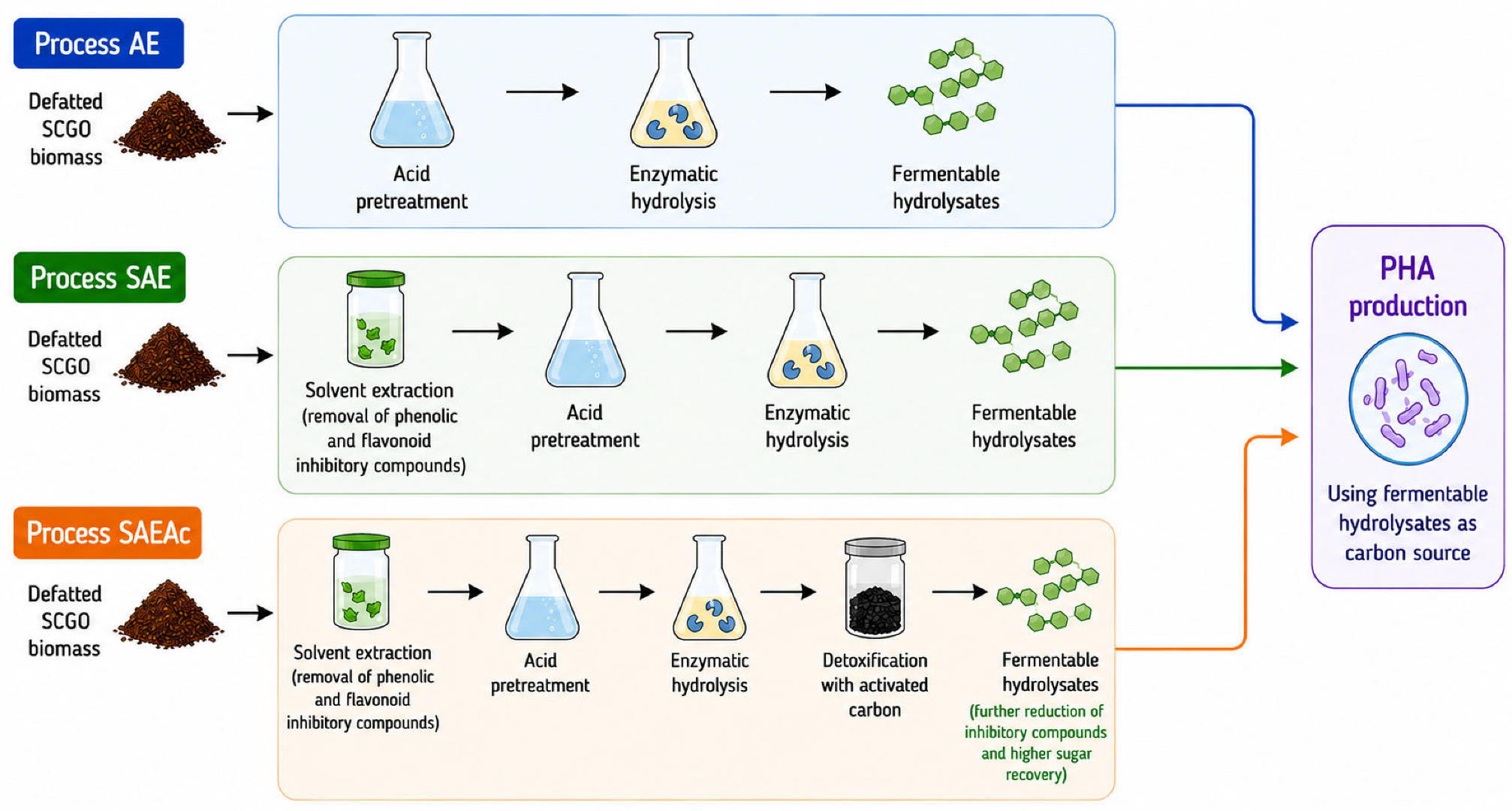
- (i)
- In the process AE, biomass was treated directly with acid and then subjected to enzymatic hydrolysis.
- (ii)
- In the process SAE, there was a preliminary step of solvent extraction to remove phenolic and flavonoid inhibitory compounds, followed by acid pretreatment and enzymatic hydrolysis.
- (iii)
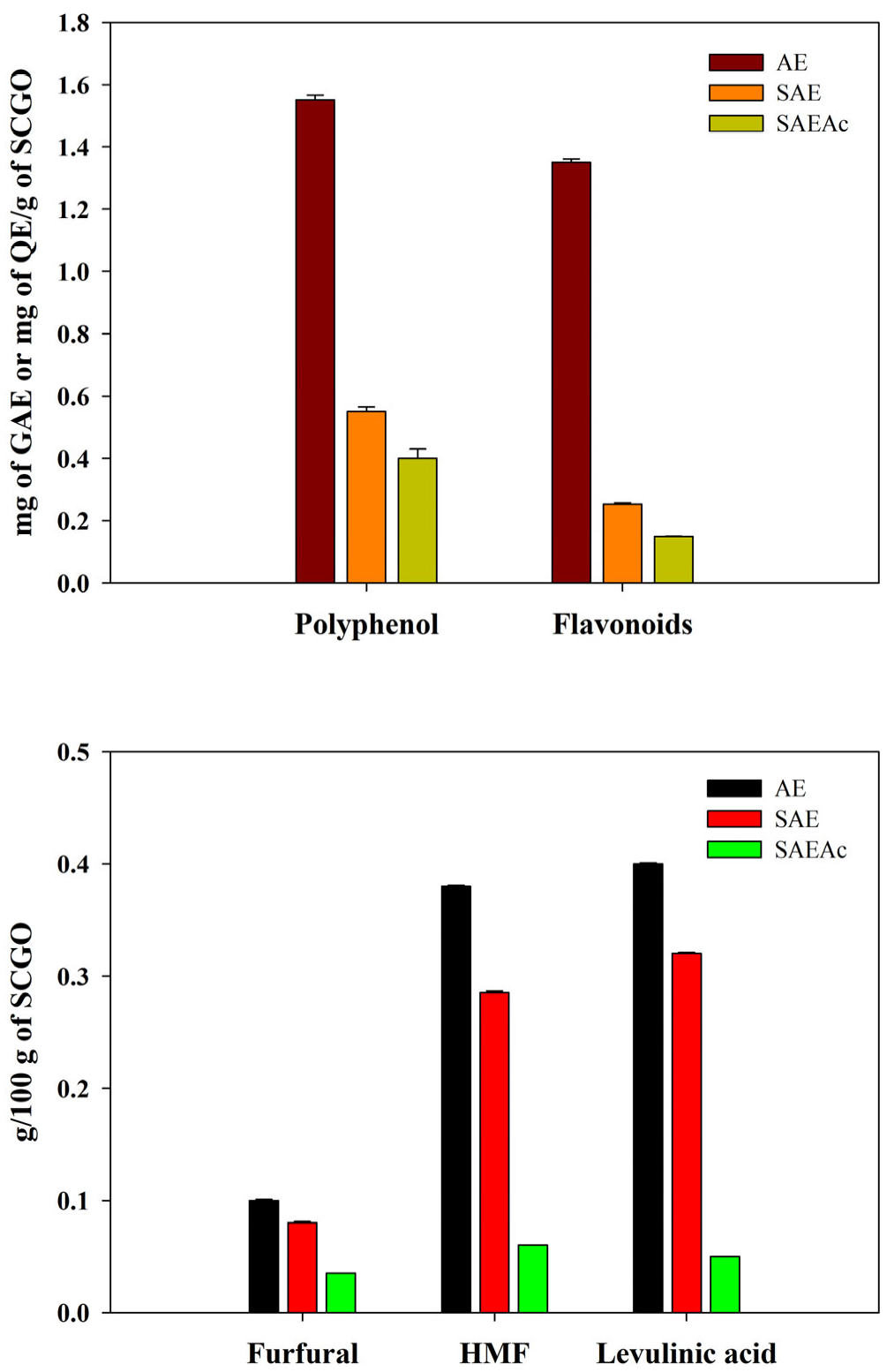
- In the process SAEAc, solvent extraction followed by acid pretreatment and enzymatic hydrolysis, coupled with an additional detoxification step using activated charcoal.
2.3. PHA Production Studies from Detoxified SCGO Feedstock
2.4. Supplementation of Nutrient and External Stress Conditions to Increase PHA Production
2.5. PHA Extraction and Purification
2.6. Phytochemical Characterization of Solvent Extractives from SCGO
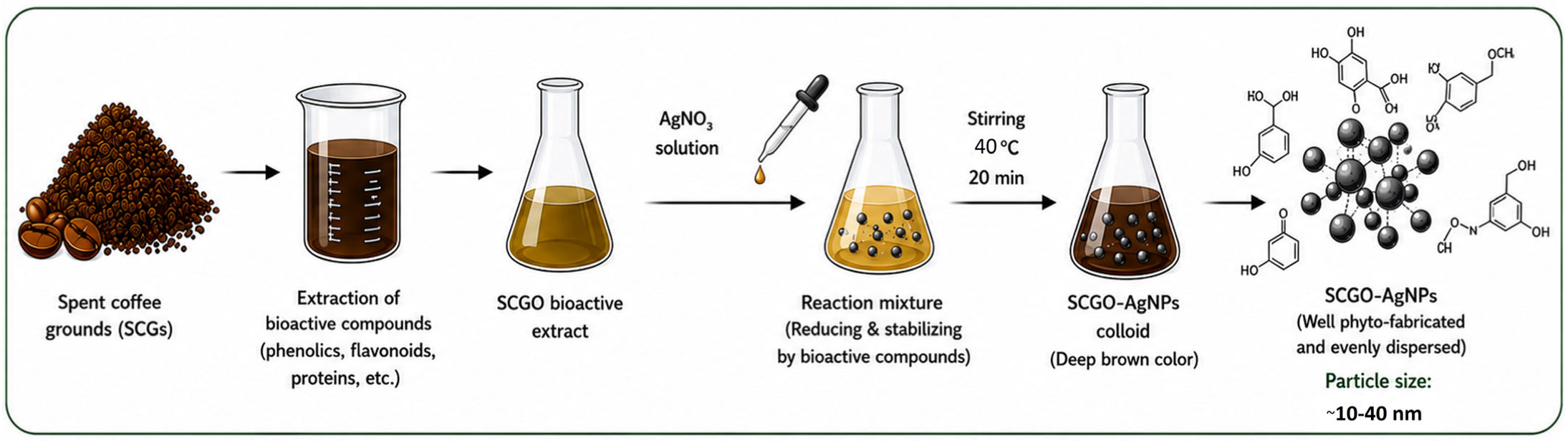
2.7. Silver Nanoparticles (AgNPs) Were Synthesized Using Extractives from SCGO
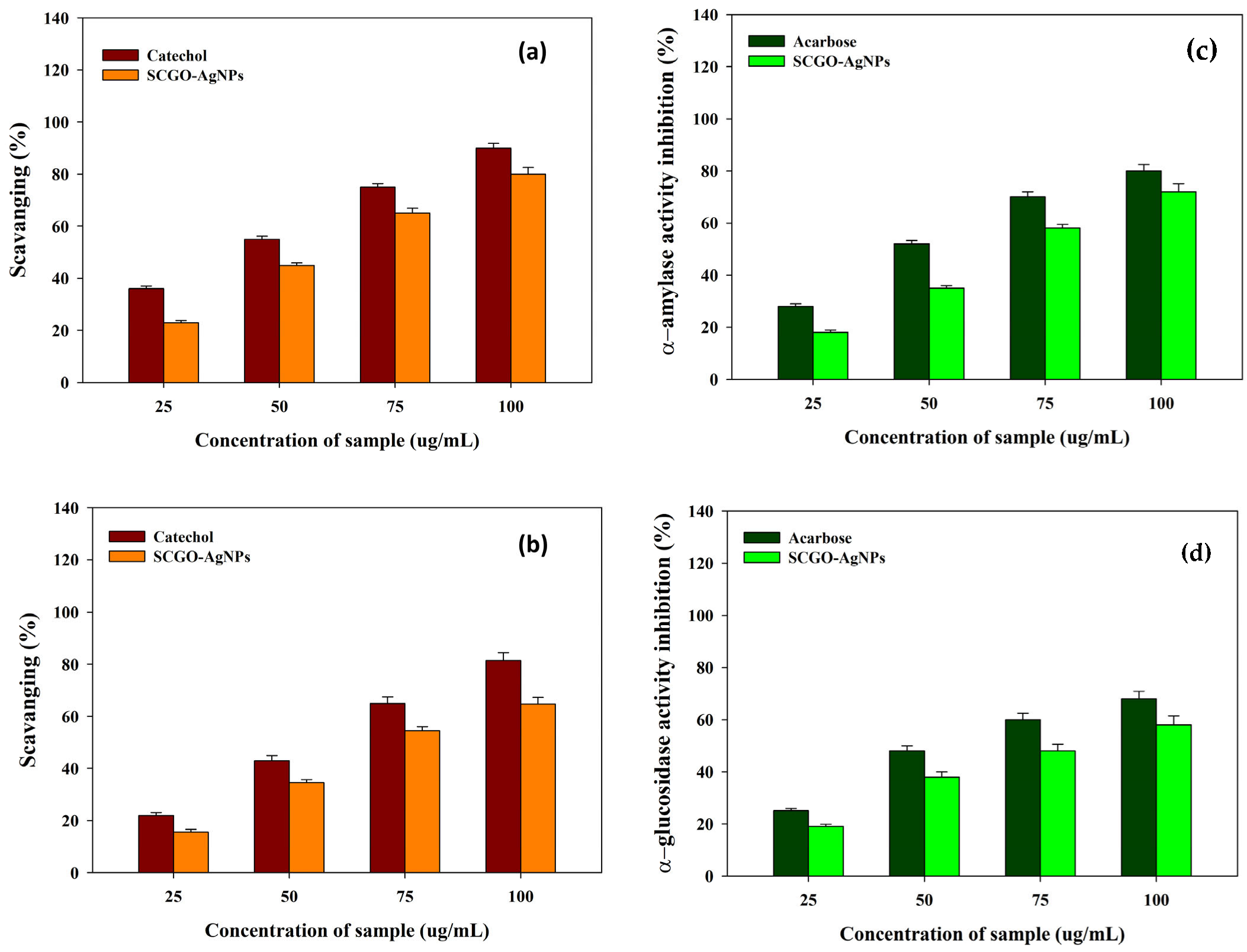
2.8. Antioxidant and Antidiabetic Potential of Biosynthesized SCGO-AgNPs
2.9. Analytical Methods
2.10. Statistical Analysis
3. Results and Discussion
3.1. Chemical Composition of SCGs
3.2. Detoxification Strategies and Effects on the Chemical Composition of SCGO Feedstock
3.3. PHA Production from SCGO-Derived Hydrolysates
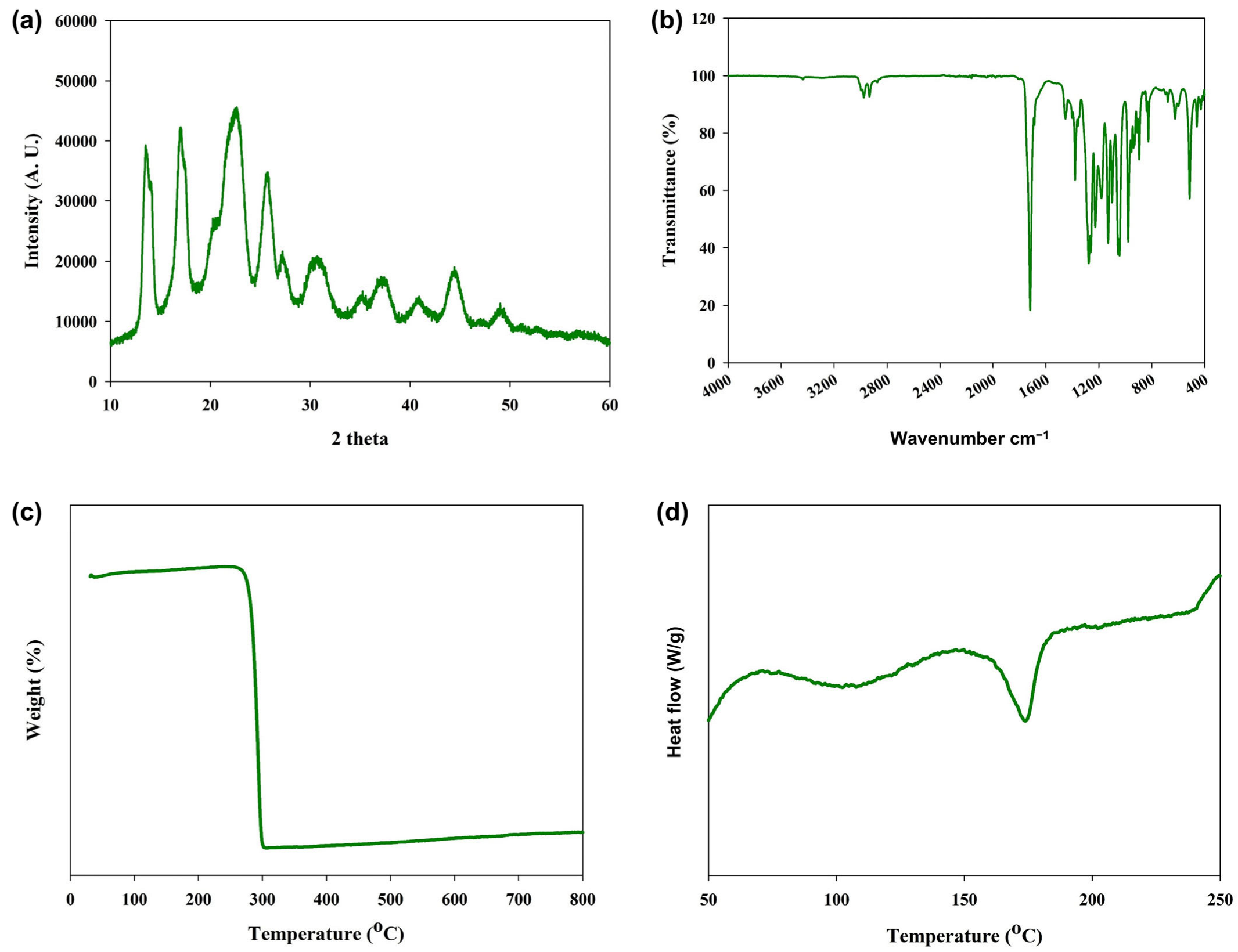
3.4. Characterization of Produced Polyhydroxyalkanoate (PHA)
3.4.1. X-Ray Diffraction (XRD) Analysis
3.4.2. Fourier Transform Infrared Spectroscopy (FTIR) Analysis
3.4.3. Thermogravimetric (TGA) and Differential Scanning Calorimetry (DSC) Analysis
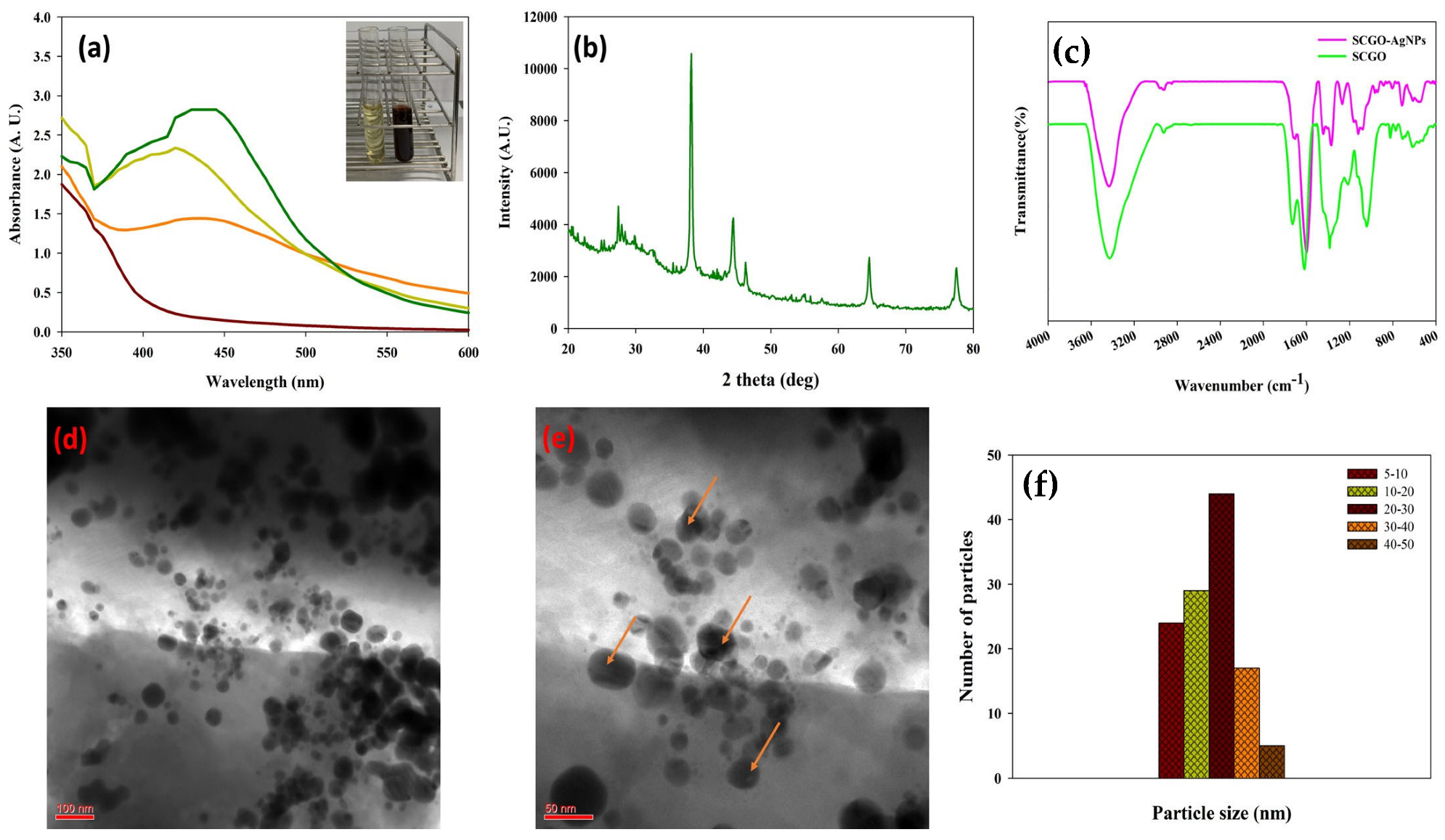
3.5. Phytochemical Profiling, Biosynthesis, Characterization of SCGO-Derived Silver Nanoparticles (SCGO-AgNPs)
Structural Characterization of the Biosynthesized SCGO-AgNPs
3.6. Unlocking Multifunctional Potential of SCGO-AgNPs
4. Conclusions
Author Contributions
Funding
Institutional Review Board Statement
Data Availability Statement
Conflicts of Interest
References
- Obruca, S.; Benesova, P.; Kucera, D.; Petrik, S.; Marova, I. Biotechnological Conversion of Spent Coffee Grounds into Polyhydroxyalkanoates and Carotenoids. New Biotechnol. 2015, 32, 569–574. [Google Scholar] [CrossRef]
- Sidło, W.; Latosińska, J. Reuse of Spent Coffee Grounds: Alternative Applications, Challenges, and Prospects—A Review. Appl. Sci. 2025, 15, 137. [Google Scholar] [CrossRef]
- Al Balushi, J.; Al Saadi, S.; Ahanchi, M.; Al Attar, M.; Jafary, T.; Al Hinai, M.; Yeneneh, A.M.; Basha, J.S. A Comprehensive Review on Sustainable Conversion of Spent Coffee Grounds into Energy Resources and Environmental Applications. Biomass 2025, 5, 55. [Google Scholar] [CrossRef]
- Atabani, A.E.; Ali, I.; Naqvi, S.R.; Badruddin, I.A.; Aslam, M.; Mahmoud, E.; Almomani, F.; Juchelková, D.; Atelge, M.R.; Khan, T.M.Y. A State-of-the-Art Review on Spent Coffee Ground (SCG) Pyrolysis for Future Biorefinery. Chemosphere 2022, 286, 131730. [Google Scholar] [CrossRef] [PubMed]
- Atabani, A.E.; Mahmoud, E.; Aslam, M.; Naqvi, S.R.; Juchelková, D.; Bhatia, S.K.; Badruddin, I.A.; Khan, T.M.Y.; Hoang, A.T.; Palacky, P. Emerging Potential of Spent Coffee Ground Valorization for Fuel Pellet Production in a Biorefinery. Environ. Dev. Sustain. 2023, 25, 7585–7623. [Google Scholar]
- Gaur, V.K.; Gaur, P.; Telegin, A.; Thakur, R.S.; Sharma, P.; Gupta, P.; Vithanage, M.; Dhakar, K.; Raheja, Y.; Srivastava, J.K.; et al. Unlocking the Potential of Food Waste Chemistry for Biodegradable Plastics Production: Recent Advancements, Perspectives, and Life-Cycle Assessment. Trends Food Sci. Technol. 2025, 156, 104836. [Google Scholar] [CrossRef]
- Obruca, S.; Benesova, P.; Petrik, S.; Oborna, J.; Prikryl, R.; Marova, I. Production of Polyhydroxyalkanoates Using Hydrolysate of Spent Coffee Grounds. Process Biochem. 2014, 49, 1409–1414. [Google Scholar] [CrossRef]
- Fernandes, A.S.; Mello, F.V.C.; Thode Filho, S.; Carpes, R.M.; Honório, J.G.; Marques, M.R.C.; Felzenszwalb, I.; Ferraz, E.R.A. Impacts of Discarded Coffee Waste on Human and Environmental Health. Ecotoxicol. Environ. Saf. 2017, 141, 30–36. [Google Scholar] [CrossRef] [PubMed]
- Zengin, G.; Sinan, K.I.; Mahomoodally, M.F.; Angeloni, S.; Mustafa, A.M.; Vittori, S.; Maggi, F.; Caprioli, G. Chemical Composition, Antioxidant and Enzyme Inhibitory Properties of Different Extracts Obtained from Spent Coffee Ground and Coffee Silverskin. Foods 2020, 9, 713. [Google Scholar] [CrossRef] [PubMed]
- Juarez, G.F.Y.; Pabiloña, K.B.C.; Manlangit, K.B.L.; Go, A.W. Direct Dilute Acid Hydrolysis of Spent Coffee Grounds: A New Approach in Sugar and Lipid Recovery. Waste Biomass Valorization 2018, 9, 235–246. [Google Scholar] [CrossRef]
- Bomfim, A.S.C.d.; Oliveira, D.M.d.; Voorwald, H.J.C.; Benini, K.C.C.d.C.; Dumont, M.-J.; Rodrigue, D. Valorization of Spent Coffee Grounds as Precursors for Biopolymers and Composite Production. Polymers 2022, 14, 437. [Google Scholar] [CrossRef] [PubMed]
- Kourmentza, C.; Economou, C.N.; Tsafrakidou, P.; Kornaros, M. Spent Coffee Grounds Make Much More than Waste: Exploring Recent Advances and Future Exploitation Strategies for the Valorization of an Emerging Food Waste Stream. J. Clean. Prod. 2018, 172, 980–992. [Google Scholar] [CrossRef]
- Filiciotto, L.; Rothenberg, G. Biodegradable Plastics: Standards, Policies, and Impacts. ChemSusChem 2021, 14, 56–72. [Google Scholar] [PubMed]
- Rosenboom, J.G.; Langer, R.; Traverso, G. Bioplastics for a Circular Economy. Nat. Rev. Mater. 2022, 7, 117–137. [Google Scholar] [CrossRef] [PubMed]
- Asgher, M.; Qamar, S.A.; Bilal, M.; Iqbal, H.M.N. Bio-Based Active Food Packaging Materials: Sustainable Alternative to Conventional Petrochemical-Based Packaging Materials. Food Res. Int. 2020, 137, 109625. [Google Scholar] [CrossRef] [PubMed]
- Saratale, R.G.; Cho, S.-K.; Bharagava, R.N.; Patel, A.K.; Vivekanand, V.; Bhatia, S.K.; Ferreira, L.F.R.; Shin, H.S.; Awasthi, M.K.; Chakrabortty, S.; et al. Third-Generation Biomass for Bioplastics: A Comprehensive Review of Microalgae-Driven Polyhydroxyalkanoate Production. Biofuel Res. J. 2024, 44, 2256–2282. [Google Scholar] [CrossRef]
- Mukherjee, A.; Koller, M. Polyhydroxyalkanoate (PHA) Biopolyesters—Emerging and Major Products of Industrial Biotechnology. Eurobiotech J. 2022, 6, 49–60. [Google Scholar] [CrossRef]
- Saratale, R.G.; Cho, S.-K.; Ghodake, G.S.; Shin, H.-S.; Saratale, G.D.; Park, Y.; Lee, H.-S.; Bharagava, R.N.; Kim, D.-S. Utilization of Noxious Weed Water Hyacinth Biomass as a Potential Feedstock for Biopolymers Production: A Novel Approach. Polymers 2020, 12, 1704. [Google Scholar] [CrossRef] [PubMed]
- Choi, S.Y.; Rhie, M.N.; Kim, H.T.; Joo, J.C.; Cho, I.J.; Son, J.; Jo, S.Y.; Sohn, Y.J.; Baritugo, K.-A.; Pyo, J.; et al. Metabolic Engineering for the Synthesis of Polyesters: A 100-Year Journey from Polyhydroxyalkanoates to Non-Natural Microbial Polyesters. Metab. Eng. 2020, 58, 47–81. [Google Scholar] [CrossRef] [PubMed]
- Banu, R.J.; Kavitha, S.; Yukesh Kannah, R.; Dinesh Kumar, M.; Preethi; Atabani, A.E.; Kumar, G. Biorefinery of Spent Coffee Grounds Waste: A Viable Pathway towards Circular Bioeconomy. Bioresour. Technol. 2020, 302, 122821. [Google Scholar] [CrossRef] [PubMed]
- Abedini, A.; Amiri, H.; Karimi, K. Efficient Biobutanol Production from Potato Peel Wastes by Separate and Simultaneous Inhibitors Removal and Pretreatment. Renew. Energy 2020, 160, 269–277. [Google Scholar] [CrossRef]
- Mosier, N.; Wyman, C.; Dale, B.; Elander, R.; Lee, Y.Y.; Holtzapple, M.; Ladisch, M. Features of promising technologies for pretreatment of lignocellulosic biomass. Bioresour. Technol. 2005, 96, 673–686. [Google Scholar] [CrossRef] [PubMed]
- Kumar, R.; Mago, G.; Balan, V.; Wyman, C.E. Physical and chemical characterizations of corn stover and poplar solids resulting from leading pretreatment technologies. Bioresour. Technol. 2009, 100, 3948–3962. [Google Scholar] [CrossRef] [PubMed]
- Yu, J.; Stahl, H. Microbial Utilization and Biopolyester Synthesis of Bagasse Hydrolysates. Bioresour. Technol. 2008, 99, 8042–8048. [Google Scholar] [CrossRef] [PubMed]
- Jarboe, L.R.; Royce, L.A.; Liu, P. Understanding Biocatalyst Inhibition by Carboxylic Acids. Front. Microbiol. 2013, 4, 272. [Google Scholar] [CrossRef] [PubMed]
- Kovalcik, A.; Kucera, D.; Matouskova, P.; Pernicova, I.; Obruca, S.; Kalina, M.; Enev, V.; Marova, I. Influence of Removal of Microbial Inhibitors on PHA Production from Spent Coffee Grounds Employing Halomonas halophila. J. Environ. Chem. Eng. 2018, 6, 3495–3501. [Google Scholar] [CrossRef]
- Zhang, Y.; Yin, F.; Zheng, Y.; Ma, X.; Li, J.; Yang, F.; Li, D.; Li, Y. Sustainable Conversion of Lignocellulose Hydrolysates without Detoxification Treatment to Biodegradable Poly(3-Hydroxybutyrate) by a Halomonas venusta DSM4743 Cell Factory. Green Chem. 2026, 28, 7847. [Google Scholar] [CrossRef]
- Bamal, D.; Singh, A.; Chaudhary, G.; Kumar, M.; Singh, M.; Rani, N.; Mundlia, P.; Sehrawat, A.R. Silver Nanoparticles Biosynthesis, Characterization, Antimicrobial Activities, Applications, Cytotoxicity and Safety Issues: An Updated Review. Nanomaterials 2021, 11, 2086. [Google Scholar] [CrossRef] [PubMed]
- Rafique, M.; Sadaf, I.; Rafique, M.S.; Tahir, M.B. A Review on Green Synthesis of Silver Nanoparticles and Their Applications. Artif. Cells Nanomed. Biotechnol. 2017, 45, 1272–1291. [Google Scholar] [PubMed]
- Vanlalveni, C.; Lallianrawna, S.; Biswas, A.; Selvaraj, M.; Changmai, B.; Rokhum, S.L. Green Synthesis of Silver Nanoparticles Using Plant Extracts and Their Antimicrobial Activities: A Review of Recent Literature. RSC Adv. 2021, 11, 2804–2837. [Google Scholar] [CrossRef] [PubMed]
- Vijayaram, S.; Razafindralambo, H.; Sun, Y.Z.; Vasantharaj, S.; Ghafarifarsani, H.; Hoseinifar, S.H.; Raeeszadeh, M. Applications of Green Synthesized Metal Nanoparticles—A Review. Biol. Trace Elem. Res. 2024, 202, 360–386. [Google Scholar] [PubMed]
- Saratale, R.G.; Karuppusamy, I.; Saratale, G.D.; Pugazhendhi, A.; Kumar, G.; Park, Y.; Shin, H.-S. A Comprehensive Review on Green Nanomaterials Using Biological Systems: Recent Perception and Their Future Applications. Colloids Surf. B Biointerfaces 2018, 170, 20–35. [Google Scholar] [CrossRef] [PubMed]
- Saratale, G.D.; Saratale, R.G.; Oh, S.E. Production and Characterization of Multiple Cellulolytic Enzymes by Isolated Streptomyces sp. MDS Biomass Bioenergy 2012, 47, 302–315. [Google Scholar] [CrossRef]
- Mussatto, S.I.; Santos, J.C.; Roberto, I.C. Effect of pH and activated charcoal adsorption on hemicellulosic hydrolysate detoxification for xylitol production. J. Chem. Technol. Biotechnol. 2004, 79, 590–596. [Google Scholar] [CrossRef]
- Saratale, G.D.; Oh, M.K. Characterization of poly(3-hydroxybutyrate) (PHB) produced from Ralstonia eutropha using an alkali-pretreated biomass feedstock. Int. J. Biol. Macromol. 2015, 80, 627–635. [Google Scholar] [CrossRef] [PubMed]
- Harborne, J.B.; Harborne, A. Phytochemical Methods: A Guide to Modern Techniques of Plant Analysis; Kluwer Academic Publishers: London, UK, 1998. [Google Scholar]
- Singleton, V.L.; Orthofer, R. Analysis of Total Phenols and Other Oxidation Substrates and Antioxidants by Means of Folin–Ciocalteu Reagent. Methods Enzymol. 1999, 299, 152–178. [Google Scholar] [CrossRef]
- Kumaran, A.; Joel, K.R. In Vitro Antioxidant Activities of Methanol Extracts of Five Phyllanthus Species from India. LWT-Food Sci. Technol. 2007, 40, 344–352. [Google Scholar] [CrossRef]
- Balan, K.; Qing, W.; Wang, Y.; Liu, X.; Palvannan, T.; Wang, Y.; Ma, F.; Zhang, Y. Antidiabetic Activity of Silver Nanoparticles from Green Synthesis Using Lonicera japonica Leaf Extract. RSC Adv. 2016, 6, 40162–40168. [Google Scholar] [CrossRef]
- Goering, H.D.; Van Soest, J.P. Forage Fiber Analysis. USDA Agric. Handb. 1970, 379, 1–20. [Google Scholar]
- Miller, G.L. Use of Dinitrosalicylic Acid Reagent for Determination of Reducing Sugar. Anal. Chem. 1959, 31, 426–428. [Google Scholar] [CrossRef]
- Deswal, D.; Khasa, Y.P.; Kuhad, R.C. Optimization of Cellulase Production by a Brown Rot Fungus Fomitopsis sp. RCK2010 under Solid-State Fermentation. Bioresour. Technol. 2011, 102, 6065–6072. [Google Scholar] [CrossRef] [PubMed]
- Saratale, G.D.; Bhosale, R.; Shobana, S.; Banu, J.R.; Pugazhendhi, A.; Mahmoud, E.; Sirohi, R.; Bhatia, S.K.; Atabani, A.E.; Mulone, V.; et al. A review on valorization of spent coffee grounds (SCG) towards biopolymers and biocatalysts production. Bioresour. Technol. 2023, 376, 128878. [Google Scholar] [CrossRef] [PubMed]
- Kim, J.; Park, Y.; Shin, J.; Kim, S. Sustainable protein extraction from spent coffee grounds using response surface methodology. Biomass Convers. Biorefinery 2025, 15, 18835–18845. [Google Scholar] [CrossRef]
- Nguyen, Q.A.; Cho, E.J.; Lee, D.S.; Bae, H.J. Development of an advanced integrative process to create valuable biosugars including manno-oligosaccharides and mannose from spent coffee grounds. Bioresour. Technol. 2019, 272, 209–216. [Google Scholar] [CrossRef] [PubMed]
- Ravindran, R.; Jaiswal, S.; Abu-Ghannam, N.; Jaiswal, A.K. Evaluation of ultrasound-assisted potassium permanganate pre-treatment of spent coffee waste. Bioresour. Technol. 2017, 224, 680–687. [Google Scholar] [CrossRef] [PubMed]
- López-Linares, J.C.; García-Cubero, M.T.; Coca, M.; Lucas, S. Efficient biobutanol production by acetone-butanol-ethanol fermentation from spent coffee grounds with microwave-assisted dilute sulfuric acid pretreatment. Bioresour. Technol. 2021, 320, 124348. [Google Scholar] [CrossRef] [PubMed]
- Shaikh-Ibrahim, A.; Curci, N.; De Lise, F.; Sacco, O.; Di Fenza, M.; Castaldi, S.; Isticato, R.; Oliveira, A.; Aniceto, J.P.S.; Silva, C.M.; et al. Carbohydrate conversion in spent coffee grounds: Pretreatment strategies and novel enzymatic cocktail to produce value-added saccharides and prebiotic mannooligosaccharides. Biotechnol. Biofuels Bioprod. 2025, 18, 2. [Google Scholar] [CrossRef] [PubMed]
- Yang, L.; Wen, K.-S.; Ruan, X.; Zhao, Y.-X.; Wei, F.; Wang, Q. Response of plant secondary metabolites to environmental factors. Molecules 2018, 23, 762. [Google Scholar] [CrossRef] [PubMed]
- Firdaus, R.M.; Ishak, N.A.I.M.; Aroua, M.K.; Gew, L.T. Extraction and LC–MS characterization of bioactive compounds from spent coffee grounds. Discov. Food 2026, 6, 109. [Google Scholar] [CrossRef]
- Calle Chumo, R.N.; Calle Chumo, D.A.; Gallegos Peredo, A.S.; Jarrin Oseguera, P.I. Influence of the solvent on the extraction of phenolic compounds from coffee grounds by Soxhlet leaching. Ing. Investig. 2022, 43, e97521. [Google Scholar] [CrossRef]
- Alkaltham, M.S.; Salamatullah, A.; Hayat, K. Determination of coffee fruit antioxidants cultivated in Saudi Arabia under different drying conditions. J. Food Meas. Charact. 2020, 14, 1306–1313. [Google Scholar] [CrossRef]
- Turco, R.; Santagata, G.; Corrado, I.; Pezzella, C.; Di Serio, M. In vivo and post-synthesis strategies to enhance the properties of PHB-based materials: A review. Front. Bioeng. Biotechnol. 2021, 8, 619266. [Google Scholar] [CrossRef] [PubMed]
- Bhattacharyya, S.; Chakraborty, S.; Datta, S.; Drioli, E.; Bhattacharjee, C. Production of Total Reducing Sugar from Acid-Hydrolysed Potato Peels by Sonication and Its Optimization. Environ. Technol. 2013, 34, 1077–1084. [Google Scholar] [CrossRef] [PubMed]
- Liang, J.; Liu, C.; Lu, H.; Yang, G.; Zhang, G.; Wang, A. Enhanced Anaerobic Fermentation of Potato Waste for Volatile Fatty Acid Production by Dilute Sulfuric Acid Pretreatment: Performance, Microbial Community, and Gene Expression. J. Water Process Eng. 2024, 59, 105054. [Google Scholar] [CrossRef]
- Corrado, I.; Argenziano, R.; Borselleca, E.; Moccia, F.; Panzella, L.; Pezzella, C. Cascade disassembling of spent coffee grounds into phenols, lignin and fermentable sugars en route to a green active packaging. Sep. Purif. Technol. 2024, 334, 125998. [Google Scholar] [CrossRef]
- Saratale, R.G.; Cho, S.K.; Saratale, G.D.; Ghodake, G.S.; Bharagava, R.N.; Kim, D.S.; Shin, H.S. Efficient bioconversion of sugarcane bagasse into polyhydroxybutyrate (PHB) by Lysinibacillus sp. and its characterization. Bioresour. Technol. 2021, 324, 124673. [Google Scholar] [CrossRef] [PubMed]
- Silva, L.F.; Taciro, M.K.; Michelin Ramos, M.E.; Carter, J.M.; Pradella, J.G.C.; Gomez, J.G.C. Poly-3-hydroxybutyrate (P3HB) production by bacteria from xylose, glucose and sugarcane bagasse hydrolysate. J. Ind. Microbiol. Biotechnol. 2004, 31, 245–254. [Google Scholar] [CrossRef] [PubMed]
- Pan, W.; Perrotta, J.A.; Stipanovic, A.J.; Nomura, C.T.; Nakas, J.P. Production of polyhydroxyalkanoates by Burkholderia cepacia ATCC 17759 using a detoxified sugar maple hemicellulosic hydrolysate. J. Ind. Microbiol. Biotechnol. 2012, 39, 459–469. [Google Scholar] [CrossRef] [PubMed]
- Pradhan, S.; Dikshit, P.K.; Moholkar, V.S. Production, ultrasonic extraction, and characterization of poly(3-hydroxybutyrate) (PHB) using Bacillus megaterium and Cupriavidus necator. Polym. Adv. Technol. 2018, 29, 2392–2400. [Google Scholar] [CrossRef]
- Etxabide, A.; Kilmartin, P.A.; Guerrero, P.; de la Caba, K.; Hooks, D.O.; West, M.; Singh, T. Polyhydroxybutyrate (PHB) produced from red grape pomace: Effect of purification processes on structural, thermal and antioxidant properties. Int. J. Biol. Macromol. 2022, 217, 449–456. [Google Scholar] [CrossRef] [PubMed]
- Sandhya, M.; Aravind, J.; Kanmani, P. Production of polyhydroxyalkanoates from Ralstonia eutropha using paddy straw as cheap substrate. Int. J. Environ. Sci. Technol. 2013, 10, 47–54. [Google Scholar]
- Mostafa, Y.S.; Alrumman, S.A.; Alamri, S.A.; Otaif, K.A.; Mostafa, M.S.; Alfaify, A.M. Bioplastic (poly-3-hydroxybutyrate) production by the marine bacterium Pseudodonghicola xiamenensis through date syrup valorization and structural assessment of the biopolymer. Sci. Rep. 2020, 10, 8815. [Google Scholar] [CrossRef] [PubMed]
- Siripurapu, A.; Vamsidhar, K.V.N.; Shivshetty, N.; Poosarla, V.G. Production and characterization of biodegradable polymer-polyhydroxybutyrate from agricultural waste-sugarcane bagasse by the novel marine bacterium Klebsiella pneumoniae G1. Bioresour. Technol. Rep. 2022, 20, 101268. [Google Scholar] [CrossRef]
- Reddy, M.V.; Mawatari, Y.; Yajima, Y.; Seki, C.; Hoshino, T.; Chang, Y.-C. Poly-3-hydroxybutyrate (PHB) production from alkylphenols, mono and poly-aromatic hydrocarbons using Bacillus sp. CYR1: A new strategy for wealth from waste. Bioresour. Technol. 2015, 192, 711–717. [Google Scholar] [CrossRef] [PubMed]
- Acharjee, S.A.; Bharali, P.; Ramachandran, D.; Kanagasabai, V.; Gogoi, M.; Hazarika, S.; Koch, P.J.; Dutta, N.; Maadurshni, G.B.; Manivannan, J.; et al. Polyhydroxybutyrate (PHB)-based sustainable bioplastic derived from Bacillus sp. KE4 isolated from kitchen waste effluent. Sustain. Chem. Pharm. 2024, 39, 101507. [Google Scholar] [CrossRef]
- Kim, J.; Gupta, N.S.; Bezek, L.B.; Linn, J.; Bejagam, K.K.; Banerjee, S.; Dumont, J.H.; Nam, S.Y.; Kang, H.W.; Park, C.H.; et al. Biodegradation studies of polyhydroxybutyrate and polyhydroxybutyrate-co-polyhydroxyvalerate films in soil. Int. J. Mol. Sci. 2023, 24, 7638. [Google Scholar] [CrossRef] [PubMed]
- Hosseinzadeh, E.; Foroumadi, A.; Firoozpour, L. What is the role of phytochemical compounds as capping agents for the inhibition of aggregation in the green synthesis of metal oxide nanoparticles? A DFT molecular level response. Inorg. Chem. Commun. 2023, 147, 110243. [Google Scholar] [CrossRef]
- Velmurugan, P.; Cho, M.; Lim, S.S.; Seo, S.K.; Myung, H.; Bang, K.S.; Oh, B.T. Phytosynthesis of silver nanoparticles by Prunus yedoensis leaf extract and their antimicrobial activity. Mater. Lett. 2015, 138, 272–275. [Google Scholar] [CrossRef]
- Sriranjani, R.; Srinithya, B.; Vellingiri, V.; Brindha, P.; Anthony, S.P.; Sivasubramanian, A.; Muthuraman, M.S. Silver nanoparticle synthesis using Clerodendrum phlomidis leaf extract and preliminary investigation of its antioxidant and anticancer activities. J. Mol. Liq. 2016, 220, 926–930. [Google Scholar] [CrossRef]
- Alothman, M.; Abd-Ei-Aziz Abeer, R. Effect of green synthesis silver nanoparticles from five fruits peel on protein capped and anti-fungal properties. Int. J. Adv. Res. Biol. Sci. 2019, 6, 156–165. [Google Scholar]
- Anjum, S.; Nawaz, K.; Ahmad, B.; Hano, C.; Abbasi, B.H. Green synthesis of biocompatible core–shell (Au–Ag) and hybrid (Au–ZnO and Ag–ZnO) bimetallic nanoparticles and evaluation of their potential antibacterial, antidiabetic, antiglycation and anticancer activities. RSC Adv. 2022, 12, 23845–23859. [Google Scholar] [CrossRef] [PubMed]
- Etxeberria, U.; de la Garza, A.L.; Campión, J.; Martínez, J.A.; Milagro, F.I. Antidiabetic effects of natural plant extracts via inhibition of carbohydrate hydrolysis enzymes with emphasis on pancreatic alpha amylase. Expert Opin. Ther. Targets 2012, 16, 269–297. [Google Scholar] [CrossRef] [PubMed]
- Poovitha, S.; Parani, M. In vitro and in vivo α-amylase and α-glucosidase inhibiting activities of the protein extracts from two varieties of bitter gourd (Momordica charantia L.). BMC Complement. Altern. Med. 2016, 16, 185. [Google Scholar] [CrossRef] [PubMed]



| Name of Component | Chemical Composition (%) |
|---|---|
| Dry solid matter | 96.2 ± 2.15 |
| Proteins | 8.50 ± 0.44 |
| Fats/Lipids | 11.5 ± 1.14 |
| Lignin | 20.9 ± 1.15 |
| Total sugars | 49.40 ± 2.24 |
| Cellobiose | 2.60 ± 0.08 |
| Glucose | 6.35 ± 0.32 |
| Mannose | 17.25 ± 0.41 |
| Galactose | 20.20 ± 0.48 |
| Arabinose | 0.80 ± 0.001 |
| Xylose | 2.25 ± 0.01 |
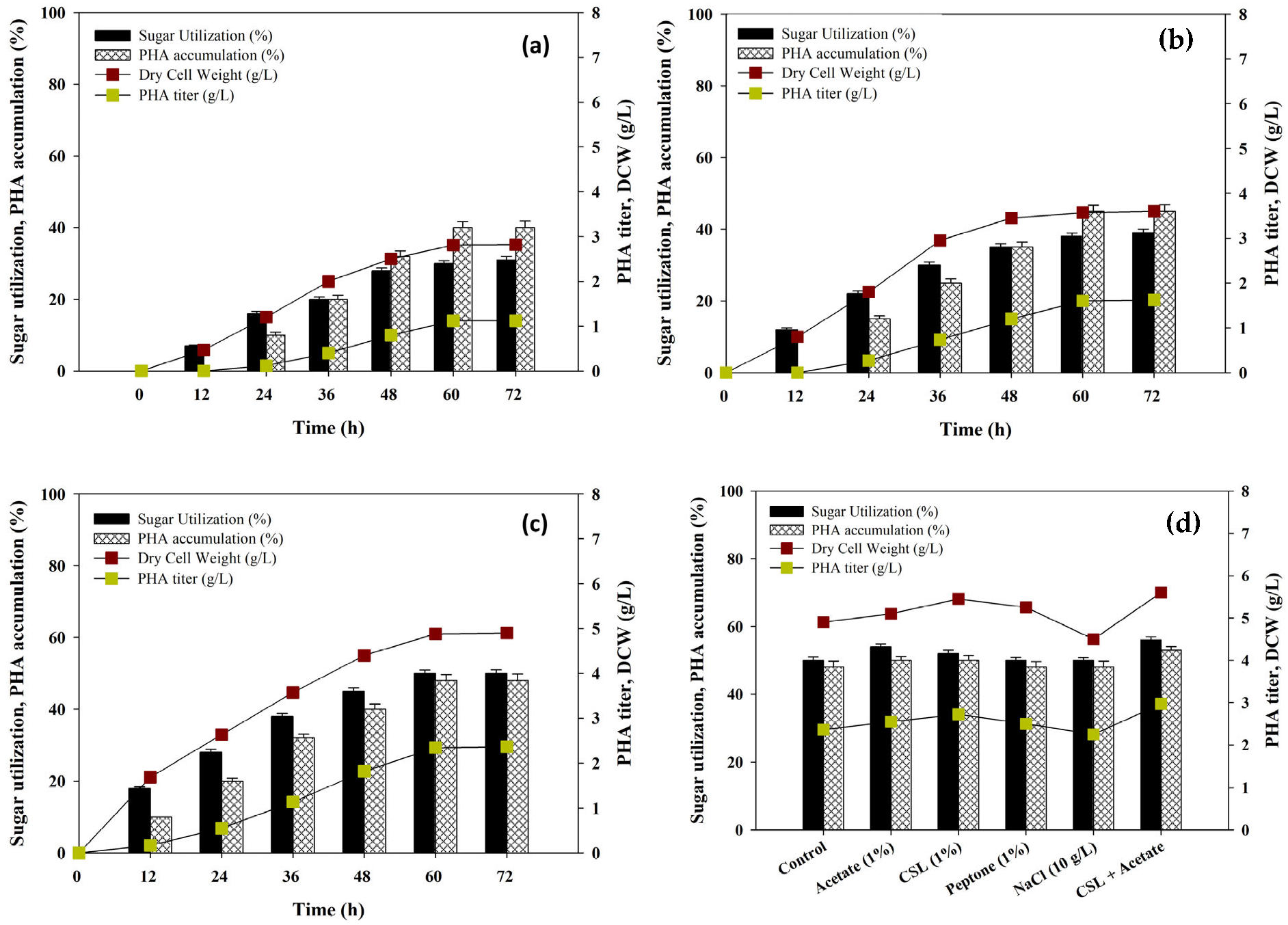
| Type of SCGO Detoxification Process | Total Sugar Utilization (%) | Dry Cell Weight (DCW, g/dm3) | PHA Accumulation (%) | PHA Titer (g/dm3) |
|---|---|---|---|---|
| SCGO-AE | 30.0 ± 1.45 | 2.82 ± 0.10 | 40.2 ± 2.15 | 1.12 ± 0.01 |
| SCGO-SAE | 38.2 ± 1.89 | 3.57 ± 0.16 | 45.0 ± 2.20 | 1.60 ± 0.02 |
| SCGO-SAEAc | 50.0 ± 2.52 | 4.90 ± 0.20 | 48.1 ± 2.15 | 2.36 ± 0.02 |
| Name of Phytochemicals | Empty Cell |
|---|---|
| Tannins | + |
| Alkaloids | + |
| Terpenoids | + |
| Steroids | − |
| Saponins | + |
| Cardiac steroidal glycosides | + |
| Phenols | + |
| Anthraquinones | + |
| Total polyphenols (TPC) * | 2.15 ± 0.01 (mg of GAE/g of SCGO) |
| Total flavonoids (TFC) * | 1.10 ± 0.01 (mg of QE/g of SCGO) |
Disclaimer/Publisher’s Note: The statements, opinions and data contained in all publications are solely those of the individual author(s) and contributor(s) and not of MDPI and/or the editor(s). MDPI and/or the editor(s) disclaim responsibility for any injury to people or property resulting from any ideas, methods, instructions or products referred to in the content. |
© 2026 by the authors. Licensee MDPI, Basel, Switzerland. This article is an open access article distributed under the terms and conditions of the Creative Commons Attribution (CC BY) license.
Share and Cite
Saratale, G.; Kumar, R.; Shin, H.S.; Kim, D.S.; Saratale, R.G.; Jeon, B.-H. Detoxification-Assisted Bioprocessing for Sustainable Conversion of Defatted Spent Coffee Grounds to Bioplastics and Biofunctional Metallic Nanoparticles. Polymers 2026, 18, 1846. https://doi.org/10.3390/polym18151846
Saratale G, Kumar R, Shin HS, Kim DS, Saratale RG, Jeon B-H. Detoxification-Assisted Bioprocessing for Sustainable Conversion of Defatted Spent Coffee Grounds to Bioplastics and Biofunctional Metallic Nanoparticles. Polymers. 2026; 18(15):1846. https://doi.org/10.3390/polym18151846
Chicago/Turabian StyleSaratale, Ganesh, Ramesh Kumar, Han Seung Shin, Dong Su Kim, Rijuta Ganesh Saratale, and Byong-Hun Jeon. 2026. "Detoxification-Assisted Bioprocessing for Sustainable Conversion of Defatted Spent Coffee Grounds to Bioplastics and Biofunctional Metallic Nanoparticles" Polymers 18, no. 15: 1846. https://doi.org/10.3390/polym18151846
APA StyleSaratale, G., Kumar, R., Shin, H. S., Kim, D. S., Saratale, R. G., & Jeon, B.-H. (2026). Detoxification-Assisted Bioprocessing for Sustainable Conversion of Defatted Spent Coffee Grounds to Bioplastics and Biofunctional Metallic Nanoparticles. Polymers, 18(15), 1846. https://doi.org/10.3390/polym18151846