Supercritical CO2-Assisted Impregnation of Absorbable Surgical Sutures with Carvacrol and Benzydamine Hydrochloride: Comparative In Vitro Release Profiles and Drug Release Kinetics

 , , , , , and
Abstract
1. Introduction
2. Materials and Methods
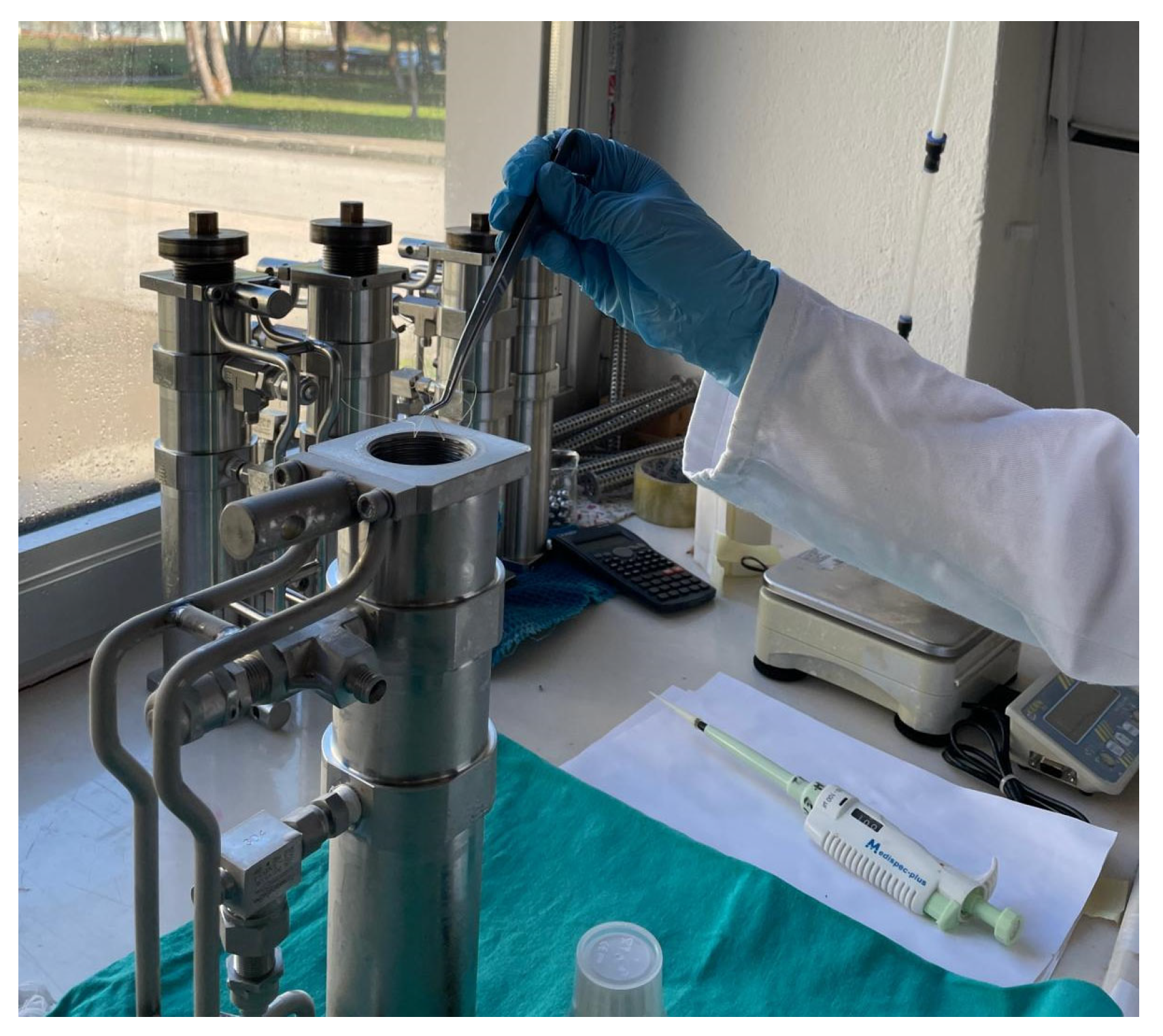
2.1. Supercritical CO2 Impregnation of Sutures
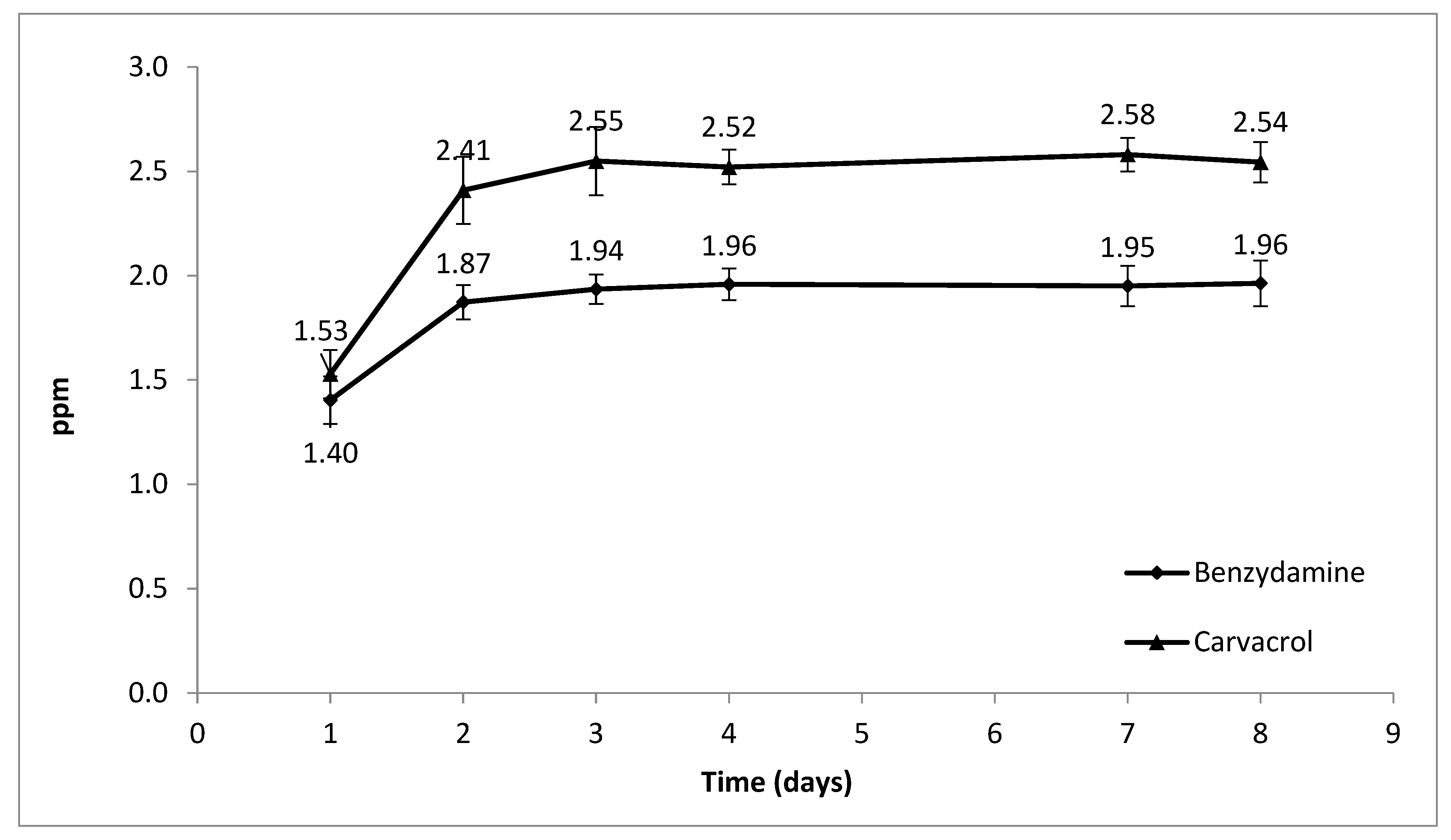
2.2. In Vitro Release Study
2.3. Spectrophotometric Analysis
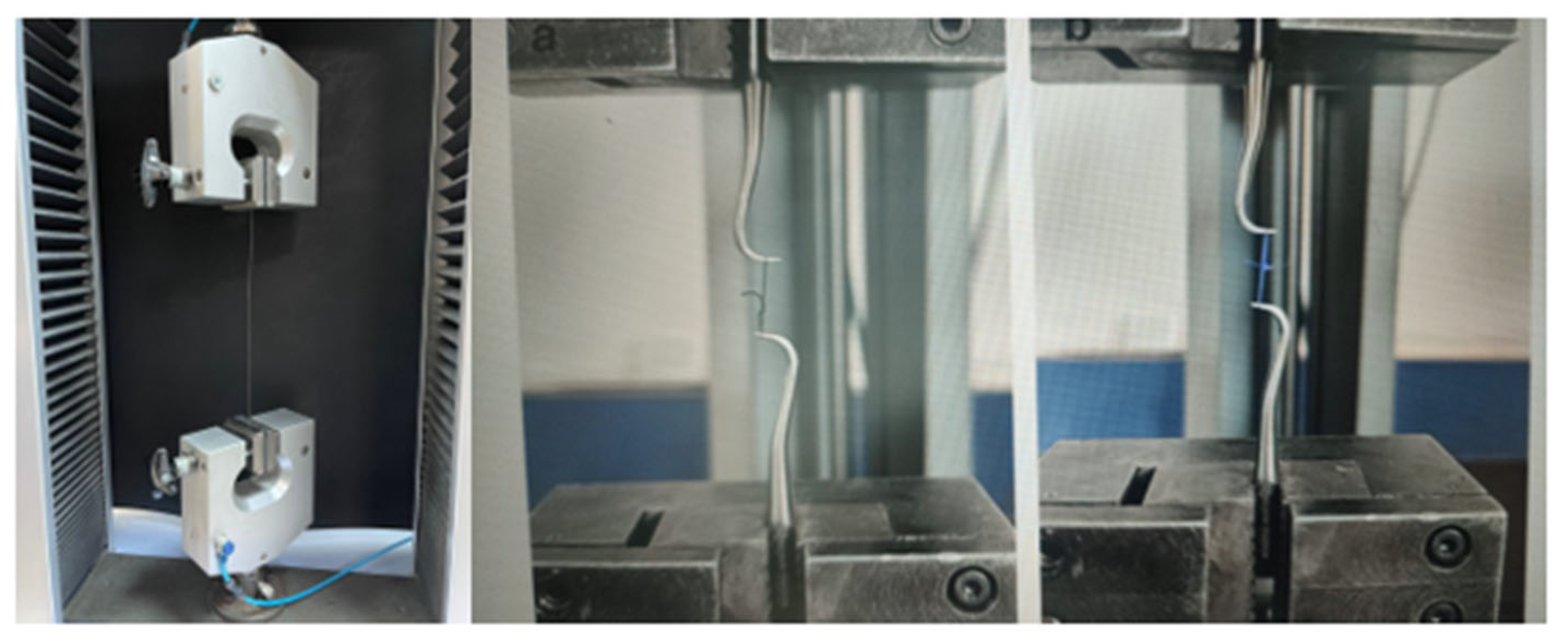
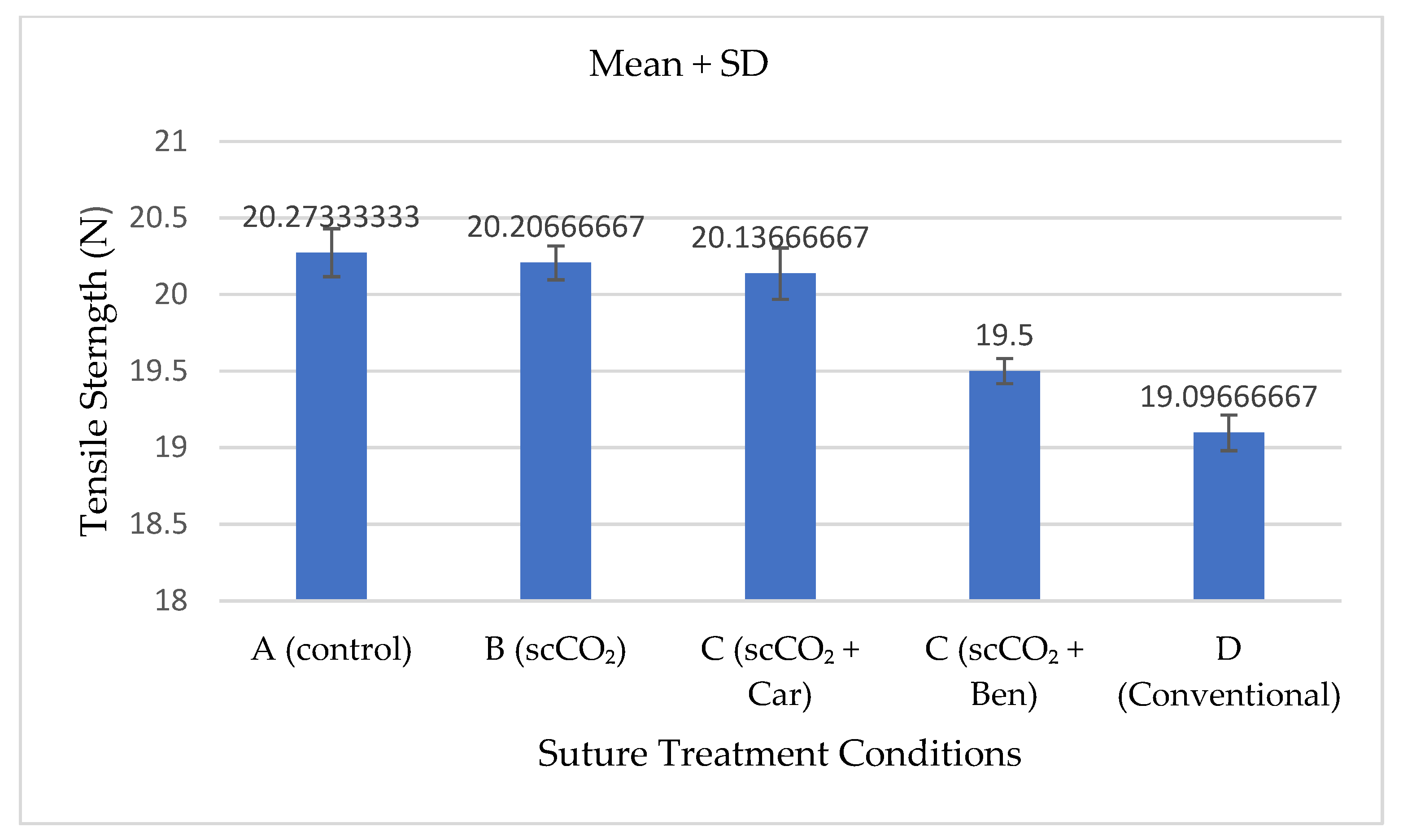
2.4. Tensile Strength Measurement of Absorbable Surgical Sutures
3. Results
4. Discussion
5. Conclusions
Author Contributions
Funding
Institutional Review Board Statement
Data Availability Statement
Conflicts of Interest
References
- Nappi, F. Suture Materials: Conventional and Stimulatory-Responsive Absorbable Polymers with Biomimetic Function. Biomimetics 2025, 10, 590. [Google Scholar] [CrossRef] [PubMed]
- Yang, Y.; Hu, T.; Zhang, H.; Liu, B.N.; Liu, J.; Li, W.X.; Song, K.; Jiang, G.-B. A suturable biohydrogel with mechanical matched property based on coating chitosan and polyethylene glycol shell for tissue patching. Int. J. Biol. Macromol. 2023, 224, 523–532. [Google Scholar] [CrossRef] [PubMed]
- Hrynyshyn, A.; Simões, M.; Borges, A. Biofilms in Surgical Site Infections: Recent Advances and Novel Prevention and Eradication Strategies. Antibiotics 2022, 11, 69. [Google Scholar] [CrossRef] [PubMed]
- Arora, A.; Aggarwal, G.; Chander, J.; Maman, P.; Nagpal, M. Drug eluting sutures: A recent update ARTICLE INFO. J. Appl. Pharm. Sci. 2019, 9, 111–123. [Google Scholar] [CrossRef]
- Weldon, C.B.; Tsui, J.H.; Shankarappa, S.A.; Nguyen, V.T.; Ma, M.; Anderson, D.G.; Kohane, D.S. Electrospun Drug-Eluting Sutures for Local Anesthesia. J. Control Release 2012, 161, 903–909. [Google Scholar] [CrossRef] [PubMed]
- Jaeger, W.; Bohrisch, J.; Laschewsky, A. Synthetic polymers with quaternary nitrogen atoms—Synthesis and structure of the most used type of cationic polyelectrolytes. Prog. Polym. Sci. 2010, 35, 511–577. [Google Scholar] [CrossRef]
- Sharma, S.; Sudhakara, P.; Singh, J.; Ilyas, R.A.; Asyraf, M.R.M.; Razman, M.R. Critical Review of Biodegradable and Bioactive Polymer Composites for Bone Tissue Engineering and Drug Delivery Applications. Polymers 2021, 13, 2623. [Google Scholar] [CrossRef] [PubMed]
- Deshpande, P.B.; Kumar, G.A.; Kumar, A.R.; Shavi, G.V.; Karthik, A.; Reddy, M.S.; Udupa, N. Supercritical fluid technology: Concepts and pharmaceutical applications. PDA J. Pharm. Sci. Technol. 2011, 65, 333–344. [Google Scholar] [CrossRef] [PubMed]
- Nalawade, S.P.; Picchioni, F.; Marsman, J.H.; Grijpma, D.W.; Feijen, J.; Janssen, L.P. Intermolecular interactions between carbon dioxide and the carbonyl groups of polylactides and poly(epsilon-caprolactone). J. Control Release 2006, 116, e38–e40. [Google Scholar] [CrossRef] [PubMed]
- Eren, S.; Öztürk, M.; Yiğit, İ. The effect of surface modification with ozone in waterless (ScCO2) dyeing o polyester. J. Innov. Eng. Nat. Sci. 2024, 4, 314–325. [Google Scholar] [CrossRef]
- Kemmere, M.F.; Meyer, T. Supercritical Carbon Dioxide: In Polymer Reaction Engineering; Wiley: Hoboken, NJ, USA, 2006; pp. 1–339. [Google Scholar] [CrossRef]
- Can Baser, K. Biological and pharmacological activities of carvacrol and carvacrol bearing essential oils. Curr. Pharm. Des. 2008, 14, 3106–3119. [Google Scholar] [CrossRef] [PubMed]
- Potra-Cicalău, G.I.; Ciavoi, G.; Todor, L.; Lile, I.; Marian, D.; Berari, A.; Pasca, C.; Stana, O.L. Carvacrol, a Promising Anti-inflammatory, Anti-bacterial and Antioxidant Agent, in Periodontal Disease Therapy. Med. Evol. 2024, 30, 198–206. [Google Scholar] [CrossRef]
- Memar, M.Y.; Raei, P.; Alizadeh, N.; Aghdam, M.A.; Kafil, H.S. Carvacrol and thymol: Strong antimicrobial agents against resistant isolates. Rev. Res. Med. Microbiol. 2017, 28, 63–68. [Google Scholar] [CrossRef]
- Cicalău, G.I.P.; Babes, P.A.; Calniceanu, H.; Popa, A.; Ciavoi, G.; Iova, G.M.; Ganea, M.; Scrobotă, I. Anti-inflammatory and antioxidant properties of carvacrol and magnolol, in periodontal disease and diabetes mellitus. Molecules 2021, 26, 6899. [Google Scholar] [CrossRef] [PubMed]
- Nostro, A.; Papalia, T. Antimicrobial Activity of Carvacrol: Current Progress and Future Prospectives. Recent Pat. Anti-Infect. Drug Discov. 2012, 7, 28–35. [Google Scholar] [CrossRef] [PubMed]
- Eren, S.; Öztürk, M.; Özenç, A.A.; Eren, H.A. Optimization of hemp fabric natural dyeing in supercritical carbon dioxide medium by response surface methodology. Cellul. Chem. Technol. 2025, 59, 929–938. [Google Scholar] [CrossRef]
- Eren, S.; Haji, A.; Öztürk, M.; Yiğit, İ.; Eren, H.A. Eco-friendly dyeing of polyester fabric with natural madder dye using supercritical carbon dioxide. Fibers Polym. 2024, 25, 4795–4806. [Google Scholar] [CrossRef]
- Pajnik, J.; Milovanovic, S.; Stojanovic, D.; Dimitrijevic-Brankovic, S.; Jankovic-Častvan, I.; Uskokovic, P. Utilization of supercritical carbon dioxide for development of antibacterial surgical sutures. J. Supercrit. Fluids 2022, 181, 105490. [Google Scholar] [CrossRef]
- Wu, I.Y.; Bala, S.; Škalko-Basnet, N.; di Cagno, M.P. Interpreting non-linear drug diffusion data: Utilizing Korsmeyer-Peppas model to study drug release from liposomes. Eur. J. Pharm. Sci. 2019, 138, 105026. [Google Scholar] [CrossRef] [PubMed]
- Chen, Q.; Moore, J.D.; Liu, Y.C.; Roussel, T.J.; Wang, Q.; Wu, T.; Gubbins, K.E. Transition from single-file to Fickian diffusion for binary mixtures in single-walled carbon nanotubes. J. Chem. Phys. 2010, 133, 094501. [Google Scholar] [CrossRef] [PubMed]
- Ritger, P.L.; Peppas, N.A. A simple equation for description of solute release II. Fickian and anomalous release from swellable devices. J. Control. Release 1987, 5, 37–42. [Google Scholar] [CrossRef]
- Ritger, P.L.; Peppas, N.A. A simple equation for description of solute release I. Fickian and non-fickian release from non-swellable devices in the form of slabs, spheres, cylinders or discs. J. Control. Release 1987, 5, 23–36. [Google Scholar] [CrossRef]
- Duarte, A.R.C.; Costa, M.S.; Simplício, A.L.; Cardoso, M.M.; Duarte, C.M.M. Preparation of controlled release microspheres using supercritical fluid technology for delivery of anti-inflammatory drugs. Int. J. Pharm. 2006, 308, 168–174. [Google Scholar] [CrossRef] [PubMed][Green Version]
- Fanovich, M.A.; Ivanovic, J.; Misic, D.; Alvarez, M.V.; Jaeger, P.; Zizovic, I.; Eggers, R. Development of polycaprolactone scaffold with antibacterial activity by an integrated supercritical extraction and impregnation process. J. Supercrit. Fluids 2013, 78, 42–53. [Google Scholar] [CrossRef]
- Higuchi, T. Mechanism of sustained-action medication. Theoretical analysis of rate of release of solid drugs dispersed in solid matrices. J. Pharm. Sci. 1963, 52, 1145–1149. [Google Scholar] [CrossRef] [PubMed]
- Siepmann, J.; Peppas, N.A. Modeling of drug release from delivery systems based on hydroxypropyl methylcellulose (HPMC). Adv. Drug Deliv. Rev. 2012, 64, 163–174. [Google Scholar] [CrossRef]
- Son, G.H.; Lee, B.J.; Cho, C.W. Mechanisms of drug release from advanced drug formulations such as polymeric-based drug-delivery systems and lipid nanoparticles. J. Pharm. Investig. 2017, 47, 287–296. [Google Scholar] [CrossRef]
- Kim, Y.; Park, E.J.; Kim, T.W.; Na, D.H. Recent progress in drug release testing methods of biopolymeric particulate system. Pharmaceutics 2021, 13, 1313. [Google Scholar] [CrossRef] [PubMed]
- Huang, X.; Brazel, C.S. On the importance and mechanisms of burst release in matrix-controlled drug delivery systems. J. Control. Release 2001, 73, 121–136. [Google Scholar] [CrossRef] [PubMed]
- Shi, Y.; Guo, S.; Tian, J.; Xie, X.; Shi, J.; Zhang, X.; Wang, C. Biomaterials-mediated sequential drug delivery: Emerging trends for wound healing. Asian J. Pharm. Sci. 2025, 20, 101088. [Google Scholar] [CrossRef] [PubMed]
- Ferrer-Montiel, A. Benzydamine hydrochloride: An overview on a well-established drug with news in mechanisms of action. F1000Research 2025, 13, 350. [Google Scholar] [CrossRef] [PubMed]
- Novak, J.; Lukas, B.; Franz, B. Temperature influences thymol and carvacrol differentially in Origanum spp. (Lamiaceae). J. Essent. Oil Res. 2010, 22, 412–415. [Google Scholar] [CrossRef]
- Rosado, A.; García-Fernández, L.; Aguilar, M.R.; Ramírez, R.A.; López-Periago, A.M.; Ayllón, J.A.; Domingo, C. Supercritical CO2 assisted bioMOF drug encapsulation and functionalization for delivery with a synergetic therapeutic value. J. Supercrit. Fluids 2025, 216, 106452. [Google Scholar] [CrossRef]
- De Corso, A.R.; De Carolis, A.; Cornolti, L.; Furlan, M.; Widmer, P.; Perale, G.; Castrovinci, A.; Casalini, T. Drug loading of bioresorbable suture threads by supercritical CO2 impregnation: A proof of concept for industrial scale-up. J. Supercrit. Fluids 2024, 206, 106157. [Google Scholar] [CrossRef]
- Champeau, M.; Thomassin, J.M.; Tassaing, T.; Jerome, C. Drug Loading of Sutures by Supercritical CO2 Impregnation: Effect of Polymer/Drug Interactions and Thermal Transitions. Macromol. Mater. Eng. 2015, 300, 596–610. [Google Scholar] [CrossRef]
- Pandey, D.; Gokhale, K.M. Exploring the Potential of Metal-Loaded Sutures in Preventing Surgical Site Infections: A Review. Biomed. Mater. Devices 2025, 4, 3289–3301. [Google Scholar] [CrossRef]
- Wang, X.; Liu, P.; Wu, Q.; Zheng, Z.; Xie, M.; Chen, G.; Yu, J.; Wang, X.; Li, G.; Kaplan, D. Sustainable Antibacterial and Anti-Inflammatory Silk Suture with Surface Modification of Combined-Therapy Drugs for Surgical Site Infection. ACS Appl. Mater. Interfaces 2022, 14, 11177–11191. [Google Scholar] [CrossRef] [PubMed]
- Bouguezzi, A.; Benelmekki, S.; Abdellatif, C.; Hentati, H.; Selmi, J. The impact of flap suture techniques in guided bone regeneration: Pilot study. J. Dent. Health Oral Disord. Ther. 2025, 16, 1–5. [Google Scholar] [CrossRef]
- Gülnergiz, E.; Abraha, S.M.; Hürzeler, M.; Zuhr, O. Suture closure for surgical flap stabilization in modern periodontal and implant surgery: An update. Quintessence Int. 2025, 56, 450. [Google Scholar] [CrossRef] [PubMed]
- Kocaman, G. A comparative evaluation of the effects on postoperative pain of systemic and topical forms of benzydamine hydrochloride after periodontal flap surgery: A randomized controlled clinical trial. Med. Sci. Discov. 2020, 7, 394–399. [Google Scholar] [CrossRef]
- Bossi, P.; Gurizzan, C.; Guntinas-Lichius, O.; Hainarosie, R.; Lancini, D. The present and the future of benzydamine HCl: Expert opinion paper. Front. Oral Health 2023, 4, 1191319. [Google Scholar] [CrossRef] [PubMed]



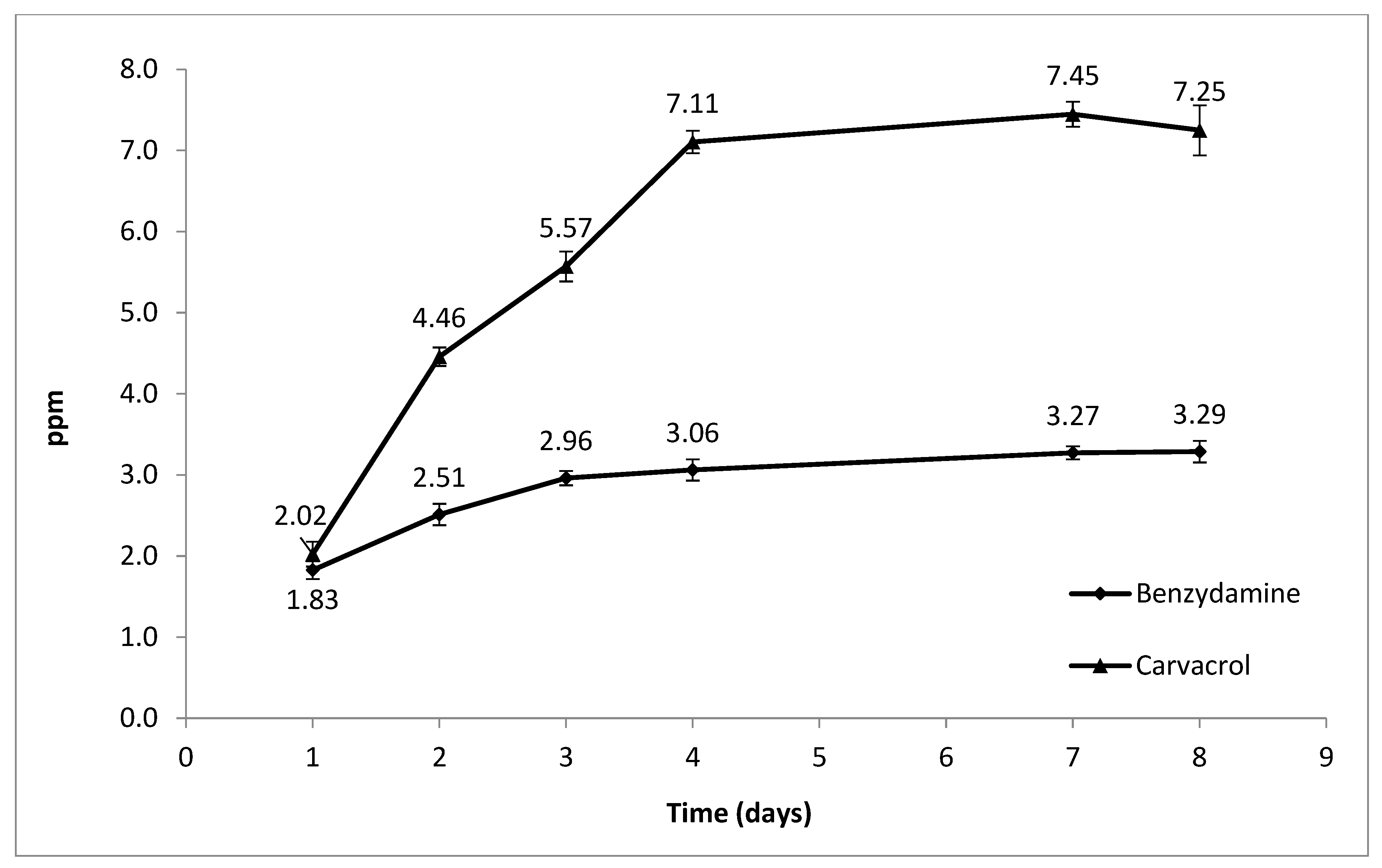
| Day | Replicate 1 (Abs) | Replicate 2 (Abs) | Replicate 3 (Abs) | Replicate 1 (ppm) | Replicate 2 (ppm) | Replicate 3 (ppm) | Mean (ppm) | SD | |
|---|---|---|---|---|---|---|---|---|---|
| Carvacrol | 1 | 0.0283 | 0.0262 | 0.0301 | 2.03 | 1.87 | 2.17 | 2.02 | 0.15 |
| 2 | 0.0580 | 0.0609 | 0.0592 | 4.35 | 4.58 | 4.45 | 4.46 | 0.11 | |
| 3 | 0.0758 | 0.0739 | 0.0711 | 5.74 | 5.59 | 5.38 | 5.57 | 0.18 | |
| 4 | 0.0915 | 0.0950 | 0.0932 | 6.97 | 7.25 | 7.10 | 7.11 | 0.14 | |
| 7 | 0.0995 | 0.0956 | 0.0978 | 7.59 | 7.29 | 7.46 | 7.45 | 0.15 | |
| 8 | 0.0996 | 0.0922 | 0.0935 | 7.60 | 7.02 | 7.13 | 7.25 | 0.31 | |
| Benzydamine HCl | 1 | 0.0548 | 0.0521 | 0.0492 | 1.93 | 1.83 | 1.72 | 1.83 | 0.11 |
| 2 | 0.0728 | 0.0661 | 0.0701 | 2.63 | 2.37 | 2.53 | 2.51 | 0.13 | |
| 3 | 0.0833 | 0.0815 | 0.0788 | 3.04 | 2.97 | 2.87 | 2.96 | 0.09 | |
| 4 | 0.0872 | 0.0805 | 0.0836 | 3.19 | 2.93 | 3.05 | 3.06 | 0.13 | |
| 7 | 0.0889 | 0.0914 | 0.0873 | 3.26 | 3.36 | 3.20 | 3.27 | 0.08 | |
| 8 | 0.0935 | 0.0872 | 0.0881 | 3.44 | 3.19 | 3.23 | 3.29 | 0.13 |
| Compound | N | k | R2 | Release Mechanism |
|---|---|---|---|---|
| Carvacrol | 0.594 | 0.341 | 0.860 | Anomalous transport |
| Benzydamine HCl | 0.272 | 0.607 | 0.896 | Fickian diffusion |
| Source of Variation | SS | df | MS | F | p-Value | F Crit |
|---|---|---|---|---|---|---|
| Between Groups | 3.23502667 | 4 | 0.80875667 | 47.3880859 | 1.8169 × 10⁻⁶ | 3.47804969 |
| Within Groups | 0.17066667 | 10 | 0.01706667 | |||
| Total | 3.40569333 | 14 |
Disclaimer/Publisher’s Note: The statements, opinions and data contained in all publications are solely those of the individual author(s) and contributor(s) and not of MDPI and/or the editor(s). MDPI and/or the editor(s) disclaim responsibility for any injury to people or property resulting from any ideas, methods, instructions or products referred to in the content. |
© 2026 by the authors. Licensee MDPI, Basel, Switzerland. This article is an open access article distributed under the terms and conditions of the Creative Commons Attribution (CC BY) license.
Share and Cite
Akpınar, A.; Öztürk, M.; Aybastıer, Ö.; Çelik, H.; Janka, G.K.; Eren, H.A.; Eren, S. Supercritical CO2-Assisted Impregnation of Absorbable Surgical Sutures with Carvacrol and Benzydamine Hydrochloride: Comparative In Vitro Release Profiles and Drug Release Kinetics. Polymers 2026, 18, 1698. https://doi.org/10.3390/polym18141698
Akpınar A, Öztürk M, Aybastıer Ö, Çelik H, Janka GK, Eren HA, Eren S. Supercritical CO2-Assisted Impregnation of Absorbable Surgical Sutures with Carvacrol and Benzydamine Hydrochloride: Comparative In Vitro Release Profiles and Drug Release Kinetics. Polymers. 2026; 18(14):1698. https://doi.org/10.3390/polym18141698
Chicago/Turabian StyleAkpınar, Aysun, Merve Öztürk, Önder Aybastıer, Halil Çelik, Gezu Ketema Janka, Hüseyin Aksel Eren, and Semiha Eren. 2026. "Supercritical CO2-Assisted Impregnation of Absorbable Surgical Sutures with Carvacrol and Benzydamine Hydrochloride: Comparative In Vitro Release Profiles and Drug Release Kinetics" Polymers 18, no. 14: 1698. https://doi.org/10.3390/polym18141698
APA StyleAkpınar, A., Öztürk, M., Aybastıer, Ö., Çelik, H., Janka, G. K., Eren, H. A., & Eren, S. (2026). Supercritical CO2-Assisted Impregnation of Absorbable Surgical Sutures with Carvacrol and Benzydamine Hydrochloride: Comparative In Vitro Release Profiles and Drug Release Kinetics. Polymers, 18(14), 1698. https://doi.org/10.3390/polym18141698