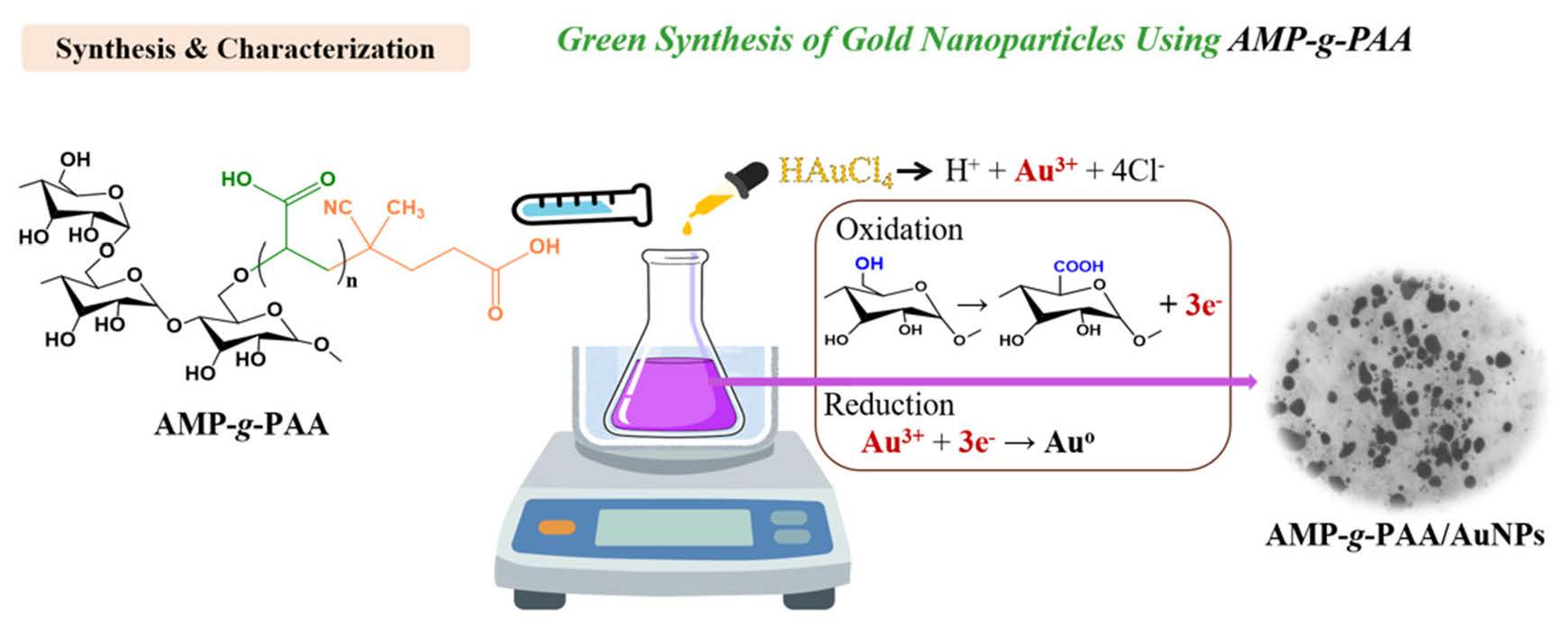
Amylopectin-g-Poly(Acrylic Acid): Synthesis and Application as Reduction Agent for In Situ Formation of Gold Nanoparticles


 , , ,
, , ,  and
and 
Abstract
1. Introduction
2. Materials and Methods
2.1. Materials
2.2. Grafting of Poly(Acrylic Acid) Homopolymer Synthesized by RAFT Polymerization to Amylopectin
2.3. AMP-g-PAA/AuNPs Composite Preparation
2.4. Characterization Methods
3. Results
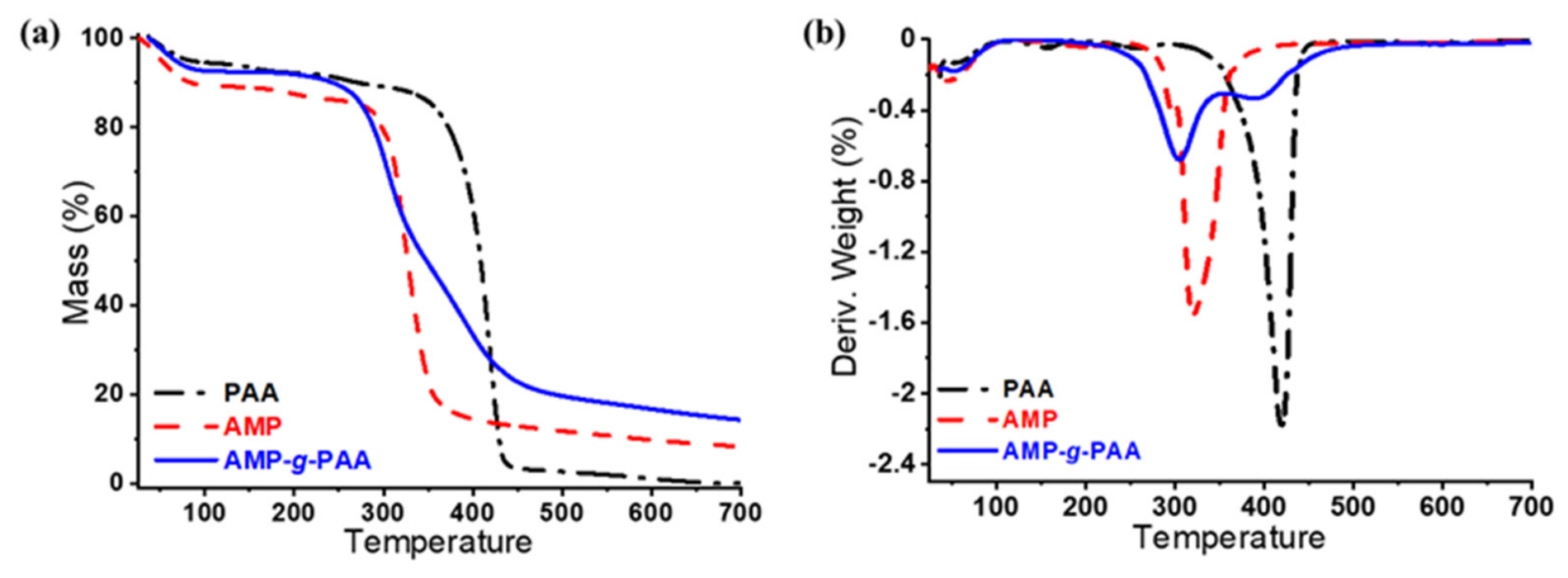
3.1. Characterization of AMP-g-PAA Copolymer
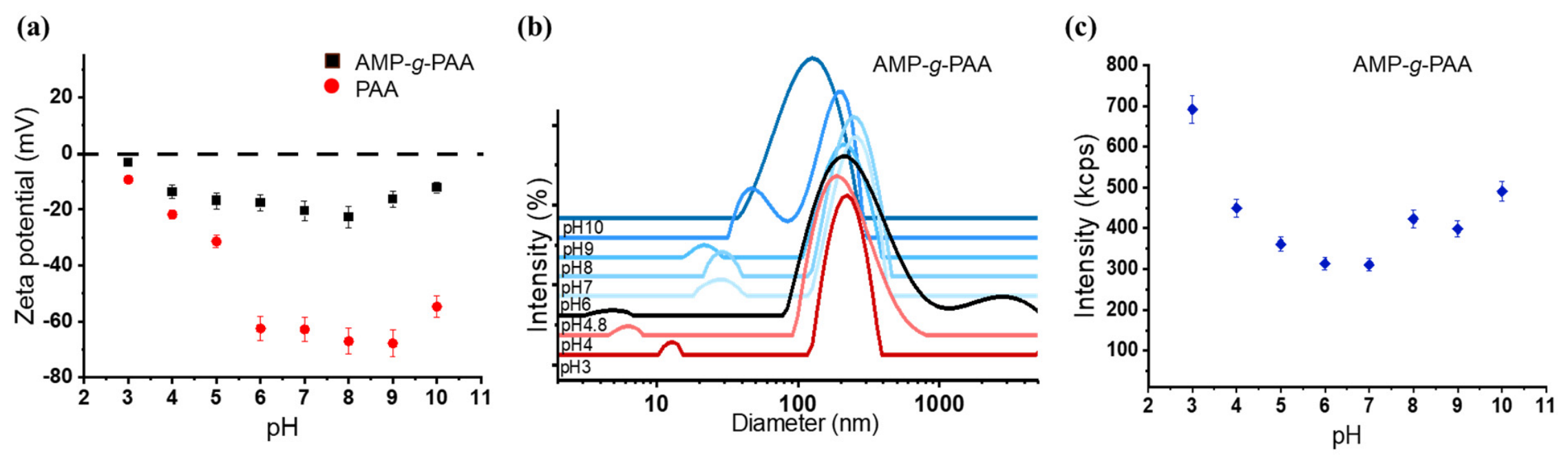
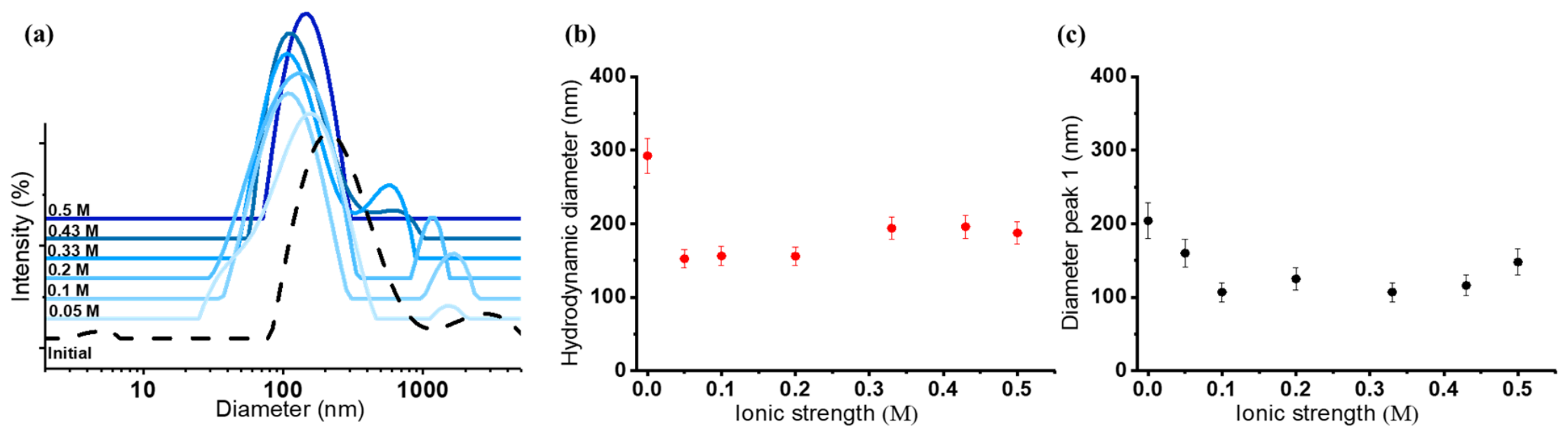
3.2. AMP-g-PAA Behavior in Aqueous Solution
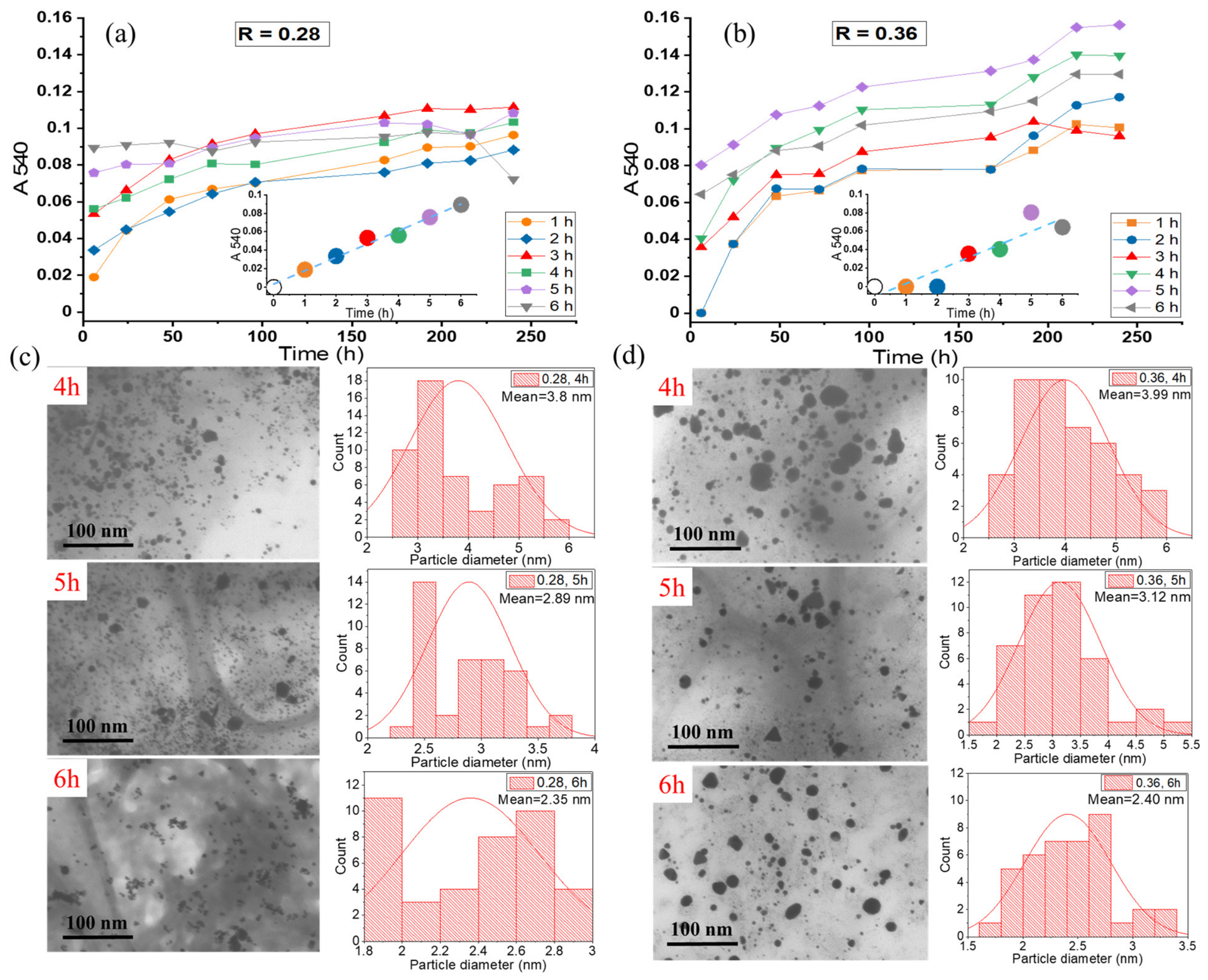
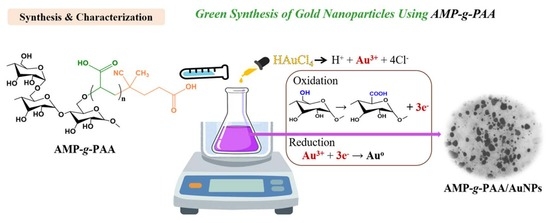
3.3. AMP-g-PAA/AuNPs Composites Formation
4. Conclusions
Supplementary Materials
Author Contributions
Funding
Institutional Review Board Statement
Data Availability Statement
Conflicts of Interest
References
- Rajendran, S.; Al-Samydai, A.; Pelani, G.; Trilaksana, H.; Sathish, T.; Giri, J.; Saravanan, R.; Lalvani, J.I.J.R.; Nasri, F. Replacement of Petroleum Based Products with Plant-Based Materials, Green and Sustainable Energy—A Review. Eng. Rep. 2025, 7, 70108. [Google Scholar] [CrossRef]
- Abdulsalam, L.; Abubakar, S.; Permatasari, I.; Lawal, A.A.; Uddin, S.; Ullah, S.; Ahmad, I. Advanced Biocompatible and Biodegradable Polymers: A Review of Functionalization, Smart Systems, and Sustainable Applications. Polymers 2025, 17, 2901. [Google Scholar] [CrossRef] [PubMed]
- Randis, R.; Gapsari, F.; Prayitno, G.; Sulaiman, A.M. The economical and ecological production of eco-friendly fibers and polymers for the sustainable environment. In Eco-Friendly Fiber Reinforced Polymer Composite Materials; Woodhead Publishing: Sawston, UK, 2026; pp. 45–75. [Google Scholar]
- Alfinaikh, R.S.; Alamry, K.A.; Hussein, M.A. Sustainable and biocompatible hybrid materials-based sulfated polysaccharides for biomedical applications: A review. RSC Adv. 2025, 15, 4708–4767. [Google Scholar] [CrossRef] [PubMed]
- Dabija, M.G.; Olaru, I.; Ciuhodaru, T.; Stefanache, A.; Mihai, C.; Lungu, I.I.; Calin, G.; Stadoleanu, C.; Damir, D.L. Chitosan as a Plurivalent Biopolymer in Nanodelivery Systems. Polymers 2025, 17, 558. [Google Scholar] [CrossRef] [PubMed]
- Farahath, M.; Kandanapitiye, M.; Manatunga, D.C.; Dassanayake, R.S.; Vithanage, M. Recent developments in polysaccharide-based technologies for phosphorus removal and recovery from wastewater: A review. Environ. Sci. Water Res. Technol. 2026, 12, 349–370. [Google Scholar] [CrossRef]
- Vardhan, J.; Yadav, S.; Naik Bukke, S.P.; Chettupalli, A.K.; Thalluri, C.; Koduru, S.K.; Shanmugam, S.T.; Kumarachari, R.K. A Review of Methods of Enhancing Polysaccharides for Drug Delivery Applications. Nat. Prod. Commun. 2025, 20, 1934578X251407010. [Google Scholar] [CrossRef]
- Edo, G.I.; Nwachukwu, S.C.; Gaaz, T.S.; Emumejaye, K.; Iwanegbe, I.; Oghroro, E.E.A.; Owheruo, J.O.; Yousif, E.; Jikah, A.N.; Igbuku, U.A.; et al. Smart biopolymers in commercial practice: A review of applications and challenges. Polym. Bull. 2026, 83, 60. [Google Scholar] [CrossRef]
- Rajput, J.K. A comprehensive review on contribution of nanosensors towards detection of tyramine in food: Sensing mechanisms, applications and prospects. Inorg. Chem. Commun. 2026, 187, 116406. [Google Scholar] [CrossRef]
- Benalaya, I.; Alves, G.; Lopes, J.; Silva, L.R. A review of natural polysaccharides: Sources, characteristics, properties, food, and pharmaceutical applications. Int. J. Mol. Sci. 2024, 25, 1322. [Google Scholar] [CrossRef] [PubMed]
- Patel, N.; Sharma, D.K.; Mehta, K.; Badheka, V.J. Manufacturing of Hybrid Surface Composites Cu/(B4C+ MoS2) via Friction Stir Processing. J. Tribol. 2026, 148, 071404. [Google Scholar] [CrossRef]
- Kanaoujiya, R.; Saroj, S.K.; Srivastava, S.; Chaudhary, M.K. Renewable polysaccharide and biomedical application of nanomaterials. J. Nanomater. 2022, 1, 1050211. [Google Scholar] [CrossRef]
- Loghin, D.F.; Bazarghideanu, M.M.; Vasiliu, S.; Racovita, S.; Zaharia, M.M.; Mihai, M. Hydrogel Beads of Amidoximated Starch and Chitosan as Efficient Sorbents for Inorganic and Organic Compounds. Gels 2022, 8, 549. [Google Scholar] [CrossRef] [PubMed]
- Lin, L.; Cai, C.; Gilbert, R.G.; Li, E.; Wang, J.; Wei, C. Relationships between amylopectin molecular structures and functional properties of different-sized fractions of normal and high-amylose maize starches. Food Hydrocoll. 2016, 52, 359–368. [Google Scholar]
- Kong, X. Fine Structure of Amylose and Amylopectin. In Starch Structure, Functionality and Application in Foods; Wang, S., Ed.; Springer: Singapore, 2020; pp. 29–39. [Google Scholar] [CrossRef]
- Thanyapanich, N.; Jimtaisong, A.; Rawdkuen, S. Functional Properties of Banana Starch (Musa spp.) and Its Utilization in Cosmetics. Molecules 2021, 26, 3637. [Google Scholar] [CrossRef] [PubMed]
- Olivato, J.B. Chapter 11—Starch: A natural, safe, and multifunctional ingredient for cosmetic formulations. In Starch Industries: Processes and Innovative Products in Food and Non-Food Uses; Cereda, M.P., Vilpoux, O.F., Eds.; Academic Press: Cambridge, MA, USA, 2024; Volume 3, pp. 255–269. [Google Scholar] [CrossRef]
- Javaid, M.A.; Jabeen, S.; Arshad, N.; Zia, K.M.; Hussain, M.T.; Ullah, I.; Ahmad, S.; Shoaib, M. Preparation of amylopectin and chitosan based polyurethanes for sustained drug release studies. Sustain. Chem. Pharm. 2023, 33, 101086. [Google Scholar] [CrossRef]
- Gao, Y.; Wang, Y.; Dai, Y.; Wang, Q.; Xiang, P.; Li, Y.; Gao, G. Amylopectin based hydrogel strain sensor with good biocompatibility, high toughness and stable anti-swelling in multiple liquid media. Eur. Polym. J. 2022, 164, 110981. [Google Scholar] [CrossRef]
- Tabasum, S.; Younas, M.; Zaeem, M.A.; Majeed, I.; Majeed, M.; Noreen, A.; Iqbal, M.N.; Zia, K.M. A review on blending of corn starch with natural and synthetic polymers, and inorganic nanoparticles with mathematical modeling. Int. J. Biol. Macromol. 2019, 122, 969–996. [Google Scholar] [CrossRef] [PubMed]
- Yang, G.; Jaberi, Y.; Lam, E.; Moores, A.H. Mechanochemical transformations of polysaccharides to value added products: A review with green chemistry evaluation. Green Chem. 2026, 28, 3006–3042. [Google Scholar] [CrossRef]
- Kumar, D.; Pandey, J.; Raj, V.; Krumar, P. A Review on the Modification of Polysaccharide Through Graft Copolymerization for Various Potential Applications. Open J. Med. Chem. 2017, 11, 109–126. [Google Scholar] [CrossRef] [PubMed]
- Seidi, F.; Salimi, H.; Shamsabadi, A.A.; Shabanian, M. Synthesis of hybrid materials using graft copolymerization on non-cellulosic polysaccharides via homogenous ATRP. Prog. Polym. Sci. 2018, 76, 1–39. [Google Scholar] [CrossRef]
- Tanaka, T.; Araki, J.; Kuga, S.; Yabuki, A. Steric stabilization of cellulose nanocrystals by dextran grafting. Cellulose 2025, 32, 6523–6530. [Google Scholar] [CrossRef]
- Nothling, M.D.; Fu, Q.; Reyhani, A.; Allison-Logan, S.; Jung, K.; Zhu, J.; Kamigaito, M.; Boyer, C.; Qiao, G.G. Progress and perspectives beyond traditional RAFT polymerization. Adv. Sci. 2020, 7, 2001656. [Google Scholar] [CrossRef] [PubMed]
- Srivastava, N.; Choudhury, A.R. Stimuli-responsive polysaccharide-based smart hydrogels and their emerging applications. Ind. Eng. Chem. Res. 2022, 62, 841–866. [Google Scholar] [CrossRef]
- Zhang, M.; Cheng, Y. Hydrogels based on vinyl amino acids: From preparation to biomedical application. Chem. Commun. 2026, 62, 2800–2819. [Google Scholar] [CrossRef] [PubMed]
- Eslami, H.; Ansari, M.; Darvishi, A.; Pisheh, H.R.; Shami, M.; Kazemi, F. Polyacrylic acid: A biocompatible and biodegradable polymer for controlled drug delivery. Polym. Sci. Ser. A 2023, 65, 702–713. [Google Scholar] [CrossRef]
- Nath, J.; Dolui, S.K. Synthesis of carboxymethyl cellulose-g-poly(acrylic acid)/LDH hydrogel for in vitro controlled release of vitamin B12. Appl. Clay Sci. 2018, 155, 65–73. [Google Scholar] [CrossRef]
- Bardajee, G.R.; Ghadimkhani, R.; Jafarpour, F. A biocompatible double network hydrogel based on poly (acrylic acid) grafted onto sodium alginate for doxorubicin hydrochloride anticancer drug release. Int. J. Biol. Macromol. 2024, 260, 128871. [Google Scholar] [CrossRef] [PubMed]
- Ramirez-Alba, M.D.; Alvarez-Caballero, A.; Resina, L.; Romanini, M.; Macovez, R.; Perez-Madrigal, M.M.; Aleman, C. Alginate-graft-polyacrylic acid electro-responsive hydrogels: Impact of the conducting polymer and application as hydrogen peroxide sensor. Eur. Polym. J. 2024, 219, 113388. [Google Scholar] [CrossRef]
- Hua, D.; Tang, J.; Cheng, J.; Deng, W.; Zhu, X. A novel method of controlled grafting modification of chitosan via RAFT polymerization using chitosan-RAFT agent. Carbohydr. Polym. 2008, 73, 98–104. [Google Scholar] [CrossRef]
- Zaharia, M.M.; Bucatariu, F.; Karayianni, M.; Lotos, E.D.; Mihai, M.; Pispas, S. Synthesis of Thermoresponsive Chitosan-Graft-Poly (N-isopropylacrylamide) Hybrid Copolymer and Its Complexation with DNA. Polymers 2024, 16, 1315. [Google Scholar] [CrossRef] [PubMed]
- Bardajee, G.R.; Hooshyar, Z. A novel biocompatible magnetic iron oxide nanoparticles/hydrogel based on poly (acrylic acid) grafted onto starch for controlled drug release. J. Polym. Res. 2013, 20, 298. [Google Scholar] [CrossRef]
- Chen, Q.; Yu, H.; Wang, L.; Abdin, Z.; Yang, X.; Wang, J.; Zhou, W.; Zhang, H.; Chen, X. Synthesis and characterization of amylose grafted poly(acrylic acid) and its application in ammonia adsorption. Carbohydr. Polym. 2016, 153, 429–434. [Google Scholar] [CrossRef] [PubMed]
- Sarkar, A.K.; Mandre, N.R.; Panda, A.B.; Pal, S. Amylopectin grafted with poly (acrylic acid): Development and application of a high performance flocculant. Carbohydr. Polym. 2013, 95, 753–759. [Google Scholar] [CrossRef] [PubMed]
- Pal, S.; Pal, A. Synthesis and characterizing a novel polymeric flocculant based on amylopectin-graft-polyacrylamide-graft-polyacrylic acid [(AP-g-PAM)-g-PAA]. Polym. Bull. 2012, 69, 545–560. [Google Scholar] [CrossRef]
- Sen, I.K.; Maity, K.; Islam, S.S. Green synthesis of gold nanoparticles using a glucan of an edible mushroom and study of catalytic activity. Carbohydr. Polym. 2013, 91, 518–528. [Google Scholar] [CrossRef] [PubMed]
- Castillo-López, D.N.; Pal, U. Green synthesis of Au nanoparticles using potato extract: Stability and growth mechanism. J. Nanopart. Res. 2014, 16, 2571. [Google Scholar] [CrossRef]
- Liu, H.; Zhang, M.; Meng, F.; Wubuli, A.; Li, S.; Xiao, S.; Gu, L.; Li, J. HAuCl4-mediated green synthesis of highly stable Au NPs from natural active polysaccharides: Synthetic mechanism and antioxidant property. Int. J. Biol. Macromol. 2024, 265, 130824. [Google Scholar] [CrossRef] [PubMed]
- Baranwal, J.; Barse, B.; Fais, A.; Delogu, G.L.; Kumar, A. Biopolymer: A sustainable material for food and medical applications. Polymers 2022, 14, 983. [Google Scholar] [CrossRef] [PubMed]
- Mihai, M.; Bucatariu, F.; Rusu, D.; Zaharia, M.M.; Pispas, S. Environmentally friendly in situ synthesis of gold nanoparticles mediated by thermoresponsive Chitosan-g-PNIPAM copolymer. React. Funct. Polym. 2025, 218, 106523. [Google Scholar] [CrossRef]
- Kumalasari, M.R.; Alfanaar, R.; Andreani, A.S. Gold nanoparticles (AuNPs): A versatile material for biosensor application. Talanta Open 2024, 9, 100327. [Google Scholar] [CrossRef]
- Ghobashy, M.M.; Alkhursani, S.A.; Alqahtani, H.A.; El-damhougy, T.K.; Madani, M. Gold nanoparticles in microelectronics advancements and biomedical applications. Mater. Sci. Eng. B 2024, 301, 117191. [Google Scholar] [CrossRef]
- Anwesha, N.; Tripathy, D.; Sahu, B.B.; Deshmukh, K.; Moharana, S. Gold nanoparticles for catalytic and photocatalytic applications. In Gold Nanoparticles, Nanomaterials and Nanocomposites; Pasha, S.K.K., Deshmukh, K., Hussain, C.M., Eds.; Elsevier: Amsterdam, The Netherlands, 2024; pp. 449–491. [Google Scholar] [CrossRef]
- Morariu, S.; Avadanei, M.; Nita, L.E. Effect of pH on the Poly(acrylic acid)/Poly(vinyl alcohol)/Lysozyme Complexes Formation. Molecules 2024, 29, 208. [Google Scholar] [CrossRef] [PubMed]
- Jans, H.; Jans, K.; Lagae, L.; Borghs, G.; Maes, G.; Huo, Q. Poly(acrylic acid)-stabilized colloidal gold nanoparticles: Synthesis and properties. Nanotechnology 2010, 21, 455702. [Google Scholar] [CrossRef] [PubMed]
- Tepale, N.; Fernández-Escamilla, V.V.A.; Carreon-Alvarez, C.; González-Coronel, V.J.; Luna-Flores, A.; Carreon-Alvarez, A.; Aguilar, J. Nanoengineering of Gold Nanoparticles: Green Synthesis, Characterization, and Applications. Crystals 2019, 9, 612. [Google Scholar] [CrossRef]
- Giaouzi, D.; Pispas, S. Synthesis and self-assembly of thermoresponsive poly(N-isopropylacrylamide)-b-poly (oligo ethylene glycol methyl ether acrylate) double hydrophilic block copolymers. J. Polym. Sci. Part A Polym. Chem. 2019, 57, 1467–1477. [Google Scholar] [CrossRef]
- Bazarghideanu, M.M.; Zaharia, M.M.; Macsim, A.M.; Mihai, M.; Pispas, S. Amylopectin copolymers grafted with RAFT-obtained synthetic polymers: Synthesis and aqueous solution behavior. Biomacromolecules 2026, 27, 1985–1998. [Google Scholar] [CrossRef] [PubMed]
- Athawale, V.D.; Rathi, S.C. Graft Polymerization: Starch as a Model Substrate. J. Macromol. Sci. Part C Polym. Rev. 1999, 39, 445–480. [Google Scholar] [CrossRef]
- Thompson, J.E.; Matson, J.B.; Edgar, K.J. Well-Defined Polysaccharide Graft (Co) polymers: Synthesis, Applications, and Structure-Property Relationships. Prog. Polym. Sci. 2025, 172, 102057. [Google Scholar] [CrossRef]
- Falk, H.; Stanek, M. Two-dimensional1H and 13C NMR spectroscopy and the structural aspects of amylose and amylopectin. Monatshefte Chem. 1977, 128, 777–784. [Google Scholar] [CrossRef]
- Zhang, J.; Li, C.; Yang, Y.; Deng, Y.; Xin, J.; Zhu, Z.; Gu, X.; Hu, K. Structural elucidation of an amylopectin from Astragalus membranaceus by integrating selective and quantitative NMR spectra with database matching. Carbohydr. Polym. 2026, 380, 125046. [Google Scholar] [CrossRef] [PubMed]
- Chen, L.; Xiong, Z.; Xiong, H.; Din, Z.U. Investigating the structure and self-assembly behavior of starch-g-VAc in starch-based adhesive by combining NMR analysis and multi-scale simulation. Carbohydr. Polym. 2020, 246, 116655. [Google Scholar] [CrossRef] [PubMed]
- Wu, D.; He, S.; Liu, W.; Fang, J.Y.; Wang, Y. Reversible Thermal Stiffening in Polymers: A Mini Review. Mater. Today Phys. 2026, 61, 102042. [Google Scholar] [CrossRef]
- Nurakhmetova, Z.A.; Azhkeyeva, A.N.; Klassen, I.A.; Tatykhanova, G.S. Synthesis and stabilization of gold nanoparticles using water-soluble synthetic and natural polymers. Polymers 2020, 12, 2625. [Google Scholar] [CrossRef] [PubMed]
- Kang, S.B.; Lim, J.B.; Jo, D.; Nam, I.S.; Cho, B.K.; Hong, S.B.; Kim, C.H.; Oh, S.H. Ostwald-ripening sintering kinetics of Pd-based three-way catalyst: Importance of initial particle size of Pd. Chem. Eng. J. 2017, 316, 631–644. [Google Scholar] [CrossRef]
- Verma, N. A green synthetic approach for size tunable nanoporous gold nanoparticles and its glucose sensing application. Appl. Surf. Sci. 2018, 462, 753–759. [Google Scholar] [CrossRef]
- Ahmed, H.B.; Abdel-Mohsen, A.M.; Emam, H.E. Green-assisted tool for nanogold synthesis based on alginate as a biological macromolecule. RSC Adv. 2016, 6, 73974–73985. [Google Scholar] [CrossRef]
- Valdez, J.; Gómez, I. One-Step Green Synthesis of Metallic Nanoparticles Using Sodium Alginate. J. Nanomater. 2016, 2016, 9790345. [Google Scholar] [CrossRef]
- Piroonpan, T.; Katemake, P.; Pasanphan, W. Comparative study of different chitosan solutions to assist the green synthesis of gold nanoparticles under irradiation. Radiat. Phys. Chem. 2020, 169, 108250. [Google Scholar] [CrossRef]
- Mi, X.J.; Choi, H.S.; Park, H.R.; Kim, Y.J. Structural characterization and anti-inflammatory properties of green synthesized chitosan/compound K-gold nanoparticles. Int. J. Biol. Macromol. 2022, 213, 247–258. [Google Scholar] [CrossRef] [PubMed]
- Vijayakumar, S.; Gonzalez-Sanchez, Z.I.; Amanullah, M.; Sonamuthu, J.; Rajkumar, M.; Divya, M.; Duran-Lara, E.F.; Li, M. Shark chondroitin sulfate gold nanoparticles: A biocompatible apoptotic agent for osteosarcoma. Int. J. Biol. Macromol. 2025, 290, 138793. [Google Scholar] [CrossRef] [PubMed]
- Cho, H.J.; Oh, J.; Choo, M.K.; Ha, J.I.; Park, Y.; Maeng, H.J. Chondroitin sulfate-capped gold nanoparticles for the oral delivery of insulin. Int. J. Biol. Macromol. 2014, 63, 15–20. [Google Scholar] [CrossRef] [PubMed]
- Vijayakumar, S.; Chen, J.; Kalaiselvi, V.; Divya, M.; González-Sánchez, Z.I.; Duran-Lara, E.F.; Vaseeharan, B. Antibacterial and antibiofilm activities of marine polysaccharide laminarin formulated gold nanoparticles: An ecotoxicity and cytotoxicity assessment. J. Environ. Chem. Eng. 2021, 9, 105514. [Google Scholar] [CrossRef]
- Doghish, A.S.; Hashem, A.H.; Shehabeldine, A.M.; Sallam, A.A.M.; El-Sayyad, G.S.; Salem, S.S. Nanocomposite based on gold nanoparticles and carboxymethyl cellulose: Synthesis, characterization, antimicrobial, and anticancer activities. J. Drug Deliv. Sci. Technol. 2022, 77, 103874. [Google Scholar] [CrossRef]
- Zakaria, N.A.; Nasaruddin, R.R.; Wan Nawawi, W.M.F. Evaluating the potential of chitin extracted from shrimp shell wastes as support material of gold nanoclusters (AuNCs) for catalysis. IOP Conf. Ser. Mater. Sci. Eng. 2021, 1192, 012032. [Google Scholar] [CrossRef]



| Polysaccharide | Reaction Temp (°C) | Reaction Special Conditions | Reaction Time (min) | Ref. |
|---|---|---|---|---|
| starch | 70 | stirring 350 rpm, pH = 12 | 1 | [59] |
| alginate | 70 | glucose | 30 | [60] |
| alginate | microwave | ethylene glycol | 1–3 | [61] |
| chitosan | irradiation | acetic acid | - | [62] |
| chitosan | 50–90 | pH 2–6 | 20–100 | [63] |
| chondroitin sulfate | room temperature | sodium borohydride | 20 | [64] |
| chondroitin sulfate A | 80 | - | 300 | [65] |
| laminarin | 80 | - | 20 | [66] |
| carboxymethyl cellulose | 85 | stirring | 240 | [67] |
| chitin | 25 | p-mercaptobenzoic acid, stirring 500 rpm, CO bubbling | 4320 min (72h) | [68] |
| this study | 40–60 | - | 60–360 |
Disclaimer/Publisher’s Note: The statements, opinions and data contained in all publications are solely those of the individual author(s) and contributor(s) and not of MDPI and/or the editor(s). MDPI and/or the editor(s) disclaim responsibility for any injury to people or property resulting from any ideas, methods, instructions or products referred to in the content. |
© 2026 by the authors. Licensee MDPI, Basel, Switzerland. This article is an open access article distributed under the terms and conditions of the Creative Commons Attribution (CC BY) license.
Share and Cite
Bazarghideanu, M.-M.; Zaharia, M.-M.; Bucatariu, F.; Vasiliu, A.-L.; Mihai, M.; Pispas, S. Amylopectin-g-Poly(Acrylic Acid): Synthesis and Application as Reduction Agent for In Situ Formation of Gold Nanoparticles. Polymers 2026, 18, 1636. https://doi.org/10.3390/polym18131636
Bazarghideanu M-M, Zaharia M-M, Bucatariu F, Vasiliu A-L, Mihai M, Pispas S. Amylopectin-g-Poly(Acrylic Acid): Synthesis and Application as Reduction Agent for In Situ Formation of Gold Nanoparticles. Polymers. 2026; 18(13):1636. https://doi.org/10.3390/polym18131636
Chicago/Turabian StyleBazarghideanu, Melinda-Maria, Marius-Mihai Zaharia, Florin Bucatariu, Ana-Lavinia Vasiliu, Marcela Mihai, and Stergios Pispas. 2026. "Amylopectin-g-Poly(Acrylic Acid): Synthesis and Application as Reduction Agent for In Situ Formation of Gold Nanoparticles" Polymers 18, no. 13: 1636. https://doi.org/10.3390/polym18131636
APA StyleBazarghideanu, M.-M., Zaharia, M.-M., Bucatariu, F., Vasiliu, A.-L., Mihai, M., & Pispas, S. (2026). Amylopectin-g-Poly(Acrylic Acid): Synthesis and Application as Reduction Agent for In Situ Formation of Gold Nanoparticles. Polymers, 18(13), 1636. https://doi.org/10.3390/polym18131636