Silk Fibroin/Chitosan Blended Microparticles: Preparation, Characterization, and Oil Absorption

 , and
, and 
Abstract
1. Introduction
2. Materials and Methods
2.1. Materials
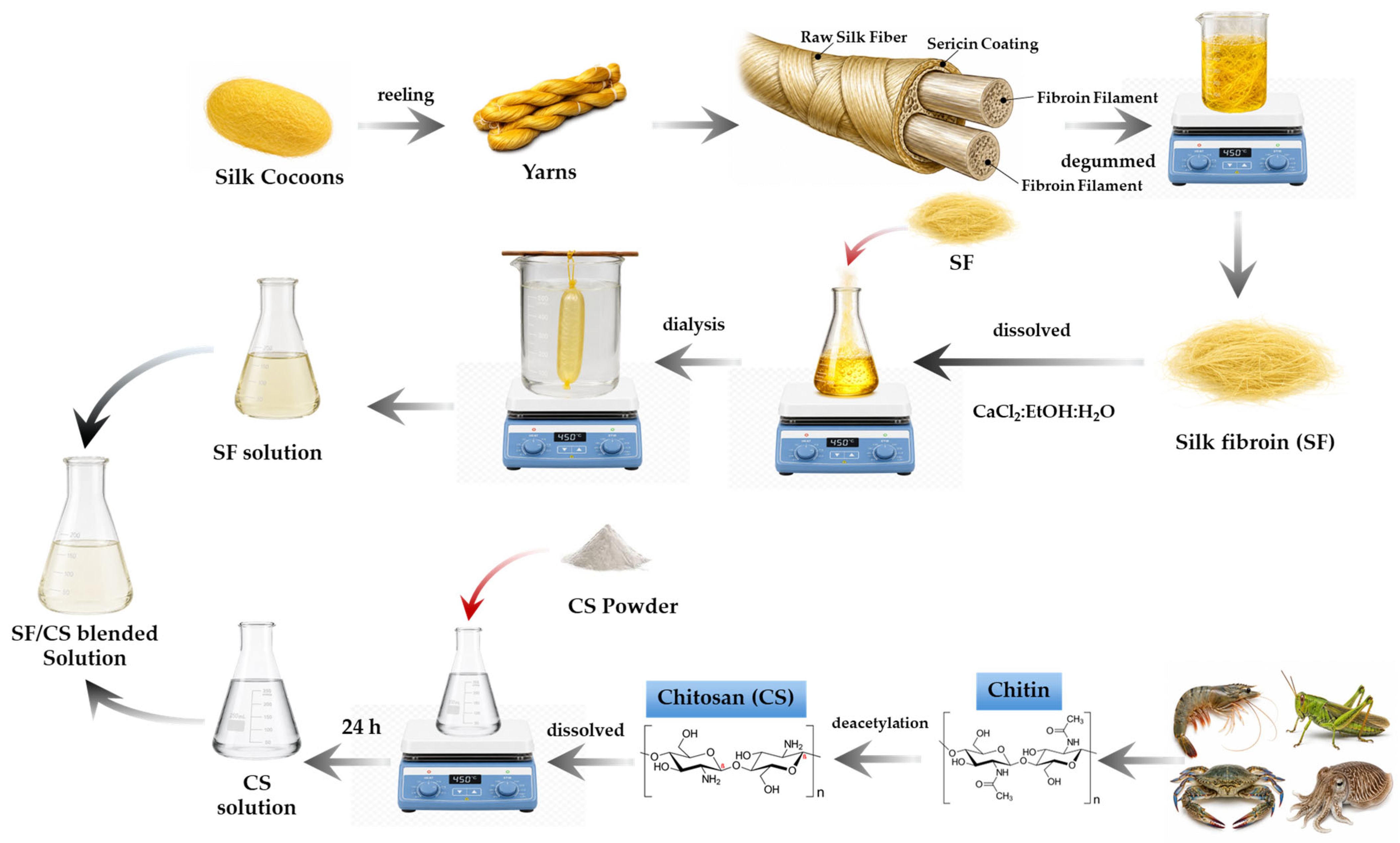
2.2. Preparation of Chitosan Solution
2.3. Preparation of Silk Fibroin Solution
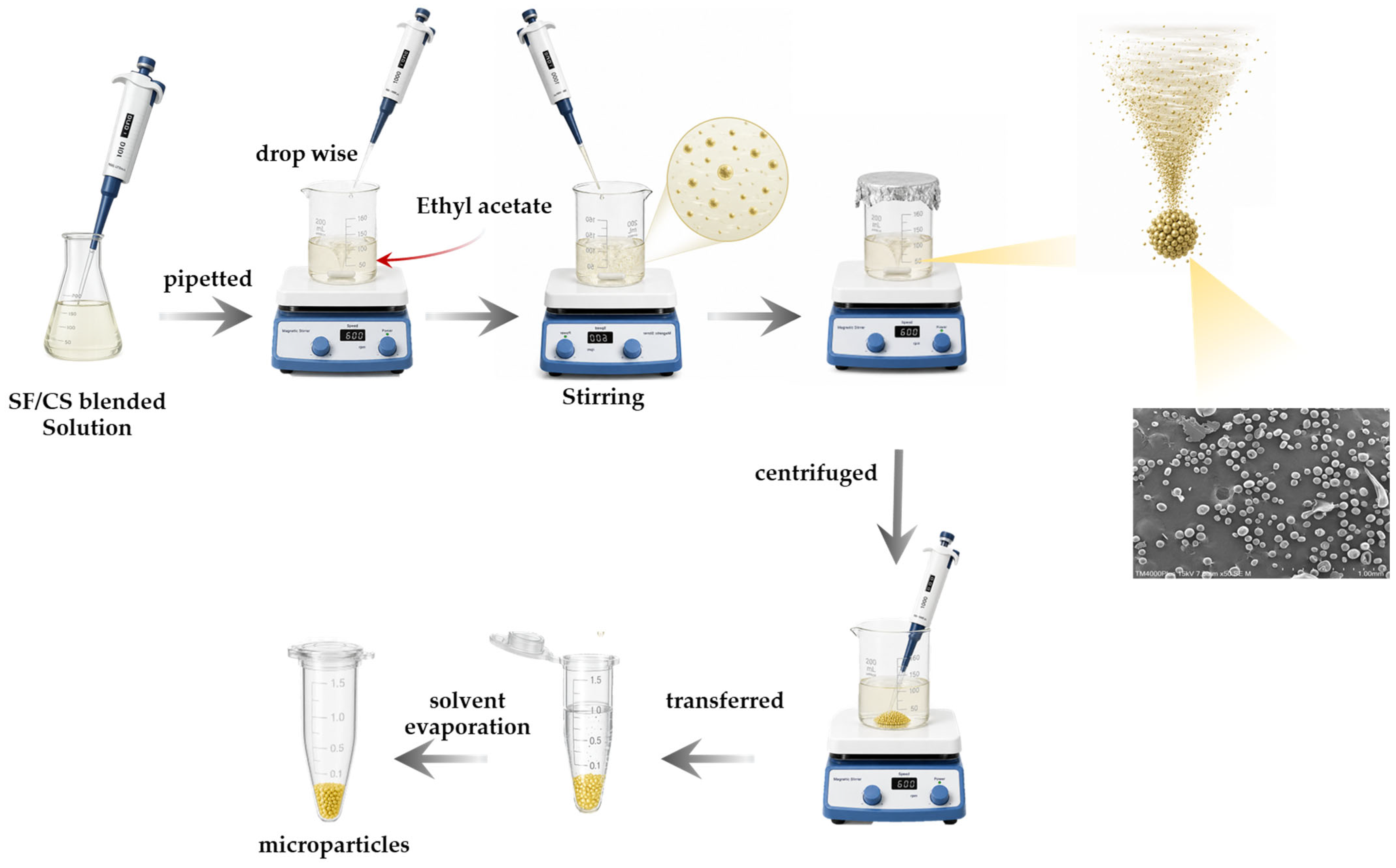
2.4. Preparation of SF, CS and SF/CS Blended Microparticles
2.5. Characterization of the Microparticles
2.5.1. Morphology Observation
2.5.2. Analysis of Interactions
2.5.3. Thermal Stability
2.5.4. Solubility Test
2.5.5. X-Ray Diffraction Analysis
2.5.6. Oil Absorption Capacity
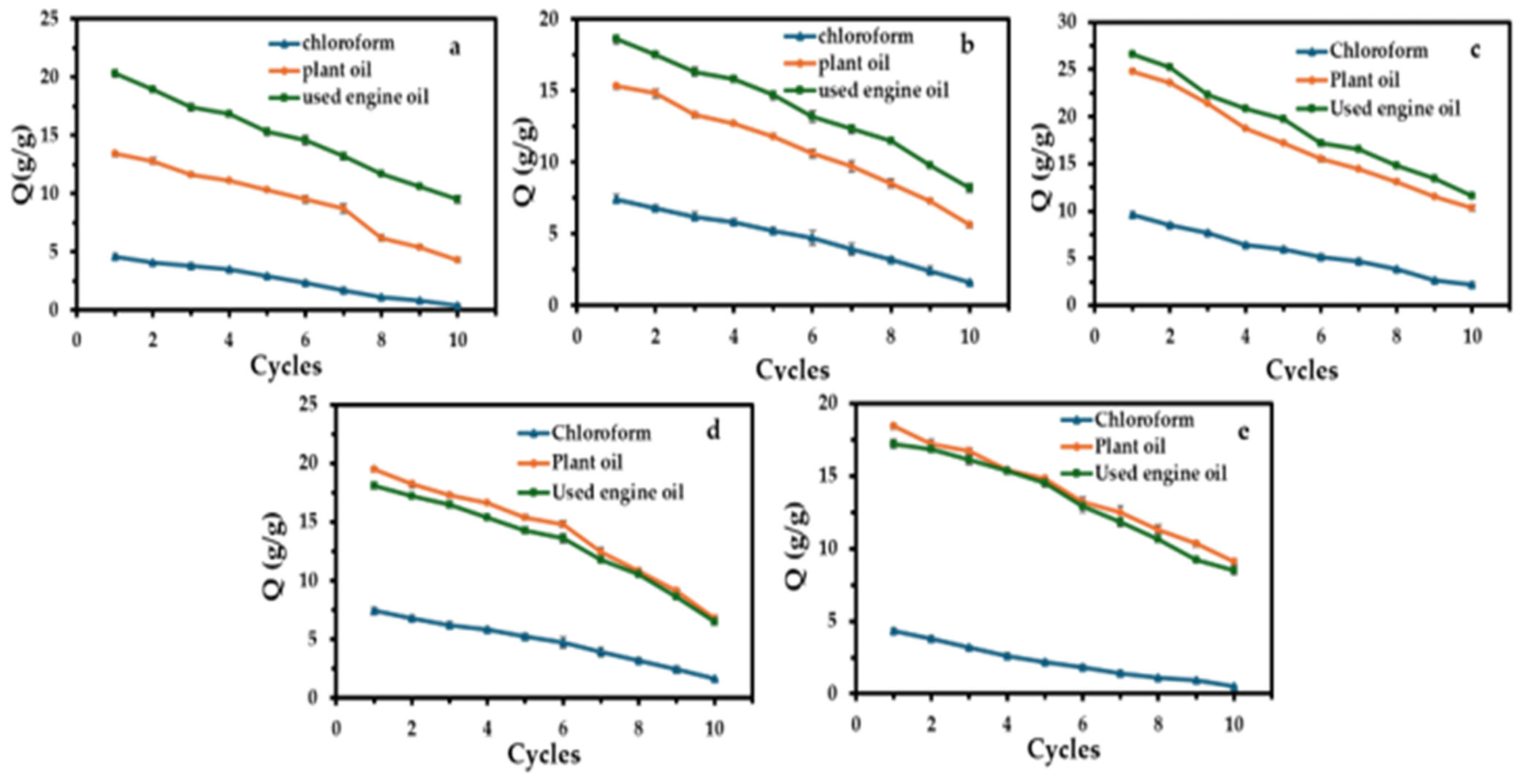
2.5.7. Microparticle Oil Absorption Cycle Test
3. Results and Discussion
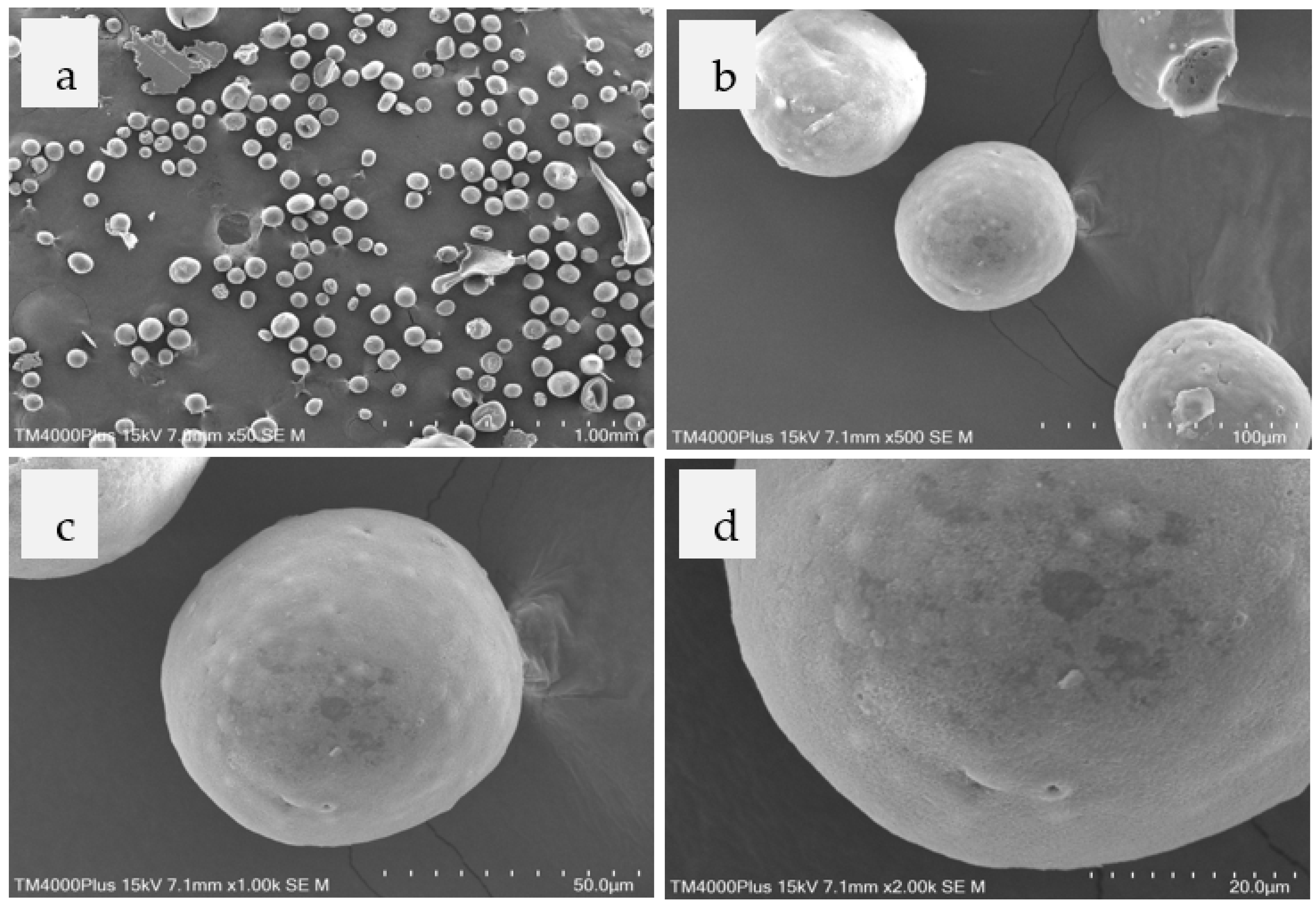
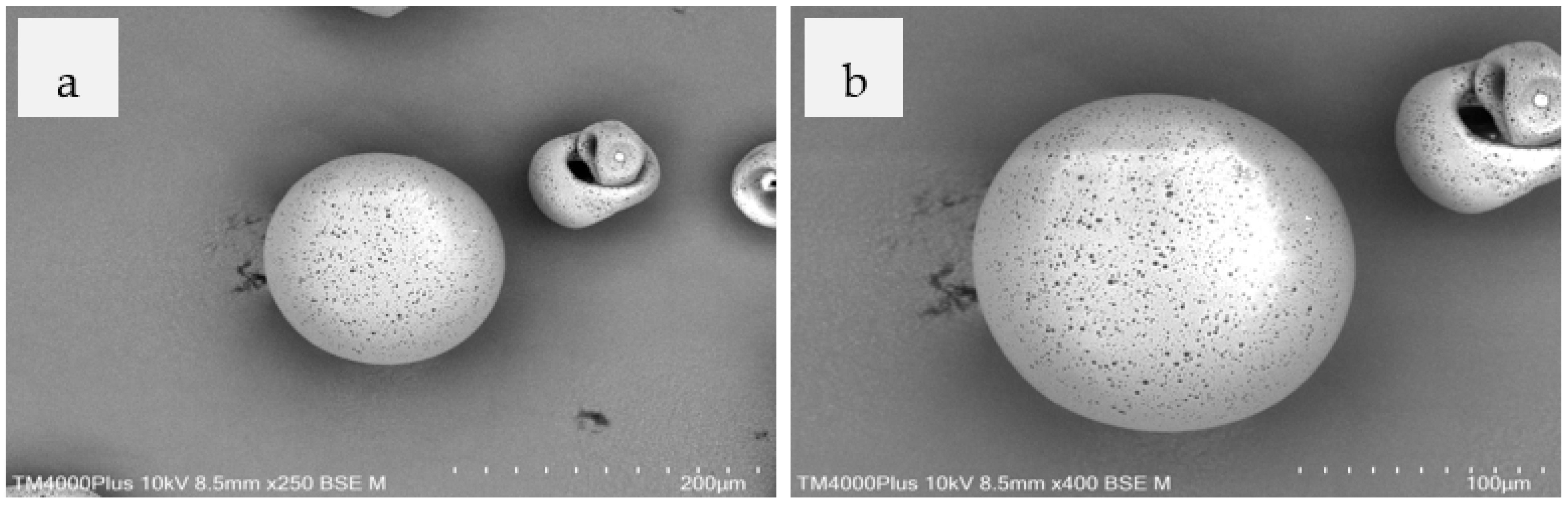
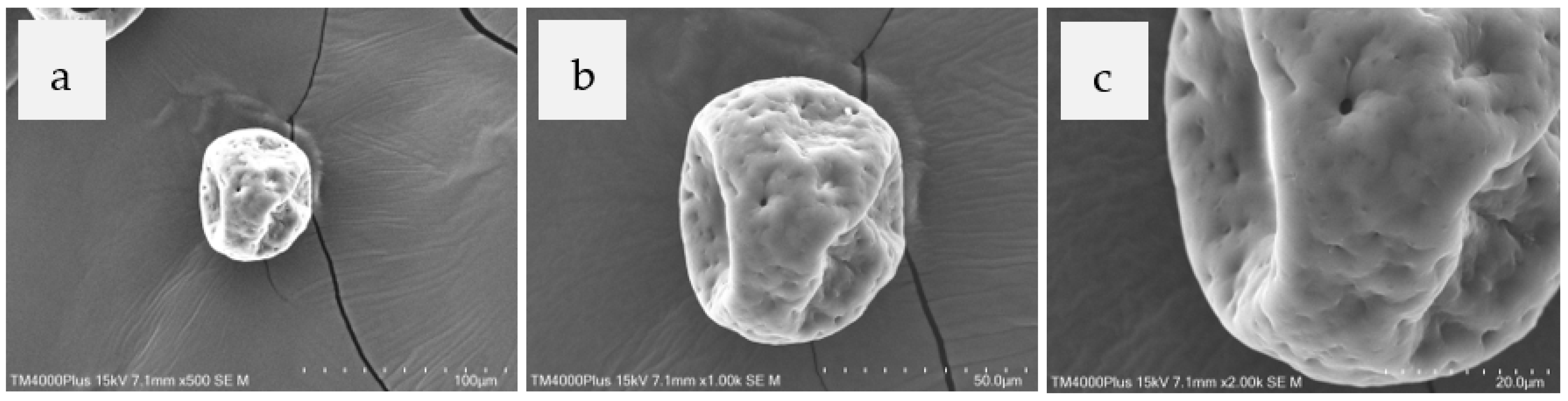
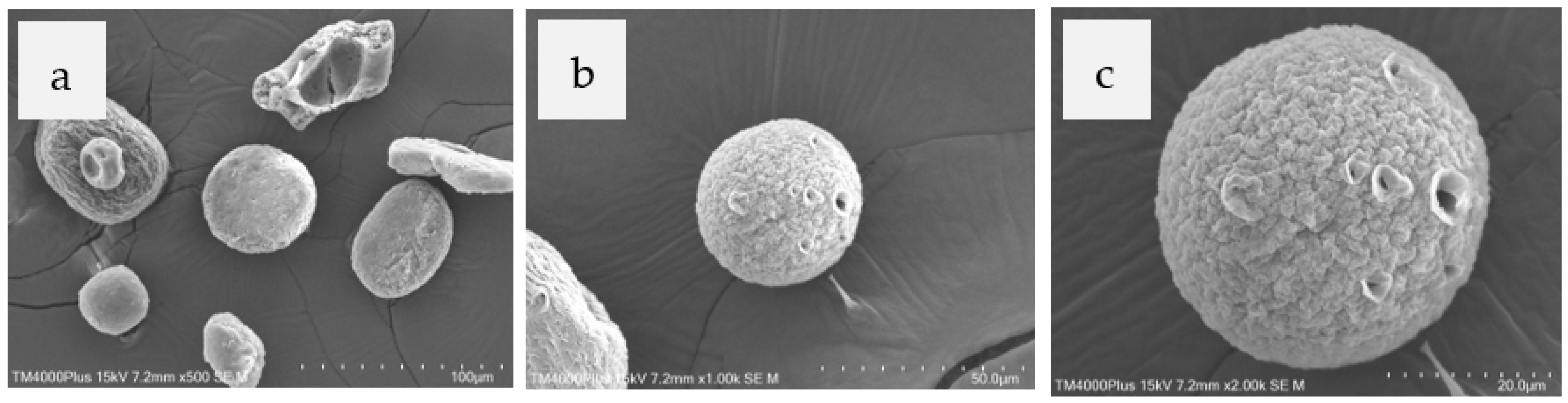
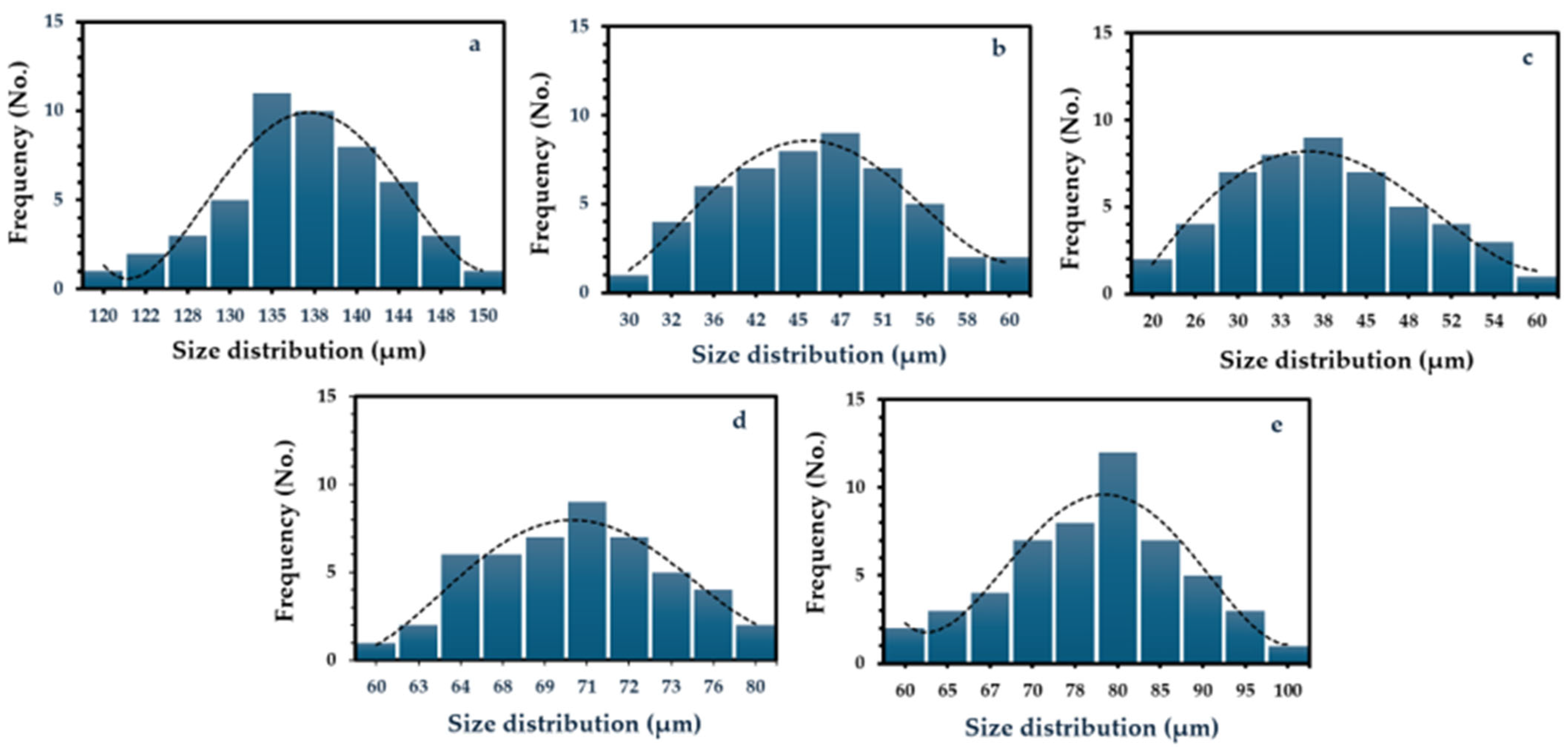
3.1. Morphological Studies
3.1.1. CS Microparticles
3.1.2. SF Microparticles
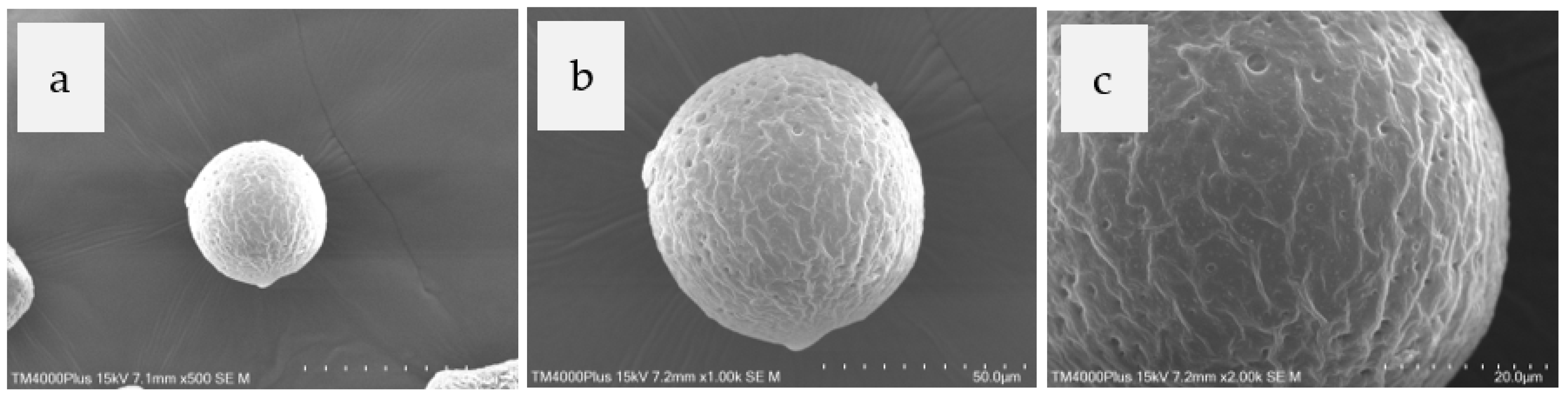
3.1.3. SF/CS Blended Microparticles
3.2. Water Solubility
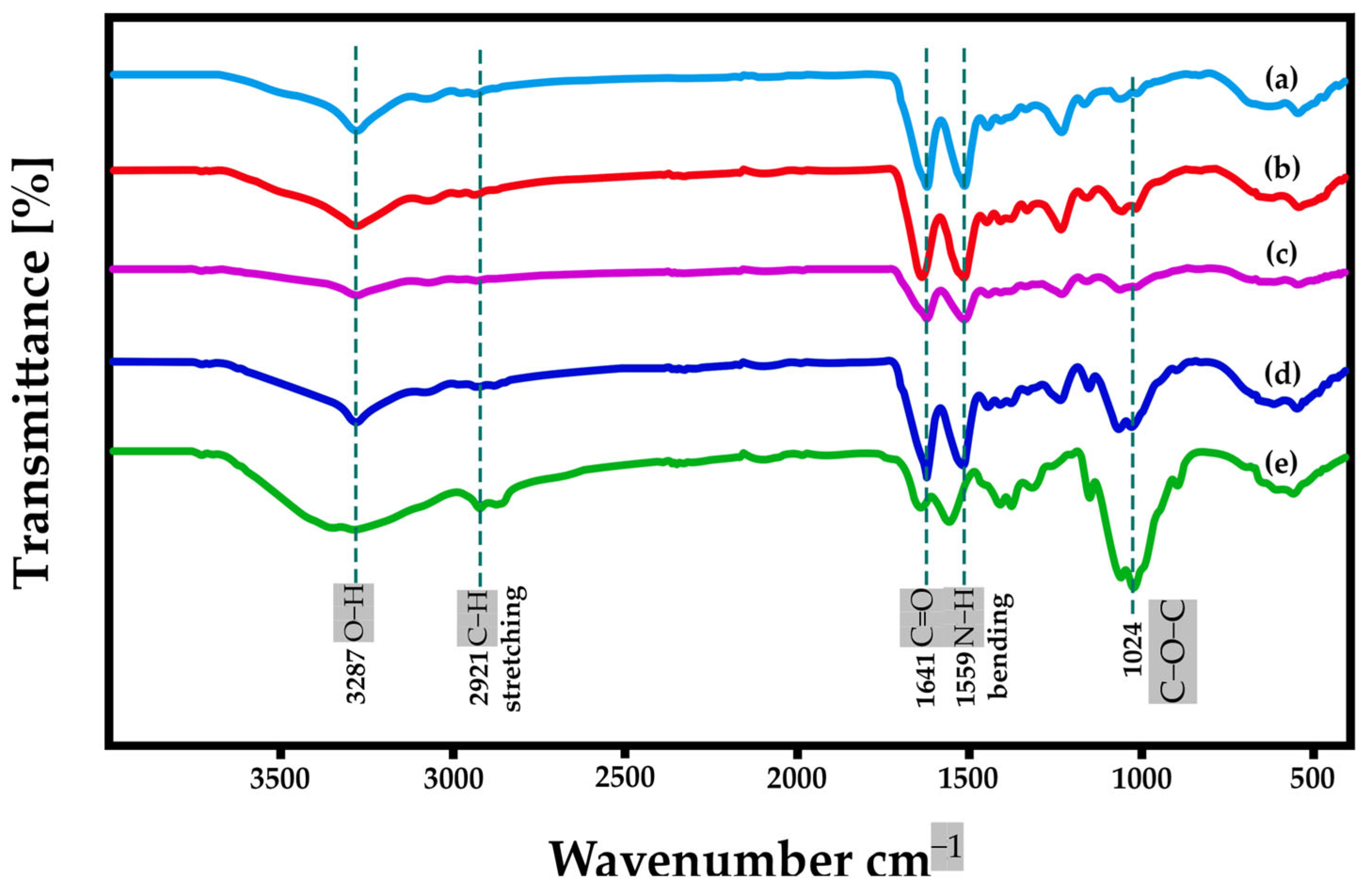
3.3. Functional Group Analysis
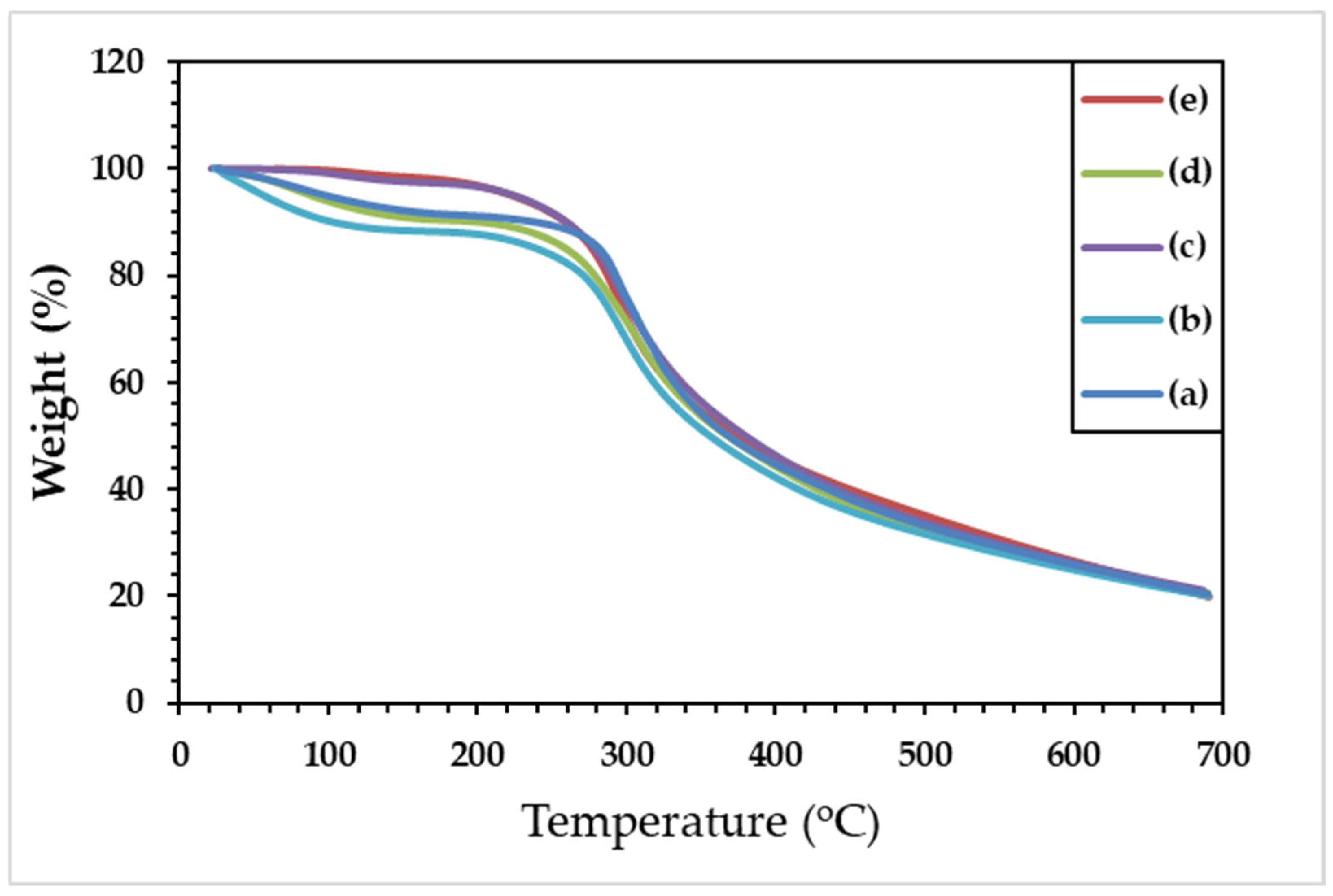
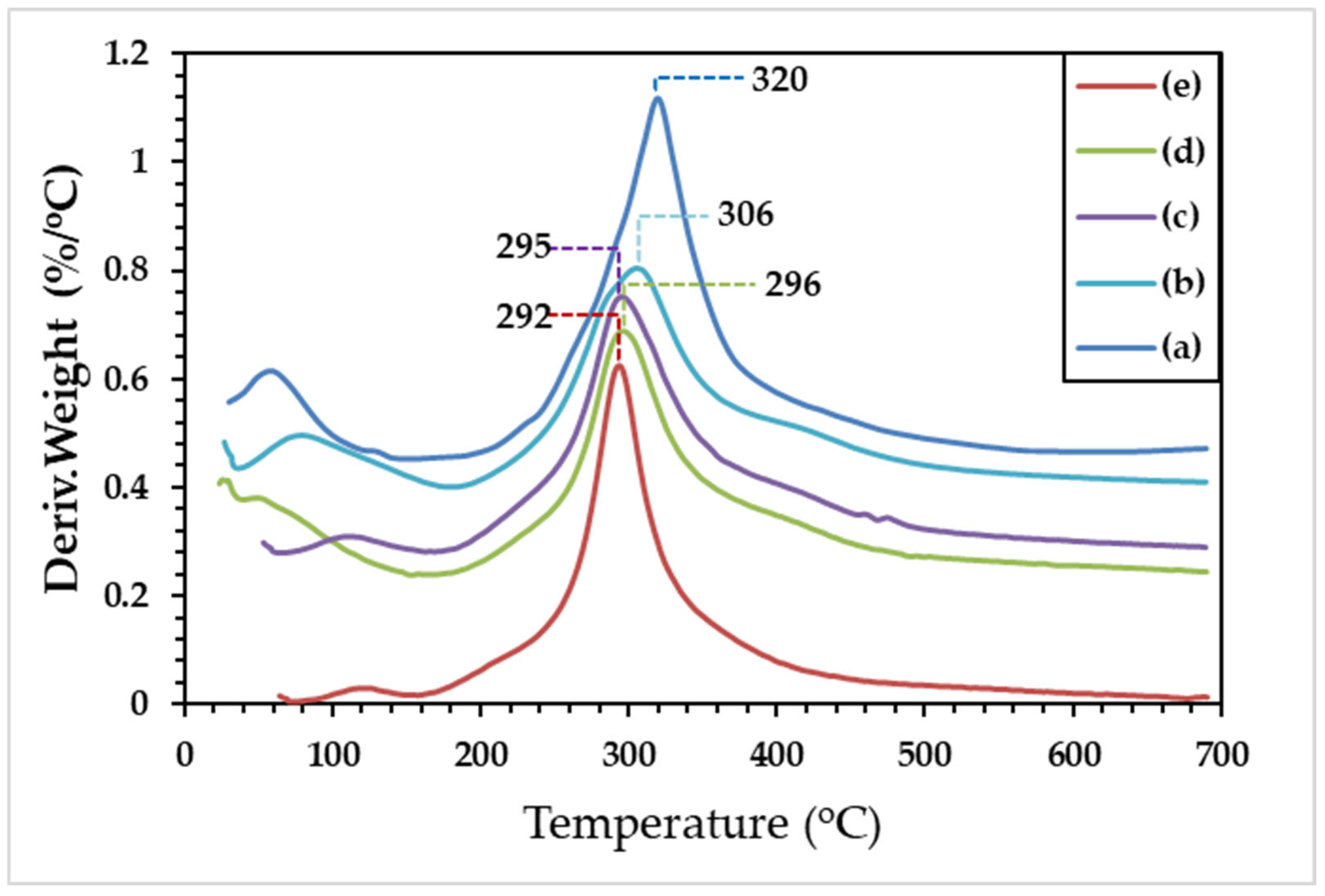
3.4. Weight Loss Analysis
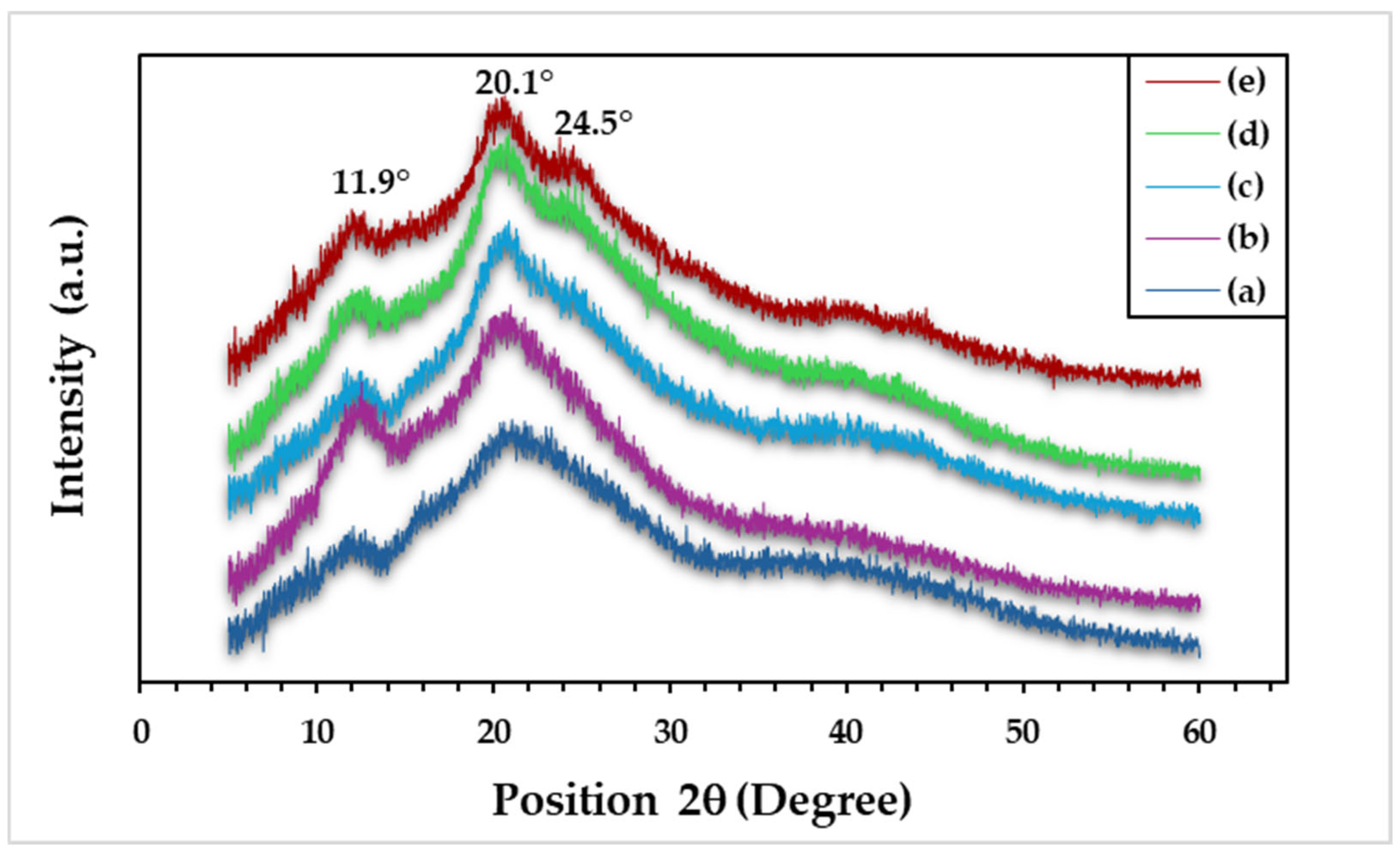
3.5. Crystallinity Determination
3.6. Absorption Capacity Test
4. Conclusions
Author Contributions
Funding
Institutional Review Board Statement
Data Availability Statement
Conflicts of Interest
References
- Duan, B.; Gao, H.; He, M.; Zhang, L. Hydrophobic Modification on Surface of Chitin Sponges for Highly Effective Separation of Oil. ACS Appl. Mater. Interfaces 2014, 6, 19933–19942. [Google Scholar] [CrossRef] [PubMed]
- Chen, C.; Zhu, X.; Chen, B. Durable Superhydrophobic/Superoleophilic Graphene-Based Foam for High-Efficiency Oil Spill Cleanups and Recovery. Environ. Sci. Technol. 2019, 53, 1509–1517. [Google Scholar] [CrossRef] [PubMed]
- Zhou, J.; Zhang, Y.; Yang, Y.; Chen, Z.; Jia, G.; Zhang, L. Silk Fibroin-Graphene Oxide Functionalized Melamine Sponge for Efficient Oil Absorption and Oil/Water Separation. Appl. Surf. Sci. 2019, 497, 143762. [Google Scholar] [CrossRef]
- Duan, H.; Lyu, H.; Shen, B.; Tian, J.; Pu, X.; Wang, F.; Wang, X. Superhydrophobic-Superoleophilic Biochar-Based Foam for High-Efficiency and Repeatable Oil-Water Separation. Sci. Total Environ. 2021, 780, 146517. [Google Scholar] [CrossRef] [PubMed]
- Xu, C.; He, H.; Wang, Y.; Huang, Y.; Zhang, T.C.; Yuan, S. Superhydrophobic Sponge-Like Chitosan/CNTs/Silica Composite for Selective Oil Absorption and Efficient Separation of Water-in-Oil Emulsion. Carbohydr. Polym. 2025, 353, 123256. [Google Scholar] [CrossRef]
- Riehm, D.A.; Neilsen, J.E.; Bothun, G.D.; John, V.T.; Raghavan, S.R.; McCormick, A.V. Efficient Dispersion of Crude Oil by Blends of Food-Grade Surfactants: Toward Greener Oil-Spill Treatments. Mar. Pollut. Bull. 2015, 101, 92–97. [Google Scholar] [CrossRef]
- Motta, F.L.; Stoyanov, S.R.; Soares, J.B.P. Application of Solidifiers for Oil Spill Containment: A Review. Chemosphere 2018, 194, 837–846. [Google Scholar] [CrossRef] [PubMed]
- Owoseni, O.; Nyankson, E.; Zhang, Y.; Adams, S.J.; He, J.; McPherson, G.L.; Bose, A.; Gupta, R.B.; John, V.T. Release of Surfactant Cargo from Interfacially-Active Halloysite Clay Nanotubes for Oil Spill Remediation. Langmuir 2014, 30, 13533–13541. [Google Scholar] [CrossRef]
- Xiao, J.; Lv, W.; Song, Y.; Zheng, Q. Graphene/Nanofiber Aerogels: Performance Regulation Towards Multiple Applications in Dye Adsorption and Oil/Water Separation. Chem. Eng. J. 2018, 338, 202–210. [Google Scholar] [CrossRef]
- Yang, Y.; Ren, Z.; Zhao, S.; Guo, Z. One-Step Fabrication of Thermal Resistant, Corrosion Resistant Metal Rubber for Oil/Water Separation. Colloids Surf. A Physicochem. Eng. Asp. 2019, 573, 157–164. [Google Scholar] [CrossRef]
- Yu, T.; Swientoniewski, L.T.; Omarova, M.; Li, M.C.; Negulescu, I.I.; Jiang, N.; Darvish, O.A.; Panchal, A.; Blake, D.A.; Wu, Q.; et al. Investigation of Amphiphilic Polypeptoid-Functionalized Halloysite Nanotubes as Emulsion Stabilizer for Oil Spill Remediation. ACS Appl. Mater. Interfaces 2019, 11, 27944–27953. [Google Scholar] [CrossRef]
- Aurell, J.; Gullett, B.K. Aerostat Sampling of PCDD/PCDF Emissions from the Gulf Oil Spill In Situ Burns. Environ. Sci. Technol. 2010, 44, 9431–9437. [Google Scholar] [CrossRef]
- Abidli, A.; Huang, Y.; Cherukupally, P.; Bilton, A.M.; Park, C.B. Novel Separator Skimmer for Oil Spill Cleanup and Oily Wastewater Treatment: From Conceptual System Design to the First Pilot-Scale Prototype Development. Environ. Technol. Innov. 2020, 28, 100598. [Google Scholar] [CrossRef]
- Kristensen, M.; Johnsen, A.R.; Christensen, J.H. Marine Biodegradation of Crude Oil in Temperate and Arctic Water Samples. J. Hazard. Mater. 2015, 300, 75–83. [Google Scholar] [CrossRef]
- Wang, J.; Sandoval, K.; Ding, Y.; Stoeckel, D.; Minard-Smith, A.; Andersen, G.; Dubinsky, E.A.; Atlas, R.; Gardinali, P. Biodegradation of Dispersed Macondo Crude Oil by Indigenous Gulf of Mexico Microbial Communities. Sci. Total Environ. 2016, 557, 453–468. [Google Scholar] [CrossRef]
- Hoang, A.T.; Nižetić, S.; Duong, X.Q.; Rowinski, L.; Nguyen, X.P. Advanced Superhydrophobic Polymer Based Porous Absorbents for the Treatment of Oil-Polluted Water. Chemosphere 2021, 277, 130274. [Google Scholar] [CrossRef]
- Zhou, X.; Zhang, Z.; Xu, X.; Men, X.; Zhu, X. Facile Fabrication of Superhydrophobic Sponge with Selective Absorption and Collection of Oil from Water. Ind. Eng. Chem. Res. 2013, 52, 9411–9416. [Google Scholar] [CrossRef]
- Ge, J.; Wang, F.; Yin, X.; Yu, J.; Ding, B. Polybenzoxazine-Functionalized Melamine Sponges with Enhanced Selective Capillarity for Efficient Oil Spill Cleanup. ACS Appl. Mater. Interfaces 2018, 10, 40274–40285. [Google Scholar] [CrossRef]
- Li, J.; Chen, Y.; Gao, J.; Zuo, Z.; Li, Y.; Liu, H.; Li, Y. Graphdiyne Sponge for Direct Collection of Oils from Water. ACS Appl. Mater. Interfaces 2018, 11, 2591–2598. [Google Scholar] [CrossRef] [PubMed]
- Phanthong, P.; Reubroycharoen, P.; Kongparakul, S.; Samart, C.; Wang, Z.; Hao, X.; Abudula, A.; Guan, G. Fabrication and Evaluation of Nanocellulose Sponge for Oil/Water Separation. Carbohydr. Polym. 2018, 190, 184–189. [Google Scholar] [CrossRef] [PubMed]
- Sam, E.K.; Liu, J.; Lv, X. Surface Engineering Materials of Superhydrophobic Sponges for Oil/Water Separation: A Review. Ind. Eng. Chem. Res. 2021, 60, 2353–2364. [Google Scholar] [CrossRef]
- Sarkar, A.; Mahapatra, S. Novel Hydrophobic Vaterite Particles for Oil Removal and Recovery. J. Mater. Chem. A 2014, 2, 3808–3818. [Google Scholar] [CrossRef]
- Gao, C.; Xing, Z.; Chen, Y.; Meng, L.; Tang, X. Improve the Chitosan Particle-Stabilized Oil-Water Interface by Dual Reinforcement and Its Effect on the Structure and Properties of Emulsion. Food Chem. 2025, 485, 144500. [Google Scholar] [CrossRef] [PubMed]
- Yang, Y.; Tong, Z.; Ngai, T.; Wang, C. Nitrogen-Rich and Fire Resistant Carbon Aerogels for the Removal of Oil Contaminants from Water. ACS Appl. Mater. Interfaces 2014, 6, 6351–6360. [Google Scholar] [CrossRef]
- Li, Y.-Q.; Samad, Y.A.; Polychronopoulou, K.; Alhassan, S.M.; Liao, K. Carbon Aerogel from Winter Melon for Highly Efficient and Recyclable Oils and Organic Solvents Absorption. ACS Sustain. Chem. Eng. 2014, 2, 1492–1497. [Google Scholar] [CrossRef]
- Wang, Q.; Li, Y. Facile and Green Fabrication of Porous Chitosan Aerogels for Highly Efficient Oil/Water Separation and Metal Ions Removal from Water. J. Chem. Eng. 2023, 11, 109689. [Google Scholar] [CrossRef]
- Wang, Y.; Chen, A.; Peng, M.; Tan, D.; Liu, X.; Shang, C.; Luo, S.; Peng, L. Preparation and Characterization of a Fluorizated Kaolin–Modified Melamine Sponge as an Absorbent for Efficient and Rapid Oil/Water Separation. J. Clean. Prod. 2019, 217, 308–316. [Google Scholar] [CrossRef]
- Xia, C.; Li, Y.; Fei, T.; Gong, W. Facile One-pot Synthesis of Superhydrophobic Reduced Graphene Oxide-Coated Polyurethane Sponge at the Presence of Ethanol for Oil-Water Separation. Chem. Eng. J. 2018, 345, 648–658. [Google Scholar] [CrossRef]
- Lin, X.; Li, Y.; Chen, Z.; Zhang, C.; Luo, X.; Du, X.; Huang, Y. Synthesis, Characterization and Electrospinning of New Thermoplastic Carboxymethyl Cellulose (TCMC). Chem. Eng. J. 2013, 215, 709–720. [Google Scholar] [CrossRef]
- Xiang, B.; Sun, Q.; Zhong, Q.; Mu, P.; Li, J. Current Research Situation and Future Prospect of Superwetting Smart Oil/Water Separation Materials. J. Mater. Chem. A 2022, 10, 20190–20217. [Google Scholar] [CrossRef]
- Wang, K.; Zhang, T.C.; Wei, B.; Chen, S.; Liang, Y.; Yuan, S. Durable CNTs reinforced porous electrospun superhydrophobic membrane for efficient gravity driven oil/water separation. Colloids Surf. A Physicochem. Eng. Asp. 2021, 608, 125342. [Google Scholar] [CrossRef]
- Altman, G.H.; Diaz, F.; Calabro, C.T.J.; Horan, R.L.; Chen, J.; Lu, H.; Richmond, J.; Kaplan, D.L. Silk-Based Biomaterials. Biomaterials 2003, 24, 401–416. [Google Scholar] [CrossRef]
- Zhang, Y.Q. Applications of Natural Silk Protein Sericin in Biomaterials. Biotechnol. Adv. 2002, 20, 91–100. [Google Scholar] [CrossRef]
- Liu, Q.; Liu, H.; Fan, Y. Preparation of Silk Fibroin Carriers for Controlled Release. Microsc. Res. Tech. 2017, 80, 312–320. [Google Scholar] [CrossRef]
- Lyu, Y.; Liu, Y.; He, H.; Wang, H. Application of Silk-Fibroin-Based Hydrogels in Tissue Engineering. Gels 2023, 9, 431. [Google Scholar] [CrossRef] [PubMed]
- Hu, J.; Jiang, Z.; Zhang, J.; Yang, G. Application of Silk Fibroin Coatings for Biomaterial Surface Modification: A Silk Road for Biomedicine. J. Zhejiang Univ. Sci. B (Biomed. Biotechnol.) 2023, 24, 943–956. [Google Scholar] [CrossRef] [PubMed]
- Hu, Y.; Zou, Y.; Ma, Y.; Yu, J.; Liu, L.; Chen, M.; Ling, S.; Fan, Y. Formulation of Silk Fibroin Nanobrush-Stabilized Biocompatible Pickering Emulsions. Langmuir 2022, 38, 14302–14312. [Google Scholar] [CrossRef] [PubMed]
- Hu, Y.; Ma, Y.; Liu, L.; Yu, J.; Cui, J.; Ling, S.; Fan, Y. Nanosilk Template-Guided/Induced Construction of Brush-/Flower-Like 3D Nanostructures. ACS Appl. Mater. Interfaces 2023, 15, 14654–14663. [Google Scholar] [CrossRef]
- Liu, Y.; Liu, L.; Li, X.; Yu, J.; Chen, M.; Lin, L.; Jia, R.; Fan, Y. Pickering Emulsions by Combining Nanocellulose/Nanochitin and Silk Fibroin: Silk Fibroin as a Stabilizer or an Emulsifier. Ind. Crops Prod. 2024, 211, 118270. [Google Scholar] [CrossRef]
- Han, X.; Ke, Y.; Wu, Y.; Huang, J.; Xu, W.; Wang, Y. Surface Modification of Silk Fibroin Powder and Its Application in Oil-Water Separation. Pow. Technol. 2023, 420, 118397. [Google Scholar] [CrossRef]
- Zong, C.-M.; Zhang, B.; Li, S.-Y.; Jin, J.; Lu, Z.-Z.; Yao, X.-H.; Zhao, W.-G.; Chen, T.; Zhang, D.-Y. A Flexible Multifunctional Sensor with a Conductive Network Based on Silk Nanofibers and MXene for Monitoring Physiological Activity, Capacitive Pens, Photothermal Conversion and Antibacterial. Int. J. Biol. Macromol. 2025, 305, 141148. [Google Scholar] [CrossRef]
- Xin, L.; Hu, Z.; Mao, Y.; Wu, G.; Chen, W.; Lu, W. Biocompatible Silk Nanofibers with Excellent Antimicrobial and Preservation Properties by ε-Polylysine Grafting. Food Chem. 2026, 506, 148204. [Google Scholar] [CrossRef]
- Abd-Elbaki, M.K.M.; Ahmed, R.M.G.; Khalil, A.S.G. Silk-Based 2D Nanocomposites for Superior Oily Wastewater Remediation. J. Clean. Prod. 2022, 365, 132707. [Google Scholar] [CrossRef]
- Gore, P.M.; Naebe, M.; Wang, X.; Kandasubramanian, B. Progress in Silk Materials for Integrated Water Treatments: Fabrication, Modification and Applications. Chem. Eng. J. 2019, 374, 437–470. [Google Scholar] [CrossRef]
- Kou, S.G.; Peters, L.; Mucalo, M. Chitosan: A Review of Molecular Structure, Bioactivities and Interactions with the Human Body and Micro-organisms. Carbohydr. Polym. 2022, 282, 119132. [Google Scholar] [CrossRef]
- Hamid, M.; Dayana, I.; Sholeha, D.; Siregar, M.F.; Roza, I.; Rianna, M.; Wijoyo, H. Eco-Friendly Utilization of Chitosan from Shrimp Shells for Used Lubricating Oil Cleaning. Results Surf. Interfaces 2025, 18, 100368. [Google Scholar] [CrossRef]
- Qian, J.; Yin, J.; Ma, P.; Mo, C.; Chen, Y.; Guo, H. Study on Emulsification Property of Chitosan with Strong Antibacterial Activity. Food Hydrocoll. 2026, 179, 112711. [Google Scholar] [CrossRef]
- Han, J.; Chen, F.; Gao, C.; Zhang, Y.; Tang, X. Environmental Sstability and Curcumin Release Properties of Pickering Emulsion Stabilized by Chitosan/Gum Arabic Nanoparticles. Int. J. Biol. Macromol. 2020, 157, 202–211. [Google Scholar] [CrossRef]
- Zhang, N.; Han, J.; Chen, F.; Gao, C.; Tang, X. Chitosan/Gum Arabic Complexes to Stabilize Pickering Emulsions: Relationship Between the Preparation, Structure and Oil-Water Interfacial Activity. Food Hydrocoll. 2022, 129, 107532. [Google Scholar] [CrossRef]
- Meng, W.; Sun, H.; Mu, T.; Garcia-Vaquero, M. Chitosan-Based Pickering Emulsion: A Comprehensive Review on Their Sstabilizers, Bioavailability, Applications and Regulations. Carbohydr. Polym. 2023, 304, 120491. [Google Scholar] [CrossRef]
- Paul, J.; Qamar, A.; Ahankari, S.S.; Thomas, S.; Dufresne, A. Chitosan-Based Aerogels: A New Paradigm of Advanced Green Materials for Remediation of Contaminated Water. Carbohydr. Polym. 2024, 338, 122198. [Google Scholar] [CrossRef]
- Rao, R.; Liu, M.; Yu, X.; Li, X.; Guo, X.; Shi, X. Antibacterial Chitosan Bioplastics with Enhanced Water Stability via Electro–Assembly Followed by Direct Thermal Processing. Carbohydr. Polym. 2026, 381, 125190. [Google Scholar] [CrossRef] [PubMed]
- Tanisood, S.; Baimark, Y.; Srihanam, P. Preparation and Characterization of Cellulose/Silk Fibroin Composite Microparticles for Drug-Controlled Release Applications. Polymers 2024, 16, 3020. [Google Scholar] [CrossRef] [PubMed]
- Rojas-Lema, S.; Nilsson, K.; Trifol, J.; Langton, M.; Gomez-Caturla, J.; Balart, R.; Garcia-Garcia, D.; Morina, R. Faba Bean Protein Films Reinforced with Cellulose Nanocrystals as Edible Food Packaging Material. Food Hydrocoll. 2021, 121, 107019. [Google Scholar] [CrossRef]
- Jiang, Q.; Zhang, H.; Yang, J.; Wu, L.; Zhang, H. Nanobubbles Create Hierarchical Pores of Cryogels Based on Chitosan and Regenerated Silk Fibroin: Accelerating Oil Absorption in Constructing Foam-Templated Oleogels. Food Hydrocoll. 2025, 166, 111312. [Google Scholar] [CrossRef]
- Lang, D.; Zhang, C.; Qian, Q.; Guo, C.; Wang, L.; Yang, C.; Wu, R.; Wang, W.; Wang, J.; Fu, J. Oil Absorption Stability of Modified Cellulose Porous Materials with Super Compressive Strength in the Complex Environment. Cellulose 2023, 30, 7745–7762. [Google Scholar] [CrossRef]
- Srisuwan, Y.; Baimark, Y.; Srihanam, P. Preparation of Regenerated Silk Sericin/Silk Fibroin blend Microparticles by Emulsification-Diffusion Method for Controlled Release Drug Delivery. Part. Sci. Technol. 2017, 35, 387–392. [Google Scholar] [CrossRef]
- Wongnarat, C.; Srihanam, P. Biomaterial Microparticles of Keratose/Collagen blend Prepared by a Water-in-Oil Emulsification-Diffusion Method. Part. Sci. Technol. 2020, 31, 379–384. [Google Scholar] [CrossRef]
- Imsombut, T.; Srisa-ard, M.; Srihanam, P.; Baimark, Y. Preparation of Silk Fibroin Microspheres by Emulsification-Diffusion Method for Controlled Release Drug Delivery Applications. E-Polymers 2011, 88, 88. [Google Scholar] [CrossRef]
- Karatzos, S.K.; Edye, L.A.; Orlando, W.; Doherty, S. Sugarcane Bagasse Pretreatment Using Three Imidazolium-Based Ionic Liquids: Mass Balances and Enzyme Kinetics. Biotechnol. Biofuels 2012, 5, 62. [Google Scholar] [CrossRef] [PubMed]
- Ye, C.; Zhang, H.; Yang, Y.; Shan, Y.; Fu, J.; Gao, W.; Ren, J.; Cao, L.; Ling, S. Sustainable Silk Fibroin Ionic Touch Screens for Flexible Biodegradable Electronics with Integrated AI and IoT Functionality. Adv. Matter. 2025, 37, 2412972. [Google Scholar] [CrossRef]
- Yamada, M.; Nishimura, F.; Asano, A.; Suzuki, Y. Structure-Dynamics–Property Relationships in Silk Fibroin Films Probed via Solid-State NMR. ACS Omega 2026, 11, 25838–25848. [Google Scholar] [CrossRef]
- Li, B.; Sun, Y.; Yao, J.; Wu, H.; Shen, Y.; Zhi, C.; Li, J. An Environment-Friendly Chemical Modification Method for Thiol Groups on Polypeptide Macromolecules to Improve the Performance of Regenerated Keratin Materials. Mater. Des. 2022, 217, 110611. [Google Scholar] [CrossRef]
- Champion, J.A.; Katare, Y.K.; Mitragotri, S. Particle Shape: A New Design Parameter for Micro- and Nanoscale Drug Delivery Carriers. J. Control. Release 2007, 121, 3–9. [Google Scholar] [CrossRef]
- Wang, J.-D.; Yang, S.-L.; Liu, G.-S.; Zhou, Q.; Fu, L.-N.; Gu, Q.; Cai, Z.-H.; Zhang, S.; Fu, Y.-J. A Degradable Multi-Functional Packaging Based on Chitosan/Silk Fibroin via Incorporating Cellulose Nanocrystals-Stabilized Cinnamon Essential Oil Pickering Emulsion. Food Hydrocoll. 2024, 153, 109978. [Google Scholar] [CrossRef]
- Pakkaner, E.; Yalçın, D.; Uysal, B.; Top, A. Self-Assembly Behavior of the Keratose Proteins Extracted from Oxidized Ovis aries Wool Fibers. Int. J. Biol. Macromol. 2019, 125, 1008–1015. [Google Scholar] [CrossRef]
- Liu, Q.; Ying, G.; Jiang, N.; Yetisen, A.K.; Yao, D.; Xie, X.; Fan, Y.; Liu, H. Three-Dimensional Silk Fibroin Microsphere-Nanofiber Scaffolds for Vascular Tissue Engineering. Med. Nov. Technol. Devices 2021, 9, 100051. [Google Scholar] [CrossRef]
- Sharma, S.; Gupta, A.; Chik, S.M.S.T.; Kee, C.G.; Mistry, B.M.; Kim, D.H.; Sharma, G. Characterization of Keratin Microparticles from Feather Biomass with Potent Antioxidant and Anticancer Activities. Int. J. Biol. Macromol. 2017, 104, 189–196. [Google Scholar] [CrossRef] [PubMed]
- Silva, F.R.F.; Dore, C.M.P.G.; Marques, C.T.; Nascimento, M.S.; Benevides, N.M.B.; Rocha, H.A.O.; Chavante, S.F.; Leite, E.L. Anticoagulant Activity, Paw Edema and Pleurisy Induced Carrageenan: Action of Major Types of Commercial Carrageenan. Carbohydr. Polym. 2010, 79, 26–33. [Google Scholar] [CrossRef]
- Lim, S.H.; Hudson, S.M. Synthesis and Antimicrobial Activity of a Water-Soluble Chitosan Derivative with a Fiber-Reactive Group. Carbohydr. Res. 2004, 339, 313–319. [Google Scholar] [CrossRef]
- Biswas, S.; Rahaman, T.; Gupta, P.; Mitra, R.; Dutta, S.; Kharlyngdoh, E.; Guha, S.; Ganguly, J.; Pal, A.; Das, M. Cellulose and Lignin Profiling in Seven, Economically Important Bamboo Species of India by Anatomical, Biochemical, FTIR Spectroscopy and Thermogravimetric Analysis. Biomass Bioenerg. 2022, 158, 106362. [Google Scholar] [CrossRef]
- Vino, A.B.; Ramasamy, P.; Shanmugam, V.; Shanmugam, A. Extraction, Characterization and In Vitro Antioxidative Potential of Chitosan and Sulfated Chitosan from Cuttlebone of Sepia aculeata Orbigny, 1848. Asian Pac. J. Trop. Biomed. 2012, 2, S334–S341. [Google Scholar] [CrossRef]
- Song, C.; Yu, H.; Zhang, M.; Yang, Y.; Zhang, G. Physicochemical Properties and Antioxidant Activity of Chitosan from the Blowfly Chrysomya megacephala Larvae. Int. J. Biol. Macromol. 2013, 60, 347–354. [Google Scholar] [CrossRef]
- Khan, A.; Khan, R.A.; Salmieri, S.; Le Tien, C.; Riedl, B.; Bouchard, J.; Chauve, G.; Tan, V.; Kamal, M.R.; Lacroix, M. Mechanical and Barrier Properties of Nanocrystalline Cellulose Reinforced Chitosan-Based Nanocomposite Films. Carbohydr. Polym. 2012, 90, 1601–1608. [Google Scholar] [CrossRef]
- Srihanam, P.; Simchuer, W.; Chounlamany, V.; Phomkeona, K.; Deevanhxay, P.; Baimark, Y. Reinforcement of Thermo-Compressed Sodium Alginate Films with Calcium Alginate Powder. Mar. Drugs 2026, 24, 142. [Google Scholar] [CrossRef] [PubMed]
- Kaur, P.; Choudhary, A.; Thakur, R. Synthesis of Chitosan-Silver Nanocomposites and Their Antibacterial Activity. Int. J. Sci. Eng. Res. 2013, 4, 869–872. [Google Scholar]
- Morsy, M.; Mostafa, K.M.; Amyn, H.A.-M.; El-Ebissy, A.A.H.; Salah, A.M.; Youssef, M.A. Synthesis and Characterization of Freeze-Dryer Chitosan Nanoparticles as Multifunctional Eco-friendly Finish for Fabricating Easycare and Antibacterial Cotton Textiles. Egypt J. Chem. 2019, 62, 1277–1293. [Google Scholar]
- Tardy, B.L.; Mattos, B.D.; Otoni, C.G.; Beaumont, M.; Majoinen, J.; Kämäräinen, T.; Rojas, O.J. Deconstruction and Reassembly of Renewable Polymers and Biocolloids into Next Generation Structured Materials. Chem. Rev. 2021, 121, 14088–14188. [Google Scholar] [CrossRef]
- Viju, S. Chitosan Coating on Silk Fibroin for Oil Spill Treatment. Indian J. Fibre Text. Res. 2021, 45, 482–487. [Google Scholar] [CrossRef]
- Shao, C.; Gao, Y.; Dai, Y. Advances in the Adsorption of Oil Contaminants by Modified Graphene Sponges. Desalin. Water Treat. 2025, 324, 101511. [Google Scholar] [CrossRef]
- Alvarez-Paino, M.; Amer, M.H.; Nasir, A.; Crucitti, V.C.; Thorpe, J.; Burroughs, L.; Needham, D.; Denning, C.; Alexander, M.R.; Alexander, C.; et al. Polymer Microparticles with Defined Surface Chemistry and Topography Mediate the Formation of Stem Cell Aggregates and Cardiomyocyte Function. ACS Appl. Mater. Interfaces 2019, 11, 34560–34574. [Google Scholar] [CrossRef] [PubMed]





| Types | Dissolution Time (Days) | ||||
|---|---|---|---|---|---|
| 0 | 1 | 3 | 5 | 7 | |
| Native SF | 100 ± 0.00 | 100 ± 0.00 | 90.00 ± 3.00 | 85.00 ± 2.00 | 80.00 ± 3.00 |
| SF/CS (3:1) | 100 ± 0.00 | 100 ± 0.00 | 88.00 ± 2.00 | 82.00 ± 2.00 | 75.00 ± 2.00 |
| SF/CS (1:1) | 100 ± 0.00 | 100 ± 0.00 | 90.00 ± 3.00 | 85.00 ± 4.00 | 80.00 ± 2.00 |
| SF/CS (1:3) | 100 ± 0.00 | 100 ± 0.00 | 86.00 ± 2.00 | 80.00 ± 2.00 | 76.00 ± 1.00 |
| Native CS | 100 ± 0.00 | 100 ± 0.00 | 92.00 ± 3.00 | 84.00 ± 4.00 | 79.00 ± 3.00 |
| Types | Absorption (cm−1) | ||||
|---|---|---|---|---|---|
| O−H Str. | C−H Str. | C=O Str. | N−H Str. | C−O Blend | |
| Native SF | 3290 | 2921 | 1641 | 1558 | − |
| SF/CS (3:1) | 3290 | 2928 | 1642 | 1559 | 1024 |
| SF/CS (1:1) | 3290 | 2956 | 1623 | 1559 | 1024 |
| SF/CS (1:3) | 3290 | 2956 | 1624 | 1559 | 1024 |
| Native CS | 3291 | 2921 | 1645 | 1589 | 1024 |
| Types | Thermal Decomposition (°C) | 1 Charred Residues (%) | |||
|---|---|---|---|---|---|
| 1 T5% | 1 T10% | 1 T50% | 2 Td,max | ||
| Native SF | 98 | 238 | 386 | 320 | 28 |
| SF/CS (3:1) | 88 | 201 | 387 | 312 | 29 |
| SF/CS (1:1) | 224 | 260 | 401 | 300 | 29 |
| SF/CS (1:3) | 221 | 253 | 373 | 297 | 29 |
| Native CS | 222 | 259 | 424 | 294 | 30 |
| Samples | Crystalline Max 2θ (°) | Peak Intensity (Imax) | Amorphous Valley (Iam) | Crystallinity Index (CrI,%) |
|---|---|---|---|---|
| Pure CS | 21.38 | 1507.00 | 944.00 | 37.36 |
| SF/CS (1:3) | 20.95 | 1474.00 | 945.00 | 35.89 |
| SF/CS (1:1) | 20.86 | 1541.00 | 851.00 | 44.78 |
| SF/CS (3:1) | 20.87 | 1684.00 | 955.00 | 43.29 |
| Pure SF | 20.62 | 1441.00 | 837.00 | 41.92 |
| Types | Absorption Capacity (g/g) | ||
|---|---|---|---|
| Chloroform | Plant Oil | Used Engine Oil | |
| Native SF | 4.6 ± 0.2 | 13.4 ± 0.2 | 20.3 ± 0.3 |
| SF/CS (3:1) | 7.4 ± 0.3 | 15.3 ± 0.3 | 18.6 ± 0.3 |
| SF/CS (1:1) | 9.6 ± 0.3 | 24.8 ± 0.3 | 26.6 ± 0.2 |
| SF/CS (1:3) | 7.4 ± 0.3 | 19.5± 0.2 | 18.1 ± 0.3 |
| Native CS | 4.3 ± 0.2 | 18.4 ± 0.2 | 17.2 ± 0.3 |
| PU foam | 35.5 ± 1.0 | 30.4 ± 1.0 | 36.6 ± 2.0 |
Disclaimer/Publisher’s Note: The statements, opinions and data contained in all publications are solely those of the individual author(s) and contributor(s) and not of MDPI and/or the editor(s). MDPI and/or the editor(s) disclaim responsibility for any injury to people or property resulting from any ideas, methods, instructions or products referred to in the content. |
© 2026 by the authors. Licensee MDPI, Basel, Switzerland. This article is an open access article distributed under the terms and conditions of the Creative Commons Attribution (CC BY) license.
Share and Cite
Thonpho, A.; Tanisood, S.; Simchuer, W.; Baimark, Y.; Srihanam, P. Silk Fibroin/Chitosan Blended Microparticles: Preparation, Characterization, and Oil Absorption. Polymers 2026, 18, 1496. https://doi.org/10.3390/polym18121496
Thonpho A, Tanisood S, Simchuer W, Baimark Y, Srihanam P. Silk Fibroin/Chitosan Blended Microparticles: Preparation, Characterization, and Oil Absorption. Polymers. 2026; 18(12):1496. https://doi.org/10.3390/polym18121496
Chicago/Turabian StyleThonpho, Ansaya, Suchai Tanisood, Wilaiwan Simchuer, Yodthong Baimark, and Prasong Srihanam. 2026. "Silk Fibroin/Chitosan Blended Microparticles: Preparation, Characterization, and Oil Absorption" Polymers 18, no. 12: 1496. https://doi.org/10.3390/polym18121496
APA StyleThonpho, A., Tanisood, S., Simchuer, W., Baimark, Y., & Srihanam, P. (2026). Silk Fibroin/Chitosan Blended Microparticles: Preparation, Characterization, and Oil Absorption. Polymers, 18(12), 1496. https://doi.org/10.3390/polym18121496