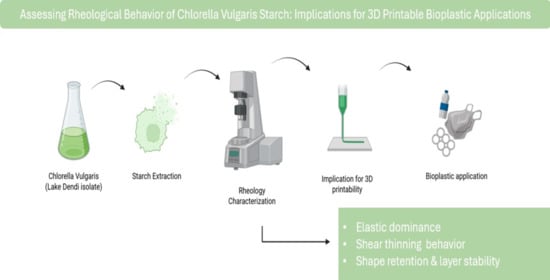
Investigating Rheological Behavior of Chlorella vulgaris Starch: Implications for 3D Printable Bioplastic Material


Abstract
1. Introduction
2. Materials and Methods
2.1. Materials and Sample Preparation
2.2. Rheological Measurements
2.3. Scanning Electron Microscope
3. Results and Discussion
3.1. Flow Behavior
3.2. Dynamic Shear Properties
3.2.1. Amplitude Sweep
3.2.2. Frequency Sweep
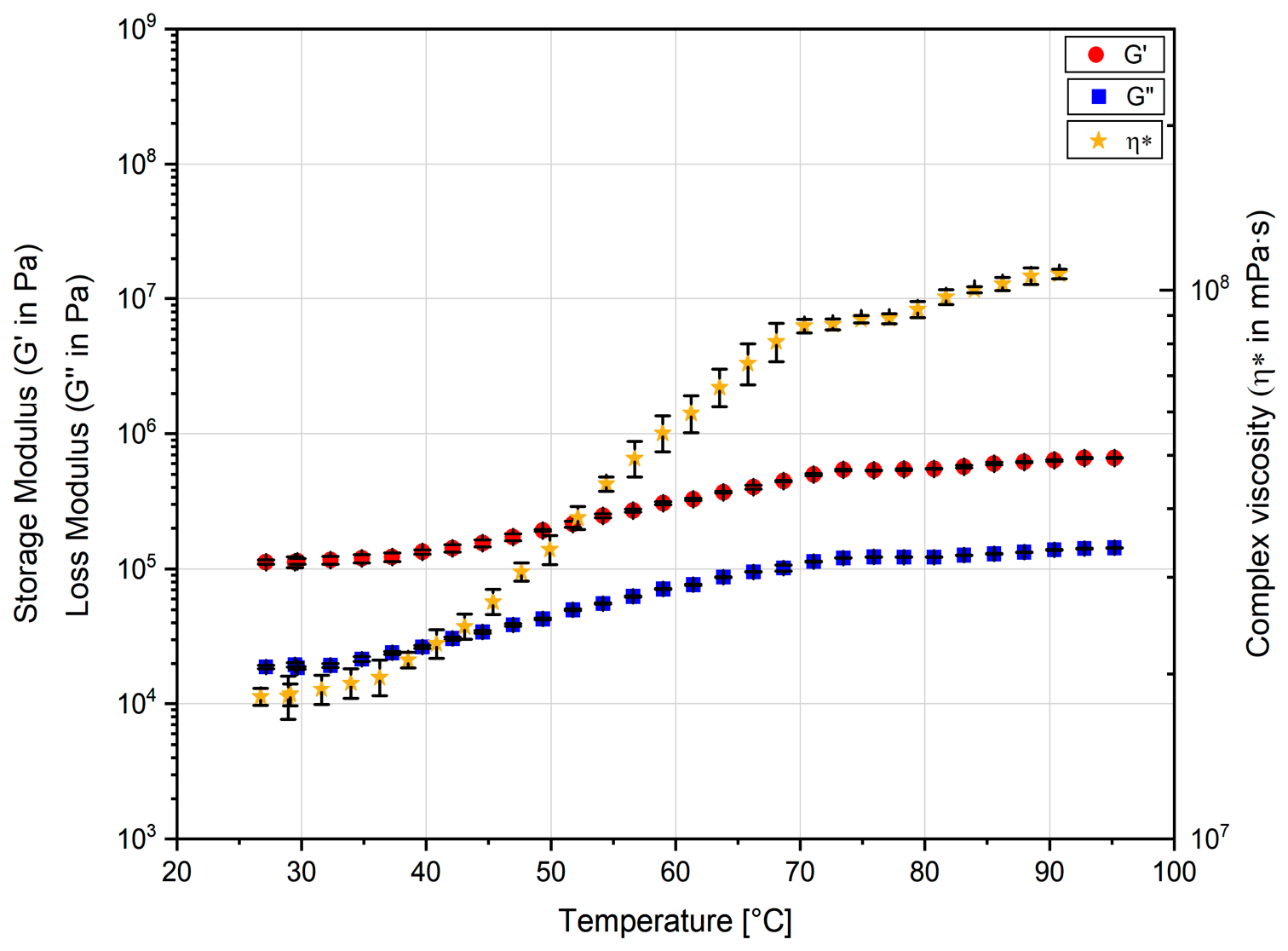
3.2.3. Temperature Sweep

| Starch | TG′max (°C) | G′max (Pa) | Tan G′max | Ref. |
|---|---|---|---|---|
| Potato | 68.4 | 2546 | 0.26 | [32] |
| Corn | 69.5 | 1655 | 0.25 | |
| Rice | 76.8 | 6122 | 0.08 | |
| Potato | 60.5 | 2595.5 | 0.24 | [41] |
| Tapioca | 62.1 | 995.6 | 0.29 | |
| Waxy corn | 63.6 | 1450 | 0.19 | |
| Sweet potato (TNu17) | 63.6 | 4735.5 | 0.11 | |
| Sweet potato (TNu57) | 69.8 | 3447.5 | 0.20 | |
| High amylose corn | 79.1 | 8879.5 | 0.06 | |
| Corn | 65.2 | 6365 | 0.12 | |
| Rice (TNu67) | 62.1 | 10,321.5 | 0.07 | |
| Pea | 69.8 | 15,400 | 0.12 | |
| Mung bean | 66.7 | 9853 | 0.14 | |
| Potato | 69.8 | 2670 | 0.27 | [42] |
| Waxy potato | 72.0 | 1100 | 0.28 | |
| Cashew kernel | 75.0 | 5724.53 | 0.19 | [43] |
| C. vulgaris | 92.7 | 6.6 105 | 0.21 | This study |
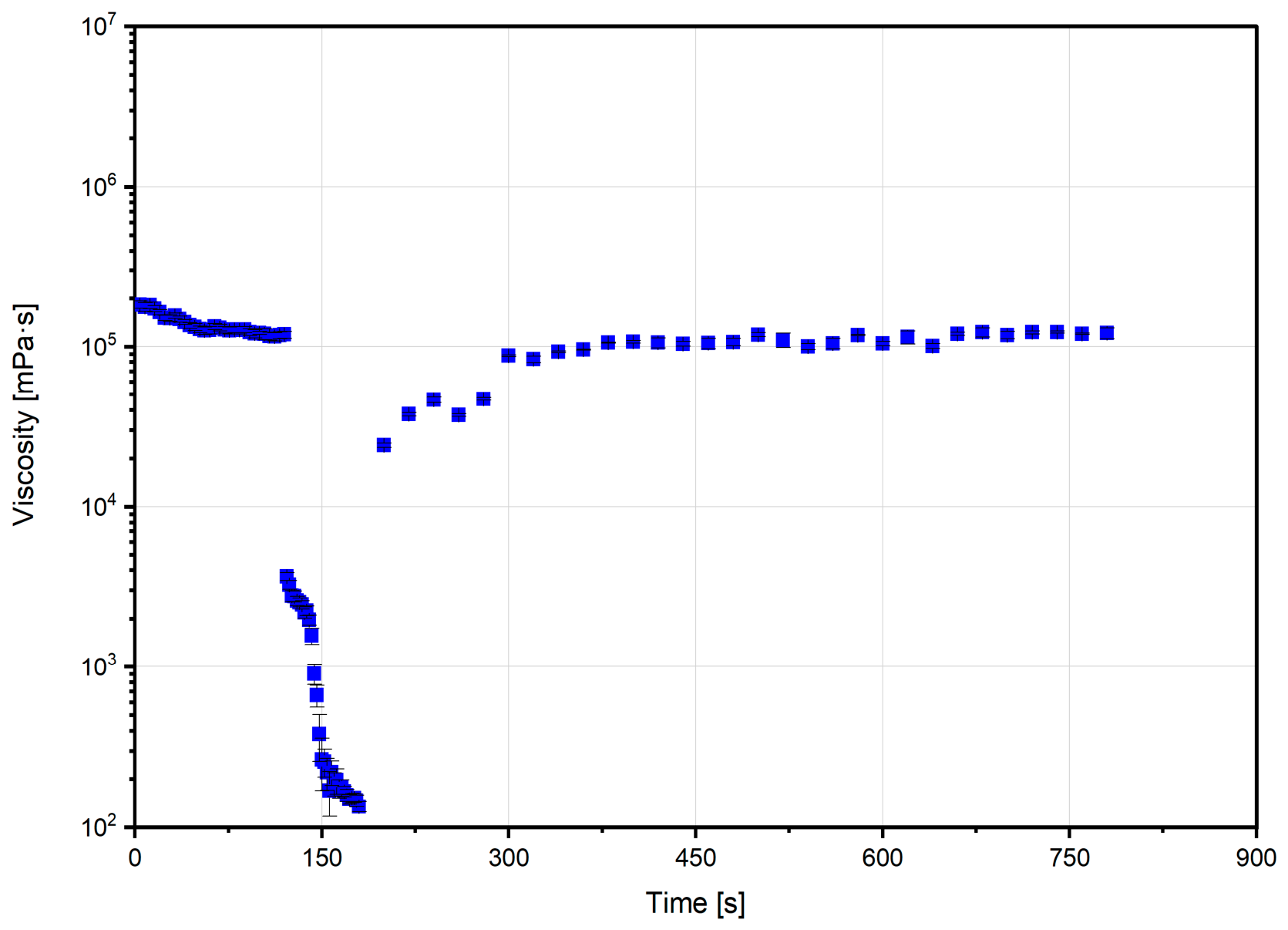
3.2.4. Three-Interval Thixotropic Test
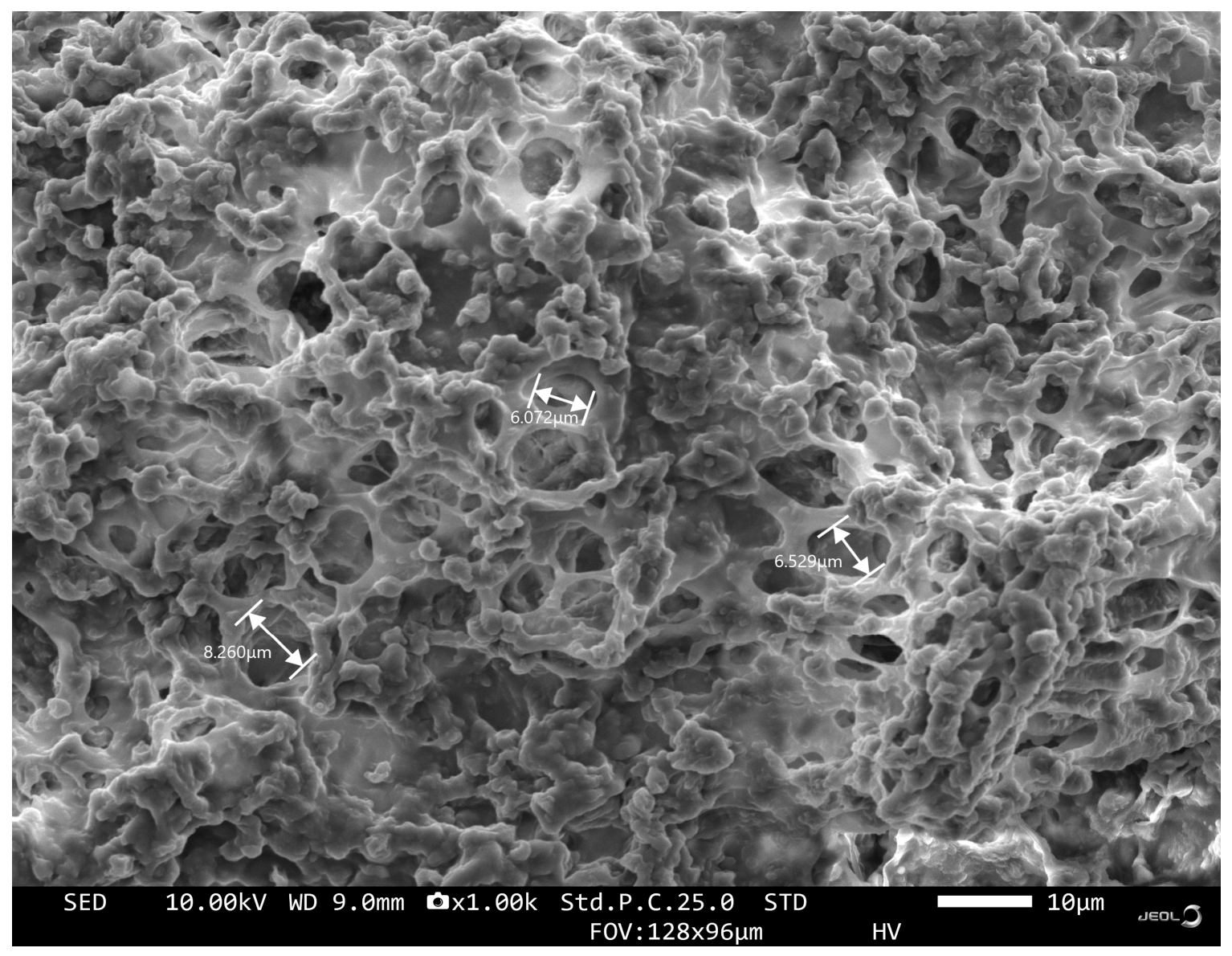
3.3. Structural Characterization
3.4. Implications for Extrusion-Based 3D Printing
4. Conclusions
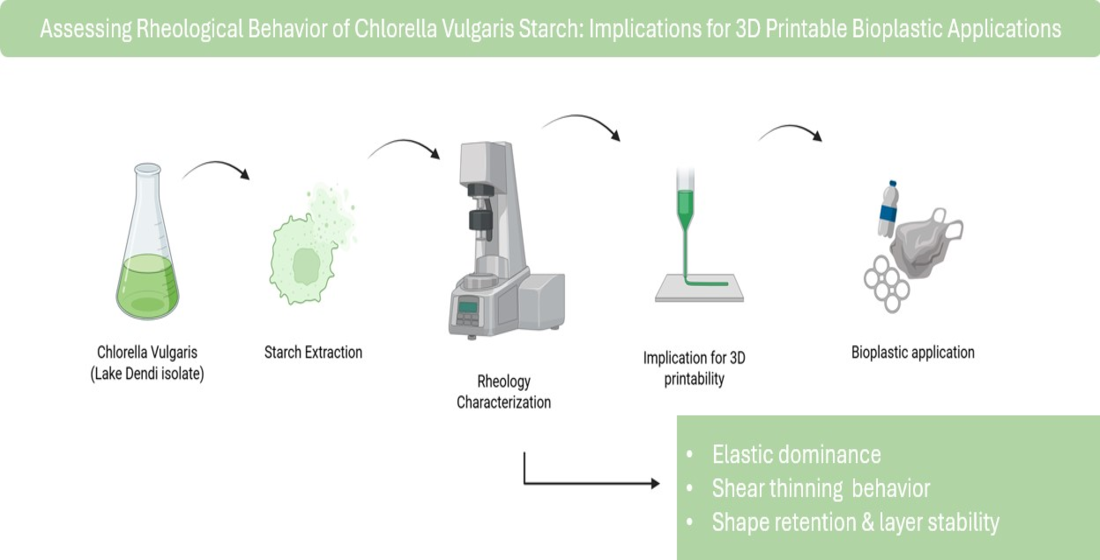
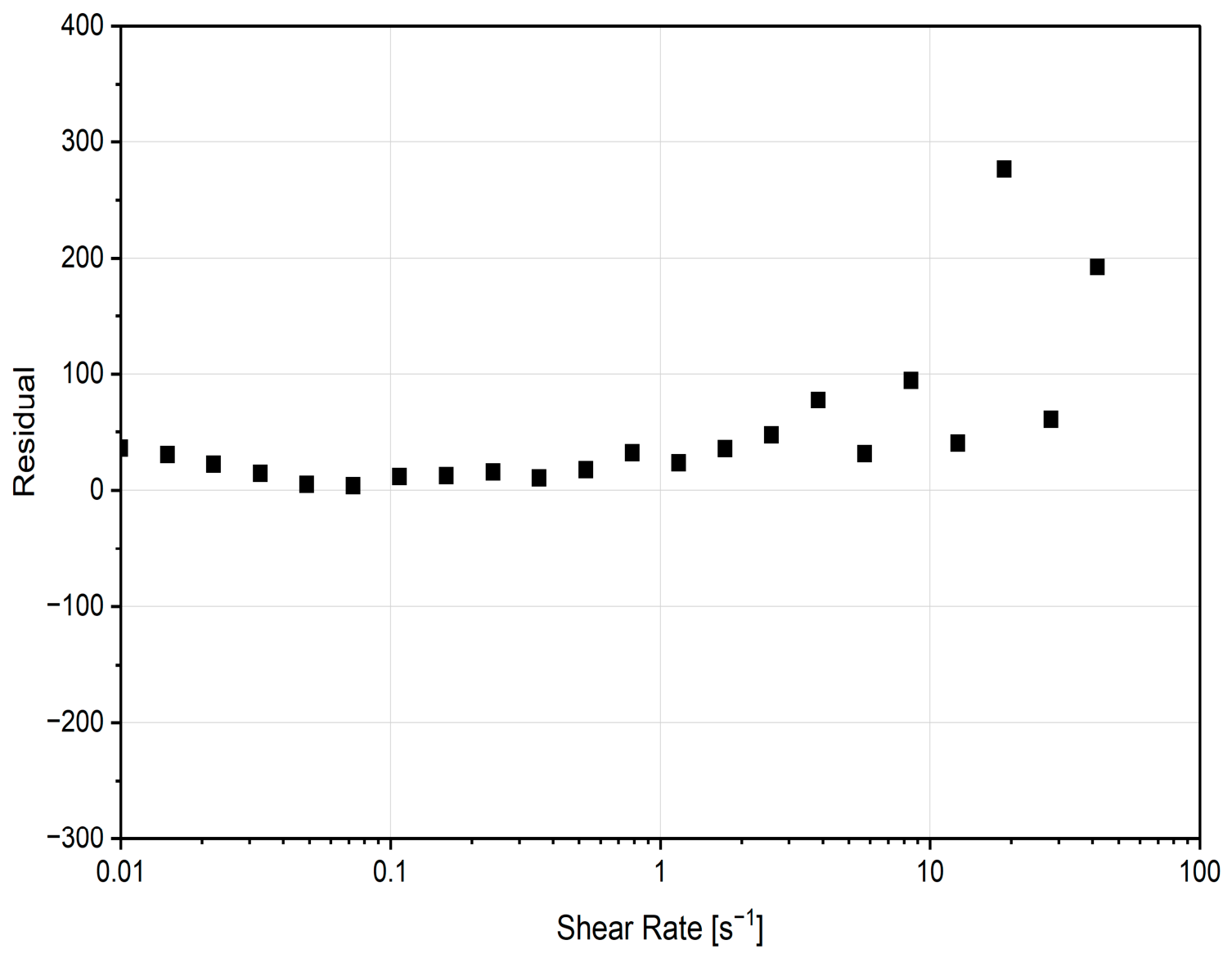
- The steady shear rheological analysis demonstrates pseudoplastic (shear thinning) flow behavior with of 271.93 Pa, K of 59.47 Pa·sn, and n of 0.67.
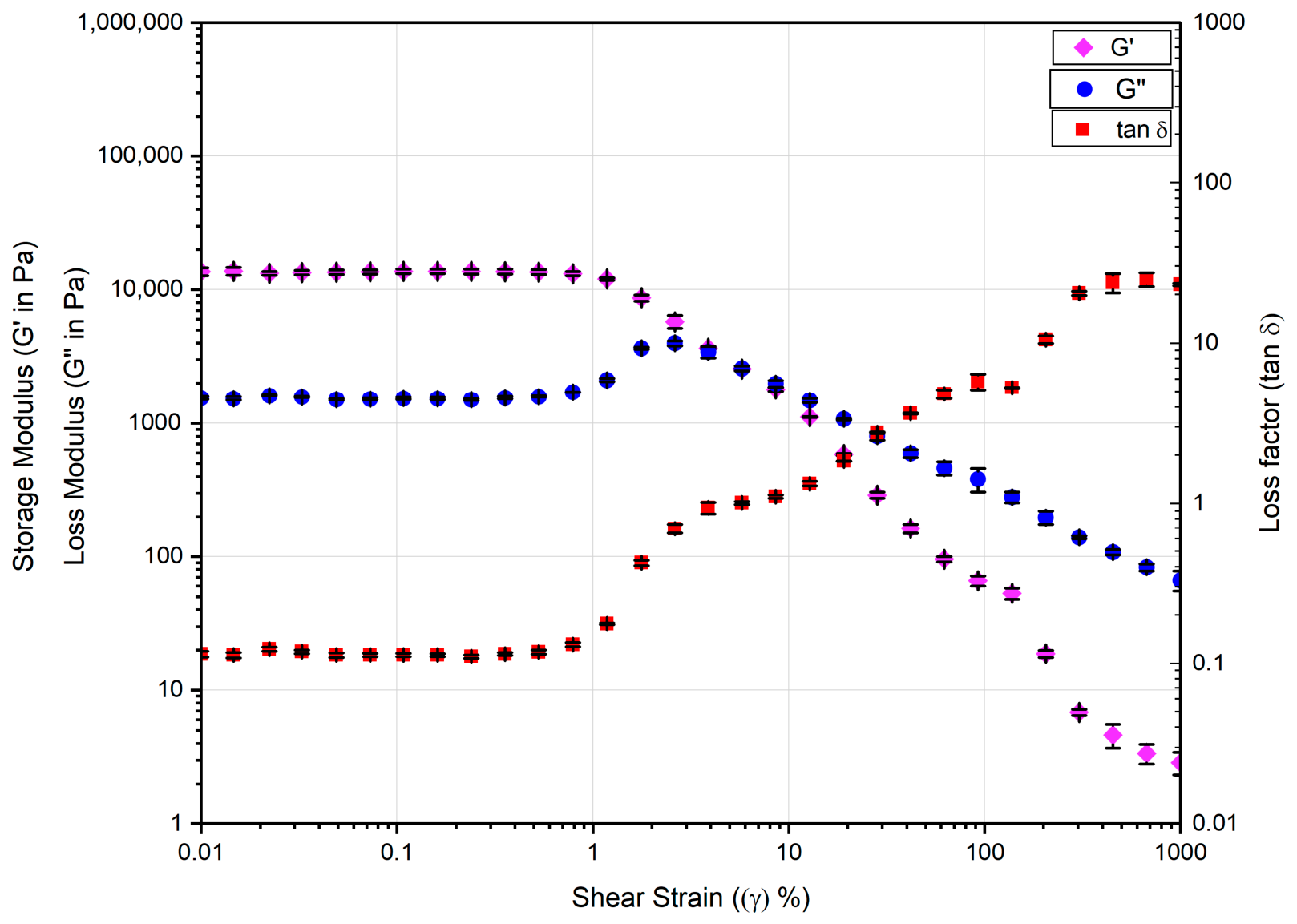
- The amplitude sweep clearly shows that the limit of LVE where the gel structure remains fully intact and undisturbed extends up to 0.6% strain, with G′ staying constant at 13,500 Pa and tan 0.1. This confirms good structural stability under small deformations typical of handling and low shear conditions.
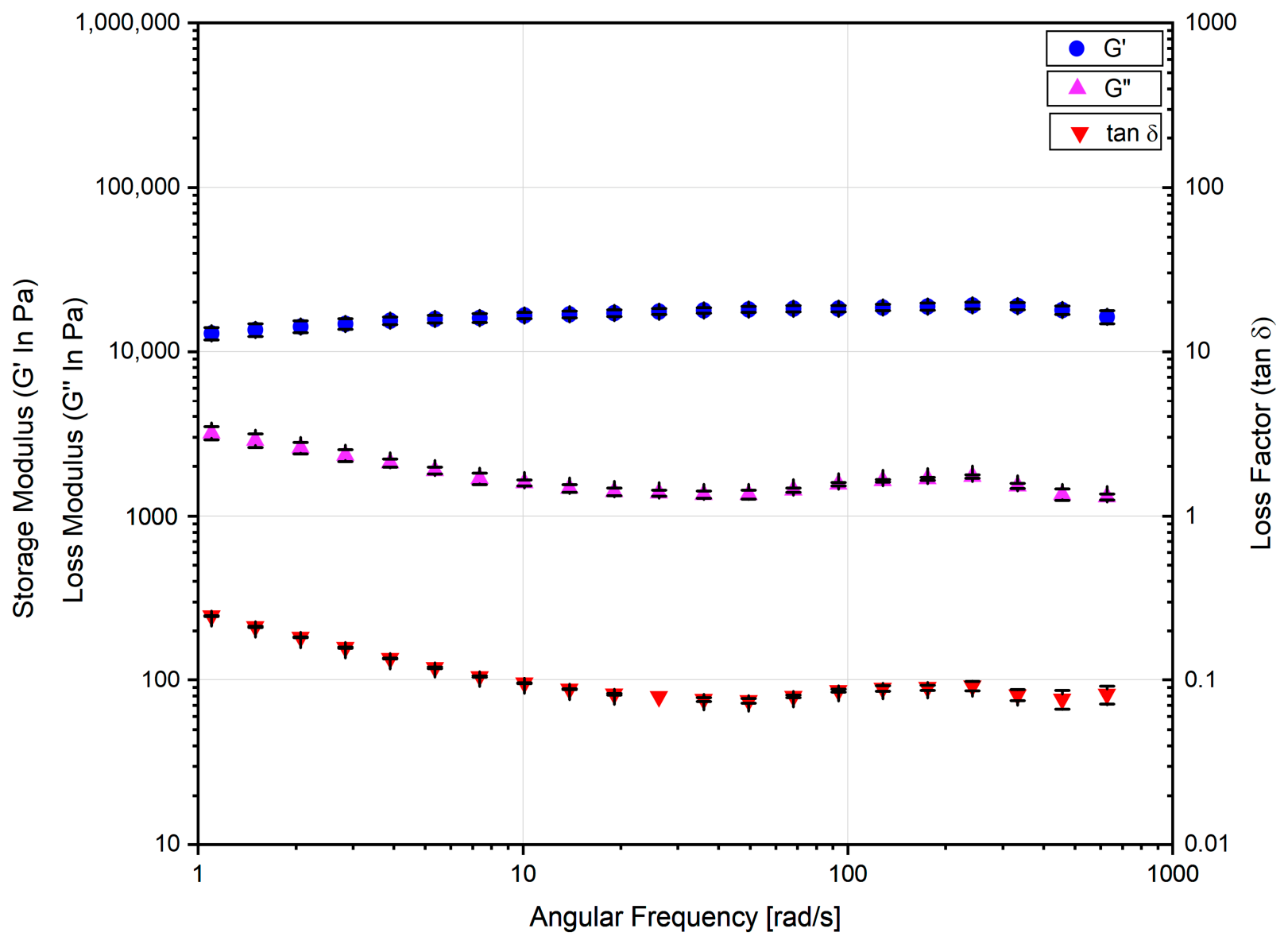
- The frequency sweep analysis performed in the LVE at 0.5% strain confirms a true strong physical gel with G′ remaining essentially frequency independent and significantly higher than G″ across the entire tested range (0.1–100 rad/s) and tan < 1. This demonstrates an outstanding shape stability and slump resistance at rest, effortless flow during extrusion, and rapid structural recovery after deposition.
- The temperature sweep rheological analysis shows a predominantly elastic gel with G′ consistently surpassing G″ and no crossover point, exhibiting gradual increase in G′ (from 1.1 105 Pa at 25–32 °C to a maximum of 6.6 105 pa at 92 °C and * (from 1.8 107 mPa·s at 25–32 °C to a plateau around 1.06 108 mPa·s above 90 °C, without thermal softening or melting. This is possibly due to granule swelling and amylose leaching; however, if algal proteins are present and interact with the matrix, they may also contribute to the observed reinforcement.
- The starch exhibits promising thixotropic behavior, with viscosity dropping over six orders of magnitude under high shear (300 s−1) and recovering almost completely within seconds after shear removal, ensuring smooth extrusion and immediate shape retention.
Supplementary Materials
Author Contributions
Funding
Institutional Review Board Statement
Data Availability Statement
Acknowledgments
Conflicts of Interest
References
- Dilberoglu, U.M.; Gharehpapagh, B.; Yaman, U.; Dolen, M. The Role of Additive Manufacturing in the Era of Industry 4.0. Procedia Manuf. 2017, 11, 545–554. [Google Scholar] [CrossRef]
- Gardan, J. Additive Manufacturing Technologies: State of the Art and Trends. In Additive Manufacturing Handbook, 1st ed.; CRC Press: Boca Raton, FL, USA, 2017. [Google Scholar]
- Bose, S.; Ke, D.; Sahasrabudhe, H.; Bandyopadhyay, A. Additive Manufacturing of Biomaterials. Prog. Mater. Sci. 2018, 93, 45–111. [Google Scholar] [CrossRef]
- Odera, R.S.; Idumah, C.I. Novel Advancements in Additive Manufacturing of PLA: A Review. Polym. Eng. Sci. 2023, 63, 3189–3208. [Google Scholar] [CrossRef]
- Haryńska, A.; Janik, H.; Sienkiewicz, M.; Mikolaszek, B.; Kucińska-Lipka, J. PLA–Potato Thermoplastic Starch Filament as a Sustainable Alternative to the Conventional PLA Filament: Processing, Characterization, and FFF 3D Printing. ACS Sustain. Chem. Eng. 2021, 9, 6923–6938. [Google Scholar] [CrossRef]
- Andanje, M.; Mwangi, J.; Mose, B.; Polymers, S.C. Biocompatible and Biodegradable 3D Printing from Bioplastics: A Review. Polymers 2023, 15, 2355. [Google Scholar] [CrossRef] [PubMed]
- Cheng, Y.; Yuqing, H.; Xiao, L.; Gao, W.; Kang, X.; Sui, J.; Cui, B. Impact of Starch Amylose and Amylopectin on the Rheological and 3D Printing Properties of Corn Starch. Int. J. Biol. Macromol. 2024, 278, 134403. [Google Scholar] [CrossRef] [PubMed]
- Vamadevan, V.; Bertoft, E. Observations on the Impact of Amylopectin and Amylose Structure on the Swelling of Starch Granules. Food Hydrocoll. 2020, 103, 105663. [Google Scholar] [CrossRef]
- Ye, J.; Hu, X.; Luo, S.; Liu, W.; Chen, J.; Zeng, Z.; Liu, C. Properties of Starch after Extrusion: A Review. Starch-Stärke 2018, 70, 1700110. [Google Scholar] [CrossRef]
- Xie, F.; Yu, L.; Su, B.; Liu, P.; Wang, J.; Liu, H.; Chen, L. Rheological Properties of Starches with Different Amylose/Amylopectin Ratios. J. Cereal Sci. 2009, 49, 371–377. [Google Scholar] [CrossRef]
- Qiao, D.; Huang, Y.; Zhao, G.; Zhang, Y.; Hou, X.; Zhang, B.; Jiang, F. Small and Large Oscillatory Shear Behaviors of Gelatin/Starch System Regulated by Amylose/Amylopectin Ratio. Food Hydrocoll. 2023, 142, 108780. [Google Scholar] [CrossRef]
- Velazquez, G.; Ramirez-Gutierrez, C.F.; Mendez-Montealvo, G.; Velazquez-Castillo, R.; Morelos-Medina, L.F.; Morales-Sánchez, E.; Gaytán-Martínez, M.; Rodríguez-García, M.E.; Contreras-Jiménez, B. Effect of Long-Term Retrogradation on the Crystallinity, Vibrational and Rheological Properties of Potato, Corn, and Rice Starches. Food Chem. 2025, 477, 143455. [Google Scholar] [CrossRef]
- Lin, Q.; Liu, Z.; Xiao, H.; Li, L.; Yu, F.; Tian, W. Studies on the Pasting and Rheology of Rice Starch with Different Protein Residual. Int. Conf. Comput. Comput. Technol. Agric. 2010, 317, 407–419. [Google Scholar] [CrossRef]
- Martínez-Sanz, M.; José Fabra, M.; Gómez-Mascaraque, L.G.; López-Rubio, A. Structural effects of microalgae additives on the starch gelatinisation process. Food Hydrocoll. 2018, 77, 257–269. [Google Scholar] [CrossRef]
- Chi, C.; He, Y.; Xiao, X.; Chen, B.; Zhou, Y.; Tan, X.; Ji, Z.; Zhang, Y.; Liu, P. A novel very small granular starch from Chlorella sp. MBFJNU-17. Int. J. Biol. Macromol. 2023, 225, 557–564. [Google Scholar] [CrossRef]
- Mathiot, C.; Ponge, P.; Gallard, B.; Sassi, J.F.; Delrue, F. Microalgae starch-based bioplastics: Screening of ten strains and plasticization of unfractionated microalgae by extrusion. Carbohydr. Polym. 2019, 208, 142–151. [Google Scholar] [CrossRef]
- Xu, T.; Zhong, Y.; Jiang, W.; Luo, X.; Zhou, X.; Li, P. Gelatinization and Pasting Property of Small Granular Starch from Chlamydomonas reinhardtii and Its Structural Basis. Gels 2026, 12, 241. [Google Scholar] [CrossRef]
- Arora, Y.; Sharma, S.; Sharma, V. Microalgae in Bioplastic Production: A Comprehensive Review. Arab. J. Sci. Eng. 2023, 48, 7225–7241. [Google Scholar] [CrossRef]
- Di Caprio, F.; Amenta, S.; Francolini, I.; Altimari, P.; Pagnanelli, F. Microalgae Biorefinery: Optimization of Starch Recovery for Bioplastic Production. ACS Sustain. Chem. Eng. 2023, 11, 16509–16529. [Google Scholar] [CrossRef]
- Li, T.; Gargouri, M.; Feng, J.; Park, J.J.; Gao, D.; Miao, C.; Dong, T.; Gang, D.R.; Chen, S. Regulation of starch and lipid accumulation in a microalga Chlorella sorokiniana. Bioresour. Technol. 2015, 180, 250–257. [Google Scholar] [CrossRef] [PubMed]
- Six, A.; Dimitriades-Lemaire, A.; Lancelon-Pin, C.; Putaux, J.L.; Dauvillee, D.; Petroutsos, D.; Alvarez Diaz, P.; Sassi, J.F.; Li-Beisson, Y.; Fleury, G. Red light induces starch accumulation in Chlorella vulgaris without affecting photosynthesis efficiency, unlike abiotic stress. Algal Res. 2024, 80, 103515. [Google Scholar] [CrossRef]
- Ivanov, I.N.; Zachleder, V.; Vítová, M.; Barbosa, M.J.; Bišová, K. Starch Production in Chlamydomonas reinhardtii through Supra optimal Temperature in a Pilot-Scale Photobioreactor. Cells 2021, 10, 1084. [Google Scholar] [CrossRef]
- Dragone, G.; Fernandes, B.D.; Abreu, A.P.; Vicente, A.A.; Teixeira, J.A. Nutrient limitation as a strategy for increasing starch accumulation in microalgae. Appl. Energy 2011, 88, 3331–3335. [Google Scholar] [CrossRef]
- Branyikova, I.; Marsalkova, B.; Doucha, J.; Branyik, T.; Bisova, K.; Zachleder, V.; VItova, M. Microalgae—Novel Highly Efficient Starch Producers. Biotechnol. Bioeng. 2011, 108, 766–776. [Google Scholar] [CrossRef] [PubMed]
- Al-Hammadi, M.; Güngörmüşler, M. New insights into Chlorella vulgaris applications. Biotechnol. Bioeng. 2024, 121, 1486–1502. [Google Scholar] [CrossRef] [PubMed]
- Nordin, N.; Yusof, N.; Md Nadzir, S.; Mohd Yusoff, M.Z.; Hassan, M.A. Effect of photo-autotrophic cultural conditions on the biomass productivity and composition of Chlorella vulgaris. Biofuels 2022, 13, 149–159. [Google Scholar] [CrossRef]
- Daliry, S.; Hallajisani, A.; Mohammadi Roshandeh, J.; Nouri, H.; Golzary, A. Investigation of optimal condition for Chlorella vulgaris microalgae growth. Glob. J. Environ. Sci. Manag. 2017, 3, 217–230. [Google Scholar] [CrossRef]
- Six, A.; Dauvillee, D.; Lancelon-Pin, C.; Dimitriades-Lemaire, A.; Compadre, A.; Dubreuil, C.; Alvarez, P.; Sassi, J.F.; Li-Beisson, Y.; Putaux, J.L.; et al. From raw microalgae to bioplastics: Conversion of Chlorella vulgaris starch granules into thermoplastic starch. Carbohydr. Polym. 2024, 342, 122342. [Google Scholar] [CrossRef]
- Jiang, H.; Liu, C.; Pan, X.; Zhan, J.; Yang, T.; Ma, R.; Tian, Y. Structural and physicochemical characteristics and intracellular starch digestibility of starch-rich Chlorella sp. Food Hydrocoll. 2026, 175, 112496. [Google Scholar] [CrossRef]
- Jiang, H.; Ma, R.; Pan, X.; Liu, C.; Zhan, J.; Yang, T.; Tian, Y. Molecular Structure and Pasting, Rheological, and Digestive Properties of a Novel Small Granular Starch Obtained from Chlorella Sorokiniana Cultivated under a Nutrition. Food Hydrocoll. 2026, 170, 111669. [Google Scholar] [CrossRef]
- Jiang, H.; Ma, R.; Pan, X.; Liu, C.; Zhan, J.; Yang, T.; Tian, Y. Comparison of molecular structure and physicochemical characteristics of small-granule starches from various photoautotrophic Chlorella strains cultured in a nitrogen-limited environment. Int. J. Biol. Macromol. 2026, 353, 151142. [Google Scholar] [CrossRef]
- Chen, H.; Xie, F.; Chen, L.; Zheng, B. Effect of Rheological Properties of Potato, Rice and Corn Starches on Their Hot-Extrusion 3D Printing Behaviors. J. Food Eng. 2019, 244, 150–158. [Google Scholar] [CrossRef]
- Liu, Z.; Zhang, M.; Bhandari, B.; Yang, C. Impact of Rheological Properties of Mashed Potatoes on 3D Printing. J. Food Eng. 2018, 220, 76–82. [Google Scholar] [CrossRef]
- Ji, S.; Xu, T.; Li, Y.; Li, H.; Zhong, Y.; Lu, B. Effect of Starch Molecular Structure on Precision and Texture Properties of 3D Printed Products. Food Hydrocoll. 2022, 125, 107387. [Google Scholar] [CrossRef]
- Montoya, J.; Medina, J.; Molina, A.; Gutiérrez, J.; Rodríguez, B.; Marín, R. Impact of Viscoelastic and Structural Properties from Starch-Mango and Starch-Arabinoxylans Hydrocolloids in 3D Food Printing. Addit. Manuf. 2021, 39, 101891. [Google Scholar] [CrossRef]
- Yu, H.; Chi, S.; Li, D.; Wang, L.; Wang, Y. Effect of Gums on the Multi-Scale Characteristics and 3D Printing Performance of Potato Starch Gel. Innov. Food Sci. Emerg. Technol. 2022, 80, 103102. [Google Scholar] [CrossRef]
- Schwab, A.; Levato, R.; D’Este, M.; Piluso, S.; Eglin, D.; Malda, J. Printability and Shape Fidelity of Bioinks in 3D Bioprinting. Chem. Rev. 2020, 120, 11028–11055. [Google Scholar] [CrossRef]
- Tejada-Ortigoza, V.; Cuan-Urquizo, E. Towards the Development of 3D-Printed Food: A Rheological and Mechanical Approach. Foods 2022, 11, 1191. [Google Scholar] [CrossRef]
- Otegbayo, B.O.; Tran, T.; Ricci, J.; Gibert, O. In Situ Dynamic Rheological Analysis of Raw Yam Tubers: A Potential Phenotyping Tool for Quality Evaluation. J. Sci. Food Agric. 2024, 104, 4746–4757. [Google Scholar] [CrossRef]
- Lu, T.; Duh, C.; Lin, J.; Chang, Y. Effect of Granular Characteristics on the Viscoelastic Properties of Composites of Amylose and Waxy Starches. Food Hydrocoll. 2008, 22, 164–173. [Google Scholar] [CrossRef]
- Li, J.; Yeh, A. Relationships between Thermal, Rheological Characteristics and Swelling Power for Various Starches. J. Food Eng. 2001, 50, 141–148. [Google Scholar] [CrossRef]
- Liu, Y.; Chen, X.; Xu, Y.; Xu, Z.; Li, H.; Sui, Z.; Corke, H. Gel Texture and Rheological Properties of Normal Amylose and Waxy Potato Starch Blends with Rice Starches Differing in Amylose Content. Int. J. Food Sci. Technol. 2021, 56, 1946–1958. [Google Scholar] [CrossRef]
- Chen, N.; Wang, Q.; Wang, M.; Li, N.; Briones, A.; Cassani, L.; Prieto, M.; Carandang, M.; Liu, C.; Gu, C.; et al. Characterization of the Physicochemical, Thermal and Rheological Properties of Cashew Kernel Starch. Food Chem. X 2022, 15, 100432. [Google Scholar] [CrossRef]
- Heckl, M.; Korber, M.; Jekle, M.; Becker, T. Relation between Deformation and Relaxation of Hydrocolloids-Starch Based Bio-Inks and 3D Printing Accuracy. Food Hydrocoll. 2023, 137, 108326. [Google Scholar] [CrossRef]
- Kumar, L.; Brennan, M.A.; Mason, S.L.; Zheng, H.; Brennan, C.S. Rheological, Pasting and Microstructural Studies of Dairy Protein–Starch Interactions and Their Application in Extrusion-based Products: A Review. Starch-Stärke 2017, 69, 1600273. [Google Scholar] [CrossRef]
- Yilmaz, M.; Vatansever, C. Three Interval Thixotropy Test to Determine Structural Regeneration of a Glucomannan Based Hydrocolloid Film at Air/Water Interface Interfacial, molecular, thermal and surface characterization. Food Hydrocoll. 2016, 61, 458–468. [Google Scholar] [CrossRef]
- Zeng, X.; Chen, H.; Chen, L.; Zheng, B. Insights into the relationship between structure and rheological properties of starch gels in hot-extrusion 3D printing. Food Chem. 2021, 342, 128362. [Google Scholar] [CrossRef]
- Cheng, Y.; Liang, K.; Chen, Y.; Gao, W.; Kang, X.; Li, T. Effect of molecular structure changes during starch gelatinization on its rheological and 3D printing properties. Food Hydrocoll. 2023, 137, 108364. [Google Scholar] [CrossRef]
- Liu, B.; Zhao, Y.; Li, Y.; Tao, L.; Pan, P.; Bi, Y.; Song, S.; Yu, L. Investigation of the structure, rheology and 3D printing characteristics of corn starch regulated by glycyrrhizic acid. Int. J. Biol. Macromol. 2024, 263, 130277. [Google Scholar] [CrossRef] [PubMed]
- Liu, Z.; Chen, H.; Zheng, B.; Xie, F.; Chen, L. Understanding the structure and rheological properties of potato starch induced by hot-extrusion 3D printing. Food Hydrocoll. 2020, 105, 105812. [Google Scholar] [CrossRef]
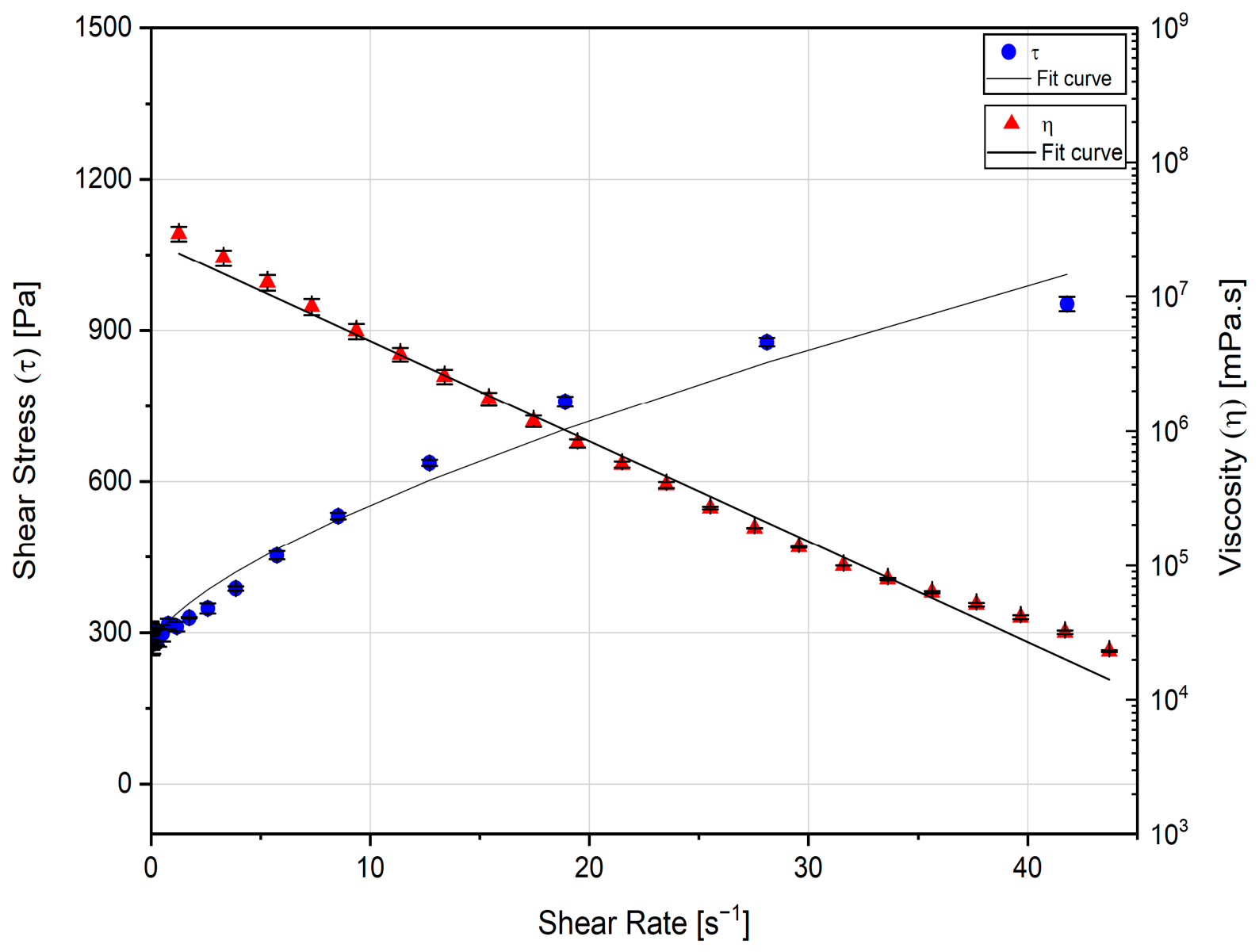


| Starch | Wt.% of Starch | (Pa) | K (Pa·s) | n | (Pa·s) | Ref. |
|---|---|---|---|---|---|---|
| Rice | 20 | 191 | 4000.4 | −0.032 | 5000 | [32] |
| Mashed potato 2% potato starch | - | 312.16 | 118.44 | 0.63 | 500 | [33] |
| Corn | 15 | 800 | 228.54 | 0.31 | 400 | [7] |
| Cassava | 13 | - | 560 | 0.25 | 1000 | [34] |
| Wheat | 13 | - | 159.6 | 0.09 | 1200 | |
| Corn | 13 | - | 283.8 | 0.12 | 1500 | |
| Sweet potato | 13 | - | 122.2 | 0.13 | 1000 | |
| Potato | 13 | - | 956.3 | 0.05 | 5800 | |
| Buckwheat | 13 | - | 834.6 | 0.03 | 7500 | |
| Waxy corn | - | - | 620 | 0.33 | 800 | [35] |
| Potato | 15 | - | 781.2 | 0.47 | 1000 | [36] |
| C. vulgaris | 20 | 271.93 | 59.47 | 0.67 | 400 | This study |
| Material | Key Rheological Findings | 3D Printing Relevance | Comparison to Present Study | Ref. |
|---|---|---|---|---|
| Corn starch (CS) and rice starch (RS) gels | G′ increases with concentration and rise then fall with temperature; RS forms V-type crystals improving strength. | Identifies optimal printing windows: CS 20% at 70–75 °C; RS 15–20% at 75–8 °C | Agrees on temperature dependence of G′ (rise then fall); Chlorella shows higher gelation temp (92.7 °C), implying a wider thermal processing window than CS/RS. | [47] |
| Corn starch variants (amylose 2%, 27%, 56%, 72%) | Higher amylose → higher G′, yield stress, viscosity; but excessive amylose reduces interlayer adhesion and extrusion continuity. | Optimal amylose (27%) gave best printing accuracy (88%); high-amylose gels hard to extrude. | Notable alignment: Chlorella amylose 20.7%, close to the reported optimal range; this reinforces present study’s favorable balance between strength and extrudability. | [7] |
| Corn starch (20% suspension) treated at 65–100 °C | Leached amylose and short chains increase with T; G′ and shear recovery peak at intermediate T (CS-80), very high T → densification and difficult extrusion. | Demonstrates temperature-dependent optimum (CS-80) where network order and printability are maximized. | Direct parallel: both studies find a temperature optimum for G′ and recovery; Chlorella’s higher gelation temperature shifts that optimum upward, suggesting algal starch reaches peak network strength at higher processing temperatures. | [48] |
| Corn starch modified with glycyrrhizic acid (CS-GA) | Shear thinning; viscosity and G′ increase with GA content; bound water increases; improved thixotropic recovery. | High GA improved self-supporting and printing accuracy (best at 40% GA). | Consistent with present study on recovery and self-supporting: Chlorella shows strong recovery and high G′ without additives; CS-GA shows additive route to similar rheological gains. | [49] |
| Potato starch (PS) gels | G′ increase with concentration; with temperature G′ first increase then decrease; correlation with network compactness. | Optimal PS 15–25% at 70 °C gave best printability (smooth extrusion support). | Same trend with temperature (optimum then weakening at high T); Chlorella’s higher gelation temperature suggests better resistance to premature softening during hot-extrusion. | [50] |
Disclaimer/Publisher’s Note: The statements, opinions and data contained in all publications are solely those of the individual author(s) and contributor(s) and not of MDPI and/or the editor(s). MDPI and/or the editor(s) disclaim responsibility for any injury to people or property resulting from any ideas, methods, instructions or products referred to in the content. |
© 2026 by the authors. Licensee MDPI, Basel, Switzerland. This article is an open access article distributed under the terms and conditions of the Creative Commons Attribution (CC BY) license.
Share and Cite
Jiru, K.H.; Lemu, H.G.; Tamerat, E.; Tolcha, M. Investigating Rheological Behavior of Chlorella vulgaris Starch: Implications for 3D Printable Bioplastic Material. Polymers 2026, 18, 1452. https://doi.org/10.3390/polym18121452
Jiru KH, Lemu HG, Tamerat E, Tolcha M. Investigating Rheological Behavior of Chlorella vulgaris Starch: Implications for 3D Printable Bioplastic Material. Polymers. 2026; 18(12):1452. https://doi.org/10.3390/polym18121452
Chicago/Turabian StyleJiru, Kokeb Hurruma, Hirpa G. Lemu, Eyosias Tamerat, and Mesay Tolcha. 2026. "Investigating Rheological Behavior of Chlorella vulgaris Starch: Implications for 3D Printable Bioplastic Material" Polymers 18, no. 12: 1452. https://doi.org/10.3390/polym18121452
APA StyleJiru, K. H., Lemu, H. G., Tamerat, E., & Tolcha, M. (2026). Investigating Rheological Behavior of Chlorella vulgaris Starch: Implications for 3D Printable Bioplastic Material. Polymers, 18(12), 1452. https://doi.org/10.3390/polym18121452