Numerical Analysis and Strain Monitoring of the Curing Process in Ring-Shaped CFRP Components


Abstract
1. Introduction
2. Characterization of Resin Properties
2.1. Preparation of Resin Matrix
2.2. Methods
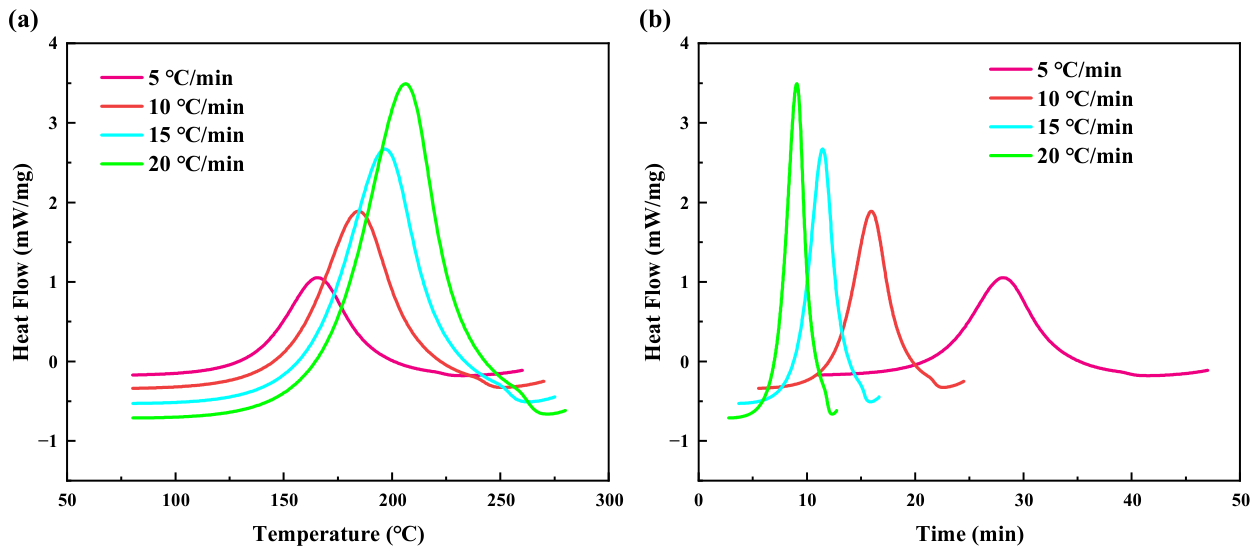
2.2.1. Non-Isothermal DSC Test
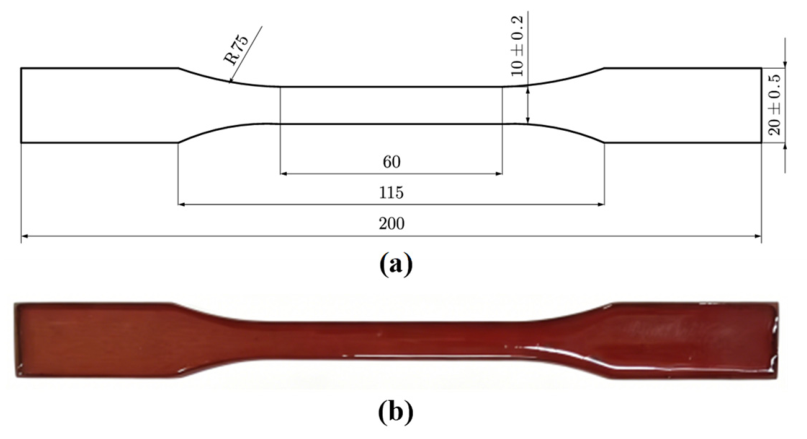
2.2.2. Tensile Test
2.2.3. CTE Test
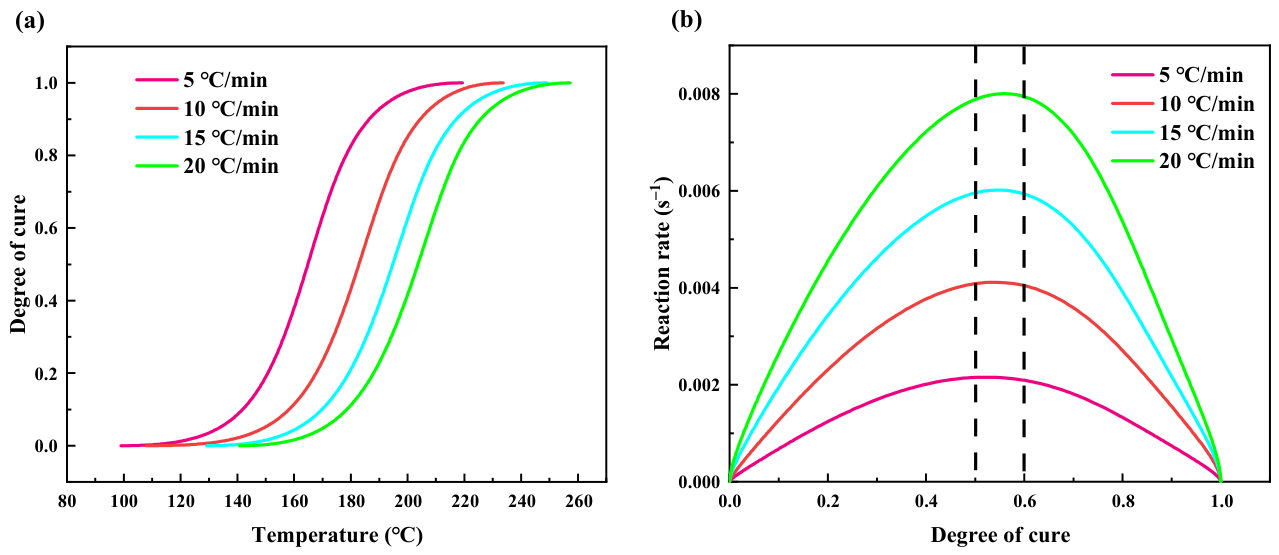
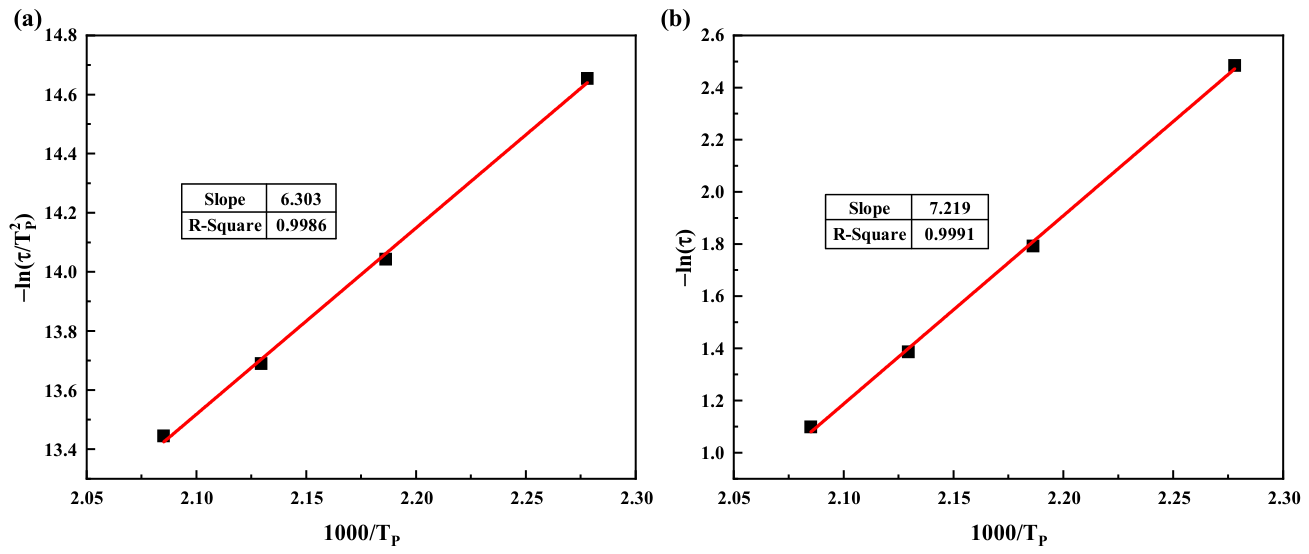
2.3. Test Results and Discussion
3. Experiment and Numerical Simulation
3.1. Curing Monitoring Experiment
3.2. Curing Coupled Model
3.2.1. Thermo-Chemical Coupled Model
3.2.2. Curing Deformation Model
3.3. Finite Element Modeling
4. Results and Discussion
4.1. Simulation Result Analysis
4.1.1. Composite Mechanical Properties
4.1.2. Temperature and Curing Degree Analysis
4.1.3. Residual Strain and Residual Stress Analysis
4.2. Comparison of Simulation and Experiment
5. Conclusions
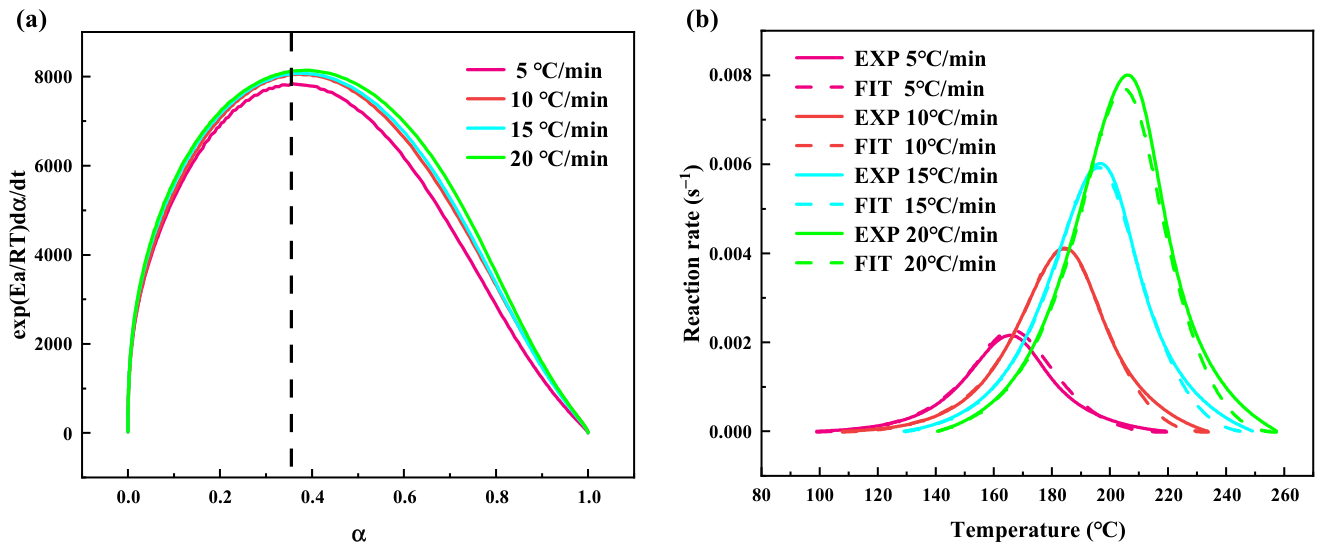
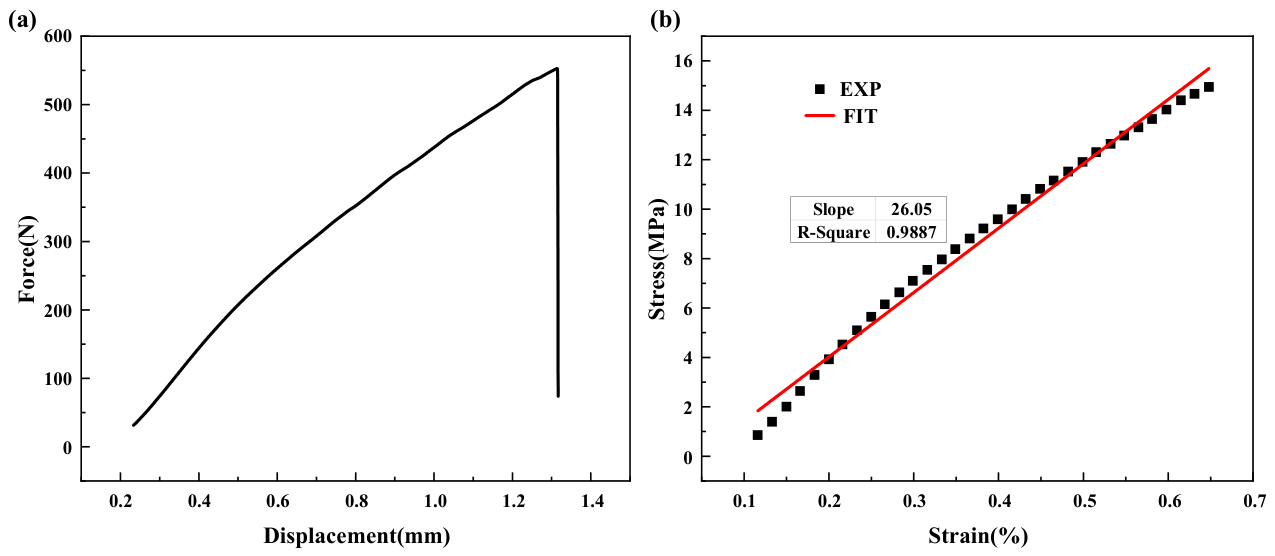
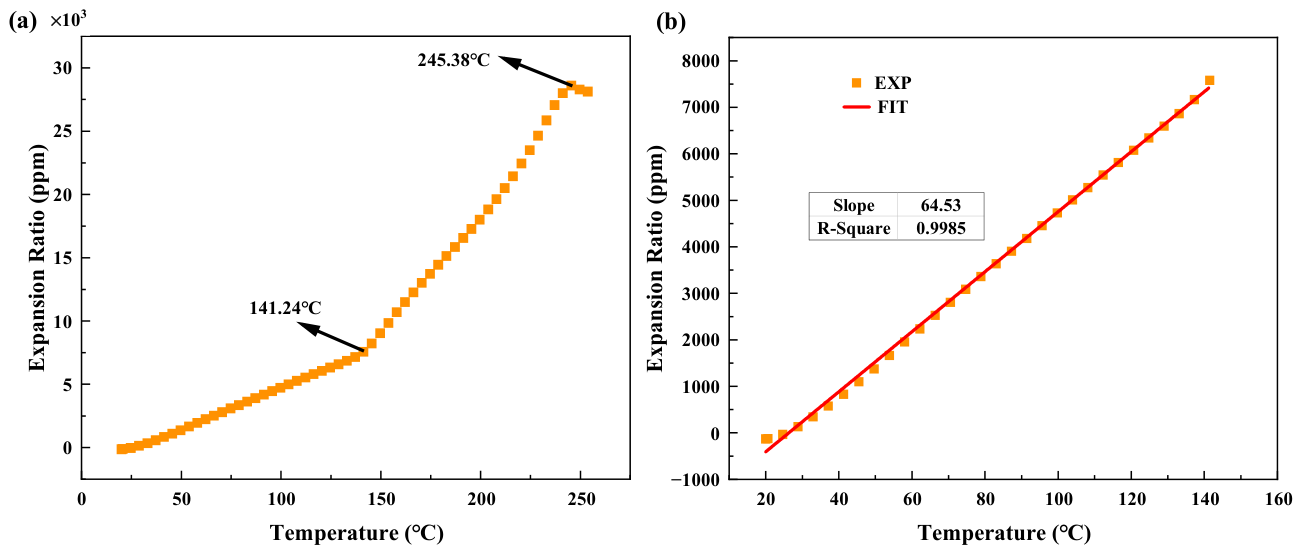
- Non-isothermal DSC testing of LD-2184 epoxy resin confirmed a single-stage autocatalytic curing reaction. Curing kinetic parameters were obtained through fitting. The elastic modulus of the cured resin was determined by uniaxial tensile testing. The coefficient of thermal expansion was obtained from CTE measurements.
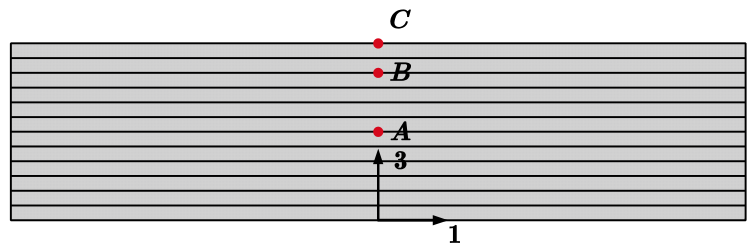
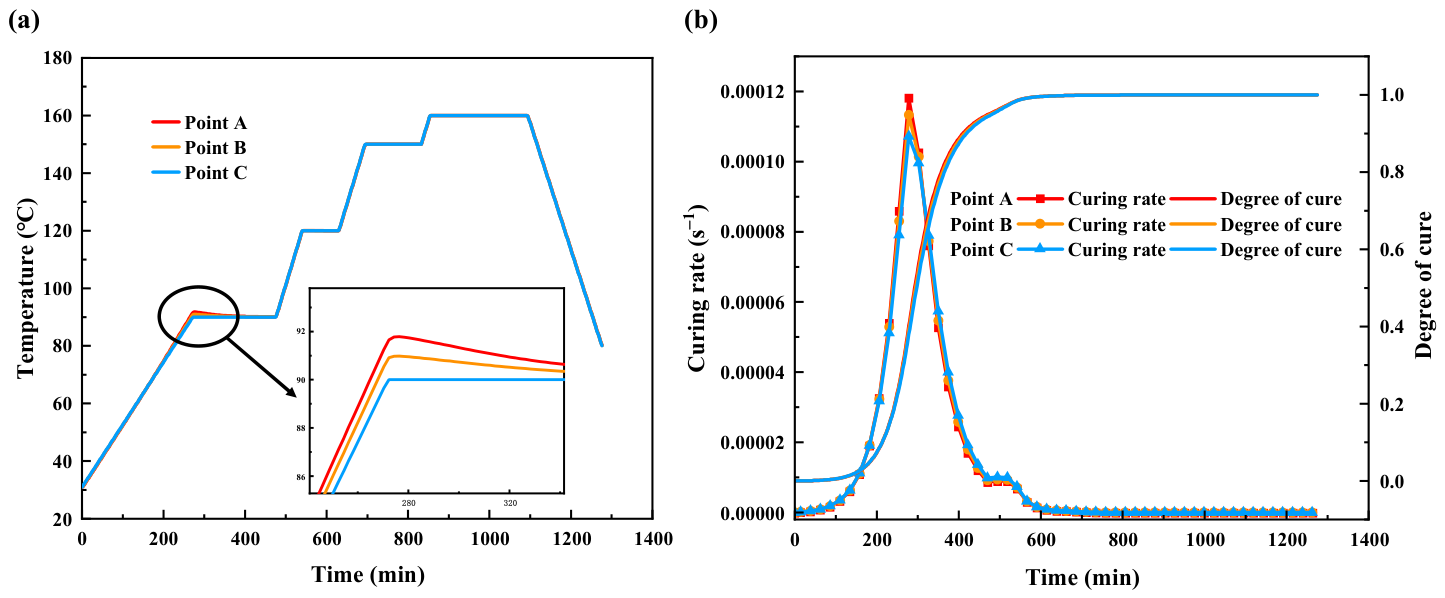
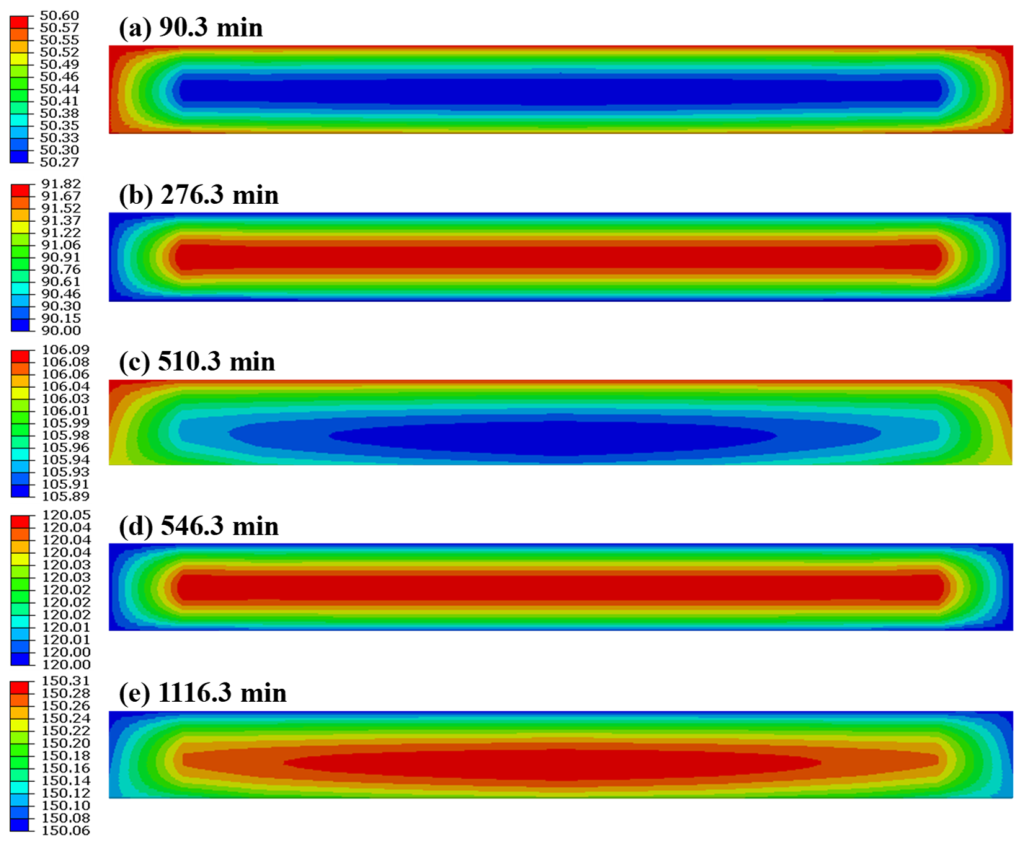
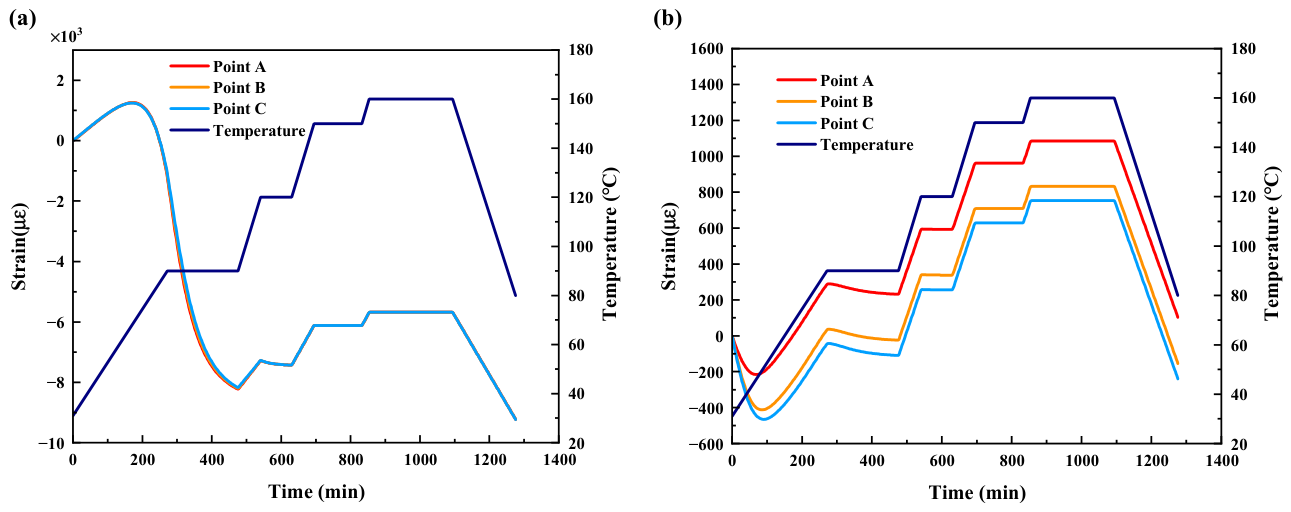
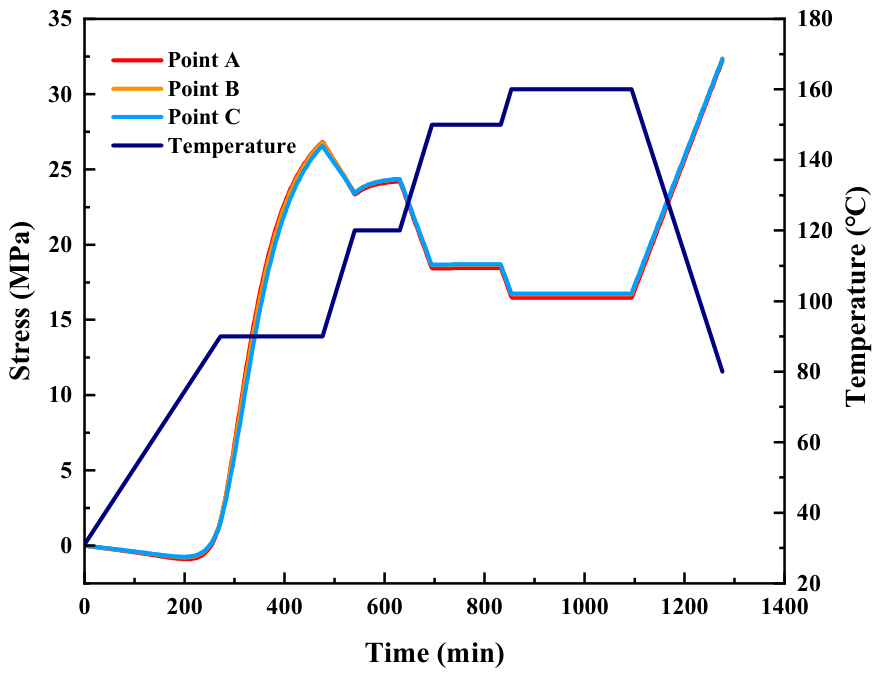
- A multi-field coupled curing model was established, which includes heat conduction, curing kinetics, and curing deformation. Numerical analysis shows the presence of a temperature gradient in the filament-wound layer due to heat conduction and the exothermic reaction. The temperature difference across the thickness remains small due to the thin structure. Thermo-chemical strain shows a similar distribution along the thickness direction. Total strain varies significantly under mold constraint. Resin chemical shrinkage and thermal contraction mismatch during cooling govern the development of residual stress.
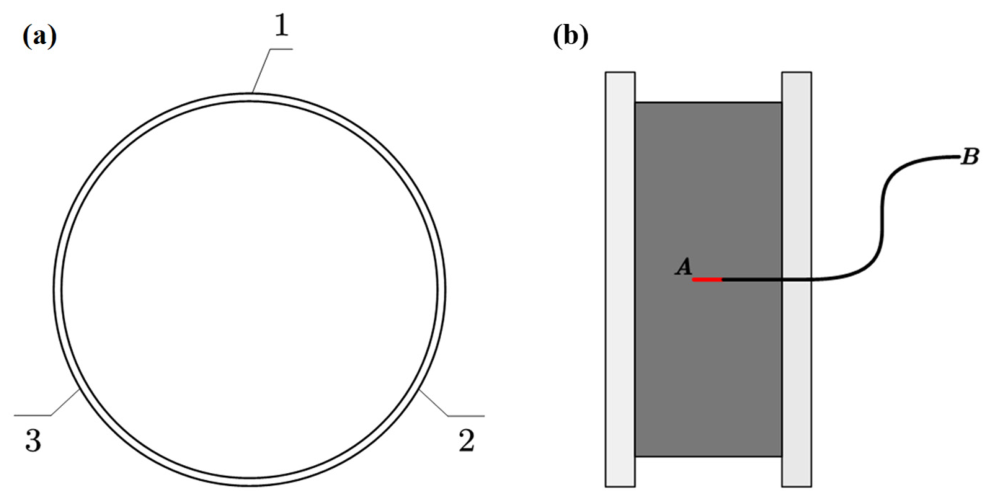
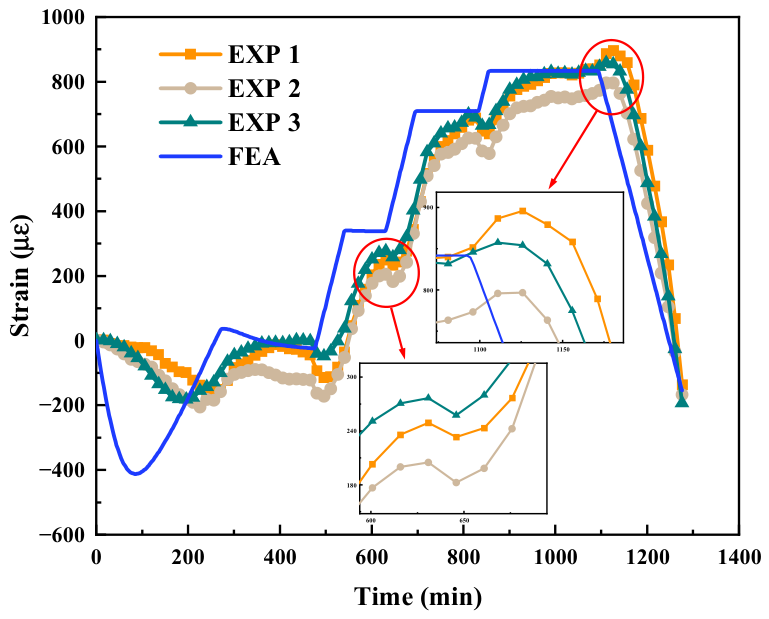
- Composite ring specimens with embedded FBG sensors were fabricated using a wet winding process. Strain was monitored during curing. The difference between measured and simulated residual axial strain is 7.15%, which supports the validity of the multi-field coupled model. The deviation is attributed to the absence of viscoelastic effects in the early curing stage, the homogenized representation of the winding layers, and the delayed thermal response within the composite.
Author Contributions
Funding
Institutional Review Board Statement
Data Availability Statement
Conflicts of Interest
References
- Mangalgiri, P.D. Composite materials for aerospace applications. Bull. Mater. Sci. 1999, 22, 657–664. [Google Scholar] [CrossRef]
- Dong, C. Process-induced deformation of composite T-stiffener structures. Compos. Struct. 2010, 92, 1614–1619. [Google Scholar] [CrossRef]
- Ahmad, F.; Awadh, M.A.; Abas, M.; Noor, S.; Hameed, A. Optimization of Carbon Fiber Reinforced Plastic Curing Parameters for Aerospace Application. Appl. Sci. 2022, 12, 4307. [Google Scholar] [CrossRef]
- Li, J.; Yao, X.; Liu, Y.; Cen, Z.; Kou, Z.; Dai, D. A study of the integrated composite material structures under different fabrication processing. Compos. Part A Appl. Sci. Manuf. 2009, 40, 455–462. [Google Scholar] [CrossRef]
- Wucher, B.; Lani, F.; Pardoen, T.; Bailly, C.; Martiny, P. Tooling geometry optimization for compensation of cure-induced distortions of a curved carbon/epoxy C-spar. Compos. Part A Appl. Sci. Manuf. 2014, 56, 27–35. [Google Scholar] [CrossRef]
- Lee, W.I.; Loos, A.C.; Springer, G.S. Heat of reaction, degree of cure, and viscosity of Hercules 3501-6 resin. J. Compos. Mater. 1982, 16, 510–520. [Google Scholar] [CrossRef]
- Salla, J.M.; Ramis, X. Comparative study of the cure kinetics of an unsaturated polyester resin using different procedures. Polym. Eng. Sci. 1996, 36, 835–850. [Google Scholar] [CrossRef]
- Chu, F.; Mckenna, T.; Lu, S. Curing kinetics of an acrylic/epoxy resin system using dynamic scanning calorimetry. Eur. Polym. J. 1997, 33, 837–840. [Google Scholar] [CrossRef]
- Kim, J.; Moon, T.J.; Howell, J.R. Cure Kinetic Model, Heat of Reaction, and Glass Transition Temperature of AS4/3501-6 Graphite–Epoxy Prepregs. J. Compos. Mater. 2002, 21, 2479–2498. [Google Scholar] [CrossRef]
- Johnston, A.A. An Integrated Model of the Development of Process-Induced Deformation in Autoclave Processing of Composite Structures. Ph.D. Thesis, University of British Columbia, Vancouver, BC, Canada, 1997. [Google Scholar]
- Moon, T.J.; Howell, J.R. New experimental data for enthalpy of reaction and temperature and degree of cure dependent specific heat and thermal conductivity of the Hercules 3501-6 epoxy system. J. Compos. Mater. 2002, 36, 2061–2072. [Google Scholar] [CrossRef]
- Friis-Pedersen, H.H.; Pedersen, J.H.; Haussler, L.; Storm, B.K. Online measurement of thermal diffusivity during cure of an epoxy composite. Polym. Test. 2006, 25, 1059–1068. [Google Scholar] [CrossRef]
- Struzziero, G.; Remy, B.; Skordos, A.A. Measurement of thermal conductivity of epoxy resins during cure. J. Appl. Polym. Sci. 2019, 136, 47015. [Google Scholar] [CrossRef]
- Oh, J.H.; Lee, D.G. Cure cycle for thick glass/epoxy composite laminates. J. Compos. Mater. 2002, 36, 19–45. [Google Scholar] [CrossRef]
- Cheung, A.; Yu, Y.; Pochiraju, K. Three-dimensional finite element simulation of curing of polymer composites. Finite Elem. Anal. Ded. 2004, 40, 895–912. [Google Scholar] [CrossRef]
- Behzad, T.; Sain, M. Finite element modeling of polymer curing in natural fiber reinforced composites. Compos. Sci. Technol. 2007, 67, 1666–1673. [Google Scholar] [CrossRef]
- Abdelal, G.F.; Robotham, A.; Cantwell, W. Autoclave cure simulation of composite structures applying implicit and explicit FE techniques. Int. J. Mech. Mater. Des. 2013, 9, 55–63. [Google Scholar] [CrossRef]
- Brauner, C.; Soprano, P.; Herrmann, A.S.; Meiners, D. Cure-dependent thermo-chemical modelling and analysis of the manufacturing process of an aircraft composite frame. J. Compos. Mater. 2015, 49, 921–938. [Google Scholar] [CrossRef]
- Bogetti, T.A.; Gillespie, J.W., Jr. Process-induced stress and deformation in thick-section thermoset composite laminates. J. Compos. Mater. 1992, 26, 626–660. [Google Scholar] [CrossRef]
- Johnston, A.; Vaziri, R.; Poursartip, A. A plane strain model for process-induced deformation of laminated composite structures. J. Compos. Mater. 2001, 35, 1435–1469. [Google Scholar] [CrossRef]
- Kim, Y.K.; White, S.R. Stress relaxation behavior of 3501-6 epoxy resin during cure. Polym. Eng. Sci. 1996, 36, 2852–2862. [Google Scholar] [CrossRef]
- White, S.R.; Kim, Y.K. Process-induced residual stress analysis of AS4/3501-6 composite material. Mech. Compos. Mater. Struct. 1998, 5, 153–186. [Google Scholar] [CrossRef]
- Zocher, M.A.; Groves, S.E.; Allen, D.H. A three-dimensional finite element formulation for thermoviscoelastic orthotropic media. Int. J. Numer. Meth. Eng. 1997, 40, 2267–2288. [Google Scholar] [CrossRef]
- Ding, A.; Li, S.; Wang, J.; Zu, L. A three-dimensional thermo-viscoelastic analysis of process-induced residual stress in composite laminates. Compos. Struct. 2015, 129, 60–69. [Google Scholar] [CrossRef]
- Ding, A.; Li, S.; Sun, J.; Wang, J.; Zu, L. A thermo-viscoelastic model of process-induced residual stresses in composite structures with considering thermal dependence. Compos. Struct. 2016, 136, 34–43. [Google Scholar] [CrossRef]
- Zhang, G.; Wang, J.; Ni, A.; Li, S. Process-induced residual stress of variable-stiffness composite laminates during cure. Compos. Struct. 2018, 204, 12–21. [Google Scholar] [CrossRef]
- Wang, Q.; Wang, L.; Zhu, W.; Xu, Q.; Ke, Y.L. Numerical investigation of the effect of thermal gradients on curing performance of autoclaved laminates. J. Compos. Mater. 2020, 54, 127–138. [Google Scholar] [CrossRef]
- Liu, X.; Guan, Z.; Wang, X.; Jiang, T.; Geng, K.; Li, Z. Study on cure-induced residual stresses and spring-in deformation of L-shaped composite laminates using a simplified constitutive model considering stress relaxation. Compos. Struct. 2021, 272, 114203. [Google Scholar] [CrossRef]
- Minakuchi, S. In situ characterization of direction-dependent cure-induced shrinkage in thermoset composite laminates with fiber-optic sensors embedded in through-thickness and in-plane directions. J. Compos. Mater. 2015, 49, 1021–1034. [Google Scholar] [CrossRef]
- Sampath, U.; Kim, H.; Kim, D.; Kim, Y.; Song, M. In-Situ Cure Monitoring of Wind Turbine Blades by Using Fiber Bragg Grating Sensors and Fresnel Reflection Measurement. Sensors 2015, 15, 18229–18238. [Google Scholar] [CrossRef]
- GB/T 2567-2021; Test Methods for Properties of Resin Casting Body. National Standards of People’s Republic of China: Beijing, China, 2021.
- GB/T 4339-2008; Test Methods for Thermal Expansion Characteristic Parameters of Metallic Materials. National Standards of People’s Republic of China: Beijing, China, 2008.
- Fatmi, M.; Ghebouli, B.; Ghebouli, M.A.; Chihi, T.; Abdul Hafiz, M. The kinetics of precipitation in Al-2.4 wt% Cu alloy by Kissinger, Ozawa, Bosswel and Matusita methods. Phys. B Condens. Matter. 2011, 406, 2277–2280. [Google Scholar] [CrossRef]
- Hong, L.C.; Hwang, S.J. Study of warpage due to P-V-T-C relation of EMC in IC packaging. IEEE Trans. Compon. Packag. Technol. 2004, 27, 291–295. [Google Scholar] [CrossRef]
- Xu, J.Z.; Yu, L.Y.; Qiao, M.; You, B. In-situ curing of composite vessel using heating gasbag. Compos. Struct. 2015, 131, 171–182. [Google Scholar] [CrossRef]
- Li, D.; Li, X.; Dai, J.; Xi, S. A comparison of curing process-induced residual stresses and cure shrinkage in micro-scale composite structures with different constitutive laws. Appl. Compos. Mater. 2018, 25, 67–84. [Google Scholar] [CrossRef]





| Heating Rate (°C·min−1) | Peak Temperature (°C) | Peak Heat Flow (mW·mg−1) | Total Heat Release (mJ·mg−1) |
|---|---|---|---|
| 5 | 165.82 | 1.053 | 607.66 |
| 10 | 184.26 | 1.889 | 593.98 |
| 15 | 196.44 | 2.670 | 585.66 |
| 20 | 206.44 | 3.492 | 585.56 |
| Parameter | T800 Carbon Fiber | LD-2184 Resin |
|---|---|---|
| /GPa | 294 | 2.810 |
| /GPa | 14 | 2.810 |
| /GPa | 15 | 1.041 |
| /GPa | 5.5 | 1.041 |
| 0.23 | 0.35 | |
| 0.25 | 0.35 | |
| /K−1 | −9 × 10⁻⁷ | 6.060 × 10⁻⁵ |
| /K−1 | 7.2 × 10⁻⁶ | 6.060 × 10⁻⁵ |
| /% | 50 | 50 |
| - | 0.01695 | |
| /(W·m−1·K−1) | 0.742 + 9.02 × 10⁻⁴T | |
| /(kg·m−3) | 1790 | ) |
| /(J·kg−1·K−1) | 1390 + 4.50T | ) |
| Parameter | 30CrMnSiA Steel |
|---|---|
| /GPa | 200 |
| 0.33 | |
| /(W·m−1·K−1) | 29.3 |
| /(kg·m−3) | 7800 |
| /(J·kg−1·K−1) | 520 |
| /K−1 | 1.172 × 10⁻⁵ |
| /GPa | /GPa | /GPa | /GPa | /K−1 | /K−1 |
|---|---|---|---|---|---|
| 148.417 | 6.082 | 2.326 | 2.644 | −3.18 × 10⁻⁷ | 4.45 × 10⁻⁵ |
Disclaimer/Publisher’s Note: The statements, opinions and data contained in all publications are solely those of the individual author(s) and contributor(s) and not of MDPI and/or the editor(s). MDPI and/or the editor(s) disclaim responsibility for any injury to people or property resulting from any ideas, methods, instructions or products referred to in the content. |
© 2026 by the authors. Licensee MDPI, Basel, Switzerland. This article is an open access article distributed under the terms and conditions of the Creative Commons Attribution (CC BY) license.
Share and Cite
Tian, Y.; Ding, B.; Du, J.; Zhang, M. Numerical Analysis and Strain Monitoring of the Curing Process in Ring-Shaped CFRP Components. Polymers 2026, 18, 1447. https://doi.org/10.3390/polym18121447
Tian Y, Ding B, Du J, Zhang M. Numerical Analysis and Strain Monitoring of the Curing Process in Ring-Shaped CFRP Components. Polymers. 2026; 18(12):1447. https://doi.org/10.3390/polym18121447
Chicago/Turabian StyleTian, Yanhui, Benjie Ding, Jianke Du, and Minghua Zhang. 2026. "Numerical Analysis and Strain Monitoring of the Curing Process in Ring-Shaped CFRP Components" Polymers 18, no. 12: 1447. https://doi.org/10.3390/polym18121447
APA StyleTian, Y., Ding, B., Du, J., & Zhang, M. (2026). Numerical Analysis and Strain Monitoring of the Curing Process in Ring-Shaped CFRP Components. Polymers, 18(12), 1447. https://doi.org/10.3390/polym18121447