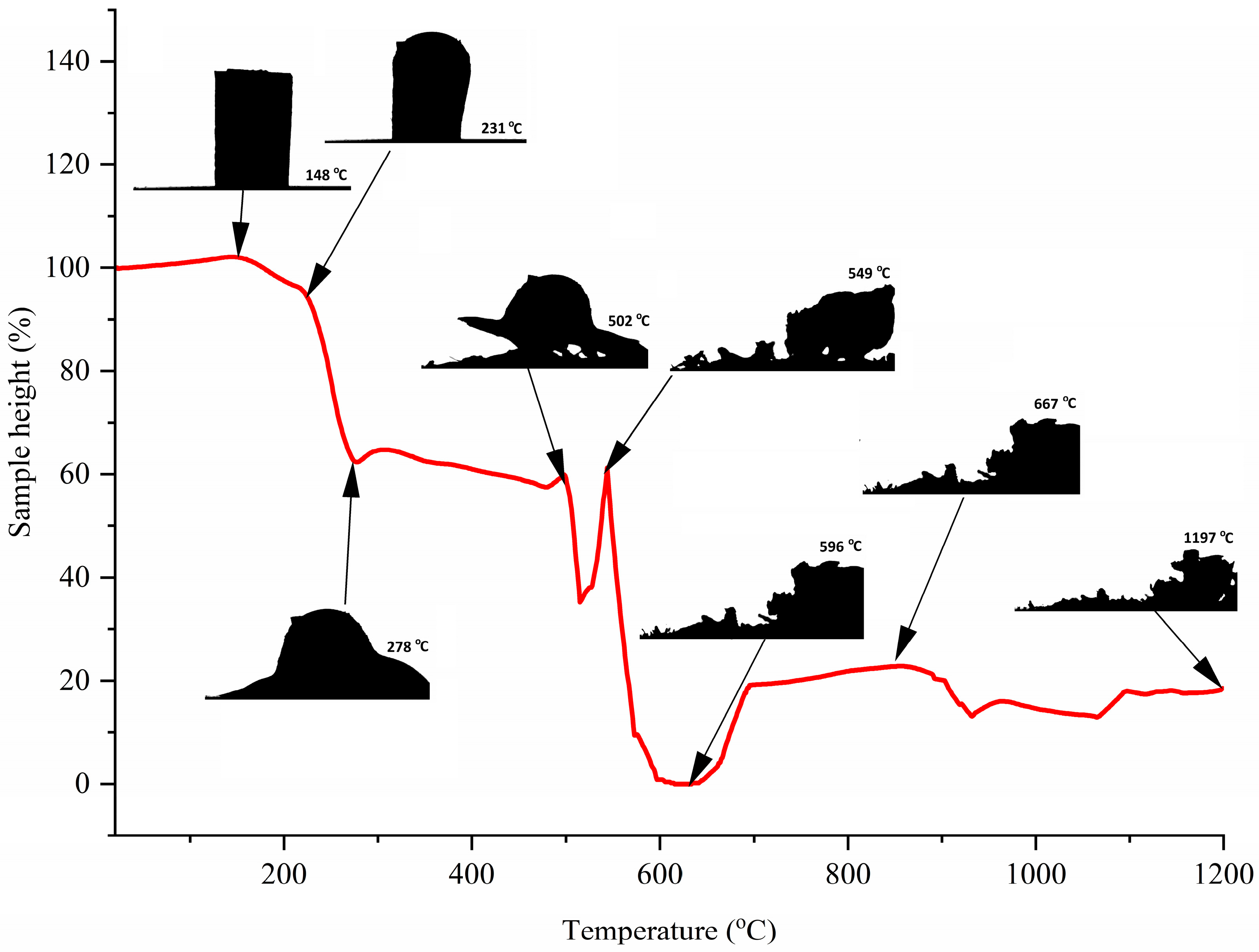
Relation Between Thermal Analysis, Phase Composition and Structure of Polyurethane Adhesives for Application in Wooden Structural Joints

 , , , , , , ,
Abstract
1. Introduction
2. Materials and Methods
2.1. Materials
2.2. Characterisation
3. Results and Discussion
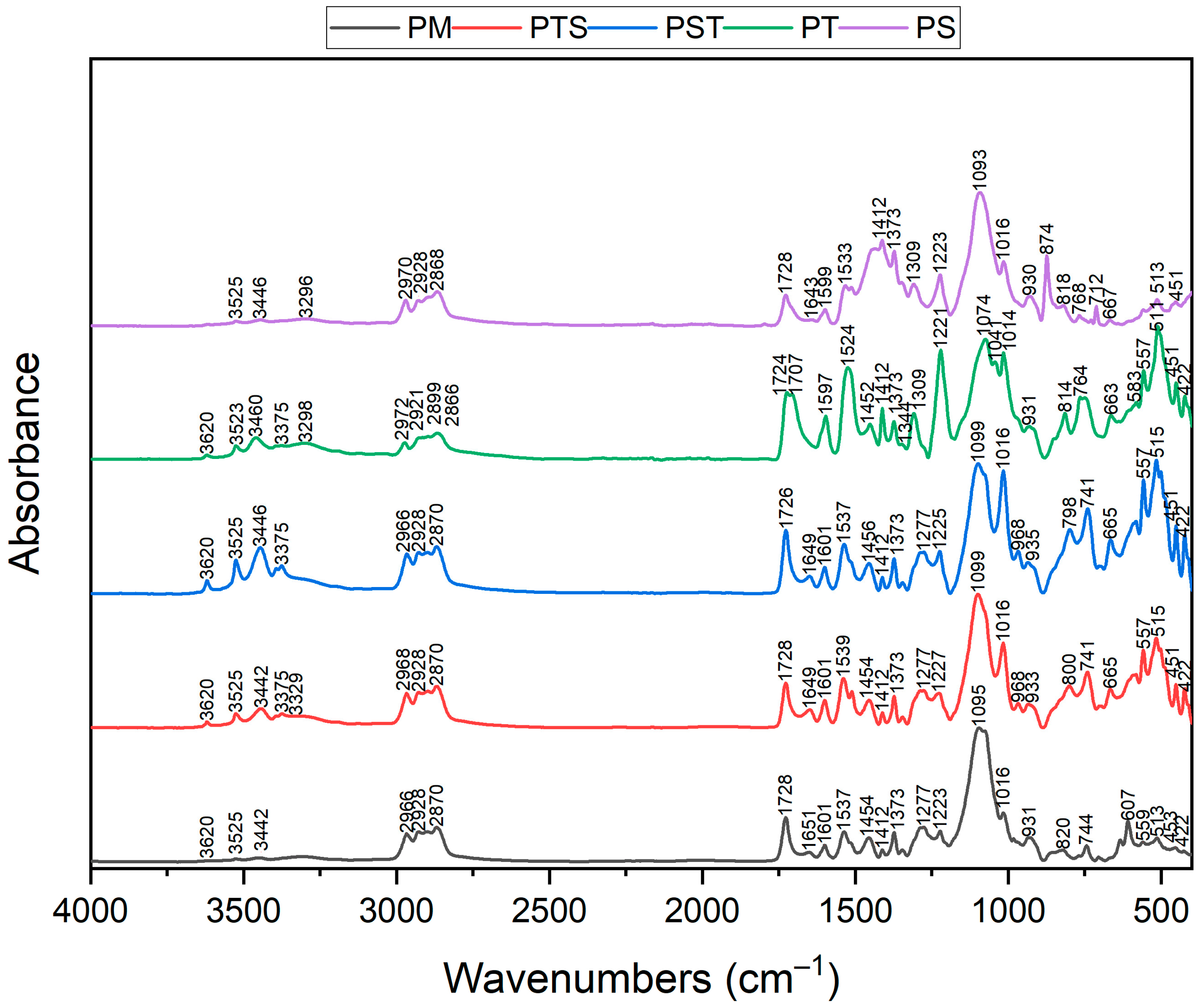
3.1. Spectroscopic Characterisation of FPU
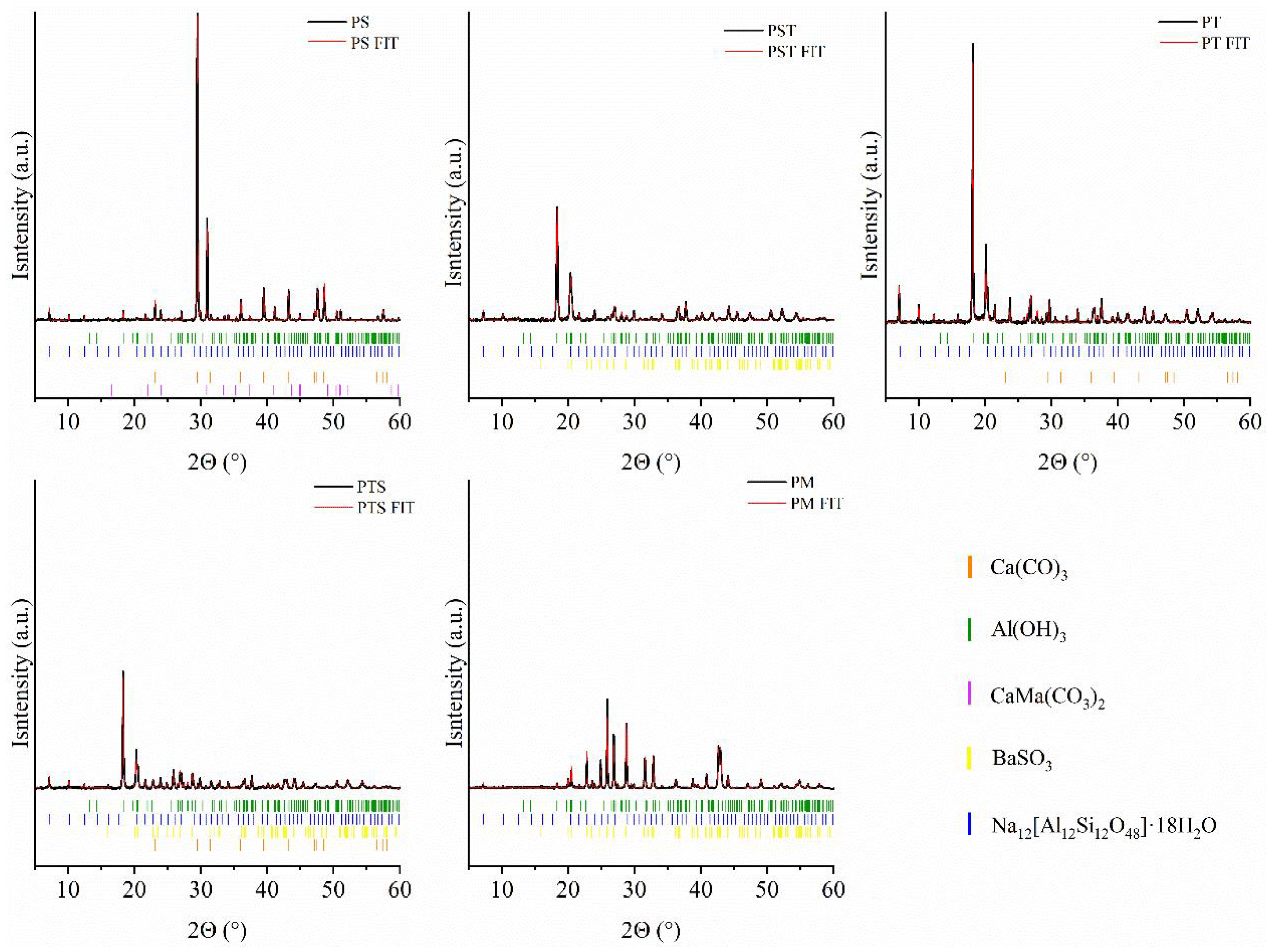
3.2. Phase XRD Characterisation of FPU
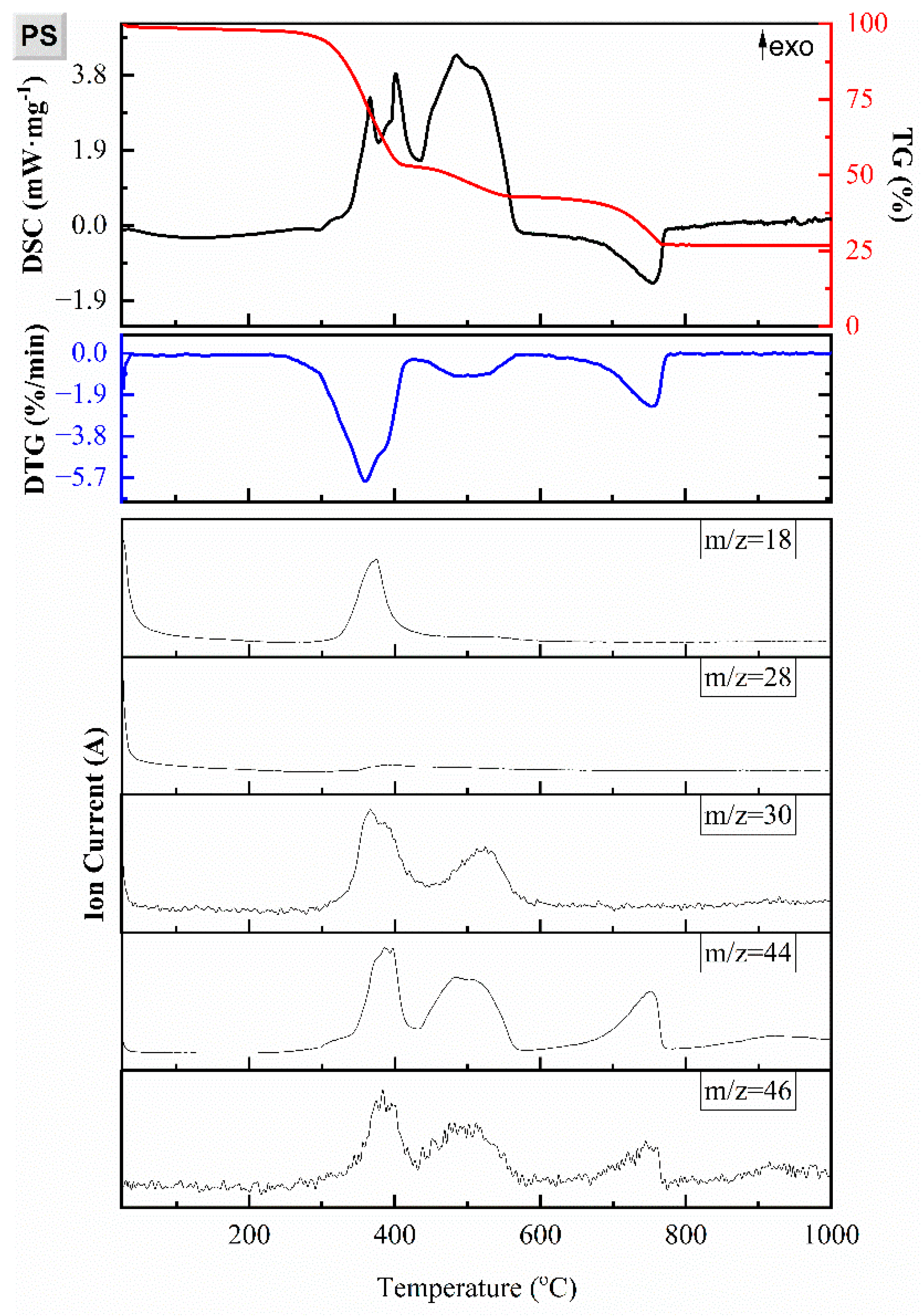
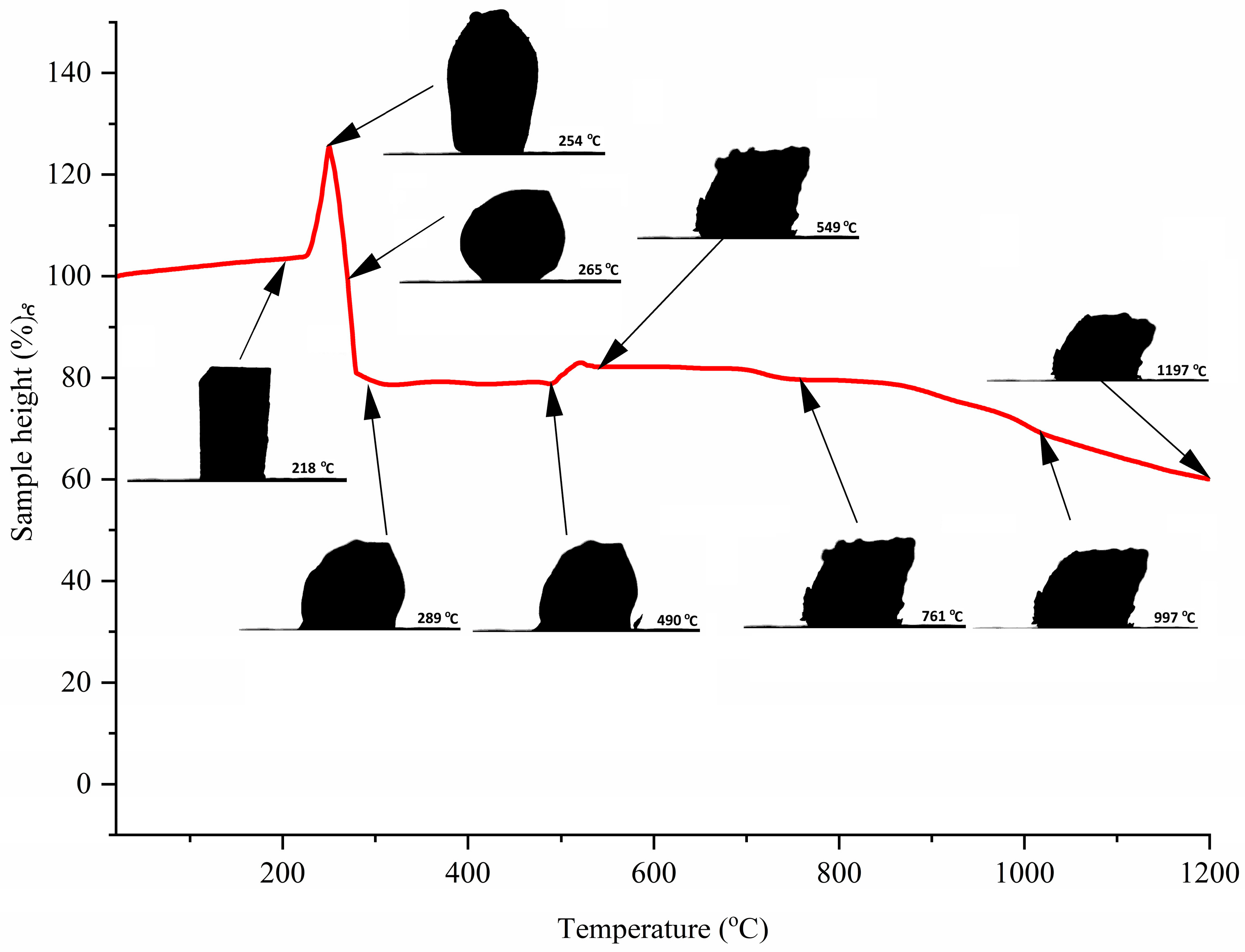
3.3. Thermal-Stability Analysis
4. Conclusions
Supplementary Materials
Author Contributions
Funding
Institutional Review Board Statement
Informed Consent Statement
Data Availability Statement
Acknowledgments
Conflicts of Interest
Abbreviations
| PU | Polyurethane |
| FPU | Flexible Polyurethanes |
| FTIR | Fourier Transform Infrared Spectroscopy |
| XRD | X-ray Diffraction |
| DSC | Differential Scanning Calorimetry |
| TGA | Thermogravimetric Analysis |
| QMS | Quadrupole Mass Spectrometry |
| HSM | Hot-Stage Microscopy |
| N-A-S-H | Sodium Aluminosilicate Hydrate |
| TG | Thermogravimetric curve |
| DTG | Derivative Thermogravimetry |
References
- Richter, K.; Pizzi, A.; Despres, A. Thermal Stability of Structural One-component Polyurethane Adhesives for Wood—Structure-property Relationship. J. Appl. Polym. Sci. 2006, 102, 5698–5707. [Google Scholar] [CrossRef] [Scilit]
- Clauβ, S.; Dijkstra, D.J.; Gabriel, J.; Kläusler, O.; Matner, M.; Meckel, W.; Niemz, P. Influence of the Chemical Structure of PUR Prepolymers on Thermal Stability. Int. J. Adhes. Adhes. 2011, 31, 513–523. [Google Scholar] [CrossRef] [Scilit]
- Clauß, S.; Dijkstra, D.J.; Gabriel, J.; Karbach, A.; Matner, M.; Meckel, W.; Niemz, P. Influence of the Filler Material on the Thermal Stability of One-component Moisture-curing Polyurethane Adhesives. J. Appl. Polym. Sci. 2012, 124, 3641–3649. [Google Scholar] [CrossRef] [Scilit]
- de Moura, A.P.; da Silva, E.H.; dos Santos, V.S.; Galera, M.F.; Sales, F.C.; Elizario, S.; de Moura, M.R.; Rigo, V.A.; da Costa, R.R. Structural and Mechanical Characterization of Polyurethane-CaCO3 Composites Synthesized at High Calcium Carbonate Loading: An Experimental and Theoretical Study. J. Compos. Mater. 2021, 55, 2857–2866. [Google Scholar] [CrossRef] [Scilit]
- Li, J.; Zhao, H.; Liu, H.; Sun, J.; Wu, J.; Liu, Q.; Zheng, Y.; Zheng, P. Recent Advances in Metal-Family Flame Retardants: A Review. RSC Adv. 2023, 13, 22639–22662. [Google Scholar] [CrossRef] [Scilit]
- Czuprynski, B.; Liszkowska, J.; Paciorek-Sadowska, J. Modifdication of Rigid Polyurethane-Polyisocyanurate Foam with Selected Powder Fillers. Polimery 2008, 53, 133–137. [Google Scholar] [CrossRef] [Scilit]
- Ilyas, R.A.; Sapuan, S.M.; Asyraf, M.R.M.; Dayana, D.A.Z.N.; Amelia, J.J.N.; Rani, M.S.A.; Norrrahim, M.N.F.; Nurazzi, N.M.; Aisyah, H.A.; Sharma, S.; et al. Polymer Composites Filled with Metal Derivatives: A Review of Flame Retardants. Polymers 2021, 13, 1701. [Google Scholar] [CrossRef] [Scilit]
- Gao, W.; Zhou, B.; Ma, X.; Liu, Y.; Wang, Z.; Zhu, Y. Preparation and Characterization of BaSO4/Poly(Ethylene Terephthalate) Nanocomposites. Colloids Surf. A Physicochem. Eng. Asp. 2011, 385, 181–187. [Google Scholar] [CrossRef] [Scilit]
- Mohazzabi, P.; Searcy, A.W. Kinetics and Thermodynamics of Decomposition of Barium Sulphate. J. Chem. Soc. Faraday Trans. 1 Phys. Chem. Condens. Phases 1976, 72, 290. [Google Scholar] [CrossRef] [Scilit]
- Balintova, M.; Demcak, S.; Estokova, A.; Holub, M.; Pavlikova, P. Study of Thermal Reduction of Barium Sulphate for Barium Sulphide Preparation. In Proceedings of the 10th International Conference “Environmental Engineering”; VGTU Technika: Vilnius, Lithuania, 2017. [Google Scholar]
- Gao, W.; Wang, Z.; Zhao, Z.; Ding, L.; Zhu, Y. Effect of Barium Sulfate on Thermal Stability and Crystallization Properties of Poly(Ethylene Terephthalate). J. Therm. Anal. Calorim. 2017, 129, 1047–1055. [Google Scholar] [CrossRef] [Scilit]
- Hou, D.; Zhang, Y.; Yang, T.; Zhang, J.; Pei, H.; Zhang, J.; Jiang, J.; Li, T. Molecular Structure, Dynamics, and Mechanical Behavior of Sodium Aluminosilicate Hydrate (NASH) Gel at Elevated Temperature: A Molecular Dynamics Study. Phys. Chem. Chem. Phys. 2018, 20, 20695–20711. [Google Scholar] [CrossRef] [Scilit]
- Garcia-Lodeiro, I.; Palomo, A.; Fernández-Jiménez, A.; Macphee, D.E. Compatibility Studies between N-A-S-H and C-A-S-H Gels. Study in the Ternary Diagram Na2O–CaO–Al2O3–SiO2–H2O. Cem. Concr. Res. 2011, 41, 923–931. [Google Scholar] [CrossRef] [Scilit]
- Zhang, Y.; Zhang, J.; Jiang, J.; Hou, D.; Zhang, J. The Effect of Water Molecules on the Structure, Dynamics, and Mechanical Properties of Sodium Aluminosilicate Hydrate (NASH) Gel: A Molecular Dynamics Study. Constr. Build. Mater. 2018, 193, 491–500. [Google Scholar] [CrossRef] [Scilit]
- Li, Z.; Zhang, J.; Wang, M. Structure, Reactivity, and Mechanical Properties of Sustainable Geopolymer Material: A Reactive Molecular Dynamics Study. Front. Mater. 2020, 7, 69. [Google Scholar] [CrossRef] [Scilit]
- Rutkowski, P.; Kwiecień, K.; Berezicka, A.; Sułowska, J.; Kwiecień, A.; Śliwa-Wieczorek, K.; Azinovic, B.; Schwarzkopf, M.; Pondelak, A.; Pečnik, J.G.; et al. Thermal Stability and Heat Transfer of Polyurethanes for Joints Applications of Wooden Structures. Molecules 2024, 29, 3337. [Google Scholar] [CrossRef] [Scilit]
- Chattopadhyay, D.K.; Webster, D.C. Thermal Stability and Flame Retardancy of Polyurethanes. Prog. Polym. Sci. 2009, 34, 1068–1133. [Google Scholar] [CrossRef] [Scilit]
- Liu, X.; Hao, J.; Gaan, S. Recent Studies on the Decomposition and Strategies of Smoke and Toxicity Suppression for Polyurethane Based Materials. RSC Adv. 2016, 6, 74742–74756. [Google Scholar] [CrossRef] [Scilit]
- Herrera, M.; Matuschek, G.; Kettrup, A. Thermal Degradation of Thermoplastic Polyurethane Elastomers (TPU) Based on MDI. Polym. Degrad. Stab. 2002, 78, 323–331. [Google Scholar] [CrossRef] [Scilit]
- Beran, R.; Zarybnicka, L.; Machova, D. Recycling of Rigid Polyurethane Foam: Micro-milled Powder Used as Active Filler in Polyurethane Adhesives. J. Appl. Polym. Sci. 2020, 137, 49095. [Google Scholar] [CrossRef] [Scilit]
- Olszewski, A.; Kosmela, P.; Piszczyk, Ł. Towards Sustainable Catalyst-Free Biomass-Based Polyurethane-Wood Composites (PU-WC): From Valorization and Liquefaction to Future Generation of Biocomposites. J. Clean. Prod. 2024, 468, 143046. [Google Scholar] [CrossRef] [Scilit]
- Zhao, J.R.; Zheng, R.; Tang, J.; Sun, H.J.; Wang, J. A Mini-Review on Building Insulation Materials from Perspective of Plastic Pollution: Current Issues and Natural Fibres as a Possible Solution. J. Hazard. Mater. 2022, 438, 129449. [Google Scholar] [CrossRef] [Scilit]
- Ma, H.; Yan, S.; Li, Z.; Tian, X.; Ma, L.; Ma, Y. Polyurethane-Based Flexible Conductive Adhesives. In Proceedings of the 2017 18th International Conference on Electronic Packaging Technology (ICEPT); IEEE: New York, NY, USA, 2017; pp. 448–450. [Google Scholar]
- Nacas, A.M.; Antonino, L.D.; Chinellato, A.C.; dos Santos, D.J. Nano Boron Nitride/Polyurethane Adhesives in Flexible Laminated Food Packaging: Peeling Resistance and Permeability Properties. Int. J. Adhes. Adhes. 2019, 93, 102326. [Google Scholar] [CrossRef] [Scilit]
- Quini, J.G.; Marinucci, G. Polyurethane Structural Adhesives Applied in Automotive Composite Joints. Mater. Res. 2012, 15, 434–439. [Google Scholar] [CrossRef] [Scilit]
- Shirmohammadli, Y.; Pizzi, A.; Raftery, G.M.; Hashemi, A. One-Component Polyurethane Adhesives in Timber Engineering Applications: A Review. Int. J. Adhes. Adhes. 2023, 123, 103358. [Google Scholar] [CrossRef] [Scilit]
- SONG, D.; KIM, K. Influence of Manufacturing Environment on Delamination of Mixed Cross Laminated Timber Using Polyurethane Adhesive. J. Korean Wood Sci. Technol. 2022, 50, 167–178. [Google Scholar] [CrossRef] [Scilit]
- Dong, W.; Wang, Z.; Chen, G.; Wang, Y.; Huang, Q.; Gong, M. Bonding Performance of Cross-Laminated Timber-Bamboo Composites. J. Build. Eng. 2023, 63, 105526. [Google Scholar] [CrossRef] [Scilit]
- Tenorio-Alfonso, A.; Sánchez, M.C.; Franco, J.M. Impact of Moisture Curing Conditions on the Chemical Structure and Rheological and Ultimate Adhesion Properties of Polyurethane Adhesives Based on Castor Oil and Cellulose Acetate. Prog. Org. Coat. 2021, 161, 106547. [Google Scholar] [CrossRef] [Scilit]
- Adetunji, C.O.; Olaniyan, O.T.; Anani, O.A.; Inobeme, A.; Mathew, J.T. Environmental Impact of Polyurethane Chemistry. In Polyurethane Chemistry: Renewable Polyols and Isocyanates; ACS Publications: Washington, DC, USA, 2021; pp. 393–411. [Google Scholar]
- Guolo, E.; Cappelletti, F.; Romagnoni, P.; Raggiotto, F. Environmental Impacts for Polyurethane Panels. E3S Web Conf. 2019, 111, 03063. [Google Scholar] [CrossRef] [Scilit]
- ZINAD, O.S.; CSIHA, C. Review on Water Vapor Diffusion through Wood Adhesive Layer. J. Korean Wood Sci. Technol. 2024, 52, 301–318. [Google Scholar] [CrossRef] [Scilit]
- Cui, S.; Luo, X.; Li, Y. Synthesis and Properties of Polyurethane Wood Adhesives Derived from Crude Glycerol-Based Polyols. Int. J. Adhes. Adhes. 2017, 79, 67–72. [Google Scholar] [CrossRef] [Scilit]
- Daneshvar, S.; Behrooz, R.; Kazemi Najafi, S.; Mir Mohamad Sadeghi, G. Characterization of Polyurethane Wood Adhesive Prepared from Liquefied Sawdust by Ethylene Carbonate. Bioresources 2018, 14, 796–815. [Google Scholar] [CrossRef] [Scilit]
- de Oliveira, F.; Gonçalves, L.P.; Belgacem, M.N.; Frollini, E. Polyurethanes from Plant- and Fossil-Sourced Polyols: Properties of Neat Polymers and Their Sisal Composites. Ind. Crops Prod. 2020, 155, 112821. [Google Scholar] [CrossRef] [Scilit]
- Campana, F.; Brufani, G.; Mauriello, F.; Luque, R.; Vaccaro, L. Green Polyurethanes from Bio-Based Building Blocks: Recent Advances and Applications. Green Synth. Catal. 2025, 6, 217–238. [Google Scholar] [CrossRef] [Scilit]
- Arias, A.; Entrena-Barbero, E.; Feijoo, G.; Moreira, M.T. Sustainable Non-Isocyanate Polyurethanes Bio-Adhesives for Engineered Wood Panels Are Revealed as Promising Candidates to Move from Formaldehyde-Based Alternatives. J. Environ. Chem. Eng. 2022, 10, 107053. [Google Scholar] [CrossRef] [Scilit]
- Rayung, M.; Ghani, N.A.; Hasanudin, N. A Review on Vegetable Oil-Based Non Isocyanate Polyurethane: Towards a Greener and Sustainable Production Route. RSC Adv. 2024, 14, 9273–9299. [Google Scholar] [CrossRef] [Scilit] [PubMed]
- Bengtström, L.; Salden, M.; Stec, A.A. The Role of Isocyanates in Fire Toxicity. Fire Sci. Rev. 2016, 5, 4. [Google Scholar] [CrossRef] [Scilit]
- Tounici, A.; Martín-Martínez, J.M. Addition of Small Amounts of Graphene Oxide in the Polyol during the Synthesis of Waterborne Polyurethane Urea Adhesives for Improving Their Adhesion Properties. Int. J. Adhes. Adhes. 2021, 104, 102725. [Google Scholar] [CrossRef] [Scilit]
- Çetin, M.E. Investigation of Carbon Nanotube Reinforcement to Polyurethane Adhesive for Improving Impact Performance of Carbon Fiber Composite Sandwich Panels. Int. J. Adhes. Adhes. 2022, 112, 103002. [Google Scholar] [CrossRef] [Scilit]
- Chen, K.; Zhu, H.; Zhang, Z.; Shao, Y.; Yu, Q.; Cao, X.; Pan, S.; Mu, X.; Gao, Z.; Wang, D.; et al. Self-Healing Polyurethane Coatings Based on Dynamic Chemical Bond Synergy under Conditions of Photothermal Response. Chem. Eng. J. 2023, 474, 145811. [Google Scholar] [CrossRef] [Scilit]
- Liu, H.; Cao, S.; Liu, Z.; Wang, J.; Liu, Y.; Sun, L.; Gao, C. Sulfur-Modified Polyurethane Adhesives: Green Synthesis Process and Disassembly-Responsive Characteristics. Polym. Degrad. Stab. 2024, 228, 110910. [Google Scholar] [CrossRef] [Scilit]
- Tan, R.Y.H.; Lee, C.S.; Pichika, M.R.; Cheng, S.F.; Lam, K.Y. PH Responsive Polyurethane for the Advancement of Biomedical and Drug Delivery. Polymers 2022, 14, 1672. [Google Scholar] [CrossRef] [Scilit] [PubMed]
- Bhavsar, P.; Bhave, M.; Webb, H.K. Effective Multi-Stage Biodegradation of Commercial Bulk Polyurethane by Clonostachys and Purpureocillium spp. Sci. Total Environ. 2024, 908, 168329. [Google Scholar] [CrossRef] [Scilit]
- Wang, J.; Zhang, C.; Deng, Y.; Zhang, P. A Review of Research on the Effect of Temperature on the Properties of Polyurethane Foams. Polymers 2022, 14, 4586. [Google Scholar] [CrossRef] [Scilit]
- Staszczak, M.; Nabavian Kalat, M.; Golasiński, K.M.; Urbański, L.; Takeda, K.; Matsui, R.; Pieczyska, E.A. Characterization of Polyurethane Shape Memory Polymer and Determination of Shape Fixity and Shape Recovery in Subsequent Thermomechanical Cycles. Polymers 2022, 14, 4775. [Google Scholar] [CrossRef] [Scilit] [PubMed]
- Somdee, P.; Ansari, M.A.; Szabo, T.; Marossy, K. Improved Thermal Conductivity of Polyurethane (PU)-/SiC Composite Fabricated via Solution Casting Method and Its Mechanical Model for Prediction and Comparison. Heliyon 2023, 9, e15571. [Google Scholar] [CrossRef] [Scilit]
- Wu, Y.; Wang, Z.; Shen, X.; Liu, X.; Han, N.M.; Zheng, Q.; Mai, Y.-W.; Kim, J.-K. Graphene/Boron Nitride–Polyurethane Microlaminates for Exceptional Dielectric Properties and High Energy Densities. ACS Appl. Mater. Interfaces 2018, 10, 26641–26652. [Google Scholar] [CrossRef] [Scilit]
- Su, Z.; Wang, H.; Ye, X.; Tian, K.; Huang, W.; Xiao, C.; Tian, X. Enhanced Thermal Conductivity of Functionalized-Graphene/Boron Nitride Flexible Laminated Composite Adhesive via a Facile Latex Approach. Compos. Part A Appl. Sci. Manuf. 2017, 99, 166–175. [Google Scholar] [CrossRef] [Scilit]
- Redaoui, D.; Sahnoune, F.; Heraiz, M.; Raghdi, A. Mechanism and Kinetic Parameters of the Thermal Decomposition of Gibbsite Al(OH) 3 by Thermogravimetric Analysis. Acta Phys. Pol. A 2017, 131, 562–565. [Google Scholar] [CrossRef] [Scilit]
- Ciesielski, R.; Kwiecień, A. Sposób Wykonywania Nośnych Złączy Naprawczych w Betonowych i Murowanych Konstrukcjach Budowlanych [Method for Making Repair Joints in Concrete and Brickwork Building Structures]. Poland Patent PL214295 B1, 2013. Available online: https://api-ewyszukiwarka.pue.uprp.gov.pl/api/collection/1d97735dd1f332f8c3aecd412ff9ffe8 (accessed on 28 May 2026).
- Kwiecień, A. Shear Bond of Composites-to-Brick Applied with Highly Deformable, in Relation to Resin Epoxy, Interface Materials. Mater. Struct. 2014, 47, 2005–2020. [Google Scholar] [CrossRef] [Scilit]
- Cruz, J.R.; Seręga, S.; Sena-Cruz, J.; Pereira, E.; Kwiecień, A.; Zając, B. Flexural Behaviour of NSM CFRP Laminate Strip Systems in Concrete Using Stiff and Flexible Adhesives. Compos. B Eng. 2020, 195, 108042. [Google Scholar] [CrossRef] [Scilit]
- Derkowski, W.; Walczak, R. Possibilities of Increasing Effectiveness of RC Structure Strengthening with FRP Materials. Materials 2021, 14, 1387. [Google Scholar] [CrossRef] [Scilit]
- Falborski, T.; Jankowski, R. Experimental Study on Effectiveness of a Prototype Seismic Isolation System Made of Polymeric Bearings. Appl. Sci. 2017, 7, 808. [Google Scholar] [CrossRef] [Scilit]
- Śliwa-Wieczorek, K.; Zając, B. PUFJ (PolyUrethane Flexible Joints) as an Innovative Polyurethane System for Structural and Non-Structural Bonding of Timber Elements. J. Phys. Conf. Ser. 2023, 2423, 012015. [Google Scholar] [CrossRef] [Scilit]
- Jasińska, D.; Szeptyński, P.; Pochopień, J.G.; Kwiecień, A. Polyurethane Flexible Joints as an Advanced Adhesive Layer in Sustainable Prefabricated Small Bridge Structures. Materials 2025, 18, 5659. [Google Scholar] [CrossRef] [Scilit]
- Jeleń, P.; Łyszczarz, K.; Bik, M.; Marchewka, J.; Olejniczak, Z.; Kornaus, K.; Szumera, M.; Sitarz, M. SiBOC Porous Glasses Derived from Ladder-like Silsesquioxanes: Structure, Microstructure and Preliminary Bioactivity. Ceram. Int. 2026, 52, 1868–1880. [Google Scholar] [CrossRef] [Scilit]
- de Haseth, J.A.; Andrews, J.E.; McClusky, J.V.; Priester, R.D.; Harthcock, M.A.; Davis, B.L. Characterization of Polyurethane Foams by Mid-Infrared Fiber/FT-IR Spectrometry. Appl. Spectrosc. 1993, 47, 173–179. [Google Scholar] [CrossRef] [Scilit]
- Wong, C.S.; Badri, K.H. Chemical Analyses of Palm Kernel Oil-Based Polyurethane Prepolymer. Mater. Sci. Appl. 2012, 03, 78–86. [Google Scholar] [CrossRef]
- Asefnejad, A.; Khorasani, M.T.; Behnamghader, A.; Farsadzadeh, B.; Bonakdar, S. Manufacturing of Biodegradable Polyurethane Scaffolds Based on Polycaprolactone Using a Phase Separation Method: Physical Properties and in Vitro Assay. Int. J. Nanomed. 2011, 6, 2375–2384. [Google Scholar] [CrossRef] [Scilit]
- Trovati, G.; Sanches, E.A.; Neto, S.C.; Mascarenhas, Y.P.; Chierice, G.O. Characterization of Polyurethane Resins by FTIR, TGA, and XRD. J. Appl. Polym. Sci. 2010, 115, 263–268. [Google Scholar] [CrossRef] [Scilit]
- Schroeder, P.A. Infrared Spectroscopy in Clay Science. In CMS Workshop Lectures, Teaching Clay Science; Rule, A., Guggenheim, S., Eds.; The Clay Minerals Society: Aurora, CO, USA, 2002; Volume 11, pp. 182–206. [Google Scholar]
- Kozerozhets, I.V.; Panasyuk, G.P.; Semenov, E.A.; Vasil’ev, M.G.; Nikiforova, G.E.; Voroshilov, I.L. Effect of Alkaline Medium on Hydrothermal Synthesis of Boehmite. Russ. J. Inorg. Chem. 2021, 66, 427–432. [Google Scholar] [CrossRef] [Scilit]
- Xiong, W.; Deng, J.; Zhao, K.; Wang, W.; Wang, Y.; Wei, D. Bastnaesite, Barite, and Calcite Flotation Behaviors with Salicylhydroxamic Acid as the Collector. Minerals 2020, 10, 282. [Google Scholar] [CrossRef] [Scilit]
- Karunadasa, K.S.P.; Manoratne, C.H.; Pitawala, H.M.T.G.A.; Rajapakse, R.M.G. Thermal Decomposition of Calcium Carbonate (Calcite Polymorph) as Examined by in-Situ High-Temperature X-Ray Powder Diffraction. J. Phys. Chem. Solids 2019, 134, 21–28. [Google Scholar] [CrossRef] [Scilit]
- Resio, L.C. Dolomite Thermal Behaviour: A Short Review. Phys. Chem. Miner. 2024, 51, 19. [Google Scholar] [CrossRef] [Scilit]
- Dagaut, P.; Glarborg, P.; Alzueta, M. The Oxidation of Hydrogen Cyanide and Related Chemistry. Prog. Energy Combust. Sci. 2008, 34, 1–46. [Google Scholar] [CrossRef] [Scilit]




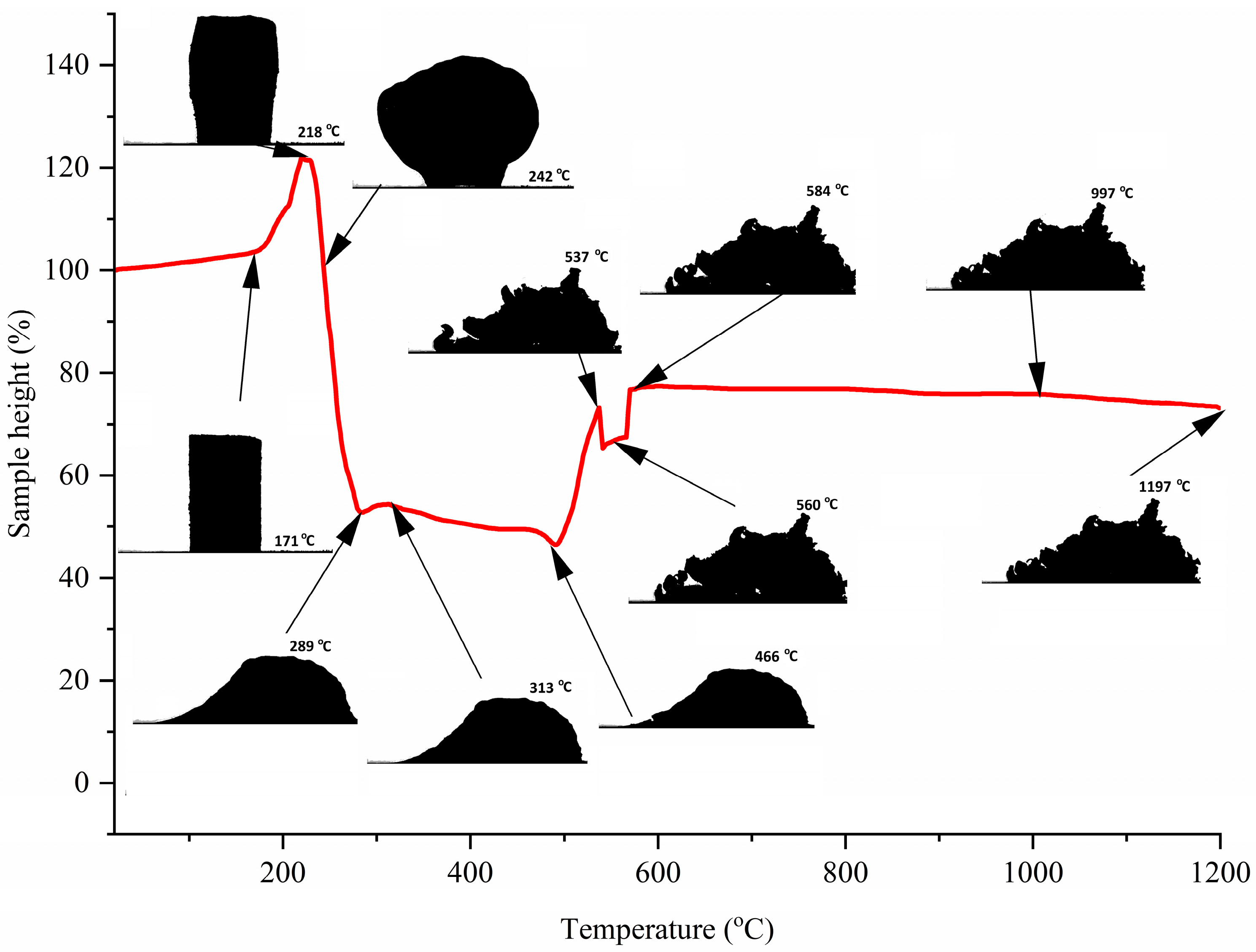
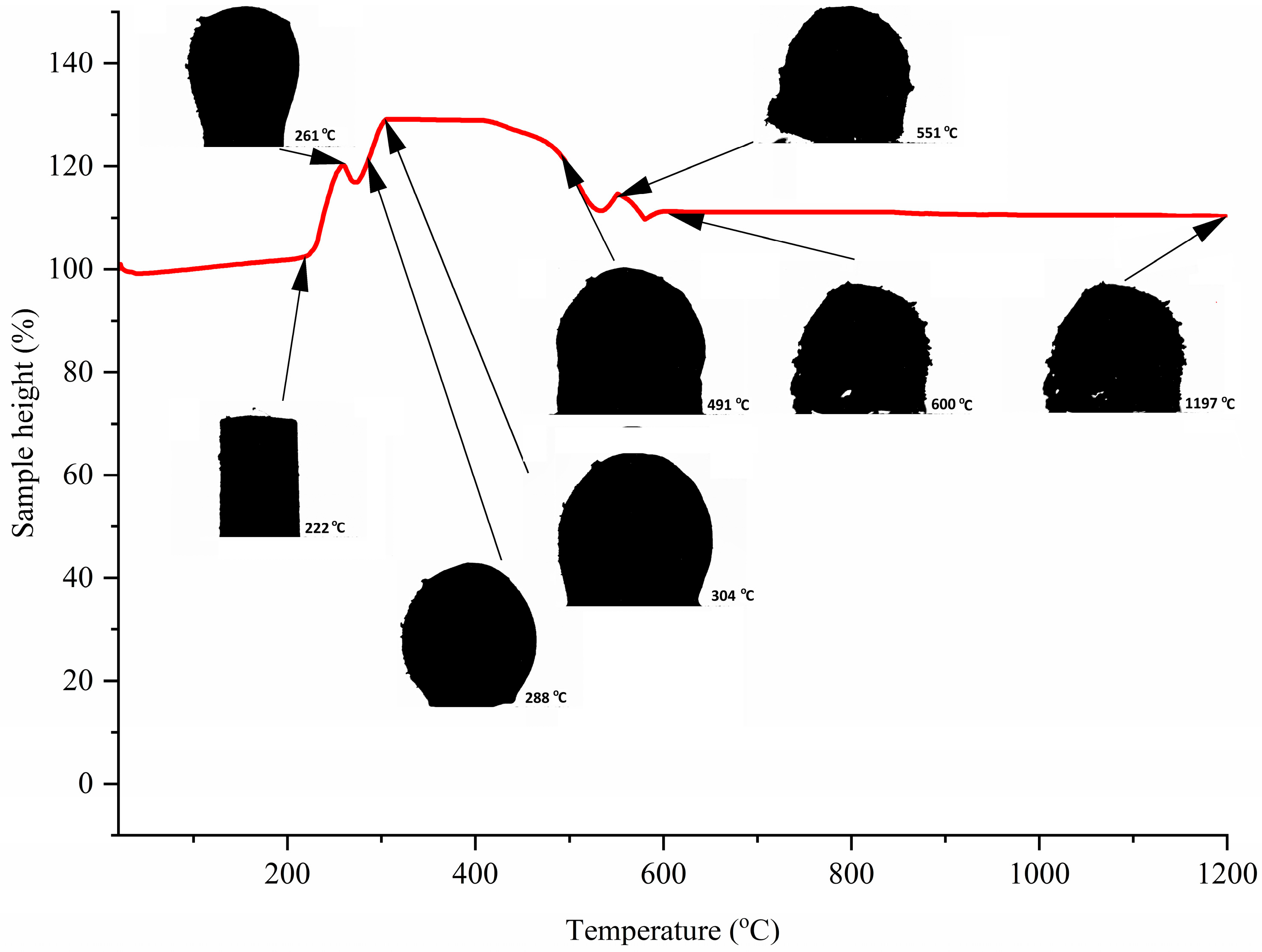
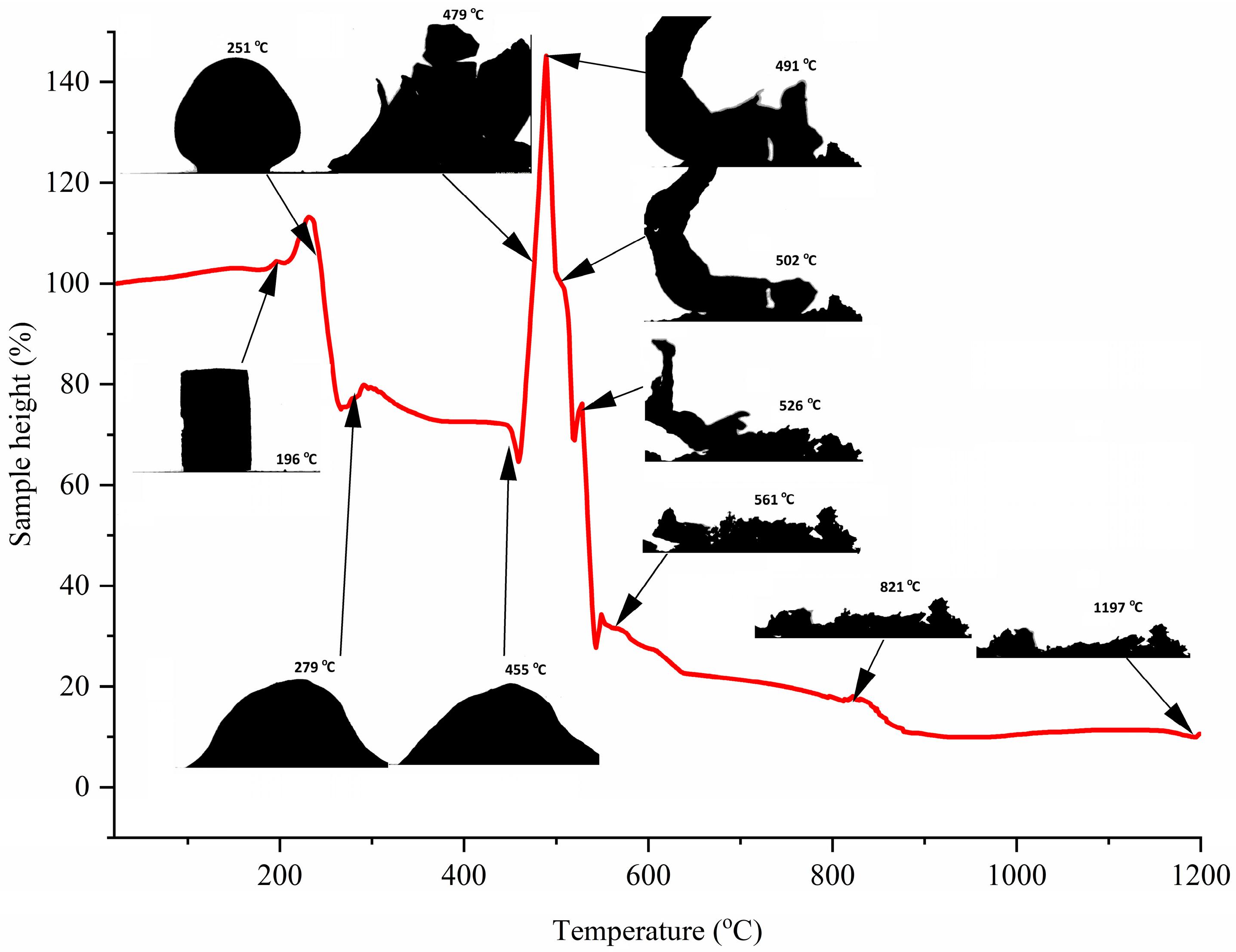


| Wave Number (cm−1) | Band Group | Description |
|---|---|---|
| 800–900 | Backbone structure | C-H bending vibrations related to methyl or hydrocarbon groups |
| 1100–1200 | Backbone structure | C-O-C stretching vibrations, related to ether groups in polyol segments |
| 1200–1300 | Chemical groups | C-N stretching vibrations and vibrations related to C-O stretching of urethane groups |
| 1450–1500 | Deformations and structure | CH2 bending vibrations and vibrations related to structural deformation |
| 1600–1650 | Hard and soft segments | Aromatic groups building FPU structure |
| 1700–1750 | Chemical groups | Carbonyl (C=O) stretching vibrations assigned to urethane groups |
| Components | Bands, cm−1 | Assignments |
|---|---|---|
| A | 1642 + 1650 + 1668 | Strongly associated/urea-related C=O |
| B | 1703 + 1718 | H-bonded urethane C=O envelope |
| C | 1728 + 1739 | Free/weakly H-bonded urethane C=O |
| Sample | Fstrong | FH-Bonded | Fassoc = Fstrong + FH-Bonded | Ffree | HBI = Fassoc/Ffree |
|---|---|---|---|---|---|
| PM | 0.138 | 0.293 | 0.432 | 0.568 | 0.760 |
| PS | 0.083 | 0.492 | 0.575 | 0.425 | 1.354 |
| PST | 0.184 | 0.321 | 0.505 | 0.495 | 1.021 |
| PT | 0.122 | 0.629 | 0.751 | 0.249 | 3.018 |
| PTS | 0.258 | 0.309 | 0.568 | 0.432 | 1.313 |
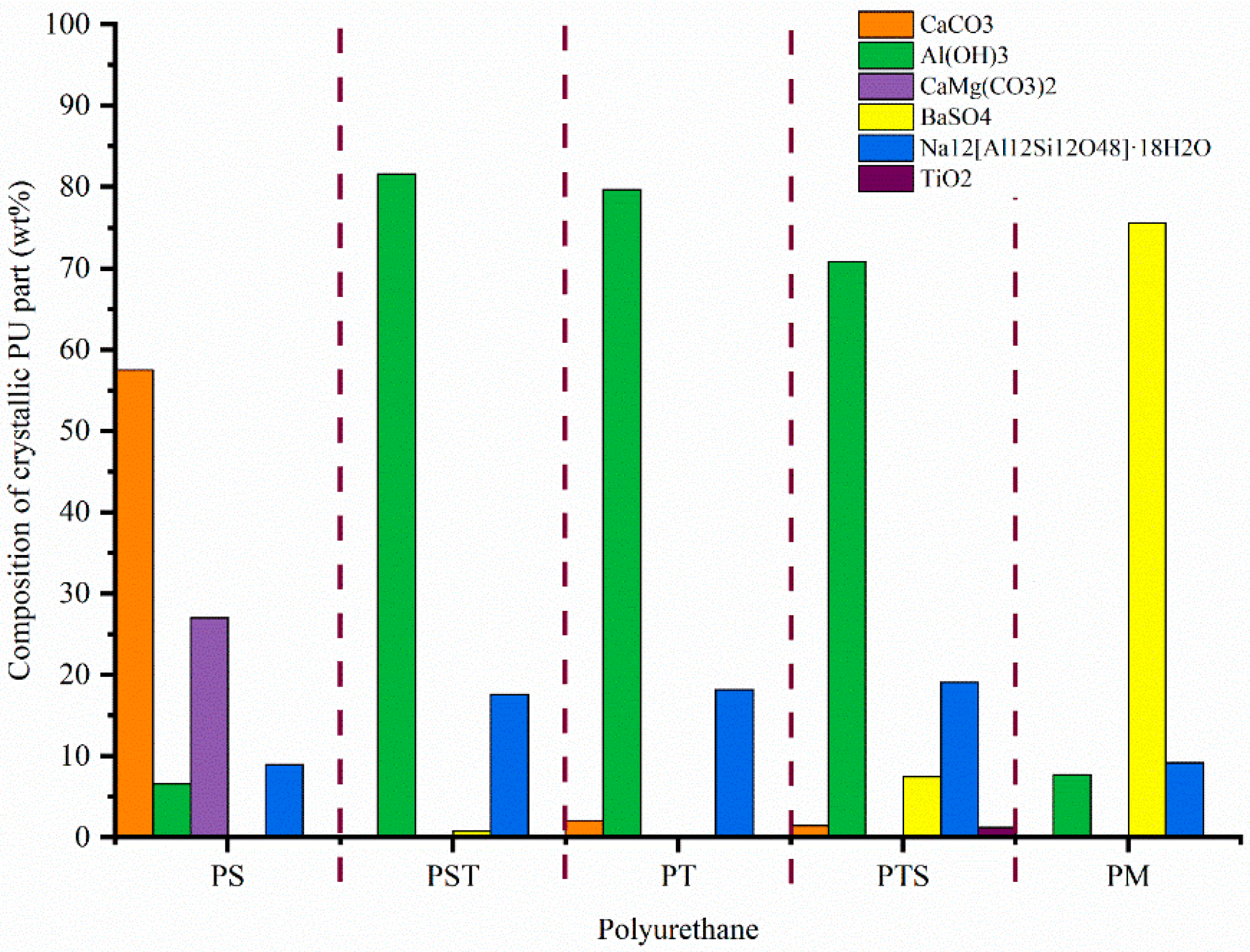
| Sample Name | Compound Name | Chemical Formula | Composition of Crystalline FPU Part wt% | ICDD Card |
|---|---|---|---|---|
| PS | Calcite | CaCO3 | 57.5 | 01-086-4274 |
| Dolomite | CaMg(CO3)2 | 27 | 00-036-0426 | |
| Sodium Calcium Aluminium Silicon Oxide Hydrate | Na12[Al12Si12O48]·18H2O | 9.0 | 04-018-9254 | |
| Gibbsite | Al(OH)3 | 6.6 | 01-080-6432 | |
| PST | Gibbsite | Al(OH)3 | 81.6 | 01-080-6432 |
| Sodium Calcium Aluminium Silicon Oxide Hydrate | Na12[Al12Si12O48]·18H2O | 17.6 | 04-018-9254 | |
| Baryte | BaSO4 | 0.8 | 04-007-7651 | |
| PT | Gibbsite | Al(OH)3 | 79.7 | 01-080-6432 |
| Sodium Calcium Aluminium Silicon Oxide Hydrate | Na12[Al12Si12O48]·18H2O | 18.2 | 04-018-9254 | |
| Calcite | CaCO3 | 2.1 | 01-086-4274 | |
| PTS | Gibbsite | Al(OH)3 | 70.8 | 01-080-6432 |
| Sodium Calcium Aluminium Silicon Oxide Hydrate | Na12[Al12Si12O48]·18H2O | 19.1 | 04-018-9254 | |
| Baryte | BaSO4 | 7.5 | 04-007-7651 | |
| Calcite | CaCO3 | 1.5 | 01-086-4274 | |
| Rutile | TiO2 | 1.2 | 00-034-0180 | |
| PM | Baryte | BaSO4 | 75.6 | 04-007-7651 |
| Sodium Calcium Aluminium Silicon Oxide Hydrate | Na12[Al12Si12O48]·18H2O | 9.2 | 04-018-9254 | |
| Gibbsite | Al(OH)3 | 7.7 | 01-080-6432 | |
| Calcite | CaCO3 | 5.5 | 01-086-4274 | |
| Rutile | TiO2 | 2.0 | 00-034-0180 |
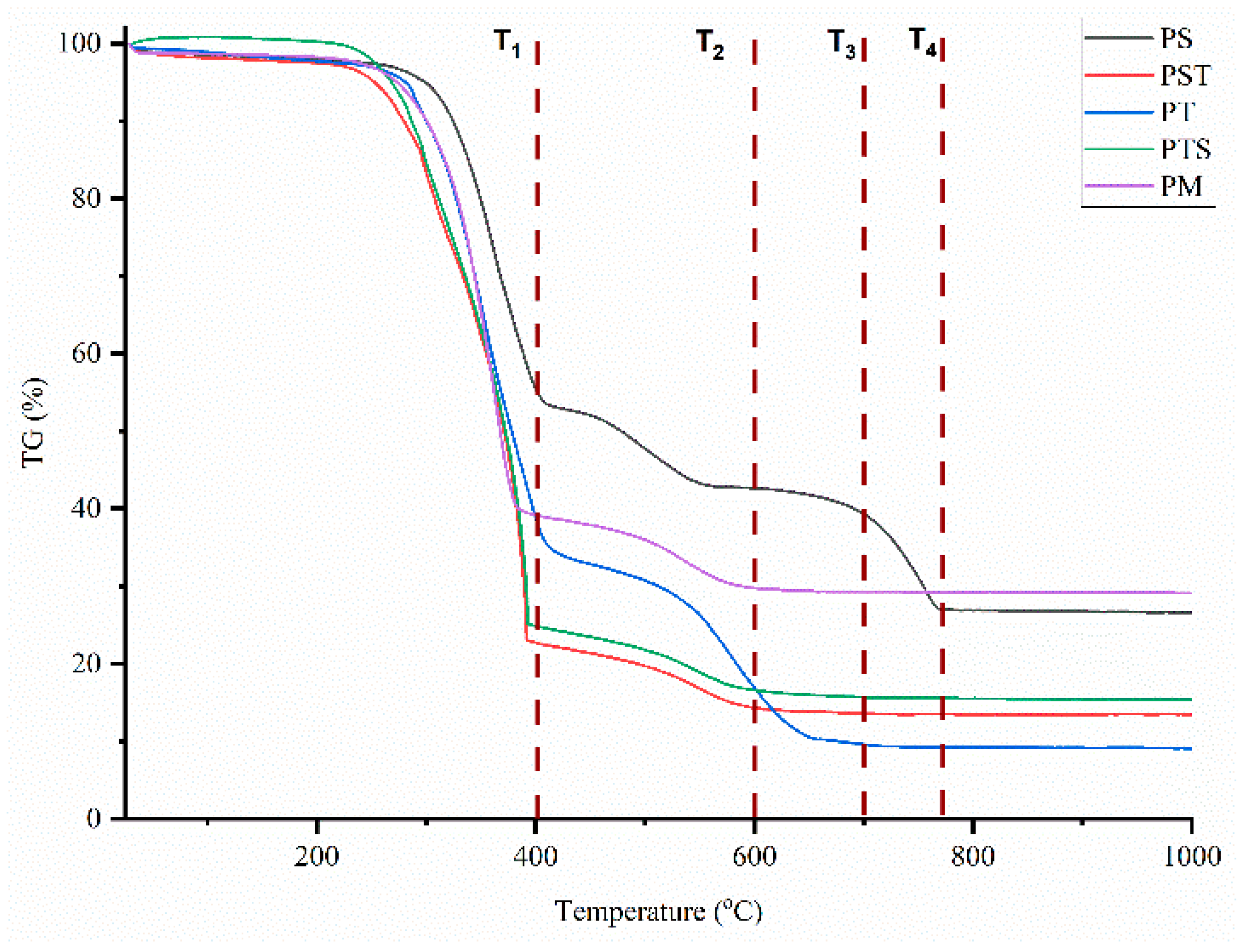
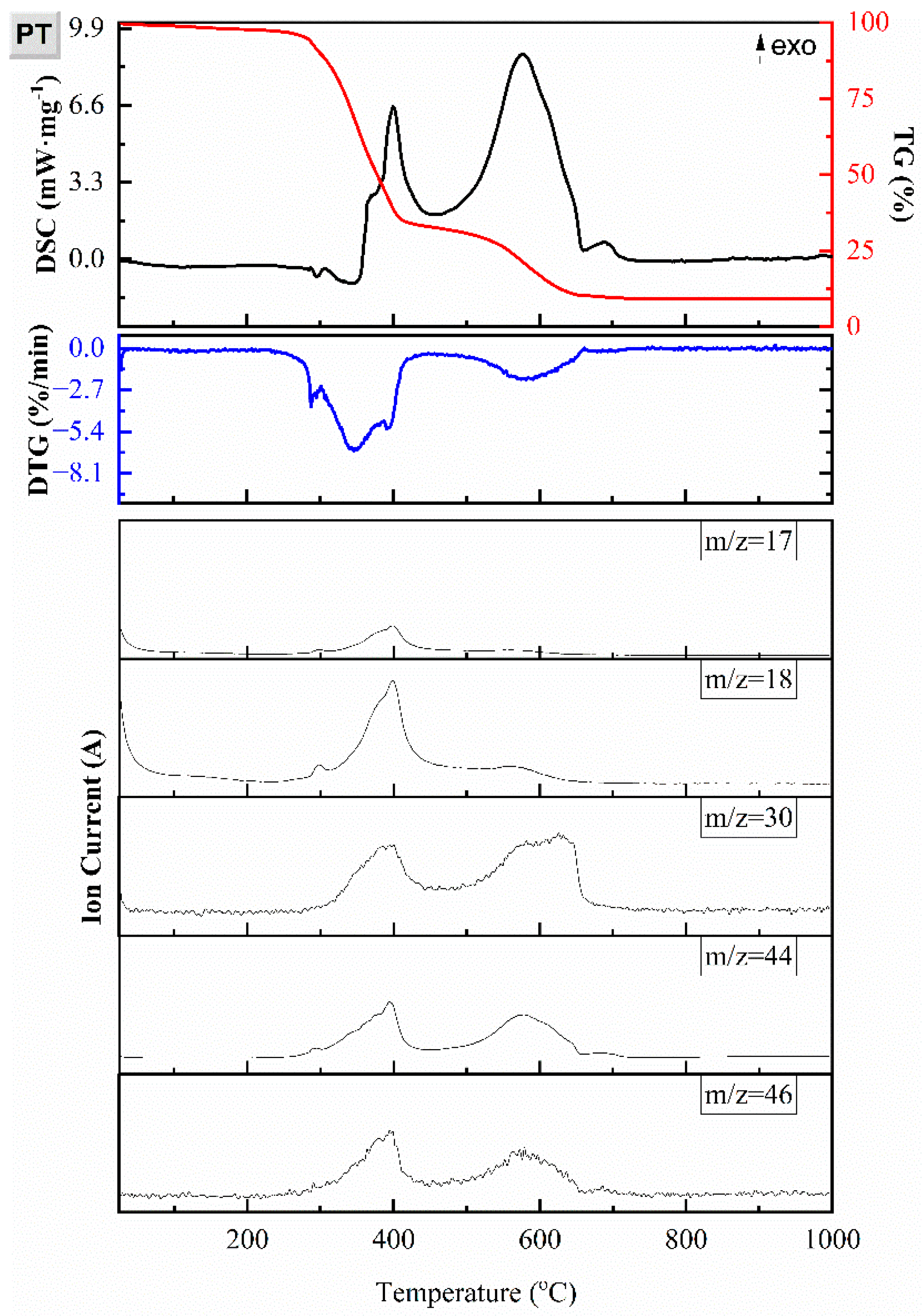
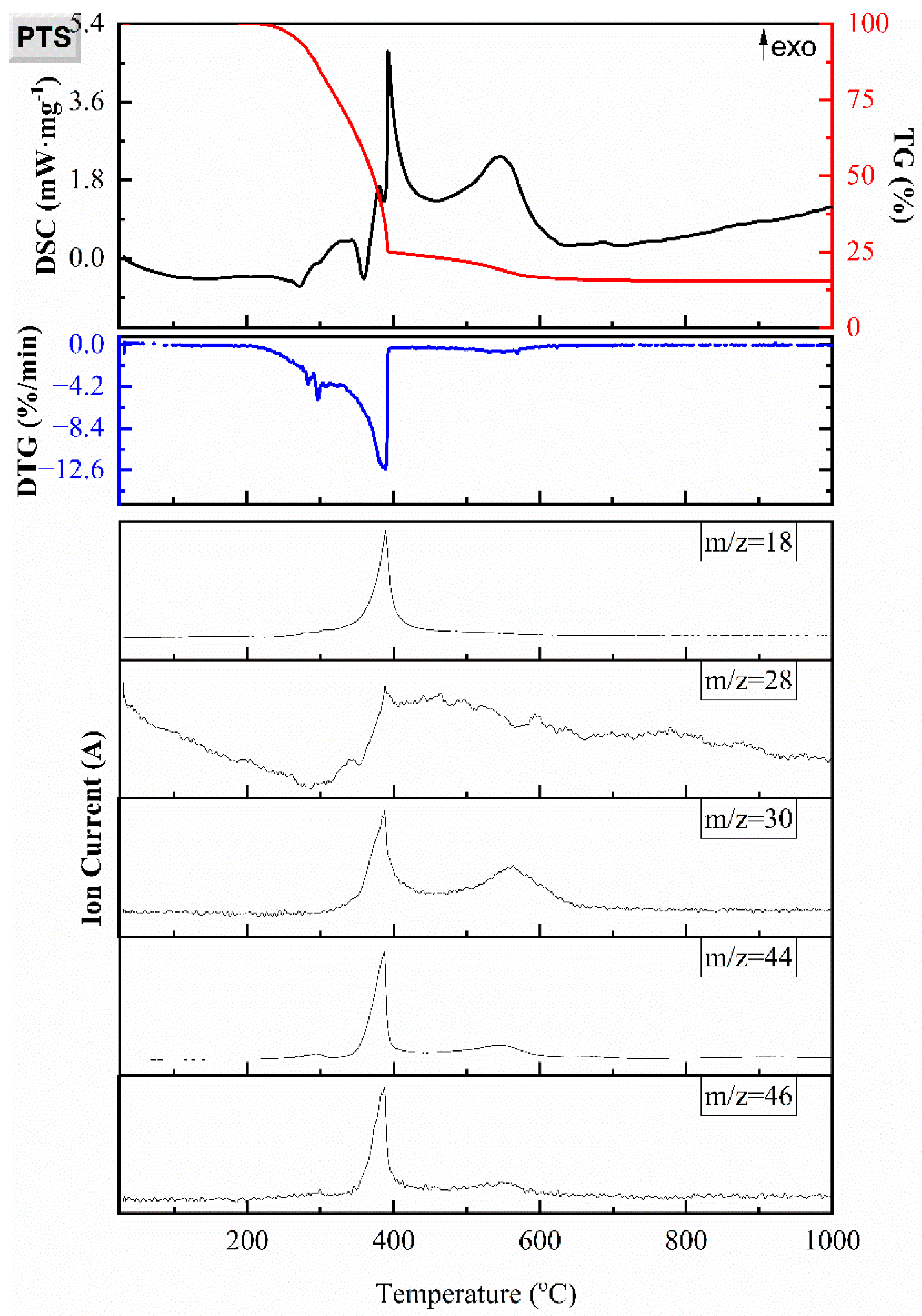
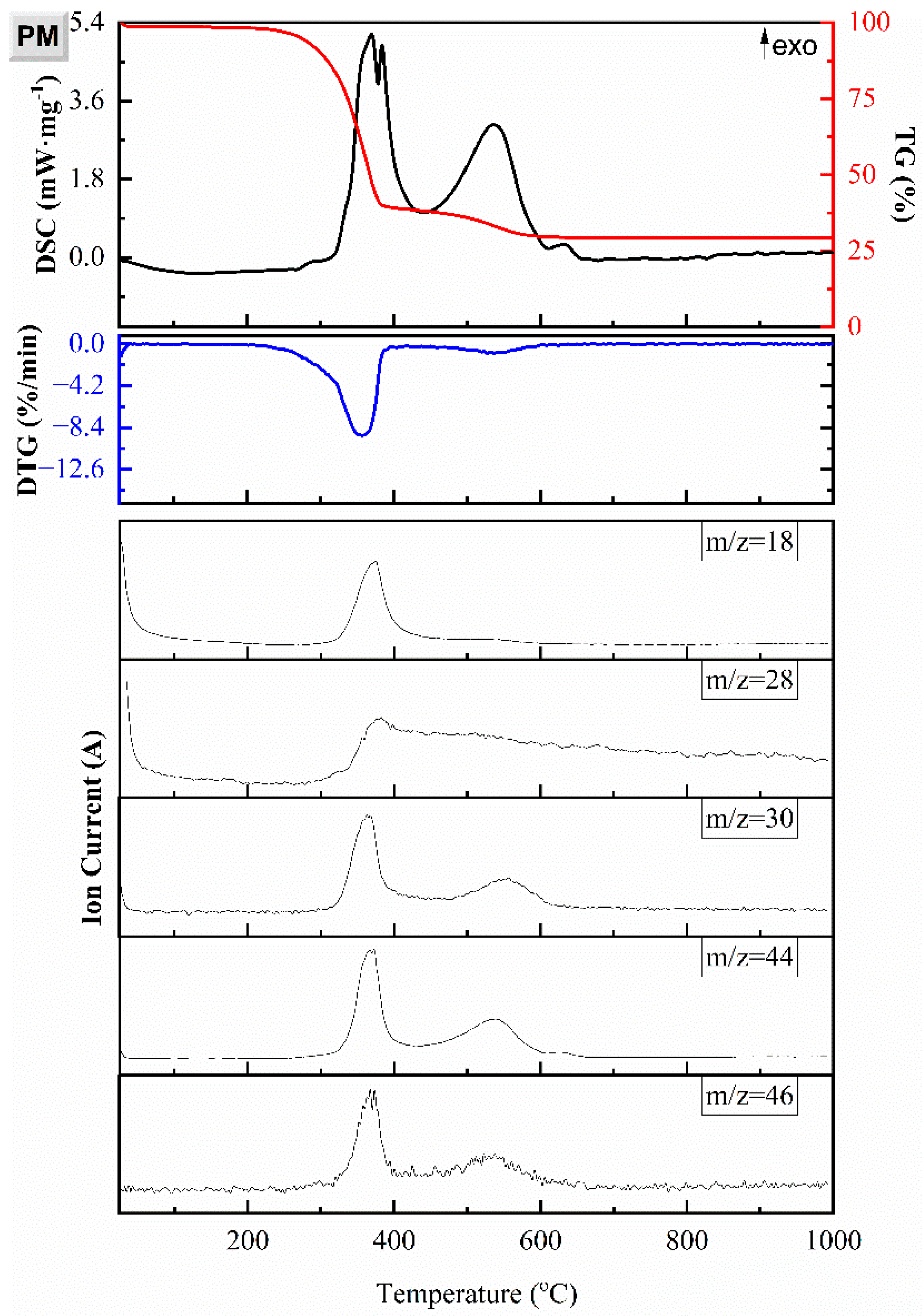
| Step | Temperature (°C) | Mass Loss (%) | ||||
|---|---|---|---|---|---|---|
| PS | PST | PT | PTS | PM | ||
| RT | 25 | 0 | 0 | 0 | 0 | 0 |
| RT–T1 | 410 | −46.5 | −77.6 | −64.6 | −75.5 | −61.1 |
| T1–T2 | 600 | −10.8 | −8.1 | −18.5 | −8.0 | −9.1 |
| T2–T3 | 660 | −1.2 | −0.5 | −6.7 | −0.7 | −0.5 |
| T3–T4 | 770 | −14.4 | −0.3 | −0.9 | −0.3 | 0 |
| T4–End | 1000 | −0.4 | −0.1 | −0.2 | −0.2 | −0.1 |
| Sample | TG Mass-Loss Profile Based on Table 5 | Main Interpretation Consistent with DSC-TG-QMS Data | Main QMS Signals Discussed in the Manuscript | Crystalline Phases Identified by XRD |
|---|---|---|---|---|
| PS | −46.5% up to 410 °C; −10.8% between 410–600 °C; pronounced additional loss of −14.4% between 660–770 °C | Main FPU degradation occurs below 410 °C; the high-temperature mass loss is attributed mainly to carbonate decomposition | H2O, CO2, NOx, CO | Calcite, dolomite, N-A-S-H, gibbsite |
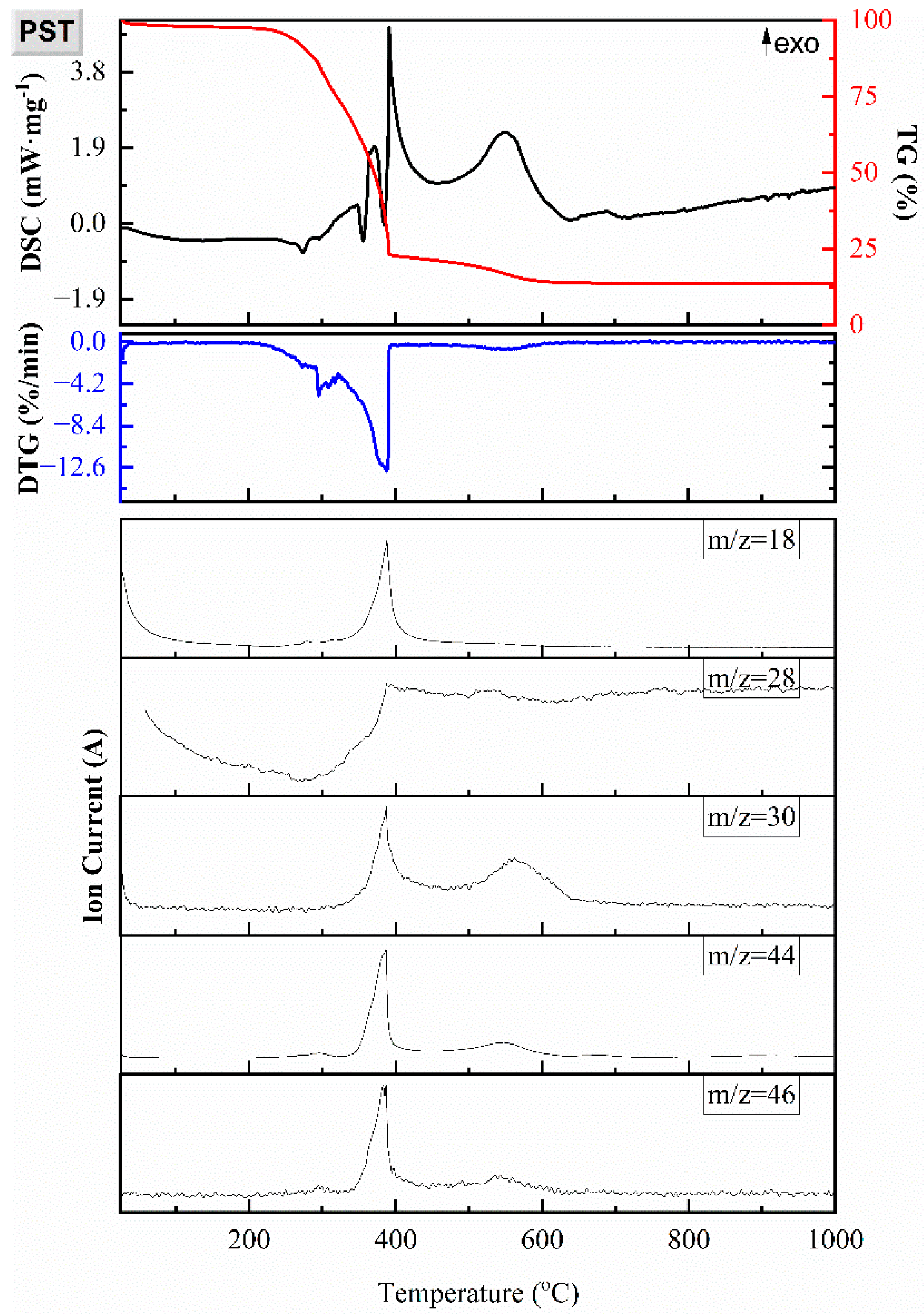
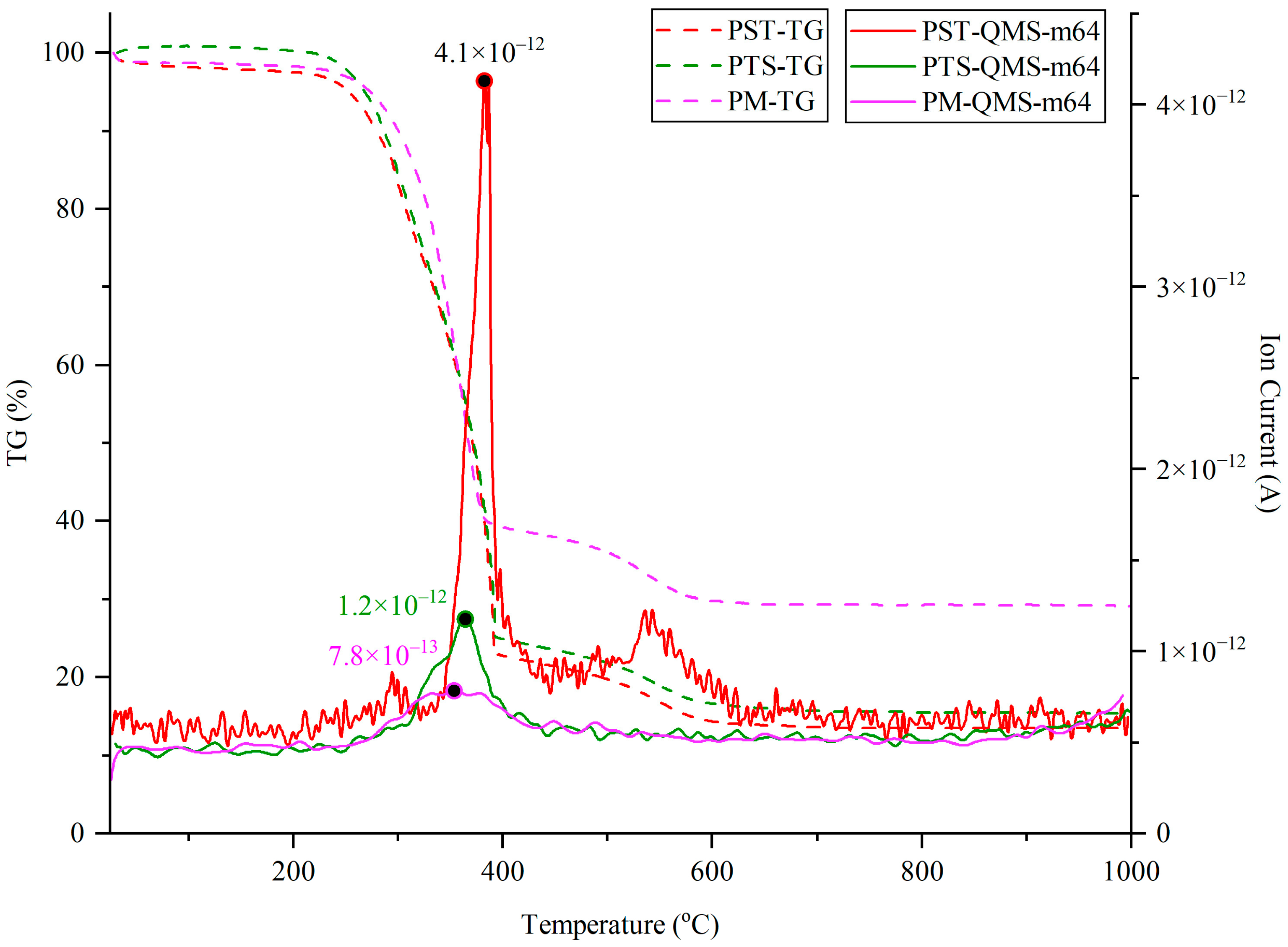
| PST | −77.6% up to 410 °C; −8.1% between 410–600 °C; negligible mass loss above 600 °C | Predominant FPU degradation below 410 °C, with contribution from dehydration of gibbsite/N-A-S-H; no evident carbonate-related high-temperature mass-loss step | H2O, CO2, CO, NOx, HCN/CN-related fragments; m/z = 64 discussed for BaSO4-containing samples | Gibbsite, N-A-S-H, trace BaSO4 |
| PT | −64.6% up to 410 °C; substantial additional loss of −18.5% between 410–600 °C and −6.7% between 600–660 °C | Broader degradation behaviour compared with PST/PTS, consistent with a more rigid FPU system and delayed evolution of degradation products | H2O, CO2, NOx, CO | Gibbsite, N-A-S-H, minor calcite |
| PTS | −75.5% up to 410 °C; −8.0% between 410–600 °C; negligible mass loss above 600 °C | Thermal behaviour similar to PST; degradation dominated by FPU decomposition and hydrated filler dehydration, with minor contribution from BaSO4/calcite-containing filler system | H2O, CO2, CO, NOx; m/z = 64 discussed for BaSO4-containing samples | Gibbsite, N-A-S-H, BaSO4, minor calcite, TiO2 |
| PM | −61.1% up to 410 °C; −9.1% between 410–600 °C; negligible mass loss above 660 °C | FPU degradation occurs mainly below 410 °C in a BaSO4-rich mineral system; high BaSO4 content contributes mainly to the inorganic residue fraction and reduced relative mass loss | H2O, CO2, CO, NOx; m/z = 64 discussed for BaSO4-containing samples | BaSO4, N-A-S-H, gibbsite, calcite, TiO2 |
Disclaimer/Publisher’s Note: The statements, opinions and data contained in all publications are solely those of the individual author(s) and contributor(s) and not of MDPI and/or the editor(s). MDPI and/or the editor(s) disclaim responsibility for any injury to people or property resulting from any ideas, methods, instructions or products referred to in the content. |
© 2026 by the authors. Licensee MDPI, Basel, Switzerland. This article is an open access article distributed under the terms and conditions of the Creative Commons Attribution (CC BY) license.
Share and Cite
Szumera, M.; Rutkowski, P.; Berezicka, A.; Gajek, M.; Handke, B.; Jeleń, P.; Kwiecień, K.; Kwiecień, A.; Śliwa-Wieczorek, K. Relation Between Thermal Analysis, Phase Composition and Structure of Polyurethane Adhesives for Application in Wooden Structural Joints. Polymers 2026, 18, 1396. https://doi.org/10.3390/polym18111396
Szumera M, Rutkowski P, Berezicka A, Gajek M, Handke B, Jeleń P, Kwiecień K, Kwiecień A, Śliwa-Wieczorek K. Relation Between Thermal Analysis, Phase Composition and Structure of Polyurethane Adhesives for Application in Wooden Structural Joints. Polymers. 2026; 18(11):1396. https://doi.org/10.3390/polym18111396
Chicago/Turabian StyleSzumera, Magdalena, Paweł Rutkowski, Anna Berezicka, Marcin Gajek, Bartosz Handke, Piotr Jeleń, Konrad Kwiecień, Arkadiusz Kwiecień, and Klaudia Śliwa-Wieczorek. 2026. "Relation Between Thermal Analysis, Phase Composition and Structure of Polyurethane Adhesives for Application in Wooden Structural Joints" Polymers 18, no. 11: 1396. https://doi.org/10.3390/polym18111396
APA StyleSzumera, M., Rutkowski, P., Berezicka, A., Gajek, M., Handke, B., Jeleń, P., Kwiecień, K., Kwiecień, A., & Śliwa-Wieczorek, K. (2026). Relation Between Thermal Analysis, Phase Composition and Structure of Polyurethane Adhesives for Application in Wooden Structural Joints. Polymers, 18(11), 1396. https://doi.org/10.3390/polym18111396