



Damp-Heat Ageing of Resin Insulation Materials (Epoxy Resin and Phenolic Resin as Examples) and Their Effects on Flame Retardancy

 ,
,  ,
, 
Abstract
1. Introduction
2. Experimental Methods
2.1. Samples and Devices
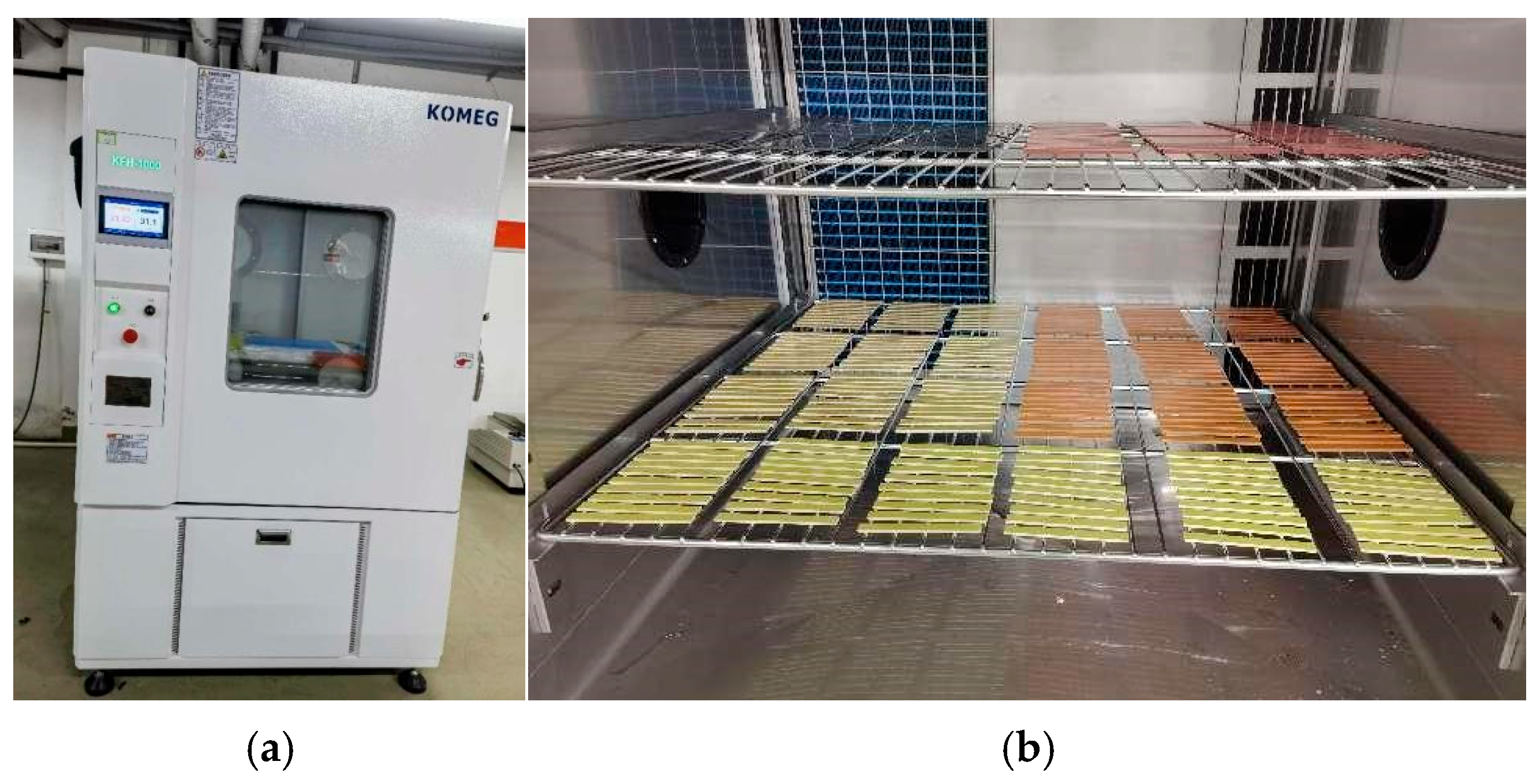
2.2. Wet Heat Ageing Test
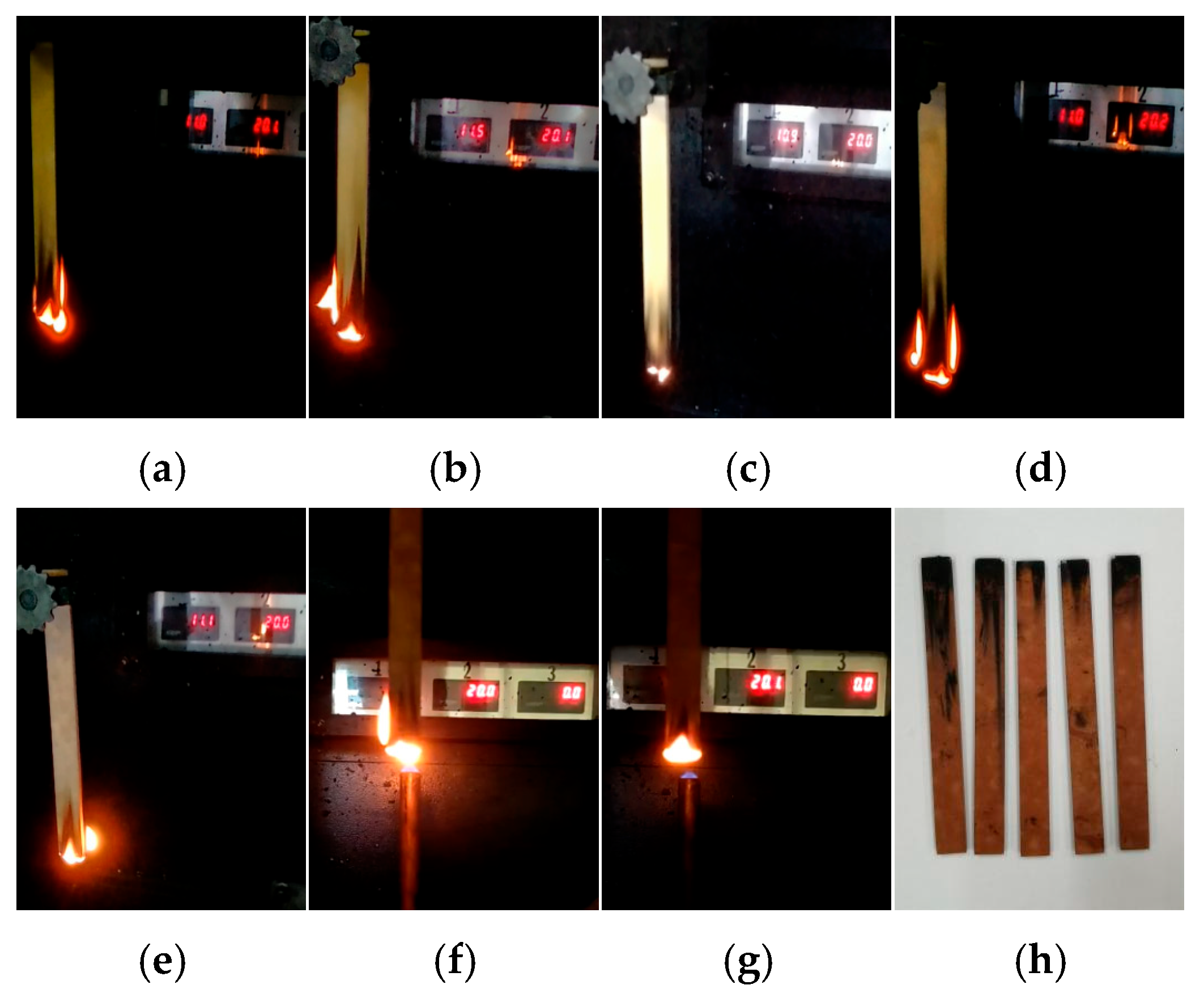
2.3. Test Method for the Flame-Retardant Properties of Resin Sample
3. Effect of Wet Heat Ageing on the Combustion Characteristics of Resin Sample
3.1. Vertical Burning Phenomenon During the Wet Heat Ageing Process of Epoxy Resin
3.2. Vertical Burning Phenomenon During the Wet Heat Ageing Process of Phenolic Resin
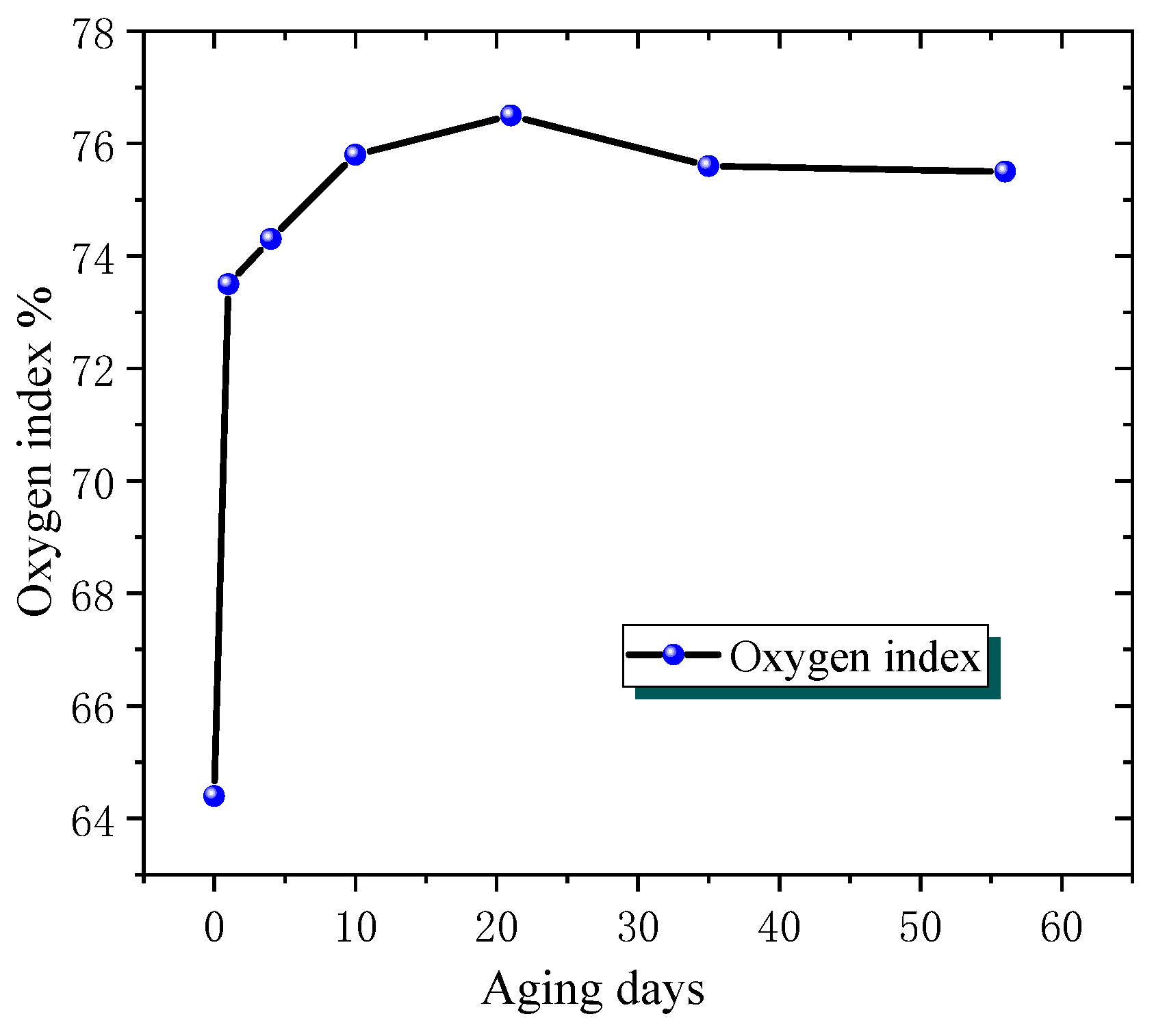

3.3. Analysis of the Impact of Ageing on Flame Retardancy
4. Conclusions
- (1)
- Epoxy resin: Oxygen index increased by 19% (64.4%→76.5%) within 21 days, while afterflame time decreased by 24% (143 s→109 s) after 56 days. Ageing induces surface enrichment of Ca/Mg/Si (e.g., Ca content surged from 0.54 wt% to 10.47 wt%) and forms porous carbonised structures, promoting heat absorption and oxygen barrier effects.
- (2)
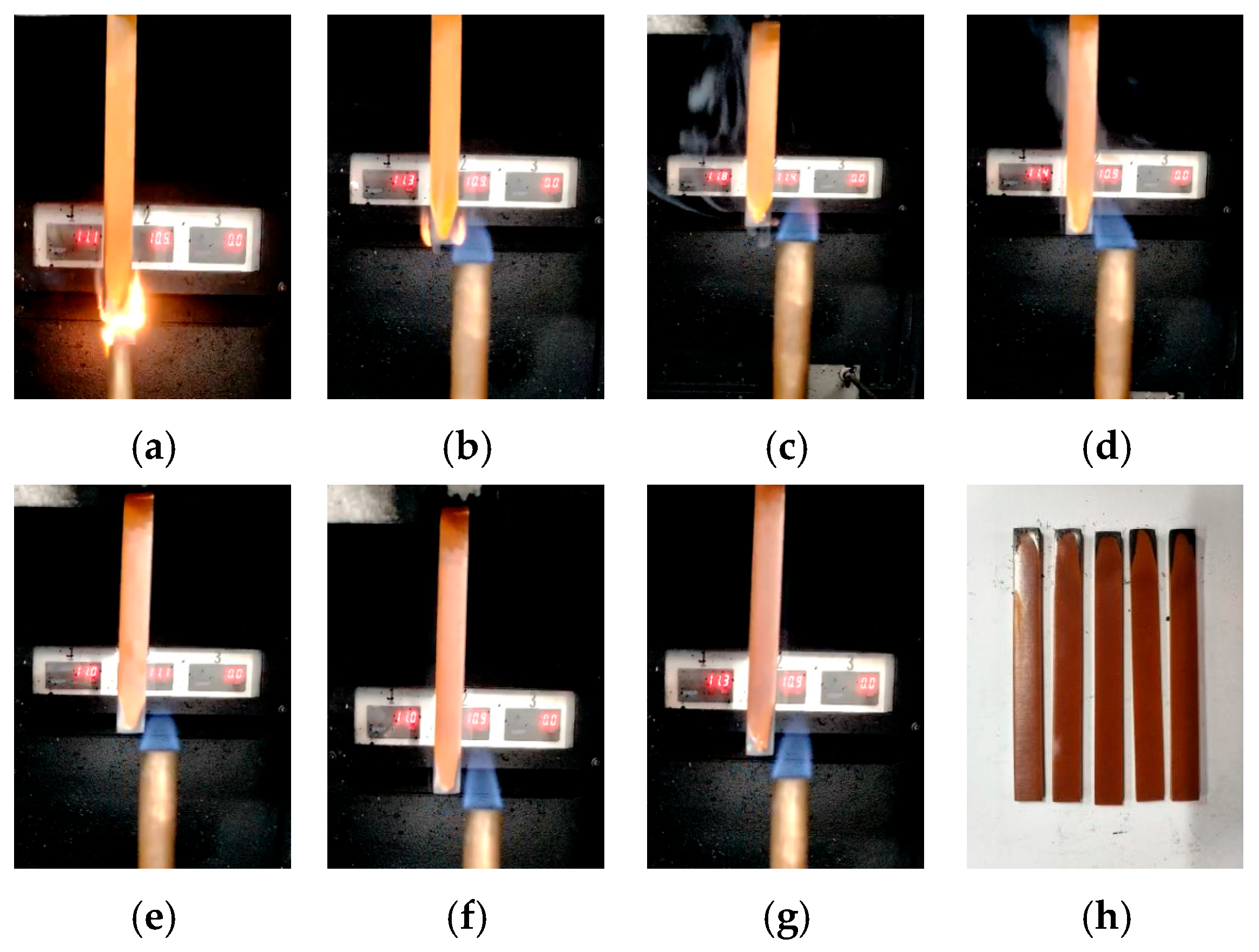
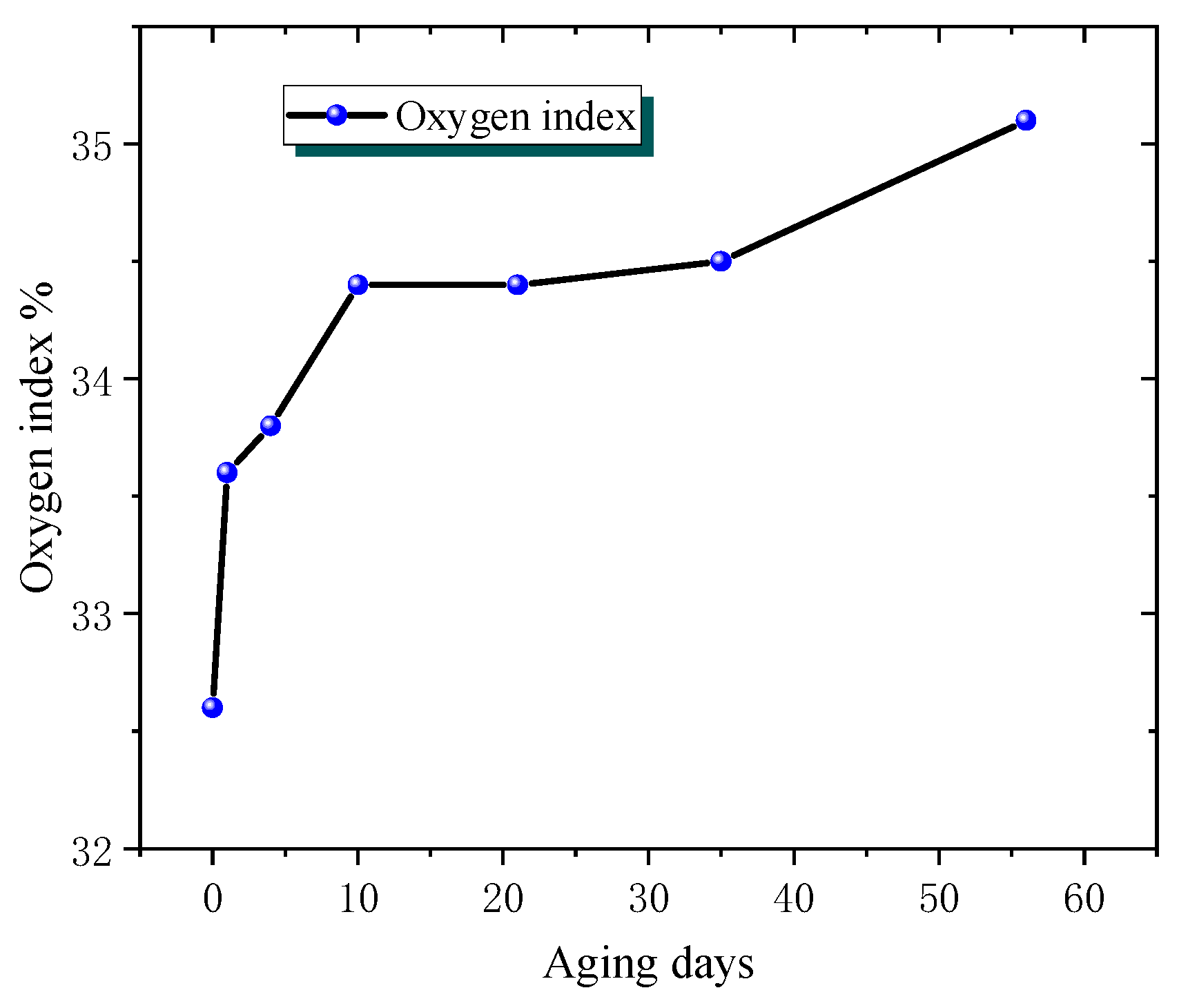
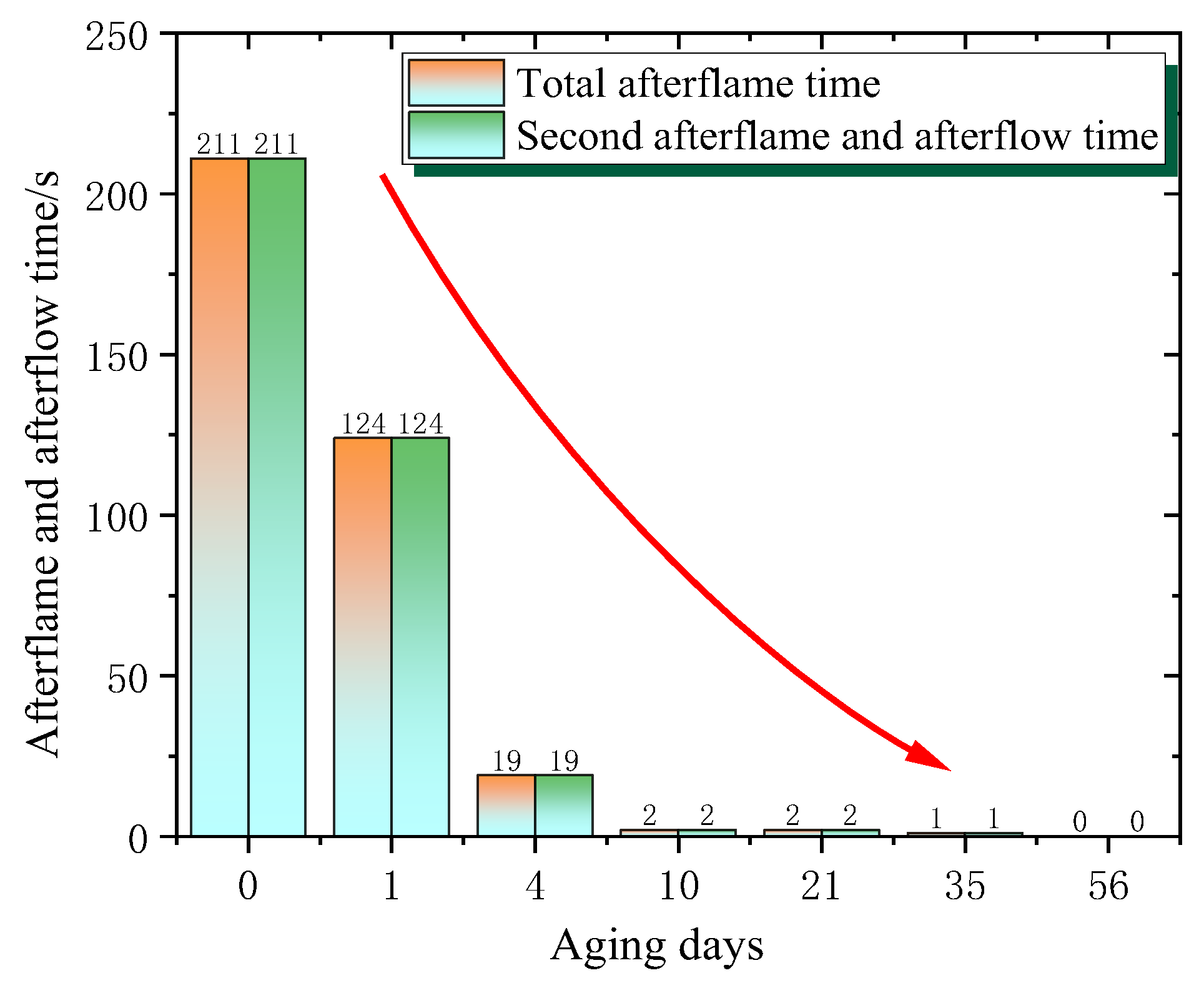
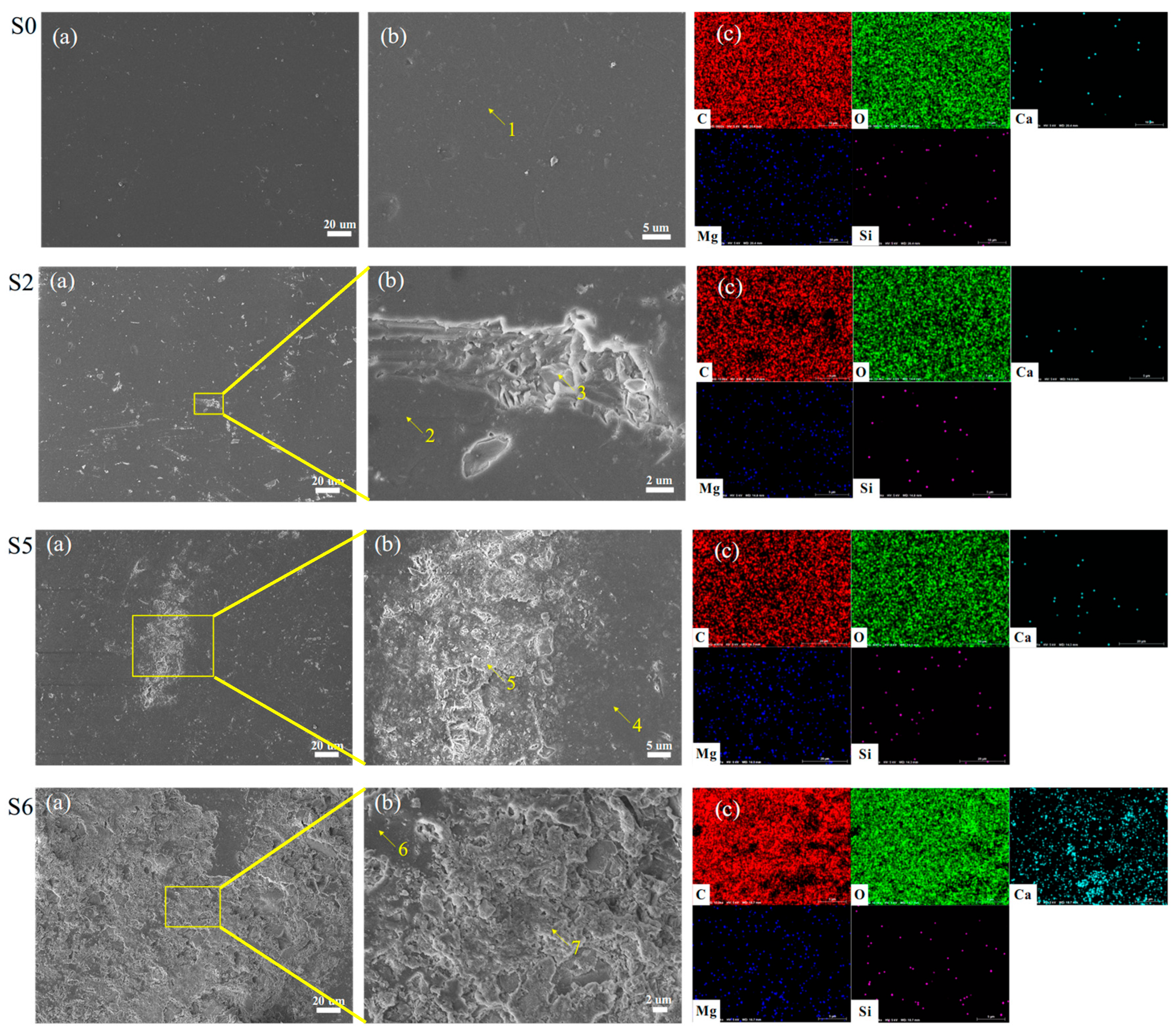
- Phenolic resin: Achieved near-complete self-extinguishing (afterflame time: 211 s→0 s) after 56 days. Flame-retardant fillers (Al/Mg compounds) migrate to the surface without significant molecular degradation, enhancing dehydration and carbon layer formation.
- (3)
- Mechanistic insights: Ageing facilitates the precipitation of inherent flame-retardant additives (e.g., CaCO3, Mg(OH)2, Al(OH)3) and generates oxygen-containing functional groups, accelerating protective carbon layer formation. Structural loosening increases the specific surface area, thereby improving the dispersion efficiency of flame-retardant elements.
- (4)
- Engineering Implications: The counterintuitive changes in the flame retardancy of epoxy resin and phenolic resin under laboratory hygrothermal ageing suggest that aged insulation materials may possess higher safety levels than previously assumed. However, the specific variation patterns require future verification using field samples. These findings can be further utilised to optimise resin formulations to harness ageing-induced flame-retardant mechanisms.
Author Contributions
Funding
Data Availability Statement
Conflicts of Interest
References
- Chen, K.; Wang, J.; Qin, C.; Wang, J.; Liu, J.; Zhang, S.; Zou, L.; Zhang, L. Electrical Conduction Mechanism Analysis of Epoxy Resin/Microcapsule Self-Healing Composites Based on Experiment and Random Distribution Model. IEEE Trans. Dielectr. Electr. Insul. 2025, 32, 1036–1045. [Google Scholar] [CrossRef]
- Erdogan, M.; Eker, M.K. A Comparative Analysis of Partial Discharge in 13 Combined Insulation Structures of 11 Materials Used in Cast-Resin Dry-Type Transformers. IEEE Trans. Dielectr. Electr. Insul. 2022, 29, 2330–2339. [Google Scholar] [CrossRef]
- Wang, X.; Kikuchi, A.; Takeuchi, M.; Nakamoto, T.; Tsuchiya, K. Flexural Properties of an Organic Olefin-Based Thermosetting Dicyclopentadiene Resin for Superconducting Magnet Impregnation. IEEE Trans. Appl. Supercond. 2025, 35, 7700104. [Google Scholar] [CrossRef]
- Xu, S.; Xu, Y. Terminal Chlorine Affected the Short-Term Electrical Properties of Epoxy Resin Materials. IEEE Trans. Dielectr. Electr. Insul. 2024, 31, 1797–1804. [Google Scholar] [CrossRef]
- Qiao, X.; Wang, Y.; Zhang, Y.; Yu, L.; Zhang, D.; Wang, Z. The Development of a Converter Transformer Fire Model Based on the Fire Dynamics Simulator and the Analysis of Cooling Mechanisms of Spraying and Coating. Appl. Sci. 2024, 14, 11337. [Google Scholar] [CrossRef]
- Xu, K.; Gao, C.; Liu, X.; Liu, X.; Jie, G.; Deng, J.; Qiao, X.; Zeng, W. Flame Retardancy Evolution Behavior and Molecular Mechanism of Polyvinyl Chloride Under the Action of Damp Heat Aging. Polymers 2025, 17, 794. [Google Scholar] [CrossRef]
- Li, T.; Li, S.; Xiao, S.; Yang, D.; Dan, J.; Kang, Y.; Wu, G. Characterization of Electrothermal Aged Insulation Structures of Vehicle Cable Terminal Under Vibration Load in Terahertz Frequency Domain. IEEE Trans. Transp. Electrif. 2025, 11, 1715–1729. [Google Scholar] [CrossRef]
- Liu, Y.; Liu, Q.; Liu, Z.; Wu, M.; Lou, X.; Gao, J.; Zhong, L. Influence of Local Phase Separation on Dielectric Properties of PVDF/PMMA Blends During Thermal Aging. IEEE Trans. Dielectr. Electr. Insul. 2023, 30, 2199–2204. [Google Scholar] [CrossRef]
- Wang, Q.; Wang, R.; Xu, T.; Tian, S.; Wei, D.; Peng, Z.; Liu, P.; Zhou, X. Thermal Aging Characteristics of New Insulating Oil-Bamboo Paper Composite Material. IEEE Trans. Dielectr. Electr. Insul. 2025, 32, 779–788. [Google Scholar] [CrossRef]
- Wang, S.; Chen, Y.; Jia, F.; Guo, B.; Mao, J.; Cheng, Y.; Wang, Z.; Gong, R. The Multifactor Aging Characteristics and Aging State Assessment of Epoxy Composites for GIS. IEEE Trans. Dielectr. Electr. Insul. 2024, 31, 3159–3168. [Google Scholar] [CrossRef]
- Wang, S.; Chen, Y.; Liu, C.; Yao, K.; Mao, J.; Cheng, Y.; Wang, Z.; Gong, R. Multifactor Aging Characteristics of GIS Solid Insulation: Effect of Electrical, Thermal, and Vibration Stresses. IEEE Trans. Dielectr. Electr. Insul. 2024, 31, 3211–3220. [Google Scholar] [CrossRef]
- Iwai, S.; Uto, T.; Ohtani, Y.; Kusano, T.; Ishii, H.; Ito, T.; Nomura, S. Sudden Discharging Tests and Overcurrent Tests of a 3T HTS Model Magnet for MRI Systems Equipped with Electrically Conductive Epoxy Resin. IEEE Trans. Appl. Supercond. 2023, 33, 4602206. [Google Scholar] [CrossRef]
- Kong, X.; Hou, C.; Li, F.; Du, H.S.; Tanaka, Y.; Du, B. Conductivity and Breakdown Properties of Epoxy Resin for HVDC Bushing by Multifunctional Modifier. IEEE Trans. Dielectr. Electr. Insul. 2024, 31, 2531–2538. [Google Scholar] [CrossRef]
- Zhang, W.J.; Du, B.X.; Liang, H.C. Mechanical Stress Affecting Dielectric Properties of Epoxy Resin. IEEE Trans. Dielectr. Electr. Insul. 2024, 31, 2255–2258. [Google Scholar] [CrossRef]
- Luo, Z.; Wang, L.; Zhao, B.; Yin, F.; Li, J.; Cui, B.; Li, H.; Liu, Y. Hygrothermal aging mechanism of epoxy composites used for medium-frequency transformers. Polym. Degrad. Stab. 2024, 228, 110913. [Google Scholar] [CrossRef]
- Shang, G.; Sun, Y.; Tang, H.; Li, X.; Zhang, S.; Li, J.; Liu, X. Degradation mechanism for epoxy resins under combined electric, thermal and compressive stresses. Polym. Degrad. Stab. 2024, 230, 111038. [Google Scholar] [CrossRef]
- Xu, Z.; Zhou, L.; Qian, Y.; Zhang, R.; Hu, G.; Wang, D.; Sheng, G.; Jiang, X. Surface aging mechanism and insulation degradation causes of epoxy/anhydride/SiO2 composite materials for current transformers in switchgear. Eng. Fail. Anal. 2025, 169, 109184. [Google Scholar] [CrossRef]
- Yan, H.; Wang, P.; Li, R.; Xu, Z. Aging behaviour of encapsulated assemblies of epoxy resin under accelerated thermal cycling. Int. J. Polym. Anal. Charact. 2022, 27, 180–194. [Google Scholar] [CrossRef]
- Bi, M.; Rao, X.; Wen, Y.; Peng, H.; Jiang, T.; Tang, J. Study on Corona Aging Characteristics of Epoxy Resin Under Different Hygrothermal Environments. IEEE Trans. Dielectr. Electr. Insul. 2023, 30, 2249–2257. [Google Scholar] [CrossRef]
- Bi, M.; Tan, H.; Peng, H.; Wen, Y.; Jiang, T.; Yang, Z. Study on the AC Flashover Voltage of Corona-Aged Epoxy Resin Insulating Surfaces Under Contamination and Condensation. IEEE Trans. Dielectr. Electr. Insul. 2023, 30, 1205–1213. [Google Scholar] [CrossRef]
- Kong, X.; Zhang, C.; Du, H.S.; Miyake, H.; Tanaka, Y.; Du, B. Effects of Thermo-Oxidative Aging on the Dielectric Property and Electrical Breakdown of Epoxy Resin Using in High-Voltage Equipment. IEEE Trans. Dielectr. Electr. Insul. 2025, 32, 254–262. [Google Scholar] [CrossRef]
- Shi, Y.; Zhao, Y.; Gong, C.; Xu, Y.; Chen, G.; Du, B.; Li, D. Effect of POSS on the Dielectric Properties of Thermally Aged Epoxy Resin Insulating Materials. IEEE Trans. Dielectr. Electr. Insul. 2022, 29, 1763–1770. [Google Scholar] [CrossRef]
- Wang, Y.; Huang, Z.; Gao, M.; Shang, J.; Wang, Z. Effect of Aging Time on the Growth Characteristics of Electrical Treeing in Epoxy Resin-Impregnated Paper. IEEE Trans. Dielectr. Electr. Insul. 2022, 29, 1923–1930. [Google Scholar] [CrossRef]
- Liu, Y.; Lin, Y.; Fan, H.; Wang, L. Effect of decabromodiphenylethane on the thermo-oxidative ageing property of epoxy resin. In Proceedings of the 2020 IEEE International Conference on High Voltage Engineering and Application (ICHVE), Beijing, China, 6–10 September 2020; IEEE: New York, NY, USA, 2020; pp. 1–4. [Google Scholar]
- Wang, Y.; Huang, R.; Jia, P.; Miao, Z.; Dong, H.; Li, L. Feasibility analysis of hexaphenoxy cyclotriphosphazene flame retardant for inhibiting electrical tree growth of epoxy resin. In Proceedings of the 2021 International Conference on Electrical Materials and Power Equipment (ICEMPE), Chongqing, China, 11–15 April 2021; IEEE: New York, NY, USA, 2021; pp. 1–4. [Google Scholar]
- IEC 60068-2-78:2012; Environmental Testing—Part 2-78: Tests—Test Cab: Damp Heat, Steady State. International Electrotechnical Commission: Geneva, Switzerland, 2012.
- IEC 60695-11-10:2013; Fire hazard Testing—Part 11-10: Test Flames—50 W horizontal and Vertical Flame Test Methods. International Electrotechnical Commission: Geneva, Switzerland, 2013.
- Rao, X.; Peng, B.; Zhang, L.; Li, D.; Zhang, W.; Liu, P.; Han, F.; Chen, L.; Su, Y.; Wang, L.; et al. Study on the cracking process of epoxy resin under oxygen and water atmosphere based on ReaxFF force field. AIP Adv. 2024, 14, 095112. [Google Scholar] [CrossRef]
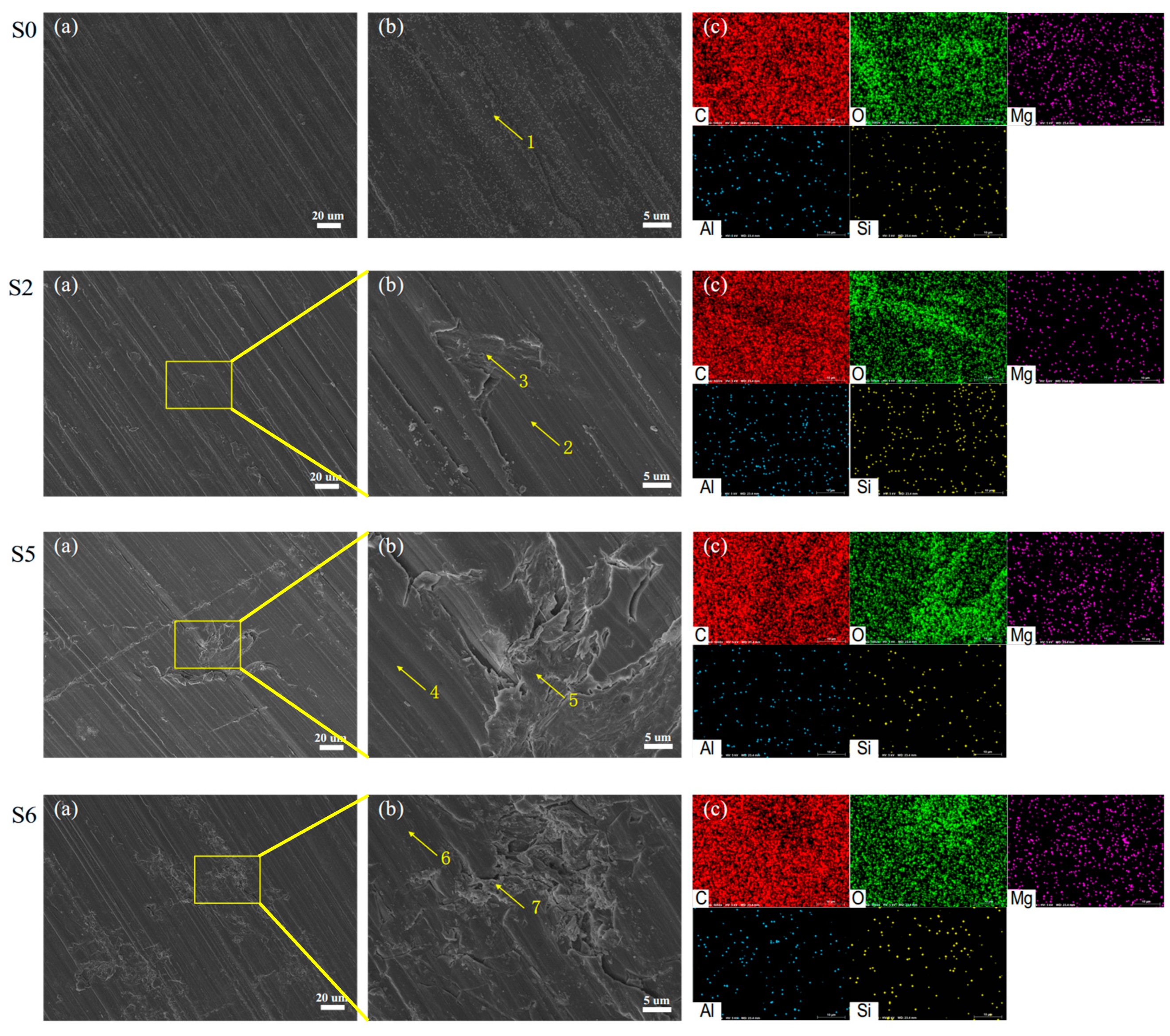
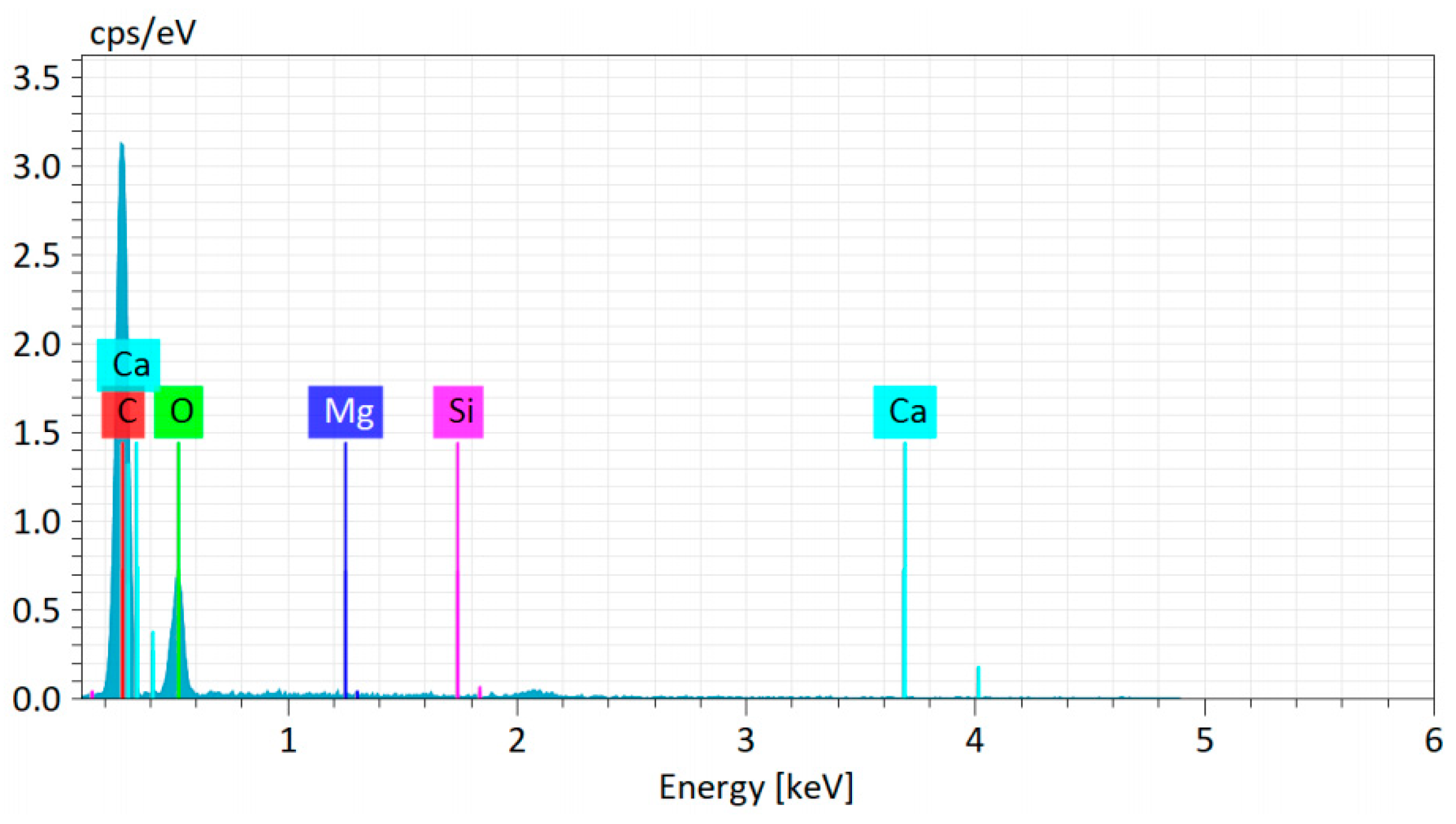

| Pionts | Element (wt%) | ||||
|---|---|---|---|---|---|
| C | O | Ca | Mg | Si | |
| 1 | 77.14 | 22.32 | 0.54 | 0.00 | 0.00 |
| 2 | 75.75 | 22.77 | 0.69 | 0.40 | 0.39 |
| 3 | 88.49 | 15.09 | 1.33 | 4.24 | 0.85 |
| 4 | 71.77 | 26.55 | 0.82 | 0.39 | 0.47 |
| 5 | 30.07 | 51.65 | 10.47 | 6.71 | 1.10 |
| 6 | 68.29 | 29.92 | 0.94 | 0.31 | 0.54 |
| 7 | 18.01 | 53.95 | 8.38 | 14.37 | 5.29 |
| Pionts | Element (wt%) | ||||
|---|---|---|---|---|---|
| C | O | Si | Mg | Al | |
| 1 | 70.41 | 28.47 | 0.70 | 0.32 | 0.10 |
| 2 | 80.65 | 19.07 | 0.24 | 0.00 | 0.04 |
| 3 | 78.47 | 20.77 | 0.41 | 0.21 | 0.14 |
| 4 | 72.12 | 27.33 | 0.53 | 0.02 | 0.00 |
| 5 | 73.61 | 26.13 | 0.73 | 0.26 | 0.10 |
| 6 | 76.76 | 23.07 | 0.17 | 0.00 | 0.00 |
| 7 | 60.90 | 34.41 | 2.55 | 1.28 | 0.86 |
Disclaimer/Publisher’s Note: The statements, opinions and data contained in all publications are solely those of the individual author(s) and contributor(s) and not of MDPI and/or the editor(s). MDPI and/or the editor(s) disclaim responsibility for any injury to people or property resulting from any ideas, methods, instructions or products referred to in the content. |
© 2026 by the authors. Licensee MDPI, Basel, Switzerland. This article is an open access article distributed under the terms and conditions of the Creative Commons Attribution (CC BY) license.
Share and Cite
Ming, Y.; Qiao, X.; Meng, H.; Zeng, W.; Xia, X.; Yang, F.; Xu, K.; Zhang, Z.; Huang, C. Damp-Heat Ageing of Resin Insulation Materials (Epoxy Resin and Phenolic Resin as Examples) and Their Effects on Flame Retardancy. Polymers 2026, 18, 1200. https://doi.org/10.3390/polym18101200
Ming Y, Qiao X, Meng H, Zeng W, Xia X, Yang F, Xu K, Zhang Z, Huang C. Damp-Heat Ageing of Resin Insulation Materials (Epoxy Resin and Phenolic Resin as Examples) and Their Effects on Flame Retardancy. Polymers. 2026; 18(10):1200. https://doi.org/10.3390/polym18101200
Chicago/Turabian StyleMing, Yue, Xinhan Qiao, Haoran Meng, Wentian Zeng, Xiaolei Xia, Feng Yang, Ke Xu, Zhijin Zhang, and Chuanhui Huang. 2026. "Damp-Heat Ageing of Resin Insulation Materials (Epoxy Resin and Phenolic Resin as Examples) and Their Effects on Flame Retardancy" Polymers 18, no. 10: 1200. https://doi.org/10.3390/polym18101200
APA StyleMing, Y., Qiao, X., Meng, H., Zeng, W., Xia, X., Yang, F., Xu, K., Zhang, Z., & Huang, C. (2026). Damp-Heat Ageing of Resin Insulation Materials (Epoxy Resin and Phenolic Resin as Examples) and Their Effects on Flame Retardancy. Polymers, 18(10), 1200. https://doi.org/10.3390/polym18101200

