Article

Functionalization of Polypropylene Films with 2-(Diethylamino)ethyl Methacrylate for Dual Stimuli-Responsive Drug Loading and Release Studies


by
José M. Pérez-Larios
,
Miguel S. Pérez-Garibay
* and
Emilio Bucio
*
Departamento de Química de Radiaciones y Radioquímica, Instituto de Ciencias Nucleares, Universidad Nacional Autónoma de México, Circuito Exterior, Ciudad Universitaria, Mexico City 04510, Mexico
*
Authors to whom correspondence should be addressed.
Polymers 2026, 18(1), 68; https://doi.org/10.3390/polym18010068
Submission received: 26 November 2025 / Revised: 14 December 2025 / Accepted: 24 December 2025 / Published: 26 December 2025
(This article belongs to the Section Polymer Analysis and Characterization)

Abstract

This research involved functionalizing polypropylene (PP) films with 2-(Diethylamino)ethyl methacrylate (DEAEM), a monomer that responds to both temperature and pH. For this, Gamma-ray irradiation was used at a dose rate of 11.75 kGy h−1, doses ranging from 30 to 100 kGy, and a monomer concentration of 50% (v/v). The modified films (PP-g-DEAEM) were characterized by thermal analysis, FTIR-ATR, swelling, and contact angle. Confirming that the films were successfully grafted with DEAEM, improving the wettability of the pristine PP films, with a critical pH of 5.6 and a temperature response at 45.7 °C. Subsequently, the films were subjected to ciprofloxacin loading and release, and their in vitro efficacy against the E. coli strain was assessed using the Kirby-Bauer method. This work suggests potential applications in biomedical devices; however, further studies are needed.

1. Introduction

Polypropylene (PP) is a thermoplastic polymer used in the medical industry, especially for manufacturing medical devices like syringes, vials, catheters, implants, and prostheses, because its linear structure offers chemical resistance, low density, and high mechanical strength [1,2]. PP is a hydrophobic and inert polymer [3,4]. As a result, PP can be readily colonized by biofilm-forming microorganisms [5,6,7,8], leading to various infections. In this context, modifying the polymer’s inherent properties, such as reducing hydrophobicity by adding polar molecules, can enhance its interaction with antibacterial agents [9]. In this sense, stimuli-sensitive polymers, also known as smart polymers, can change their volume in response to slight variations in temperature, pH, electric field, and other stimuli [10]. These materials have been the subject of study for biomedical applications, for example, controlled drug delivery and bioactive surface modification [11,12].
Previous studies have incorporated drugs into PP matrices modified by various techniques, such as plasma treatment [13,14,15,16]. Besides plasma-based methods, other approaches can also add chemical functionality to PP surfaces, such as gamma radiation-induced graft polymerization, which is widely used in biomedicine [17]. The main difference between the two is gamma radiation’s greater penetrating power [18].
Gamma rays are an efficient method that offers several advantages over other methods, such as the lack of additives to initiate the reaction, as well as the rapid and uniform generation of active radical sites, not making temperature a critical factor in the grafting process, and enabling the use of various techniques such as direct and pre-irradiation oxidative methods [19,20]. In this research, the pre-irradiation oxidative method was studied. This method involves irradiating the polymeric matrix in the presence of oxygen, resulting in the formation of peroxides and hydroperoxides that decompose at higher temperatures and act as radical initiators for the grafting process [21,22,23,24]. This method was applied to minimize toxic residues from homopolymerization and to provide precise process control during the grafting reaction [25].
2-(Diethylamino)ethyl methacrylate (DEAEM, Sigma-Aldrich, St. Louis, MO, USA) was studied because it has been reported to exhibit pH- and thermo-responsiveness [26,27]. Previous studies show that adding DMAEM to PP matrices through gamma, electron beam, or UV radiation improves their wettability by increasing surface energy and their ability to form hydrogen bonds or electrostatic interactions [28,29,30].
In this study, DEAEM was grafted onto PP films to improve PP properties, including increased wettability and dual stimulus response, pH, and temperature. PP-g-DEAEM enabled drug loading and release and exhibited antibacterial properties, making it a potential option for medical device applications.

2. Materials and Methods

2.1. Materials

Isotactic PP films of 1 mm in thickness were obtained from Goodfellow (Huntingdon, England). 2-(Diethylamino)ethyl methacrylate (99%) was obtained from Sigma-Aldrich (St. Louis, MO, USA) and purified by vacuum distillation before use. Toluene and ethanol were from CONQUIMEX (Veracruz, Mexico). Ciprofloxacin was obtained from Sigma-Aldrich (St. Louis, MO, USA) and was used without purification. Hydrochloric acid (36.5–38%) was obtained from Reactivos Meyer (Ciudad de México, Mexico). Citric acid and sodium phosphate, dibasic, anhydrous, were purchased from J.T. Baker (Ciudad de México, Mexico) and used as received. Brain heart infusion broth and Luria broth, both brand BD Difco, as well as Strains Staphylococcus aureus (ATCC 25923) and Escherichia coli (ATCC 25922) were purchased from Cientifica SENNA (Ciudad de México, Mexico).

2.2. Synthesis of PPgDEAEM by Gamma Radiation

PP films were cut into 2.5 cm2 pieces and washed with ethanol for 2 h to remove impurities. Then, they were vacuum dried at room temperature for 5 h, and their weight was subsequently recorded (W0). Afterwards, PP films were placed into ampoules and exposed to a 60Co γ-source (Gammabeam 651 PT, MDSNordion, Ottawa, ON, Canada) in air at room temperature, at a dose rate of 11.75 kGy h−1, with doses ranging from 30 to 100 kGy. After irradiation, 5 mL of 50% (v/v) DEAEM in toluene was added to the ampoules. Then, the ampoules were degassed by repeated freeze–thaw cycles, sealed, and heated to 50 °C for 5 h. Subsequently, the films were removed from the ampoules and washed in ethanol for 24 h to eliminate non-grafted homopolymer. Finally, films were vacuum dried at room temperature for 5 h before recording the final weight (Wg). The graft percentage was calculated as follows.
G r a f t % = W g W 0 W 0 100
where Wg is the final weight of the grafted copolymer, and W0 is the initial weight of the film PP.

2.3. Physicochemical Characterization

2.3.1. Fourier Transform Infrared Spectroscopy with Attenuated Total Reflectance (FTIR-ATR)

Samples of PP film, PP-g-DEAEM (12% grafting), and DEAEM polymer were dried at 60 °C for 24 h before FTIR-ATR analysis, which was performed with a Perkin-Elmer Spectrum 100 (Norwalk, CT, USA) spectrophotometer, performing 16 scans for each using the ATR modulus.

2.3.2. Thermogravimetric Analysis (TGA)

About 10–20 mg of different films, PP, PP-g-DEAEM (12% graft), and DEAEM homopolymer were weighed. Before TGA, samples were maintained at 60 °C for 24 h to ensure maximum moisture removal. Then, samples were placed on the platinum tray of the thermogravimetric analysis equipment TGA Q50 from TA Instruments, New Castle, DE, USA. Experiments were carried out in the temperature range of 25–800 °C under a nitrogen atmosphere, with a heating rate of 10 °C min−1.

2.3.3. Differential Scanning Calorimetry (DSC)

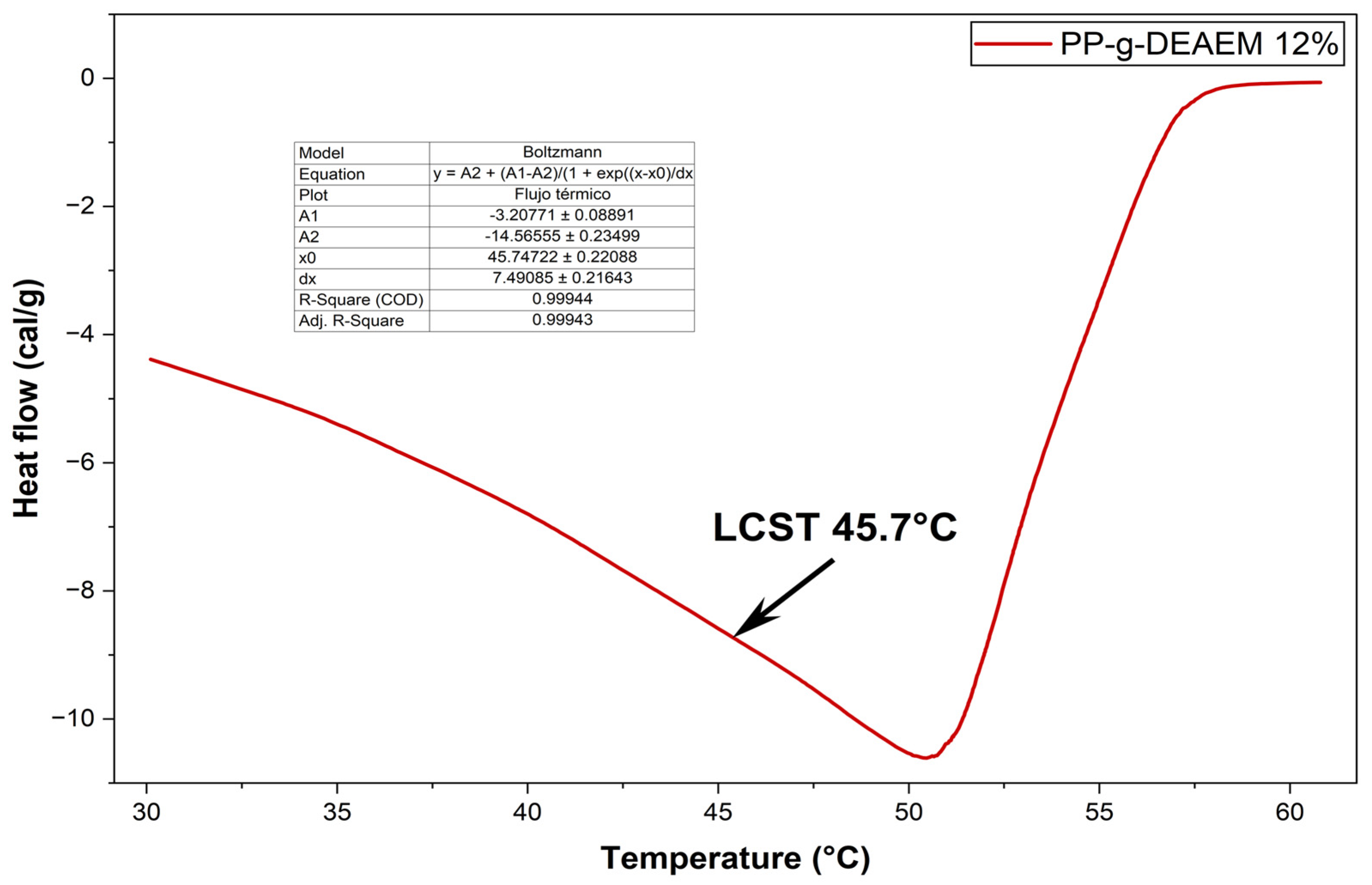
About 5–10 mg of PP film, PP-g-DEAEM film (12% grafting), and DEAEM homopolymer were maintained at 60 °C for 24 h to ensure maximum moisture removal. Runs were recorded from 10 to 400 °C at a heating rate of 10 °C min−1. Particularly for the PP-g-DEAEM film, a second test was performed to determine the lower critical solution temperature (LCST). A swollen sample of PP-g-DEAEM (overnight) was run from 15 to 80 °C at a rate of 1 °C min−1. The LCST was calculated from 30 to 50 °C using the Boltzmann sigmoid function fitting in Origin, as reported previously [31]. All samples were run under a nitrogen atmosphere using a DSC 2010 calorimeter (TA Instruments, USA), starting at room temperature.

2.3.4. Swelling Tests

To determine the swelling limit, PP and PP-g-DEAEM films were initially weighed, then immersed in distilled water and buffer solutions at various pH levels (2–11). At different times, the films were removed from the medium, excess water was wiped off, and the films were reweighed. All swelling experiments were taken in triplicate. The degree of swelling of the samples was calculated using Equation (2).
S w e l l i n g % = W s W d W d 100
Ws is the weight of the swollen film at time (t), and Wd is the weight of the dry film.
The critical pH was calculated as the inflection point of the swelling limit vs. pH, determined by Boltzmann function fitting.

2.3.5. Contact Angle

The contact angle was measured using a drop shape analyzer, Krüss DSA100 apparatus (Krüss, Matthews, NC, USA). Small drops of distilled water were deposited onto dry films, and the contact angle was measured at room temperature. For each film, the measurements were taken in triplicate.

2.4. Ciprofloxacin Loading and Release Studies

Ciprofloxacin Loading

The ciprofloxacin loading was performed on approximately 100 mg of PP and PP-g-DEAEM (12% graft) films. The films were placed in vials containing 5 mL of an aqueous ciprofloxacin solution (10 μg/mL) under mechanical stirring at 25 °C. Drug loading was assessed by measuring absorbance at 266 nm with a UV-Vis spectrophotometer (SPECORD® 200 Plus, Analytik, Jena, Germany) at specific intervals until a stable absorbance reading was reached. The concentration of loaded ciprofloxacin from the solution was calculated as follows (3).
D r u g   l o a d e d = C o C f W V
where Cf is the final concentration of ciprofloxacin in the solution, and Co corresponds to the initial concentration of ciprofloxacin in the solution. V is the volume of the medium, and W is the weight of the film.
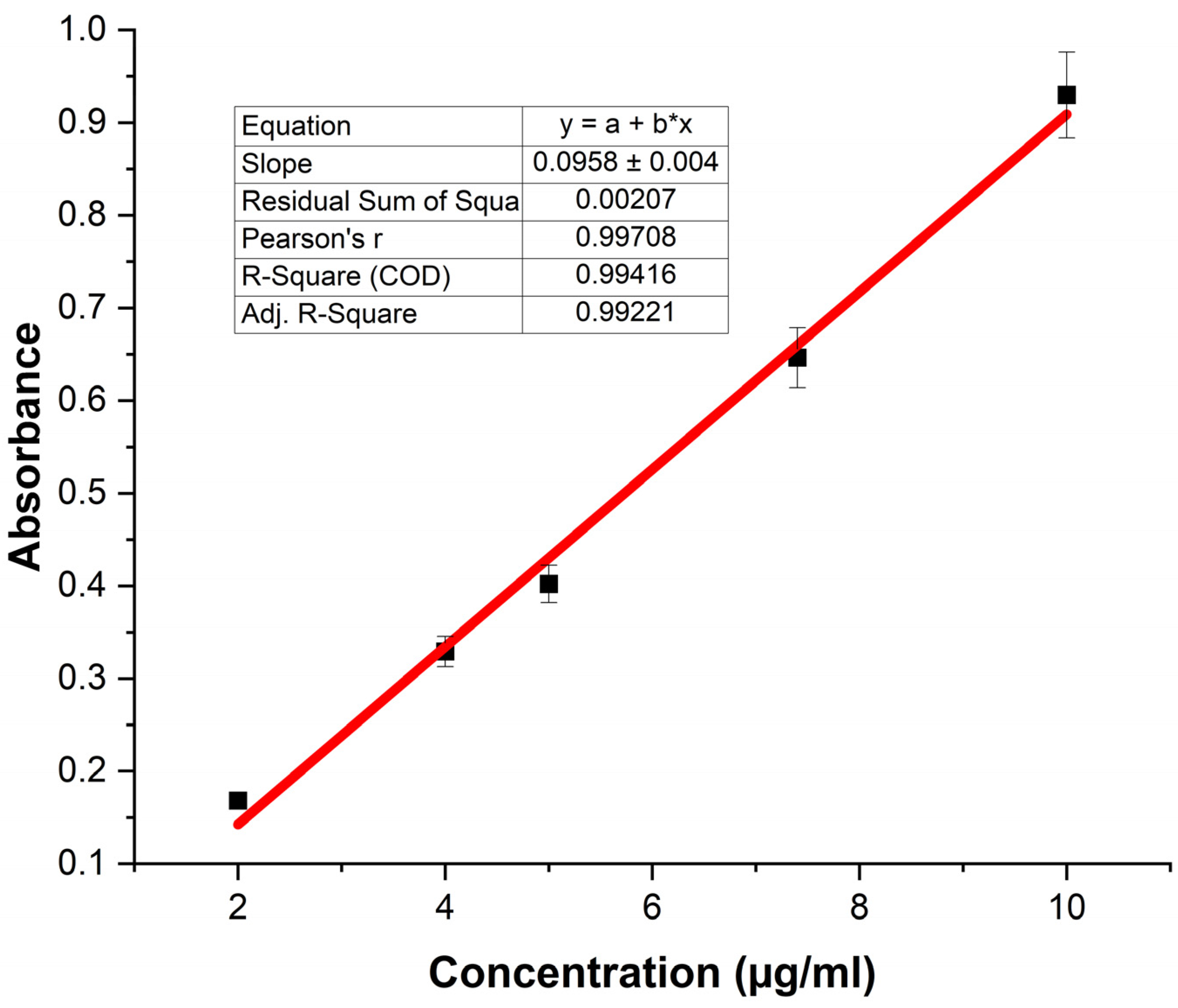
The release of ciprofloxacin was evaluated by immersing the loaded films in vials with 5 mL of phosphate buffer (pH 7.4) at 37 °C. At predetermined intervals, aliquots (3 mL) were collected from the release medium and analyzed by UV spectrophotometry at 266 nm. Once the loading process was complete, the films were removed from the vials and dried for 24 h at room temperature, protected from sunlight. The concentration of drug released was determined using the calibration curve presented in Equation (4).
A = 0.0958C − 0.049 R2 = 0.994
where A is absorbance, and C is the concentration of ciprofloxacin (μg/mL).

2.5. Antimicrobial Test

Hinton agar plates were prepared by adjusting the medium’s pH with 1.0 M HCl or 1.0 M NaOH as required, followed by sterilization at 121 °C for 15 min and subsequent cooling to 45 °C before pouring into Petri dishes, which were then incubated at 35 °C for 24 h to ensure sterility. Freeze-dried strains of Staphylococcus aureus (ATCC 25923) and Escherichia coli (ATCC 25922) were reactivated in brain heart infusion broth or Luria broth for 24 h, after which 100 µL of each culture was inoculated into fresh media and incubated for an additional 7 h; the resulting suspensions were adjusted to a microbial density equivalent to the 0.5 McFarland standard. Bacterial concentrations were determined using the surface extension method after preparing six serial dilutions in isotonic saline, plating 100 µL of the 10−4, 10−5, and 10−6 dilutions onto Hinton–Mueller agar, and incubating for 24 h at 35 °C, resulting in counts of 1.30 × 10⁸ CFU/mL for E. coli and 2.5 × 10⁸ CFU/mL for S. aureus. For the antimicrobial inhibition assay, each standardized bacterial suspension (0.5 MF) was spread across the surface of Hinton agar plates using a sterile swab. The test films were positioned onto the inoculated agar, and the plates were incubated at 35 °C for 24 h prior to measuring the resulting inhibition zones with a vernier caliper.

3. Results

3.1. Obtention of PP-g-DEAEM

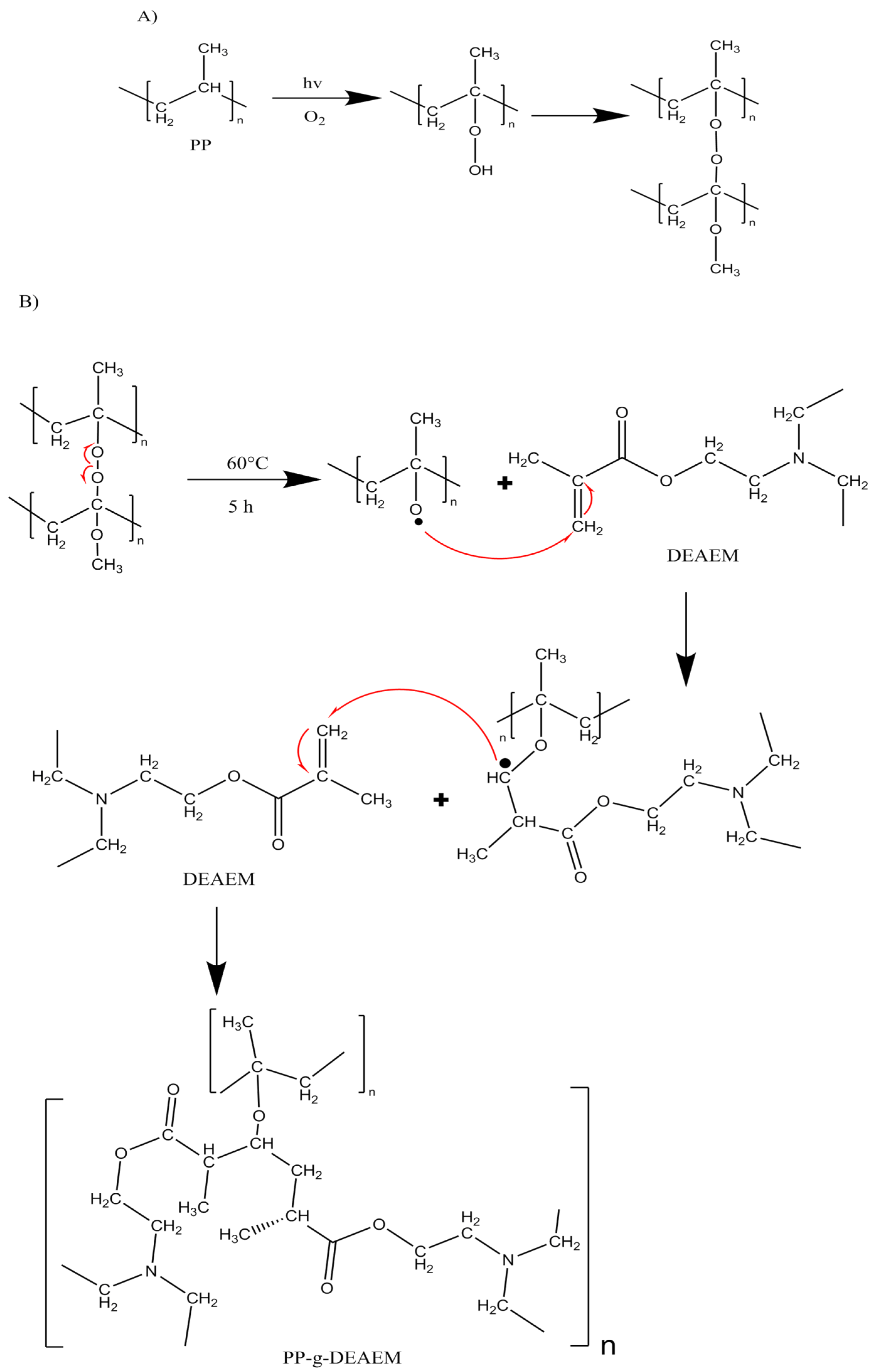
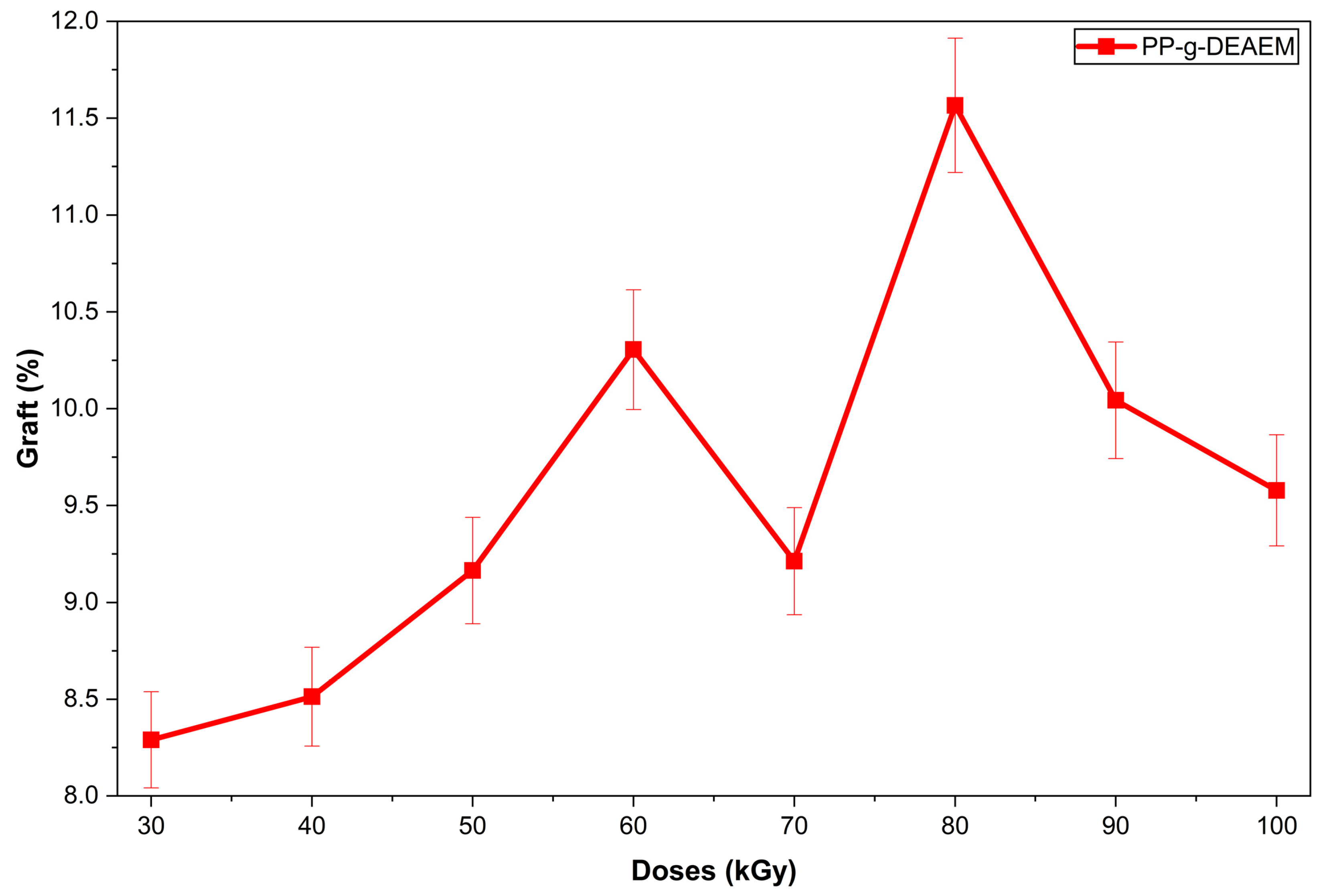
Results of PP-g-DEAEM are shown in Figure 1. Grafting increases with increasing dose, reaching a maximum at 80 kGy. This is attributed to the optimal formation of peroxides at this dose (Figure 1), which react with DEAEM. At doses of 90 kGy or higher (Figure 2), two factors may contribute to a decrease in grafting: (i) the start of PP degradation and excessive peroxide formation in the PP matrix, leading to reactions between them, reducing monomer grafting [32,33,34].

3.2. FTIR-ATR Analysis

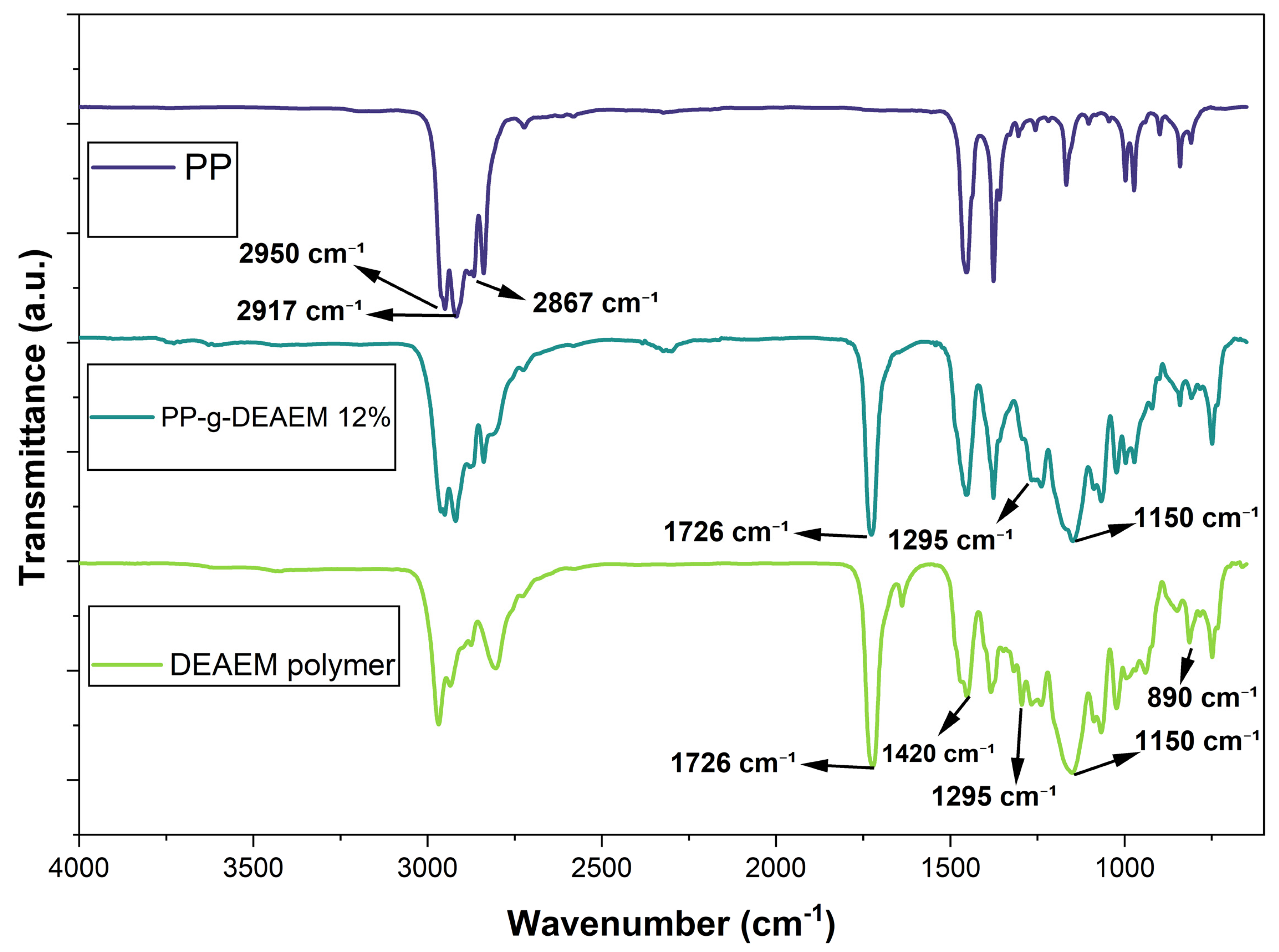
The grafting of DEAEM onto PP film was confirmed by FTIR spectroscopy. As shown in Figure 3, the PP film’s spectrum displays characteristic absorption bands related to hydrocarbon chains, such as the asymmetric and symmetric stretching vibrations of the methyl groups at 2950 and 2867 cm−1, respectively, as well as the asymmetric and symmetric stretching vibrations of the methyl groups at 2917 cm−1 [35].
On the other hand, the spectrum of the DEAEM polymer shows a strong absorption peak at 1726 cm−1, attributed to the ester carbonyl group. Bands at 1295 and 1150 cm−1 correspond to the symmetric and asymmetric stretching vibrations of this carbonyl group [36]. Additionally, vibrations typical of alkene groups are observed, including a symmetrical stretching vibration at 2975 cm−1, a scissoring vibration at 1420 cm−1, and a torsional vibration at 890 cm−1 [37].
Finally, the spectrum of PP-g-DEAEM displays bands at 1726, 1295, and 1150 cm−1, corresponding to the ester, thus confirming the successful grafting of DEAEM onto the PP film.

3.3. Thermogravimetric Analysis

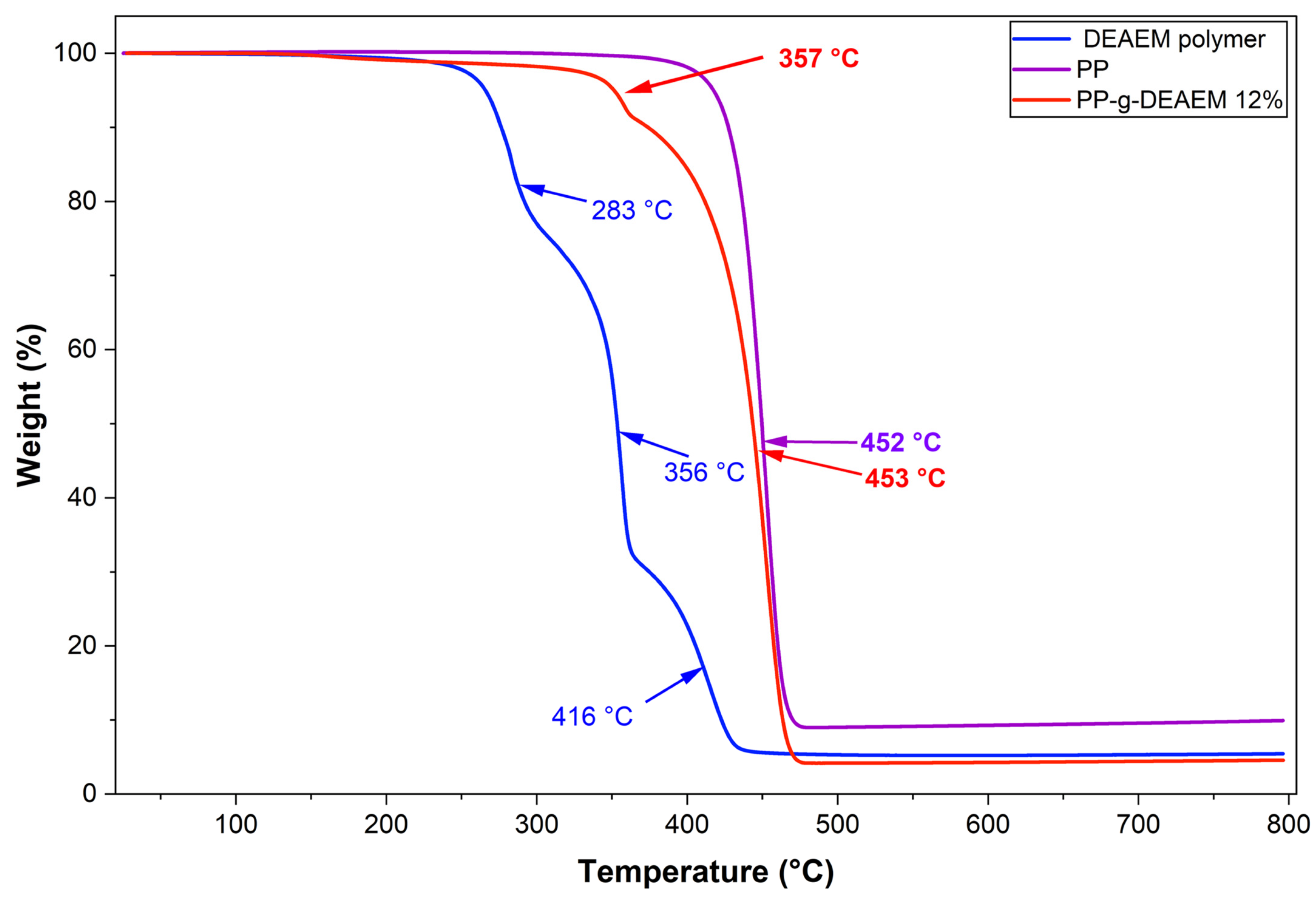
Percentage mass loss as a function of temperature was determined by thermogravimetric analysis (TGA). PP, PP-g-DEAEM films, and the DEAEM polymer (Figure 4) were analyzed. The PP film exhibited a 10% weight loss at 427 °C, a decomposition temperature at 452 °C, attributed to the breaking of C–C bonds along the polymer backbone [38], and a char yield of 9.9% at 800 °C.
For the DEAEM polymer, an initial 10% weight loss occurs at 276 °C, followed by three decomposition temperatures at 283, 356, and 416 °C. The first two are ascribed to the removal of diethylaminoethyl groups, while the third one involves the release of CO2 and CO and includes carbonization processes [39,40]. The char yield at 800 °C was approximately 5.5%.
The PP-g-DEAEM film exhibited intermediate thermal behavior, with a 10% weight loss at 374 °C. Two decomposition temperatures were identified: one at 453 °C, corresponding to the breakdown of the polypropylene backbone, and the other at 357 °C, attributed to the degradation of the grafted DEAEM segments.

3.4. DSC Analysis

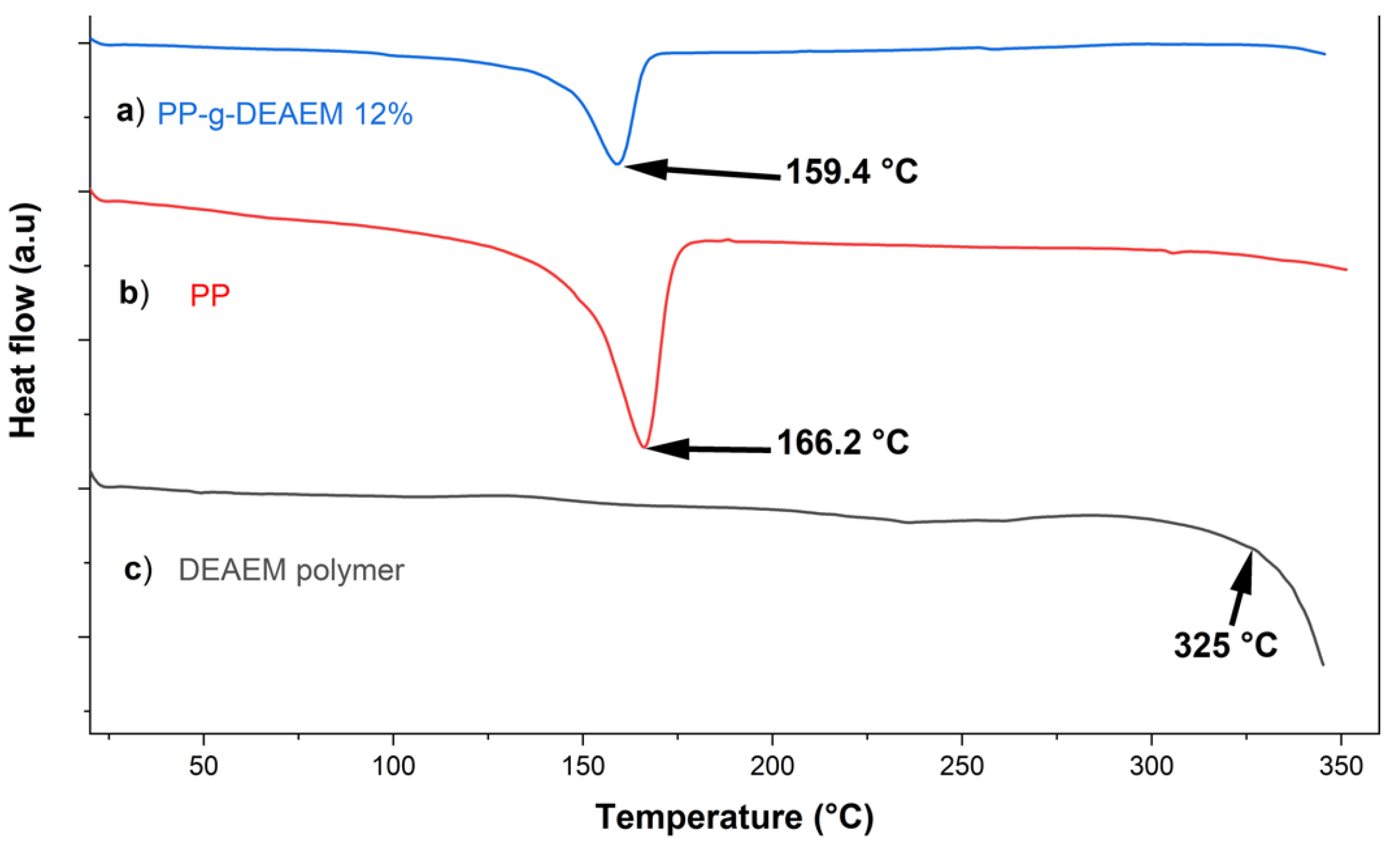
DSC Figure 5 was performed to evaluate the thermal transitions of the films. The melting point (Tm) of PP was determined to be about 166.2 °C. In comparison, the PP-g-DEAEM was slightly lower at 159.4 °C, indicating that the thermal stability of polypropylene was not significantly affected by the DEAEM graft. The DEAEM polymer under the conditions studied did not exhibit a melting point or a glass transition temperature; however, it began to decompose at temperatures up to 325 °C.
Finally, the swollen PP-g-DEAEM shows an LCST at 45.7 °C (Figure 6). Using the Boltzmann sigmoid function fit allows determining the LCST based on heat flow versus temperature. When the system reaches its LCST, a phase transition occurs within a narrow temperature range (45.7 °C); at this point, it fits as a sigmoidal drop in heat flow. Previous studies have reported values ranging from 14 to 72 °C [41,42]; these differences are due to factors like copolymer composition, molecular weight, solution concentration, and pH [41].

3.5. Swelling and Contact Angle

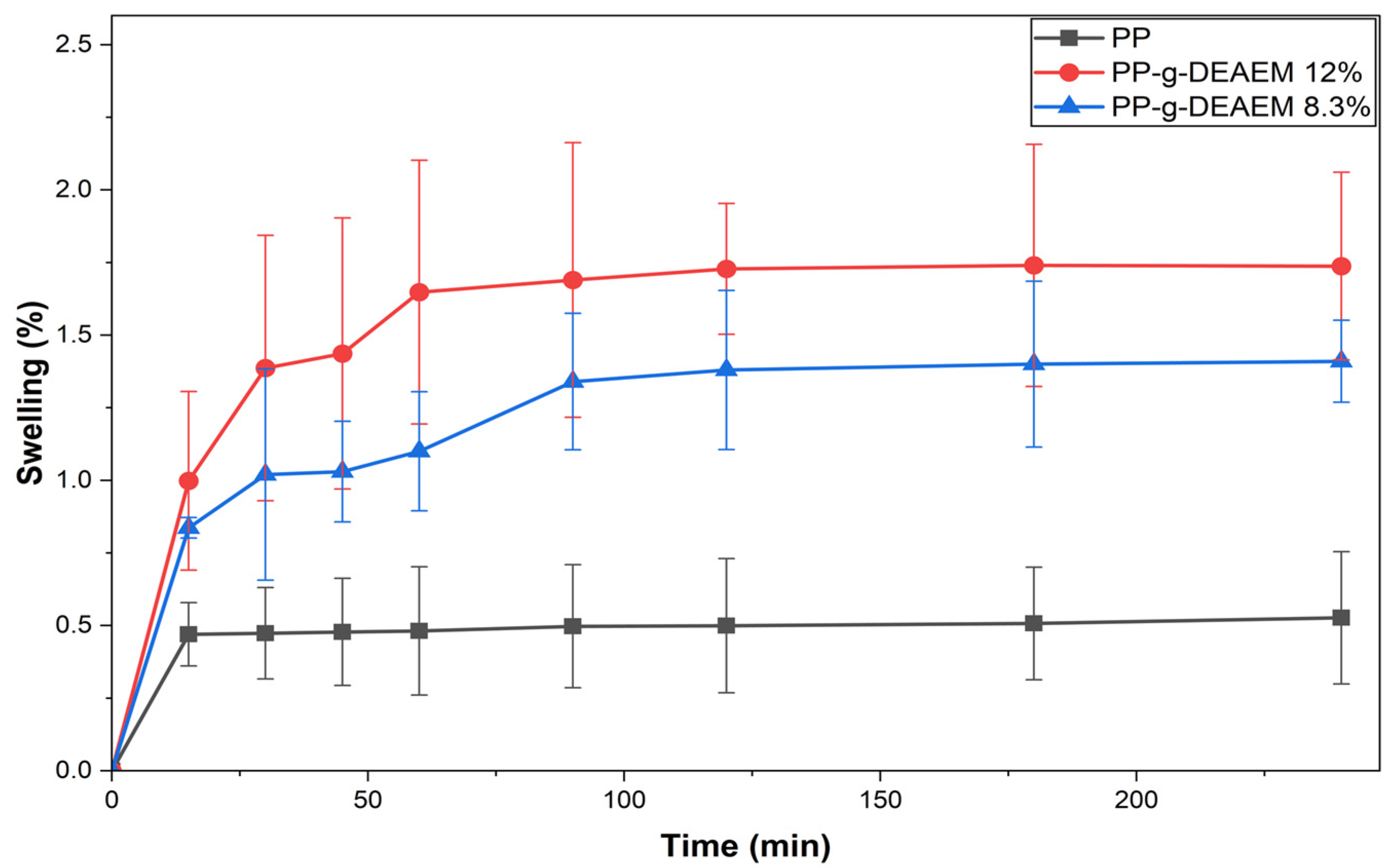
Figure 7 shows the swelling results in distilled water. PP films exhibited almost no swelling (0.5%), as expected due to their hydrophobic nature [43]. In contrast, PP-g-DEAEM reached a maximum swelling of 1.74% and 1.3% for grafts of 12% and 8.3%, respectively, after 2 h, which is attributed to hydrogen bonding between the carbonyl group of DEAEM and water.
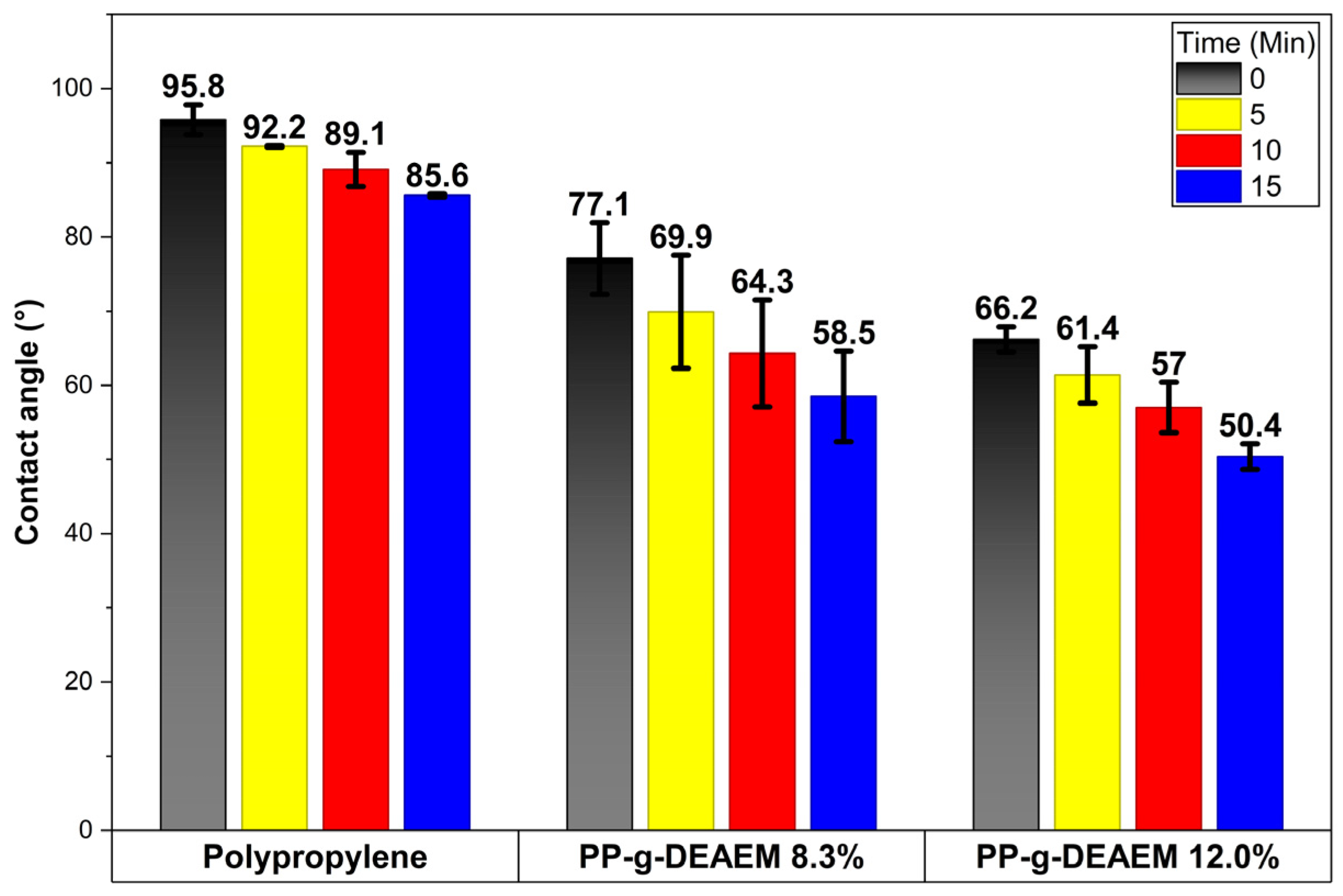
Contact angle results are presented in Figure 8. The PP film at 0 min exhibited a contact angle of 95.8°, which decreased to 85.6° after 15 min due to its hydrophobic nature [44]. These values fall within the range previously reported [45,46].
Conversely, PP-g-DEAEM showed a notable decrease in contact angle, indicating enhanced hydrophilicity. At time 0 min, the contact angles were 77.1 and 66.2°, while at 15 min, the contact angles were 58.5 and 50.4° for grafting degrees of 8.3 and 12%, respectively. The reduction in the contact angle is due to the addition of DEAEM, which can form hydrogen bonds with water.

3.6. Determination of Critical pH

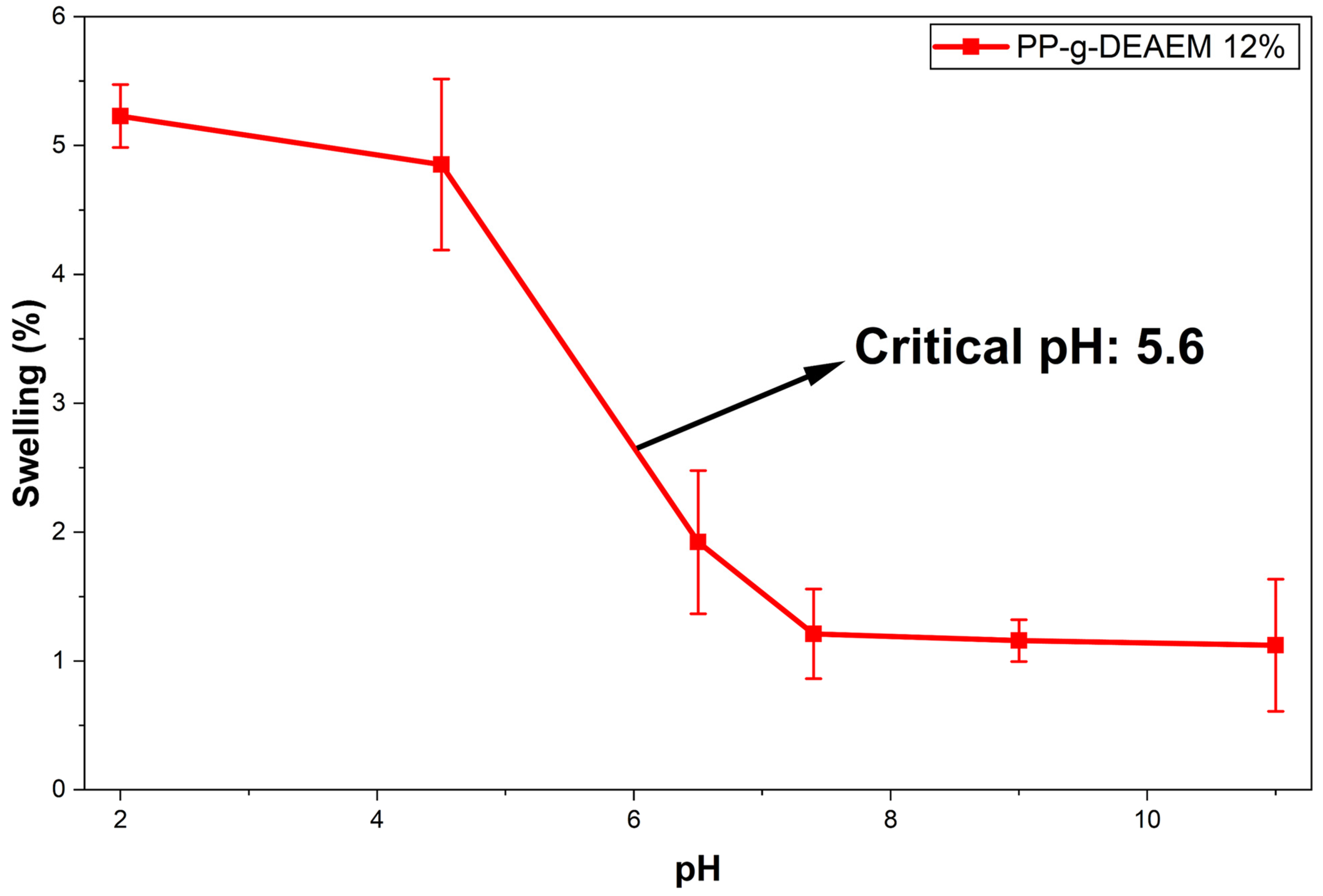
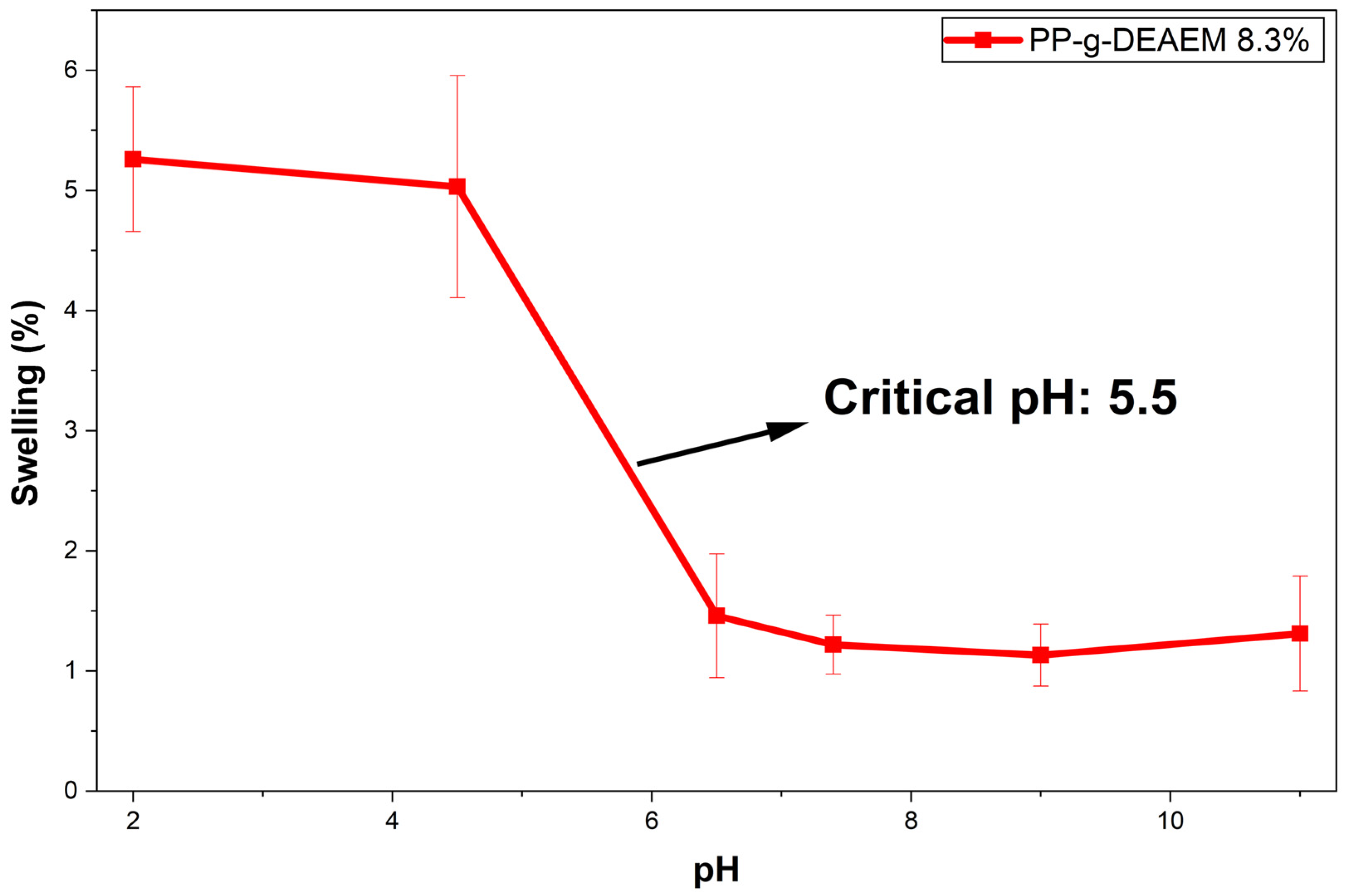
The pH reaction experiment was conducted over a broad pH range (2–11). As shown in Figure 9 and Figure 10. The swelling of PP-g-DEAEM increases at acidic pH due to the protonation of tertiary amines, resulting in a swollen state [47,48,49]. As the pH increases above the critical pH of 5.6, swelling decreases, leading the material to enter a collapsed state, which indicates that it loses the hydrophilicity gained through DEAEM grafting [50]. It is worth noting that the swelling profile of the material with 8.3% grafting closely resembles that of 12%, indicating that, within this range, the degree of grafting does not significantly affect the response to pH.
In a previous study [30], the addition of acrylic acid (AAc) and DEAEM significantly affects the pH response of DEAEM. When both monomers are used on PP, AAc introduces carboxyl groups whose charge varies with pH. In acidic conditions, the -COOH groups of AAc are not ionized, so the system remains collapsed even if DEAEM is protonated. At intermediate pH (~5), some of the AAc is ionized as -COO, and DEAEM is protonated, allowing the formation of polyelectrolyte complexes between the -COO and –NH+ groups of DEAEM, which increases swelling of the material. Finally, at high pH, AAc is fully ionized, and the repulsion between the -COO groups greatly enhances swelling [30]. Comparing AAc and DEAEM, AAc results in a more pronounced, non-linear pH response, primarily affecting DEAEM’s behavior.

3.7. Loading and Release of Ciprofloxacin

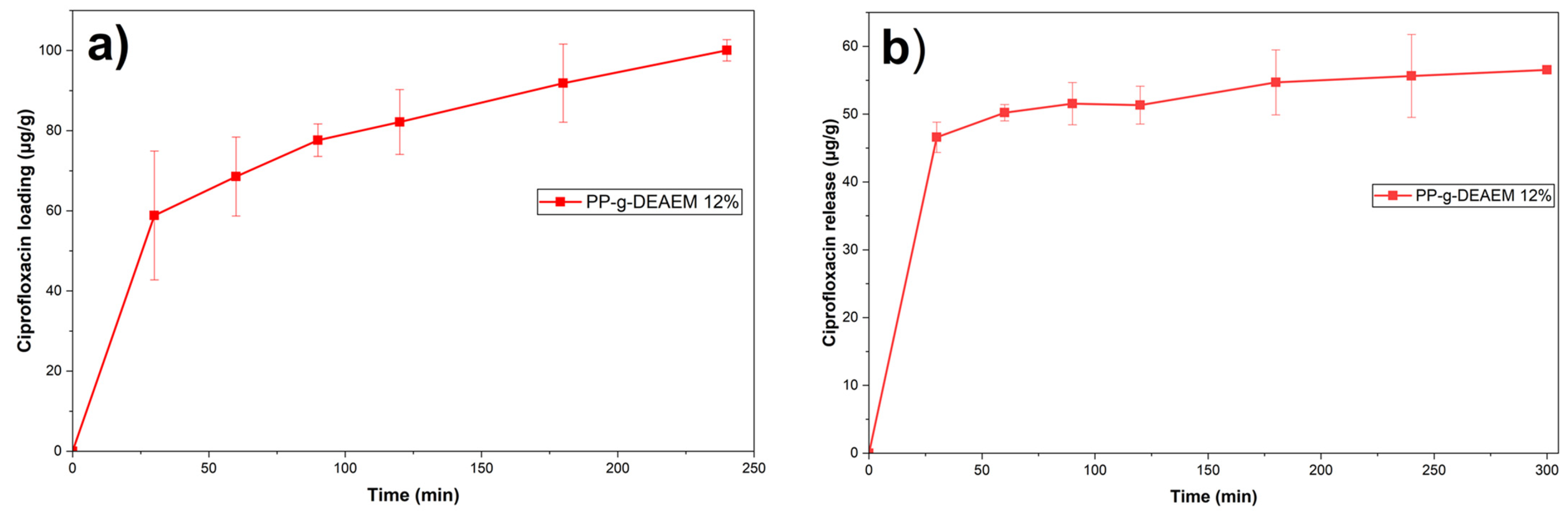
PP films did not load ciprofloxacin as expected, attributed to insufficient interactions between PP and ciprofloxacin. On the other hand, Figure 11a shows the results for the loading of ciprofloxacin in PP-g-DEAEM film, reaching a maximum loading of 100 μg/g at 4 h. The loading is mainly due to hydrogen-bond interactions between ciprofloxacin and the DEAEM chains.
The release results are shown in Figure 11b. Approximately 55% of the ciprofloxacin incorporated in the PP-g-DEAEM was released. The limited release is attributed to the same interactions that led to ciprofloxacin loading. Additionally, the release studies were conducted below the LCST (45.7 °C), resulting in films that remained swollen and retained the drug. However, this must be confirmed in future studies that vary in temperature and pH. Release data indicated that the best-fit release kinetics was the Peppas-Sahlin model (R2 = 0.9987), suggesting that the kinetics are governed by the coupling of two mechanisms: Fickian diffusion, in which the drug diffuses through the swollen polymer matrix, and polymer relaxation [51]. Ciprofloxacin concentrations used for both loading and release analyses were calculated using a UV–Vis calibration curve of ciprofloxacin (Figure 12).

3.8. Results of Antimicrobial Test

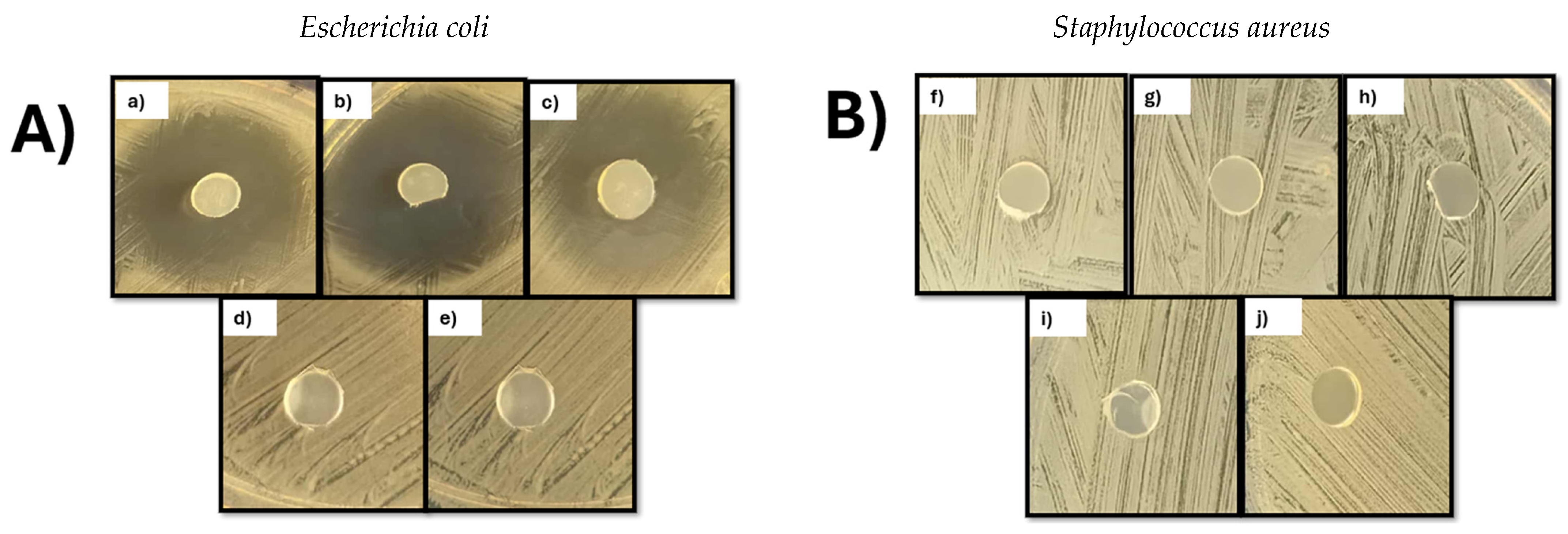
The antimicrobial activity of the films is shown in Figure 13. PP and PP-g-DEAEM films were tested. The ciprofloxacin-loaded PP-g-DEAEM films exhibited inhibition halos of 25 mm against E. coli, indicating an intermediate susceptibility category (I) according to the CLSI guidelines [52]. The term intermediate indicates that the microorganism is neither completely susceptible nor resistant; its susceptibility to the antibacterial agent depends on its concentration and, therefore, requires higher doses to achieve effective inhibition [53]. E. coli has been reported to be responsible for about 50% of urinary catheter-related infections [54]. In this regard, PP-g-DEAEM can be a potential option for medical devices used to treat urinary infections. For S. aureus, no inhibition halos were observed with any film. This may be due to ciprofloxacin’s interaction with its target enzymes, a higher MIC for S. aureus (compared to E. coli), the amount of drug loaded, the release kinetics of ciprofloxacin, and differences in cell wall permeability [55,56].

4. Discussion

The increase in grafting degree, from 8.3% to 11.6%, is due to a higher production of primary radicals in the membrane under irradiation conditions. However, with further dose increases, a drop in grafting degree was seen at 90 kGy. This behavior is explained by the fact that excessive irradiation doses lead to free-radical recombination and polymer matrix degradation, thereby limiting grafting efficiency.
In this regard, the increased number of grafted DEAEM chains led to a higher density of tertiary amine groups on the PP surface, thus directly improving hydrophilicity and water absorption. This is consistent with the smaller contact angles observed for the film with 12% grafting and its greater water swelling compared to films with 8.3% grafting. A higher concentration of DEAEM groups increases the number of sites capable of forming hydrogen bonds with water and being protonated at acidic pH, thereby facilitating matrix hydration. Similar results were obtained [29,30], where the addition of DEAEM significantly improved the hydrophilicity of PP.
The DEAEM polymer is a polyelectrolyte with an approximate pKa of 7.3, whose tertiary amines can be protonated or deprotonated depending on the pH of the medium. As the pH increases, the amines become deprotonated, decreasing the material’s affinity for water. This behavior is associated with the formation of hydrogen bonds between DEAEM and water molecules at low temperatures, which weaken as the temperature rises because the polymer becomes more hydrophobic.
The increased hydrophilicity and swelling capacity also improve drug-loading performance. In this study, the PP-g-DEAEM film (12%) showed approximately 100 μg/g of ciprofloxacin uptake, due to the presence of tertiary amine groups that interact with the drug via hydrogen bonds and electrostatic interactions. On the other hand, ciprofloxacin has two ionizable groups—a carboxyl group (pKa1 = 5.90) and a piperazinyl group (pKa2 = 8.89)—allowing it to adopt cationic, zwitterionic, or anionic forms depending on the pH. This variation directly affects its interaction with the polymer system and the potentiometric response, promoting the formation of hydrogen bonds and electrostatic attractions in distilled water. Drug release was tested at pH 7.4. Although the films collapse at this pH, at 37 °C, PP-g-DEAEM films swell enough to enable partial drug release. However, limited swelling restricts total drug release and may even cause the film to reabsorb the drug. Similar results have been seen in DEAEM-based hydrogels and nanoparticles, where DEAEM influences the loading of different drugs [57,58,59].
Regarding the release experiments, pH 7.4 and 37 °C were selected as standard physiological conditions, commonly used to assess the baseline release behavior of new drug-delivery materials. These conditions serve as a reference point for comparison with other studies and help ensure that the system functions in a controlled, widely accepted environment.
Since release kinetics occur within 4 h, this initial release can cause rapid antibiotic distribution in the agar and, consequently, a visible zone of inhibition during the assay [60,61]. The methodology used in this work serves as a qualitative indicator of antimicrobial activity and, on its own, does not reflect the release duration [61]. To quantitatively connect the release profile to antimicrobial activity, additional assays must be performed.
Only S. aureus and E. coli were selected for microbiological tests because these two species are widely recognized as representative models of Gram-positive and Gram-negative bacteria, respectively. In addition to confirming that ciprofloxacin was loaded, the objective was to detect inhibition halos.
The final biomedical use of the modified polypropylene films remains undefined, as this stage is a preliminary study focused on developing and understanding pH-responsive materials capable of loading and releasing ciprofloxacin. Once more studies are conducted with different variables, the final application may become clearer.

5. Conclusions

The grafting of the DEAEM monomer onto polypropylene (PP) films via gamma radiation was successful. However, the grafting efficiency using this method did not surpass 12%, with the optimal result observed at 80 kGy. Various characterization techniques, including FTIR-ATR, TGA, and DSC, confirmed modifications to the pristine PP films. Contact angle measurements indicated that the PP films exhibited reduced hydrophobicity, with the contact angle of both pristine PP and PP-g-DEAEM (12%) decreasing by approximately 35° after 15 min. Swelling assessments at different pH values demonstrated PP-g-DEAEM’s responsiveness to pH changes, with a critical pH of 5.6. The incorporation of DEAEM facilitated the loading of approximately 100 µg/g of ciprofloxacin, which was subsequently released. Antimicrobial testing validated the drug loading, as evidenced by 25 mm inhibition zones against E. coli. This investigation remains preliminary; further studies are required, including evaluations of mechanical properties, cytocompatibility, atomic force microscopy, drug loading with alternative drugs, and exploration of other methods or modifications to enhance monomer grafting efficiency. Nonetheless, PP-g-DEAEM demonstrates potential for the production of antimicrobial sanitary disposables.

Author Contributions

Conceptualization, E.B.; methodology, J.M.P.-L., M.S.P.-G. and E.B.; investigation, J.M.P.-L., M.S.P.-G. and E.B.; resources, E.B.; writing—original draft preparation, writing—review and editing, J.M.P.-L., M.S.P.-G. and E.B.; visualization, J.M.P.-L. and E.B.; supervision, M.S.P.-G. and E.B.; project administration, E.B.; funding acquisition, E.B. All authors have read and agreed to the published version of the manuscript.

Funding

This work was supported by the Dirección General de Asuntos del Personal Académico, Universidad Nacional Autónoma de México, under Grant IN204223.

Institutional Review Board Statement

Not applicable.

Data Availability Statement

The original contributions presented in this study are included in the article. Further inquiries can be directed to the corresponding authors.

Acknowledgments

The authors thank M.L. Escamilla and E. Palacios from ICN-UNAM and A. Camacho-Cruz from FQ-UNAM for their technical assistance.

Conflicts of Interest

The authors declare no conflicts of interest.

References

  1. Ziabka, M.; Dziadek, M. Long-Lasting Examinations of Surface and Structural Properties of Medical Polypropylene Modified with Silver Nanoparticles. Polymers 2019, 11, 2018. [Google Scholar] [CrossRef] [PubMed]
  2. Hossain, M.T.; Shahid, M.A.; Mahmud, N.; Habib, A.; Rana, M.M.; Khan, S.A.; Hossain, M.D. Research and Application of Polypropylene: A Review. Discov. Nano 2024, 19, 2. [Google Scholar] [CrossRef] [PubMed]
  3. Huang, Y.; Gancheva, T.; Favis, B.D.; Abidli, A.; Wang, J.; Park, C.B. Hydrophobic Porous Polypropylene with Hierarchical Structures for Ultrafast and Highly Selective Oil/Water Separation. ACS Appl. Mater. Interfaces 2021, 13, 16859–16868. [Google Scholar] [CrossRef]
  4. Ariono, D.; Wardani, A.K. Modification and Applications of Hydrophilic Polypropylene Membrane. IOP Conf. Ser. Mater. Sci. Eng. 2017, 214, 12014. [Google Scholar] [CrossRef]
  5. Martins, N.; Rodrigues, C.F. Biomaterial-Related Infections. J. Clin. Med. 2020, 9, 722. [Google Scholar] [CrossRef]
  6. Szabó, I.; Al-Omari, J.; Dąbrowska, A.; Gábor Szerdahelyi, S.; Sebők, R.; Szabó, G.; Micsinai, A.; Kaszab, E.; Szoboszlay, S.; Kriszt, B. Long-Term Study of the Bacterial Colonization of Polypropylene Microplastics in a Freshwater Lake by Optical and Molecular Methods. J. Mol. Liq. 2024, 393, 123637. [Google Scholar] [CrossRef]
  7. Jo, S.; Chao, C.; Khilnani, T.K.; Shenoy, A.; Bostrom, M.P.G.; Carli, A.V. The Infected Polypropylene Mesh: When Does Biofilm Form and Which Antiseptic Solution Most Effectively Removes It? J. Arthroplast. 2024, 39, S294–S299. [Google Scholar] [CrossRef]
  8. Cazalini, E.M.; Miyakawa, W.; Teodoro, G.R.; Sobrinho, A.S.S.; Matieli, J.E.; Massi, M.; Koga-Ito, C.Y. Antimicrobial and Anti-Biofilm Properties of Polypropylene Meshes Coated with Metal-Containing DLC Thin Films. J. Mater. Sci. Mater. Med. 2017, 28, 97. [Google Scholar] [CrossRef]
  9. Parcheta, M.; Sobiesiak, M. Preparation and Functionalization of Polymers with Antibacterial Properties—Review of the Recent Developments. Materials 2023, 16, 4411. [Google Scholar] [CrossRef]
  10. Esquivel-Lozano, Y.A.; Romero-Fierro, D.; Bucio, E. Dual-Responsive Silicone Films Loaded with Silver Particles for Potential Biomedical Applications. Polymer 2024, 294, 126703. [Google Scholar] [CrossRef]
  11. Lahmadi, S.; Alamery, S.; Beagan, A.; Alotaibi, K.; Alswieleh, A. Advanced Hybrid Silica Nanoparticles with PH-Responsive Diblock Copolymer Brushes: Optimized Design for Controlled Doxorubicin Loading and Release in Cancer Therapy. RSC Adv. 2024, 14, 8819–8828. [Google Scholar] [CrossRef] [PubMed]
  12. Abureesh, M.A.; Oladipo, A.A.; Gazi, M. Facile Synthesis of Glucose-Sensitive Chitosan–Poly(Vinyl Alcohol) Hydrogel: Drug Release Optimization and Swelling Properties. Int. J. Biol. Macromol. 2016, 90, 75–80. [Google Scholar] [CrossRef] [PubMed]
  13. Zahedi, L.; Ghourchi Beigi, P.; Shafiee, M.; Zare, F.; Mahdikia, H.; Abdouss, M.; Abdollahifar, M.A.; Shokri, B. Development of Plasma Functionalized Polypropylene Wound Dressing for Betaine Hydrochloride Controlled Drug Delivery on Diabetic Wounds. Sci. Rep. 2021, 11, 9641. [Google Scholar] [CrossRef] [PubMed]
  14. Saitaer, X.; Sanbhal, N.; Qiao, Y.; Li, Y.; Gao, J.; Brochu, G.; Guidoin, R.; Khatri, A.; Wang, L. Polydopamine-Inspired Surface Modification of Polypropylene Hernia Mesh Devices via Cold Oxygen Plasma: Antibacterial and Drug Release Properties. Coatings 2019, 9, 164. [Google Scholar] [CrossRef]
  15. Labay, C.; Canal, J.M.; Modic, M.; Cvelbar, U.; Quiles, M.; Armengol, M.; Arbos, M.A.; Gil, F.J.; Canal, C. Antibiotic-Loaded Polypropylene Surgical Meshes with Suitable Biological Behaviour by Plasma Functionalization and Polymerization. Biomaterials 2015, 71, 132–144. [Google Scholar] [CrossRef]
  16. Labay, C.; Canal, C.; García-Celma, M.J. Influence of Corona Plasma Treatment on Polypropylene and Polyamide 6.6 on the Release of a Model Drug. Plasma Chem. Plasma Process. 2010, 30, 885–896. [Google Scholar] [CrossRef]
  17. López-Meza, J.E.; Pino-Ramos, V.H.; Flores-Rojas, G.G.; Mendizabal, E.; Bucio, E. Silicone Rubber Catheters Modified by Poly(N-Vinylpyrrolidone) Graft Promoted by Gamma Rays. Polymers 2025, 17, 600. [Google Scholar] [CrossRef]
  18. de Azevedo, A.M.; da Silveira, P.H.P.M.; Lopes, T.J.; da Costa, O.L.B.; Monteiro, S.N.; Veiga-Júnior, V.F.; Silveira, P.C.R.; Cardoso, D.D.; da Silva Figueiredo, A.B.-H. Ionizing Radiation and Its Effects on Thermoplastic Polymers: An Overview. Polymers 2025, 17, 1110. [Google Scholar] [CrossRef]
  19. Pino-Ramos, V.H.; Ramos-Ballesteros, A.; López-Saucedo, F.; López-Barriguete, J.E.; Varca, G.H.C.; Bucio, E. Radiation Grafting for the Functionalization and Development of Smart Polymeric Materials. Top. Curr. Chem. 2016, 374, 67–94. [Google Scholar] [CrossRef]
  20. Ashfaq, A.; Clochard, M.C.; Coqueret, X.; Dispenza, C.; Driscoll, M.S.; Ulański, P.; Al-Sheikhly, M. Polymerization Reactions and Modifications of Polymers by Ionizing Radiation. Polymers 2020, 12, 2877. [Google Scholar] [CrossRef]
  21. Ibarra-Cervantes, T.B.S.; Flores-Rojas, G.G.; Mendizabal, E.; Bucio, E. PTFE-g-GMA Graft Copolymer Synthesis Promoted by Oxidative Gamma-Rays Method and Characterization. MRS Commun. 2024, 14, 639–645. [Google Scholar] [CrossRef]
  22. Omichi, M.; Ueki, Y.; Seko, N.; Maekawa, Y. Development of a Simplified Radiation-Induced Emulsion Graft Polymerization Method and Its Application to the Fabrication of a Heavy Metal Adsorbent. Polymers 2019, 11, 1373. [Google Scholar] [CrossRef] [PubMed]
  23. Mohamad, S.F.; Aguié-Béghin, V.; Kurek, B.; Coqueret, X. Radiation-Induced Graft Polymerization of N-Isopropyl Acrylamide onto Microcrystalline Cellulose: Assessing the Efficiency of the Peroxidation Method. Radiat. Phys. Chem. 2022, 194, 110038. [Google Scholar] [CrossRef]
  24. Bhattacharya, A.; Misra, B.N. Grafting: A Versatile Means to Modify Polymers: Techniques, Factors and Applications. Prog. Polym. Sci. 2004, 29, 767–814. [Google Scholar] [CrossRef]
  25. Siddiq, A.; Ghobashy, M.M.; El-Adasy, A.B.A.; Ashmawy, A.M. Gamma Radiation-Induced Grafting of Poly(Butyl Acrylate) onto Ethylene Vinyl Acetate Copolymer for Improved Crude Oil Flowability. Sci. Rep. 2024, 14, 8863. [Google Scholar] [CrossRef]
  26. Mori, H.; Walther, A.; André, X.; Lanzendörfer, M.G.; Müller, A.H.E. Synthesis of Highly Branched Cationic Polyelectrolytes via Self-Condensing Atom Transfer Radical Copolymerization with 2-(Diethylamino)Ethyl Methacrylate. Macromolecules 2004, 37, 2054–2066. [Google Scholar] [CrossRef]
  27. Song, Z.; Wang, K.; Gao, C.; Wang, S.; Zhang, W. A New Thermo-, PH-, and CO2-Responsive Homopolymer of Poly[N-[2-(Diethylamino)Ethyl]Acrylamide]: Is the Diethylamino Group Underestimated? Macromolecules 2016, 49, 162–171. [Google Scholar] [CrossRef]
  28. Gawish, S.M.; Kantouch, A.; El Naggar, A.M.; Mosleh, S. Grafting of 2-(Dimethlamino) Ethyl Methacrylate onto Gamma Irradiated Polypropylene Fabric. J. Appl. Polym. Sci. 1992, 44, 1671–1677. [Google Scholar] [CrossRef]
  29. Kong, Z.; Wu, X.; Wei, J.; Zhang, H.; Cui, L. Preparation and Characterization of Hydrophilicity Fibers Based on 2-(Dimethyamino)Ethyl Mathacrylate Grafted Polypropylene by UV- Irradiation for Removal of Cr(VI) and as(V). J. Polym. Res. 2016, 23, 199. [Google Scholar] [CrossRef]
  30. Chen, J.; Wu, Z.; Yang, L.; Zhang, Q.; Wang, L.; Lu, Y. Grafting Copolymerization of Dimethylaminoethyl Methacrylate and Acrylic Acid onto Preirradiated Polypropylene Film by Two-Step Reactions. J. Radioanal. Nucl. Chem. 2008, 275, 81–88. [Google Scholar] [CrossRef]
  31. Ferraz, C.C.; Varca, G.H.C.; Ruiz, J.C.; Lopes, P.S.; Mathor, M.B.; Lugão, A.B.; Bucio, E. Radiation-Grafting of Thermo- and PH-Responsive Poly(N-Vinylcaprolactam-Co-Acrylic Acid) onto Silicone Rubber and Polypropylene Films for Biomedical Purposes. Radiat. Phys. Chem. 2014, 97, 298–303. [Google Scholar] [CrossRef]
  32. Pérez-Garibay, M.S.; Lara-Rodríguez, G.Á.; Bucio, E. Functionalization of Polyvinylpyrrolidone Films by Grafting Maleic Acid from PVP Gels for Loading Studies of Naringin and Silver Nanoparticles as Potential Wound Dressings. Gels 2025, 11, 147. [Google Scholar] [CrossRef] [PubMed]
  33. López-Saucedo, F.; Flores-Rojas, G.G.; Magariños, B.; Concheiro, A.; Alvarez-Lorenzo, C.; Bucio, E. Radiation Grafting of Poly(Methyl Methacrylate) and Poly(Vinylimidazole) onto Polytetrafluoroethylene Films and Silver Immobilization for Antimicrobial Performance. Appl. Surf. Sci. 2019, 473, 951–959. [Google Scholar] [CrossRef]
  34. Jia, Z.; Zhen, T.; Zhang, X.; Gu, Q. Preparation of Phase-Transfer Catalytic Porous Membrane by γ-Ray Irradiation Grafting and Its Application in Nucleophilic Substitution Reaction. J. Memb. Sci. 2013, 448, 74–80. [Google Scholar] [CrossRef]
  35. Fang, J.; Zhang, L.; Sutton, D.; Wang, X.; Lin, T. Needleless Melt-Electrospinning of Polypropylene Nanofibres. J. Nanomater. 2012, 2012, 382639. [Google Scholar] [CrossRef]
  36. Mobaraki, N.; Hemmateenejad, B. Structural Characterization of Carbonyl Compounds by IR Spectroscopy and Chemometrics Data Analysis. Chemom. Intell. Lab. Syst. 2011, 109, 171–177. [Google Scholar] [CrossRef]
  37. An, M.; Gutierrez, L.; D’Haese, A.; Morent, R.; De Geyter, N.; Cornelissen, E. Rejection of an Emerging Small Neutral Organic Micropollutant by In-Situ Nanofiltration Membrane Modification for Water Treatment. J. Environ. Manag. 2025, 380, 125052. [Google Scholar] [CrossRef]
  38. Esmizadeh, E.; Tzoganakis, C.; Mekonnen, T.H. Degradation Behavior of Polypropylene during Reprocessing and Its Biocomposites: Thermal and Oxidative Degradation Kinetics. Polymers 2020, 12, 1627. [Google Scholar] [CrossRef]
  39. Barral, S.; Guerreiro, A.; Villa-García, M.A.; Rendueles, M.; Díaz, M.; Piletsky, S. Synthesis of 2-(Diethylamino)Ethyl Methacrylate-Based Polymers: Effect of Crosslinking Degree, Porogen and Solvent on the Textural Properties and Protein Adsorption Performance. React. Funct. Polym. 2010, 70, 890–899. [Google Scholar] [CrossRef]
  40. Alokour, M.; Yilmaz, E.; Şanlıtürk, G.; Güran, M. Synthesis, Monomer Reactivity Ratios and Antibacterial Activity of 2-Hydroxy Ethyl Methacrylate and 2-(Diethylamino) Ethyl Methacrylate Copolymers. J. Polym. Res. 2022, 29, 63. [Google Scholar] [CrossRef]
  41. Zhang, C.; Maric, M. PH- and Temperature-Sensitive Statistical Copolymers Poly [2-(Dimethylamino) Ethyl Methacrylate-Stat-2-Vinylpyridine] with Functional Succinimidyl-Ester Chain Ends Synthesized by Nitroxide-Mediated Polymerization. J. Polym. Sci. A Polym. Chem. 2012, 50, 4341–4357. [Google Scholar] [CrossRef]
  42. Vardaxi, A.; Pispas, S. Stimuli-Responsive Self-Assembly of Poly(2-(Dimethylamino)Ethyl Methacrylate-Co-(Oligo Ethylene Glycol)Methacrylate) Random Copolymers and Their Modified Derivatives. Polymers 2023, 15, 1519. [Google Scholar] [CrossRef] [PubMed]
  43. Sachinidou, P.; Heuschling, C.; Schaniel, J.; Wang, J. Investigation of Surface Potential Discharge Mechanism and Kinetics in Dielectrics Exposed to Different Organic Solvents. Polymer 2018, 145, 447–453. [Google Scholar] [CrossRef]
  44. Zielecka, M. Methods of Contact Angle Measurement as a Tool for Characterization of Wettability of Polymers. Polimery 2004, 49, 327–332. [Google Scholar] [CrossRef]
  45. Alaburdaitė, R.; Krylova, V. Polypropylene Film Surface Modification for Improving Its Hydrophilicity for Innovative Applications. Polym. Degrad. Stab. 2023, 211, 110334. [Google Scholar] [CrossRef]
  46. Carrasco-Guigón, F.J.; Rodríguez-Félix, D.E.; Castillo-Ortega, M.M.; Santacruz-Ortega, H.C.; Burruel-Ibarra, S.E.; Encinas-Encinas, J.C.; Plascencia-Jatomea, M.; Herrera-Franco, P.J.; Madera-Santana, T.J. Preparation and Characterization of Extruded Composites Based on Polypropylene and Chitosan Compatibilized with Polypropylene-Graft-Maleic Anhydride. Materials 2017, 10, 105. [Google Scholar] [CrossRef]
  47. Luu, T.Q.; Hayles, A.; Bright, R.; Palms, D.; Pham, T.; Truong, V.K.; Vasilev, K. Responsive Biomaterials Engineered via Plasma-Driven Techniques. Mater. Today Chem. 2025, 49, 103036. [Google Scholar] [CrossRef]
  48. Lee, H.; Son, S.H.; Sharma, R.; Won, Y.Y. A Discussion of the PH-Dependent Protonation Behaviors of Poly(2-(Dimethylamino)Ethyl Methacrylate) (PDMAEMA) and Poly(Ethylenimine-Ran-2-Ethyl-2-Oxazoline) (P(EI-r-EOz)). J. Phys. Chem. B 2011, 115, 844–860. [Google Scholar] [CrossRef]
  49. Wang, B.; Liu, F.Q. Synthesis and Properties of a Stimulus-Responsive Block Polymer. RSC Adv. 2020, 10, 28541–28549. [Google Scholar] [CrossRef]
  50. Zavala-Lagunes, E.; Ruiz, J.C.; Varca, G.H.C.; Bucio, E. Synthesis and Characterization of Stimuli-Responsive Polypropylene Containing N-Vinylcaprolactam and N-Vinylimidazole Obtained by Ionizing Radiation. Mater. Sci. Eng. C 2016, 67, 353–361. [Google Scholar] [CrossRef]
  51. Ojsteršek, T.; Vrečer, F.; Hudovornik, G. Comparative Fitting of Mathematical Models to Carvedilol Release Profiles Obtained from Hypromellose Matrix Tablets. Pharmaceutics 2024, 16, 498. [Google Scholar] [CrossRef]
  52. CLSI Supplement M100; M100: Performance Standards for Antimicrobial Susceptibility Testing. 32nd ed. Clinical and Laboratory Standards Institute: Berwyn, IL, USA, 2022; ISBN 9781684401048.
  53. Ruiz-Rico, M.; Sánchez-Salom, L.; Fuentes, A.; Barat, J.M. Inhibitory Potential of Natural Antimicrobial Compounds against Histamine-Forming Lactic Acid Bacteria. Food Biosci. 2024, 61, 104779. [Google Scholar] [CrossRef]
  54. Gul, J.; Perveen, S.; Habib, S.M.; Awan, A.N.; Shah, M.R. Optimized PEGylated Carbon Nanotubes for Enhanced Drug Delivery and Antimicrobial Performance against Gram-Negative Bacteria. J. Drug Deliv. Sci. Technol. 2025, 112, 107249. [Google Scholar] [CrossRef]
  55. Firsov, A.A.; Vostrov, S.N.; Shevchenko, A.A.; Zinner, S.H.; Cornaglia, G.; Portnoy, Y.A. MIC-Based Interspecies Prediction of the Antimicrobial Effects of Ciprofloxacin on Bacteria of Different Susceptibilities in an In Vitro Dynamic Model. Antimicrob. Agents Chemother. 1998, 42, 2848–2852. [Google Scholar] [CrossRef] [PubMed]
  56. Berlanga, M.; Montero, M.T.; Hernández-Borrell, J.; Viñas, M. Influence of the Cell Wall on Ciprofloxacin Susceptibility in Selected Wild-Type Gram-Negative and Gram-Positive Bacteria. Int. J. Antimicrob. Agents 2004, 23, 627–630. [Google Scholar] [CrossRef]
  57. Kurdtabar, M.; Rezanejade Bardajee, G. Stimuli-Responsive Hydrogel Based on Poly((2-Dimethylamino)Ethyl Methacrylate) Grafted onto Sodium Alginate as a Drug Delivery System. Polym. Sci. Ser. B 2019, 61, 642–652. [Google Scholar] [CrossRef]
  58. de Ávila Gonçalves, S.; de Aguiar, A.C.; Cassol, G.Z.; de Souza, W.F.C.; da Fonsêca, J.H.L.; d’Ávila, M.A.; Sato, H.H.; Vieira, R.P. Stimuli-Responsive, Antioxidant, and Antimicrobial Hydrogels from Poly [2-(Dimethylamino)Ethyl Methacrylate] Reinforced with Cellulose Nanocrystals and Loaded with Limonene Oligomer. Int. J. Biol. Macromol. 2025, 322, 147016. [Google Scholar] [CrossRef]
  59. Guo, S.; Qiao, Y.; Wang, W.; He, H.; Deng, L.; Xing, J.; Xu, J.; Liang, X.J.; Dong, A. Poly(ε-Caprolactone)-Graft-Poly(2-(N, N-Dimethylamino) Ethyl Methacrylate) Nanoparticles: PH Dependent Thermo-Sensitive Multifunctional Carriers for Gene and Drug Delivery. J. Mater. Chem. 2010, 20, 6935–6941. [Google Scholar] [CrossRef]
  60. Sczesny, N.F.; Wiggers, H.J.; Bueno, C.Z.; Chevallier, P.; Copes, F.; Mantovani, D. From Burst to Sustained Release: The Effect of Antibiotic Structure Incorporated into Chitosan-Based Films. Antibiotics 2024, 13, 1055. [Google Scholar] [CrossRef]
  61. Kourmouli, A.; Valenti, M.; van Rijn, E.; Beaumont, H.J.E.; Kalantzi, O.I.; Schmidt-Ott, A.; Biskos, G. Can Disc Diffusion Susceptibility Tests Assess the Antimicrobial Activity of Engineered Nanoparticles? J. Nanoparticle Res. 2018, 20, 62. [Google Scholar] [CrossRef]
Figure 1. (A) Formation of peroxides by gamma radiation in PP. (B) Grafting reaction for the synthesis of the copolymer.
Polymers 18 00068 g001
Figure 2. Graph of DEAEM grafting onto PP films at different doses. n = 3. Error bars correspond to the standard deviation.
Polymers 18 00068 g002
Figure 3. FTIR-ATR spectra of PP, PP-g-DEAEM 12%, and Polymer DEAEM.
Polymers 18 00068 g003
Figure 4. TGA of PP, DEAEM polymer, and PP-g-DEAEM 12%.
Polymers 18 00068 g004
Figure 5. DSC analysis. (a) PP-g-DEAEM 12%. (b) PP. (c) DEAEM polymer.
Polymers 18 00068 g005
Figure 6. LCST of PP-DEAM 12%.
Polymers 18 00068 g006
Figure 7. Swelling index in distilled water at room temperature for films PP and PP-g-DEAEM—12% and 8.3%.
Polymers 18 00068 g007
Figure 8. Contact angle behavior PP-g-DEAEM (12%) at 0, 5, 10, and 15 min. n = 3. Error bars correspond to the standard deviation.
Polymers 18 00068 g008
Figure 9. Swelling profile as a function of the pH of PP-g-DEAEM 12%. n = 3 measures. Error bars correspond to the standard deviation.
Polymers 18 00068 g009
Figure 10. Swelling profile as a function of the pH of PP-g-DEAEM 8.3%. n = 3 measures. Error bars correspond to the standard deviation.
Polymers 18 00068 g010
Figure 11. (a) Ciprofloxacin loading curve of PP-g-DEAEM 12%. (b) Ciprofloxacin release curve of PP-g-DEAEM 12%. n = 3 measures. Error bars correspond to the standard deviation.
Polymers 18 00068 g011
Figure 12. Calibration curve of ciprofloxacin. n = 3 measures. Error bars correspond to the standard deviation.
Polymers 18 00068 g012
Figure 13. Results of antimicrobial test (A) E. coli and (B) S. aureus. PP-g-DEAEM 12% film loaded with ciprofloxacin (ac,fh). Controls PP-g-DEAEM 12% (d,i) and PP film (e,j).
Polymers 18 00068 g013
Disclaimer/Publisher’s Note: The statements, opinions and data contained in all publications are solely those of the individual author(s) and contributor(s) and not of MDPI and/or the editor(s). MDPI and/or the editor(s) disclaim responsibility for any injury to people or property resulting from any ideas, methods, instructions or products referred to in the content.