A Phosphorus–Nitrogen Synergistic Flame Retardant for Enhanced Fire Safety of Polybutadiene


Abstract
1. Introduction
2. Experimental Section
2.1. Materials
2.2. Preparation of Flame Retardant Bis-DOPO Schiff-Base
2.3. Preparation of Flame-Retardant Modified PBD
2.3.1. Preparation of PBD for the Blank Group
2.3.2. Preparation of Flame-Retardant Modified PBD
2.4. Material Characterization
3. Testing and Analysis Section
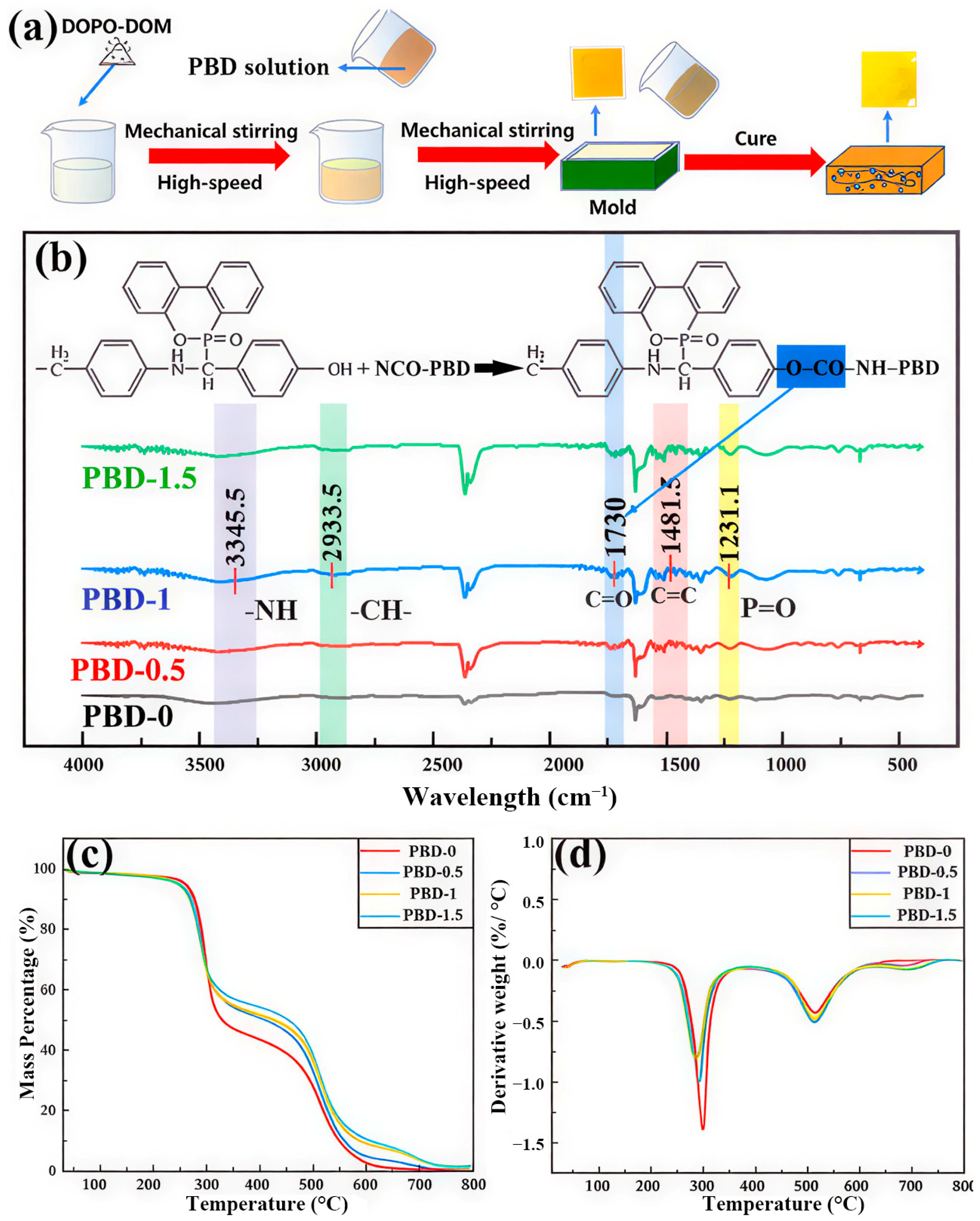
3.1. Fundamental Testing
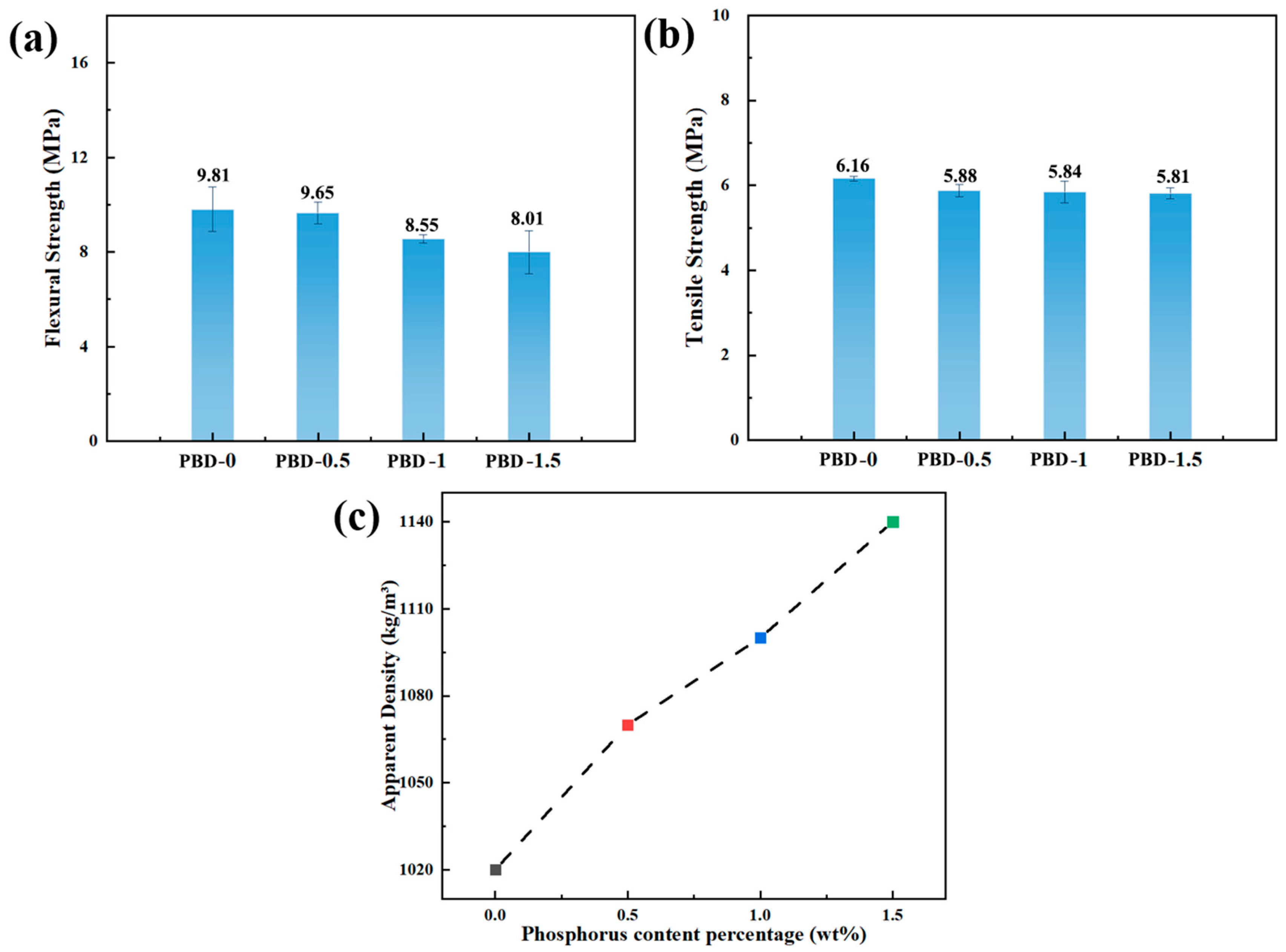
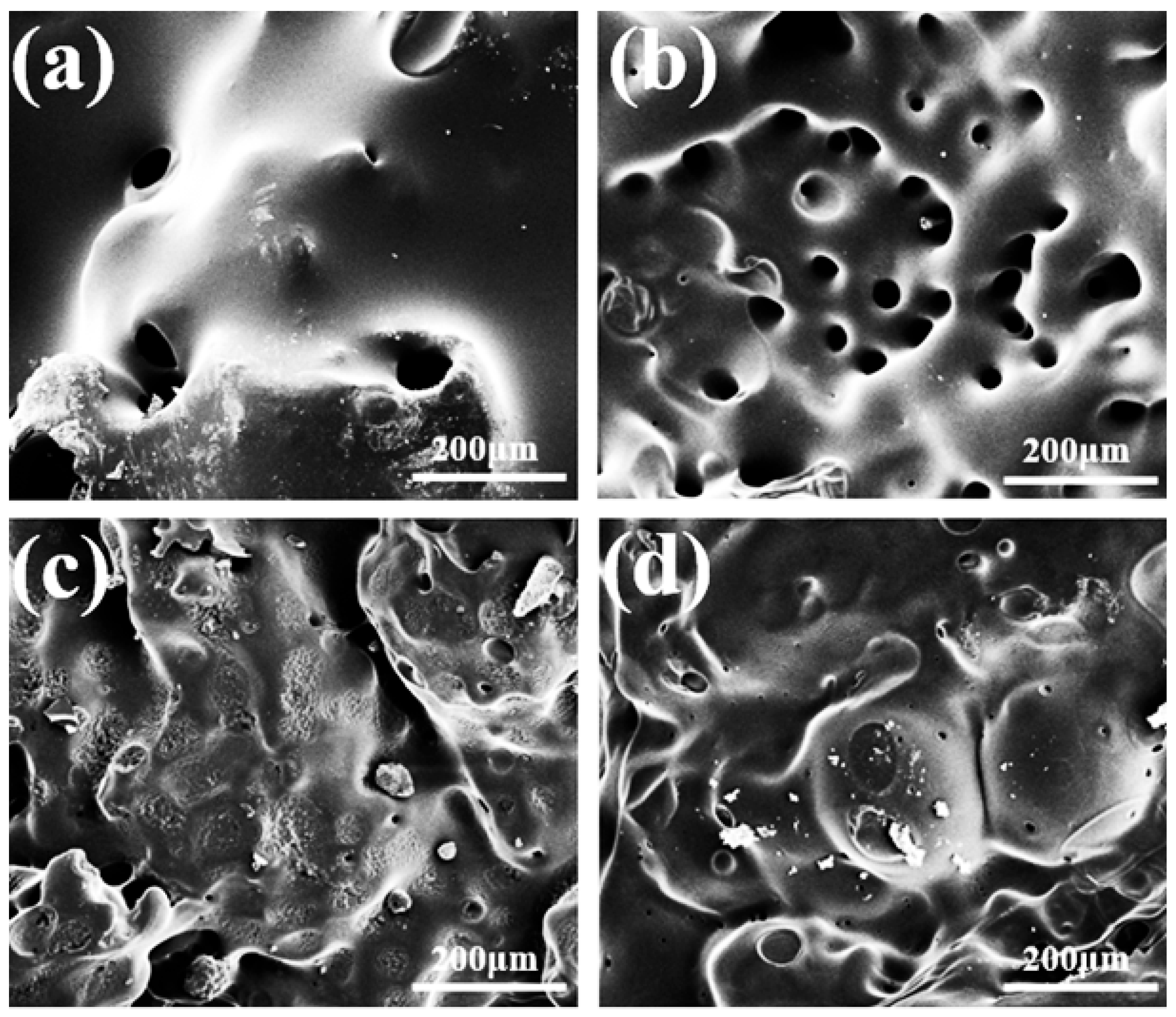
3.2. Mechanical Properties and Apparent Density Testing
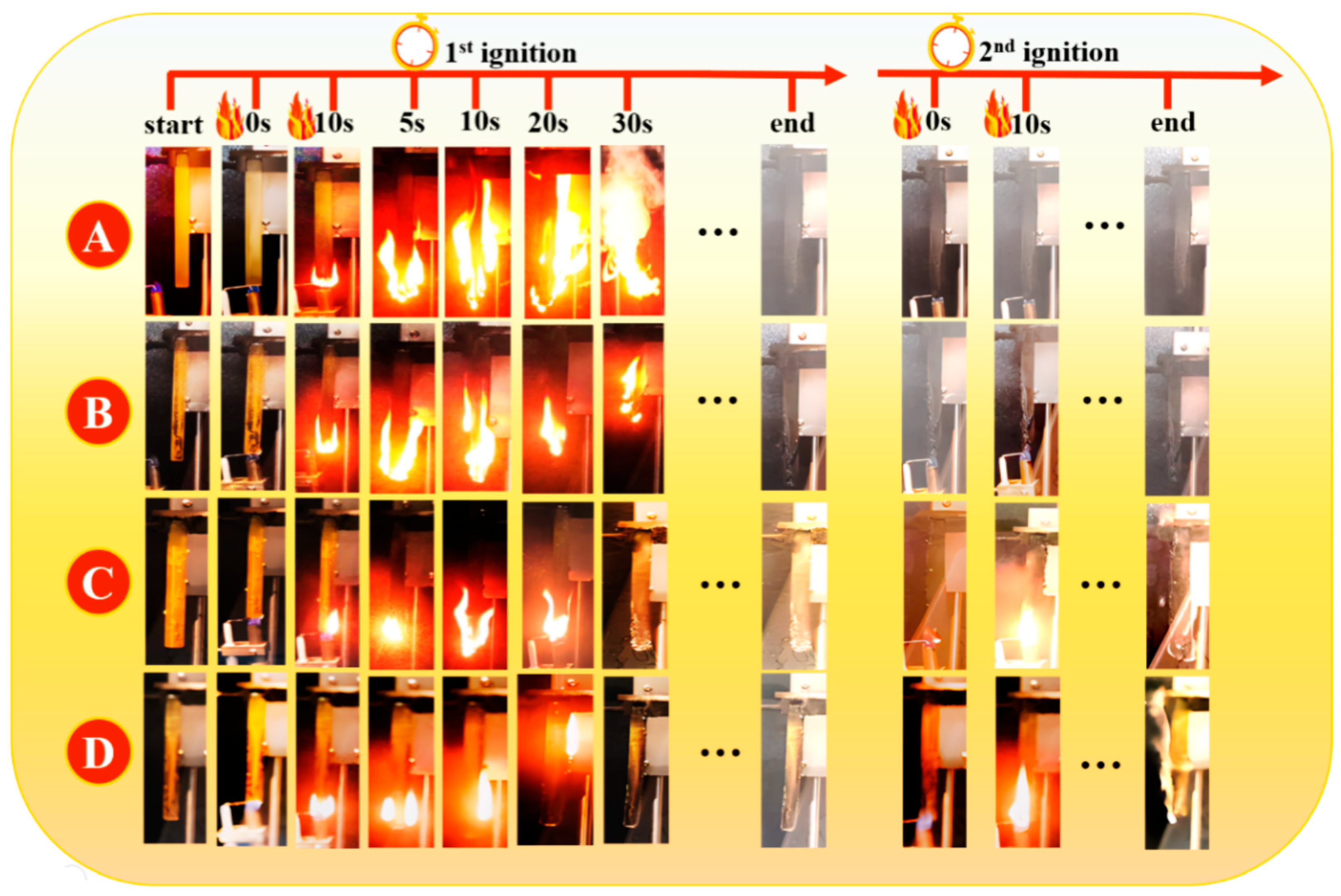
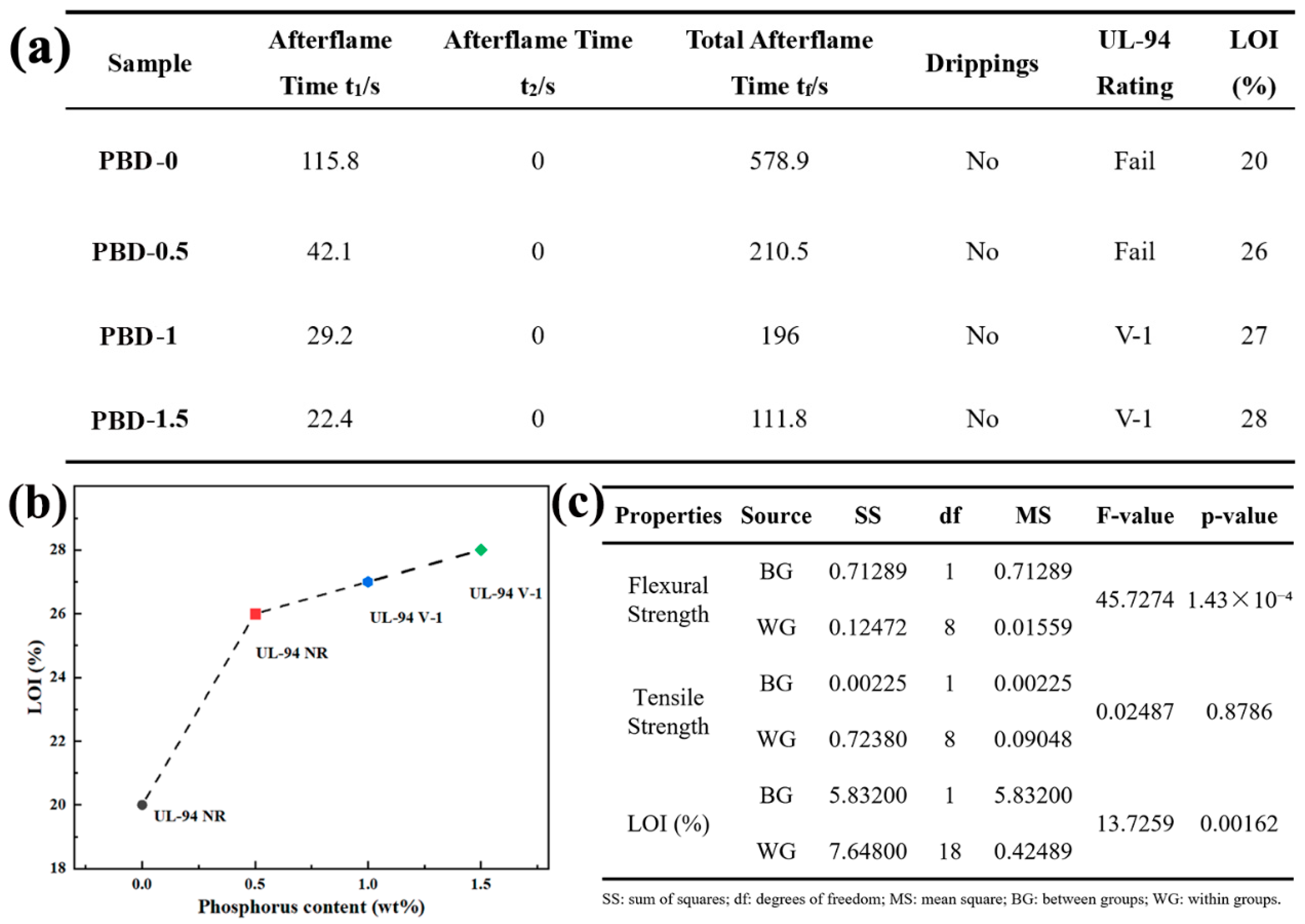
3.3. Vertical Burning Test and Limited Oxygen Index (LOI) Test
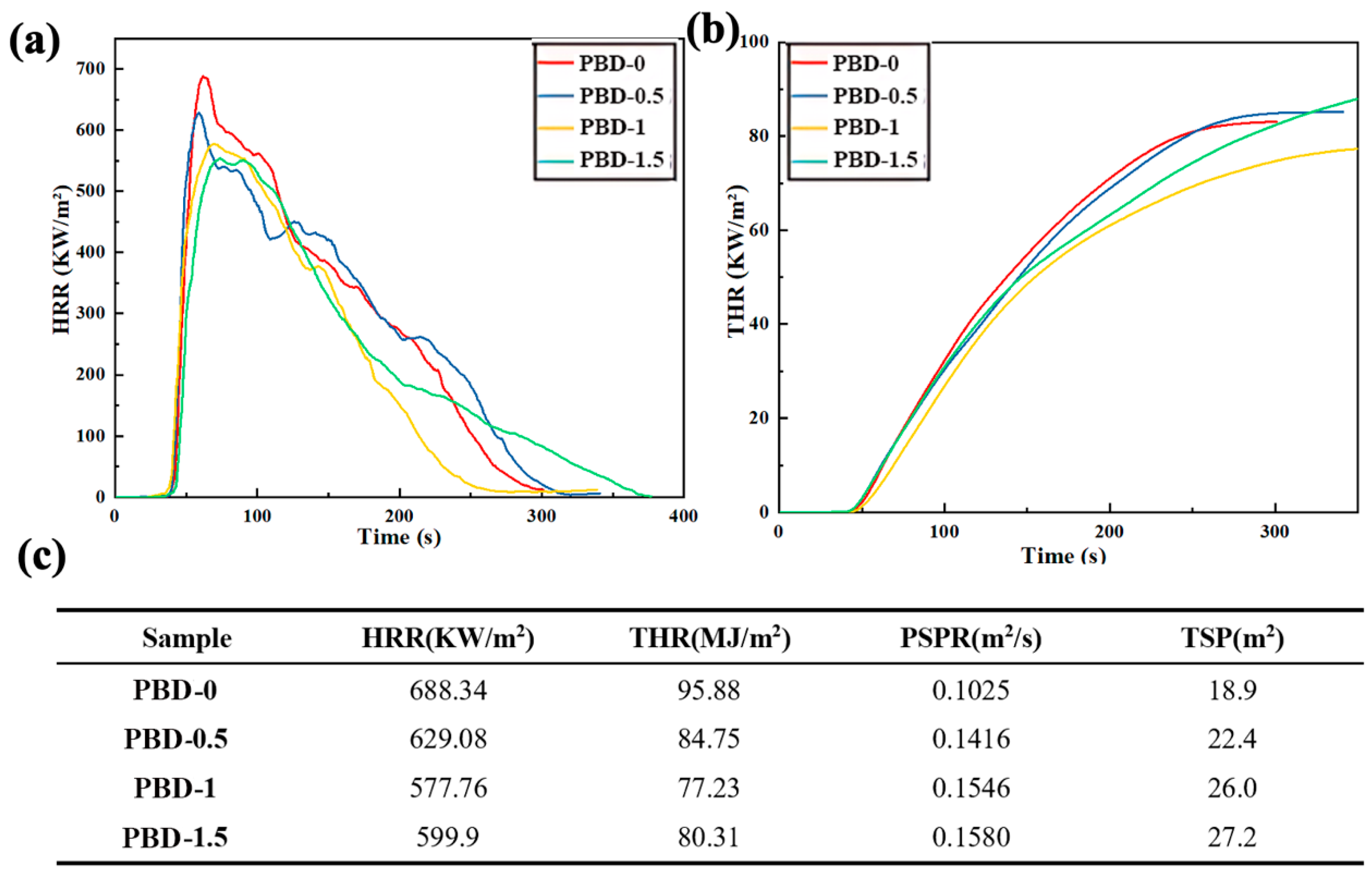
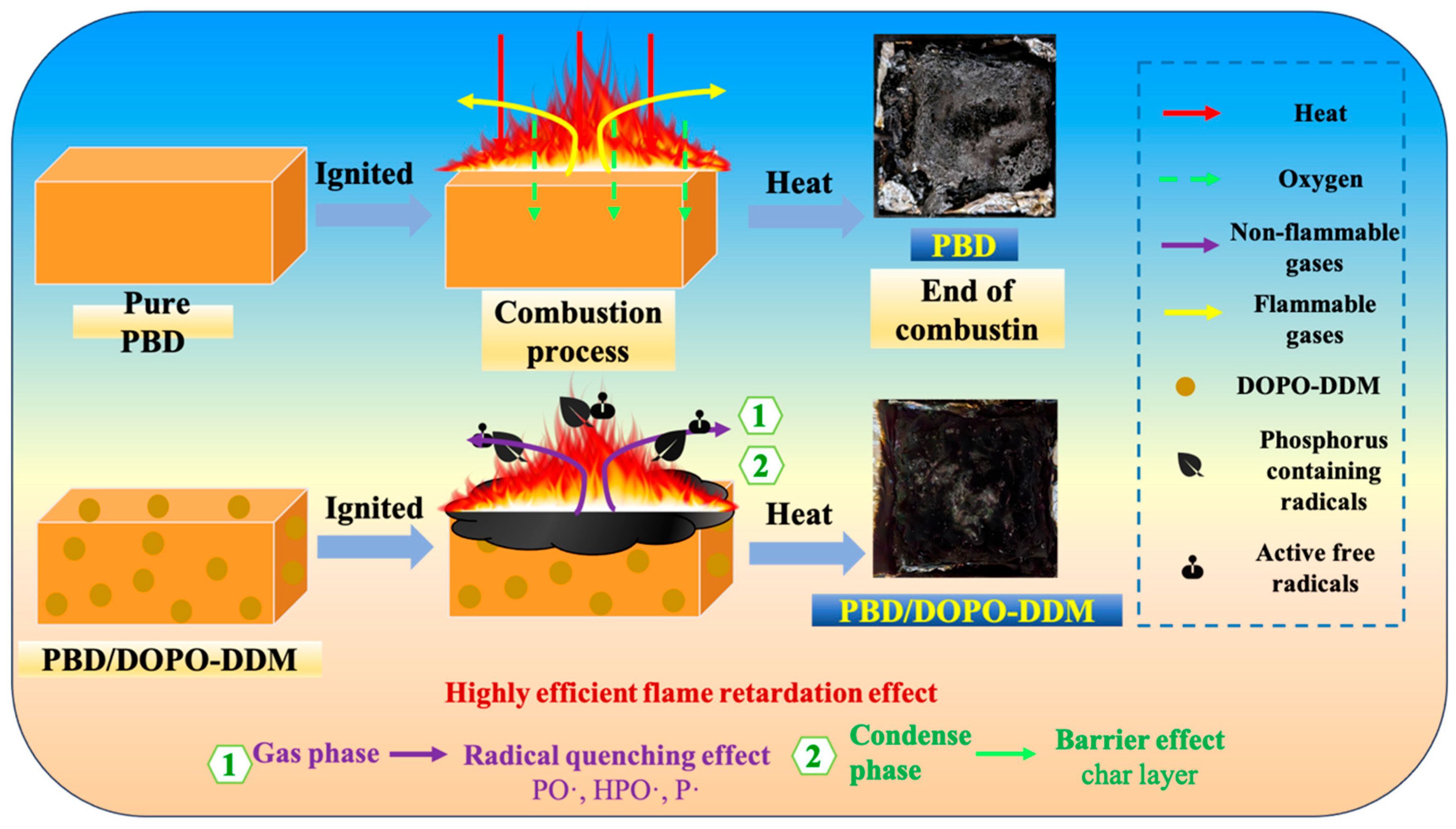
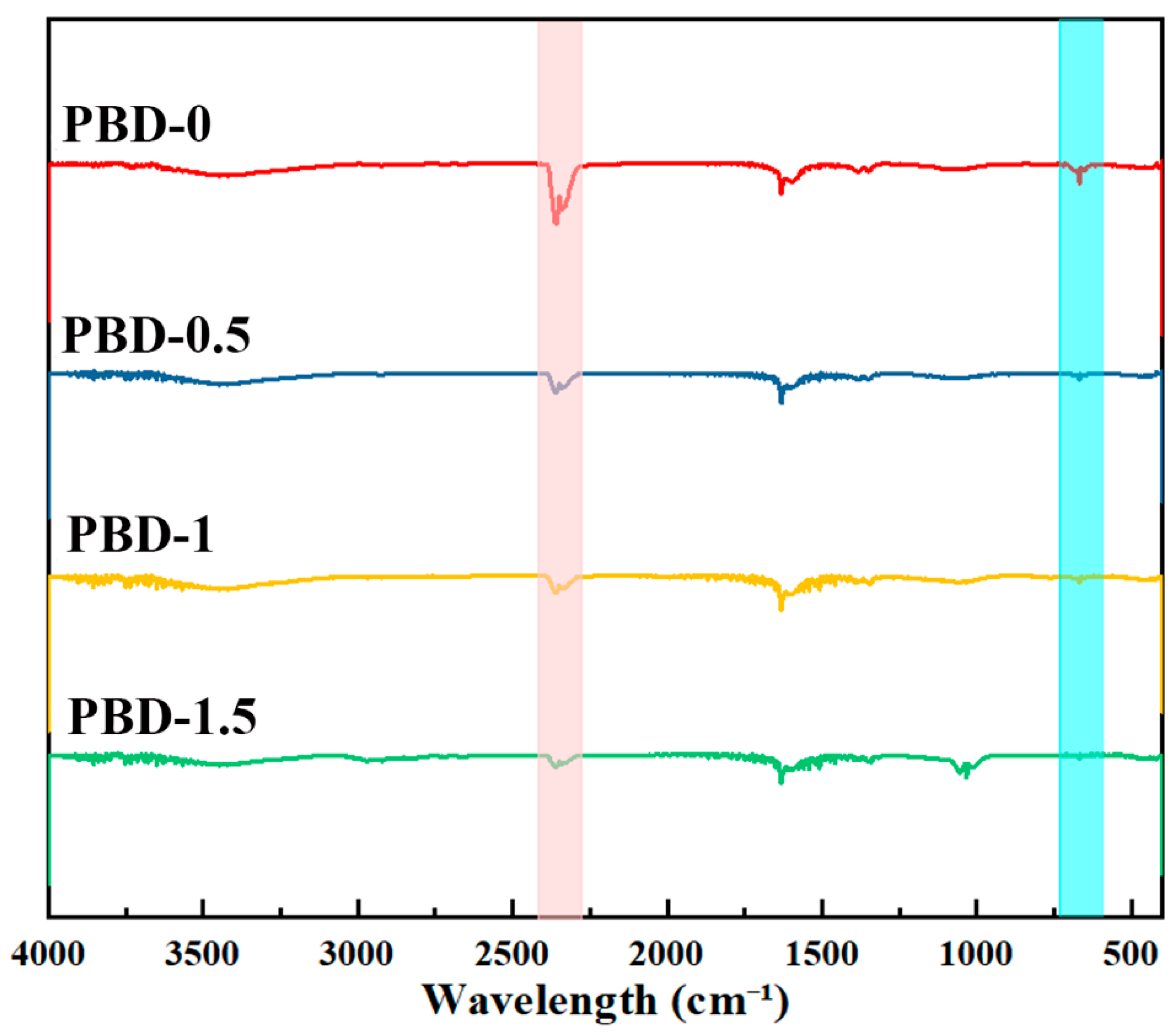
3.4. Cone Calorimeter Test
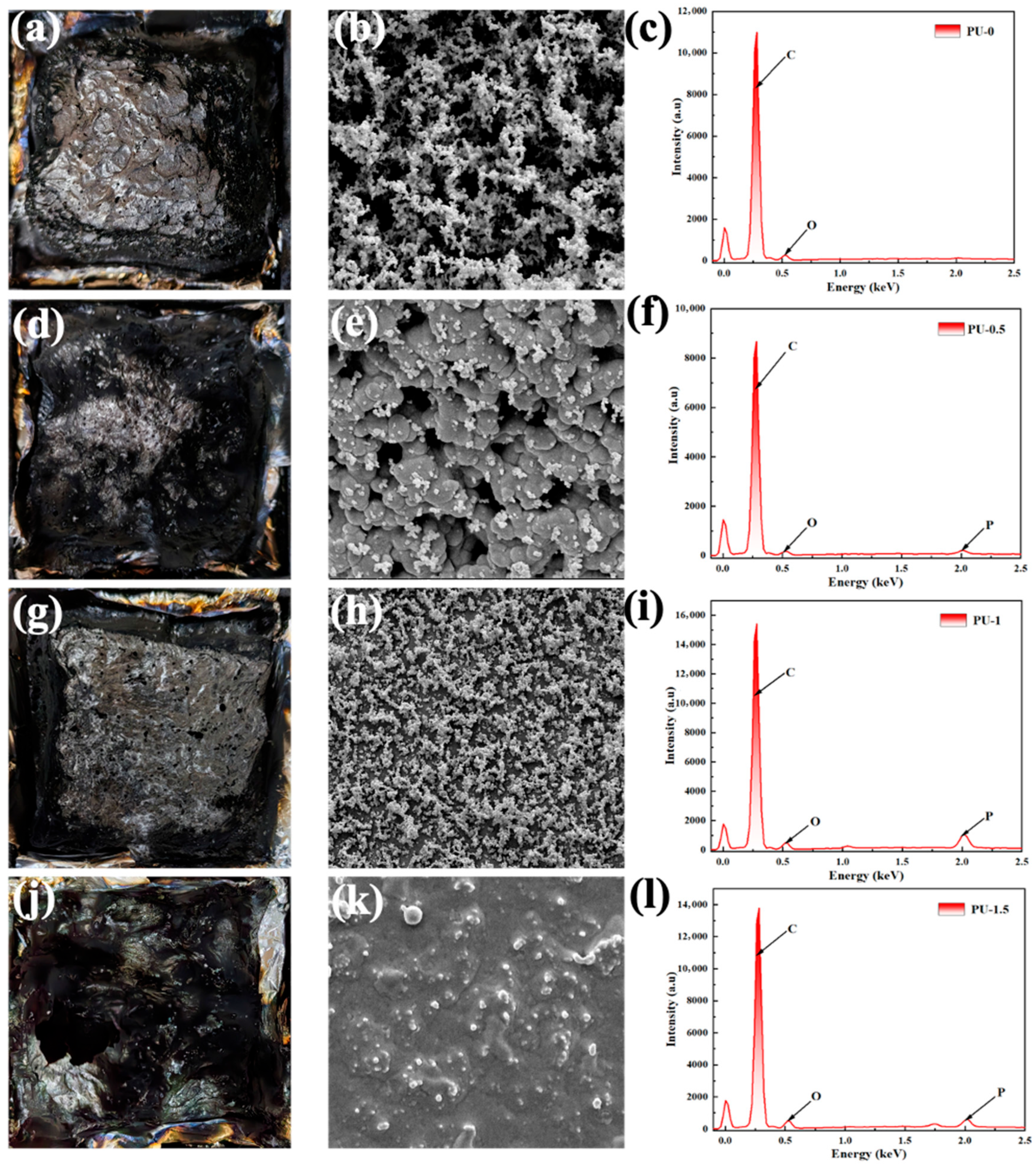
3.5. Char Residue Testing
4. Conclusions
Supplementary Materials
Author Contributions
Funding
Institutional Review Board Statement
Data Availability Statement
Conflicts of Interest
References
- Beach, M.W.; Hull, J.W.; King, B.A.; Beulich, I.I.; Stobby, B.G.; Kram, S.L.; Gorman, D.B. Development of a new class of brominated polymeric flame retardants based on copolymers of styrene and polybutadiene. Polym. Degrad. Stab. 2017, 135, 99–110. [Google Scholar] [CrossRef]
- Beach, M.W.; Beaudoin, D.A.; Beulich, I.; Bloom, J.C.; Davis, J.W.; Hollnagel, H.M.; Hull, J.W.; King, B.; Kram, S.; Lukas, C.; et al. New class of brominated polymeric flame retardants for use in polystyrene foams. Cell. Polym. 2013, 32, 229–236. [Google Scholar] [CrossRef]
- Seewoo, B.J.; Wong, E.V.S.; Mulders, Y.R.; Goodes, L.M.; Eroglu, E.; Brunner, M.; Gozt, A.; Toshniwal, P.; Symeonides, C.; Dunlop, S.A. Impacts associated with the plastic polymers polystyrene, polycarbonate, poly(vinyl chloride), and polybutadiene across their life cycles: A scoping review. Heliyon 2024, 10, e32912. [Google Scholar] [CrossRef]
- Akortia, E.; Olukunle, O.I.; Daso, A.P.; Okonkwo, J.O. A review of sources, levels, and toxicity of polybrominated diphenyl ethers (PBDEs) in the environment. Environ. Rev. 2016, 24, 253–273. [Google Scholar] [CrossRef]
- Landrigan, P.J.; Raps, H.; Cropper, M.; Bald, C.; Brunner, M.; Canonizado, E.M.; Charles, D.; Chiles, T.C.; Donohue, M.J.; Enck, J.; et al. The Minderoo–Monaco Commission on plastics and human health. Ann. Glob. Health 2023, 89, 23. [Google Scholar] [CrossRef]
- Hahladakis, J.N.; Velis, C.A.; Weber, R.; Iacovidou, E.; Purnell, P. An overview of chemical additives present in plastics: Migration, release, fate and environmental impact during their use, disposal and recycling. J. Hazard. Mater. 2018, 344, 179–199. [Google Scholar] [CrossRef] [PubMed]
- Lewin, M.; Weil, E.D. Mechanisms and modes of action in flame retardancy of polymers. In Fire Retardant Materials; Horrocks, A.R., Price, D., Eds.; Woodhead Publishing: Cambridge, UK, 2001; pp. 31–68. [Google Scholar]
- Weil, E.D.; Patel, N.G.; Said, M.M.; Hirschler, M.M.; Shakir, S. What does oxygen index correlate to? Proc. Int. Conf. Fire Saf. 1992, 17, 353–377. [Google Scholar]
- Covaci, A.; Harrad, S.; Abdallah, M.-E.A.; Ali, N.; Law, R.J.; Herzke, D.; de Wit, C.A. Novel brominated flame retardants: A review of their analysis, environmental fate and behaviour. Environ. Int. 2011, 37, 532–556. [Google Scholar] [CrossRef]
- Wang, H.; Cheng, J.; Du, X.; Du, Z.; Wang, H.; Cheng, X. A novel DOPO-containing HTBN endowing waterborne polyurethane with excellent flame retardance and mechanical properties. J. Appl. Polym. Sci. 2020, 137, 49368. [Google Scholar] [CrossRef]
- Luo, Y.; Wang, H.; Wang, H.; Cheng, X.; Du, Z. Enhanced flame retardancy and mechanical properties of waterborne polyurethane based on the phosphorus and nitrogen containing polybutadiene acrylonitrile. J. Appl. Polym. Sci. 2021, 138, 50432. [Google Scholar] [CrossRef]
- Groh, K.J.; Arp, H.P.H.; MacLeod, M.; Wang, Z. Assessing and managing environmental hazards of polymers: Historical development, science advances and policy options. Environ. Sci. Process. Impacts 2023, 25, 10–25. [Google Scholar] [CrossRef] [PubMed]
- Wiesinger, H.; Wang, Z.; Hellweg, S. Deep dive into plastic monomers, additives, and processing aids. Environ. Sci. Technol. 2021, 55, 9339–9351. [Google Scholar] [CrossRef] [PubMed]
- Bergman, Å.; Rydén, A.; Law, R.J.; de Boer, J.; Covaci, A.; Alaee, M.; Birnbaum, L.; Petreas, M.; Rose, M.; Sakai, S.; et al. A novel abbreviation standard for organobromine, organochlorine and organophosphorus flame retardants and some characteristics of the chemicals. Environ. Int. 2012, 49, 57–82. [Google Scholar] [CrossRef]
- Chen, D.; Hale, R.C.; Letcher, R.J. Photochemical and microbial transformation of emerging flame retardants and flame retardant replacements: A review. Environ. Toxicol. Chem. 2015, 34, 687–699. [Google Scholar] [CrossRef]
- Borghoff, S.J.; Wikoff, D.; Harvey, S.; Haws, L. Dose- and time-dependent changes in tissue levels of tetrabromobisphenol A (TBBPA) and its sulfate and glucuronide conjugates following repeated administration to female Wistar Han rats. Toxicol. Rep. 2016, 3, 190–201. [Google Scholar] [CrossRef]
- Browne, E.P.; Stapleton, H.M.; Kelly, S.M.; Tilton, S.C.; Gallagher, E.P. In vitro hepatic metabolism of 2,2′,4,4′,5-pentabromodiphenyl ether (BDE 99) in Chinook salmon (Oncorhynchus tshawytscha). Aquat. Toxicol. 2009, 92, 281–287. [Google Scholar] [CrossRef]
- Li, J.; Ning, Z.; Yang, W.; Yang, B.; Zeng, Y. Hydroxyl-Terminated Polybutadiene-Based Polyurethane with Self-Healing and Reprocessing Capabilities. ACS Omega 2022, 7, 10156–10166. [Google Scholar] [CrossRef]
- Gupta, T.; Adhikari, B. Thermal degradation and stability of HTPB-based polyurethane and polyurethaneureas. Thermochim. Acta 2003, 402, 169–181. [Google Scholar] [CrossRef]
- Kemmlein, S.; Herzke, D.; Law, R.J. BFR–governmental testing programme. Environ. Int. 2003, 29, 781–792. [Google Scholar] [CrossRef]
- Sugeng, E.J.; de Cock, M.; Schoonmade, L.J.; van de Bor, M. Toddler exposure to flame retardant chemicals: Magnitude, health concern and potential risk- or protective factors of exposure. Chemosphere 2017, 184, 820–831. [Google Scholar] [CrossRef] [PubMed]
- Covaci, A.; Gerecke, A.C.; Law, R.J.; Voorspoels, S.; Kohler, M.; Heeb, N.V.; Leslie, H.; Allchin, C.R.; de Boer, J. Hexabromocyclododecanes (HBCDs) in the environment and humans: A review. Environ. Sci. Technol. 2006, 40, 3679–3688. [Google Scholar] [CrossRef]
- Xiong, P.; Yan, X.; Zhu, Q.; Qu, G.; Shi, J.; Liao, C.; Jiang, G. A review of environmental occurrence, fate, and toxicity of novel brominated flame retardants. Environ. Sci. Technol. 2019, 53, 13551–13569. [Google Scholar] [CrossRef] [PubMed]
- Smythe, T.A.; Su, G.; Bergman, Å.; Letcher, R.J. Metabolic transformation of environmentally-relevant brominated flame retardants in Fauna: A review. Environ. Int. 2022, 161, 107097. [Google Scholar]
- Wu, Y.; Tan, H.; Zhou, C.; Crimmins, B.S.; Holsen, T.M.; Pagano, J.J.; Chen, D. Spatial and temporal trends (2004–2016) of selected alternative flame retardants in fish of the Laurentian Great Lakes. Environ. Sci. Technol. 2019, 53, 1786–1796. [Google Scholar] [CrossRef]
- Yu, G.; de Boer, J. BFR2015 in Beijing: Scientists are becoming more concerned about FRs in indoor environment. Chemosphere 2017, 174, 664. [Google Scholar] [CrossRef] [PubMed]
- Stubbings, W.A.; Harrad, S. Extent and mechanisms of brominated flame retardant emissions from waste soft furnishings and fabrics: A critical review. Environ. Int. 2014, 71, 164–175. [Google Scholar] [CrossRef]
- Geueke, B.; Groh, K.J.; Maffini, M.V.; Martin, O.V.; Boucher, J.M.; Chiang, Y.-T.; Gwosdz, F.; Jieh, P.; Kassotis, C.D.; Łańska, P.; et al. Systematic evidence on migrating and extractable food contact chemicals: Most chemicals detected in food contact materials are not evaluated for toxicity. Crit. Rev. Food Sci. Nutr. 2022, 62, 448–473. [Google Scholar]
- Bezares-Cruz, J.; Jafvert, C.T.; Hua, I. Solar photodecomposition of decabromodiphenyl ether: Products and quantum yield. Environ. Sci. Technol. 2004, 38, 4149–4156. [Google Scholar] [CrossRef]
- Christiansson, A.; Eriksson, J.; Teclechiel, D.; Bergman, Å. Identification and quantification of products formed via photolysis of decabromodiphenyl ether. Environ. Sci. Pollut. Res. 2009, 16, 312–321. [Google Scholar] [CrossRef] [PubMed]
- Chu, S.; Gauthier, L.T.; Letcher, R.J. Alpha and beta isomers of tetrabromoethylcyclohexane (TBECH) flame retardant: Depletion and metabolite formation in vitro using a model rat microsomal assay. Environ. Sci. Technol. 2012, 46, 10263–10270. [Google Scholar] [CrossRef]
- Mishra, S.; Sonawane, S.H.; Badgujar, N.; Gurav, K.; Patil, D. Comparative study of the mechanical and flame-retarding properties of polybutadiene rubber filled with nanoparticles and fly ash. J. Appl. Polym. Sci. 2005, 96, 6–9. [Google Scholar] [CrossRef]
- Liu, Q.; Song, L.; Lu, H.; Hu, Y.; Wang, Z.; Zhou, S. Study on combustion property and synergistic effect of intumescent flame retardant styrene butadiene rubber with metallic oxides. Polym. Adv. Technol. 2009, 20, 1091–1095. [Google Scholar] [CrossRef]
- Amrollahi, M.; Sadeghi, G.M.M. Moisture curable flame retardant HTPB-based polyurethane adhesives: Influence of HBCD on adhesion, degradation and flammability. J. Appl. Polym. Sci. 2008, 110, 3538–3543. [Google Scholar] [CrossRef]
- Kim, H.J.; Kim, C.K.; Kwon, Y. Ablation and fire-retardant properties of hydroxyl-terminated polybutadiene-based polyurethane composites grafted by polyhedral oligomeric silsesquioxane (POSS). J. Reinf. Plast. Compos. 2014, 27, 749–757. [Google Scholar]
- Wiśniewska, P.; Movahedifar, E.; Formela, K.; Naser, M.Z.; Vahabi, H.; Saeb, M.R. The chemistry, properties and performance of flame-retardant rubber composites: Collecting, analyzing, categorizing, machine learning modeling, and visualizing. Compos. Sci. Technol. 2024, 250, 110517. [Google Scholar] [CrossRef]
- Xu, W.; Wirasaputra, A.; Liu, S.; Yuan, Y.; Zhao, J. Highly effective flame retarded epoxy resin cured by DOPO-based. Polym. Degrad. Stab. 2015, 122, 44–51. [Google Scholar] [CrossRef]
- Wang, P.; Cai, Z. Highly efficient flame-retardant epoxy resin with a novel DOPO-based triazole compound: Thermal stability, flame retardancy and mechanism. Polym. Degrad. Stab. 2017, 137, 138–150. [Google Scholar] [CrossRef]
- Wang, H.; Liu, Q.; Zhao, X.; Jin, Z. Synthesis of reactive DOPO-based flame retardant and its application in polyurethane elastomers. Polym. Degrad. Stab. 2021, 183, 109440. [Google Scholar] [CrossRef]
- Ma, S.; Xiao, Y.; Zhou, F.; Schartel, B.; Chan, Y.Y.; Korobeinichev, O.P.; Trubachev, S.A.; Hu, W.; Ma, C.; Hu, Y. Effects of novel phosphorus-nitrogen-containing DOPO derivative salts on mechanical properties, thermal stability and flame retardancy of flexible polyurethane foam. Polym. Degrad. Stab. 2020, 177, 109160. [Google Scholar] [CrossRef]



| Style | P (wt%) | Bis-DOPO Schiff-Base (g) | Bis-DOPO Schiff-Base (wt%) |
|---|---|---|---|
| PBD-0.5 | 0.5% | 6.23 | 6.7 |
| PBD-1 | 1.0% | 12.46 | 13.5 |
| PBD-1.5 | 1.5% | 18.69 | 20.2 |
| Sample | Initial Decomposition Temperature (T5%, °C) | Temperature at Maximum Mass Loss Rate (Tmax, °C) | Maximum Mass Loss Rate (%·min−1) | Residue at 800 °C (wt%) |
|---|---|---|---|---|
| PBD-0 | 260.42 | 350.0 | 6.8 | 0.4 |
| PBD-0.5 | 253.075 | 342.5 | 6.5 | 1.6 |
| PBD-1 | 246.484 | 333.8 | 6.9 | 2.3 |
| PBD-1.5 | 243.961 | 322.6 | 7.4 | 3.5 |
Disclaimer/Publisher’s Note: The statements, opinions and data contained in all publications are solely those of the individual author(s) and contributor(s) and not of MDPI and/or the editor(s). MDPI and/or the editor(s) disclaim responsibility for any injury to people or property resulting from any ideas, methods, instructions or products referred to in the content. |
© 2025 by the authors. Licensee MDPI, Basel, Switzerland. This article is an open access article distributed under the terms and conditions of the Creative Commons Attribution (CC BY) license.
Share and Cite
Zhang, H.; Wei, H.; Yue, H.; Yu, M. A Phosphorus–Nitrogen Synergistic Flame Retardant for Enhanced Fire Safety of Polybutadiene. Polymers 2026, 18, 127. https://doi.org/10.3390/polym18010127
Zhang H, Wei H, Yue H, Yu M. A Phosphorus–Nitrogen Synergistic Flame Retardant for Enhanced Fire Safety of Polybutadiene. Polymers. 2026; 18(1):127. https://doi.org/10.3390/polym18010127
Chicago/Turabian StyleZhang, Hongwu, Huafeng Wei, Heng Yue, and Mingdong Yu. 2026. "A Phosphorus–Nitrogen Synergistic Flame Retardant for Enhanced Fire Safety of Polybutadiene" Polymers 18, no. 1: 127. https://doi.org/10.3390/polym18010127
APA StyleZhang, H., Wei, H., Yue, H., & Yu, M. (2026). A Phosphorus–Nitrogen Synergistic Flame Retardant for Enhanced Fire Safety of Polybutadiene. Polymers, 18(1), 127. https://doi.org/10.3390/polym18010127