Using Artificial Neural Networks to Predict the Bending Behavior of Composite Sandwich Structures


Abstract
1. Introduction
- The manufacturing and analysis of composite sandwich structures are relatively costly and complex. Therefore, the intelligent model applied in this study offers an opportunity to reduce costs and provides an accurate prediction of the flexural behavior of sandwich structures at a low computational cost, eliminating the need for tedious trial-and-error testing.
- The unique contribution of this study lies in the development of an artificial modeling system with high predictive capability that can capture the flexural behavior of various sandwich structures. For the face sheets, the structural behavior is considered in cases of hybrid face sheets combining WGFRP, WCFRP and aluminum, as well as fully FRP face sheets (e.g., WCFRP). Regarding the core, the effects of core type (e.g., Nomex and aluminum), core density and core thickness on the structural response are also considered to be captured by the elaborated ANN model.
- The validation approach expands beyond theoretical predictions and numerical simulations by using experimental tests. The validation steps for the ANN model, involving FEM analysis and experimental measurements, provide confidence that the proposed model can be used in real-world scenarios.
- This study represents a foundational advancement in the development of artificial neural network models for composite sandwich structures. In our future research, the ANN will not be limited to the flexural behavior of sandwich structures under concentrated loads and will cover other loading conditions, such as distributed and dynamic loads, thereby enhancing its adaptability for various engineering applications.
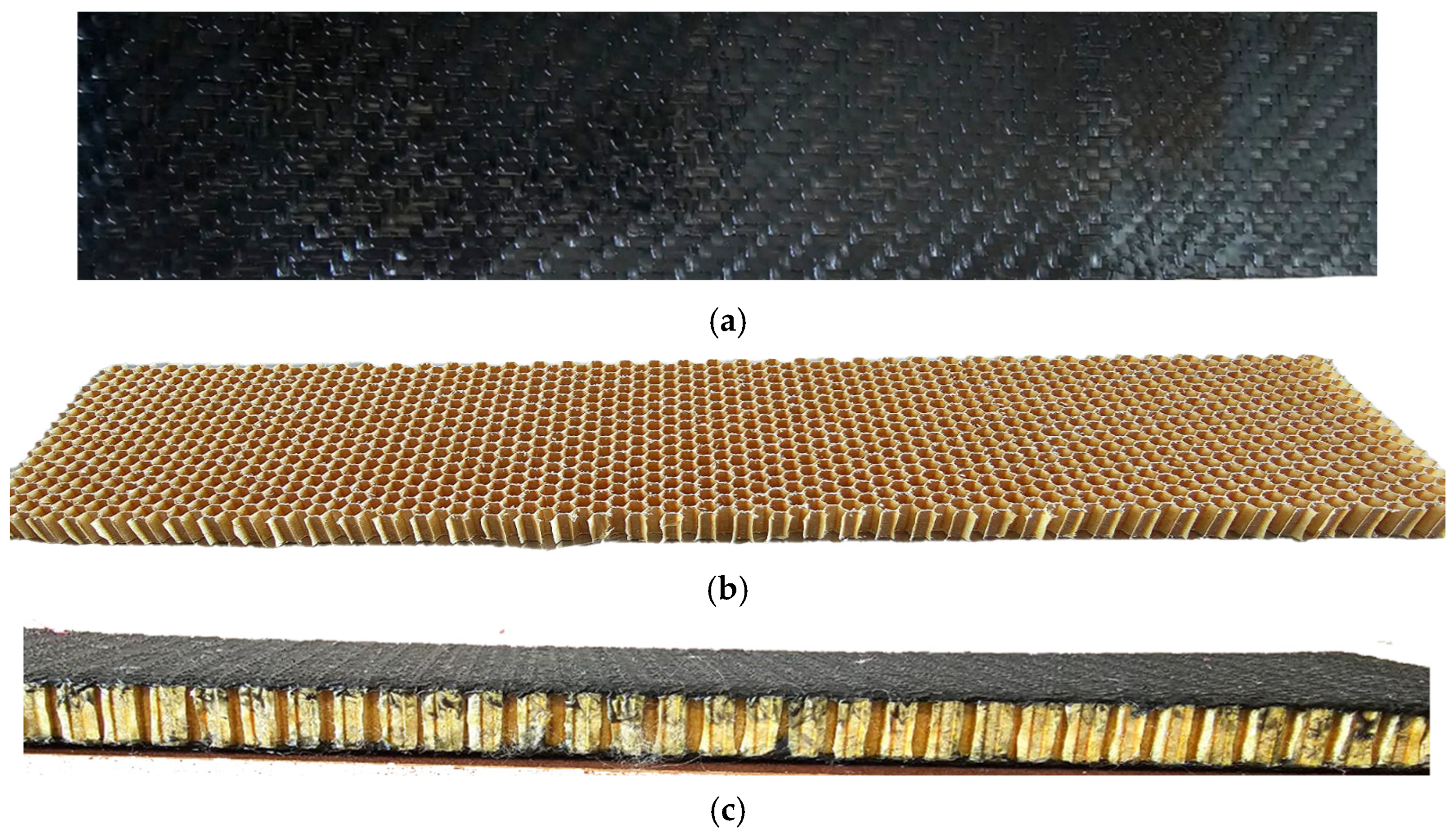
2. Materials of Face Sheets and Core Structural Elements
3. Methodology
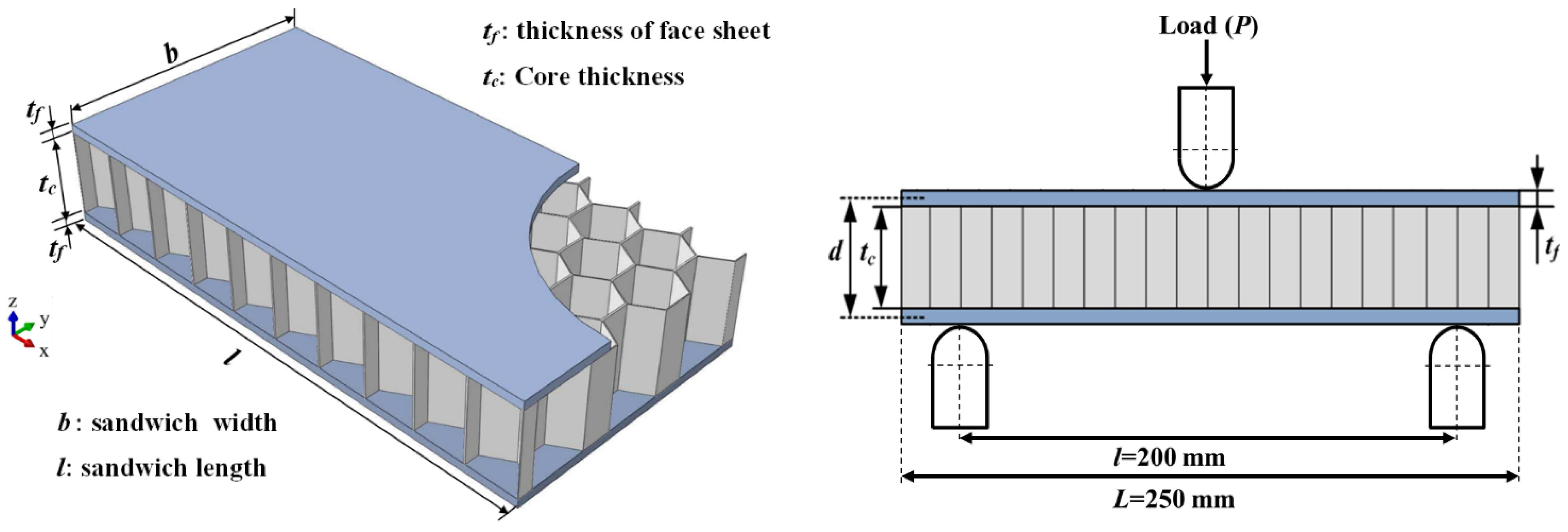
3.1. Three-Point Bending of the Investigated Structure
3.1.1. Total Deflection of the Sandwich Structure
3.1.2. Maximum Face Sheet Stress
3.2. Artificial Neural Network Modeling of the Investigated Structure
3.2.1. Data Sampling of the Sandwich Structure Under Investigation
3.2.2. Data Normalization Process for Training the ANN Model
3.2.3. Creating ANN Model for the Investigated Sandwich Structure
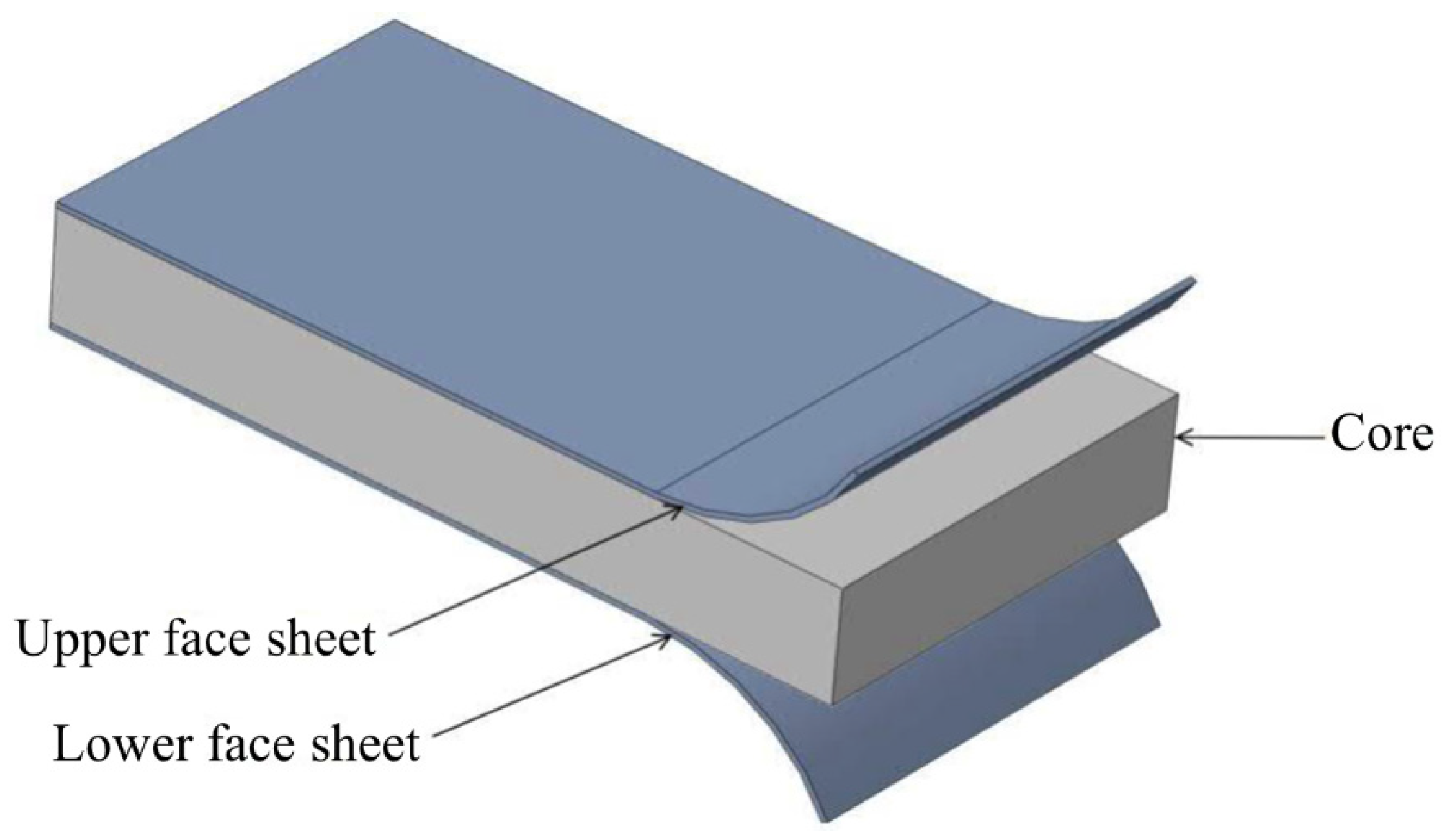
3.3. Numerical Modeling of the Investigated Sandwich Structure
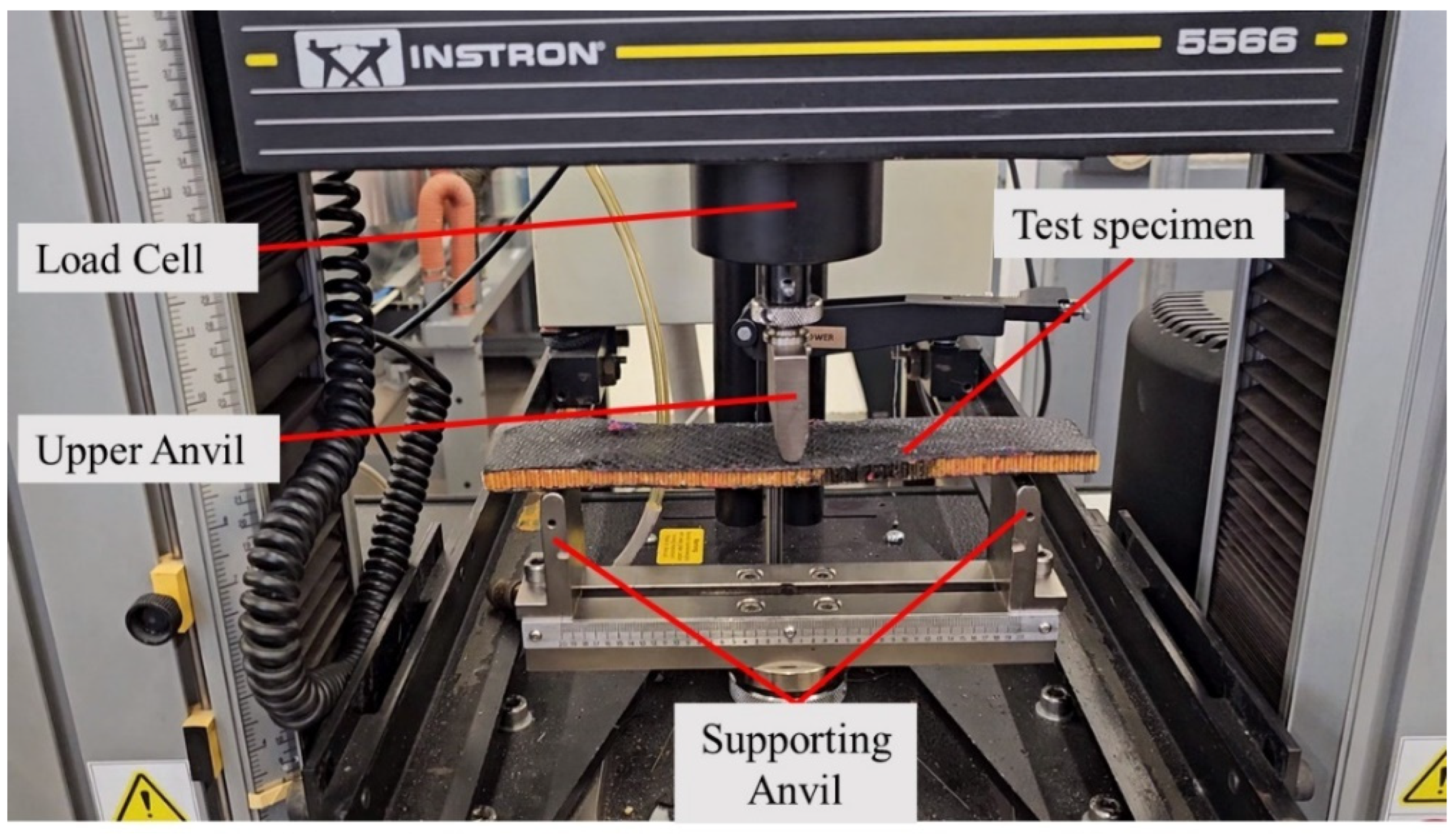
3.4. Experimental Setup of the Investigated Sandwich Structure
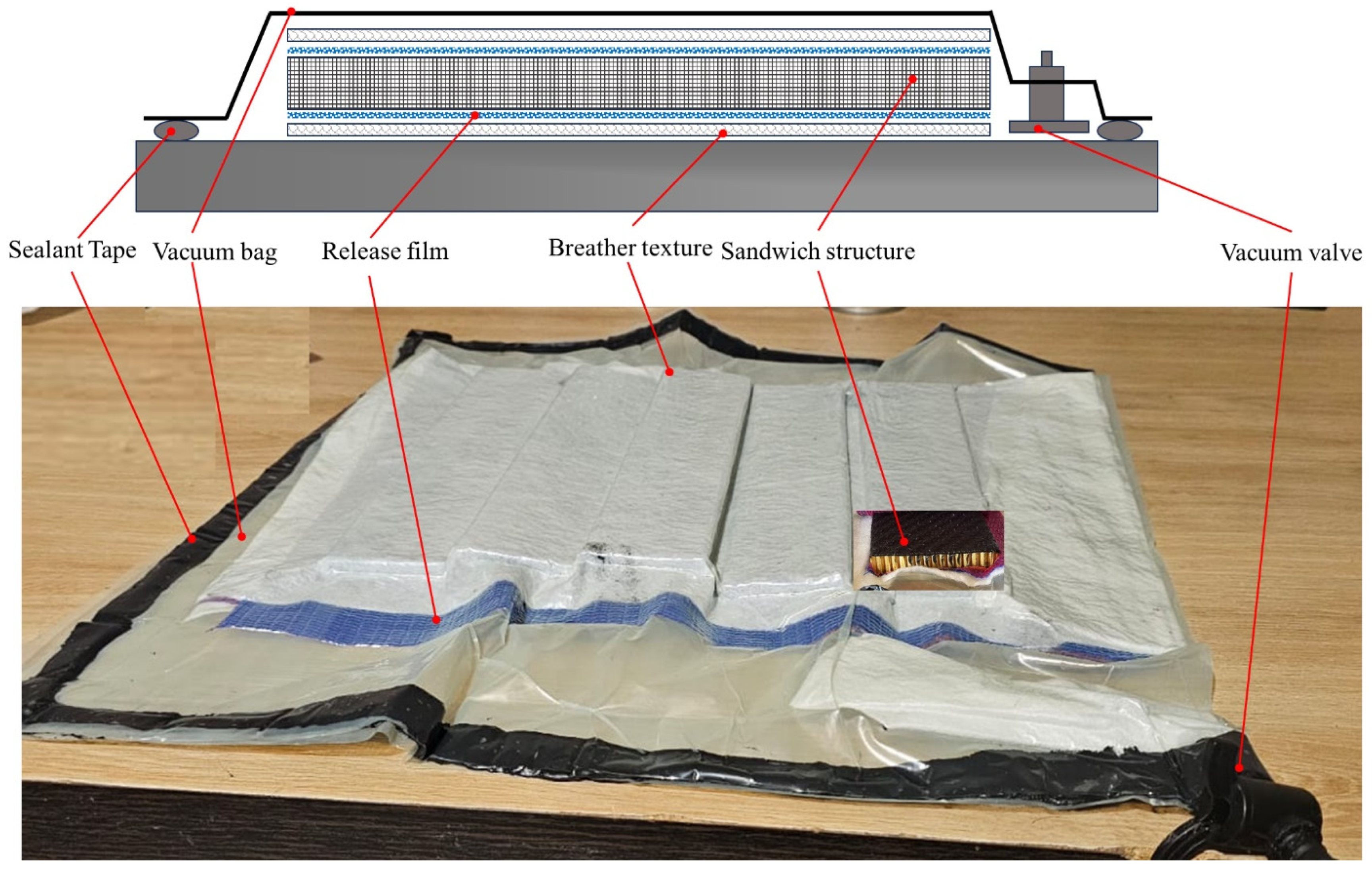
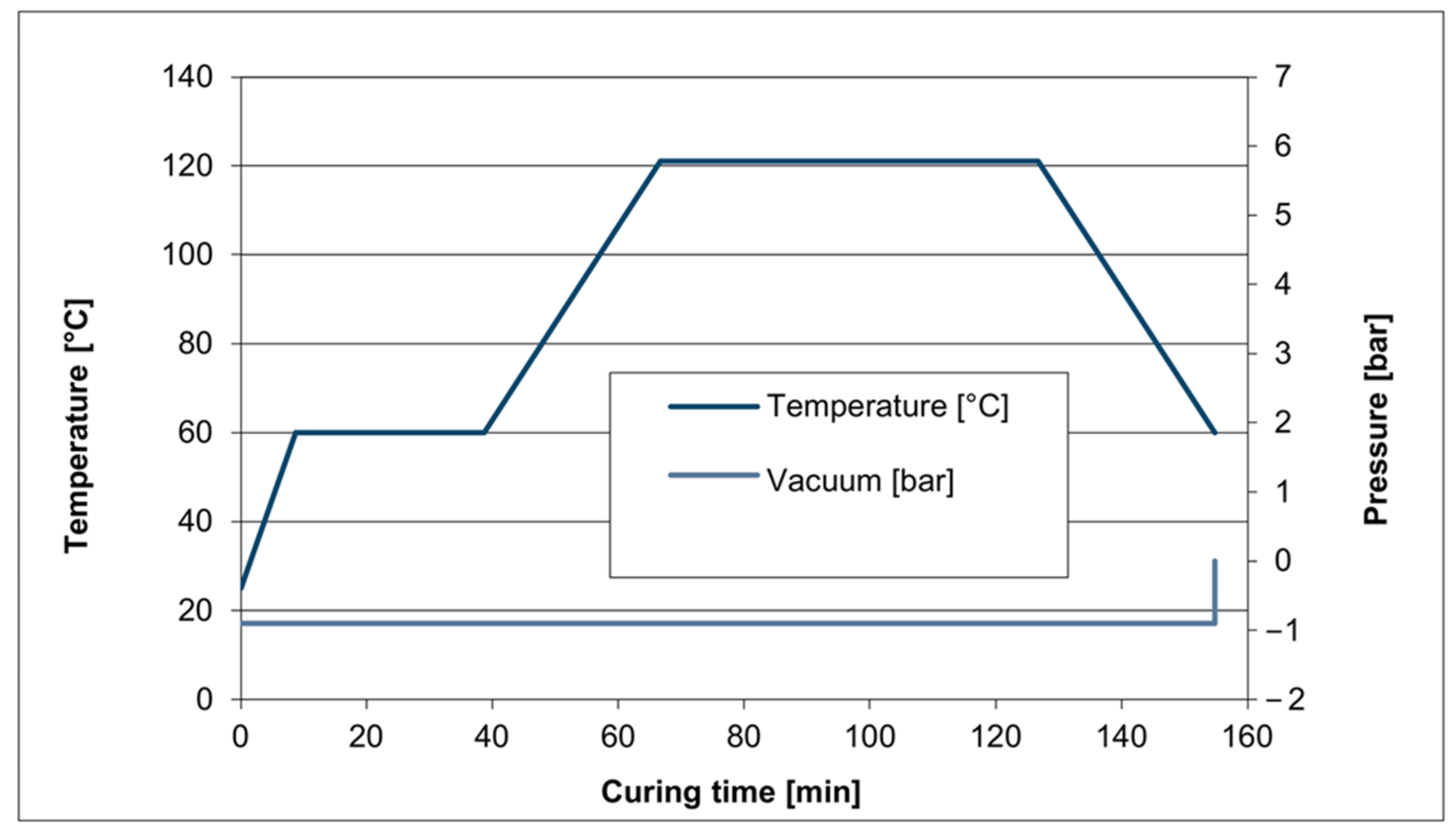
3.4.1. Manufacturing the Investigated Test Specimens via the Vacuum Bag Technique
3.4.2. Experimental Work Configuration
4. Results of ANN and FEM Analysis on Investigated Sandwich Structures
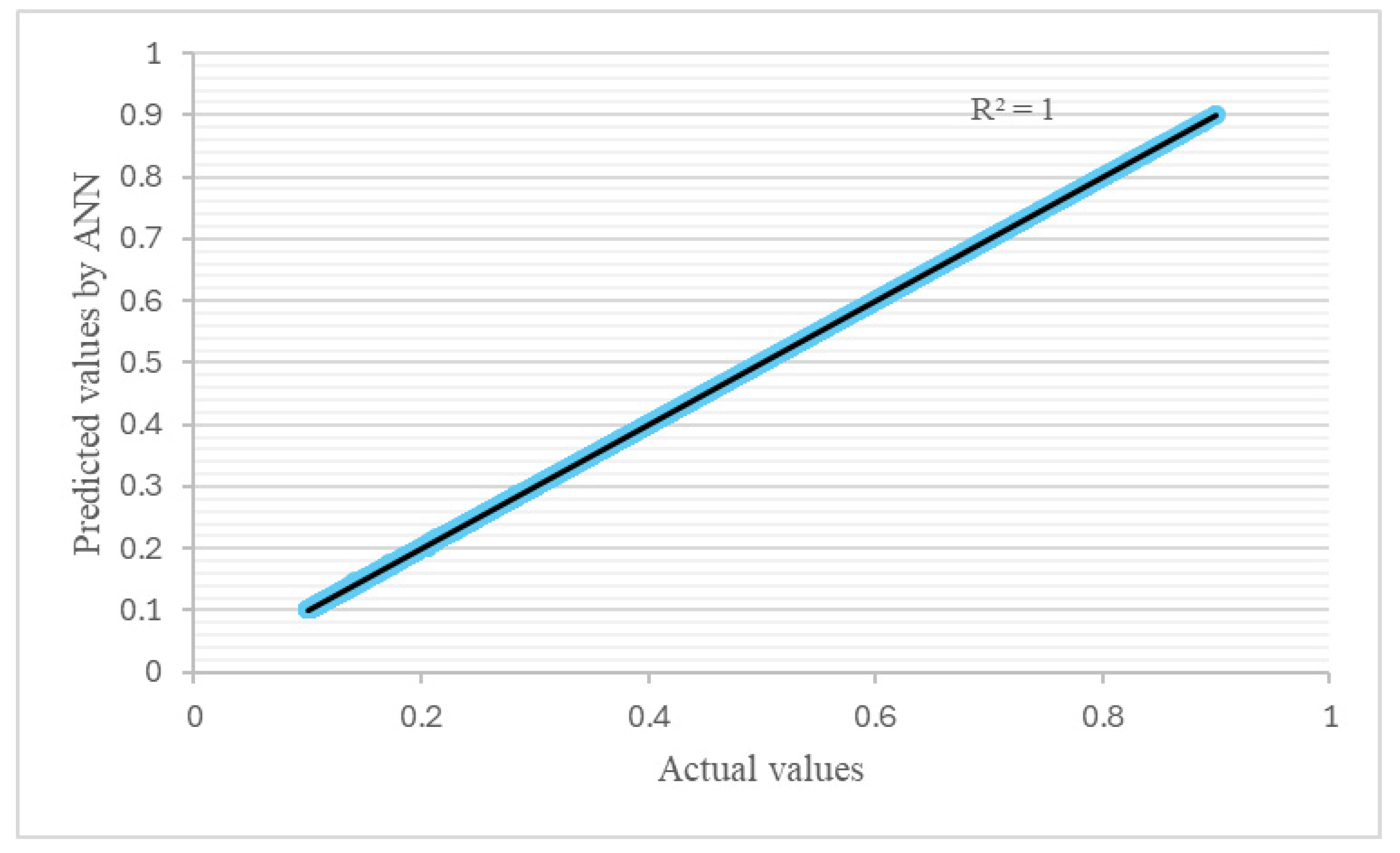
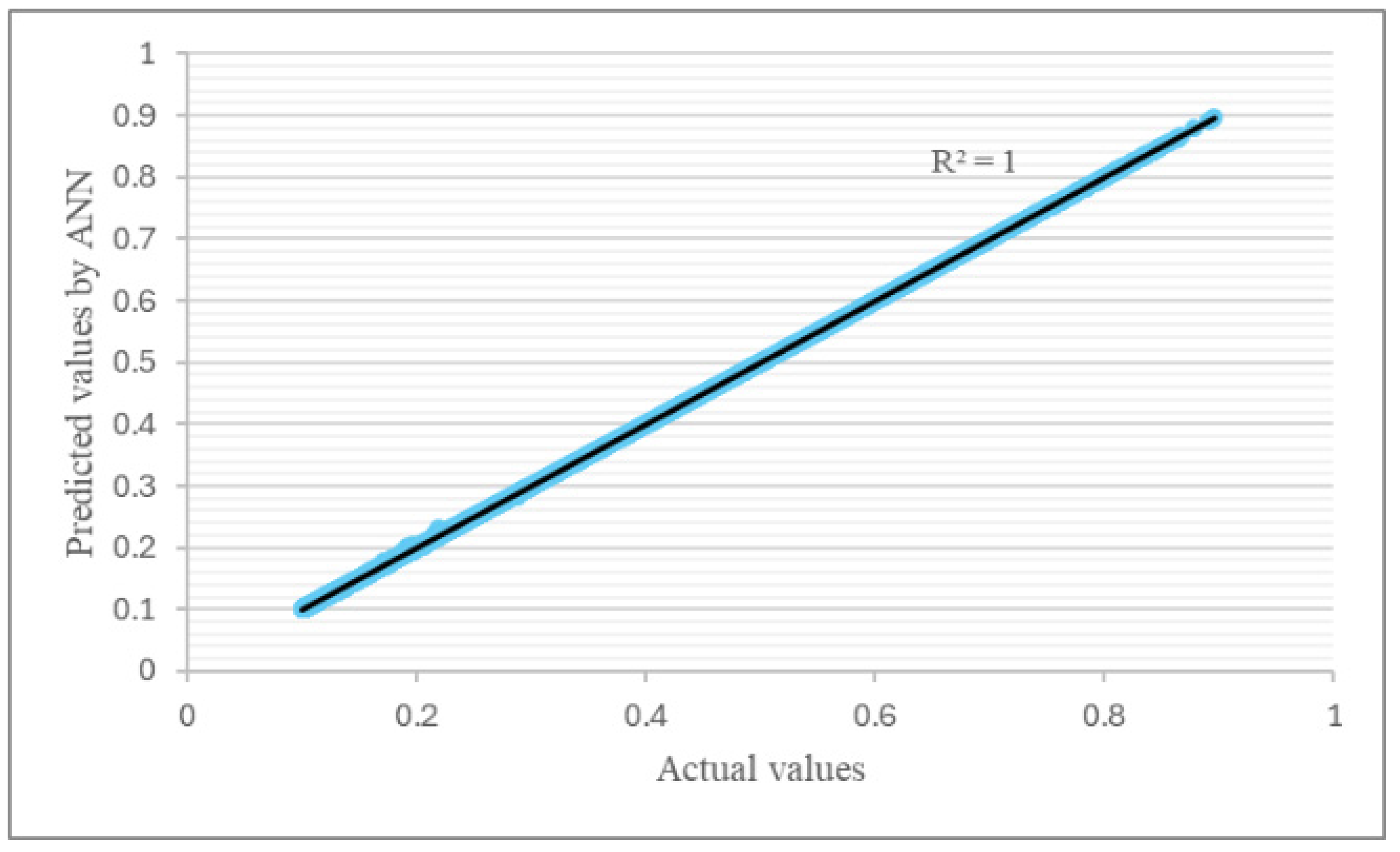
4.1. Artificial Neural Network Performance of the Investigated Sandwich Structure
4.2. Finite Element Model for the Sandwich Structure with FML Face Sheets
4.3. Comparison of FEM Results and ANN Predictions in FML Face Sheet Sandwich Structures
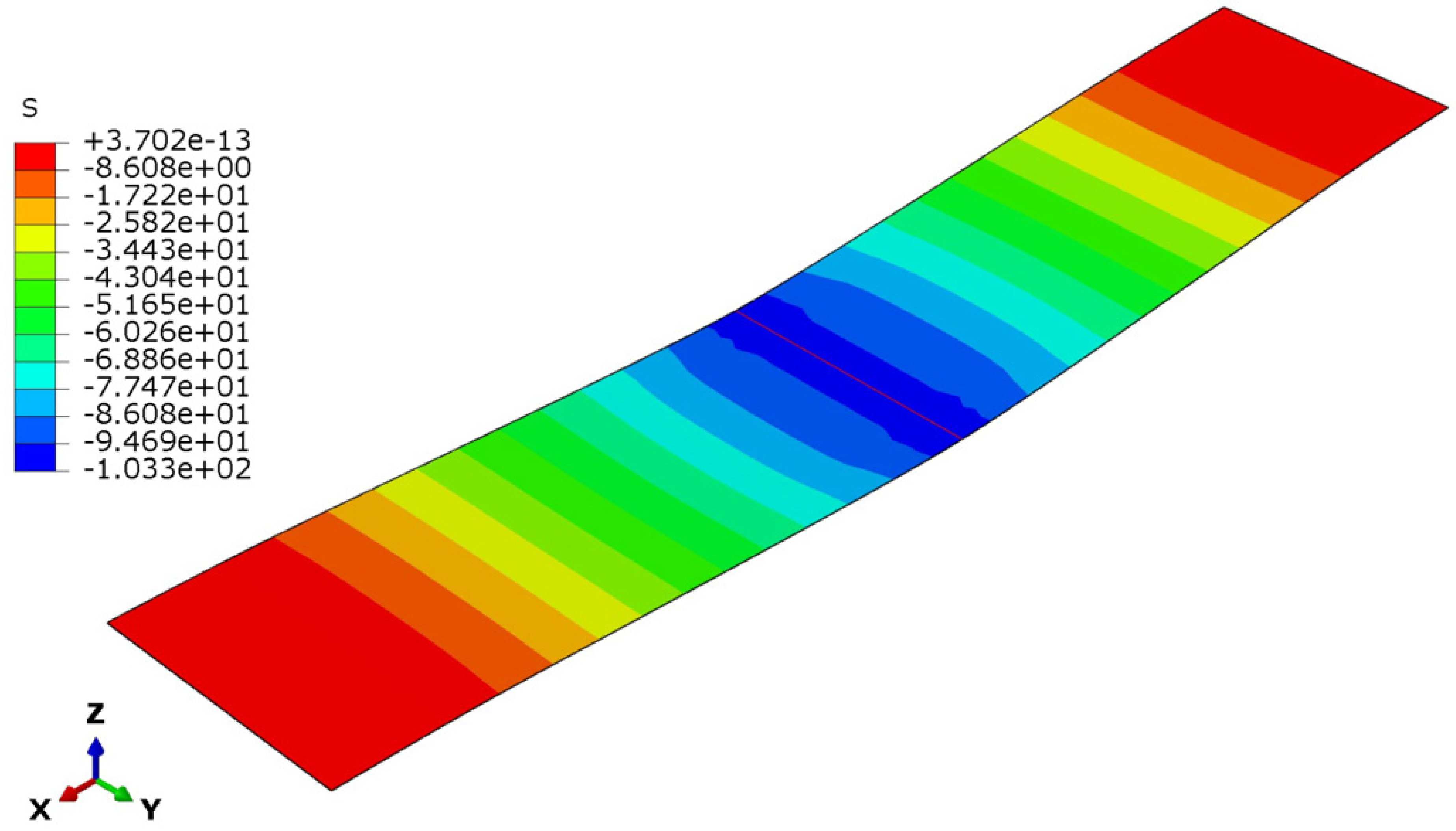
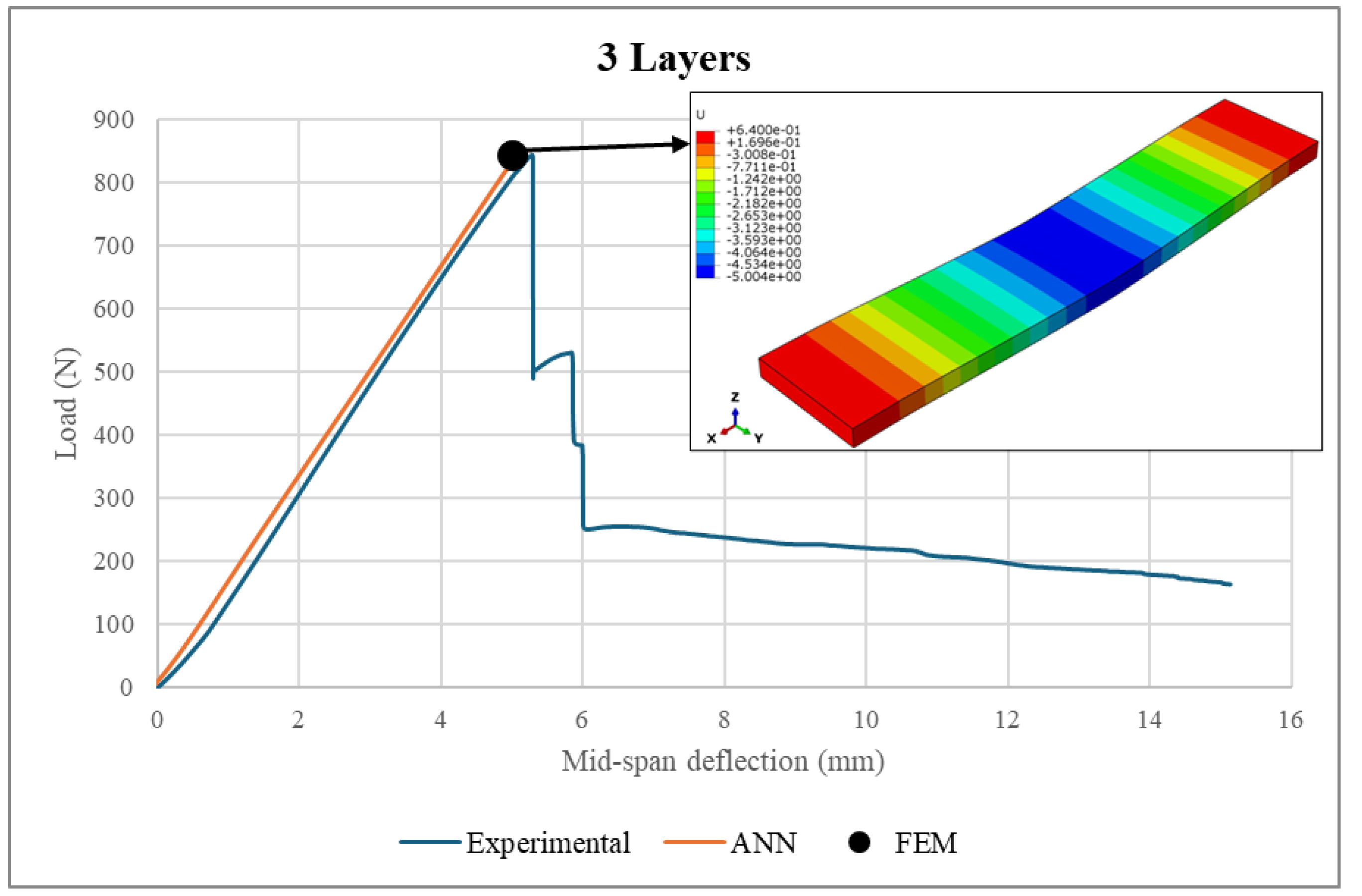
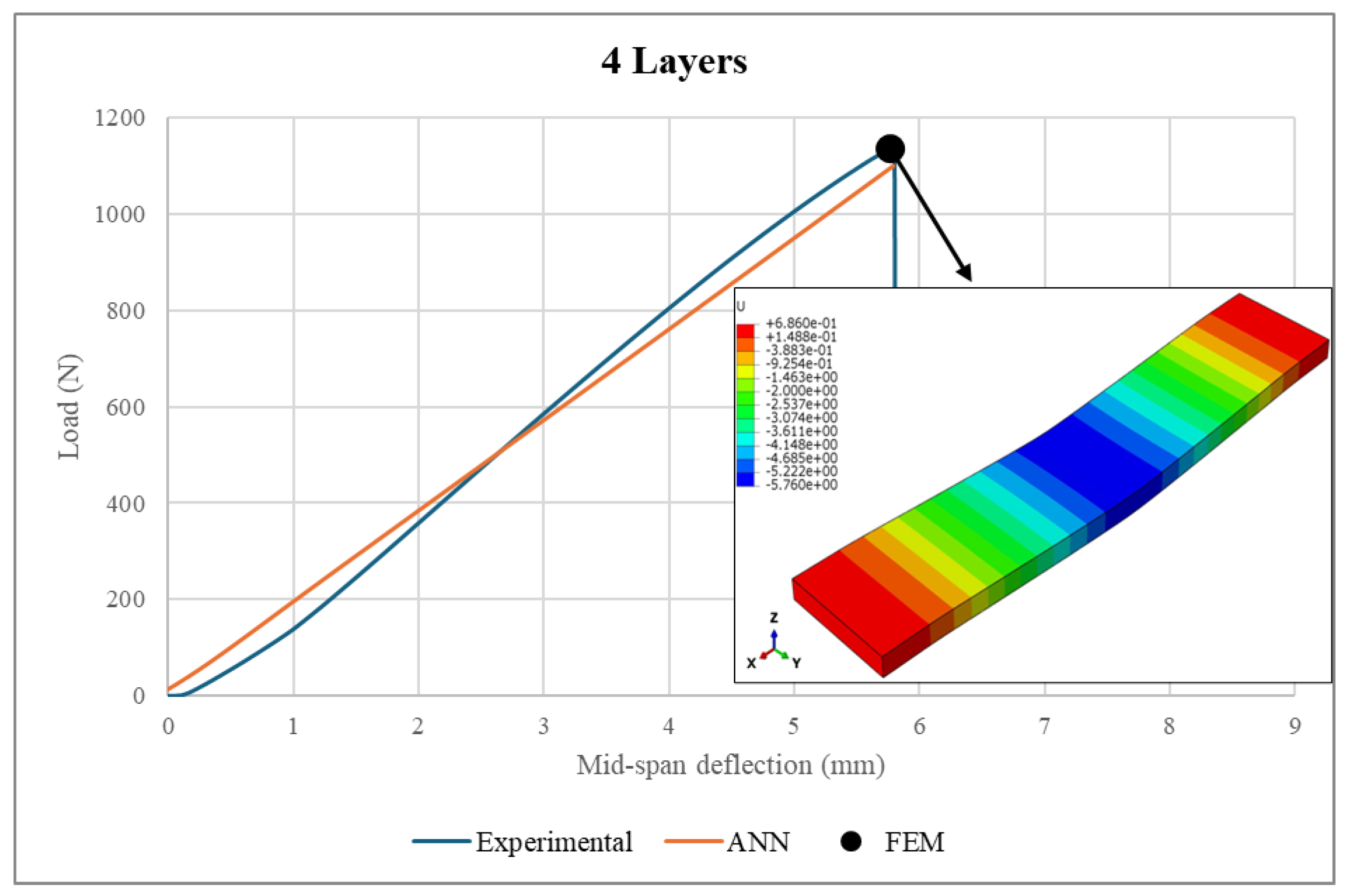
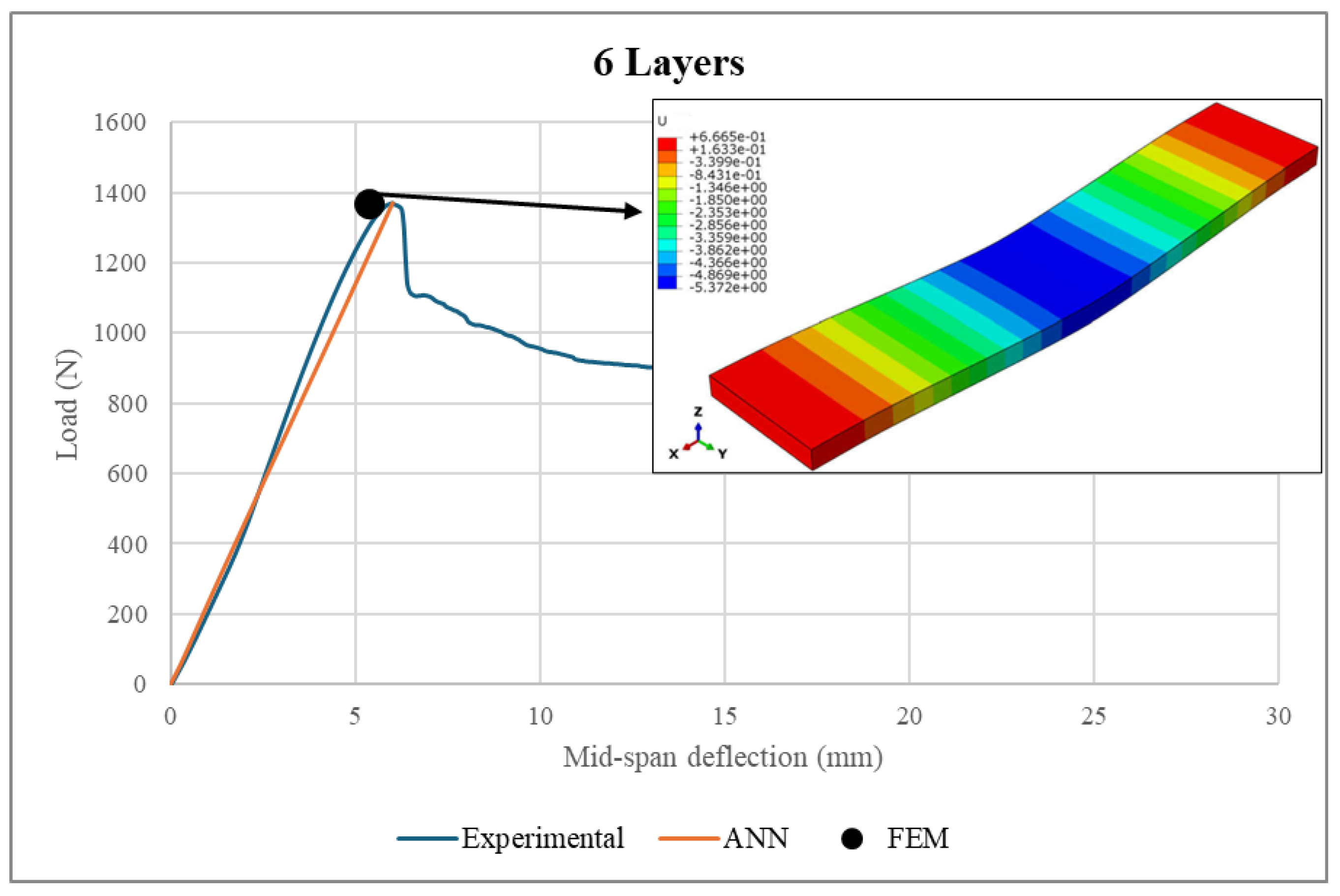
5. Validation of the Elaborated ANN Model with Experimental Measurements and FEM Results
6. Conclusions
Author Contributions
Funding
Institutional Review Board Statement
Data Availability Statement
Conflicts of Interest
References
- Sahib, M.M.; Kovacs, G. Elaboration of a multi-objective optimization method for high-speed train floors using composite sandwich structures. Appl. Sci. 2023, 13, 3876. [Google Scholar] [CrossRef] [Scilit]
- Bahrami-Novin, N.; Shaban, M.; Mazaheri, H. Flexural response of fiber-metal laminate face-sheet/corrugated core sandwich beams. J. Braz. Soc. Mech. Sci. Eng. 2022, 44, 183. [Google Scholar] [CrossRef] [Scilit]
- Song, C.H.; Giasin, K.; Saifullah, A.; Barouni, A. Investigation of the contact interface between natural fibre metal laminates under tension using finite element analysis (FEA). Polymers 2022, 14, 4650. [Google Scholar] [CrossRef] [Scilit]
- Salem, B.; Mkaddem, A.; Habak, M.; Dobah, Y.; Elfarhani, M.; Jarraya, A. Investigation of temperature at Al/glass fiber-reinforced polymer interfaces when drilling composites of different stacking arrangements. Polymers 2024, 16, 2823. [Google Scholar] [CrossRef] [Scilit]
- Szabo, F.J.; Szarka, A.V. Finite element study of rotating elements of a ventilator. Int. Rev. Mech. Eng. 2019, 13, 326–331. [Google Scholar] [CrossRef] [Scilit]
- Min, J.; Li, X.; Zhang, X.; Qi, C.; Huang, Y.; Liu, Y.; Xiao, W. Fabrication processes of metal-fiber reinforced polymer hybrid components: A review. Adv. Comp. Hybrid. Mater. 2022, 5, 651–678. [Google Scholar] [CrossRef] [Scilit]
- Amith Kumar, S.J.; Ajith Kumar, S.J. Low-velocity impact damage and energy absorption characteristics of stiffened syntactic foam core sandwich composites. Constr. Build. Mater. 2020, 246, 118412. [Google Scholar] [CrossRef] [Scilit]
- Vitale, J.P.; Francucci, G.; Xiong, J.; Stocchi, A. Failure mode maps of natural and synthetic fiber reinforced composite sandwich panels. Compos. Part. A Appl. Sci. Manuf. 2017, 94, 217–225. [Google Scholar] [CrossRef] [Scilit]
- Lezgy-Nazargah, M.; Trinh, L.C.; Wattanasakulpong, N. Finite element model for stability and vibration analyses of bi-directional FG curved sandwich beams. Int. J. Mech. Mater. Des. 2024, 20, 849–875. [Google Scholar] [CrossRef] [Scilit]
- Zhang, F.; Lu, Z.; Wang, D.; Fang, H. Mechanical properties of the composite sandwich structures with cold formed profiled steel plate and balsa wood core. Eng. Struct. 2024, 300, 117256. [Google Scholar] [CrossRef] [Scilit]
- Long, S.; Yao, X.; Wang, H.; Zhang, X. Failure analysis and modeling of foam sandwich laminates under impact loading. Compos. Struct. 2018, 197, 10–20. [Google Scholar] [CrossRef] [Scilit]
- Wang, A.-J.; McDowell, D.L. In-plane stiffness and yield strength of periodic metal honeycombs. J. Eng. Mater. Tech. 2004, 126, 137–156. [Google Scholar] [CrossRef] [Scilit]
- Qi, C.; Jiang, F.; Yu, C.; Yang, S. In-plane crushing response of tetra-chiral honeycombs. Int. J. Impact Eng. 2019, 130, 247–265. [Google Scholar] [CrossRef] [Scilit]
- Hadjiloizi, D.A.; Kalamkarov, A.L.; Saha, G.C.; Christoforidis, K.G.; Georgiades, A.V. Micromechanical modeling of thin composite and reinforced magnetoelectric plates–Effective elastic, piezoelectric and piezomagnetic coefficients. Compos. Struct. 2017, 172, 102–118. [Google Scholar] [CrossRef] [Scilit]
- Szava, R.I.; Szava, I.; Vlase, S.; Modrea, A. Determination of young’s moduli of the phases of composite materials reinforced with longitudinal fibers, by global measurements. Symmetry 2020, 12, 1607. [Google Scholar] [CrossRef] [Scilit]
- Todor, M.P.; Kiss, I.; Cioata, V.G. Development of fabric-reinforced polymer matrix composites using bio-based components from post-consumer textile waste. Mater. Today Proc. 2020, 45, 4150–4156. [Google Scholar] [CrossRef] [Scilit]
- Zhao, Z.; Ren, J.; Du, S.; Wang, X.; Wei, Z.; Zhang, Q.; Zhou, Y.; Yang, Z.; Lu, T.J. Bending response of 3D-printed titanium alloy sandwich panels with corrugated channel cores. Materials 2021, 14, 556. [Google Scholar] [CrossRef] [Scilit]
- Mohan, K.; Yip, T.H.; Idapalapati, S.; Chen, Z. Impact response of aluminum foam core sandwich structures. Mater. Sci. Eng. A 2011, 529, 94–101. [Google Scholar] [CrossRef] [Scilit]
- Mathieson, H.; Fam, A. Axial loading tests and simplified modeling of sandwich panels with GFRP skins and soft core at various slenderness ratios. J. Compos. Constr. 2015, 19, 04014040. [Google Scholar] [CrossRef] [Scilit]
- Xiao, Y.; Zhang, Z.; Zhu, Y.; Li, K.; Yang, W. The bending responses of sandwich panels with aluminium honeycomb core and CFRP skins used in electric vehicle body. Adv. Mater. Sci. Eng. 2018, 2018, 5750607. [Google Scholar] [CrossRef] [Scilit]
- Junaedi, H.; Khan, T.; Sebaey, T.A. Characteristics of carbon-fiber-reinforced polymer face sheet and glass-fiber-reinforced rigid polyurethane foam sandwich structures under flexural and compression tests. Materials 2023, 16, 5101. [Google Scholar] [CrossRef] [Scilit] [PubMed]
- Amir, A.L.; Ishak, M.R.; Yidris, N.; Zuhri, M.Y.M.; Asyraf, M.R.M.; Zakaria, S.Z.S. Influence of woven glass-fibre prepreg orientation on the flexural properties of a sustainable composite honeycomb sandwich panel for structural applications. Materials 2023, 16, 5021. [Google Scholar] [CrossRef] [Scilit] [PubMed]
- Lu, B.; Zhang, J.; Zheng, D.; Shen, C.; Zhang, T. A yield curve for bi-material structures and its application in energy absorption analysis of FML beam. Compos. Struct. 2023, 312, 116895. [Google Scholar] [CrossRef] [Scilit]
- Zhang, J.; Zhu, Y.; Li, K.; Yuan, H.; Du, J.; Qin, Q. Dynamic response of sandwich plates with GLARE face-sheets and honeycomb core under metal foam projectile impact: Experimental and numerical investigations. Int. J. Impact Eng. 2022, 164, 104201. [Google Scholar] [CrossRef] [Scilit]
- Jakubczak, P.; Podolak, P.; Droździel-Jurkiewicz, M. The assessment of the compressive strength of fibre metal laminates after low-velocity impact. Compos. Struct. 2023, 320, 117208. [Google Scholar] [CrossRef] [Scilit]
- Vieira, L.M.G.; Dobah, Y.; dos Santos, J.C.; Panzera, T.H.; Campos Rubio, J.C.; Scarpa, F. Impact properties of novel natural fibre metal laminated composite materials. Appl. Sci. 2022, 12, 1869. [Google Scholar] [CrossRef] [Scilit]
- Gao, S.; Hou, W.; Xing, J.; Sang, L. Numerical and experimental investigation of flexural properties and damage behavior of CFRTP/Al laminates with different stacking sequence. Appl. Sci. 2023, 13, 1667. [Google Scholar] [CrossRef] [Scilit]
- Lefik, M.; Schrefler, B.A. Artificial neural network as an incremental non-linear constitutive model for a finite element code. Comput. Methods Appl. Mech. Eng. 2003, 192, 3265–3283. [Google Scholar] [CrossRef] [Scilit]
- Lefik, M.; Boso, D.P.; Schrefler, B.A. Artificial neural networks in numerical modelling of composites. Comput. Methods Appl. Mech. Eng. 2009, 198, 1785–1804. [Google Scholar] [CrossRef] [Scilit]
- Kamarian, S.; Teimouri, A.; Alinia, M.; Saber-Samandari, S.; Song, J. Machine learning for bending behavior of sandwich beams with 3D-printed core and natural fiber-reinforced composite face sheets. Polym. Compos. 2024, 45, 3043–3054. [Google Scholar] [CrossRef] [Scilit]
- Fang, X.; Shen, H.S.; Wang, H. Three-point bending behaviors of sandwich beams with data-driven 3D auxetic lattice core based on deep learning. Compos. Struct. 2025, 354, 118751. [Google Scholar] [CrossRef] [Scilit]
- Sheini Dashtgoli, D.; Taghizadeh, S.; Macconi, L.; Concli, F. Comparative analysis of machine learning models for predicting the mechanical behavior of bio-based cellular composite sandwich structures. Materials 2024, 17, 3493. [Google Scholar] [CrossRef] [Scilit]
- Liu, Y.; Li, M.; Lu, X.; Zhu, X. Failure mechanism and strength prediction model of T-joint of composite sandwich structure. Metals 2021, 11, 1197. [Google Scholar] [CrossRef] [Scilit]
- Wong, Y.J.; Arumugasamy, S.K.; Mustapha, K.B. Development of a computational predictive model for the nonlinear in-plane compressive response of sandwich panels with bio-foam. Compos. Struct. 2019, 212, 423–433. [Google Scholar] [CrossRef] [Scilit]
- Sahib, M.M.; Kovacs, G. Using Artificial Neural Network in the reverse design of a composite sandwich structure. Struct. Eng. Mech. Int. J. 2023, 85, 635–644. [Google Scholar]
- Akbari, M.; Asadi, P.; Zolghadr, P.; Khalkhali, A. Multicriteria optimization of mechanical properties of aluminum composites reinforced with different reinforcing particles type. Proc. Inst. Mech. Eng. Part. E J. Process Mech. Eng. 2018, 232, 323–337. [Google Scholar] [CrossRef] [Scilit]
- Zhou, X.; Shi, S.; Liu, Z.; Sun, Z.; Chen, B. In-plane compression property of S-shaped reinforced honeycomb cores. Mater. Des. 2023, 235, 112442. [Google Scholar] [CrossRef] [Scilit]
- Dababneh, O.; Kipouros, T.; Whidborne, J.F. Application of an efficient gradient-based optimization strategy for aircraft wing structures. Aerospace 2018, 5, 3. [Google Scholar] [CrossRef] [Scilit]
- HexCel Composites. Honeycomb Sandwich Design Technology. HexWeb Honeycomb Sandw Des Technol, AGU 075b:1–28. 2000. Available online: https://www.hexcel.com/user_area/content_media/raw/Honeycomb_Sandwich_Design_Technology.pdf (accessed on 14 November 2024).
- SGL Carbon. t-CF Prepreg C W245 SGL Laminate Properties. 2019. Available online: https://shop.swiss-composite.ch/shop/resources/downloads/t-CF_Prepreg_C_W245_SGL-laminateigenschaften-e.pdf (accessed on 10 September 2024).
- Zenkert, D. An Introduction to Sandwich Construction; Engineering Materials Advisory Services: Sheffield, UK, 1995. [Google Scholar]
- Sahib, M.M.; Kovacs, G. Multi-objective optimization of composite sandwich structures using Artificial Neural Networks and Genetic Algorithm. Results Eng. 2024, 21, 101937. [Google Scholar] [CrossRef] [Scilit]
- Wang, K.; Xu, H.; Qu, F.; Wang, X.; Shi, Y. A reliability analysis framework with Monte Carlo simulation for weld structure of crane’s beam. In AIP Conference Proceedings; AIP Publishing: Melville, NY, USA, 2018; Volume 1955, No. 1. [Google Scholar]
- Basheer, I.A.; Hajmeer, M. Artificial neural networks: Fundamentals, computing, design, and application. J. Microbiol. Methods 2000, 43, 3–31. [Google Scholar] [CrossRef] [Scilit] [PubMed]
- Nguyen, T.N.; Zhang, D.; Singhatanadgid, P. Fast analysis approach for instability problems of thin shells utilizing ANNs and a Bayesian regularization back-propagation algorithm. Nonlinear Eng. 2024, 13, 20240012. [Google Scholar] [CrossRef] [Scilit]
- Azizi, S.; Awad, M.M.; Ahmadloo, E. Prediction of water holdup in vertical and inclined oil-water two-phase flow using artificial neural network. Int. J. Multiphase Flow 2016, 80, 181–187. [Google Scholar] [CrossRef] [Scilit]
- Mostafa, A.; Shankar, K.; Morozov, E.V. Behaviour of PU-foam/glass-fibre composite sandwich panels under flexural static load. Mater. Struct. 2015, 48, 1545–1559. [Google Scholar] [CrossRef] [Scilit]
- Yuan, J.; Zhang, L.; Huo, Z. An equivalent modeling method for honeycomb sandwich structure based on orthogonal anisotropic solid element. Int. J. Aeronaut. Space Sci. 2020, 21, 957–969. [Google Scholar] [CrossRef] [Scilit]
- ASTM C393/C 393M-06; Standard Test Method for Flexural Properties of Sandwich Constructions. ASTM International: West Conshohocken, PA, USA, 2017.




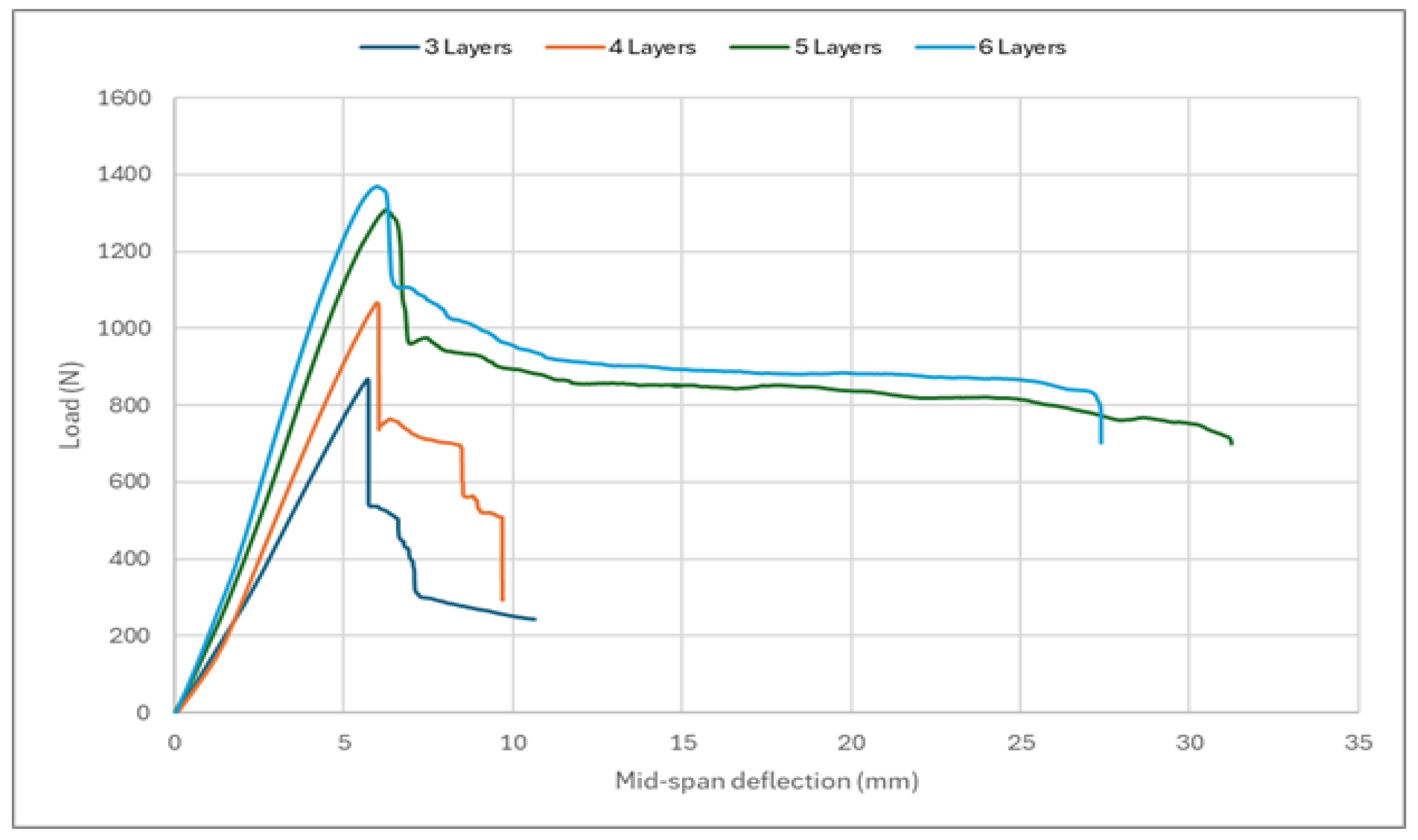
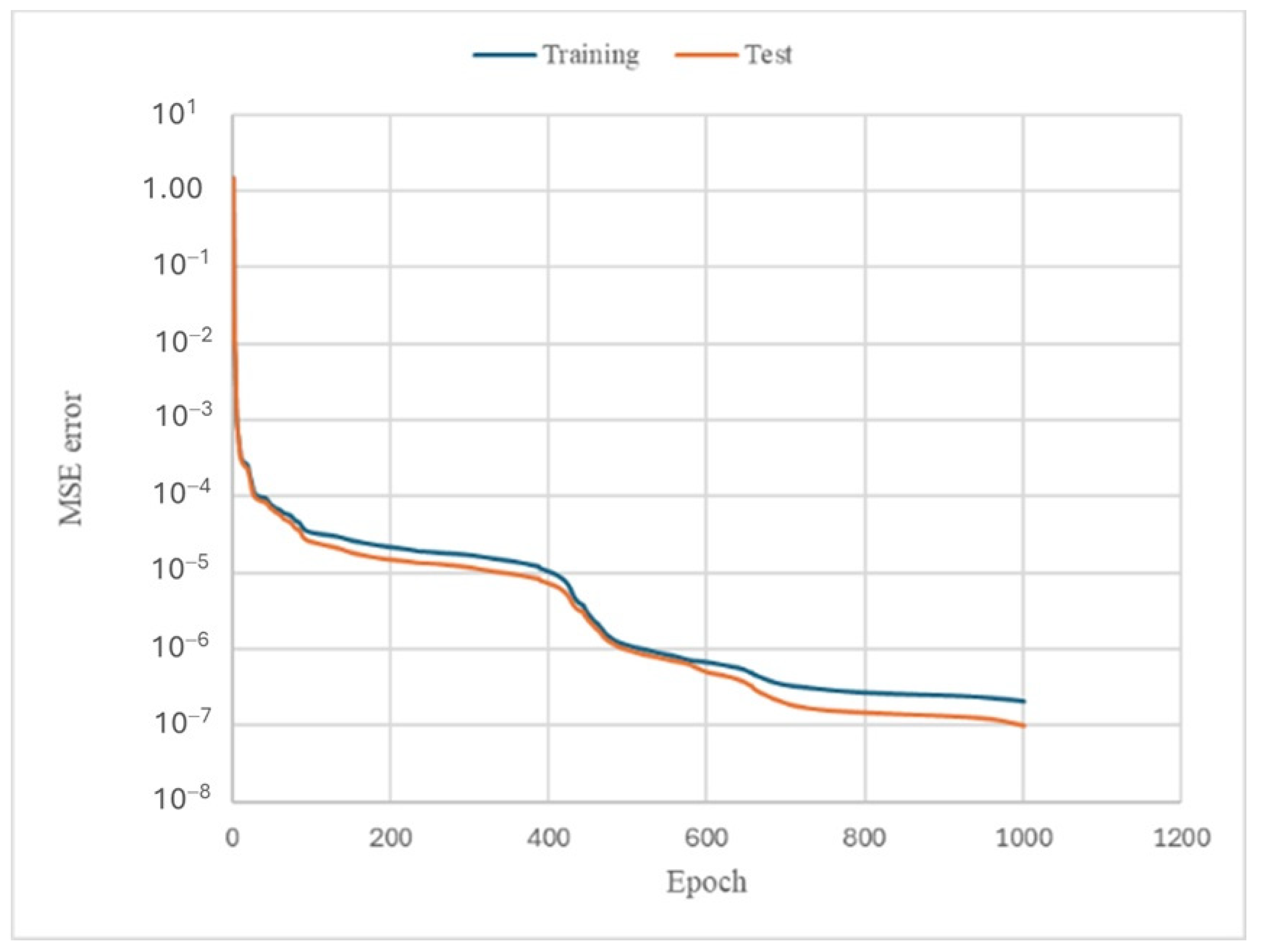


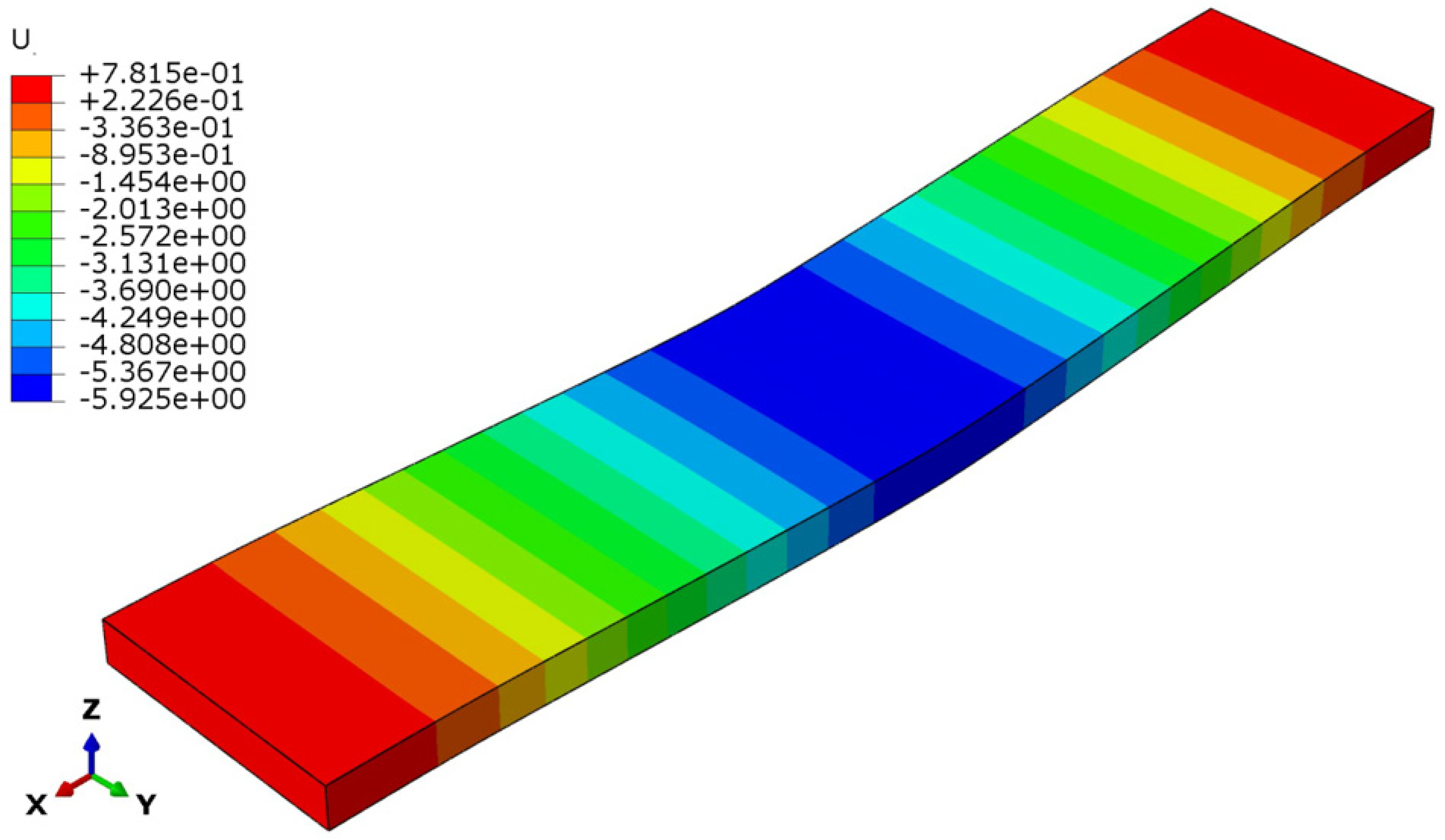
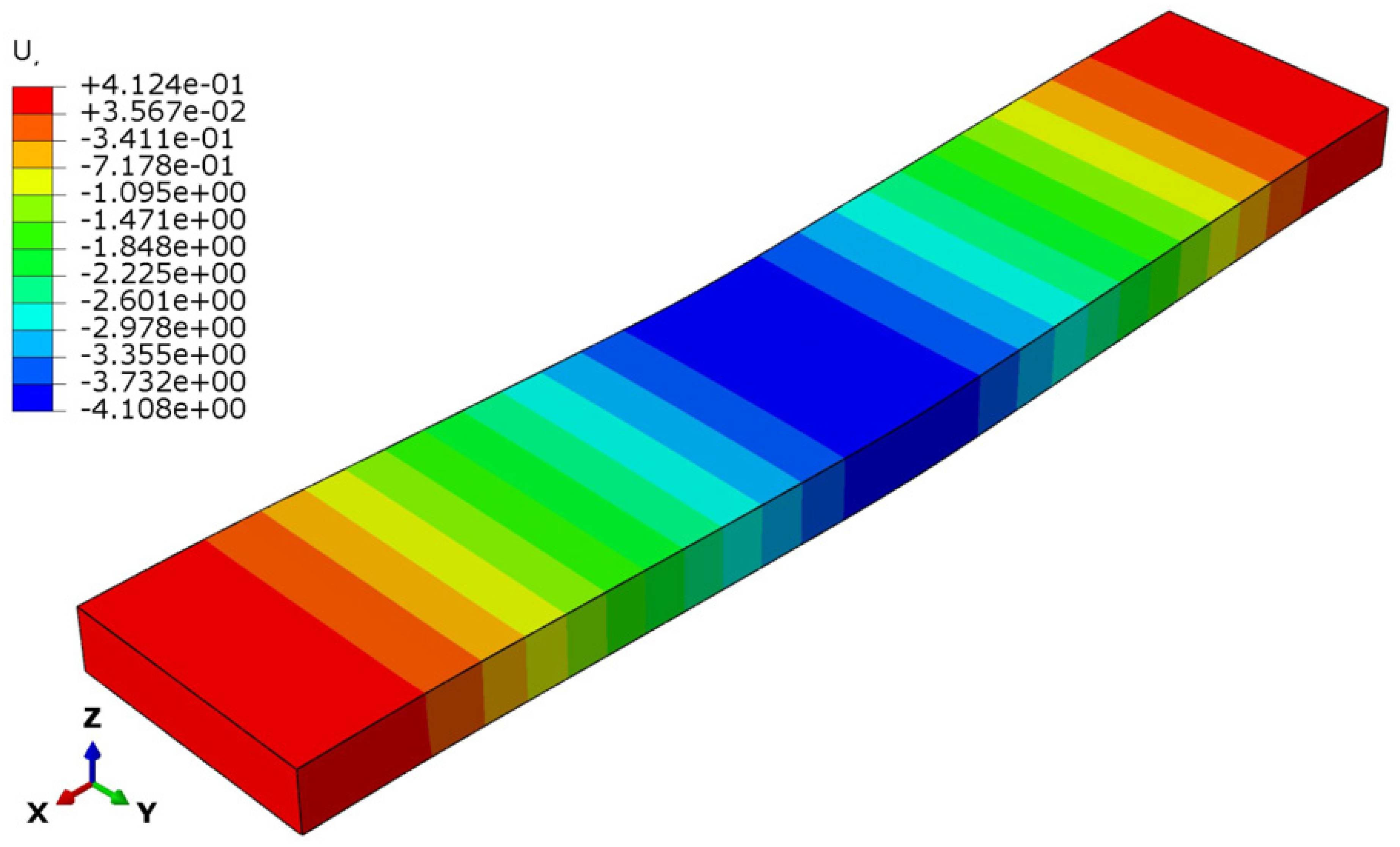





| Material Properties | Values | ||
|---|---|---|---|
| Al | WGFRP | WCFRP | |
| Longitudinal modulus: Ex [MPa] | 70,000 | 20,000 | 70,000 |
| Transverse modulus: Ey [MPa] | 70,000 | 17,000 | 60,000 |
| In-plane shear modulus: Gxy [MPa] | 26,000 | 3500 | 4500 |
| Major Poisson’s ratio: νxy [-] | 0.33 | 0.13 | 0.05 |
| Density: ρf [kg/m3] | 2780 | 1.88 | 1.5 |
| Lamina thickness: tl [mm] | 0.2 | 0.25 | 0.23 |
| Longitudinal tensile strength: σxt [MPa] | 186 | 600 | 800 |
| Longitudinal compressive strength: σxc [MPa] | 186 | 600 | 800 |
| Transverse tensile strength: σyt [MPa] | 186 | 550 | 700 |
| Transverse compressive strength: σyc [MPa] | 186 | 550 | 700 |
| In-plane shear strength: σxy [MPa] | 110 | 55 | 60 |
| Density | Mechanical Properties in x Direction | Mechanical Properties in y Direction | Mechanical Properties in z Direction | |||
|---|---|---|---|---|---|---|
| ρc [kg/m3] | Strength: σxz [MPa] | Modulus: Gxz [MPa] | Strength: σyz [MPa] | Modulus: Gyz [MPa] | Strength: σzz [MPa] | Modulus: Ezz [MPa] |
| Al honeycomb | ||||||
| 29 | 0.4 | 55 | 0.65 | 110 | 0.9 | 165 |
| 37 | 0.45 | 90 | 0.8 | 190 | 1.4 | 240 |
| 42 | 0.5 | 100 | 0.9 | 220 | 1.5 | 275 |
| 54 | 0.85 | 130 | 1.4 | 260 | 2.5 | 540 |
| 59 | 0.9 | 140 | 1.45 | 280 | 2.6 | 630 |
| 83 | 1.5 | 220 | 2.4 | 440 | 4.6 | 1000 |
| Nomex honeycomb | ||||||
| 29 | 0.28 | 12 | 0.52 | 22 | 0.54 | 17 |
| 48 | 0.62 | 24 | 1.16 | 38 | 1.9 | 25 |
| 64 | 0.82 | 30 | 1.48 | 50 | 3.7 | 35 |
| 80 | 1.05 | 38 | 1.95 | 68 | 4.7 | 40 |
| 96 | 1.42 | 56 | 2.45 | 86 | 6.6 | 50 |
| 123 | 1.76 | 71 | 2.9 | 98 | 10 | 60 |
| Design Variables | Remarks | |
|---|---|---|
| Core density | Al and Nomex cores in Table 2 | |
| Core thickness | [mm] | Continuous value |
| Face sheet materials | WCFRP layer: specified as No. 1 WGFRP layer: specified as No. 2 Aluminum layer: specified as No. 3 | Integer values, discrete variable |
| Layer number | Nl: 3, 4, 5 or 6 [layers] | Integer values, discrete variable |
| Applied load | [N] | Continuous value |
| Structural Alternatives (Design No.) | Face Sheet Composition FML (Hybrid) | Core Type (ρ) [kg/m3] | Core Thickness (tc) [mm] | Load (P) [N] |
|---|---|---|---|---|
| Design 1 | 2 layers WCFRP + 2 layers WGFRP + 2 layers Al (same face sheets in each of the 3 alternatives) | Nomex honeycomb core 48 | 8 | 1370.4 |
| Design 2 | Nomex honeycomb core 48 | 12 | ||
| Design 3 | Al honeycomb core 83 | 8 |
| Structural Alternatives (Design No.) | Maximum Deflection [mm] | Maximum Stress in the Face Sheet [MPa] | ||||
|---|---|---|---|---|---|---|
| ANN Prediction | FEM | Difference [%] | ANN Prediction | FEM | Difference [%] | |
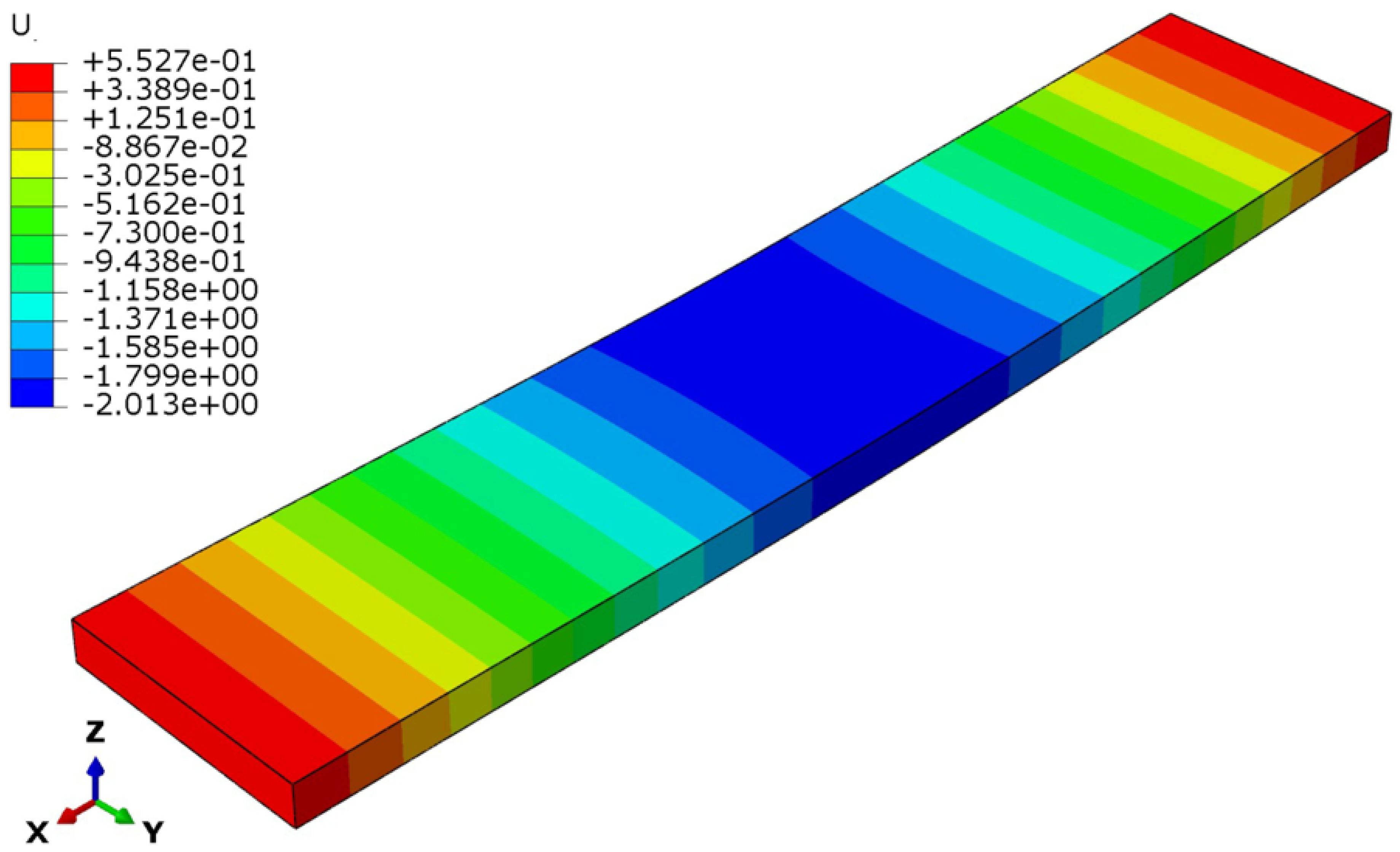
| Design 1 Face sheets: FML (Hybrid) Core type: Nomex (ρ = 48 kg/m3) Core thickness (tc): 8 mm | 6.45 | 5.925 | 8.1 | 107.4 | 103.3 | 3.8 |
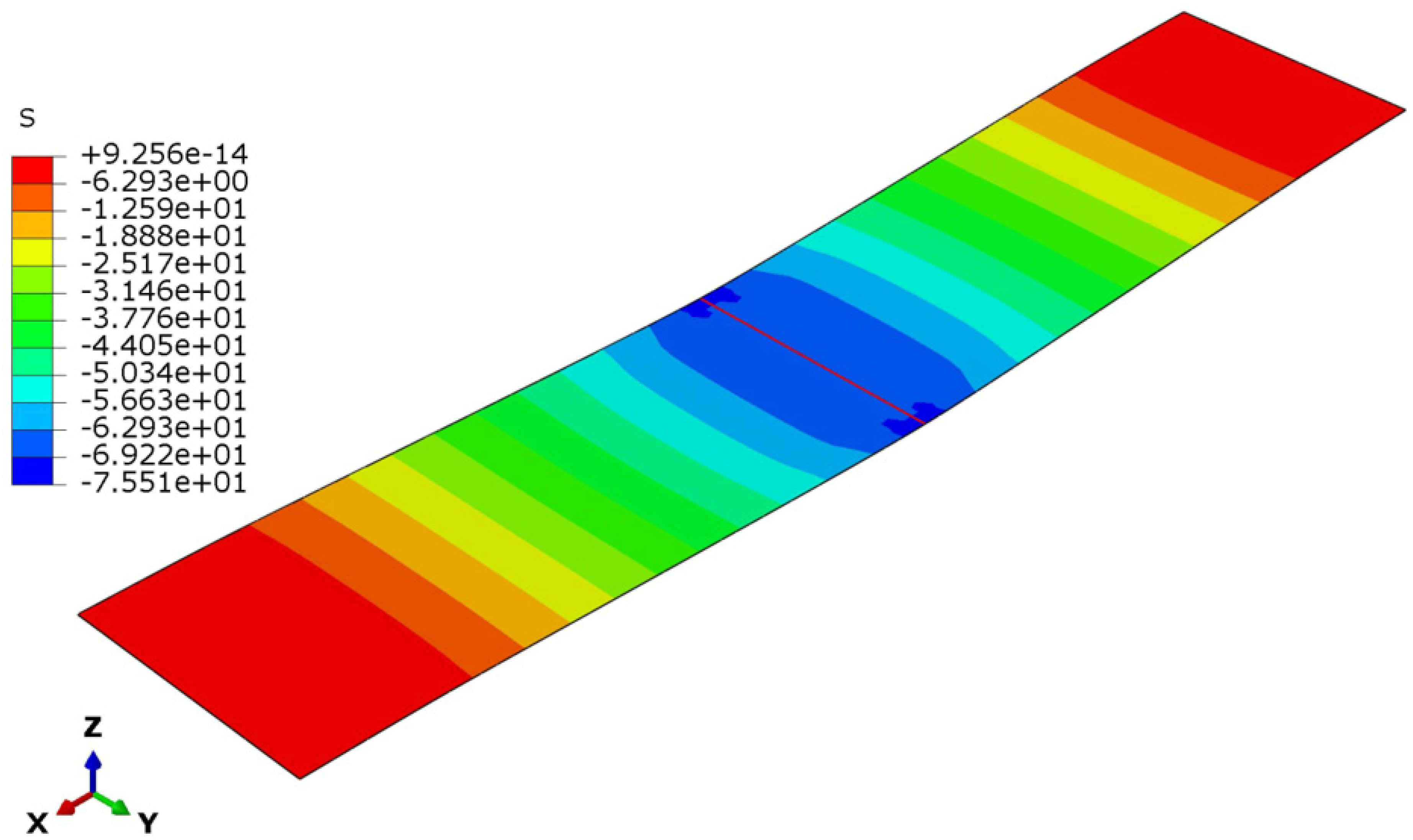
| Design 2 Face sheets: FML (Hybrid) Core type: Nomex (ρ = 48 kg/m3) Core thickness (tc): 12 mm | 4.42 | 4.1 | 7.2 | 75.23 | 75.5 | 0.4 |
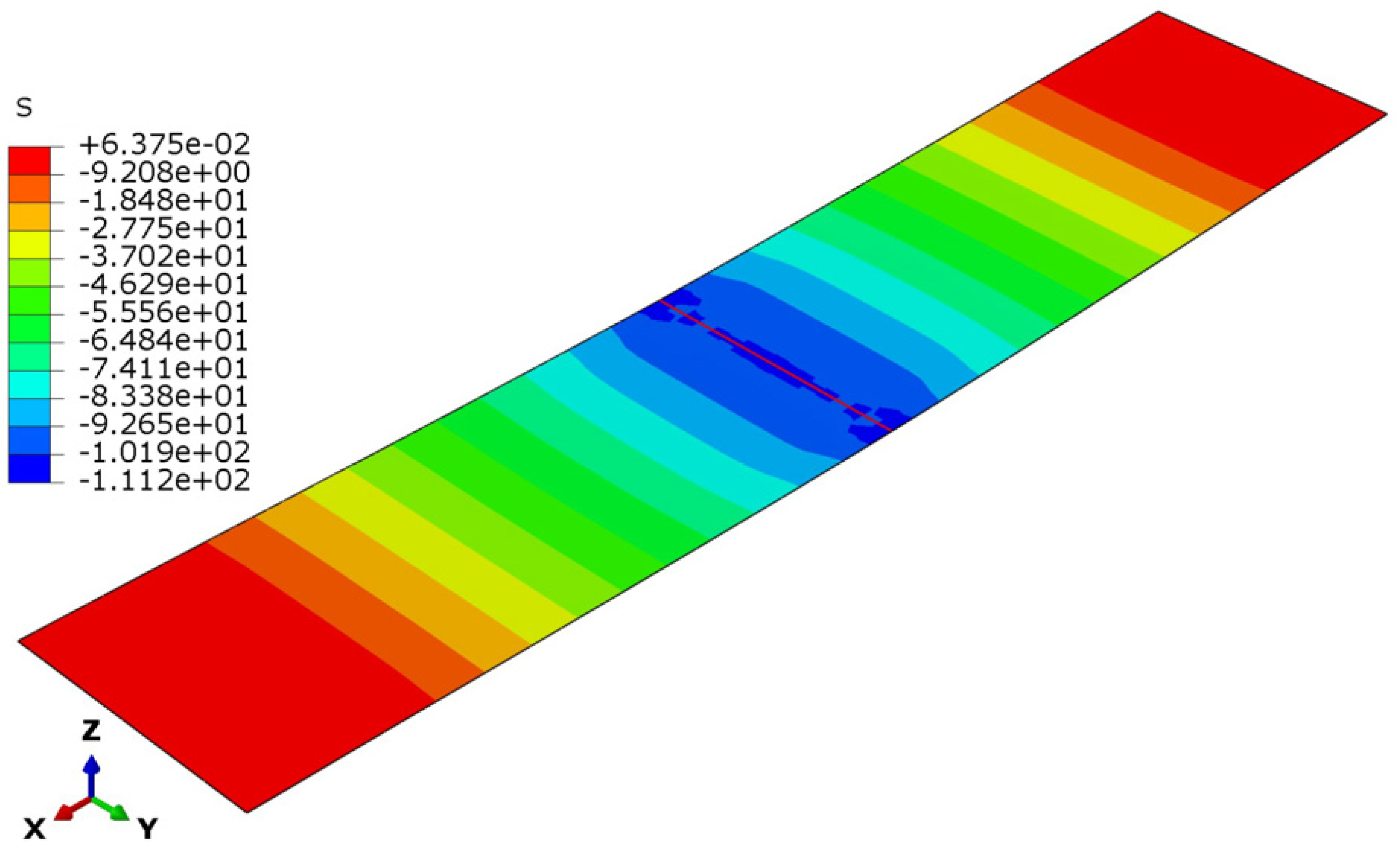
| Design 3 Face sheets: FML (Hybrid) Core type: Al (ρ = 83 kg/m3) Core thickness (tc): 8 mm | 2.09 | 2.01 | 3.8 | 107.44 | 111.2 | 3.5 |
| No. of Layers in the Face Sheets | Applied Load [N] | Maximum Deflection | Face Sheet Stress | ||||||
|---|---|---|---|---|---|---|---|---|---|
| Experimental [mm] | FEM [mm] | ANN [mm] | Error (ANN vs. Exp. Test) [%] | Error (ANN vs. FEM) [%] | FEM [MPa] | ANN [MPa] | Error (ANN vs. FEM) [%] | ||
| 3 | 842.691 | 5.28 | 5.00 | 5.064 | 4.16 | 1.26 | 150.1 | 140.7 | 6.21 |
| 4 | 1137.008 | 5.78 | 5.76 | 5.983 | 3.51 | 3.73 | 145.0 | 138.7 | 4.3 |
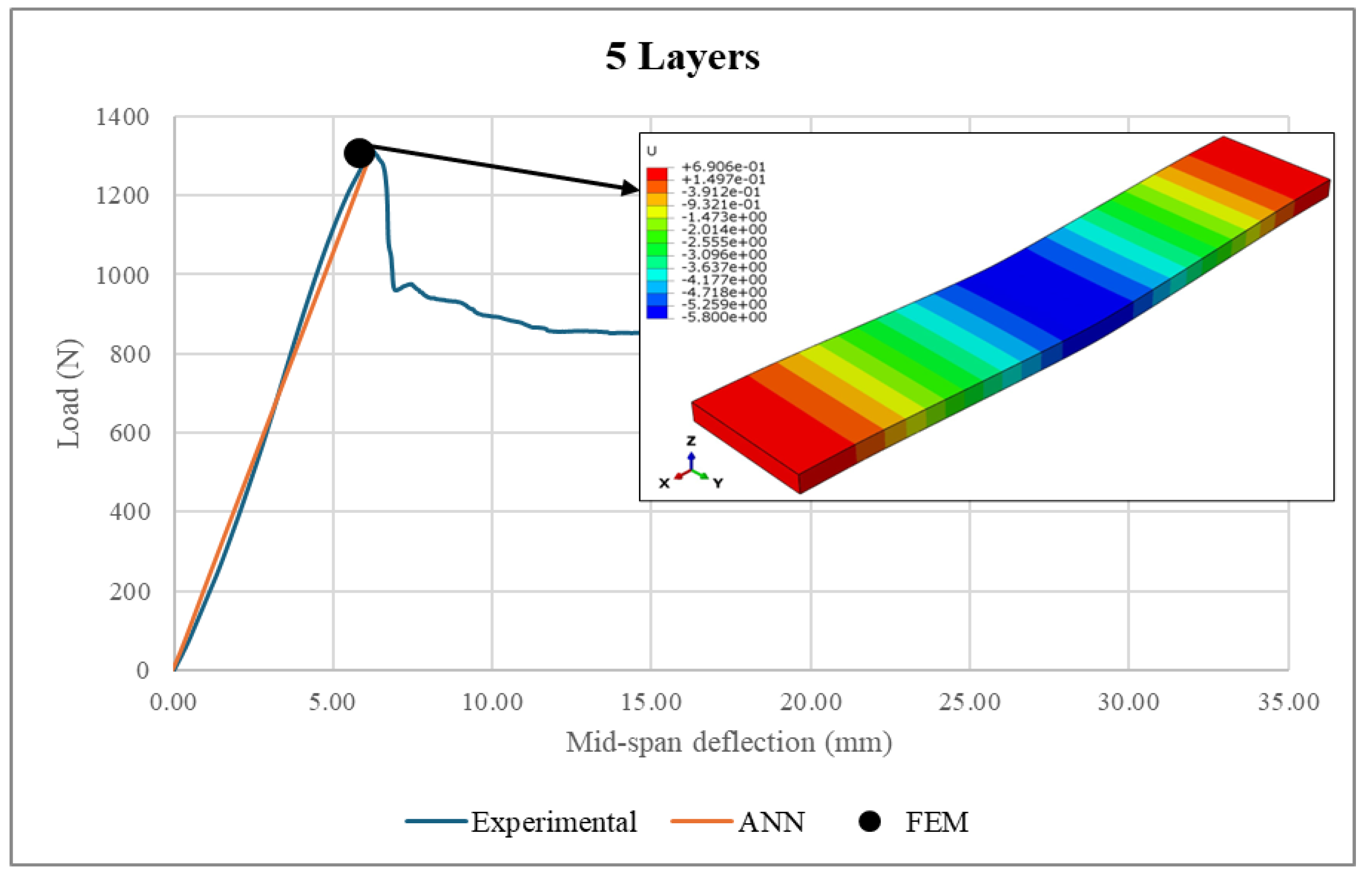
| 5 | 1310.127 | 6.29 | 5.80 | 6.199 | 1.54 | 6.44 | 122.6 | 124.1 | 1.26 |
| 6 | 1370.138 | 6.00 | 5.37 | 6.006 | 0.11 | 10.59 | 107.6 | 106.0 | 1.42 |
Disclaimer/Publisher’s Note: The statements, opinions and data contained in all publications are solely those of the individual author(s) and contributor(s) and not of MDPI and/or the editor(s). MDPI and/or the editor(s) disclaim responsibility for any injury to people or property resulting from any ideas, methods, instructions or products referred to in the content. |
© 2025 by the authors. Licensee MDPI, Basel, Switzerland. This article is an open access article distributed under the terms and conditions of the Creative Commons Attribution (CC BY) license (https://creativecommons.org/licenses/by/4.0/).
Share and Cite
Sahib, M.M.; Kovács, G. Using Artificial Neural Networks to Predict the Bending Behavior of Composite Sandwich Structures. Polymers 2025, 17, 337. https://doi.org/10.3390/polym17030337
Sahib MM, Kovács G. Using Artificial Neural Networks to Predict the Bending Behavior of Composite Sandwich Structures. Polymers. 2025; 17(3):337. https://doi.org/10.3390/polym17030337
Chicago/Turabian StyleSahib, Mortda Mohammed, and György Kovács. 2025. "Using Artificial Neural Networks to Predict the Bending Behavior of Composite Sandwich Structures" Polymers 17, no. 3: 337. https://doi.org/10.3390/polym17030337
APA StyleSahib, M. M., & Kovács, G. (2025). Using Artificial Neural Networks to Predict the Bending Behavior of Composite Sandwich Structures. Polymers, 17(3), 337. https://doi.org/10.3390/polym17030337