4.1. Preparation and Characterization of Vinyl Esters
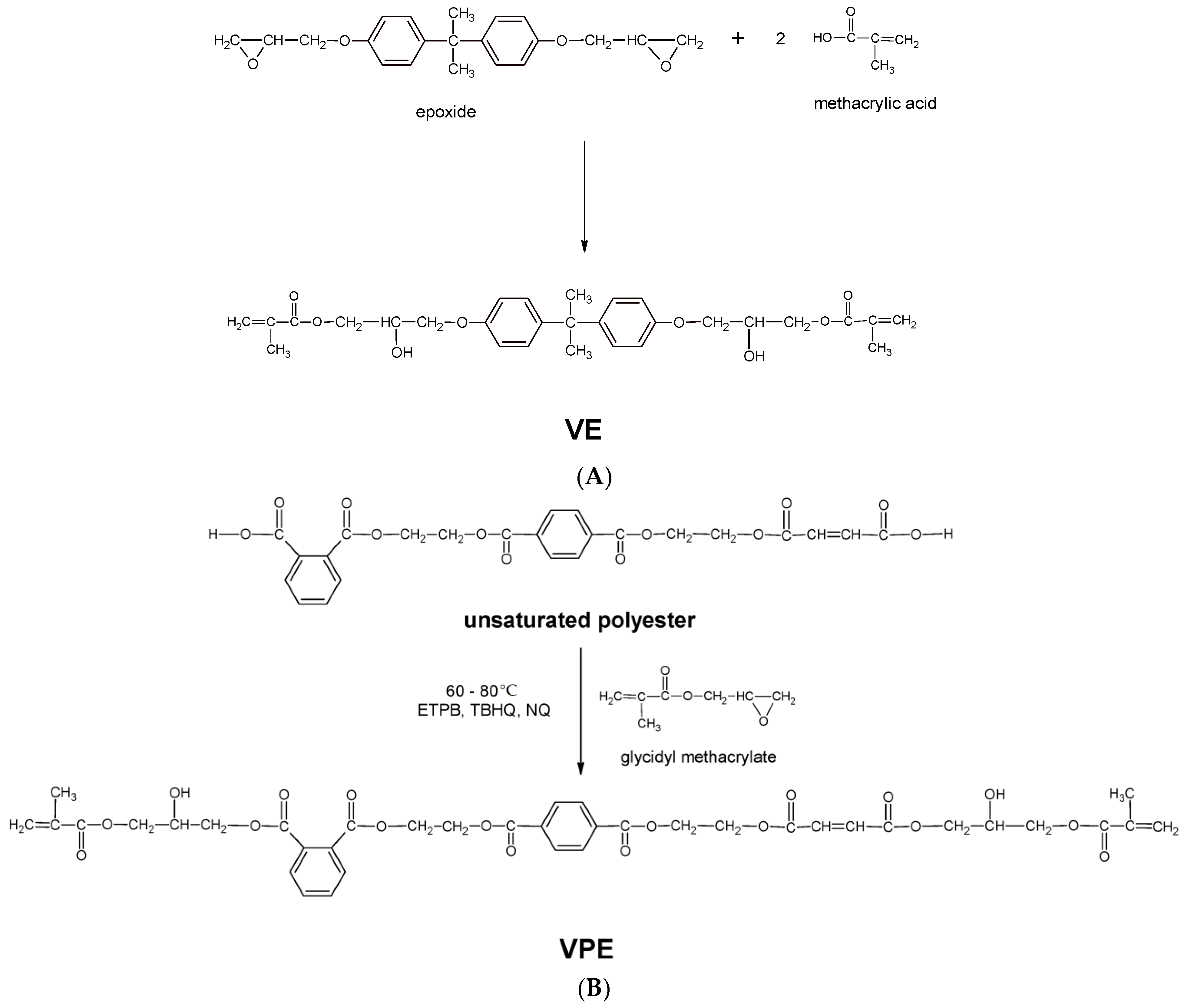
The schematic synthesis of vinyl ester resins is presented in
Figure 1. Vinyl ester resins contain ester groups in the structure of the ester chains and vinyl groups at the ends of the chains. Their exceptional resistance features, which distinguish them from ordinary polyesters, result from the use of bisphenol-A derivatives for their synthesis (
Figure 1A).
Bisphenol A (BPA) is a precursor in the production of VERs [
31,
32]. There is growing evidence that BPA can have adverse effects on human health [
10,
33,
34]. Recent studies suggest that bisphenol A exposure in adults may be associated with reduced ovarian response, miscarriage or premature birth, reduced sexual function in men, altered sex hormones and thyroid levels, and cardiovascular disease [
34,
35,
36,
37].
In order to eliminate toxic bisphenol A and, at the same time, obtain an analog of vinyl ester resin, a decision was made to synthesize it based on available polyesters. The process involved the addition reaction of glycidyl methacrylate to the carboxyl groups of polyester with a large acid number. In our research, the polyester was obtained in the polycondensation reaction of phthalic and maleic anhydrides with bis(2-hydroxyethyl)terephthalate (BHET), a hydroxyl-containing compound supplied by Lerg S.A., a company professionally engaged in the production of unsaturated polyester resins. (
Figure 1B).
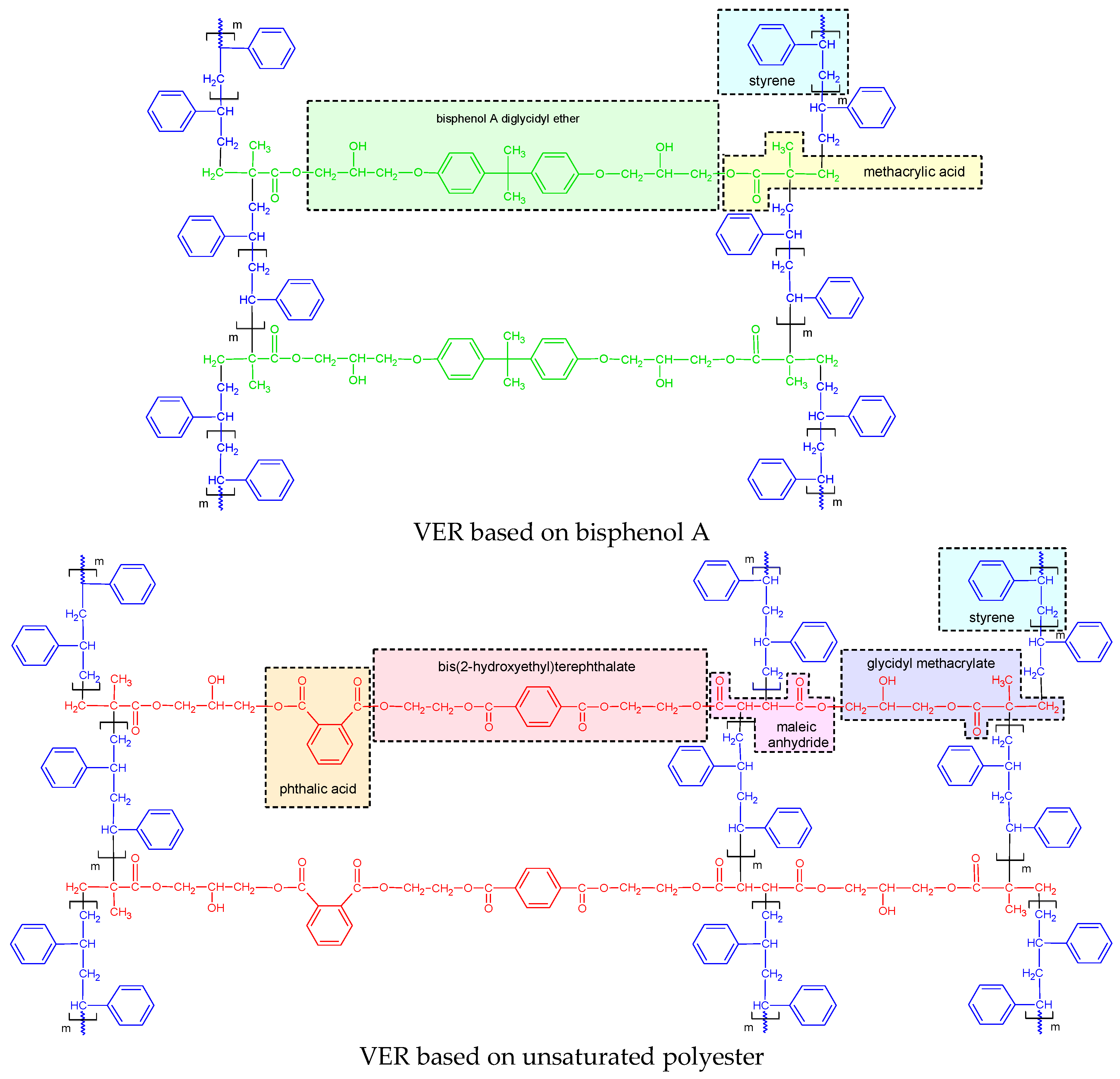
The results of the chemical structure studies of the resins used for composite preparation are given in
Figure 2. Spectrometric identification of molecular organic structures was based on Silverstein’s textbook [
38].
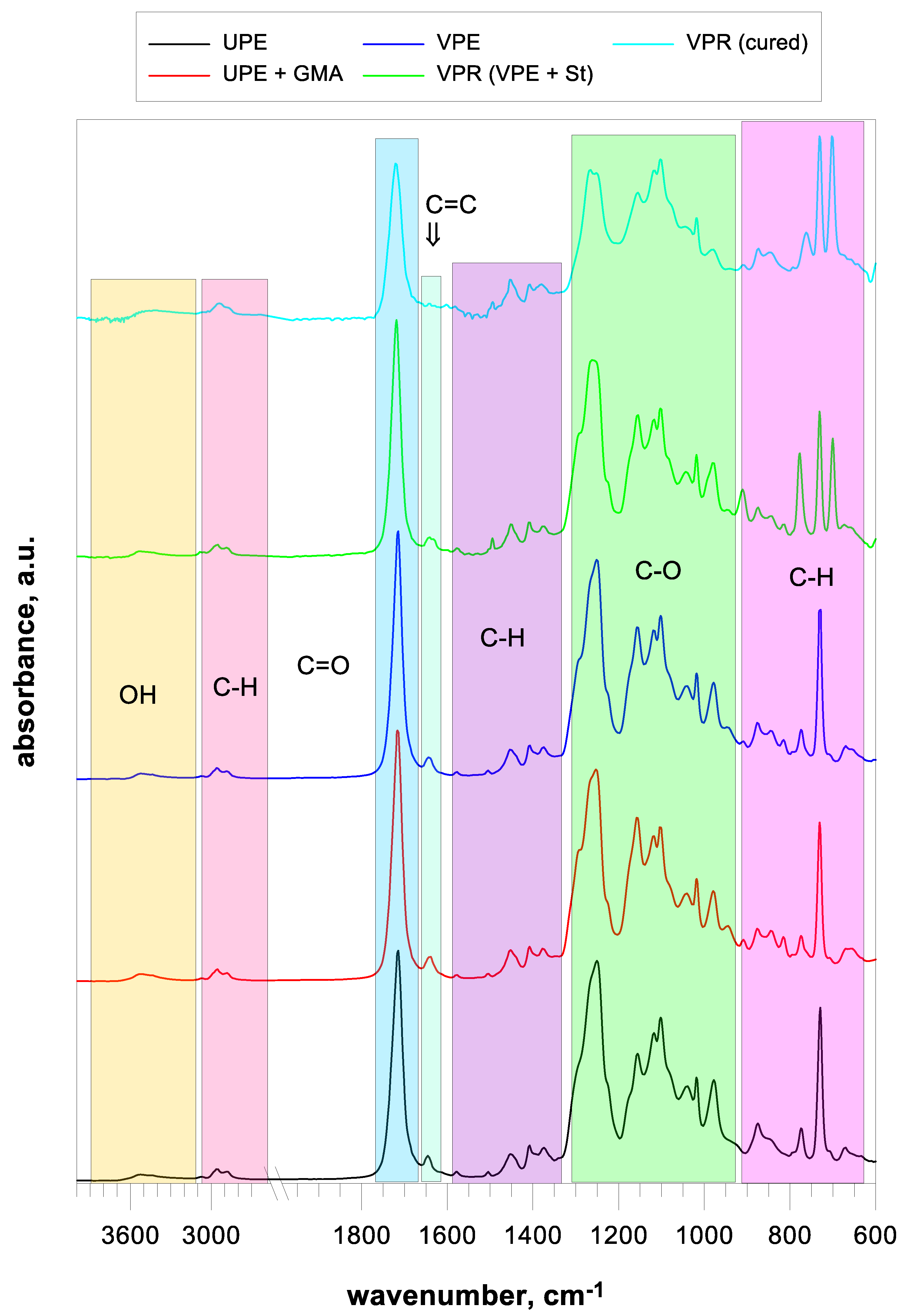
The FT-IR spectrum of the starting unsaturated polyester (UPE) is presented in
Figure 3. A very broad peak of 3400–2400 cm
−1 corresponds to the OH vibrations of the carboxyl end groups of the polyesters. Characteristic absorption bands corresponding to the C-H stretching of the aromatic ring are located above 3000 cm
−1, while symmetric and anti-symmetric aliphatic stretching occurs at 2956 and 2882 cm
−1.
The main absorption bands corresponding to the PET structure were confirmed by the vibrations of the bands at 1715 cm−1 (C=O stretching), 1250 cm−1 (asymmetric stretching of the C-O-C ester), 1156 and 1118 cm−1 (para bis substituted aromatic ring), and 1041 cm−1 (symmetric stretching of the C-O-C ester). Multiple C-O and C-O-C stretching appeared in the spectrum at 1102, 1018, and 910 cm−1. The peak at 730 cm−1 corresponds to the CH out-of-plane scissoring vibration of the phenyl ring in bis(2-hydroxyethyl) terephthalate.
The absorption bands of fumarate, originating from the maleic fragment, are located at 1645 cm−1 (C=C stretching) and 978 cm−1 (trans C=C wagging).
The characteristic bands for C-C and CH vibrations in the rings are presented at 1578 cm−1 (phenyl ring C=C), 1505, and 1408 cm−1 (aromatic C-H and C-C bonds stretching the phenyl ring). In contrast, the bands at 1452 and 1375 cm−1 correspond to symmetric and asymmetric C-H bending vibrations. Three characteristic absorption peaks at 774, 729, and 672 cm−1 are related to the C-H out-of-plane deformation vibration.
Infrared spectroscopy was the basic tool to confirm the course of modification of unsaturated polyester. In the FT-IR spectrum of UPE + GMA, additional absorption bands appear when glycidyl methacrylate is added to unsaturated polyester.
The band at 3077 cm−1 is associated with the asymmetric =CH stretching of the vinyl group, while the peaks at 910 and 845 cm−1 correspond to the vibration bands of the epoxy ring from GMA.
As the addition reaction of glycidyl methacrylate to the terminal carboxyl groups of polyester proceeds, the intensity of the hetero-ring bands decreases gradually. Successful modification of the unsaturated polyester was confirmed by almost complete disappearance of characteristic epoxy bands as well as an increase in the intensity of the C-O stretching vibration peak and the appearance of a peak at 947 cm
−1 characteristic of the methacrylate group (
Figure 3, VPE). Moreover, the wavenumber value corresponding to OH and the band shape were shifted due to the transformation of the polyester end groups. The band from the unsaturated fumarate bond still appears in the spectrum in an unchanged form. This confirms that an additional reaction, not polymerization, has occurred.
After curing with a crosslinking monomer (styrene), characteristic bands originating from the polystyrene fragments can be observed in the FT-IR spectrum (
Figure 3, VPR). The bands corresponding to the =C-H stretching caused by the aromatic ring, the peaks at 2924 and 2846 cm
−1 assigned to the symmetric and asymmetric –CH
2– stretching vibrations, and the bands at 1602, 1490, and 1447 cm
−1 corresponding to the stretching vibrations of the C=C bond on the benzene ring are observed. The band at 902 cm
−1 is assigned to the out-of-plane bending vibrations of the benzene C-H ring.
The decrease in the intensity of the unsaturated bond bands from fumarate and the vinyl terminal bonds from methacrylate clearly confirms the crosslinking of the resin.
The 1H NMR proton spectrum of the starting unsaturated polyester (UPE), used for preparation of the VPE resin reveals the characteristic peaks corresponding to the polyester backbone: aromatic protons of the terephthalate unit appear in the region of 7.8–8.2 ppm, methylene protons adjacent to ester linkages (–CH2–O–C=O) in the range of 4.1–4.4 ppm, while methylene protons near hydroxyl end groups (–CH2–OH) show resonances around 3.6–3.8 ppm. The signal for the vinyl protons from the fumarate unit is observed between 6.2 and 6.5 ppm (trans –CH=CH–).
Following the reaction of UPE with GMA, several distinct changes appear in the proton spectrum. The disappearance of epoxy protons in the 2.6–3.2 ppm region confirms that the oxirane ring in GMA has undergone nucleophilic addition, most likely with terminal –COOH or –OH groups in UPE. Additionally, new signals appear in the range of ~3.2–4.5 ppm, typically as multiplets, which are attributed to methylene and methine protons adjacent to the newly formed ester or ether linkages from the addition reaction. Meanwhile, the signals corresponding to the maleate/fumarate moiety, observed ~6.3 ppm, remain unchanged, indicating that the unsaturation of the polyester is preserved.
The 13C NMR spectrum of the base unsaturated polyester (UPE) shows characteristic signals corresponding to its structural units: 165–172 ppm of ester carbonyl carbons (–COO–) from terephthalate and maleate/fumarate, 128–135 ppm of aromatic ring C=C (terephthalate), 132–137 ppm of vinyl C=C from maleate/fumarate, 60–66 ppm of aliphatic carbons adjacent to oxygen (–CH2–O–), and 30–40 ppm of internal aliphatic methylene carbons.
The carbon NMR spectrum of the VPE shows several critical changes indicating a successful addition reaction. The disappearance of the epoxy carbons in the 44–50 ppm range signifies the opening of the epoxy ring, providing strong evidence of a chemical reaction between the epoxy group in GMA and the terminal groups in UPE. New signals appearing at 70–75 ppm are characteristic of carbon atoms in secondary alcohol or ether carbon environments, suggesting the formation of covalent bonds between GMA and UPE as a result of the epoxy ring opening. A slight shift in the methacrylate carbonyl signal near 166 ppm indicates that the ester functionality of GMA remains intact, which is consistent with an addition reaction. Furthermore, the signals corresponding to the aromatic and vinyl C=C carbons, specifically from fumarate (~132 ppm) and terephthalate (~128–135 ppm) moieties, remain unaffected, confirming that the polymer backbone is preserved and that the addition of GMA occurs primarily at the terminal sites of the polyester chain.
4.2. Properties of Wood Flour Composites
The flexural properties of wood flour (WF) containing composites with different amounts of wood flour are given in
Table 1. The same trend was observed for both polymer matrices. The flexural strength and strain at break of WF-reinforced resins decreased with the increasing WF addition, while the flexural modulus and hardness increased.
The pure VER and VPE resins showed the flexural modulus () of 3.84 and 3.49 GPa, respectively. The addition of WF increased the modulus of the composite compared to unmodified VER and VPE, which indicates a positive effect on the composite stiffness.
The addition of WF affected the flexural strength () of the composites significantly. The flexural strength values of WF-resin followed the opposite trend to , where the of the pure VER decreased from 140 to 67 MPa after loading with 5% WF. The flexural strength of the pure VPE changed from 139 to 69 MPa after loading with 5% WF. The filler plays a key role in the overall flexural strength of the resulting composites.
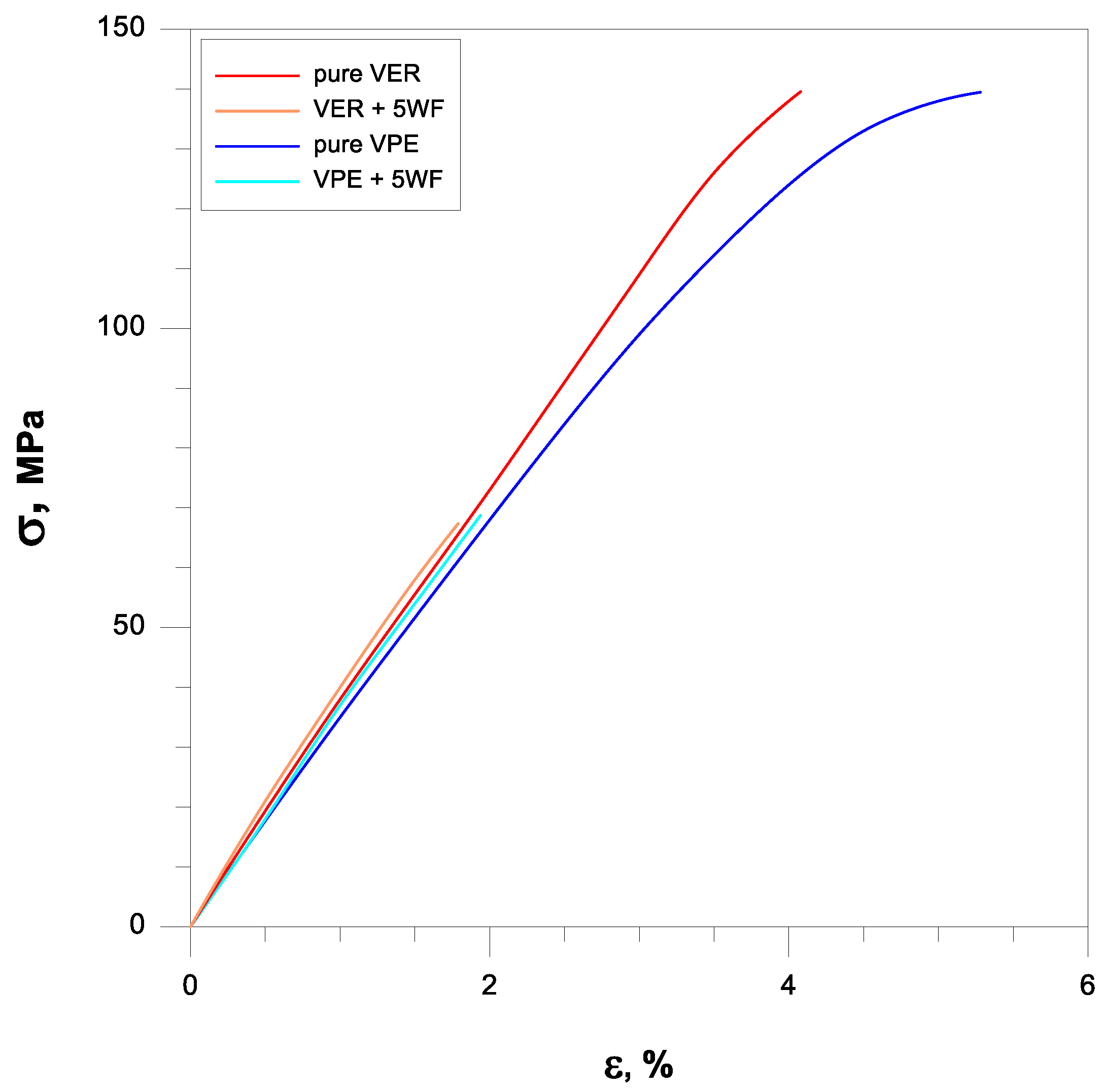
Strain at break is another parameter describing the flexural properties of materials. The addition of wood flour causes the same value-reducing effect. For pure VER, it changes from 4.08% to 1.79% for VER + 5WF, and for pure VPE and VPE + 5WF from 5.28 to 1.94%.
Figure 4 shows representative flexural stress–strain curves of the vinyl ester resins and WF composites. Their flexural strength and modulus are summarized in
Table 1. Wood flour acts as a rigid, non-elastic filler, causing stress concentration. Hence, materials with WF become more brittle and fail quickly.
The addition of wood flour to the resins affected the hardness of the composites. Pure VER was characterized by the hardness of 80.3 ShD, and with the increase in the amount of filler, this value increased steadily to 81.7 ShD for the material reinforced with 5% WF. The situation for the second resin is analogous and has the same trend, where the pure VPE resin has 78.9 ShD, and the most filled composite has 80.5 ShD.
The results of the Charpy impact tests (
Table 1) clearly show that the addition of wood flour (WF) to both vinyl ester matrices (VER and VPE) leads to a significant decrease in impact strength compared to the pure resins.
Dynamic mechanical analysis (DMA) was performed to investigate the effect of wood flour loading on the viscoelastic and thermomechanical behavior of vinyl ester resin (VER and VPE) composites. The storage modulus (), loss modulus (), damping (loss) factor (), glass transition temperature (), and crosslinking density () were evaluated over a temperature range from −150 to 200 °C.
At 20 °C, the values for all WF-filled composites were higher than those of their respective pure matrices, indicating enhanced stiffness due to the incorporation of rigid wood flour particles. For VER-based systems, increased from 4.22 GPa (pure VER) to 4.34 GPa (VER + 5WF), and a similar trend was observed for VPE-based systems (from 3.84 GPa to 3.94 GPa). The effect of WF was more pronounced at elevated temperatures. At 180 °C, the storage modulus of VER + 5WF reached 14.27 MPa, compared to 15.44 MPa for the pure VER, suggesting improved dimensional stability in the rubbery plateau region.
The loss modulus (
), which reflects the material’s ability to dissipate mechanical energy, decreased with increasing WF content (
Table 2). The
value decreased significantly with WF addition in both resin systems: from 220 MPa (pure VER) to 104 MPa (VER + 5WF), and from 202 MPa (pure VPE) to 95 MPa (VPE + 5WF). This reduction corresponds well with the observed decline of Charpy impact strength (
Table 1), indicating reduced molecular mobility.
The provided further insight into the damping characteristics and molecular mobility of the composites. The height of the peak, which measures damping, decreased with WF addition, reflecting reduced polymer segmental motion due to physical confinement by the filler. For instance, the peak of VER decreased from 0.85 to 0.55 (pure VER to VER + 5WF), and that of VPE changed from 0.78 to 0.52 (pure VPE to VPE + 5WF), consistent with more restricted chain movement. In parallel, the full width at half maximum () of the peak also narrowed, indicating a sharper and more brittle transition, in agreement with the decreasing strain at break observed in the mechanical test.
The
values, determined from the
peak, showed a slight decrease with increasing WF content (
Table 2), shifting from 120 °C (pure VER) to 109 °C (VER + 5WF), and from 125 °C (pure VPE) to 112 °C (VPE + 5WF). This trend suggests that the filler restricts chain mobility.
The crosslinking density (
) of the composites was estimated from the storage modulus in the rubbery plateau region using rubber elasticity theory, providing valuable insights into the polymer network structure and its interaction with fillers. Since VERs contain fewer C double bonds than unsaturated polyesters, their crosslinking density is typically lower than that of UPRs [
7]. This phenomenon can also be explained by the fact that the reactive double bonds are located at the ends of relatively long chains [
31].
As shown in
Table 2, the pure VER resin exhibited a crosslinking density of 1365 mol m
−3, which decreased to 1264 mol m
−3 upon addition of 5 wt% wood flour (WF). A similar trend was observed for the VPE composites, where the crosslinking density dropped from 1399 mol m
−3 for the pure VPE to 1295 mol m
−3 with the incorporation of 5 wt% WF. The VPE materials were characterized by higher crosslink density values compared to those based on VER. This is due to the fact that the novel vinyl ester resin obtained from unsaturated polyester contains additional C=C bonds derived from maleic anhydride, in addition to the typical vinyl ones at the chain ends.
It is noteworthy that the crosslinking density values of vinyl ester resins (VER and VPE) are lower compared to those of the unsaturated polyester resin reported in the previous study (1431 mol m
−3), as expected [
5,
39].
Moreover, the addition of wood flour reduces the volume fraction of the polymer matrix, resulting in an apparent dilution effect that contributes to the observed decrease in crosslink density. This effect is consistent across both VER and VPE matrices, indicating a general influence of wood flour on network formation regardless of the resin type.
The DMA results align closely with the trends observed in the mechanical test. The increase in storage modulus parallels the increase in flexural modulus with WF content (
Table 1), while the reduction in loss modulus and
is consistent with the decrease in Charpy impact strength and strain at break.
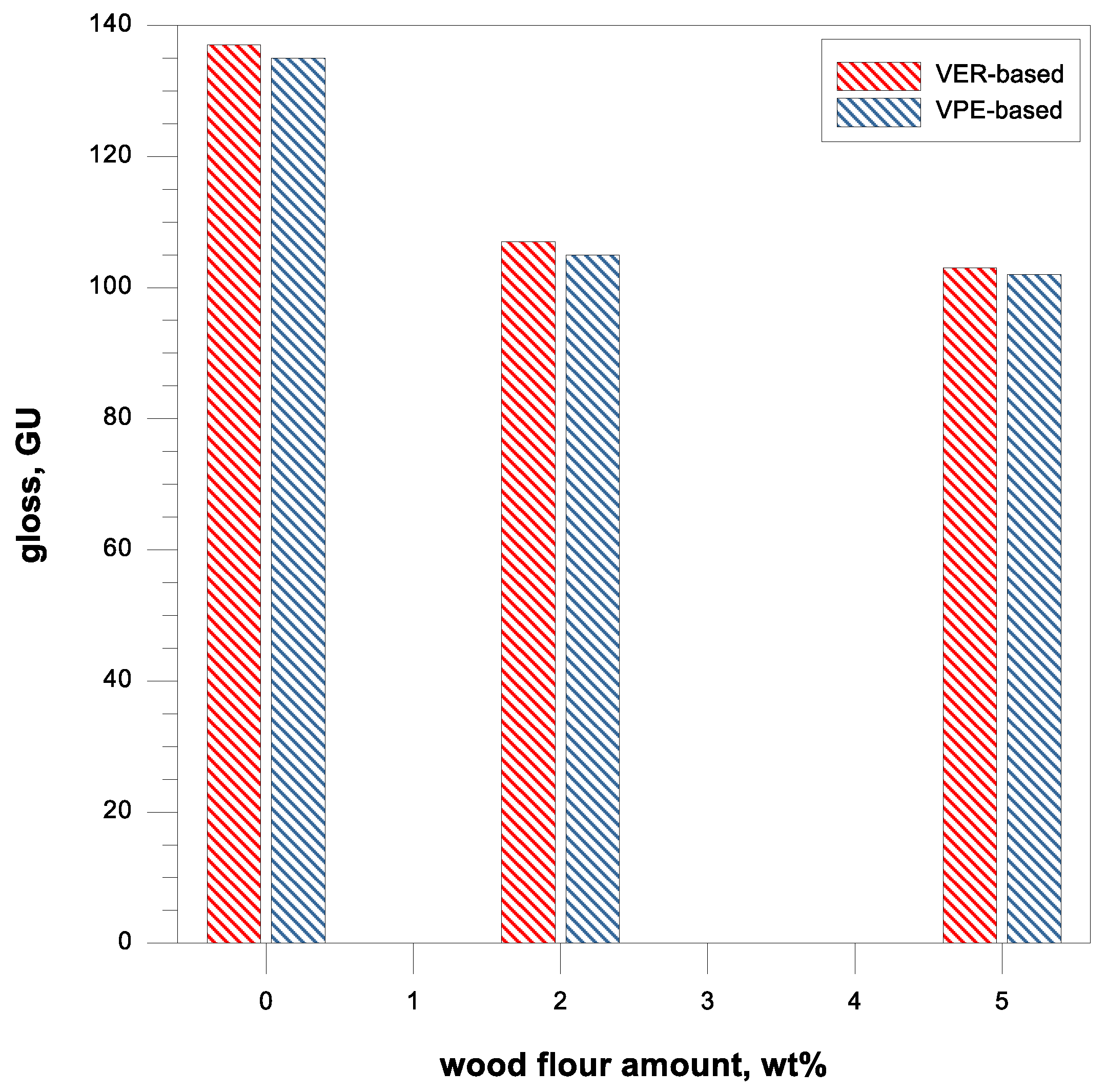
The results of gloss measurements of crosslinked resin samples and their composites with wood flour are presented in
Figure 5. The Zehntner ZGM 1110 glossmeter used to test surfaces allowed the determination of this parameter, when measuring simultaneously at the geometric configurations of 20°, 60°, and 85° of light incidence, values corresponding to a high-gloss or matt surface were obtained. As the reference standard, highly polished black glass with the gloss of 86.8 (20°), 93.4 (60°), and 99.7 GU (85°) was used.
From the data obtained, it can be concluded that with the addition of wood filler, the gloss decreases. This phenomenon is very well known and observed for polymers [
25]. In the previous paper, where the unsaturated polyester resin (UPR) was used as the polymer matrix, a material with a gloss of 112.4 GU was obtained [
25]. For its composites with 2 and 5 wt% of wood flour, the values of this parameter were 101.8 and 95.3 GU, respectively.
Vinyl ester resins are characterized by much better gloss, and the values are quite similar to each other in the range of 135–137 GU. It is worth noting that the VPE obtained from unsaturated polyester, the same as in UPR, was characterized by gloss comparable to the commercial vinyl ester resin based on bisphenol A. As mentioned earlier, resin-wood materials were characterized by smaller glosses in relation to pure resins. The decrease in the gloss value is caused by obtaining an uneven surface due to the presence of filler particles. VER materials with 2 and 5 wt% of wood flour had the gloss 107 and 103 GU, respectively, while the VPE samples, 105 and 102 GU. Nevertheless, vinyl ester resin composites based on bisphenol A, as well as unsaturated polyester, showed gloss at geometry 60° significantly larger than 70 GU, confirming the belief that materials with high surface gloss were obtained.
In order to investigate the potential applications of the tested resins and their composites with wood flour for biomedical purposes, it was necessary to examine how the presence of a biofiller would affect the wettability of their surfaces. For this purpose, surface contact angle tests were carried out using distilled water (
Table 3). Contact angle analysis is a convenient tool used for the determination of the quality of a solid surface. The results show that for pure VER the contact angle measured with water is 73.3°, while its values decrease with increasing wood flour concentration. For the sample containing 5% wood flour, it decreased to 68.2°.
A similar trend can be observed for the VPE resin and its composites, except that the contact angle of water for pure resin is much larger than for VER, being 89.9°. Adding wood flour to the resin caused a decrease in the contact angles of the surfaces of the obtained composites. For the composite with 2 wt% of WF, it was 80.2°, and for that with 5 wt% of WF, it was 76.8°.
Larger contact angles obtained for the VPE resin and its composites indicate that their surfaces have small wettability—that is, the water droplet will not spread out much on the surface. The obtained results indicate that the VPE resin is much more hydrophobic than the VER resin. Similarly, the composites obtained from it with WF also have larger hydrophobic surfaces.
As expected from our studies, vinyl ester resins, due to their lower polarity and higher hydrophobicity, have a larger contact angle with water than unsaturated polyester resins (57.0°), and therefore are characterized by lower surface wettability [
39].
4.3. Biomedical Application
From the perspective of manufacturing biomedical products, VPE resin appears to be a more suitable matrix than VER resin, as it presents a lower probability of colonization by microorganisms that require moisture for growth.
When evaluating materials intended for the medical, pharmaceutical, cosmetology, or food industries, it is crucial to assess their resistance to bacterial biofilm adhesion. For this purpose, a biofilm formation test was performed on the surface of modified and unmodified materials. The results obtained were compared with the biofilm formed on the bottom of a well in a 24-well polystyrene plate, which served as the control.
The bacterial strains used in this test—S. aureus ATCC 25923 or E. faecalis PCM 896, or E. coli ATCC 25992—are commonly associated with infections in medical and food-related industries. Planktonic bacterial cells were cultured under appropriate conditions for 48 h (double incubation) to allow the development of a mono-species biofilm.
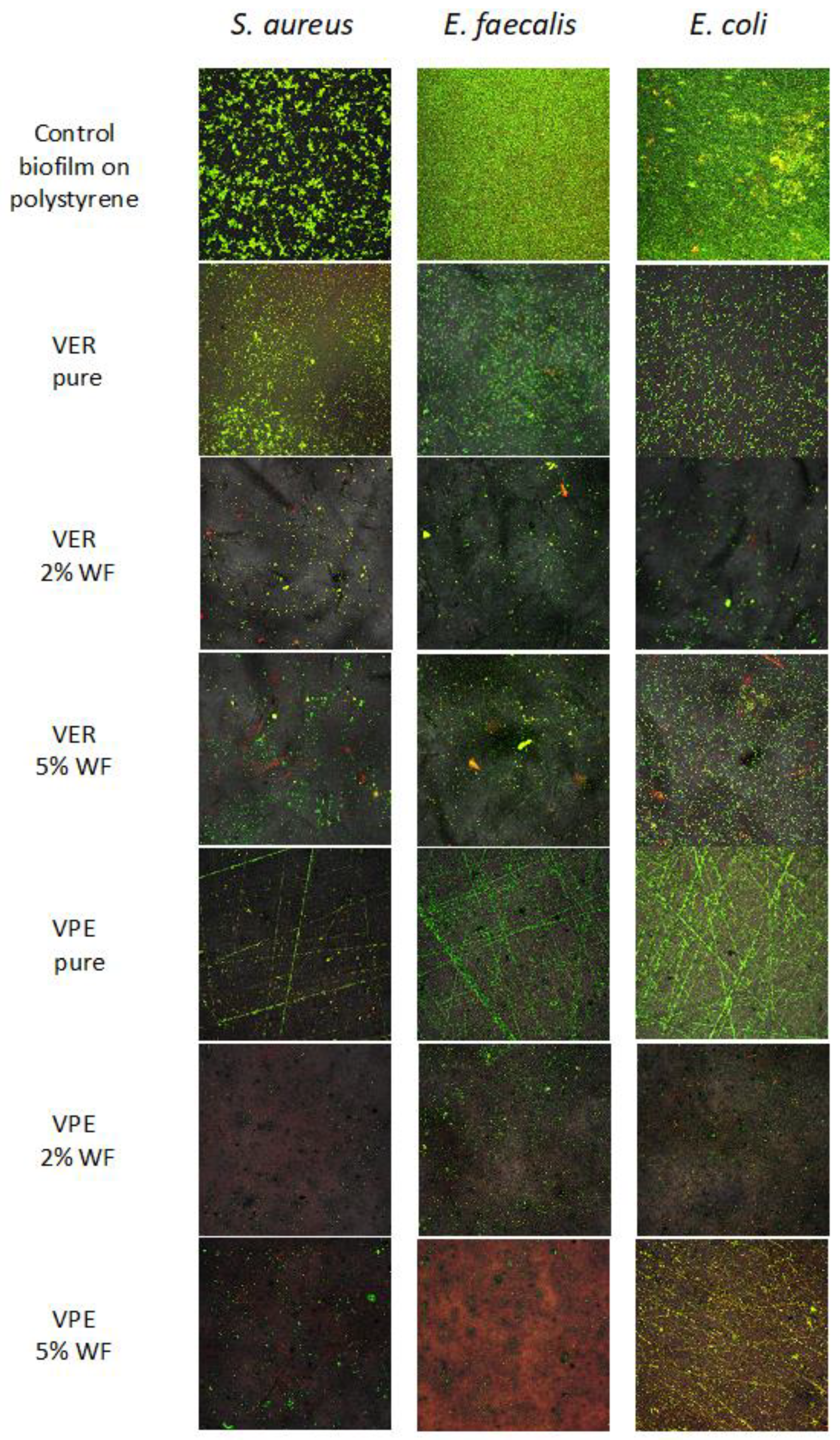
In the qualitative test, after culturing the biofilm and rinsing away planktonic cells from the materials, the bacterial cells comprising the biofilm were stained. Using a live/dead staining method, it was possible to determine the structure of the resulting biofilm in terms of cell viability. Specifically, living cells were stained green, while the dead cells were stained red.
The images obtained show that each of the tested strains, both Gram-positive and Gram-negative, formed extensive biofilm on the control 24-well plates, consisting exclusively of live (green) cells. The biofilm formed as a distinct monolayer with a spatially extensive architecture (
Figure 6).
Furthermore, the images in
Figure 7 show that on pure VER and VPE resins, all Gram-positive and Gram-negative strains exhibited much weaker adhesion and did not form a monolayer, in contrast to the biofilm growth on polystyrene control. On the pure materials, biofilm appeared only locally and was limited to the areas where the sample was scratched or created wrinkles, as visible in the confocal microscope images. The VPE samples exhibited more such wrinkles than the VER one.
Importantly, both VER and VPE materials containing 2 wt% and 5 wt% of wood flour were essentially free of biofilm, with only dead (red) bacterial cells or occasional planktonic living cells observed. This effect was particularly evident for E. faecalis on the VPE composite containing 5 wt% wood flour. Regardless of the amount of wood filler (2 wt% or 5 wt%), the biofilm images were comparable, showing no biofilm formation. These results indicate that the composites are more resistant to bacterial colonization compared to the pure resins, a finding that applies to both VPE and VER materials.
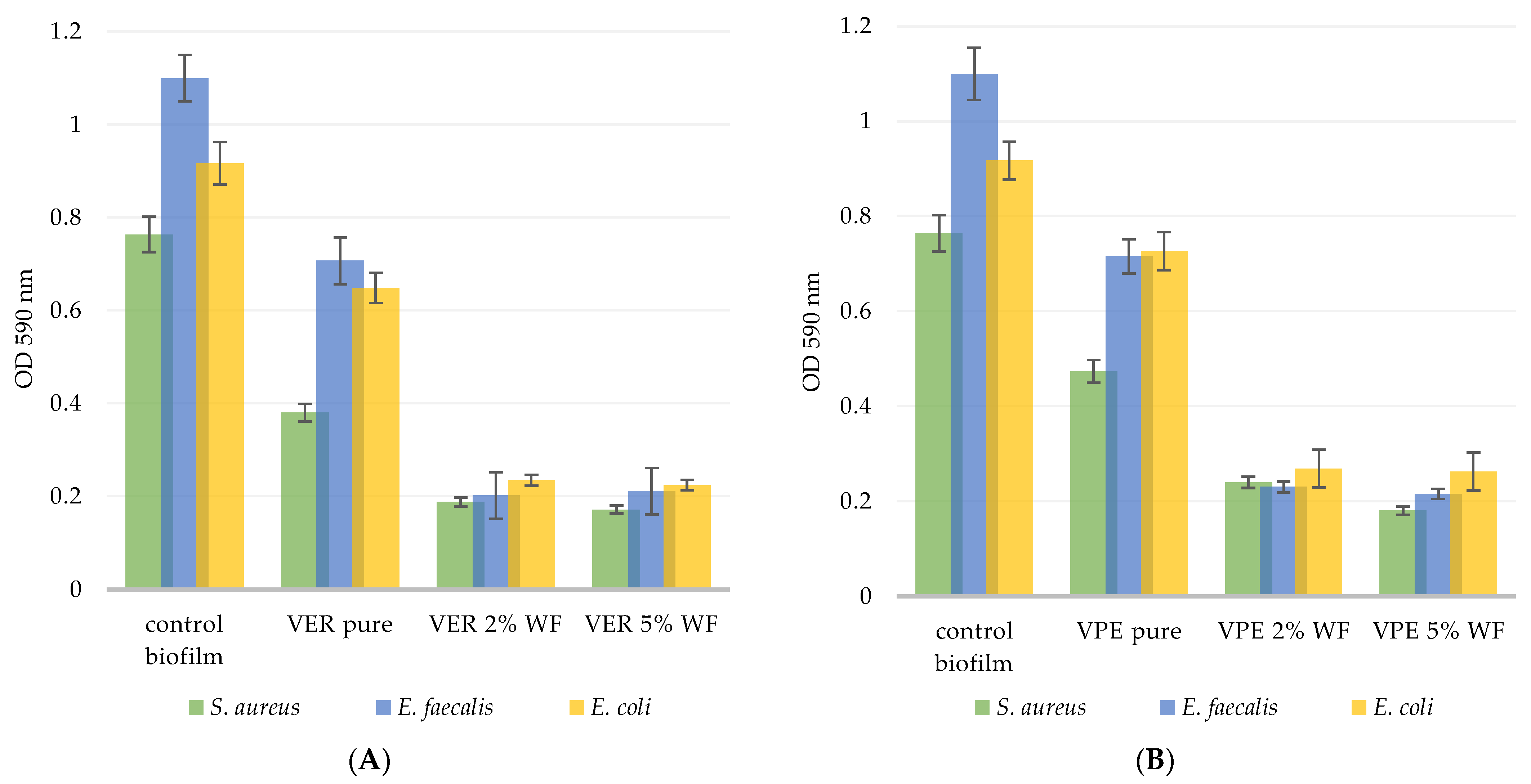
Another experiment was performed to quantify biofilm formation depending on the type of composite used.
Figure 6 confirms the results of the previous experiment, showing that all tested materials—both VER and VPE—exhibited anti-biofilm activity. Modification of the materials with wood flour, regardless of the filler content (2 wt% or 5 wt%), appeared effective, as the VER and VPE composites demonstrated greater resistance to biofilm formation than the unmodified pure VER and pure VPE, which served as the initial controls.
Precisely, both VER– and VPE–composites were more resistant to bacterial colonization by the Gram-positive strains than by the Gram-negative E. coli.
The VER material exhibited a more favorable structure and composition than VPE, inhibiting the growth of S. aureus by 75.4% and 77.5% for the 2% and 5% WF composites, respectively; E. faecalis by 81.8% and 80.9%; and E. coli by 72.3% and 74.6%, respectively.
For VPE, the percentage of biofilm inhibition for 2% and 5% WF modifications was as follows:
S. aureus—68.6% and 76.5%;
E. faecalis—79.1% and 80.4%;
E. coli—68.9% and 71.4% (
Figure 6).
Although there are differing opinions among researchers regarding the ability and strength of biofilm formation depending on the surface, all authors agree that biofilm adhesion is influenced by several factors: surface roughness (micropores, unevenness, and general roughness increase the surface area available for bacterial attachment), hydrophobicity (hydrophobic surfaces promote adhesion), electrostatic interactions (positively charged surfaces attract negatively charged bacteria), and the presence of potential nutrients in the material composition.
Park et al. focused on the influence of surface roughness on bacterial biofilm formation. The authors conducted experiments to investigate how different degrees of roughness affect bacterial adhesion and biofilm development [
40]. Similarly, Sorongon et al. focused on the role of surface hydrophobicity in biofilm formation on the surfaces in contact with food. The authors carried out research to investigate how different surface hydrophobic properties influence bacterial adhesion and biofilm growth [
41].
The biofilm formation results indicate that the VPE resin exhibits better antibiofilm properties. This is due to the different chemical structure of the matrix, which was previously confirmed by surface contact angle studies, indicating its more hydrophobic nature.
Staphylococcus aureus is a Gram-positive bacterium that can cause infections of the skin, wounds, soft tissue, and the respiratory system [
42]. It is capable of forming a durable biofilm on medical surfaces such as prostheses, catheters, and implants.
Enterococcus faecalis is naturally present in the human digestive tract. However, it can cause urinary tract and wound infections as well as other nosocomial infections [
43]. It is also capable of forming a biofilm on the surfaces of devices used in medical, beauty, and cosmetology settings.
On the other hand,
Escherichia coli is a Gram-negative bacterium commonly found in human intestines. Certain strains can be pathogenic, causing urinary tract and other infections [
44].
E. coli can spread in public places if hygiene is not maintained. Bacterium is known to form biofilms on medical and dental surfaces, such as catheters and dentures.
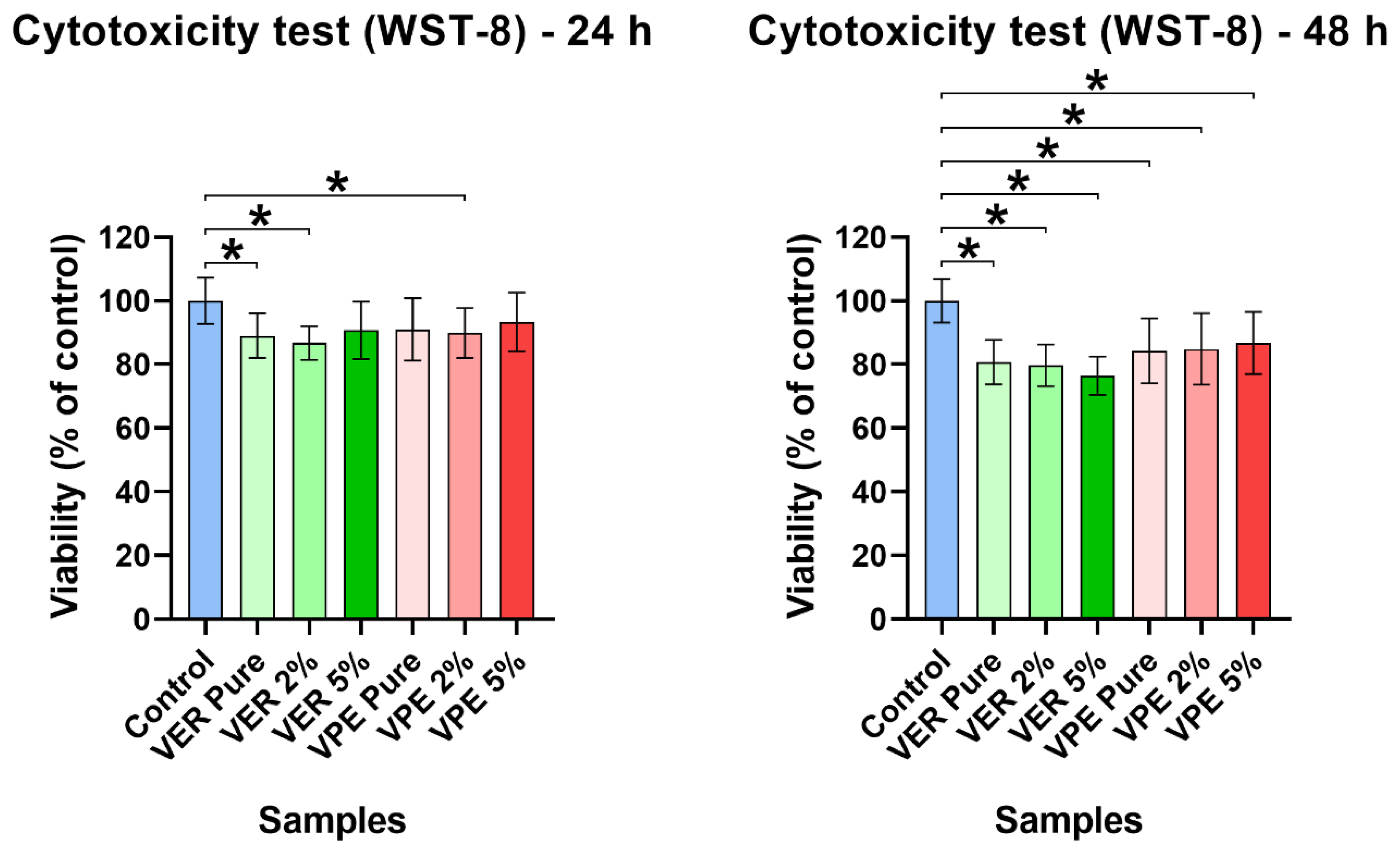
Cytotoxicity tests revealed that the tested materials based on different vinyl ester resins were non-toxic to skin fibroblasts. The WST-8 test showed that both the native and modified variants (pure or WF-enriched) had no adverse effects on normal human fibroblasts after both 24 h and 48 h exposure to 24 h extracts. However, the cell viability after exposure to 48 h extracts of VER 5%WF was reduced to approximately 76% compared to the polystyrene control, likely due to the higher amount of wood flour in 48 h extracts. It is worth noting that according to the ISO 10993-5, all tested materials are considered non-toxic, as cell viability did not fall below 70% [
29].
Although both polymer matrices exhibited similar cell viability overall, as shown in
Figure 8, the synthesized vinyl ester resin based on unsaturated polyester (VPE) performed slightly better than the commercially available vinyl ester resin derived from the epoxy derivative of bisphenol A (VER).
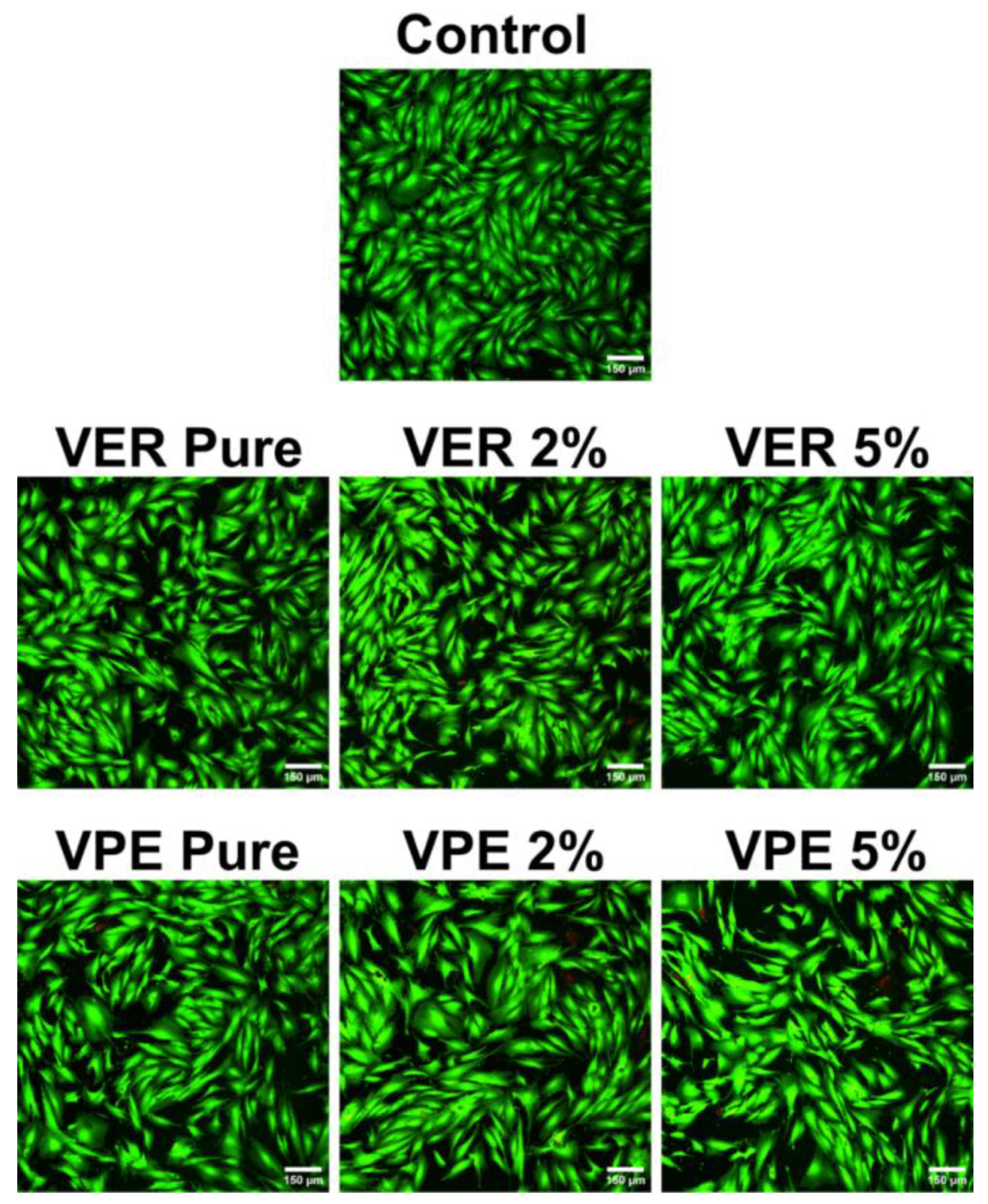
Cytotoxicity of the resin materials was also assessed using the indirect contact method with Live/Dead fluorescent staining of BJ fibroblasts grown in the presence of 24 h extracts of the tested materials. CLSM images revealed a healthy monolayer of viable cells with typical spindle-shaped morphology after exposure to all tested extracts, as shown in
Figure 9, confirming the non-toxic nature of the materials. The viability and morphology of cells exposed to the extracts were comparable to those of the control cells grown in fresh culture medium, which is particularly noteworthy.




 ,
,