Article

Characterization of Fatigue Properties of Fiber-Reinforced Polymer Composites Based on a Multiscale Approach

Department of Mechanical Engineering, Hanyang University, 222 Wangsimri-ro, Seongdong-gu, Seoul 04763, Republic of Korea
*
Author to whom correspondence should be addressed.
Polymers 2025, 17(2), 157; https://doi.org/10.3390/polym17020157
Submission received: 3 December 2024 / Revised: 3 January 2025 / Accepted: 4 January 2025 / Published: 9 January 2025

Abstract

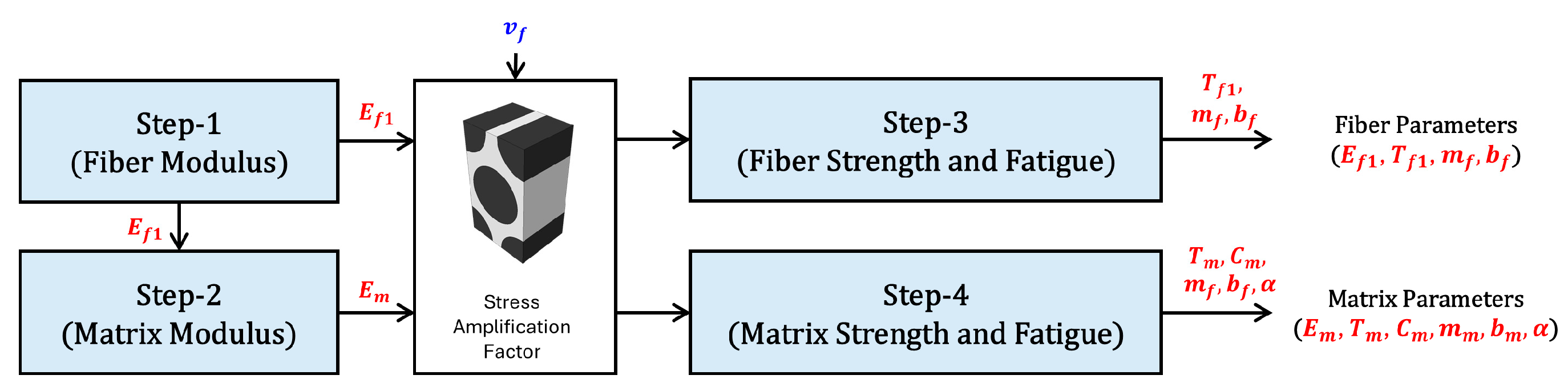
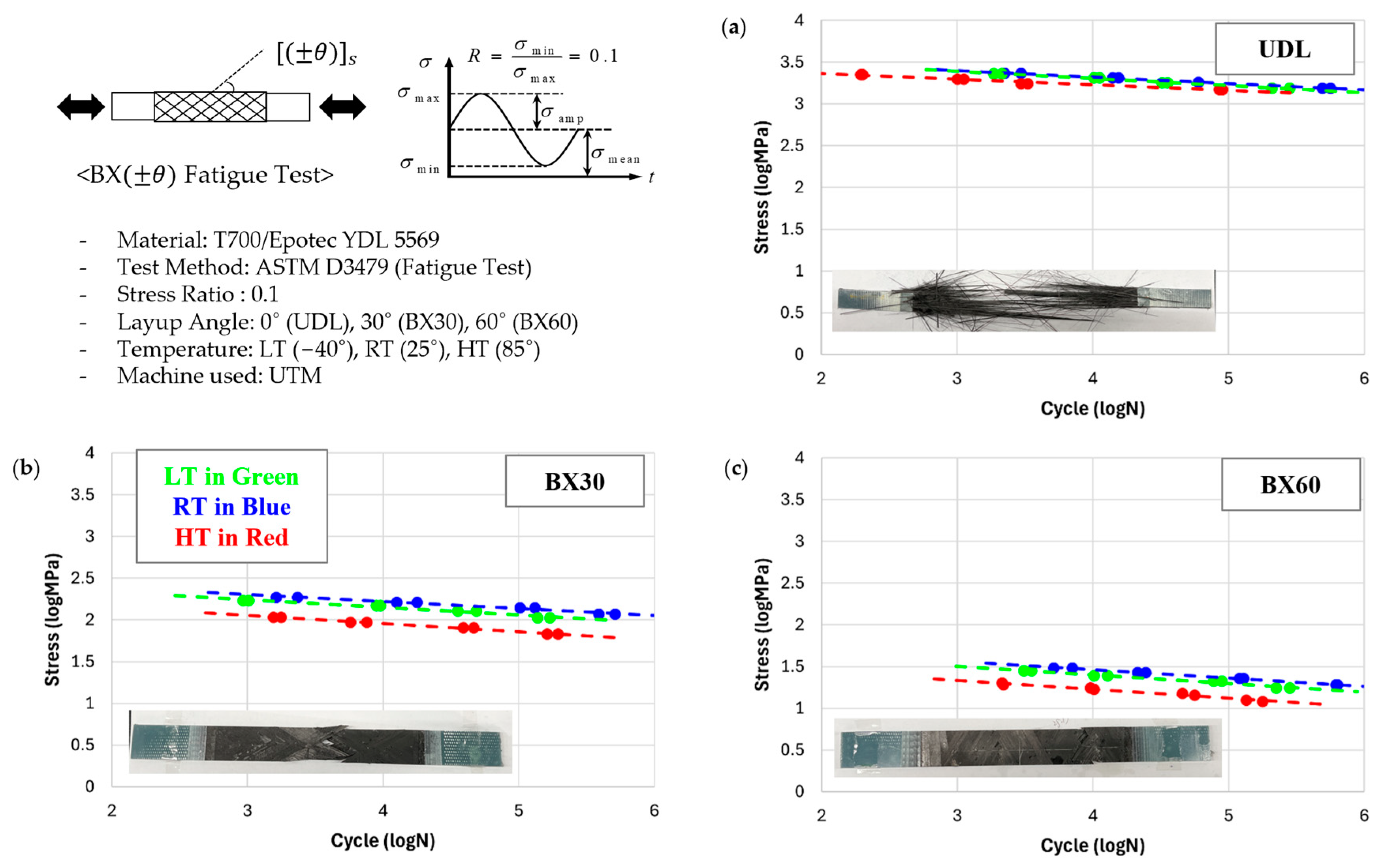
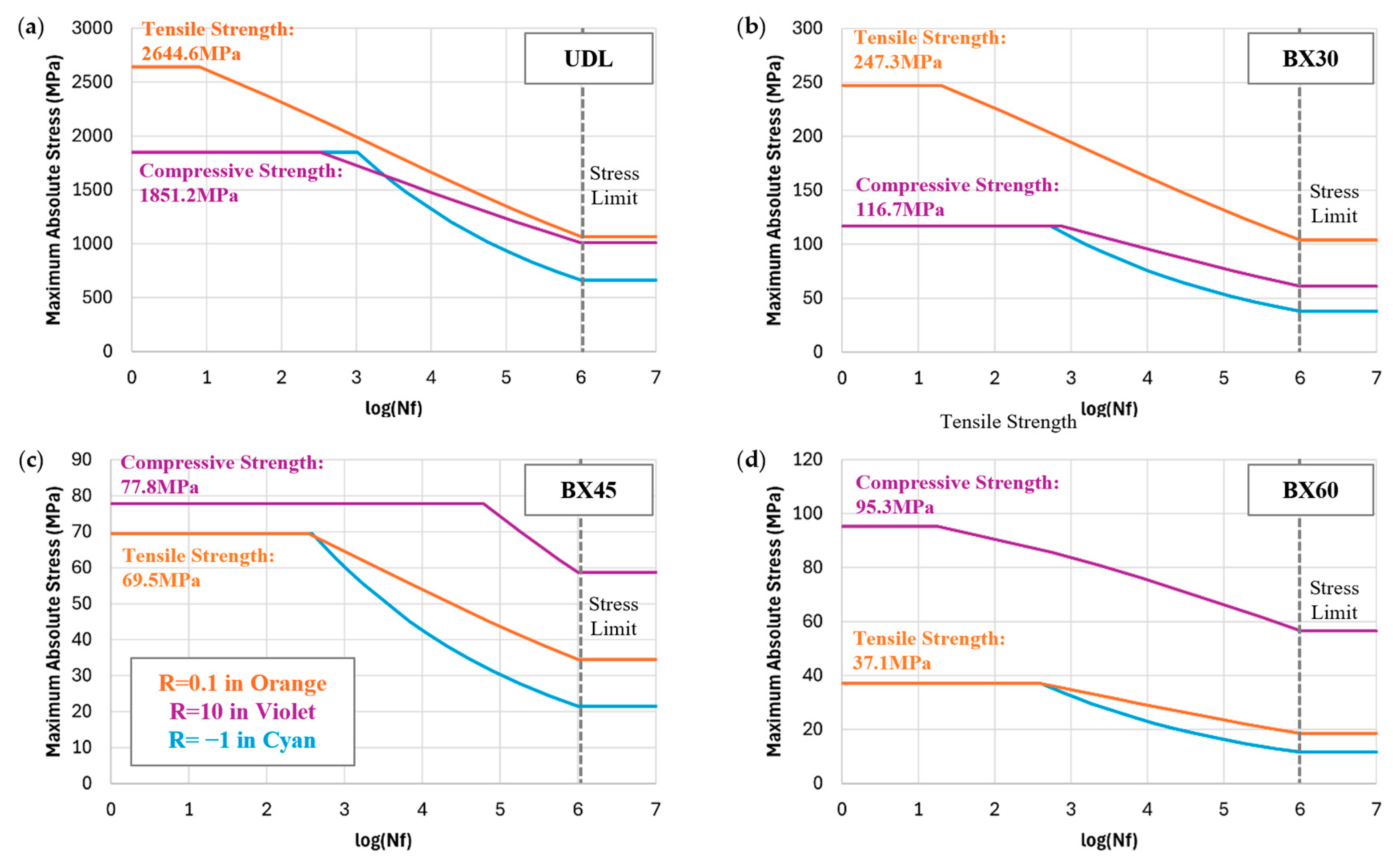
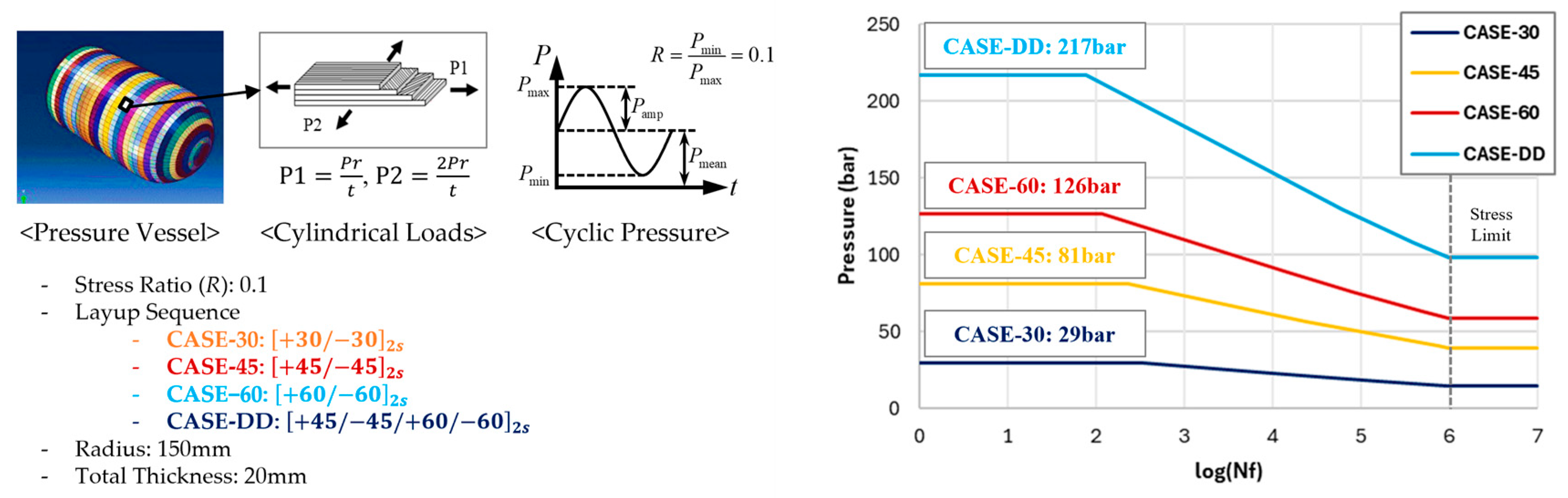
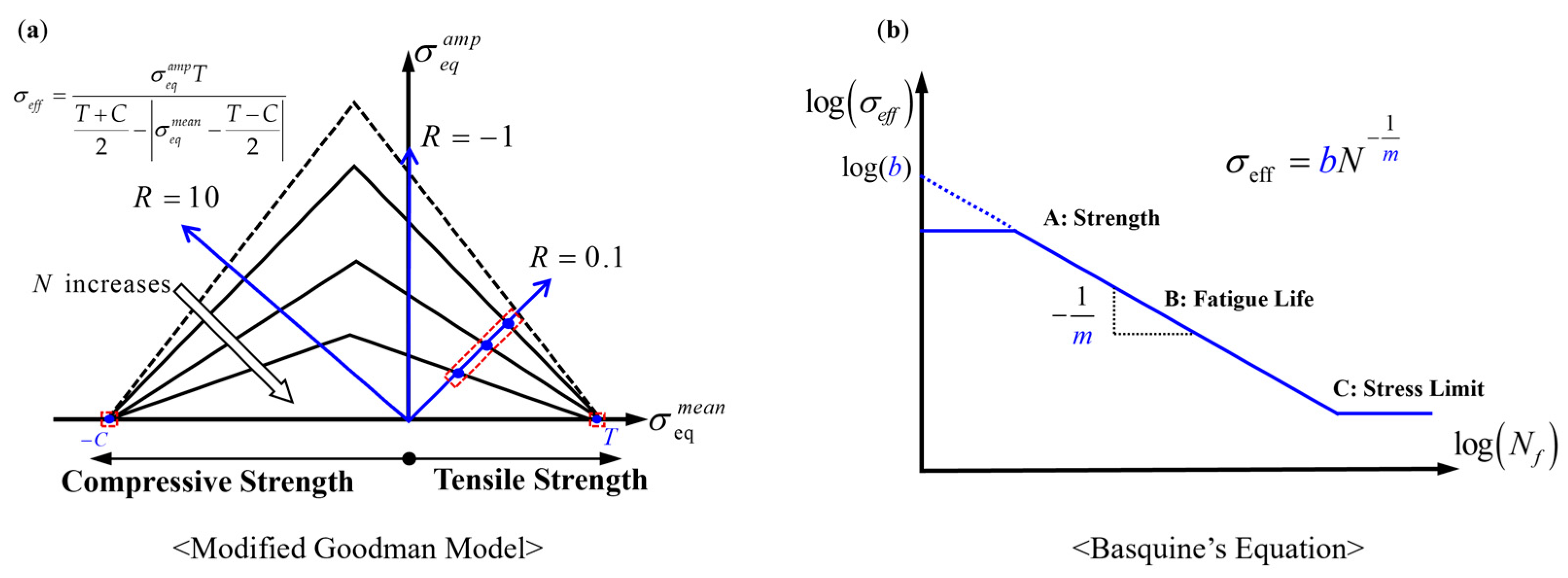
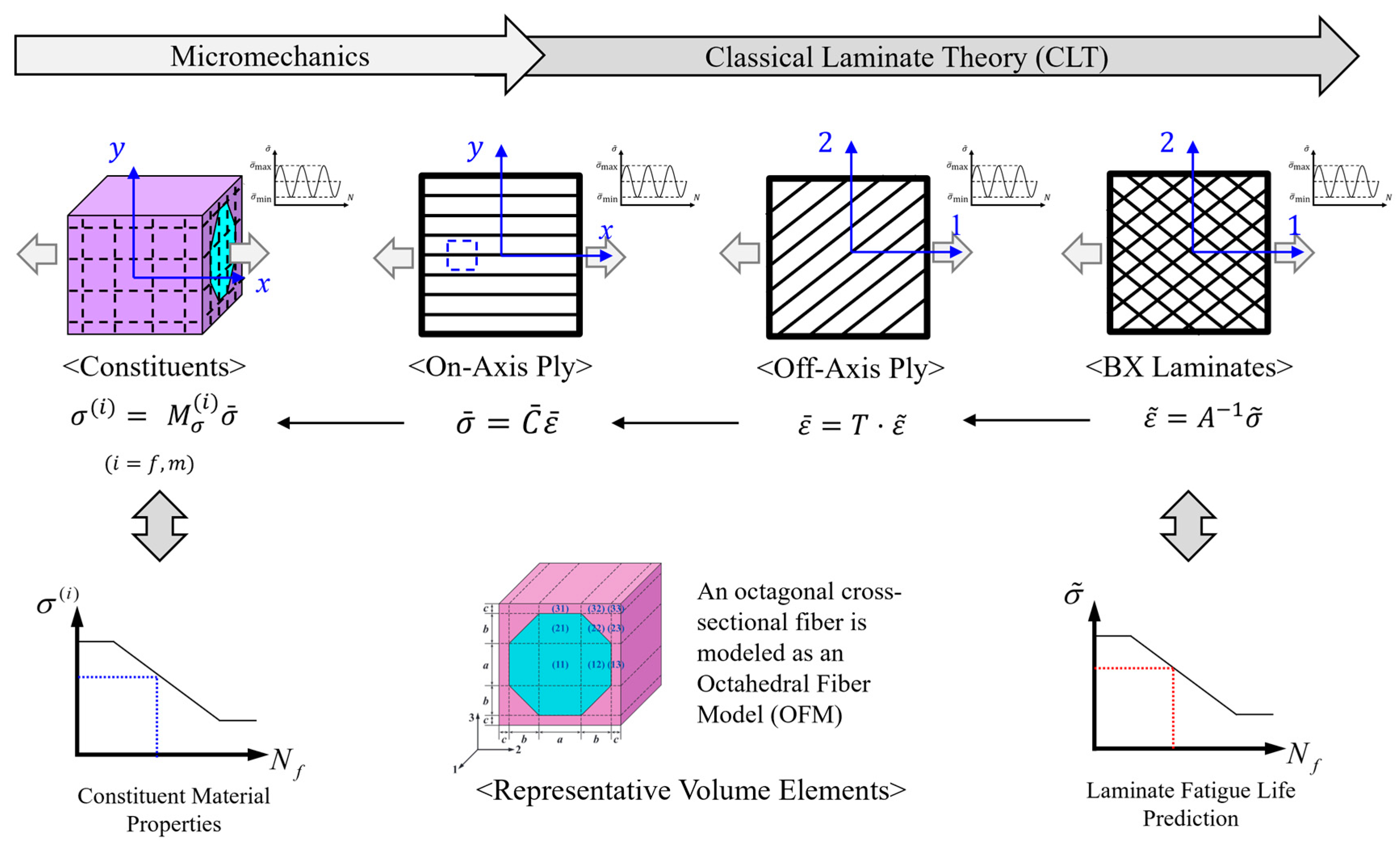
This study presents a methodology for characterizing the constituent properties of composite materials by back-calculating from the laminate behavior under fatigue loading. Composite materials consist of fiber reinforcements and a polymer matrix, with the fatigue performance of the laminate governed by the interaction between these constituents. Due to the challenges in directly measuring the properties of individual fibers and the polymer matrix, a reverse-engineering approach was employed. Using the micro-mechanics of fatigue (MMFatigue), we predicted the laminate’s fatigue behavior based on assumed constituent properties and compared these predictions with experimental data from fatigue tests. The properties of the fiber and polymer matrix were iteratively adjusted to minimize the differences between predictions and experimental results, enabling accurate fatigue characterization. To ensure robustness, three laminate angles—0°, 30°, and 60°—were evaluated at three temperatures: low temperature (LT: −40 °C), room temperature (RT: 25 °C), and high temperature (HT: 85 °C). The error, defined as the fatigue life difference between the prediction and the experimental results, were obtained as 2.48% at LT, 7.18% at RT, and 1.25% at HT for a laminate angle of 45°. Finally, the applicability of the multiscale-based fatigue life prediction method was demonstrated through studies on laminates with various angles under tension–compression, and compression–compression cyclic loads, as well as composite pressure vessels under cyclic loading.
Keywords: characterization of fatigue properties; multiscale analysis; micromechanics; polymer matrix composites; temperature-dependent properties characterization of fatigue properties; multiscale analysis; micromechanics; polymer matrix composites; temperature-dependent properties