Review

Marine Plastic Waste in Construction: A Systematic Review of Applications in the Built Environment


1
Department of Civil Engineering, Institute for Sustainability and Innovation in Structural Engineering (ISISE), Advanced Production and Intelligent Systems (ARISE), University of Minho, 4800-058 Guimarães, Portugal
2
Laboratory of Landscapes, Heritage and Territory (Lab2PT), School of Architecture, Art and Design, University of Minho, 4800-058 Guimarães, Portugal
*
Author to whom correspondence should be addressed.
Polymers 2025, 17(13), 1729; https://doi.org/10.3390/polym17131729
Submission received: 22 May 2025 / Revised: 14 June 2025 / Accepted: 19 June 2025 / Published: 21 June 2025
(This article belongs to the Special Issue Environmentally Responsive Polymer Materials)

Abstract

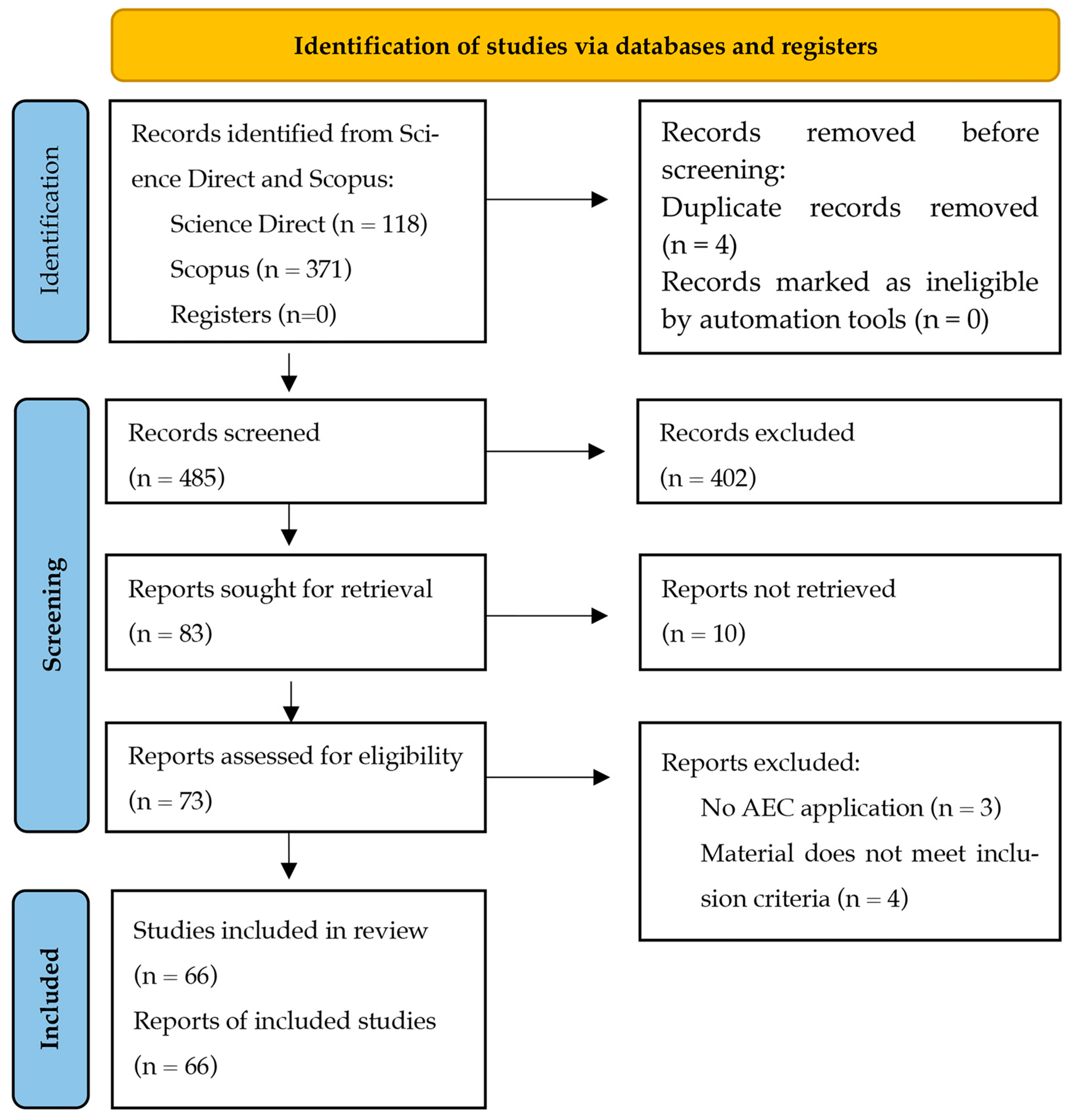
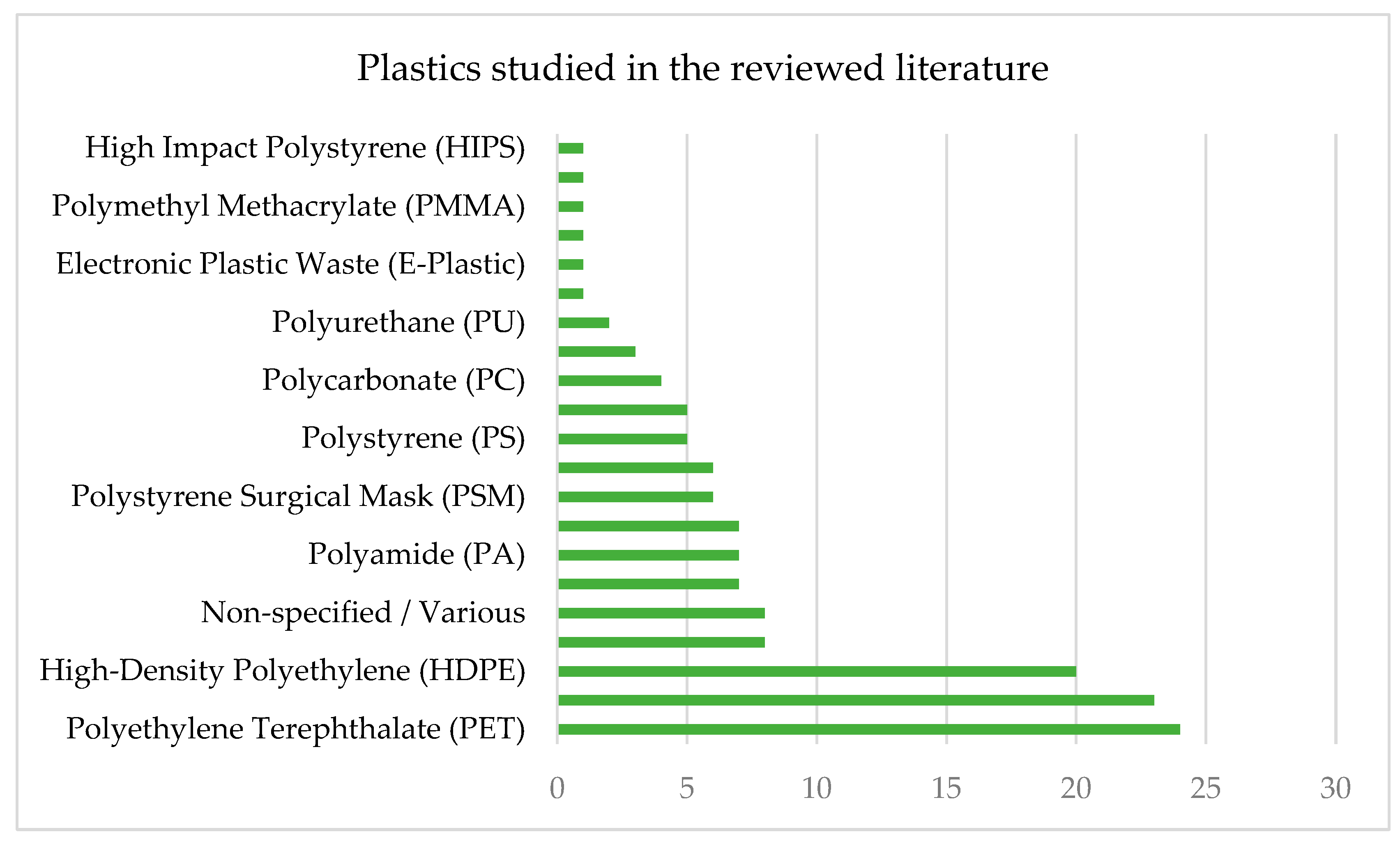
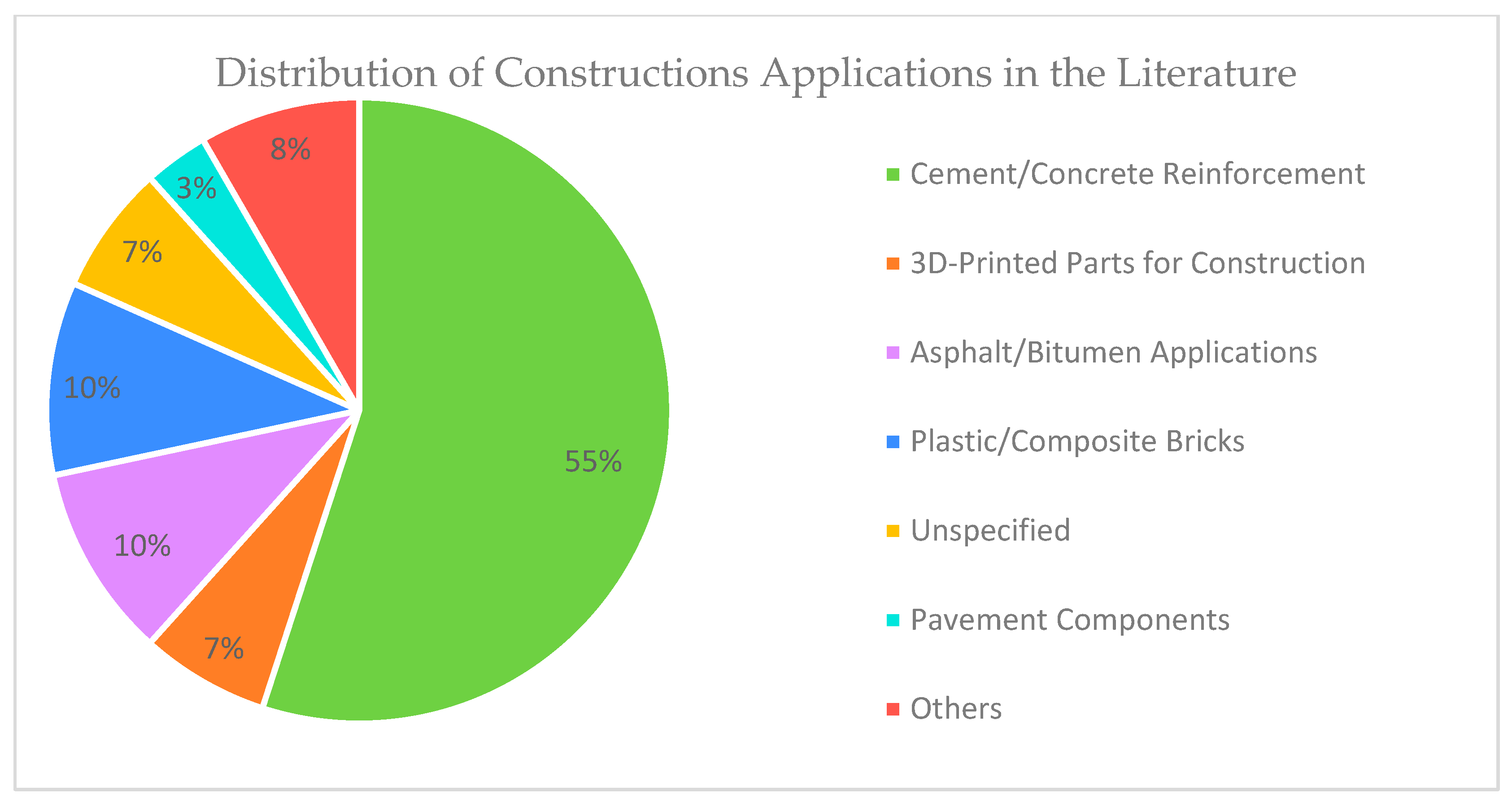
Marine plastic pollution represents a critical environmental challenge, with millions of tons of plastic waste entering the oceans annually and threatening ecosystems, biodiversity, and human health. This systematic review evaluates the current state of the art in recycling and reusing marine plastic waste within the architecture, engineering, and construction (AEC) sectors, following the PRISMA methodology. Sixty-six peer-reviewed articles published between 2015 and 2025 were analysed, focusing on the integration of plastic waste. The review identifies mechanical recycling as the predominant method, involving washing and shredding plastics into fibres or flakes for use in cementitious composites, asphalt modifiers, bricks, panels, and insulation. Results indicate that recycled plastics, such as PET, HDPE, and PP, can enhance thermal insulation, water resistance, and flexural strength in non-structural applications. However, challenges persist regarding compressive strength, fibre dispersion, and chemical compatibility with cementitious matrices. Although the reuse of marine plastics supports circular economy goals by diverting waste from oceans and landfills, significant gaps remain in long-term durability, microplastic release, end-of-life recyclability, and comprehensive environmental assessments. The findings underscore the need for further research on the broader adoption of life cycle analysis, as well as long-term durability and environmental contamination analyses.
Keywords: marine plastic litter; plastic waste in construction; sustainable built environment; plastic waste recycling marine plastic litter; plastic waste in construction; sustainable built environment; plastic waste recycling