Article

Comparative Evaluation of Dental Clinical Surface Treatments for Polyetheretherketone with Airborne-Particle Abrasion, Hydrofluoric Acid Etching, and Handheld Nonthermal Plasma Activation on Long-Term Bond Performance


1
School of Dentistry, College of Oral Medicine, Taipei Medical University, Taipei 11031, Taiwan
2
Department of Dentistry, Taoyuan General Hospital, Ministry of Health and Welfare, Taoyuan 33004, Taiwan
3
Division of Family Dentistry, Department of Dentistry, Taipei Medical University Hospital, Taipei 11031, Taiwan
4
Department of Medical Systems Engineering, Hiroshima University Graduate School of Biomedical and Health Sciences, Hiroshima City 734-8553, Japan
5
Department of Nursing, Division of Basic Medical Sciences, and Chronic Diseases and Health Promotion Research Center and Center for Drug Research and Development, Chang Gung University of Science and Technology, Chiayi 613016, Taiwan
6
Research Center for Tooth Bank and Dental Stem Cell Technology, College of Oral Medicine, Taipei Medical University, Taipei 11031, Taiwan
7
Center for Environmental Toxin and Emerging-Contaminant Research, Cheng Shiu University, Kaohsiung 83347, Taiwan
8
Department of Civil Engineering and Geomatics, Cheng Shiu University, Kaohsiung 83347, Taiwan
9
Graduate Institute of Clinical Dentistry, School of Dentistry, College of Medicine, National Taiwan University, Taipei 10048, Taiwan
10
Department of Respiratory Care, Chang Gung University of Science and Technology, Chiayi 613016, Taiwan
11
Department of Orthopaedic Surgery, Chang Gung Memorial Hospital, Chiayi 61363, Taiwan
12
Department of Safety Health and Environmental Engineering, Ming Chi University of Technology, New Taipei City 24301, Taiwan
*
Authors to whom correspondence should be addressed.
These authors contributed equally to this work.
Polymers 2025, 17(11), 1448; https://doi.org/10.3390/polym17111448
Submission received: 9 May 2025 / Revised: 20 May 2025 / Accepted: 21 May 2025 / Published: 23 May 2025
(This article belongs to the Special Issue Polymers and Polymer Composites for Dental Application)

Abstract

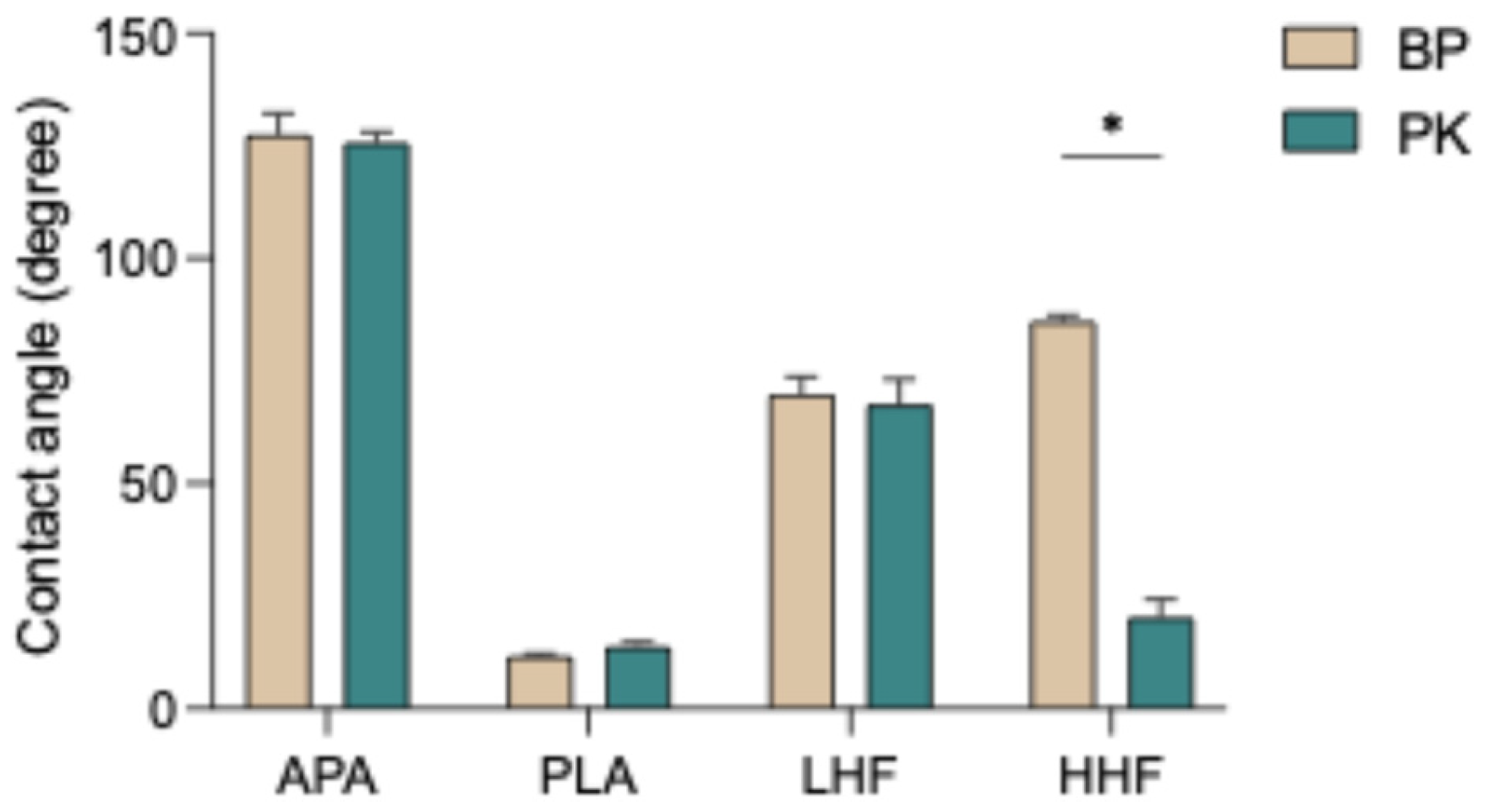
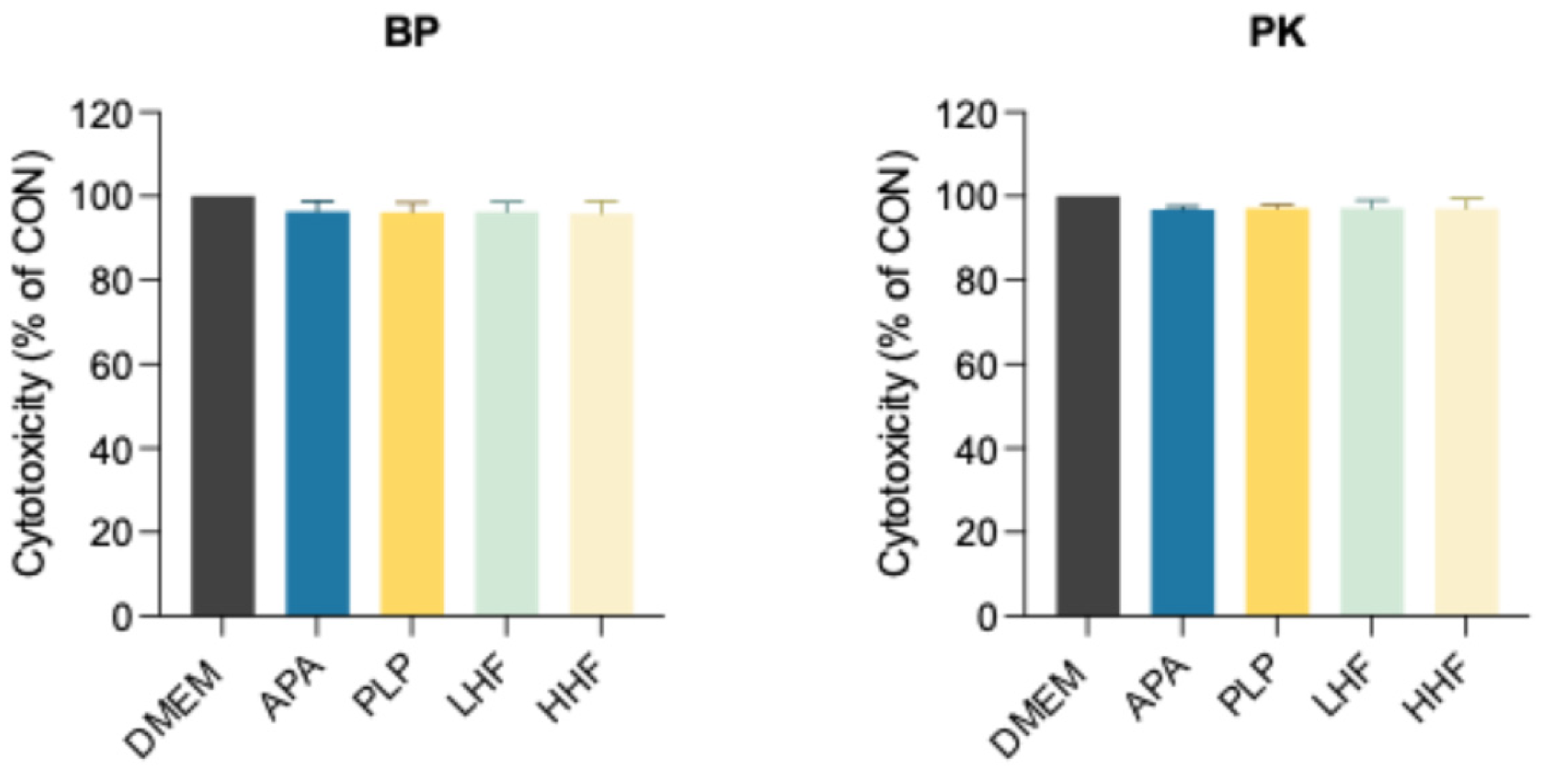
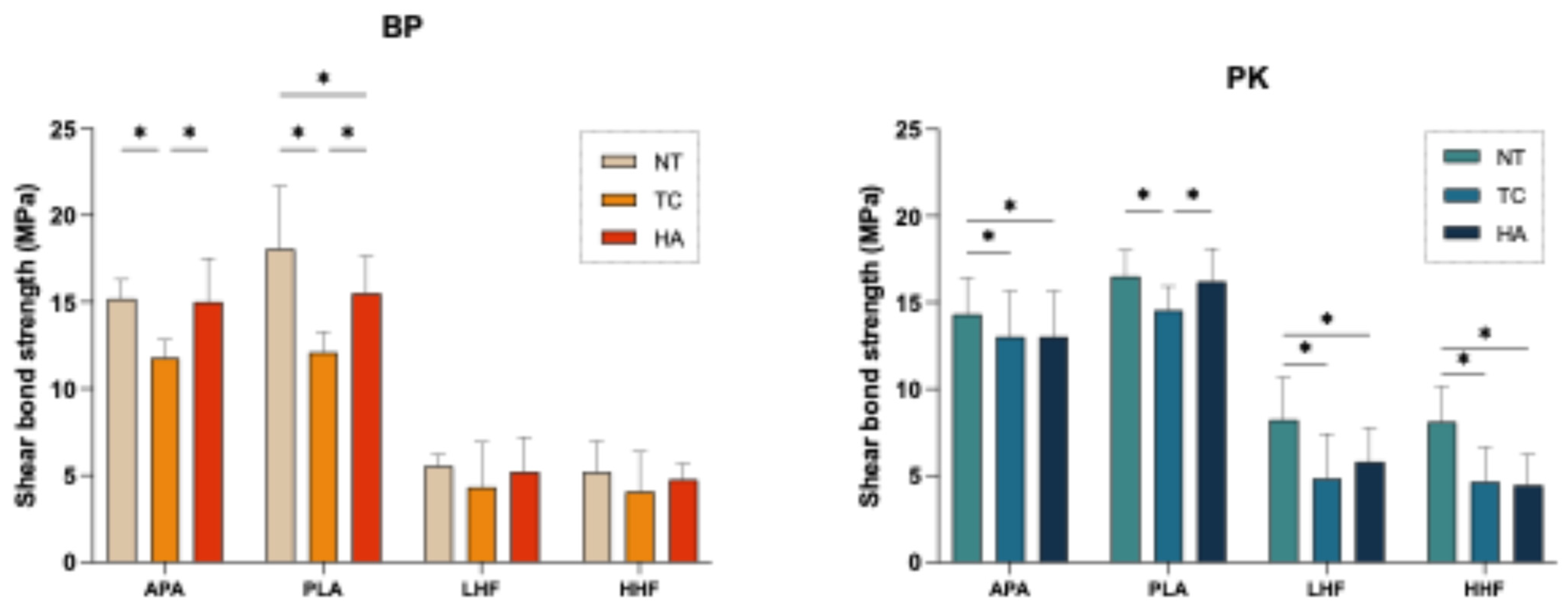
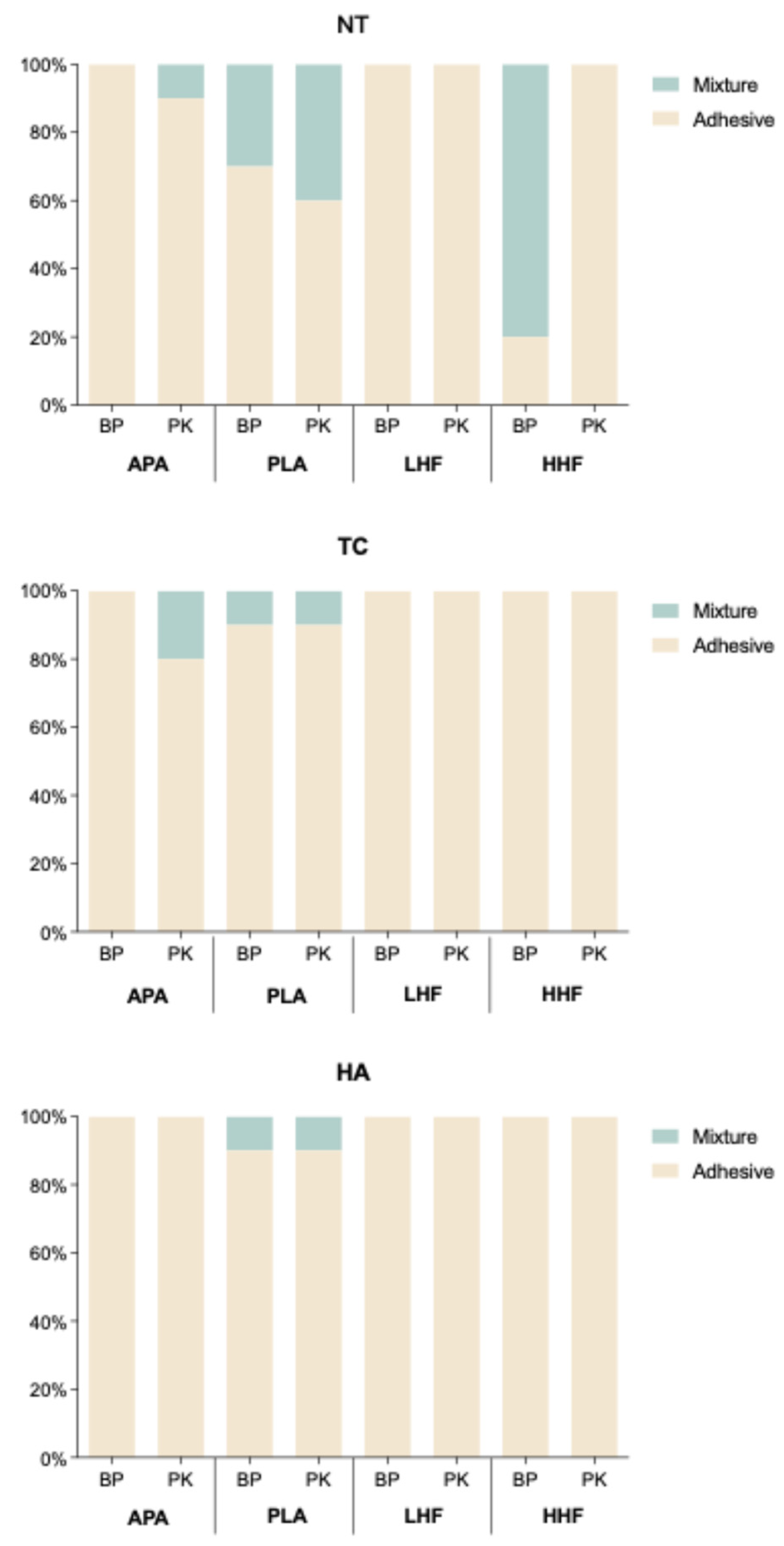
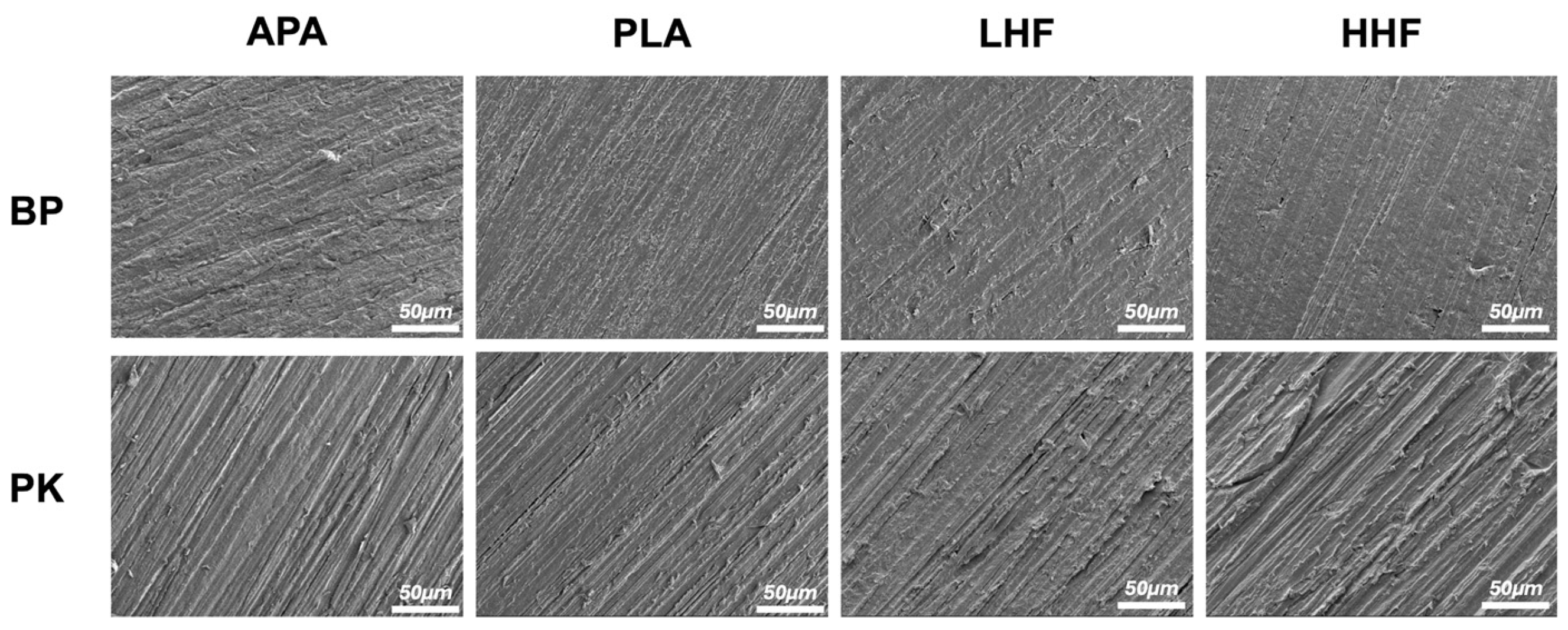
Polyaryletherketone (PAEK) materials, including polyetheretherketone (PEEK) and polyetherketoneketone (PEKK), possess excellent mechanical properties and biocompatibility; however, their inherently low surface energy limits effective bonding with resin cements. This study investigated the effects of hydrofluoric acid (HF) etching and handheld nonthermal plasma (HNP) treatment on enhancing the adhesive performance of PAEK surfaces. Disk-shaped PEEK (BP) and PEKK (PK) specimens were divided into four groups: APA (airborne-particle abrasion), PLA (nonthermal plasma treatment), LHF (5.0% HF), and HHF (9.5% HF). Surface characterization was performed using a thermal field emission scanning electron microscope (FE-SEM). Surface wettability was evaluated using contact angle goniometry. Cytotoxicity was evaluated using HGF-1 cells exposed to conditioned media and analyzed via PrestoBlue assays. Shear bond strength (SBS) was measured after three aging conditions—NT (no aging), TC (thermocycling), and HA (highly accelerated aging)—using a light-curing resin cement. Failure modes were categorized, and statistical analysis was performed using one-way and two-way ANOVA with Tukey’s HSD test (α = 0.05). Different surface treatments did not affect surface characterization. PLA treatment significantly improved surface wettability, resulting in the lowest contact angles among all groups, followed by HF etching (HHF > LHF), while APA showed the poorest hydrophilicity. Across all treatments, PK exhibited better wettability than BP. Cytotoxicity results confirmed that all surface treatments were nontoxic to HGF-1 cells, indicating favorable biocompatibility. SBS testing demonstrated that PLA-treated specimens achieved the highest and most stable bond strength across all aging conditions. Although HF-treated groups exhibited lower bond strength overall, BP samples treated with HF showed relatively less reduction following aging. Failure mode analysis revealed a shift from mixture and cohesive failures in the NT aging condition to predominantly adhesive failures after TC and HA aging conditions. Notably, the PLA-treated groups retained mixture failure patterns even after aging, suggesting improved interfacial durability. Among the tested methods, PLA treatment was the most effective strategy, enhancing surface wettability, bond strength, and aging resistance without compromising biocompatibility. In summary, the PLA demonstrated the greatest clinical potential for improving the adhesive performance of PAEK when used with light-curing resin cements.
Keywords: polyetheretherketone; light-curing cement; shear bond strength; resin bonding; handheld nonthermal plasma treatment; hydrofluoric acid etching; artificial aging polyetheretherketone; light-curing cement; shear bond strength; resin bonding; handheld nonthermal plasma treatment; hydrofluoric acid etching; artificial aging