Synthesis of Amorphous Cellulose Derivatives via Michael Addition to Hydroxyalkyl Acrylates for Thermoplastic Film Applications



Abstract
1. Introduction
2. Materials and Methods
2.1. Materials
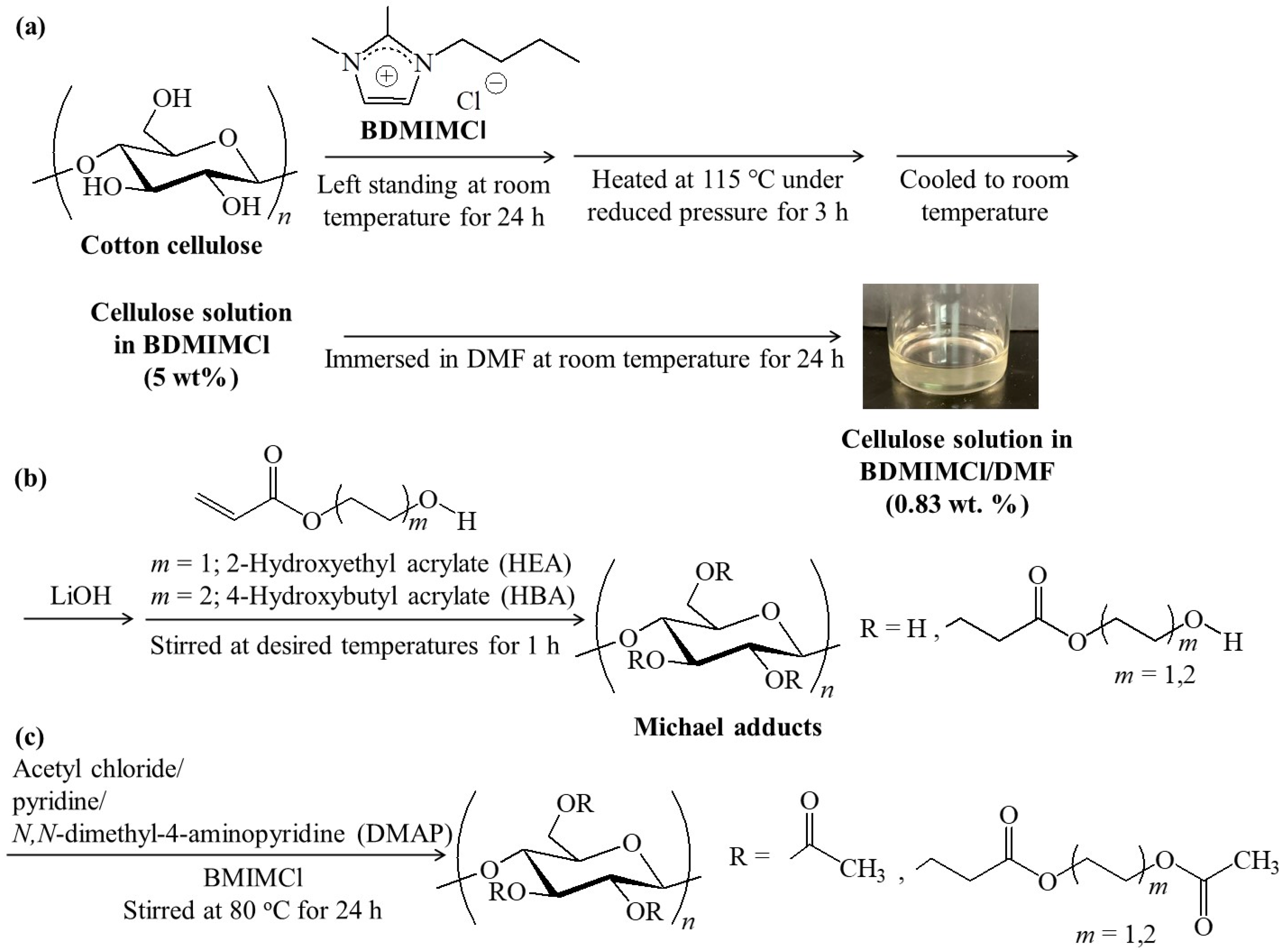
2.2. Preparation of Cellulose Solution in BDMIMCl/DMF
2.3. Michael Addtion of Cellulose to Hydroxylalkyl Acrylates in BDMIMCl/DMF Solution
2.4. Acetylation of Cellulosic Michael Adducts
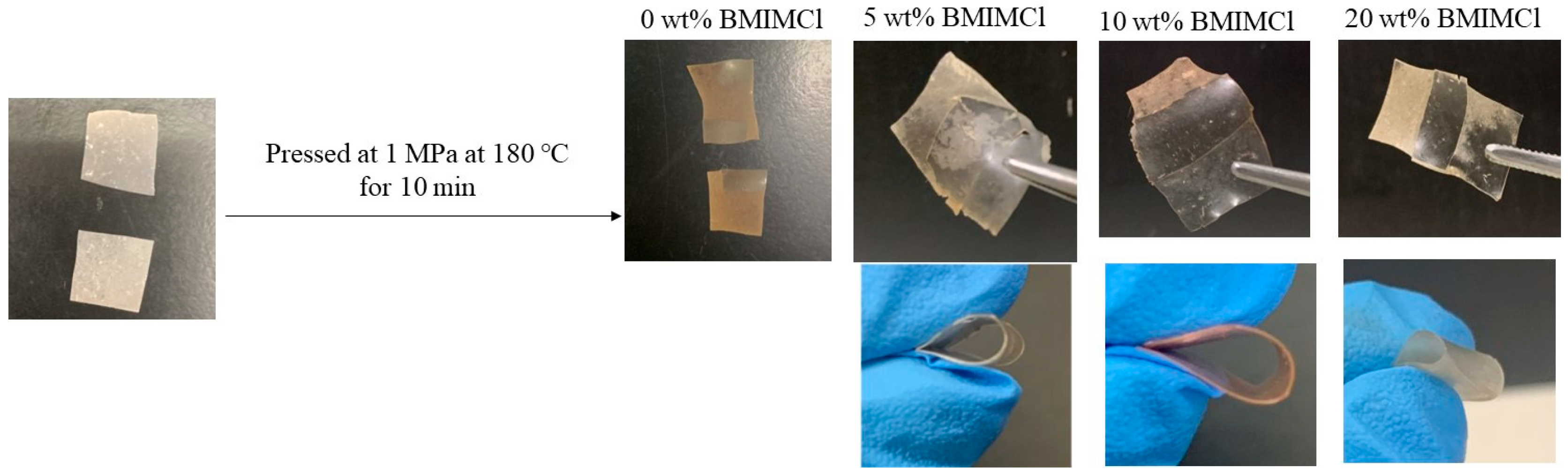
2.5. Film Formation and Evaluation of Thermiplasticity of Michael Adducts
2.6. Measurements
3. Results and Discussion
4. Conclusions
Supplementary Materials
Author Contributions
Funding
Institutional Review Board Statement
Data Availability Statement
Conflicts of Interest
References
- Klemm, D.; Heublein, B.; Fink, H.P.; Bohn, A. Cellulose: Fascinating biopolymer and sustainable raw material. Angew. Chem. Int. Ed. 2005, 44, 3358–3393. [Google Scholar] [CrossRef] [Scilit] [PubMed]
- Song, E.H.; Shang, J.; Ratner, D.M. 9.08—Polysaccharides. In Polymer Science: A Comprehensive Reference; Matyjaszewski, K., Möller, M., Eds.; Elsevier: Amsterdam, The Netherlands, 2012; pp. 137–155. [Google Scholar]
- Sata, H.; Murayama, M.; Shimamoto, S. Properties and applications of cellulose triacetate film. Macromol. Symp. 2004, 208, 323–334. [Google Scholar] [CrossRef] [Scilit]
- Nishino, T.; Takano, K.; Nakamae, K.; Saitaka, K.; Itakura, S.; Azuma, J.I.; Okamura, K. Elastic modulus of the crystalline regions of cellulose triesters. J. Polym. Sci. Part B Polym. Phys. 1995, 33, 611–618. [Google Scholar] [CrossRef] [Scilit]
- Zhou, J.; Zhang, L.; Deng, Q.; Wu, X. Synthesis and characterization of cellulose derivatives prepared in NaOH/urea aqueous solutions. J. Polym. Sci. Part A Polym. Chem. 2004, 42, 5911–5920. [Google Scholar] [CrossRef] [Scilit]
- Cheng, W.; Zhu, Y.; Jiang, G.; Cao, K.; Zeng, S.; Chen, W.; Zhao, D.; Yu, H. Sustainable cellulose and its derivatives for promising biomedical applications. Prog. Mater. Sci. 2023, 138, 101152. [Google Scholar] [CrossRef] [Scilit]
- Huang, L.; Hu, Q.; Gao, S.; Liu, W.; Wei, X. Recent progress and applications of cellulose and its derivatives-based humidity sensors: A review. Carbohydr. Polym. 2023, 318, 121139. [Google Scholar] [CrossRef] [Scilit]
- Aziz, T.; Li, W.; Zhu, J.; Chen, B. Developing multifunctional cellulose derivatives for environmental and biomedical applications: Insights into modification processes and advanced material properties. Int. J. Biol. Macromol. 2024, 278, 134695. [Google Scholar] [CrossRef] [Scilit]
- More, R.V.; Antanitta, V.; Khonde, R.; Kandasubramanian, B. Cellulose and derivatives serving as natural, versatile and biocompatible polymers in biomedical applications. Int. J. Polym. Mater. Polym. Biomater. 2024. [Google Scholar] [CrossRef] [Scilit]
- Verma, C.; Singh, V.; AlFantazi, A. Cellulose, cellulose derivatives and cellulose composites in sustainable corrosion protection: Challenges and opportunities. Phys. Chem. Chem. Phys. 2024, 26, 11217–11242. [Google Scholar] [CrossRef] [Scilit]
- Song, Y.; Zhou, J.; Zhang, L.; Wu, X. Homogenous modification of cellulose with acrylamide in NaOH/urea aqueous solutions. Carbohydr. Polym. 2008, 73, 18–25. [Google Scholar] [CrossRef] [Scilit]
- Song, Y.; Gan, W.; Li, Q.; Guo, Y.; Zhou, J.; Zhang, L. Alkaline hydrolysis and flocculation properties of acrylamide-modified cellulose polyelectrolytes. Carbohydr. Polym. 2011, 86, 171–176. [Google Scholar] [CrossRef] [Scilit]
- Chaouf, S.; El Barkany, S.; Amhamdi, H.; Jilal, I.; El Ouardi, Y.; Abou-salama, M.; Loutou, M.; El-Houssaine, A.; El Ouarghi, H.; El Idrissi, A. Low degree of substitution of cellulose acrylate based green polyelectrolyte: Synthesis, characterization and application to the removal of Cu (II) ions and colloidal Fe(OH)3 turbidity. Mater. Today Proc. 2020, 31, S175–S182. [Google Scholar] [CrossRef] [Scilit]
- Mather, B.D.; Viswanathan, K.; Miller, K.M.; Long, T.E. Michael addition reactions in macromolecular design for emerging technologies. Prog. Polym. Sci. 2006, 31, 487–531. [Google Scholar] [CrossRef] [Scilit]
- El Seoud, O.A.; Koschella, A.; Fidale, L.C.; Dorn, S.; Heinze, T. Applications of ionic liquids in carbohydrate chemistry: A window of opportunities. Biomacromolecules 2007, 8, 2629–2647. [Google Scholar] [CrossRef] [Scilit]
- Liebert, T.; Heinze, T. Interaction of ionic liquids with polysaccharides 5. Solvents and reaction media for the modification of cellulose. Bioresources 2008, 3, 576–601. [Google Scholar] [CrossRef] [Scilit]
- Feng, L.; Chen, Z.I. Research progress on dissolution and functional modification of cellulose in ionic liquids. J. Mol. Liq. 2008, 142, 1–5. [Google Scholar] [CrossRef] [Scilit]
- Pinkert, A.; Marsh, K.N.; Pang, S.S.; Staiger, M.P. Ionic liquids and their interaction with cellulose. Chem. Rev. 2009, 109, 6712–6728. [Google Scholar] [CrossRef] [Scilit]
- Zakrzewska, M.E.; Bogel-Łukasik, E.; Bogel-Łukasik, R. Solubility of carbohydrates in ionic liquids. Energy Fuels 2010, 24, 737–745. [Google Scholar] [CrossRef] [Scilit]
- Gericke, M.; Fardim, P.; Heinze, T. Ionic liquids—Promising but challenging solvents for homogeneous derivatization of cellulose. Molecules 2012, 17, 7458–7502. [Google Scholar] [CrossRef] [Scilit]
- Isik, M.; Sardon, H.; Mecerreyes, D. Ionic liquids and cellulose: Dissolution, chemical modification and preparation of new cellulosic materials. Int. J. Mol. Sci. 2014, 15, 11922–11940. [Google Scholar] [CrossRef] [Scilit]
- Zhang, X.; Wu, X.; Gao, D.; Xia, K. Bulk cellulose plastic materials from processing cellulose powder using back pressure-equal channel angular pressing. Carbohydr. Polym. 2012, 87, 2470–2476. [Google Scholar] [CrossRef] [Scilit]
- Hermanutz, F.; Vocht, M.P.; Panzier, N.; Buchmeiser, M.R. Processing of cellulose using ionic liquids. Macromol. Mater. Eng. 2019, 304, 1800450. [Google Scholar] [CrossRef] [Scilit]
- Verma, C.; Mishra, A.; Chauhan, S.; Verma, P.; Srivastava, V.; Quraishi, M.A.; Ebenso, E.E. Dissolution of cellulose in ionic liquids and their mixed cosolvents: A review. Sustain. Chem. Pharm. 2019, 13, 100162. [Google Scholar] [CrossRef] [Scilit]
- Taokaew, S.; Kriangkrai, W. Recent progress in processing cellulose using ionic liquids as solvents. Polysaccharides 2022, 3, 671–691. [Google Scholar] [CrossRef] [Scilit]
- Szabó, L.; Milotskyi, R.; Sharma, G.; Takahashi, K. Cellulose processing in ionic liquids from a materials science perspective: Turning a versatile biopolymer into the cornerstone of our sustainable future. Green Chem. 2023, 25, 5338–5389. [Google Scholar] [CrossRef] [Scilit]
- Swatloski, R.P.; Spear, S.K.; Holbrey, J.D.; Rogers, R.D. Dissolution of cellose with ionic liquids. J. Am. Chem. Soc. 2002, 124, 4974–4975. [Google Scholar] [CrossRef] [Scilit]
- Kadokawa, J.; Ohyama, N.; Idenoue, S.; Yamamoto, K. Facile production of cellulosic organic solutions and organogels from ionic liquid media. Colloid Polym. Sci. 2020, 298, 1129–1134. [Google Scholar] [CrossRef] [Scilit]
- Kadokawa, J.; Minami, Y.; Anai, T.; Hara, H.; Yamamoto, K. Graft polymerization of 1,2-butylene oxide from cellulose in ionic liquid/N-methyl-2-pyrrolidone solvent. Polym. Bull. 2023, 80, 8535–8545. [Google Scholar] [CrossRef] [Scilit]
- Barthel, S.; Heinze, T. Acylation and carbanilation of cellulose in ionic liquids. Green Chem. 2006, 8, 301–306. [Google Scholar] [CrossRef] [Scilit]
- Handy, S.T.; Okello, M. The 2-position of imidazolium ionic liquids: Substitution and exchange. J. Org. Chem. 2005, 70, 1915–1918. [Google Scholar] [CrossRef] [Scilit]
- Kostag, M.; Gericke, M.; Heinze, T.; El Seoud, O.A. Twenty-five years of cellulose chemistry: Innovations in the dissolution of the biopolymer and its transformation into esters and ethers. Cellulose 2019, 26, 139–184. [Google Scholar] [CrossRef] [Scilit]
- Wilkes, J.S.; Levisky, J.A.; Wilson, R.A.; Hussey, C.L. Dialkylimidazolium chloroaluminate melts: A new class of room-temperature ionic liquids for electrochemistry, spectroscopy and synthesis. Inorg. Chem. 1982, 21, 1263–1264. [Google Scholar] [CrossRef] [Scilit]
- Saegusa, T.; Kobayashi, S.; Kimura, Y. Hydrogen-transfer polymerization of hydroxyalkyl aJournal of Polymer Science Part B Polymer Physicscrylates. Macromolecules 1975, 8, 950–952. [Google Scholar] [CrossRef] [Scilit]
- Shaikh, H.M.; Anis, A.; Poulose, A.M.; Al-Zahrani, S.M.; Madhar, N.A.; Alhamidi, A.; Aldeligan, S.H.; Alsubaie, F.S. Synthesis and characterization of cellulose triacetate obtained from date palm (Phoenix dactylifera L.) trunk mesh-derived cellulose. Molecules 2022, 27, 1434. [Google Scholar] [CrossRef] [Scilit] [PubMed]
- Wu, J.; Bai, J.; Xue, Z.; Liao, Y.; Zhou, X.; Xie, X. Insight into glass transition of cellulose based on direct thermal processing after plasticization by ionic liquid. Cellulose 2015, 22, 89–99. [Google Scholar] [CrossRef] [Scilit]
- Haq, M.A.; Habu, Y.; Yamamoto, K.; Takada, A.; Kadokawa, J. Ionic liquid induces flexibility and thermoplasticity in cellulose film. Carbohydr. Polym. 2019, 223, 115058. [Google Scholar] [CrossRef] [Scilit]
- Li, L.; Zhang, Y.; Sun, Y.; Sun, S.; Shen, G.; Zhao, P.; Cui, J.; Qiao, H.; Wang, Y.; Zhou, H. Manufacturing pure cellulose films by recycling ionic liquids as plasticizers. Green Chem. 2020, 22, 3835–3841. [Google Scholar] [CrossRef] [Scilit]
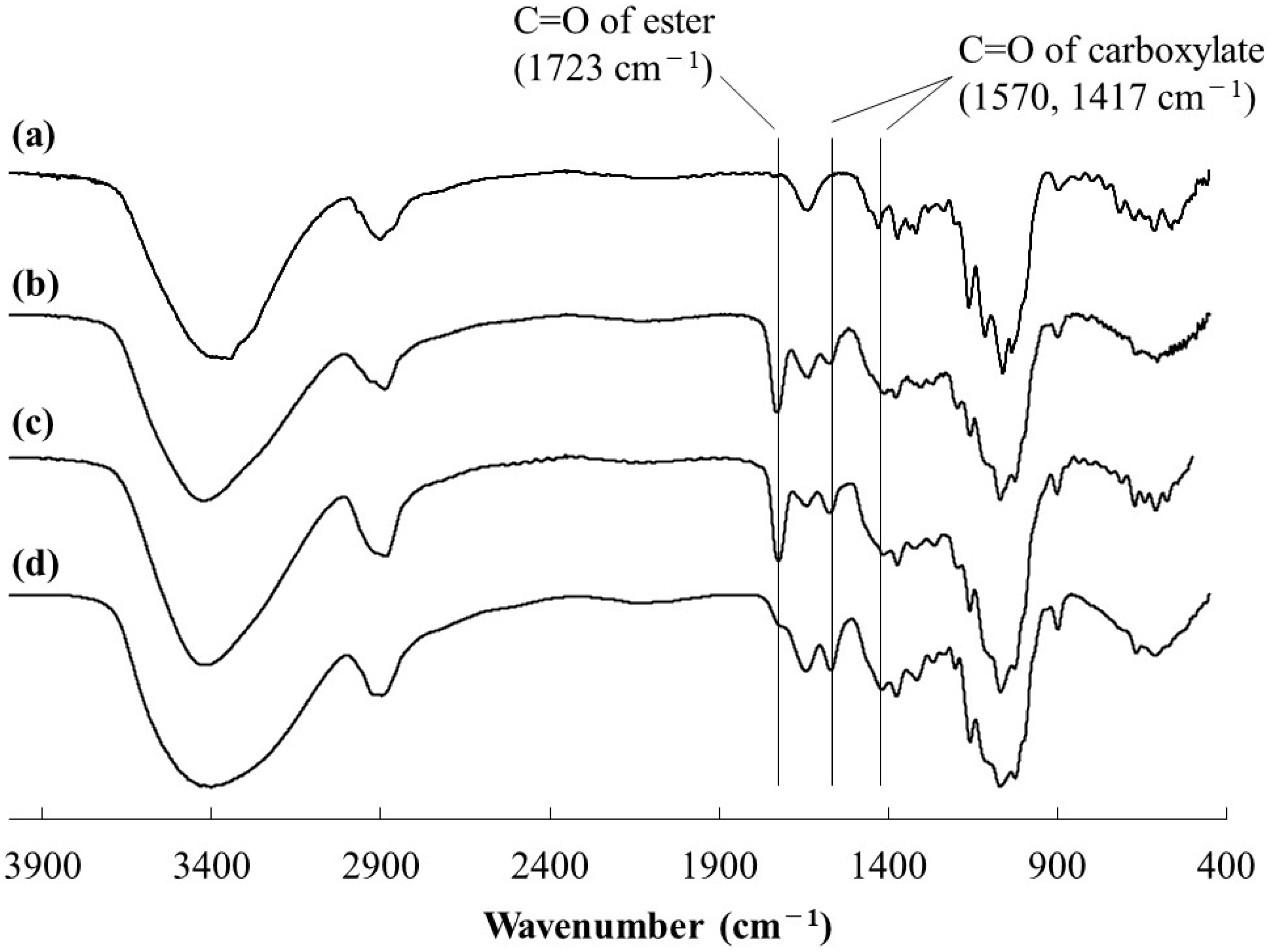
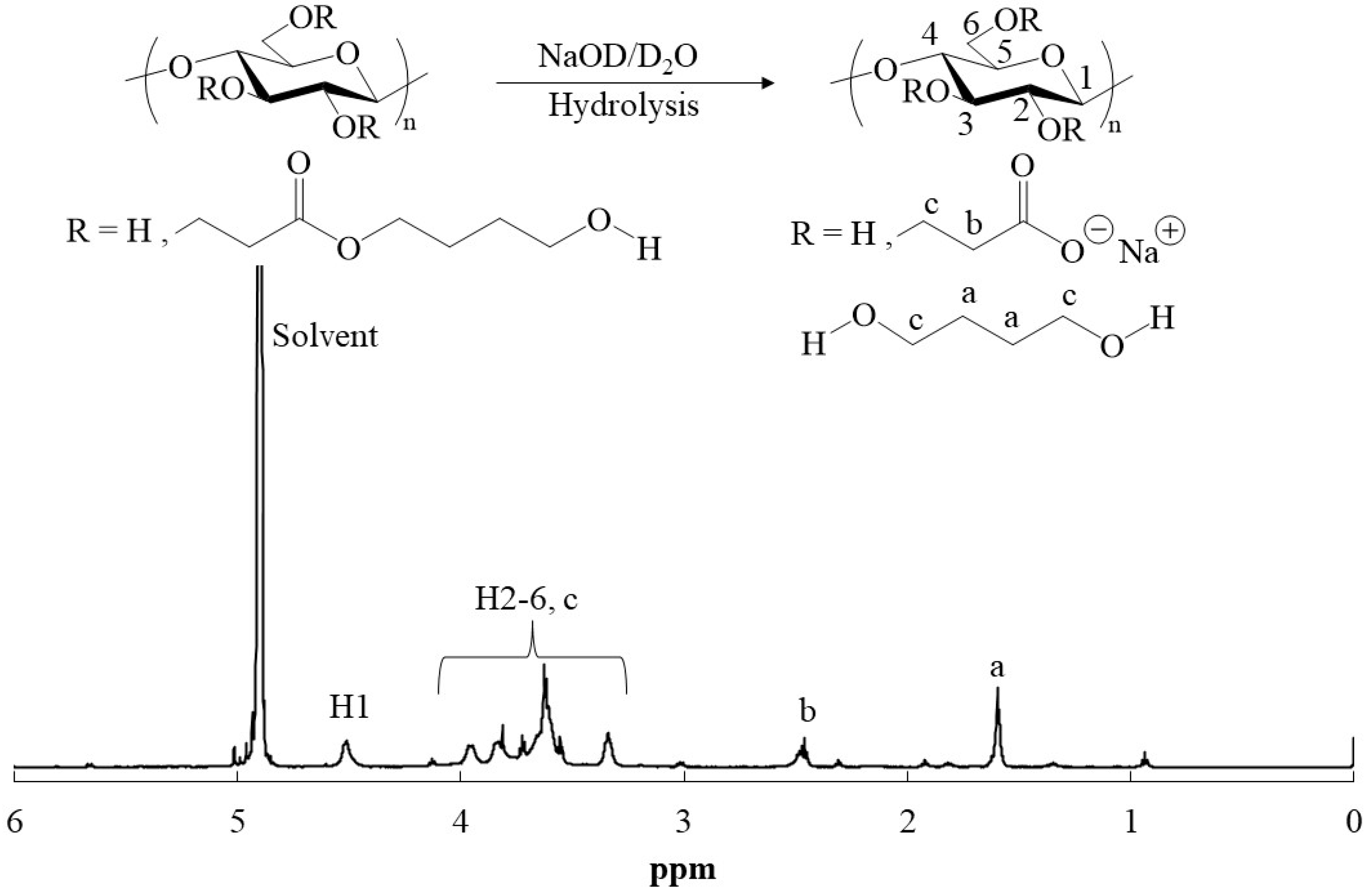
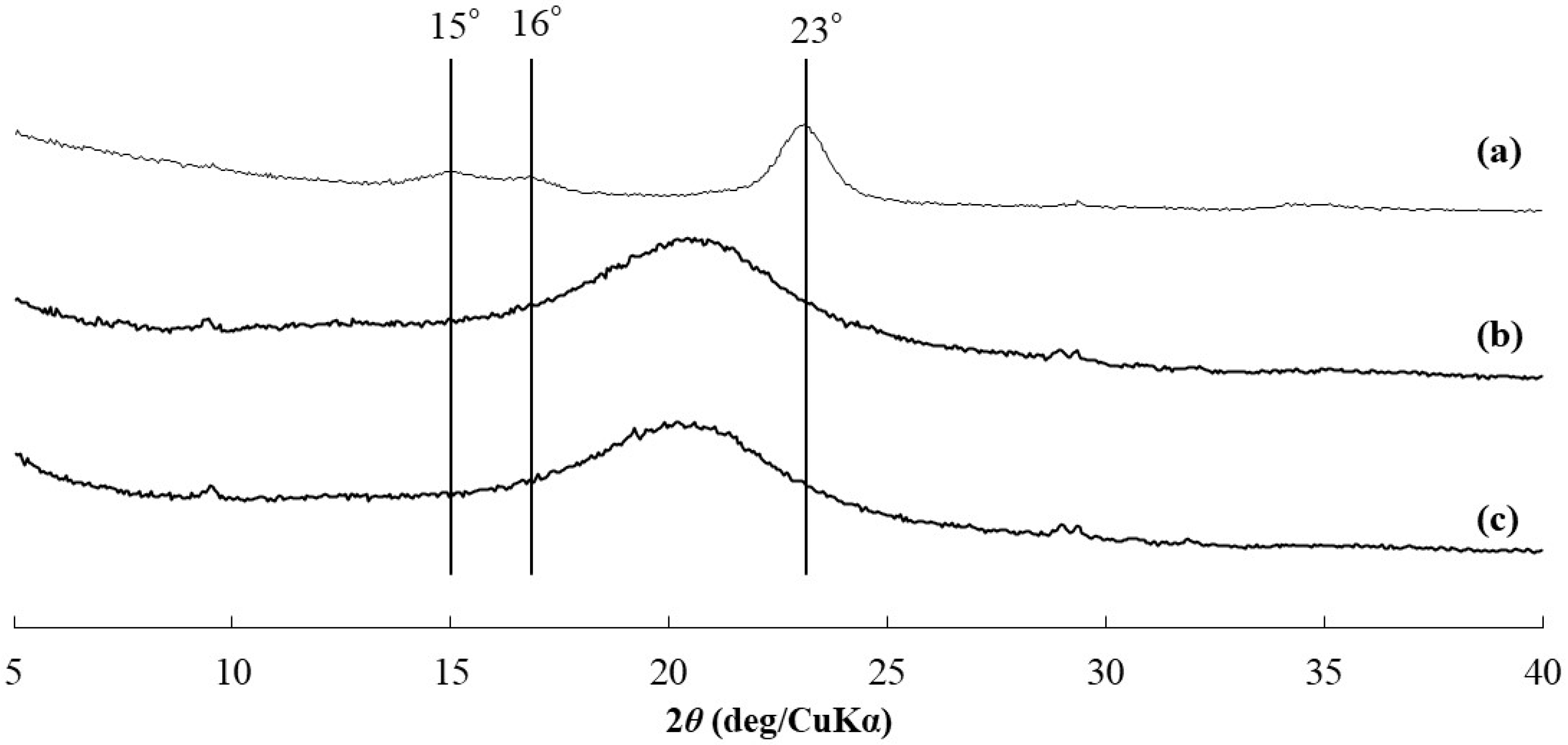

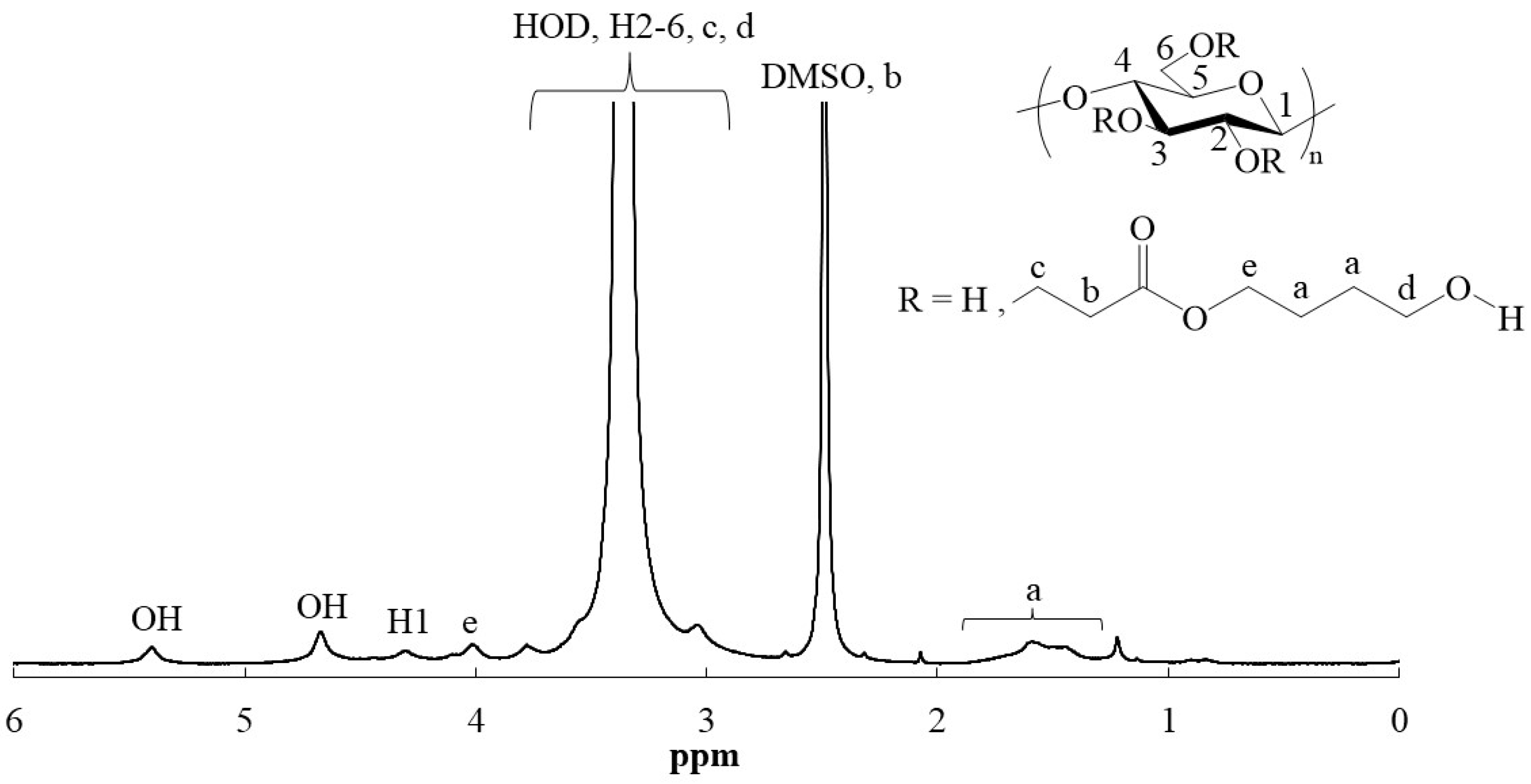

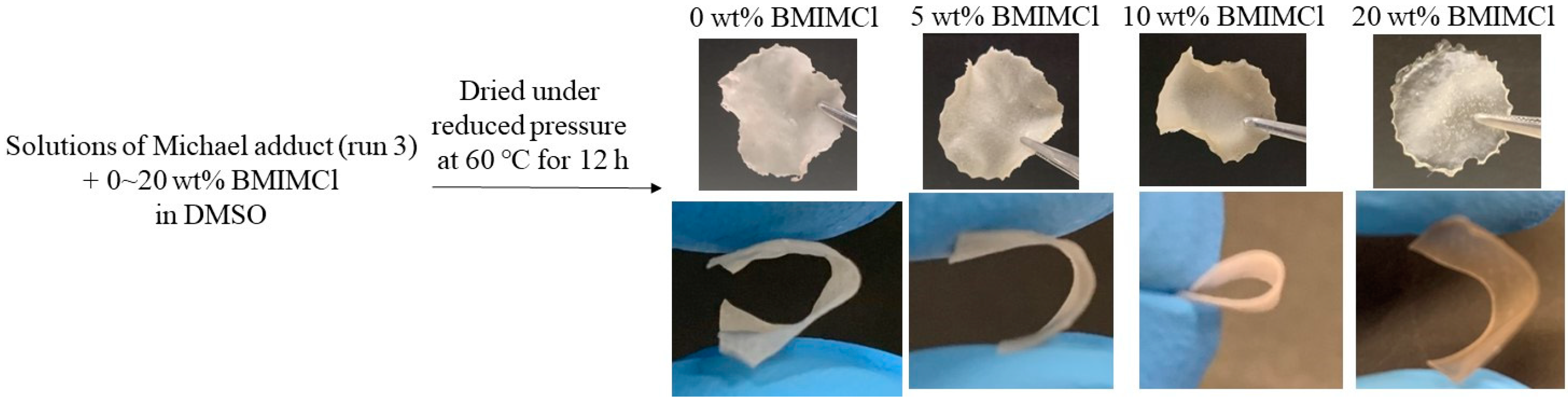
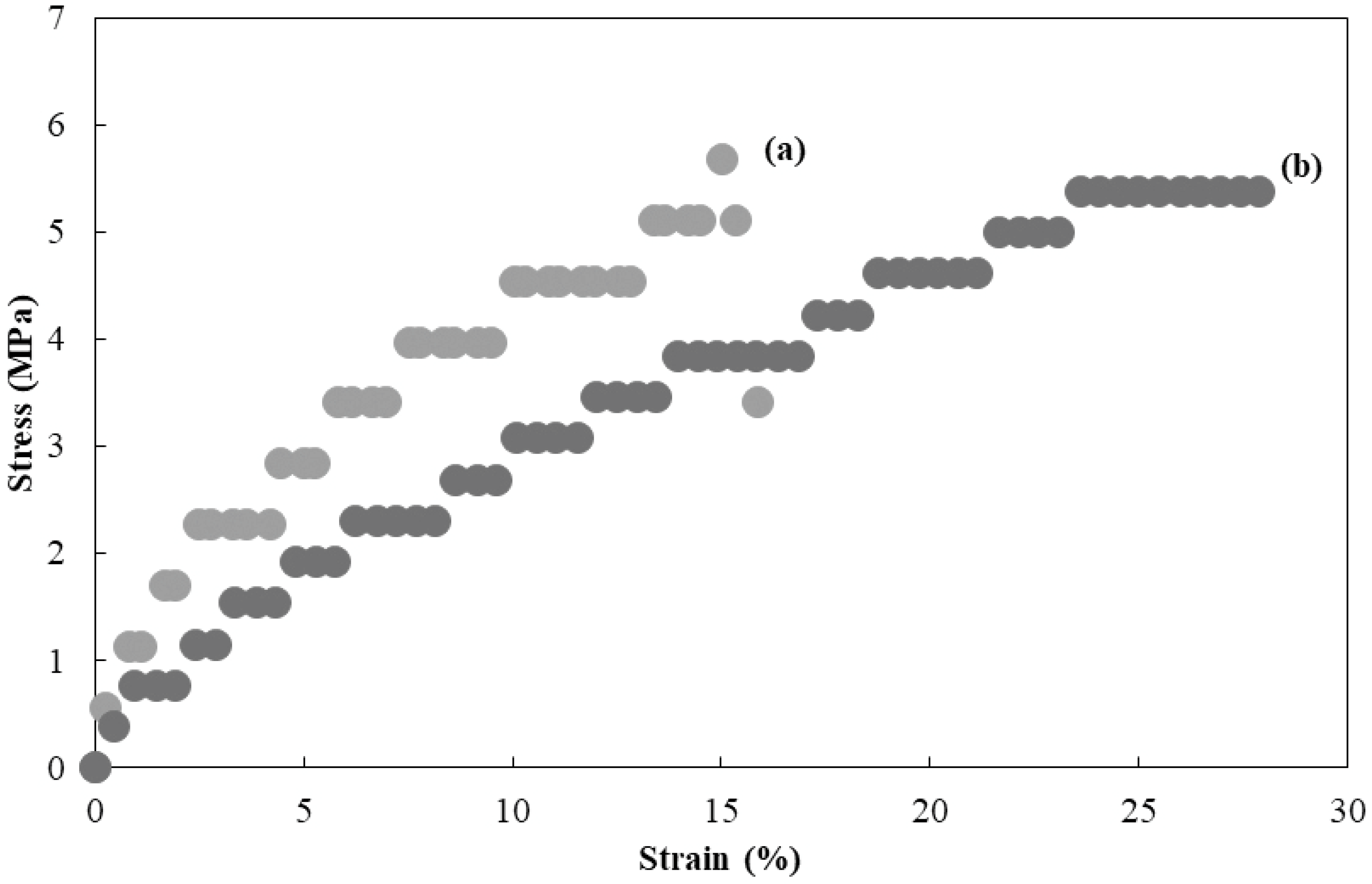



| Run | Substrate (b) | Temperature | Yield (mg) | DS (c) |
|---|---|---|---|---|
| 1 | HEA | room temperature | 41.9 | 0.3 |
| 2 | HEA | 50 °C | 34.4 | 0.6 |
| 3 | HBA | room temperature | 37.0 | 0.3 |
| 4 | HBA | 50 °C | 41.8 | 0.3 |
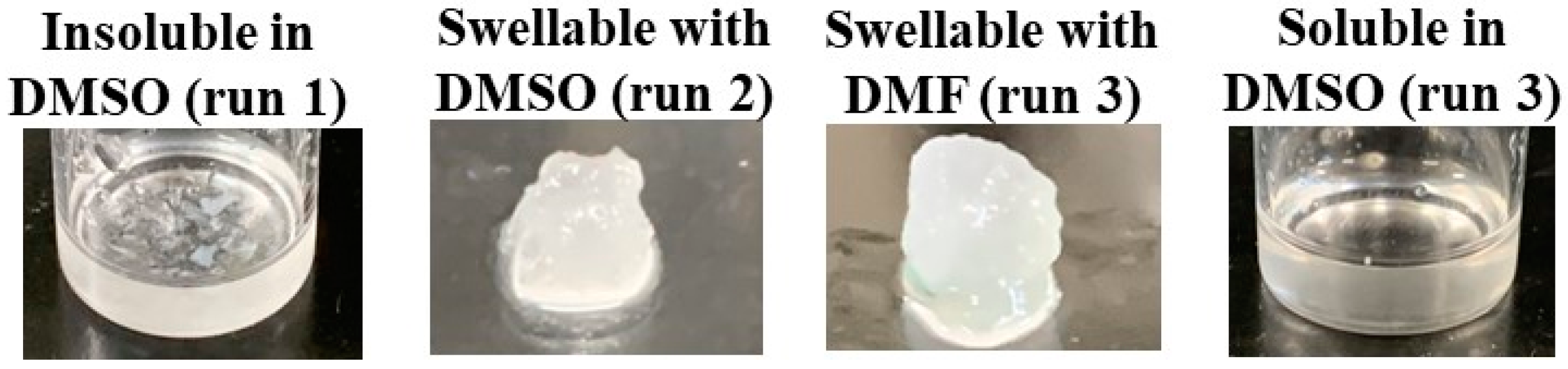
| Run | DMSO | DMF | DMAc | NMP | 1,2,-Ethanediol |
|---|---|---|---|---|---|
| 1 | - | - | - | - | - |
| 2 | ± | ± | ± | ± | ± |
| 3 | + | ± | ± | ± | ± |
| 4 | + | ± | ± | ± | ± |
Disclaimer/Publisher’s Note: The statements, opinions and data contained in all publications are solely those of the individual author(s) and contributor(s) and not of MDPI and/or the editor(s). MDPI and/or the editor(s) disclaim responsibility for any injury to people or property resulting from any ideas, methods, instructions or products referred to in the content. |
© 2024 by the authors. Licensee MDPI, Basel, Switzerland. This article is an open access article distributed under the terms and conditions of the Creative Commons Attribution (CC BY) license (https://creativecommons.org/licenses/by/4.0/).
Share and Cite
Nagaishi, H.; Totani, M.; Kadokawa, J.-i. Synthesis of Amorphous Cellulose Derivatives via Michael Addition to Hydroxyalkyl Acrylates for Thermoplastic Film Applications. Polymers 2024, 16, 3142. https://doi.org/10.3390/polym16223142
Nagaishi H, Totani M, Kadokawa J-i. Synthesis of Amorphous Cellulose Derivatives via Michael Addition to Hydroxyalkyl Acrylates for Thermoplastic Film Applications. Polymers. 2024; 16(22):3142. https://doi.org/10.3390/polym16223142
Chicago/Turabian StyleNagaishi, Hiroyuki, Masayasu Totani, and Jun-ichi Kadokawa. 2024. "Synthesis of Amorphous Cellulose Derivatives via Michael Addition to Hydroxyalkyl Acrylates for Thermoplastic Film Applications" Polymers 16, no. 22: 3142. https://doi.org/10.3390/polym16223142
APA StyleNagaishi, H., Totani, M., & Kadokawa, J.-i. (2024). Synthesis of Amorphous Cellulose Derivatives via Michael Addition to Hydroxyalkyl Acrylates for Thermoplastic Film Applications. Polymers, 16(22), 3142. https://doi.org/10.3390/polym16223142