Article

Molecular Dynamic and Dissipative Particle Dynamic Simulation on the Miscibility of NR/CR Blends


1
School of Life Sciences, Hainan University, Haikou 570228, China
2
School of Materials Science and Engineering, Hainan University, Haikou 570228, China
3
Hainan Provincial Key Laboratory of Natural Rubber Processing, Agricultural Products Processing Research Institute of Chinese Academy of Tropical Agricultural Sciences, Zhanjiang 524001, China
*
Authors to whom correspondence should be addressed.
Polymers 2023, 15(4), 856; https://doi.org/10.3390/polym15040856
Submission received: 9 January 2023 / Revised: 5 February 2023 / Accepted: 7 February 2023 / Published: 9 February 2023
(This article belongs to the Section Polymer Physics and Theory)

Abstract

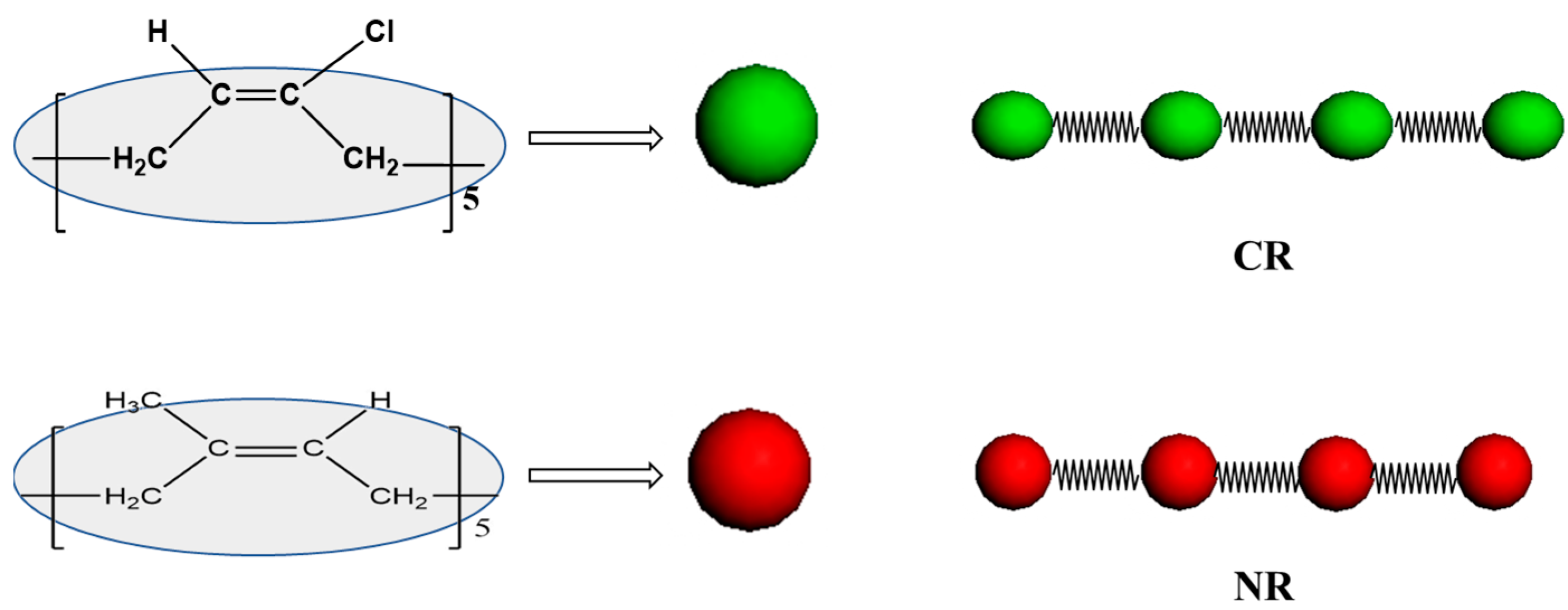
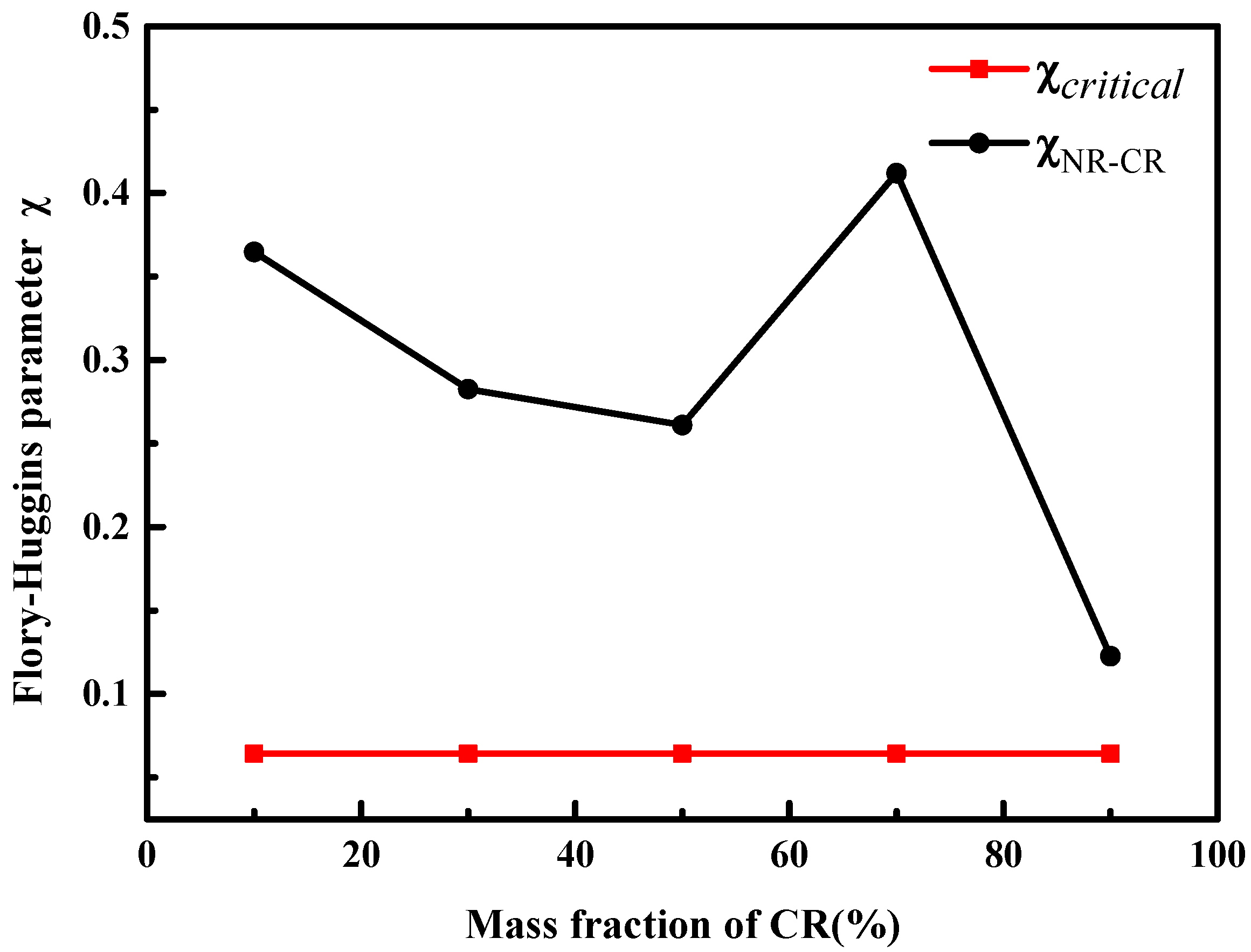
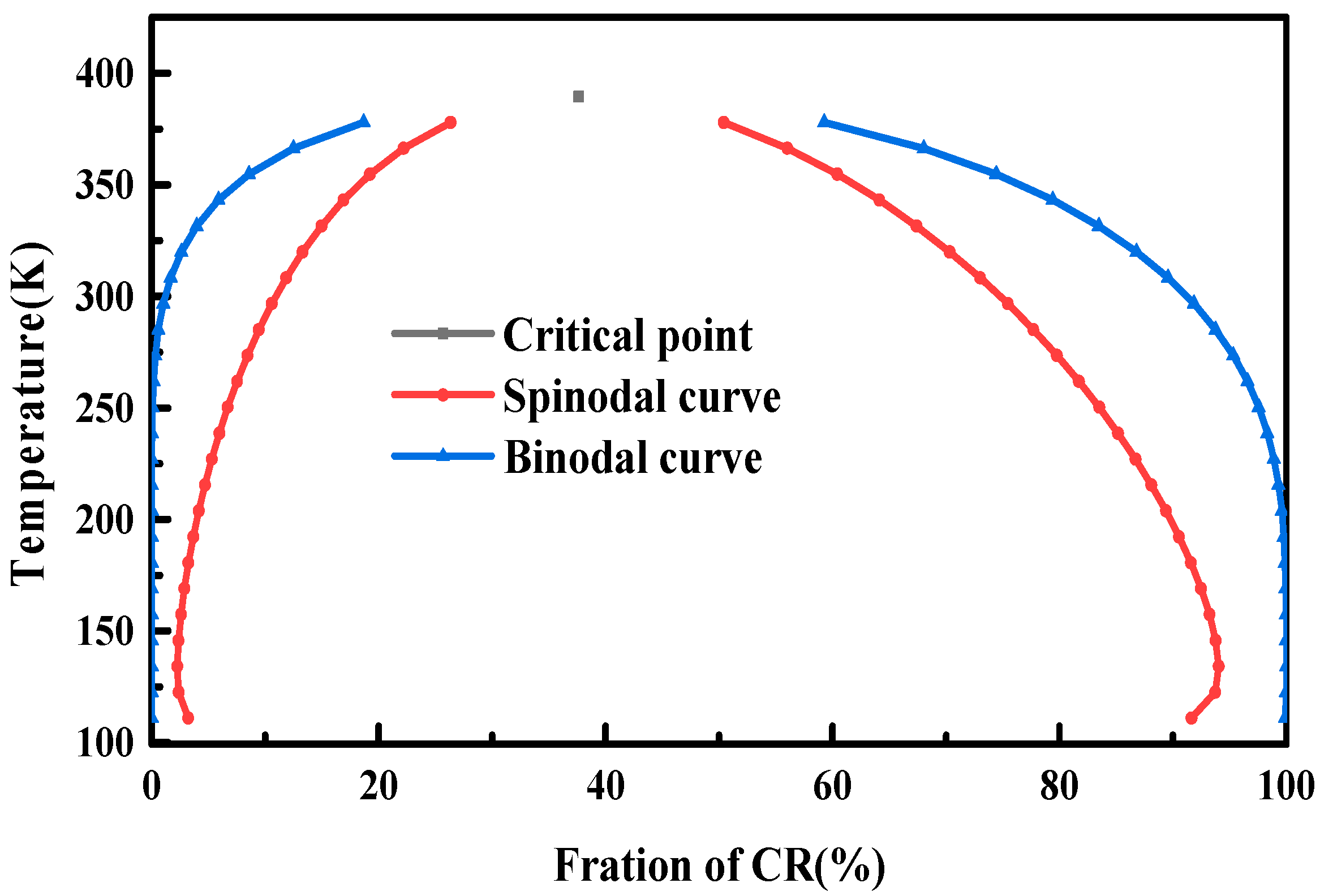
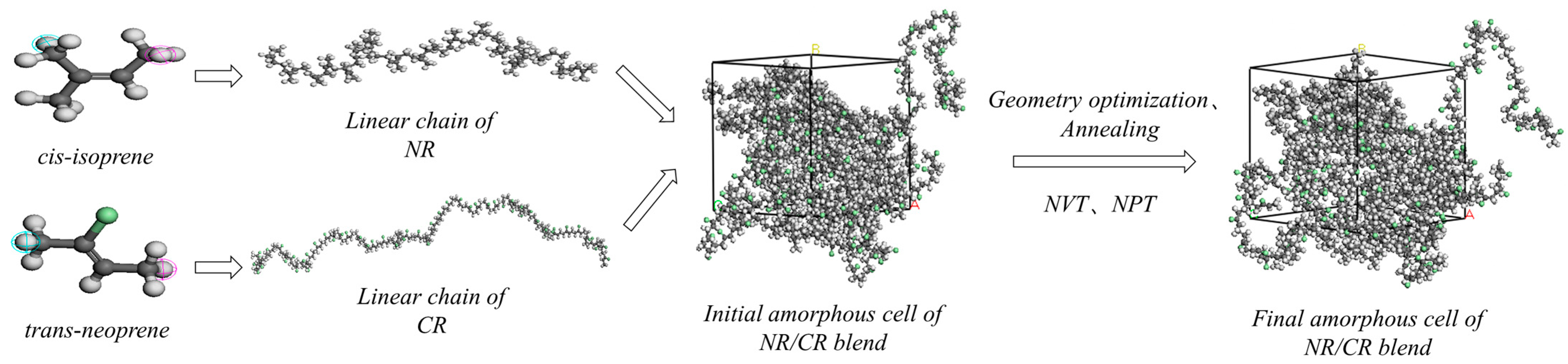
Natural rubber (NR) exhibits good elasticity, flexural resistance, wear resistance, and excellent mechanical properties, and it has been widely used in aerospace, transportation, medical, and health fields. For NR, however, the resistance to thermal-oxidation and ozone aging is fairly poor. Although aging properties of NR can be significantly improved with the incorporation of chloroprene rubber (CR) according to some references, the miscibility between NR and CR, the morphologies of the binary blends, and so on are revealed ambiguously. In this work, molecular dynamics simulation (MD) and dissipative particle dynamics (DPD) simulation were carried out to predict the compatibility between natural rubber and chloroprene rubber in view of Flory–Huggins parameters. The morphologies of the blends were obtained with the use of the DPD method. The simulation results were furtherly examined by means of Fourier transform infrared spectroscopy (FT-IR) and dynamic mechanical analysis (DMA). It was found that the miscibility between NR and CR is poor. Nevertheless, the miscibility could be improved when the content of CR is 50% or 90%. In addition, spinodal decomposition with a critical temperature of 390 K would take place according to the phase diagram. Microphase structure such as spherical, lamellar, and bicontinuous phases can be found with different contents of CR in the blends with the results of morphologies analysis.
Keywords: natural rubber; rubber blending; compatibility; molecular dynamics simulation; dissipative particle dynamics simulation natural rubber; rubber blending; compatibility; molecular dynamics simulation; dissipative particle dynamics simulation