Article

Degradation of Bio-Based and Biodegradable Plastic and Its Contribution to Soil Organic Carbon Stock


1
Department of Soil Ecology, UFZ-Helmholtz Centre for Environmental Research, 06120 Halle (Saale), Germany
2
Department of Biology, University of Leipzig, 04103 Leipzig, Germany
3
Institute of Soil Science and Agro Chemistry, Azerbaijan National Academy of Science, AZ1073 Baku, Azerbaijan
4
Bayreuth Center of Ecology and Environmental Research (BayCEER), University of Bayreuth, 95448 Bayreuth, Germany
5
Joint FAO/IAEA Centre of Nuclear Techniques in Food and Agriculture, Soil and Water Management and Crop Nutrition Laboratory, 2444 Seibersdorf, Austria
6
Department of Soil Biogeochemistry, Martin Luther University Halle-Wittenberg, 06120 Halle (Saale), Germany
7
German Centre for Integrative Biodiversity Research (iDiv), Halle-Jena-Leipzig, 04103 Leipzig, Germany
*
Authors to whom correspondence should be addressed.
Polymers 2023, 15(3), 660; https://doi.org/10.3390/polym15030660
Submission received: 6 December 2022 / Revised: 13 January 2023 / Accepted: 16 January 2023 / Published: 28 January 2023
(This article belongs to the Section Circular and Green Sustainable Polymer Science)

Abstract

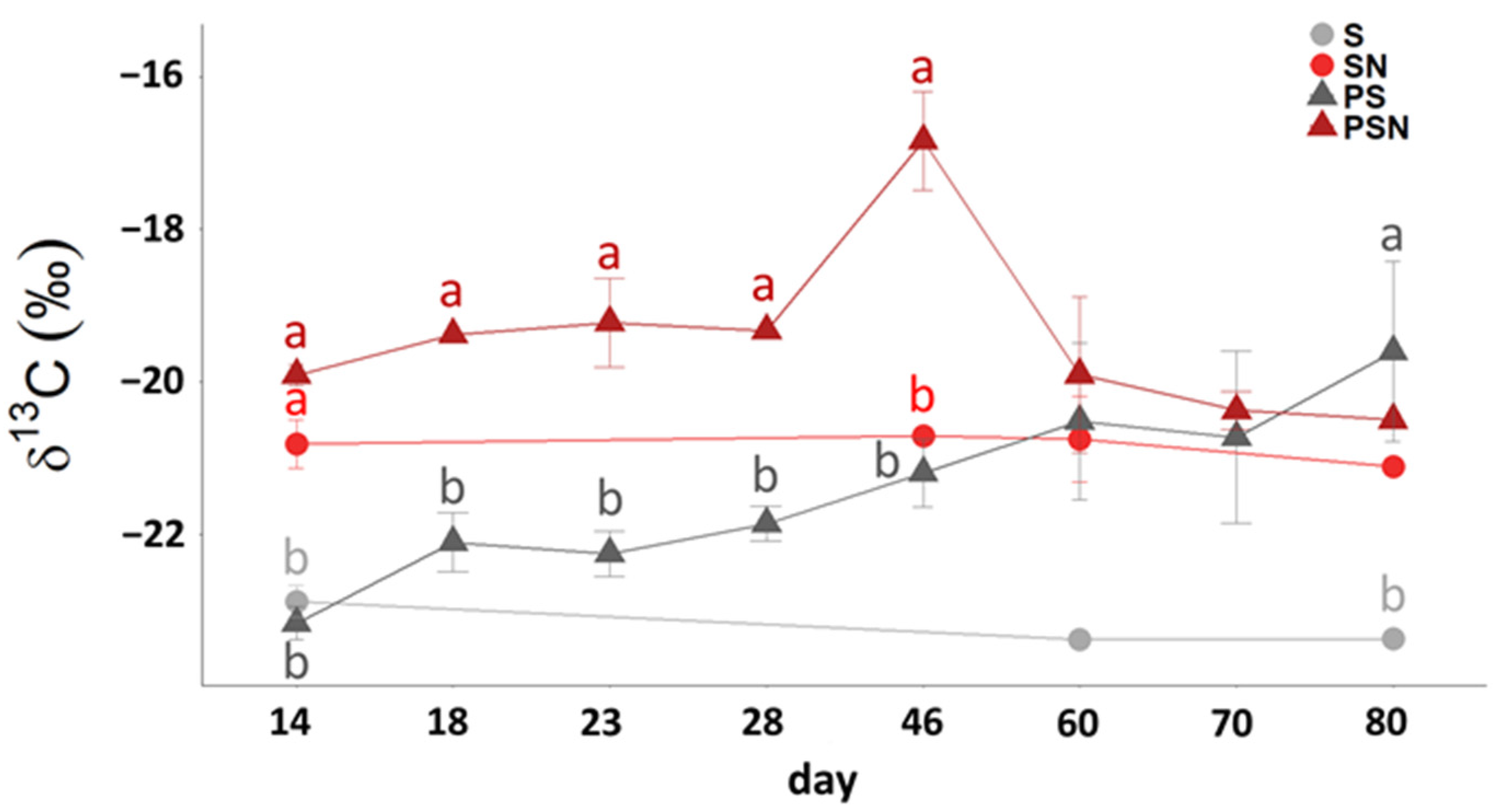
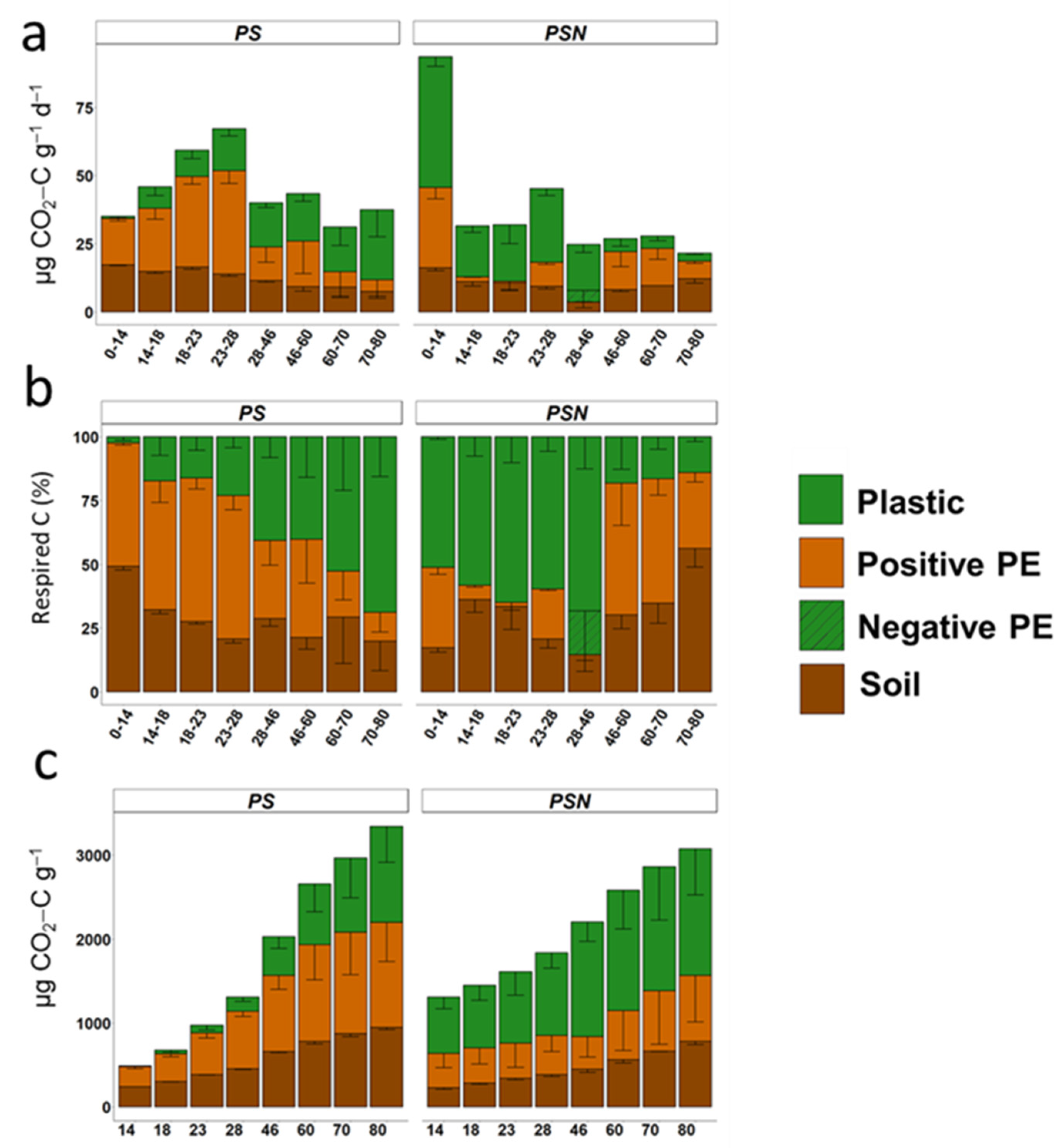
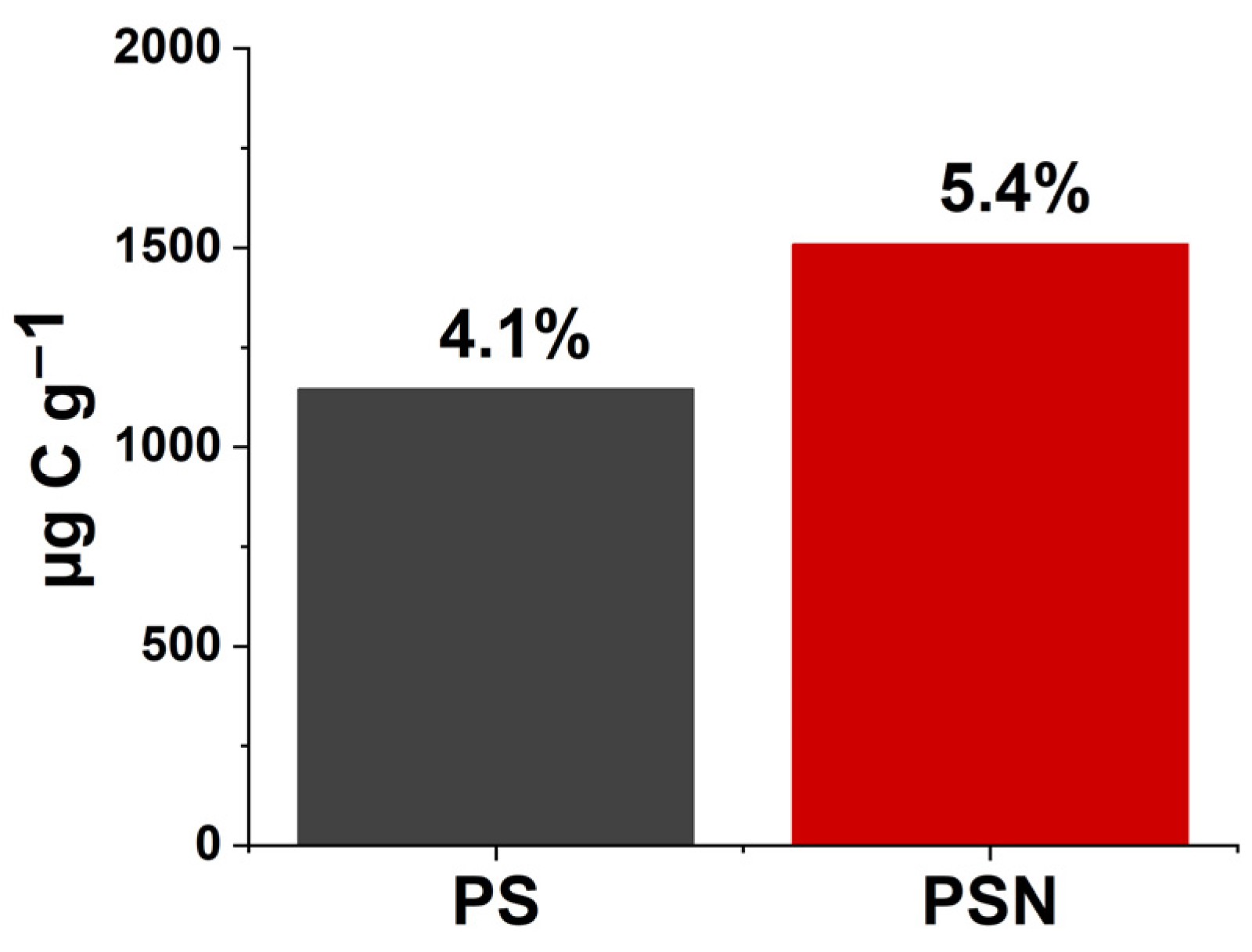
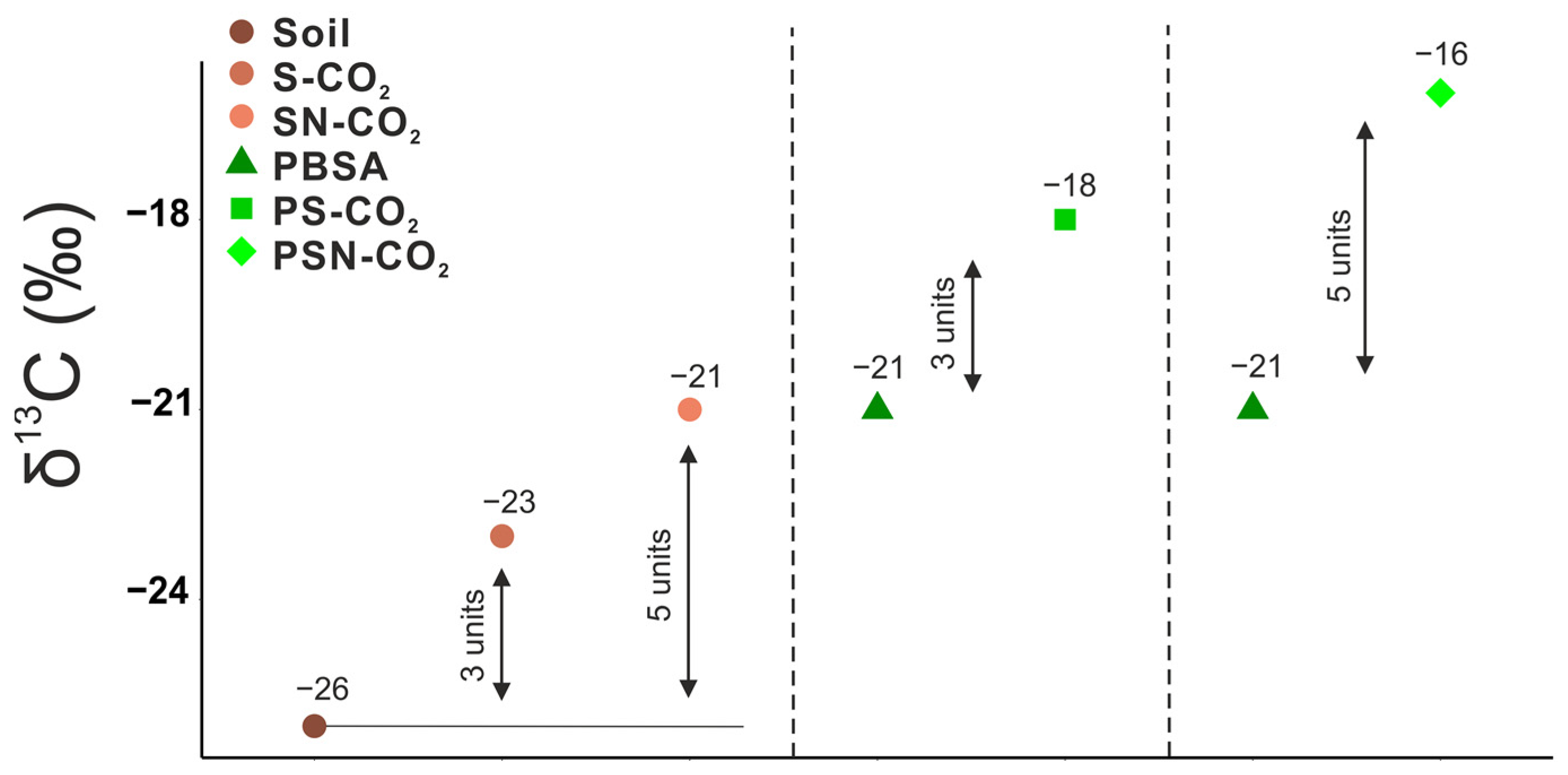
Expanding the use of environmentally friendly materials to protect the environment is one of the key factors in maintaining a sustainable ecological balance. Poly(butylene succinate-co-adipate) (PBSA) is considered among the most promising bio-based and biodegradable plastics for the future with a high number of applications in soil and agriculture. Therefore, the decomposition process of PBSA and its consequences for the carbon stored in soil require careful monitoring. For the first time, the stable isotope technique was applied in the current study to partitioning plastic- and soil-originated C in the CO2 released during 80 days of PBSA decomposition in a Haplic Chernozem soil as dependent on nitrogen availability. The decomposition of the plastic was accompanied by the C loss from soil organic matter (SOM) through priming, which in turn was dependent on added N. Nitrogen facilitated PBSA decomposition and reduced the priming effect during the first 6 weeks of the experiment. During the 80 days of plastic decomposition, 30% and 49% of the released CO2 were PBSA-derived, while the amount of SOM-derived CO2 exceeded the corresponding controls by 100.2 and 132.3% in PBSA-amended soil without and with N fertilization, respectively. Finally, only 4.1% and 5.4% of the PBSA added into the soil was mineralized to CO2, in the treatments without and with N amendment, respectively.
Keywords: PBSA; soil respiration; bio-based and biodegradable plastic; isotopic fractionation; source partitioning; priming effect PBSA; soil respiration; bio-based and biodegradable plastic; isotopic fractionation; source partitioning; priming effect