Article

Investigation of the Damping Capabilities of Different Resin-Based CAD/CAM Restorative Materials

Department of Prosthodontics, Justus-Liebig University, Schlangenzahl 14, 35392 Giessen, Germany
*
Author to whom correspondence should be addressed.
Polymers 2022, 14(3), 493; https://doi.org/10.3390/polym14030493
Submission received: 25 November 2021 / Revised: 17 January 2022 / Accepted: 20 January 2022 / Published: 26 January 2022

Abstract

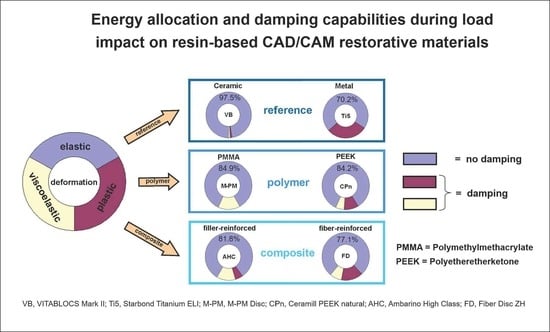
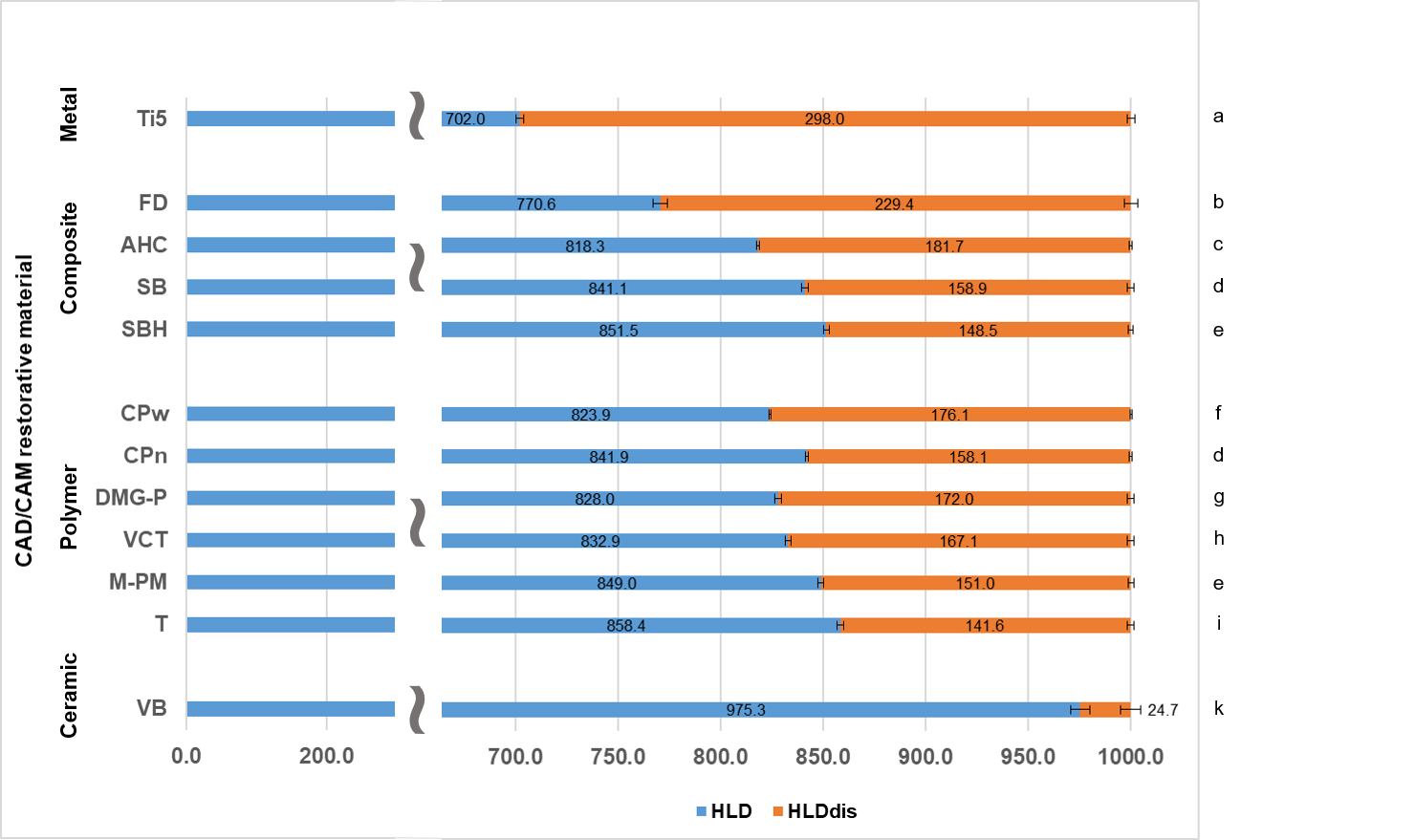
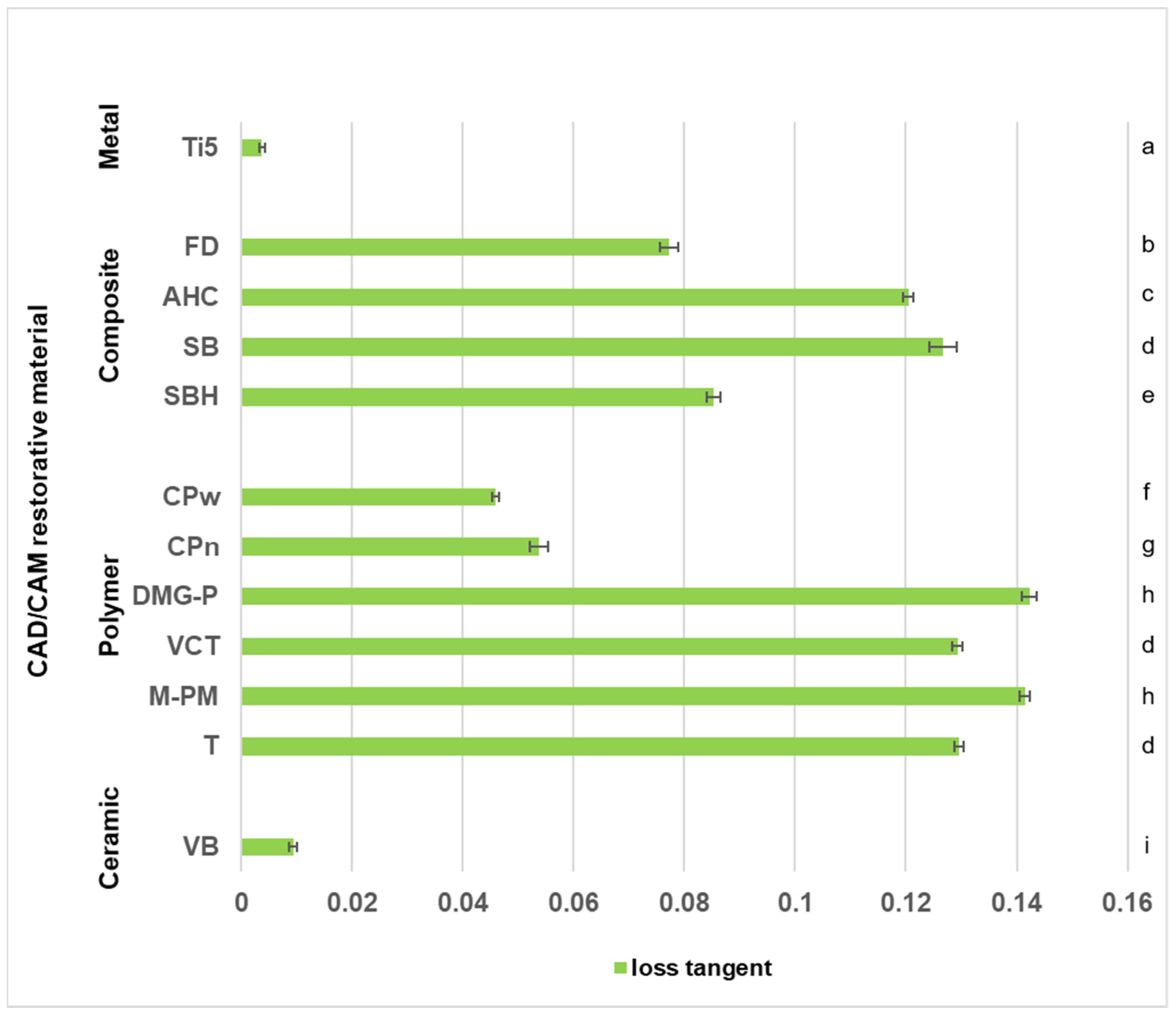
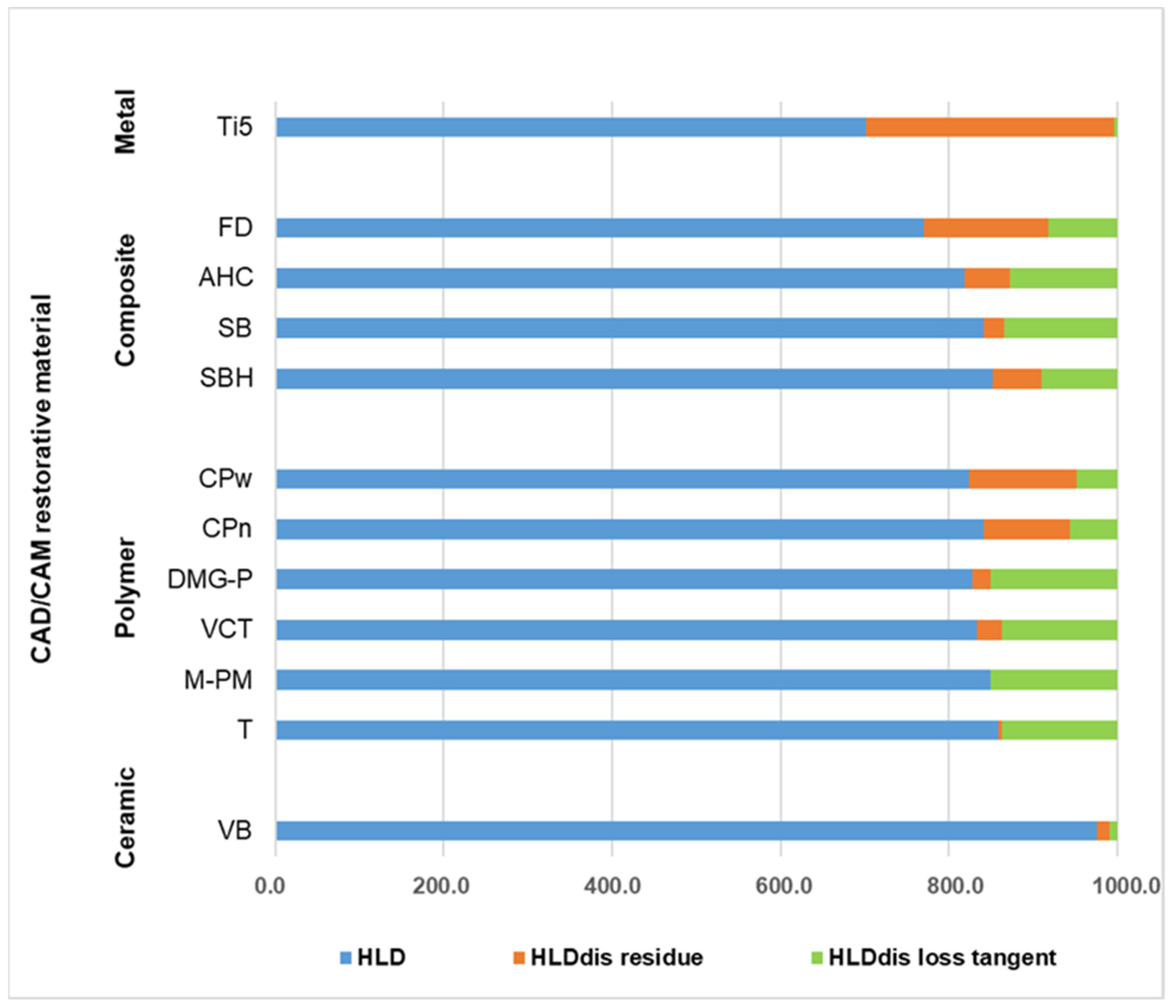
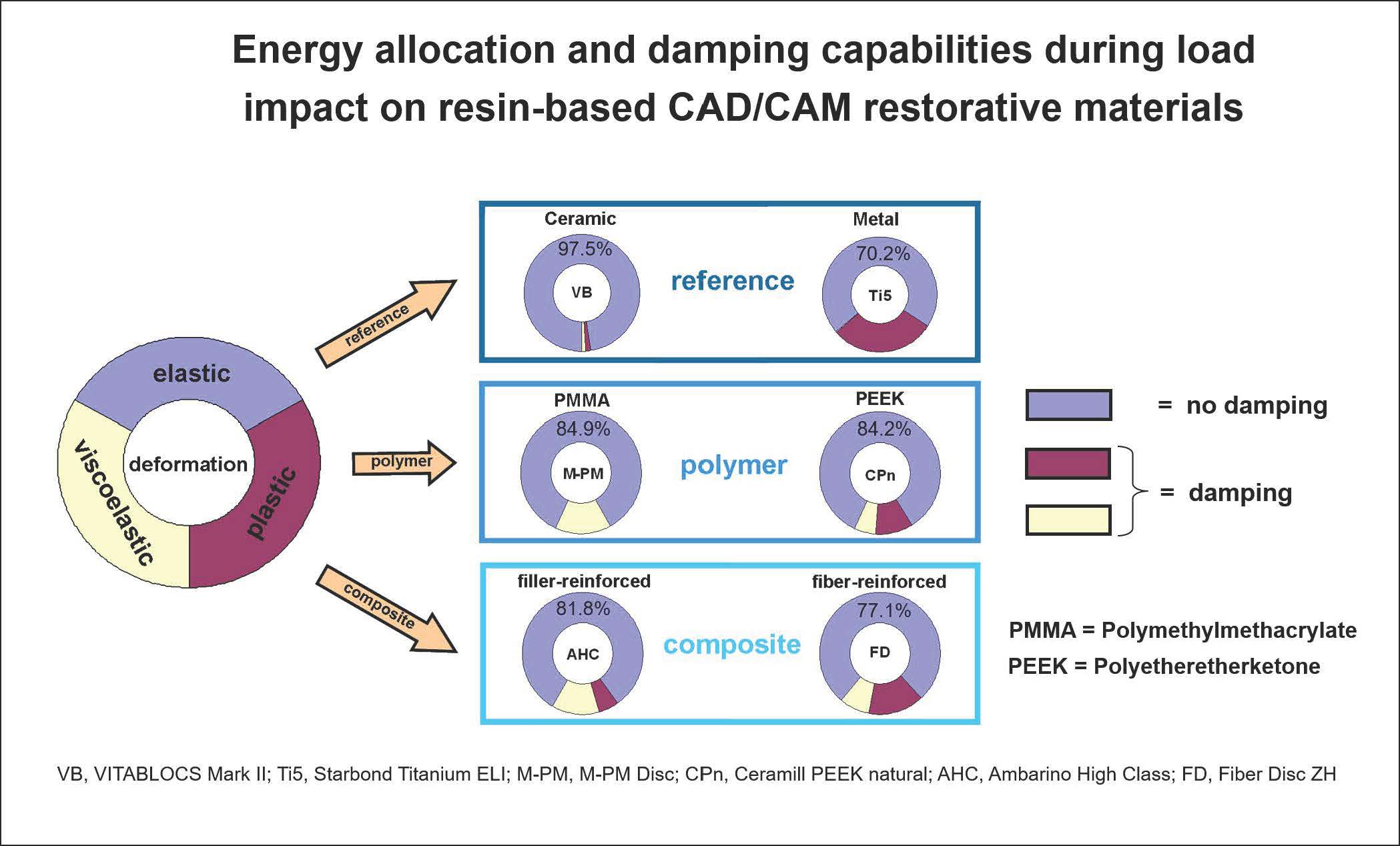
The aim of the present study was to evaluate and quantify the damping properties of common resin-based computer-aided design and computer-aided manufacturing (CAD/CAM) restorative materials (CRMs) and assess their energy dissipation abilities. Leeb hardness (HLD), together with its deduced energy dissipation data (HLDdis), and loss tangent values recorded via dynamic mechanical analysis (DMA) were determined for six polymer, four composite, and one ceramic CRM as well as one metal. Data were statistically analyzed. Among resin-based CRMs, the significantly highest HLDdis data were detected for the fiber-reinforced composite FD (p < 0.001) directly followed by the filler-reinforced Ambarino High Class (p < 0.001). The significantly lowest HLDdis values were observed for the polymer-based CRM Telio CAD (p < 0.001). For loss tangent, both PEEK materials showed the significantly lowest data and the polymer-based M-PM the highest results with all composite CRMs in between. HLDdis data, which simultaneously record the energy dissipation mechanism of plastic material deformation, more precisely characterize the damping behavior of resin-based CRMs compared to loss tangent results that merely describe viscoelastic material behavior. Depending on material composition, resin-based CRMs reveal extremely different ratios of viscoelastic damping but frequently show enhanced HLDdis values because of plastic material deformation. Future developments in CAD/CAM restorative technology should focus on developing improved viscoelastic damping effects.
Keywords: dynamic mechanical analysis; viscoelastic deformation; plastic deformation; elastic deformation; material damping; energy dissipation; loss tangent; Leeb hardness; CAD/CAM materials dynamic mechanical analysis; viscoelastic deformation; plastic deformation; elastic deformation; material damping; energy dissipation; loss tangent; Leeb hardness; CAD/CAM materials
Graphical Abstract