Article

Liquid Oil Trapped inside PVA Electrospun Microcapsules

by
David Mínguez-García
1,
Noel Breve
2,
Lucía Capablanca
1,
Marilés Bonet-Aracil
1,*,
Pablo Díaz-García
1 and
Jaime Gisbert-Payá
1
1
Departamento de Ingeniería Textil y Papelera, Universitat Politècnica de València, 03801 Alcoy, Spain
2
Centre for Textile Science and Engineering, Univeristeit Gent, 9000 Gent, Belgium
*
Author to whom correspondence should be addressed.
Polymers 2022, 14(23), 5242; https://doi.org/10.3390/polym14235242
Submission received: 13 November 2022 / Revised: 27 November 2022 / Accepted: 29 November 2022 / Published: 1 December 2022
(This article belongs to the Special Issue Advanced Electrospinning Fibers)

Abstract

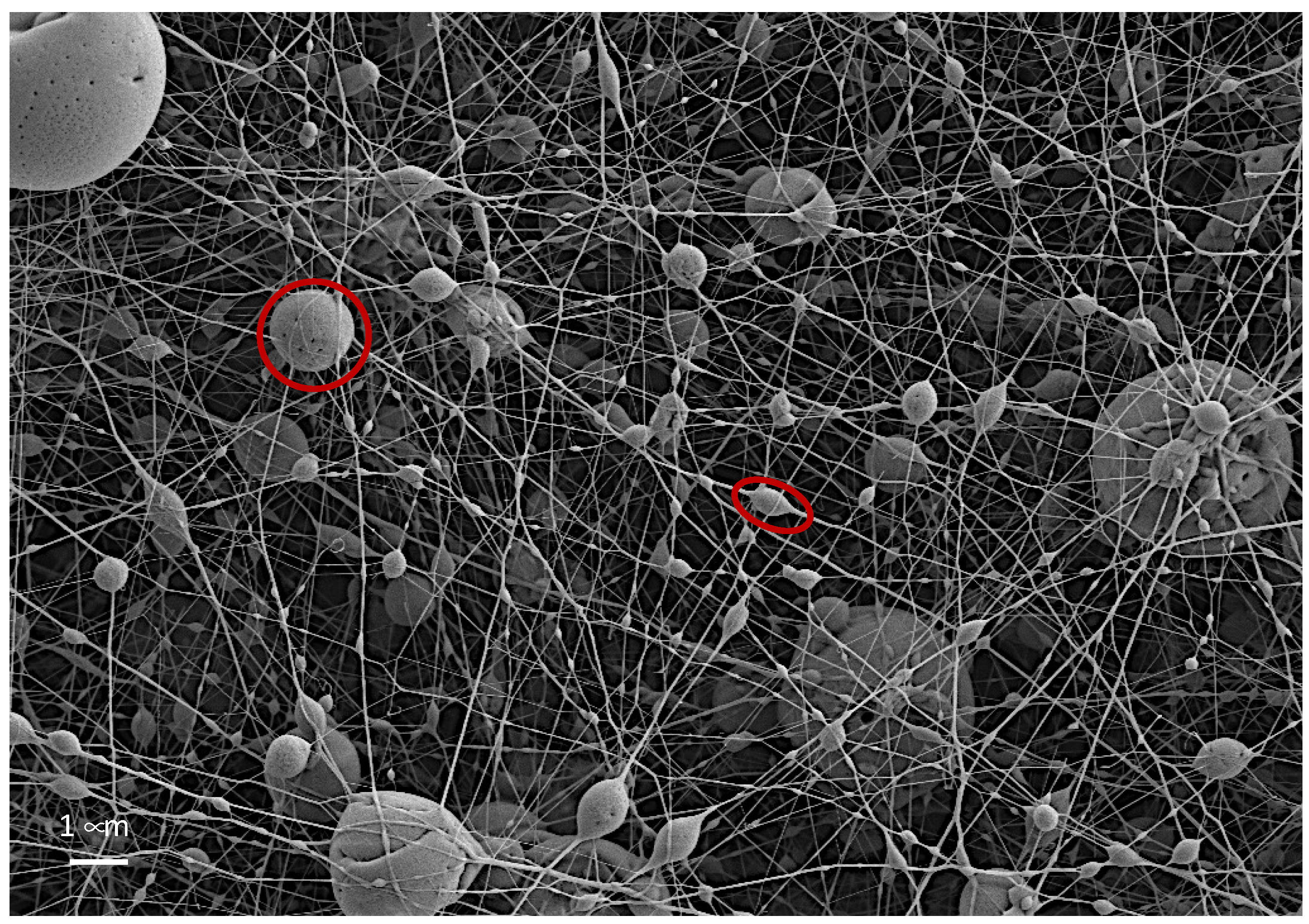
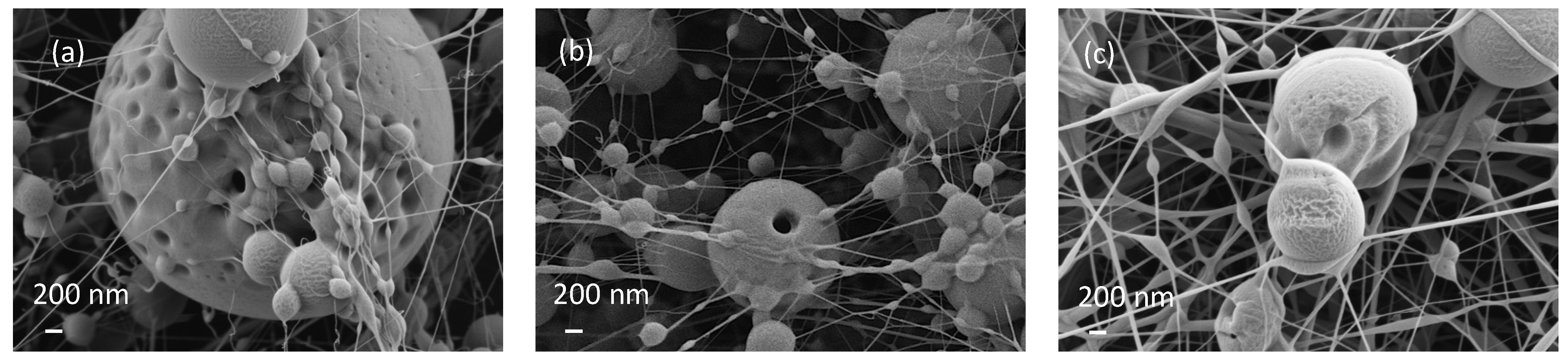
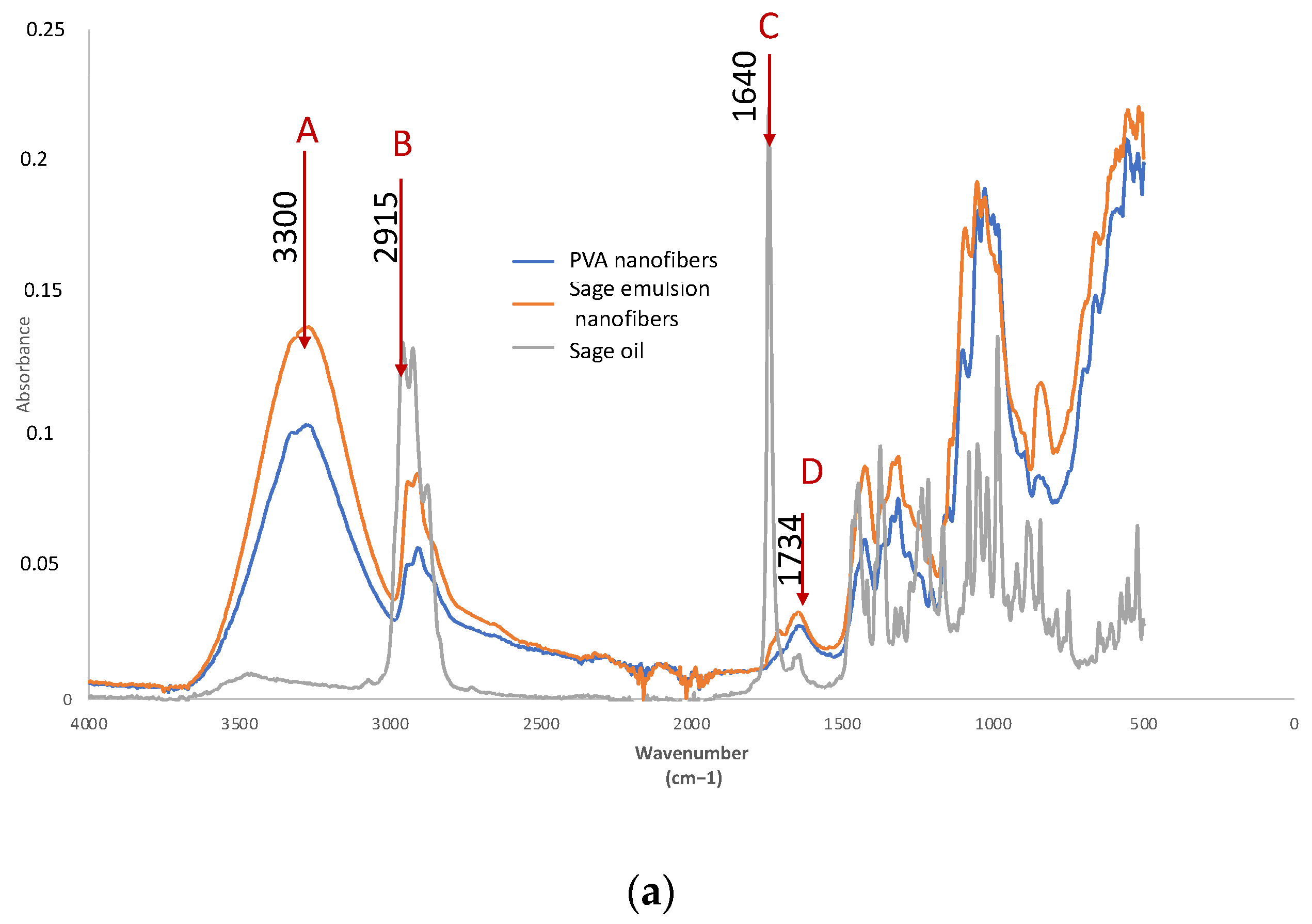
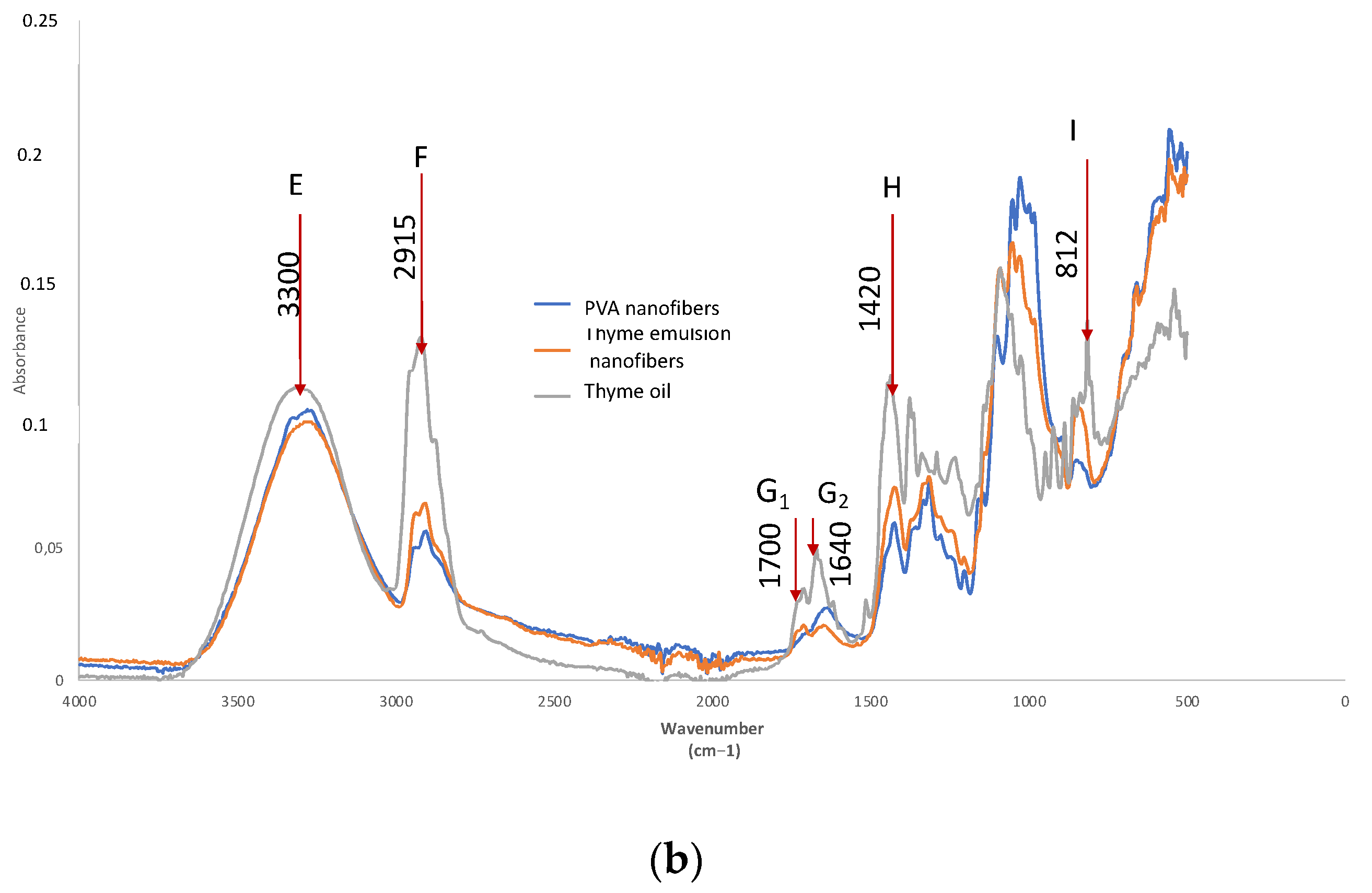
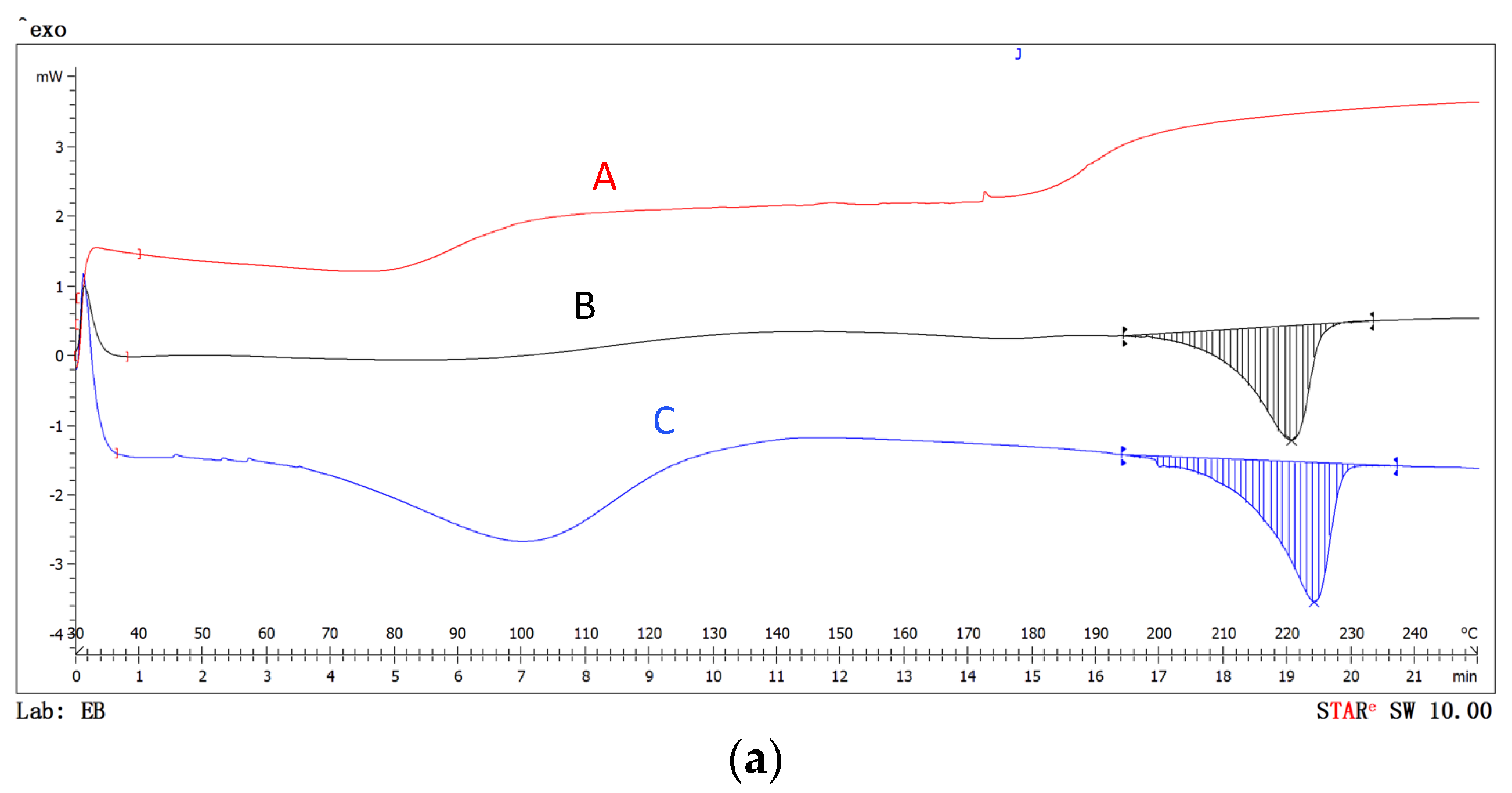
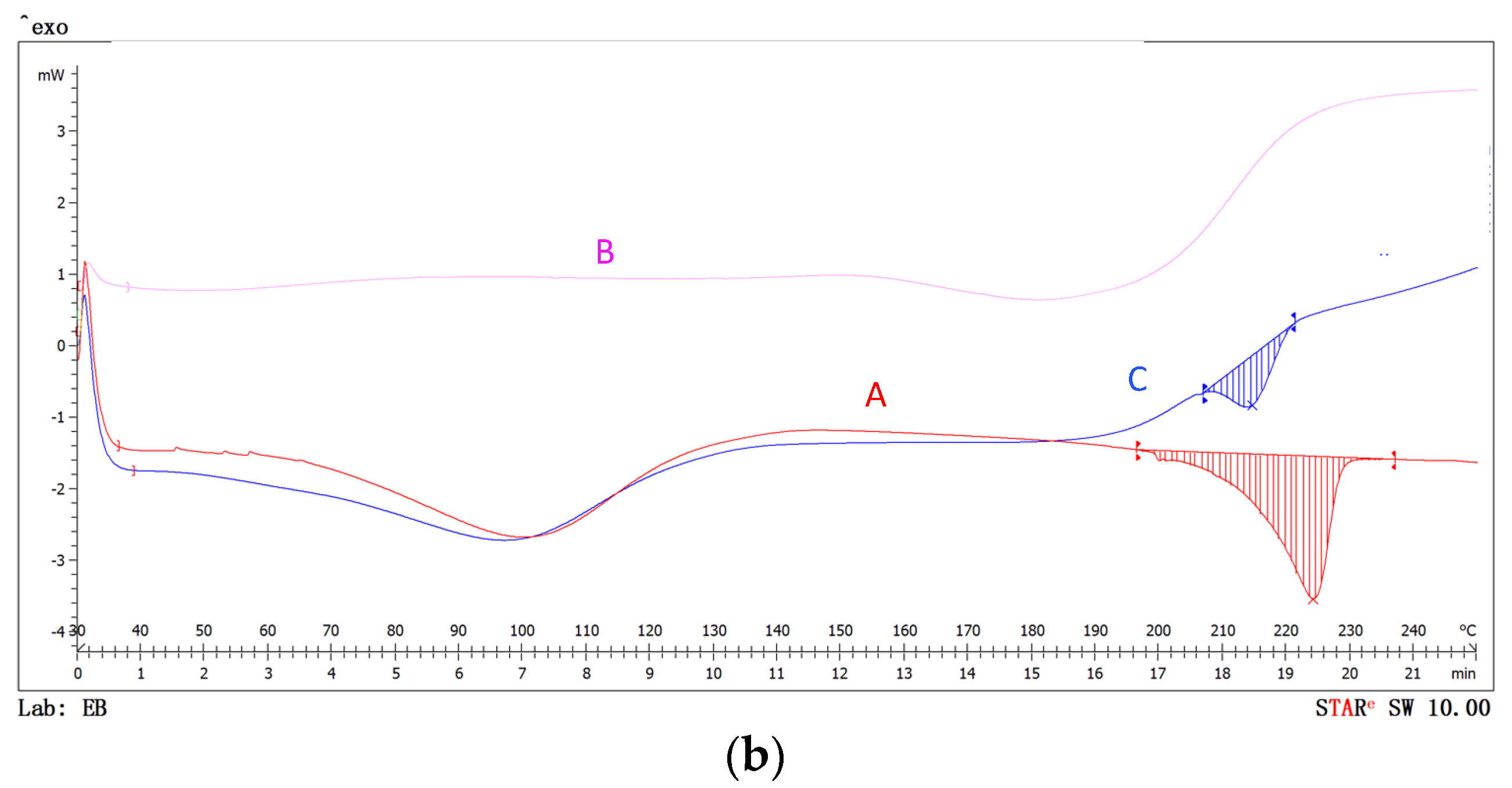
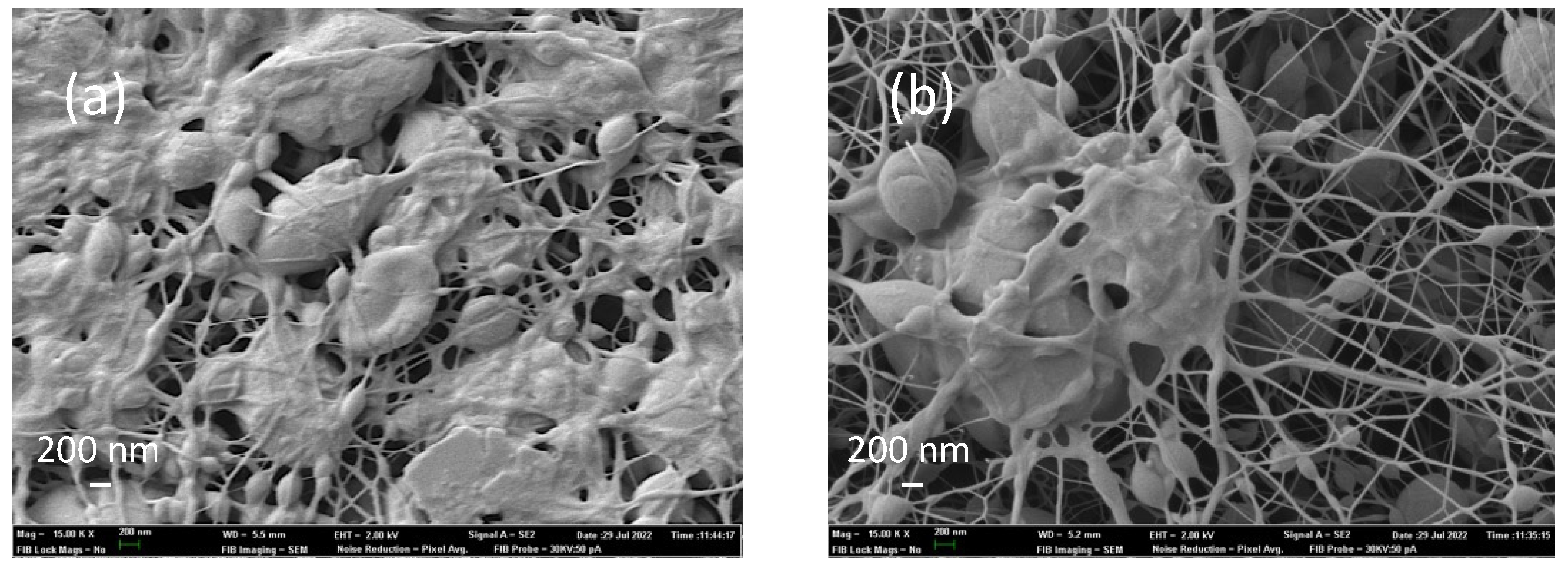
Electrospinning makes it possible to obtain solid fibers, in addition to core-shell fibers, using coextrusion. However, an exhaustive control of parameters allows the core-shell fibers from emulsion electrospinning to be obtained. The solvent in the outer surface tends to evaporate and the polymer density increases, moving the emulsion drops towards the center, which in turn promotes coalescence, thus creating the core. The aim of this work was to avoid coalescence and obtain a net of nanofibers entrapping oil microcapsules. We obtained an emulsion oil in water (O/W), with polyvinyl alcohol (W) and two essential oils (O), sage and thyme. An electrospinning process was used to place the microcapsules of oil inside a net of nanofibers. The electrospun veil was characterized by organoleptic testing, SEM microscopy, FTIR spectroscopy, DSC thermal analysis, and pressure tests. Organoleptic testing, FTIR spectroscopy, and DSC thermal analysis demonstrated the presence of the oil, which was retained in the spheres observed by SEM microscopy, while pressure tests revealed that the oil remained in a liquid state. Furthermore, we demonstrated a strong relationship between the emulsion size and the final microcapsules created, which are slightly larger due to the shell formation. The size of the emulsion determines whether the spheres will be independent or embedded in the nanofibers. Furthermore, the nanofiber diameter was considerably reduced compared to the nanofibers without the oil.
Keywords: shell; essential oil; sage; thyme; nanofibers shell; essential oil; sage; thyme; nanofibers