Article

APTES-Modified Nanocellulose as the Formaldehyde Scavenger for UF Adhesive-Bonded Particleboard and Strawboard


1
Department of Mechanical Wood Technology, Faculty of Forestry and Wood Technology, Poznan University of Life Sciences, 60-627 Poznan, Poland
2
Department of Chemical Wood Technology, Faculty of Forestry and Wood Technology, Poznan University of Life Sciences, 60-627 Poznan, Poland
*
Author to whom correspondence should be addressed.
Polymers 2022, 14(22), 5037; https://doi.org/10.3390/polym14225037
Submission received: 17 October 2022 / Revised: 14 November 2022 / Accepted: 17 November 2022 / Published: 21 November 2022
(This article belongs to the Special Issue Research on Wood-Based Composites)

Abstract

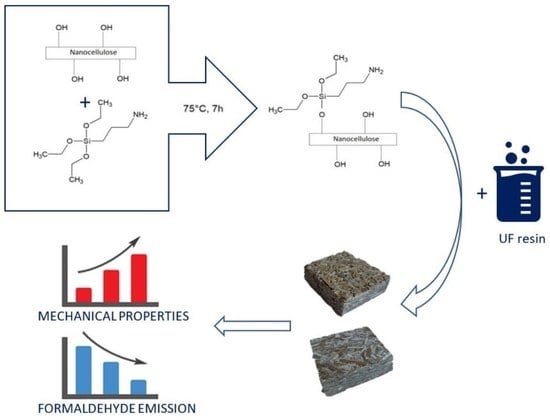
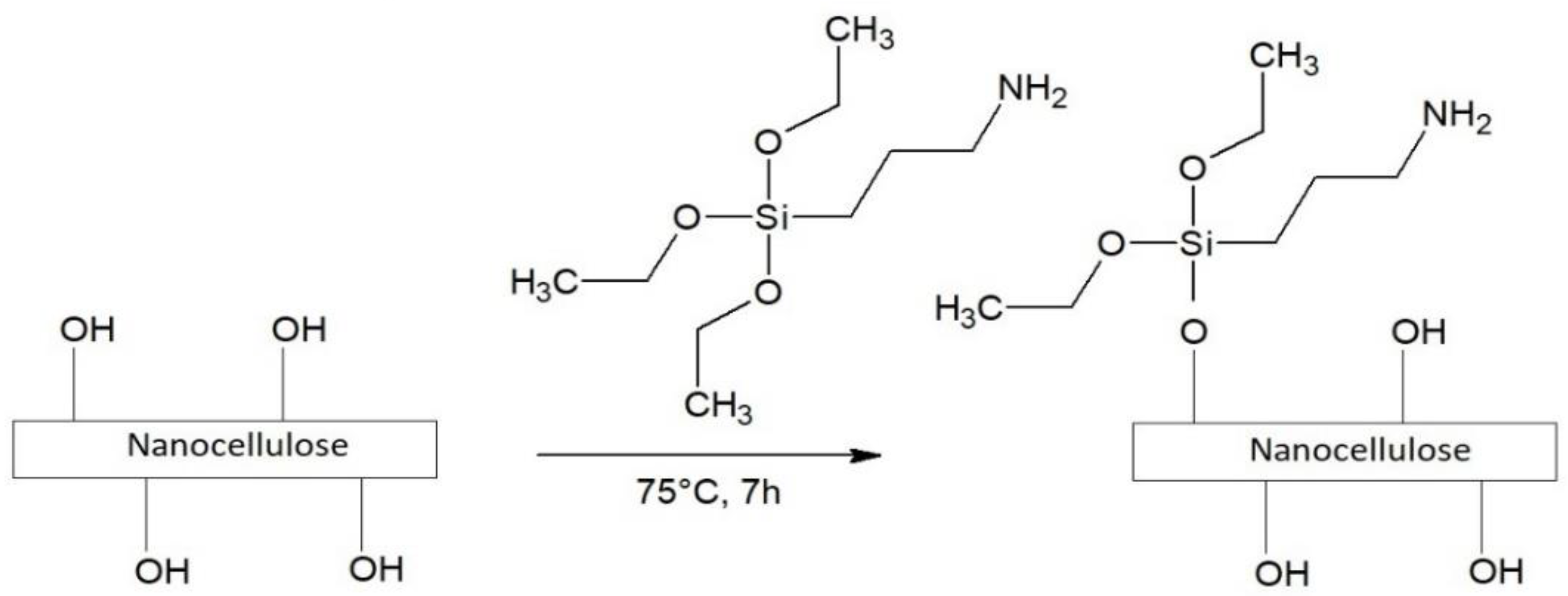
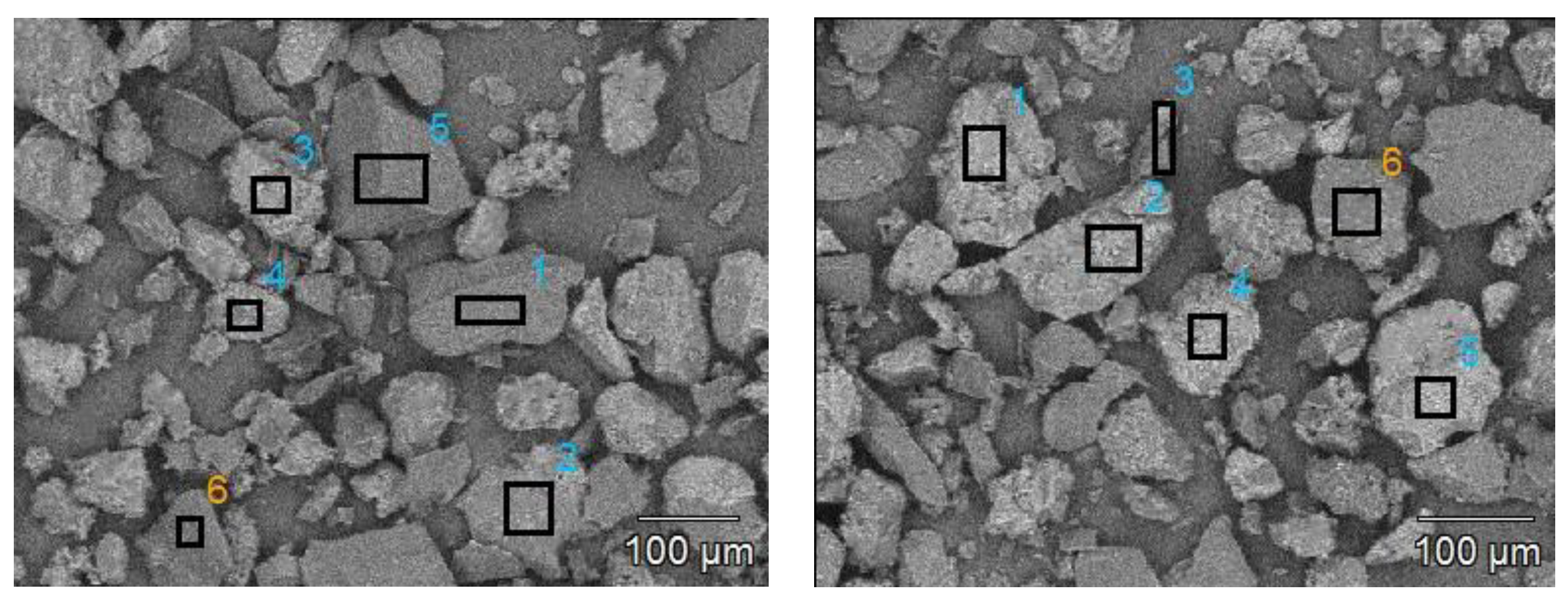
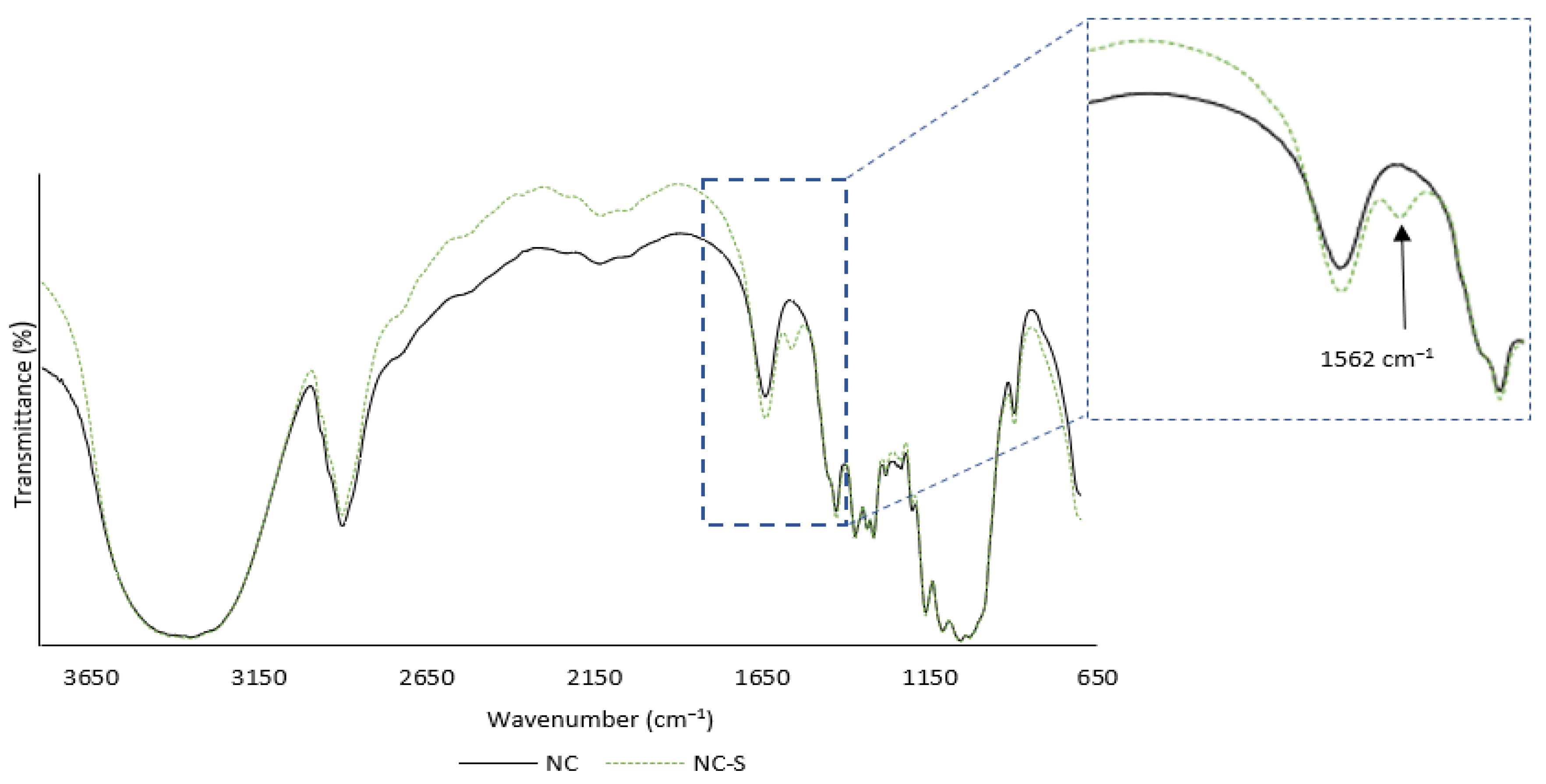
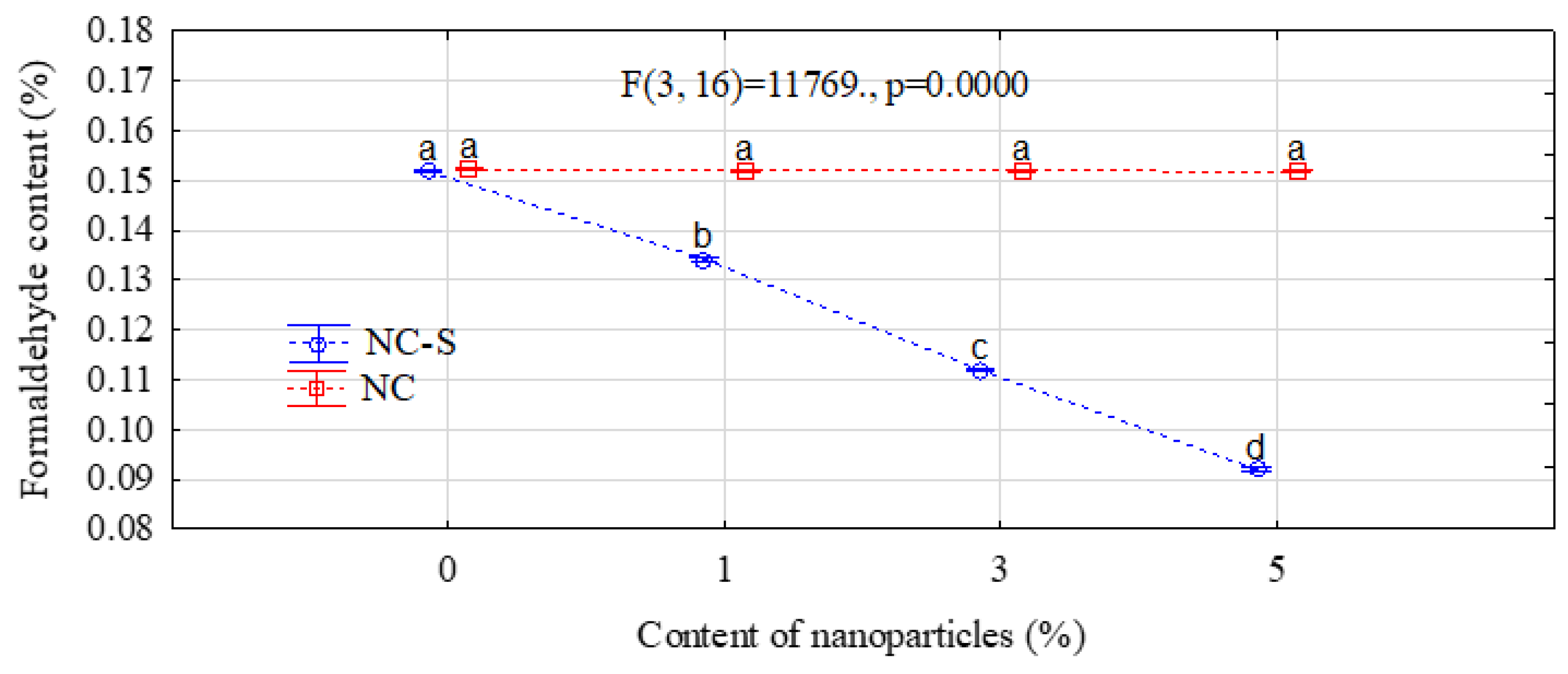
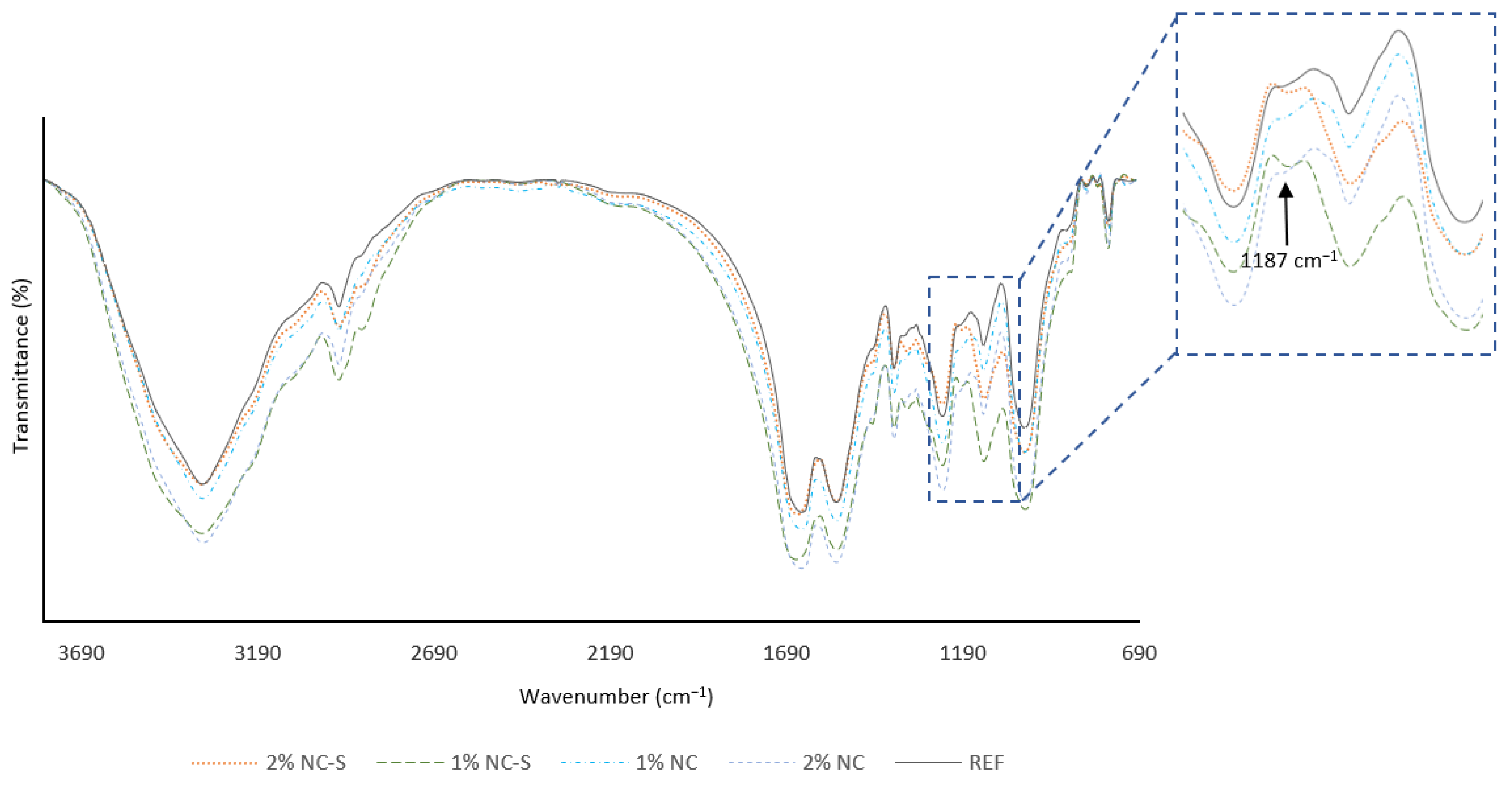
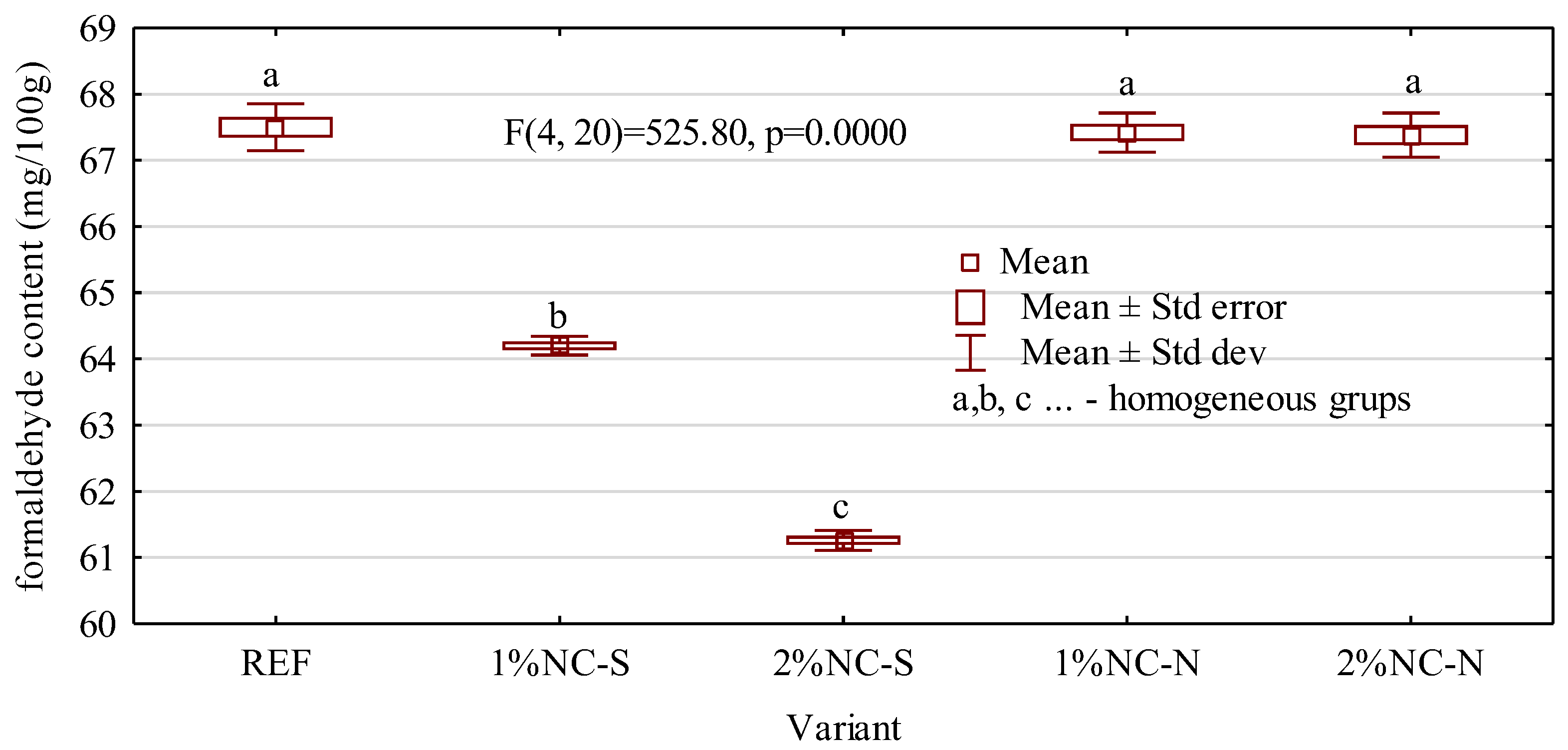
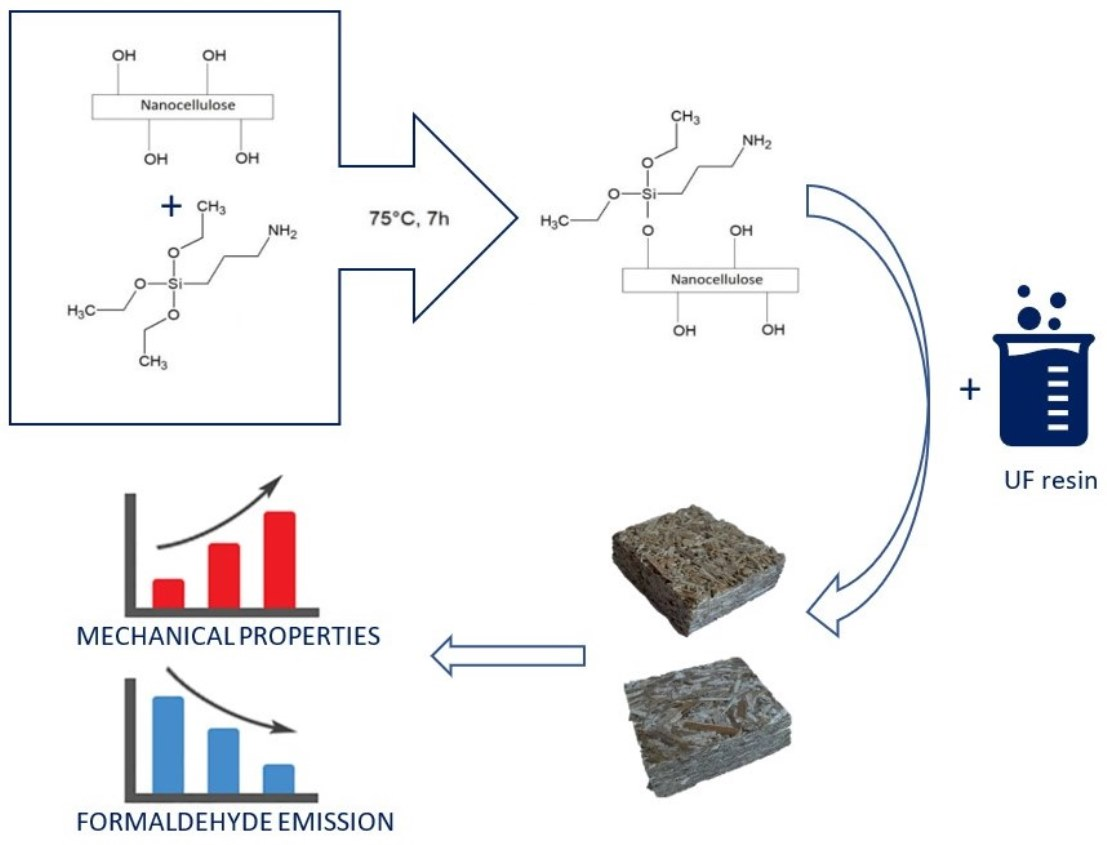
This work examines the possibility of applying non-modified nanocellulose and nanocellulose functionalized with 3-aminopropyltriethoxysilane (APTES) as a formaldehyde scavenger for commonly used urea-formaldehyde (UF) adhesive. The effect of silanization was determined with the use of Fourier transform infrared spectroscopy (FTIR), flame atomic absorption spectrometry (FAAS), and elemental analysis. Moreover, the ability of cellulosic nanoparticles to absorb the formaldehyde from an aqueous solution was investigated. After homogenization, cured UF adhesives were examined with the use of FTIR, energy-dispersive spectroscopy (SEM-EDS), and the perforator method to determine the content of formaldehyde. Manufactured boards made of rape straw particles and wood particles were tested in terms of their physico-mechanical properties and formaldehyde emission. Studies have shown that the applied method of silanization was effective. Furthermore, in the case of non-modified nanocellulose, no sign of formaldehyde scavenging ability was found. However, the functionalization of cellulosic nanoparticles with APTES containing an amino group led to the significant reduction of formaldehyde content in both the aqueous solution and the UF adhesive. The mechanical properties of both strawboards and particleboards were improved due to the nanocellulose reinforcement; however, no effect of silanization was found. Nevertheless, functionalization with APTES contributed to a decrease in formaldehyde emission from boards, which was not found in the case of the introduction of non-modified cellulosic nanoparticles.
Keywords: nanocellulose; silanization; urea-formaldehyde adhesive; strawboard; particleboard nanocellulose; silanization; urea-formaldehyde adhesive; strawboard; particleboard
Graphical Abstract