Article

Preparation of Thermosensitive Fluorescent Polyacrylamide Nanofiber Membrane and Visual Temperature Sensing

1
School of Textile Science and Engineering, Tiangong University, Tianjin 300387, China
2
School of Chemical Engineering and Technology, Tiangong University, Tianjin 300387, China
3
School of Chemistry, Tiangong University, Tianjin 300387, China
*
Author to whom correspondence should be addressed.
Polymers 2022, 14(19), 4238; https://doi.org/10.3390/polym14194238
Submission received: 31 August 2022 / Revised: 2 October 2022 / Accepted: 6 October 2022 / Published: 9 October 2022
(This article belongs to the Special Issue New Polymeric Materials for Extreme Environments)

Abstract

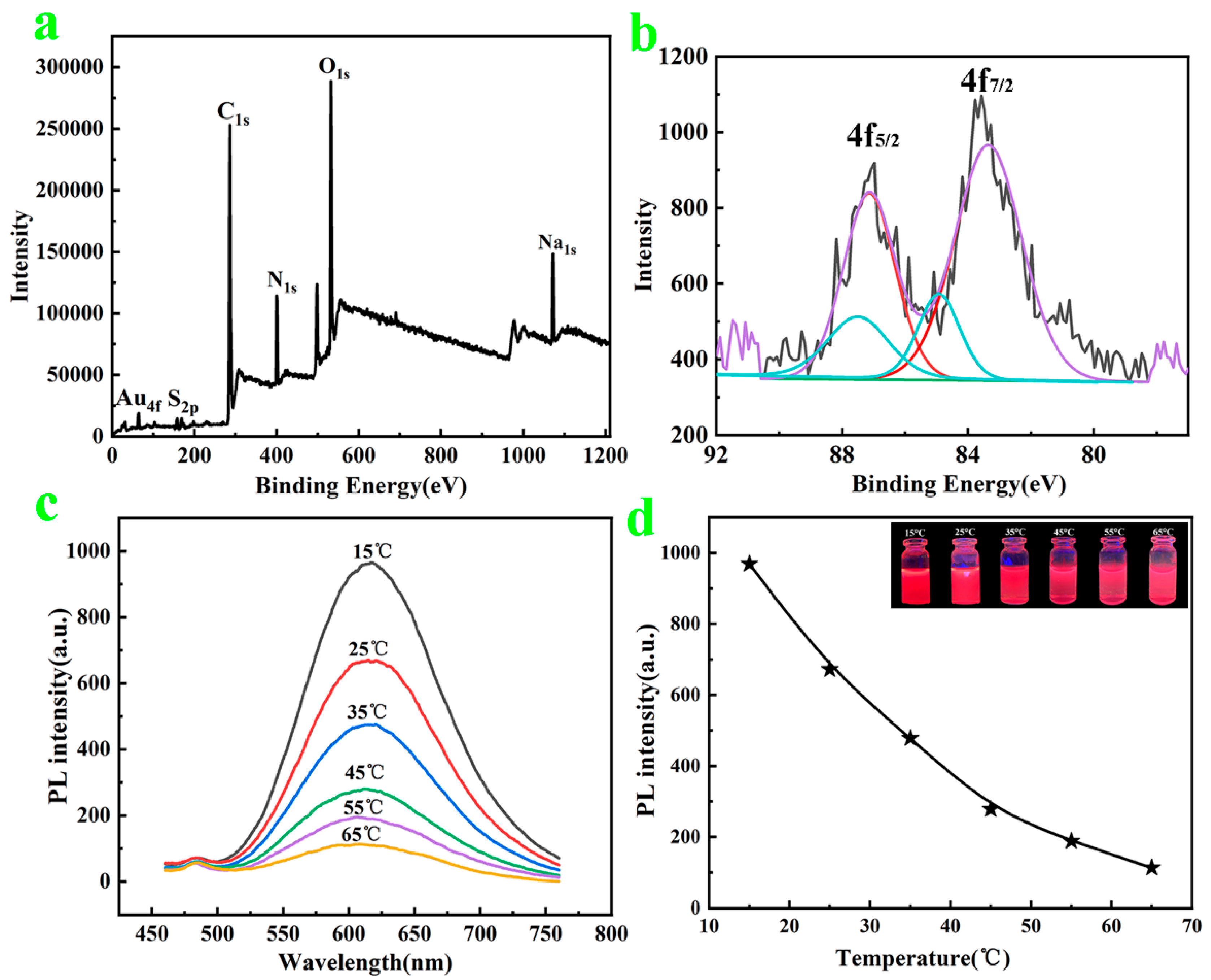
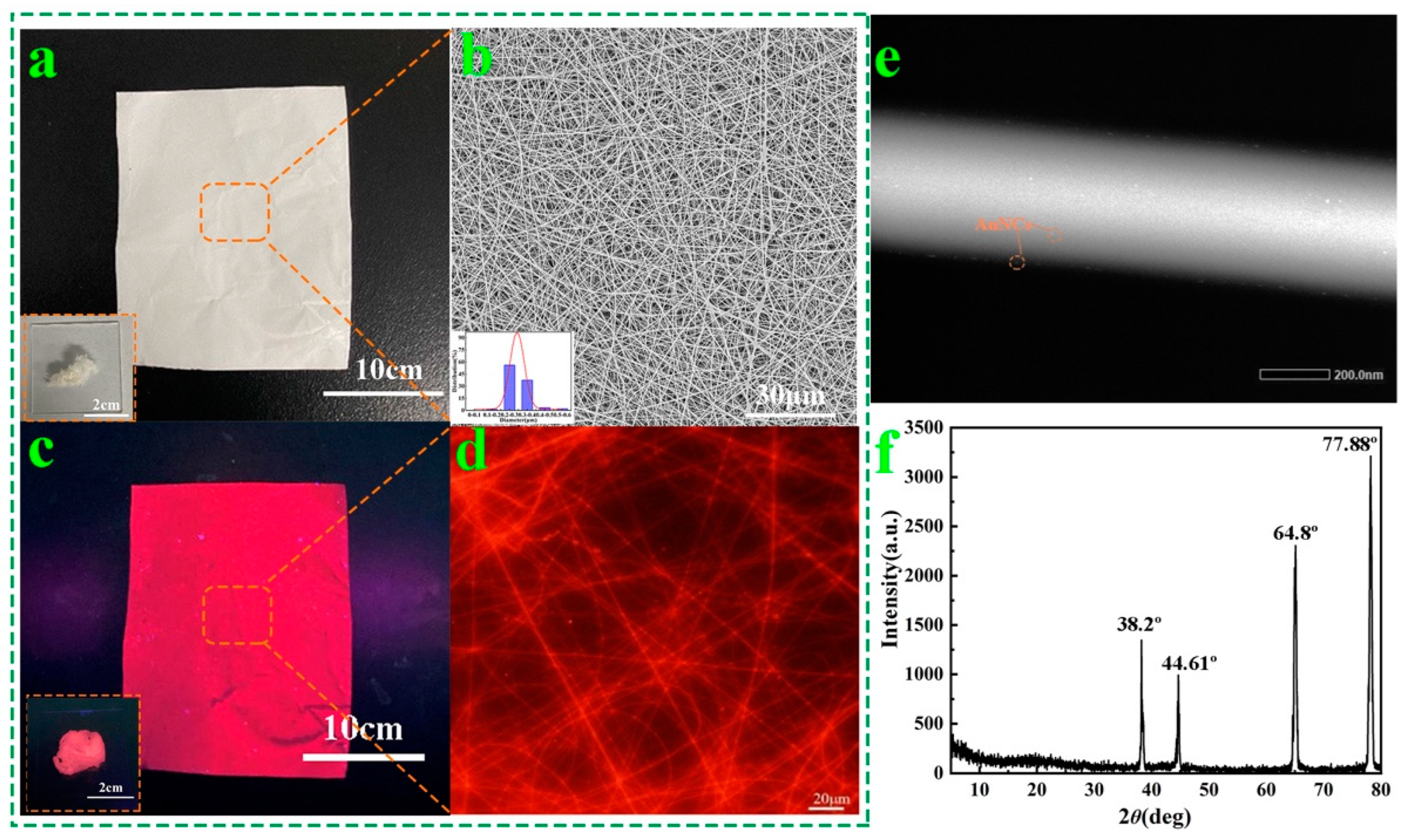
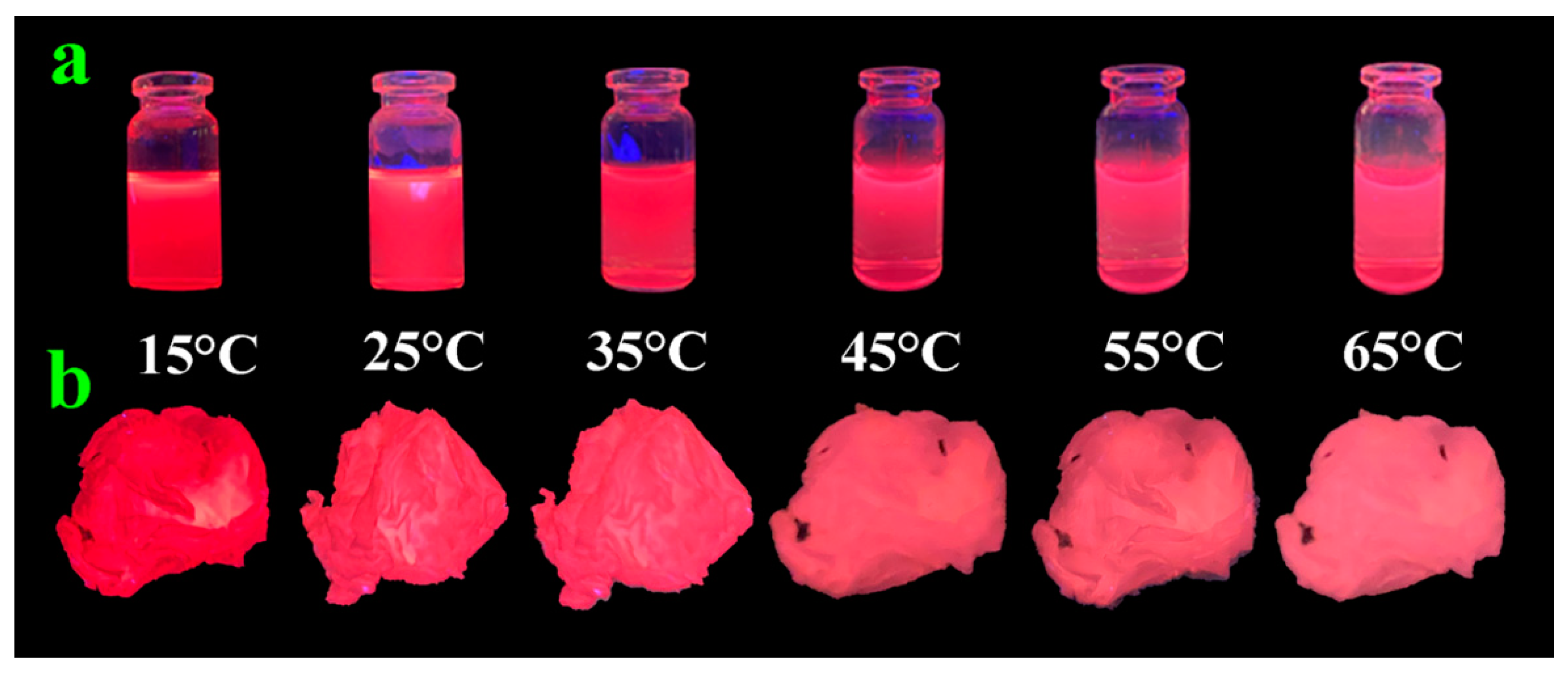
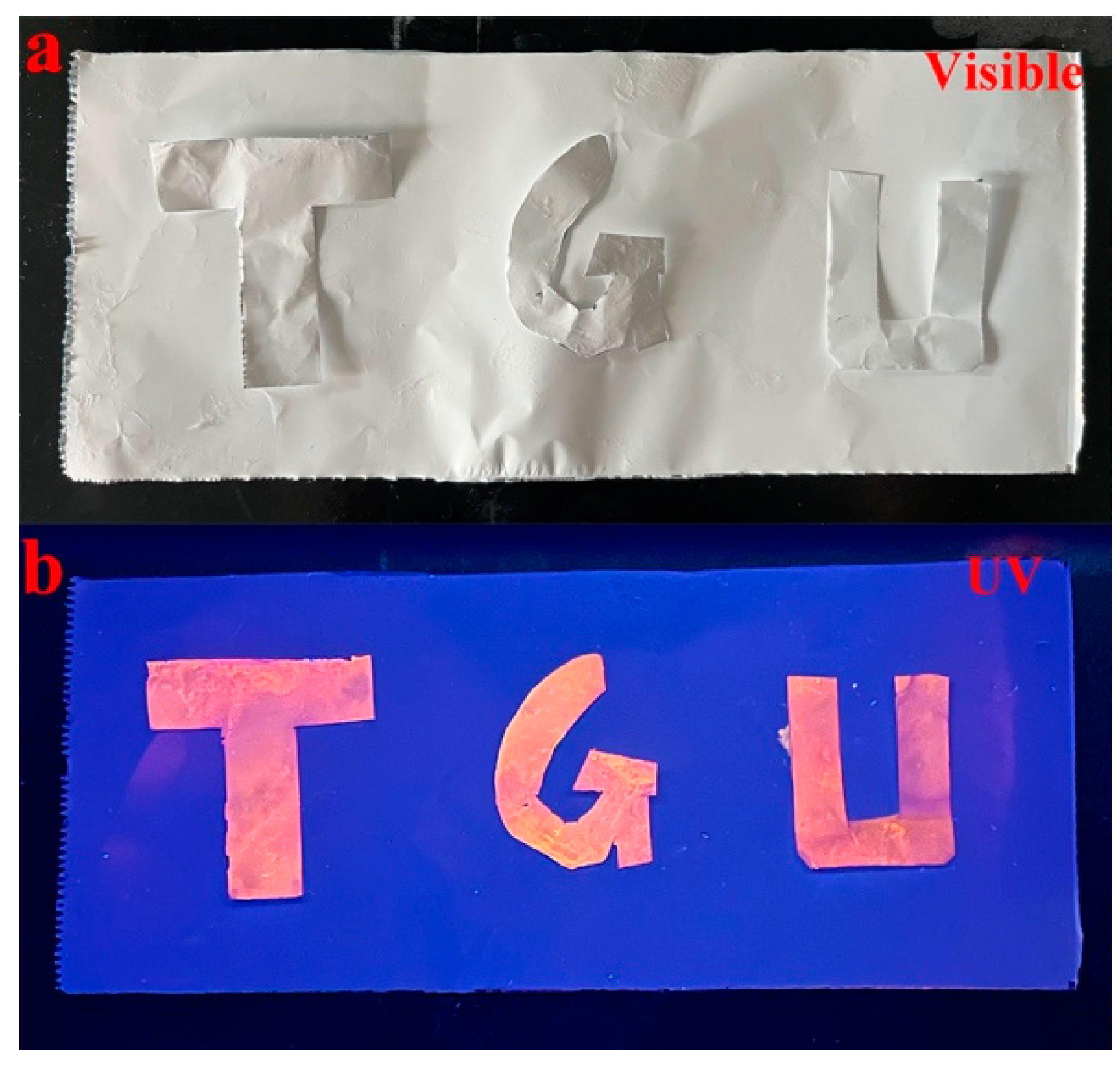
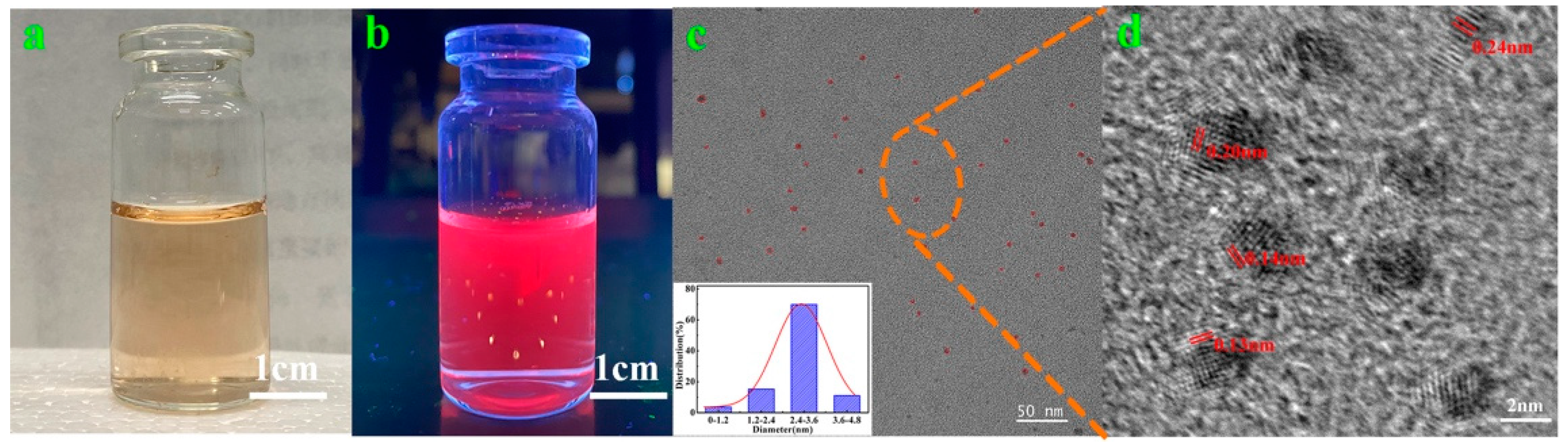
Fluorescent fibers are capable of discoloration behavior under special light sources, showing great potential for applications in biomedicine, environmental monitoring, heavy-metal-ion detaction, and anti-counterfeiting. In the current paper, temperature-sensitive fluorescent poly-acrylamide (PAM) nanofiber (AuNCs@PAM NF) membranes are prepared by mixing red fluorescent gold nanoclusters (AuNCs) synthesized in-house with PAM using the electrospinning technique. The AuNCs@PAM nanofibers obtained using this method present excellent morphology, and the AuNCs are uniformly dispersed in the fibers. The average diameter of the AuNCs@PAM NFs is 298 nm, and the diameter of AuNCs doped in the fibers is approximately 2.1 nm. Furthermore, the AuNCs@PAM NF films present excellent fluorescence and temperature-sensitive performance between 15 and 65 degrees. While under the 365 nm UV light source, the fiber film changes from white to red; this discoloration behavior weakens with the increase in temperature, and changes from deep to light red. Therefore, the approximate temperature can be identified using the color change, and a visual temperature-sensing effect can be achieved. The dual functions of temperature-sensitivity and fluorescent properties improve the scientificity and safety of nanofibers in the use of anti-counterfeiting technology.
Keywords: polyacrylamide; gold nanoclusters; visual temperature sensing; fluorescent fiber polyacrylamide; gold nanoclusters; visual temperature sensing; fluorescent fiber