Review

Strategies for the Development of pH-Responsive Synthetic Polypeptides and Polymer-Peptide Hybrids: Recent Advancements

by
Cintya Dharmayanti
1,
Todd A. Gillam
1,2,
Manuela Klingler-Hoffmann
3,
Hugo Albrecht
4 and
Anton Blencowe
1,*
1
Applied Chemistry and Translational Biomaterials Group, Clinical and Health Sciences, University of South Australia, Adelaide, SA 5000, Australia
2
Surface Interactions and Soft Matter Group, Future Industries Institute, University of South Australia, Mawson Lakes, SA 5095, Australia
3
Future Industries Institute, University of South Australia, Adelaide, SA 5001, Australia
4
Drug Discovery and Development Group, Clinical and Health Sciences, University of South Australia, Adelaide, SA 5000, Australia
*
Author to whom correspondence should be addressed.
Polymers 2021, 13(4), 624; https://doi.org/10.3390/polym13040624
Submission received: 6 February 2021 / Revised: 11 February 2021 / Accepted: 15 February 2021 / Published: 19 February 2021
(This article belongs to the Section Biobased and Biodegradable Polymers)

Abstract

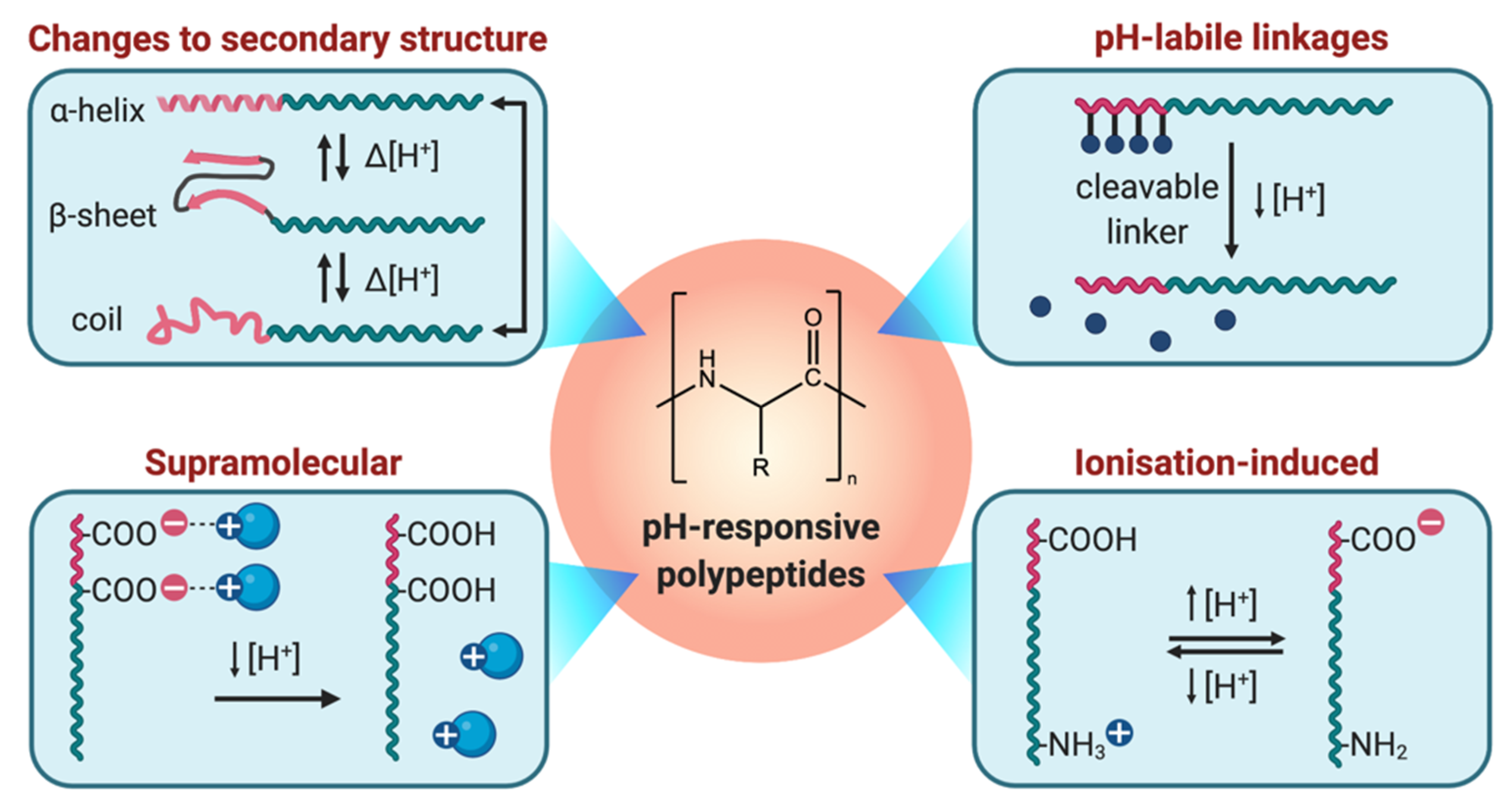
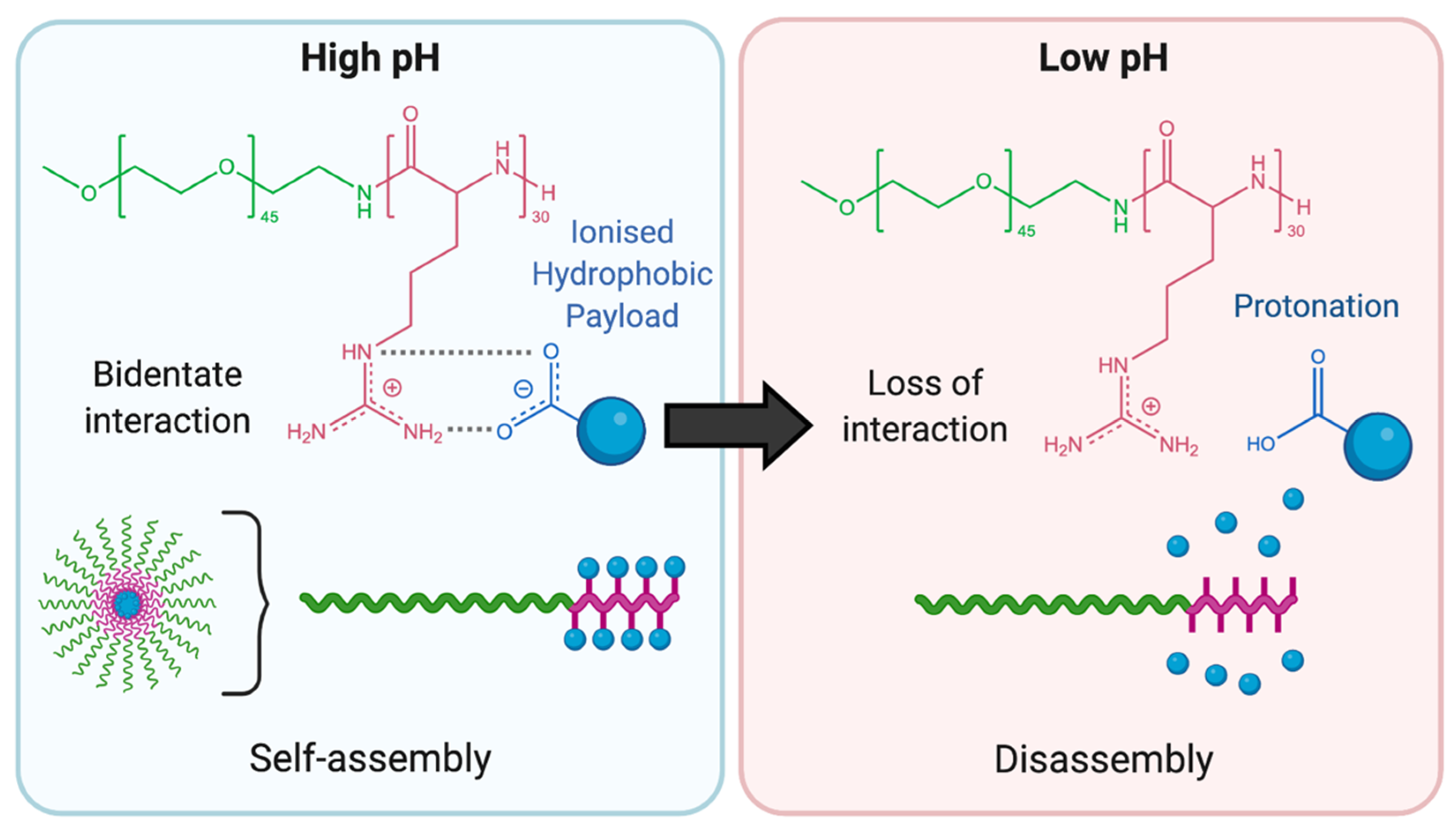
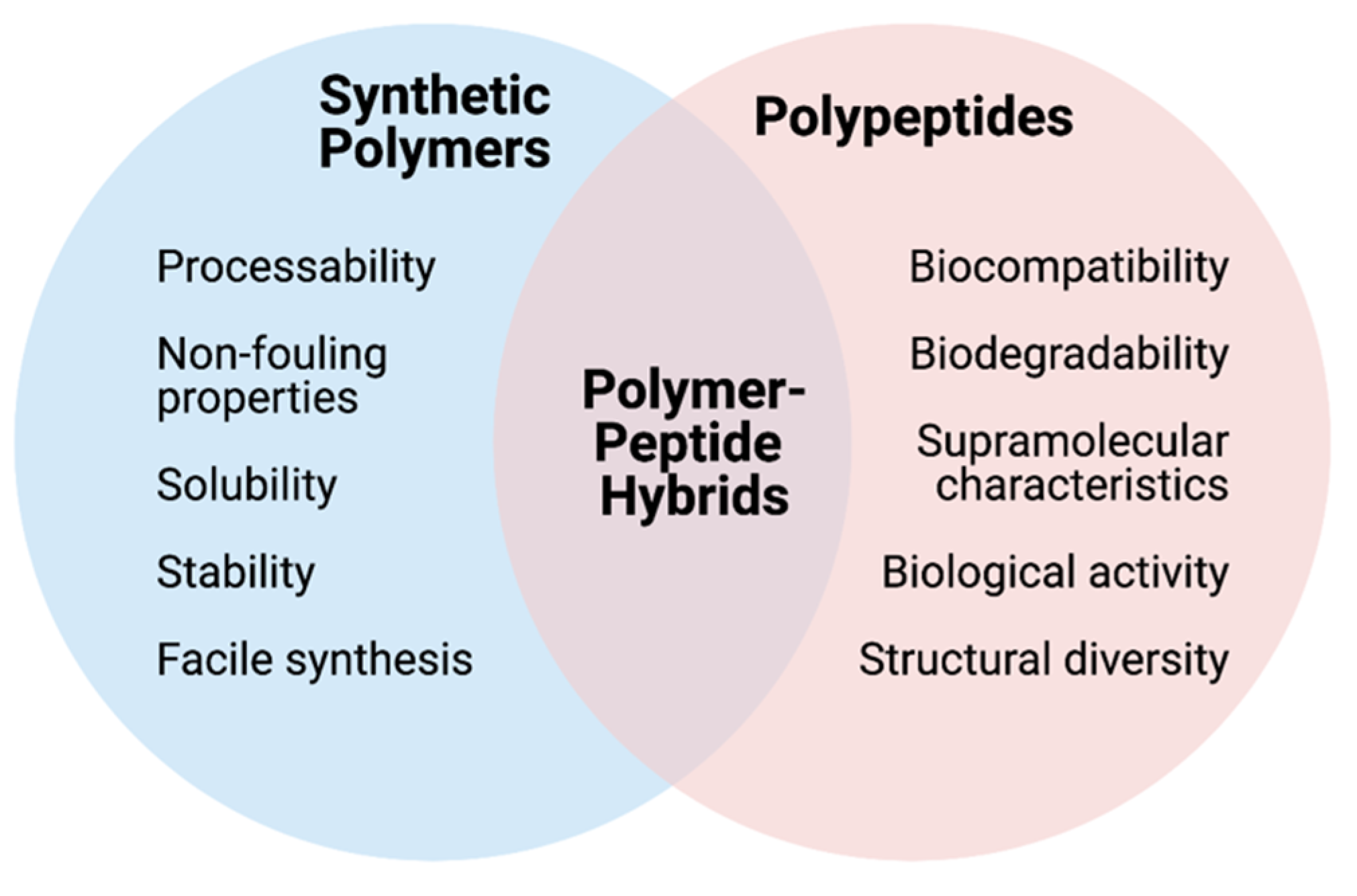
Synthetic polypeptides and polymer-peptide hybrid materials have been successfully implemented in an array of biomedical applications owing to their biocompatibility, biodegradability and ability to mimic natural proteins. In addition, these materials have the capacity to form complex supramolecular structures, facilitate specific biological interactions, and incorporate a diverse selection of functional groups that can be used as the basis for further synthetic modification. Like conventional synthetic polymers, polypeptide-based materials can be designed to respond to external stimuli (e.g., light and temperature) or changes in the environmental conditions (e.g., redox reactions and pH). In particular, pH-responsive polypeptide-based systems represent an interesting avenue for the preparation of novel drug delivery systems that can exploit physiological or pathological pH variations within the body, such as those that arise in the extracellular tumour microenvironment, intracellularly within endosomes/lysosomes, or during tissue inflammation. Here, we review the significant progress made in advancing pH-responsive polypeptides and polymer-peptide hybrid materials during the last five years, with a particular emphasis on the manipulation of ionisable functional groups, pH-labile linkages, pH-sensitive changes to secondary structure, and supramolecular interactions.
Keywords: pH-responsive; synthetic polypeptide; polymer-peptide hybrid; stimuli-responsive; drug delivery pH-responsive; synthetic polypeptide; polymer-peptide hybrid; stimuli-responsive; drug delivery