
Functionality of Cellulose Nanofiber as Bio-Based Nucleating Agent and Nano-Reinforcement Material to Enhance Crystallization and Mechanical Properties of Polylactic Acid Nanocomposite


 ,
,
Abstract
1. Introduction
2. Materials and Methods
2.1. Materials
2.2. Methods
Preparation of PLA/CNF Nanocomposites
2.3. Characterization
2.3.1. Crystallization Kinetics Analysis
2.3.2. Mechanical Analysis
2.3.3. X-ray Diffraction Analysis
2.3.4. Morphological Analysis
3. Results and Discussion
3.1. Non-Isothermal Crystallization Kinetics
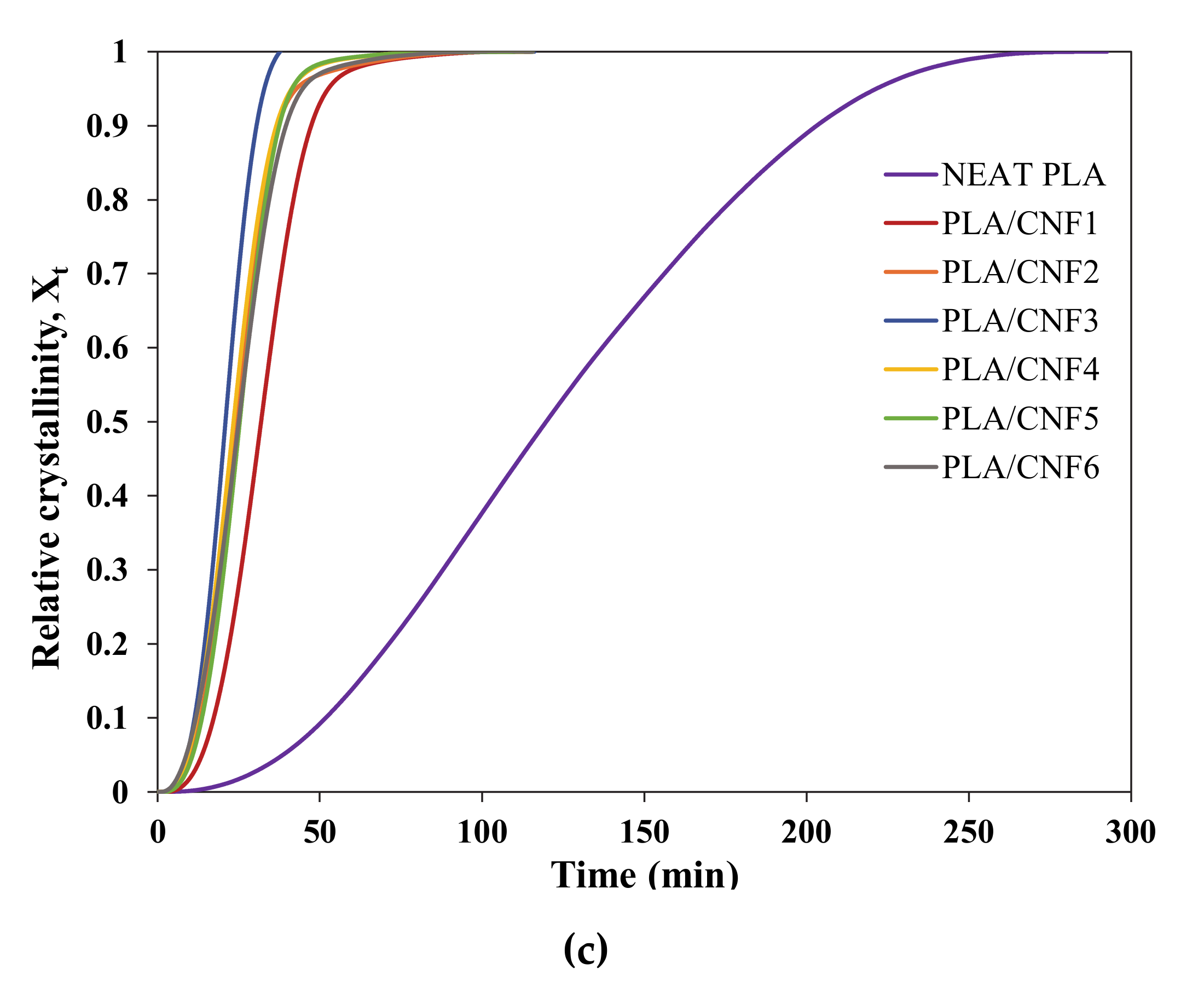
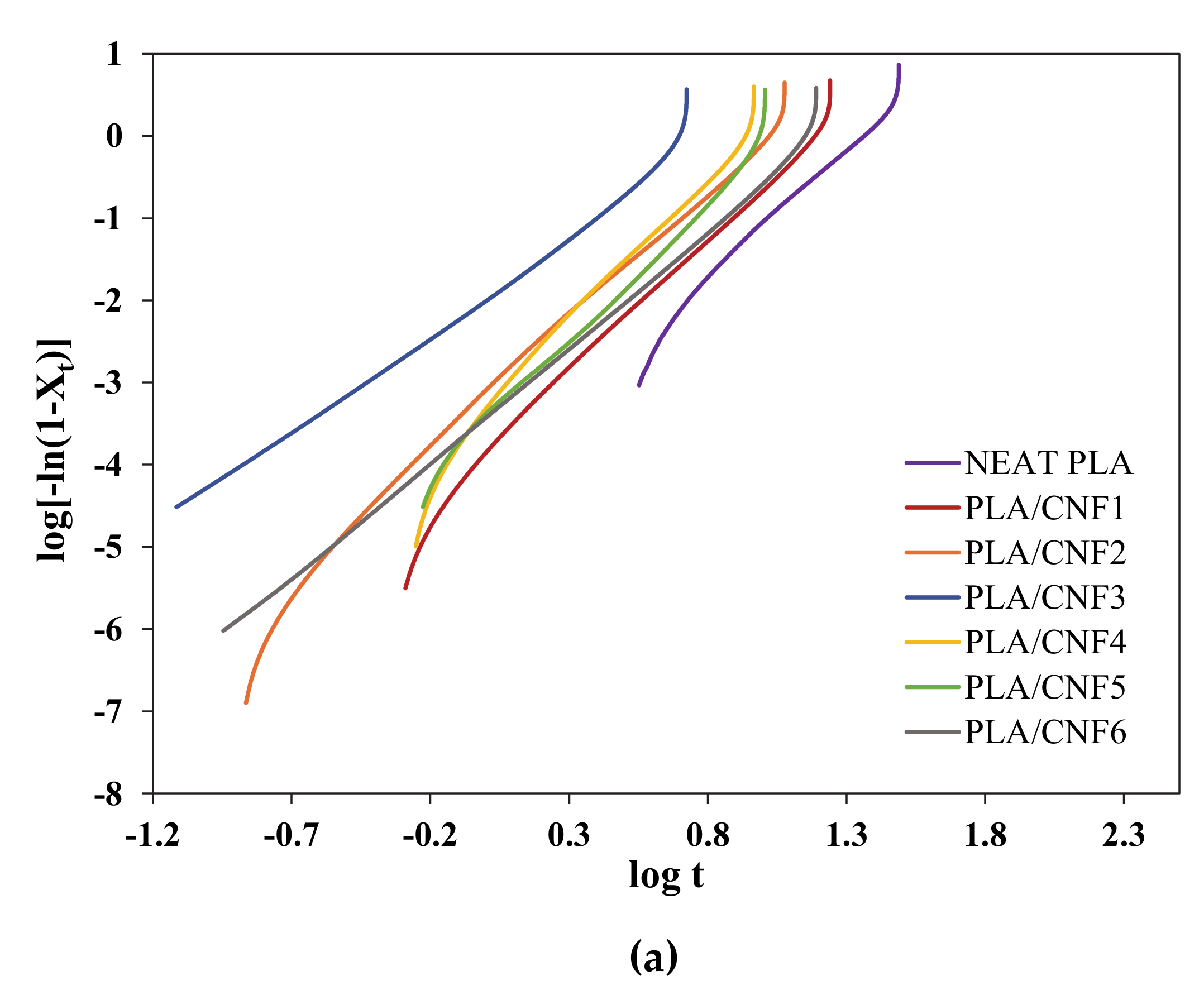
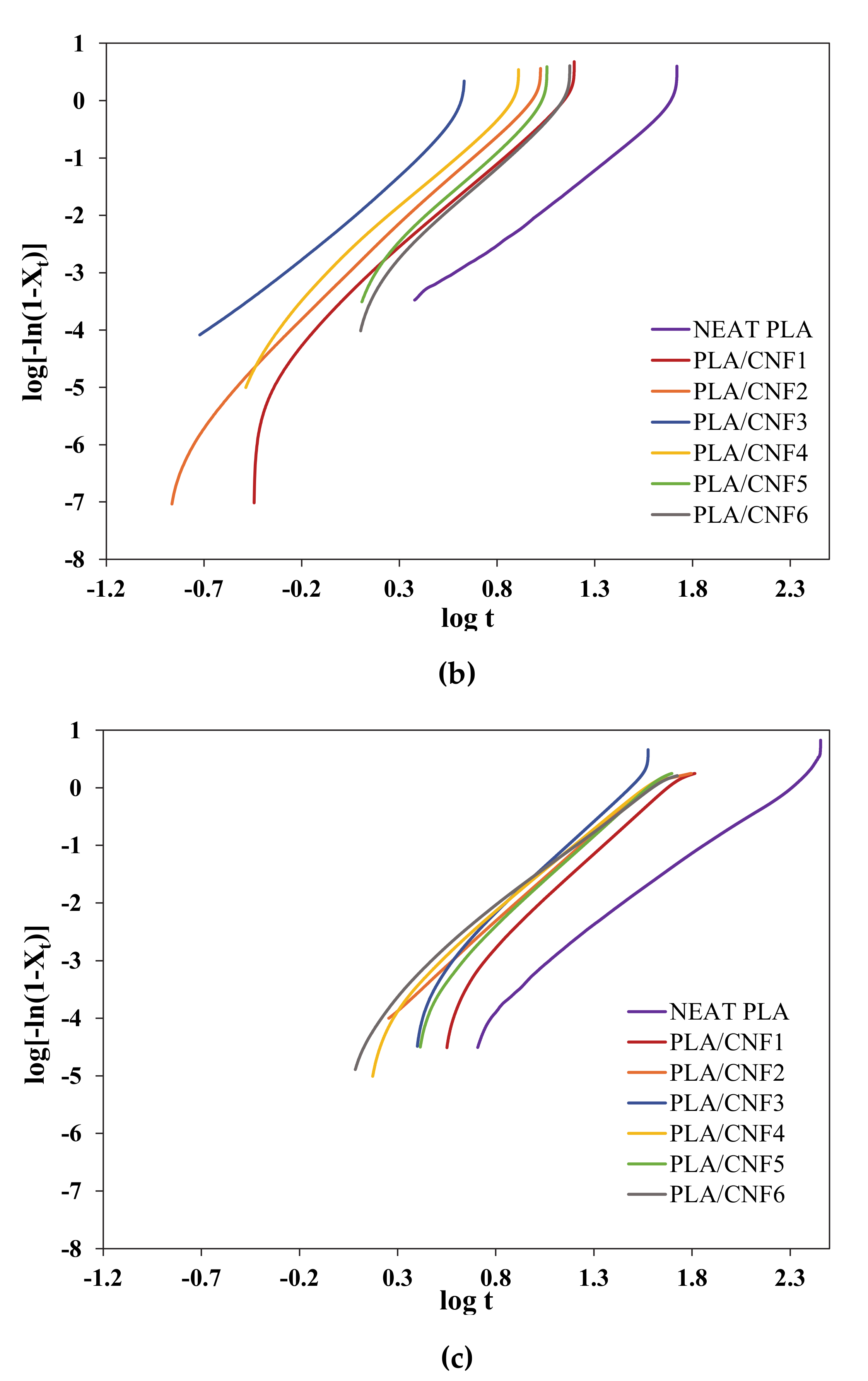
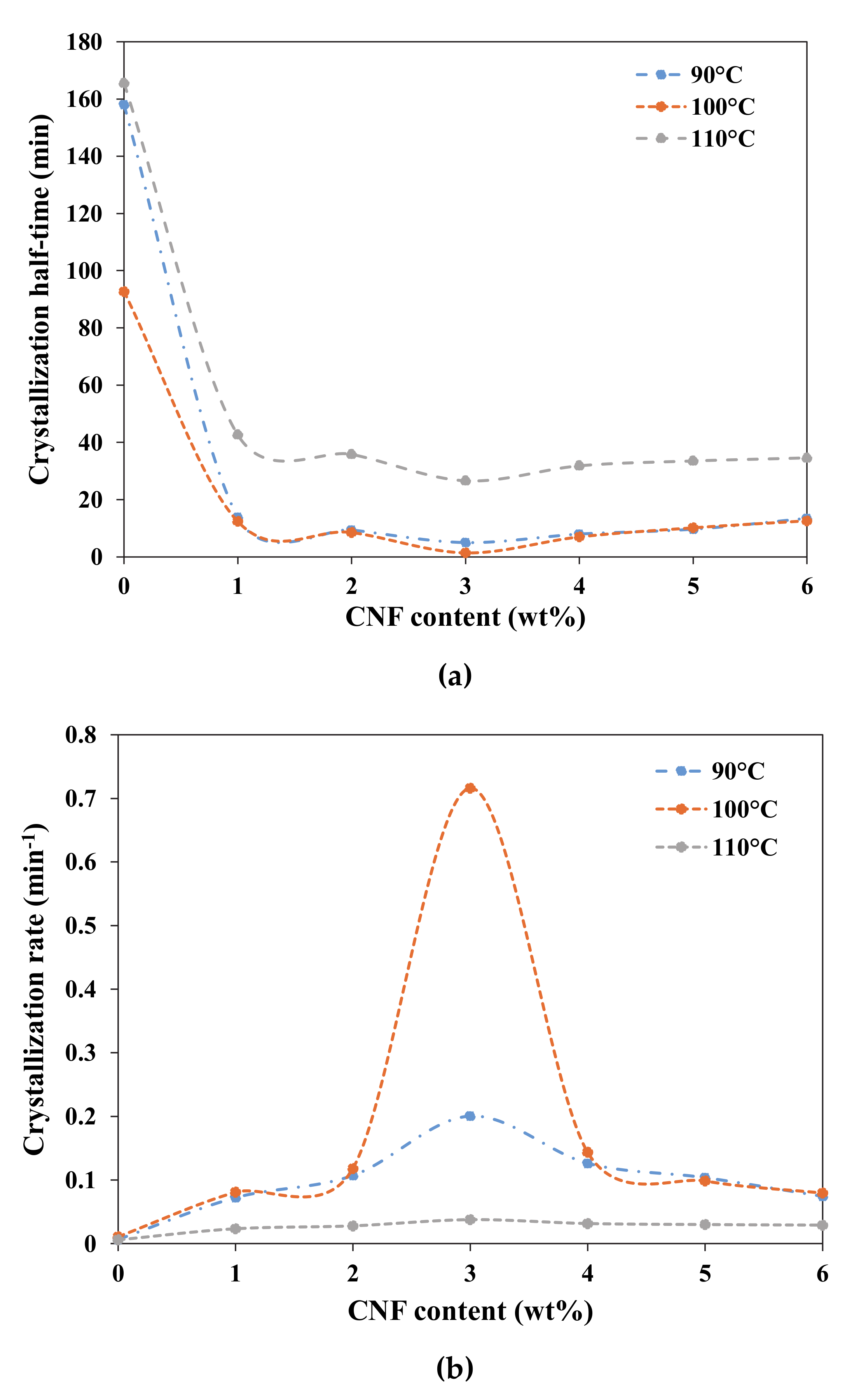
3.2. Isothermal Crystallization Kinetics
3.3. Mechanical Performance
3.4. Spherulite Size
3.5. Morphological Analysis
4. Conclusions
Author Contributions
Funding
Conflicts of Interest
References
- Siracusa, V.; Rocculi, P.; Romani, S.; Rosa, M.D. Biodegradable polymers for food packaging: A review. Trends Food Sci. Technol. 2008, 19, 634–643. [Google Scholar] [CrossRef] [Scilit]
- Tang, X.Z.; Kumar, P.; Alavi, S.; Sandeep, K.P. Recent Advances in Biopolymers and Biopolymer-Based Nanocomposites for Food Packaging Materials. Crit. Rev. Food Sci. Nutr. 2012, 52, 426–442. [Google Scholar] [CrossRef] [Scilit] [PubMed]
- Jambeck, J.R.; Geyer, R.; Wilcox, C.; Siegler, T.R.; Perryman, M.; Andrady, A.; Narayan, R.; Law, K.L. Plastic waste inputs from land into the ocean. Mar. Pollut. 2015, 347, 768–771. [Google Scholar] [CrossRef] [Scilit] [PubMed]
- Luyt, A.S.; Malik, S.S. Can Biodegradable Plastics Solve Plastic Solid Waste Accumulation. In Plastics to Energy; Elsevier BV: Amsterdam, The Netherlands, 2019; pp. 403–423. [Google Scholar]
- Mileva, D.; Tranchida, D.; Gahleitner, M. Designing polymer crystallinity: An industrial perspective. Polym. Cryst. 2018, 1, 1–16. [Google Scholar] [CrossRef] [Scilit]
- Suryanegara, A.L.; Okumura, H.; Nakagaito, A.N.; Yano, H. The synergetic effect of phenylphosphonic acid zinc and microfibrillated cellulose on the injection molding cycle time of PLA composites. Cellulose 2011, 18, 689–698. [Google Scholar] [CrossRef] [Scilit]
- Yang, B.; Wang, D.; Chen, F.; Su, L.-F.; Miao, J.-B.; Chen, P.; Qian, J.-S.; Xia, R.; Liu, J.-W. Melting and Crystallization Behaviors of Poly(Lactic Acid) Modified with Graphene Acting as a Nucleating Agent. J. Macromol. Sci. Part. B 2019, 58, 290–304. [Google Scholar] [CrossRef] [Scilit]
- Agboola, O.; Sadiku, E.R.; Mokrani, T. Carbon Containing Nanostructured Polymer Blends. In Design and Applications of Nanostructured Polymer Blends and Nanocomposite Systems; Elsevier BV: Amsterdam, The Netherlands, 2016; pp. 187–213. [Google Scholar]
- Chen, Y.; Yao, X.; Gu, Q.; Pan, Z. Non-isothermal crystallization kinetics of poly (lactic acid)/graphene nanocomposites. J. Polym. Eng. 2013, 33, 163–171. [Google Scholar] [CrossRef] [Scilit]
- Silva, A.L.N.; Cipriano, T.F.; Silva, A.H.M.F.T.D.; Sousa, A.M.F.; Silva, G.M. Thermal, rheological and morphological properties of poly (lactic acid) (PLA) and talc composites. Polímeros 2014, 24, 276–282. [Google Scholar] [CrossRef] [Scilit]
- Fowlks, A.C.; Narayan, R. The effect of maleated polylactic acid (PLA) as an interfacial modifier in PLA-talc composites. J. Appl. Polym. Sci. 2010, 118, 2810–2820. [Google Scholar] [CrossRef] [Scilit]
- Refaa, Z.; Boutaous, M.; Rousset, F.; Fulchiron, R.; Zinet, M.; Xin, S.; Bourgin, P. Crystallization kinetics of poly-(lactic acid) with and without talc: Optical microscopy and calorimetric analysis. In Proceedings of the 29th International Conference of the Polymer Processing Society—Conference Papers, Nuremberg, Germany, 15–19 July 2013; pp. 342–346. [Google Scholar] [CrossRef] [Scilit]
- Jia, W.; Gong, R.H.; Hogg, P.J. Poly (lactic acid) fibre reinforced biodegradable composites. Compos. Part. B Eng. 2014, 62, 104–112. [Google Scholar] [CrossRef] [Scilit]
- Wu, C.-S. Renewable resource-based composites of recycled natural fibers and maleated polylactide bioplastic: Characterization and biodegradability. Polym. Degrad. Stab. 2009, 94, 1076–1084. [Google Scholar] [CrossRef] [Scilit]
- Yu, T.; Jiang, N.; Li, Y. Study on short ramie fiber/poly(lactic acid) composites compatibilized by maleic anhydride. Compos. Part. A Appl. Sci. Manuf. 2014, 64, 139–146. [Google Scholar] [CrossRef] [Scilit]
- Zhang, Q.; Shi, L.; Nie, J.; Wang, H.; Yang, D. Study on poly(lactic acid)/natural fibers composites. J. Appl. Polym. Sci. 2012, 125, E526–E533. [Google Scholar] [CrossRef] [Scilit]
- Weber, C.J.; Haugaard, V.; Festersen, R.; Bertelsen, G. Production and applications of biobased packaging materials for the food industry. Food Addit. Contam. 2002, 19, 172–177. [Google Scholar] [CrossRef] [Scilit] [PubMed]
- Grząbka-Zasadzińska, A.; Klapiszewski, Ł.; Bula, K.; Jesionowski, T.; Borysiak, S. Supermolecular structure and nucleation ability of polylactide-based composites with silica/lignin hybrid fillers. J. Therm. Anal. Calorim. 2016, 126, 263–275. [Google Scholar] [CrossRef] [Scilit]
- Trifol, J.; Van Drongelen, M.; Clegg, F.; Plackett, D.; Szabo, P.; Daugaard, A.E. Impact of thermal processing or solvent casting upon crystallization of PLA nanocellulose and/or nanoclay composites. J. Appl. Polym. Sci. 2019, 47486, 1–14. [Google Scholar] [CrossRef] [Scilit]
- Ariffin, H.; Yasim-Anuar, T.A.T.; Amadi, N.I.; Padzil, F.N.M. Characterization of Cellulose Nanofiber from Various Tropical Plant Resources. In Lignocellulose for Future Bioeconomy; Elsevier BV: Amsterdam, The Netherlands, 2019; pp. 71–89. [Google Scholar]
- Hussin, M.H.; Trache, D.; Chuin, C.T.H.; Fazita, M.R.N.; Haafiz, M.K.M.; Hossain, M.S. Extraction of Cellulose Nano fi bers and Their Eco-friendly Polymer Composites. In Sustainable Polymer Composites and Nanocomposites; Springer: Cham, Switzerland, 2019; pp. 653–691. ISBN 978-3-030-05399-4. [Google Scholar]
- Sha, L.; Chen, Z.; Chen, Z.; Zhang, A.; Yang, Z. Polylactic Acid Based Nanocomposites: Promising Safe and Biodegradable Materials in Biomedical Field. Int. J. Polym. Sci. 2016, 2016, 1–11. [Google Scholar] [CrossRef] [Scilit]
- Ariffin, H.; Norrrahim, M.N.F.; Yasim-Anuar, T.A.T.; Nishida, H.; Hassan, M.A.; Ibrahim, N.A.; Yunus, W.M.Z.W. Oil Palm Biomass Cellulose-Fabricated Polylactic Acid Composites for Packaging Applications. In Bionanocomposites for Packaging Applications; Springer Science and Business Media LLC: Berlin, Germany, 2017; pp. 95–105. [Google Scholar]
- Jonoobi, M.; Harun, J.; Mathew, A.P.; Oksman, K. Mechanical properties of cellulose nanofiber (CNF) reinforced polylactic acid (PLA) prepared by twin screw extrusion. Compos. Sci. Technol. 2010, 70, 1742–1747. [Google Scholar] [CrossRef] [Scilit]
- Nguyen, T.C.; Ruksakulpiwat, C.; Ruksakulpiwat, Y. Effect of cellulose nanofibers from cassava pulp on physical properties of poly(lactic acid) biocomposites. J. Thermoplast. Compos. Mater. 2019, 33, 1094–1108. [Google Scholar] [CrossRef] [Scilit]
- Norrrahim, M.N.F.; Ariffin, H.; Yasim-Anuar, T.A.T.; Hassan, M.A.; Nishida, H.; Tsukegi, T. One-pot nanofibrillation of cellulose and nanocomposite production in a twin-screw extruder. IOP Conf. Series Mater. Sci. Eng. 2018, 368. [Google Scholar] [CrossRef] [Scilit]
- Kotsilkova, R.; Angelova, P.; Batakliev, T.; Angelov, V.; Di Maio, R.; Silvestre, C. Study on Aging and Recover of Poly (Lactic) Acid Composite Films with Graphene and Carbon Nanotubes Produced by Solution Blending and Extrusion. Coatings 2019, 9, 359. [Google Scholar] [CrossRef] [Scilit]
- De Menezes, B.R.C.; Campos, T.M.B.; Montanheiro, T.L.D.A.; Ribas, R.G.; Cividanes, L.D.S.; Thim, G.P. Non-Isothermal Crystallization Kinetic of Polyethylene/Carbon Nanotubes Nanocomposites Using an Isoconversional Method. J. Compos. Sci. 2019, 3, 21. [Google Scholar] [CrossRef] [Scilit]
- Gitari, B.; Chang, B.P.; Misra, M.; Navabi, A.; Mohanty, A.K. A comparative study on the mechanical, thermal, and water barrier properties of PLA nanocomposite films prepared with bacterial nanocellulose and cellulose nanofibrils. BioResources 2019, 14, 1867–1889. [Google Scholar] [CrossRef] [Scilit]
- Abdulkhani, A.; Hosseinzadeh, J.; Dadashi, S.; Mousavi, M. A study of morphological, thermal, mechanical and barrier properties of PLA based biocomposites prepared with micro and nano sized cellulosic fibers. Cellul. Chem. Technol. 2015, 49, 597–605. [Google Scholar]
- Dhar, P.; Tarafder, D.; Kumar, A.; Katiyar, V. Thermally recyclable polylactic acid/cellulose nanocrystal films through reactive extrusion process. Polymers 2016, 87, 268–282. [Google Scholar] [CrossRef] [Scilit]
- Gazzotti, S.; Rampazzo, R.; Hakkarainen, M.; Bussini, D.; Ortenzi, M.A.; Farina, H.; Lesma, G.; Silvani, A. Cellulose nanofibrils as reinforcing agents for PLA-based nanocomposites: An in situ approach. Compos. Sci. Technol. 2019, 171, 94–102. [Google Scholar] [CrossRef] [Scilit]
- Ogbomo, S.M.; Ayre, B.G.; Webber, C.L.; D’Souza, N.A. Effect of kenaf fiber age on PLLA composite properties. Polym. Compos. 2013, 35, 915–924. [Google Scholar] [CrossRef] [Scilit]
- Perić, M.; Putz, R.F.; Paulik, C. Influence of nanofibrillated cellulose on the mechanical and thermal properties of poly(lactic acid). Eur. Polym. J. 2019, 114, 426–433. [Google Scholar] [CrossRef] [Scilit]
- Sung, S.H.; Chang, Y.; Han, J. Development of polylactic acid nanocomposite films reinforced with cellulose nanocrystals derived from coffee silverskin. Carbohydr. Polym. 2017, 169, 495–503. [Google Scholar] [CrossRef] [Scilit]
- Naffakh, M.; Marco, C.; Ellis, G. Non-Isothermal Cold-Crystallization Behavior and Kinetics of Poly (L-Lactic Acid)/WS2 Inorganic Nanotube Nanocomposites. Polymers 2015, 7, 2175–2189. [Google Scholar] [CrossRef] [Scilit]
- Backes, E.H.; Pires, L.D.N.; Costa, L.C.; Passador, F.R.; Pessan, L.A. Analysis of the Degradation During Melt Processing of PLA/Biosilicate® Composites. J. Compos. Sci. 2019, 3, 52. [Google Scholar] [CrossRef] [Scilit]
- Kanig, G.; Bauer, H.; Kilian, H.-G.; Zachmann, H.G.; Hosemann, R. Kristallisier- und Schmelzvorgänge bei Polymeren. Colloid Polym. Sci. 1982, 260, 356–377. [Google Scholar] [CrossRef] [Scilit]
- Ding, W.D.; Pervaiz, M.; Sain, M.; Thakur, V.K.; Thakur, M.K. Cellulose-Enabled Polylactic Acid (PLA) Nanocomposites: Recent Developments and Emerging Trends. In Nanocomposites for Visible Light-induced Photocatalysis; Springer Science and Business Media LLC: Berlin, Germany, 2017; pp. 183–216. [Google Scholar]
- Farid, T.; Herrera, V.N.; Kristiina, O. Investigation of crystalline structure of plasticized poly (lactic acid)/Banana nanofibers composites. IOP Conf. Series Mater. Sci. Eng. 2018, 369. [Google Scholar] [CrossRef] [Scilit]
- Lu, F.; Yu, H.; Yan, C.; Yao, J.-M. Polylactic acid nanocomposite films with spherical nanocelluloses as efficient nucleation agents: Effects on crystallization, mechanical and thermal properties. RSC Adv. 2016, 6, 46008–46018. [Google Scholar] [CrossRef] [Scilit]
- Li, H.; Huneault, M.A. Effect of nucleation and plasticization on the crystallization of poly(lactic acid). Polymers 2007, 48, 6855–6866. [Google Scholar] [CrossRef] [Scilit]
- Gupta, A.; Simmons, W.; Schueneman, G.T.; Mintz, E.A. Lignin-coated cellulose nanocrystals as promising nucleating agent for poly(lactic acid). J. Therm. Anal. Calorim. 2016, 126, 1243–1251. [Google Scholar] [CrossRef] [Scilit]
- Nanthananon, P.; Seadan, M.; Pivsa-Art, S.; Suttiruengwong, S. Enhanced crystallization of poly (lactic acid) through reactive aliphatic bisamide. IOP Conf. Series Mater. Sci. Eng. 2015, 87. [Google Scholar] [CrossRef] [Scilit]
- Pei, A.; Zhou, Q.; Berglund, L.A. Functionalized cellulose nanocrystals as biobased nucleation agents in poly(l-lactide) (PLLA)—Crystallization and mechanical property effects. Compos. Sci. Technol. 2010, 70, 815–821. [Google Scholar] [CrossRef] [Scilit]
- Kose, R.; Kondo, T. Size effects of cellulose nanofibers for enhancing the crystallization of poly(lactic acid). J. Appl. Polym. Sci. 2012, 128, 1200–1205. [Google Scholar] [CrossRef] [Scilit]
- Pan, P.; Yang, J.; Shan, G.; Bao, Y.; Weng, Z.; Inoue, Y. Nucleation Effects of Nucleobases on the Crystallization Kinetics of Poly(L-lactide). Macromol. Mater. Eng. 2012, 297, 670–679. [Google Scholar] [CrossRef] [Scilit]
- Song, Y.; Tashiro, K.; Xu, D.; Liu, J.; Bin, Y. Crystallization behavior of poly(lactic acid)/microfibrillated cellulose composite. Polymers 2013, 54, 3417–3425. [Google Scholar] [CrossRef] [Scilit]
- Rodrigues, A.; Marini, J.; Bretas, R.E.S.; Canevarolo, S.V.; Carvalho, B.D.M.; Pinheiro, L.A. Effect of compatibilization and reprocessing on the isothermal crystallization kinetics of polypropylene/wood flour composites. Polímeros 2013, 23, 312–319. [Google Scholar] [CrossRef] [Scilit]
- Nguyen-Tri, P.; Domenek, S.; Guinault, A.; Sollogoub, C. Crystallization behavior of poly(lactide)/poly(β-hydroxybutyrate)/talc composites. J. Appl. Polym. Sci. 2013, 129, 3355–3365. [Google Scholar] [CrossRef] [Scilit]
- Abdulkhani, A.; Hosseinzadeh, J.; Ashori, A.; Dadashi, S.; Takzare, Z. Preparation and characterization of modified cellulose nanofibers reinforced polylactic acid nanocomposite. Polym. Test. 2014, 35, 73–79. [Google Scholar] [CrossRef] [Scilit]
- Ghasemi, S.; Behrooz, R.; Ghasemi, I.; Yassar, R.S.; Long, F. Development of nanocellulose-reinforced PLA nanocomposite by using maleated PLA (PLA-g-MA). J. Thermoplast. Compos. Mater. 2017, 31, 1090–1101. [Google Scholar] [CrossRef] [Scilit]
- Eyholzer, C.; Bordeanu, N.; Lopez-Suevos, F.; Rentsch, D.; Zimmermann, T.; Oksman, K. Preparation and characterization of water-redispersible nanofibrillated cellulose in powder form. Cellulose 2010, 17, 19–30. [Google Scholar] [CrossRef] [Scilit]
- Safdari, F.; Bagheriasl, D.; Carreau, P.J.; Heuzey, M.C.; Kamal, M.R. Rheological, Mechanical, and thermal properties of polylactide/cellulose nanofiber biocomposites. Polym. Compos. 2016, 39, 1752–1762. [Google Scholar] [CrossRef] [Scilit]
- Zhu, R.; Liu, H.; Zhang, J. Compatibilizing Effects of Maleated Poly(lactic acid) (PLA) on Properties of PLA/Soy Protein Composites. Ind. Eng. Chem. Res. 2012, 51, 7786–7792. [Google Scholar] [CrossRef] [Scilit]



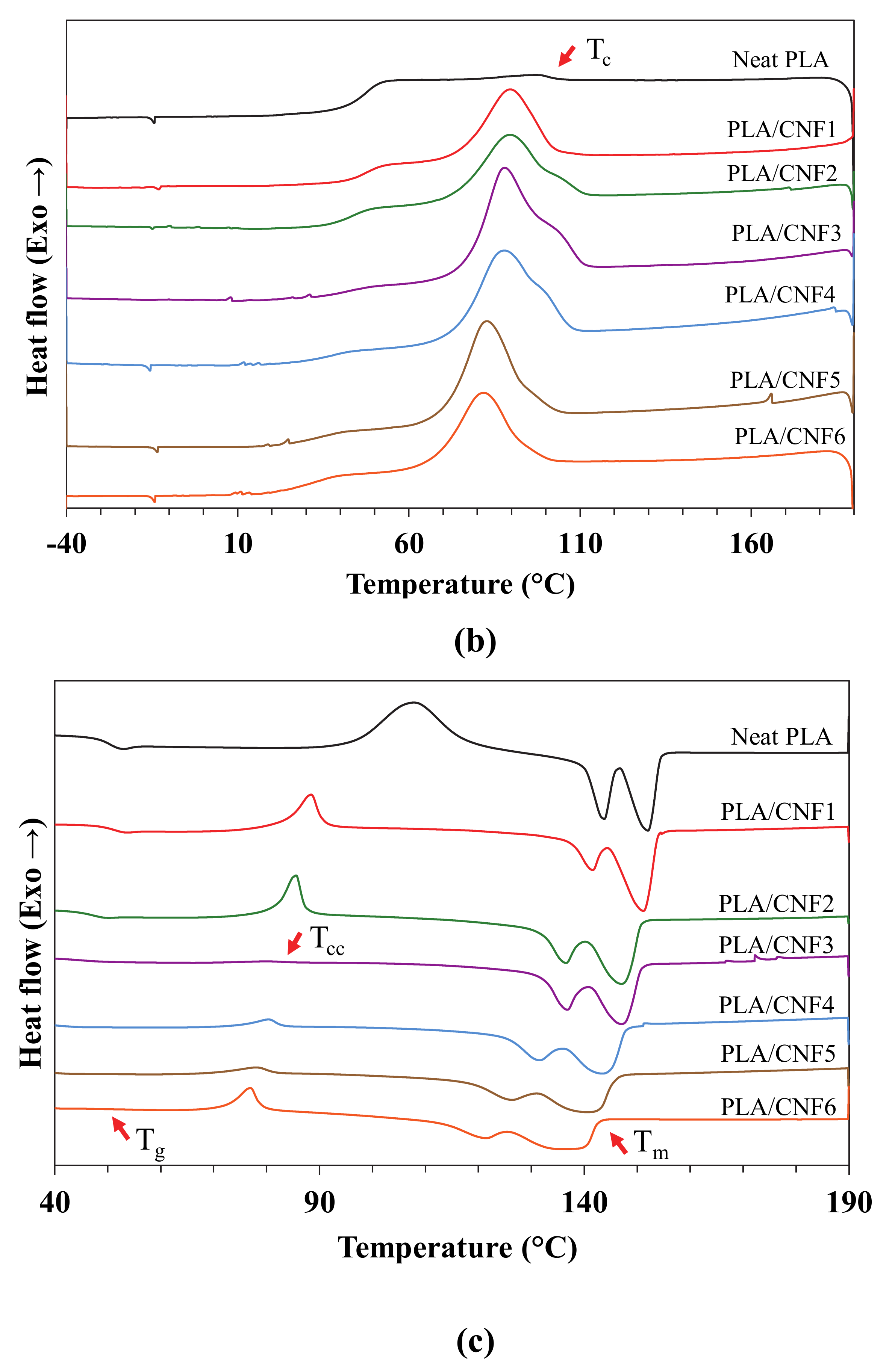
| Sample | Tg (°C) | Tc (°C) | Tcc (°C) | Tm1 (°C) | Tm2 (°C) | ∆Hc (J/g) | ∆Hcc (J/g) | ∆Hm (J/g) | Xc (%) |
|---|---|---|---|---|---|---|---|---|---|
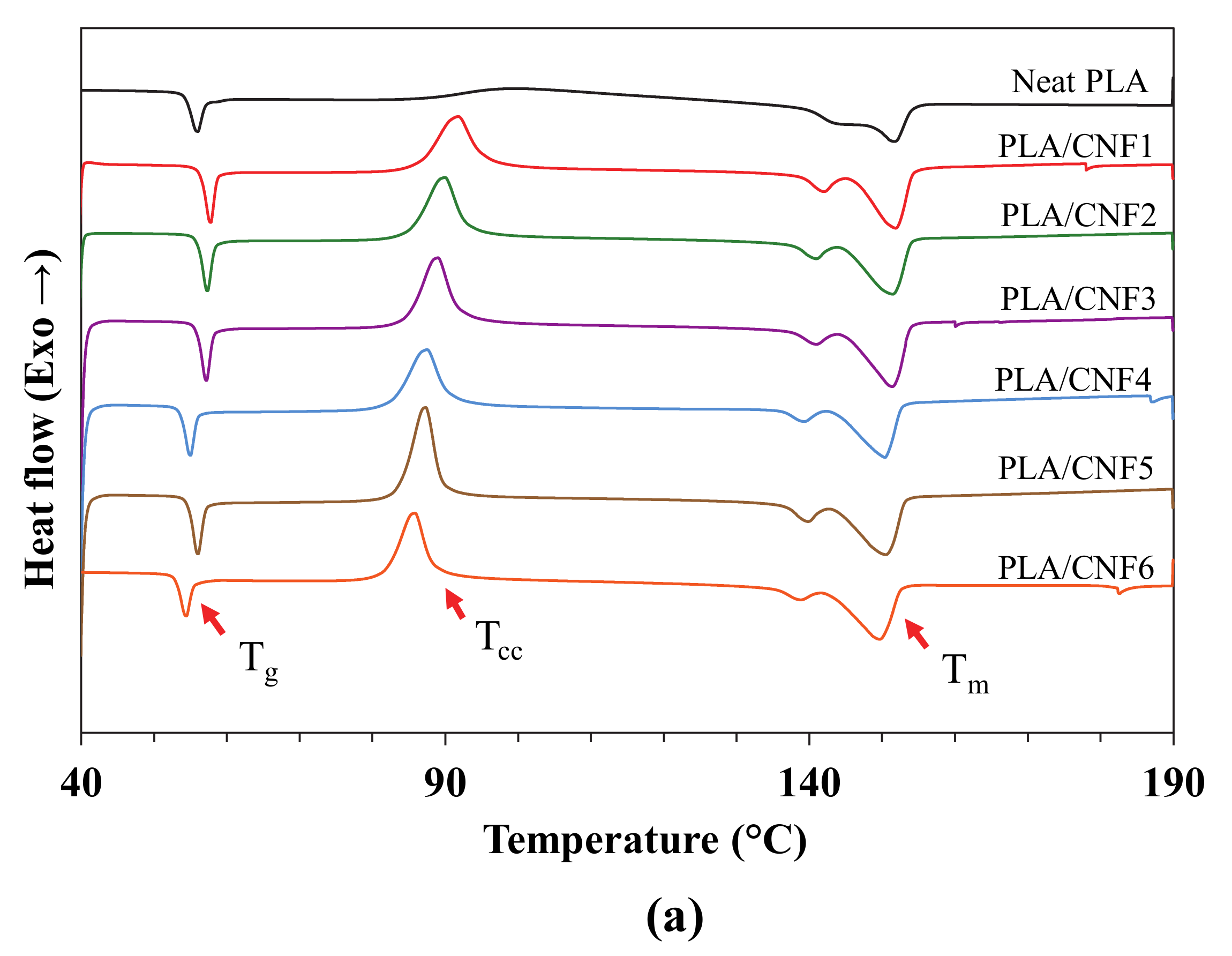
| Neat PLA | 50.4 | 106.1 | 91.3 | 143.5 | 152.1 | 1.3 | 33.4 | 35.6 | 2.3 |
| PLA/CNF1 | 51.4 | 111.2 | 80.1 | 141.4 | 151.1 | 19.5 | 11.1 | 37.7 | 28.4 |
| PLA/CNF2 | 47.1 | 114.1 | 74.9 | 136.4 | 147.0 | 22.2 | 11.5 | 40.8 | 31.2 |
| PLA/CNF3 | 43.9 | 114.6 | 71.0 | 136.7 | 147.1 | 33.6 | 0.9 | 42.3 | 44.2 |
| PLA/CNF4 | 40.9 | 110.1 | 75.2 | 131.4 | 143.5 | 29.7 | 2.6 | 43.0 | 43.1 |
| PLA/CNF5 | 37.3 | 106.4 | 73.6 | 126.4 | 140.8 | 28.1 | 3.6 | 37.2 | 35.9 |
| PLA/CNF6 | 36.8 | 102.7 | 70.3 | 121.4 | 135.4 | 21.4 | 6.4 | 30.9 | 26.1 |
| Sample | Tc = 90 °C | Tc = 100 °C | Tc = 110 °C | |||||||||
|---|---|---|---|---|---|---|---|---|---|---|---|---|
| n | k (min−n) | t1/2 (min) | 1/ t1/2 (min−1) | n | k (min−n) | t1/2 (min) | 1/ t1/2 (min−1) | n | k (min−n) | t1/2 (min) | 1/ t1/2 (min−1) | |
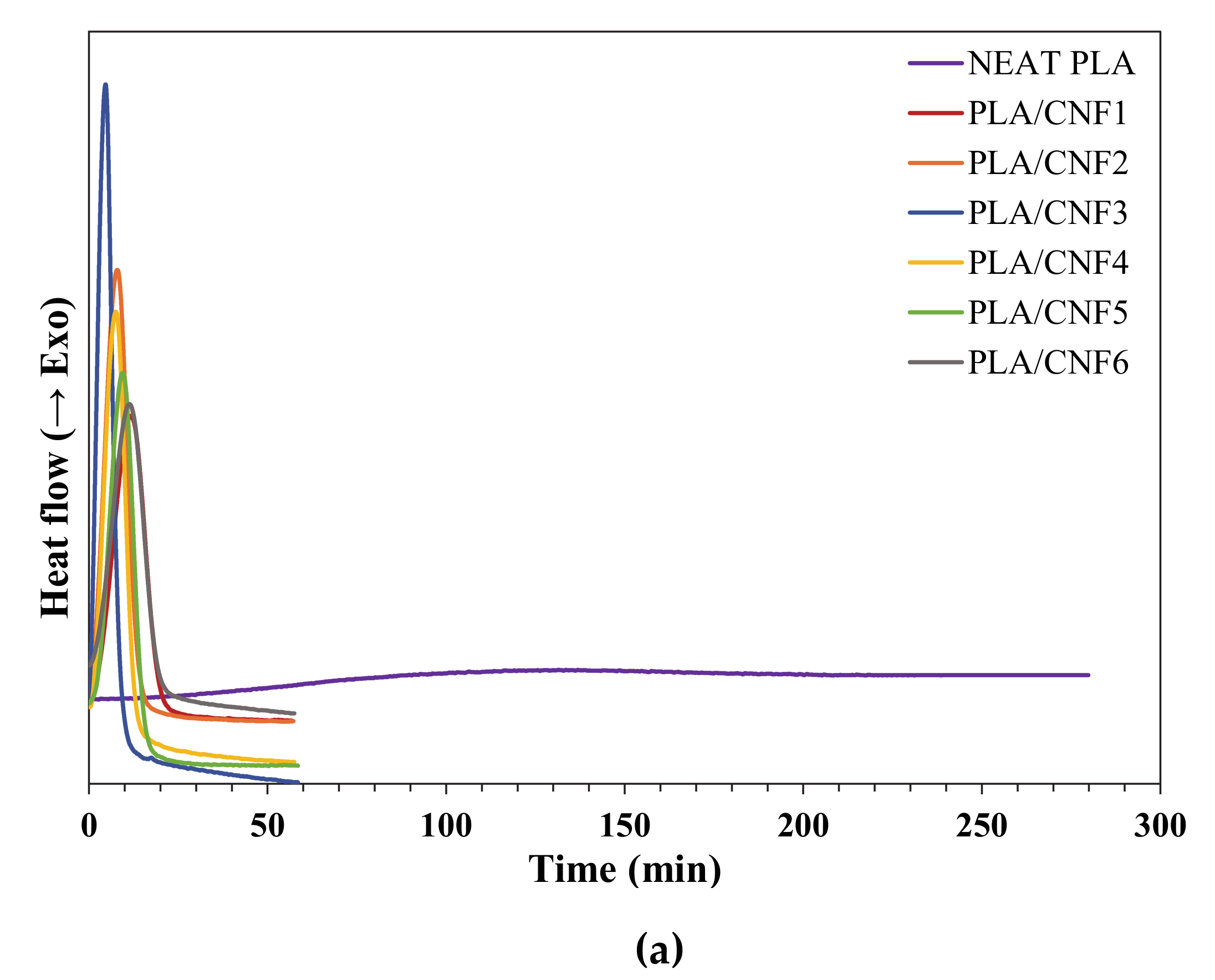
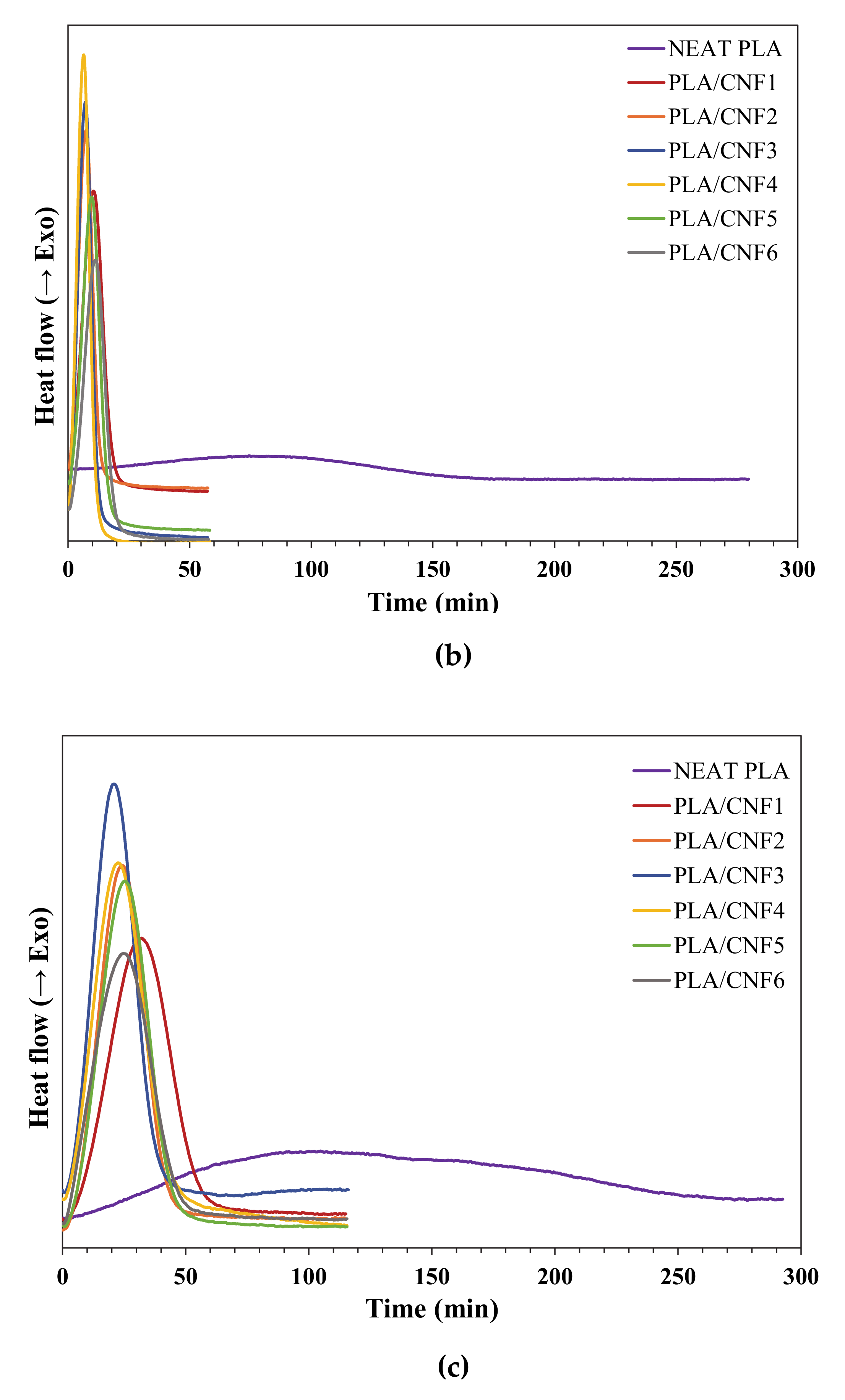
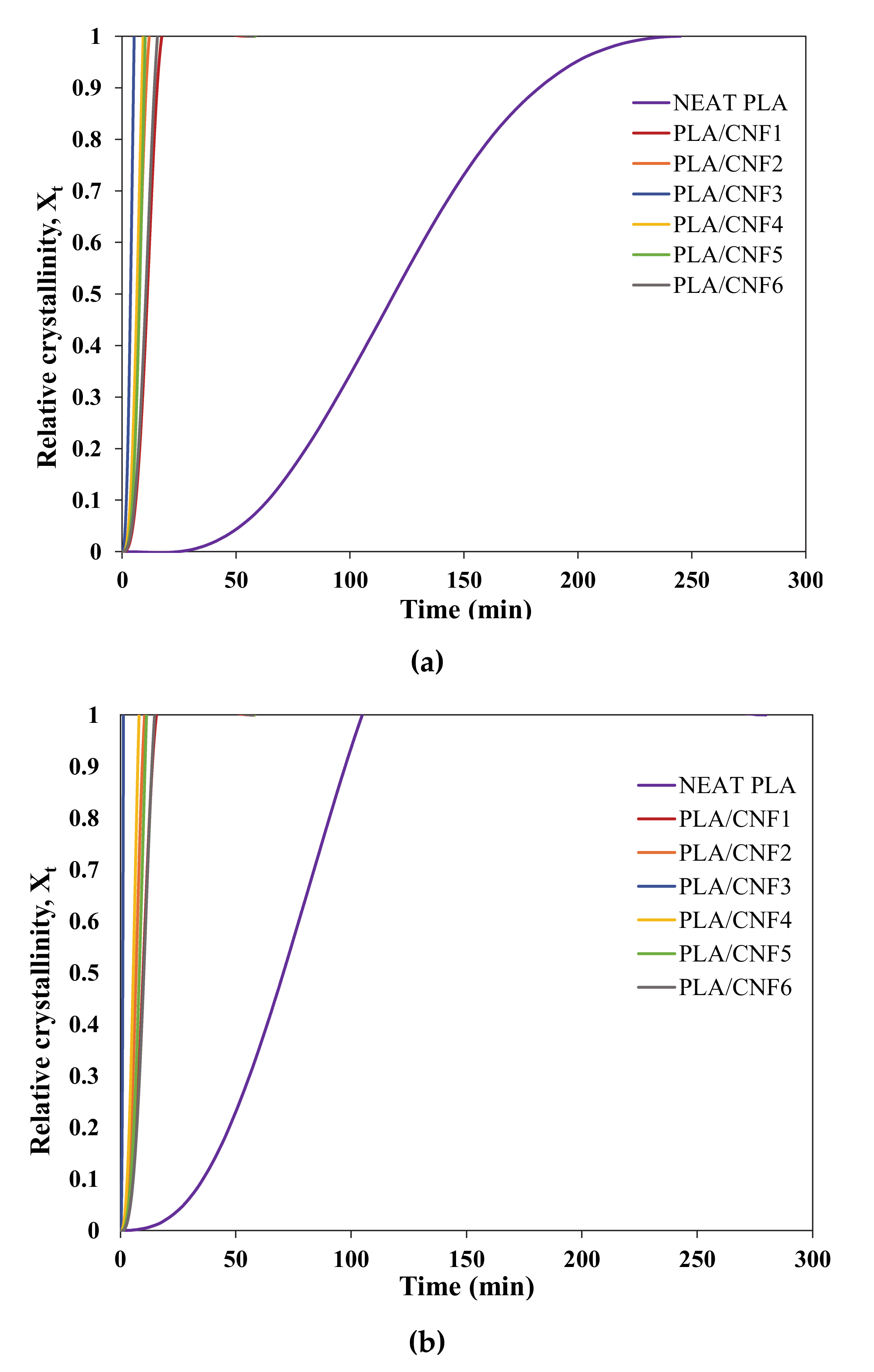
| Neat PLA | 3.22 | 5.72 × 10⁻⁸ | 158.01 | 0.006 | 2.74 | 2.83 × 10⁻⁶ | 92.72 | 0.011 | 2.46 | 2.46 × 10⁻⁶ | 165.59 | 0.006 |
| PLA/CNF1 | 3.25 | 1.35× 10⁻⁴ | 13.85 | 0.072 | 3.13 | 2.60 × 10⁻⁴ | 12.38 | 0.081 | 3.14 | 5.26 × 10⁻⁶ | 42.72 | 0.023 |
| PLA/CNF2 | 3.10 | 6.80 × 10⁻⁴ | 9.35 | 0.107 | 3.26 | 6.51 × 10⁻⁴ | 8.49 | 0.118 | 2.78 | 3.35 × 10⁻⁵ | 35.87 | 0.028 |
| PLA/CNF3 | 2.59 | 1.09 × 10⁻² | 4.99 | 0.200 | 3.11 | 2.45 × 10⁻¹ | 1.40 | 0.716 | 3.34 | 1.20 × 10⁻⁵ | 26.63 | 0.038 |
| PLA/CNF4 | 3.53 | 4.69 × 10⁻⁴ | 7.92 | 0.126 | 3.20 | 1.39 × 10⁻³ | 6.97 | 0.144 | 2.89 | 3.09 × 10⁻⁵ | 31.85 | 0.031 |
| PLA/CNF5 | 3.44 | 2.88 × 10⁻⁴ | 9.64 | 0.104 | 3.36 | 2.88 × 10⁻⁴ | 10.16 | 0.098 | 3.15 | 1.09 × 10⁻⁵ | 33.54 | 0.030 |
| PLA/CNF6 | 2.94 | 3.31 × 10⁻⁴ | 13.45 | 0.074 | 3.31 | 1.55 × 10⁻⁴ | 12.59 | 0.079 | 2.64 | 5.97 × 10⁻⁵ | 34.60 | 0.029 |
| Composition | Tensile Strength (MPa) | Young’s Modulus (GPa) |
|---|---|---|
| Neat PLA | 70.6 ± 0.3 f | 2.9 ± 0.0 e |
| PLA/CNF1 | 72.5 ± 0.4 d | 3.1 ± 0.1 c,d |
| PLA/CNF2 | 73.6 ± 0.4 c | 3.2 ± 0.0 b |
| PLA/CNF3 | 74.1 ± 0.5 b | 3.3 ± 0.1 a |
| PLA/CNF4 | 76.1 ± 0.1 a | 3.3 ± 0.0 a |
| PLA/CNF5 | 71.3 ± 0.5 e | 3.1 ± 0.0 c |
| PLA/CNF6 | 68.5 ± 0.5 g | 3.0 ± 0.0 d |
| Sample | 2θ (degree) | β (degree) | D (nm) |
|---|---|---|---|
| Neat PLA | 17.10 | 10.55 | 0.761 |
| PLA/CNF1 | 16.93 | 10.71 | 0.750 |
| PLA/CNF2 | 16.87 | 10.78 | 0.745 |
| PLA/CNF3 | 17.35 | 10.12 | 0.794 |
| PLA/CNF4 | 17.03 | 10.61 | 0.757 |
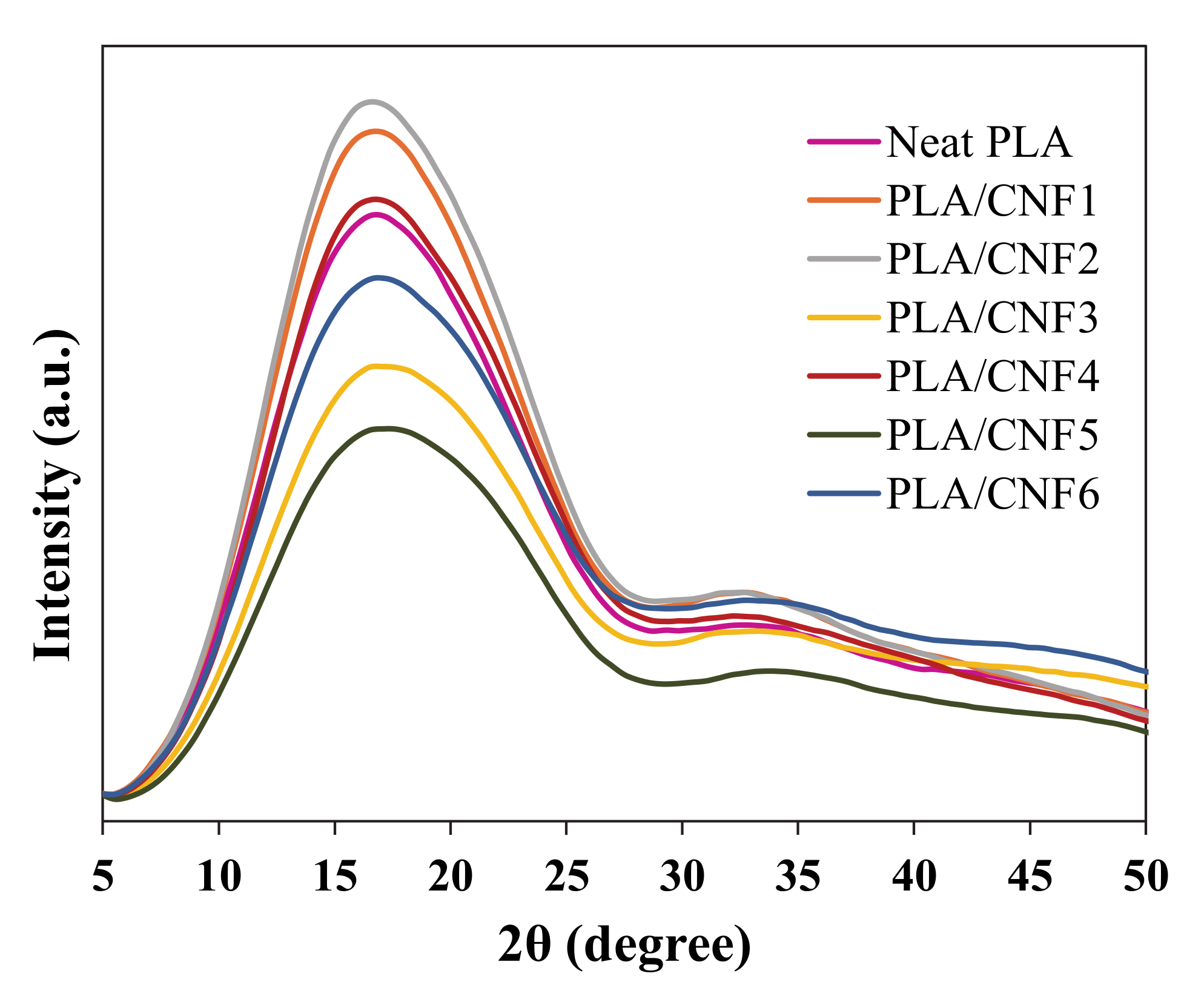
| PLA/CNF5 | 17.50 | 9.94 | 0.809 |
| PLA/CNF6 | 17.22 | 10.48 | 0.766 |
Publisher’s Note: MDPI stays neutral with regard to jurisdictional claims in published maps and institutional affiliations. |
© 2021 by the authors. Licensee MDPI, Basel, Switzerland. This article is an open access article distributed under the terms and conditions of the Creative Commons Attribution (CC BY) license (http://creativecommons.org/licenses/by/4.0/).
Share and Cite
Shazleen, S.S.; Yasim-Anuar, T.A.T.; Ibrahim, N.A.; Hassan, M.A.; Ariffin, H. Functionality of Cellulose Nanofiber as Bio-Based Nucleating Agent and Nano-Reinforcement Material to Enhance Crystallization and Mechanical Properties of Polylactic Acid Nanocomposite. Polymers 2021, 13, 389. https://doi.org/10.3390/polym13030389
Shazleen SS, Yasim-Anuar TAT, Ibrahim NA, Hassan MA, Ariffin H. Functionality of Cellulose Nanofiber as Bio-Based Nucleating Agent and Nano-Reinforcement Material to Enhance Crystallization and Mechanical Properties of Polylactic Acid Nanocomposite. Polymers. 2021; 13(3):389. https://doi.org/10.3390/polym13030389
Chicago/Turabian StyleShazleen, Siti Shazra, Tengku Arisyah Tengku Yasim-Anuar, Nor Azowa Ibrahim, Mohd Ali Hassan, and Hidayah Ariffin. 2021. "Functionality of Cellulose Nanofiber as Bio-Based Nucleating Agent and Nano-Reinforcement Material to Enhance Crystallization and Mechanical Properties of Polylactic Acid Nanocomposite" Polymers 13, no. 3: 389. https://doi.org/10.3390/polym13030389
APA StyleShazleen, S. S., Yasim-Anuar, T. A. T., Ibrahim, N. A., Hassan, M. A., & Ariffin, H. (2021). Functionality of Cellulose Nanofiber as Bio-Based Nucleating Agent and Nano-Reinforcement Material to Enhance Crystallization and Mechanical Properties of Polylactic Acid Nanocomposite. Polymers, 13(3), 389. https://doi.org/10.3390/polym13030389