Article

Linear Dimensional Change and Ultimate Tensile Strength of Polyamide Materials for Denture Bases

by
Bozhana Chuchulska
1 and
Stefan Zlatev
2,*
1
Department of Prosthetic Dental Medicine, Faculty of Dental Medicine, Medical University of Plovdiv, 4000 Plovdiv, Bulgaria
2
CAD/CAM Center of Dental Medicine, Research Institute at the Medical University of Plovdiv, 4000 Plovdiv, Bulgaria
*
Author to whom correspondence should be addressed.
Polymers 2021, 13(19), 3446; https://doi.org/10.3390/polym13193446
Submission received: 30 July 2021 / Revised: 1 October 2021 / Accepted: 2 October 2021 / Published: 8 October 2021

Abstract

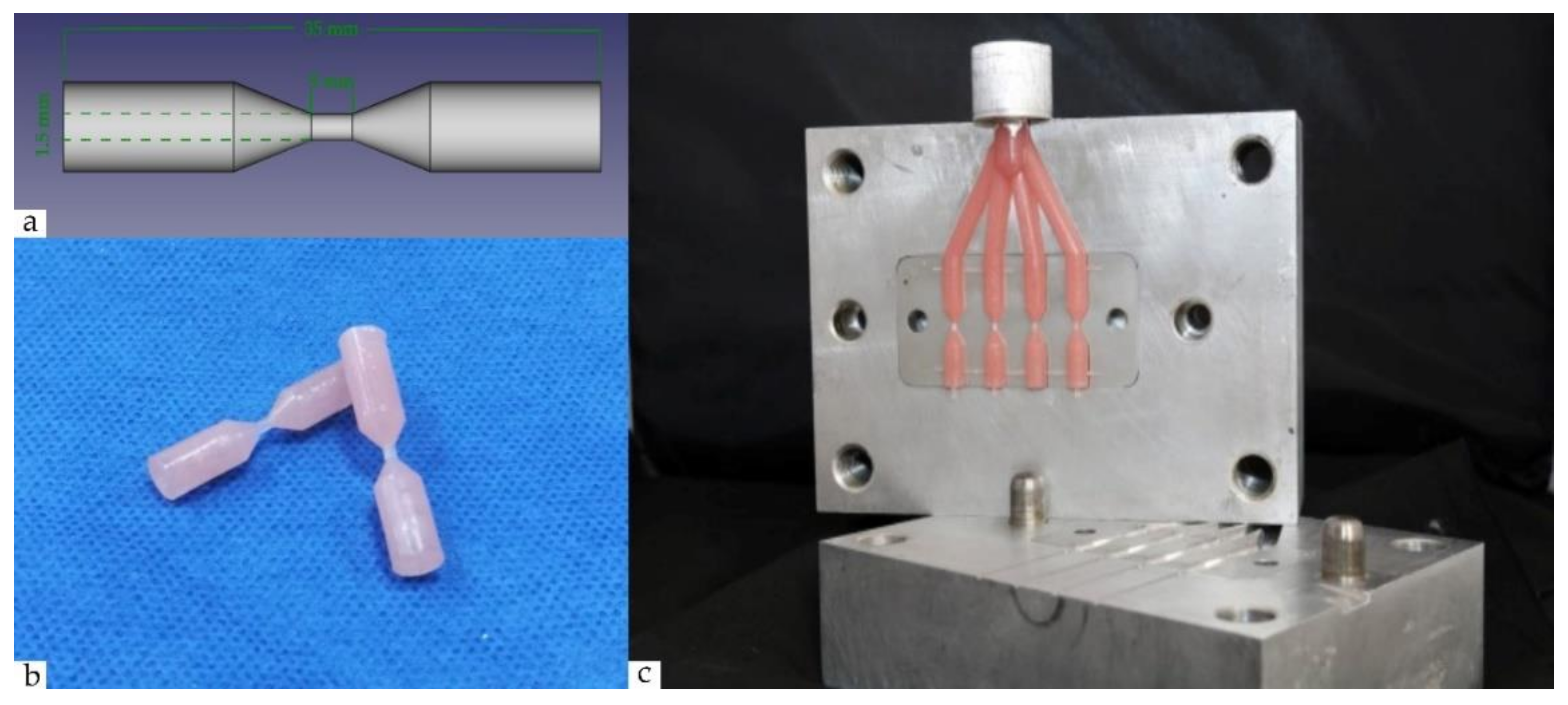
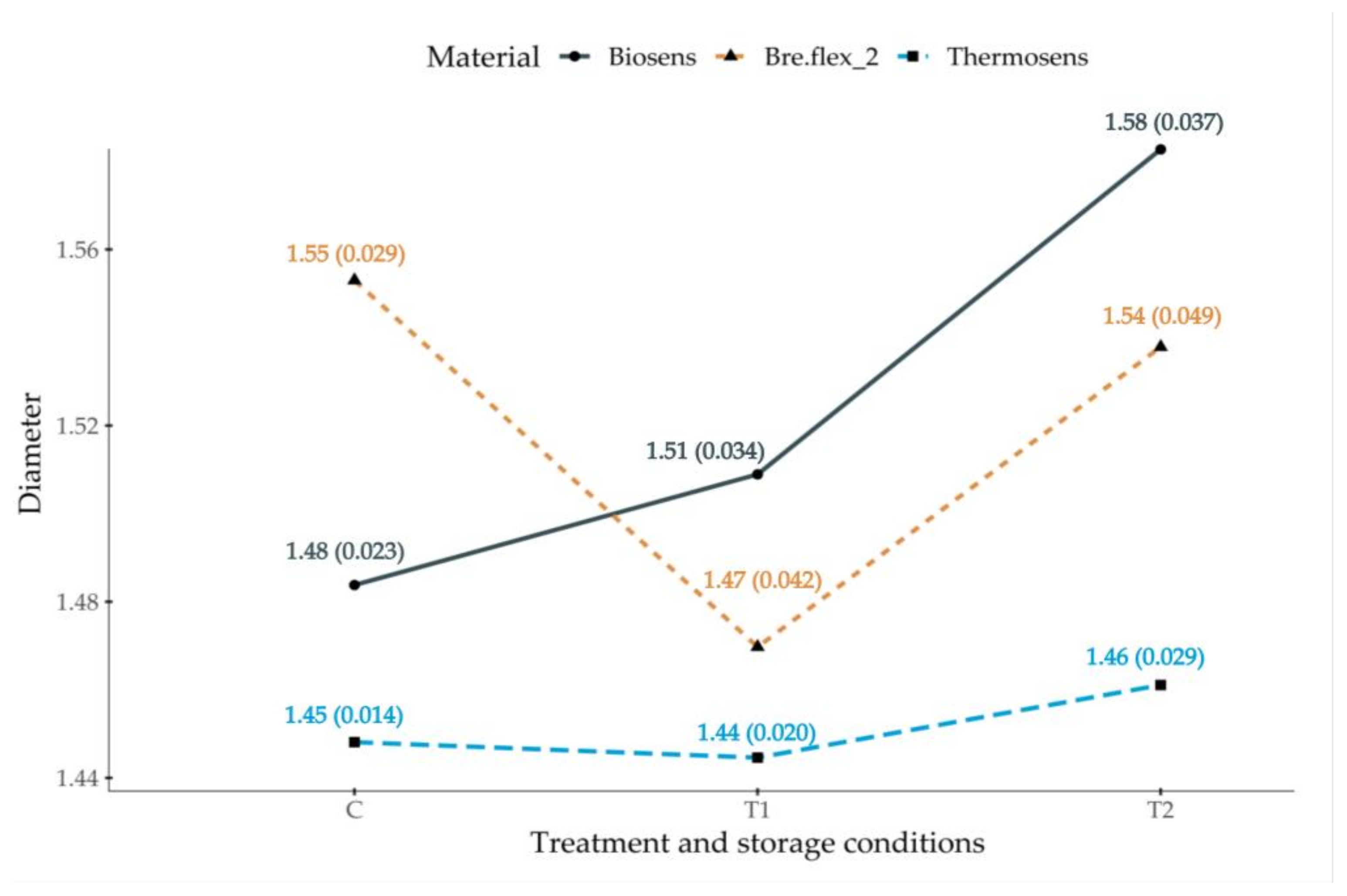
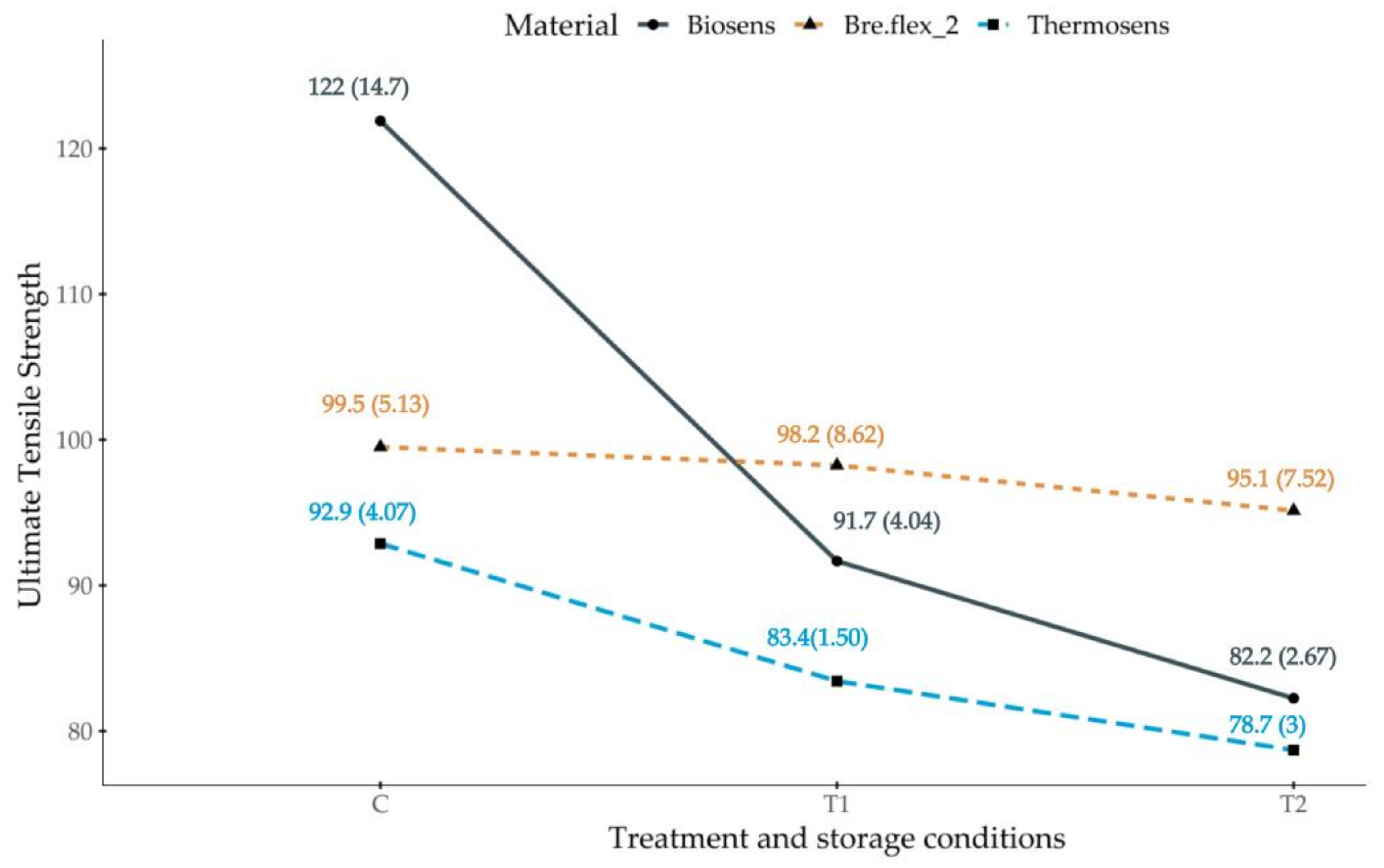
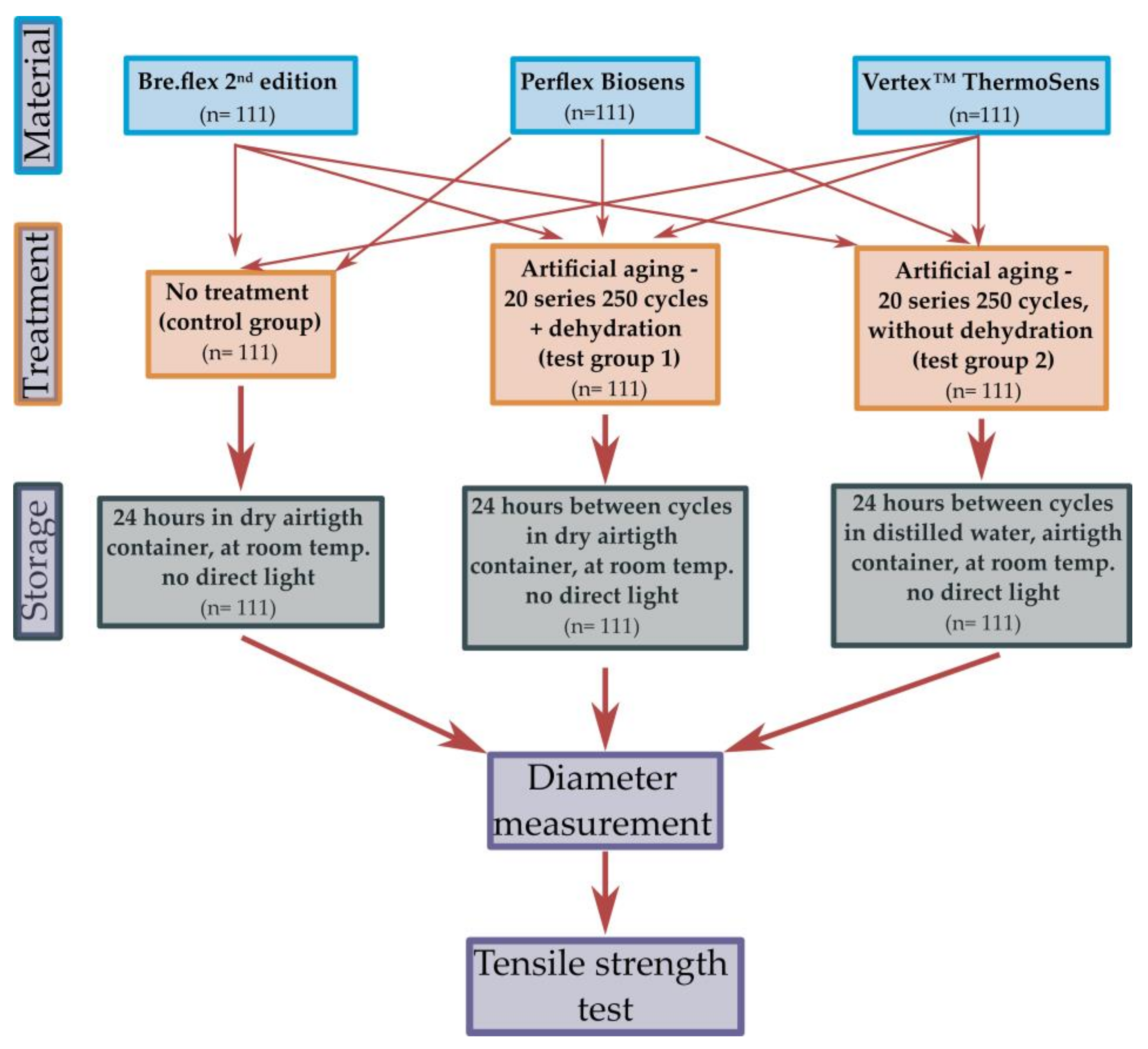
The aim of the current study was to evaluate the dimensional changes and ultimate tensile strength in three polyamide materials for denture bases fabrication through injection molding, subjected to artificial aging and different storage conditions. A total of 333 test specimens fabricated from Biosens (BS; Perflex, Netanya, Israel), Bre.flex 2nd edition (BF; Bredent, Senden, Germany) and ThermoSens (TS; Vertex Dental B.V., Soesterberg, The Netherlands)—n = 111 per material—were equally divided into three groups (n = 37) based on different treatments and storage conditions. Test samples allocated to the “Control group” were not artificially aged and stored in water for 24 h. Both “Treatment 1 group” and “Treatment 2 group” were subjected to thermocycling, the former dehydrated and the latter stored in water between cycle-sets. Linear changes and ultimate tensile strength were measured and analyzed for storage condition and material influence on the outcome variables. A Welch ANOVA test with Games–Howell post-hoc analysis was used to compare the influence of treatments across different materials. Significant differences were found for all three included materials with p values ranging from <0.05 to <0.001 for linear dimensional changes. The magnitude of alterations varied and was large for BS (Perflex, Israel) (ω2 = 0.62) and BF (Bredent, Germany) (ω2 = 0.47) and small but significant for TS (Vertex Dental B.V., The Netherlands) (ω2 = 0.05). However, results seem to fall into clinically acceptable range. Significant differences were also observed for the ultimate tensile strength test with the same range of p-values. All three materials showed different initial ultimate tensile strengths and varying reaction to artificial aging and storage with the lowest alterations observed for BF (Bredent, Germany) (ω2 = 0.05). Within the limitation of this study, it can be concluded that all three materials show different dimensional and mechanical properties when subjected to artificial aging and different storage. Although linear dimensions show significant changes, they seem to be clinically irrelevant, whereas the change in ultimate tensile strength after only 6-month equivalent clinical use was substantial for BS (Perflex, Israel) and TS (Vertex Dental B.V., The Netherlands).
Keywords: denture base materials; polyamide; injection molding; dimensional stability; ultimate tensile strength; thermocycling denture base materials; polyamide; injection molding; dimensional stability; ultimate tensile strength; thermocycling