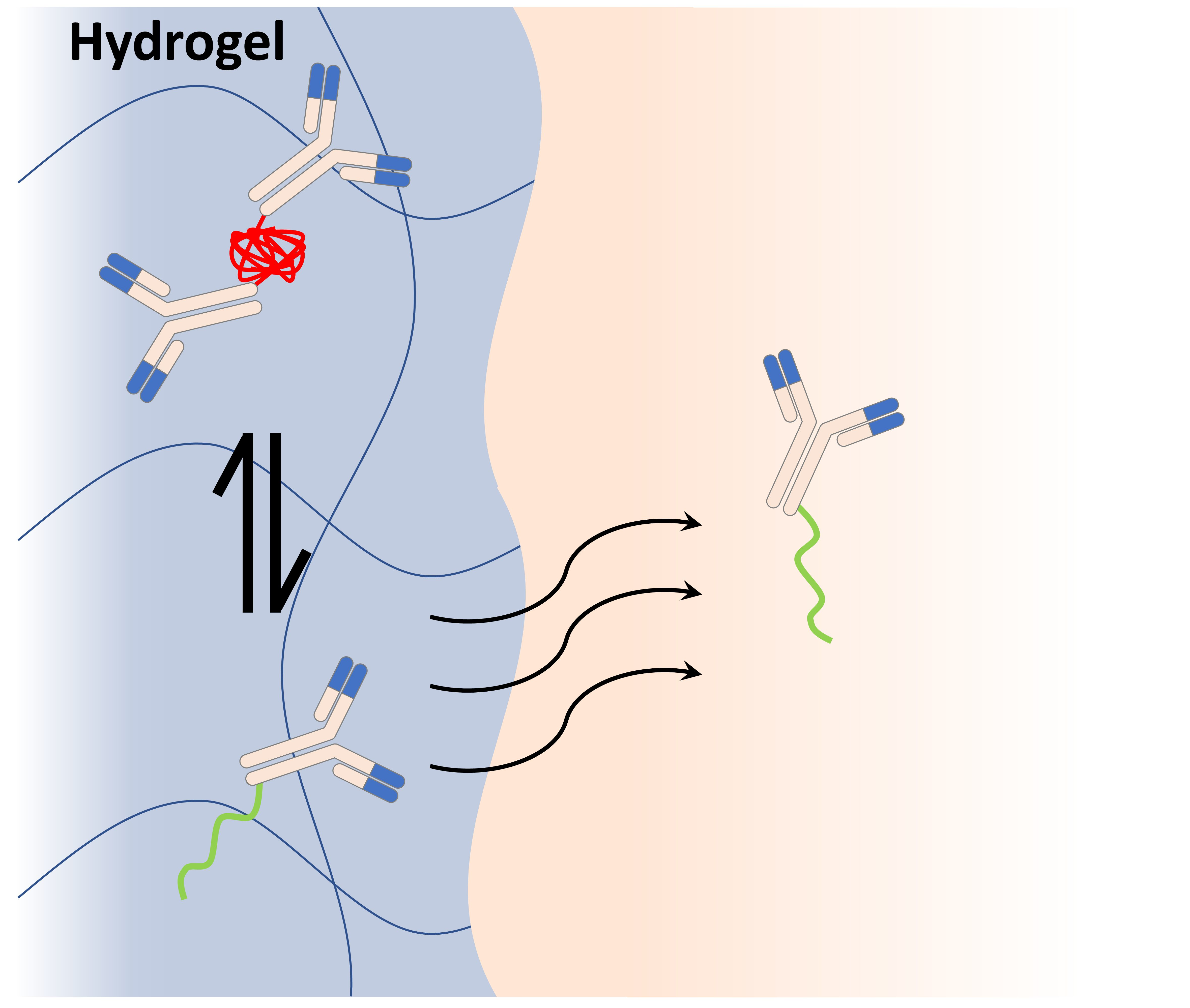

Modulating the Thermoresponse of Polymer-Protein Conjugates with Hydrogels for Controlled Release
Abstract
1. Introduction
2. Materials and Methods
2.1. Materials
2.2. Methods
3. Results and Discussion
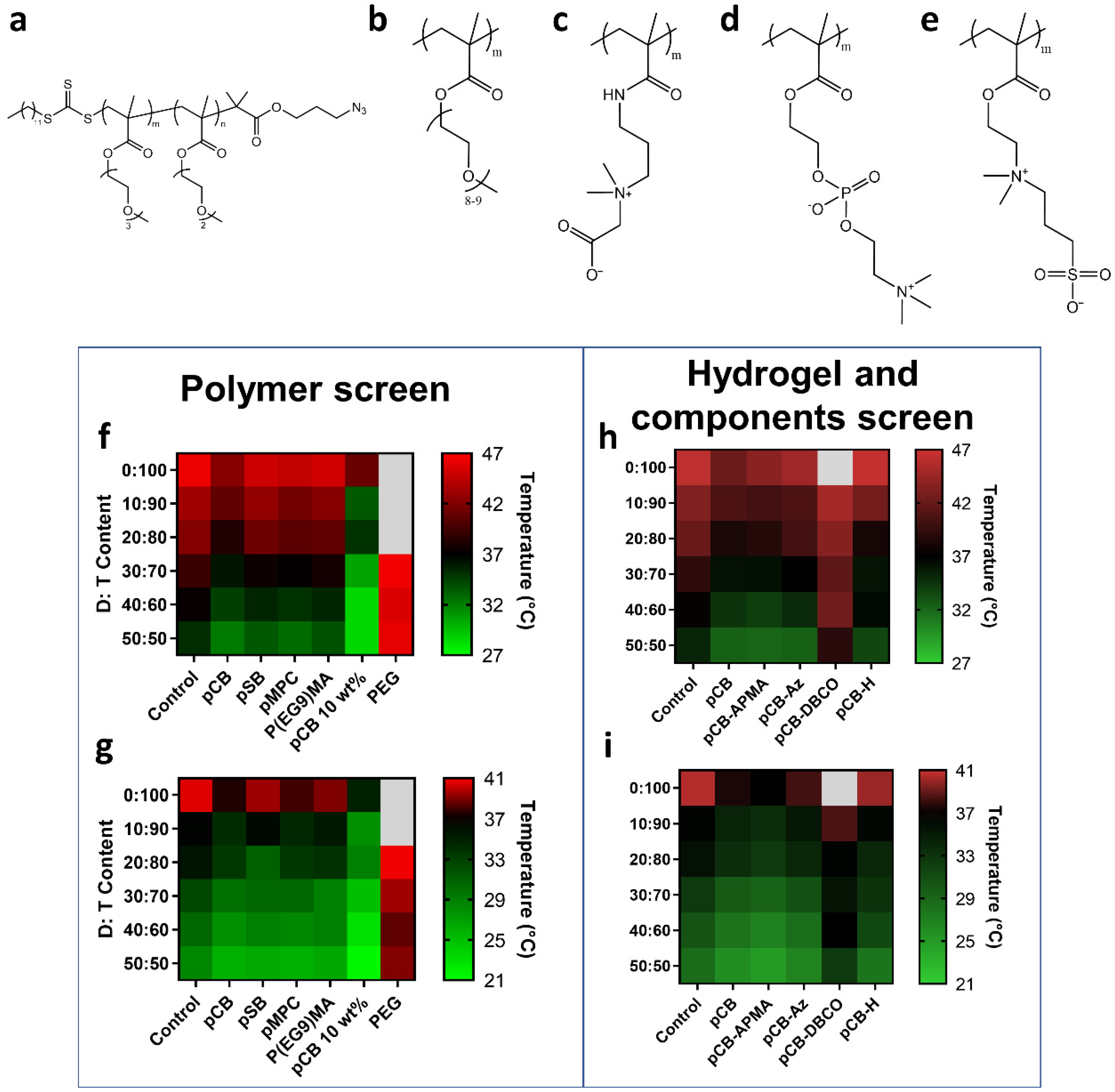
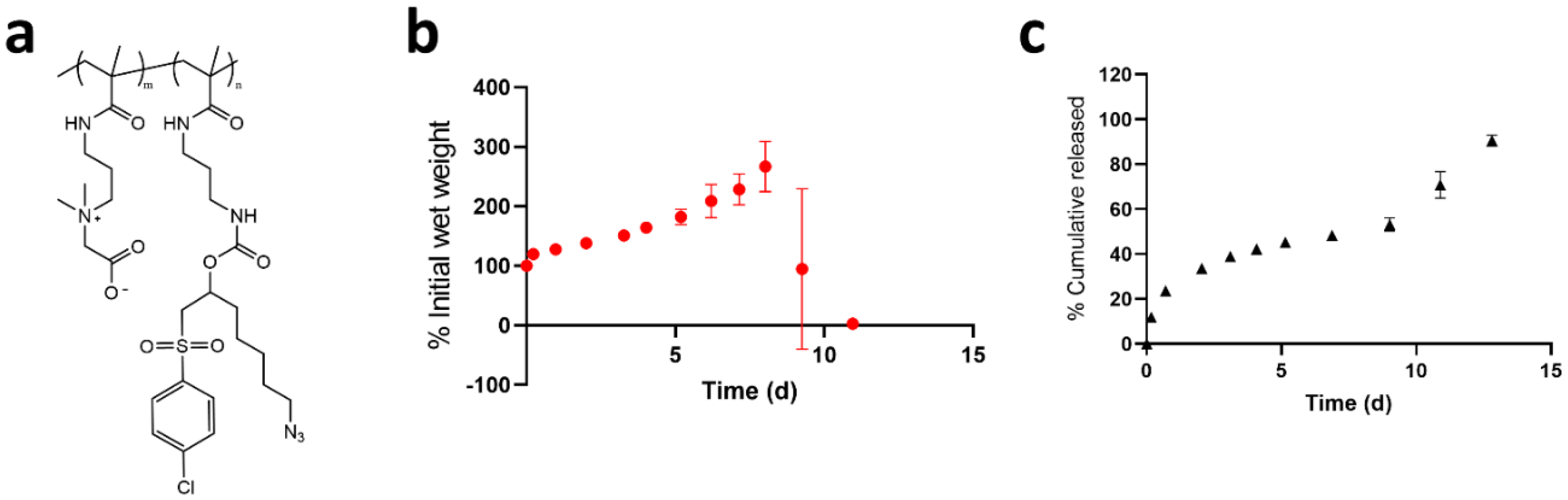
3.1. Selection of Polymer Components for Hydrogel and Antibody Conjugates
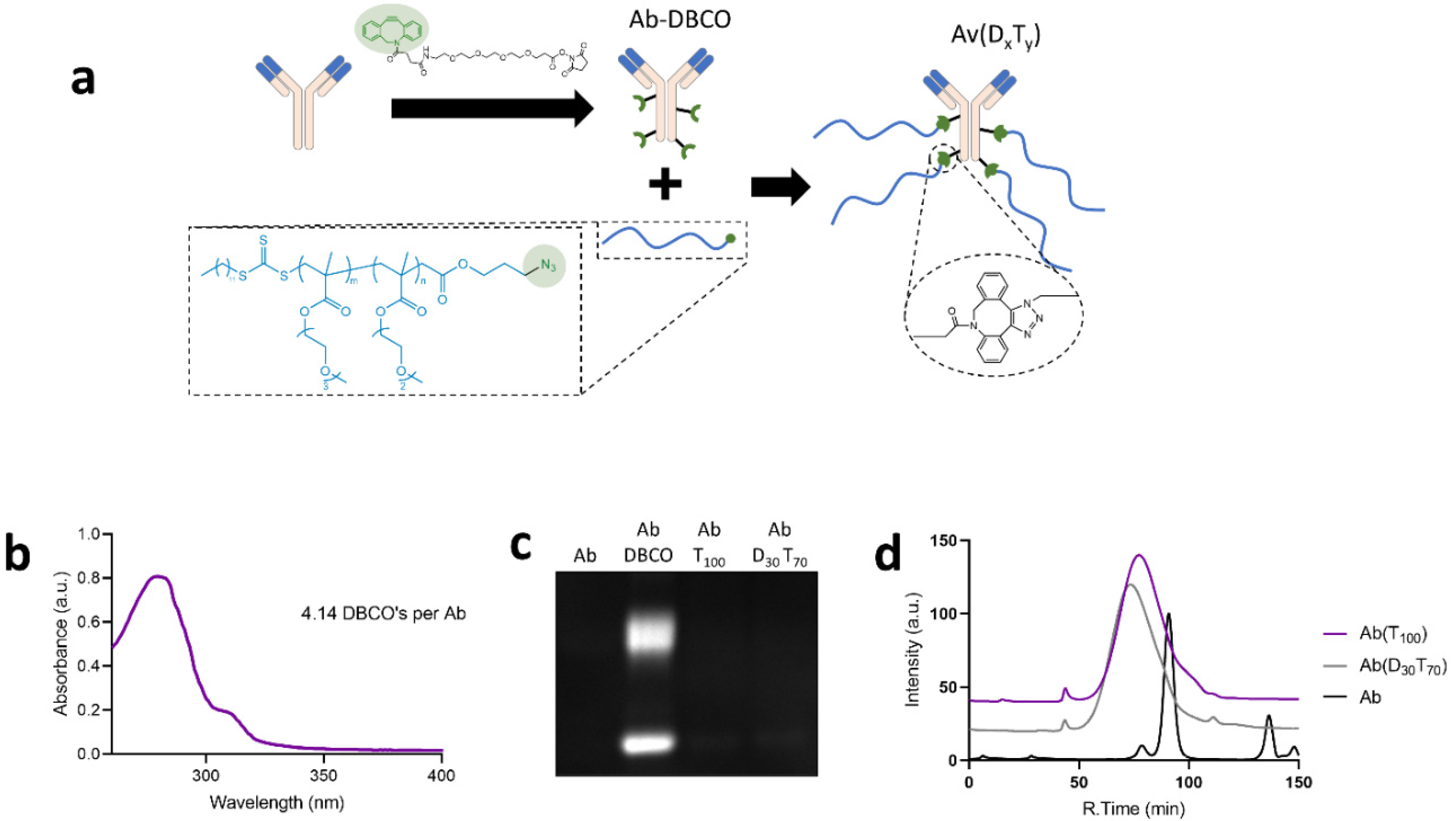
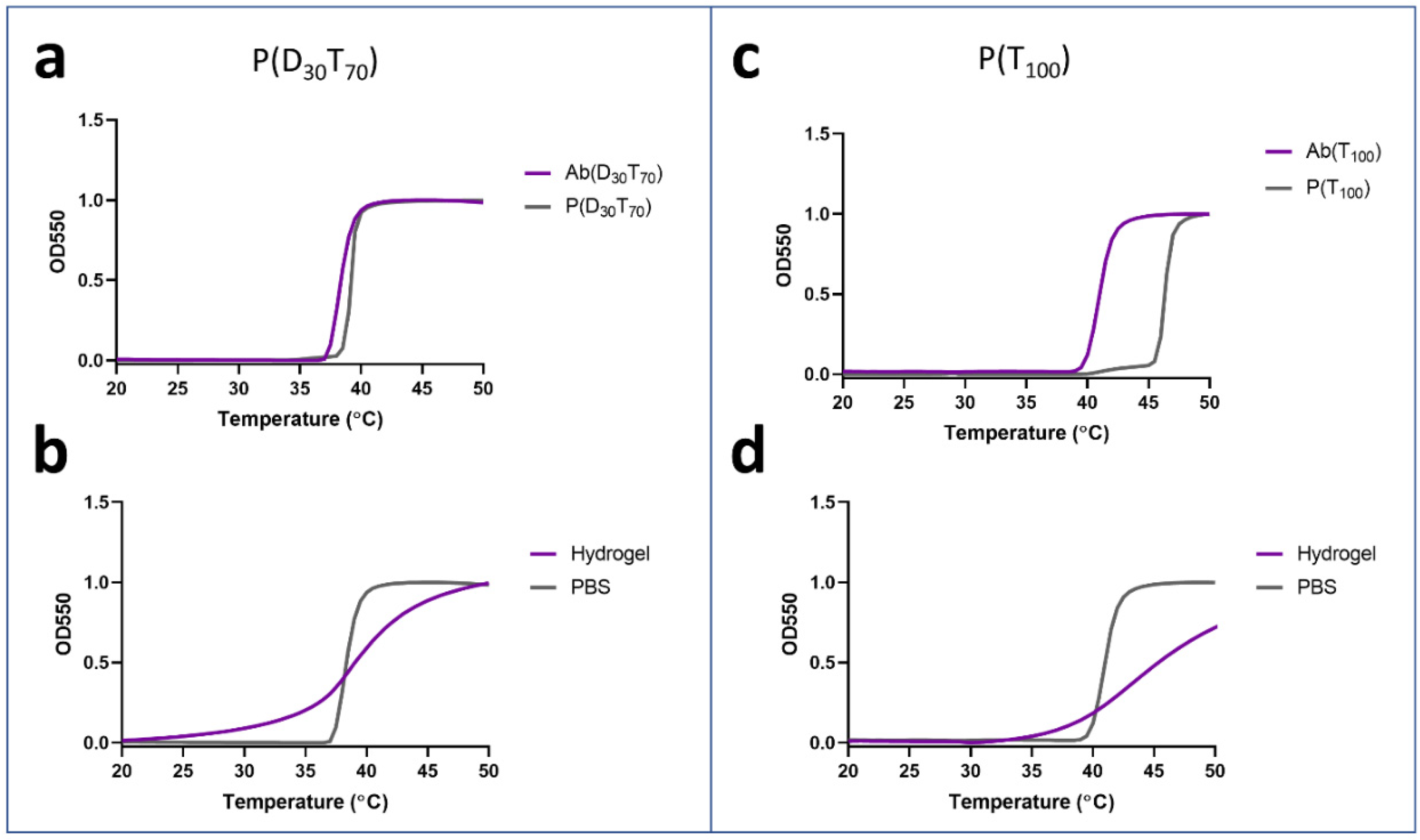
3.2. Synthesis and Characterization of PEGMA-Antibody Conjugates
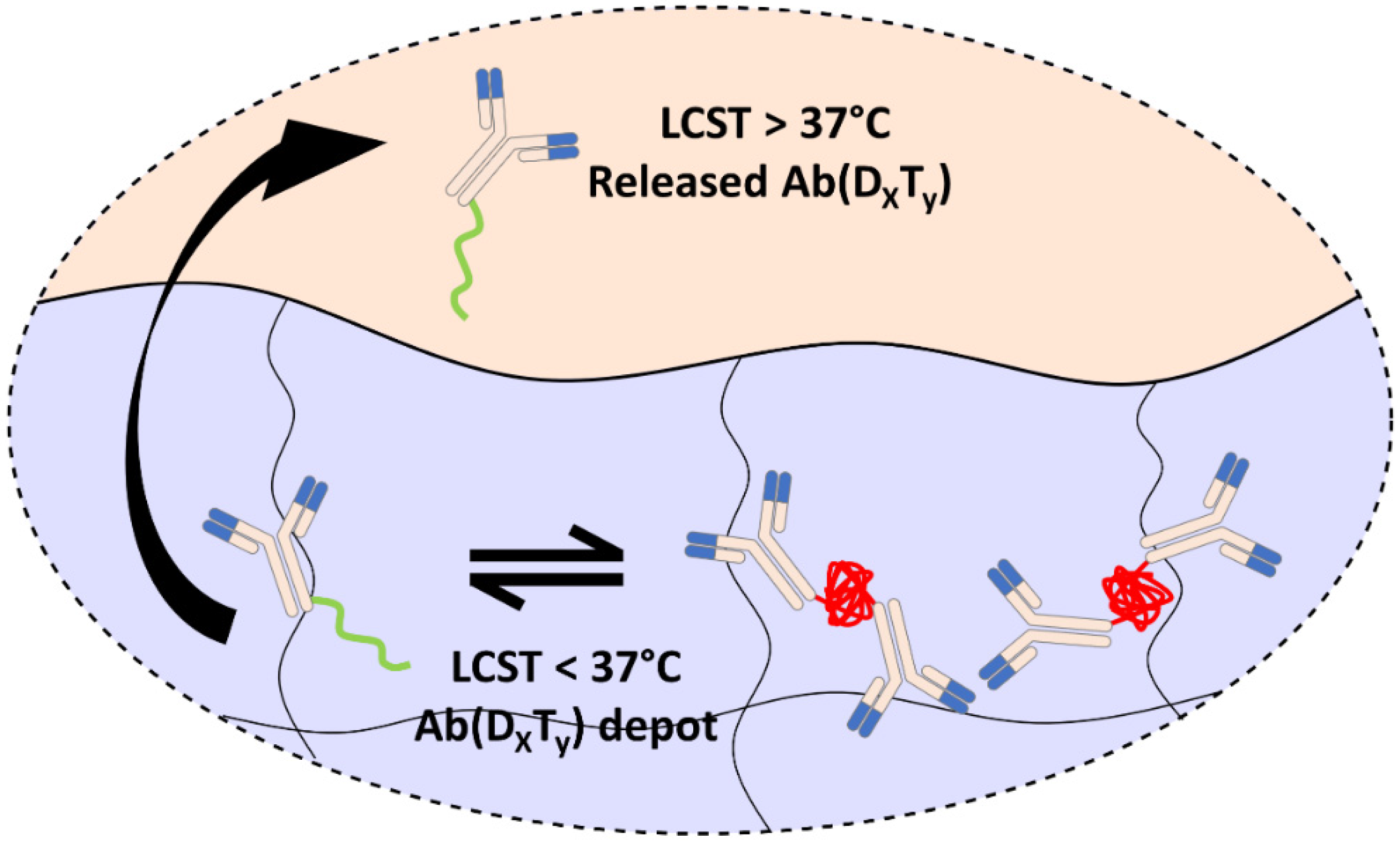
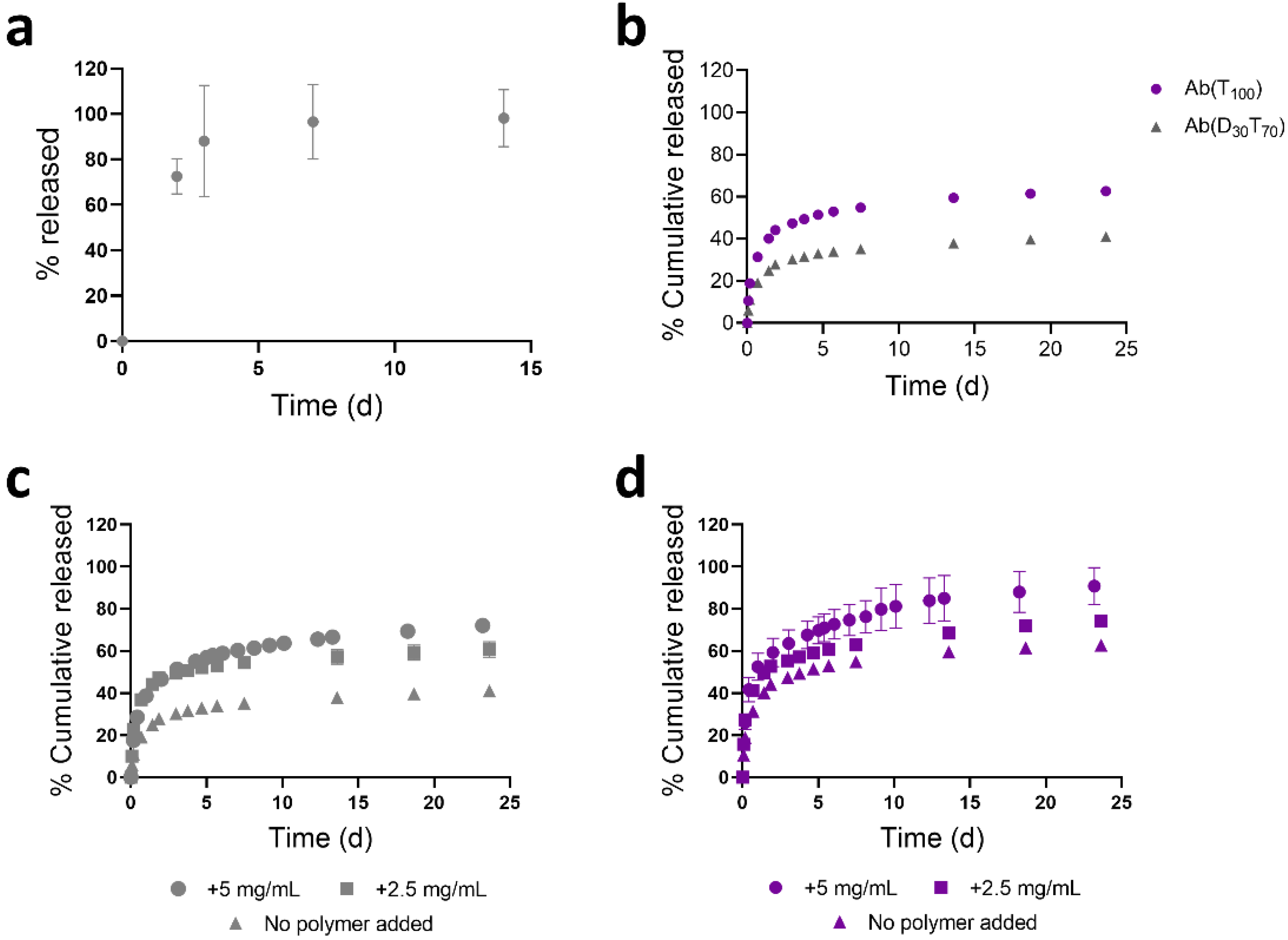
3.3. Controlled Release of PEGMA-Protein Conjugates from pCB Hydrogels
4. Conclusions
Supplementary Materials
Author Contributions
Funding
Institutional Review Board Statement
Informed Consent Statement
Data Availability Statement
Acknowledgments
Conflicts of Interest
References
- Pelegri-O’Day, E.M.; Lin, E.-W.; Maynard, H.D. Therapeutic Protein–Polymer Conjugates: Advancing Beyond PEGylation. J. Am. Chem. Soc. 2014, 136, 14323–14332. [Google Scholar] [CrossRef] [Scilit]
- Ekladious, I.; Colson, Y.L.; Grinstaff, M.W. Polymer–drug conjugate therapeutics: Advances, insights and prospects. Nat. Rev. Drug Discov. 2019, 18, 273–294. [Google Scholar] [CrossRef] [Scilit] [PubMed]
- Cobo, I.; Li, M.; Sumerlin, B.S.; Perrier, S. Smart hybrid materials by conjugation of responsive polymers to biomacro-molecules. Nat. Mater. 2015, 14, 143–149. [Google Scholar] [CrossRef] [Scilit] [PubMed]
- Zhang, P.; Sun, F.; Liu, S.; Jiang, S. Anti-PEG antibodies in the clinic: Current issues and beyond PEGylation. J. Control. Release 2016, 244, 184–193. [Google Scholar] [CrossRef] [Scilit]
- Basu, A.; Kunduru, K.R.; Abtew, E.; Domb, A.J. Polysaccharide-Based Conjugates for Biomedical Applications. Bioconjugate Chem. 2015, 26, 1396–1412. [Google Scholar] [CrossRef] [Scilit]
- Joh, D.Y.; Zimmers, Z.; Avlani, M.; Heggestad, J.T.; Aydin, H.B.; Ganson, N.; Kumar, S.; Fontes, C.M.; Achar, R.K.; Hershfield, M.S.; et al. Architectural Modification of Conformal PEG-Bottlebrush Coatings Minimizes Anti-PEG Antigenicity While Preserving Stealth Properties. Adv. Health Mater. 2019, 8, e1801177. [Google Scholar] [CrossRef] [Scilit]
- Qi, Y.; Simakova, A.; Ganson, N.J.; Li, X.; Luginbuhl, K.M.; Ozer, I.; Liu, W.; Hershfield, M.S.; Matyjaszewski, K.; Chilkoti, A. A brush-polymer/exendin-4 conjugate reduces blood glucose levels for up to five days and eliminates poly(ethylene glycol) antigenicity. Nat. Biomed. Eng. 2016, 1, 1–12. [Google Scholar] [CrossRef] [Scilit] [PubMed]
- Bebis, K.; Jones, M.W.; Haddleton, D.M.; Gibson, M.I. Thermoresponsive behaviour of poly[(oligo(ethyleneglycol methacrylate)]s and their protein conjugates: Importance of concentration and solvent system. Polym. Chem. 2011, 2, 975–982. [Google Scholar] [CrossRef] [Scilit]
- Liu, M.; Johansen, P.; Zabel, F.; Leroux, J.C.; Gauthier, M.A. Semi-permeable coatings fabricated from comb-polymers efficiently protect proteins in Vivo. Nat. Commun. 2014, 5, 1–8. [Google Scholar] [CrossRef] [Scilit]
- Liu, M.; Tirino, P.; Radivojevic, M.; Phillips, D.J.; Gibson, M.; Leroux, J.-C.; Gauthier, M.A. Molecular Sieving on the Surface of a Protein Provides Protection Without Loss of Activity. Adv. Funct. Mater. 2012, 23, 2007–2015. [Google Scholar] [CrossRef] [Scilit]
- Jiang, L.; Bonde, J.S.; Ye, L. Temperature and pH Controlled Self-Assembly of a Protein-Polymer Biohybrid. Macromol. Chem. Phys. 2018, 219, 1700597. [Google Scholar] [CrossRef] [Scilit]
- Gilroy, C.A.; Roberts, S.; Chilkoti, A. Fusion of fibroblast growth factor 21 to a thermally responsive biopolymer forms an injectable depot with sustained anti-diabetic action. J. Control. Release 2018, 277, 154–164. [Google Scholar] [CrossRef] [Scilit]
- Luginbuhl, K.M.; Schaal, J.; Umstead, B.; Mastria, E.; Li, X.; Banskota, S.; Arnold, S.; Feinglos, M.; D’Alessio, D.; Chilkoti, A. One-week glucose control via zero-order release kinetics from an injectable depot of glucagon-like peptide-1 fused to a thermosensitive biopolymer. Nat. Biomed. Eng. 2017, 1, 1–14. [Google Scholar] [CrossRef] [Scilit]
- Magnusson, J.P.; Khan, A.; Pasparakis, G.; Saeed, A.O.; Wang, W.; Alexander, C. Ion-sensitive ‘isothermal’ responsive polymers prepared in water. J. Am. Chem. Soc. 2008, 130, 10852–10853. [Google Scholar] [CrossRef] [Scilit] [PubMed]
- Shoaib, M.M.; Huynh, V.; Shad, Y.; Ahmed, R.; Jesmer, A.H.; Melacini, G.; Wylie, R.G. Controlled degradation of low-fouling poly(oligo(ethylene glycol)methyl ether methacrylate) hydrogels. RSC Adv. 2019, 9, 18978–18988. [Google Scholar] [CrossRef] [Scilit]
- Santi, D.V.; Schneider, E.; Reid, R.; Robinson, L.; Ashley, G.W. Predictable and tunable half-life extension of therapeutic agents by controlled chemical release from macromolecular conjugates. Proc. Natl. Acad. Sci. USA 2012, 109, 6211–6216. [Google Scholar] [CrossRef] [Scilit] [PubMed]
- Huynh, V.; Jesmer, A.H.; Shoaib, M.M.; Wylie, R.G. Influence of Hydrophobic Cross-Linkers on Carboxybetaine Co-polymer Stimuli Response and Hydrogel Biological Properties. Langmuir 2019, 35, 1631–1641. [Google Scholar] [CrossRef] [Scilit] [PubMed]
- Huynh, V.; Wylie, R.G. Displacement Affinity Release of Antibodies from Injectable Hydrogels. ACS Appl. Mater. Interfaces 2019, 11, 30648–30660. [Google Scholar] [CrossRef] [Scilit]
- Huynh, V.; Wylie, R.G. Competitive Affinity Release for Long-Term Delivery of Antibodies from Hydrogels. Angew. Chem. Int. Ed. 2018, 57, 3406–3410. [Google Scholar] [CrossRef] [Scilit]
- Keefe, A.J.; Jiang, S. Poly(zwitterionic)protein conjugates offer increased stability without sacrificing binding affinity or bioactivity. Nat. Chem. 2011, 4, 59–63. [Google Scholar] [CrossRef] [Scilit] [PubMed]
- Erfani, A.; Seaberg, J.; Aichele, C.P.; Ramsey, J.D. Interactions between Biomolecules and Zwitterionic Moieties: A Review. Biomacromolecules 2020, 21, 2557–2573. [Google Scholar] [CrossRef] [Scilit]
- Liu, D.; Yang, J.; Wang, H.-F.; Wang, Z.; Huang, X.; Wang, Z.; Niu, G.; Walker, A.R.H.; Chen, X. Glucose oxidase-catalyzed growth of gold nanoparticles enables quantitative detection of attomolar cancer biomarkers. Anal. Chem. 2014, 86, 5800–5806. [Google Scholar] [CrossRef] [Scilit]
- Moatsou, D.; Li, J.; Ranji, A.; Pitto-Barry, A.; Ntai, I.; Jewett, M.C.; O’Reilly, R.K. Self-Assembly of Temperature-Responsive Protein–Polymer Bioconjugates. Bioconjug. Chem. 2015, 26, 1890–1899. [Google Scholar] [CrossRef] [Scilit]
- Nandy, A.; Chakraborty, S.; Nandi, S.; Bhattacharyya, K.; Mukherjee, S. Structure, Activity, and Dynamics of Human Serum Albumin in a Crowded Pluronic F127 Hydrogel. J. Phys. Chem. B 2019, 123, 3397–3408. [Google Scholar] [CrossRef] [Scilit]
- Xu, G.; Liu, K.; Xu, B.; Yao, Y.; Li, W.; Yan, J.; Zhang, A. Confined microenvironments from thermoresponsive dendronized polymers. Macromol. Rapid Commun. 2020, 41, 2000325. [Google Scholar] [CrossRef] [Scilit]
- Park, S.; Barnes, R.; Lin, Y.; Jeon, B.-J.; Najafi, S.; Delaney, K.T.; Fredrickson, G.H.; Shea, J.-E.; Hwang, D.S.; Han, S. Dehydration entropy drives liquid-liquid phase separation by molecular crowding. Commun. Chem. 2020, 3, 1–12. [Google Scholar] [CrossRef] [Scilit]
- Sakota, K.; Tabata, D.; Sekiya, H. Macromolecular Crowding Modifies the Impact of Specific Hofmeister Ions on the Coil–Globule Transition of PNIPAM. J. Phys. Chem. B 2015, 119, 10334–10340. [Google Scholar] [CrossRef] [Scilit]
- Sun, S.; Wu, P. On the Thermally Reversible Dynamic Hydration Behavior of Oligo(ethylene glycol) Methacrylate-Based Polymers in Water. Macromolecules 2012, 46, 236–246. [Google Scholar] [CrossRef] [Scilit]
- Zhang, B.; Tang, H.; Wu, P. In Depth Analysis on the Unusual Multistep Aggregation Process of Oligo(ethylene glycol) Methacrylate-Based Polymers in Water. Macromolecules 2014, 47, 4728–4737. [Google Scholar] [CrossRef] [Scilit]
- Amsden, B. Solute Diffusion within Hydrogels. Mechanisms and Models. Macromolecules 1998, 31, 8382–8395. [Google Scholar] [CrossRef] [Scilit]
- Soontornworajit, B.; Zhou, J.; Zhang, Z.; Wang, Y. Aptamer-Functionalized In Situ Injectable Hydrogel for Controlled Protein Release. Biomacromolecules 2010, 11, 2724–2730. [Google Scholar] [CrossRef] [Scilit] [PubMed]
- Vulic, K.; Shoichet, M.S. Tunable Growth Factor Delivery from Injectable Hydrogels for Tissue Engineering. J. Am. Chem. Soc. 2011, 134, 882–885. [Google Scholar] [CrossRef] [Scilit] [PubMed]
- Ashley, G.W.; Henise, J.; Reid, R.; Santi, D.V. Hydrogel drug delivery system with predictable and tunable drug release and degradation rates. Proc. Natl. Acad. Sci. USA 2013, 110, 2318–2323. [Google Scholar] [CrossRef] [Scilit] [PubMed]
Publisher’s Note: MDPI stays neutral with regard to jurisdictional claims in published maps and institutional affiliations. |
© 2021 by the authors. Licensee MDPI, Basel, Switzerland. This article is an open access article distributed under the terms and conditions of the Creative Commons Attribution (CC BY) license (https://creativecommons.org/licenses/by/4.0/).
Share and Cite
Huynh, V.; Ifraimov, N.; Wylie, R.G. Modulating the Thermoresponse of Polymer-Protein Conjugates with Hydrogels for Controlled Release. Polymers 2021, 13, 2772. https://doi.org/10.3390/polym13162772
Huynh V, Ifraimov N, Wylie RG. Modulating the Thermoresponse of Polymer-Protein Conjugates with Hydrogels for Controlled Release. Polymers. 2021; 13(16):2772. https://doi.org/10.3390/polym13162772
Chicago/Turabian StyleHuynh, Vincent, Natalie Ifraimov, and Ryan G. Wylie. 2021. "Modulating the Thermoresponse of Polymer-Protein Conjugates with Hydrogels for Controlled Release" Polymers 13, no. 16: 2772. https://doi.org/10.3390/polym13162772
APA StyleHuynh, V., Ifraimov, N., & Wylie, R. G. (2021). Modulating the Thermoresponse of Polymer-Protein Conjugates with Hydrogels for Controlled Release. Polymers, 13(16), 2772. https://doi.org/10.3390/polym13162772